



Hair that looks flat at the ends usually isn’t missing length. It’s missing shape. The right layered haircuts add movement by taking weight out of the places that drag hair down, so the ends can swing, bend, and sit with a little life instead of hanging like one heavy curtain.
That sounds simple. It isn’t always simple in the chair.
A blunt line can look rich on dense hair, while the same line can make finer hair feel limp and tired. Too many short layers can turn the whole cut fuzzy; too few and the shape never quite wakes up. The sweet spot is usually about where the first layer starts, how much bulk gets removed, and whether the cut respects the hair’s natural texture instead of fighting it.
1. Long Feathered Layers
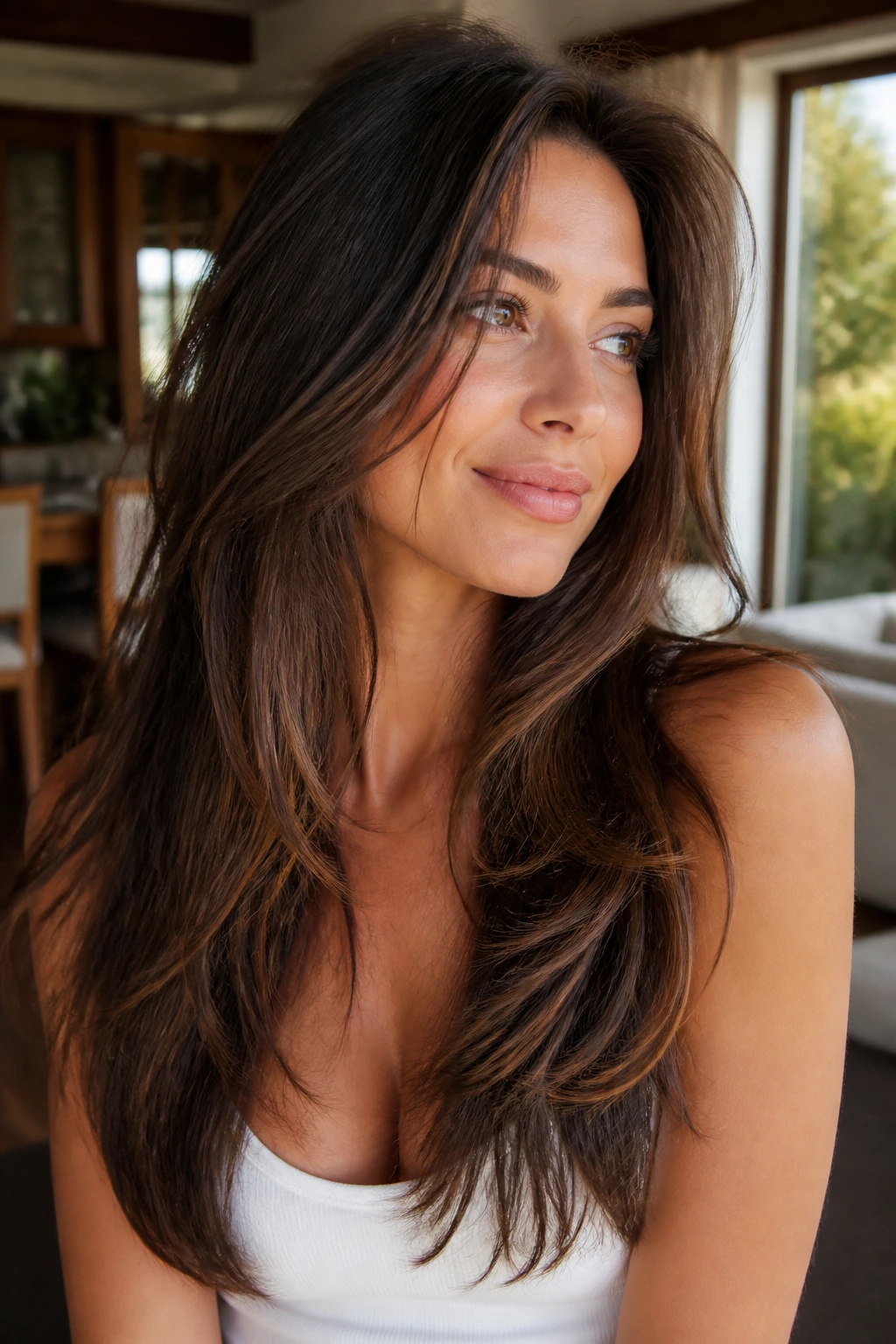
Feathered layers are one of the easiest ways to make long hair feel lighter without sacrificing that sweeping length people love. The cut works because the ends are tapered and softened, so the hair doesn’t land in one heavy block. It moves when you walk. It moves when you turn your head. That’s the whole point.
Why feathering works
The magic is in the way the layers overlap. Instead of a hard step between lengths, feathering gives you a softer fall, which is especially useful if your hair is thick enough to feel like a blanket by noon.
Ask for the shortest pieces to start around the chin or just below it if you want a gentler result. Then style with a large round brush or a 1.5-inch curling iron, pulling the ends slightly away from the face. That tiny bend makes the whole cut look more alive.
- Best on straight to softly wavy hair
- Helps dense hair feel lighter at the ends
- Keeps length while reducing the “block” effect
- Looks polished with a blowout and relaxed with air-drying
Pro tip: keep the layers soft near the front and longer in the back. That keeps the movement without making the outline look choppy.
2. Butterfly Cut

Why does the butterfly cut look so full even though it keeps the length? Because it borrows two jobs at once: face-framing pieces that start high enough to lift the front, and longer layers underneath that keep the body flowing. It’s a smart cut. Almost sneaky.
The short top layers create that airy, lifted shape around the crown, while the lower length stays intact. On medium to long hair, that combination can make the whole head of hair feel bouncier without losing the option to wear it down and sleek. I like this cut for anyone who wants the drama of a big blowout but doesn’t want to lose inches.
It’s also one of those layered haircuts that rewards styling with movement, not stiffness. A round brush, a bit of volumizing mousse, and a loose bend at the ends are enough. If you heat-style it pin-straight every single day, the shape flattens out fast.
Who it suits best
The butterfly cut tends to shine on hair that has some natural body. Fine hair can wear it, but the shortest pieces should stay controlled so the crown doesn’t go airy in a bad way. Thick hair, on the other hand, usually loves it.
3. Curtain Bangs with Cascading Layers

Clipping the front pieces away can change the whole haircut. That’s why curtain bangs still hang around in every good layered haircut conversation—they open the face without chopping it up, and they give the rest of the layers somewhere to start.
The best part is how forgiving they are. Curtain bangs blend into cascading layers, so the cut grows out without that blunt little line that screams for a trim. Around the cheekbones, they soften the profile. Below that, the layers trail off into the rest of the length and keep everything from feeling heavy.
How to get the balance right
Ask for the bangs to hit somewhere between the cheekbone and jaw, depending on how much face you want to show. Shorter than that, and the look gets more obvious. Longer than that, and it starts acting like a face frame instead of a curtain.
A soft blow-dry with a medium round brush helps the bangs sweep open instead of sitting in two stiff chunks. And if you have a cowlick at the front, let your stylist see it dry. That tiny detail matters more than people think.
This cut is a good middle ground. Not too fussy. Not too plain.
4. Modern Shag
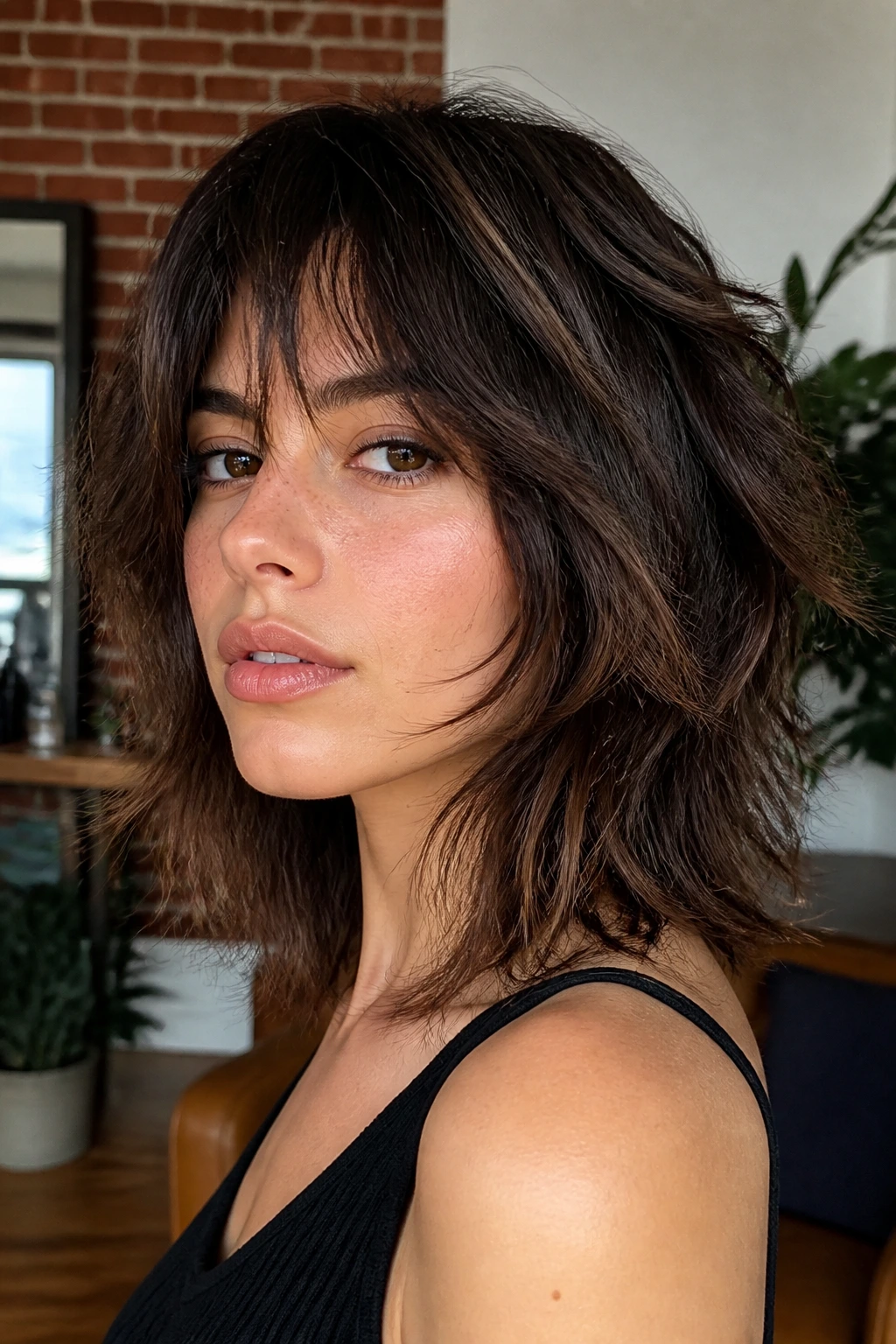
A shag adds movement because it refuses to sit still.
That sounds obvious, but it matters. The modern shag uses choppy layers, piecey ends, and a little unevenness on purpose, which is what gives it that airy, lived-in feel. It is not the haircut for someone who wants a clean, quiet line. It’s the haircut for someone who wants texture to show up and do some work.
The trick is restraint. A good shag has enough layers to create lift, but not so many that the whole thing turns fluffy around the sides. On wavy hair, it can look almost effortless after a bit of scrunching. On straight hair, it needs a texturizing spray or a bend from a flat iron to keep the layers visible.
What makes it different
- Shorter layers around the crown create lift
- Choppy pieces through the sides keep it from looking helmet-like
- Longer ends stop the shape from turning too top-heavy
- Air-drying works if you like a rougher finish
Watch for this: if your hair is already dry or frizzy, ask for the ends to stay soft. Too much slicing can make the cut look ragged instead of cool.
5. Wolf Cut
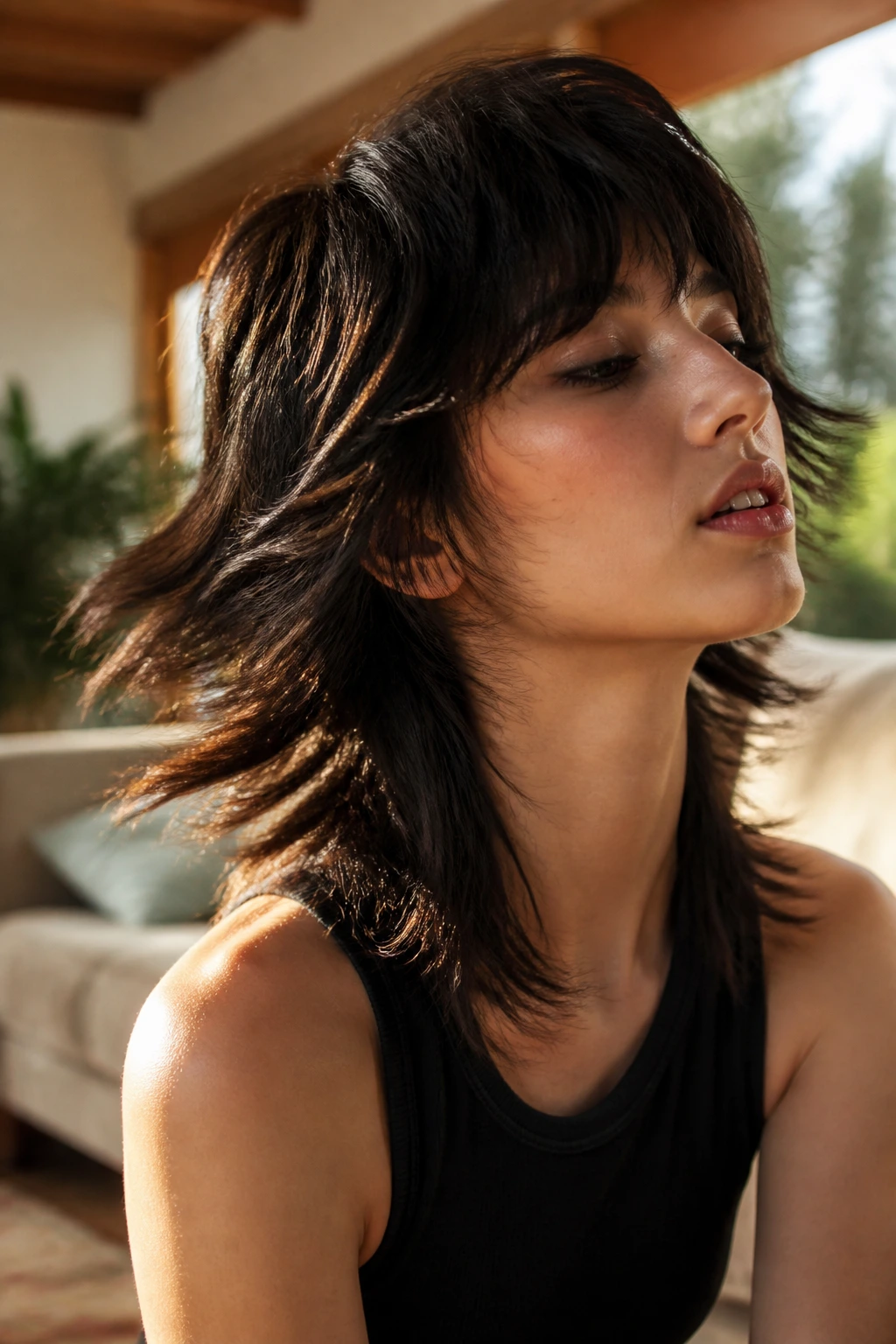
The wolf cut sits between a shag and a mullet, and that’s exactly why it has so much movement. The top is fuller, the lower lengths taper out, and the whole shape feels a little wild in a good way. It doesn’t lie flat. It’s not supposed to.
Unlike a softer shag, the wolf cut leans harder into contrast. You get shorter layers up top and longer pieces underneath, which can make the crown feel lifted and the ends feel light. On thick hair or naturally wavy hair, that shape can be a relief. The hair finally stops dragging itself downward.
It’s not the friendliest cut for someone who wants smooth, all-over polish every day. You need to be okay with texture. A little mess is the point. If you want the movement but not the full edge, ask for a softer wolf with longer perimeter pieces and less dramatic crown height.
This is one of those layered haircuts that looks better with personality than perfection. Good hair day? Great. Slightly weird hair day? Also fine.
6. Face-Framing Layers at the Cheekbones
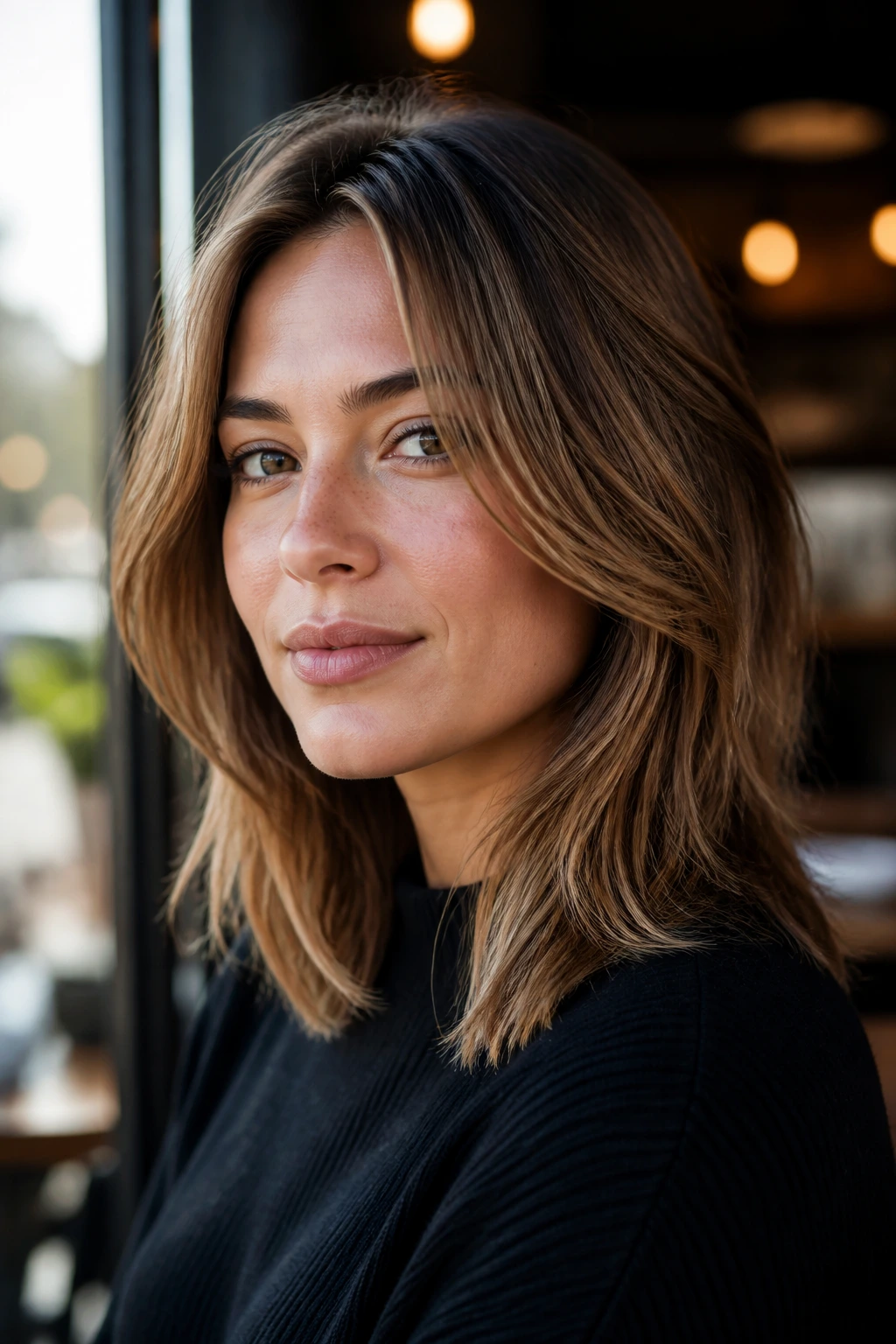
The first thing you notice is the way the front pieces brush the cheekbones. Then you realize the rest of the hair suddenly looks lighter, too. That’s the sneaky part of a good face frame: it changes the whole cut without putting layers everywhere.
Cheekbone-level layers are especially useful when you want movement near the face but you do not want to lose too much length through the back. They give shape to straight hair, soften waves, and help longer cuts feel less heavy around the jaw. If you wear your hair up a lot, they also make loose pieces fall in a more flattering way around the face.
The key is where they start. Too high and the haircut can feel overdone. Too low and you lose the lift. Cheekbone to jawline is usually the sweet spot, especially if you want the cut to look good both brushed out and tucked behind one ear.
They’re also easy to maintain. One quick blow-dry at the front is usually enough to make them sit properly.
7. Textured Lob
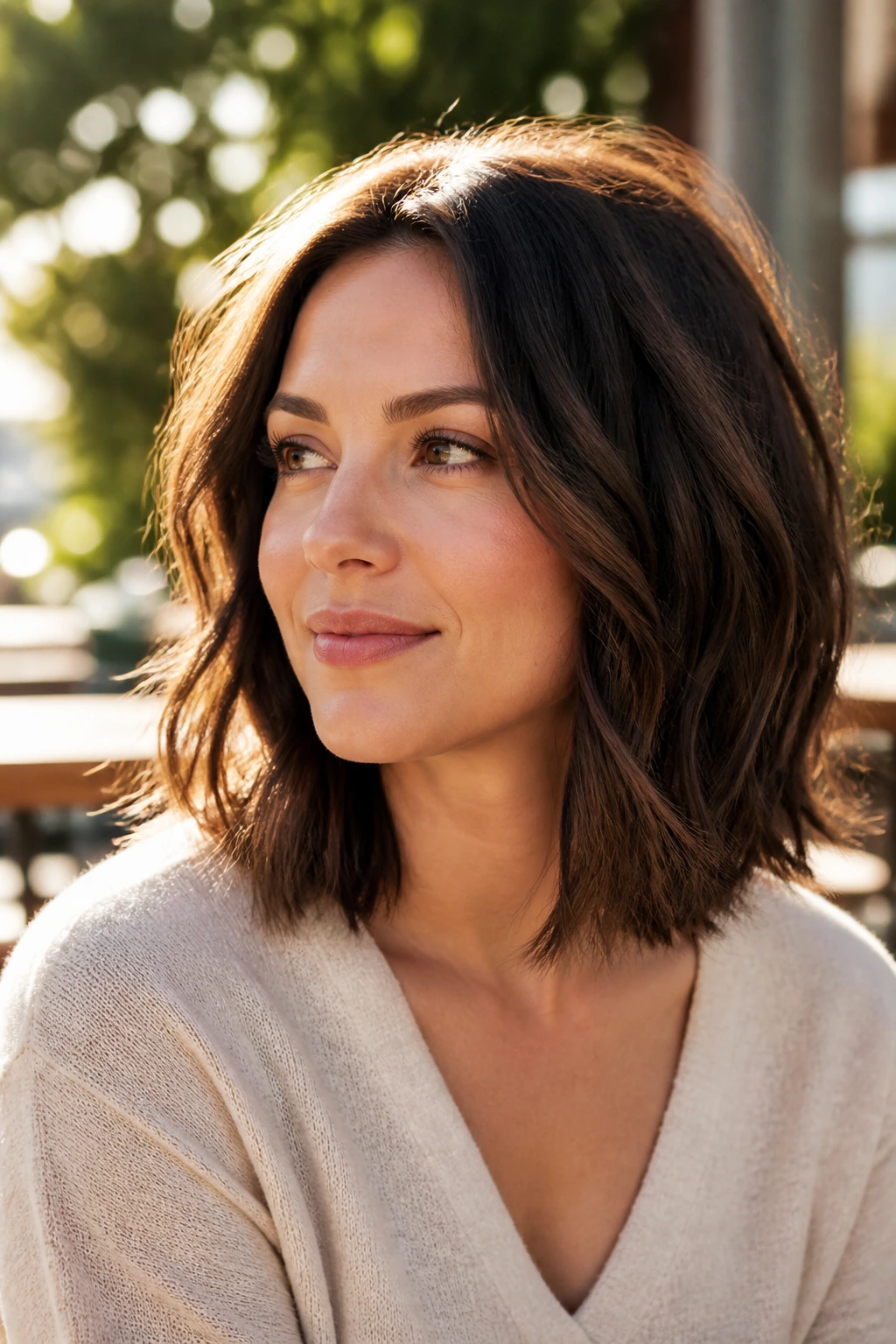
A lob can look stiff.
A textured lob fixes that fast. The shape still sits around the collarbone or just above it, but the layers break up the heaviness so the ends can move instead of hanging straight down. It’s one of the more wearable layered haircuts because it works on office hair, weekend hair, and “I threw this together in ten minutes” hair.
How to style it without overdoing it
Use a flat iron or a 1-inch curling iron to create loose, alternating bends, not perfect curls. That matters. Perfect curls make a lob look formal. Soft bends make it look like it actually has swing.
A little mousse at the roots helps if the crown tends to collapse, and a light texture spray through the ends keeps the cut from feeling too neat. If your hair is very straight, ask for the layers to be slightly more visible through the interior so the shape doesn’t disappear once it dries.
This cut is a good fit if you want movement but still like a clean outline. It’s relaxed. It’s not lazy.
8. Soft Invisible Layers
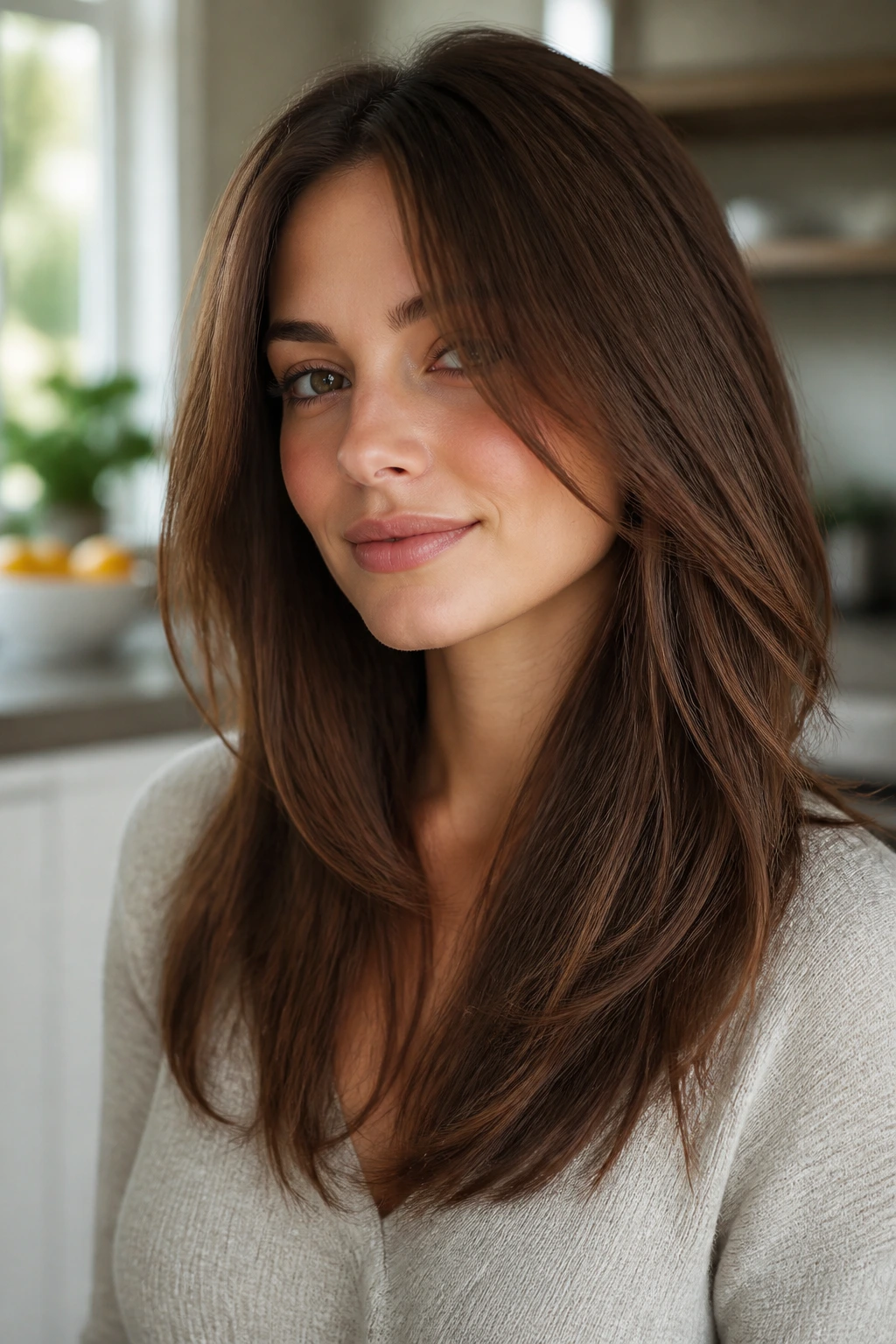
Why do some cuts move without looking layered at all? Because the layers are hidden inside the haircut instead of sitting on the outside like steps.
Soft invisible layers keep the surface smooth while removing weight from the middle and lower sections of the hair. That means the silhouette stays full, but the hair doesn’t feel as heavy at the ends. It’s a smart choice if you like sleekness but hate the feeling of a solid block of hair pulling itself straight down.
This is one of the quieter layered haircuts, and honestly, that’s the appeal. You get shape without the obvious “I got layers” look. If your hair is fine, this technique can give you motion without making the ends look thin. If your hair is thick, it can take out enough bulk to make drying easier.
Ask for internal layering, not short pieces around the perimeter. That one phrase changes the whole result. The outside stays polished. The inside does the work.
9. U-Shaped Layers
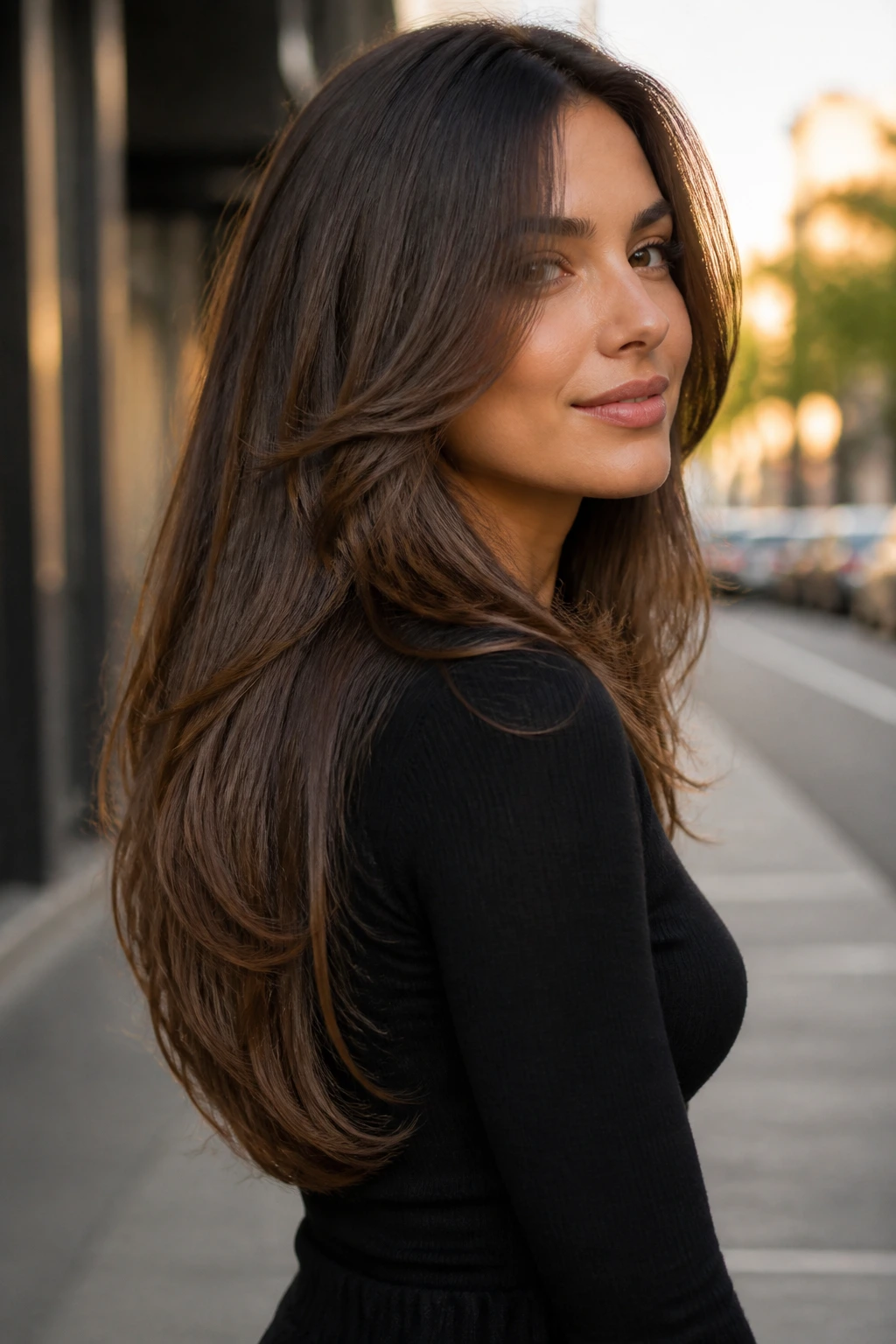
I like this shape on hair that needs movement but cannot afford to lose its length at the center.
A U-shape keeps the middle back slightly longer and curves the sides up a little, which softens the outline and makes the ends look less blunt. It’s gentler than a V-cut, less dramatic than a shag, and often more flattering on hair that sits a little too heavy in one straight line.
The movement comes from that curved perimeter. Instead of one flat edge, the hair drops in a soft arc, and that shape is easier on the eyes when the hair is thick or very straight. It also plays nicely with long layers through the front, especially if you want the front to skim the collarbone while the back stays full.
If your hair tends to puff at the sides, ask for the curve to stay subtle. A deep U can feel too feminine or too obvious for some people. A shallow one usually gives the better finish.
This cut doesn’t shout. It just makes the hair look better from every angle.
10. V-Cut Layers
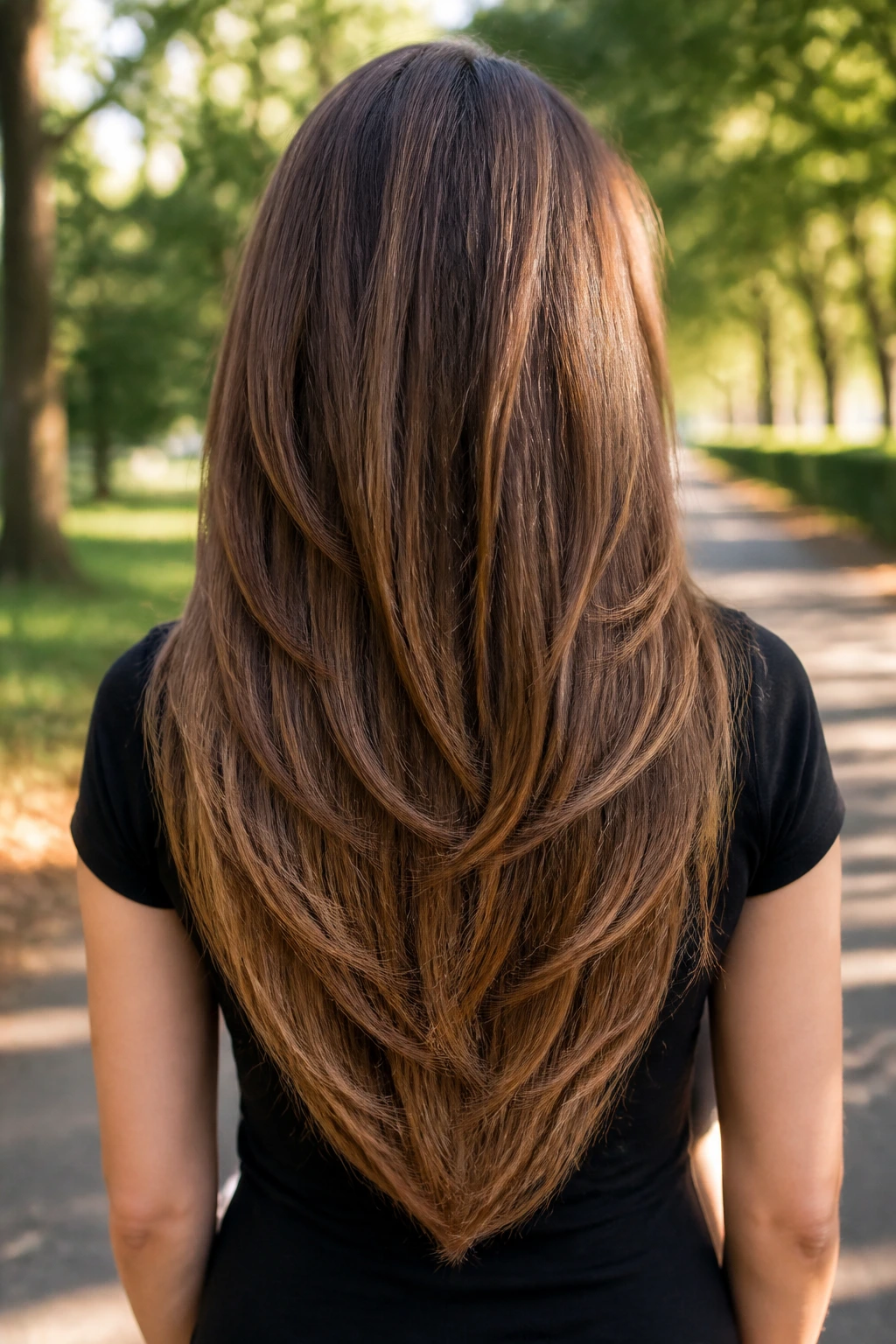
If you want the ends to swing when you walk, the V-cut does that well.
The back tapers to a point, while the sides stay a little shorter, so the outline naturally draws the eye downward. That shape creates motion even when the hair is hanging straight. On very long hair, it can stop the ends from looking like one giant sheet.
The catch is simple: fine hair can lose too much fullness if the point gets too sharp. In that case, keep the V shallow and ask for longer internal layers instead of aggressive tapering. Thick hair, though, usually handles the shape beautifully. It gets the movement without looking stringy.
Good to know
- Works best on long, straight, or wavy hair
- Looks strongest when the back reaches past the shoulders
- Needs occasional shaping so the point doesn’t turn wispy
- Shows off color dimension well, especially balayage or ribbons of highlight
It’s a sharper look than a U-shape, and that’s the appeal. The cut has a little drama without needing a huge style routine.
11. Razor-Cut Layers

Razor-cut layers feel lighter because the edges aren’t cut with a blunt, heavy line. They’re softened by the blade, which leaves the hair with a more air-filled finish and a little extra separation at the ends.
That softness can be gorgeous on hair that takes a bend easily. Waves look looser. Blowouts look more feathered. Even a straight style gets a little piecey lift instead of sitting flat and dense. The haircut has a bit of movement built into it before you even pick up a brush.
But there’s a catch. Razor cutting is not friendly to fragile, overprocessed hair if it’s done too aggressively. It can make already-dry ends feel thinner. So if your ends are split or your hair frizzes the minute humidity shows up, ask for a light razor finish rather than a deep slice through everything.
This is the cut I’d choose for someone who likes softness at the edges and hates a hard perimeter. It’s less tidy than scissor layers, more relaxed than a clean line, and often easier to wear with no fuss.
12. Layered Haircuts for Curly Hair
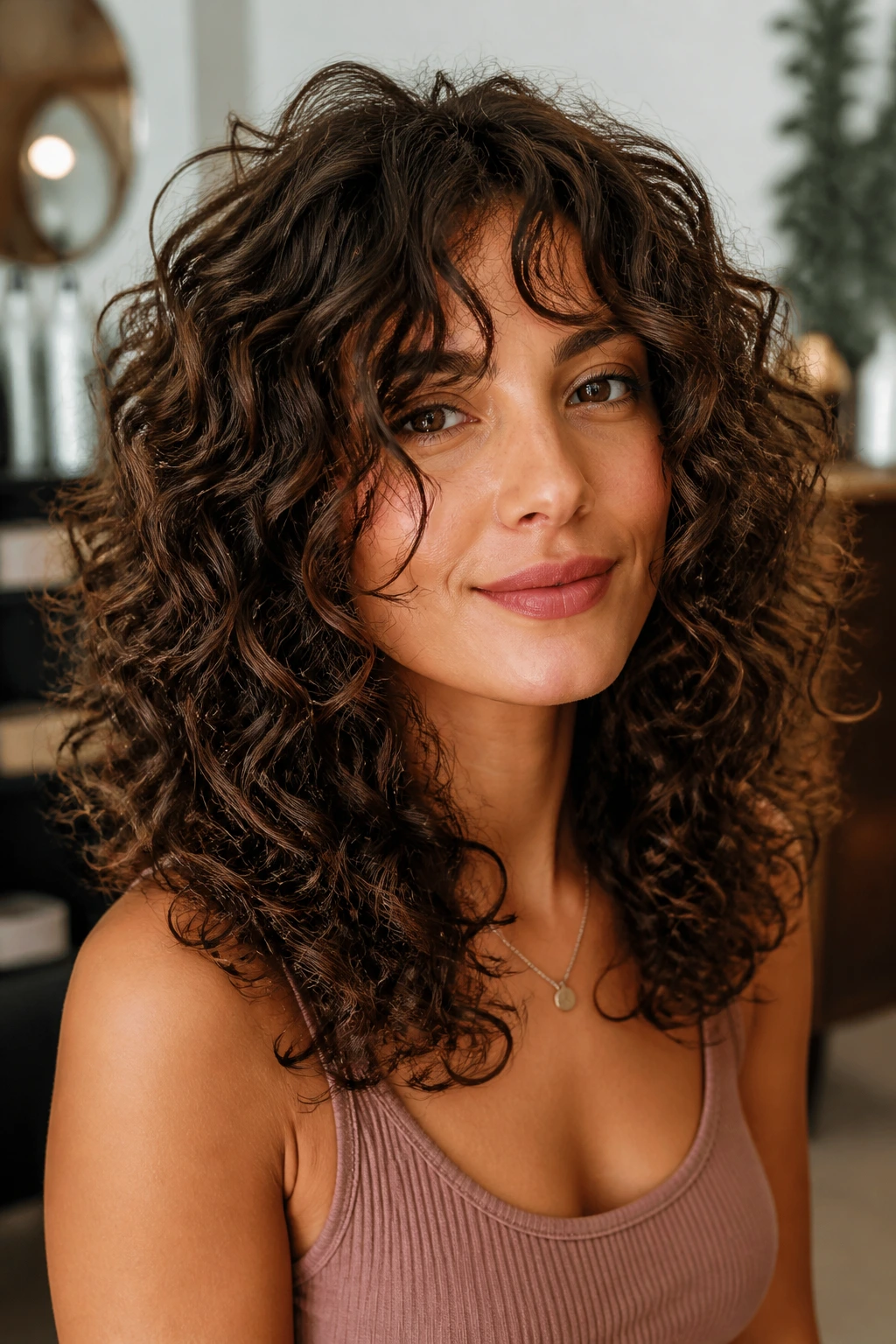
Curly hair does not need more layers everywhere. It needs the right layers.
That’s the part people get wrong. Put too many short layers into curls and the shape can balloon in the wrong places. Leave it too heavy and the curls collapse into a triangle. The right layered haircut sits somewhere in the middle, where the curl pattern can spring up without losing its outline.
Dry cutting is often the better move here because curls do not shrink evenly when wet. A stylist who cuts curl by curl can see where the weight lives and where the volume needs to be left alone. Around the face, a few well-placed shorter pieces can make the whole style feel lighter and more open.
Diffusing on low heat helps keep the layers defined. So does a curl cream that isn’t too rich. Heavy product can drag the shape down fast, and nobody needs that.
Curly layers work best when they look intentional but not fussy. The shape should move. It should also behave.
13. Wavy Mid-Length Layers
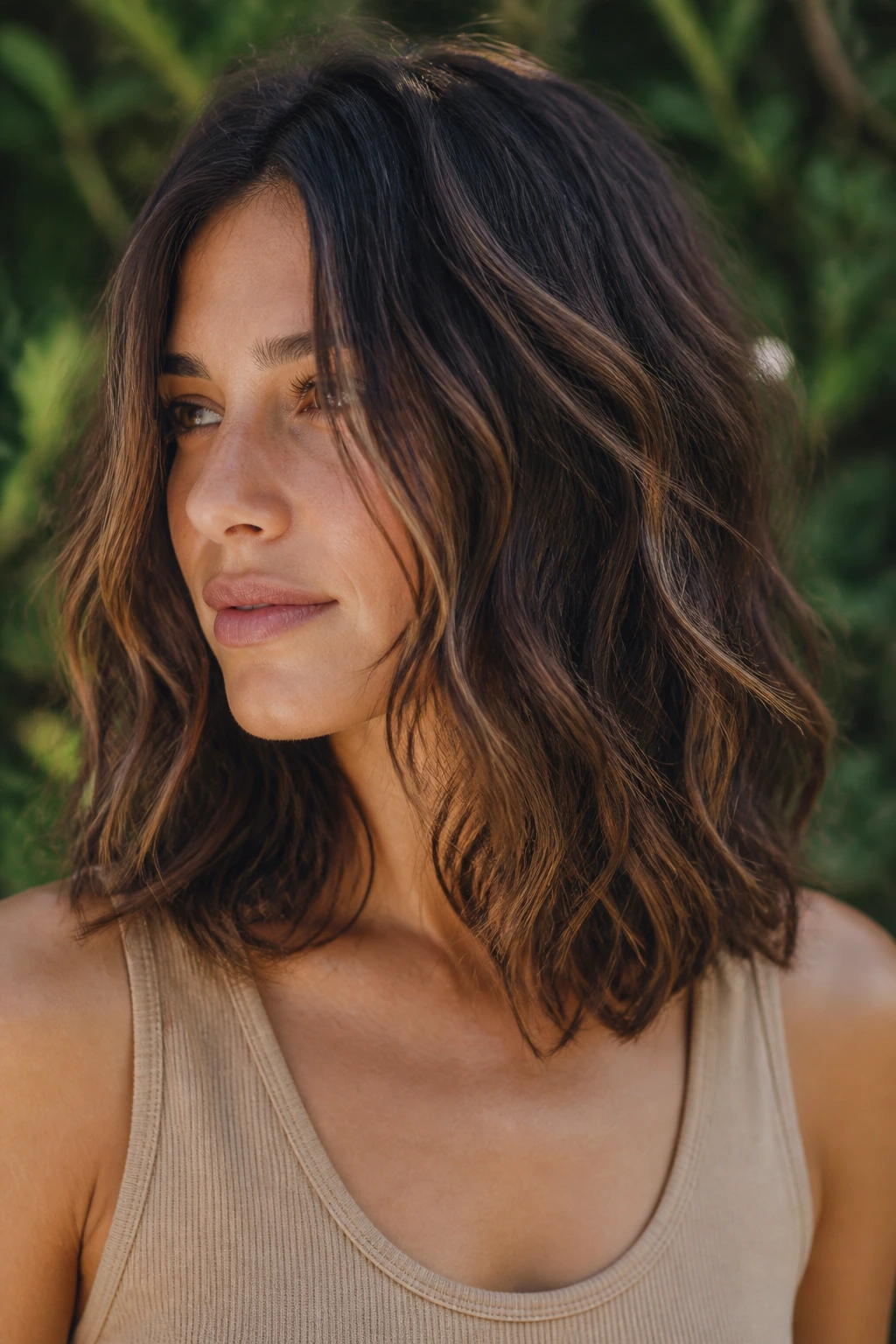
Why do some shoulder-length cuts suddenly feel twice as alive once layers are added? Because waves need room to bend, and a mid-length layered shape gives them that room.
Hair that lands somewhere between the chin and collarbone can get boxy fast. Add soft layers, and the whole cut starts moving in a looser, more casual way. The ends don’t bunch up as much. The mid-lengths bend around the head instead of hanging in one flat sheet.
This cut is especially good if you like air-drying. A bit of mousse through damp hair, a quick scrunch, and the layers usually do most of the work on their own. If your waves are uneven, ask for the layers to follow the natural bend rather than fight it. That keeps the cut from looking too styled.
A shoulder-skimming shape can go boring fast if it’s all one length. A few smart layers keep it from drifting into that awkward middle zone where hair looks neither short nor long and somehow manages to feel tired. This cut fixes that.
14. Layered Bob
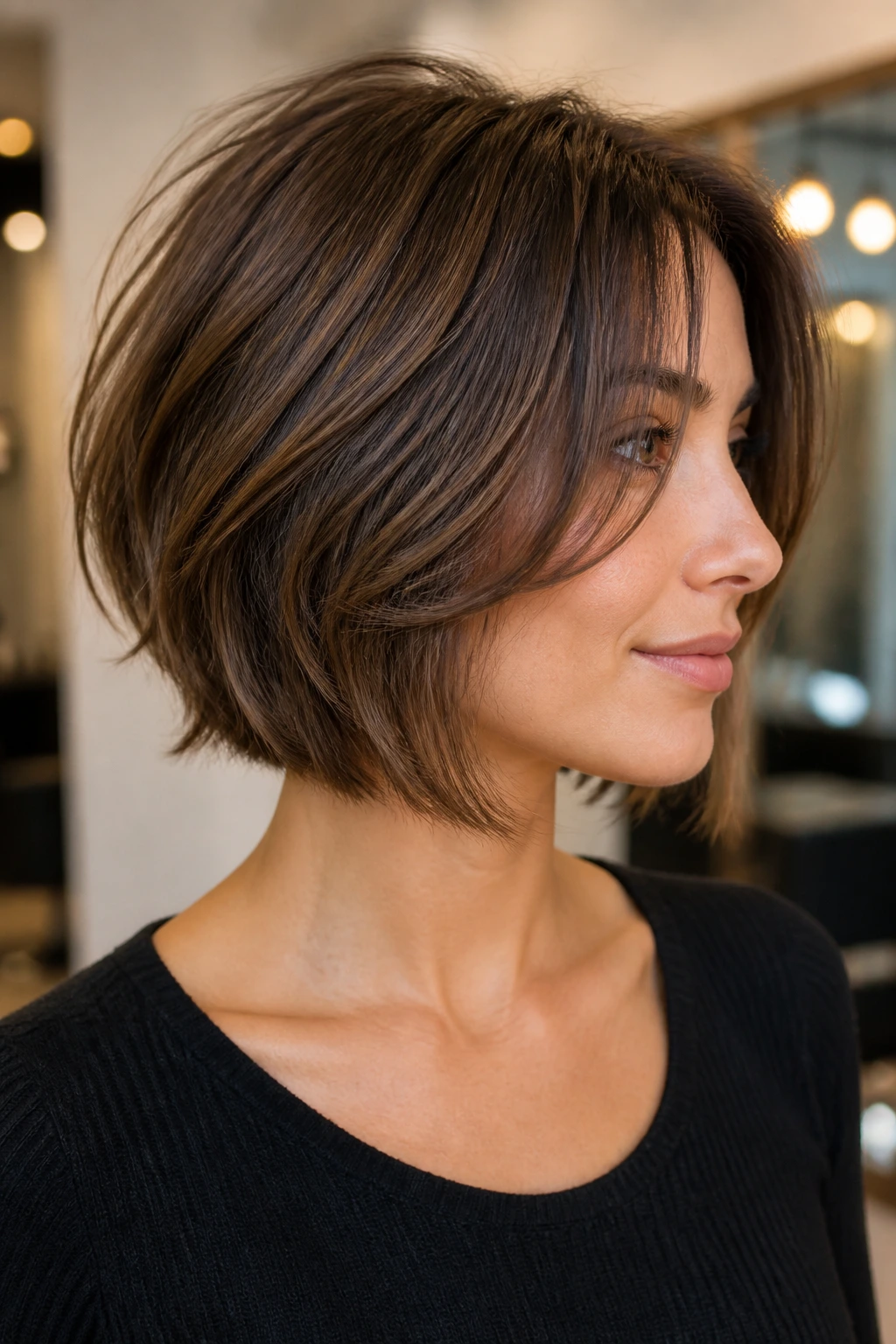
A layered bob changes the old “bob = heavy cap” idea pretty quickly. The shape stays neat around the neck and jaw, but the layers keep it from sitting like a helmet.
What makes this haircut move is the mix of structure and softness. The perimeter still gives you a clean line, but the crown and sides get a little internal release so the hair can bend. On straight hair, that means the ends turn under or out instead of just hanging there. On wavy hair, the bob has more bounce and less bulk.
I think this cut works especially well when you want polish with a little air. Not too shaggy. Not too severe. It looks good tucked behind the ears, and it still holds up when you let it fall naturally.
A good bob should never feel boxy. If it does, the layers either start too low or they’re too timid to matter. Ask for subtle graduation through the top and a bit of face framing near the front. That usually keeps the shape lively.
15. Layered Haircuts for Thick Hair

Thick hair has a habit of eating its own shape. You leave the salon with movement, and two days later it’s back to being one solid wall.
That’s why internal layering matters so much. It removes bulk from the middle of the haircut, where all that hidden weight lives, while keeping the outside line full enough to look healthy. The result feels lighter when you dry it and less puffy when you wear it down.
What to ask for
- Internal layers instead of short exterior pieces
- Point cutting around the perimeter so the ends don’t look blunt
- Weight removal near the crown if the hair mushrooms out
- Longer face-framing pieces if you want visible shape without losing density
The biggest mistake with thick hair is taking too much off the ends. Then the cut looks fluffy, but not in a good way. Better to keep the outline strong and let the inside do the thinning. A good stylist can take out bulk without making the haircut feel sliced to bits.
Thick hair can look expensive when the movement is controlled. That is the sweet spot.
16. Layered Haircuts for Fine Hair
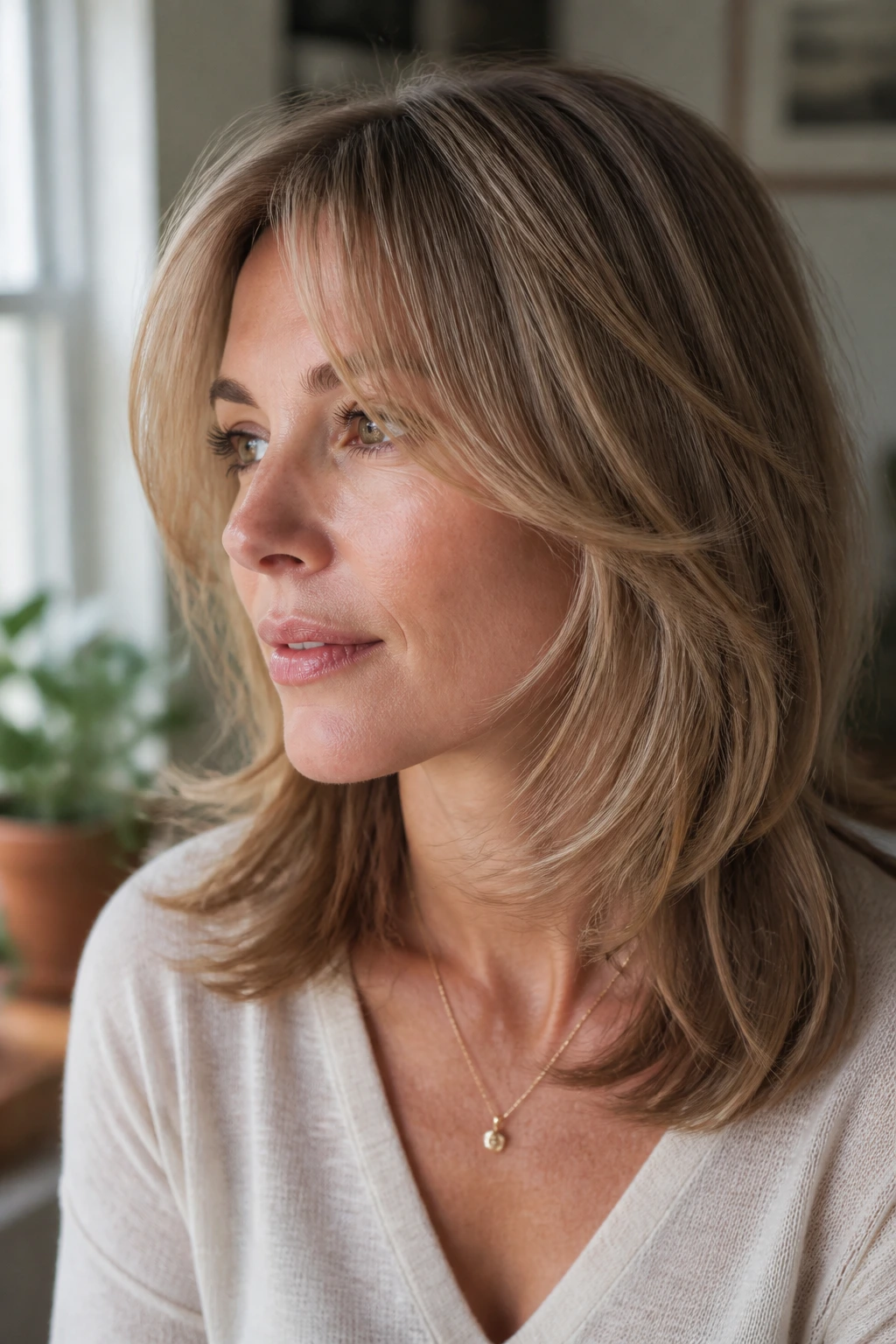
Fine hair needs movement, but not the kind that steals all the weight.
That’s why airy layers work better than short, choppy ones. If the layers start too high, fine hair can turn see-through fast and the ends look thinner than they are. Keep the shortest pieces lower, often around the cheekbone or below, and let the length do most of the work.
A root-lifting spray at the crown helps, but the cut matters more than the product. Fine hair usually looks better when the perimeter still has some fullness. That means soft face framing, gentle internal movement, and no aggressive thinning at the ends.
This is one of those layered haircuts where restraint pays off. A little motion around the front and lower half of the hair is usually enough to make the whole style feel lighter. You do not need a lot of pieces flying everywhere.
If your hair tends to fall flat by noon, ask for a cut that keeps more length in the bottom section and only lightly opens up the top. It sounds boring. It works.
17. C-Cut Layers

The C-cut is for people who want curve, not drama.
The hair bends inward around the face and outward at the ends, forming a soft C-like shape that feels polished but not stiff. It’s a nice middle ground between a blunt cut and a heavily layered one, and it often looks expensive without trying too hard. The movement is subtle, but it shows.
This shape works well on medium to long hair, especially if you like your front pieces to frame the face gently instead of hanging straight. It also plays nicely with round brushes and blow-dry cream, because the curve shows up fast when you wrap the hair under.
The C-cut is a sneaky fix for hair that looks flat at the sides. It adds flow without forcing the layers to be obvious. That makes it a good option if you want hair that moves when you turn, but still sits neatly enough for work, dinners, or anything else where you don’t want your cut to be the main event.
Sometimes the quiet haircut is the smartest one.
18. Disconnected Layers

Are disconnected layers a little dramatic? Yes. That’s why they work.
Instead of blending every section into the next one, this cut keeps some lengths more separate, which creates a stronger visual break and a sharper sense of movement. The result can feel editorial, edgy, and a little unexpected, especially on straight hair that usually falls in one plain sheet.
The shape needs confidence. If you want a soft, barely-there layer pattern, this is not it. But if you like sharp contrast, disconnected layers give the hair a lifted, piecey look that can make even medium-length hair feel more dynamic. It also helps show off texture paste or a flat iron bend.
How to wear it well
Keep the style slightly undone. Too much smoothing takes away the whole point. A matte styling cream, a few bent sections with a flat iron, and a light finger-combing are enough.
This cut is especially good for hair that feels too polite. It gives the shape some attitude.
19. Pixie with Piecey Layers
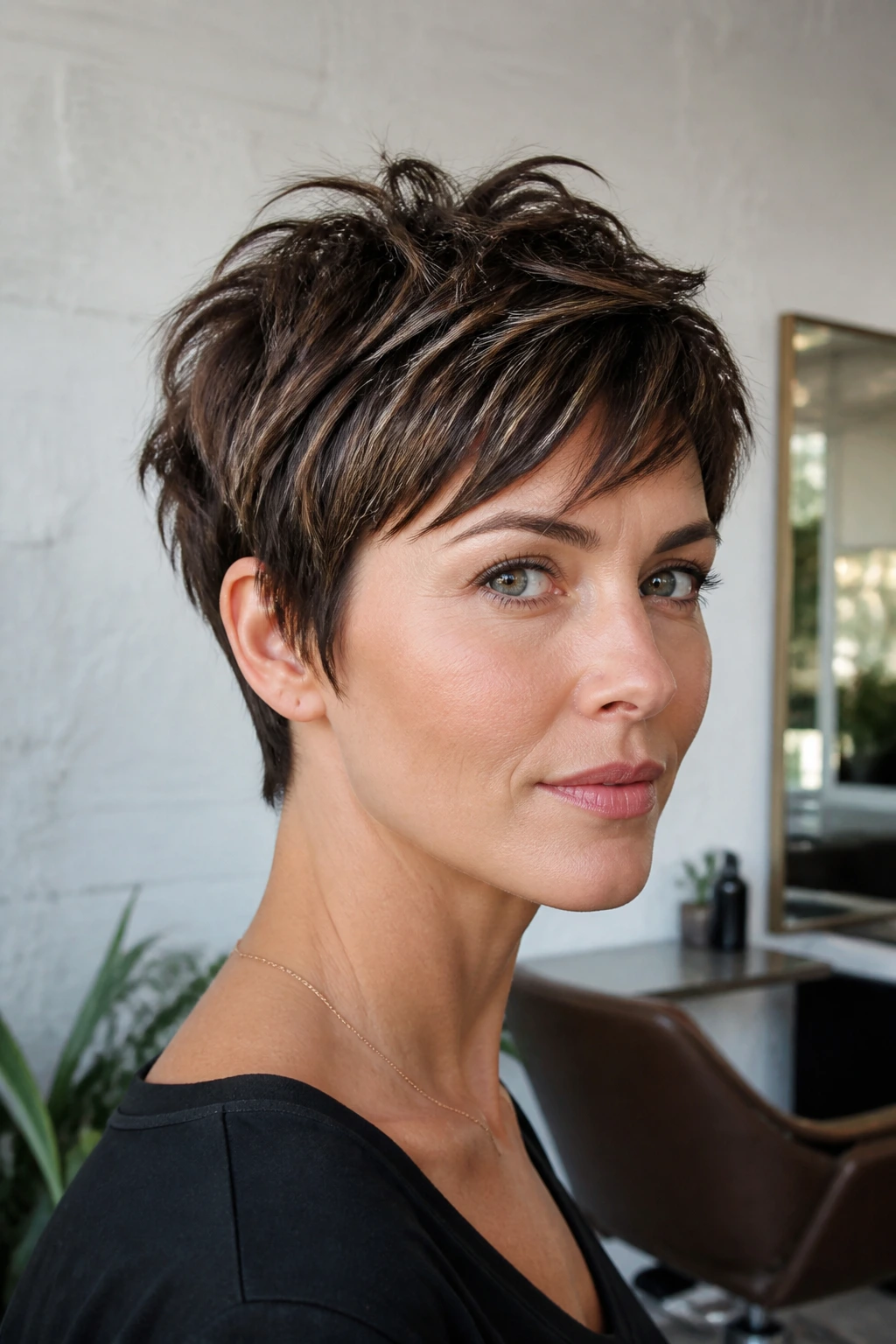
Short hair can move, too.
A pixie with piecey layers proves it. The top stays long enough to separate into little sections, while the sides and nape stay tighter so the whole cut doesn’t puff out. The effect is lively, not bulky. You get texture, lift, and a shape that changes a bit as you move.
The most important part is the top length. If it’s too short, there’s nothing to piece out. If it’s too long, it starts behaving like a mini shag instead of a pixie. Somewhere in the middle usually gives the best motion.
- Use a pea-sized amount of pomade or paste
- Work it through dry hair, not soaking-wet hair
- Twist small pieces between your fingers for separation
- Leave the edges softer if you want the cut to feel less severe
This style is good for people who want low styling time but don’t want hair that just sits there. It has personality built in. A little piecey. A little playful.
20. Shoulder-Grazing Layers
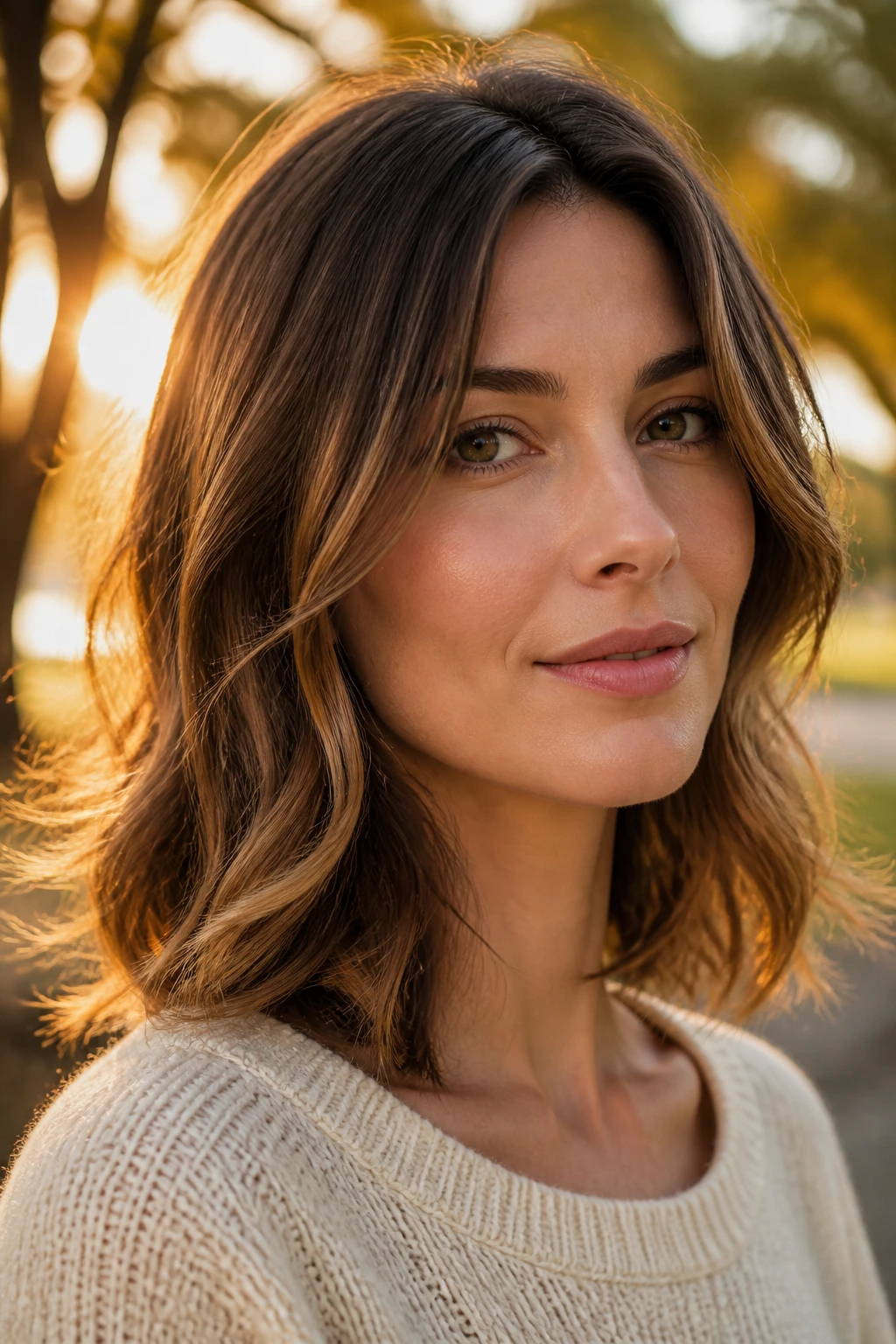
If you want movement without giving up the safety net of length, shoulder-grazing layers are the cut I’d point to first.
The hair lands right where movement shows up easily: around the collarbone, the shoulders, and the top of the back. That means every bend gets noticed. A slight wave looks intentional. A blowout flips nicely. Even air-dried hair gets a bit more swing because the ends are not all fighting the same heavy line.
This is also one of the easiest layered haircuts to live with. You can tuck it behind your ears, throw it in a clip, or wear it loose without feeling like the cut is too styled for real life. The layers should stay long enough to keep the outline full, with just enough shaping to keep the hair from feeling blocky at the bottom.
If you’re nervous about going shorter, this is the calm choice. Ask for soft layers that start around the chin or lower, and keep the perimeter grazing the shoulders. That gives you movement, polish, and enough length to change your mind later.
The haircut does not need to shout to work.
