



Thin hair does not need more layers. It needs smarter ones.
That’s the part people miss when they ask for movement and end up with a cut that looks airy for three days, then flat, frayed, and somehow less full than before. The best layered haircuts for thinner hair keep a strong outline, remove weight in the right places, and leave enough bulk at the ends so the hair still looks like hair. Not smoke. Not wisps. Hair.
A good cut can change how thick your hair reads to the eye. A bad one can expose the scalp, separate too fast at the crown, and make styling feel like a losing battle by lunch. I’ve seen more than a few people blame their shampoo when the real problem was a pair of scissors that got way too enthusiastic near the top.
The sweet spot is usually a cut that gives lift without shredding the perimeter. Some need a blunt edge with hidden layers. Others need face-framing pieces, a little stack in the back, or bangs that shift the eye away from sparse roots. The right answer depends on how your hair falls, where it collapses, and how much styling you’re willing to do on a rushed morning. Start with the first shape, then work your way through the rest.
1. Collarbone Lob with Soft Internal Layers for Thinner Hair

The collarbone lob is one of those cuts that quietly does a lot of work. It sits long enough to keep some weight, but short enough that the ends don’t drag the whole shape down. On thinner hair, that matters. A few soft internal layers remove bulk from the middle without making the outline look see-through.
Ask for the perimeter to stay solid. That part is the whole point. When the bottom line is blunt and the layers live inside the cut, hair looks fuller when it swings.
Why it helps
- The collarbone length keeps the hair from looking stringy at the tips.
- Internal layers create bend without exposing too much scalp at the top.
- A middle part or slight off-center part both work here.
- It looks polished air-dried, but a round brush makes it look denser fast.
Best move: keep the shortest layers below the chin, not above it. That one detail saves the cut from turning fluffy and thin at the same time.
2. Blunt Bob with Hidden Crown Lift

A blunt bob can be the bluntest answer to thin hair, and I mean that in a good way. The straight edge gives the illusion of density because the eye sees one strong line instead of a broken, wispy finish. Add a little hidden lift at the crown, and the whole head looks more awake.
The trick is restraint. Too many layers in a bob turn it into a puffed-up mess. Too few, and it can sit flat against the head like a helmet.
Keep the length around the jaw or just below it if your hair collapses quickly. That short zone gives the root a chance to rise a little. A side part helps even more if your crown tends to lie flat on one side.
One thing I like about this shape is how clean it feels. No fuss. No frills. Just a tidy line with enough lift to stop the cut from looking heavy.
3. Shoulder-Length Cut with Curtain Bangs

Does hair have to be shorter to look fuller? Not always.
A shoulder-length cut with curtain bangs can pull a lot of weight around the face, which makes the hair feel denser even when the strand count is modest. Curtain bangs widen the front of the style, and that little bit of width matters more than people think. The face gets framed, the part gets softened, and the whole cut stops looking like one long curtain hanging from the scalp.
How to style it
- Blow-dry the bangs first, away from the face, using a medium round brush.
- Keep the shortest pieces around the cheekbone or lip line.
- Use a light mousse at the roots, not a heavy cream.
- Let the rest air-dry if your ends bend naturally.
Curtain bangs need maintenance. That’s the catch. But if you like a cut that feels a little lived-in and a little dressed up, this one is worth the trim appointments.
4. Butterfly Cut with Soft Front Pieces

Picture long hair that used to feel heavy, then suddenly feels light in the wrong way. The butterfly cut can fix that, if it’s done with a careful hand. It keeps length in the back, then opens up the front with shorter layers that fall like wings around the face and upper chest.
The reason it works on thinner hair is simple: you get movement where people notice it most. Around the face. Near the collarbone. At the top layer that shows when hair is worn down.
What you do not want is over-thinning. That’s the fastest route to see-through ends. Ask for the shorter layers to start low, usually below the cheekbones, and keep the longest layer thick enough that the ponytail still feels substantial.
- Best for long hair that feels too heavy at the front.
- Works better with a blowout than with limp, pin-straight air-drying.
- Needs a stylist who knows how to remove weight without hollowing out the shape.
- Looks strongest when the ends stay blunt.
5. Pixie Cut with Crown Texture
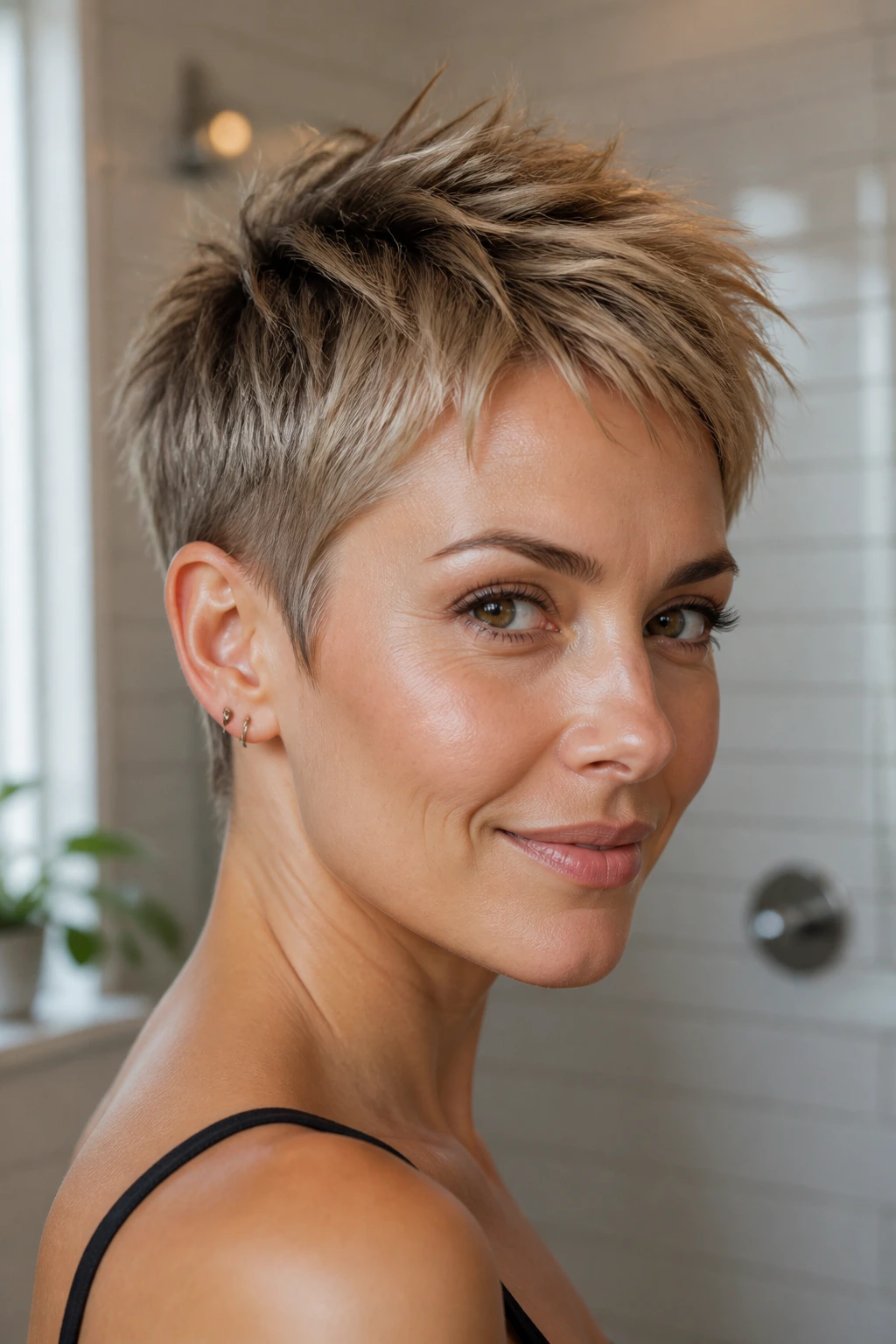
Short hair can be a cheat code for thin hair. Seriously.
A pixie cut with crown texture lifts the eye away from the length issue and puts the focus on shape, bone structure, and movement at the top. The crown has to stay a little longer than the sides, or the style falls flat and reads more like a crop than a real pixie.
I like this option for hair that gets greasy or limp fast, because less length means less drag. It also dries in a snap, which is one of those small joys that sounds boring until you’ve spent years blasting a round brush at 7 a.m.
The best version keeps the nape neat, the sides softly tapered, and the top piecey rather than fluffy. A tiny bit of paste between the fingers goes a long way. Too much product, and the hair starts clumping into little spikes. Nobody wants that.
6. Bixie Cut with Tapered Sides

The bixie sits right between a bob and a pixie, and that middle ground is where a lot of thinner hair finds its happy place. You keep a little more length around the face than a true pixie, but you avoid the weight of a full bob that might collapse by noon.
What makes this cut different from a straight bob is the way the sides are trimmed. The temples and nape stay close, while the top and front carry more softness. That shape gives the illusion of thickness without making the head look broad.
It’s especially good if you want hair that feels playful but not fussy. A clean blow-dry is enough on most days. If you like your hair a little messy, even better.
The one thing to watch is the balance. Too much top length and it turns shaggy. Too much taper and the cut can look narrow. A good bixie should still feel feminine, balanced, and easy to tuck behind the ears.
7. Soft Shag with Wispy Fringe for Thinner Hair

A shag can be brilliant on finer hair, but only when it stays soft. The heavy, choppy version from the rock-star scrapbook era can eat up density fast. What you want instead is a gentle shag with loose layers, a wispy fringe, and a perimeter that still looks honest.
Why it works
The fringe gives the front more presence, which helps thin hair look fuller around the eyes and forehead. Soft layers around the crown create lift, but they should not be so short that the head starts to show through in bright light. That is the line you do not want to cross.
Ask for these details
- Layers that start around the cheekbone or lower.
- A fringe that blends, not a blunt block.
- Length that stays solid at the bottom.
- Texturizing that’s light, not aggressive.
My take: this cut looks best when it still has a little roughness. Too polished, and it loses the easy shape that makes it work.
8. U-Shaped Long Layers

Long hair can make thin strands look even thinner if the ends taper too much. A U-shaped cut solves that by keeping the outline fuller at the bottom while adding long, soft layers through the interior. The effect is subtle, which is exactly why it works.
The U shape gives the hair a gentle curve when worn down. That curve helps the ends look denser from the back and the side, especially if your hair tends to split into two flat panels. It also keeps ponytails from looking stringy, which sounds minor until you actually care about how your hair looks tied up.
This is the right call if you love length and do not want a dramatic chop. The layers should begin low, usually around the collarbone or below. Anything shorter can make long thin hair look broken up instead of fuller.
A lot of people chase movement and forget the perimeter. Don’t.
9. Angled Bob with a Light Stack
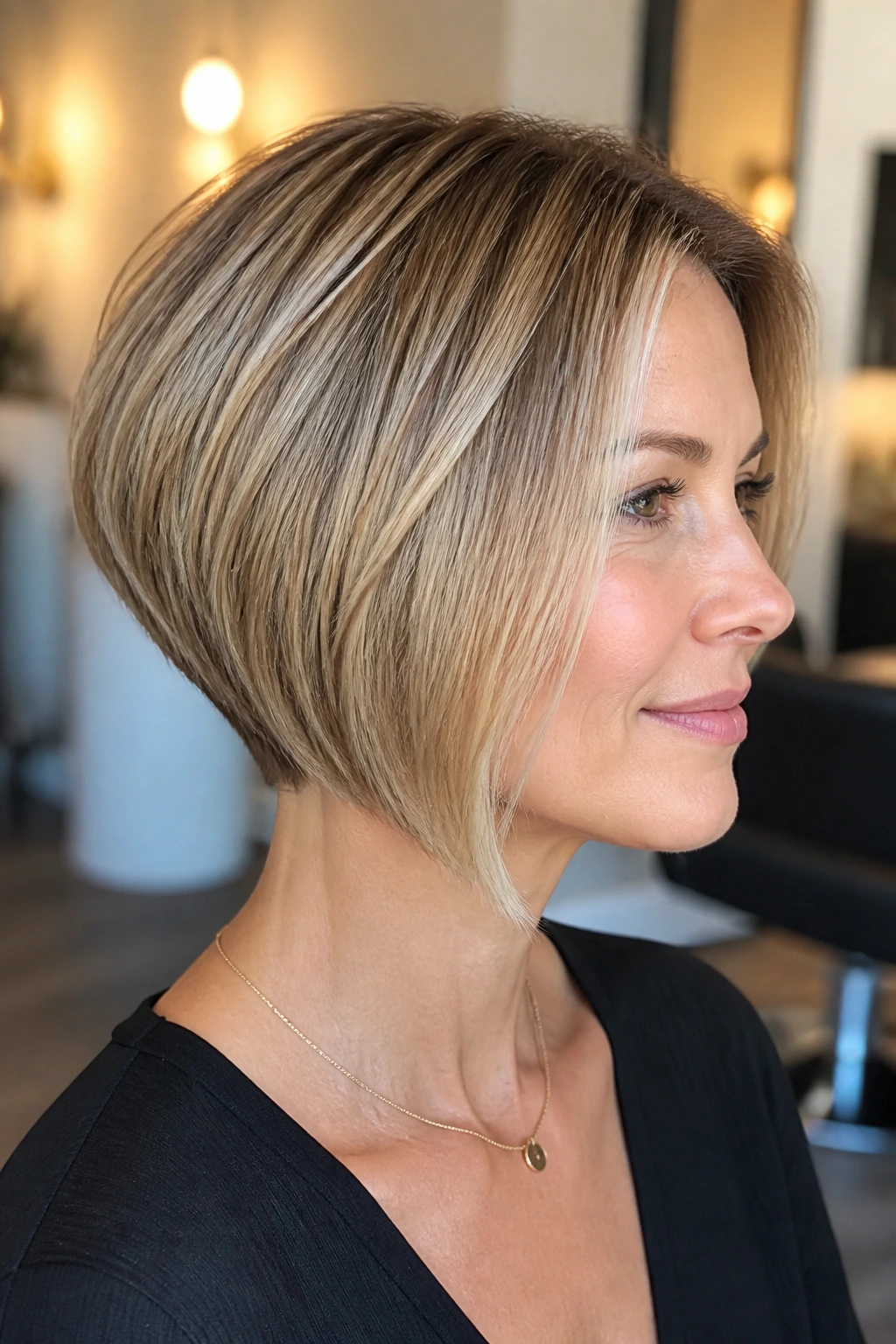
Why does an angled bob work so well on fine hair? Because it sneaks lift into the shape itself.
The back sits a little shorter, the front drifts longer, and that gentle angle makes the hair look as if it has more body than it actually does. A light stack at the back adds a touch of roundness without turning the cut into a dated, overbuilt bob from a decade ago. Keep the stack subtle. Otherwise, the crown can look puffy while the ends look hungry for volume.
What to ask your stylist
- Keep the front grazing the chin or slightly below.
- Build just enough shape in the back to lift the crown.
- Avoid heavy texturizing at the bottom.
- Ask for a clean line that still moves.
This cut is sharp in a good way. It has shape. It has intention. And it’s one of the easier options to style with a flat brush and a bit of root spray.
10. Feathered Midi Cut

There’s a reason feathering keeps coming back in different forms. It softens the hair without stealing too much from the outline. On thinner hair, that balance matters more than trend.
A feathered midi cut usually lands somewhere between the shoulders and the collarbone. The layers are brushed back and away from the face, which gives the hair a little air. The ends still matter, though. They should stay soft, not shredded.
One of my favorite things about this cut is how forgiving it is on days when you don’t want to fight with a blow dryer. A rough dry with a round brush at the front is enough to wake it up. If the ends flip slightly, that’s fine. In fact, it looks better a little imperfect.
Quick styling notes
- Use a lightweight mousse at the roots.
- Blow-dry the front sections away from the face.
- Finish with a small amount of shine spray on the mid-lengths.
- Skip heavy oils near the crown.
11. Cheekbone-Grazing Face-Framing Layers

Some people do not want a full layered haircut. They want a quiet fix. This is that cut.
Cheekbone-grazing face-framing layers add shape exactly where the face needs it, while leaving most of the length alone. That means the overall look stays dense, which is the part thin-haired readers usually care about first. The front gets a little lift, the jaw gets softened, and the hair stops hanging as one flat sheet.
The shortest pieces should land around the cheekbone or just below it. Any higher, and the cut can start to feel too broken up. That’s the mistake I see all the time with thin hair: too many short pieces near the face and nowhere enough weight left below.
This is a smart cut if you wear your hair straight most of the time. It also works if you tuck one side behind the ear, because the front layers naturally fall back into place. Small detail. Big payoff.
12. Razor-Cut Lob with a Solid Perimeter

A razor can be a beautiful tool. It can also be a disaster on thin hair if the person holding it gets too happy with the wrist.
A razor-cut lob works best when the stylist keeps the perimeter solid and uses the razor only to soften the interior or the ends a touch. That soft edge can stop the cut from looking blunt in a harsh way. It also helps hair that bends a little at the ends, because the shape moves instead of sitting like a board.
Unlike scissor-cut layers, razor work can make the hair feel airier right away. That sounds nice until the hair is already fine and fragile. Then it can start to fray if it’s overdone.
If your hair is healthy, straight to slightly wavy, and not prone to split ends, this shape can look elegant and modern without losing too much density. If your ends are dry already, go easy. Ask for a light touch, not a full shred.
13. Wavy Lob with Hidden Interior Layers

A wavy lob can look fuller than almost any other medium cut when the layers stay hidden. That’s the whole trick. The outside line looks fairly smooth, while the inside has enough movement to let waves stack instead of collapsing into one flat bend.
This cut is a good fit for hair that has a little natural texture or can hold a bend from a curling iron. The hidden layers help the waves sit on top of one another, which makes the hair seem thicker from the side. Straight hair can wear this cut too, but it needs more styling to get the same payoff.
How to get the most from it
- Keep the top layer long enough to cover the interior work.
- Use a 1-inch curling iron or wand on alternating sections.
- Brush the waves out once they cool for a softer finish.
- Finish with a light texturizing spray, not a crunchy one.
The best part? When it grows out, it still looks fine. That matters more than people admit.
14. Softer Wolf Cut

A wolf cut can be a mess on thin hair if it’s pushed too far. It can also be a lifesaver if the version is softened down and blended properly.
What makes the softer wolf cut different is the balance between the crown and the ends. You still get a little drama up top, and you still get that longer, shaggy shape through the body, but the disconnect is gentler. The result feels edgy without looking like someone took a hacksaw to the side of your head.
Would I recommend this to someone who wants zero styling? No. Not really. It looks best with some rough-dry texture, a bit of mousse, and a little piece-y separation through the fringe.
But if your hair falls flat and you want something with personality, this can be a smart choice. Keep the layers blended, keep the fringe light, and do not let anyone over-thin the ends. That’s where the whole thing falls apart.
15. Chin-Length Crop with Piecey Layers

A chin-length crop gives thin hair a strong visual boundary. That boundary is the reason it works. The eye sees a fuller shape because the hair stops before it has a chance to taper into nothing.
Piecey layers at the top add movement, but they should stay short and contained. Think little bits of lift, not a lot of separation. The idea is to keep the cut lively around the crown and temples while leaving the outline intact.
This shape is especially good for people with smaller faces or sharper jawlines. It draws attention upward and outward. It also makes earrings and necklines look more intentional, which is a nice side effect nobody complains about.
A chin-length crop does need regular trims. Once the line starts to hit the shoulders, the shape loses its edge and the hair can start to flip weirdly. So yes, it asks for upkeep. The payoff is a cut that looks fuller than its length would suggest.
16. Side-Parted Layered Bob
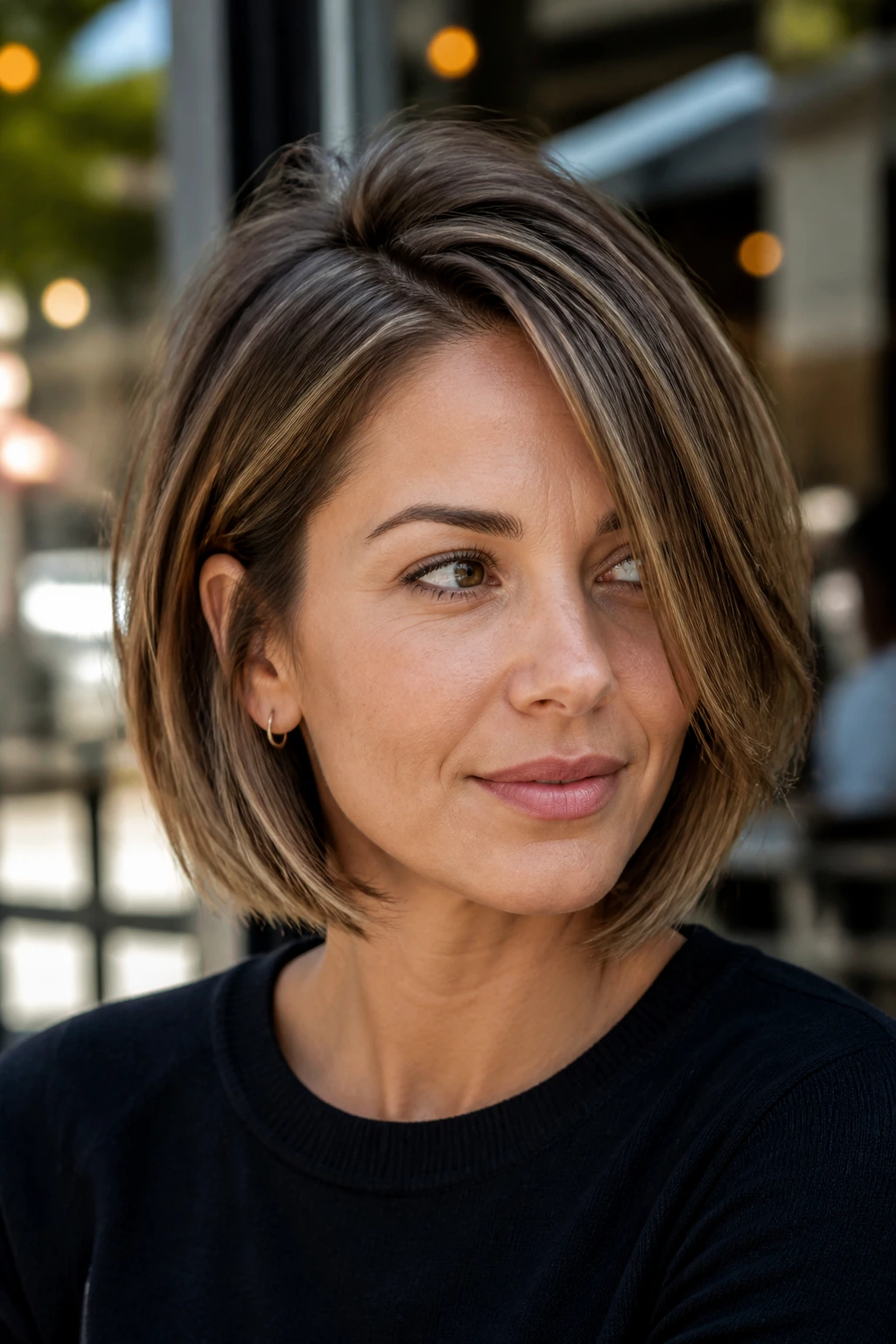
A side part can do more for thin hair than a drawer full of products.
When hair is split off-center, one side naturally gets a little extra lift at the root. That small shift changes the whole silhouette, especially in a layered bob where the top needs help staying off the head. The side part also breaks up symmetry, which keeps the style from looking too flat or too neat.
This cut works best when the layers are light and the ends are not too tapered. Keep the bob somewhere between the jaw and the top of the shoulder. Shorter than that, and the side part can look severe. Longer than that, and the root lift loses some of its effect.
Set the part while the hair is damp. That matters. If you wait until everything is dry, the roots have already chosen their direction and they’ll fight you.
It’s a small change. It feels bigger than it is.
17. Long Layers with a Full Fringe

A full fringe changes the balance of long thin hair in a way that surprises people. The front suddenly looks denser, the eyes get more focus, and the rest of the length doesn’t have to carry the whole visual load by itself.
The layers should stay long and soft, not chopped into little pieces all over the head. Think of the fringe as the anchor and the layers as support. The fringe gives the cut a solid front edge, while the long layers keep the ends from hanging like one heavy rope.
How to wear it well
- Keep the fringe thick enough to look deliberate.
- Ask for the longest layers to fall below the collarbone.
- Blow-dry the fringe first so it doesn’t split.
- Trim the bangs often enough that they stay clean, not shaggy.
This cut has a certain French-girl energy when done right, though I’d skip the romantic label and just call it flattering. It’s especially good for people who like to wear their hair down more often than up.
18. Textured Midi Cut with Soft Ends

A textured midi cut is the quiet overachiever of this whole list. It sits in that shoulder-to-collarbone zone that flatters a lot of faces, and the texture is controlled enough that the hair still looks full.
Why it stands out
The texture lives mostly in the mid-lengths, not the ends. That keeps the bottom from turning wispy. Soft ends matter more than people realize. Once the bottom line gets too pointy, thin hair starts to read as sparse, even if the crown has good density.
A good midi cut should move when you walk, but not fray apart in bright light. That’s the balance. You can wear it straight, flip it under with a brush, or put in a few loose bends with a curling wand.
Ask for this: layers that are visible when the hair moves, but not so short that they break the outline. If your stylist starts talking about “taking weight out” near the bottom, push back a little.
19. Inverted Bob with Subtle Graduation

The inverted bob is older than most people think, and the bad versions are burned into a lot of memories. But a subtle one can be excellent for thin hair.
The back is slightly shorter, the front is a bit longer, and the graduation through the nape gives the head a rounder shape. That little build at the back can make the crown look fuller without needing a lot of teasing or product. The key word here is subtle. A heavy stack can expose too much scalp and make the cut feel overworked.
This cut suits straight hair especially well because the line shows clearly. If your hair waves a little, the shape still works, but it needs a steady hand from the stylist so the front pieces do not flip out in a strange way.
I’d choose this over a heavily layered bob when the goal is fullness first, movement second. The silhouette does most of the talking.
20. Airy Layered Lob for Thinner Hair

If you want one cut that gives you room to breathe, this is the one.
An airy layered lob keeps the length around the collarbone or a touch below, then uses soft interior layers to stop the hair from falling like a flat curtain. It’s not dramatic. That’s why it works. The outline stays clean, the layers do their job quietly, and the hair still looks like it has substance when you turn your head.
This is the haircut I’d point to for anyone who wants a safe starting place. It suits fine hair, thin hair, straight hair, and slightly wavy hair without forcing any of them into a weird shape. You can wear it tucked, loose, bent, or blown smooth. It survives a grow-out better than many trendier cuts, too, which matters if you don’t want to live at the salon.
Ask for a solid bottom line, soft movement inside the cut, and just enough face framing to keep the front from feeling heavy. That combination is hard to mess up. And for thinner hair, hard to mess up is a beautiful thing.
