



A bob does something useful that long hair often can’t. It gives fine hair a clean edge, and that edge can make the whole head look denser before you even pick up a brush. The phrase bob haircuts for fine hair over 50 gets thrown around a lot, but the good versions all share the same idea: keep the outline strong, keep the ends honest, and don’t drown the cut in layers that eat up the very fullness you’re trying to keep.
The wrong bob is easy to spot. It hangs soft at the bottom, gets stringy around the jaw, and needs a full hour of styling to look like it belongs on your head. No thank you.
What works better is shape. A chin line that lands in the right place. A side part that doesn’t fight your crown. A little lift at the nape, or a fringe that takes attention away from a flat hairline. Fine hair over 50 usually needs one thing more than anything else: a haircut that makes the most of what’s there instead of asking the hair to do a bunch of extra work.
1. Chin-Length Blunt Bob
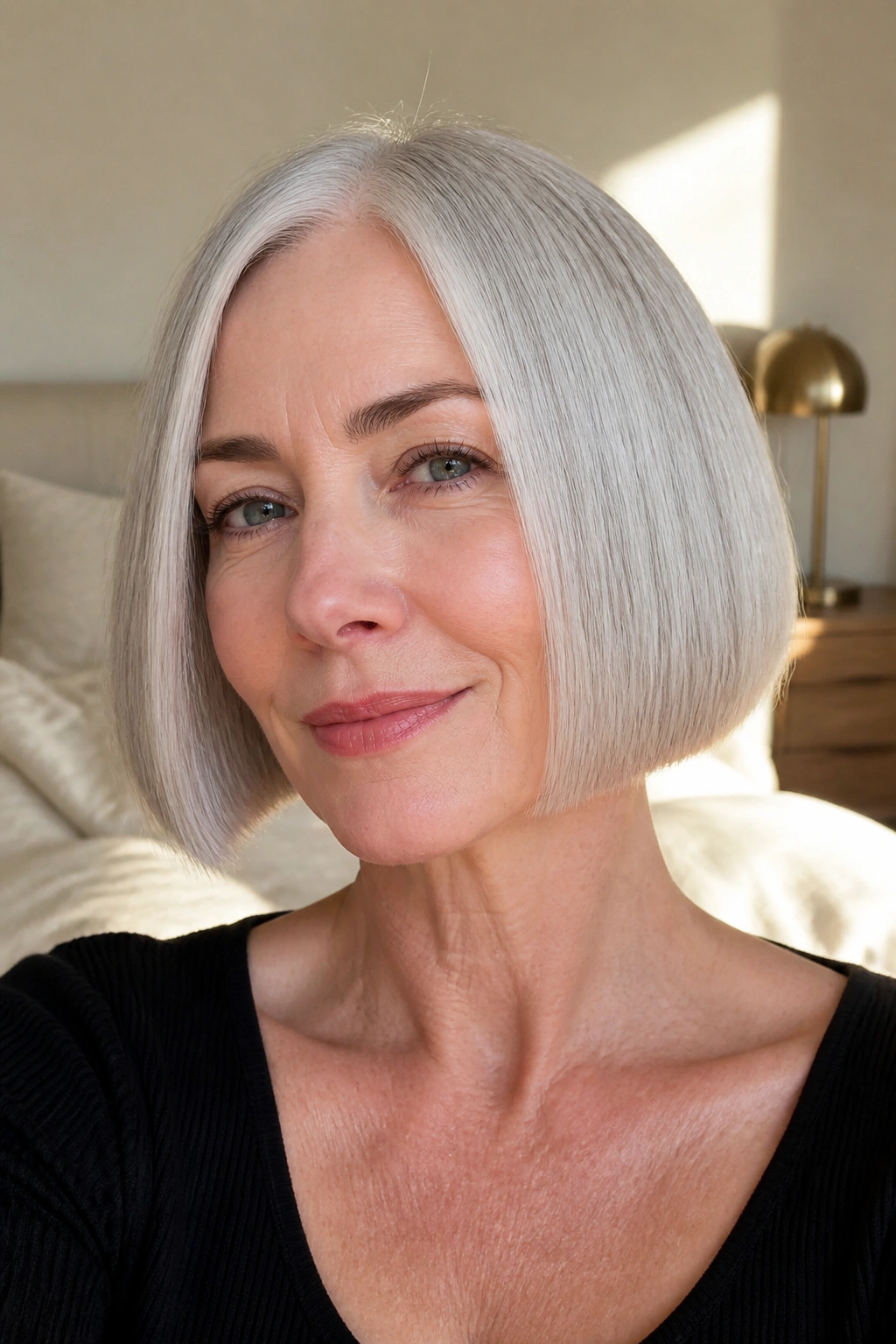
A chin-length blunt bob is the cleanest answer when you want fine hair to look fuller without fuss. The solid perimeter makes the ends land in one line, which gives the eye something dense to read. That matters. Strands that taper too much start to look wispy fast, and wispy ends are the enemy of volume.
I like this cut on straight hair that tends to fall flat by lunchtime. It also plays well with silver or gray hair, which can look sharper when the line is crisp. Keep the length right at the chin or a hair below it, not past the collarbone. Past that point, fine hair starts giving up the ghost.
Ask for blunt ends, not razor-thin ones. A good stylist may use a tiny bit of point cutting around the perimeter, but the shape should still feel solid when you run your fingers through it.
A middle part can work here, but a slight off-center part often feels softer around the face. For styling, a round brush and a dab of light cream are enough.
2. Jaw-Skimming Bob With a Side Part
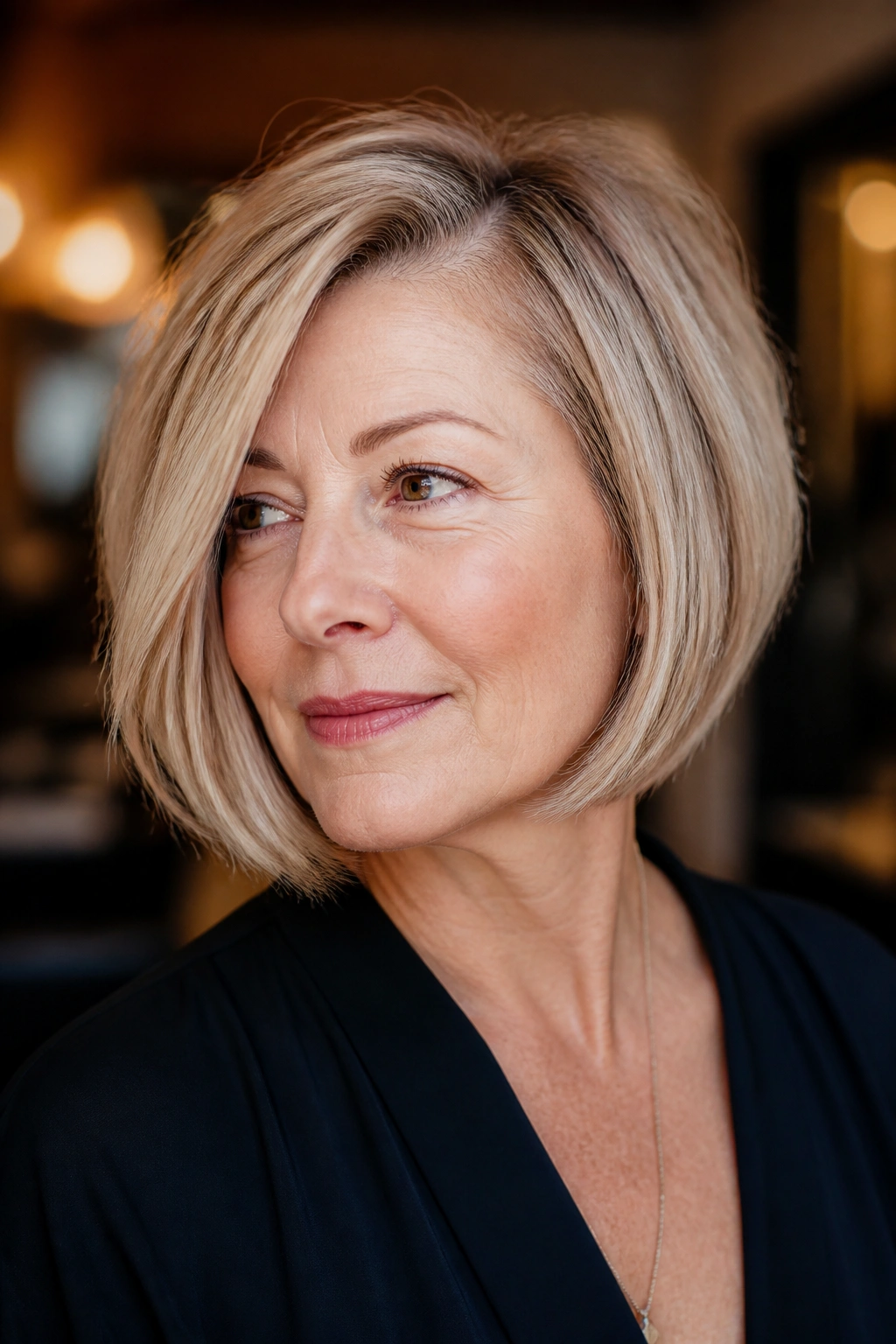
Why does a side part help so much? Because it lifts hair where fine strands tend to collapse: right at the front and crown. A jaw-skimming bob with a side part gives the top a little extra height and keeps the bottom line from looking too neat or too severe.
This is a smart cut if your hair lies flat against the scalp near the temples. The part shifts the weight, and that shift can make the whole cut look fuller in about ten seconds. No magic. Just smart geometry.
What to Ask for
- A length that lands around the jawline, with the front pieces a touch longer if you want softness.
- Light graduation through the back, but not a stacked shelf.
- A side part that sits where your natural growth pattern already wants to go.
- A blow-dry that lifts the roots at the front with a round brush.
If your face is round, this bob gives a bit of vertical line without turning severe. If your face is narrower, it keeps the cut from looking too boxy. I’d avoid heavy bangs here; they can steal the lift you’re trying to build.
3. Soft Layered Bob With Airy Ends
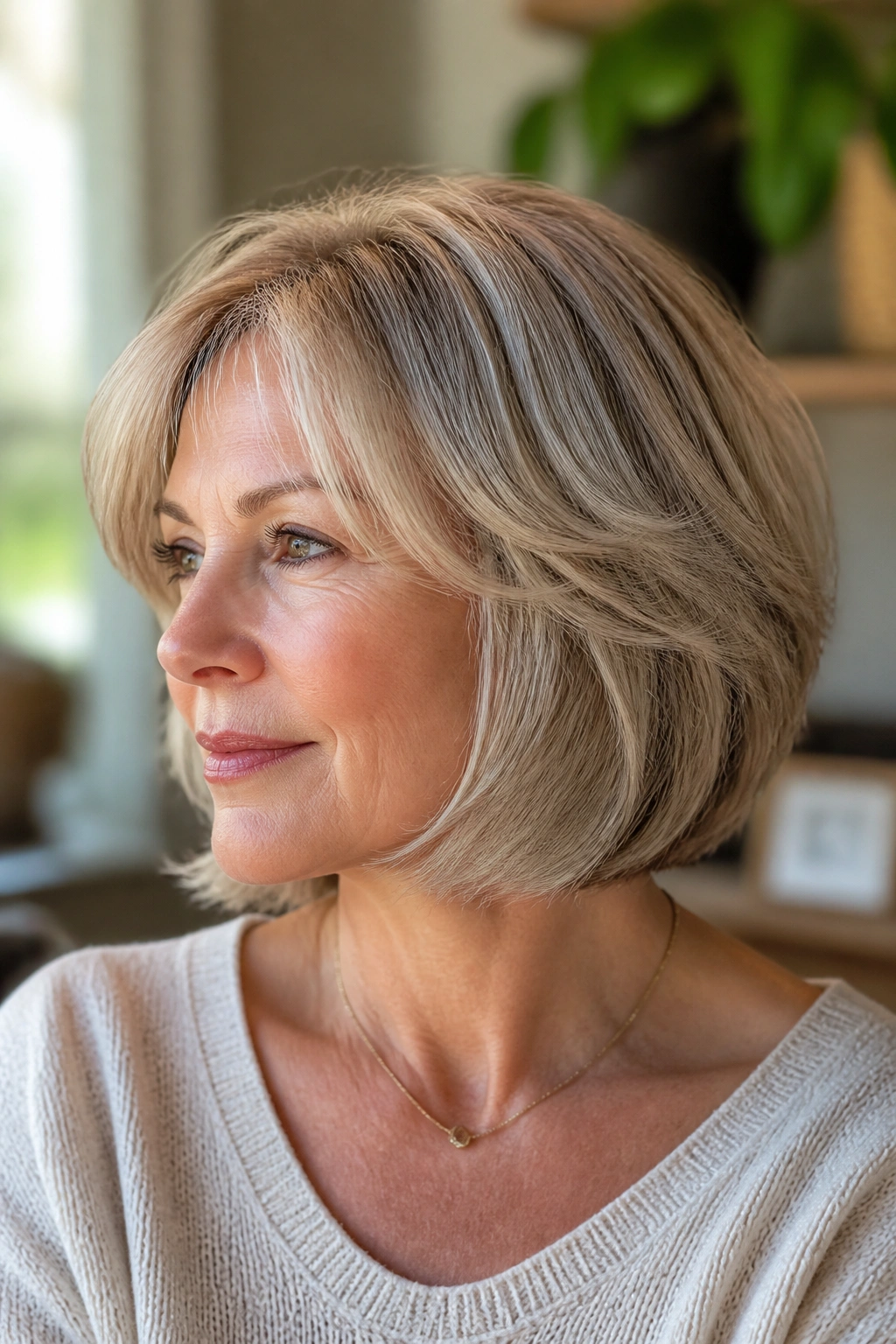
A woman with fine hair can wear layers. She just cannot wear the wrong ones. The best soft layered bob keeps weight at the bottom and puts the lightest shaping around the face and upper crown, where movement helps most.
Think of this as a bob that breathes a little. The layers should start low, usually below the cheekbone, so the cut doesn’t go frayed at the ends. That’s the trap with over-layering: the shape gets busy, but the hair looks thinner. Busy is not the same as full.
The best version of this cut works beautifully on hair that has a slight bend or a very loose wave. You get movement without losing the sense of line. A light mousse at the roots and a quick round-brush blow-dry are enough on most days.
One small warning: if your stylist reaches for thinning shears near the ends, pause the conversation. Fine hair needs help holding together, not more air pockets. That’s the whole game.
4. Stacked Bob That Lifts the Nape

A stacked bob can be a lifesaver for hair that collapses at the back of the head. The nape is cut shorter and shaped with a gradual rise, so the back has built-in lift even when you air-dry. On fine hair, that little bit of internal structure matters more than dramatic layers ever will.
Keep the stack subtle. A hard, old-school stack can look stiff and dated, especially if the hair is very straight. What you want is a rounded rise in the back, not a sharp shelf. The front should still skim the jaw so the cut feels balanced from every angle.
One of the nicest things about this style is how little it asks from you in the morning. A small round brush, a spritz of root-lift spray, and a few clips at the crown while the hair cools can make a real difference. Seriously, that cooling stage matters.
If your neckline is short or you wear collars a lot, this bob keeps the back from puffing out under sweaters and jackets. That’s a practical win, and I never ignore those.
5. French Bob With Eyebrow-Grazing Bangs

A French bob has attitude without looking forced. It usually sits somewhere between lip and chin length, with a fringe that brushes the brows and a shape that feels compact rather than fluffy. On fine hair, that compactness is the whole appeal.
The bangs do a lot of work here. They add visual density at the front, which helps if your hairline has thinned a bit or your forehead feels wider than it used to. Brow-grazing bangs also let you wear glasses without fighting the frames all day.
Why It Works
The cut draws the eye upward. Fine hair often loses presence at the sides and back, but a fringe keeps interest near the face. That means the style reads fuller even if the actual ponytail feels slim.
Styling Note
Dry the bangs first. They set the tone for the whole cut.
A small flat brush or a round brush with a one-inch barrel is enough. Keep the fringe soft, not piecey, or the style starts to look overdone. I’d also avoid heavy styling paste here; it can make fine hair separate in thin-looking ribbons.
6. A-Line Bob With a Longer Front

A-line bobs are useful because they create a little built-in structure without needing tons of product. The back sits shorter, the front sits longer, and that angle gives the hair a cleaner fall. On fine hair over 50, that angled shape can make the ends look more present and the neck look longer.
What I like about this version is that it flatters a lot of face shapes without feeling stiff. The front pieces can touch the jaw or just graze the collarbone, depending on how much length you want to keep. The back should stay neat and lifted, not chopped short enough to expose every scalp line at the crown.
Here’s the catch: if the front is dragged too long, the whole cut gets heavy and loses the crisp bob feel. You want a visible angle, not a secret lob pretending to be a bob. That distinction matters more than people think.
A small amount of bend at the ends helps, too. Tuck the front pieces under with a brush or curl them away from the face with a 1.25-inch iron if your hair needs a bit of shape.
7. Feathered Bob With Gentle Sides
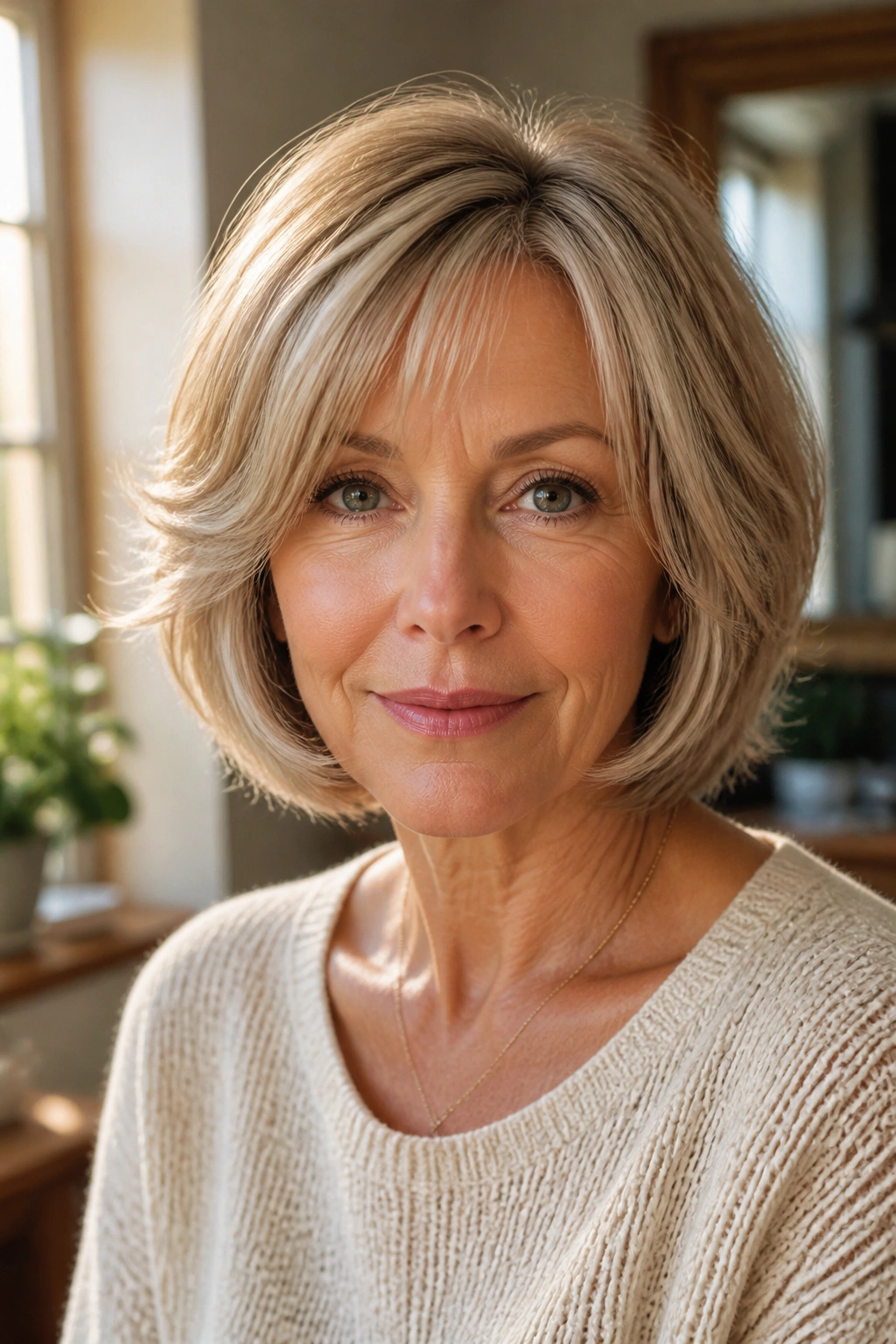
Feathering gets a bad name when it’s done too aggressively. On fine hair, though, a light feathered bob can be lovely when the softness stays around the face and the sides, not chopped through the whole head. The point is movement, not shredded ends.
This cut works especially well if your hair feels flat at the temples but still has decent body through the back. The feathering lets the front pieces slip away from the face, which makes glasses, earrings, and jawlines stand out in a nice way. It also keeps the style from looking helmet-like.
A good feathered bob should still have a clear outline. If the whole cut feels see-through when you shake it out, the layers went too far. That’s the mistake to avoid.
Use a lightweight volumizing mousse at the roots and a round brush to bend the ends inward just a bit. You do not need big curls here. Small, controlled movement is enough.
8. Side-Part Bob for Fine Hair Over 50
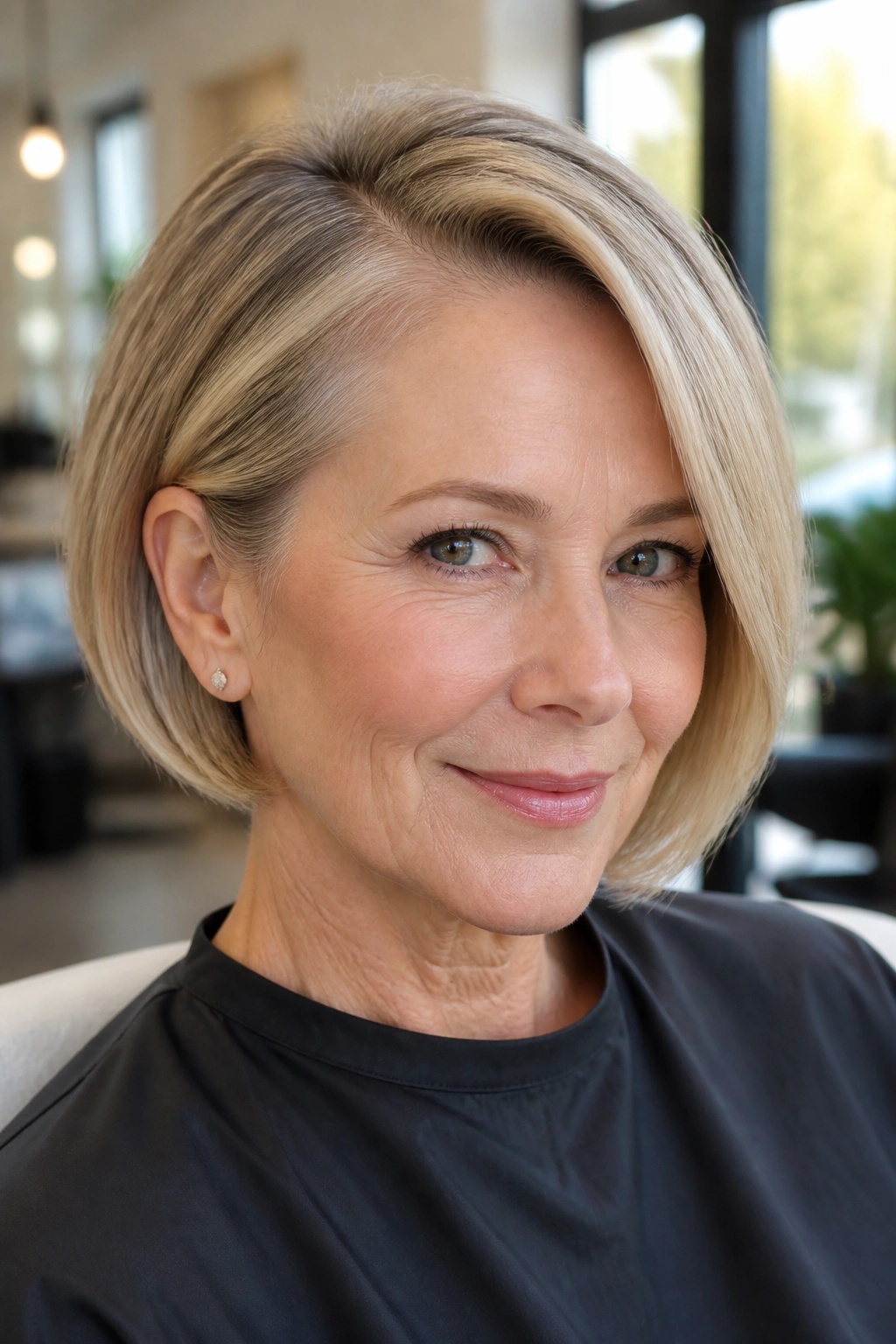
A side-part bob is one of those cuts that looks almost boring on paper and oddly smart in real life. The side part gives the top a quiet lift, and that lift changes the whole mood of fine hair. Less flat. More presence.
I like this cut for anyone who wears their hair tucked behind one ear, because the side part gives the style an easy sweep rather than a stiff curtain. It also plays nicely with a little root shadow at the salon, since a bit of depth near the part can keep the scalp from showing too much through the top.
Why the Part Matters
Fine hair usually splits in the same place over and over. Changing the part even by an inch can break that pattern and give the roots a better chance to stand up. It sounds small. It isn’t.
A side part can also balance a longer nose, a stronger chin, or one side of the face that feels fuller than the other. That sort of detail matters more than people admit.
Keep the rest of the cut fairly simple: clean ends, a jaw-to-chin length, and minimal layering through the sides. The part does the heavy lifting.
9. Wavy Bob That Lets Natural Texture Show
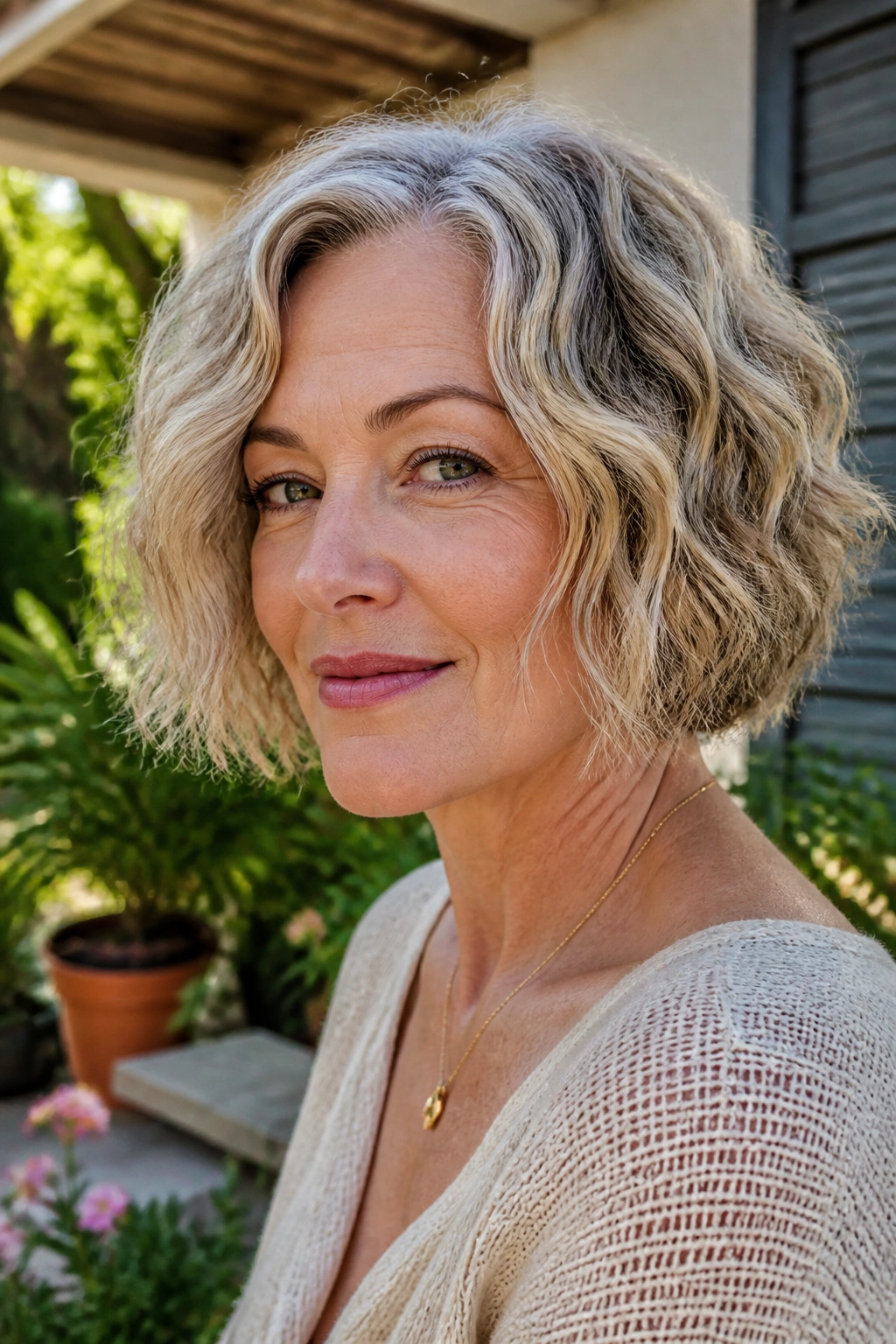
If your fine hair has a natural wave, don’t flatten it into submission. A wavy bob can look fuller than a blow-dried straight style because the bends create shadows and visual thickness. The trick is to shape the cut around the wave pattern instead of pretending the pattern isn’t there.
That usually means a dry or partially dry cut, or at least a stylist who pays attention to where the wave kicks in. Fine wavy hair can swell at the ends and go airy at the roots, so the shape needs to be balanced. Too many layers and the wave turns fluffy. Too few and it falls into a flat triangle.
Use a curl cream or light cream-gel mix on damp hair, scrunch once, and stop touching it. Really. The more you rake through it, the more it separates into stringy pieces. A diffuser on low heat can help, but a soft air-dry often looks better.
This is one of the easiest bob haircuts for fine hair over 50 if you hate a polished blowout every day. It feels less fussy and more lived-in, which I always think is a relief.
10. Collarbone Lob With a Soft Taper
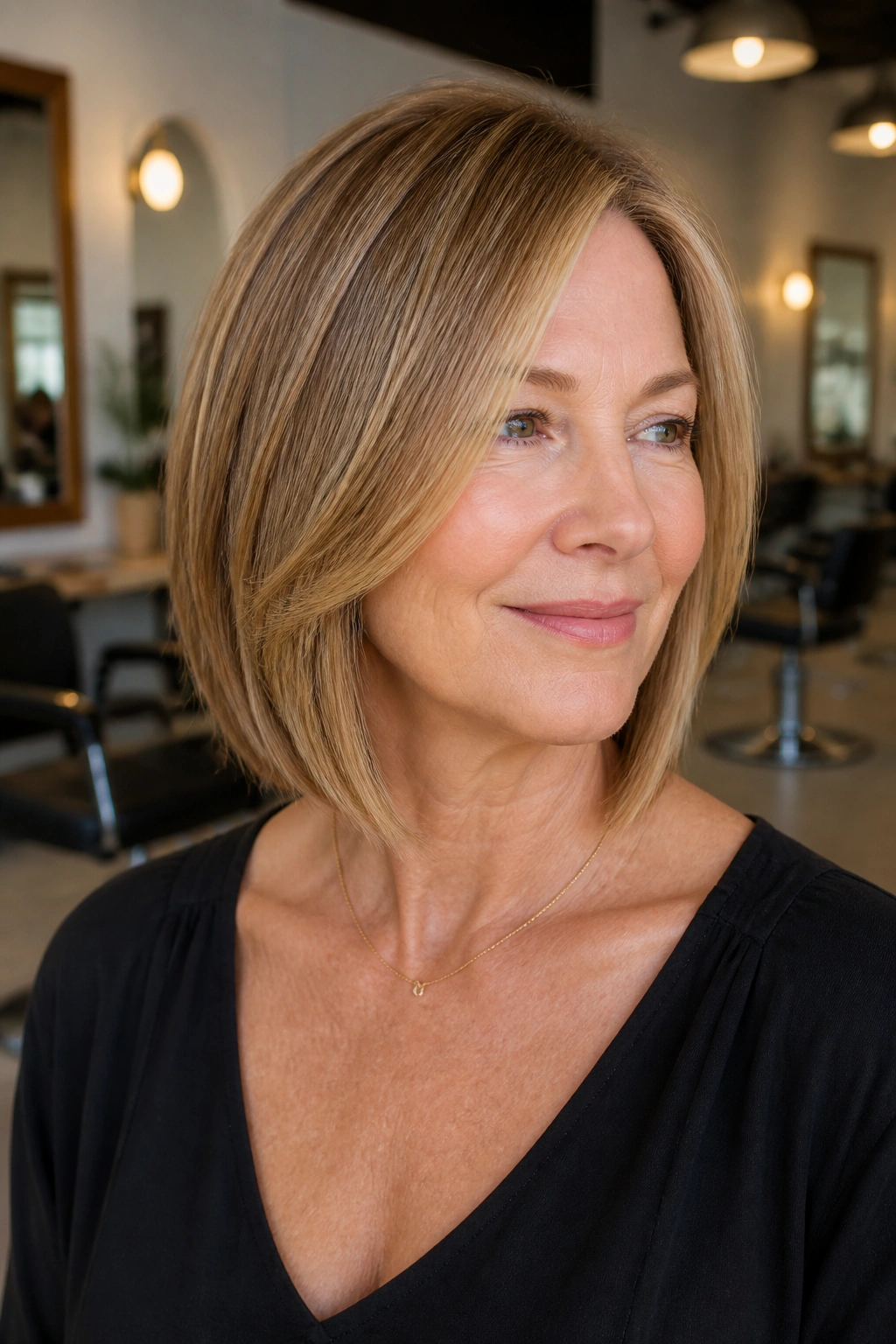
A collarbone lob gives you a bit more length while still keeping the bob family feel. For some people, that extra inch or two is the difference between “I can manage this” and “I need a haircut every six weeks or I’ll lose my mind.” Fine hair often benefits from this middle ground.
The soft taper matters. Keep the perimeter clean, then add only enough shaping to keep the ends from looking blunt in a heavy way. The length hits the sweet spot between easy tuck-behind-the-ear styling and enough weight to avoid flyaway ends.
Best For
- Hair that feels too short in a chin-length bob.
- Necklines that look best with a little drop.
- People who want to wear clips, barrettes, or low bends at the ends.
The style works well with a deep side part or a small face-framing bend. I’d skip chunky layers through the bottom third, though. Those can make the whole cut sit too thin on the shoulders.
If you like to air-dry, this is one of the kindest options in the bunch. It grows out cleanly, too.
11. Bob With Bottleneck Bangs
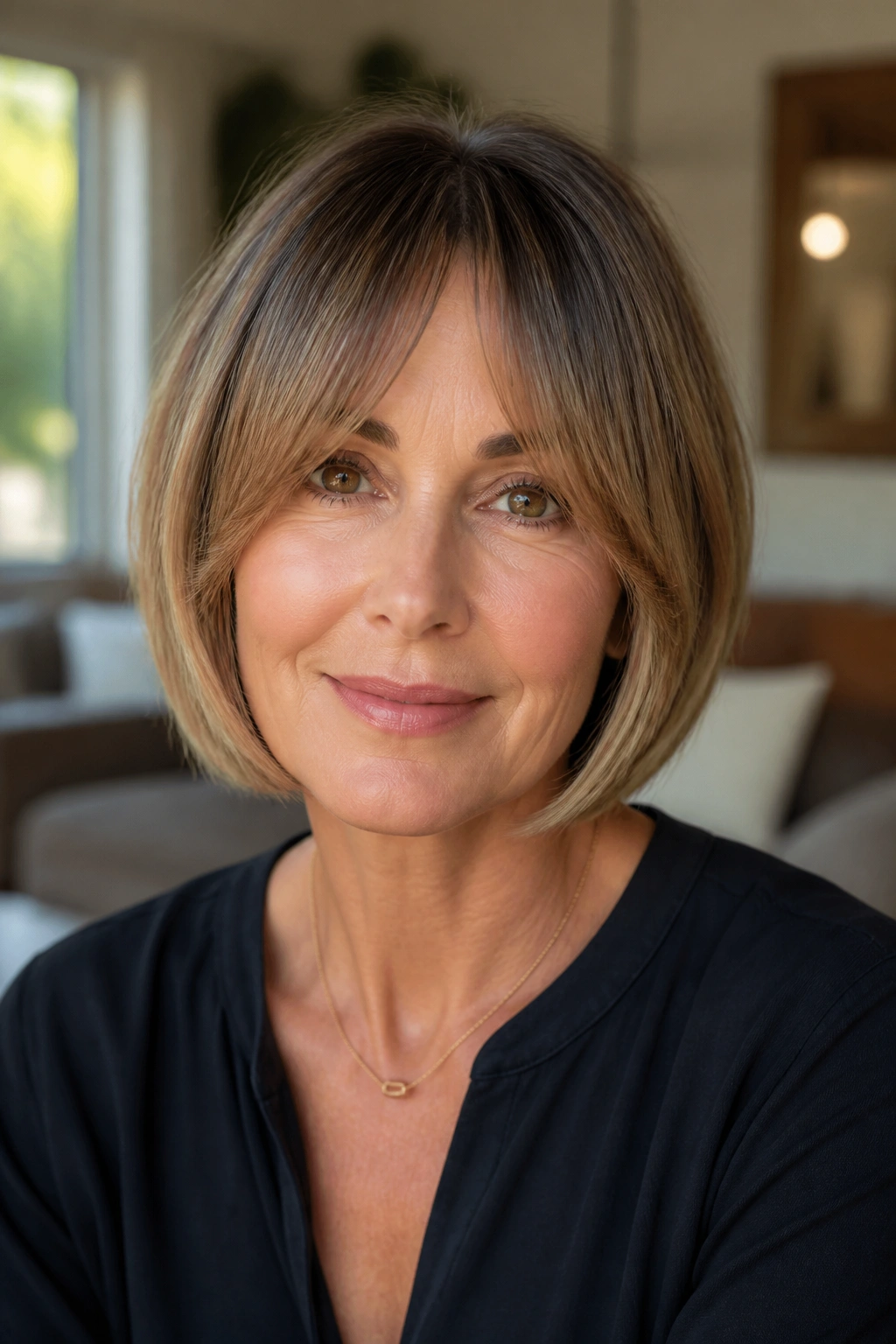
Bottleneck bangs are a smart way to add shape without committing to a heavy fringe. They’re narrow at the center, then widen softly toward the cheekbones. That little flare can help fine hair look fuller around the face, which is where many people want the most softness after 50.
The cut around the bob should stay pretty simple. Clean sides, a line that lands around the jaw, and bangs that don’t sit so dense they swallow the forehead. The shape is meant to frame, not bury.
This works especially well if your temples have thinned a little or if a full fringe feels too dense. Bottleneck bangs keep the top lighter, which helps the bob stay airy instead of boxed in. They also grow out with less drama than a blunt fringe, which I appreciate.
For styling, blow the center section down and the sides slightly away from the face. That gives the bangs a curve instead of a flat curtain. A tiny round brush makes the job easier than a big one.
12. Rounded Bob That Hugs the Head
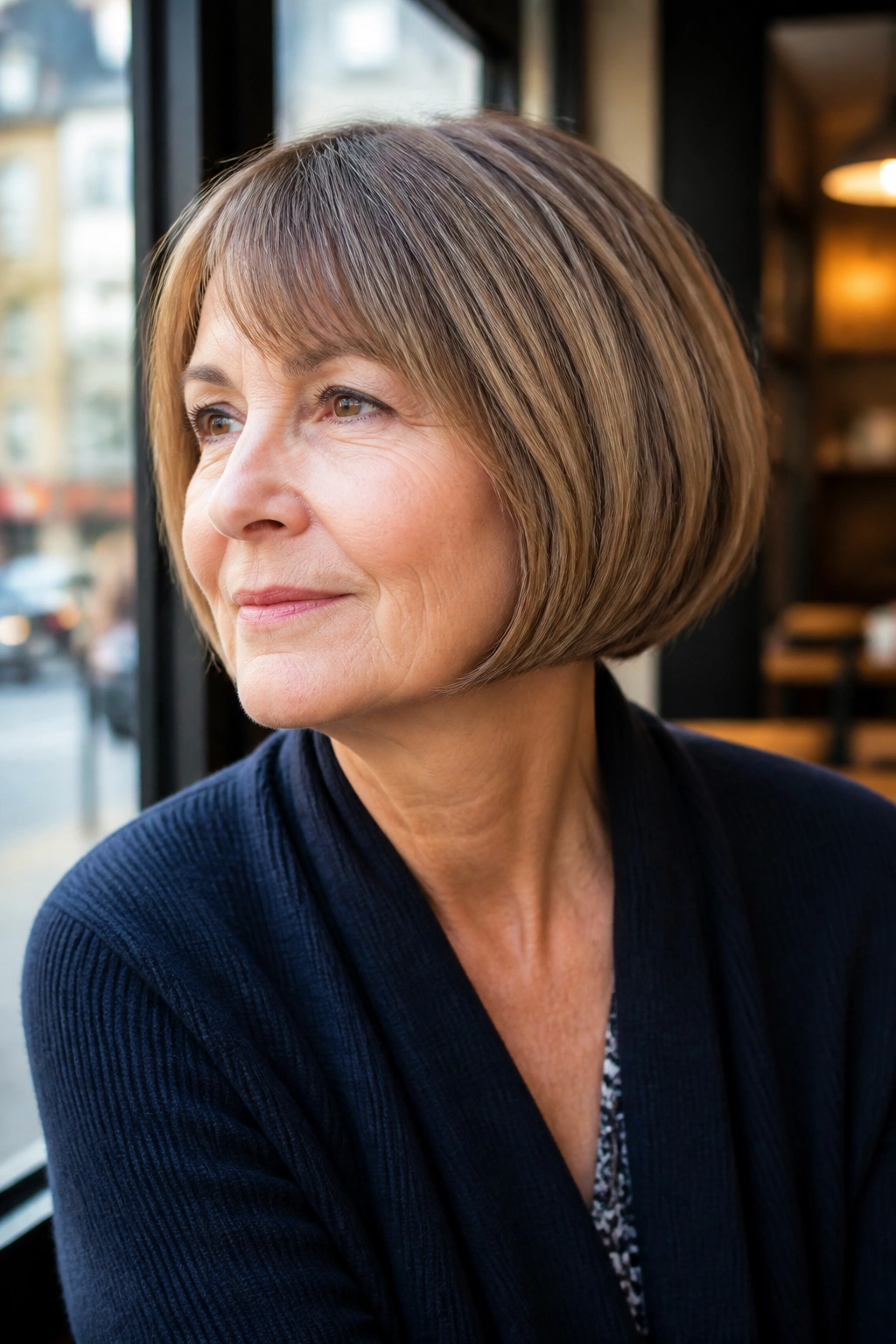
A rounded bob has a quiet, polished feel that fine hair often loves. The shape curves gently around the head instead of sticking straight out or collapsing straight down. On straight strands, that rounding creates the look of body where there isn’t much natural bend.
Unlike a choppy bob, this one depends on clean shaping. The back should follow the head, and the front should stay soft enough that the cut doesn’t feel helmet-hard. That balance is what makes the style wearable. Too round, and it can look dated. Too flat, and you lose the point.
I’m fond of this cut for women who wear earrings or glasses because the shape frames the face without competing with the accessories. It also holds up well on second-day hair. A little dry shampoo at the roots and a quick brush-through can bring it back fast.
If your hair tends to split at the crown, ask for a bit of subtle lift there. A tiny bit of graduation is usually enough. No need to overbuild it.
13. Sleek Bob That Tucks Behind the Ears
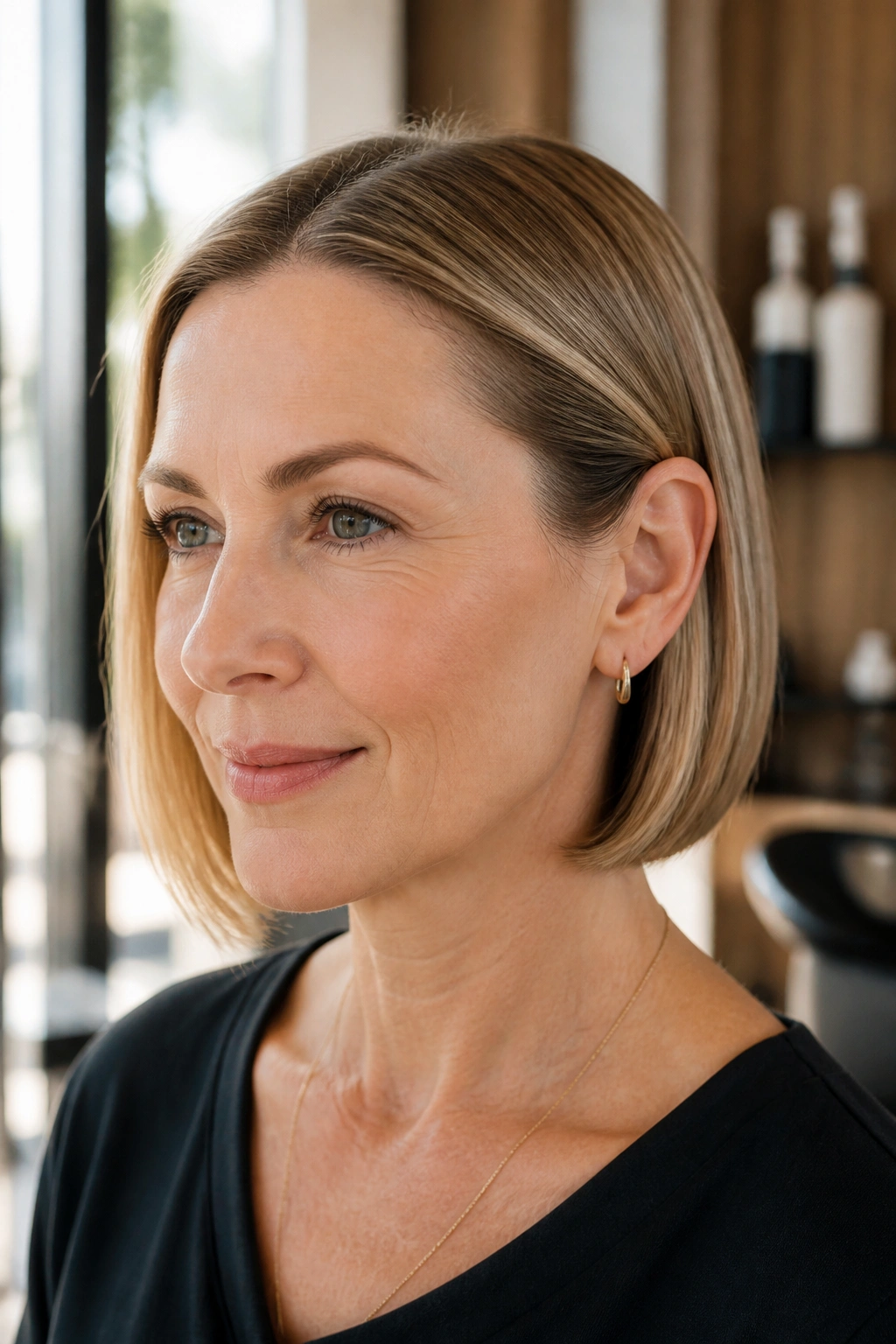
A sleek bob sounds plain until you see how good it can look on fine hair. The trick is the ear tuck. When the cut has enough length to slide behind the ears, it opens the face and makes the hair look neat without needing a lot of volume at the sides.
This shape is especially good if you like clean lines and low-drama styling. One pass with a blow-dryer, a flat brush, and a small amount of smoothing cream can be enough. Fine hair often looks expensive when it’s simple and shiny. It looks tired when it’s overworked.
What Makes It Different
The length sits just long enough to tuck, but not so long that it drags the whole head down. That middle point matters. You want the bob to land in a place where the ends still look deliberate.
A small side part can keep the top from looking too flat. If your hair is very straight, bend just the last half-inch of the ends under slightly. That tiny detail keeps the line from feeling harsh.
I’d choose this cut for people who wear studs, hoops, or glasses and want the hair to stay out of the way.
14. Soft Inverted Bob With a Gentle Angle
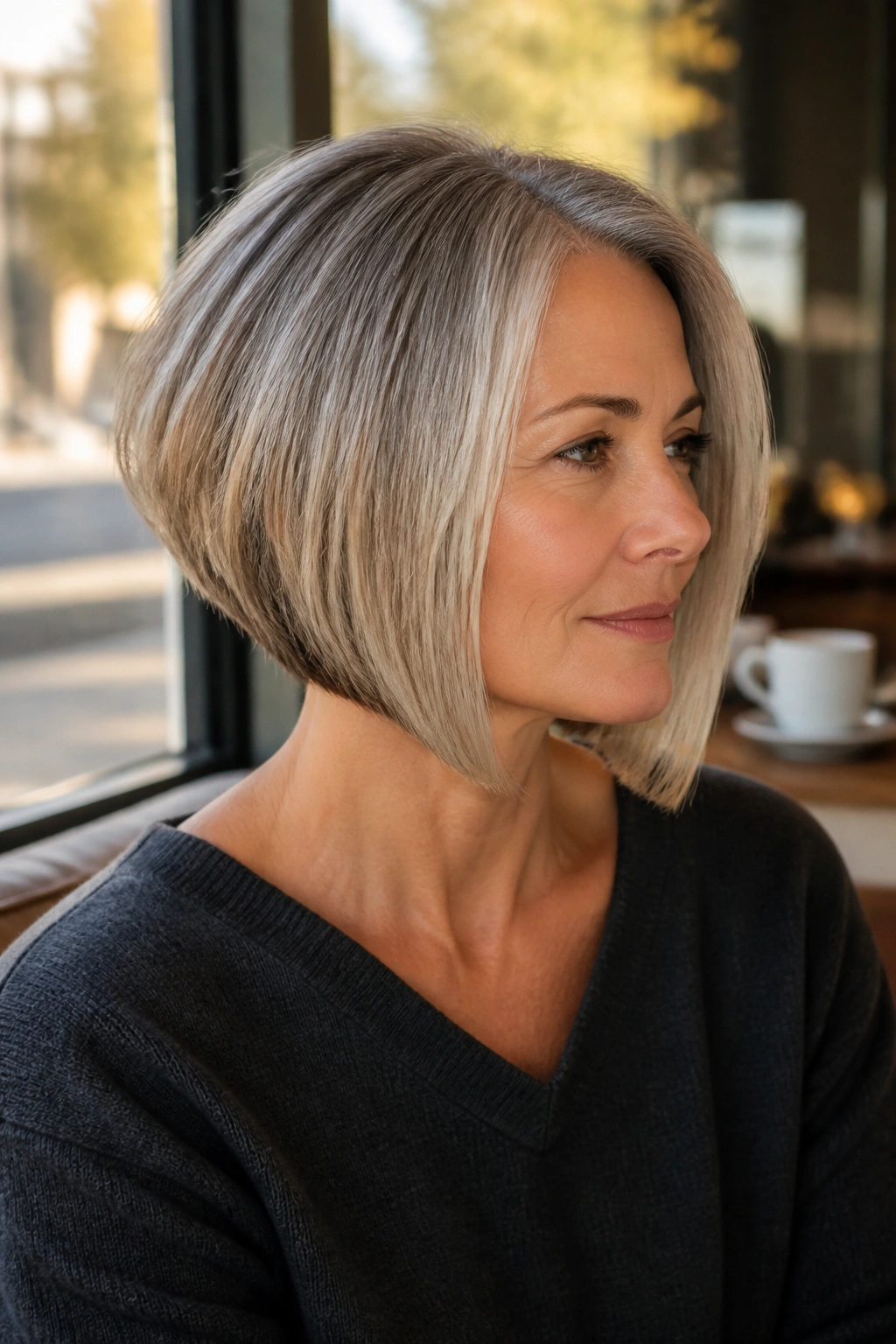
An inverted bob gives you shorter back lengths and longer front pieces, but the best version for fine hair keeps the angle soft. You want enough shape to build lift in the back, not such a dramatic slope that the haircut starts shouting at everyone in the room.
This cut helps when the back of the head is flat or the crown sits low. The shorter nape supports lift, and the longer front keeps the face from looking boxed in. It’s a useful compromise, which is a nicer word than it sounds. Sometimes compromise is exactly what a haircut needs.
A little root spray at the back can make the angle look stronger when the hair is dry. Don’t pile on thick creams. They drag the back down and blur the line that makes the cut work.
One thing I like here: the shape grows out gracefully. It doesn’t fall apart overnight, which means you can stretch salon visits a bit longer without the haircut turning shapeless.
15. Shag-Influenced Bob With Controlled Texture

A shag-influenced bob can work on fine hair, but only if the texture stays controlled. I’m not talking about a full shag with choppy layers everywhere. That would usually strip too much density from the ends. What works better is a bob with a little lift at the crown and some face-framing softness.
The goal is movement without frizz. Fine hair can look sparse when layers are cut too high or too many are stacked on top of each other. A restrained shag-bob keeps the perimeter clean while giving the top just enough life to avoid a flat helmet shape.
Good Signs to Ask For
- Layers that begin around the cheekbone or lower.
- A perimeter that still looks solid when the hair moves.
- Soft face framing that doesn’t open too much of the cheek.
This cut is a good match for hair that has a slight wave or some natural bend. On pin-straight hair, it can still work, but the styling matters more. A round brush and a light texturizing spray at the ends can keep it from falling limp.
16. Pixie-Bob Hybrid for Very Fine Hair
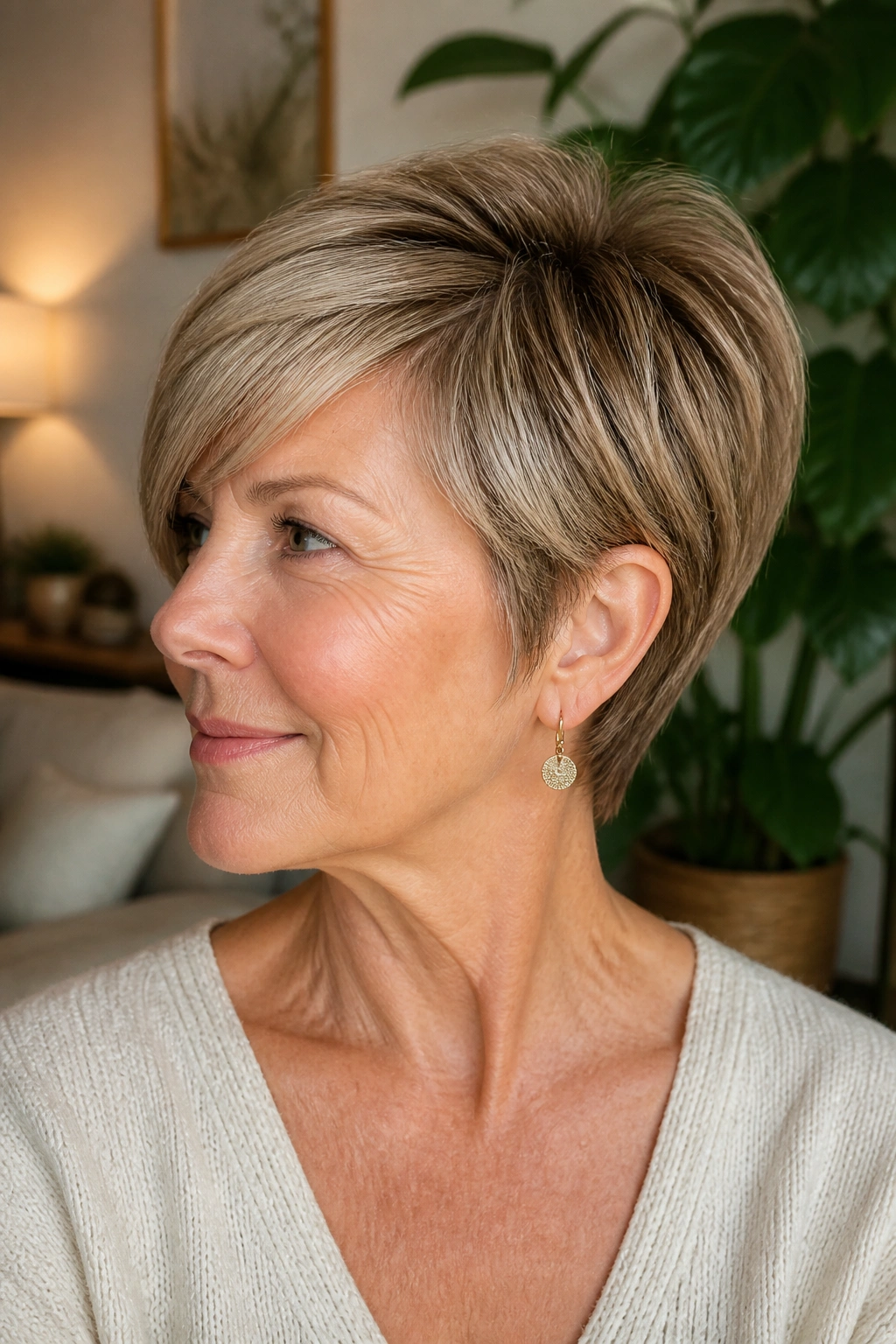
A pixie-bob hybrid sits in that useful zone where the hair is short enough to feel light but long enough to keep some softness around the face. If your fine hair has gotten thinner over time and the ends feel sparse, this shape can be a relief. Less length. More shape.
It usually sits around the ear to jaw area, with a little more length on top for lift. That top length is not decorative; it gives you somewhere to build volume without needing a lot of product. Fine hair can handle short cuts better when the crown has a bit of room to rise.
This is a cut that needs regular trims. Every six to eight weeks is a sensible rhythm if you want the shape to stay crisp. Let it go too long and the pixie-bob middle ground starts to blur.
A small amount of wax or paste can help, but keep it light. If the hair feels sticky, you’ve used too much, and the cut will show that instantly. Shorter hair is honest like that.
17. Deep Side-Swept Fringe Bob
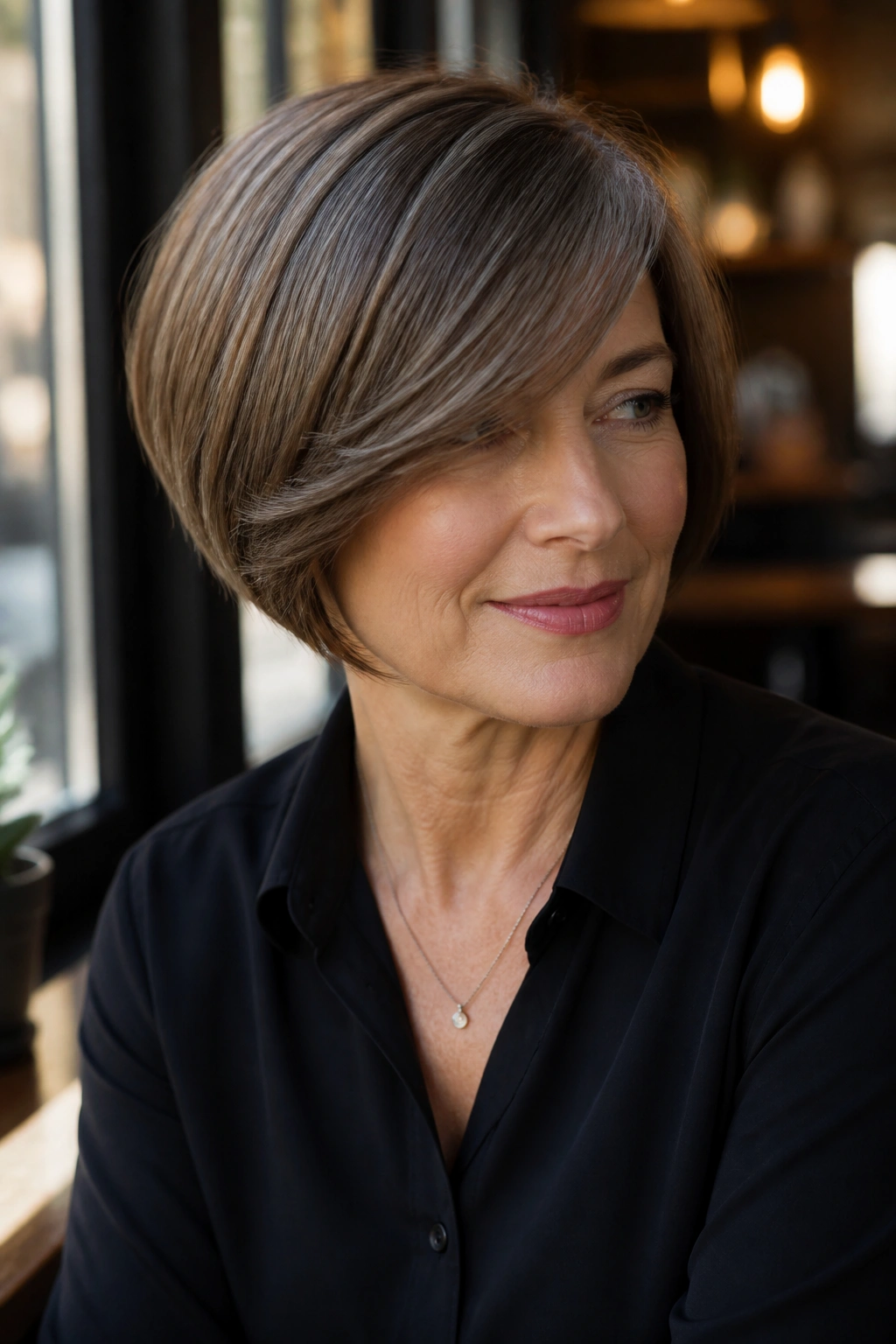
A deep side-swept fringe can do more for fine hair than people expect. It shifts attention toward the eyes and cheekbones, gives the front a denser look, and covers part of the hairline without the weight of a full bang. That’s a nice trade on hair that’s lost a little fullness at the front.
The bob itself can stay simple: chin length, jaw length, or even a touch longer. The fringe is the star. It should sweep across the forehead and blend softly into the side, not fall in one heavy slab. Heavy bangs on fine hair often separate in odd ways. Swept bangs move better.
How to Wear It
- Dry the fringe first with a small round brush.
- Direct the hair away from the face, then let it cool in place.
- Keep the rest of the bob fairly sleek so the fringe stands out.
This style suits people who want a little drama without giving up an easy cut. It also helps if one side of your hair grows flatter than the other. The sweep covers that unevenness fast.
18. One-Length Bob With Internal Movement

A one-length bob sounds plain, but on fine hair it can be one of the smartest choices. The outside line stays clean, which makes the ends look thick. Inside that shape, a stylist can remove just enough weight to keep the cut from sitting like a block.
That hidden movement is the whole trick. You don’t need obvious layers for the hair to move. A little internal shaping, done carefully, can stop the cut from feeling stiff while preserving the perimeter. That’s a better deal for fine hair than chopping in visible layers that thin out the outline.
Unlike heavily textured cuts, this one works best when the hair is straight or only slightly wavy. It lets shine show, and shine helps hair read as healthier and fuller. Add a blunt edge at the bottom, and you’ve got a clean frame that doesn’t ask for much.
If your hair tangles easily, this may be easier to maintain than a layered bob. Fewer moving parts. Fewer knots. Less morning irritation.
19. Gray-Friendly Bob With a Shiny Finish

Gray hair often comes with a different texture story. Some strands feel wirier, some finer, and the mix can be unpredictable. A bob with a strong, polished shape keeps all of that from looking fuzzy or uneven. The line does the organizing for you.
The best gray-friendly bob is usually chin to jaw length, with enough weight at the ends to hold a shape. If the hair is very silver and coarse at the surface but fine underneath, a blunt outline helps the cut feel intentional. Soft side layering near the face can stop the style from looking boxy.
A clean finish matters here more than a heavy one. Use a light smoothing serum on damp hair, then blow-dry with a paddle brush if you want sleekness, or a round brush if you want a little body. Purple shampoo can keep brass out of the picture, but the haircut still has to carry the look. Color alone won’t save a weak shape.
This is one of those cuts that looks better when it’s not trying too hard. Clean. Bright. Straightforward.
20. Shoulder-Grazing Bob With Easy Movement
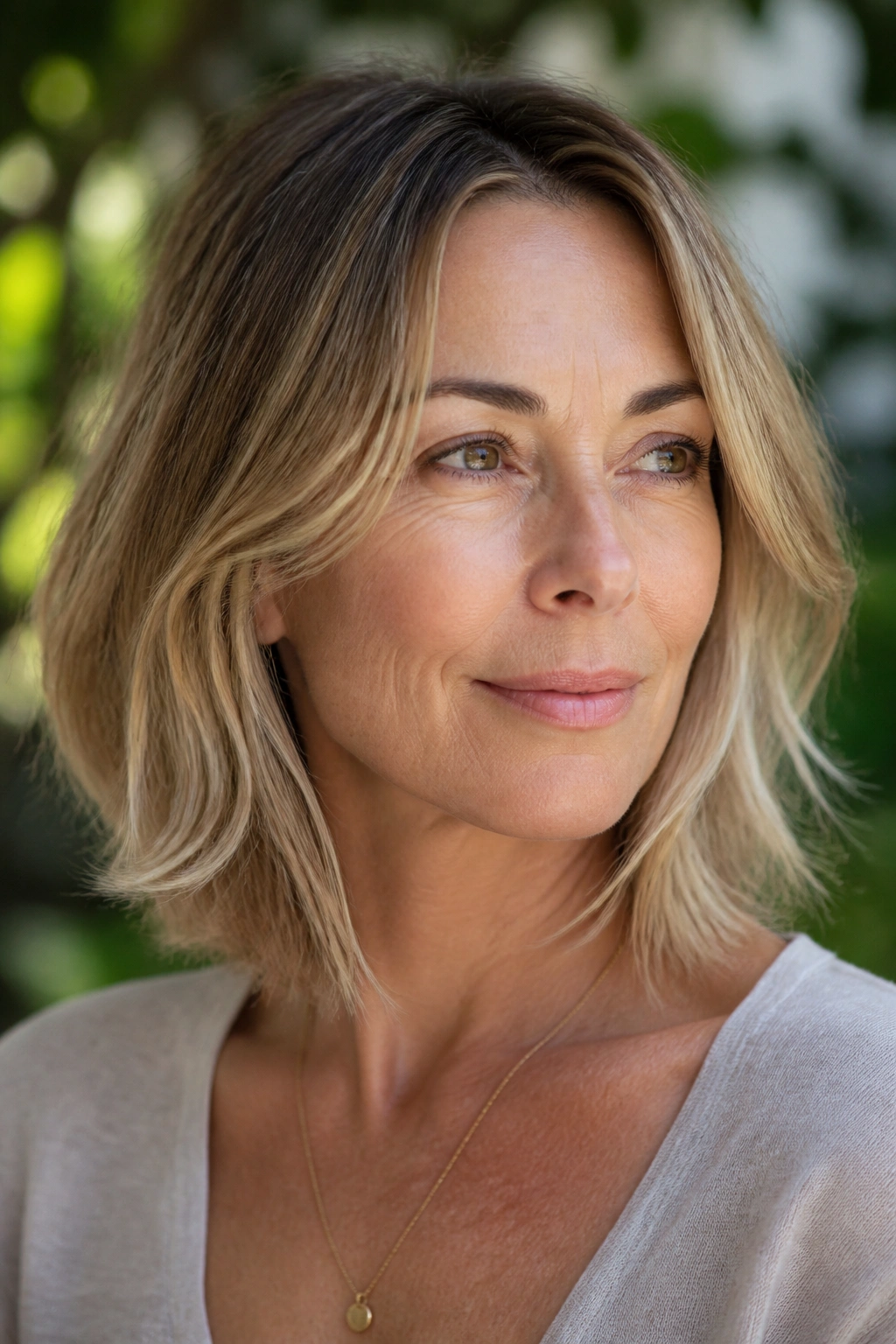
A shoulder-grazing bob is the friendliest option if you want the feel of a bob without committing to a very short cut. It sits long enough to tuck, pin, and twist, but short enough to keep the ends from looking thin and tired. For fine hair, that matters a lot.
I like this shape for people who want movement more than drama. The ends should just skim the shoulders, and the interior should be shaped lightly so the hair bends instead of hanging like wet string. A soft side part or a slight off-center part usually helps the cut feel less flat at the roots.
This is also the easiest place to land if you’re growing out a shorter bob. It buys you flexibility. On busy days, you can air-dry and go. On days when you want a neater finish, a quick blowout smooths everything into place.
If I had to pick one cut for someone who wants low-stress styling, decent fullness, and a shape that doesn’t go out of control too fast, this would be near the top. It’s calm. That’s a good thing.
