



A good side part layered bob haircut changes the whole mood of a face in under ten seconds. Move the part, add a few well-placed layers, and the cut stops reading as blunt or boxy; suddenly it has lift, bend, and a little swing around the cheekbones.
That’s why this haircut keeps hanging around in salon chairs. It works on straight hair that falls flat, on wavy hair that wants movement, and on thick hair that needs shape without turning into a helmet. The side part does a lot of quiet work, too. It shifts the volume, softens a strong jaw, and gives even a simple bob a more lived-in feel.
I’ve always thought the best layered bob haircuts are the ones that look easy but are doing a fair amount behind the scenes. A clean perimeter, a thoughtful part, and the right weight removal in the right places can make a huge difference. Not every bob needs to be dramatic. Some just need to sit better.
The fifteen looks below cover that range—from crisp and polished to choppy and undone—so you can find the version that matches your hair, your face, and how much styling you’re willing to do before coffee.
1. Chin-Length Side Part Layered Bob with Feathered Ends

A chin-length cut is the bluntest place to start, and that’s exactly why the layers matter here. Without them, the shape can feel a little too firm around the jaw. With soft feathering at the ends, the whole bob moves more easily and picks up a light bend instead of hanging in one stiff line.
Why It Flatters the Jaw
The chin is a useful landing point because it gives the face a clear frame without swallowing it. A deep side part adds lift on one side and leaves the other side to skim the cheekbone, which can soften square or round features fast. The feathered ends keep the outline neat while taking away that old-school triangle shape people complain about with shorter bobs.
If your hair is fine, this one is a sneaky win. It gives the illusion of more body without asking for a lot of layers that can make the ends look wispy.
- Ask for light, pieced-out layering through the mid-lengths.
- Keep the perimeter at the chin for a sharper outline.
- Style with a round brush and a small bend at the ends.
- Use a pea-sized amount of smoothing cream, not a heavy oil.
Best for: straight to slightly wavy hair that needs shape more than length.
2. Angled Side Part Layered Bob with a Clean Diagonal Line
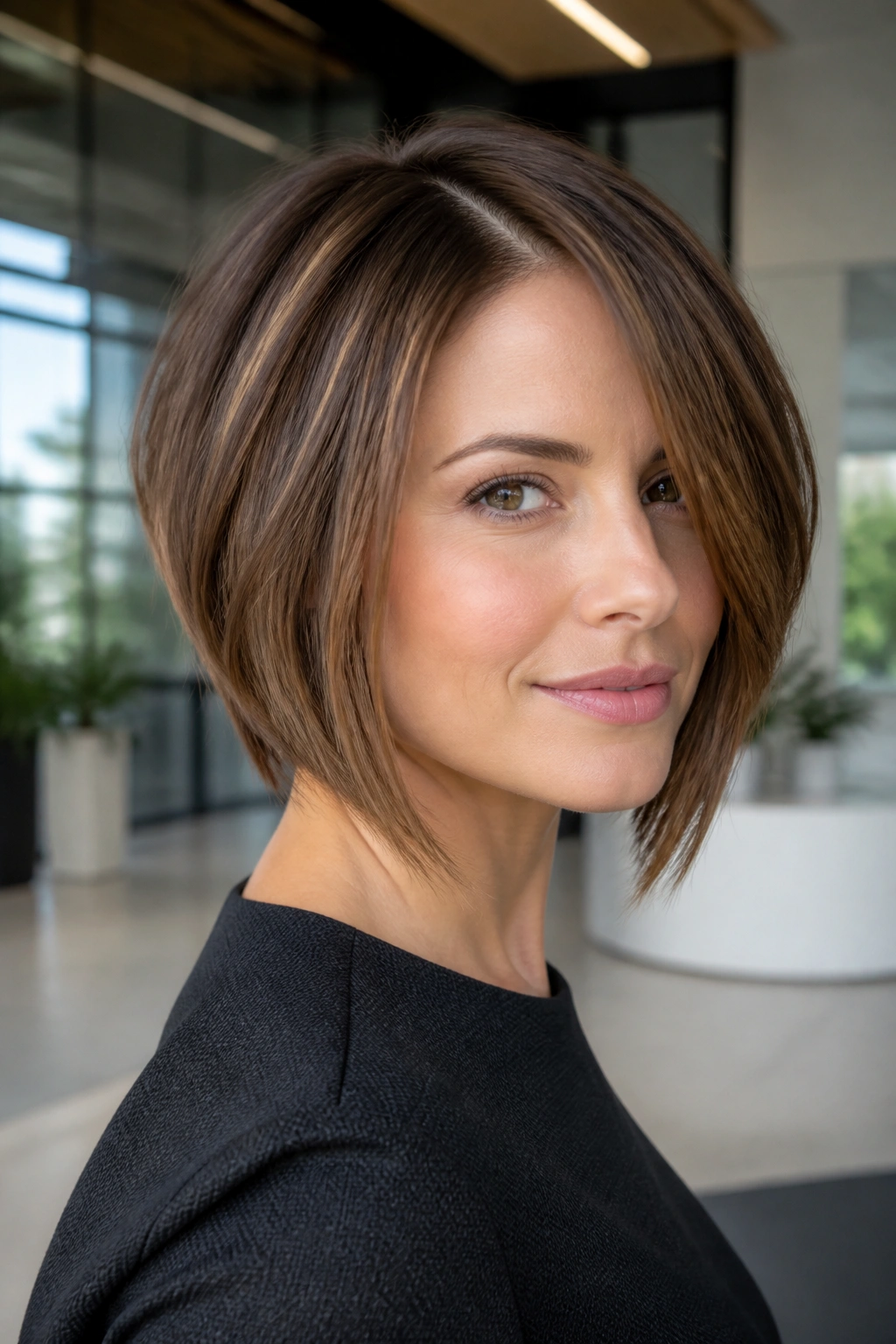
This is the version that looks polished even when you don’t try very hard. The back sits a little shorter, the front hangs longer by an inch or two, and the diagonal line gives the bob motion before you add a single styling product. It’s tidy, but not boring.
The side part does most of the flattering here. Because the front pieces are longer on one side, the eye gets pulled downward and across the face, which can make a wide forehead or fuller cheeks feel more balanced. The layers should stay quiet; too many chopped pieces will fight the shape and make it look busy.
I like this cut on people who want a bob that still feels professional without looking severe. It has enough edge to feel current, but the angle is doing the real work. If you blow-dry it smooth and tuck one side behind the ear, it looks sharper. If you rough-dry it, it still holds its line.
What to Ask Your Stylist For
Ask for one clear angle from the nape to the front, plus soft internal layers to keep the body from puffing up. The trick is keeping the front pieces long enough to show the slant. Too short, and the whole point disappears.
3. Collarbone Side Part Layered Bob That Slips Into a Lob

Some bobs are strict. This one isn’t. A collarbone-length cut gives you the movement of a bob with a little more room to tuck it behind the ear, braid it, or throw it into a half-up style on lazy mornings. The side part keeps it from feeling like an in-between haircut.
Why It Works So Well on Wavy Hair
Collarbone length gives waves space to fall instead of ballooning out at the sides. Add long layers that start around the cheekbone or jaw, and the shape gets that soft, broken-up look people spend too much time chasing with curling irons. The side part helps the front pieces sweep across the face instead of hanging straight down, which keeps the cut from feeling heavy.
This is also the version I’d point at if you’re nervous about going shorter. It still counts as a bob, but it buys you flexibility. You can air-dry it, bend the ends with a flat iron, or wrap a few sections around a 1-inch curling wand and call it done.
Styling note: Use a light mousse at the roots and a heat protectant on the ends. Skip the crunchy stuff. It kills the movement this cut is trying to create.
4. French-Inspired Side Part Bob with Airy Internal Layers
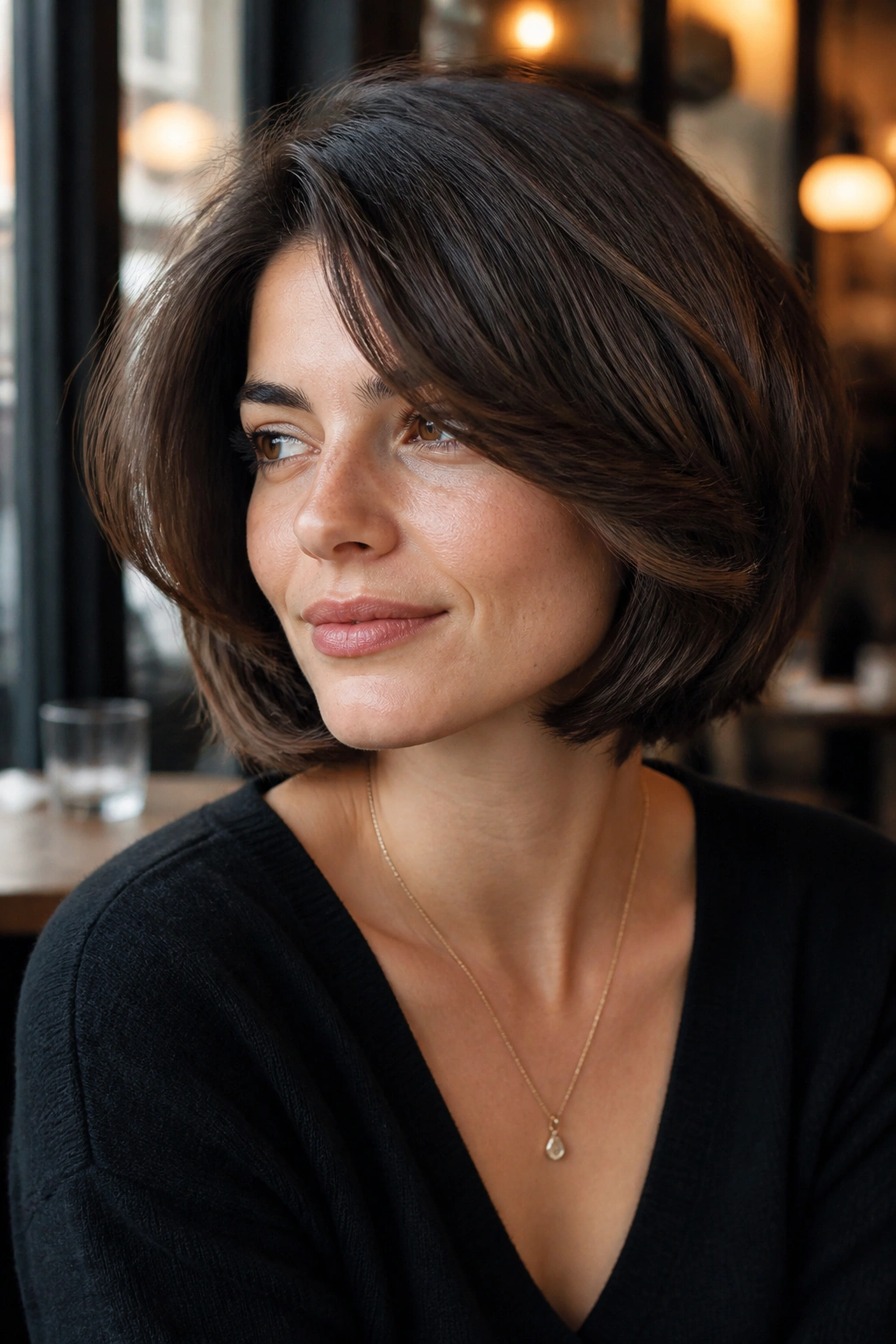
Not every layered bob needs obvious choppiness. A French-inspired side part bob often looks better when the layers are tucked inside the cut, not sitting on top of it like decoration. The result is softer, more natural, and a little less try-hard, which is exactly why it works.
A side part keeps this style from becoming too symmetrical. One side falls near the cheekbone, the other side sits a touch closer to the jaw, and the imbalance gives the haircut a relaxed feel. It’s the kind of bob that looks as if you slept on it perfectly, even when you didn’t.
This version shines on hair that already has a bit of bend. Straight hair can wear it, too, but it usually needs a quick pass with a round brush or a large-barrel curling iron to get the ends to fold inward. If the layers are cut too aggressively, the whole look loses that easy French feel. Keep them soft.
I’d call this one a good choice if you want style without sharp edges. It’s quieter than the angled bob, less polished than the sleek version below, and a lot more forgiving on day two.
5. Stacked Side Part Layered Bob for Built-In Lift

If your hair tends to slump at the crown, a stacked bob can feel like cheating. The back is cut with shorter layers that build height near the nape, and the side part adds even more lift on top. The shape does some of the styling on its own.
When This Cut Makes Sense
This is the bob for hair that goes flat by lunch. The stacked layers remove weight where the hair needs room to bend, then leave enough length around the face to keep the cut from looking too round. On thicker hair, that balance matters. Without it, a short bob can balloon out at the sides and become a headache.
A stacked side part layered bob can look very polished with a blowout, but it also holds up when air-dried with a bit of texture cream. The trick is not to over-thin the ends. You want stacked volume in the back, not a fluffy mushroom shape.
- Best on straight to wavy hair.
- Great if you like a little crown height.
- Ask for graduation at the nape, not random short pieces.
- Use a paddle brush or round brush depending on how smooth you want it.
It’s a strong choice. Not subtle, but useful.
6. Wavy Side Part Layered Bob with Invisible Layers
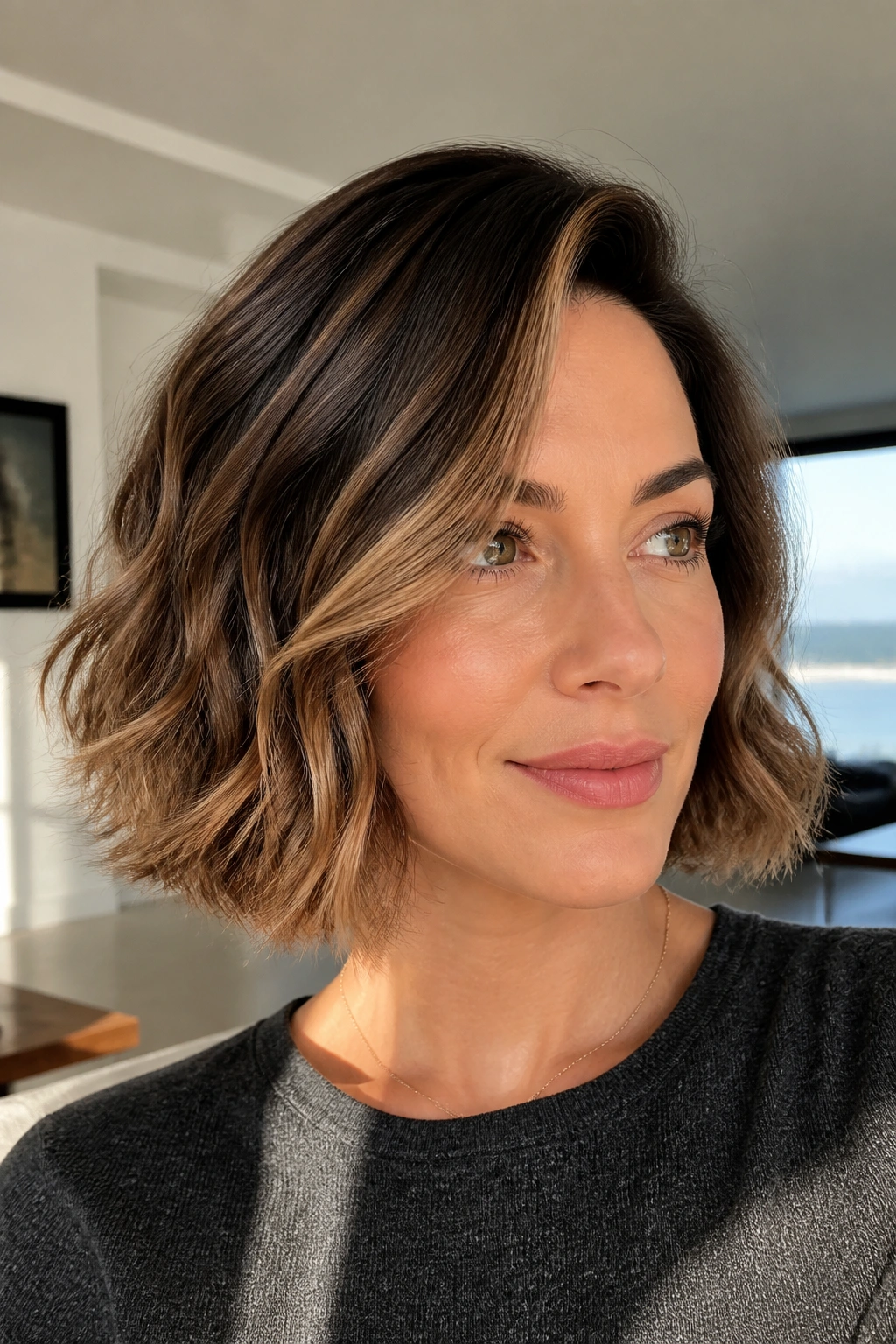
Loose waves and a side part are old friends. Add invisible layers—those internal cuts that remove bulk without shouting about it—and the whole bob starts moving in a way that looks natural, not arranged. That’s the appeal here.
What Makes Invisible Layers Different
The idea is simple: the outside line stays clean, while the inside of the cut carries the weight removal. That means the bob still looks full when it’s dry, but it doesn’t puff out in the middle like a triangle. On wavy hair, that matters a lot. Too many visible layers can make the wave pattern look chopped apart. Invisible layers keep the shape soft.
This is one of those cuts that benefits from a little hands-off styling. Scrunch in mousse, twist a few face-framing sections while damp, and let the hair dry without being fussed over every five minutes. A side part gives the waves direction, which keeps them from going wide on both sides.
Best styling move: flip the part while the roots are damp, then set it where you want it before the hair dries. That tiny habit gives the crown a better lift.
7. Curly Side Part Layered Bob That Respects the Curl Pattern

Curly hair and a side part can be a gorgeous pairing, but the cut has to respect the curl pattern first. If the layers are placed badly, curls can spring up unevenly and leave one side looking fuller than the other in a way that feels accidental. The better version is shaped curl by curl, or at least section by section, with the side part built into the cut.
The Cut Rule I Care About Most
Never let a stylist treat curls like straight hair. That sounds obvious, but it still gets ignored all the time. Curly bobs need length checks while dry or nearly dry because curls bounce. A layered bob that looks perfect wet can finish much shorter and tighter once it dries.
The side part helps curly hair because it lets the curls fall with a bit of asymmetry instead of puffing into a perfect sphere. I like a cut that keeps the densest curls around the back and lets the front layers drift shorter toward the cheekbones. That opens the face and stops the shape from feeling bottom-heavy.
- Ask for curl-by-curl shaping if your texture is tight or springy.
- Avoid aggressive thinning shears; they can make curls frizz.
- Diffuse on low heat, low speed.
- Use a gel-cream, not a heavy butter that weighs the curls down.
If you have curls, this bob can be a dream. It just has to be cut with the curls in mind, not against them.
8. Fine-Hair Side Part Layered Bob with a Blunt Outline
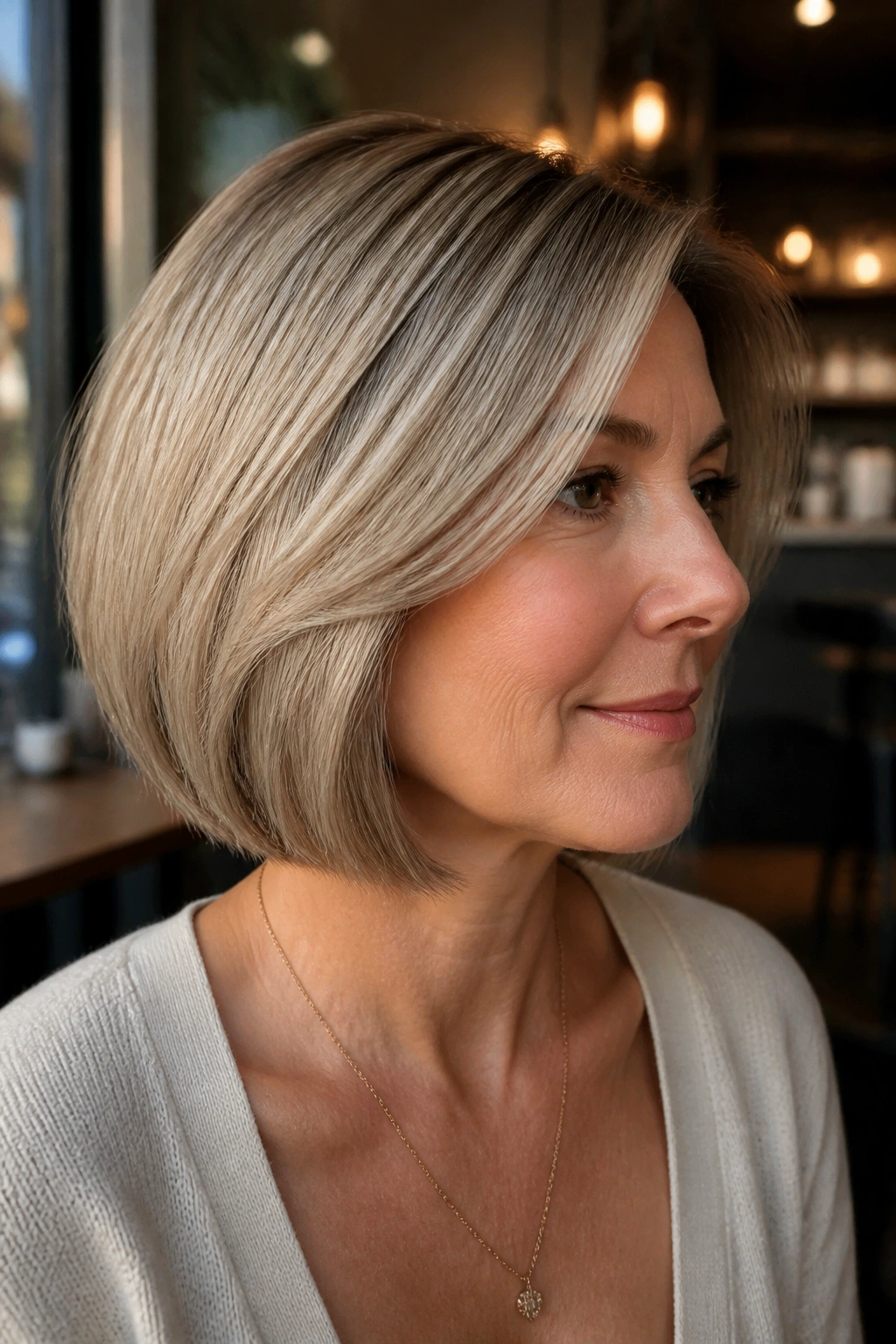
Fine hair often looks best when the cut is a little more disciplined. Too many layers can make it look see-through at the bottom, which is the opposite of what most people want. A blunt outline with discreet layering inside the shape gives you density at the edges and movement where the eye wants it.
The side part helps because it makes the top look fuller. One side gets a little more lift, and the other side creates a soft curtain across the face. The outline stays clean, which keeps the whole bob from collapsing into fluff.
I’d keep this one shorter than collarbone length if the hair is very fine. A bob that lands somewhere between the jaw and the mouth tends to hold body better. Longer fine hair can feel stringy if the layers are too eager.
A few habits make a difference:
- Blow-dry with a volumizing mousse at the roots.
- Use a small round brush to turn the ends in slightly.
- Skip heavy serums on the lower half of the hair.
- Add dry shampoo at the crown before the hair feels oily.
The blunt edge is doing the heavy lifting here. Don’t let anyone over-layer it.
9. Thick-Hair Side Part Layered Bob with Razored Ends
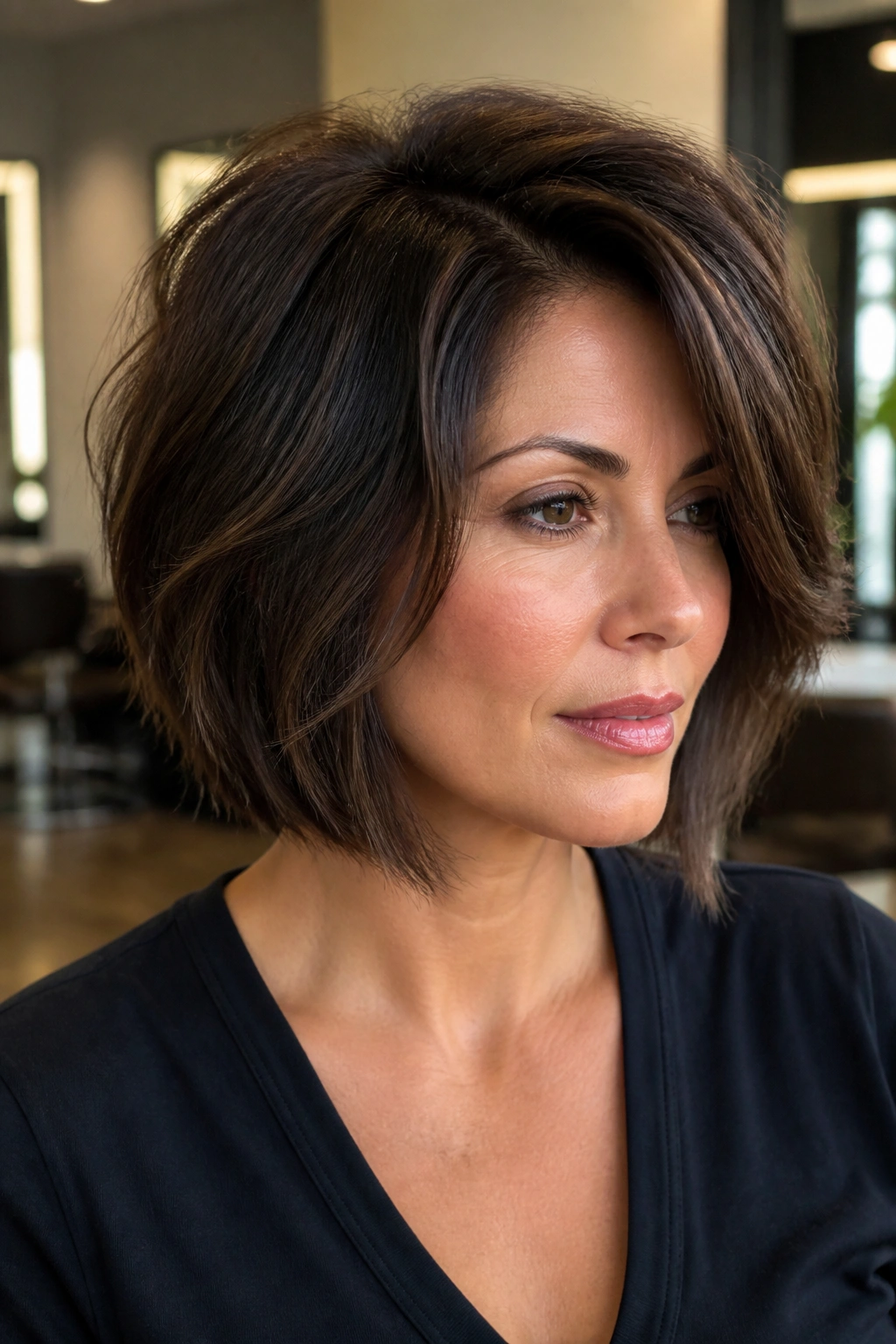
Thick hair needs a different kind of plan. If the cut is all blunt weight, it can sit like a block. If the layers are too soft, it turns puffy. Razored ends help split the difference by taking away some bulk and letting the hair fall with a little more air between the strands.
Why Razor Cutting Can Help
A razor is not a magic wand. Used badly, it can fray the ends, especially on dry or damaged hair. Used well, it can make thick hair move instead of swelling out around the face. The side part keeps the top from looking too even, which gives the cut a looser feel right away.
This version works best when the stylist leaves the perimeter intact enough to keep the bob’s shape. You want the bottom line to remain clear. The razor should be used where the density is heavy, not all over the place.
For styling, a smoothing cream and a medium round brush go a long way. Thick hair usually needs tension while drying so the layers settle instead of flipping everywhere.
One more thing: if your hair is already dry or brittle, ask for scissors instead of a razor. Better to keep the ends healthy than chase a piecey finish that breaks apart in two weeks.
10. Side Part Layered Bob with Curtain Bangs

Curtain bangs and a side part get along almost too well. The bangs split away from the face, the side part reinforces that split, and the whole haircut lands somewhere between soft and cheeky. It frames the eyes without boxing them in.
The secret is length. Curtain bangs that are too short tend to fight the side part and sit in a separate little shape on the forehead. Longer curtain bangs, usually grazing the cheekbone or upper lip, blend into the layers more smoothly. That keeps the haircut from feeling chopped into sections.
How to Keep the Fringe from Splitting Weirdly
Dry the bangs first, using a round brush or your fingers and a touch of heat. If they dry the wrong way, they can end up doing their own thing no matter how carefully the rest of the bob is styled. That’s a small detail, but it changes the whole result.
This cut suits people who want movement around the face without committing to a full fringe. It also grows out more kindly than blunt bangs, which matters if you hate frequent trims. The side part gives the bangs a softer sweep, so the cut never feels too heavy at the forehead.
A light texture spray on the ends keeps the finish relaxed. Too much product near the roots can make the bangs stringy fast.
11. Asymmetrical Side Part Layered Bob with a Deep Sweep
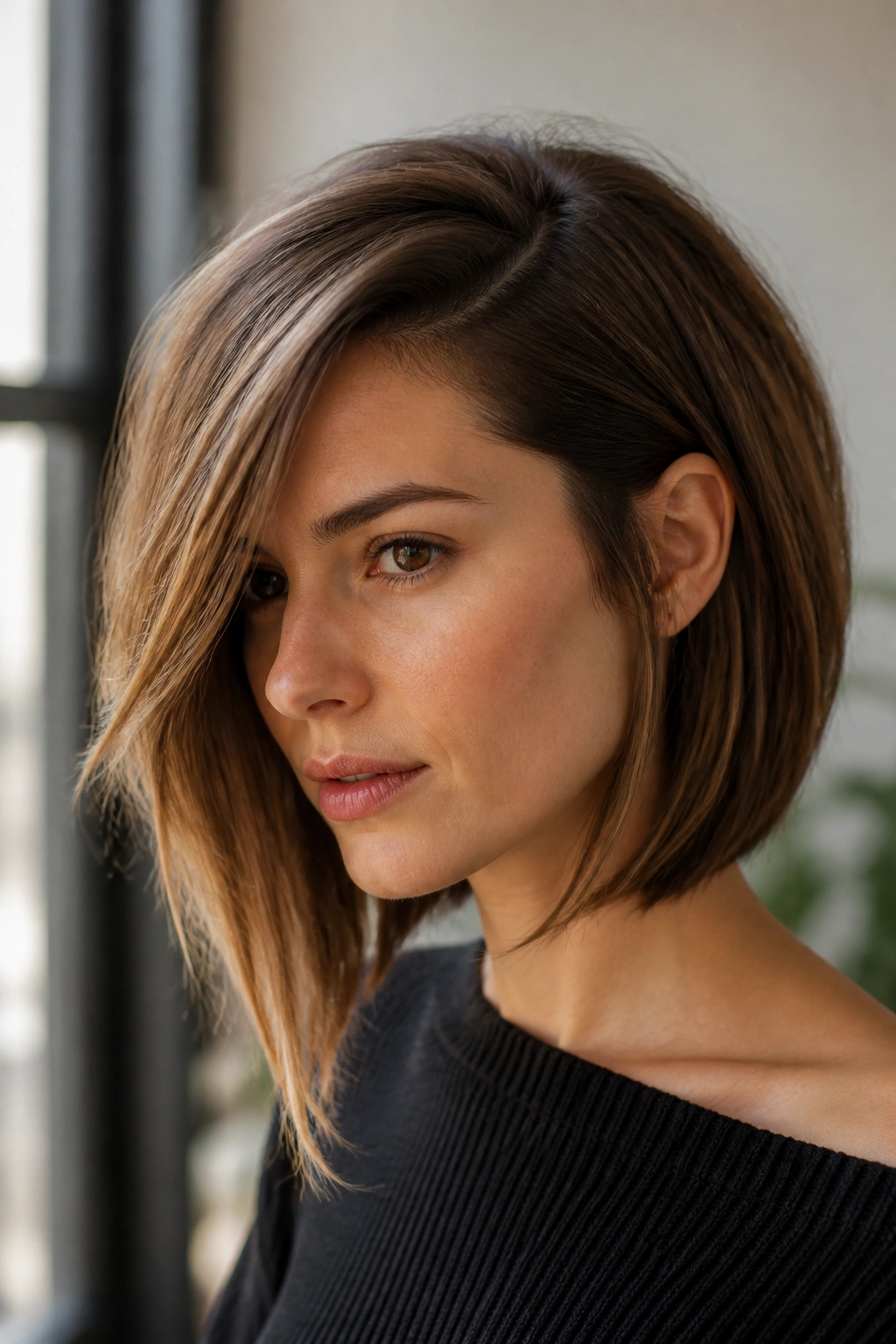
A balanced bob is safe. An asymmetrical one has more personality. With a deep side part, one side can graze the jaw while the other side falls lower near the collarbone, and that unevenness gives the cut a deliberate edge instead of a straight-across feel.
This is the look I’d choose when someone wants a bob that reads as a little sharper and a little more fashion-minded. It still feels wearable, but there’s less softness than in the French or wavy versions. The layers should support the shape, not swallow it. Too many pieces and the asymmetry loses its point.
The deep sweep is flattering because it creates a strong line from the part down through the face. That can lengthen rounder features and make a narrow face look a touch wider, which is useful if you’re trying to even things out.
Wear it sleek for the strongest effect. Or rough it up a bit with a flat iron bend if you want it to feel less formal. Either way, the asymmetry does the talking.
12. Shaggy Side Part Layered Bob with Choppy Texture

A shaggy bob is the most relaxed version in the bunch. The layers are choppier, the ends are more broken up, and the side part keeps the whole thing from turning into a uniform cloud. It’s messy on purpose, which is harder to do well than people think.
Why It Looks Better When It’s Not Too Perfect
Shaggy layers need air around them. If you over-smooth the hair, the cut can lose its personality and look like it needs a style decision. A little roughness is the point. The ends should flip and separate in small pieces, not sit in one polished line.
This shape is useful for hair that has some natural wave or bend. Straight hair can still wear it, but it needs texture spray or a matte pomade to keep the layers visible. The side part helps because it breaks the symmetry and gives the bob a lived-in drape on one side.
- Rough-dry the hair about 80 percent before styling.
- Twist a few sections with your fingers while drying.
- Use a texturizing spray at the mid-lengths, not just the ends.
- Skip heavy shine products; they flatten the whole mood.
I like this bob on people who don’t want to fight their hair every day. It has attitude, but not a lot of rules.
13. Sleek Side Part Layered Bob with Rounded Ends
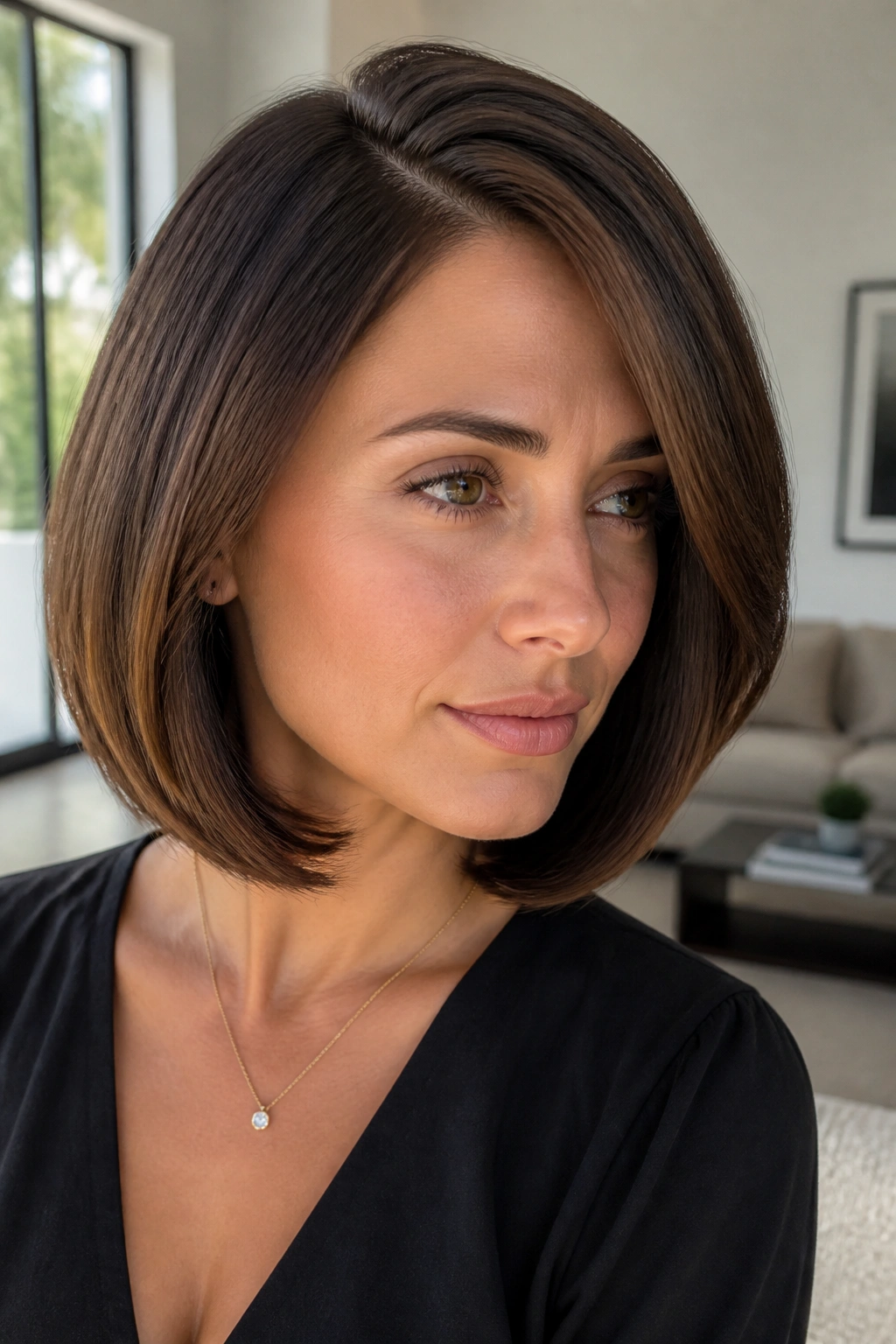
A sleek side part layered bob can look almost severe at first glance, which is exactly why the rounded ends matter. They soften the finish and keep the haircut from feeling too hard around the face. The side part brings in a little asymmetry, so the style still has movement even when everything else is smooth.
The best version of this cut is usually blow-dried straight with a slight inward curve at the ends. Not a curl. Just a bend. That small detail keeps the bob from looking flat and helps the layers lie in a neat, polished way.
When Sleek Wins
This is the one to choose if you like hair that looks intentional without being fussy. It’s sharp enough for work, clean enough for a formal event, and simple enough to wear every day if your hair doesn’t mind heat styling. A heat protectant is non-negotiable here. So is a good brush that can get tension through the ends.
The sleek bob also shows off color work nicely, especially subtle highlights around the face. The light catches the smooth surface and the side part gives the color a place to break, which keeps the whole thing from reading flat.
If your hair frizzes easily, keep a tiny amount of serum on the last two inches only. Too much near the roots will flatten the lift you got from the part.
14. Inverted Side Part Layered Bob with Longer Front Pieces
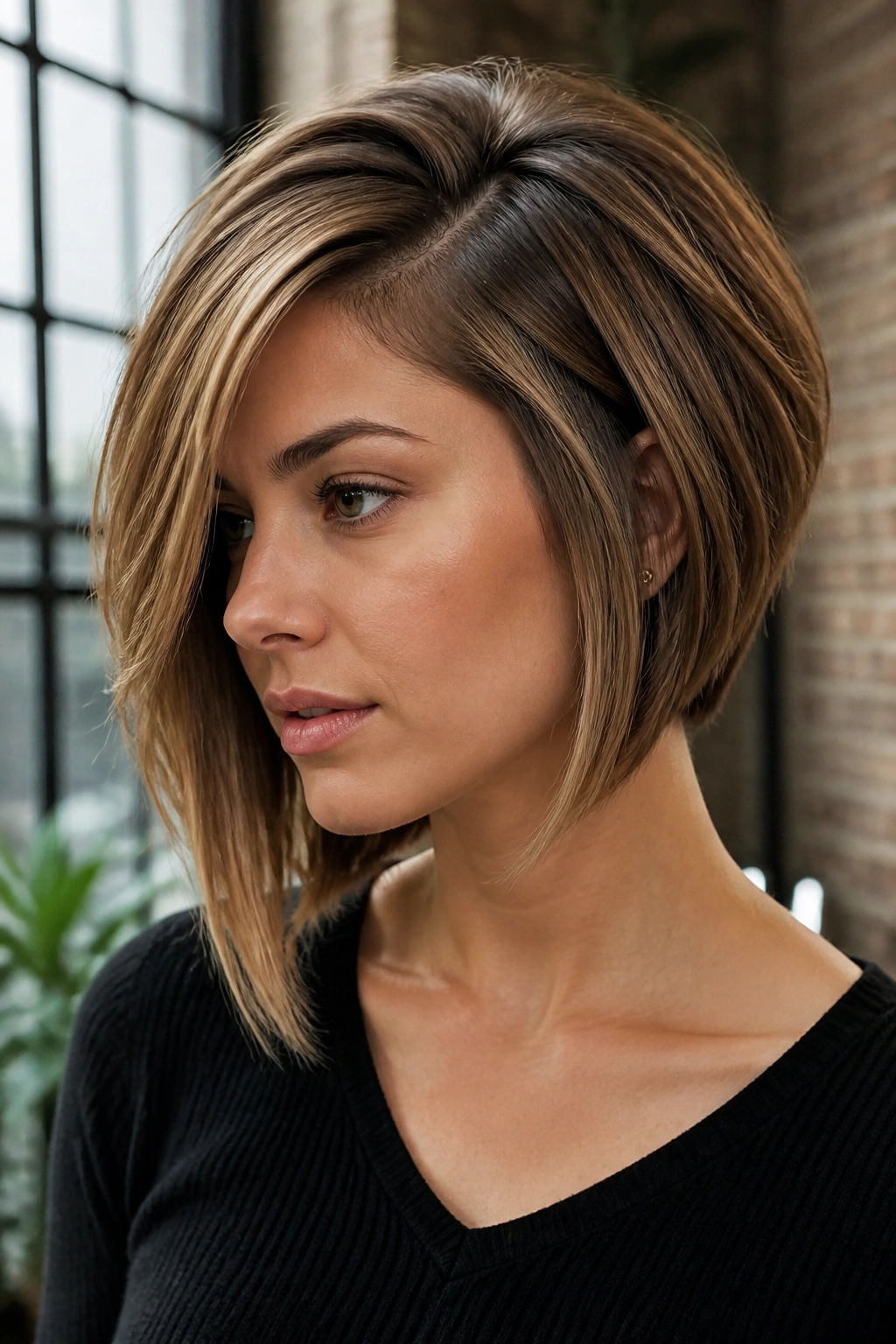
The inverted bob is closely related to the angled bob, but it usually has more curve through the back and more dramatic length in front. Add a side part and the front pieces fall even more selectively, which makes the whole cut feel tailored instead of stiff.
This shape is excellent when you want the neck to look longer and the face to get a soft diagonal frame. The back sits shorter, often with stacked layers, while the front hangs forward in longer pieces that skim the collarbone or jaw. That contrast gives the cut its shape. Without it, you lose the whole point.
I especially like this on straight or slightly wavy hair because the lines stay readable. Thick hair can wear it too, but the layering has to be precise or the front gets heavy. The side part keeps the volume from sitting dead-center on the head, where it can feel too formal.
A flat iron bend through the front pieces can sharpen the angle nicely. Just keep the movement soft. You want shape, not hard corners.
15. Softly Disconnected Side Part Layered Bob for Easy Grow-Out
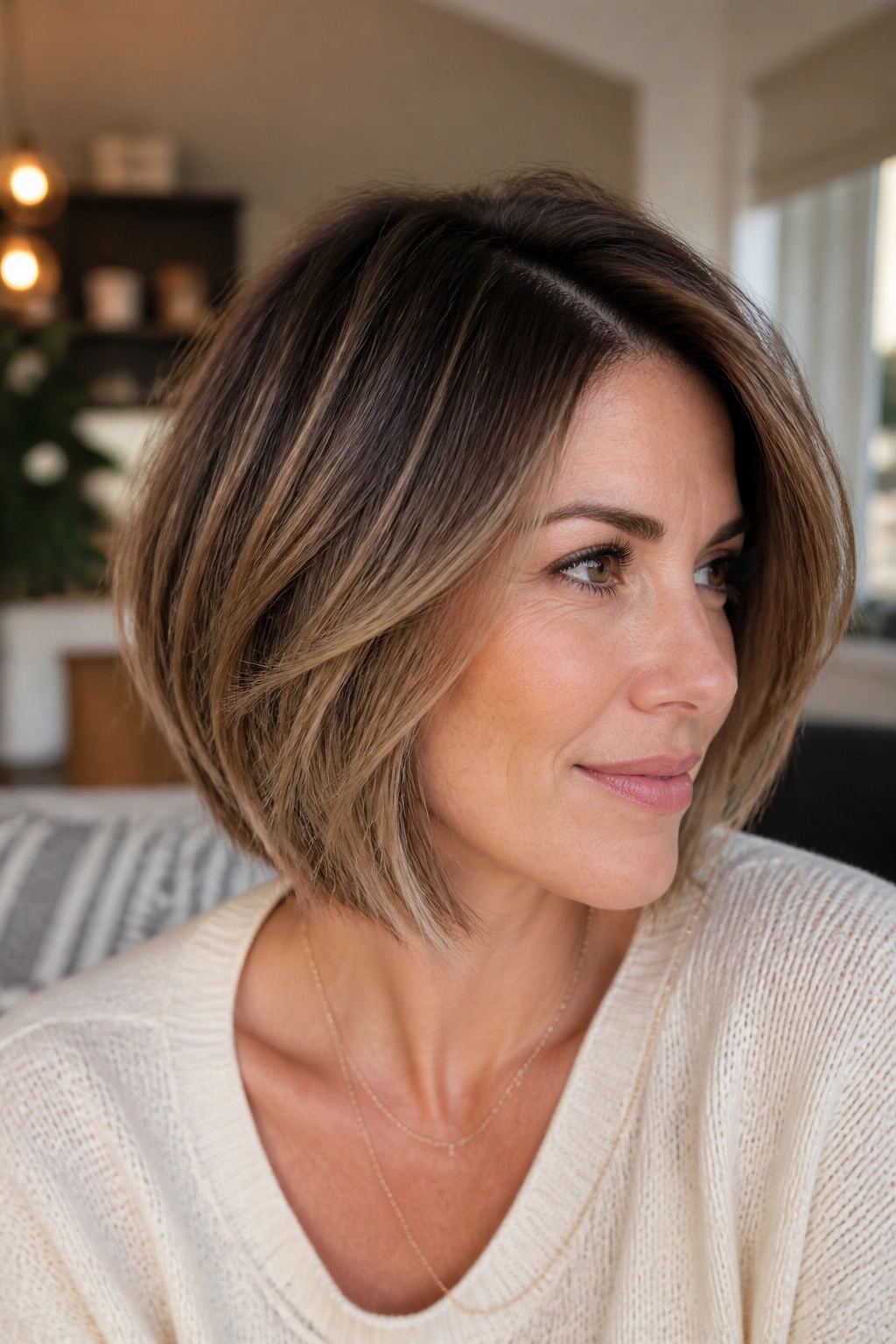
This is the bob for someone who wants texture without looking like they spent an hour fighting for it. The layers are a little more separated, the part sits to one side, and the edges are softened enough that the haircut grows out without snapping into an awkward middle phase.
There’s a nice honesty to this version. It doesn’t pretend to be ultra-polished, and it doesn’t rely on heavy styling to make sense. The disconnection between the pieces gives it movement, but the cut still needs enough structure to avoid looking random. That balance matters.
If you’re the type who likes a haircut that can air-dry and still look intentional, this is a smart choice. If you want a bob that behaves like a crisp shape every day, look back at the sleek or angled versions. This one is looser, and that looseness is the whole appeal.
Ask for soft internal layers, longer face-framing pieces, and a clean but not razor-sharp outline. That combination keeps the haircut from feeling overworked. It also makes the grow-out kinder, which is useful if you only want to visit the salon every so often and would rather spend your time doing literally anything else.
If you’re choosing between these side part layered bob haircuts, start with one question: do you want the cut to do the styling for you, or do you want a shape that rewards a little effort? Short, stacked, and sleek bobs lean toward precision. Wavy, shaggy, and softly disconnected cuts lean toward ease. Both paths are good. They just ask for different habits.
A photo reference helps more than a long explanation ever will, but the useful part is knowing what to say out loud: where you want the part, how much length you want left in front, and whether the layers should be visible or tucked inside the shape. That part of the conversation saves a lot of disappointment later.
