



A good braid set should make your mornings easier, not steal your whole weekend and leave your scalp sore by Tuesday. That’s the real test, and it’s the part a lot of glossy inspiration photos skip right past.
If you’re sorting through braid hairstyle ideas for Black women, the question is rarely “Which one looks nice?” It’s “Which one holds up when you sleep on it, sweat in it, wash around it, and still want to feel put together on day six?” That’s a different standard. A better one, honestly.
Braids can do a lot: frame the face, protect the ends, cut down daily styling, and give you room to let your own hair rest. They can also go wrong fast if the parts are too tight, the extensions are too heavy, or the style doesn’t fit your life. The American Academy of Dermatology has long warned against hairstyles that pull at the hairline, and braid specialists tend to say the same thing in plainer language: if it hurts in the chair, it is already too much.
The styles below cover the full spread — sleek, soft, dramatic, low-key, and a few that lean more playful than polished. Some are quick installs. Some take patience. All of them have a place, if you choose the right size, parting pattern, and finish.
1. Waist-Length Knotless Box Braids
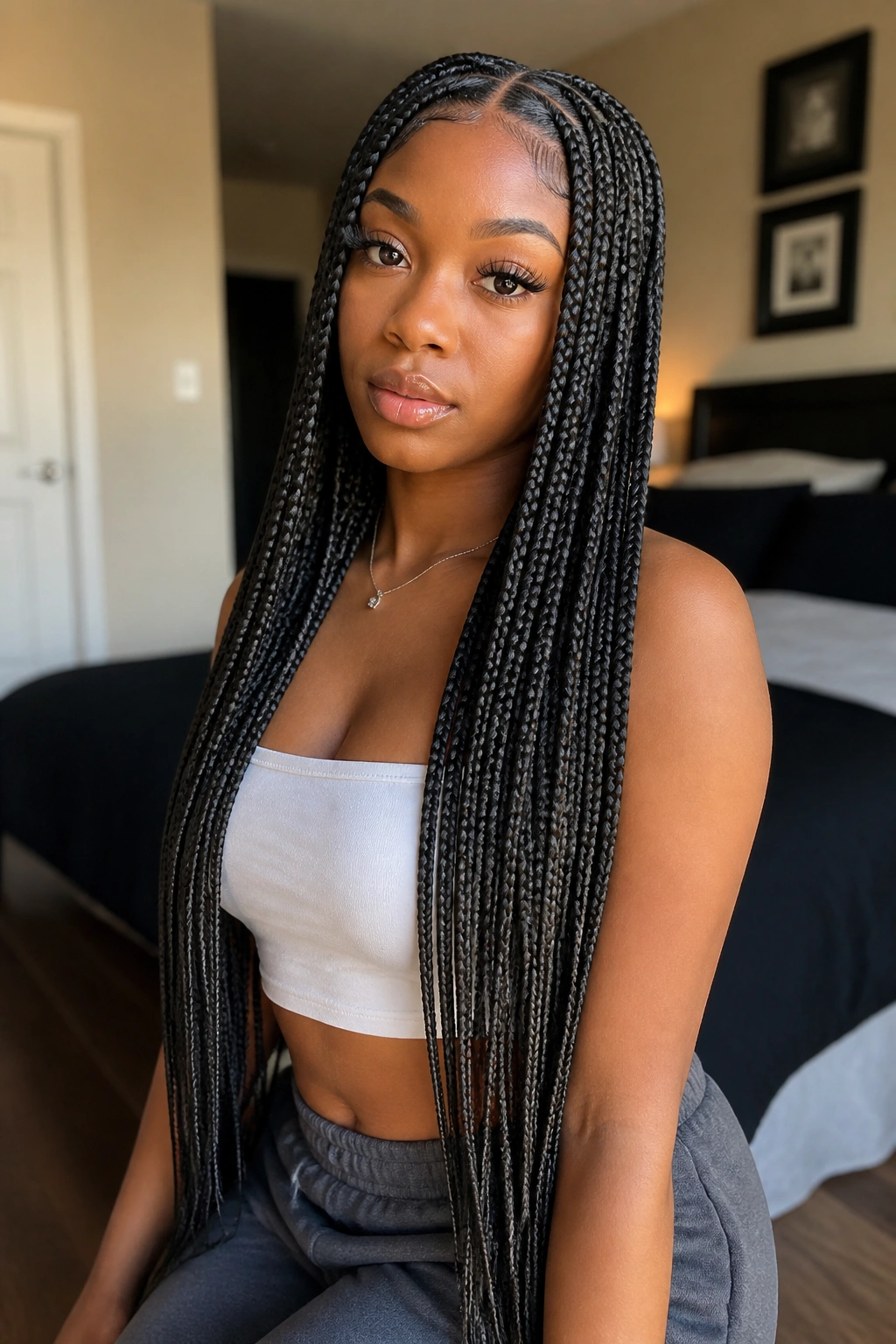
Knotless box braids are the style I keep coming back to when someone wants length without that heavy, stiff feeling at the roots. The braid starts with your own hair and the extension is fed in gradually, so the base lies flatter and feels gentler than a traditional knot. That matters more than people admit. Your scalp knows the difference.
Why they stay in rotation
The long length gives you room to wear them down, toss them into a bun, or sweep them over one shoulder when you want a change. Waist-length braids also make sense if you like styling options but do not want to redo your hair every few days. They move. They swing. They look like hair you can actually live in.
- Ask for medium-size parting if you want a balance between fullness and install time.
- Keep the first 1 to 2 inches at the root lightly tensioned, not yanked tight.
- Wrap the ends at night with a satin scarf or bonnet so they do not frizz at the tips.
My blunt advice: if your braids feel heavy before you even leave the chair, they are too long, too thick, or both.
2. Medium Triangle Box Braids
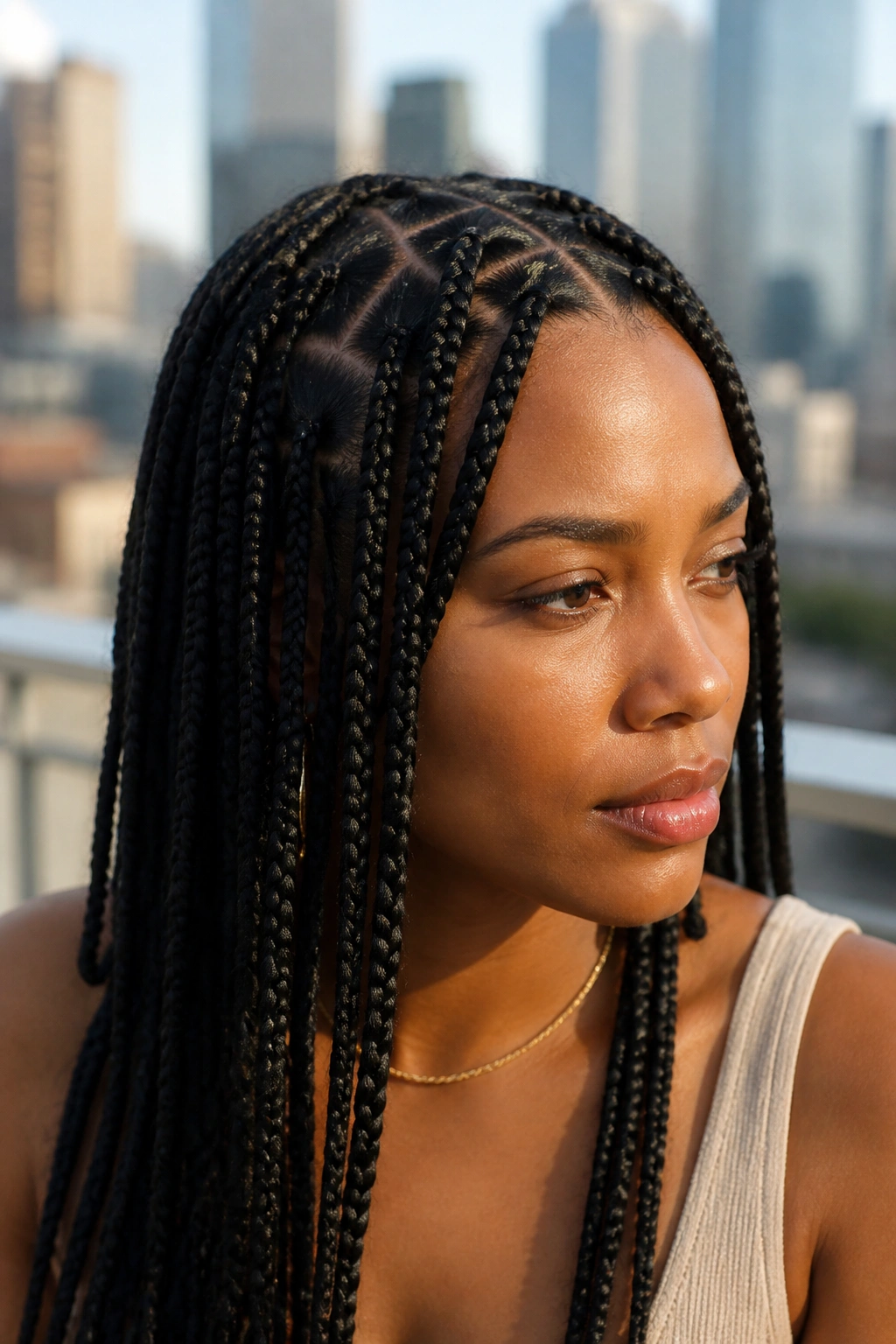
Triangle parts give box braids a sharper look without changing the whole style. The shape breaks up the grid pattern you see with standard square parts, and that small detail changes the whole mood. The braids feel a little more styled, a little less expected. That’s the charm.
Medium triangle box braids are especially good when you want the scalp to look neat but not harsh. The triangles make the parting lines feel intentional, and medium thickness keeps the install from tipping into bulky territory. A clean triangle part also lets the braids fall in a nicer way around the forehead and temples.
You do not need a giant size change to get the effect. Even a modest triangle, if it’s clean and even, gives the braid set enough edge to stand out. If your stylist is good with parting, this one looks crisp for weeks.
A tiny note people forget: triangles show crooked parting faster than squares do. So the cleaner the base, the better the whole style reads.
3. Fulani Braids with Beads
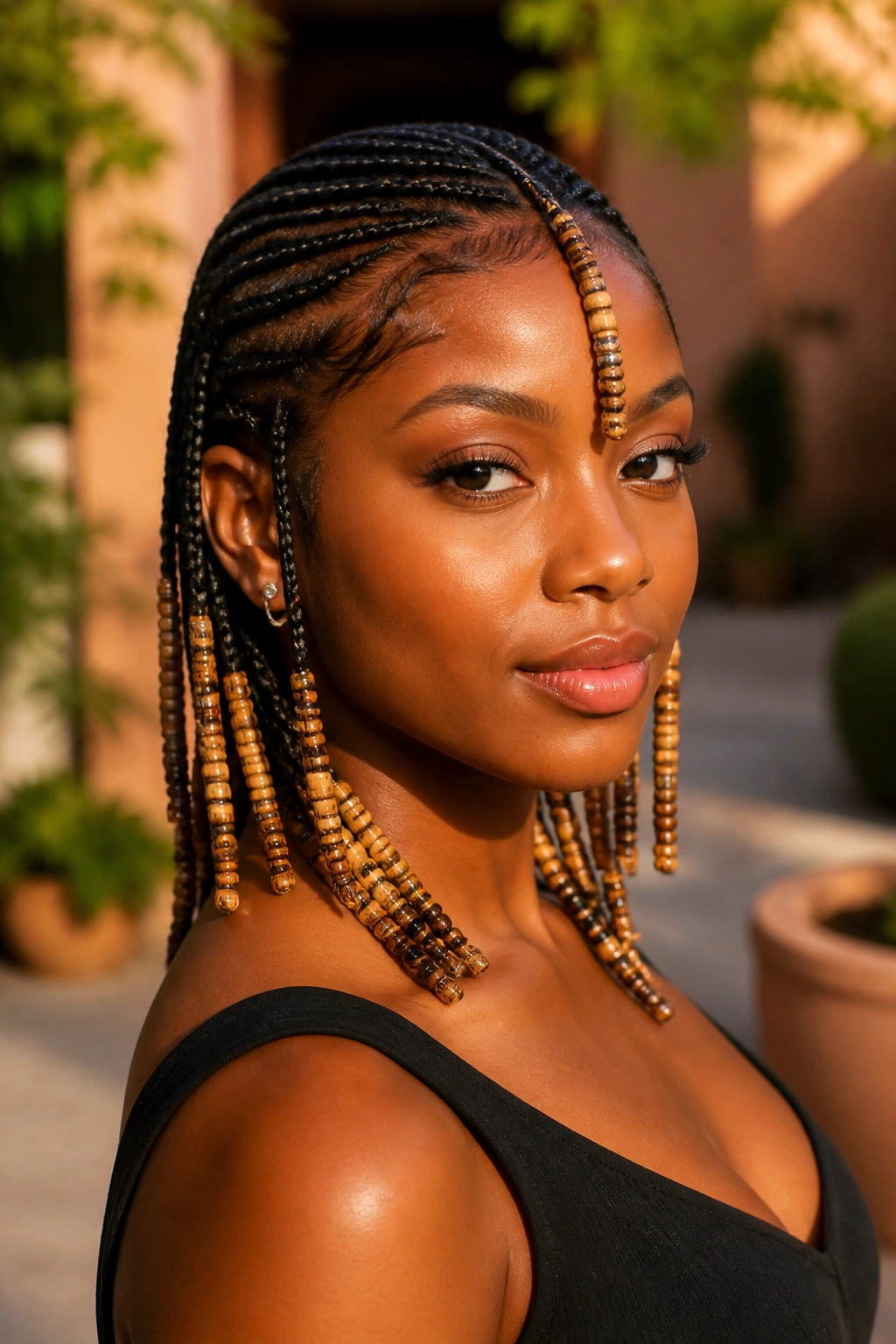
Why do Fulani braids still stop people in their tracks? Because the style carries pattern, history, and ornament at the same time. Usually you’ll see a central braid or part, cornrows along the sides, and decorative braids that fall forward with beads at the ends. It has rhythm. It has movement. It never looks flat.
What makes them feel special
Fulani braids can be built with different braid sizes, but the front framing is what people notice first. Beads pull the eye downward in a good way, especially when they’re spaced evenly and not overloaded. Use lighter beads if you want the style to stay comfortable all day. Heavy glass beads sound pretty in theory and feel annoying by lunch.
How to wear them without weighing them down
- Place beads on selected braids, not every single end.
- Choose smooth, rounded beads so they do not snag knitwear or scarves.
- Keep the front braids snug enough to hold shape, but never tight enough to tug at the hairline.
- If you like shine, use a tiny amount of braid sheen spray rather than greasing the scalp.
Fulani braids are one of those styles that look better when the parting is slow and precise. Rushed sections show.
4. Lemonade Braids

If you want a side-swept style with attitude, lemonade braids do the job without needing much extra decoration. The whole shape leans in one direction, so the face gets a clean frame and the braids fall with a little drama. That side part gives the style its name, but the real point is movement.
The best lemonade braids have a clear direction and a strong line at the scalp. The side sweep should look deliberate, not like the braids drifted there by accident. I also like them better when the front sections are kept slim enough to lay flat, because bulky front rows can crowd the face and make the style feel top-heavy.
This is a good pick if you like hair that reads polished from across the room but still feels wearable with a hoodie or denim jacket. It has presence. It also works well with medium-length or long extensions, depending on how much swing you want.
One thing to watch: the side nearest your part needs a clean finish. If that side frays first, the whole style loses its line.
5. Jumbo Knotless Braids
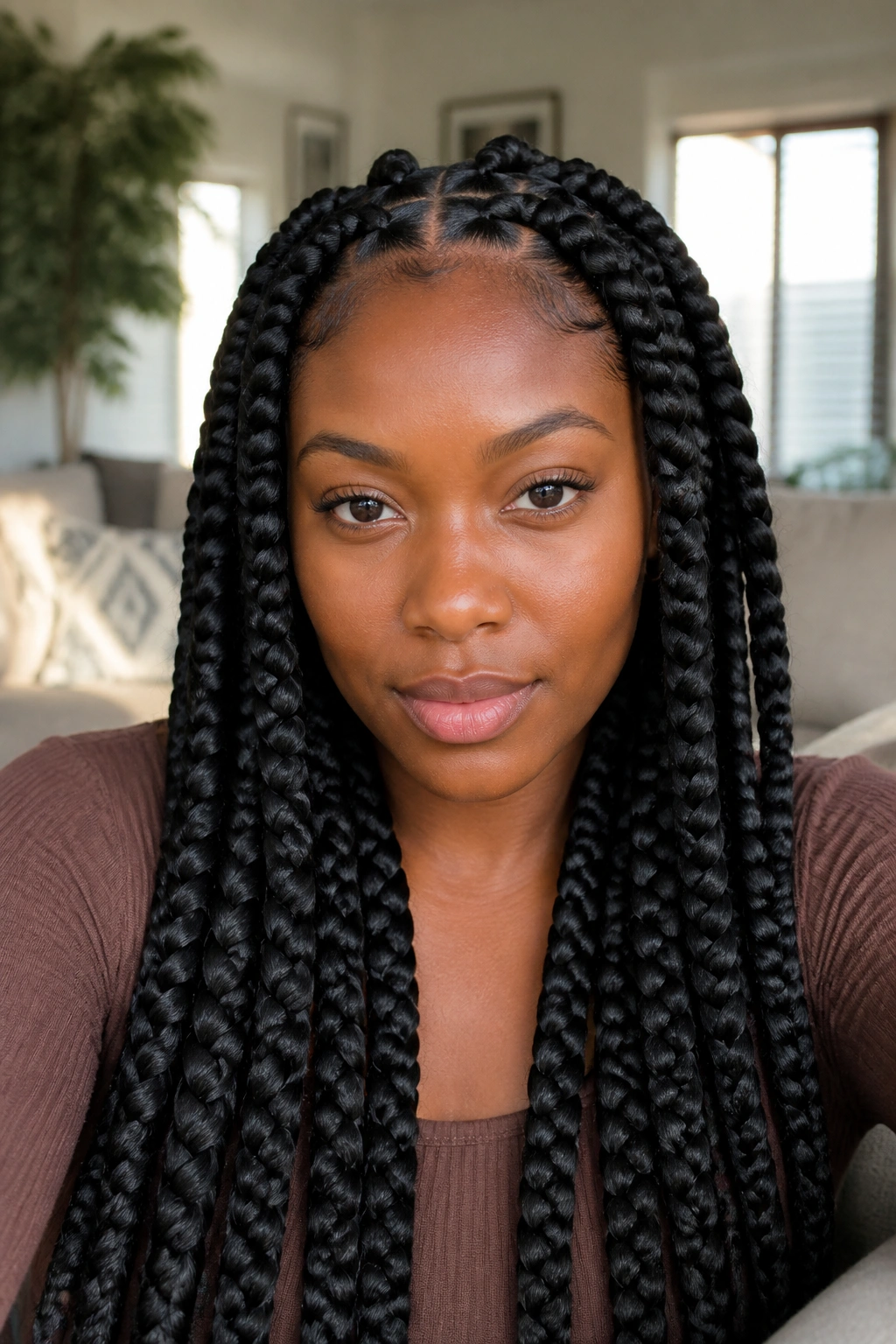
Jumbo knotless braids are for the days when you want a strong look without sitting in the chair forever. Fewer braids, bigger sections, faster install. That part alone is enough to make them useful, but the real appeal is the shape. They make a statement without needing beads, curls, or extra color to do the heavy lifting.
They also suit people who like to switch between styles often. With fewer braids, you can put them into a bun, a low ponytail, or a half-up shape without a wrestling match. The downside is obvious: there are fewer braids to distribute the volume, so your stylist has to be careful about balance. If one section is too thick, it shows.
I like jumbo knotless braids best on people who want the braid look but not the long, full-day maintenance that some tiny styles demand. They are not the most subtle option. Fine. They were never meant to be.
The trick is a balanced part size and a soft root. Big braids should still move.
6. Feed-In Cornrow Ponytail
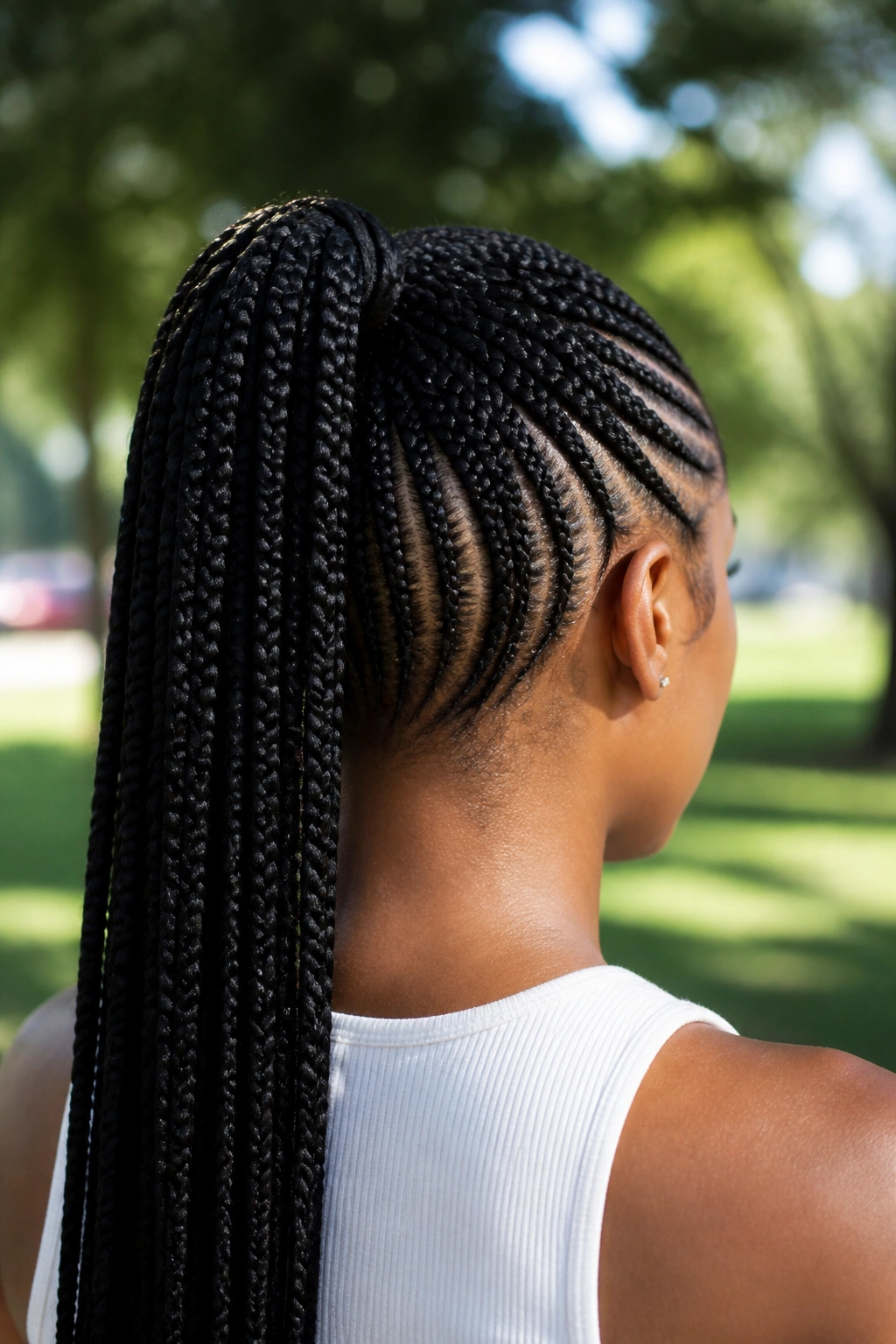
Feed-in cornrows into a ponytail are the cleanest answer when you want hair up and out of the way without losing style. Unlike loose braids, this look stays anchored close to the scalp before gathering into a ponytail, so the finish feels sleek from the front and practical from the back. That mix is hard to beat.
Why this style earns its place
It works for long days, active days, dressy days — all the days, really. The feed-in method helps the braids blend into the scalp, so the base looks smooth instead of bulky. A high ponytail gives more lift; a mid ponytail feels calmer and a little more classic.
Best details to ask for
- Use even-sized cornrow rows so the ponytail sits centered.
- Ask for a base that is secure but not painful around the crown.
- Keep the ponytail wrapped with a strip of braid hair or a matching extension for a smooth finish.
- A small amount of mousse at the crown helps tame flyaways without making the hair stiff.
This one is a favorite for people who want sharp lines and a no-fuss shape in the same style.
7. Stitch Braids
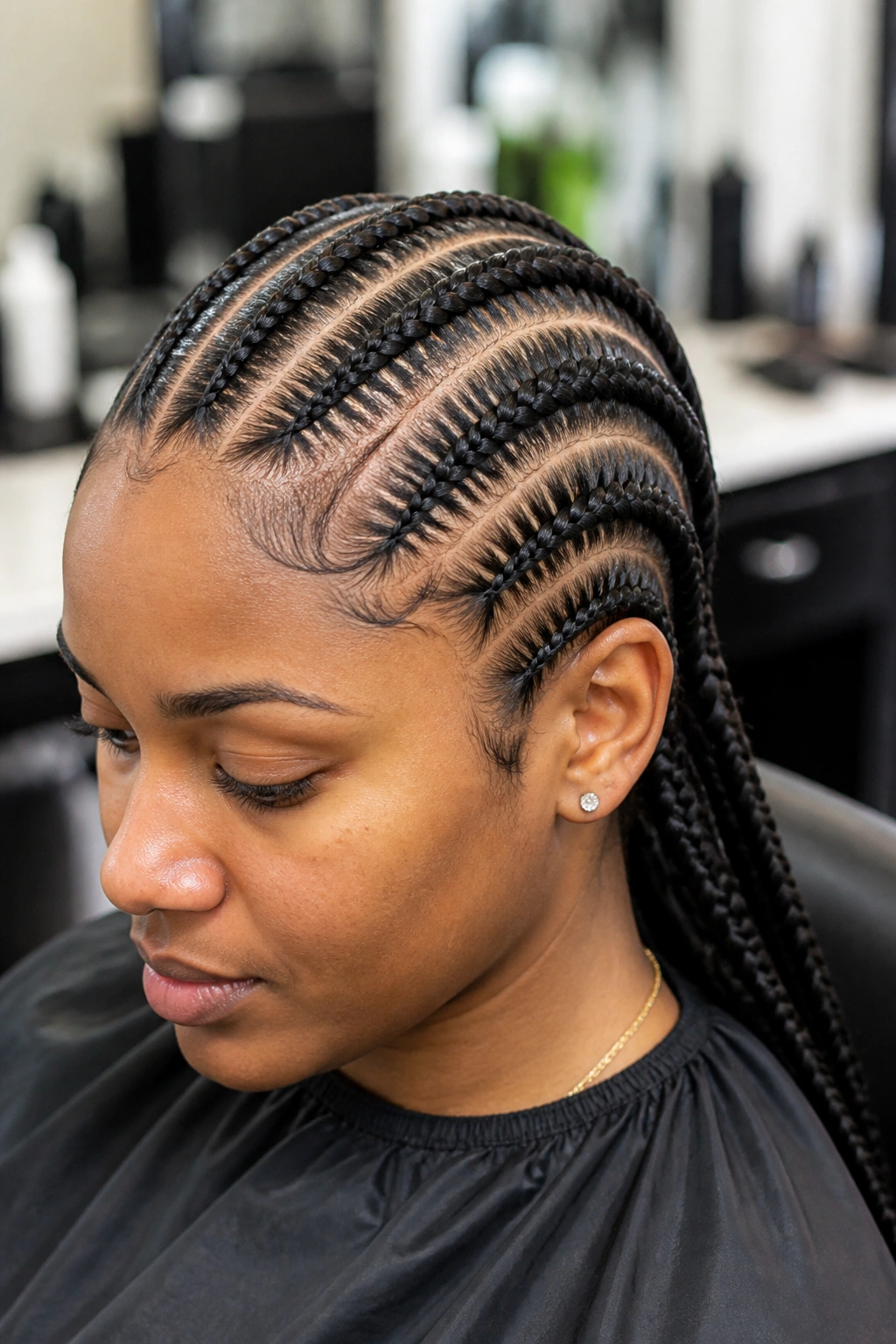
Stitch braids look like someone drew clean lines across the scalp with a steady hand. That is not far from the truth. The rows are separated into neat sections that create a segmented, almost ribbed effect, which is why the style looks so crisp from the front. It’s bold without needing much else.
The detail that matters
The parting is the whole story here. If the sections are uneven, the stitch pattern falls apart fast. A good rat-tail comb, controlled tension, and a little patience make the difference between sharp and sloppy. Product buildup is the enemy. Too much gel makes the scalp look shiny in the wrong way and can leave little white flakes once it dries.
How to keep the style neat
- Keep the braids close to the scalp, but not so tight that the hairline feels pulled.
- Ask for clean, straight part lines if you want the stitch effect to read clearly.
- Use mousse sparingly after install, then let the braids set before you sleep.
- Protect the edges with a satin wrap at night so the rows stay crisp longer.
Stitch braids are one of those styles that look expensive even when the actual materials are pretty simple.
8. Goddess Braids with Loose Curls

Goddess braids soften a braided look in a way that feels deliberate, not fussy. Thick braids carry the structure, and loose curly pieces add movement around the face or at the ends. The result is gentler than a strict cornrow set, but still polished enough for an event, a dinner, or a week when you need your hair to behave.
What I like most is the contrast. The braid says order. The curls say looseness. Put them together and the style feels layered without being crowded. If the curls are added near the ends, the shape reads cleaner; if they’re tucked through the middle, you get more texture and a softer frame.
A lot of people ruin this style by choosing curls that are too fine or too frizzy for the braid thickness. Match the curl size to the braid size. Small curls with giant braids look disconnected. Bigger curls keep the balance right.
It’s a soft look, but not a flimsy one. That distinction matters.
9. Boho Knotless Braids
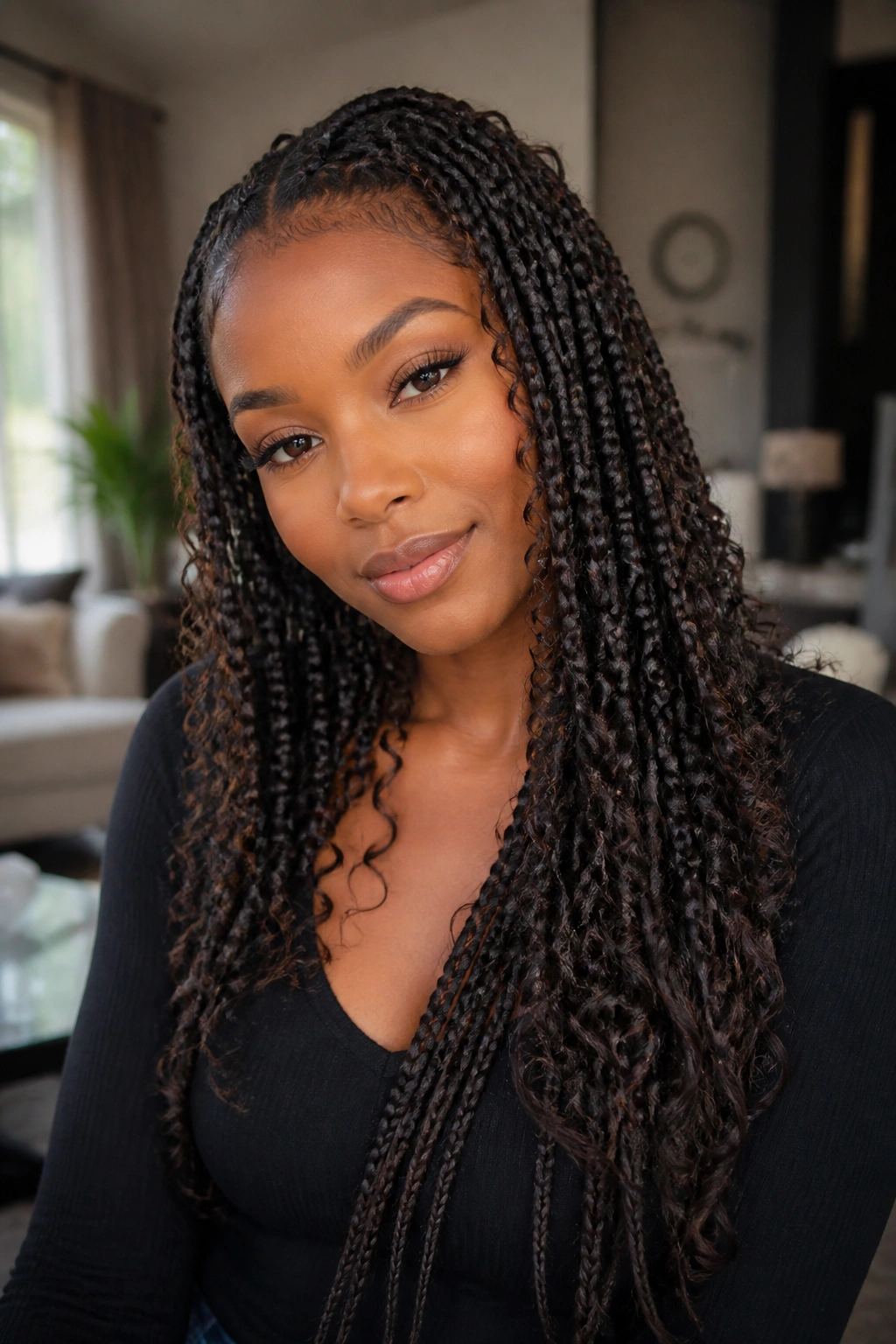
Boho knotless braids are for people who like a braid set with some looseness built in. Tiny curly strands are left out through the length, which gives the style a relaxed, lived-in feel. It looks airy. It also asks for a little more upkeep than a clean box braid set, because those loose curls frizz faster than the braids do.
What makes them different
The appeal is texture. Not just braid texture — braid plus curl texture. That blend gives the style a softer silhouette, especially around the face and shoulders. It photographs well, sure, but more importantly, it moves well. A stiff braid never does that.
How to keep them looking fresh
- Choose a curl pattern that matches the braid size, not one that fights it.
- Refresh the curls with water and a light mousse, not heavy cream.
- Sleep with the curls tucked into a satin bonnet so they do not tangle overnight.
- If you want a neater finish, ask for fewer loose pieces near the nape, where friction is highest.
Boho braids are a little higher maintenance. That is the trade. If you want a soft finish and you do not mind touching up the curls every so often, they’re worth it.
10. Braided Bob

A braided bob changes the whole mood fast. Same braid language, shorter length, lighter feel. It is one of the best choices if you want the style of braids without hair brushing your shoulders every time you move. That alone makes it appealing.
The bob length also makes washing and drying easier. Shorter braids are less likely to snag under coats or scarves, and they tend to stay looking neat because the ends are easier to keep tidy. You can curl the ends under for a rounded finish, or leave them blunt if you want something sharper.
This is the style I’d point to for anyone who likes clean lines and lower daily maintenance. It can be box braids, knotless braids, or even a cornrow-to-bob hybrid, depending on how much structure you want.
Short does not mean plain. A braided bob can look sharper than a waist-length set when the parting is clean and the ends are cut well.
11. High Braided Bun
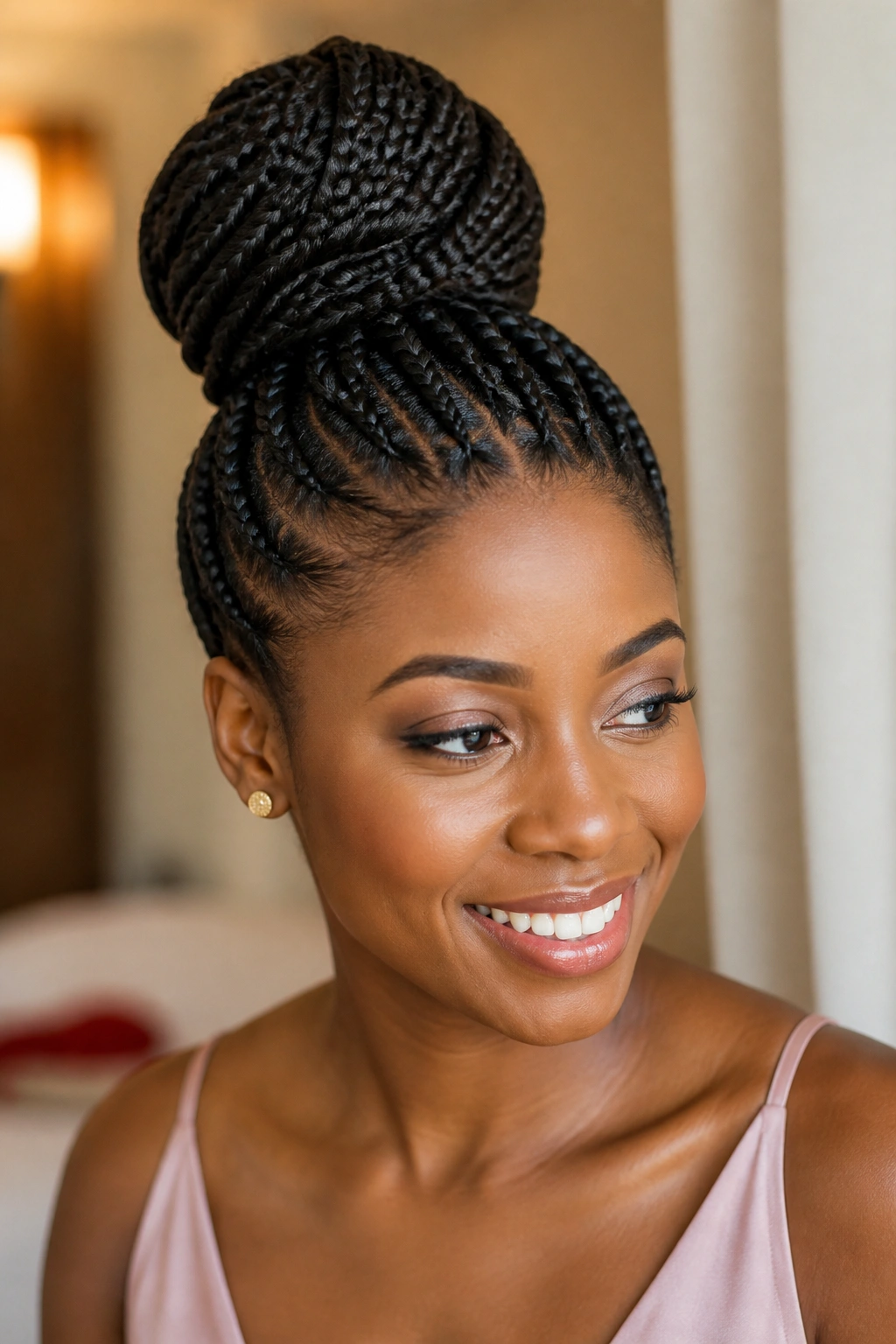
A high braided bun is one of the easiest ways to make braids look formal without adding extra work. Gather the braids upward, wrap them into a bun, and secure the base so it sits solidly at the crown. Done well, it gives the face a clean lift and keeps the neck completely free.
There’s a practical side too. A bun cuts down on tangling at the ends and makes sleeping a little easier if the braids are long. It also gets the hair off your shoulders, which matters more than people think when you’re wearing heavy jewelry or a tailored neckline.
I prefer buns that look anchored rather than overstuffed. If the bun is too large, it starts to wobble and the base can feel too tight. A slightly smaller bun with a smoother wrap often looks better and lasts longer.
Painful buns are a bad idea. Neat is good. Pain is not.
12. Long Braided Ponytail
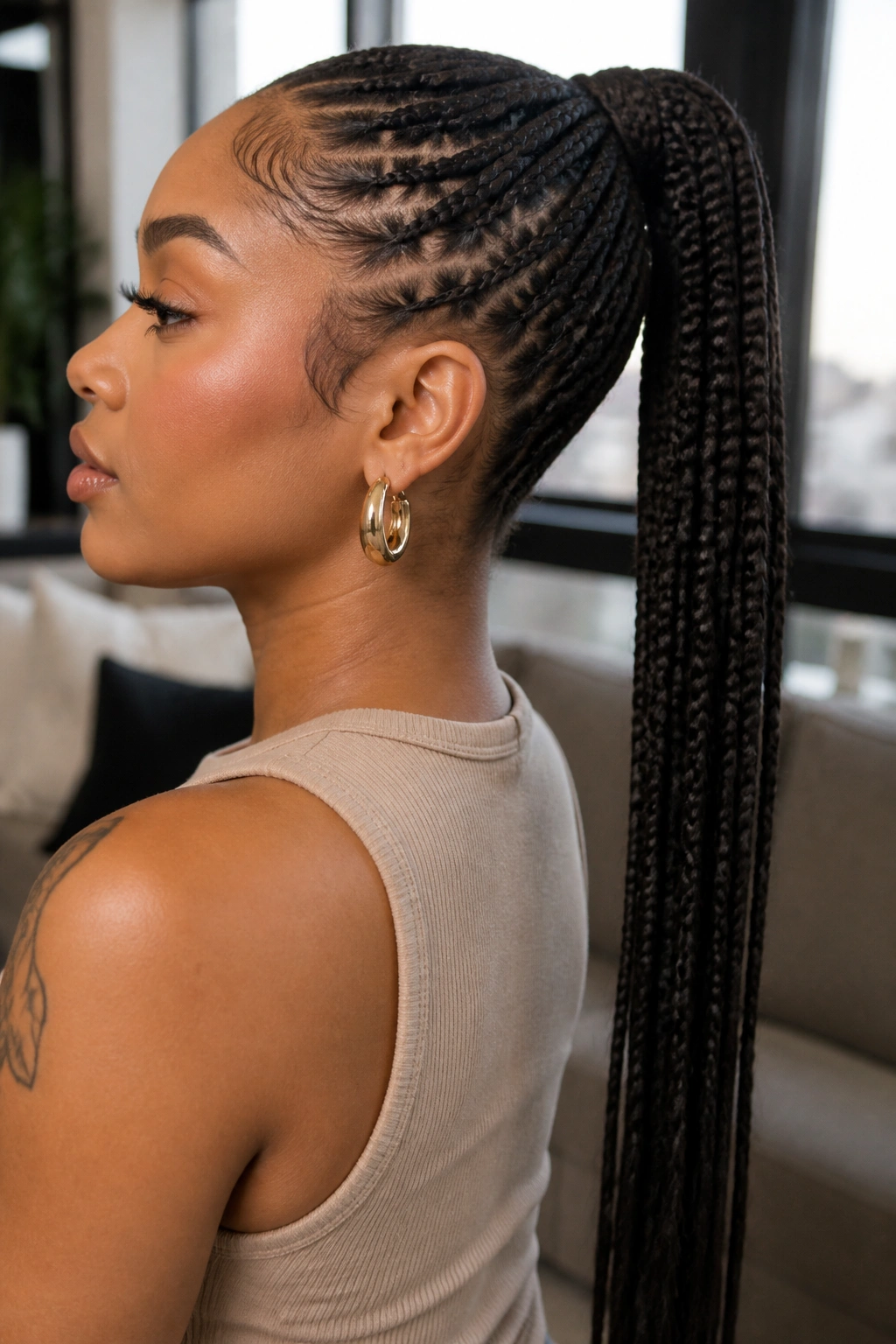
Want drama without a full head of extra length? A long braided ponytail gives you the swing and the movement while keeping the rest of the style controlled. It works especially well when the braids are fed back into a high or mid pony, because the base stays sleek and the ponytail becomes the main event.
The ponytail can be one thick braid cluster or several braids gathered together. Either way, the key is the transition point. If the base looks lumpy, the whole style feels off. If the hairline is too tight, you’ll know it by the end of the day. That is usually the first mistake.
How to keep it comfortable
- Keep the ponytail base firm, not pinched.
- Wrap the base with extension hair for a clean finish.
- Use bobby pins only where needed; too many pins create pressure points.
- If the ponytail is very long, secure the lower length loosely before sleep so it does not whip around and frizz.
This style reads polished, but it has a sporty edge too. That’s part of why it hangs around.
13. Micro Braids

Micro braids are a commitment, and pretending otherwise does people no favors. The braids are tiny, the install takes time, and the style can be beautiful when done with care. It also asks for patience from the wearer, because tiny braids mean more strands to manage and more attention when washing, detangling, or taking them down.
What to ask before you sit down
- How small will the parts be?
- Will your stylist use enough extension hair to avoid overloading your roots?
- How much time should you expect for install and takedown?
- What is the maintenance plan for washing the scalp without roughing up the braids?
Micro braids can last longer than chunkier styles, but only if the foundation is sound. If the roots are too tight, the delicate size becomes a problem instead of a benefit. The hairline is where things go wrong first, and it is not worth gambling with.
They suit people who like fine detail and do not mind longer salon time. If you want something quick and casual, skip them. If you want a dense, intricate braid set, they have a certain appeal that bigger braids just cannot match.
14. Straight-Back Cornrows
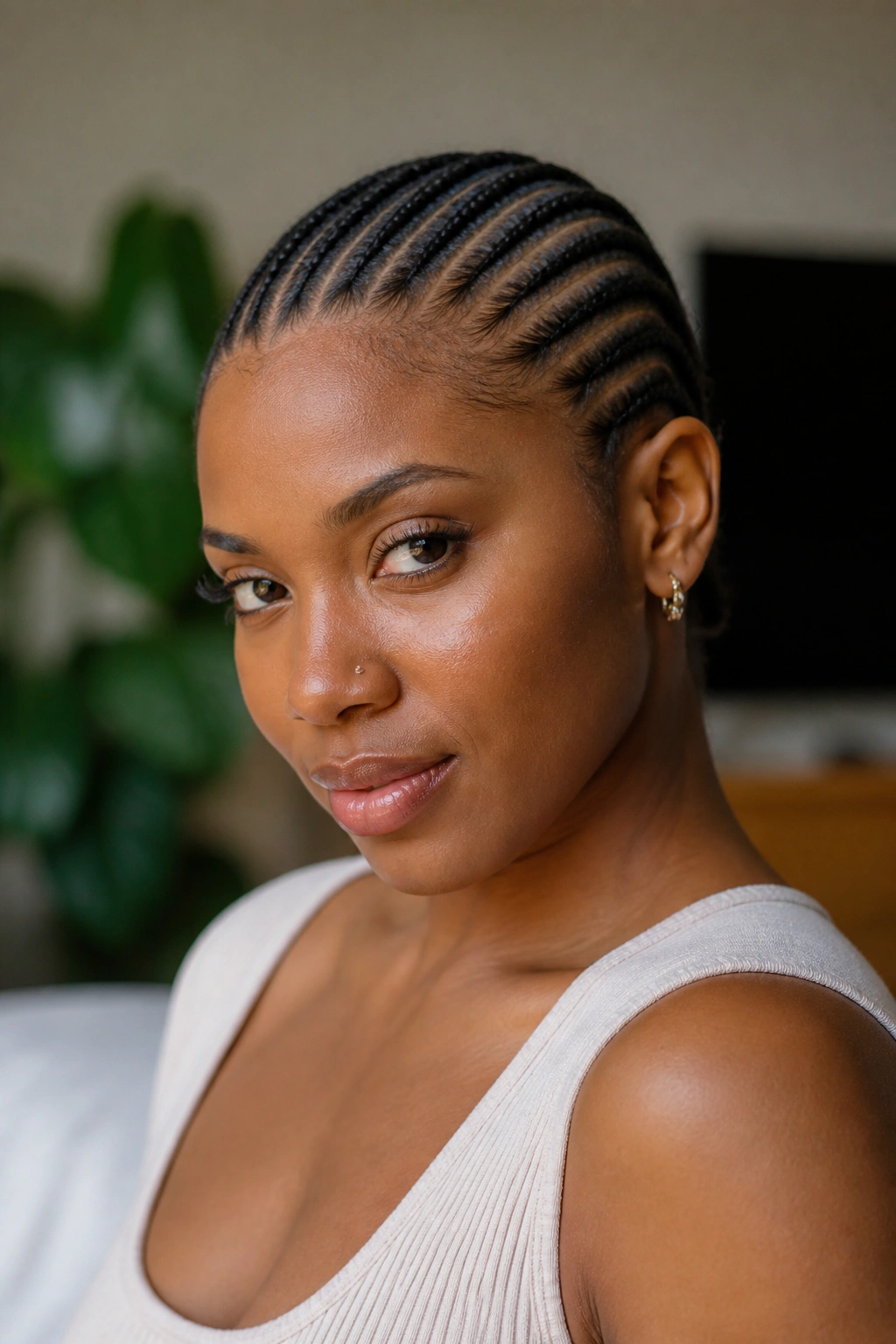
Straight-back cornrows are the quiet workhorse of braid styles. No fancy shaping, no extra curl pieces, no decorative ends. Just clean rows that move from the front of the scalp to the back in a line that makes sense. That simplicity is the point.
The style is useful because it gets hair fully tucked away and keeps the scalp accessible. You can oil lightly where needed, wash more easily than with some loose braid styles, and refresh the parts without starting from zero. It’s also a good base for a wig, a ponytail, or a bun if you want to layer styles later.
Why people keep choosing it
- Fast compared with more detailed braid patterns.
- Easy to dress up with cuffs or beads.
- Works well on short-to-medium natural hair before adding extensions.
- Keeps the silhouette neat under hats, scarves, and helmets.
Straight-back cornrows are not flashy, and that’s exactly why they work. They solve a problem without asking for applause.
15. Zig-Zag Part Braids

Zig-zag parts are for the person who wants a little personality before the braids even start. The parting lines break into angles instead of staying straight, which changes how the light catches the scalp and how the style reads from across the room. It is a small detail, but it changes the whole mood.
Unlike a plain part, zig-zag sections give you movement even when the braids themselves are simple. They work with box braids, cornrows, and half-up styles, which makes them more flexible than people expect. The trick is consistency. If one zig-zag is crisp and the next one wanders, the design looks uneven.
This is a nice choice when you want the braids to feel creative without adding extra length, beads, or color. The design lives in the scalp pattern. That’s enough.
If your stylist has a steady hand and patience, zig-zag parting can make a familiar braid style feel fresh again.
16. Tribal Braids
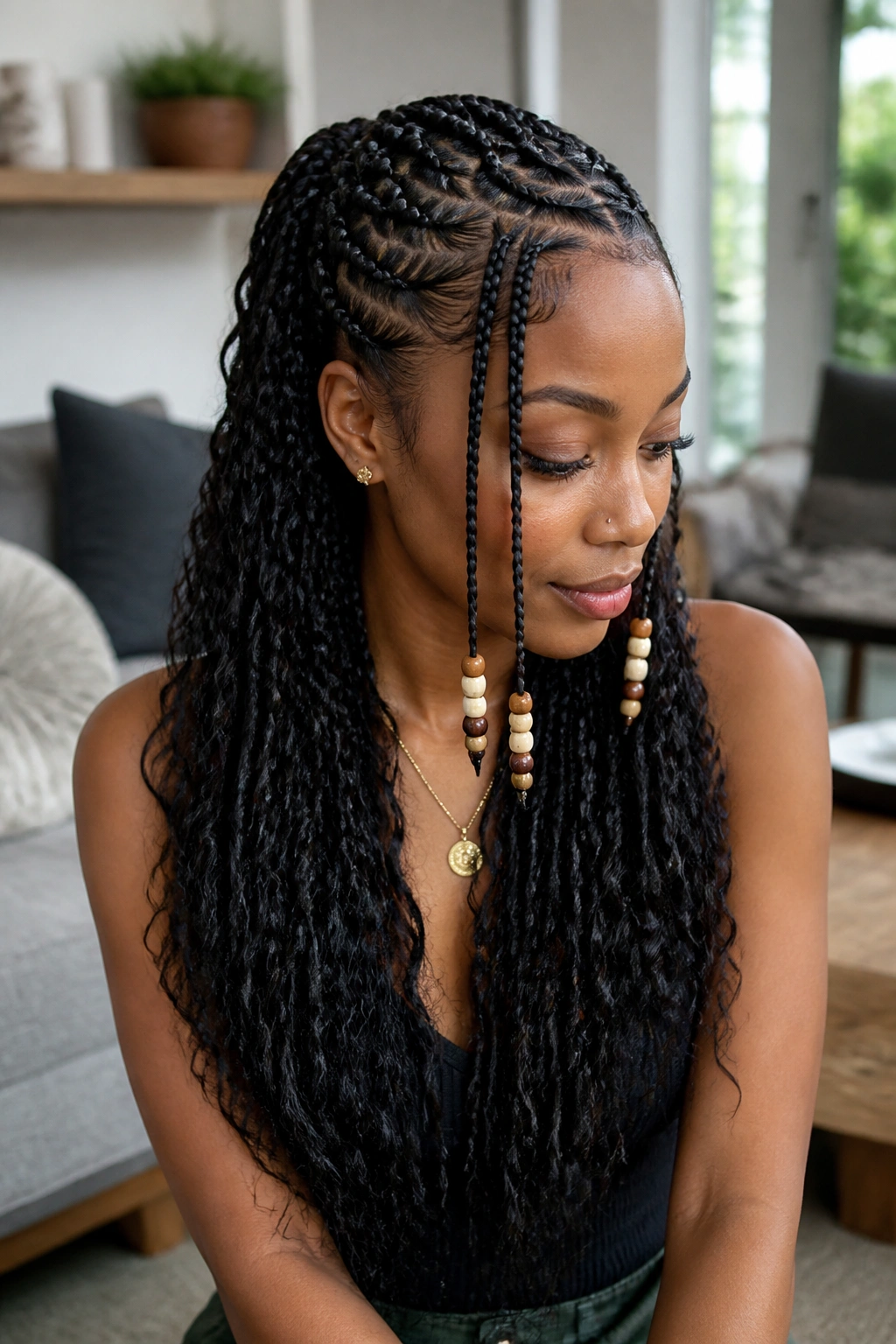
Tribal braids mix cornrows at the front or sides with braids that hang longer toward the back. The contrast in size and direction is what gives the style its shape. It feels layered and sculpted, and when the parts are clean, it has a strong visual line from front to back.
There’s also room to make it your own. Some people like thin cornrows feeding into thicker braids. Others like the opposite. A few beads on the front pieces can add movement, but you don’t need to overload the style to make it work. The shape already does enough.
A few details worth insisting on
- Keep the front rows balanced on both sides of the part.
- Ask for braid thickness that matches your density; too thin at the front can look sparse.
- If beads are used, place them where they won’t hit your shoulders every time you turn.
- Make sure the transition from cornrow to hanging braid looks smooth, not abruptly switched.
Tribal braids have roots and meaning, so the design deserves care, not a rushed appointment.
17. Half-Up Half-Down Braids
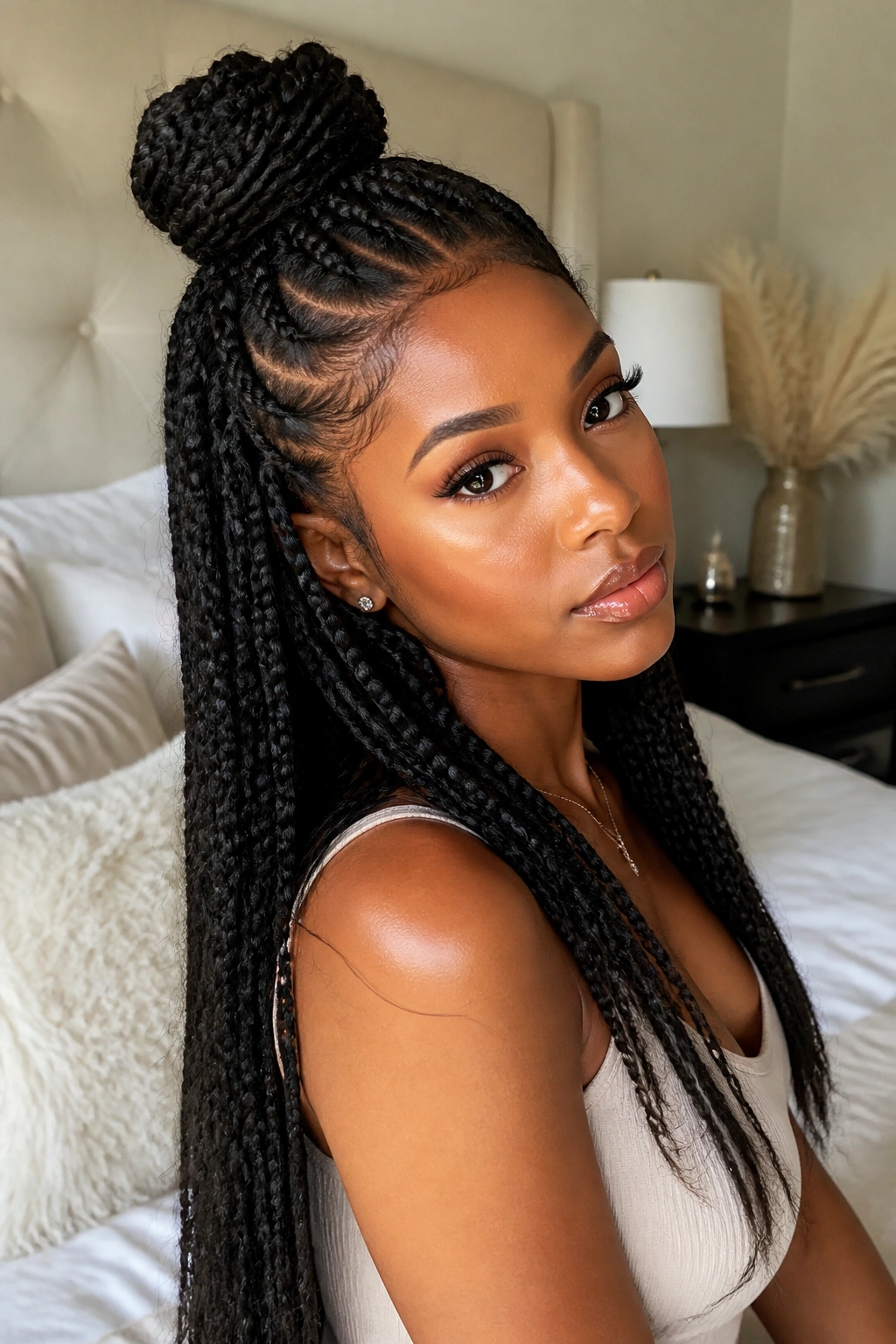
Half-up half-down braids are the middle ground that saves people when they cannot decide between pulled-back and loose. The front section is lifted, which keeps hair off the face, while the rest hangs down for length and movement. That balance is why it keeps showing up again and again.
The style works with almost any braid size, but medium braids usually give the cleanest finish. Too many tiny braids can make the half-up section heavy. Too few giant ones can make the back feel sparse. Somewhere in the middle usually lands best.
You can shape the top half into a bun, a ponytail, or a twisted knot, depending on how dressed up you want it to feel. And if you’re tired of it halfway through the week, you can switch the top section down and get a different look without redoing the whole head.
That flexibility is the whole point. It’s not boring. It’s useful.
18. Braids with Color Accents
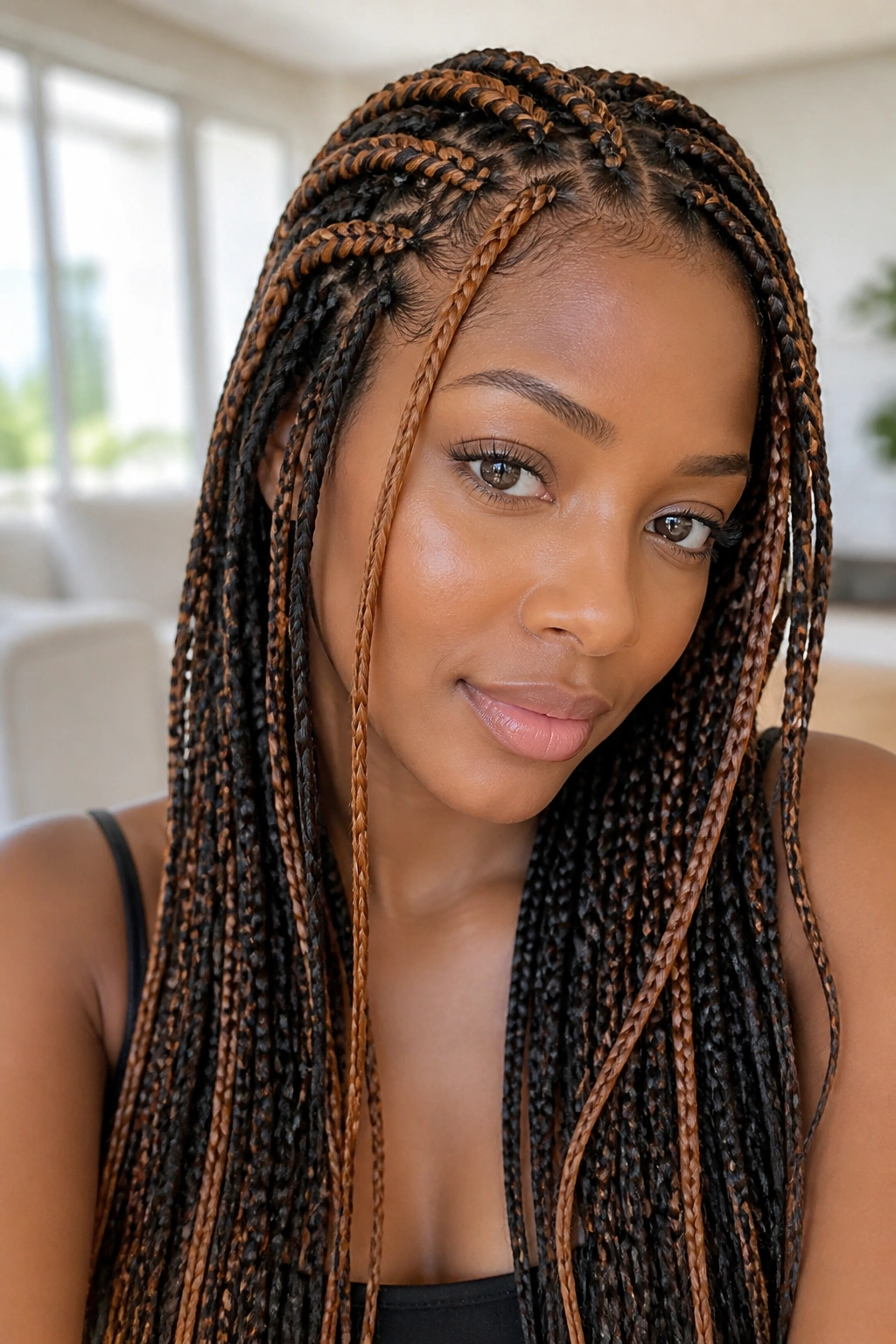
A little color goes farther than most people expect. You do not need a full neon head to make braids feel alive. Small color accents — honey brown, burgundy, copper, blonde highlights, or a few mixed strands — can change the read of the style without making it loud.
Best shades to ask for
- Honey brown warms up dark braid hair and softens the contrast at the roots.
- Burgundy gives depth and looks especially good in sunlight.
- Copper and auburn add warmth without turning the whole set bright.
- Blonde streaks work best when placed sparingly, not in huge patches.
Color also changes how the braid texture shows up. Darker shades hide parting lines more easily, while lighter shades show every twist and fold. That can be a plus if you want the braid pattern to stand out.
The one thing I’d avoid is mixing too many tones at once. Two colors usually look intentional. Five can start to look busy unless the pattern is carefully planned.
19. Crown Braid Updo
Need hair off your neck and off your shoulders? A crown braid updo is the answer that looks more complicated than it is. The braids wrap around the head or sweep along the perimeter, then tuck into a circle, bun, or hidden finish. The result sits close to the scalp and reads polished from every angle.
It works especially well when you want a style that feels neat without going severe. A crown shape softens the face and keeps attention on the lines around the hairline. If the braids are medium or small, the wrap can look elegant and clean. Bigger braids can work too, but the crown usually needs more room.
A few flyaways are fine. They keep the style from looking stiff. What you do not want is a crown that pulls across the temple so tightly that the face starts to tense up. That is a bad trade.
For formal events, interviews, or long days when you want your hair fully contained, it’s hard to beat.
20. Braided Mohawk
A braided mohawk gives you shape. Real shape. The sides are braided close or pinned down, while the center section rises into a thick ridge, bun, or trail of plaits. It has edge, but not chaos. That balance is why the style works so well.
The best versions use the center line to create height without piling on too much hair at the crown. If the middle gets too heavy, the whole thing starts to lean backward. If the sides are too tight, the style stops being comfortable almost immediately. That tension point matters more than the visual.
What helps the style hold
- Keep the side braids flat and secure.
- Use a center section with enough length to shape into a ridge or puff of braids.
- Add pins under the mohawk shape, not on top where they show.
- A light mist of mousse can help the braids stay smooth while the shape sets.
It’s a bolder look, sure, but it’s not a costume. Done well, it feels intentional and wearable.
21. Heart-Part Braids
Heart parts are one of those details that make people look twice. The braid set itself can be simple — box braids, cornrows, knotless braids — but the parting at the crown forms a heart shape, which changes the whole feel. It adds a little softness and a little personality without asking for extra length or color.
The design takes patience. A heart part has curves, and curves are harder to keep clean than straight lines. That means the stylist has to control spacing carefully so the heart doesn’t turn lopsided or blurry once the braids are installed. If the shape is crisp, it looks lovely. If it’s rushed, you’ll see every mistake.
Why it works
The heart part sits where people notice first, so even a modest braid style gains some character. It’s a good option for birthdays, photo shoots, special events, or just when you want your braid set to feel a little less ordinary. No extra decoration needed.
The part does the talking. Quietly, but still.
22. Short Braids with Beads and Cuffs
Short braids with beads and cuffs are playful, lighter, and easier to manage than long waist-length sets. The shorter length keeps the weight down, while the beads and cuffs give the style some movement and shine. It’s a good fit if you want the braid look without a lot of drag on your neck or shoulders.
Unlike long braids, short styles make the accessories part of the design instead of an afterthought. A few cuffs near the ends, a row of beads on the front pieces, maybe a mix of both — that’s often enough. You do not need to cover every braid. In fact, that can make the style look crowded.
This style also works well when you want to show off earrings, collars, or a neckline. The shorter shape clears space around the face and upper body, which makes the whole look feel lighter.
The main thing to watch is balance. Heavy beads on tiny braids can tug. Cute does not excuse discomfort.
23. Braided Pigtails
Braided pigtails should not be underestimated. Two braids, evenly parted, can look clean, youthful, and pulled together without feeling overdone. If the part is sharp and the braids are finished neatly, the style reads far more grown-up than people expect.
You can wear them low, high, or somewhere in the middle. Low pigtails feel calm and easy. High pigtails feel more playful and athletic. Either way, the symmetry is what gives the style its power. It looks simple, but only if the execution is tidy.
A side part can change the mood if you want the look to soften around the face. Middle part works best when you want that classic mirrored shape. Either one is fine, but the sections have to match. Uneven pigtails are impossible to ignore.
This is also one of the easier braid ideas to switch into other styles later. Pin them up, twist them together, or leave them down. It moves well.
24. Braided Space Buns
Braided space buns are the style people underestimate until they see it done well. Two braided sections are gathered into buns high on the head, usually with the rest of the braids arranged to keep the shape balanced. The look is playful, but it can still feel neat and structured if the buns are anchored properly.
How to keep the shape from getting bulky
- Use smaller braids if you want the buns to sit high without tipping.
- Secure the base with pins before you tuck the ends.
- Keep the bun size even on both sides of the head.
- Don’t overload the front hairline; the shape should lift, not pull.
Braided space buns are especially useful when you want a change from wearing braids down all the time. They open up the face and show off the parting, which is half the fun. They also keep the ends more contained than a loose style, so they can feel practical once you get used to the shape.
Funny how a style can look sweet and sharp at the same time. This one does.
25. Low Braided Chignon
A low braided chignon is the braid style I’d send to someone who wants the cleanest, most refined finish on the list. The braids gather at the nape, then fold into a tucked bun or wrapped knot that sits low and close to the head. It feels composed without being stiff. That’s harder to pull off than it looks.
The beauty of a low chignon is that it works with different braid sizes and different levels of ornament. You can keep it plain and smooth, or add one metal cuff, a few pins, or a wrapped strand around the base. The key is restraint. If the bun gets too large, it stops looking elegant and starts looking crowded. If the base is too tight, the style loses its charm fast.
For weddings, interviews, formal dinners, or any day when you want braids to read polished instead of casual, the low chignon is hard to beat. It also lets the face stay open, which is useful when you want earrings, makeup, or a strong neckline to take center stage.
The best braid set is the one you can wear without thinking about it every ten minutes. That sounds simple, but it is the whole game. Choose the style that fits your scalp, your schedule, and your tolerance for upkeep. If a braid idea looks good but feels like a chore by day three, it is not the right one, no matter how nice the photos look.
And if you’re still torn, start with the boring question: do you want light, long, neat, soft, or dramatic? Once you answer that honestly, the rest gets easier.
