



Some braid styles look pretty for a day and then turn into a headache. Back braid styles are not those styles. When they’re done well, they give you a clean shape, a protected root, and enough polish to carry you through work, church, errands, date night, or a week where you just do not feel like dealing with your hair every morning.
For Black women, that balance matters more than people outside the culture sometimes realize. A good braided style has to do more than look neat in the mirror. It has to respect the scalp, sit comfortably at the hairline, hold up under scarves, satin bonnets, weather, and sleeping, and still look intentional when the braids start to soften a little. That’s a lot to ask from one hairstyle. Braids can handle it.
The styles below cover the range I reach for when someone wants something practical but still beautiful: sleek cornrows, side-swept looks, fuller braided ponytails, crown shapes, bob-length braids, and a few styles that live right in the sweet spot between classic and fresh. Some are quicker. Some take patience. A few look delicate but are built like little fortresses.
And yes, the details matter. Part size, braid tension, extension weight, and where the style lands on your head can change everything. Too tight is too tight. Period. If a style hurts on day one, it is not “neat”; it is a problem waiting to happen.
1. Classic Straight-Back Cornrows
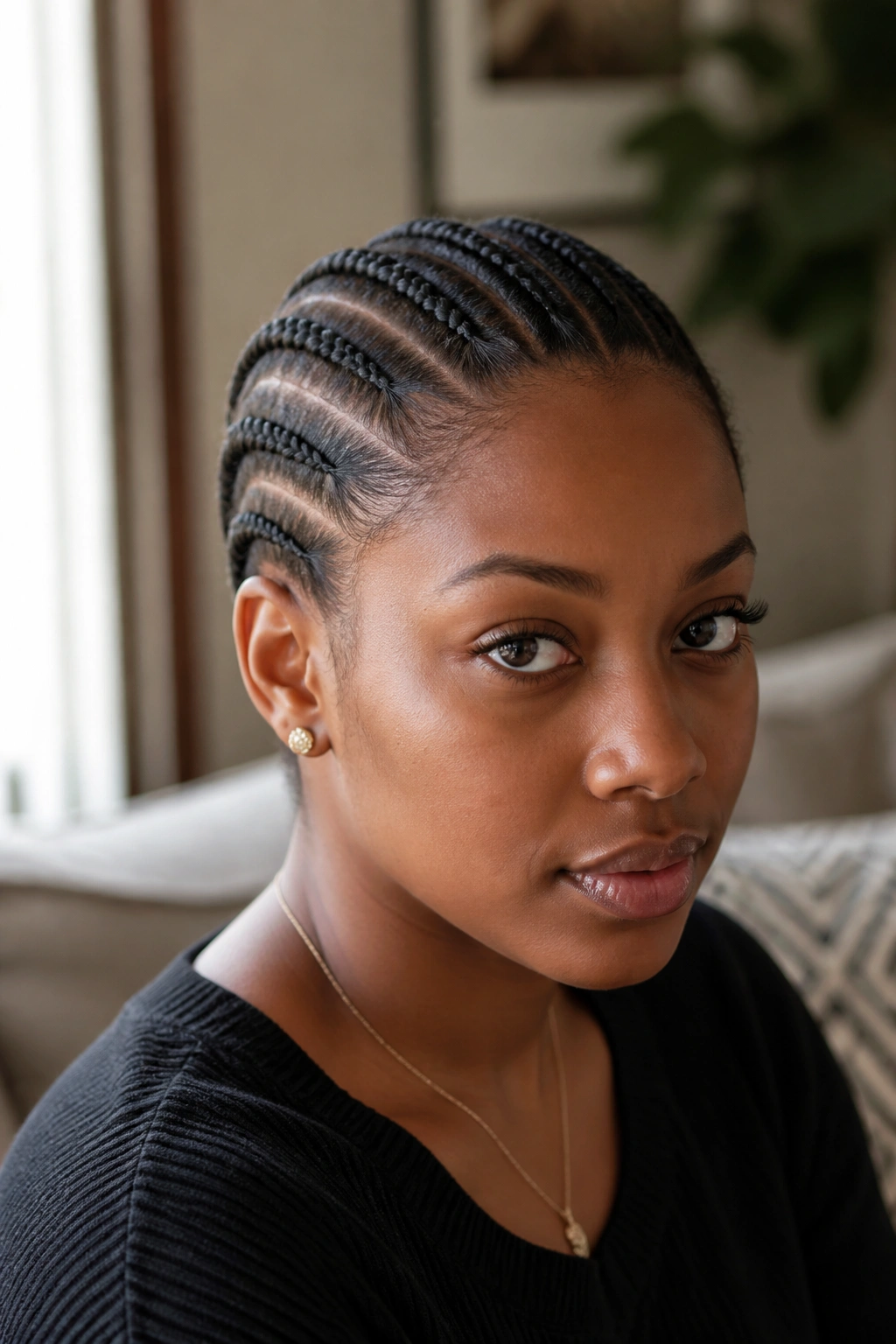
Straight-back cornrows are the backbone of back braid styles, and honestly, there’s a reason they never leave the conversation. They’re clean, easy to keep up, and they work on a wide range of hair lengths as long as the hair can be neatly parted and braided close to the scalp.
Why They Keep Winning
These braids pull the hair back in neat rows from the front hairline to the nape, which gives the face a clear frame and keeps the style out of the way. That makes them one of the easiest protective styles for busy weeks, workouts, or travel. They also sit flat enough to wear under hats and headwraps without turning bulky.
What To Ask For
- Part size: small for a more detailed look, medium for something faster and easier to maintain.
- Braid length: shoulder-length keeps the style light; waist-length adds drama but also adds weight.
- Tension: ask for snug, not tight.
- Finish: beads, cuffs, or simple ends can change the whole mood.
Straight-back cornrows look best when the parting is crisp and the braids travel in straight, even lines. If the parts wander, the whole style looks off. If the rows are clean, though, they have that satisfying, unmistakable neatness that never gets old.
2. Feed-In Cornrows with a Soft Hairline
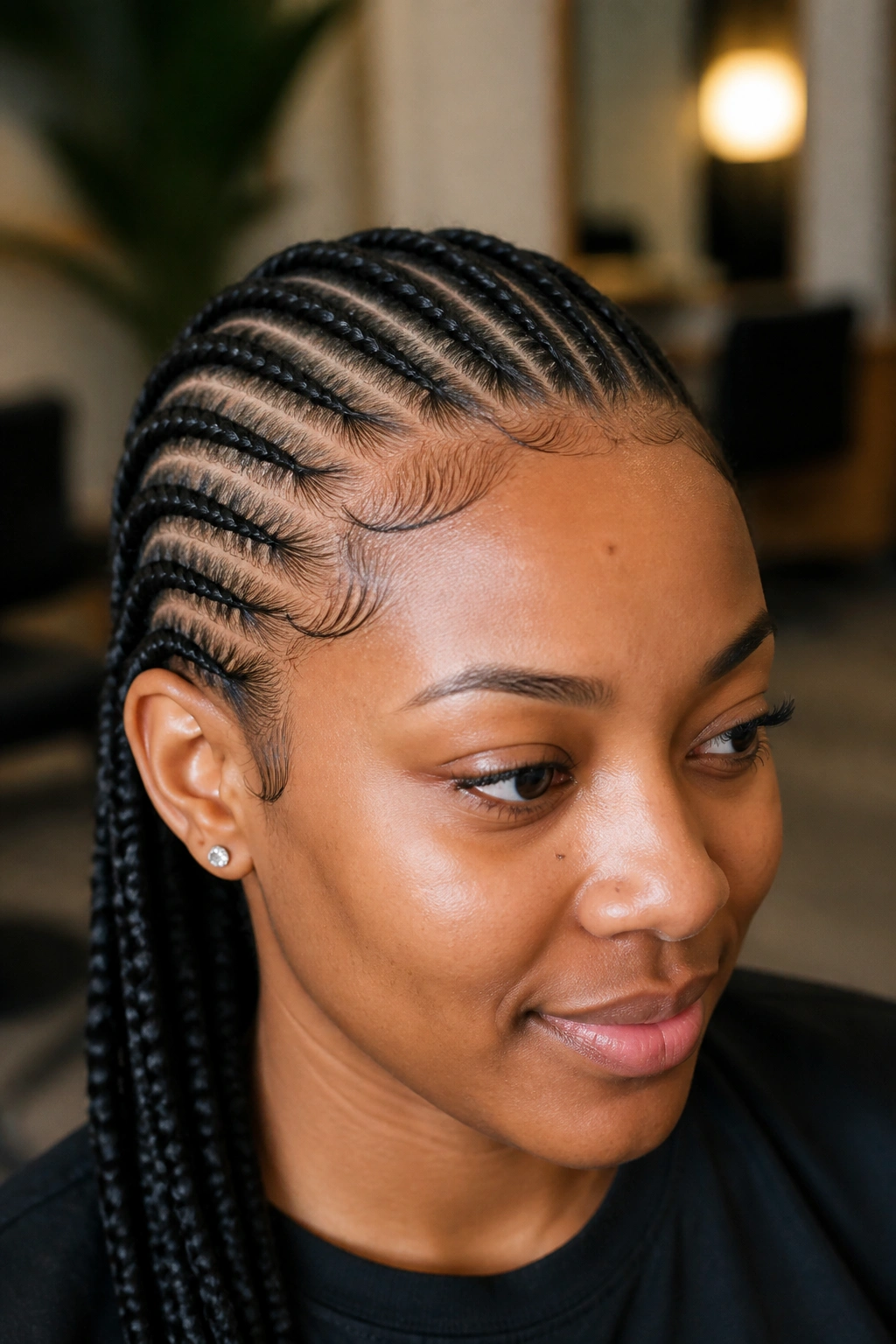
Feed-in cornrows are the style I recommend when someone wants the look of braids without that harsh, bulky start at the scalp. The braid begins small and gradually builds as extension hair gets added, which creates a smoother, more natural taper at the front.
They’re a smart choice if you like a polished finish but hate the heavy feel that some traditional cornrows can have near the hairline. The start of each braid sits flatter, and that alone changes the whole experience. Less bulk. Less pulling. Cleaner edges.
You can wear feed-ins in straight-back rows, curved designs, or side-swept patterns, and they still look refined. I especially like them for people who want a style that photographs well from the front and still feels wearable for several days. The braid itself has a little movement, too, which keeps the style from looking stiff.
If you want this look to last, ask for medium-width parts and keep the braid size consistent. Tiny feed-ins can look delicate, but they take time. Bigger ones are faster and usually easier to maintain. Either way, the magic is in the gradual build. That taper is what makes feed-ins feel softer than standard cornrows.
3. Stitch Braids
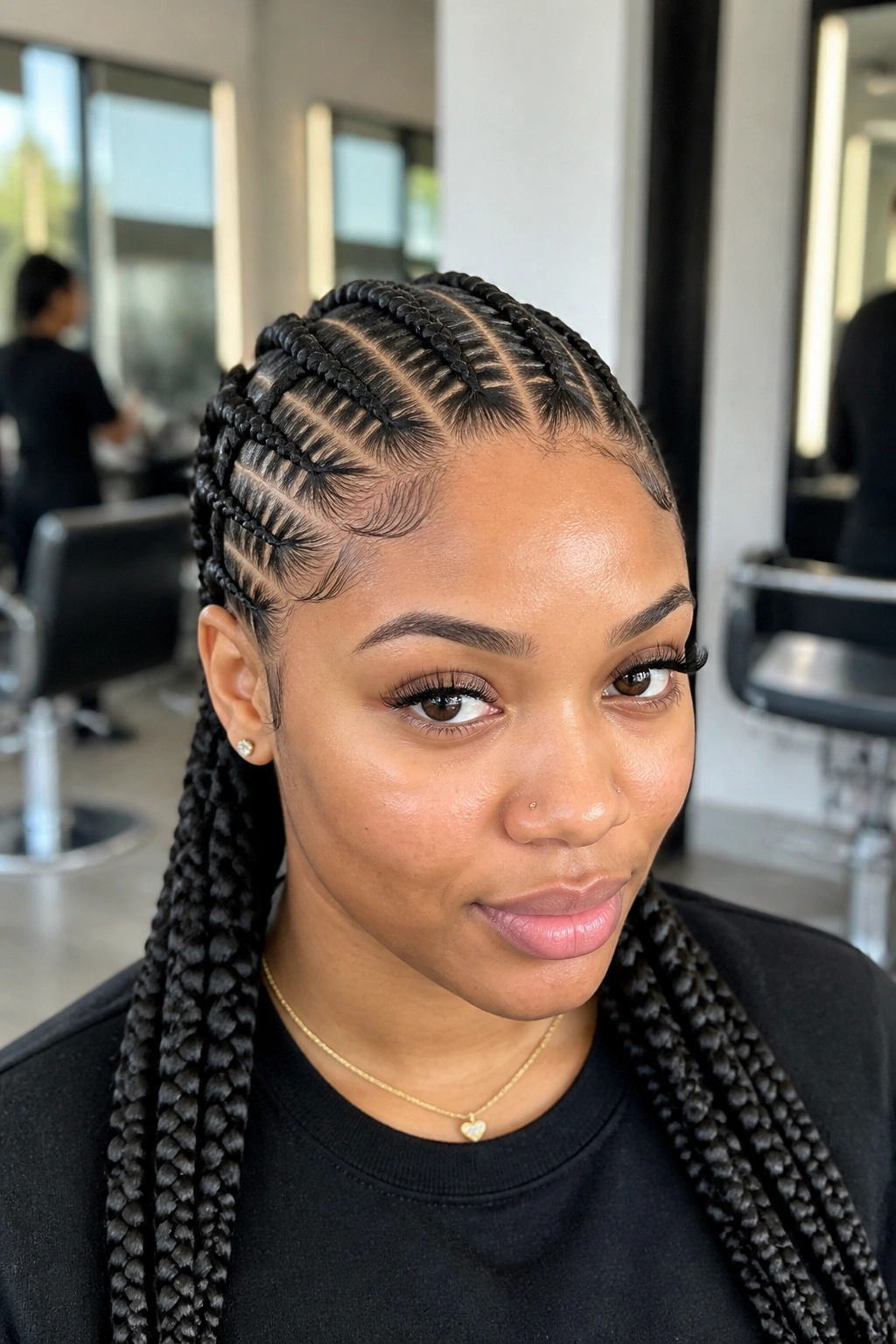
Why do stitch braids look so sharp? Because the parting is doing half the work. The “stitch” effect comes from small, even sections that create a segmented look along the braid, almost like little horizontal lines running into one another.
They’re best on stretched hair, because the smoother the base, the cleaner the parting reads. On tightly coiled hair that has not been stretched, the sections can puff up faster and blur the shape. That does not make the style bad. It just means the crisp pattern won’t stay as defined for as long.
How To Ask For The Stitch Look
Tell your braider you want even, narrow feed-ins with visible section lines. If you want the stitch pattern to pop, keep the braids medium to large. Tiny stitch braids can disappear into the texture, especially after a few days.
A lot of people wear stitch braids straight back, but they also work beautifully in curved rows or a ponytail base. The style has a structured, almost architectural feel, and that’s what makes it stand out from softer cornrow sets. It’s the braid equivalent of a sharply pressed shirt.
Just keep the tension honest. Stitch braids can be a little tempting to over-tighten because the style looks precise, but the scalp should never feel strained when you blink or smile. That’s not a small detail. That’s the whole game.
4. Side-Swept Lemonade Braids
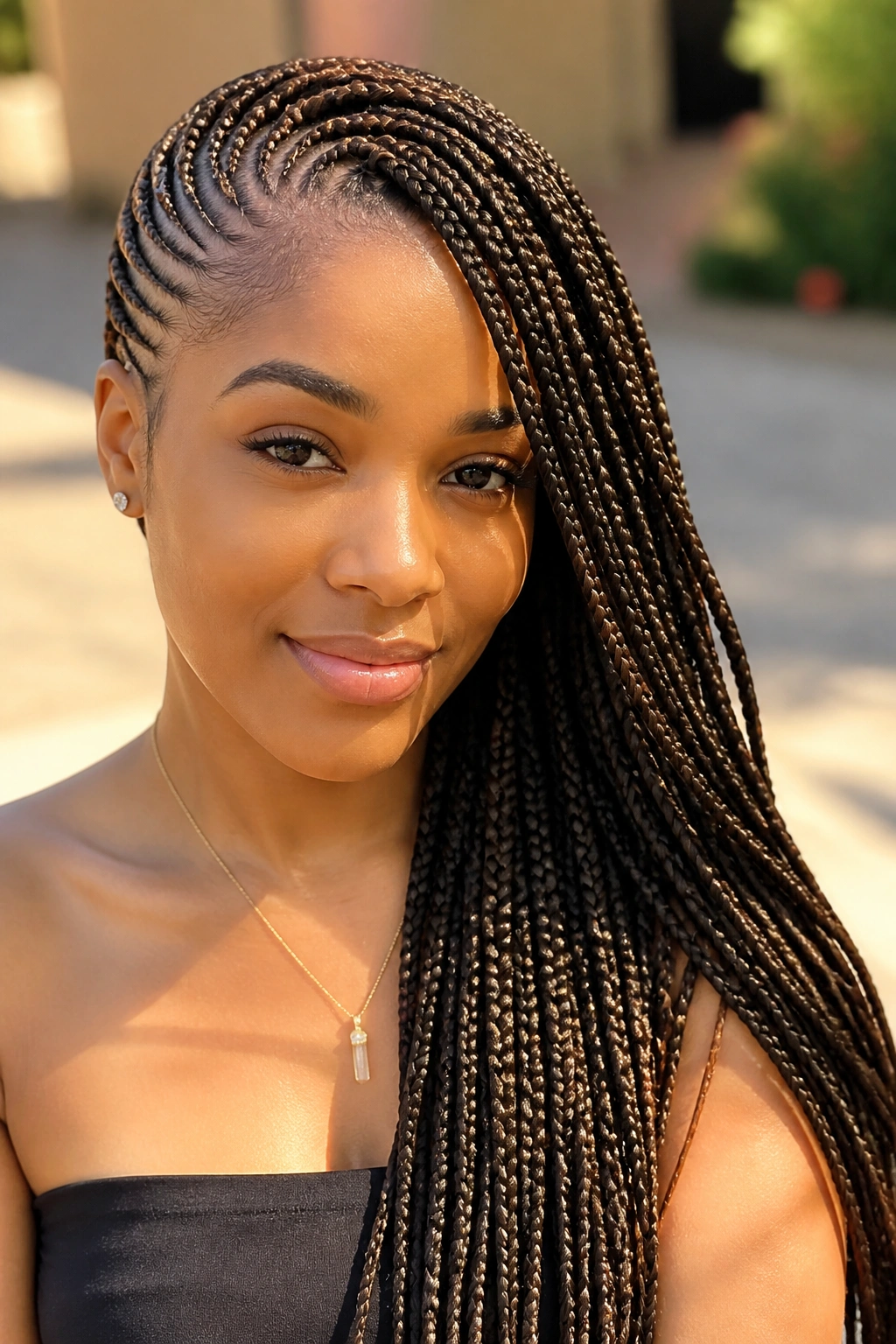
There’s a reason side-swept braids keep showing up whenever someone wants a little drama without going overboard. They sweep across one side of the head, usually feeding from a deep side part, and the whole shape feels more relaxed than straight-back rows.
I think of this style as movement first, structure second. The braids slide over one shoulder, which gives you swing when you walk and a nice frame around the cheekbones. It’s a flattering shape on a lot of face types because it opens one side and lets the braids do the visual work on the other.
- Best for: medium to long lengths.
- Good add-ons: cuffs, gold thread, or a few wrapped ends.
- Styling note: keep the side part clean, or the whole look loses its sharpness.
- Comfort factor: lighter than a thick all-over set if the braid size is moderate.
The thing people miss is that side-swept braids need balance. If one side is too dense and the other is too sparse, the style can feel lopsided instead of intentional. A skilled braider knows how to angle the rows so the weight lands where it should. And when they get it right, the result has a kind of easy confidence that straight-back styles sometimes don’t.
5. Fulani Braids with Beads

Fulani braids are one of those styles that carry history and beauty at the same time, and I like that they don’t try to hide either one. The classic shape usually includes a center braid or a braid running along the middle, with side braids that may be tucked, accented, or decorated with beads and cuffs.
The style has a way of looking finished even before you add accessories. Then the beads go on, and everything changes. A few wooden beads at the ends can make the braids sound softly against one another, while metal cuffs give the style a little shine without crowding it. I prefer fewer, well-placed accents over clutter. Too many beads can drown the pattern.
What makes Fulani braids stand out is the mix of symmetry and detail. You get a center line, but you also get side work that keeps the eye moving. The result feels deliberate and rooted, not thrown together. That’s part of why this style lasts as a favorite.
If you wear this style, keep the scalp moisturized with a light spray or a water-based leave-in every few days, then seal the ends sparingly. Heavy grease near the roots can build up fast under beads and make everything feel itchy. Not worth it.
6. Ghana Braids
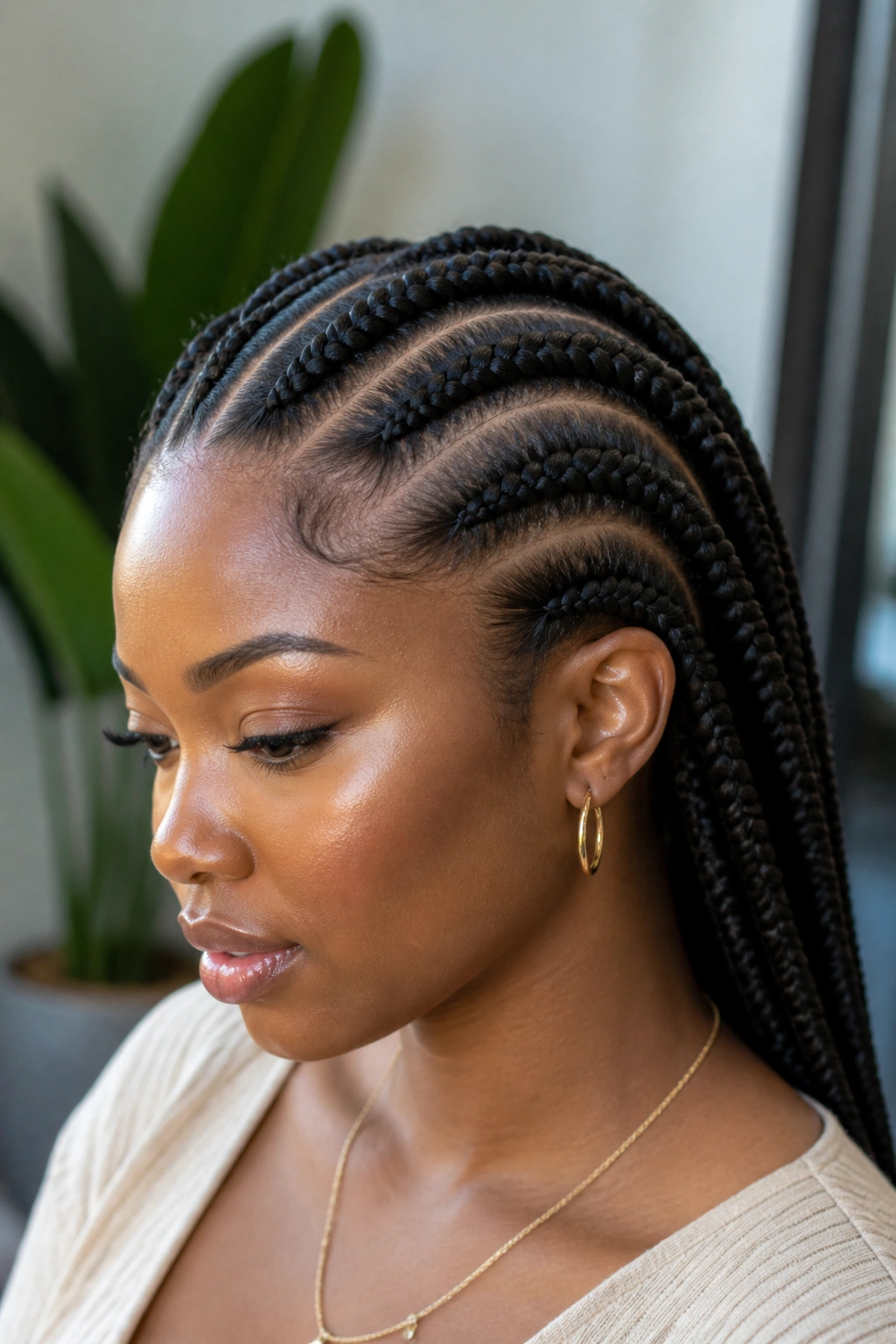
Ghana braids are the heavier, fuller cousin in the cornrow family, and I mean that in the best way. They start near the hairline and get broader as they move back, which makes the braid pattern look bold from the first glance.
Unlike finer cornrows, Ghana braids give you a lot of visual impact with fewer rows. That means the install can be quicker, the scalp can feel less crowded, and the style often stays neater for longer because there are fewer tiny sections to fray. If you want a style that reads strong and clean, this is a good one.
They also work well when you want the hair pulled back but still want a bit of thickness along the scalp. On coily hair, that fullness can look gorgeous without feeling fussy. Add a middle part, a deep side part, or a curved pattern, and the style changes character fast.
I like Ghana braids for people who want a protective style that looks polished without needing twenty tiny rows to make the point. The braids themselves do the talking. Simple. Strong. No extra noise.
7. Goddess Braids
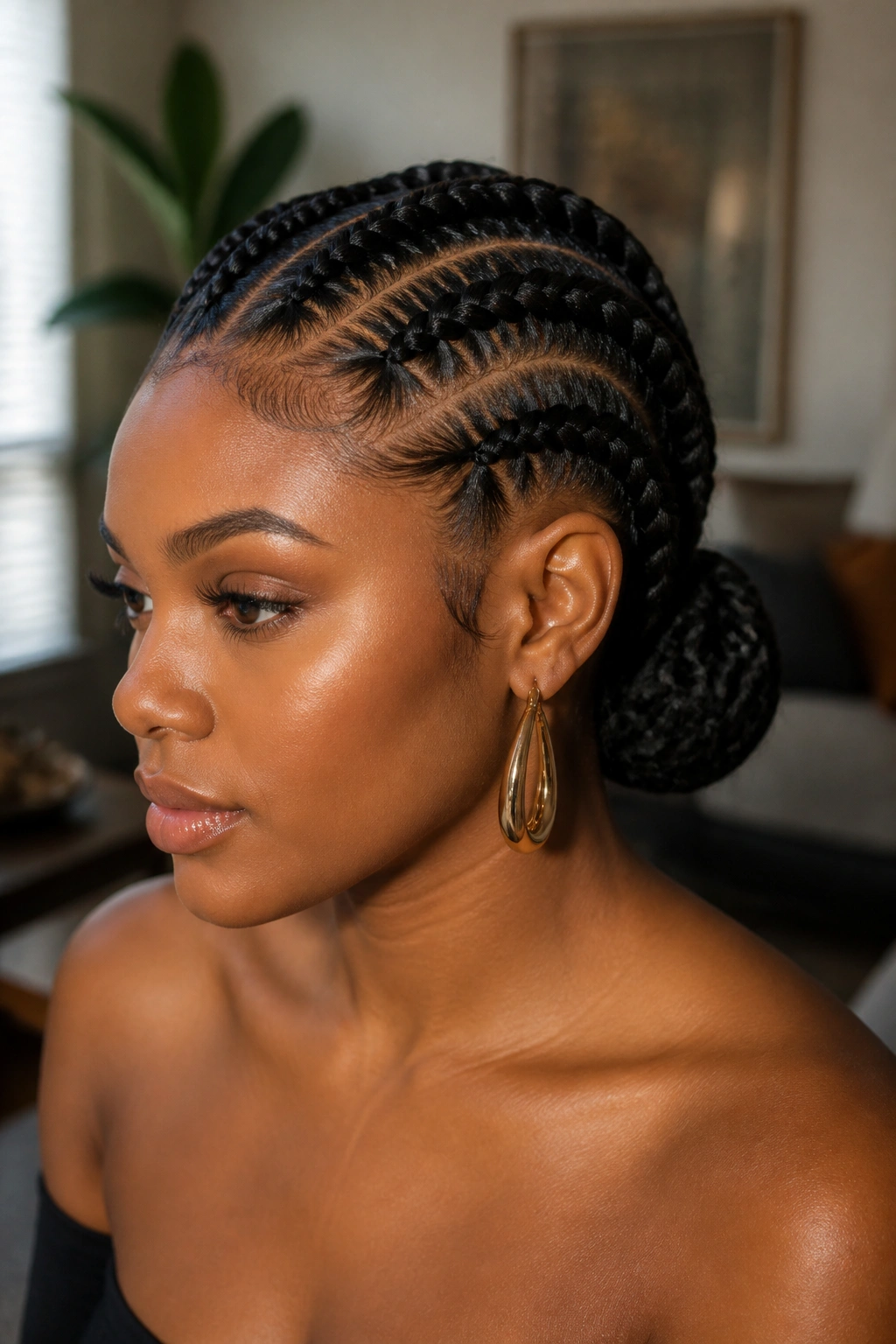
Goddess braids have a softer, thicker presence than many back braid styles, and that bulk is exactly what gives them their appeal. They’re usually larger cornrow-like braids that sit close to the scalp but can also feed into a loose finish, a bun, or long hanging lengths.
Where They Shine
The braid size makes them feel graceful rather than busy. You see the shape first, then the detail. That’s useful if you want a style that looks elegant in a hurry and does not need a lot of extra ornament. They can be dressed up with gold cuffs, but they do not need them.
How To Wear Them Well
- Keep the parts wide enough that the style does not crowd the scalp.
- Ask for a gentle start at the hairline if your edges are delicate.
- Let the braids sweep into a low bun or side finish for extra softness.
- Use a satin scarf at night so the larger plaits do not frizz too fast.
Goddess braids are one of those styles I think people underestimate because they seem simple. Then you see them on and realize they have presence. Not flashy presence. Better than that. They look composed.
8. Sleek Braided Ponytail
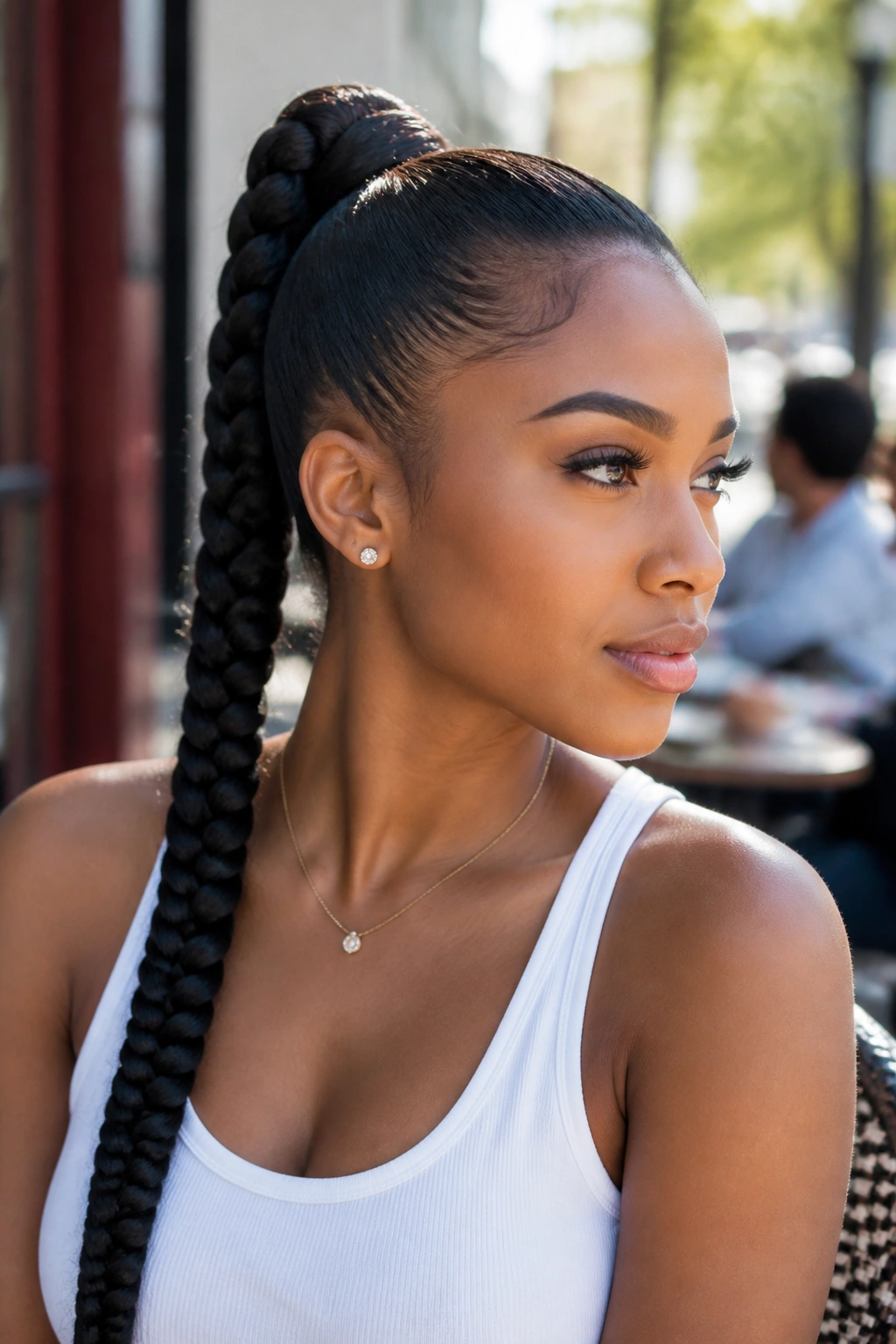
A braided ponytail is one of the easiest ways to make back braids feel put-together without making them stiff. The hair is braided back into a ponytail base, either high at the crown or low at the nape, and then the length hangs in one clean line.
High ponytail versions feel sharper and a little more playful. Low ponytails feel calmer, almost formal. Both work, and both are practical if you want your hair off your shoulders. That matters more than people admit, especially when you’re wearing earrings, collared shirts, or anything with a neckline that gets tangled in loose braids.
The style can be done with feed-ins, straight-back cornrows, or even large Ghana braids feeding into the ponytail. If the base is slick and the braids are even, the whole look feels crisp. If the base is loose, the style starts to sag fast.
I like this one for days when you want movement but not chaos. A braided ponytail swings when you walk, stays out of your face, and still gives you room to add one strong accessory if you want it. A wrapped ponytail cuff at the base does a lot of work here. So does a clean part.
9. Braided Bun
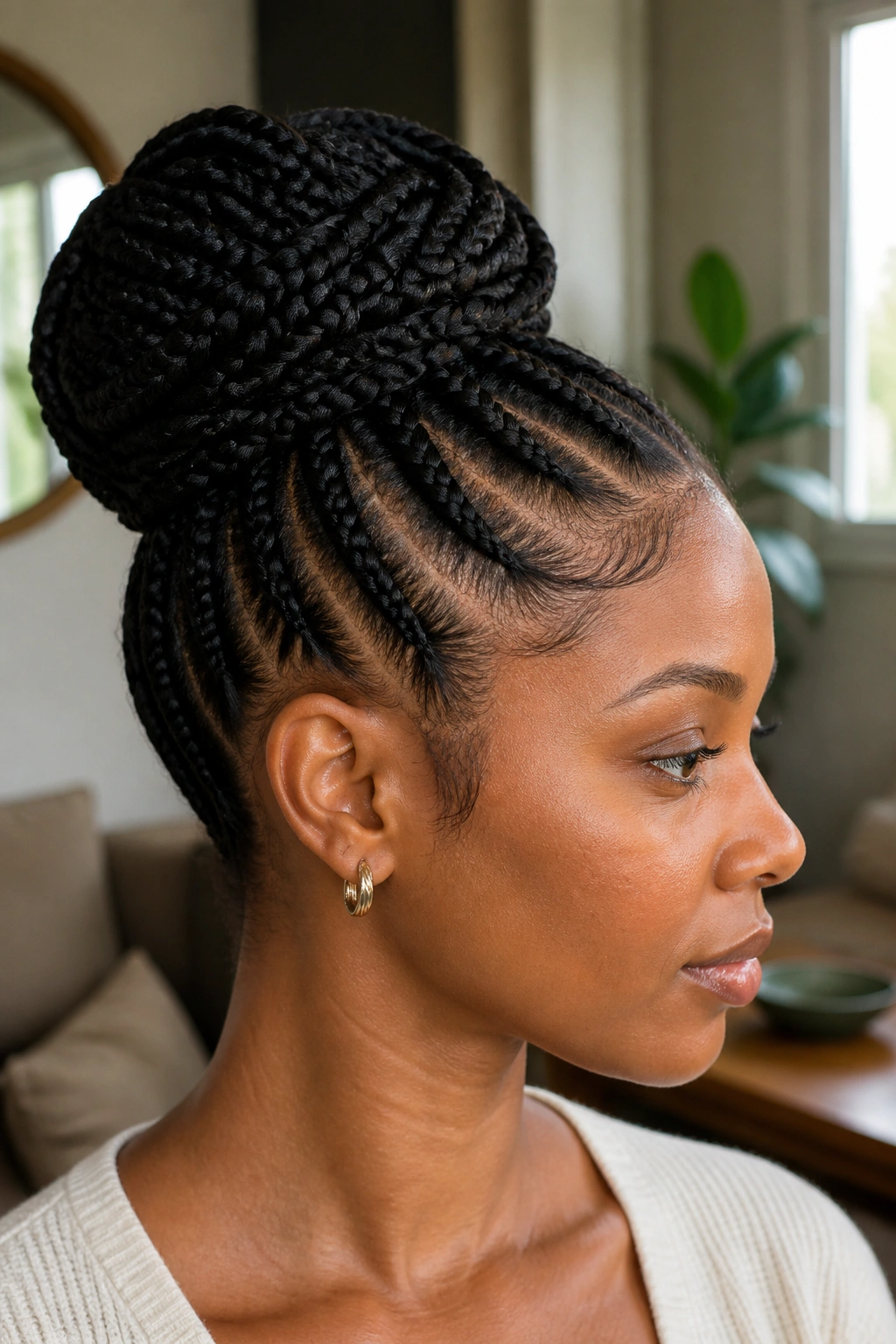
A braided bun is what I suggest when someone wants their hair fully up and fully out of the way, but still wants the style to look like it took effort. The bun can sit high, low, or right in the center back, and each position changes the mood a little.
High buns read sharper and more lifted. Low buns feel more grounded and classic. If the braids feed into the bun with a smooth base, the style can look almost sculptural. That’s the part I like most: the shape. You get a neat silhouette even before anyone notices the braid pattern.
Small Things That Matter
- Wrap the braids in the same direction so the bun does not bulge.
- Use pins that match your hair color when possible.
- Keep the braid ends tucked cleanly so they do not stick out like little hooks.
- If the bun feels too heavy, ask for fewer, thicker braids next time.
A braided bun is also a decent option when you want a low-manipulation style that still looks done. It is not the most playful look on this list, but it may be the most useful. Sometimes that’s the point.
10. Halo Crown Braid
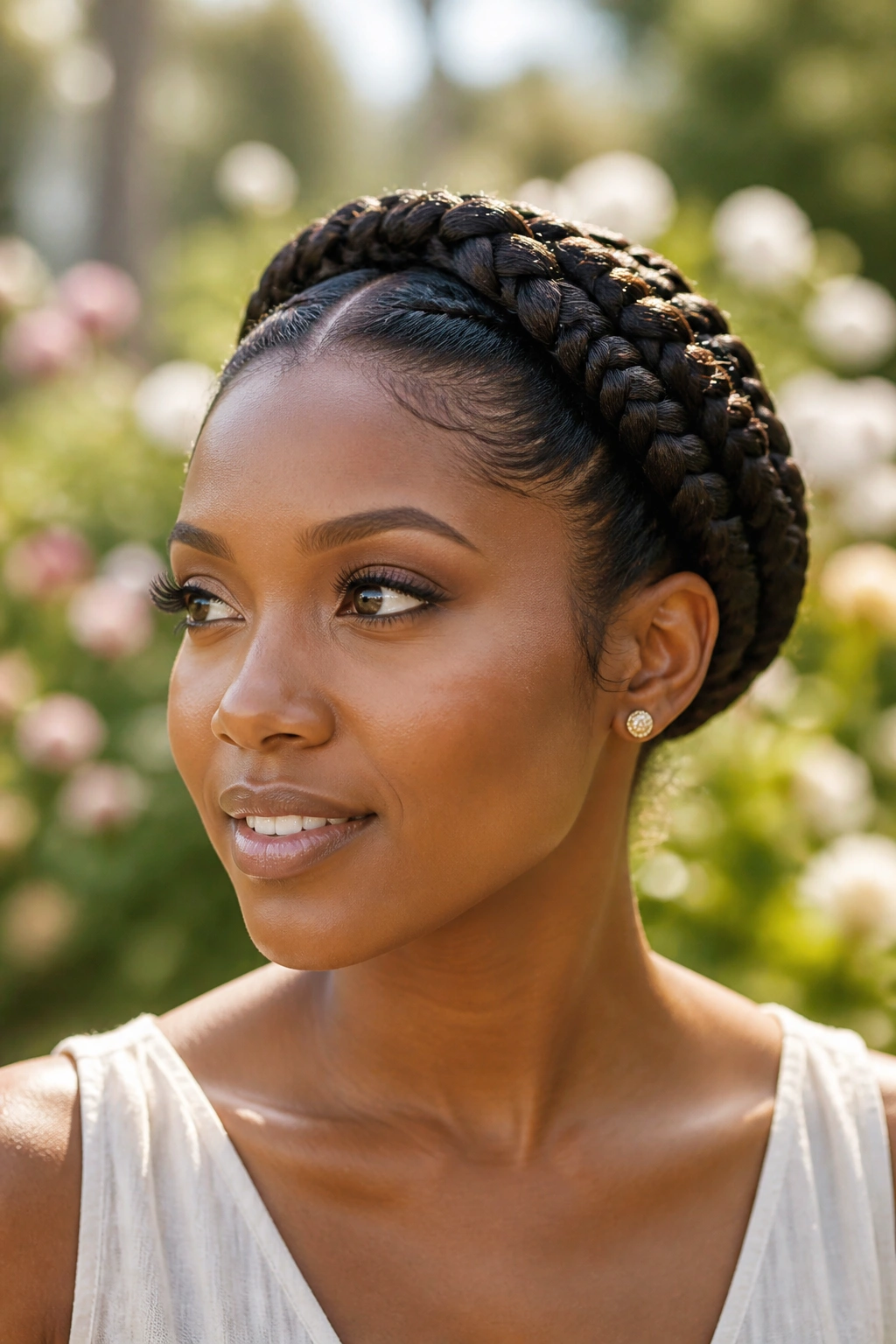
What makes halo crown braids so satisfying is the way they turn the head itself into part of the style. The braids wrap around the perimeter of the hairline, creating a crown effect that feels neat, feminine, and a little regal without trying too hard.
This style works especially well when you want the hair completely off the neck and face, but you still want softness around the edges. It can be done as one thick braided ring, a set of joined braids, or a more detailed pattern that meets at the back. On medium to long hair, the effect is especially pretty because the braid has enough length to sit smoothly around the head.
The biggest thing to watch is tension near the temples and nape. Those areas are easy to overwork because the braids need to curve. If the braid pulls when you turn your head, it is too tight. Full stop.
Halo braids are nice for dressier settings, but they are not fragile. Wear one with a simple hoop earring and a bare neckline, and it does the job on its own. That kind of self-sufficiency is rare in hairstyles, and I have a soft spot for it.
11. Asymmetrical Side-Part Braids

Not every back braid style needs to sit dead center. In fact, one of the fastest ways to make braids feel fresh is to shift the part hard to one side and let the rows travel diagonally across the scalp.
That asymmetry changes the face shape more than people expect. A deep side part can soften a strong forehead, sharpen the line of the cheekbones, or give more width to one side of the face depending on where the braids fall. It also keeps the style from looking too predictable. Same basic braid idea. Different energy.
What Makes Them Different
The rows usually start with a stronger part on one side, then sweep across the back in angled lines. You can do that with cornrows, feed-ins, or larger braids. The key is not the braid type alone — it’s the direction.
This style is good when you want back braids but don’t want the same old straight-down pattern. It feels a little more editorial, a little less school-uniform. And if you like changing your earrings, this is a nice canvas because the side part leaves one ear more visible. Tiny thing. Big effect.
12. Knotless Bob Braids
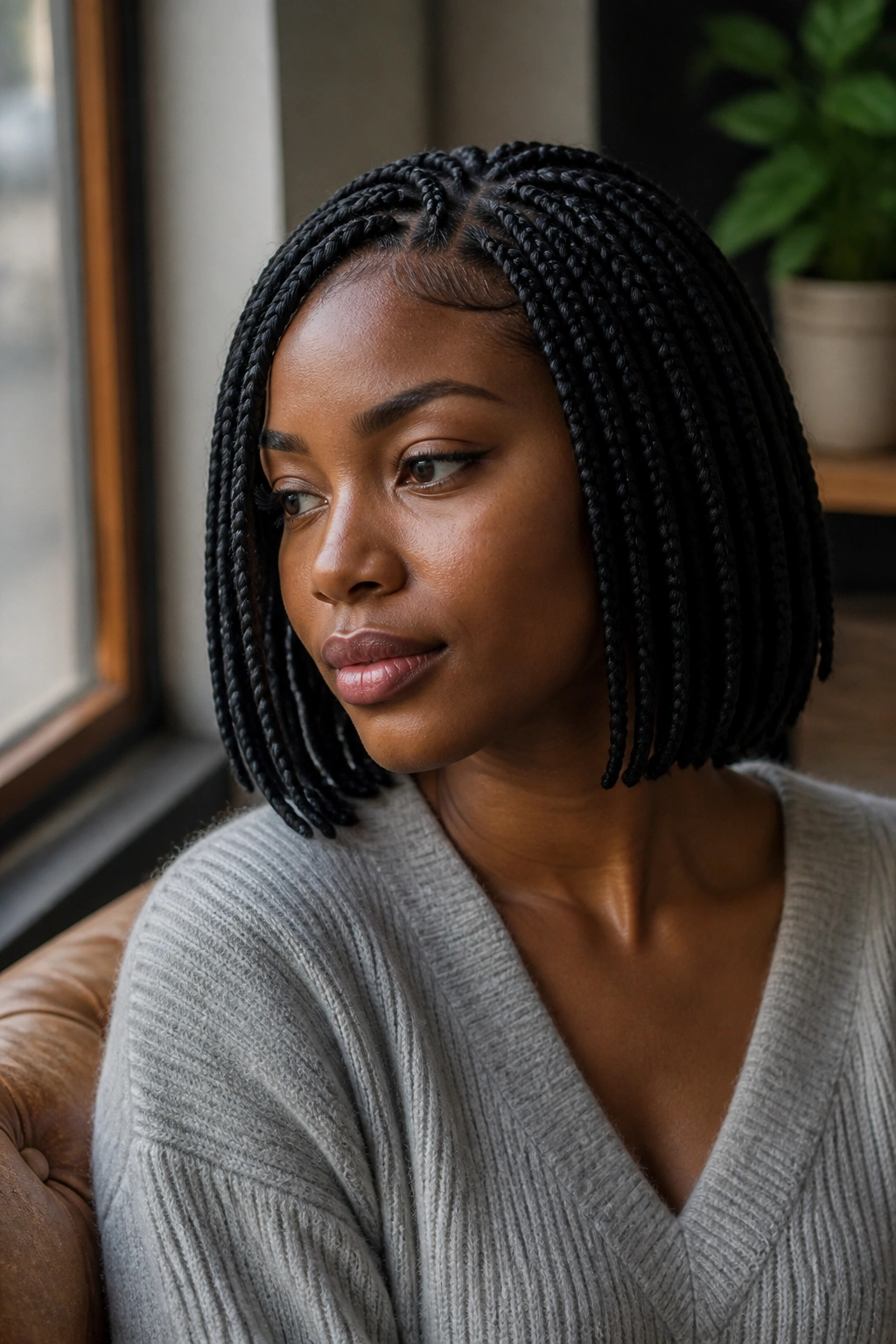
Knotless bob braids are for people who want the look of back braids without committing to long length. The bob sits around the jaw, chin, or shoulders, which makes the style lighter on the neck and easier to live with day to day.
Knotless construction matters here because the braid starts with your hair first, then the extension hair is fed in gradually. That keeps the base flatter and often more comfortable than a traditional knot at the root. On a short braid length, that softness makes a big difference. You can feel it when you sleep. You can also feel it when you tuck your hair behind your ear without fighting bulky roots.
This is one of the better choices if you want something low-key but still neat. It works for people who are tired of long braids snagging on coats, car seats, and shirt collars. Shorter braids also tend to move better. They swing less dramatically, but they look tidy longer because there is less weight pulling on the base.
I like a side part on bob braids. It gives the shape more line and keeps the cut from feeling too round. Straight across can work too, but the side part has a little more attitude.
13. Jumbo Back Braids
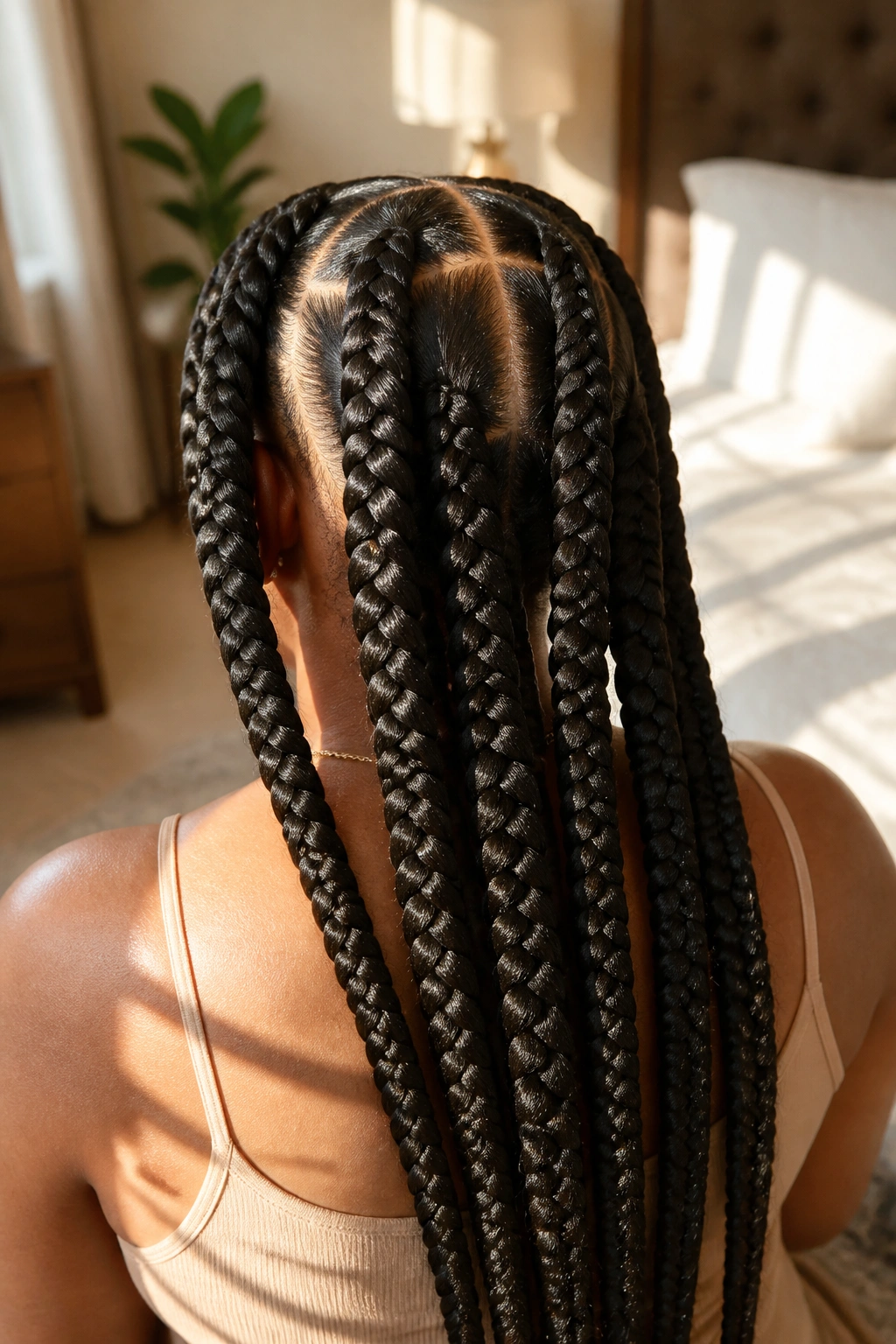
Jumbo back braids are fast, bold, and a little unforgiving if the parting is sloppy. That last part matters. When the sections are clean, jumbo braids look expensive in the plainest sense of the word: not flashy, just finished.
Because the braids are large, you get fewer of them, which means less time in the chair and less scalp crowding. For a lot of people, that’s the whole appeal. The style still protects the hair, but it asks less of your schedule. It also works well if you like a bigger braid pattern and do not want to sit through tiny section after tiny section.
Why They Work So Well
- They show off clean parting quickly.
- They’re easier to refresh between wash days.
- They usually weigh less than a full set of small braids.
- They can be styled into one big ponytail, two buns, or worn loose.
Jumbo braids do have a catch. If the braid size is too large for the length of the hair, the ends can feel heavy and awkward. So ask for balance. Big enough to be bold, not so big that the braid starts dragging the scalp. That line matters more than people think.
14. Triangle-Part Braids

Triangle parts are one of those details that changes everything without changing the braid style itself. Instead of square sections, each braid starts from a triangle-shaped part, and the result looks sharper, more customized, and a little less predictable.
The braids can be straight-back, feed-in, or even side-swept. The parting pattern is what gives them character. Under good light, triangle parts catch the eye because the geometry is cleaner and more varied than a grid. It sounds subtle. It is not, once the style is finished.
I like triangle parts when the braid style itself is simple and the client wants the parts to do some of the visual work. They also tend to look good on dense hair because the parting breaks up the scalp in a way that feels balanced rather than too rigid.
This is not the fastest style on the list, but it rewards patience. If the triangles are uneven, you’ll see it. If they’re clean, the whole head looks more styled. That’s the funny thing about braid work: the parting is often the part people notice first, even if they can’t say why.
15. Half-Up, Half-Down Back Braids

Half-up, half-down back braids are the compromise style that never feels like a compromise. You get the hair off your face in the front and some length left down the back, which gives you shape without losing movement.
That balance is why I keep coming back to it. The top section can be pulled into a ponytail, a small bun, or a wrapped knot, while the back braids hang freely. It works with straight-back cornrows, stitch braids, feed-ins, and even larger goddess braids if the sections are planned well.
The style is useful when you want a little softness around the shoulders but still need your hair secured for the day. It also gives you more room to show off braid detail because the lifted top section exposes the front parting. That means the braids are not hiding the best part of the work.
If you want this look to last, keep the top section snug but not yanked back, and use a soft band or covered hair tie that does not snag the braids. A satin scrunchie is safer than a rough elastic. Small choice. Big payoff.
And if I had to choose one thing to remember from all fifteen styles, it would be this: the best back braid style is the one that fits your scalp, your routine, and your patience level. Fancy means nothing if you cannot sleep in it or keep it from hurting. Clean parting, sensible tension, and a shape that suits your life will beat a trendy look every time.
Final Thoughts
Back braids are one of the few styles that can be practical without feeling plain. The shape can be sleek, soft, bold, minimal, or decorated, but the real win is how much life they simplify once the install is done.
Pick the braid pattern that matches how you actually move through the week. If you like low-maintenance, go flatter and lighter. If you want a statement, lean into side-swept braids, jumbo parts, or a braided ponytail. Either way, the style should feel good on day one and still make sense on day five.
