



The best curly hairstyles do one simple thing: they let the curl pattern look like itself.
Too many styles try to flatten curls into obedience, and the result is usually stiff at the roots and puffy at the ends. If you have ringlets, coils, or loose waves with a mind of their own, the trick is not control. It’s shape.
I always pay attention to where the weight sits. A good cut or updo changes the balance of the hair, which is why the same curls can look airy in one style and boxy in another. Layers, parting, and a few pins can matter more than a mountain of product.
What follows are styles that actually let texture show up. Some are fast weekday fixes, some are polished enough for a formal event, and some are the kind of styles you keep coming back to because they make your curls look like they got eight hours of sleep.
1. The Defined Wash-and-Go That Lets Your Curl Pattern Lead
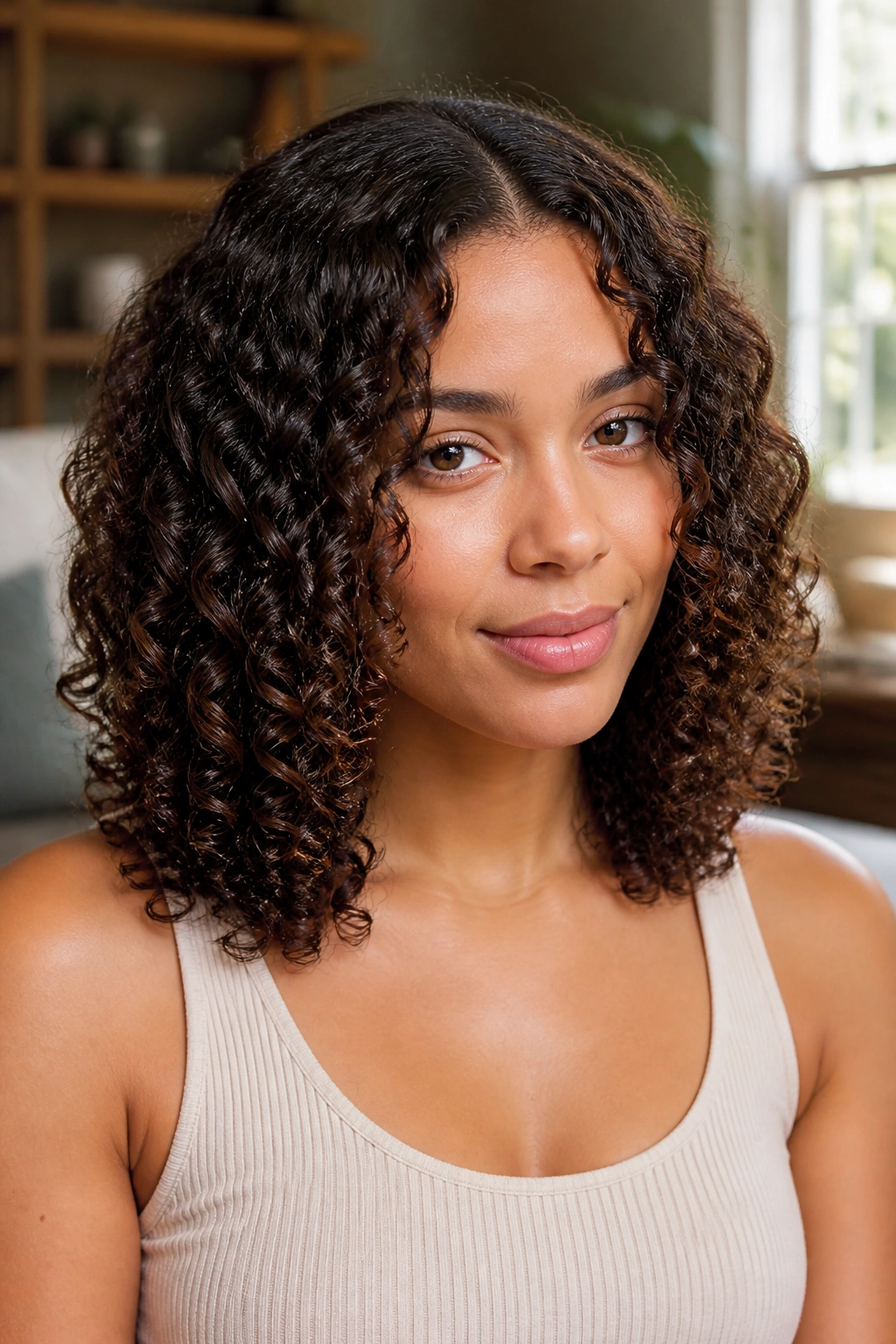
A defined wash-and-go is the fastest way to show the curl pattern you already have. It works because it doesn’t fight the hair’s natural spring; it just gives the coils or waves a little support while they dry.
Why It Works
You start on soaking-wet hair, rake in a leave-in, then smooth a light gel or curl cream over sections about 1 to 2 inches wide. Scrunch upward, stop touching it, and let the hair set. If you diffuse, keep the airflow low and aim the dryer upward from the ends to the roots.
A lot of people overload this style with product and end up with stringy, crunchy curls that feel coated. Less is usually better. If the hair looks wet for too long, blot it with a microfiber towel or a T-shirt before it starts to dry in clumps that are too flat.
Best for: medium to tight curl patterns, shoulder-length hair, and anyone who wants the curl shape front and center.
Watch for: roots that dry flat if you smooth too hard.
My favorite detail: a clean center part can make this style look more intentional in seconds.
2. The Curly Shag That Builds Shape Without Losing Length
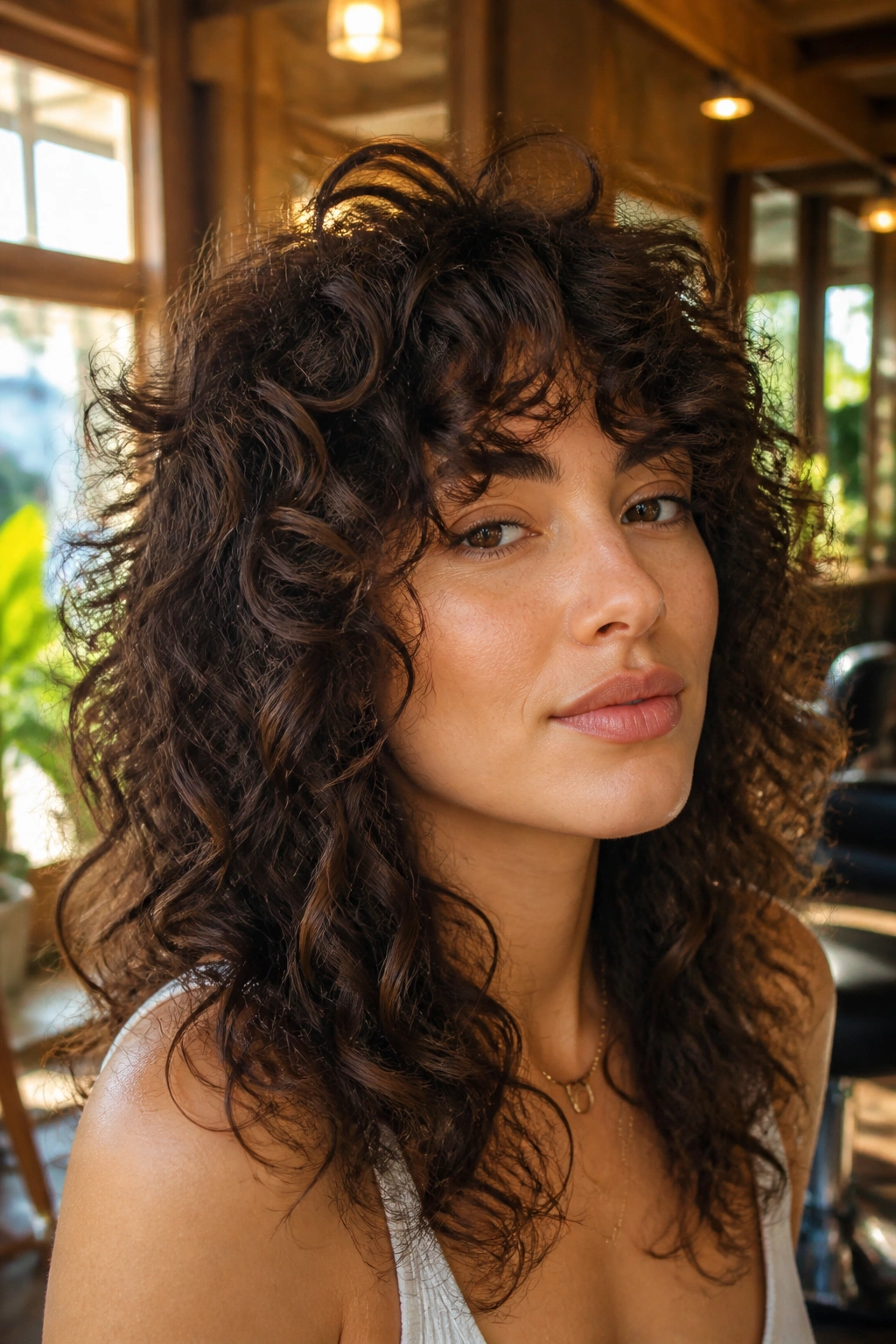
The curly shag has a lot going on, and that is exactly why it works. It keeps the crown light, opens up the face, and lets the bottom layers bounce instead of hanging like one heavy curtain.
With curls, the shag is less about looking messy and more about creating movement where hair naturally wants to pile up. The shorter layers at the top stop the whole shape from getting triangular, which is a common problem when curly hair grows out without a plan.
This cut is especially good if your hair feels heavy at the ends or collapses at the roots. Ask for dry cutting if your stylist knows how to do it, because curls shrink and twist in ways that are hard to judge when wet. A good shag should look lively even on a tired hair day.
I like this style because it still looks good when it frizzes a little. That matters. Some cuts only look nice under perfect lighting and perfect weather. Not this one.
3. A Rounded Curly Bob That Keeps Every Curl Visible
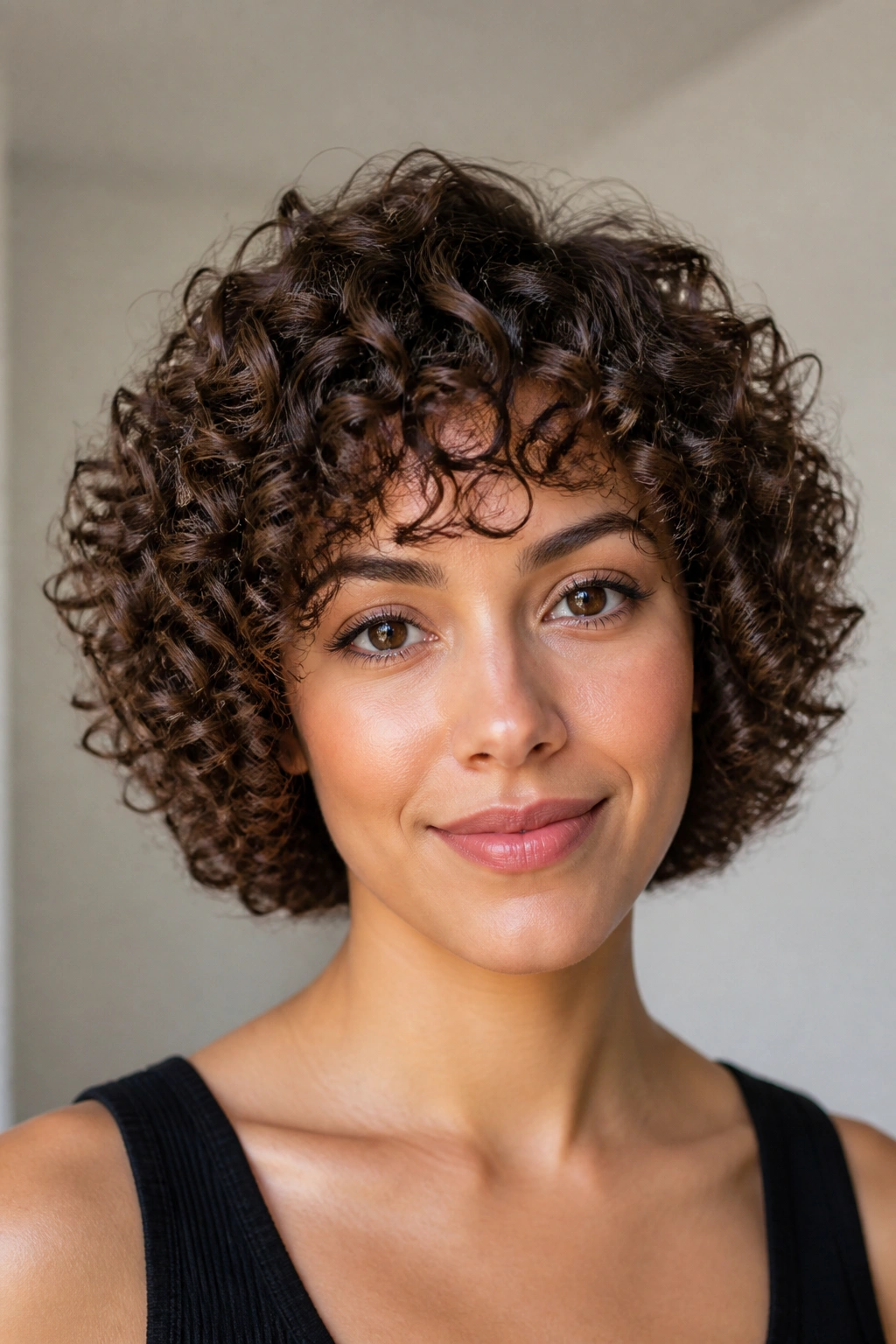
Why do curly bobs work so well? Because they give the curl pattern a clear edge.
A rounded bob usually lands somewhere between the chin and the jawline, though it can sit a bit longer if your curls are tighter. The key is the shape: shorter layers near the back and sides create a soft dome, so the hair doesn’t puff out in random spots. You get definition instead of bulk.
This style is a smart choice if you want something low-maintenance but not boring. It shows off the curl texture in a way that long hair sometimes hides, especially if the ends get weighed down. A side part can make the whole cut feel more open around the face, while a middle part gives it a cleaner, more balanced look.
Styling Note
Ask for a curl-friendly trim every 8 to 12 weeks to keep the line from turning boxy. A bob grows out fast, and once the ends stop matching the shape, you lose the whole point.
The nice thing here is that the style does half the work for you.
4. Half-Up, Half-Down Curls With Soft Face-Framing Pieces
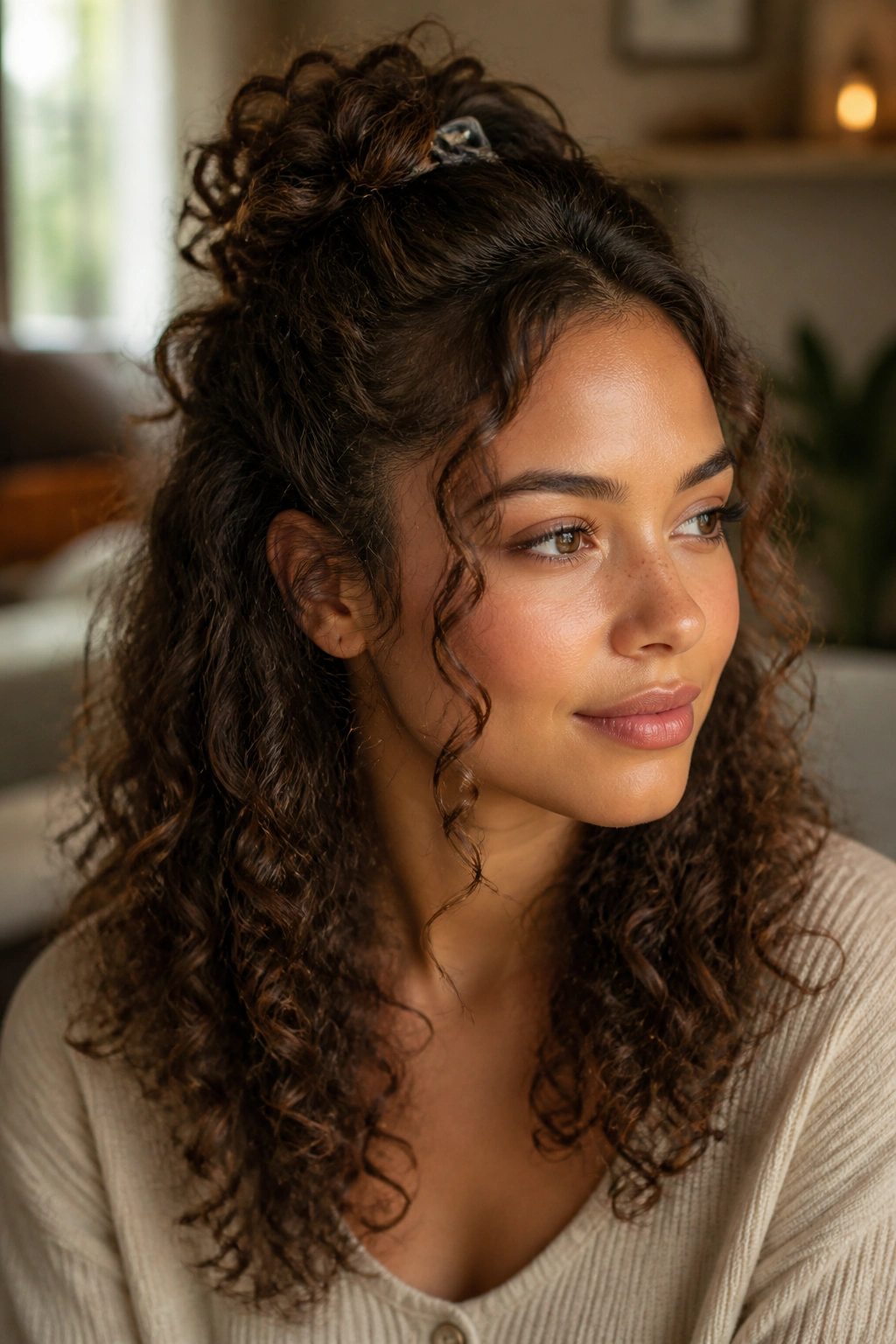
Half-up, half-down curls are the easy answer when your hair looks good everywhere except the crown. They pull just enough hair away from the face to show off the length, while the lower section still keeps all that texture and bounce.
This is the style I reach for on second-day hair. The curls near the roots usually need a lift by then, and gathering the top half can hide a little flatness without making the style look lazy. Leave two or three small pieces out around the cheekbones, and the whole thing softens up fast.
For a cleaner finish, use a small snag-free elastic or a clip instead of a big rubber band. If the top section is too tight, the curls underneath lose their shape and the style starts looking choppy. A gentle tug at the crown after you secure it adds height without making the hair look strained.
Quick note: this works on loose waves too. The shape changes, but the idea stays the same.
5. The High Curly Ponytail That Lifts the Whole Face

A high curly ponytail is basically a face-lift made out of hair. It pulls the curls up and back, shows the length, and gives the whole style a sharper line around the jaw and cheekbones.
The trick is to leave the texture in the ponytail itself while smoothing only the front and sides. A little gel at the hairline, a soft brush, and a silk tie are usually enough. You do not need the entire head slicked down unless that is the look you want. A too-tight ponytail can make curls at the crown look squashed, and once that happens, the style loses its lift.
I like this one because it can go casual or dressy without much effort. A wrapped base hides the elastic for a neater finish, while a loose tie keeps it playful. If your curls are thick, split the ponytail in two before securing it. That small move keeps the weight from dragging everything down.
Strong shape. Easy win.
6. The Pineapple Updo That Protects Curls and Shows Off Volume
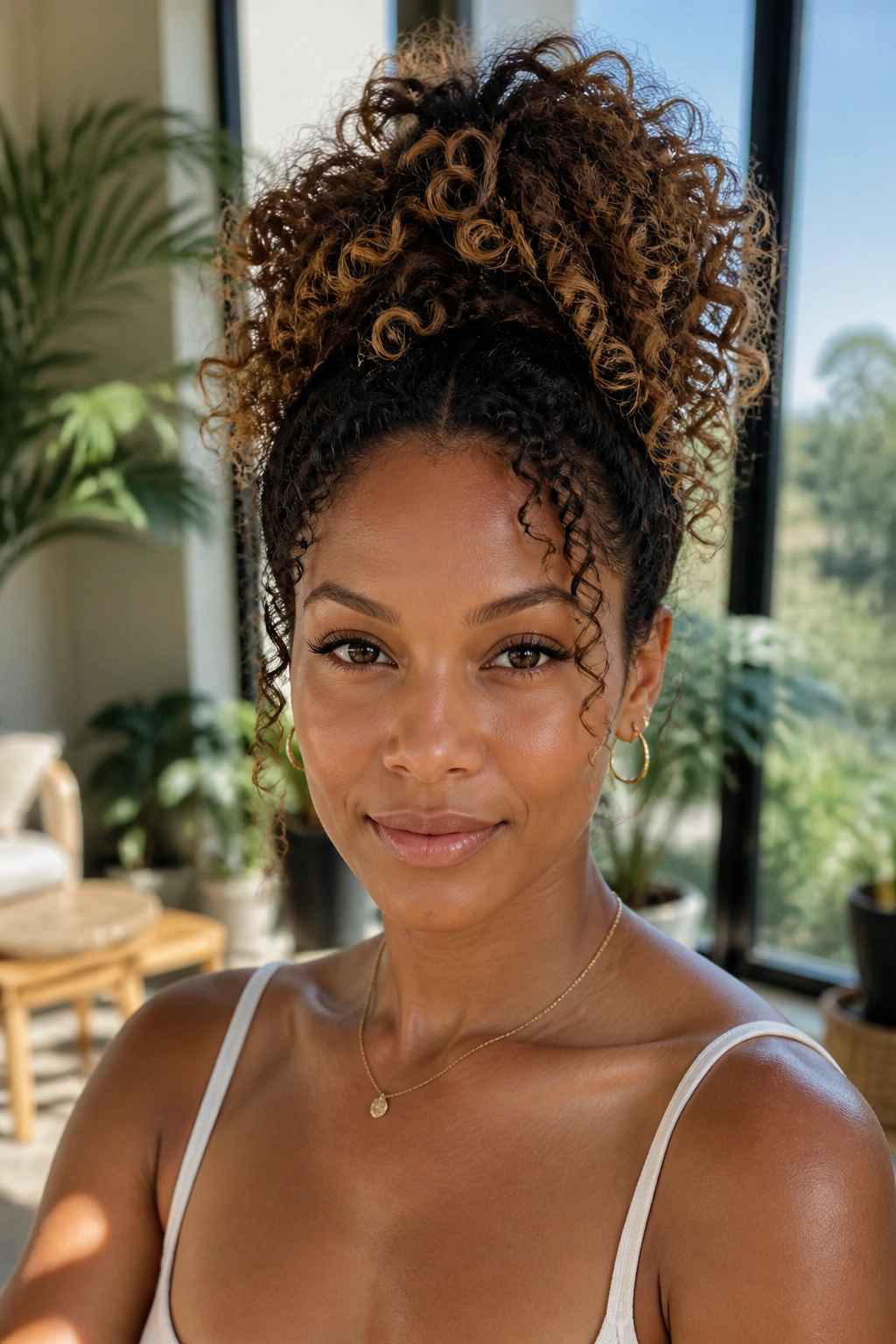
The pineapple is not just an overnight trick. It is also a daytime style that makes curls look tall, soft, and full.
Unlike a bun that compresses the hair into one flat knot, the pineapple gathers the curls high on the head and leaves the ends free to spill over. That means you keep the volume and reduce the squashing that usually happens at the back of the head. It’s especially useful for tighter curl patterns, because the top section stays visible instead of disappearing into a compact twist.
If you want it to look polished, use a wide satin scrunchie or a soft elastic and place it at the crown rather than all the way at the top of the head. Too high, and the style can feel unbalanced. Too low, and you lose the lift.
Small Things That Matter
- Keep the sides smooth, but not tight.
- Let a few curls fall naturally around the forehead.
- Fluff the crown with your fingertips, not a brush.
Best for: weekends, travel, and days when you want your curls out of your face without hiding them.
7. A Deep Side Part That Gives Curls More Drama
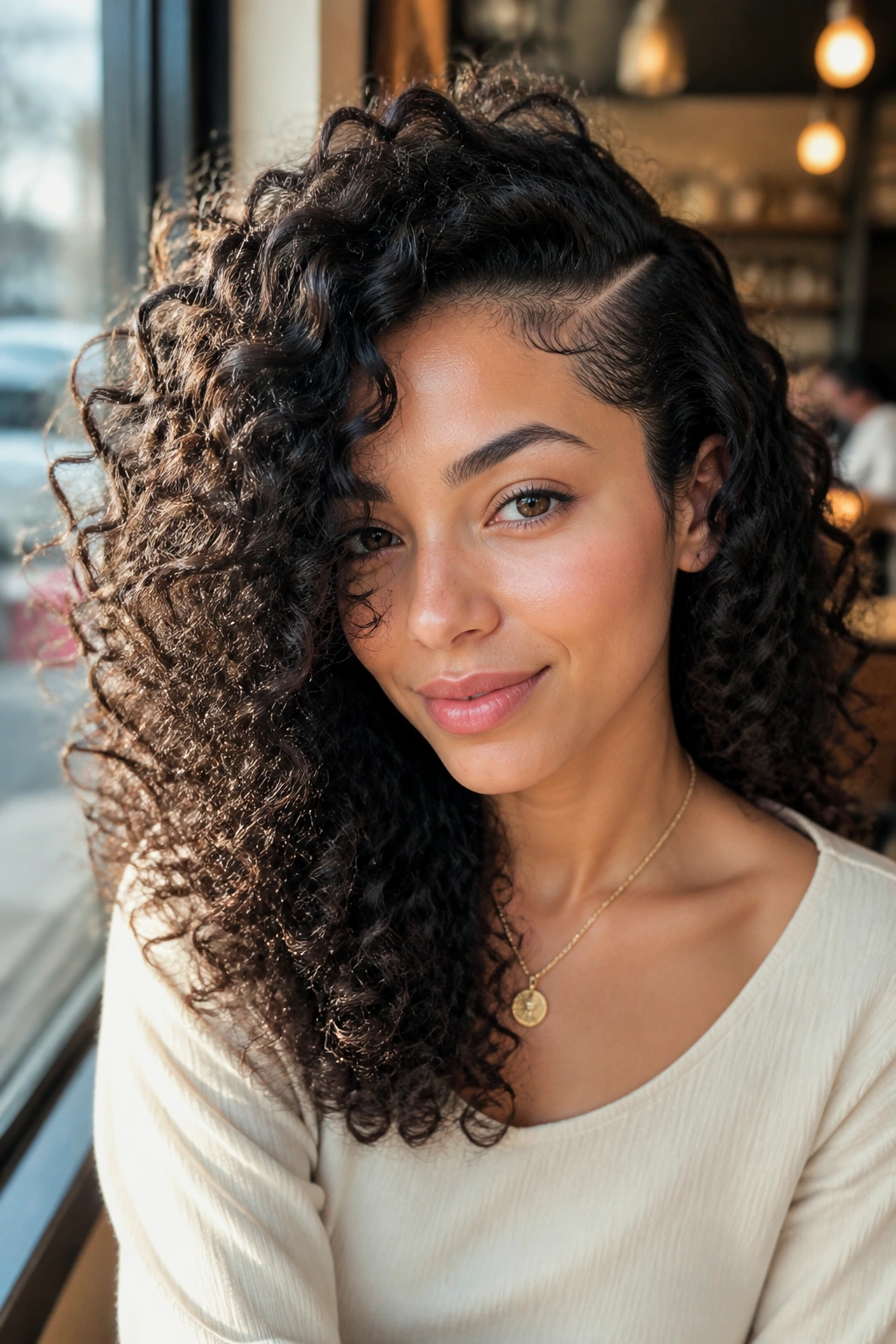
A deep side part does more than shift the hair left or right. It changes the whole mood of the curls.
When the part sits low and off-center, one side gets a little more weight, which makes the curl shape fall in a richer, more dramatic way. On shorter curls, this can create a nice curve at the forehead. On longer lengths, it keeps the hair from looking too symmetrical or heavy.
This style is almost unfairly easy. You can do it on wash day, on day three, or after a refresh spray. The real difference is in how you place the part. Start near the arch of one eyebrow, not at the middle of the scalp, and smooth the roots on the smaller side with a little water and gel. Then let the curls on the fuller side sit where they want.
One sentence: curls need room.
That is why the deep side part works so well. It creates space without asking the hair to become something else.
8. Curly Bangs With Layers Around the Cheekbones
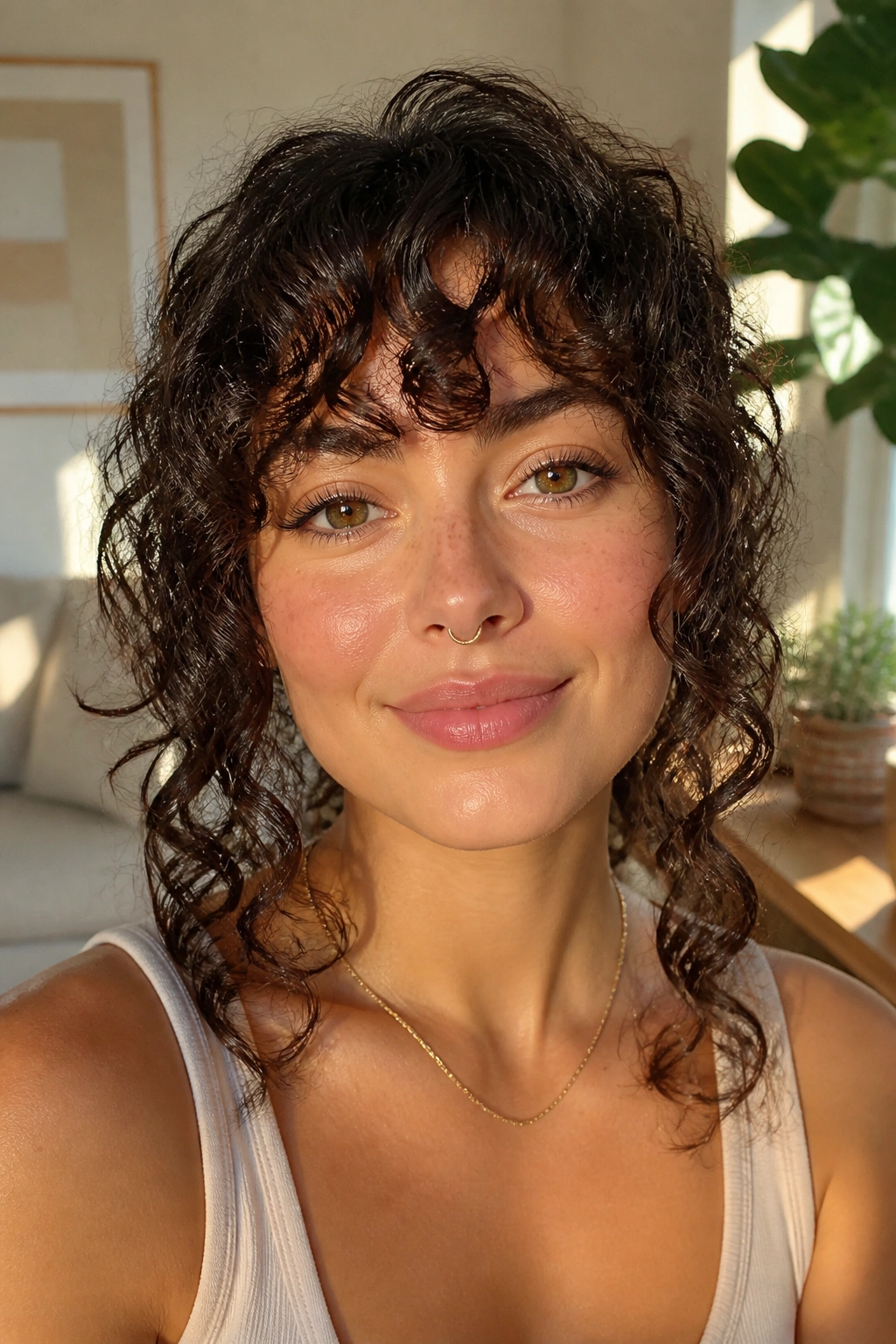
Can curly bangs work? Yes, if the cut respects shrinkage.
Curly bangs look best when they are shaped dry or at least checked dry, because curls spring up in ways that surprise even people who have worn curly hair for years. Bangs that sit just at the brow when wet can bounce up to mid-forehead once they dry, and that shift is normal. It’s also why a stylist who understands curl pattern matters more here than on a straight-cut fringe.
What to Ask For
- Bangs that hit longer than you think they should when wet.
- Layers that blend into the cheekbones.
- Enough length at the sides to keep the front from looking chopped.
The nice part is that curly bangs can soften the face without taking away fullness. They frame the forehead, break up a long face shape, and make the whole cut feel lighter. If your curls are tighter, a little gel at the roots keeps the bangs from separating into tiny pieces too early.
I’d skip blunt, dense bangs unless you like a lot of upkeep. They can get boxy fast.
9. A Twist-Out Crown That Looks Polished Without Looking Stiff
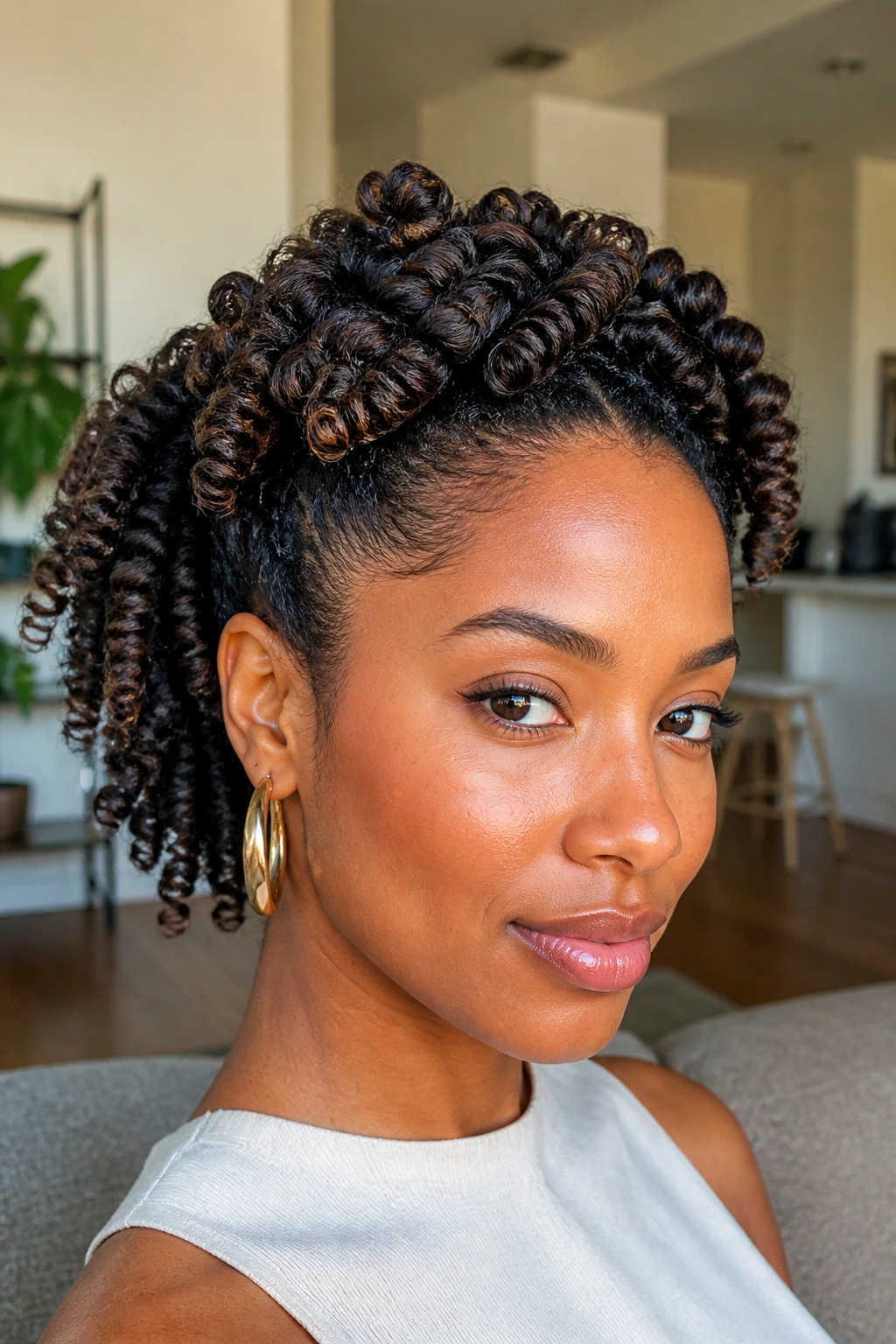
Picture this: you want your curls up and out of the way, but you do not want them crushed into a tight bun. A twist-out crown solves that problem.
The style starts with two-strand twists or a twist-out set, then the front and sides are pinned or tucked into a crown shape while the back keeps its texture. It works because the curl pattern stays visible, even though the hair is partially controlled. You get height, shape, and a little softness around the head.
The key is not to pin everything too neatly. Leave the twists or stretched curls slightly loose before you tuck them in. If the style looks too tight, it starts reading formal in a stiff way, and that is rarely the goal. A few bobby pins in the same color as your hair make the finish cleaner without calling attention to the hardware.
This is one of those styles that looks more complicated than it is. And frankly, I like that. The hair does most of the visual work; you just arrange it.
10. Space Buns That Keep the Ends Playful
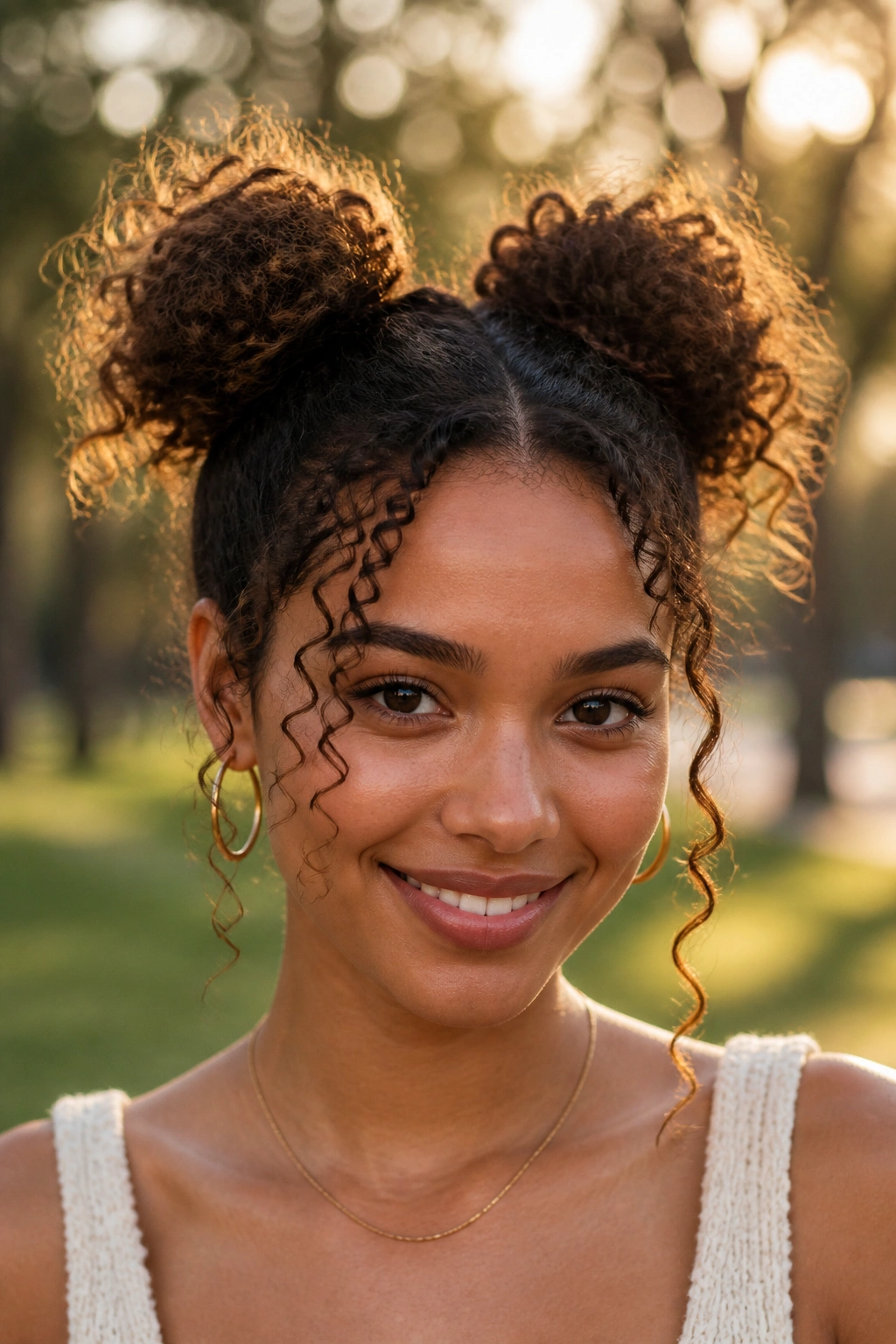
Space buns are playful, but they can also be a smart way to show off curls in two separate sections instead of one giant mass.
The style works well when the hair has enough length to twist into two buns at the crown or upper sides of the head. The ends can stay tucked for a cleaner finish, or they can be left a bit loose for a softer, less polished result. That little messiness is part of the charm.
What makes space buns useful for curls is the balance. You keep volume at the top, open up the face, and still let some texture peek through. If your hair is thick, make the buns a little flatter so they hold. If it’s fine, keep them puffier and let the curls do more of the visual lifting.
This one is better than people give it credit for. It is not only for playful outfits or festival hair. On the right texture, it can look sharp, modern, and surprisingly neat.
11. A Sleek Low Bun With Curly Tendrils Left Out

A sleek low bun gives curls a clean frame, but the tendrils are what keep it from feeling severe.
Pull the hair into a low bun at the nape, smooth the top with a little gel or styling cream, then leave two to four curled pieces out near the ears, temples, or nape. Those loose pieces soften the line of the bun and keep your curl texture visible where it matters most. Without them, the style can look too polished and a little flat.
This is a strong choice for events, dinners, or work settings where you want your hair controlled but not erased. The bun itself does not need to be tiny. A slightly larger bun often looks better on curly hair because it matches the natural volume of the texture.
Use a brush only on the top layer. If you brush through the whole head, the curls near the bun can puff later and break the shape. Also, pin the bun itself in a crisscross pattern so it sits close to the head without sagging.
12. The Claw-Clip Twist That Works on Thick, Springy Hair
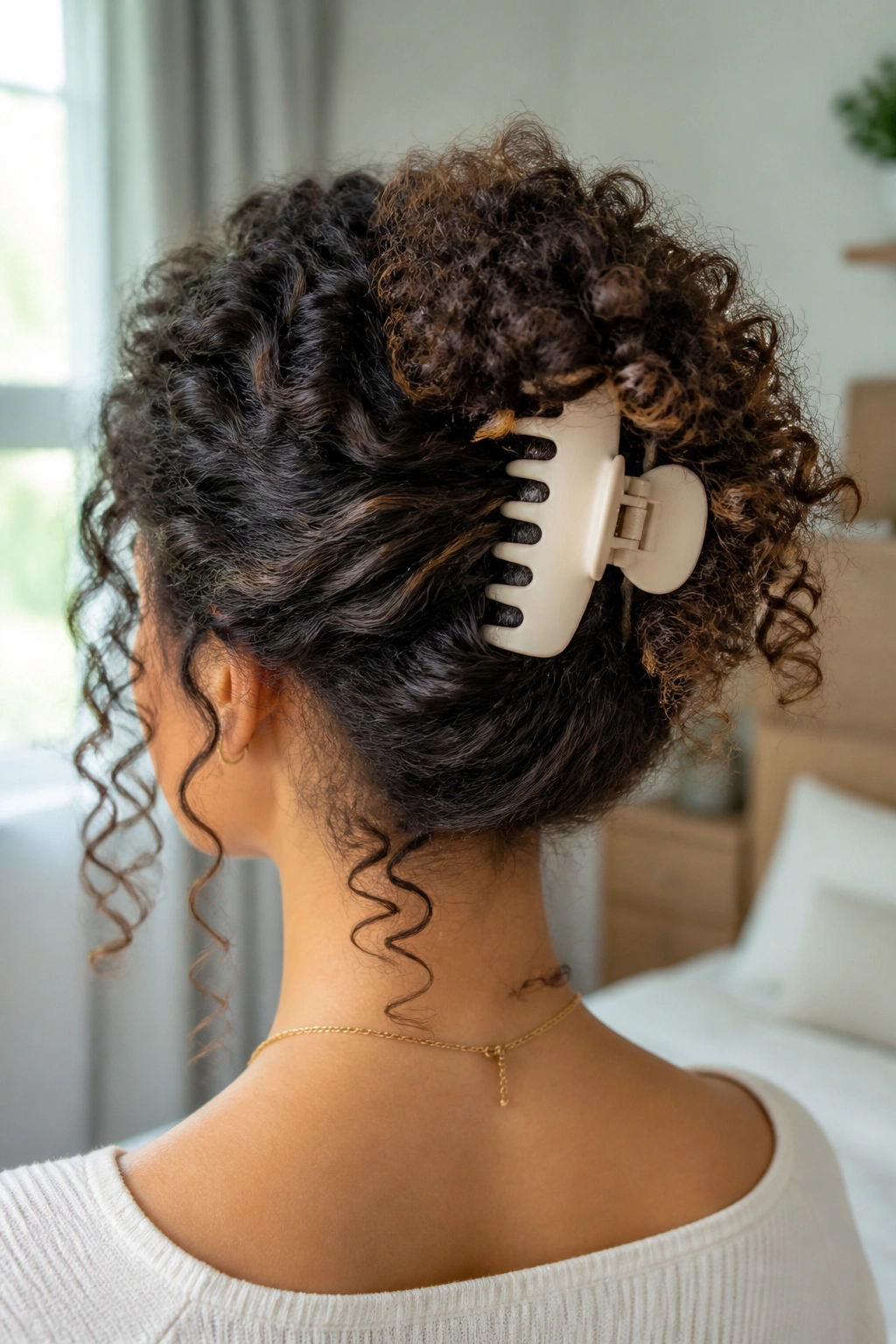
Claw clips have earned their place because they are fast, and curly hair actually holds them better than straight hair does.
The basic move is simple: gather the hair at the back, twist it upward, and secure the twist with a large claw clip. Let the ends fan out over the top or tuck them in depending on the length. A clip with wide teeth grips better than a tiny one, especially if your curls have a lot of density or the roots are slippery.
What makes this style useful is that it doesn’t flatten the curl pattern the way a tight knot can. The twist creates lift, the clip keeps the center secure, and the loose texture around the edges stays visible. It is a good option for second- or third-day curls that still have shape but need some control.
A small warning: if the clip is too narrow, it will slide. That’s annoying, and it happens fast. Choose one that opens wide enough to hold the whole twist without forcing it shut.
13. A Big Rounded Afro That Puts Texture Front and Center
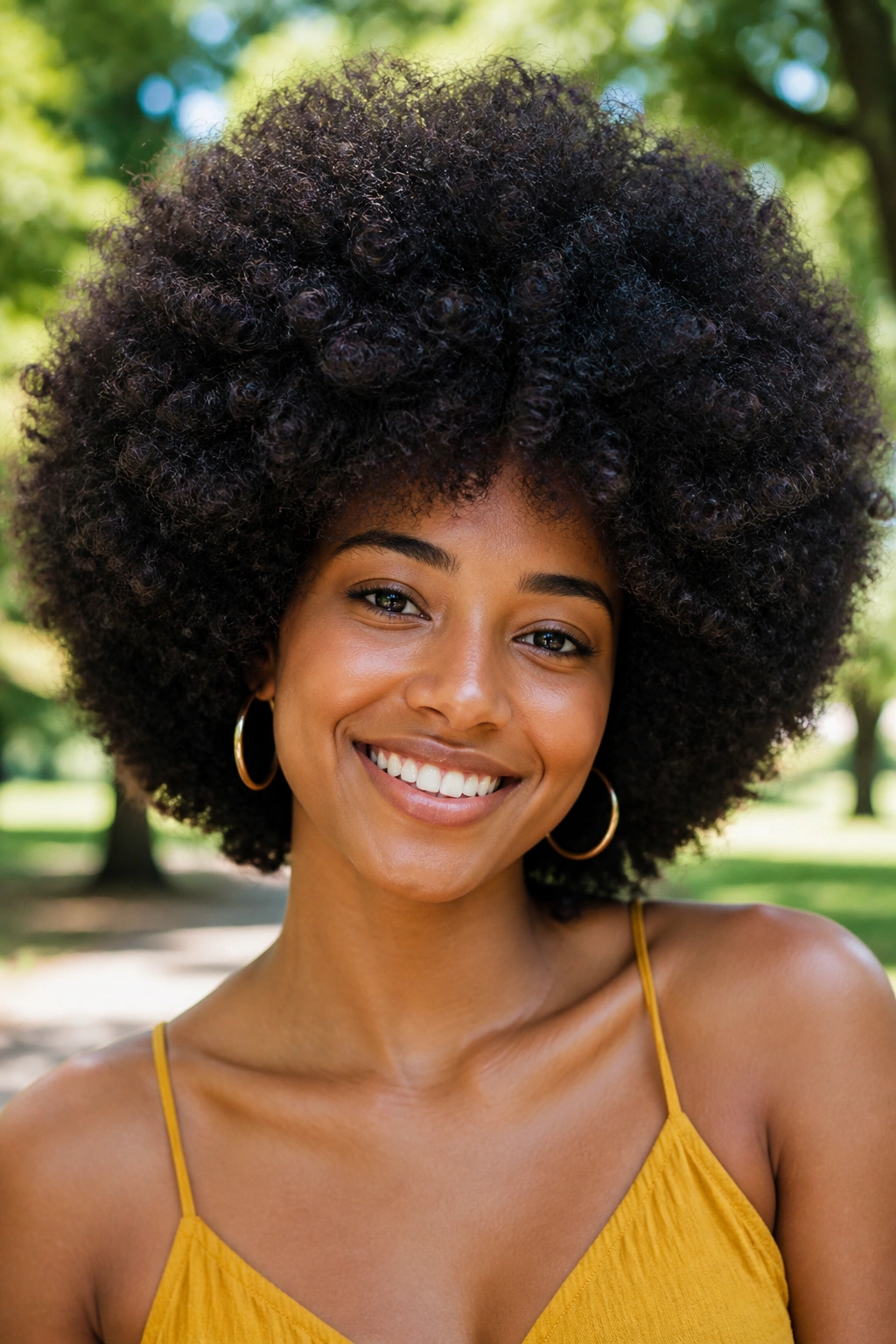
A rounded afro is one of the clearest ways to show off curl texture because nothing is hiding. No tucked ends. No clipped crown. Just shape.
The shape matters more than the size. A good afro is rounded through the sides and lifted at the top, so the outline feels balanced instead of wide and flat. That usually means shaping it with a pick at the roots and trimming it in a way that respects how the hair grows outward. If the sides are too long, the style starts to look triangular. If the top is too heavy, the whole shape collapses.
Moisture matters here, but not in a greasy way. A leave-in and a light oil at the ends can keep the texture soft, while a dense cream can sometimes weigh the shape down. Use your hands more than a brush. The hands let you feel where the curls want to sit.
One of the nicest things about this style is its honesty. It does not hide shrinkage. It uses it.
14. A Tapered Curly Pixie That Shows the Curl at the Hairline

A tapered curly pixie puts the curl pattern right where people notice it first: along the hairline, temples, and crown.
Because the sides and back are shorter, the top curls get more attention. That makes this cut sharp without being fussy. It can be soft and feminine, or clean and edgy, depending on how close the taper sits. The curl at the front is the whole point, so the top should have enough length to spring up and shape itself.
What the Cut Needs
A tapered pixie needs regular shaping, not a lot of product. A light mousse or foam can help define the top without making it stiff, and a little finger coiling around the front pieces gives the hairline a neat finish. If the curls at the crown get too long, the style loses its lift and starts reading more like an awkward grow-out than a deliberate cut.
What to Watch For
Shrinkage can hide more length than you expect. That is fine. It just means the cut should be planned with the dry shape in mind, not the wet one.
This style is not for someone who wants zero upkeep. But if you like a short cut that still shows texture, it is hard to beat.
15. A Braided Crown With Loose Curls Falling Through the Back

Braided crowns are lovely on curls because they control the front while letting the back stay soft and full.
You can braid along the hairline from one side to the other, pin the braid into place, and leave the rest of the curls loose. That creates a clear frame around the face without hiding the texture you want people to see. It also works well if your hair is a mix of curl types, since the braid gives the looser pieces something to sit against.
The difference between a good braided crown and a fussy one is tension. Keep the braid snug enough to hold, but not so tight that the hairline pulls. A little lift at the root near the braid helps the style feel less flat. If your curls are long, letting them spill over one shoulder can make the whole look feel softer.
I prefer this style for occasions where you want a little structure. It has shape. It also leaves room for the hair to look like hair, which is half the reason to wear curls at all.
16. Bubble Ponytail Curls With Clear, Puffed Sections
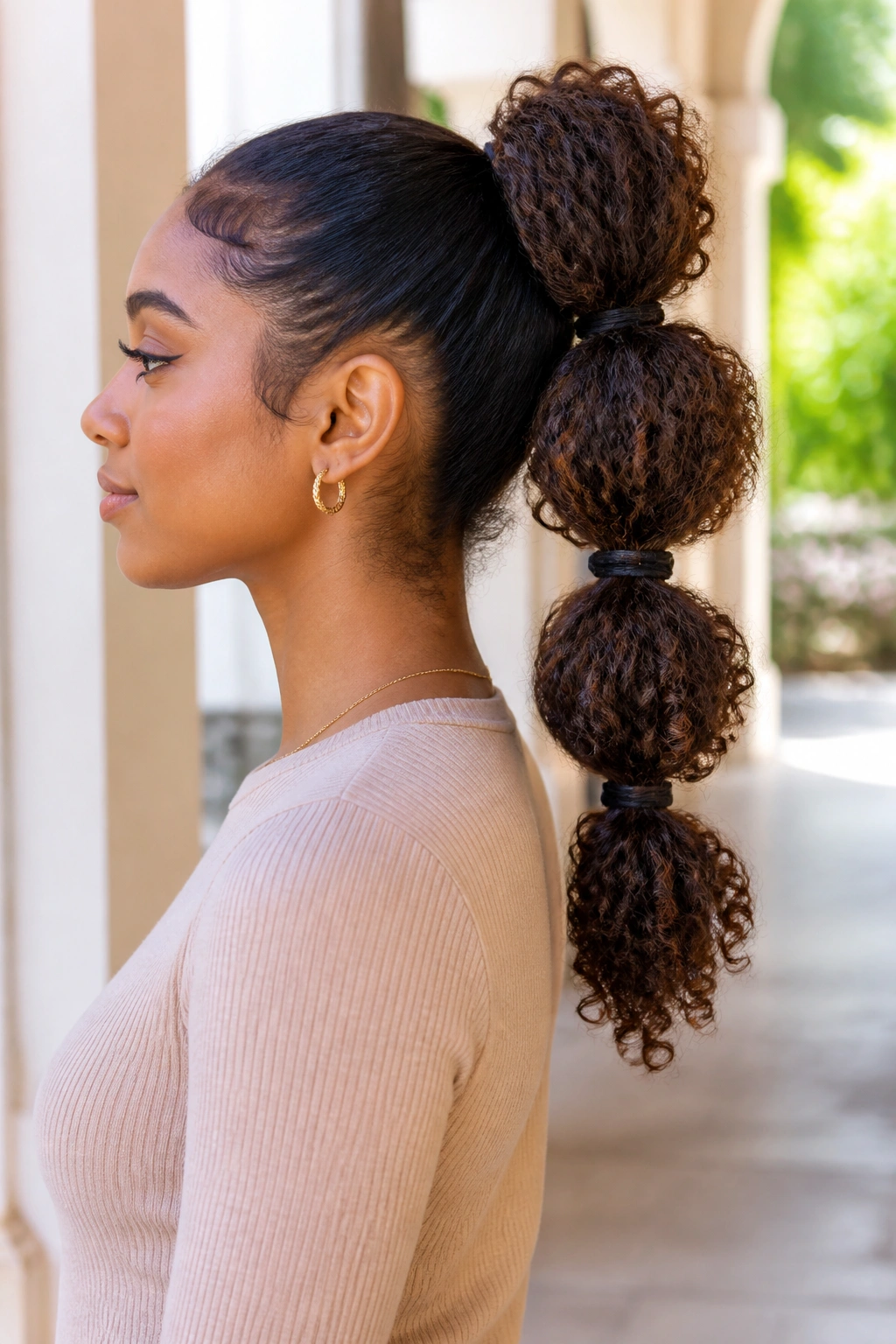
A bubble ponytail gives curly hair something fun to do with its length, and each section makes the texture stand out a little more.
Start with a high or mid ponytail, then add small elastics every 3 to 4 inches down the length. Gently tug each section outward until it forms a rounded bubble. The curls fill in the gaps between the elastics, which gives the style a fuller shape than a standard ponytail ever could.
This one is especially good when the hair is long enough to hang heavily in one section. The bubbles break up the weight, so the ponytail feels lighter and looks more interesting. If your hair is very thick, use clear elastics or thin snag-free ones so the sections stay smooth. If it is finer, pinch the hair a little more after each tie to puff the shape.
You do not need every bubble to be identical. In fact, uneven bubbles often look better. The hair has room to move, and that is the point.
17. Side-Swept Glam Curls for Dresses, Parties, and Photos

Side-swept glam curls work because they turn one side into the main event.
The hair is usually parted deeply, then swept over one shoulder or pinned behind one ear so the curls cascade in a single, visible line. On long hair, this creates a strong shape that shows off length and shine. On medium hair, it gives the style a dressier finish without needing an updo.
A bit of set and hold helps here. Flexi rods, rollers, or a curling method that encourages a uniform shape can make the curls fall in a smoother wave. After that, brush only the top layer lightly if you want a softer glam effect. Too much brushing turns the style frizzy fast, and then the shape loses that clean side line.
How to Wear It
- Pin the smaller side close to the scalp.
- Leave one or two curls free near the cheek.
- Let the heavier side fall over the collarbone.
This is a strong option when you want curls to look styled, not casual. It has presence.
18. A Messy Top Knot With Soft Pieces Around the Face
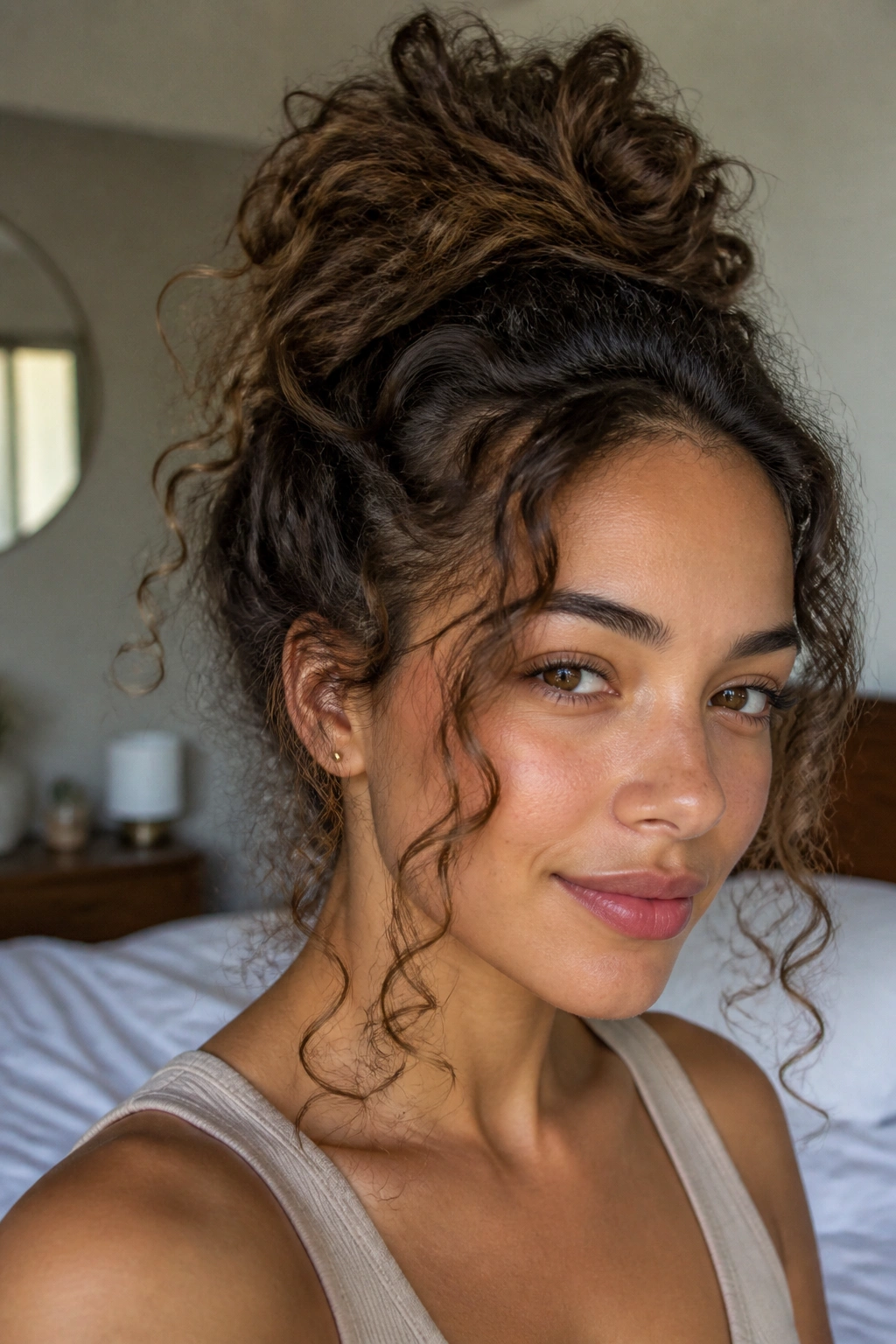
A messy top knot is basically the lazy-day answer that still looks deliberate if you do it with a little care.
Gather the hair high, twist it into a knot, and leave the ends and a few front pieces loose. The curls around the face keep the style from looking too severe, while the knot at the top gives you lift and keeps the length out of the way. It works best when the knot is not pressed flat against the head. A little height makes the whole thing feel lighter.
The best part is how forgiving it is. If the curls around the hairline are frizzy, they blend in. If the knot is a bit uneven, the texture hides the mistakes. That is not an excuse to be sloppy, but it does mean this style tolerates real life better than a sleek bun does.
I like a top knot for humid days, workouts, and the morning after wash day when the curls still have some shape but you do not want them in your face. It is casual, but not careless.
19. A Headband Style That Frames Curls Instead of Flattening Them

A headband can ruin curls if it sits too tight. It can also save them if you place it with a little thought.
The trick is to use a soft, wide band that sits behind the front hairline rather than pressing directly on the crown. That leaves the top volume intact and pushes the curls back just enough to open the face. It works well with wash-and-go hair, stretched curls, or even a light refresh on day two or three.
Unlike a rigid updo, this style doesn’t ask the hair to hold a shape all day. It just gives the curls a clean frame. That makes it a good choice for school, errands, or any day when you want the hair out of your eyes without hiding the texture. A silk scarf can do the same thing, but it reads softer and a little more relaxed.
If the band slips, place a few hidden bobby pins behind each ear. Tiny fix. Big difference.
20. Long Layered Curls With Curtain Bangs and Lots of Movement

Long layered curls with curtain bangs are a strong choice if you want length but refuse to let the hair hang there doing nothing.
The layers keep the bottom from getting heavy, and the curtain bangs split the front in a way that opens up the face without chopping the shape in half. That combo makes the curls look full from top to bottom. It also gives you movement around the cheeks, which helps longer curls feel less static.
This style is especially good when the curl pattern varies a little from root to end. The layers let the tighter pieces stack naturally while the looser ends fill in the gaps. If the bangs are cut too short, they can bounce too high, so a longer starting point is smarter. You can always trim more later.
There is a reason people keep coming back to this shape. It grows out well, it works loose or styled, and it gives the curls enough room to do their thing without turning into one long block of hair.
Final Thoughts
The best curly hairstyles do not hide texture. They give it a shape that makes sense for your hair, your routine, and the amount of time you actually want to spend in front of a mirror.
A big cut, a quick updo, or a small styling change can shift the whole look. Sometimes the difference is a part. Sometimes it is a clip. Sometimes it is one good layer that keeps the curls from sitting in a heavy lump.
If you have curls, the real win is not making them behave. It’s letting them look like curls, only better arranged.
