



Short curls are honest. A bad shape shows up fast.
With tight curly hair cuts for short lengths, a half-inch can change everything. A curl that looks neat when it’s wet can spring into a wider, fuller shape once it dries, and that’s where so many short cuts go sideways. The trick is not to fight that spring. It’s to plan for it.
Shrinkage is the whole game. A cut that ignores it will puff out, box up, or sit heavier on one side than the other. A good stylist works with the curl pattern, the density, and the way the hair stacks on the head. That usually means shaping the cut dry or checking it dry before the final detail work, because tight curls rarely behave the same way in the chair and at home.
A short curly cut can be neat, edgy, soft, neat again, or even a little dramatic. It can open the face, sharpen the jaw, slim the sides, or give the crown some lift without turning into a helmet. The right shape makes mornings easier, but more than that, it gives the curls somewhere to go.
1. Tapered Teeny Weeny Afro with a Longer Crown

A tapered TWA is the haircut I reach for when someone wants short hair that still feels intentional. The crown keeps enough length to show off curl pattern, while the sides and nape get trimmed down so the shape sits close to the head instead of ballooning outward.
Why the silhouette works
The magic is in the contrast. Tight curls need room at the top, but they usually need less bulk at the temples and neckline. A longer crown with tapered edges gives you both.
- Keep the crown around 2 to 4 inches when dry, depending on how much shrinkage you get.
- Taper the sides and nape to roughly ¼ to ½ inch for a clean outline.
- Ask for a rounded top, not a flat one. Flat tops can make tight curls look boxy fast.
- A soft edge-up at the hairline keeps the shape crisp without looking stiff.
Best move: ask your stylist to check the shape from the side, not just the front. That’s where a good TWA wins or loses.
2. Curly Pixie with a Soft Face-Framing Fringe

A pixie on tight curls does not have to look severe. When the top stays a little longer and the front falls into a soft fringe, the whole cut gets lighter around the face and loses that hard, chopped feeling people sometimes worry about.
The sweet spot is a top that sits around 2½ to 3½ inches dry, with the fringe just long enough to touch the forehead or skim one eyebrow when stretched. That little bit of length makes the cut feel less severe and gives the curls something to curl into. Short sides help the face stand out, but they should still leave a trace of softness near the ears.
I like this shape on people who want low fuss but not zero styling. A dab of curl cream, a quick finger-fluff, and you’re done. If your curls are dense, keep the crown slightly fuller so the top doesn’t collapse into the sides. If they’re finer, avoid over-layering. A pixie can go wispy in a hurry if the cut gets too thinned out.
3. Rounded Afro with a Clean Edge-Up
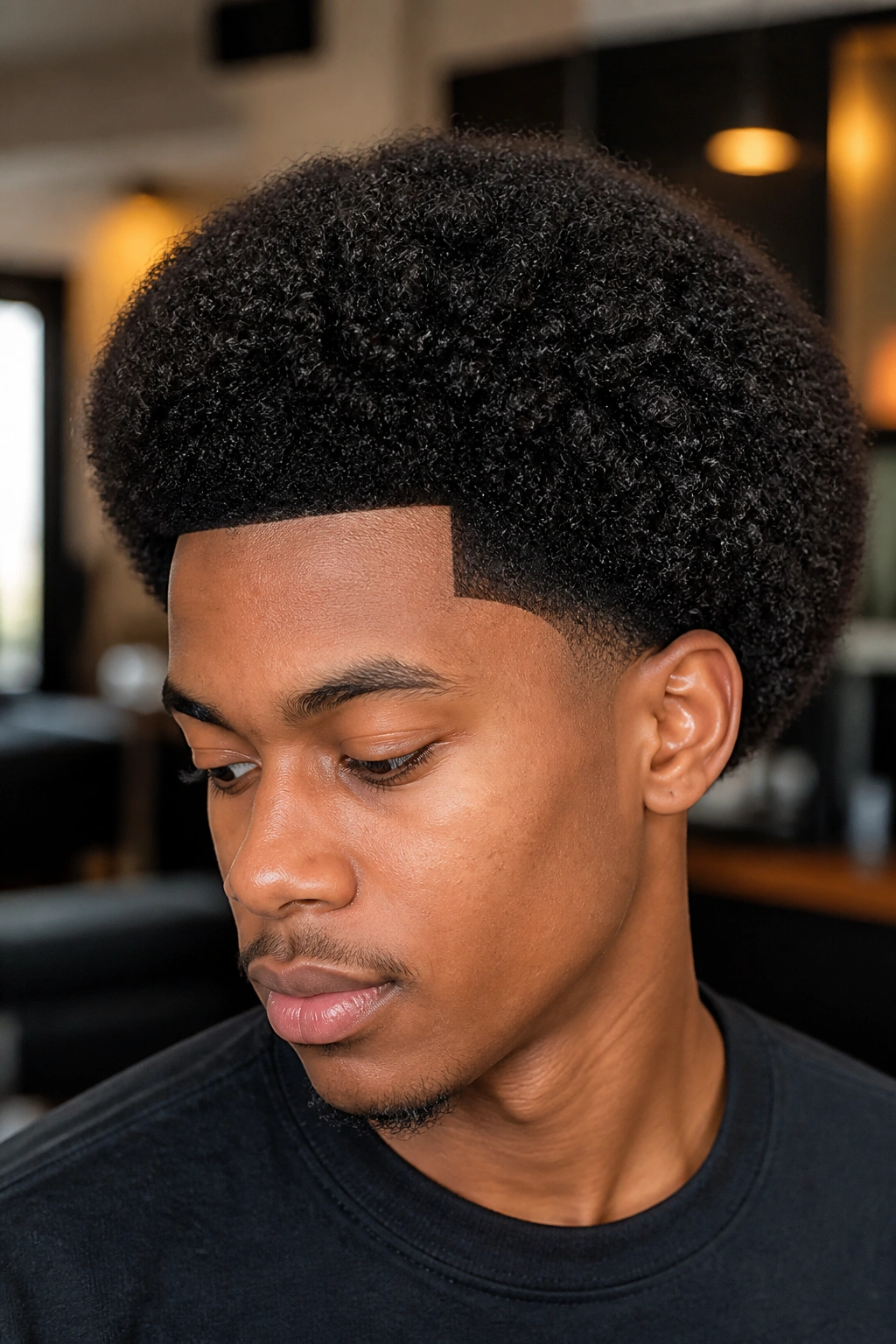
Why do some short afros look crisp while others seem to spread sideways by lunchtime? Usually, it comes down to the outline. A rounded afro keeps the profile soft and even, while a clean edge-up at the hairline gives the shape some direction.
The key is not to overcut the perimeter. Tight curls already shrink in on themselves, so if the ends are thinned too much, the afro can lose its structure and end up looking patchy. A good round shape leaves the fullest part of the hair at the widest point of the head, then trims the edges just enough to keep it neat.
How to ask for the shape
- Keep the outline circular, not square.
- Leave the crown fuller than the sides.
- Clean up the temples and neckline without pushing the line too far back.
- Use scissors for shape, then a clipper for the crisp edge.
This cut looks especially good when you want your curls to feel deliberate without being overly styled. It has presence. It also ages well between trims, which matters more than people admit.
4. Chin-Length Curly Bob with Jaw-Skimming Pieces
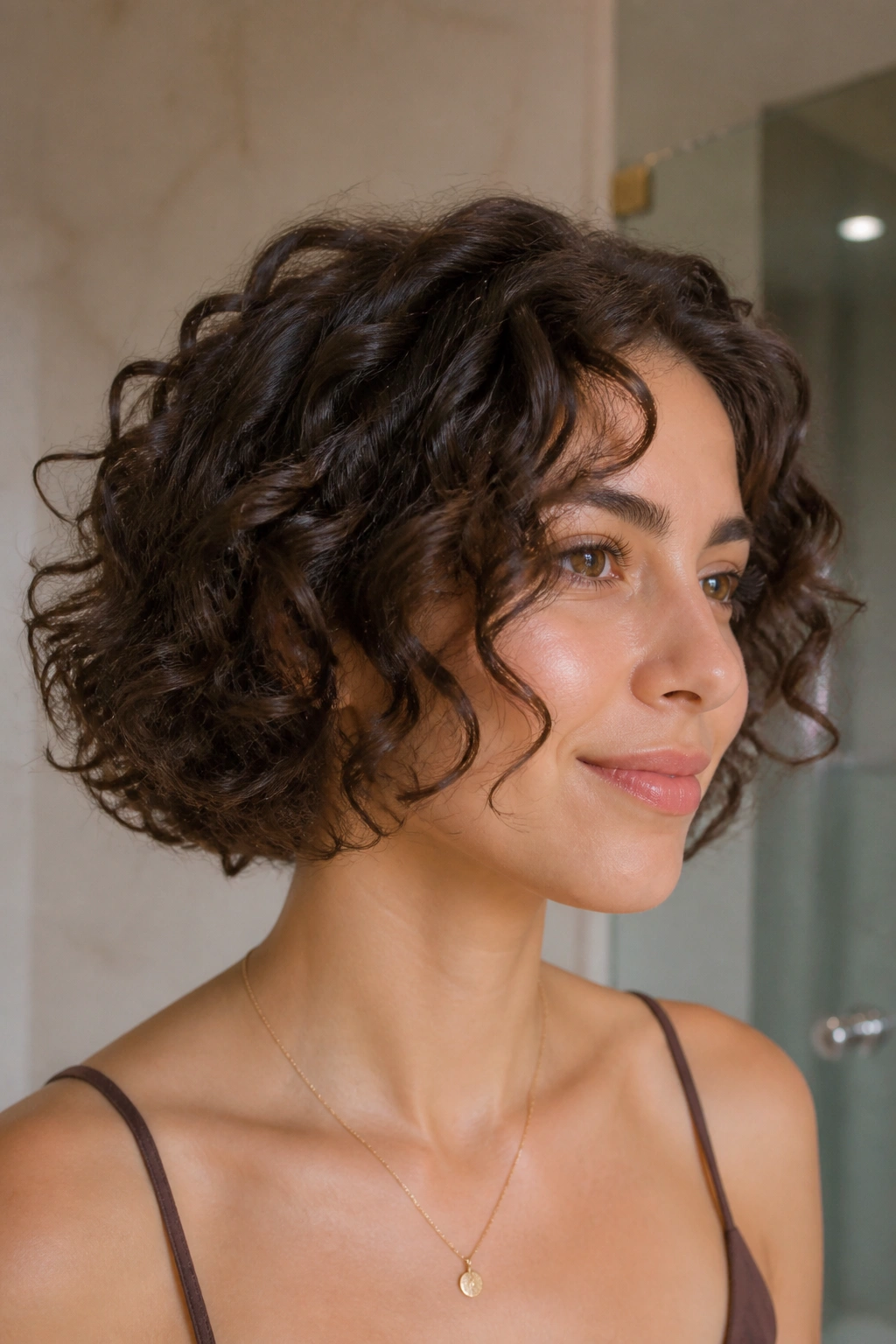
A bob can go from elegant to awkward in one bad snip. On tight curls, chin length is the point where the shape starts doing real work, because the curls land right around the jaw instead of bunching at the neck.
I’ve seen this cut rescue hair that felt bulky at the sides. The trick is to keep the baseline soft and let the curls breathe. A blunt line can be too much on tight texture, but a slight graduation in the back and a few jaw-skimming pieces in front help the whole cut move. You get the polish of a bob without the hard blocky edge.
- Keep the front around chin to lower-jaw length when dry.
- Let the nape sit a little shorter so the back doesn’t kick out.
- Use long, gentle layers rather than choppy ones.
- If your curls spring up hard, ask for the front pieces to be cut a touch longer than you think you need.
The best version of this cut feels clean but not strict. It’s one of those shapes that looks like you thought about your hair, even on a lazy day.
5. Curly Shag Crop with Choppy Layers

The curly shag crop is for people who do not want their short hair to behave too politely. It has movement, a little chaos, and enough layering to keep dense curls from turning into one heavy mass at the bottom.
What makes it work is the way the layers are stacked. The crown gets the shortest pieces, the middle lengths keep the shape from puffing out, and the ends stay soft so the haircut doesn’t look chopped to death. On tight curls, that layering can create lift without teasing or product overload. That’s a nice thing. Less fuss, more shape.
I like this cut on hair that naturally feels thick or stubborn around the crown. A shag cuts weight where curls tend to sit flat and adds energy where they tend to clump. It also gives you a forgiving grow-out. The cut can get a little wilder between trims, but that often suits the style.
If you want something tidy and exact, skip it. If you like texture that looks touched by wind, this one earns its keep.
6. Undercut Pixie with a Longer Top
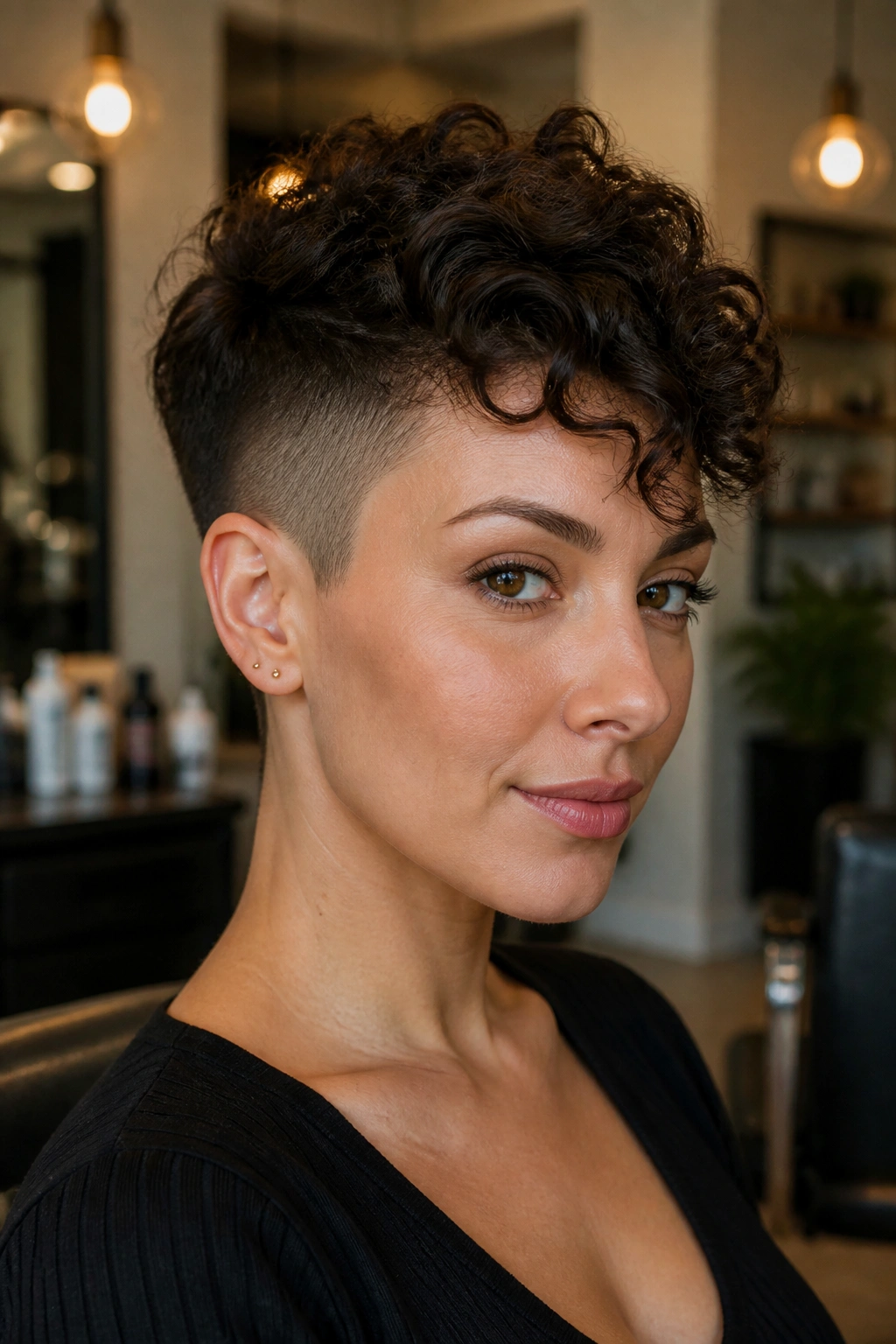
Unlike a full pixie, an undercut pixie removes bulk where you do not want it and leaves the top free to do the fun part. That means a tighter nape, slimmer sides, and a top that still has enough length to show curl pattern and shape.
This cut is a strong move for dense tight curls that puff at the sides no matter what you do. The undercut makes the profile cleaner, and the longer top gives you room to style forward, up, or slightly off to one side. If the top sits around 2 to 4 inches, you can usually get more than one look out of it.
The only catch is commitment. If you undercut too high, the grow-out can get annoying. Keep the fade or clipper work low enough that you still have room to play with the silhouette later. That matters. A lot.
Best for: people who want less bulk around the ears, like a sharper outline, and do not mind a little edge in the cut.
7. Finger-Coil Crop with Sculpted Sides

Finger coils do not need long hair to look precise. On short tight curls, they can turn a plain crop into a defined, polished shape that looks intentional even when the rest of your styling routine is almost laughably simple.
What to ask your stylist for
- Keep the base length around 1½ to 3 inches so the coils have something to form.
- Shape the sides slightly shorter so the coils sit on top like a soft cap.
- Avoid aggressive thinning, because coils need enough hair density to hold their shape.
- Ask for the outline to stay rounded at the temples.
This cut is especially useful if you like a neat finish. The coils become part of the haircut rather than something you add later to fix a bad shape. It also works well if your texture clumps naturally into small, springy ringlets. Less product. Better definition.
One thing I like here: it grows out in a way that still looks deliberate for a while. The coils loosen, but the structure stays.
8. Modern Curly Bowl Crop

A modern bowl crop sounds bold on paper, and on tight curls it usually looks better than people expect. The reason is simple: curls soften the hard geometry that makes old bowl cuts look severe on straight hair.
The new version keeps the outline rounded, not helmet-like. The front can sit near the brow line, the sides stay close to the head, and the top holds enough length to create a soft arc. Think of it as a controlled dome, not a mushroom gone rogue.
I would not call this a shy cut. It has attitude. It works best when you like a clean graphic shape and do not mind your hair being the first thing people notice. For very wide faces, keep the sides a little softer and the top a touch taller so the shape does not widen the head even more.
The payoff is real, though. It’s tidy, memorable, and surprisingly easy to style when the cut itself does most of the talking.
9. Stacked Curly Bob with Lifted Back Layers
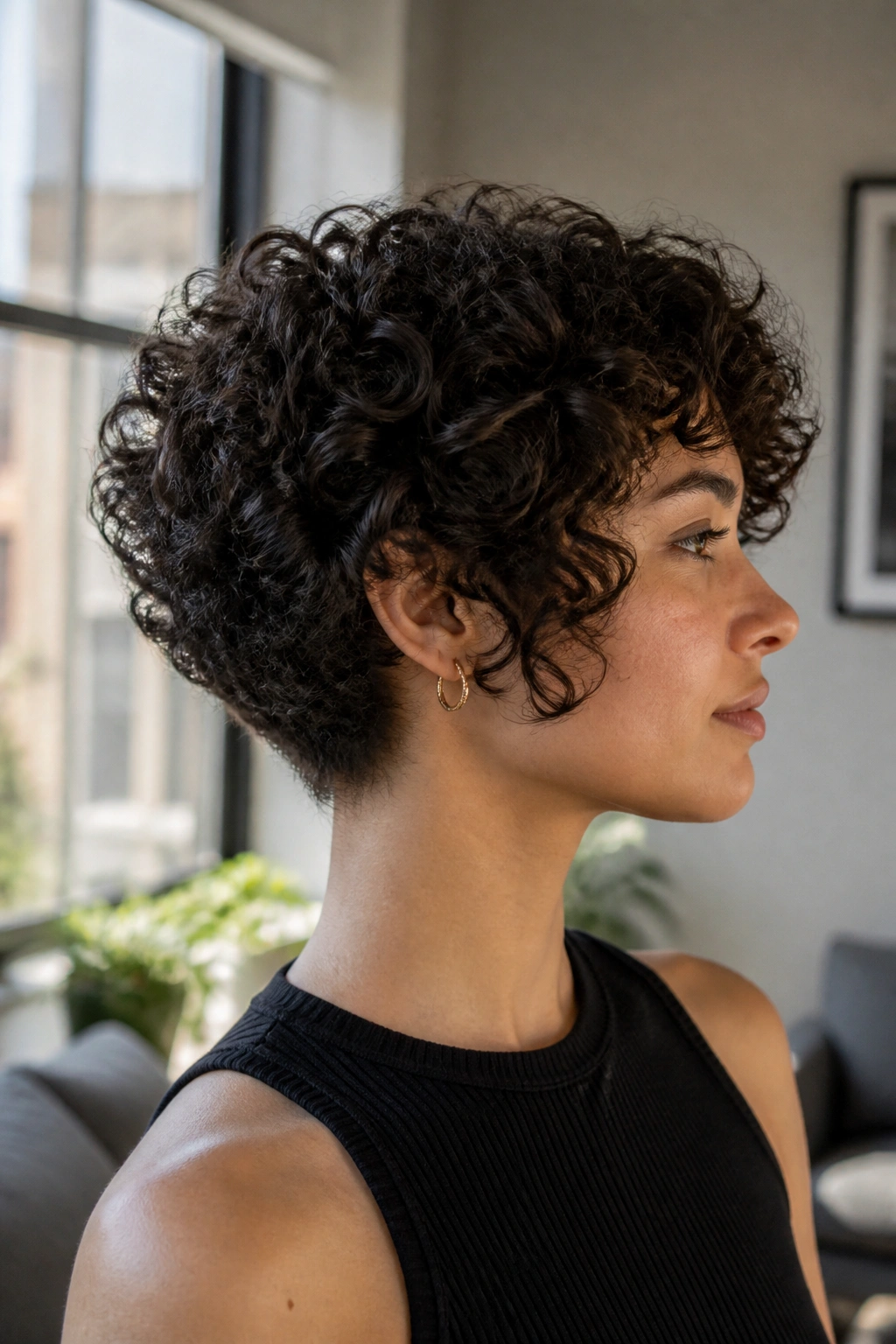
Why do some curly bobs sit flat in the back while others seem to float? The stack is doing the work. A stacked bob uses shorter layers in the back to create lift, so the rear of the haircut rises instead of collapsing against the neck.
That matters a lot for tight curls. Without the stack, heavy curls can pile up and create a squat shape. With it, the back opens up and the front can stay slightly longer around the jaw. The result feels lighter, cleaner, and a little more structured.
What the stack changes
- Shorter layers under the crown add height at the back.
- The front keeps length for face framing.
- The nape stays neat, which helps the cut look fresh between salon visits.
- A stacked shape works well when your curls are dense and prone to sitting heavy.
I prefer this cut when someone wants a bob that looks styled even on a simple wash day. It has shape built in, and that saves time.
10. Frohawk Fade with a Narrow Center Strip
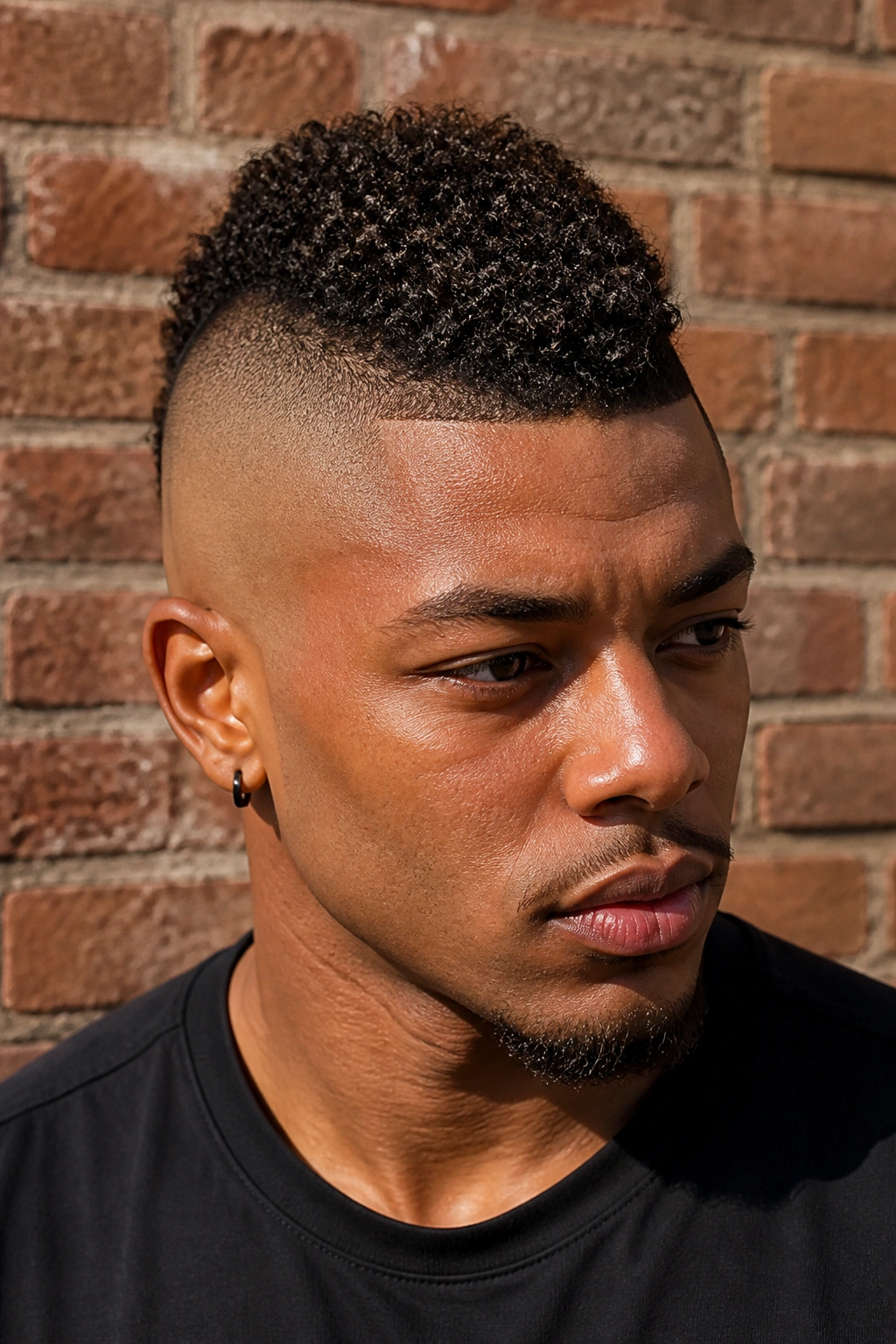
A frohawk fade is what happens when you let the center of the hair keep the spotlight and tell the sides to sit down. The result is bold, lean, and much easier to maintain than a full rounded shape if your sides tend to balloon.
The sides are faded low or clipped short, while the center strip stays long enough for tight curls to stack upward. That center section can be anywhere from 3 to 5 inches depending on how dramatic you want it. Shorter than that and it starts to lose the mohawk effect. Longer and it becomes more of a sculpted strip of curls, which is fine too.
This cut is especially good if you like contrast. The face opens up, the neck looks longer, and the overall shape feels active. It also lets you skip a lot of side maintenance. That part is underrated. Not having to fight the sides every morning can feel like a small victory.
If you want something soft and round, this is not your cut. If you want edge with enough curl texture to keep it from looking too hard, it absolutely is.
11. Side-Swept Curly Crop with a Deep Part
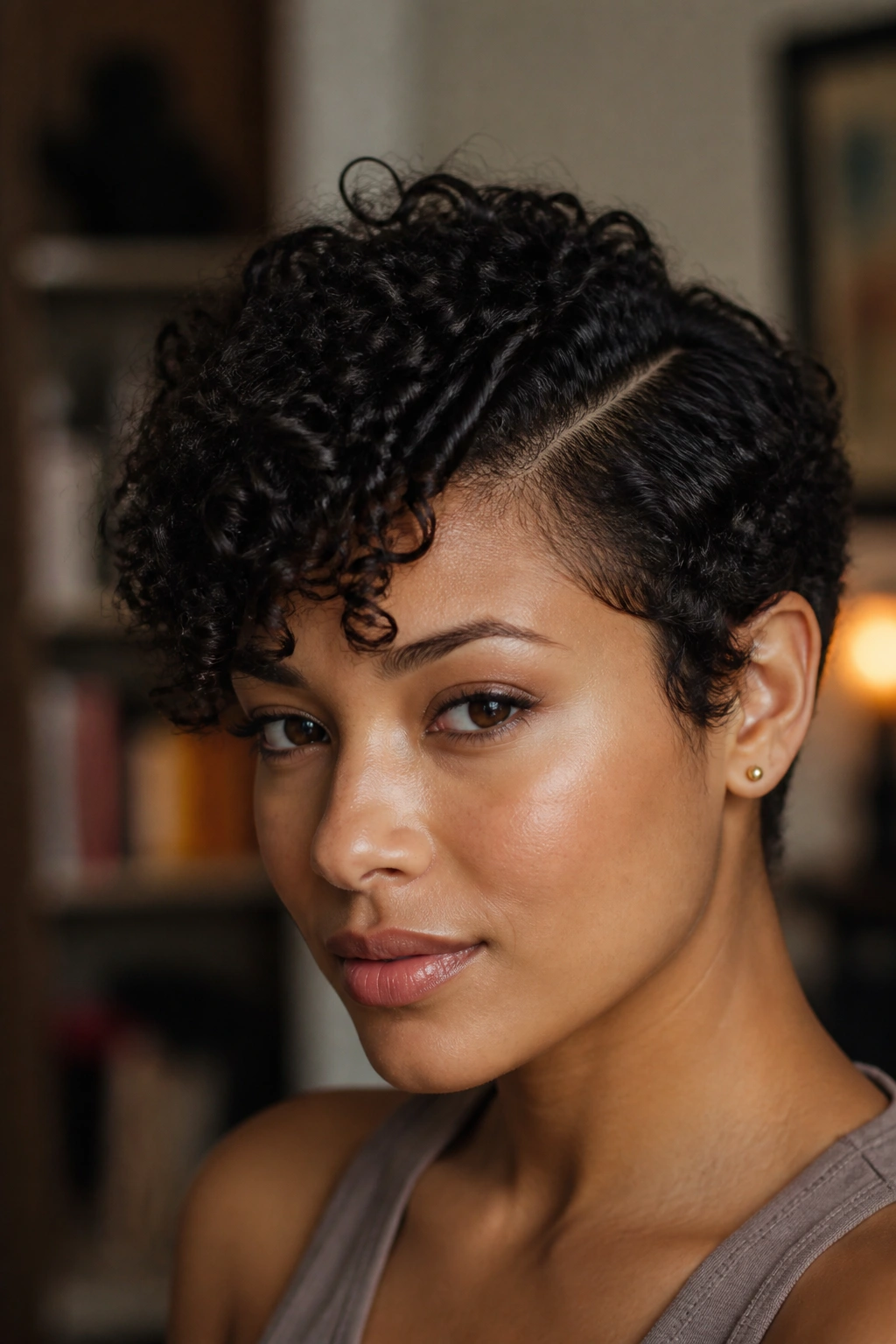
A side-swept crop gives short tight curls a little drama without making the haircut loud. The deep part shifts the weight to one side, and that diagonal line can do more for the face than people expect.
The front pieces usually sit a touch longer, sometimes by 1 to 2 inches compared with the opposite side. That difference is enough to soften the forehead and make the cut feel less square. On dense curls, the side sweep also helps the volume behave. Instead of puffing evenly in every direction, the hair follows a line.
I like this one on people who want their short cut to feel a little softer than a classic pixie but not as full as a bob. It works with glasses, strong brows, and angular faces because the side sweep gives the eye somewhere to move.
And yes, the part matters. A sloppy part kills the effect. Ask for the part to be placed where your hair naturally wants to fall, not where a comb forces it for five minutes in the chair.
12. Tapered Fro with Temple Fade

A tapered fro with a temple fade is the cleaner, sharper cousin of the rounded afro. It keeps the mass on top and trims the temples and sideburns low, which makes the whole shape look more sculpted and less wide.
That distinction matters if your curls grow outward fast at the sides. A temple fade pulls the outline in, and the taper keeps the nape from puffing up. The top still has enough length to show off curl pattern, but the haircut reads neater from across the room. It is a good one if you like structure and do not want the hair sitting heavy around your ears.
Best for: people with dense coils, a strong natural hairline, or a beard that benefits from a cleaner transition at the temples.
I would choose this over a rounded fro when the goal is sharper framing around the face. The rounded version feels softer. This one feels more deliberate. There is a difference, and you can see it immediately.
13. Asymmetrical Curly Bob with One Longer Side

A bob with one longer side sounds dramatic, but on tight curls it can be surprisingly wearable. The asymmetry gives the haircut movement, and the curl pattern keeps the line from looking harsh.
What the angle changes
- One side usually sits 1 to 2 inches longer than the other.
- The shorter side can skim the jaw or cheekbone.
- The longer side adds visual weight without making the cut heavy.
- The shape works best when the part is slightly off-center.
This cut is a good answer when a standard bob feels too plain. It keeps the neck open on one side and gives the face an uneven frame that feels modern without trying too hard. Tight curls help here because they soften the line where a straighter texture might make the angle feel severe.
I’d choose this if you like hair that looks a little different from every angle. It is also one of the easier ways to make short curls feel fresh without adding a lot of styling work.
14. Ear-Length Layered Cut for Dense Curls

Ear-length curls can look polished when the layers are handled gently. The mistake people make is assuming short has to mean blunt. It does not. On dense tight curls, a soft layered ear-length cut can remove enough weight to keep the sides from flaring out while still leaving the shape full.
The best version usually sits just around the earlobe or a little below it when dry. Layers stay subtle. No choppy cliff edges. The crown gets a touch more room so the cut does not sit flat, and the perimeter stays smooth enough that the style looks finished even when the curls are loose and a little messy.
This length is nice if you want to tuck hair behind the ears, show off earrings, or keep your neckline clear without jumping all the way into pixie territory. There’s a calmness to it. You can feel that in the shape.
If your curls are thick enough to build a shelf at the sides, this cut can be a relief. If your texture is finer, keep the layering light so the shape does not disappear.
15. Curly Bixie with a Short Nape

Can’t decide between a bob and a pixie? The bixie sits in that middle ground and does the awkward work for you.
It keeps the nape short like a pixie, but the top and sides stay long enough to read as a cropped bob when the curls expand. On tight curls, that mix is useful. You get face framing without the weight of a bob, and you get softness without the full commitment of a pixie.
Where it sits on the map
- Nape stays close and neat.
- Top length usually lands around 2½ to 4 inches.
- Sides can graze the cheekbone or sit just above the ears.
- The shape works best when the crown is lightly layered, not stripped out.
I like this cut for people who want movement but hate a lot of daily styling. It has enough structure to look tidy and enough softness to feel relaxed. If you want a haircut that can lean either polished or casual, this one gives you that range.
16. Micro Fringe Crop with Cropped Sides

A micro fringe on tight curls changes the whole face in a few inches. That tiny strip of hair above the brows draws the eye upward and makes the haircut feel sharp, almost editorial, even when the rest of the cut stays very short.
The important part is shrinkage. Curl specialists usually leave the fringe longer than the final dry length, because a micro fringe can bounce up fast and end up too short if it is cut with straight-hair logic. The sides stay cropped close, which keeps the attention on the fringe and the eyes.
This cut is not shy. It shows the forehead, puts your features front and center, and makes earrings or bold brows look even stronger. I like it on people who do not want hair hiding anything. It feels confident without needing a lot of length.
It also grows out in a fun way. The fringe softens, the curls round up, and the cut can shift toward a mini curly crop without looking broken.
17. Short Twist-Out Shape with Tidy Ends
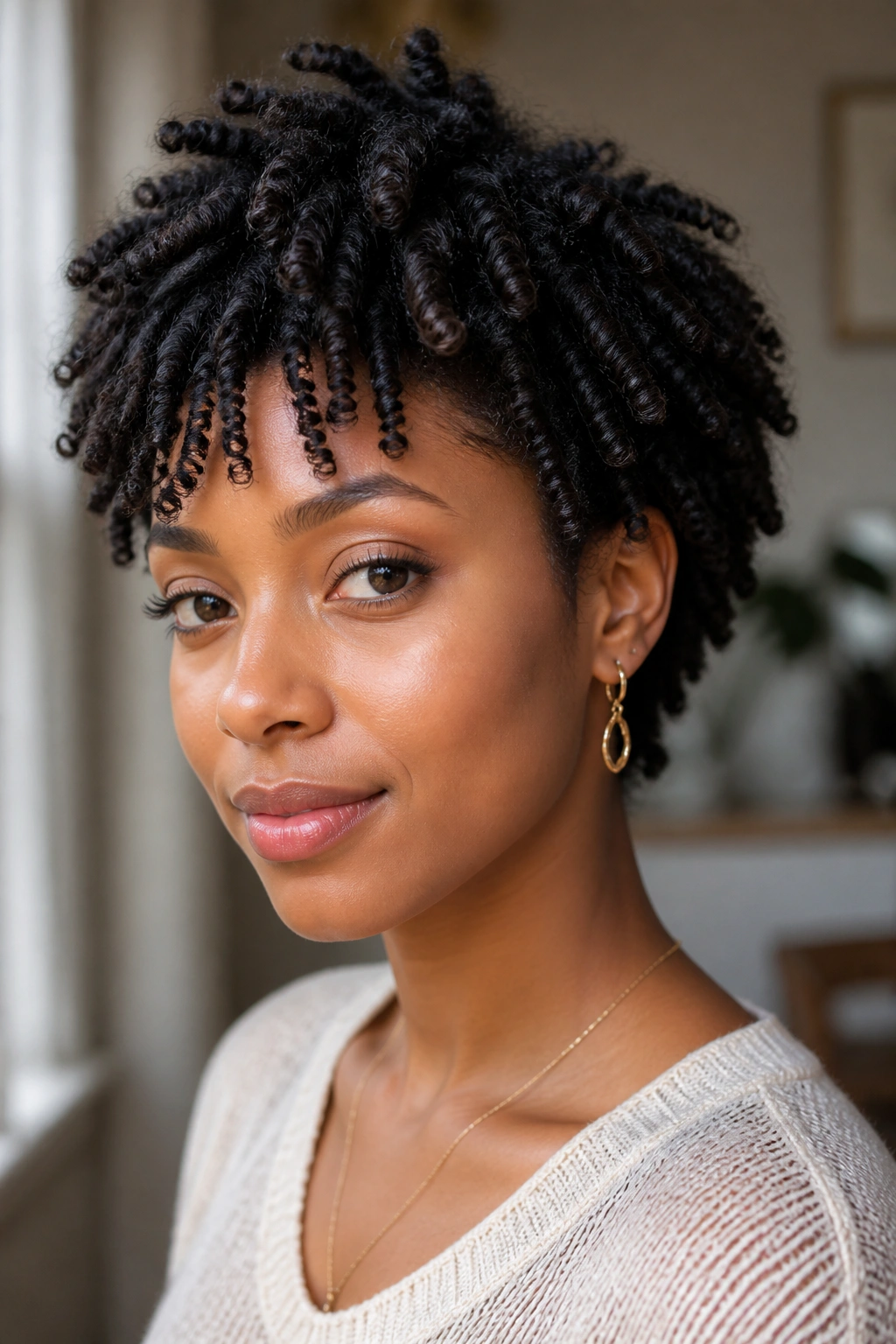
A short twist-out shape works because the haircut respects the way the style falls, not the other way around. If you regularly wear twist-outs, the ends need to be even enough that the curls land with a sense of order instead of doing random things at every corner.
The top usually stays in the 2 to 4 inch range, while the sides are trimmed shorter so the outline stays clean once the twists are taken down. That keeps the finished style from mushrooming too much around the cheeks. It also makes a huge difference on day three or four, when the curls start to separate and expand.
I like this shape for people who switch between defined curls and softer wash-and-go days. It gives you options. A cut that works only in one styling state gets annoying fast, and I have little patience for haircuts that need perfect conditions to look decent.
If you want a shape that can handle a little daily variation, this one earns its place. It is practical without looking plain.
18. Halo Cut with a Soft Round Outline

A halo cut is not the same thing as a round afro, even though the two can look related from a distance. The halo shape tends to keep the curls fuller around the upper sides and crown, while the nape sits a little shorter so the whole silhouette feels lighter around the neck.
That lift changes the mood of the haircut. Instead of a compact sphere, you get a soft ring of curls that opens up the face. It is especially good for dense hair that tends to build bulk around the lower half of the head. Trim the bottom too heavily, though, and you lose the whole point.
The cut works best when the curl pattern is strong enough to hold a rounded edge on its own. If the curls are looser, you may need more layering near the crown to keep the halo from drooping. A good stylist will watch that balance closely.
I think this is one of the prettiest short shapes for coils. Quiet, but not timid. Soft, but not shapeless.
19. Curly Caesar with a Short Fringe

A curly Caesar takes a very old shape and makes it work for tight texture. The fringe is cut short and deliberate, and the rest of the hair stays close enough to the head that the curls become part of the design instead of an afterthought.
Why the fringe matters
- The front line sits short enough to frame the forehead without hiding it.
- The crown stays compact so the cut doesn’t puff into a rounded cap.
- Tight curls soften the straight fringe line and keep it from looking severe.
- The temples can be kept clean for a sharper finish.
This cut is best when you like tidy hair with a bit of edge. It has almost no wasted space. Everything is doing a job. That is the appeal.
One thing to watch: the fringe should be shaped with the curl pattern in mind, not cut as if the hair were straight. Otherwise the front can shrink up too much and the whole haircut loses its balance. A small adjustment makes a big difference here.
20. Soft Wedge Crop with a Tapered Back

A soft wedge crop is one of those cuts that quietly solves a lot of problems. The back stays shorter and narrower, while the top and front keep enough length to give the curls shape and direction.
That wedge in the back helps tight curls avoid the flat, heavy look that can happen when the lower half of the haircut carries too much weight. It also gives the profile a nice lift. From the side, the shape reads clean and a little angular, but the curls keep it from turning severe.
I especially like this cut on people whose hair grows outward at the nape or sits heavy behind the ears. The taper gives the cut room to breathe. If the top keeps a bit more length, the style can still feel soft and touchable, not stiff.
This is one of those haircuts that looks more thoughtful than complicated. That’s a good thing.
21. Sculpted High-Top Crop with a Clean Fade

Why do high-top shapes work so well on tight curls? Because the texture naturally wants to stand up. You’re not forcing height. You’re just giving it the right frame.
The top usually needs 3 to 5 inches of length, depending on curl tightness, while the sides and back are faded low to let the vertical shape take over. The key is the outline. A good high-top crop is not a rectangle sitting on the head. It has rounded corners and a controlled crown so it looks strong without feeling rigid.
How to keep the height believable
- Leave the top longer in the center than at the edges.
- Fade the sides gradually, not abruptly.
- Keep the crown rounded so the shape doesn’t flatten at the back.
- Let the hairline stay clean, but not pushed unnaturally high.
This cut suits people who like bold shape and do not mind a haircut with attitude. It gives tight curls something to do besides spread outward. That alone is worth something.
22. Close Fade with a Sculpted Crown

A close fade with a sculpted crown is the shortest look on this list that still feels finished. The sides go very short, the neckline stays sharp, and the top keeps just enough length to show curl texture instead of vanishing into the scalp.
What makes it work is the crown. If the center top is left around 1½ to 3 inches and shaped with a soft round top, the haircut has definition even at a minimal length. Too flat, and it looks clipped down without purpose. Too boxy, and you lose the clean effect.
This is the kind of cut that suits people who want less hair to manage but still care about shape. It’s also the most honest option on the list. No pretending. No trying to fake length. Just clean sides, a controlled top, and tight curls doing their thing.
If I had to pick one short curly shape for someone who wants the least daily fuss and the clearest outline, this would be near the top. It stays neat, it grows out predictably, and it never looks like an accident.
