



Medium-length curls can look expensive one day and puffed-up the next. The difference usually isn’t the curl pattern. It’s the shape.
That’s why this length is such a sweet spot for curly and wavy hair. You get enough weight to keep the curls from flying everywhere, but not so much length that the shape drags down and turns flat at the roots. A good cut can make a loose wave look polished. A good style can make a tighter curl look lighter without losing fullness. It’s a small shift, but it changes everything.
The tricky part is that medium-length curls have opinions. They shrink. They frizz. They lean to one side in humid air and somehow ignore your parting plans by lunchtime. So the styles that work best are the ones that respect texture instead of fighting it — layers in the right places, soft edges around the face, and enough hold to keep the shape from collapsing.
Some of the looks below are easy weekday fixes. Others are the kind of cuts that make wash day easier for months. All of them work because they use the natural bend of the hair, not against it. That’s the whole game.
1. Shoulder-Length Layers with Airy Ends
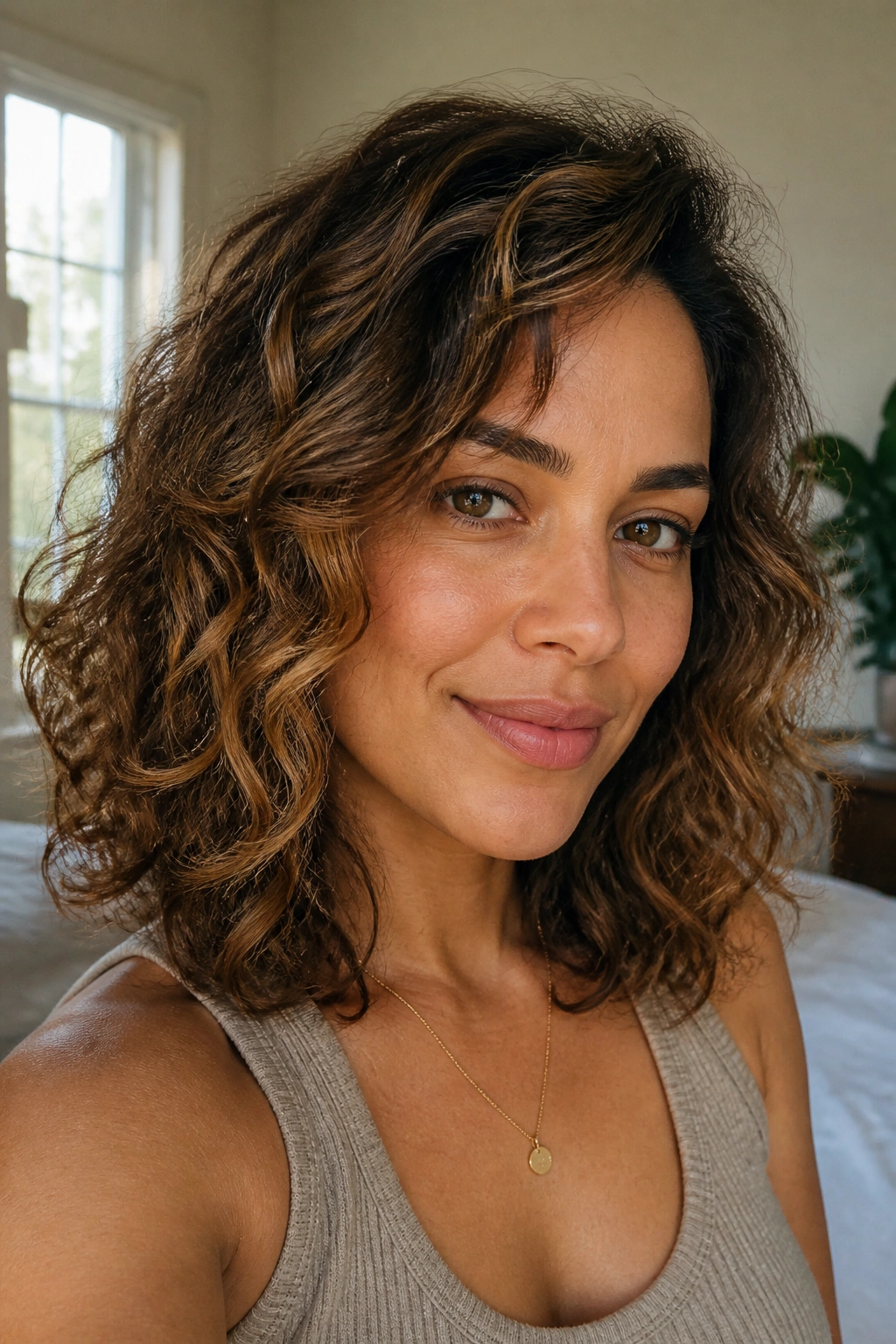
Shoulder-length layers are the safest bet when you want movement without losing fullness. The length sits right in that useful middle zone where curls can bounce, but they still have enough weight to hang in a clean shape instead of floating out like a triangle.
Why It Works
Ask a stylist for layers that start a few inches below the chin, not right at the cheekbones. That keeps the top from getting too short and frizzy, while the lower pieces stay long enough to show off the curl pattern.
This cut is especially kind to curls that get bulky through the ends. The lighter shape makes the hair swing instead of sit. On wash day, a palmful of curl cream and two or three pumps of mousse at the roots usually do the trick. Diffuse on low heat until the curls are about 80% dry, then stop touching them. Too much fussing is where the halo starts.
- Best for loose curls, medium curls, and soft waves.
- Ask for soft internal layers, not choppy ones.
- Keep the ends blunt enough to hold shape.
- Use a diffuser attachment with a bowl-shaped cup if you have one.
My favorite part: it grows out well. That matters more than people admit.
2. Curly Shag with Soft Fringe
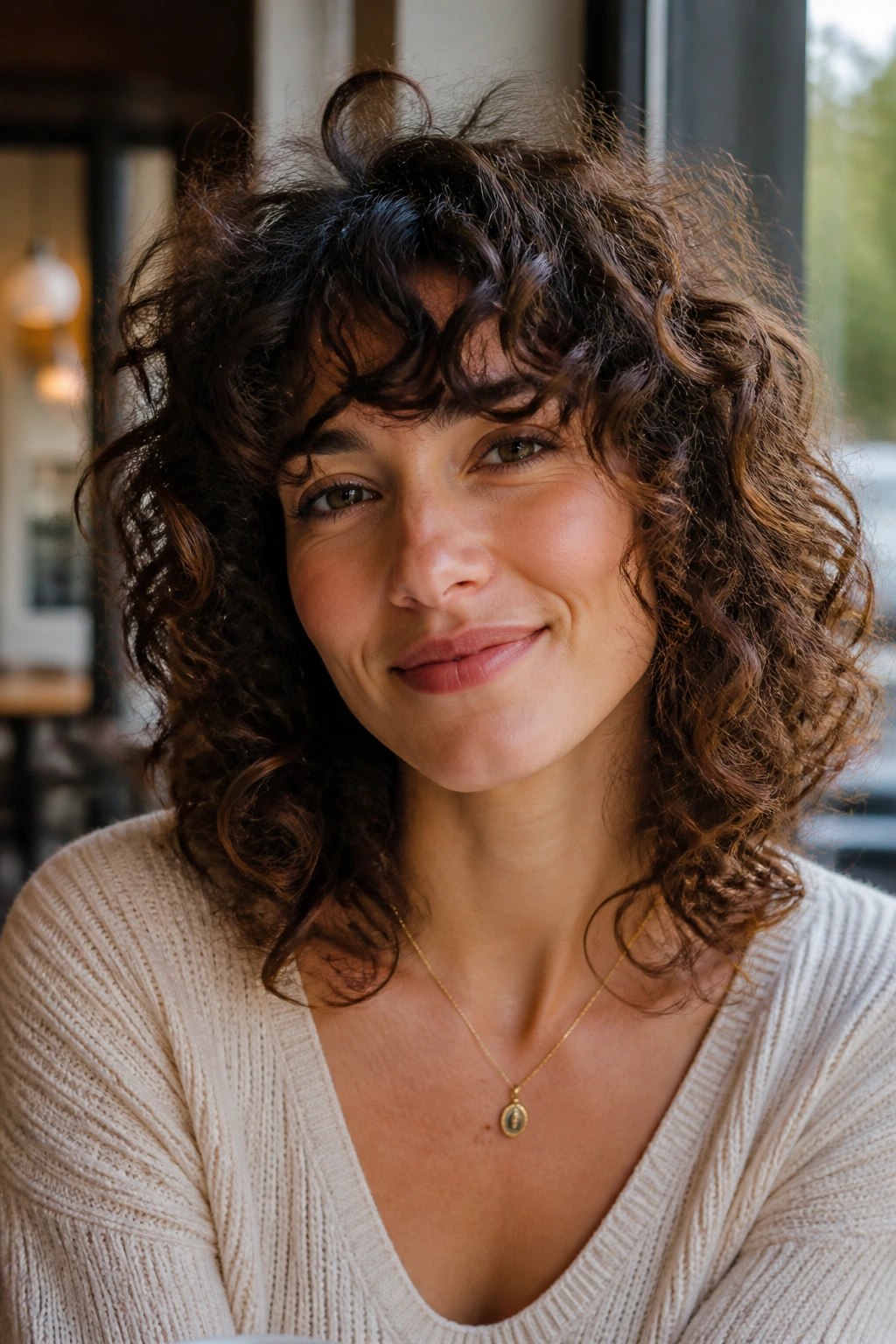
The shag is the cut I reach for when curls need personality fast. It gives medium-length hair a little edge, a little lift, and a lot more shape near the crown.
Blunt ends and curls rarely get along. They can look heavy, even boxy, especially if your hair is dense. A shag breaks that up with shorter layers at the top and longer pieces underneath, so the whole cut feels lighter the second you shake it out.
The fringe changes the mood. Keep it soft, not chopped to bits. The best curly fringe usually lands around the brows or just below them when dry, which means you need to cut longer than you think. Curls spring up. They always do.
I like this style for people who want their hair to look a little undone on purpose. Not messy. Not careless. Just alive. It also cuts down on that “one curl is doing ballet, the other is in a nap” problem.
3. Center-Part Curly Lob
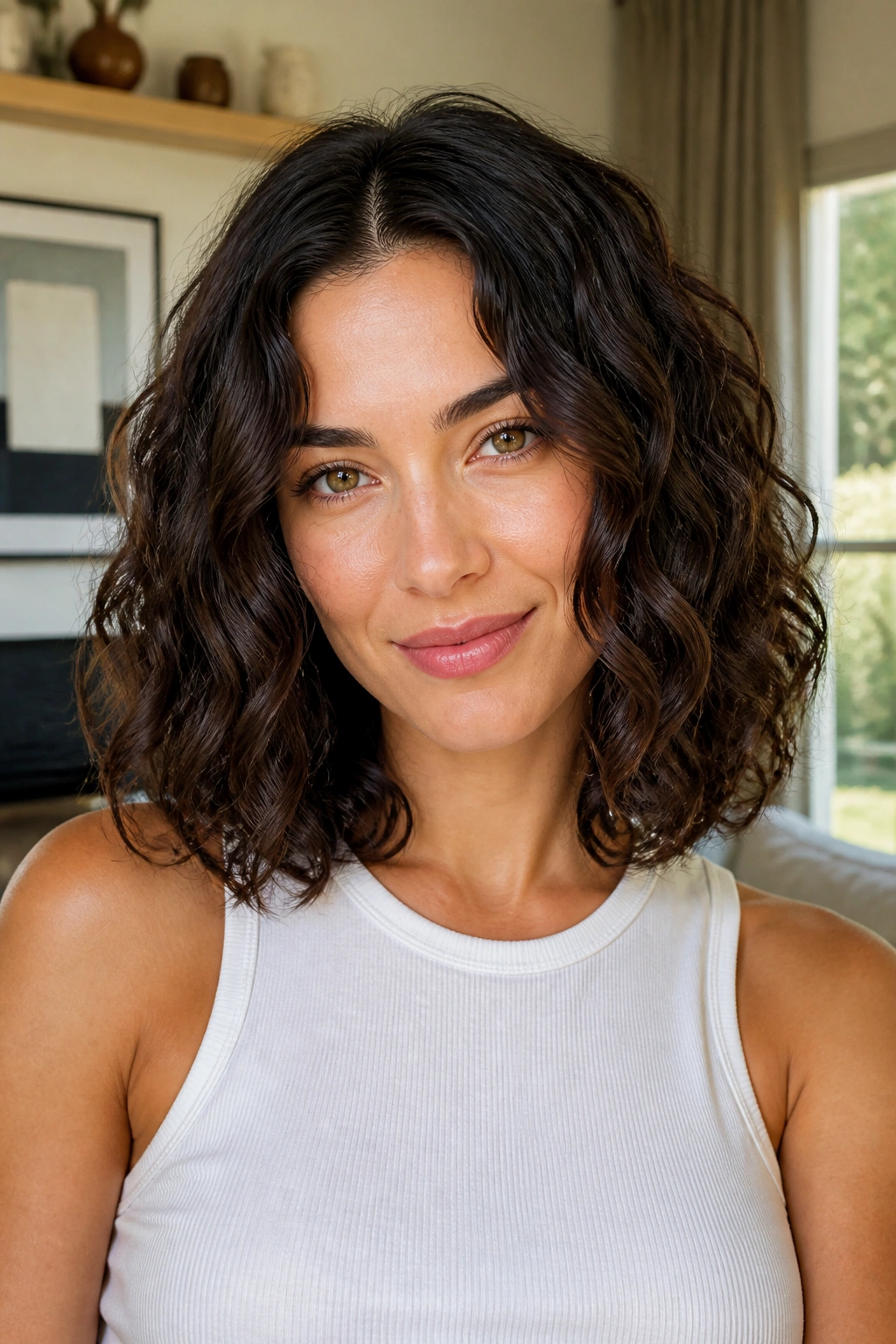
A center part can look severe on straight hair. On curls, it often reads as calm and balanced.
The curly lob — long bob, if you want the full name — sits around the collarbone or a bit above it. That length gives the curls a place to drop, which helps with shape if your hair leans wide at the sides. The center part keeps the whole look even, which is useful when your curl pattern is dense and you do not want extra volume crowding the face.
Styling Notes
- Start the part on damp hair with the point of a tail comb.
- Clip the front sections away for 5 to 10 minutes while the roots set.
- Use a lightweight gel through the top layers, then scrunch in a cream through the ends.
- Air-dry halfway before diffusing, or the roots can lose lift.
This is the cut I’d suggest to anyone who wants a neat outline without looking stiff. It’s tidy, but not flat. That’s the appeal.
4. Deep Side-Part Volume

Why does a side part suddenly make curls look fuller? Because it changes where the weight falls, and that tiny shift creates lift right where you want it.
A deep side part is one of the easiest ways to bring drama to medium-length curly hair without touching the cut. It works especially well when one side of your face feels a little more open than the other — the part gives the eye something to follow, and the curls do the rest. On wavy hair, it adds softness. On tighter curls, it gives the shape a little lean.
How to Place the Part
Find the arch of your eyebrow and part the hair just above it. That usually lands the volume in a flattering spot instead of pushing it too far over. Dry the roots with a diffuser while lifting the section on the heavier side with your fingers or a duckbill clip.
A side part also helps if your curls are flat at the crown. You get more root lift on the higher side, and the lower side frames the cheek and jaw in a way that feels deliberate, not accidental. Nice when you want polish without losing texture.
5. Face-Framing Layers Around the Cheeks

A few smart layers near the face can change the whole cut. Not a lot. Just enough to keep medium-length curls from swallowing your features.
This is one of those styles that looks understated in photos but does a lot in real life. The face-framing pieces soften a strong jaw, break up roundness, and keep the front from feeling heavy when the rest of the hair is full. If your curls tend to form one big mass at the sides, these shorter front pieces make the shape feel more open.
The trick is placement. Too short, and the pieces can spring up and frizz around the cheeks. Too long, and they disappear. The sweet spot is usually somewhere between the cheekbone and the top of the lip when the hair is dry, but a stylist should check your curl shrinkage before cutting.
I also like this shape because it works whether you wear the rest loose, clipped back, or half-up. It gives the hair a little frame. That’s enough.
6. Half-Up Twist with Loose Curls

A half-up twist is the move when you want the top section under control and the curls still visible. It’s cleaner than a messy bun and softer than a full ponytail.
Unlike a tight updo, this style keeps the curl pattern in the lower half intact. The crown gets lift, the face stays open, and the ends keep their shape. That makes it a solid choice for second-day hair, office days, and dinners where you want your hair off your neck but not flattened against your head.
Two small twists usually look better than one heavy gather. Take 1-inch sections from each temple, twist them back, and pin them just below the crown. Leave the lower lengths loose, then pinch a little curl cream over the ends if they’ve gone fuzzy.
It’s quick. It’s forgiving. And it hides a bad root day better than people expect.
7. Curly Curtain Bangs and Long Layers

Curtain bangs work because they behave like a soft opening, not a wall. They split around the face, drop into the rest of the haircut, and keep medium-length curls from feeling too heavy at the front.
What Makes Them Different
The key is length. Curly curtain bangs should usually be cut longer than straight ones because curls bounce up hard once they dry. If you want them to land around the cheekbones, the wet cut will need to sit lower than that. That’s not a mistake. It’s the curl pattern doing its thing.
Long layers behind the fringe keep the whole haircut from turning top-heavy. The front gets softness, the middle keeps movement, and the ends don’t vanish. If your hair is a mix of waves and spirals, this cut helps the different textures blend instead of competing.
How to Style Them
- Dry the bangs with a diffuser first so they set before the rest.
- Use a small round brush only at the roots if you need a little bend.
- Separate the fringe with your fingers, not a fine comb, or the curl clumps break apart.
- Trim every 6 to 8 weeks if you want the shape to stay open.
I’m partial to this one. It has a lived-in feel that never looks forced.
8. Rounded Shoulder-Length Cut
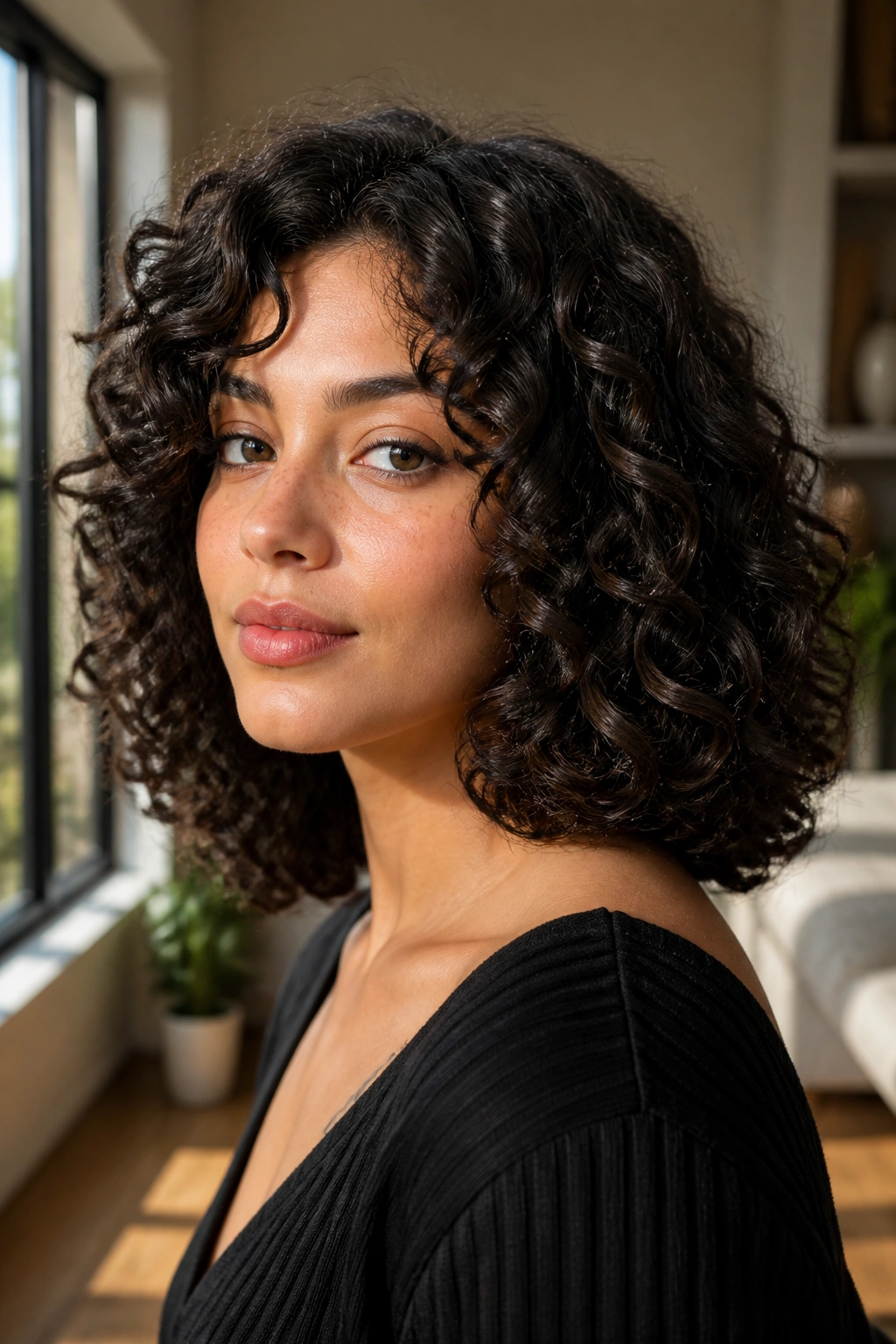
If your curls puff wide at the sides, a rounded cut reins them in without making them flat. That’s the part people usually miss.
The silhouette matters as much as the curl itself. A rounded shape follows the curve of the head, so the hair looks deliberate from every angle instead of wider than it needs to be. It’s a smart option for dense curls that build out around the ears or jawline.
This cut usually has more softness through the outer perimeter and a little extra length near the bottom. The effect is gentle, not severe. It also looks especially good when the hair is air-dried with a little gel cast left in place, because the curve stays clean instead of exploding into separate pieces.
One good thing here: the grow-out phase is easy. The shape blurs rather than breaks. That saves a lot of salon panic.
9. Asymmetrical Lob with One-Side Sweep

A small angle does a lot.
An asymmetrical lob is longer on one side by an inch or two, sometimes a little more if the hair is thick. That slight imbalance gives medium-length curls a sharper outline and keeps the style from feeling too safe. It’s a good fix when the hair falls flat on one side or the part never seems to sit quite right.
The one-side sweep also helps if you like a side part but want something more modern than a standard lob. The longer side draws the eye down, while the shorter side lifts the cheek and opens the neck. On waves, it feels polished. On tighter curls, it looks bolder, almost sculpted.
- Keep the angle soft, not dramatic.
- Ask for the longer side to hit near the collarbone.
- Use a curl-defining cream on the longer side so the shape reads cleanly.
- Tuck the shorter side behind the ear for a sharper finish.
This cut has attitude without needing much styling. That’s a useful thing.
10. Defined Ringlets with Minimal Layers
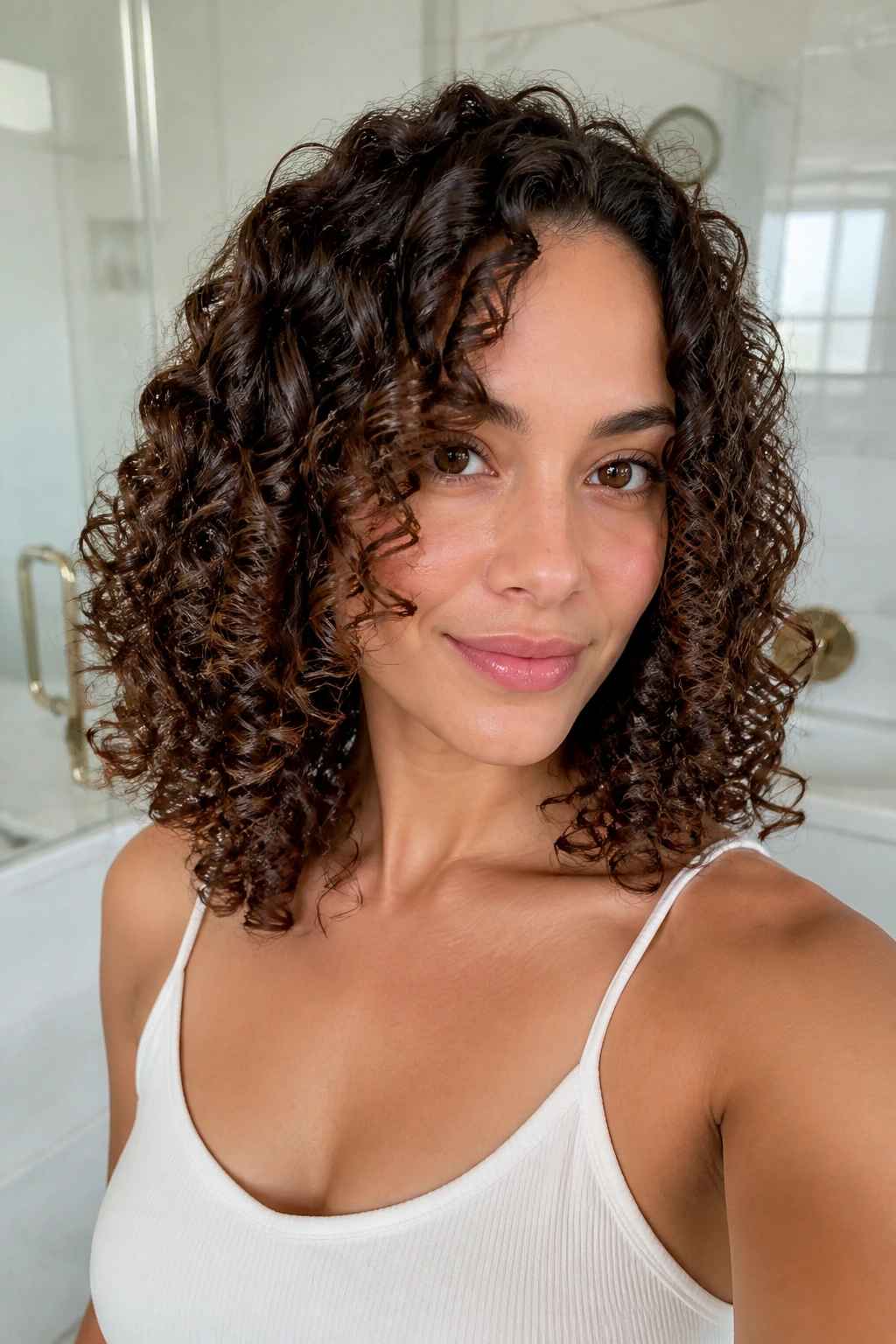
Can curls look polished without lots of layers? Absolutely. Sometimes the best move is to leave the structure alone and let the ringlets do the talking.
Minimal layers keep medium-length curls heavy enough to hang in defined spirals. That can be a good thing if your hair is prone to frizz, if the ends are a little fragile, or if you like a more uniform shape. Too many layers can break up the curl family and make the ends look thin before you want them to.
How to Get the Definition
Use a wetter styling routine than you think you need. Work a leave-in through soaking-wet hair, add a strong-hold gel in sections, then finger-coil the front pieces only if they need extra help. Let the cast form fully before you touch it. Breaking it too early is how definition turns into fluff.
This style suits tighter spirals especially well, but looser curls can use it too. The cut stays clean. The curl clumps stay clear. And the result feels a little more dressed up than a heavily layered look.
11. Pineapple Half-Up for Busy Days
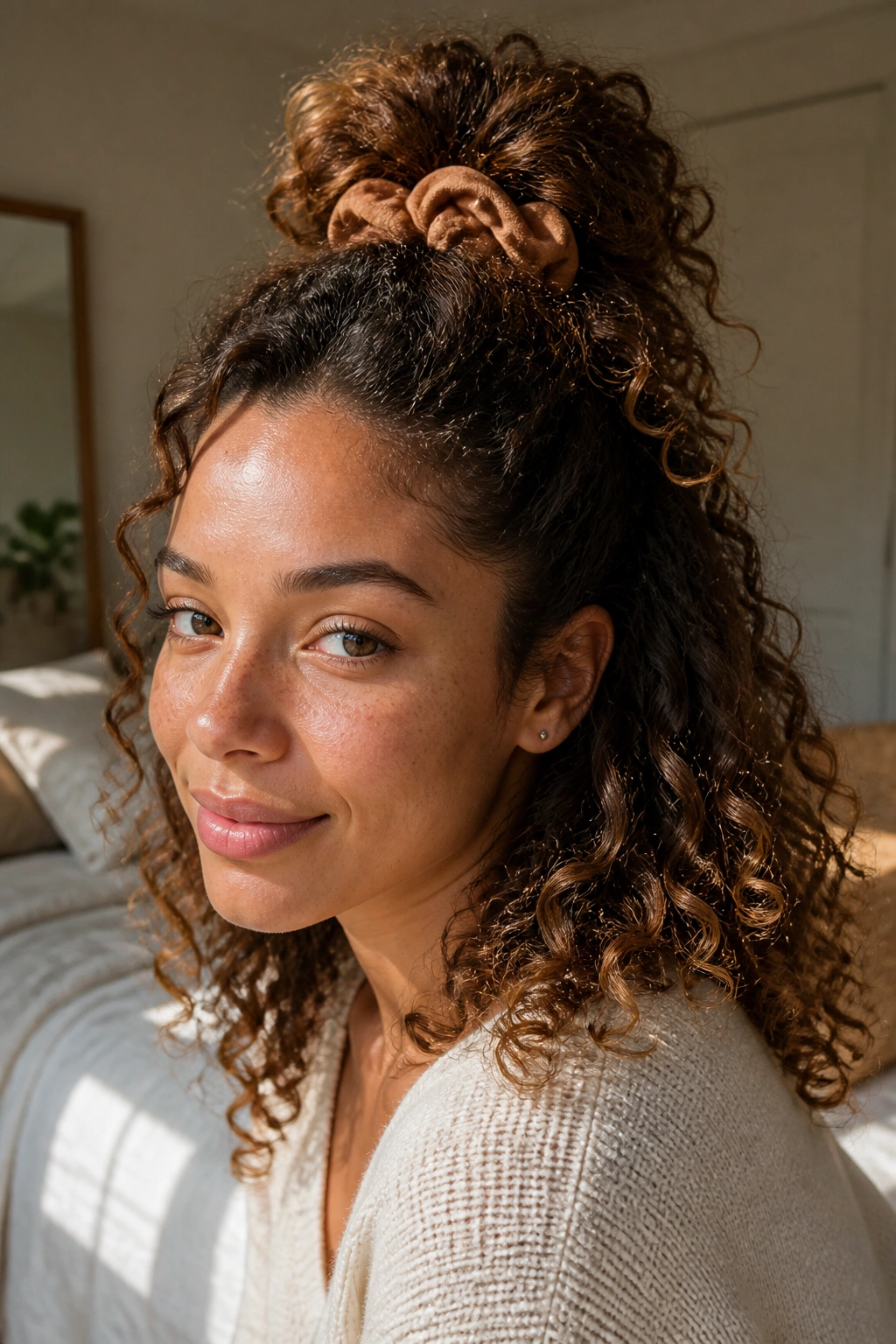
The pineapple half-up is the style I’d pick when the morning is messy and the curls still need to look intentional.
Unlike a full ponytail, this version keeps the lower half loose and protects the curl pattern better. You gather the top section high enough to lift the crown, secure it with a soft scrunchie, and let the rest fall. It’s quick, and it keeps the hair from sitting too close to the face all day.
This is especially good on medium-length curls because the hair is long enough to gather without turning into a tiny puff, but short enough that the ends still bounce out with shape. Use a silk or satin scrunchie if you have one. The regular rubber ones leave dents, and nobody needs those.
Pull out a few face-framing curls if you want a softer look. Leave them alone if you want a cleaner one. Easy.
12. Twist-Out with Stretchy Length
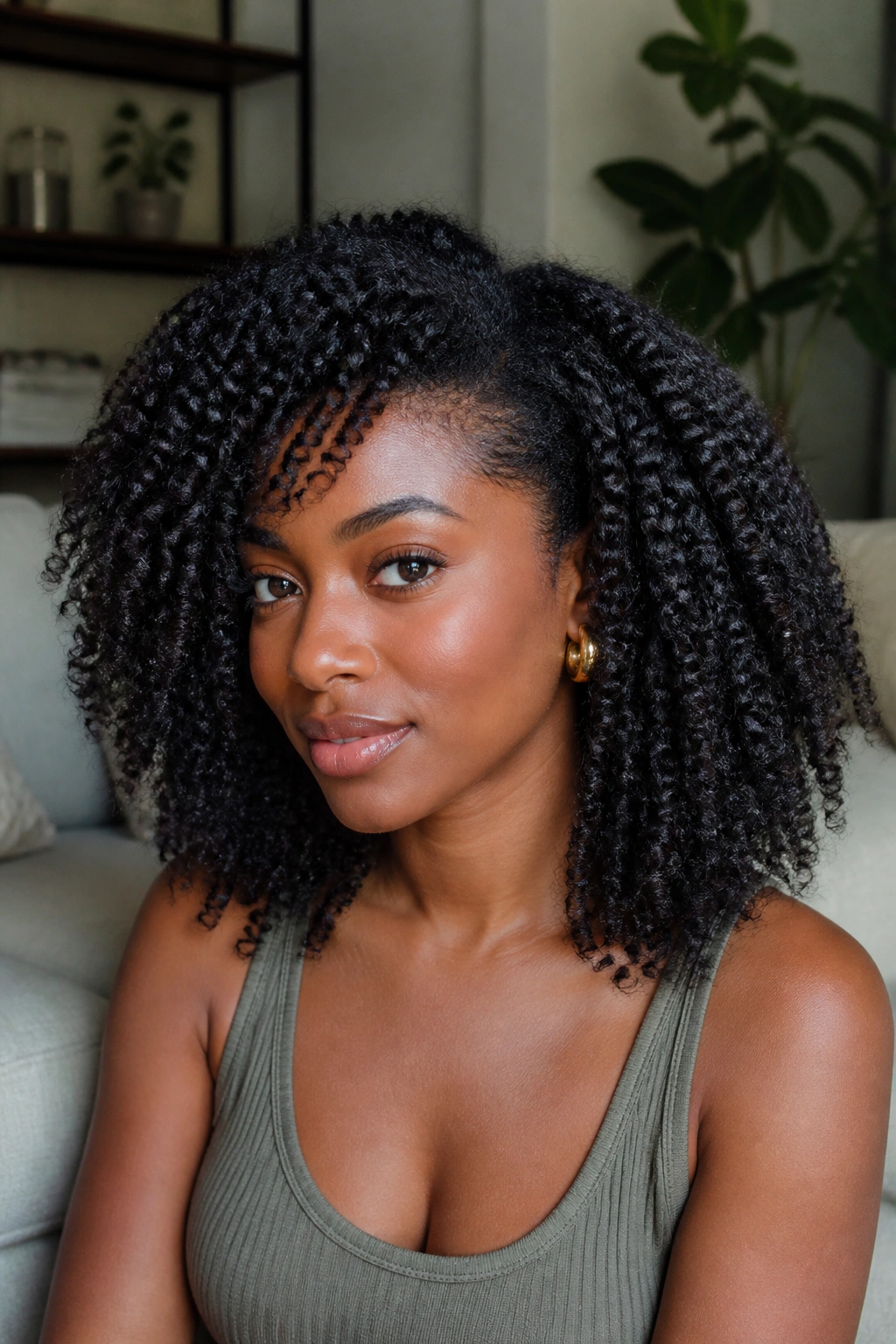
A twist-out gives medium-length curls a longer, stretched shape without flattening the texture out of existence.
Stretching Without Losing Shape
Take damp hair and split it into 8 to 12 medium sections, depending on thickness. Two-strand twist each section from root to end, keeping the tension even but not tight. If the twists are tiny, the result can look too ropey. If they’re huge, the shape turns loose and uneven.
Sleep in the twists or dry them with a hood dryer until the center feels fully dry. Then unravel with oiled fingertips, not dry hands. Dry fingers create frizz fast, and the front pieces usually pay the price first.
- Best for hair that shrinks a lot.
- Good if you want length for a few days.
- Works well with a light cream under a gel.
- Separate only once, or the clumps lose shape.
This style has a little ceremony to it, but the payoff is real. You get stretch, body, and a neat curl pattern all at once.
13. Braided Crown with Loose Ends
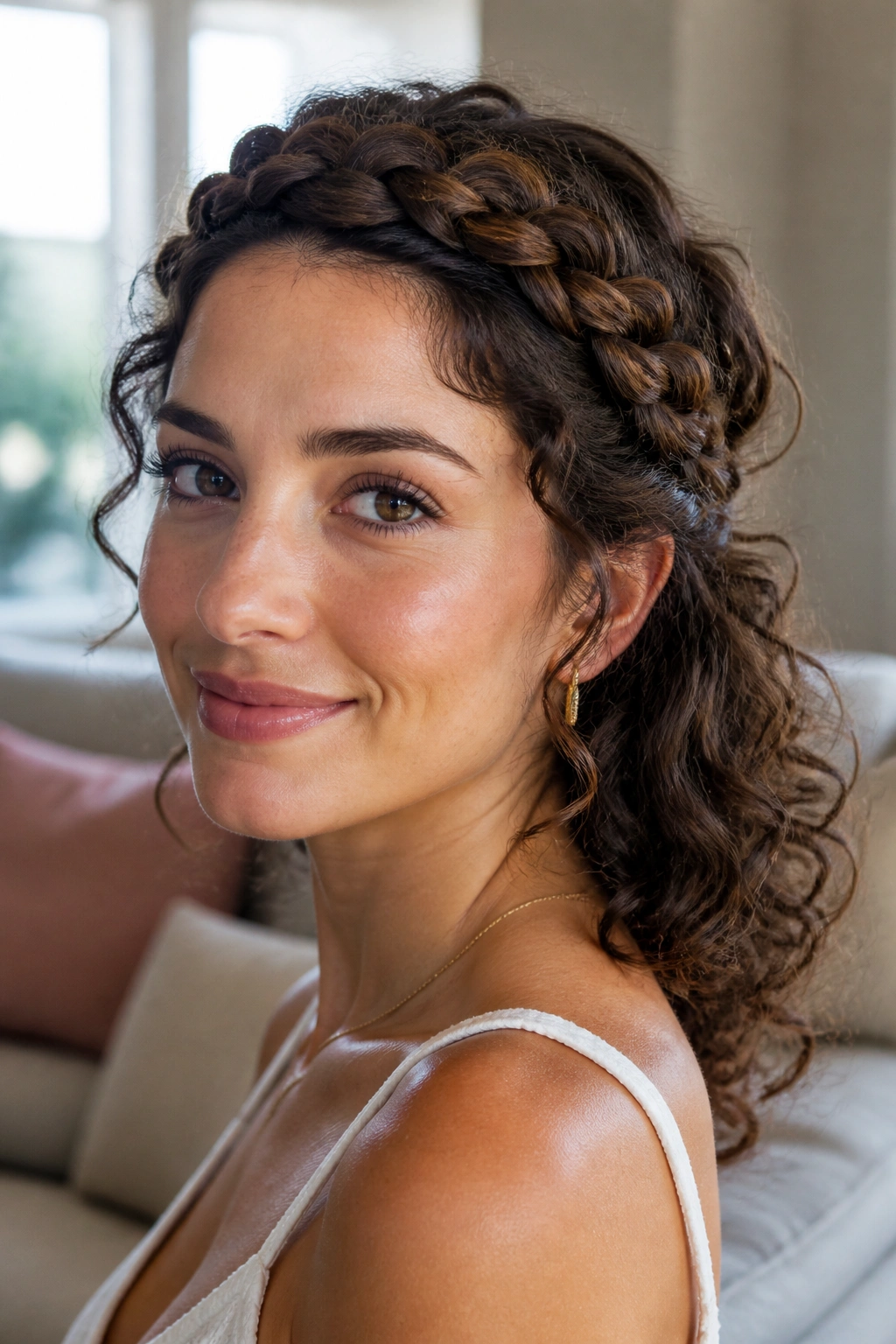
Some days you want the hair off your face without hiding the texture. A braided crown handles that better than most updos.
The braid wraps the front perimeter, so the hairline stays tidy while the rest of the curls keep their shape. That matters on medium-length hair, where a full braid can swallow the texture and make the ends look small. Leaving the back loose keeps the style from feeling too severe.
A Few Things That Help
- Start the braid on damp or lightly misted hair so the sections hold.
- Keep the braid flat to the head; bulky braids can look lumpy by midday.
- Pin the ends under the crown, not on top of it.
- Leave the lower curls loose and separate them with a bit of serum if they need shine.
I like this for weddings, dinners, and any day when you need the front sections under control. It has a soft, slightly romantic feel, but the real win is practical: it keeps hair out of your eyes.
14. Wet-Look Gel Set
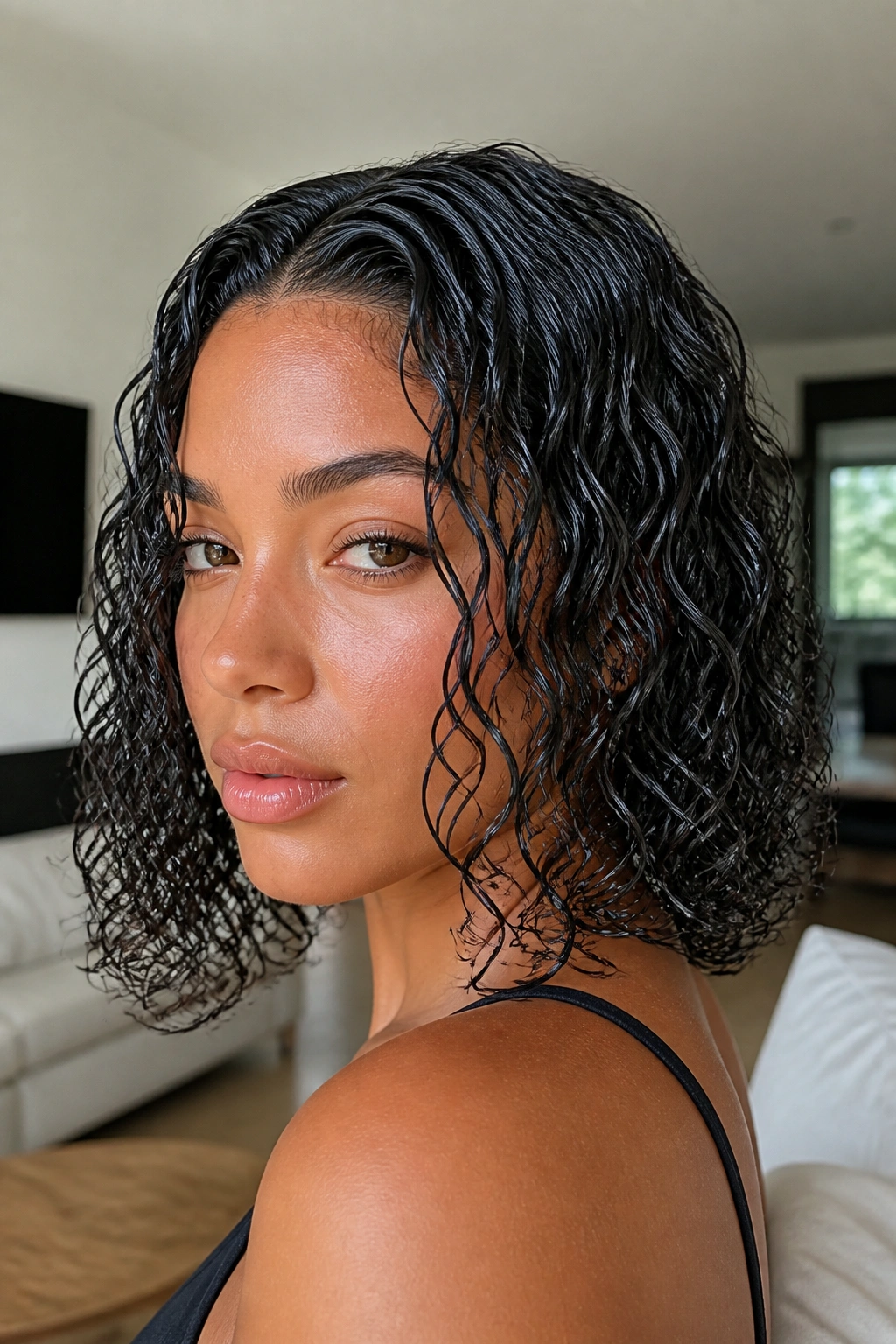
A wet-look set is blunt in the best way. Sleek roots, glossy curls, and a shape that looks deliberate from the start.
This style leans on gel more than cream. You apply leave-in to damp hair, follow with a strong-hold gel, then comb or rake the product through until the curl clumps are even. Some people scrunch after that. Others leave the hair smoother near the crown and let the ends do the curling. Both can work.
The nice part is the control. Medium-length curls can sometimes puff at the top while staying loose at the bottom. A wet-look set keeps the top close to the head and lets the curl definition show through the lengths. It’s especially good if your hair has a looser pattern and you want more structure.
It will feel stiff while it dries. That’s normal. Let the cast set fully, then break it with dry hands once the hair is done. If you touch it too soon, the shine turns into fuzz.
15. Curly Wolf Cut

Why do so many curly heads like the wolf cut? Because it keeps the top lively and the ends light without pretending the hair is straight.
The wolf cut mixes shag energy with a bit more edge. Shorter layers at the crown bring lift, while the lengths stay longer and a little uneven on purpose. On medium-length curls, that means the shape looks wild in a controlled way — which sounds contradictory, but works better than it should.
Who Should Skip It
If your curls are already very fine and flat, a heavy wolf cut can leave the ends too thin. If your hair is dense, though, it can remove bulk in a way that feels almost like a relief. Ask for the crown layers to be shorter than the perimeter, but not so short that the top puffs up into a mushroom.
This style likes texture. It does not want perfect ringlets every day. It wants movement, a bit of mess, and enough product to keep the ends from fraying into nothing.
16. Low Curly Ponytail with Texture

A low curly ponytail is not the same as a slick one, and that difference matters.
Unlike a smooth office ponytail, this version keeps some volume at the crown and leaves the curl pattern visible through the tail. The placement is low — usually right at the nape — so the shape feels relaxed instead of severe. It’s the kind of style that works when your hair is midweek tired but you still want it to look cared for.
Use a soft brush only on the surface if you need to smooth flyaways. Keep the interior texture intact. Secure the ponytail with a covered elastic, then wrap a small curl around the base to hide it. That one step changes the whole finish.
I also like this style for medium-length hair because the ponytail stays full enough to look intentional. Shorter lengths can look skimpy. Longer ones can pull flat. This sits in the middle and behaves.
17. Side-Swept Glam Curls

A side-swept shape gives medium-length curls a bit of drama without requiring a ton of heat or product.
The trick is in the direction. Curl away from the face, pin the front section on one side while it cools, then sweep everything toward the heavier side once the style sets. That creates a soft wave of volume that falls across the forehead and cheek without hiding the whole face.
Setting the Shape
Use a medium-hold hairspray, not a stiff helmet spray. You want the curls to move when you turn your head. If the product is too hard, the style loses that airy swing and starts looking stuck in place. A few bobby pins under the heavy side can help hold the sweep without making it obvious.
This is a strong choice for nights out, photos, or any event where you want the texture to look refined. It has polish, sure, but it still reads like curls, not a polished shell of them.
18. Loose Curly Chignon with Tendrils
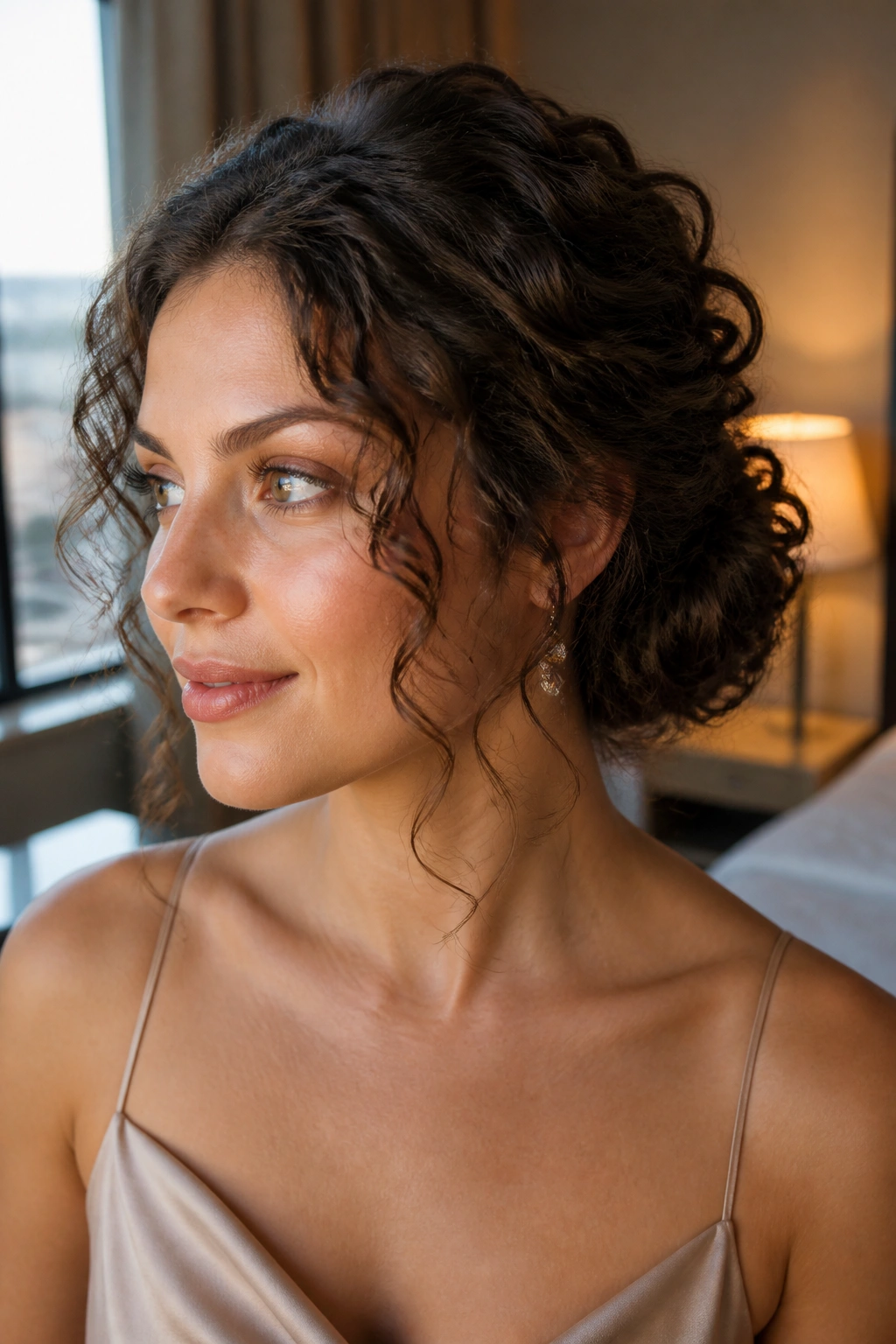
A loose chignon is what I’d call the quiet workhorse of medium-length curly hairstyles. It keeps the hair up, keeps the texture visible, and never feels too rigid.
The low bun sits near the nape and is pinned in sections rather than twisted into one tight knot. That matters. Curly hair needs a little room in the shape, or the style starts looking small and tense. Leave a few tendrils at the temples and one or two around the ears so the face doesn’t get boxed in.
- Gather the hair at the nape with your hands, not a brush.
- Twist the length loosely and coil it into a soft bun.
- Pin from different directions so the shape holds.
- Pull a few curls free at the end, then mist lightly with flexible spray.
This works for dressy events, but it also solves the “I need my hair off my neck and out of the way” problem. A sleek bun can feel harsh on curls. This one keeps the softness.
The cuts that age best on medium-length curls are the ones that leave room for the curl pattern to breathe. Sharp edges can be fine, but texture usually wants a little slack. If the hair has shape, the styling gets easier. If the styling is easy, you’ll wear the cut more often. That’s the part that tends to get missed.
And honestly, that’s the real measure. Not whether the style looks nice for one photo. Whether it still looks like you after a humid walk, a long workday, or the second time you tuck one side behind your ear.
