



Wavy hair can look polished in the mirror and then go strangely flat, puffy, or triangular once it dries. The right haircut changes that. The wrong one makes you fight your own texture every morning, which is a bad deal when the hair was already trying to help.
The best haircuts for wavy hair women are the ones that respect movement instead of forcing the strand into a shape it does not want. Waves need a little structure, but not so much structure that they lose their bend. Too blunt and the ends can feel heavy. Too many layers and the whole thing can frizz out into a halo that looks bigger than intended.
A lot depends on density, not just wave pattern. Fine wavy hair usually needs a cleaner outline so it does not disappear. Thick or coarse waves often need weight removed in the right places so the sides do not balloon. And if your hair bends in loose S-shapes near the top but gets much stronger underneath, the cut has to account for that unevenness. It sounds picky because it is picky.
So let’s get into the cuts that actually make wavy hair easier to live with, not harder.
1. Collarbone Lob for Wavy Hair Women
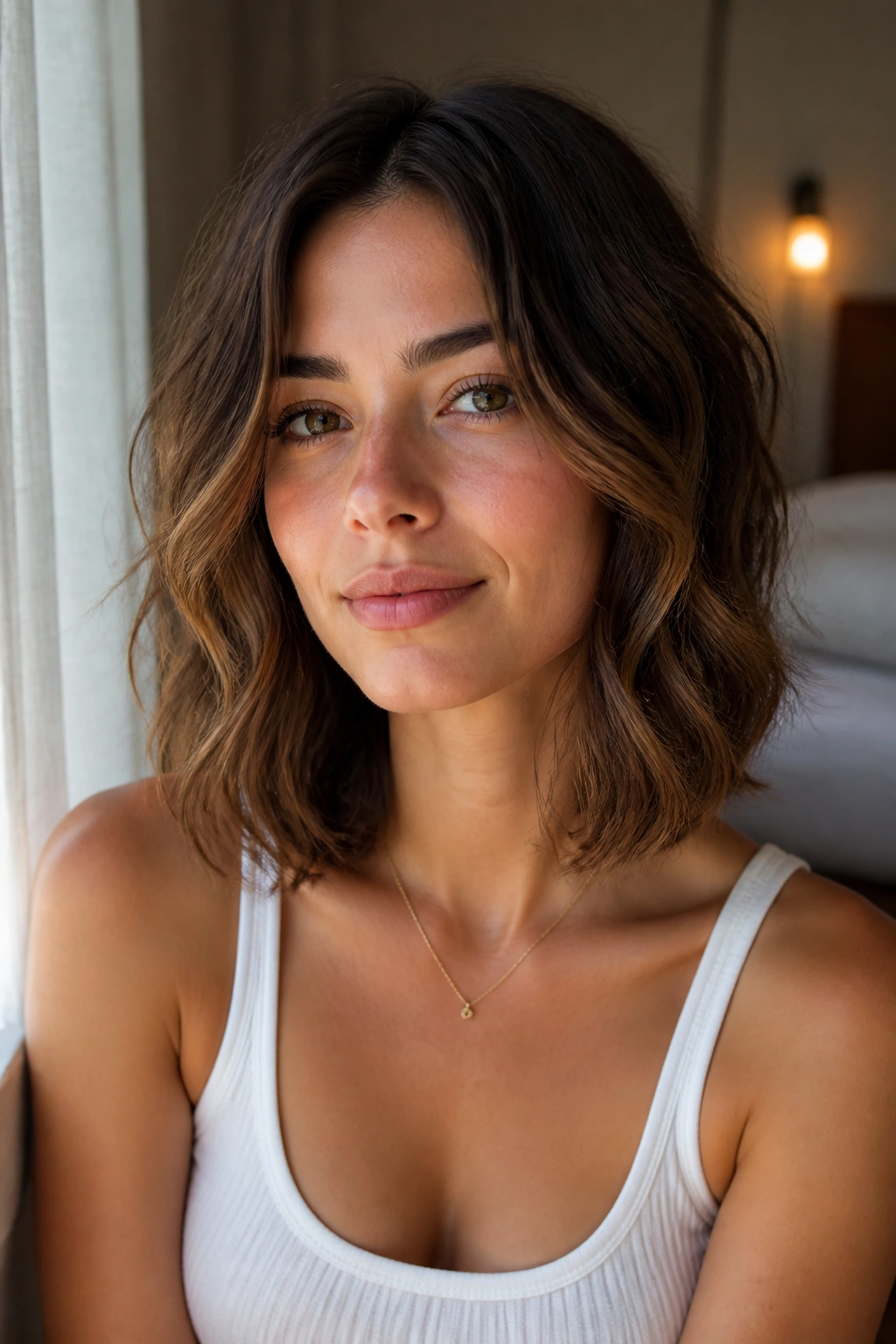
The collarbone lob is one of those cuts that earns its keep fast. It hits right where the neck and shoulders start to widen, which gives wavy hair a place to sit without collapsing into the chest or sticking to the jaw.
Why It Flatters Most Wave Patterns
This length keeps enough weight at the ends to stop the wave from exploding outward, but it is still short enough to feel light. That balance matters. A collarbone lob also works with a center part, a deep side part, or a tucked-behind-one-ear look, which makes it an easy everyday cut instead of a “special occasion” haircut.
- Good for loose, medium, or strong waves
- Easier to air-dry than longer lengths
- Less prone to tangling than hair that falls past the shoulders
- Looks polished even when the wave pattern is uneven
Tip: ask for the ends to stay full. If the perimeter gets thinned too much, the lob can turn wispy fast.
2. Long Layers That Let the Wave Move
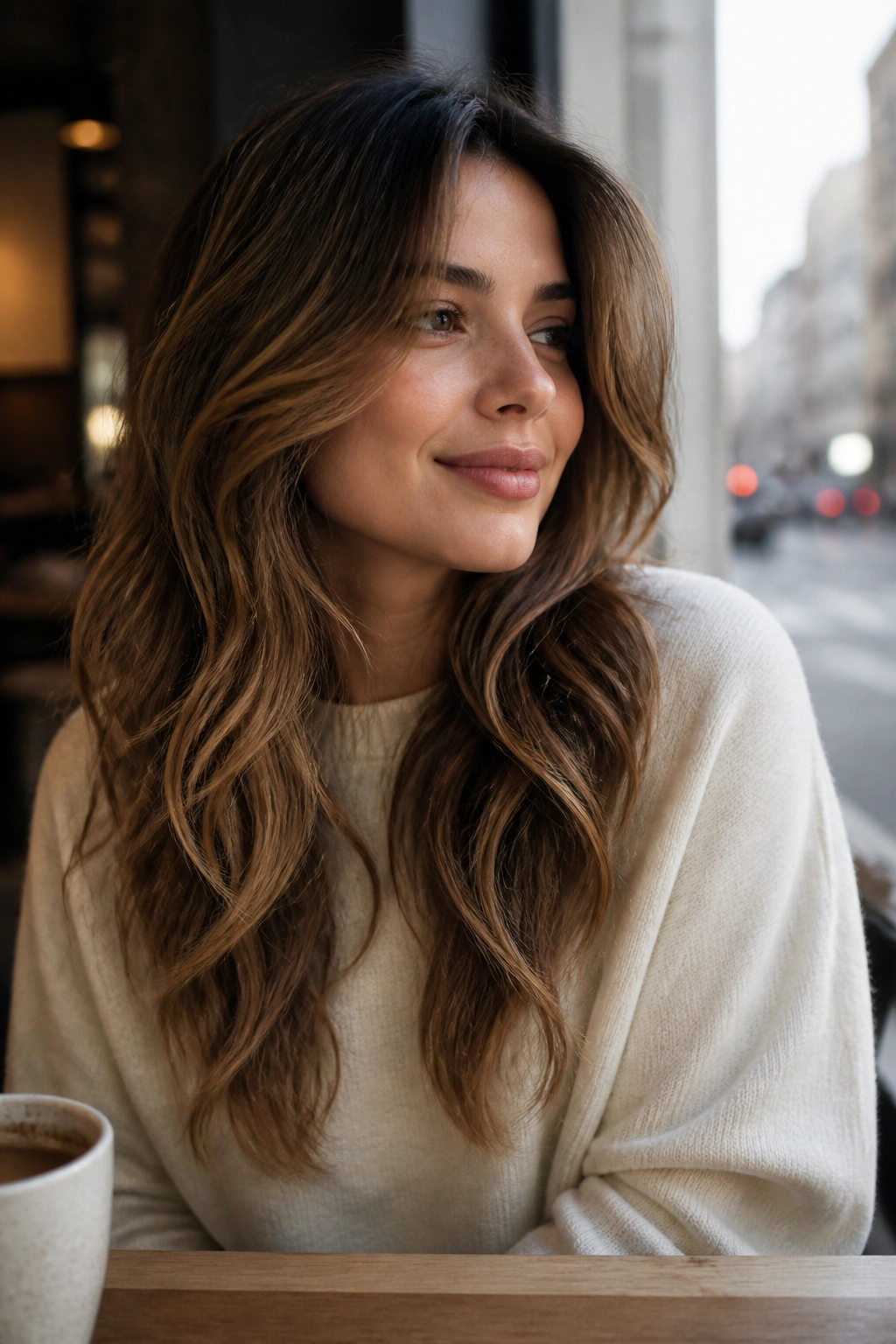
Long layers are not boring when they are cut with intent. On wavy hair, they stop the lower half from dragging the whole shape down, and they keep the top from turning helmet-like.
The trick is placement. You do not want layers beginning so high that your hair looks choppy the minute it dries. You want the longest face-framing pieces to start around the cheekbone or chin, then let the rest fall in softer steps. That gives movement without breaking the silhouette apart.
Long layers are especially good if you like to wear your hair down and want it to feel airy, not bulky. They also help if your waves are denser underneath than on top. The cut can redistribute the weight so the wave pattern reads more evenly from root to tip.
Best for: medium to thick waves that feel heavy at the ends.
3. French Bob With a Soft Edge
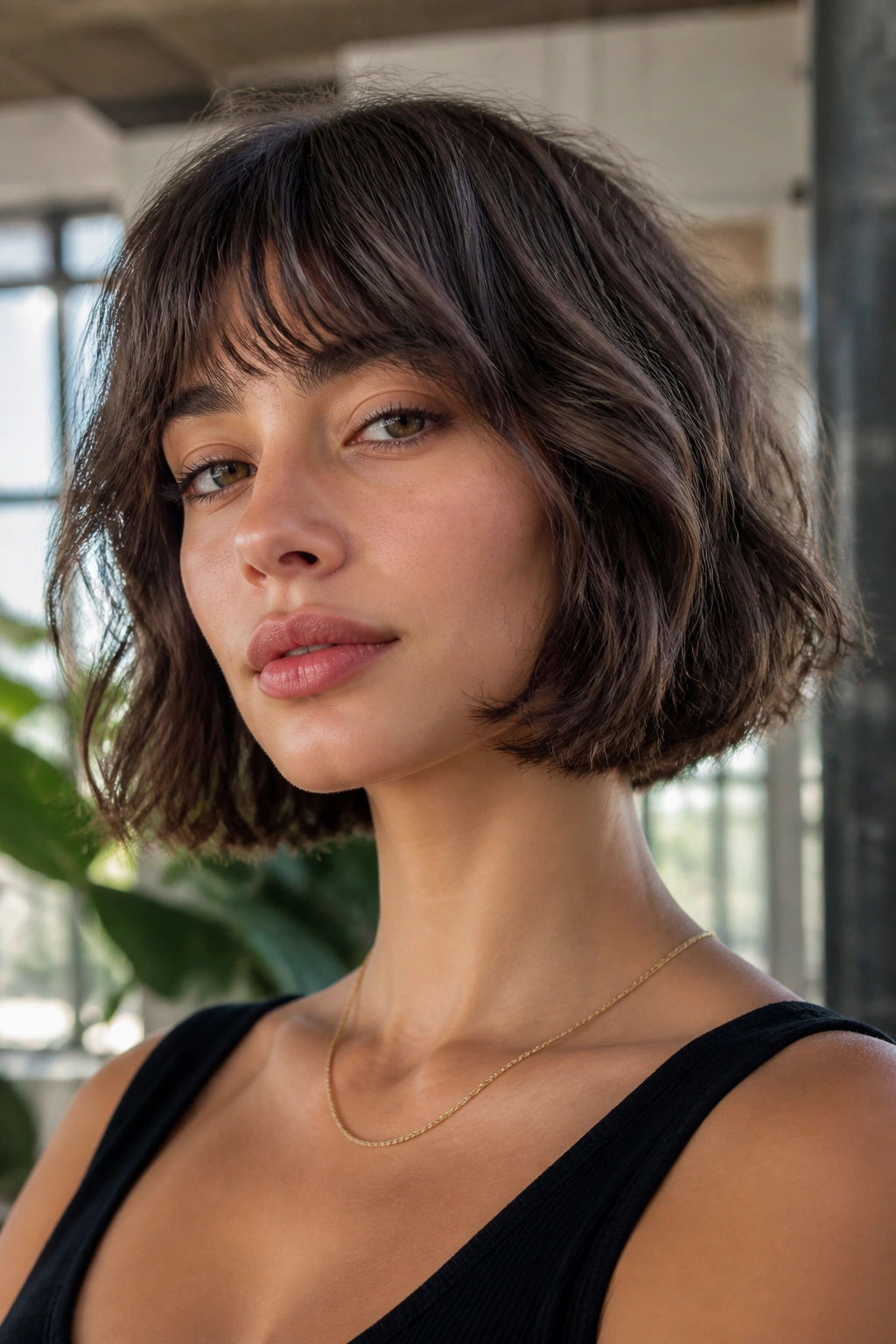
Why does a French bob work so well on wavy hair? Because the natural bend supplies the finish that straight hair has to fake. A chin-grazing cut with a little softness at the ends can look chic without trying too hard.
The danger with this length is going too blunt and too strict. Wavy hair hates being pinned into a box if the perimeter is hard and the styling is overdone. A softer edge lets the ends bend instead of kick out. That matters more than people think.
How to Style It
Let the roots dry about 70 percent before you touch them. Then scrunch in a light cream or mousse and let the rest air-dry or diffuse on low heat. If you tuck one side behind the ear, the whole shape looks less precious and more relaxed.
A French bob is a good pick if you want something sharp but not stiff. It has personality on its own.
4. Shag With Curtain Bangs

If your waves puff at the crown and slump at the ends, the shag is often the haircut that makes the most sense. It builds shape in the middle instead of leaving all the action at the bottom.
Curtain bangs change the whole line of the cut. They soften the forehead, blend into the sides, and keep the front from feeling too heavy. On wavy hair, that front section often dries with a little bend anyway, so you are working with the texture instead of against it.
What to Ask For
- Shorter crown layers for lift
- Curtain bangs that land around the cheekbones
- Longer side layers that keep the shape from feeling boxy
- Ends that stay textured, not razor-thin
This cut is not for someone who wants one flat, neat sheet of hair. It is for someone who likes movement and does not mind a little mess. That is the whole point.
5. Butterfly Cut on Long Wavy Hair
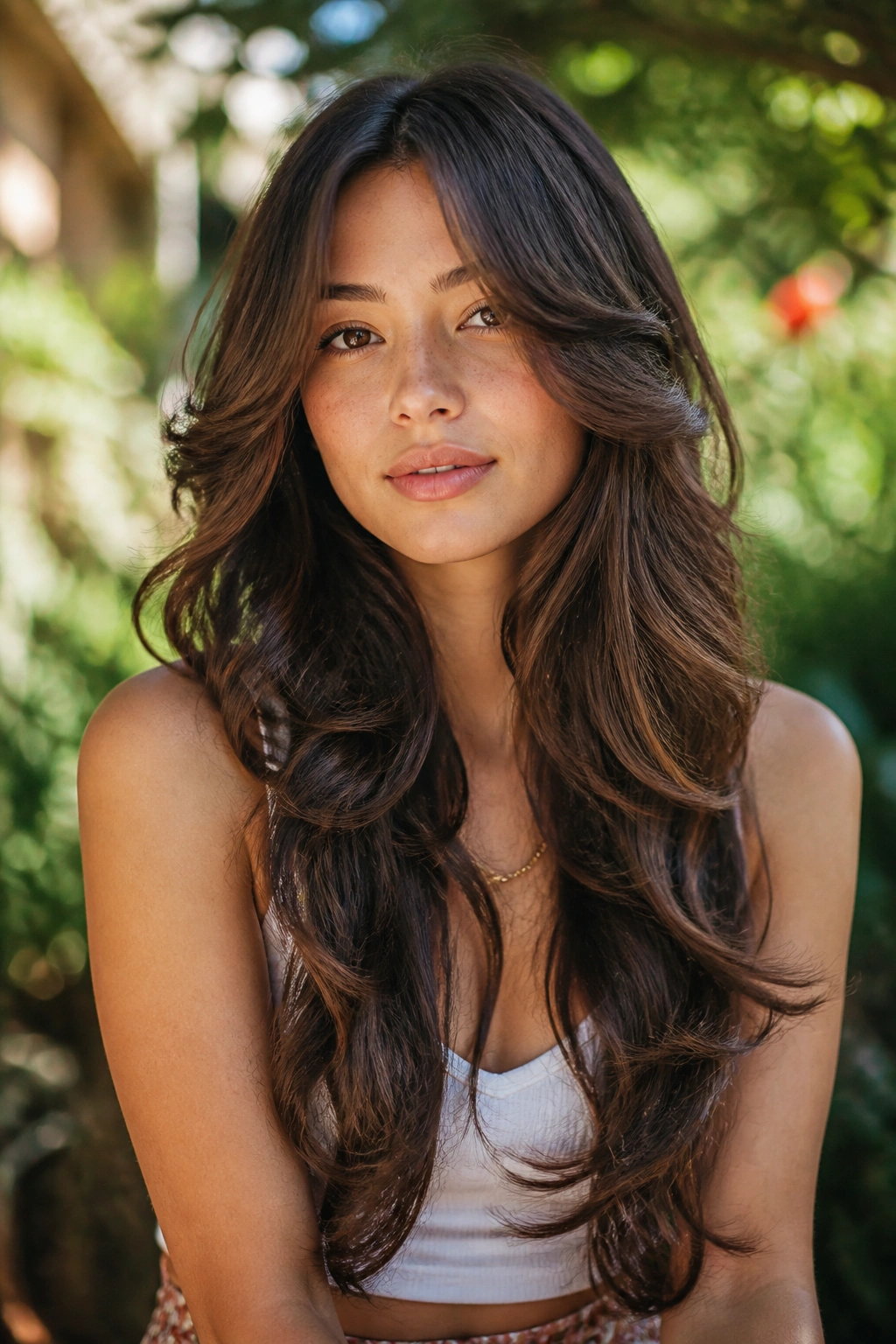
The butterfly cut is basically a long cut with a second personality. The top layers are shorter and airy, while the length stays long underneath, so the hair looks fuller around the face without sacrificing inches.
On wavy hair, that split structure can be a blessing. You get lift where the hair often lies flat, and you keep the dramatic length many people want. It is a good option if you like to wear your hair half-up, because the top pieces fall softly instead of sticking out in blunt chunks.
The catch is density. Very fine waves can lose too much substance if the top layers are taken up too high. Thick waves, though, can handle it well and often look better with the extra movement. Ask for the shortest pieces to start around the chin or collarbone rather than way up near the cheekbones if you want a softer result.
It has a breezy feel. Not fragile. Just light.
6. Blunt Midi Cut With a Clean Perimeter

A blunt midi cut sounds simple because it is simple, and that is why it works. The straight line at the bottom gives wavy hair a stronger edge, which can make the whole head look thicker.
This cut sits somewhere between the chin and the shoulders, often around the upper collarbone. It is a smart choice for medium-fine waves that need more visual density. A pile of layers can make that type of hair look scraggly. A blunt line, on the other hand, gives it a fuller finish.
It also makes styling less fussy. You can let the wave pattern do the work, or you can brush it out for a softer, almost blown-out effect. Either way, the perimeter stays readable.
If you like clean outlines and hate too much fluff, this is worth a serious look. It can feel almost tailored on hair that tends to go fuzzy in humid air.
7. Rounded Shoulder-Length Cut
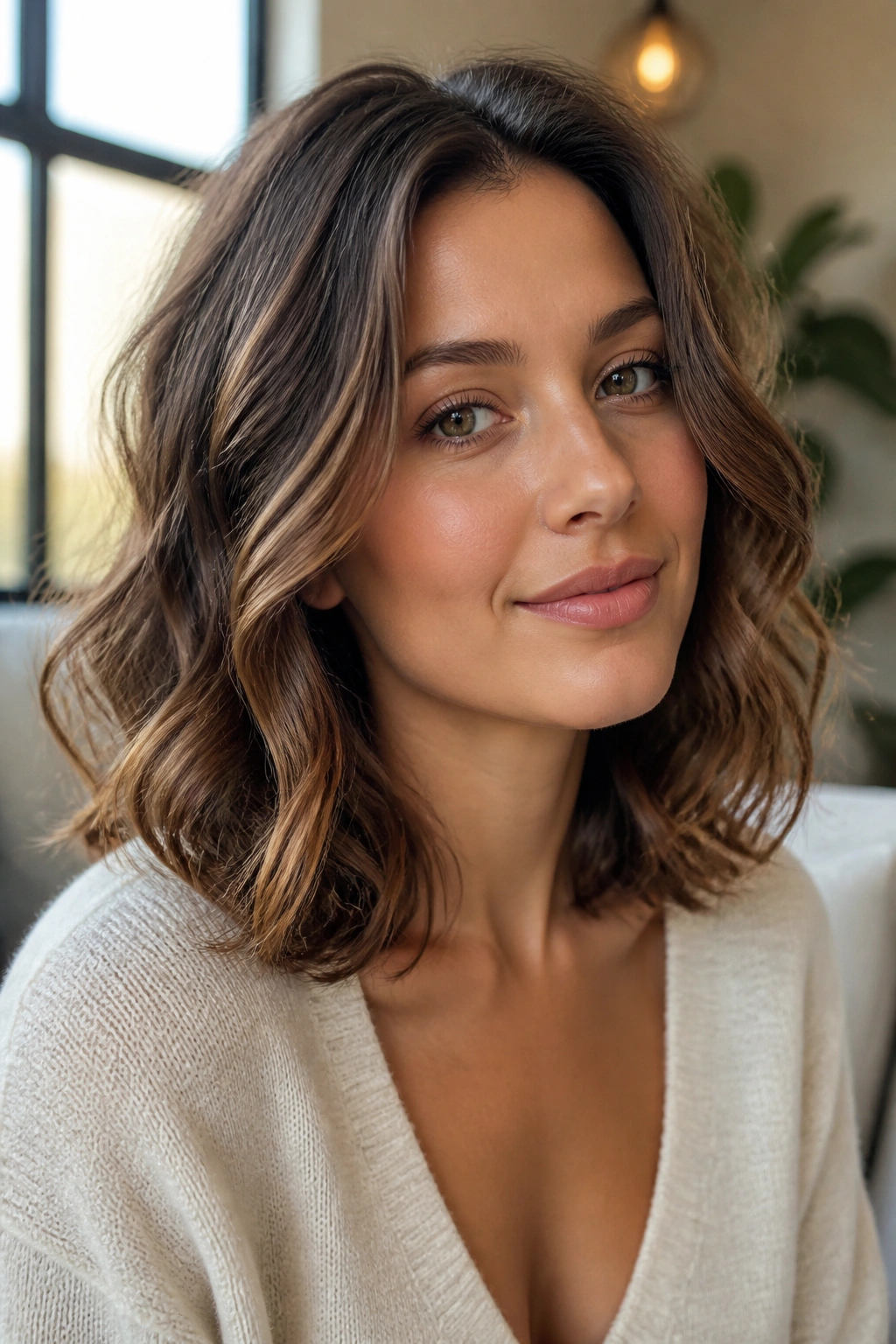
A rounded shoulder-length cut keeps the sides from flaring out too hard, which is a common complaint with wavy hair at this length. Instead of a flat-bottom shape, the outline curves gently toward the collarbones and gives the wave somewhere to fall.
Where the Shape Comes From
The fullness sits through the mid-lengths, not at the very ends. That means the hair looks controlled even when it is loose and air-dried. The roundness is subtle, not helmet-like, and that subtlety is the whole point.
Who Should Ask for It
- Women with medium-density waves
- Hair that tends to poof at shoulder level
- Anyone who wants movement without obvious layers
- People who wear a center part most of the time
A rounded cut needs a stylist who understands how wave pattern changes once the hair dries. If the shape is too tight when wet, it can open up more than expected. Let the cut breathe a little.
8. Pixie Cut With Soft Waves

Short hair does not erase waves. If anything, a pixie cut can make the texture look sharper and more deliberate, which is a nice change when longer hair starts feeling heavy.
A soft wavy pixie usually keeps a little length on top and around the crown, with the sides and nape cut closer. That contrast lets the wave pattern show instead of getting lost. It also dries fast, which is a small pleasure you do not appreciate until you have lived with long wet hair for a while.
Keep in Mind
- The top should stay long enough to bend, not stick straight up
- A bit of fringe can soften the forehead line
- Sideburns and nape detail matter more than people expect
- A matte paste or light cream usually beats stiff gel
This is a good cut if you want low maintenance and do not mind visiting the salon to keep the outline tidy. It is neat, but not severe.
9. Wolf Cut With Choppy Crown Layers

The wolf cut sits somewhere between shag and mullet, which sounds strange until you see what it does to waves. It takes weight off the crown, opens up the mid-lengths, and leaves the perimeter loose enough to move.
That shape can be a lifesaver for thick wavy hair that feels heavy on top. Shorter top layers create lift. Longer pieces keep the whole cut from looking too spiky. The result is messy in a controlled way, which is why so many wavy textures wear it better than pin-straight hair does.
But there is a catch. If your waves are fine and sparse, too much chopping can leave the ends looking thin. In that case, you want a softer version with less internal removal. The haircut should feel wild in motion, not see-through.
It is one of those cuts that looks better when you stop trying to make every piece obey. Weirdly enough, that is the point.
10. Angled Bob for Haircuts for Wavy Hair Women
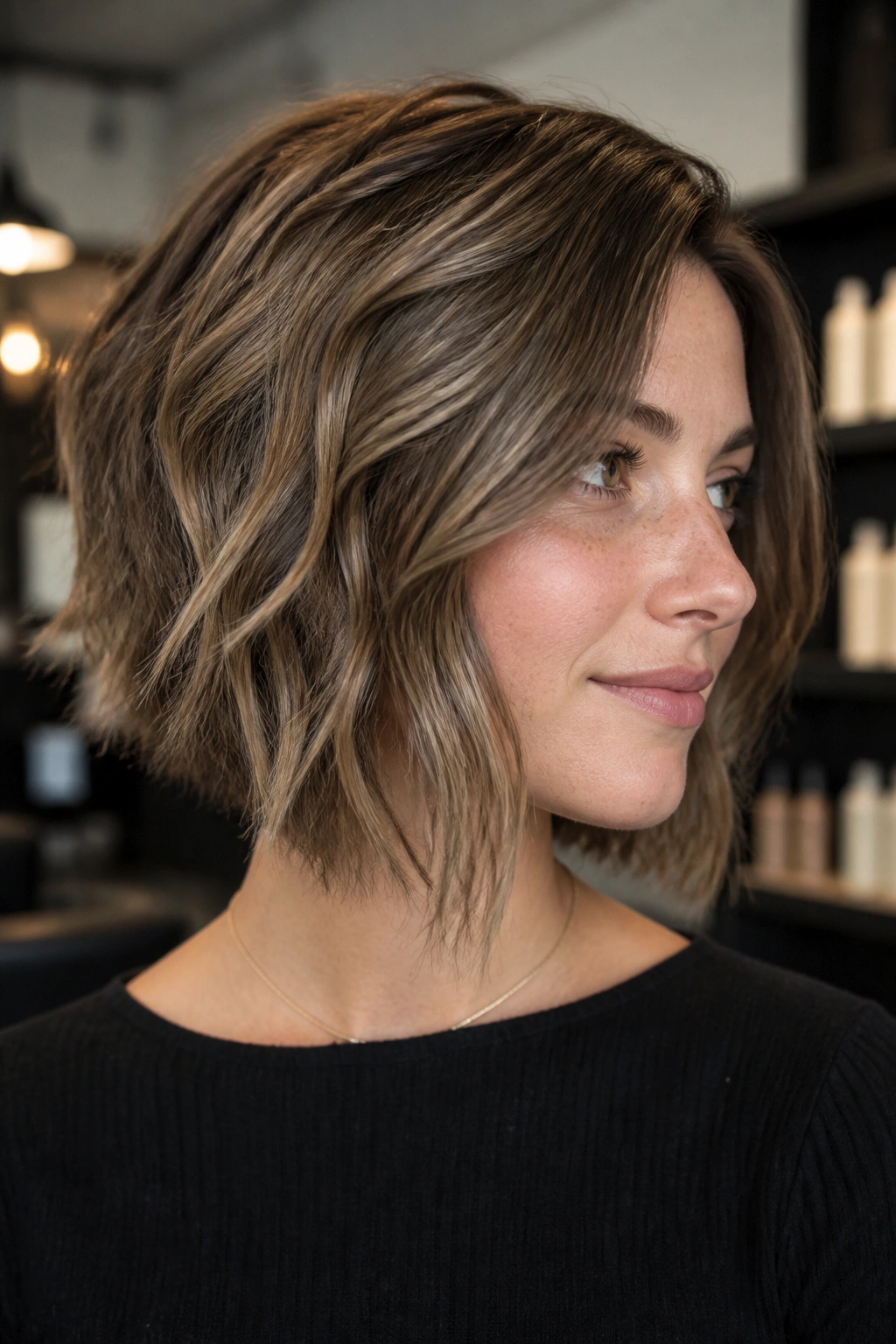
An angled bob gives wavy hair a sharper direction. The back sits a little shorter, the front stays longer, and the whole cut leans forward in a way that makes the wave pattern look intentional.
This shape is useful if your hair flips out at the neck or builds too much volume at the sides. The angle pulls the eye down and forward, which can slim the face a bit while still showing texture. It also works well if you part your hair on one side, because the longer front pieces can tuck, swing, or sit loose without fighting the cut.
The best angled bobs for haircuts for wavy hair women are not extreme. A subtle slope is easier to wear and less likely to look dated. Ask for a soft angle, not a sharp wedge.
If you like a haircut that has a little bite to it, this is a good one.
11. U-Cut for Long Waves
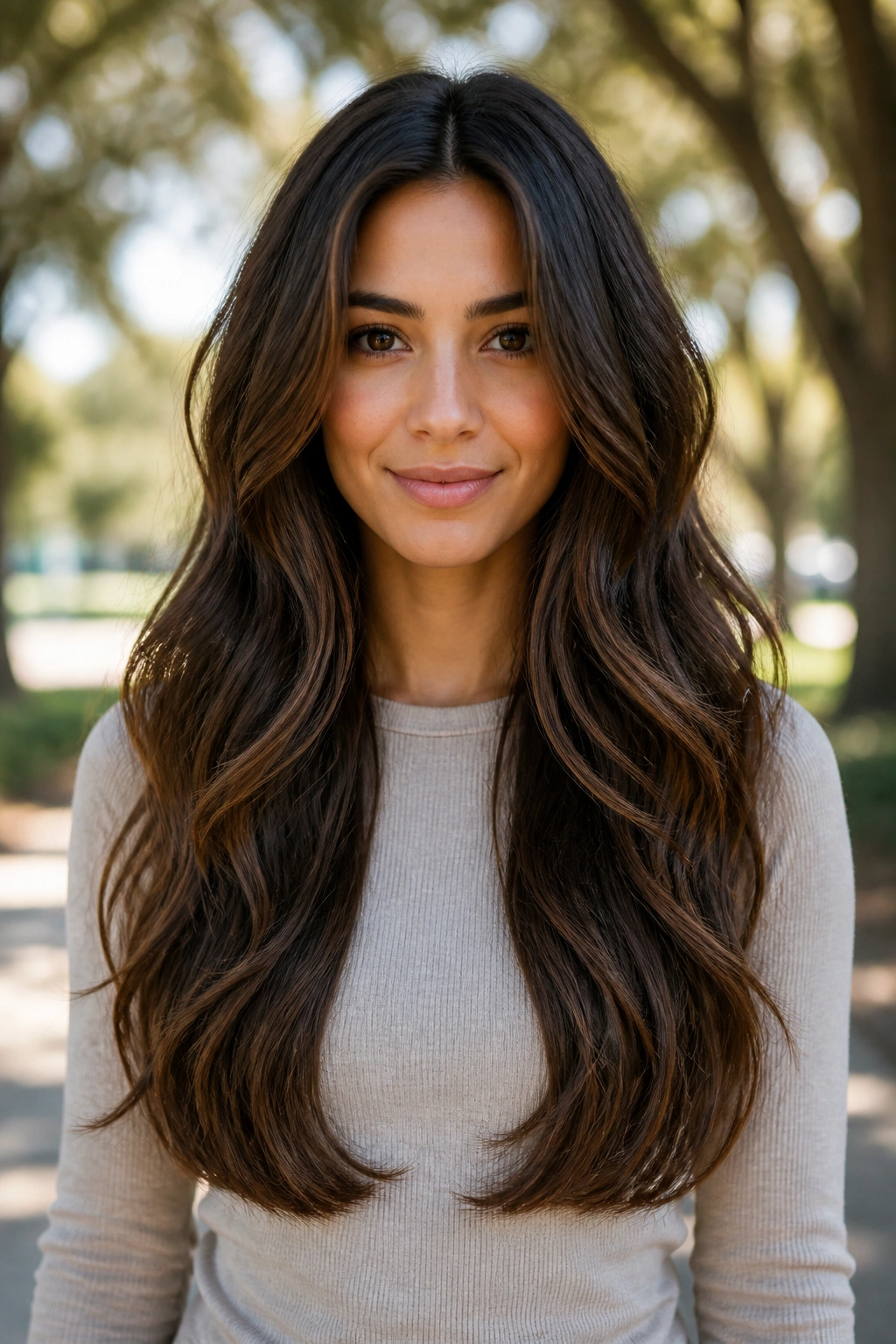
Want long hair without that flat curtain effect? The U-cut is the move. It keeps the center longest and rounds the sides slightly shorter, so the back reads as a gentle curve instead of a hard line.
Where the “U” Matters
That soft curve helps long waves fall in a more natural way. The ends do not all line up at the same point, which means the hair feels lighter and moves more freely when you walk. It also makes half-up styles look nicer because the longest section sits in the middle rather than all across the hem.
A U-cut is a good answer if you love long hair but hate when it hangs like a sheet. It keeps the length, yet the shape still has some life in it. Ask for the curve to stay subtle if your hair is fine; a deep U can thin the sides more than you want.
It is a quiet haircut. Nothing flashy. Just practical and flattering.
12. Modern Mullet With a Softer Back

A modern mullet on wavy hair is a lot softer than the old version people picture. The top and sides stay shorter for lift, while the back keeps more length, so the shape moves instead of sitting in one block.
This cut can be brilliant on thick waves that need room to breathe. It gives the crown some height and keeps the nape from getting too bulky. The front usually carries more face-framing, which helps the whole thing feel wearable instead of costume-y.
If you are nervous about going full mullet, ask for a gentle version with a longer back and softer side sections. The goal is not shock value. The goal is texture that behaves better than a standard layered cut.
It takes confidence, sure. But it also takes a good stylist who knows when to stop cutting.
13. Face-Framing Layers That Start at the Cheekbones
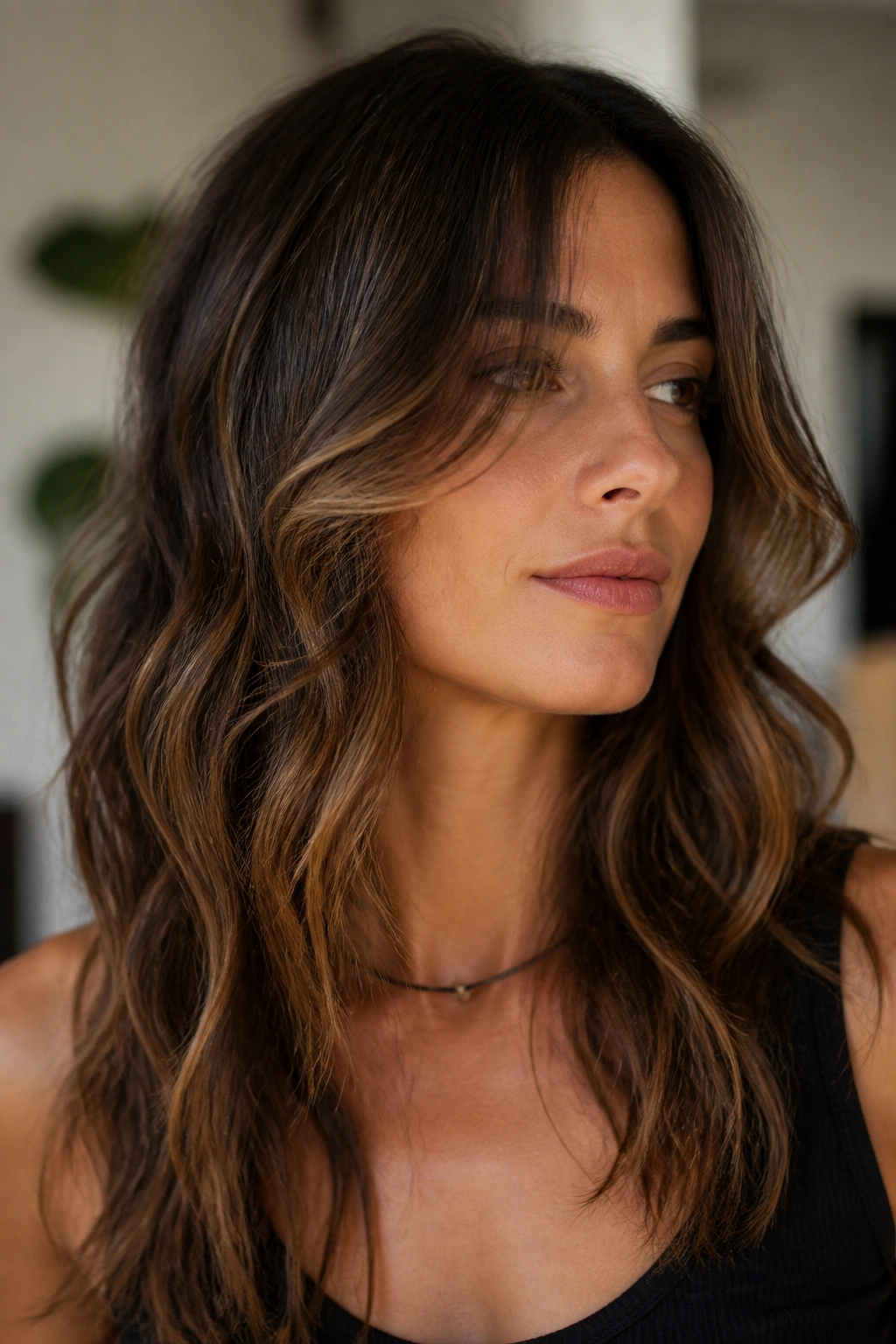
Face-framing layers are the haircut equivalent of opening a window. They let the front of the hair move around the face instead of hanging there like a heavy border.
On wavy hair, these layers can be enough to change the whole mood of a cut without sacrificing length. If your waves tend to flatten around the cheeks, starting the shortest pieces at the cheekbones or just below them pulls the shape upward. That keeps the eyes and cheek area open, which is often more flattering than a single heavy curtain of hair.
The nice thing here is restraint. You do not need a big chop. You need the right pieces in the right place. If the layers begin too high, the hair can look broken up. Too low, and the front stays heavy.
This is one of those cuts that looks subtle in the chair and better every time the hair moves.
14. Chin-Length Box Bob
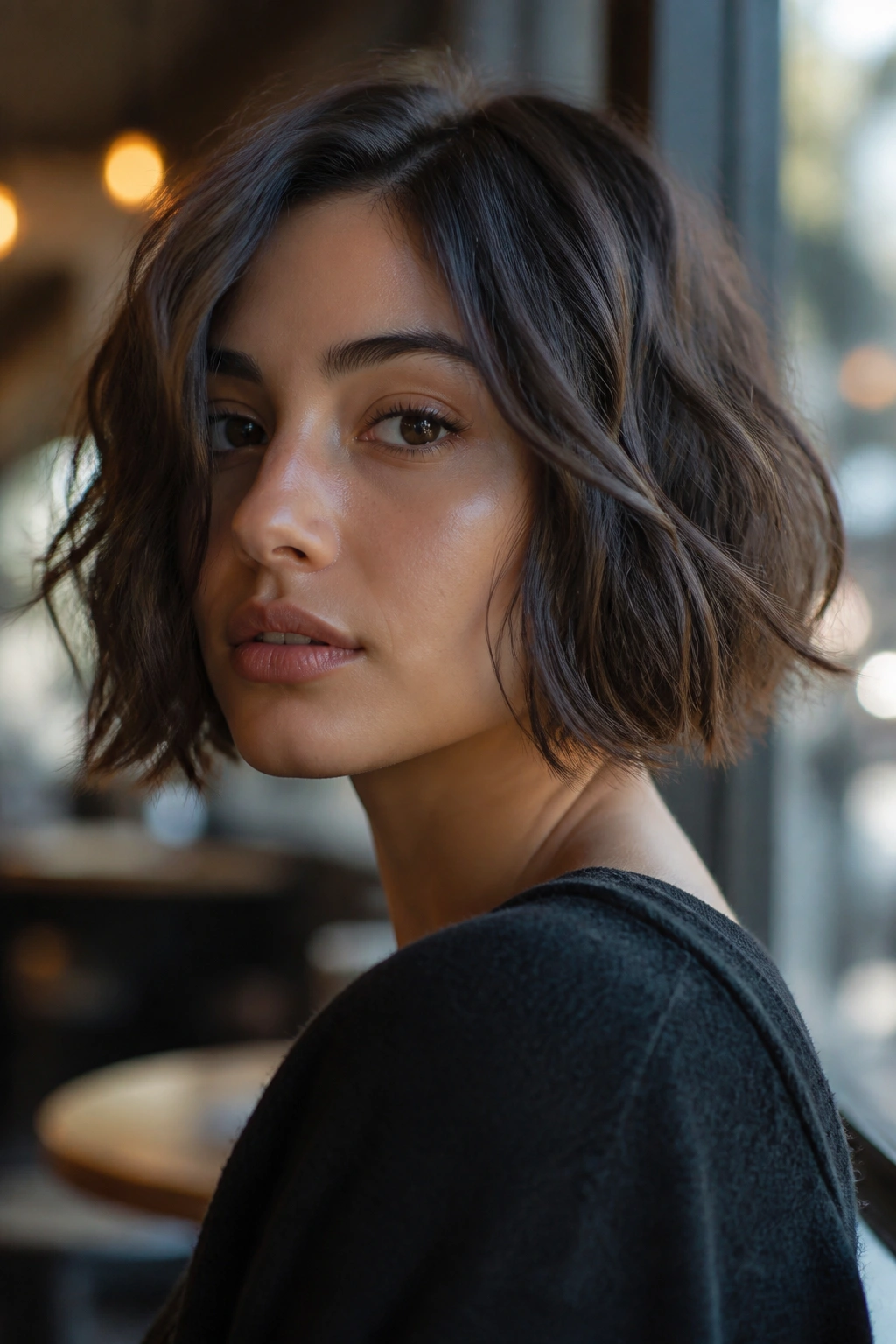
A chin-length box bob is sharper than a French bob and more geometric than a classic bob. The sides tend to hit close to the jaw, which gives wavy hair a crisp outline and a little attitude.
That shape can be especially good if your face is narrow or oval and you want something with a stronger edge. The wave adds softness, so the boxy structure does not feel harsh in the same way it might on straight hair. It’s a neat contrast. Sharp outline, loose texture.
Good Fit for This Cut
- Wavy hair that holds shape well
- People who like a strong jawline line
- Medium density hair with some body
- Anyone who wants a polished finish with less length
If your hair flips outward at the ends, ask for a tiny bit of internal weight so the bob does not flare like a bell. That one detail can save you a lot of styling trouble.
15. Razor-Cut Lob With Feathered Ends
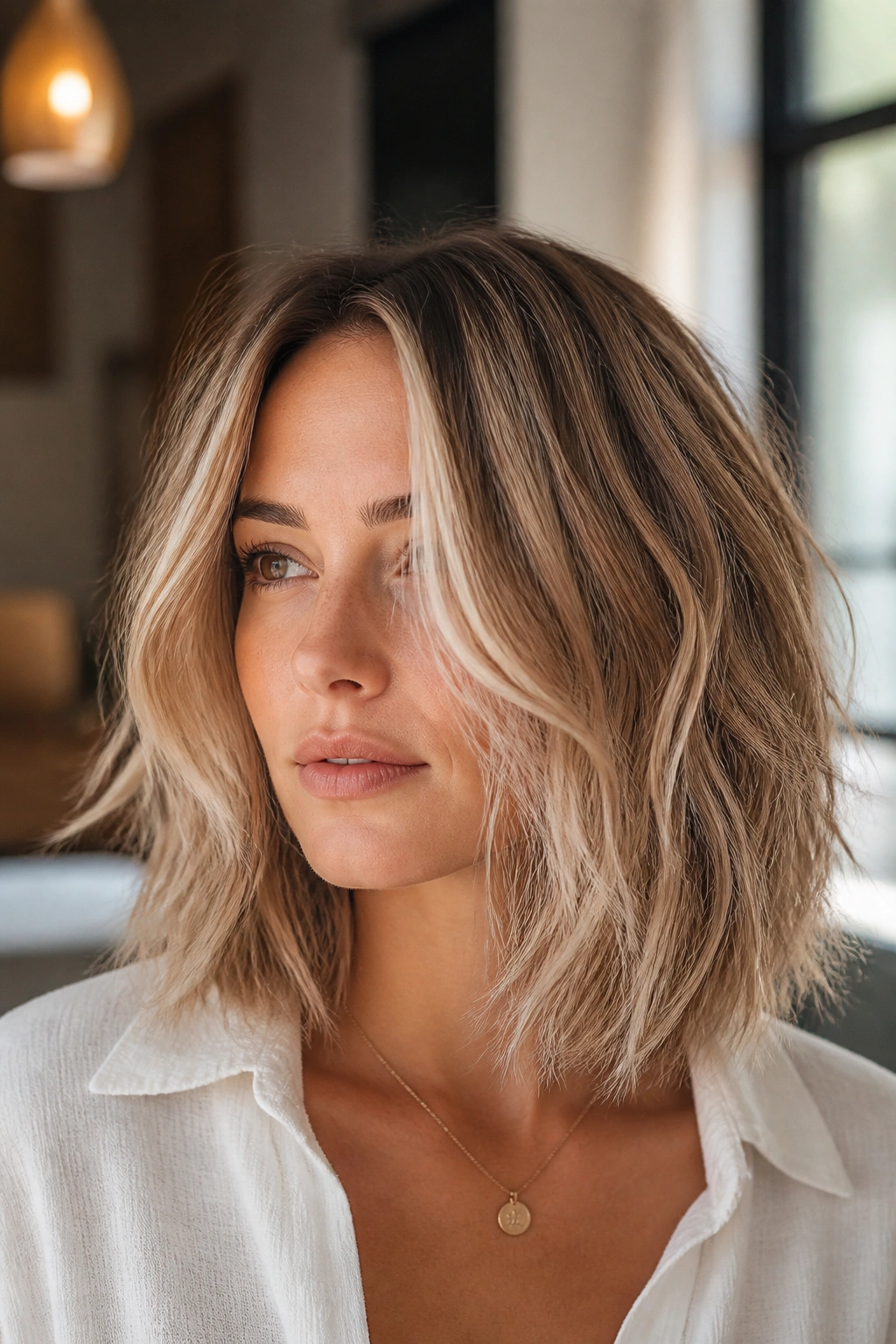
A razor-cut lob has a softer, more feathery edge than a blunt lob. The ends blur a little instead of stopping all at once, and that can make wavy hair look lighter and more fluid.
This cut is useful for coarse waves that feel bulky when they are all one length. A razor can remove that heaviness without making the layers look obvious. The finish is less clean than a scissor-cut lob, so it is not for someone who wants a crisp line. It is for someone who wants motion.
The one warning: if your hair frizzes easily, too much razor work can make the ends look fuzzy. A light touch is better than an aggressive one. Ask for a soft hand and small sections.
It is a little undone. That is the charm.
16. Shoulder-Length Cut With Hidden Internal Layers
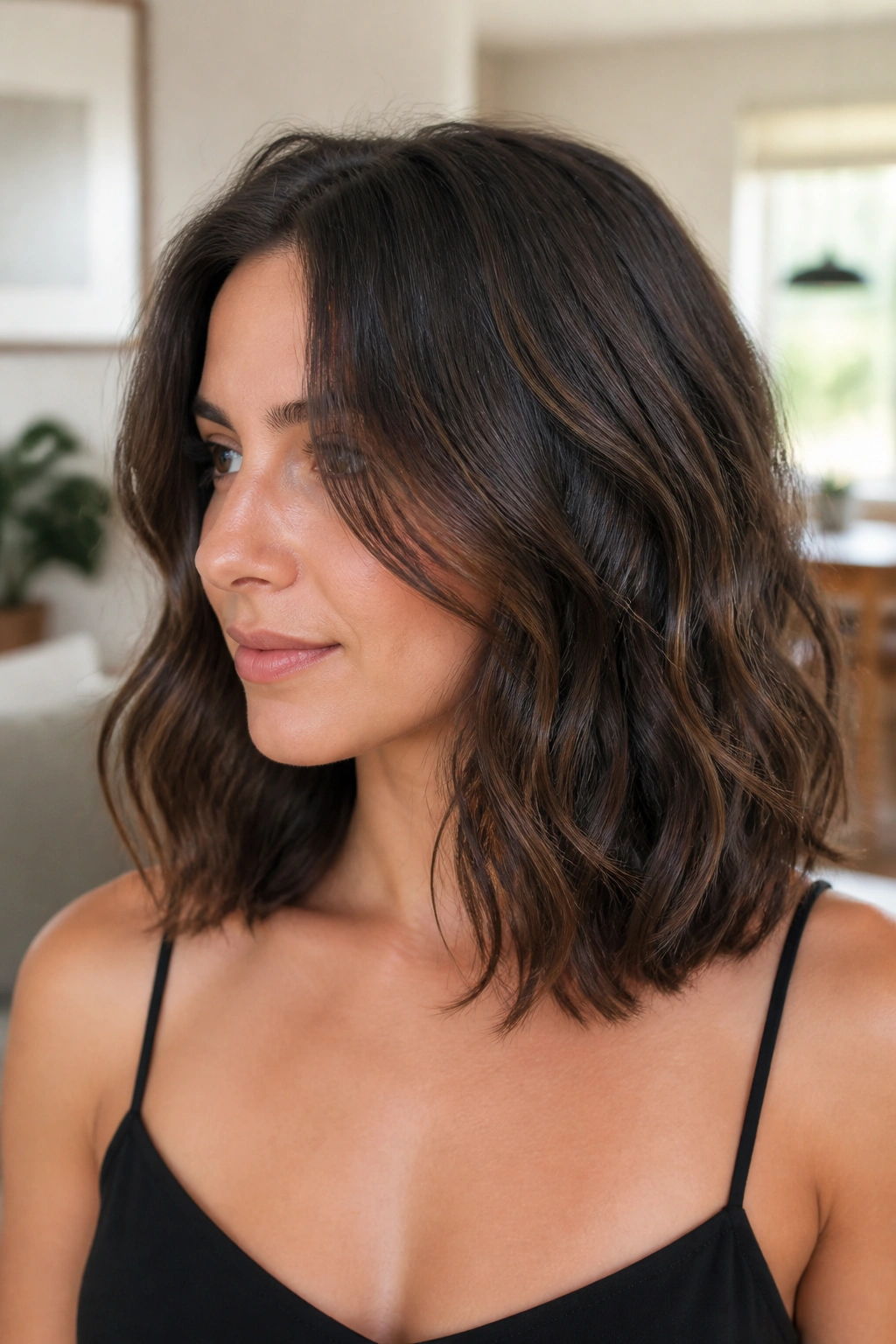
Hidden internal layers are the sort of thing people do not notice until the haircut starts behaving better than their last one. The outside line stays fairly smooth, but the inside loses weight where it needs to.
What the Layers Actually Do
They stop the hair from puffing out in the middle and help waves stack more neatly. That matters a lot if your hair is thick but you do not want the look of obvious steps. You get movement without showing every cut line.
Who It Helps Most
- Medium-thick waves that feel bulky
- Hair that flattens at the crown
- Anyone who wants to keep a cleaner outline
- People who avoid dramatic layers
This is a very good compromise cut. It gives the hair room to move while keeping the overall shape calm. If you have spent years asking for “just a trim” and ending up with a triangle, this is the fix worth trying.
17. Asymmetrical Bob With a Longer Front
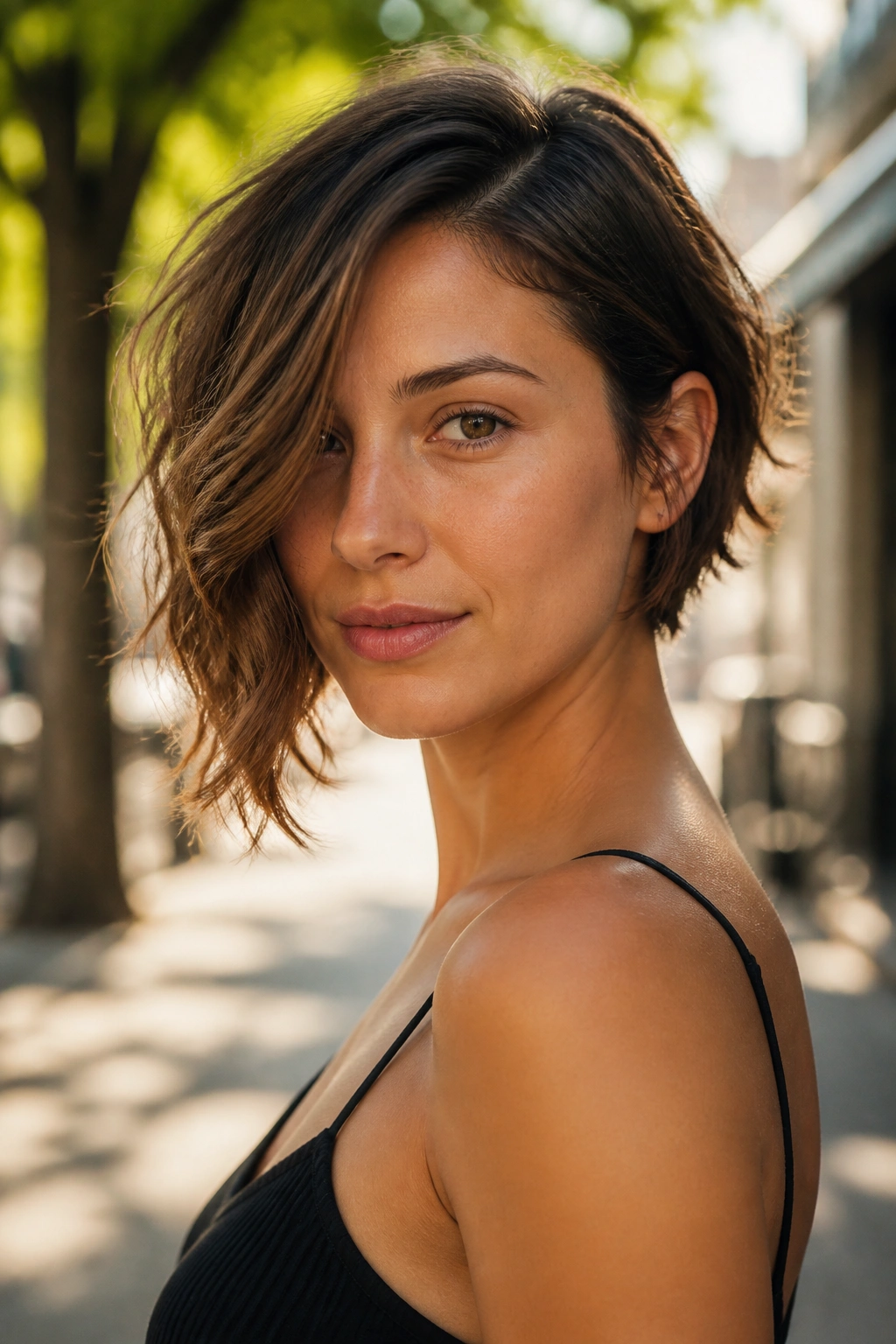
An asymmetrical bob makes waves look deliberate fast. One side sits a little longer than the other, which gives the haircut a point of view. That small imbalance can be enough to wake up a shape that would otherwise feel ordinary.
This cut works especially well with a side part. The longer side can skim the jaw or neck, while the shorter side opens the face and keeps the whole style from feeling heavy. On wavy hair, the difference in length also helps the texture fall in an interesting way rather than evenly on both sides.
You do need some confidence for this one. A very subtle asymmetry is easier to wear, especially if you are not into hair that feels dramatic all the time. Ask for the difference to be mild, not severe.
It is a smart choice if you like structure but still want texture to be the main event.
18. Long Wolf Cut With Airy Ends
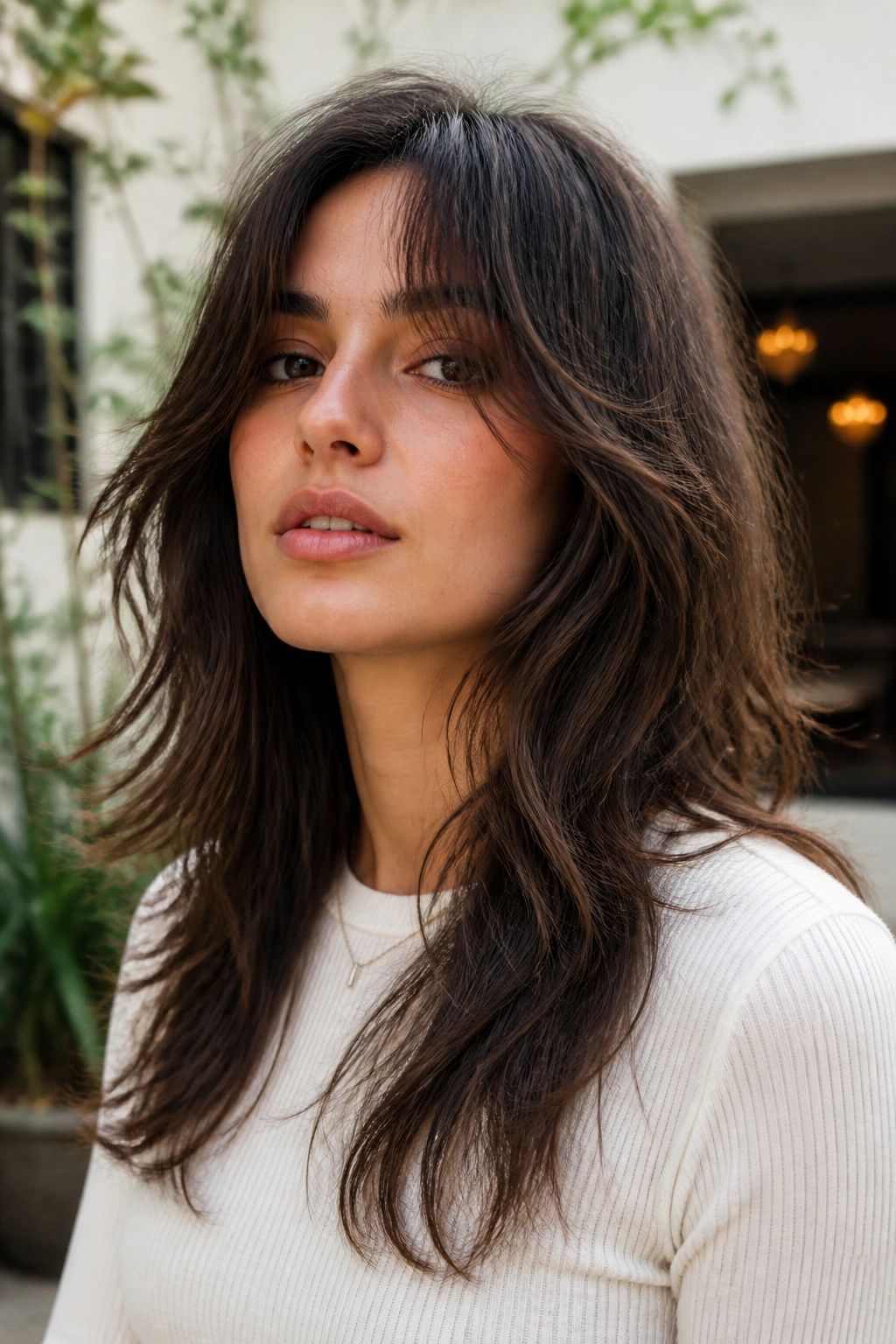
If you like the wolf cut but do not want to lose much length, the long version gives you a softer landing. The crown still gets lift, the middle still gets movement, and the ends stay long enough to feel feminine and versatile.
This is a strong haircut for wavy hair that gets heavy fast. The layers break up density, and the longer perimeter keeps it from looking too spiky. It can be especially good if your wave pattern gets stronger below the ears, because the cut can make that bend show up instead of hiding it under weight.
A long wolf cut is not as tidy as a classic layered cut. That is part of its appeal. It handles air-drying well, and it usually looks better on day two than a stricter style does.
If you want softness with a little edge, this sits in a nice middle ground.
19. Soft Fringe With Light Layers
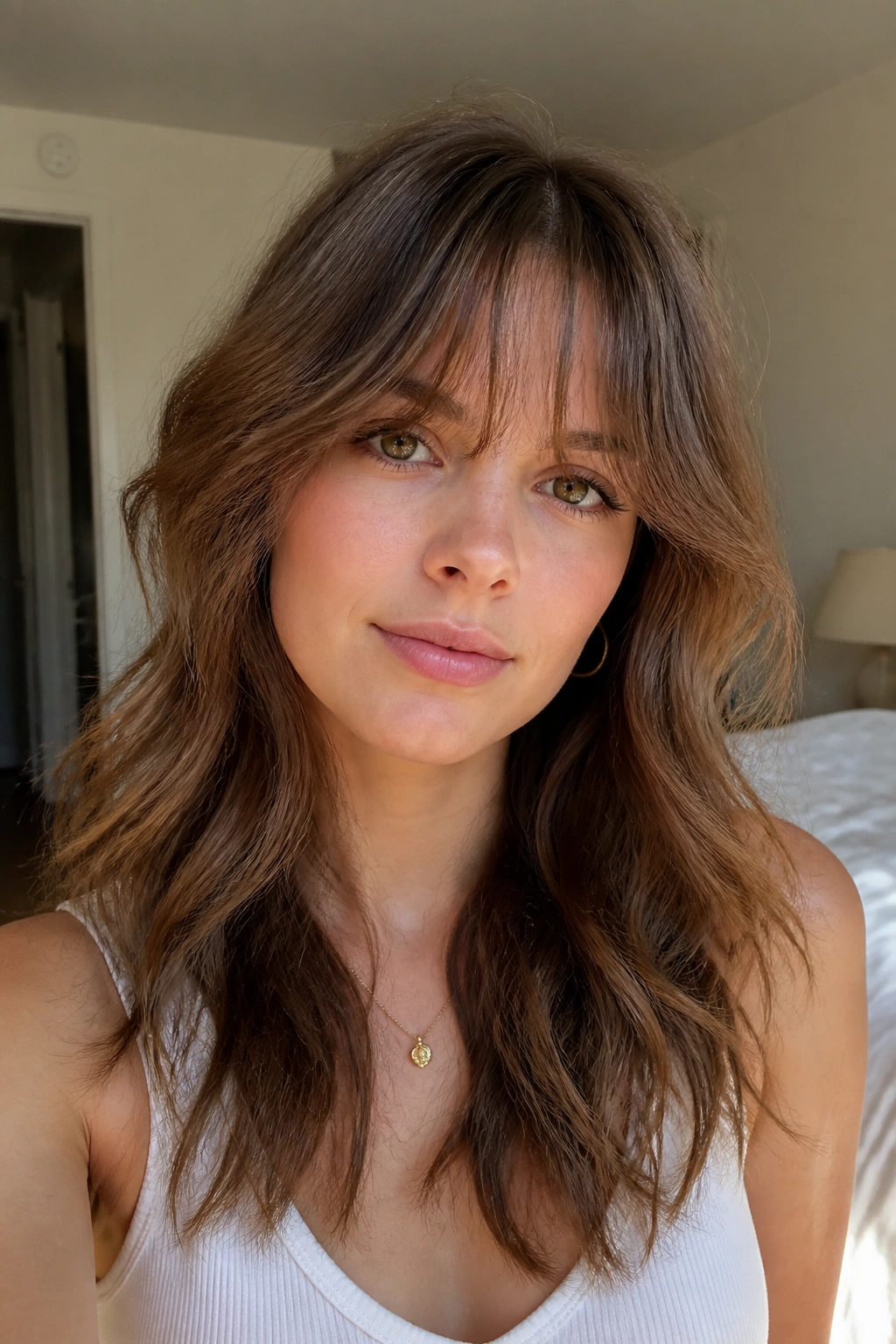
A soft fringe can change the whole face shape of wavy hair. The trick is keeping it light enough that it bends instead of standing stiff or shrinking up too high.
Wavy bangs need room. They usually look best when cut a little longer than you think, because they bounce shorter once they dry. A fringe that lands around the eyebrows when wet may sit higher after air-drying, so a stylist who understands wave shrinkage is worth listening to here. That one detail saves a lot of regret.
The rest of the cut should stay easy and open. Light layers around the sides keep the fringe from feeling like a separate piece stuck on top. If the front is the star, the rest of the cut should support it, not compete with it.
It is a good move if you want to soften a forehead or add interest without losing length.
20. Soft Shag With Long Face-Framing Pieces for Haircuts for Wavy Hair Women

This is the haircut I keep coming back to when someone wants shape, movement, and a little freedom all at once. The soft shag gives the crown lift, the long face-framing pieces keep the cut from feeling too chopped up, and the wavy texture does half the styling work on its own.
For haircuts for wavy hair women, this is one of the easiest compromises to live with. It suits a lot of densities, it does not demand a perfect blowout, and it still looks deliberate when air-dried. The front pieces can start around the cheekbones, which keeps the face open, while the lower layers stay long enough to hold some weight.
I like this cut because it does not force a choice between polished and easy. It can be both. And if you are tired of haircuts that only look good under salon lights, that matters.
The right cut should make your waves look like they belong there. Not trapped. Not overworked. Just shaped well enough that the hair can do its thing without making a fuss.
