



Glasses change the whole shape of a haircut. They sit in the middle of the face, draw the eye straight to the eyes and brows, and suddenly a cut that looked fine on a model starts doing something weird on you — too much width at the temples, bangs that crash into the frames, layers that fight the lines of the lenses. The best haircuts for women who wear glasses don’t hide the glasses. They make room for them.
That’s the part people skip. They think about length first, maybe texture second, and only then remember the frames. But eyewear is not a tiny detail. Thick acetate frames act like a second focal point. Wire frames do the opposite. Cat-eye shapes pull the eye upward. Round glasses soften edges that a sharp haircut might sharpen even more. Hair has to work with that little architecture, not against it.
And yes, some styles are easier than others. A chin-length bob can make frames look intentional instead of accidental. A pixie can leave your glasses doing the talking. A shag can break up heavy lines in a smart way, while a blunt fringe can look gorgeous or annoying, depending on exactly where it lands. The difference is usually a half-inch. Maybe less.
So let’s get practical. These 20 cuts cover short, medium, long, straight, wavy, curly, and coily hair, and each one gives your frames some breathing room instead of crowding them.
1. The Chin-Length Bob That Leaves Room for Glasses

A chin-length bob is one of those cuts that looks clean the second you put glasses on it. The line of the hair sits near the jaw, not the frame, so your eyewear gets to be a feature instead of a fight. That’s the whole trick.
Why It Works With Frames
A bob that hits right at the chin keeps the sides open around the temples. That matters more than people think. Thick frames need space. So do square and cat-eye frames, which already pull a lot of attention upward.
The best version is slightly blunt with soft ends, not helmet-stiff. Ask for the line to skim the jaw, then tuck a little movement into the ends so it doesn’t feel boxy. If your hair is fine, a tiny bit of hidden layering underneath can stop the bob from hanging flat.
- Best for: oval, heart, and square faces
- Works especially well with: thick acetate frames and cat-eye glasses
- Styling note: bend the ends under with a round brush or 1-inch iron for a neat finish
- Watch for: a cut that lands right on the frame arm, because that gets fussy fast
My favorite version: a bob that’s one clean length in front, with just enough softness in the back to move when you turn your head.
2. The Textured Pixie That Lets Your Frames Lead

Do you want the glasses to look intentional? Then a pixie can be a very good move. Short hair makes room for bold frames, and that matters if you wear oversized specs, colorful acetate, or anything with a strong brow line.
The textured pixie is the one that keeps things interesting without adding bulk. Shorter sides keep the ears and temples clear. A little length on top gives you lift, but not so much that the hair falls into your lenses every five minutes. That balance is the entire point.
Use a matte paste or light cream and pinch the top section forward or slightly to the side. You want shape, not a shiny helmet. If your hair is straight and fine, this cut wakes it up fast. If it’s thick, ask for the sides to be taken down close so the shape stays neat around the frames.
It’s also one of the easiest cuts for busy mornings. No wrestling. No blow-dry marathon. Just a quick pass with product, then you’re done.
3. The Collarbone Lob That Plays Nicely With Every Frame Shape
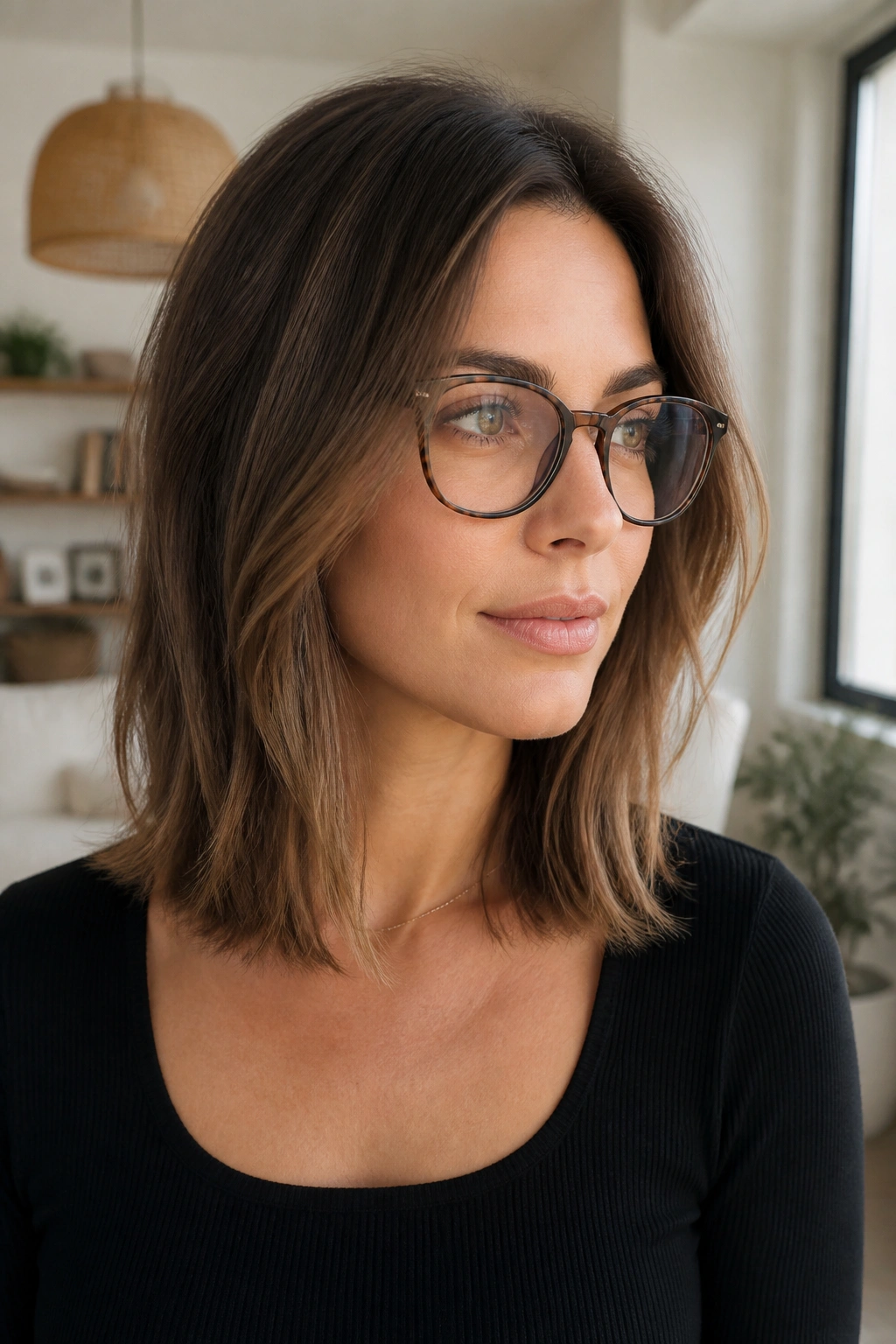
What makes a lob so reliable? It sits in the middle of the whole glasses conversation. Not too short, not too long, not sitting on the arms of your frames, and not so bare that bold glasses suddenly feel too heavy.
This length is the safe bet for people who want movement without losing the option to tuck hair behind the ears. That tuck matters. The second the hair clears the frame, the face opens up. The eyes look bigger. The glasses look sharper. Everything gets easier.
How to Wear It Day to Day
A collarbone lob looks best with a little bend, not poker-straight ends that hang like a ruler. A blowout with a soft curve at the bottom keeps the whole cut from feeling flat. If your hair has a natural wave, let it do half the work.
- Ask for: the longest pieces to graze the collarbone, with subtle face-framing layers
- Works well with: round frames, wire frames, and rectangular frames
- Good styling move: a side part if your frames feel wide; a center part if they’re narrow
- Skip: heavy layers that start at the cheekbone, because they can crowd the lenses
This is the haircut I’d hand to someone who wants low drama but still wants polish. It just works.
4. The Curtain-Bang Shag That Softens Strong Frames

A shag sounds wild on paper. In reality, it can be one of the nicest haircuts for glasses because it breaks up hard lines. If your frames are strong — square, thick, dark, architectural — a curtain-bang shag gives the face some breathing room.
The curtain bangs matter most. They part in the middle, sweep away from the glasses, and draw attention back to the eyes without sitting straight on the frame top. That small shift changes everything. A shag without that soft front can feel messy. With it, the shape becomes easy and flattering.
This cut loves movement. Blow it out with a round brush if you want a cleaner look, or let it air-dry with a curl cream if your hair has wave. Either way, the goal is separation, not bulk. You want the pieces around the cheeks to move away from the frames, not puff into them.
If you’re the type who hates a stiff haircut, this one has personality. A little messy. A little cool. Not precious.
5. The Blunt Bob With a Brow-Skimming Fringe

A blunt bob with a fringe is not shy. It is the haircut you choose when you want the glasses to feel part of the look, not an afterthought. The catch is placement. The fringe has to stop just above the frames or land lightly on the brow, never smack into the top edge of the glasses.
That half-inch is the whole game.
When the cut is done well, the shape feels sharp and expensive without trying too hard. The blunt line around the jaw adds structure, while the fringe frames the eyes in a way that works especially well with smaller or medium-size glasses. If the frames are already big and bold, keep the fringe a touch airy so the face doesn’t close in.
The blunt bob can look severe if the ends are too perfect, so I like a tiny bit of bevel through the bottom. It softens the line and makes the haircut move when you turn your head.
Honestly, this is a strong choice if you like a neat face-framing effect and you don’t mind keeping up with trims. The shape depends on precision.
6. Long Layers for Women Who Wear Glasses
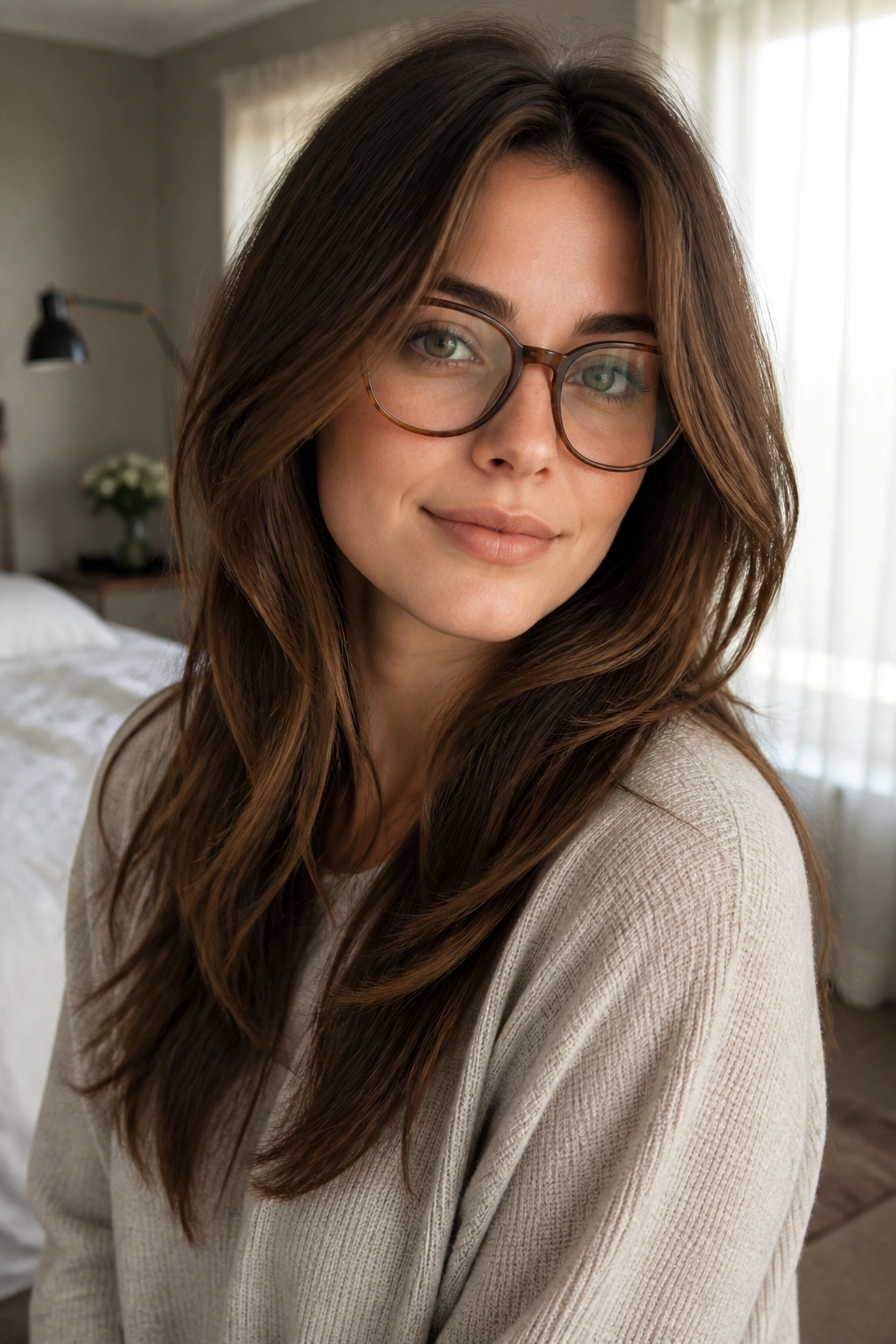
Long hair and glasses can be beautiful, but only if the cut does some work. Straight, one-length hair often drags the eyes down and makes the frames feel heavier than they are. Long layers fix that. They take some weight out near the face and keep the shape from looking flat beside the lenses.
This is where the face-framing pieces matter. Start them around the cheekbone or just below the jaw, depending on your face shape and the width of the frame. Higher than that, and the hair can start competing with the glasses. Lower than that, and you lose the lift around the eyes.
If your hair is thick, long layers stop the ends from feeling bulky against your shoulders. If it’s fine, the trick is keeping the layers long enough that the cut still looks full. No choppy staircase effect. That can get awkward fast.
Best Way to Ask for It
Tell your stylist you want soft layers that open the face without touching the top of the frame. That phrase does a lot of heavy lifting. It keeps the cut focused on balance instead of trend words that sound nice and mean nothing in the chair.
7. The French Bob That Makes a Small Frame Look Intentional

A French bob has a certain attitude. Short, slightly cheeky, and not interested in over-explaining itself. With glasses, it can look especially sharp because the cut sits high enough to leave the frame fully visible, but not so short that the face feels bare.
The usual length hits around the jaw or just above it. That’s what gives the style its clean profile. Add a soft bend at the ends and a little fringe, and the haircut starts to feel lived in rather than costume-y. The best version with glasses is not perfectly polished. It has a touch of movement around the temples and brows, which keeps the glasses from looking like the only detail in the room.
This cut loves smaller, rounder frames. It also works with cat-eye glasses if you want a little lift around the eyes. If your frames are very large, keep the bob slightly longer so the balance doesn’t tip.
There’s a reason people keep coming back to this shape. It’s compact, chic, and a bit French-girl in the least annoying way.
8. The Bixie That Sits Between Soft and Sharp
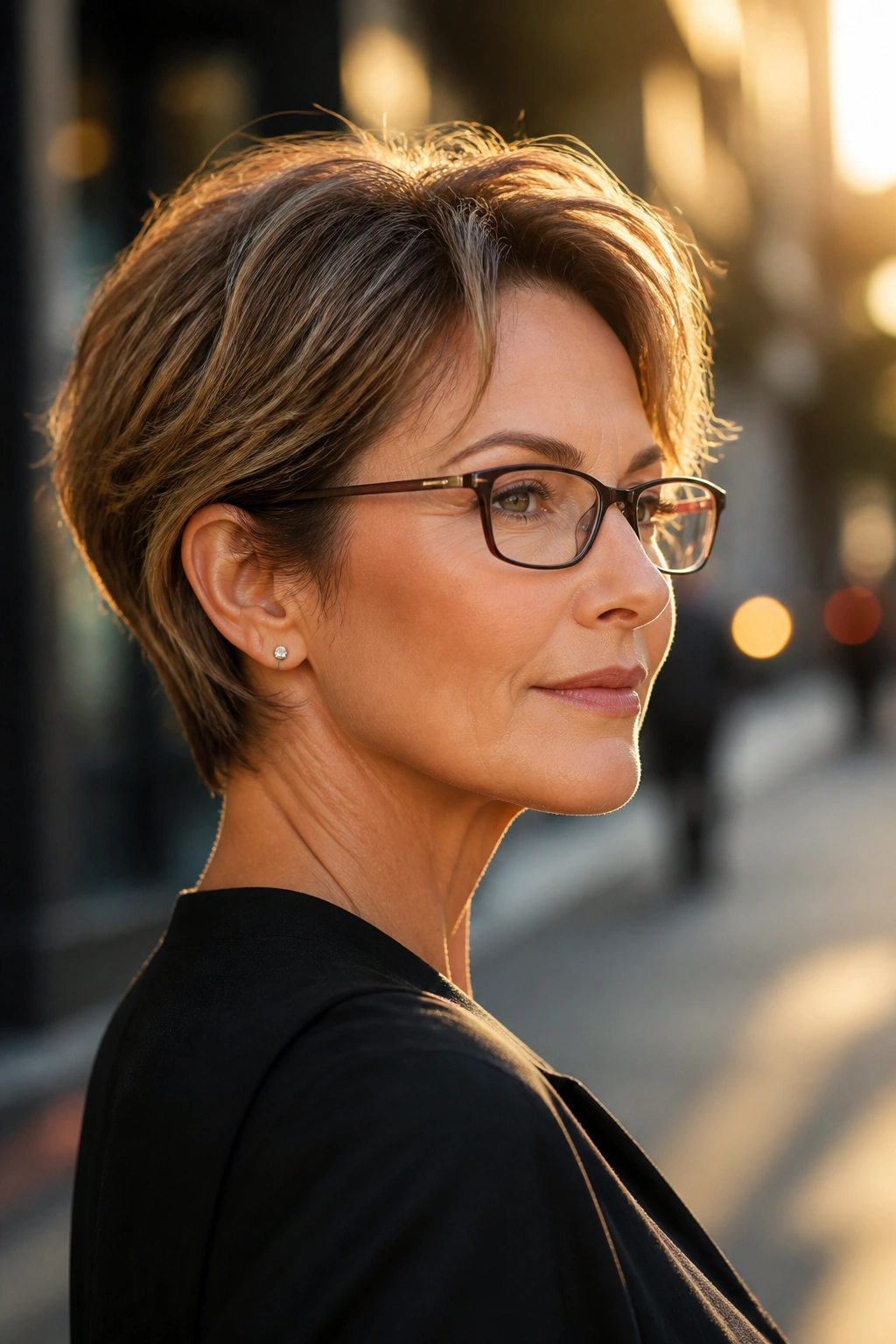
A bixie is basically the sweet spot between a bob and a pixie, and that in-between feel makes it useful for glasses. You get the openness of short hair without giving up too much shape around the face. It’s neat, but not severe.
Imagine a cropped back, a little more length at the crown, and soft pieces around the ears. That outline keeps the frame line visible while still adding enough hair near the face to soften stronger glasses. It’s especially good if your face is petite or if your frames are on the smaller side.
What Makes It Easy to Wear
- The crown can be lifted for height, which helps balance low or wide frames
- The ear area stays clean, so the arms of the glasses don’t fight with hair
- A light styling cream gives separation without crunch
- A side part makes the whole cut feel a bit less sporty
A bixie is a good middle path. Short enough to feel fresh. Long enough to tuck. That combination is hard to beat.
9. The Shoulder-Length Cut With Invisible Layers

Why do invisible layers matter so much? Because they give shape without broadcasting the fact that there are layers at all. That’s useful when you wear glasses, especially if you don’t want the front of your hair to compete with the frame line.
This cut sits around the shoulders and moves in a soft, easy way. Nothing too stacked. Nothing too choppy. The layers are hidden inside the length, which lets the hair fall cleanly while still avoiding that heavy blocky shape you sometimes get from one-length cuts.
If you wear glasses every day, this kind of cut is practical in a very ordinary, useful way. It tucks behind the ears. It works with straight hair. It gives wavy hair enough shape to keep from puffing out at the temples. And it does all that without looking fussy.
What to Ask For
Tell your stylist you want shape at the ends and softness around the face, but no short pieces that stop at the glasses. That keeps the cut from turning into little side wings. Been there. Not cute.
This is one of those cuts that quietly earns its place.
10. The Curly Crop That Keeps Curls Up and Away From the Frames
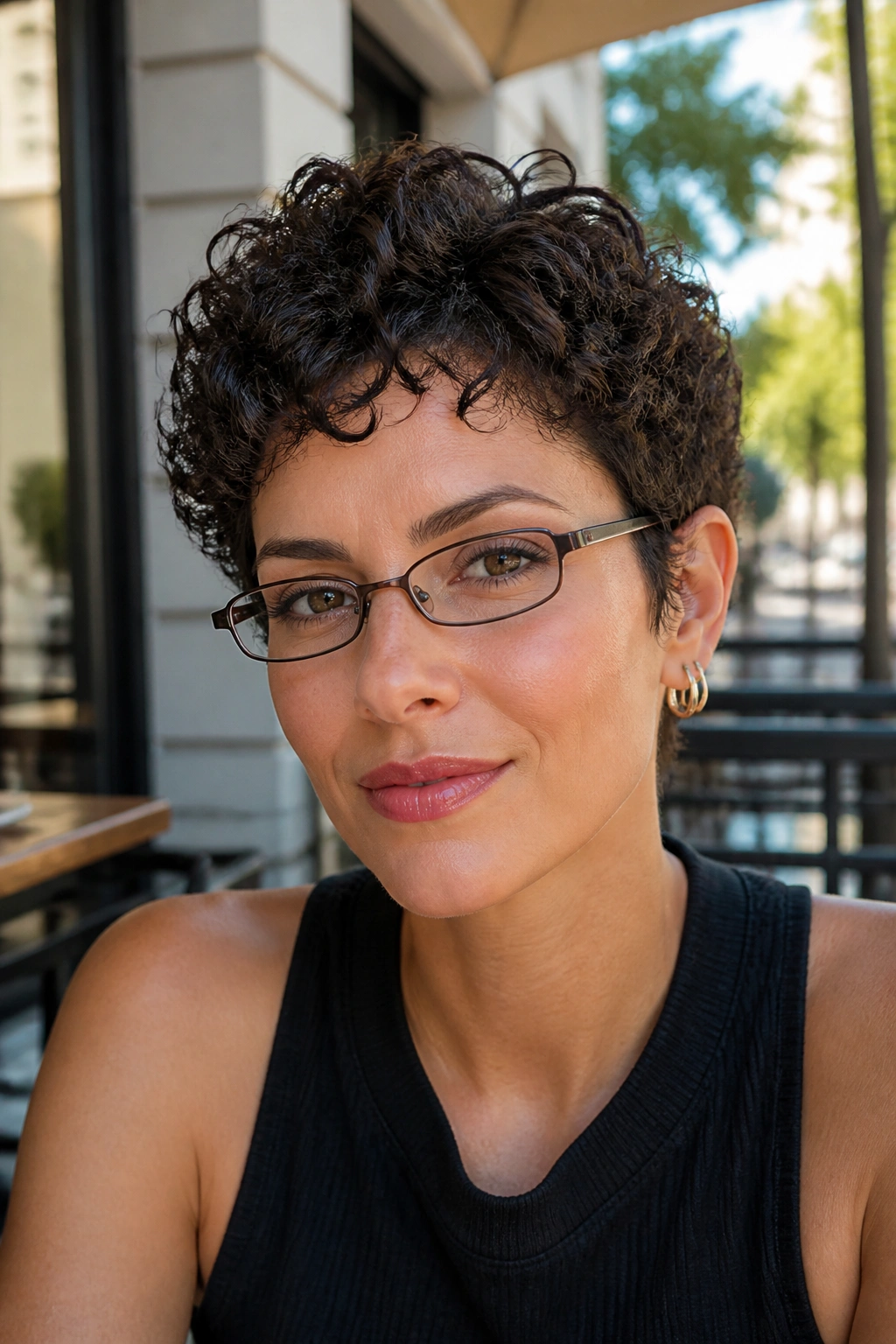
Curly hair and glasses can be a dream when the shape is right. The problem starts when curls pile directly onto the frames and the whole face gets swallowed. A curly crop fixes that by giving the curls a shape that rises above the eyewear instead of dropping over it.
The best version usually keeps the sides neat and the top a little longer, so the curls can stack lightly without expanding too far outward. That matters if your frames are wide or if your hair is dense. You want lift, not a triangle.
Use a curl cream or light gel on damp hair and let the curls form their own pattern. Don’t rake through them too much after they start drying. That breaks the curl clumps and can make the hair frizz into the frame area.
- Great for: naturally curly and coily hair
- Helpful detail: a tapered nape keeps the shape tidy under the glasses arms
- Good frame match: narrow, rectangular, or rimless glasses
- Best result: curl volume sits above the brows, not across them
This cut has a cheerful energy. It shows off the face instead of hiding it.
11. The Asymmetrical Bob That Adds Interest Without Extra Volume

A symmetrical bob is neat. An asymmetrical bob has a little more edge. One side sits slightly longer, which creates a diagonal line that can be very flattering with glasses, especially if your frames are round or square and you want a bit of tension in the shape.
The longer side helps draw the eye downward, which can balance frames that sit high on the face. It also gives you one side to tuck behind the ear and one side to wear forward. That small asymmetry keeps the haircut from feeling static.
I like this cut on people who want structure but not stiffness. The angle gives the hair some character, and the glasses become part of that character rather than a separate piece. If your face is round, the diagonal line can help add length. If your face is long, keep the angle subtle so it doesn’t sharpen everything too much.
It’s not a loud haircut. It just has a little opinion.
12. The Soft Wolf Cut That Keeps Thick Hair from Bulking Around Glasses

A wolf cut can go wrong fast if it’s too shaggy or too short in the wrong places. But a soft version, especially on thick hair, can be a lifesaver for glasses wearers. The reason is simple: it removes weight around the sides while keeping the top and crown airy.
That side weight is the part that usually causes trouble. Thick hair can swell around the frame arms and make the whole face look wider than it is. A soft wolf cut thins that area out and lets the glasses sit cleanly in the middle of the look.
Keep the front pieces long enough to skim the cheekbones, not the lenses. That gives shape without making the frame feel trapped. If the hair is wavy, the cut looks even better when air-dried with a bit of leave-in cream. If it’s straight, a rough blow-dry with your fingers keeps the texture from looking too neat.
This is one of my favorite options for people who want movement and hate bulky hair by the temples. It has some attitude, but the right kind.
13. The Italian Bob That Gives Bold Frames a Proper Partner
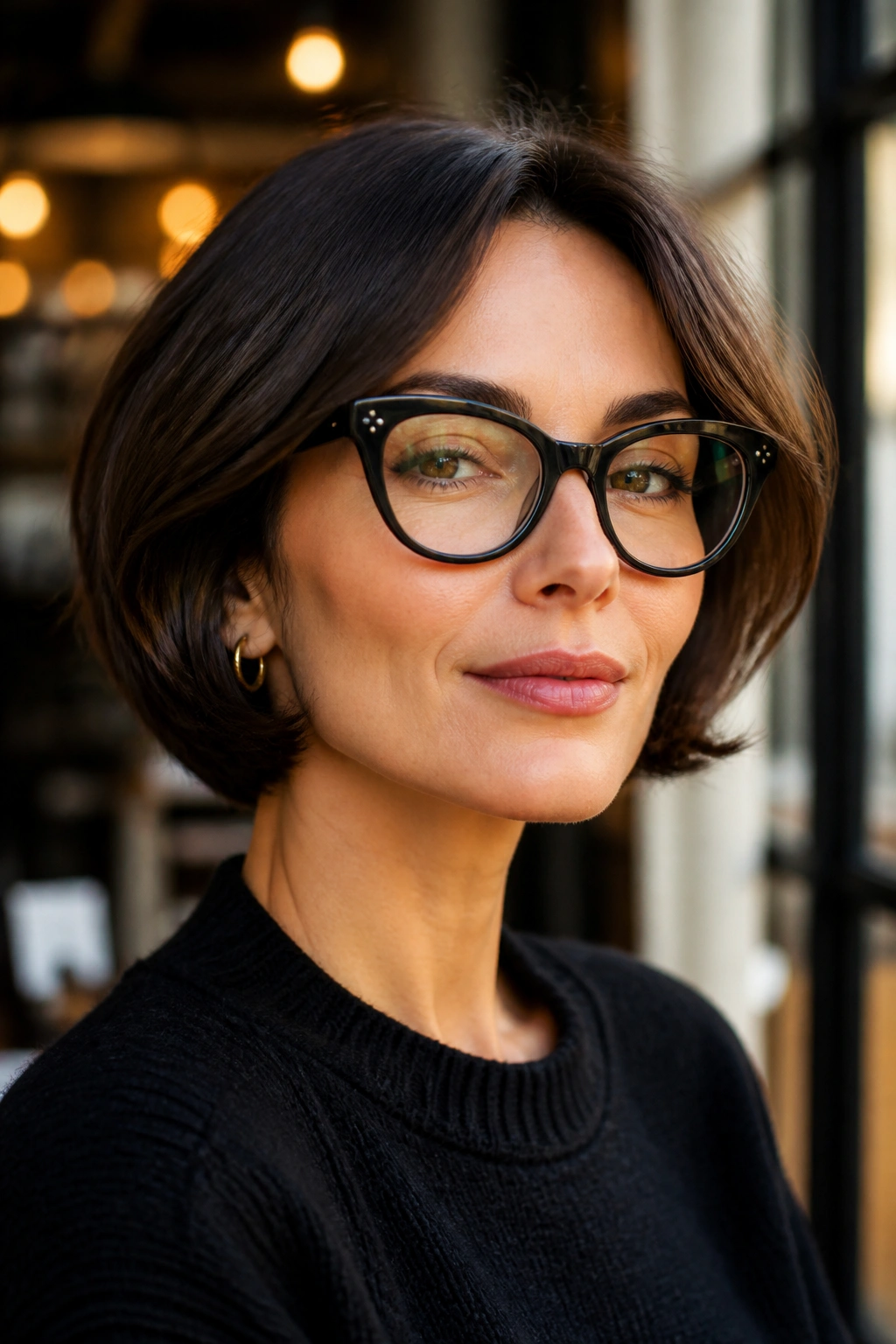
The Italian bob has volume, shine, and a rounded shape that feels a little more dressed up than a standard bob. With glasses, that rounded form can look gorgeous because it echoes the curve of the lenses without copying them too closely.
The cut usually lands between the jaw and the chin, with a soft undercurve that gives the ends a plush finish. That shape works especially well with bold frames, because the hair and glasses both feel deliberate. Neither one looks like an accident.
Best Frame Matches
- Cat-eye frames if you want lift and a touch of drama
- Round frames if you want a softer, more blended look
- Thick black frames if you like strong contrast
- Gold wire frames if you want the haircut to carry more of the visual weight
A little root lift helps here. So does a clean blowout. The style should feel smooth, not flat. If your hair is fine, ask for the round shape to stay light so it doesn’t collapse by midday.
This cut looks especially good when the ears are partly visible. It gives the face a nice open shape without losing the polished finish.
14. The Side-Swept Pixie That Softens Strong Brow Lines
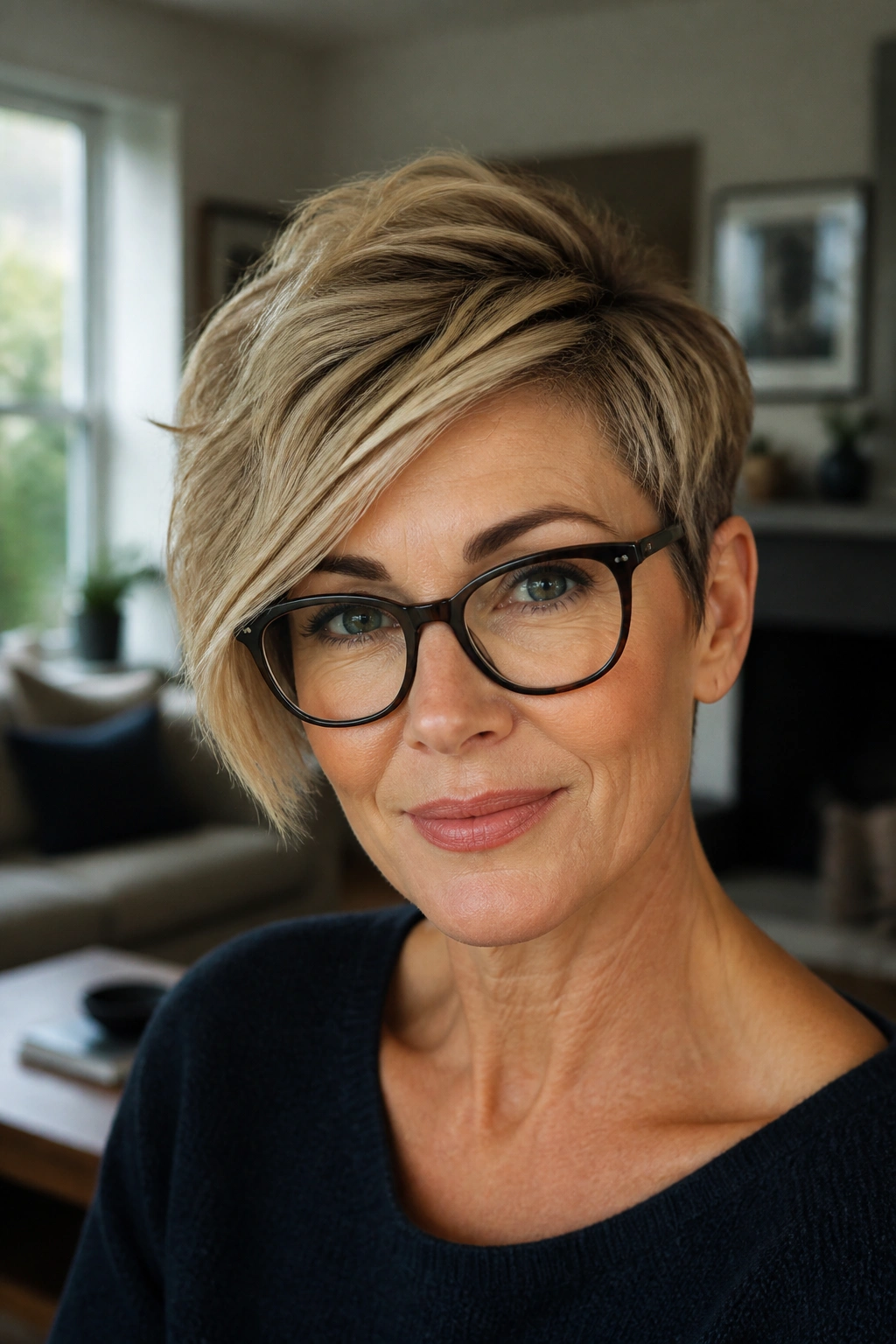
Can a pixie be soft? Absolutely. A side-swept pixie proves it. The longer top section sweeps across the forehead and off to one side, which helps balance frames with a strong upper line or a heavy bridge.
That side movement matters because it breaks up the straight line that some glasses create across the brow. Instead of doubling down on the frame shape, the hair offsets it a little. The effect is gentle, not dramatic. Which is exactly why it works.
This cut suits women who want to show off their glasses and keep styling simple. A little mousse at the roots, a quick blow-dry, and a bit of texture cream through the top is usually enough. If the top gets too long, the sweep can swallow the frame. Too short, and the style loses its shape. So yes, trims matter.
A side-swept pixie feels a little softer than a standard cropped cut. It’s practical. It also has enough movement to keep from looking too severe.
15. The Tapered Natural Cut That Frames Coils Without Crowding Them
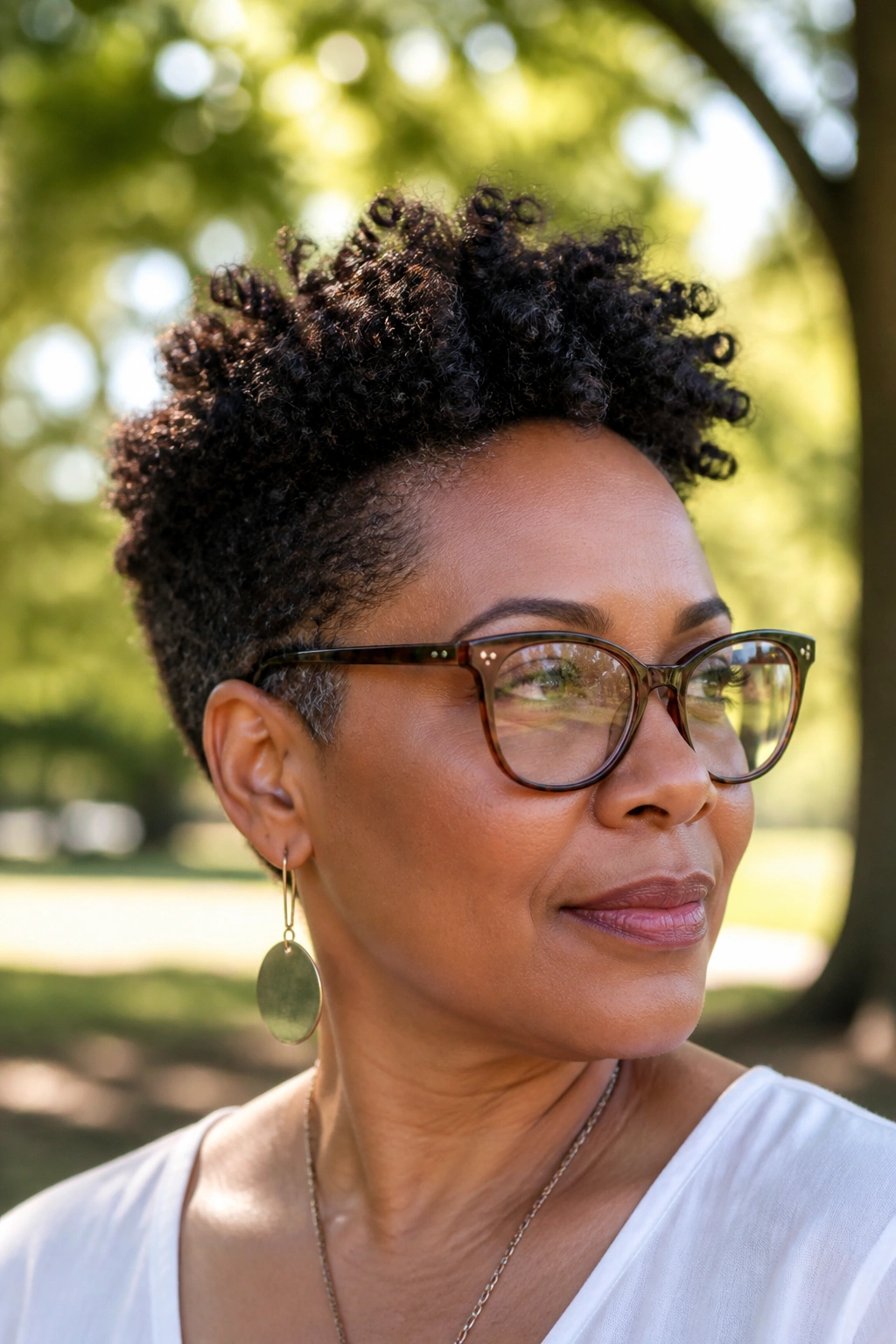
Natural hair and glasses can look incredible together when the shape is tapered in the right places. A tapered cut keeps fullness where you want it — on top, around the crown, sometimes a little at the front — while narrowing the sides so the frames don’t disappear into the hair.
The important part is the temple area. That zone is where glasses can either sit cleanly or get buried. A good tapered shape keeps the hair from ballooning sideways right where the frame arms rest. That’s a small detail, but it changes the whole profile.
Where the Shape Matters Most
Ask for a cut that follows the head shape and keeps the sides neat near the ears. If you like a soft fringe, keep it light and curved so it doesn’t fight the frame top. If you prefer more height, let the crown stay longer and shape the front upward.
Coils, curls, and tight textures carry a lot of natural beauty in a cut like this. The glasses add another frame. The two work together when the silhouette stays controlled. Not flat. Controlled.
This is one of those styles that looks easy only because the shape is doing the hard work.
16. The Sleek Blunt Lob That Makes Small Frames Look Sharp

A sleek blunt lob is the haircut version of a crisp white shirt. Clean. Simple. Fussy in the best way, if you like precision. With glasses, it can look especially strong because the straight line gives the face a clear border without adding extra movement.
This cut is not for people who want a lot of softness near the cheeks. It’s for people who want the frames to stay visible and the hair to behave. If you have small or medium frames, the blunt lob gives them a neat backdrop. If your frames are oversized, keep the lob just below the shoulders so the whole look doesn’t flatten out.
The styling is straightforward: smooth blow-dry, a little serum on the ends, and a center or side part depending on where the frames sit best on your face. Avoid too much bend. The point is clarity.
It’s a sharp haircut. That’s why it works.
17. The Midlength Shag With a Side Fringe
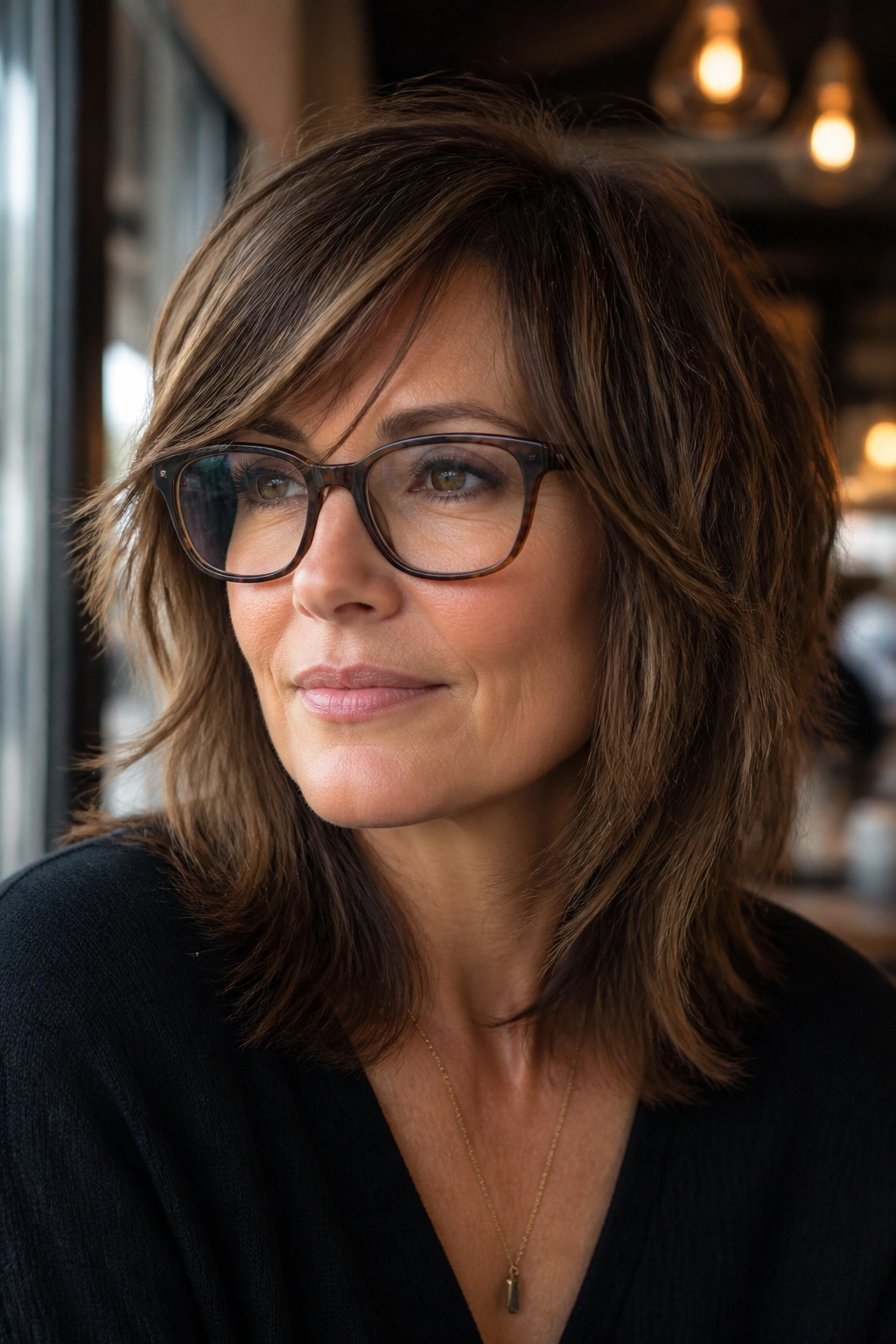
A side fringe can be a very smart move for glasses wearers because it sends the eye diagonally instead of straight across the face. Pair that with a midlength shag, and you get shape, movement, and a little edge without the bangs landing directly on the frames.
This cut feels casual in the best way. The layers keep the hair from sitting heavy around the jaw and cheeks, while the fringe softens the brow area. That makes it especially nice with rectangular or square frames, which can look too rigid on their own.
The shag should stay loose. If it gets too chopped, it can puff at the sides and crowd the glasses. If the ends are too blunt, the whole cut loses its easy shape. That middle ground is where it lives.
I’d call this a good option for wavy hair, but it can work on straighter textures too if you use a bit of grit spray or dry shampoo for lift. A little mess is part of the charm.
18. The Rounded Bob That Keeps Thick Hair Under Control
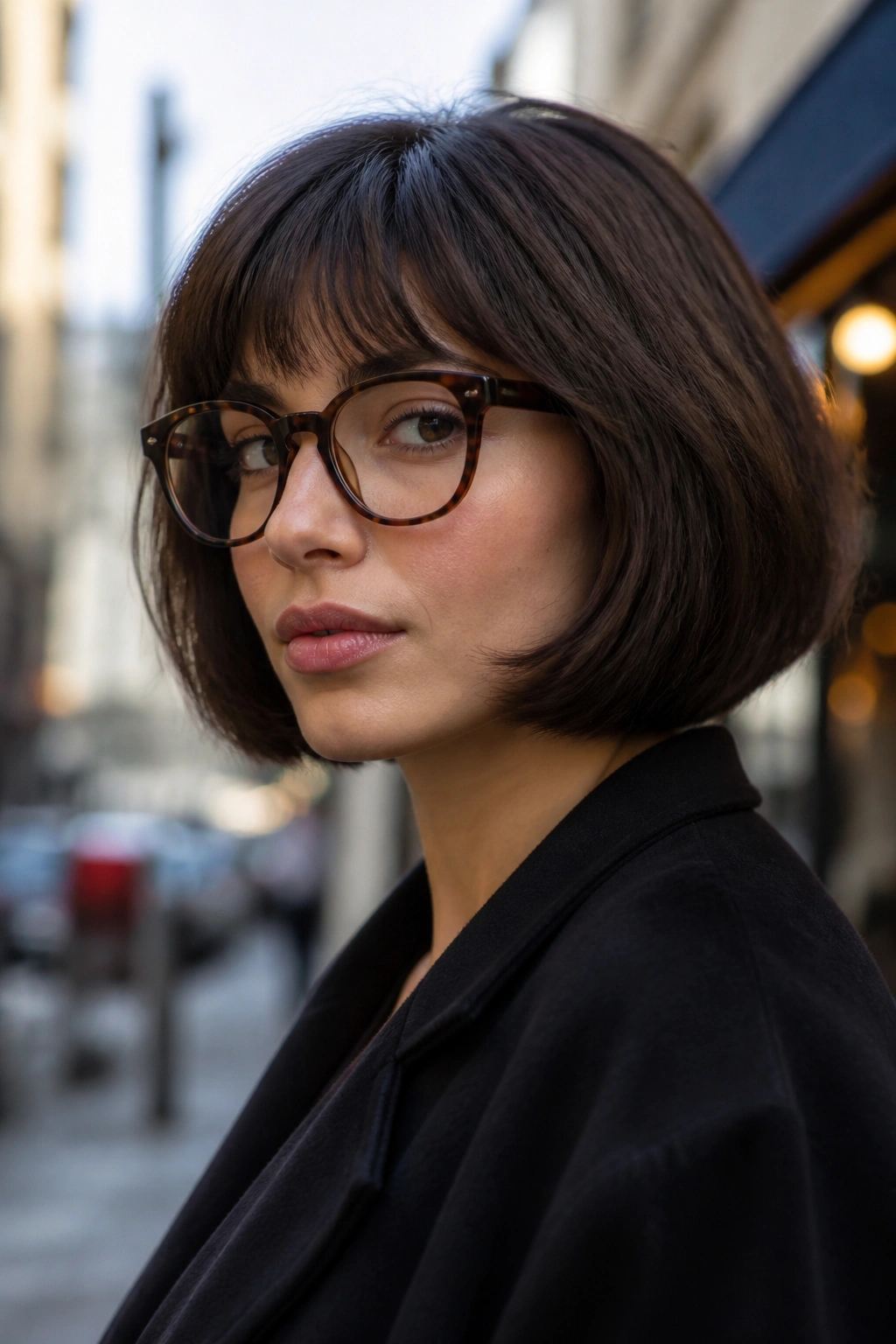
Does thick hair need to be shorter to work with glasses? Not always. But it does need shape. A rounded bob gives that shape without letting the hair jut out at the sides like a triangle. That’s the real win.
The rounded outline follows the curve of the head and softens the edges around the temples. It’s especially useful if your glasses are wide or if the frame arms sit low. Instead of the hair pushing out against the glasses, the cut nestles in closer to the head.
What to Tell Your Stylist
- Keep the bob at the jaw or slightly below it
- Remove bulk underneath without making the ends wispy
- Leave enough weight at the perimeter so the shape stays smooth
- Avoid too much texture at the temples, where the frames already need space
This is one of those cuts that looks calm. Not plain. Calm. Thick hair often needs a clear shape more than it needs more layers, and this one gives it exactly that.
19. The Long Blunt Cut With Airy Ends
Long hair does not have to mean heavy hair. A long blunt cut with airy ends keeps the length but removes the drag that can make glasses feel swallowed by the overall look. The blunt base gives you a clean line, while the airy ends stop it from feeling too dense.
This cut works especially well if you like to wear your hair down most days and still want your frames visible. The length stays below the glasses, which means the face stays open. If you want even more separation, tuck one side behind the ear or use a soft bend around the front pieces.
I like this on straight hair, but it can be beautiful on wavy textures too. The key is not to overload it with layers. Too many shorter pieces can hover around the frame line and create visual clutter. Keep the outline long and tidy, then let a few airy ends do their work.
It’s a low-drama option. Which, honestly, is a relief sometimes.
20. The Mid-Length Cut That Gives Glasses Space
If you want one cut that sits in the middle of all the hard choices, this is it. A mid-length cut with soft face-framing layers gives your glasses room, keeps styling manageable, and does not lock you into one look every morning.
The length should land somewhere between the collarbone and just below the shoulders. That range works because it stays far enough from the frame line to avoid crowding, but short enough to keep the overall shape from feeling heavy. Add face-framing pieces that start below the glasses, and the whole haircut opens up.
This is the cut I’d suggest to someone who wears glasses every day and wants options. You can wear it straight. You can add a bend. You can tuck it back. You can pin one side. It gives you all those choices without demanding a lot in return.
Ask your stylist to keep the front pieces away from the temples and to leave enough weight at the ends so the shape doesn’t fray. If your frames are bold, this kind of haircut is one of the smartest ways to balance them. It lets the glasses do their job, and that’s usually the right move.
If you’re stuck between short and long, this is the one I’d send you toward first.
