



Short haircuts for oval faces can be the easiest styles to wear, but that does not mean they’re all equal. An oval face gives you room to play with length, fringe, and texture, yet the wrong cut can still flatten the crown, widen the cheeks, or make the jaw look heavier than it is.
That’s the part people miss. They hear “oval” and assume the face shape does all the work.
It doesn’t. Hair density, curl pattern, and where the cut puts weight matter just as much. A fine-haired oval face usually needs lift and a bit of movement. A thick or curly oval face usually needs shape control and smarter layering, not more bulk.
The good short cuts do one simple thing well: they place the eye where you want it. Some sharpen the jaw. Some soften the forehead. Some make cheekbones look more defined than they already are. The classic pixie is the cleanest place to start.
1. Classic Pixie Cut
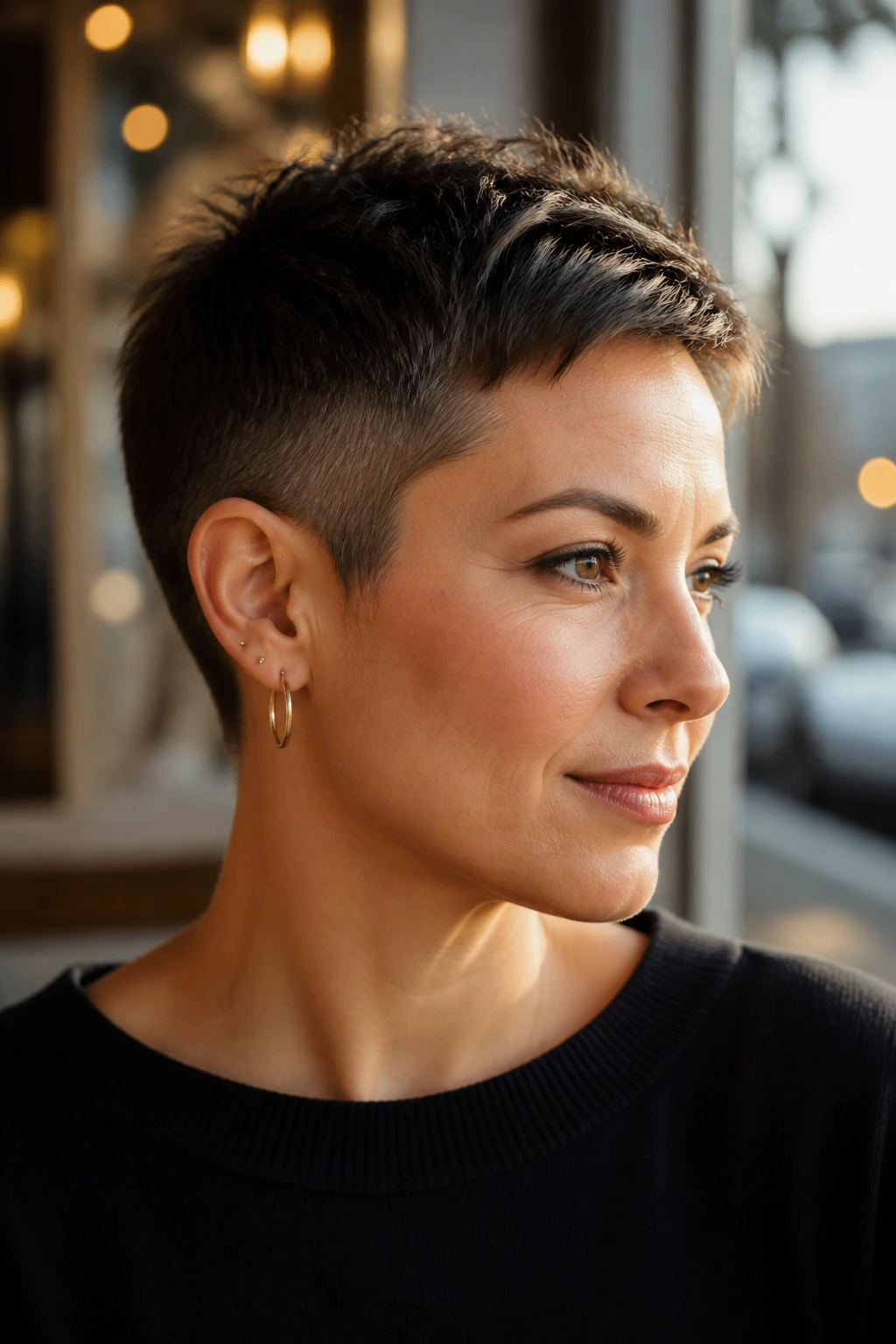
A classic pixie cut is short, neat, and honest. No tricks. The sides and nape stay close, while the top carries just enough length to give the cut some life, usually around 1.5 to 3 inches.
Oval faces wear this shape well because the proportions are already balanced. You do not need a lot of visual correction. You just need clean lines and a little movement near the crown so the face does not look over-framed.
This is one of those cuts that looks polished even when you barely touch it. A small dab of matte paste, rubbed through dry hair, is enough to break up the top and keep the finish from looking helmet-flat. If your hair is fine, ask for a softer taper at the nape; if it’s thick, ask for a bit more texture through the top.
It does need upkeep. Every 4 to 5 weeks, sometimes sooner if your hair grows fast, the shape starts to lose its edge. That is the price of a very short cut. Worth it, though, if you like hair that feels crisp and out of the way.
2. Long Pixie Cut for Oval Faces
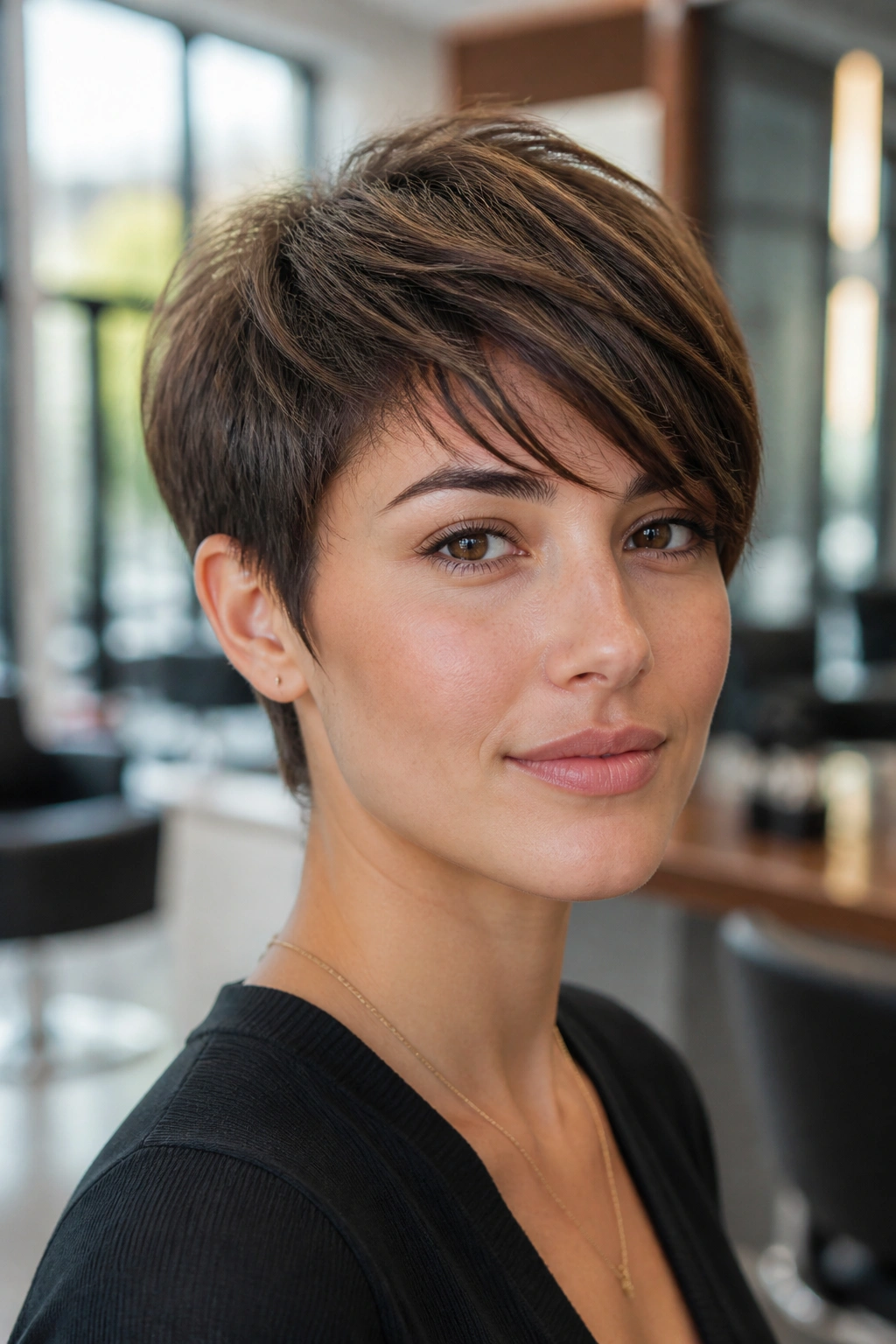
Why does the long pixie show up so often on short haircuts for oval faces? Because it gives you the ease of a crop without taking away all your styling room. The extra length on top, and usually around the fringe, makes the cut feel softer and less severe.
How to Ask for It
Tell your stylist you want 2 to 4 inches on top, a side-swept fringe that can graze the eyebrow, and a tapered nape that doesn’t leave a heavy block at the back. That wording matters. A long pixie can swing too close to a mushroom shape if the sides are left too full.
- Keep the top long enough to tuck behind one ear.
- Ask for soft texture, not choppy chunks.
- Avoid bulky sides if your hair already feels wide at the cheek.
- If your hair is wavy, leave a little extra length so the bend shows.
The best part is the grow-out. A long pixie usually grows into a soft crop instead of going awkward all at once. That makes it a calmer choice if you want short hair but hate frequent salon trips.
Use a light cream or a tiny bit of wax. Too much product kills the shape fast. And that’s the whole charm of this cut: it looks easy, but it’s quietly doing a lot of work.
3. French Bob With Soft Ends
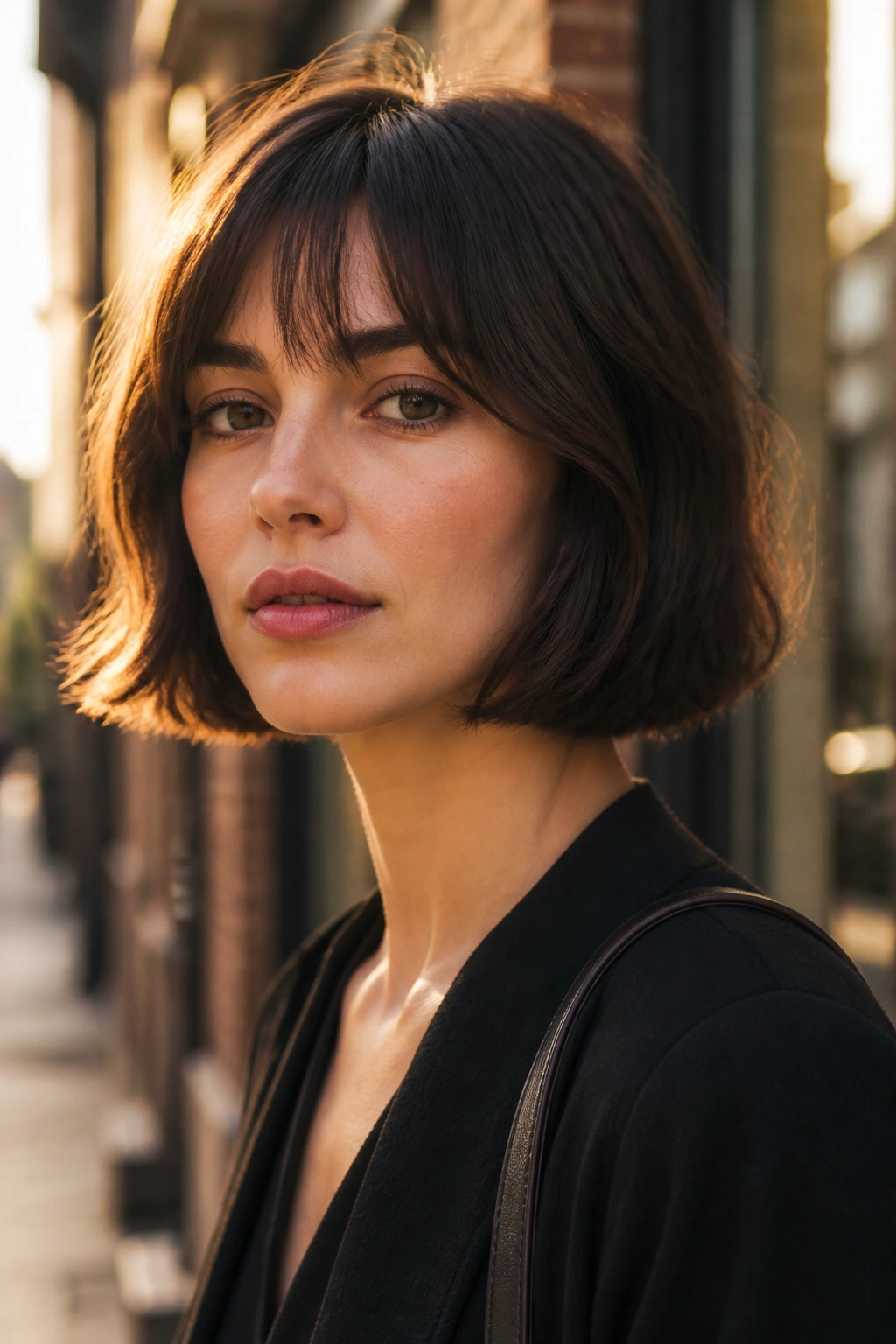
A French bob has a blunt core and a little bend at the bottom, which is why it feels chic without trying too hard. It usually sits around the jawline, sometimes just above it, and often comes with a soft fringe or a center-ish part.
On an oval face, the jaw-length line lands in a good spot. It highlights the lower half of the face without crowding it. That matters. A bob that ends too low can drag the eye down; one that ends too high can make the cheeks feel wider than they are. The French bob sits in that useful middle zone.
I like this cut on straight hair with a slight bend, or on wavy hair that wants to air-dry with a little shape. A round brush can smooth the ends under, but you do not need a big, glossy finish. A touch of styling cream and a rough dry with fingers is often enough.
It does have a blunt side. If your hair is very thick, the silhouette can get boxy unless the underneath is slightly debulked. Still, when it’s cut well, it has a kind of crisp, downtown feel that a lot of layered bobs never quite reach.
4. Bixie Cut
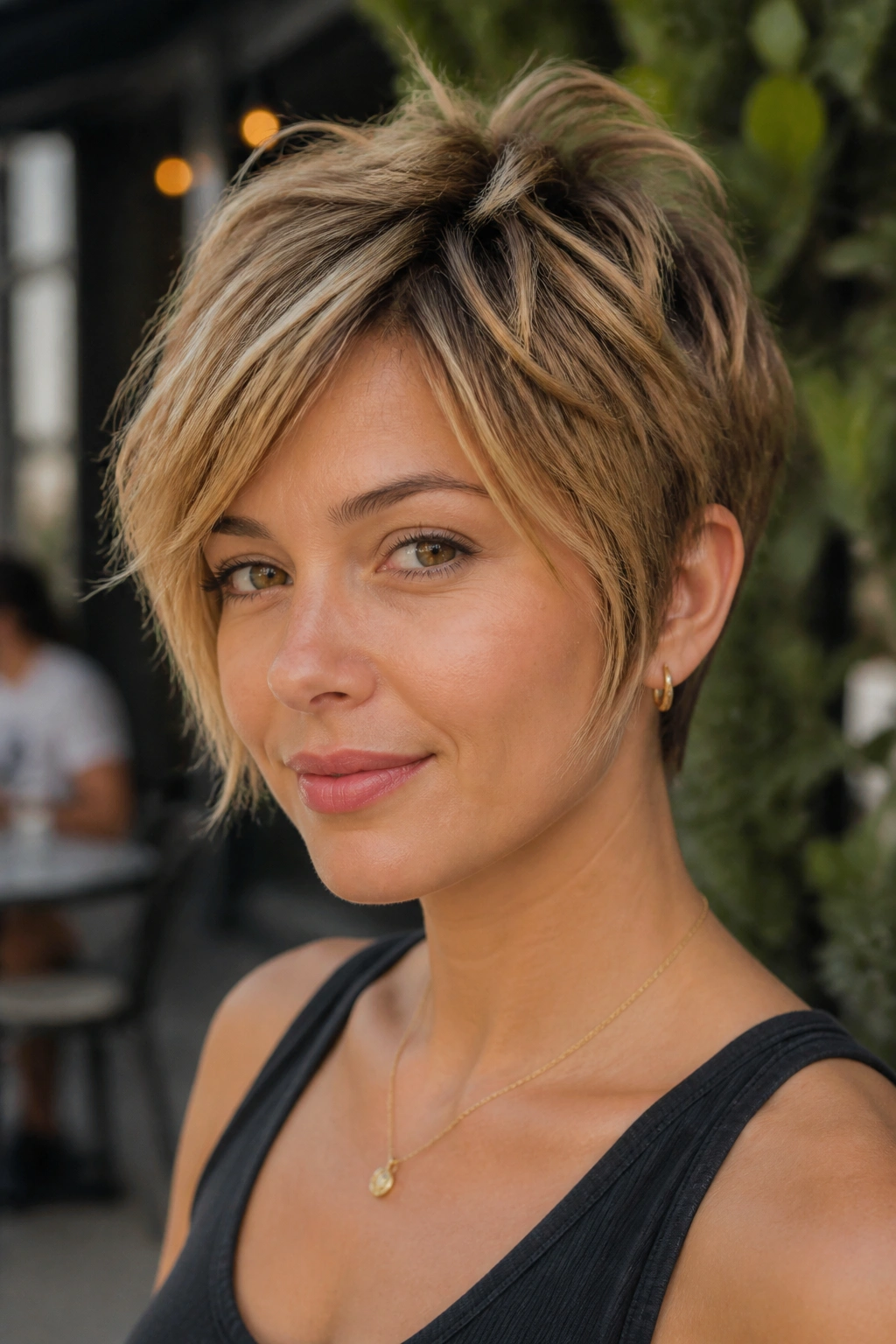
A bixie is not a compromise. It is a shape with a point of view. Part bob, part pixie, it gives you short sides and back with a little more length through the top and front, which is exactly why it works so well on oval faces.
The face shape can handle the contrast. The shorter back keeps things light, while the longer front gives the eye somewhere to land. That makes the cut feel balanced instead of too airy or too square.
The bixie is especially useful if you want texture but do not want the full commitment of a pixie. It also plays well with fine hair, because the layered top can be fluffed up without needing a lot of actual length. On thicker hair, the cut needs careful thinning near the crown so it doesn’t puff out like a triangle.
Why It Stands Out
- It grows out more softly than a strict pixie.
- It gives more styling room than a very short bob.
- It works with a side part, a messy fringe, or a tucked-back finish.
- It usually needs a texturizing spray, not a heavy cream.
If you want a short haircut that looks modern but not fussy, the bixie is one of the smartest places to land.
5. Asymmetrical Bob
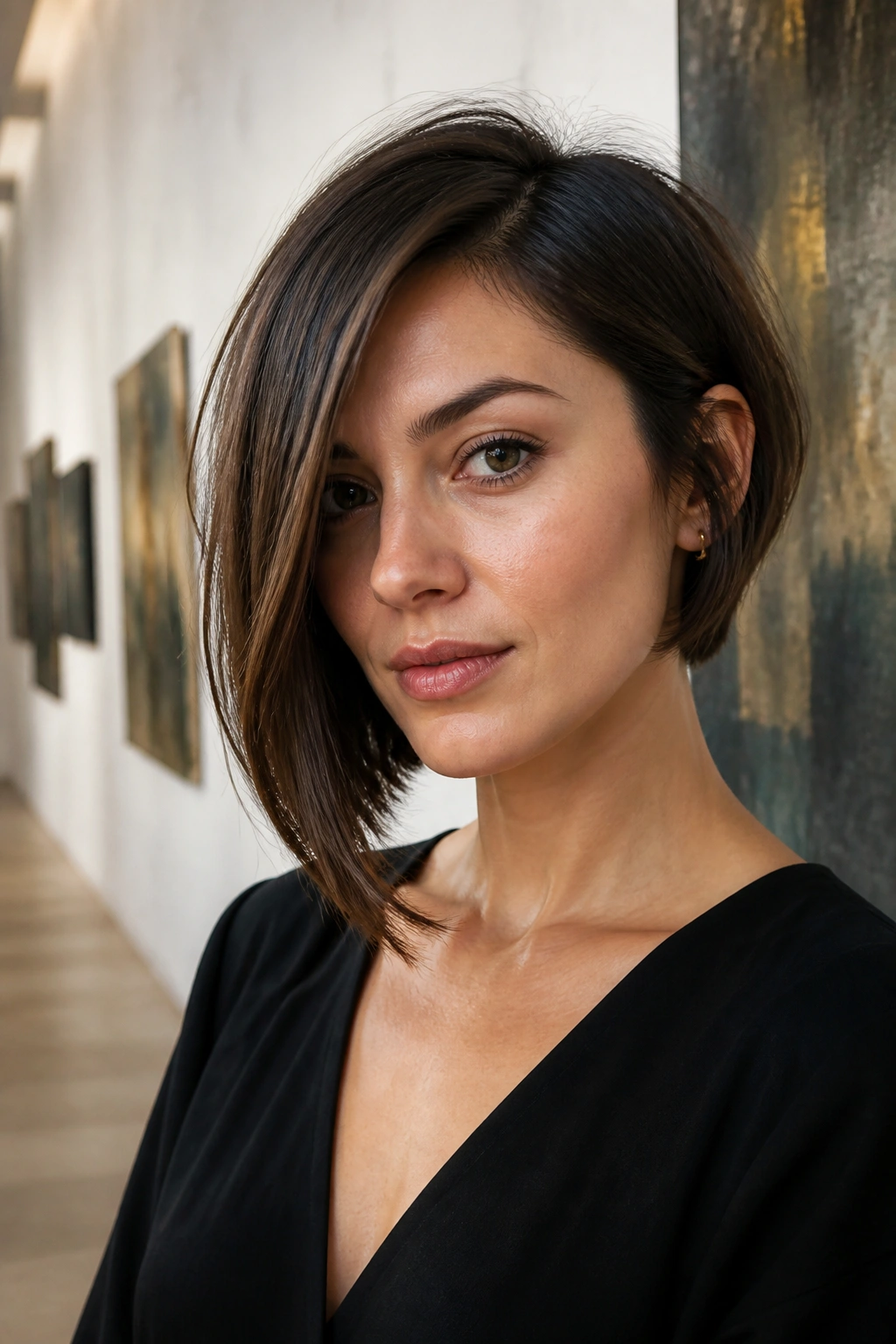
An asymmetrical bob changes the mood fast. One side sits a little longer than the other, and that small difference creates movement before you even style it.
Oval faces can take asymmetry without looking off-balance. In fact, the shape often benefits from it. The longer side draws the eye downward and diagonally, which sharpens the jawline and keeps the style from feeling too symmetrical or safe.
This cut looks best when the line is clean. You want the shorter side to hit around the cheekbone or just below the ear, and the longer side to fall closer to the jaw or upper neck. The difference doesn’t need to be dramatic. Half an inch can do the job. Two inches can feel theatrical fast.
It works especially well with straight hair or hair that bends softly. A flat iron can sharpen the ends, while a little bevel at the tips keeps the cut from looking stiff. Tuck the shorter side behind the ear and the whole shape changes in a second.
If you like haircuts that look deliberate and slightly sharp, this is a strong pick. If you prefer soft and blended, skip it. The asymmetry is the point.
6. Textured Crop With Piecey Layers
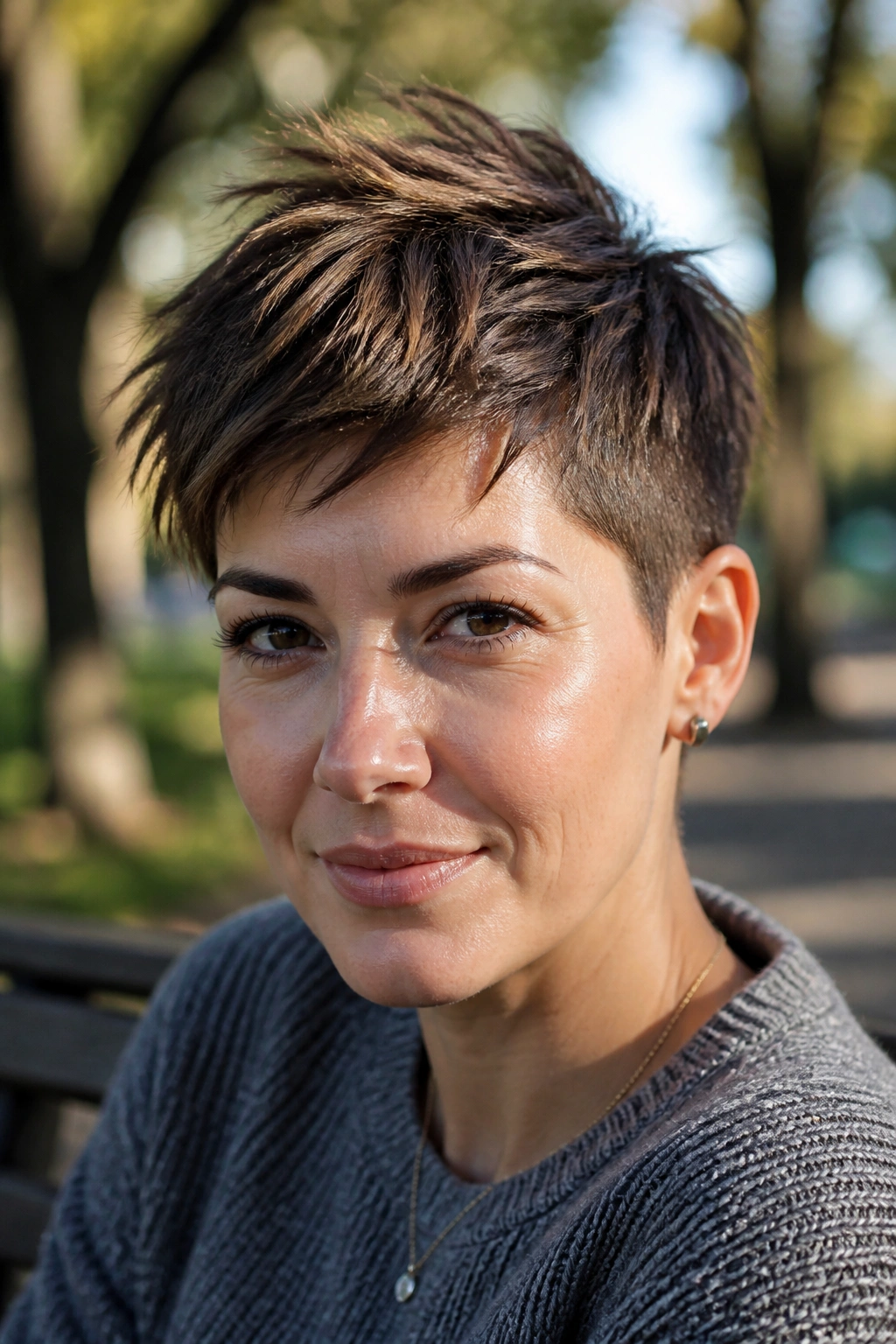
A textured crop is the haircut you choose when you want short hair to look alive instead of tidy. The top gets chopped into small, piecey sections, the sides stay shorter, and the whole shape relies on separation more than polish.
That works especially well for oval faces because the face shape doesn’t need a lot of correction. You can use texture as decoration instead of camouflage. A little lift through the crown, a bit of airy fringe, and the eyes go straight to the brows and cheekbones.
This cut is a gift for dense hair. Heavy hair can feel blunt and bulky if it’s cut too evenly, but piecey layers break up the mass and make the style move. On fine hair, though, be careful: too much point-cutting can leave the top looking thin and wispy in a bad way. You want texture, not gaps.
What Makes It Easy to Wear
- Works well with matte clay or paste.
- Usually needs only finger-drying.
- Sits nicely at 1 to 3 inches on top.
- Needs trim-ups about every 5 weeks.
A textured crop can look edgy, soft, or sporty depending on how you style it. That’s the fun of it. It’s a small cut with a lot of range.
7. Chin-Length Side-Part Bob
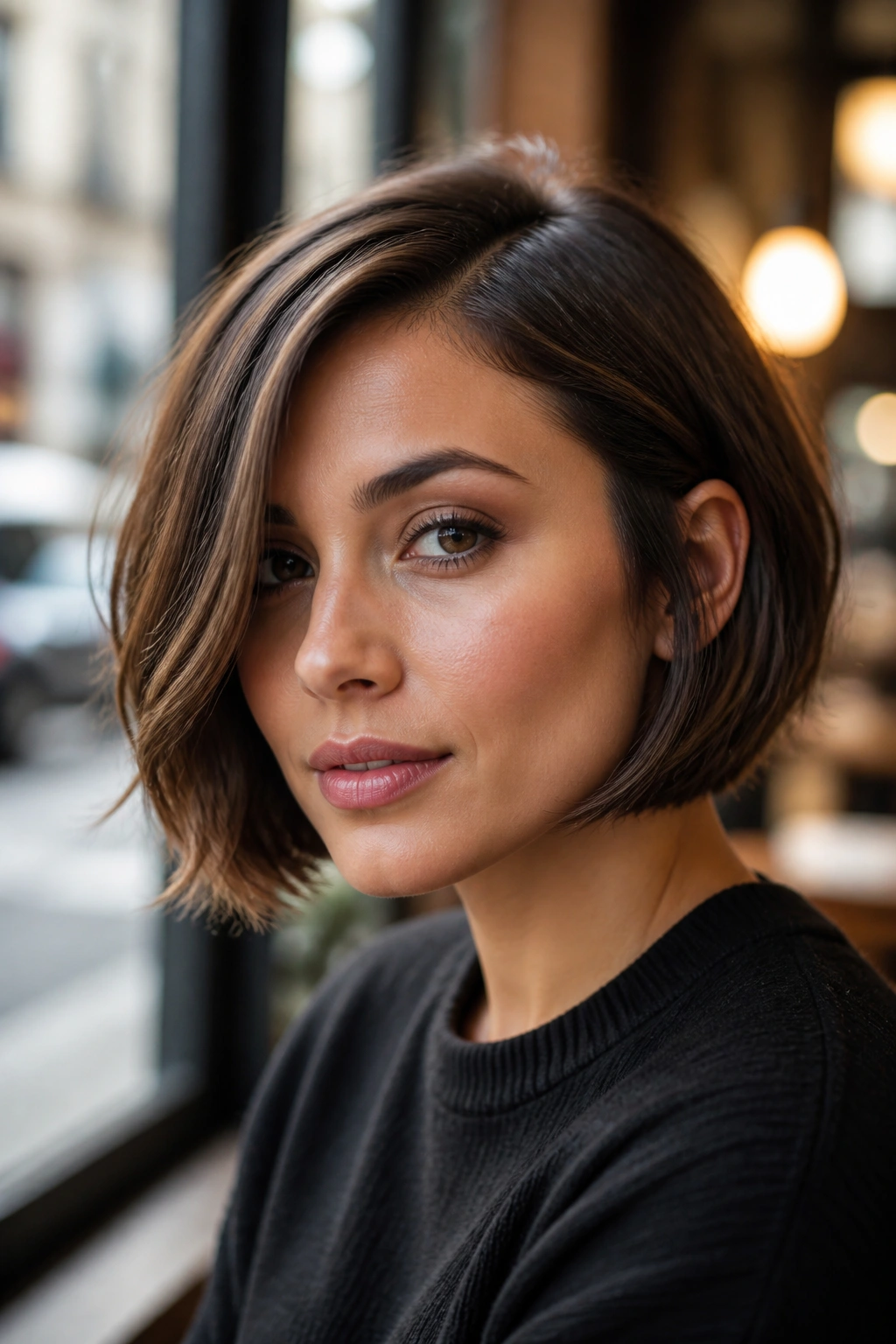
A chin-length bob with a side part is one of the neatest short haircuts for oval faces, and it’s less plain than people think. The side part shifts the weight of the hair, while the length lands right where the face starts to narrow toward the chin.
That placement matters. It lets the haircut frame the lower face without boxing it in. If your hair has a little natural wave, the bend around the ends gives the cut a softer shape. If your hair is straight, the line looks crisp and a little glossy when brushed smooth.
I like this cut for someone who wants a bob that feels tidy but not severe. It can live in a work setting, a dinner setting, or a lazy weekend setting without changing much. That kind of haircut earns its keep.
A few things make it better:
- Move the part about 1 to 2 inches off center.
- Keep the ends blunt if your hair is fine.
- Add a slight bevel under the jaw if your hair is thick.
- Use a 1.5-inch round brush when blow-drying for a soft bend.
The side part is the quiet part of the story here. It gives the cut motion without needing layers everywhere.
8. Shaggy Pixie for Oval Faces
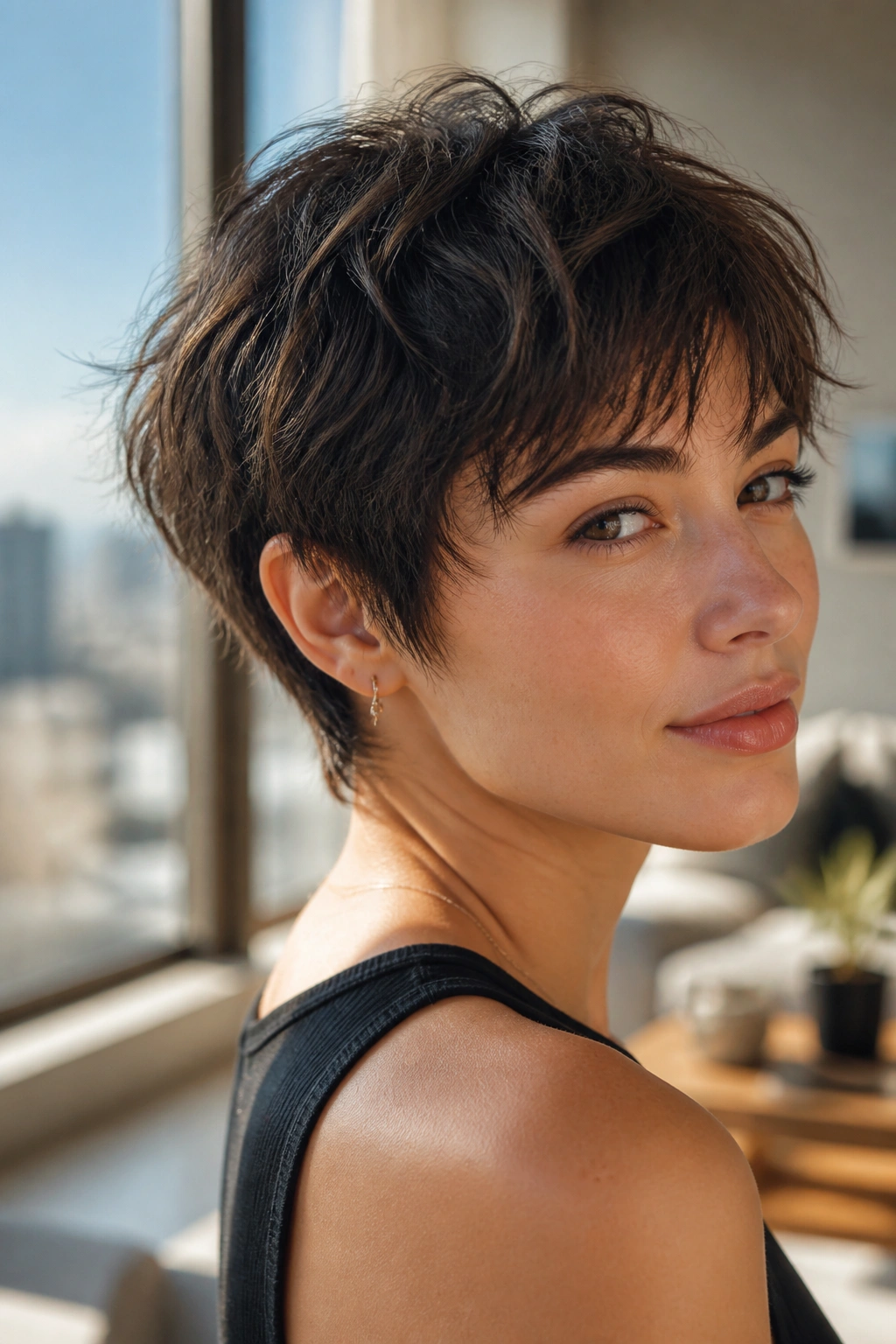
A shag does not have to be long to feel shaggy. On oval faces, a shaggy pixie can be a smart little cut because it keeps the top airy, the fringe soft, and the sides from getting too bulky.
The trick is controlled mess. Not chaos. You want short layers at the crown, wispy pieces around the forehead, and a nape that tapers without looking shaved unless that is the direction you want. The shape should feel loose when it moves and still have a clear outline when it sits still.
This is a strong option if your hair has some natural bend. Waves make the layers come alive. Straight hair can wear it too, but it usually needs a bit more product to stop the ends from sticking out in odd directions. A sea-salt spray or a light paste works better here than anything shiny.
A shaggy pixie also grows out in a forgiving way. The layers blur before the overall shape falls apart, which is rare and useful. If you want short hair that doesn’t feel precious, this one is a solid bet.
9. Blunt Jaw-Length Bob
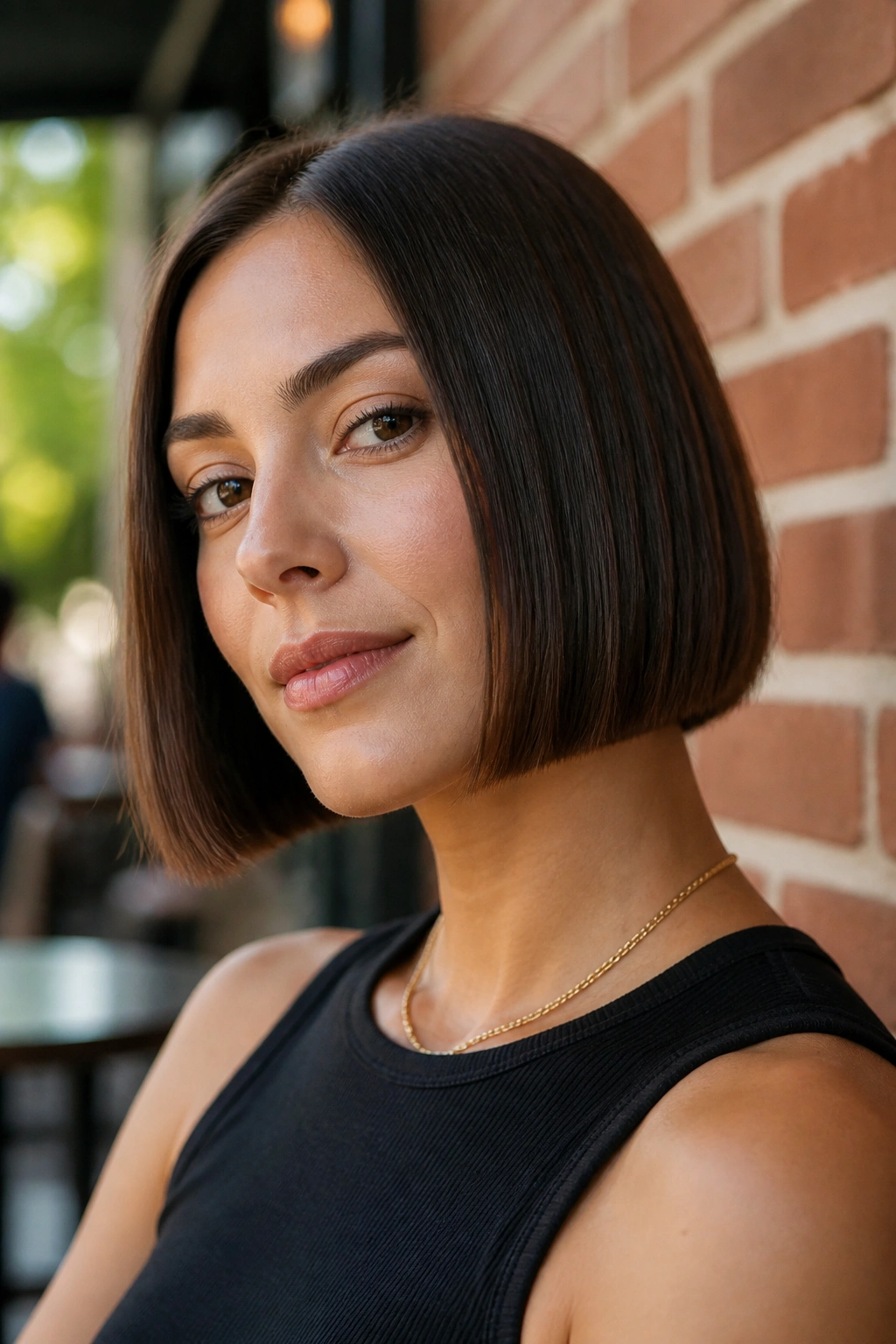
A blunt jaw-length bob can make an oval face look cleaner in one cut. That sounds simple because it is. The strength comes from the line itself.
The ends land right around the jaw, which gives structure without stealing balance from the face. On an oval face, that can highlight the chin and neck in a way that feels sharp but not harsh. Fine hair gets a thicker edge from the blunt cut. Straight hair gets a neat frame. Even slightly wavy hair can wear it if the wave is loose rather than puffy.
This isn’t the haircut for someone who wants lots of texture. It’s for someone who wants shape. If you over-layer it, you lose the whole point. Keep the perimeter clean, maybe with the tiniest bevel at the ends so the line doesn’t look hard.
One good flat brush and a light serum go a long way here. Blow-dry from the roots to keep the top smooth, then tuck the ends under just a touch. That small bend stops the bob from looking too boxy.
It’s a crisp haircut. Quiet, but not boring.
10. Curly Mini Bob
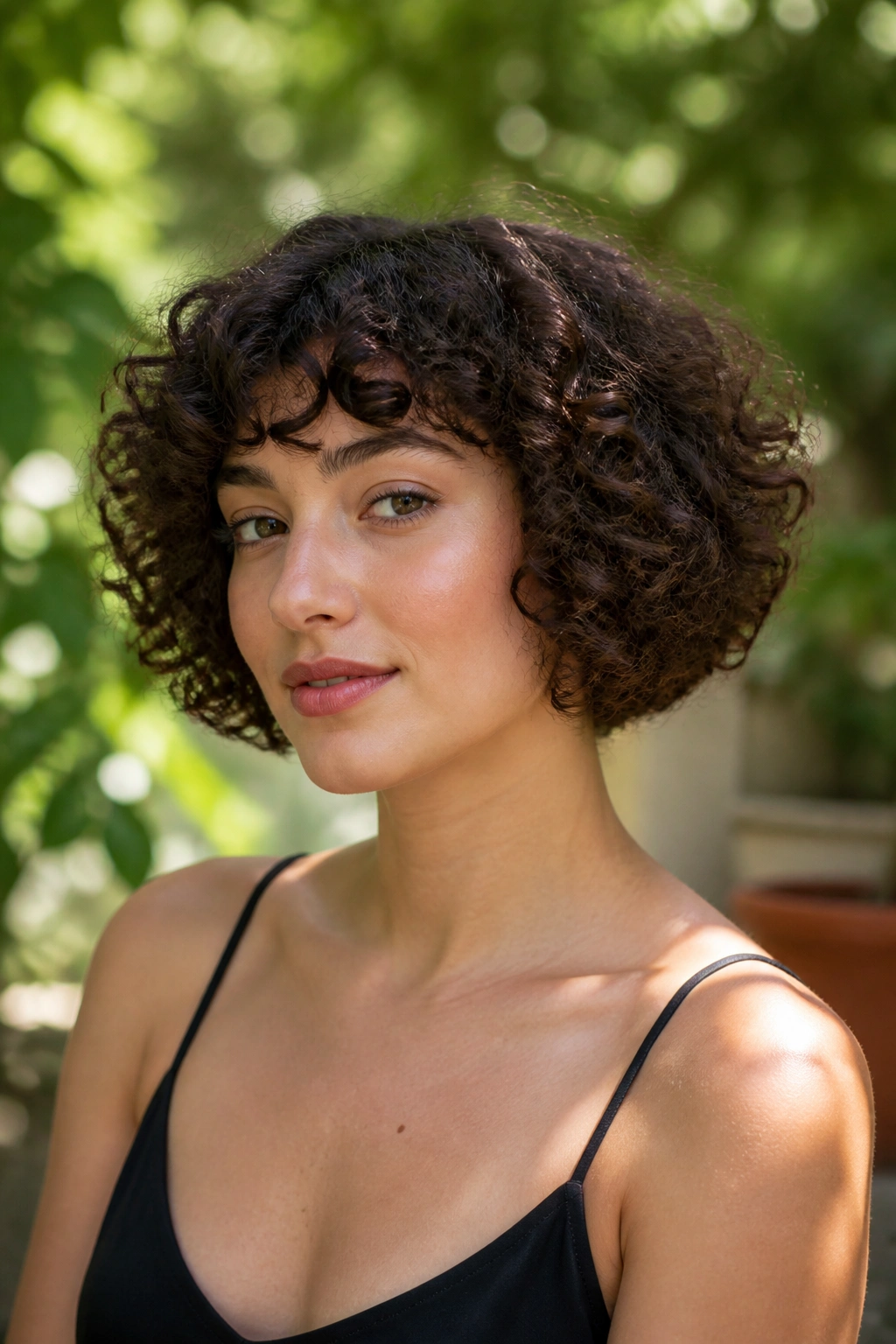
Can curls go short without turning into a triangle? Yes, if the cut respects the curl pattern and the shrinkage. A curly mini bob on an oval face can be one of the best ways to show off the face without fighting the hair.
The key is shape. You want the curls to sit in a rounded, balanced line that lands somewhere between the cheekbone and the jaw, depending on how much your hair springs up when it dries. Many curly cuts look longer when wet and then bounce up a full inch or two, sometimes more. That needs to be planned for.
A dry cut or a curl-by-curl cut is often the cleanest approach. It lets the stylist see where each curl wants to sit instead of guessing. Layers should remove bulk, not create frizz. If the top gets thinned too much, the shape can turn stringy fast.
Use a curl cream, scrunch from the ends upward, and diffuse on low heat if you want a softer finish. If you let it air-dry, do not touch it until it’s fully set. That part is tedious. Also necessary. Oval faces can wear the volume well, which makes this a cut that feels playful rather than overpowering.
11. Sleek Ear-Length Crop
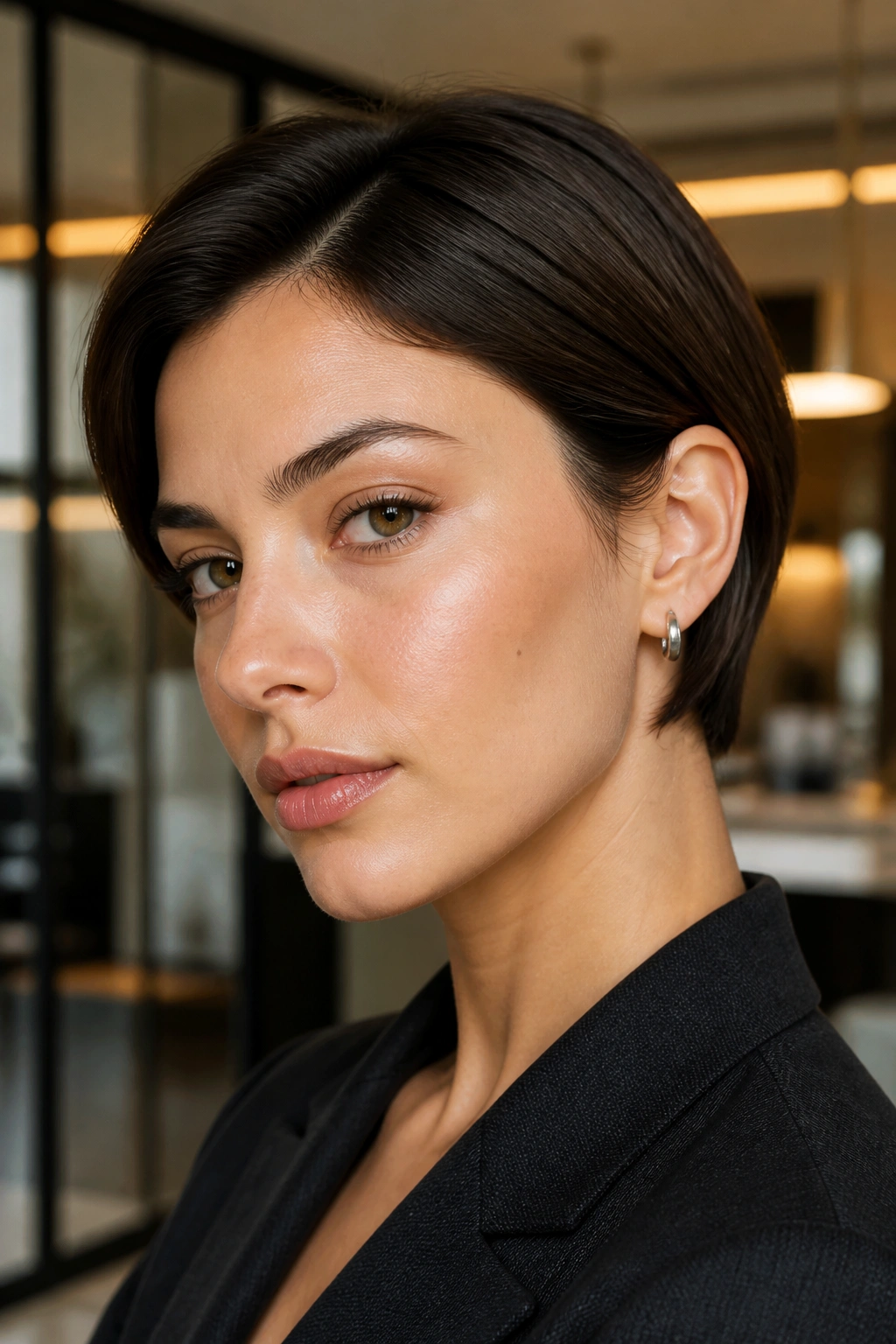
This is one of the sharpest short haircuts for oval faces, and it lives or dies on clean finishing. An ear-length crop draws the eye straight to the cheekbones and jawline, especially when the sides are tucked close and the top sits smooth.
It has a strong graphic line, which can be useful if your face is softly shaped and you want more structure. Ear-length hair also exposes the neck, which changes the whole balance of the face in a nice way. The style feels light, but not flimsy.
This cut is not forgiving of sloppy styling. A smoothing cream, a nozzle on the dryer, and a flat brush matter here. Get the roots dry first, then guide the hair toward the head so the surface lies flat and clean. If you use too much oil, it slips. If you use too little, flyaways take over.
It works best on straight to slightly wavy hair. Coarse hair can wear it too, but it usually needs a touch more polish around the ends. If you like neat lines, earrings, and hair that stays off the face, this cut is hard to beat.
12. Curtain-Bang Bob
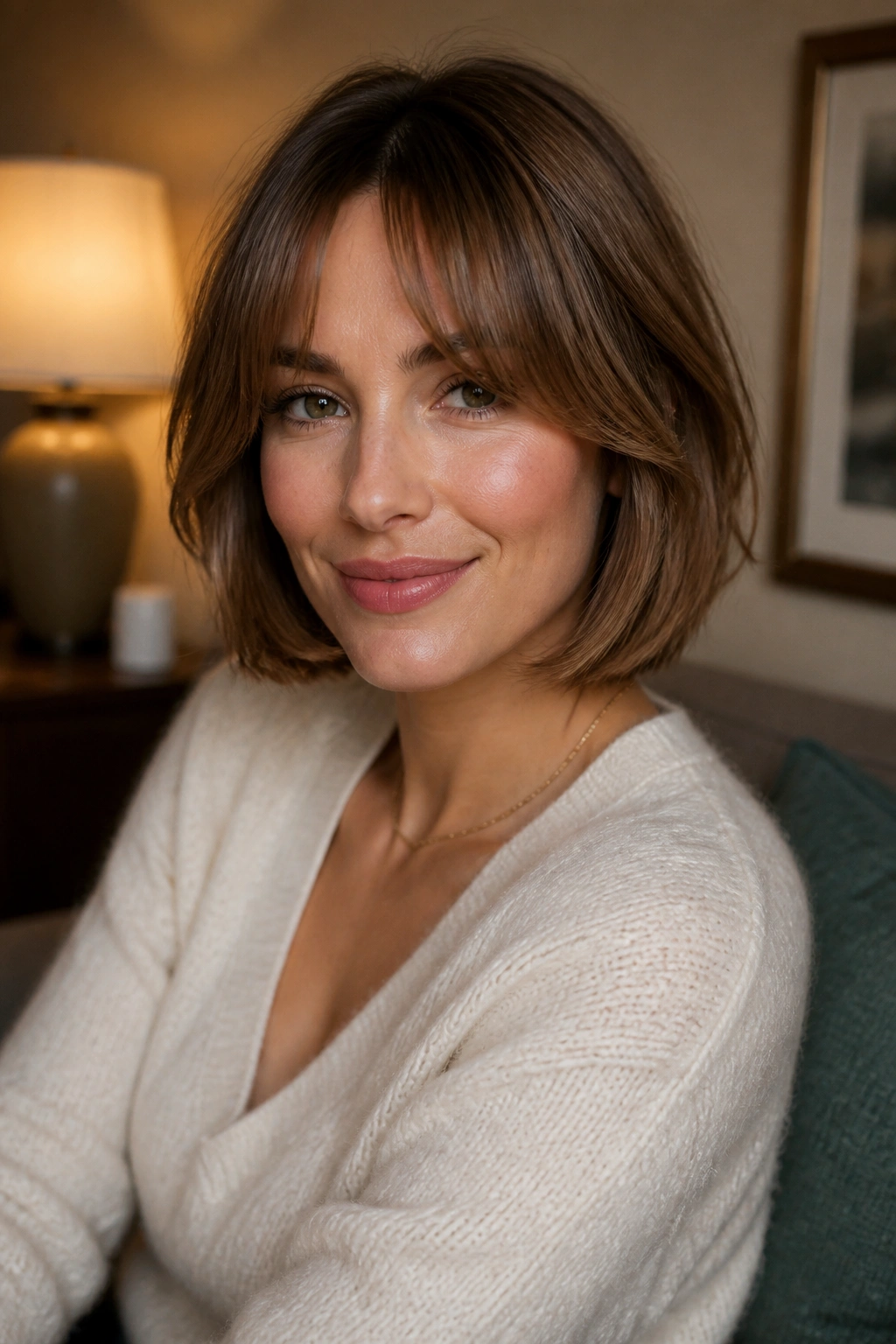
Curtain bangs are sneaky. They soften a short haircut fast, and on oval faces, they can make a bob feel less severe without hiding the bone structure underneath.
Where the Bangs Should Start
Ask for the bangs to begin around the brow to cheekbone zone, not dead center on the forehead. That keeps the shape open and avoids a heavy curtain that swallows the face. The shortest point should be easy to blend back, while the longer sides should fall into the front pieces of the bob.
How to Style Them
- Blow-dry the bangs away from the face with a small round brush.
- Hold the brush for 5 to 10 seconds at the bend.
- Use a light mist of spray, not a stiff shell.
- Keep the fringe separated with your fingers, not pinned together.
The bob itself can sit at the jaw or just above it. If the cut is too long, the bangs can feel disconnected. If it’s too short, the fringe can dominate the whole style. There’s a sweet spot, and it’s usually right around the cheekbones.
This is a good cut if you want softness, but not a full-on face curtain. It keeps things open.
13. Undercut Pixie
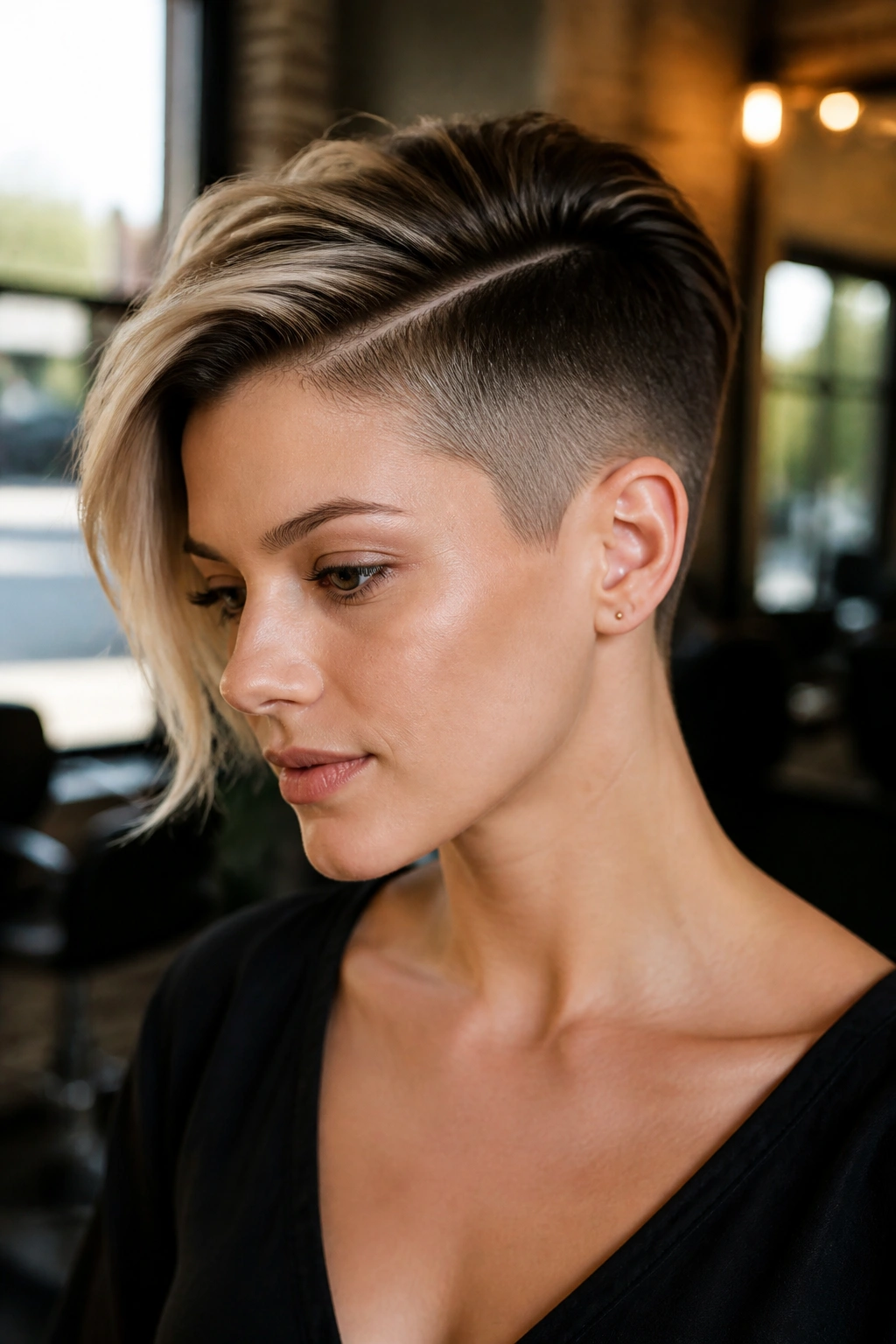
An undercut pixie is not only about attitude. On thick hair, it is practical. Sometimes the cleanest answer is to remove the weight where the hair is most likely to puff out.
That’s what makes this cut so useful on oval faces. The face shape can handle a sharp outline at the temples or nape, while the top stays longer and more playful. You get contrast without the haircut swallowing your features.
The undercut can be subtle, hidden under the top layers, or more visible around the sides and back. A hidden version gives you flexibility if you need to wear the hair softer on some days. A visible one is cleaner and cooler, but it asks for more confidence and more regular maintenance.
Use a cream or paste on the top, then push the fringe to one side or forward. A little height at the crown makes the face look longer, which oval faces can pull off without trouble. If your hair is very dense, ask for the underside to be debulked rather than chopped bluntly. That small distinction changes how the haircut falls.
It’s a strong choice. Not loud, just decisive.
14. Feathered Crop for Oval Faces
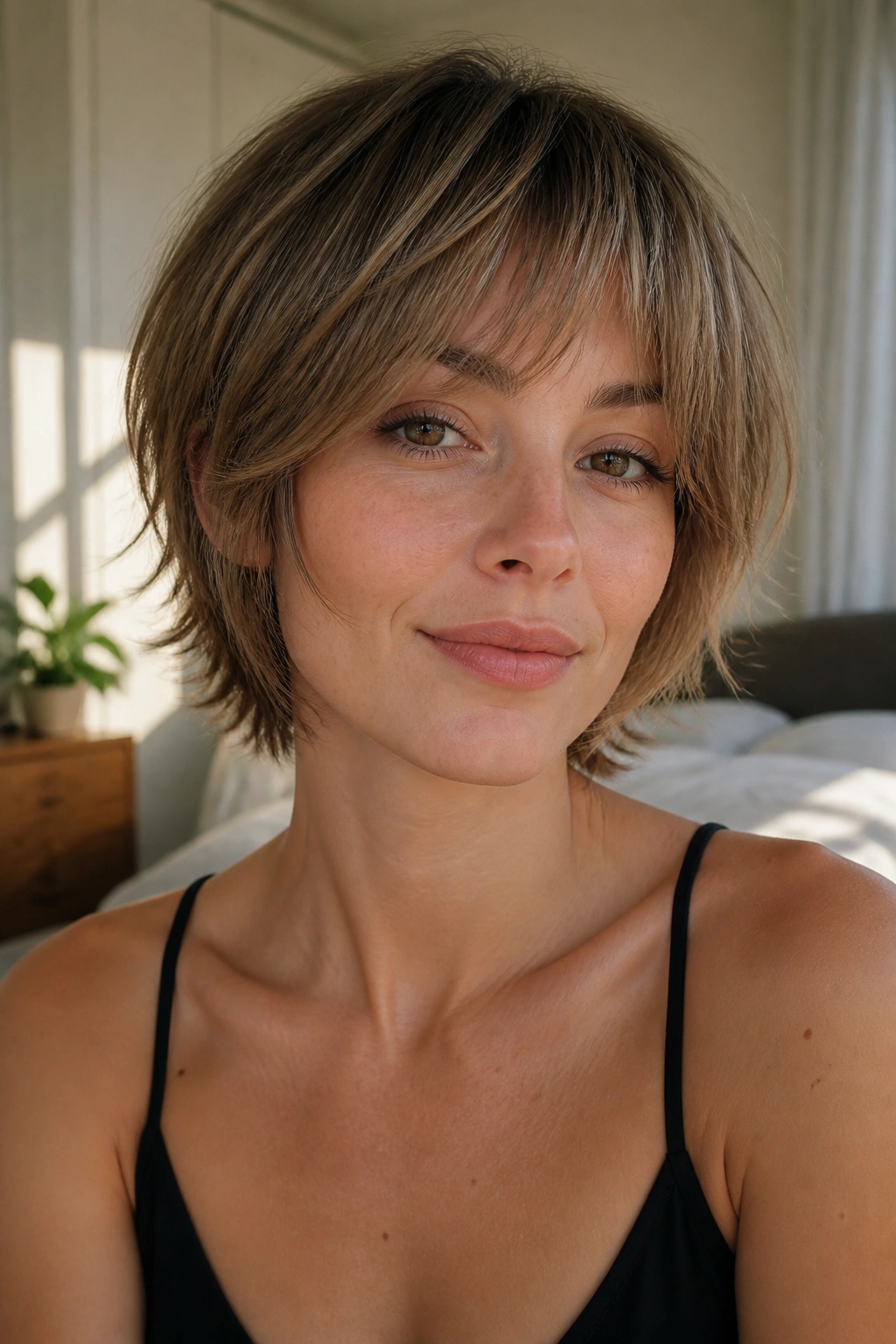
Feathered layers feel light because they are cut to move. On short hair, that movement can stop the style from sitting too close to the head, which is useful if you want softness around the face without extra length.
A feathered crop works especially well for oval faces because it follows the natural outline instead of arguing with it. The layers can sit around the cheeks, skim the jaw, and taper at the nape without building too much weight in any one place. That gives the whole cut a softer edge.
This is one of the better short haircuts for oval faces if your hair is fine or medium-fine and tends to go flat. A little root lift with mousse, then a round brush through the front pieces, adds body without making the style puffy. If your hair is thicker, the feathering needs to be controlled; too much soft cutting can make the shape fray at the ends.
The style looks best when the layers are visible but not choppy. Think airy, not shredded. It has a gentle finish that can be surprisingly flattering in real life, especially when the light hits the movement near the temples.
15. Stacked Bob With Lift at the Crown
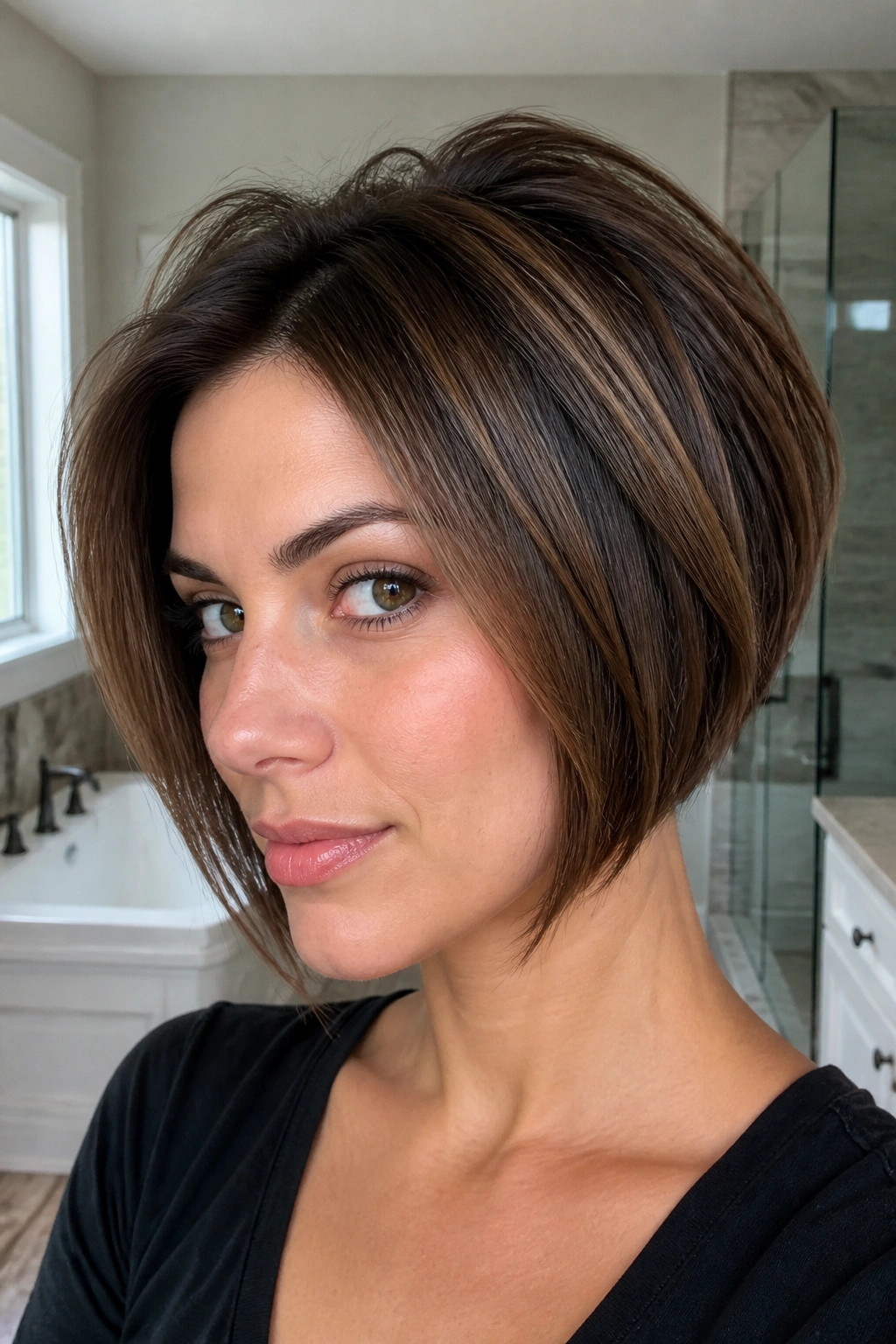
Need a bob with lift in the back but not too much width around the sides? A stacked bob is the answer. The back is cut shorter and layered so it builds height at the crown, while the front stays longer and follows the jaw.
That shape suits oval faces because the lifted back gives the cut energy without crowding the cheekbones. You get volume where it helps and weight where it keeps the line clean. It’s a useful trick, especially if your hair is medium-thick and tends to collapse at the roots.
What Makes It Stacked
- Shorter layers are tucked under the crown.
- The back rises slightly toward the nape.
- The front pieces stay longer and more relaxed.
- The silhouette looks rounded from the side.
This cut needs a little styling if you want the stack to show. A round brush at the crown and a blow-dryer directed upward at the roots can make a big difference. If you air-dry it without shaping, the stacked effect may disappear into the rest of the bob.
It’s not the softest bob on this list. It does have structure. But that structure is exactly why it works.
16. Short Wolf Cut
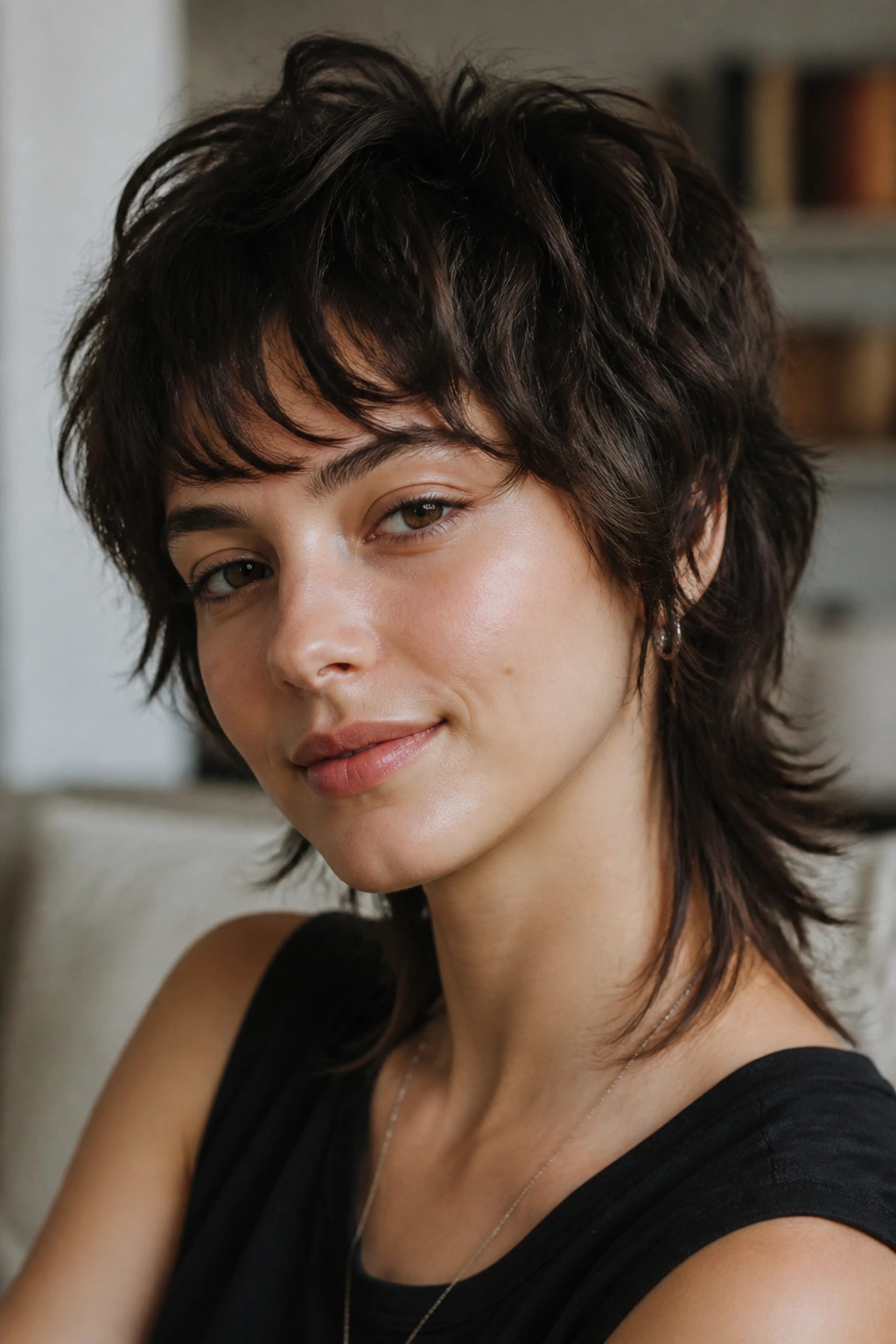
The short wolf cut is messy on purpose. That is the whole appeal. It borrows the shag’s texture and the mullet’s tapered back, then compresses both into a shorter shape that feels loose and slightly wild.
Oval faces wear this better than people expect. The face shape can handle the uneven length and the heavier crown because the balance is already there. Short layers around the cheekbone keep the hair from sitting like a block, while the longer nape keeps the cut from feeling too boxy.
This one is especially good if your hair has natural wave or a little bend. Straight hair can wear it, but it usually needs extra texture spray or a rough-dry routine to keep the layers from lying flat. Thick hair gets the most benefit because the layers remove bulk while leaving movement behind.
It is not a low-effort haircut, despite how casual it looks. If you want it to land well, you need a bit of styling clay, a diffuser, or at least some finger work after drying. Still, if you like a lived-in shape with real character, it has a lot going for it.
17. Micro Bob
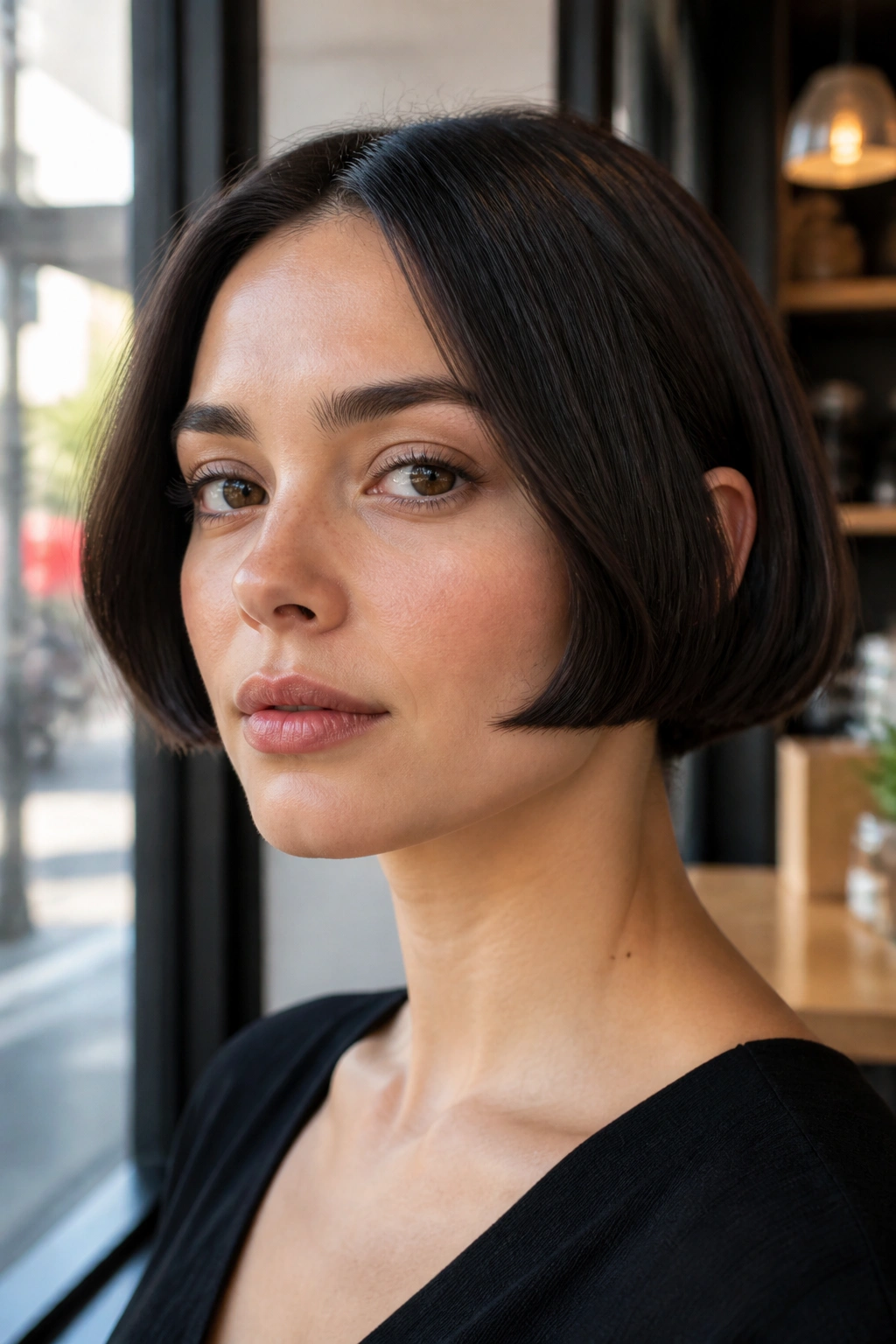
A micro bob stops at the mouth or just under the ear. It is short enough to feel sharp and compact, but not so short that it reads like a pixie. On an oval face, that means the haircut can make a statement without overwhelming the shape.
The clean line shows off the neck and jaw in a way that feels very direct. There is nowhere to hide, which is exactly why it works when the cut is precise. If the ends are uneven, you see it. If the line is clean, the whole style looks intentional from across the room.
This is a strong cut for straight hair and for hair that can be blown sleek with little effort. A tiny amount of shine serum through the ends gives it a polished finish. Curly hair can wear a micro bob too, but the final shape needs to be cut with shrinkage in mind or it may sit much shorter than expected.
It does require regular trims, usually every 4 to 6 weeks. The shape loses its crispness fast once the line starts growing down the neck. If you like precision, though, that is part of the appeal.
18. Side-Swept Crop
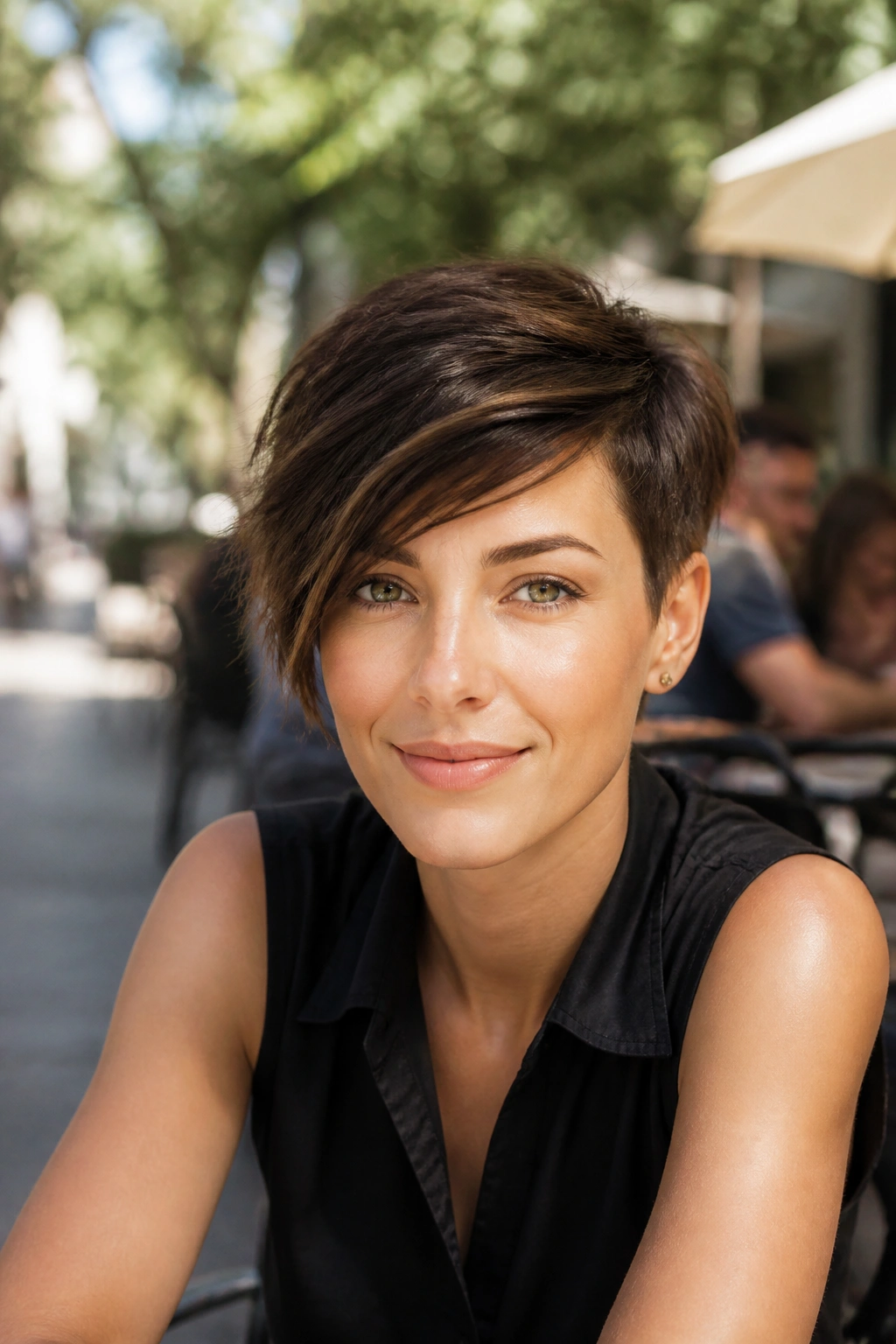
Not every crop needs a center part or a straight fringe. A side-swept crop gives the haircut motion immediately, and on oval faces, that diagonal line can be more flattering than a straight-across shape.
The side sweep lets the hair fall across one temple while keeping the other side tighter and cleaner. That little shift changes the mood of the whole cut. It can make strong brows look softer, or give a plain crop a little more shape around the forehead.
This works well if your hair has a cowlick near the front, because the side part can follow the natural growth pattern instead of fighting it. It also helps fine hair look fuller at the front without needing a lot of actual length. A quick blow-dry with a small brush and a pinch of paste at the ends is usually enough.
The crop can be very short at the nape and ears, or slightly longer through the top. I usually prefer the second version because it gives the fringe somewhere to land. The best side-swept crops look casual, but they are doing careful geometry underneath.
19. Rounded Bob With Soft Edges
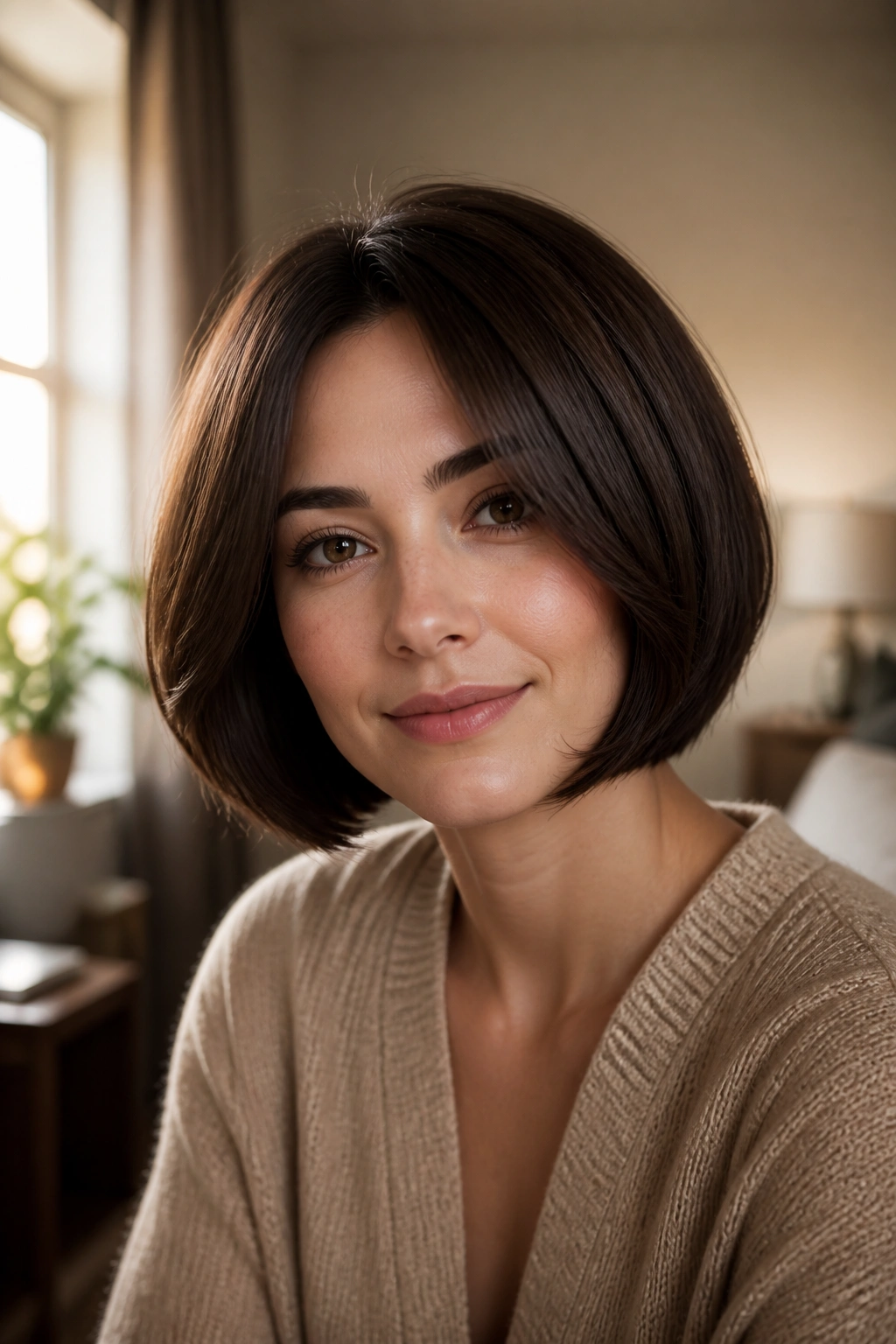
If blunt cuts feel too hard, this is the softer lane. A rounded bob curves gently into the jaw instead of stopping with a hard edge, which gives the whole haircut a smoother outline.
Oval faces can carry that roundness without looking too wide. In fact, the shape often feels elegant because it follows the face rather than slicing across it. The soft edges also make the bob friendlier for thick hair, which can otherwise push outward at the ends and turn boxy.
The internal layers matter here. They remove weight from the middle so the bottom line can stay smooth. If the layers are too high, the bob loses the rounded shape and starts to feather in the wrong places. If the cut is too blunt underneath, it can flare.
A round brush, a medium heat setting, and a smoothing cream are enough for most people. If your hair is wavy, a diffuser on low heat can keep the curve without forcing it flat. This is one of those cuts that looks calm, but only because it was cut with care.
20. Tapered Pixie With Fringe
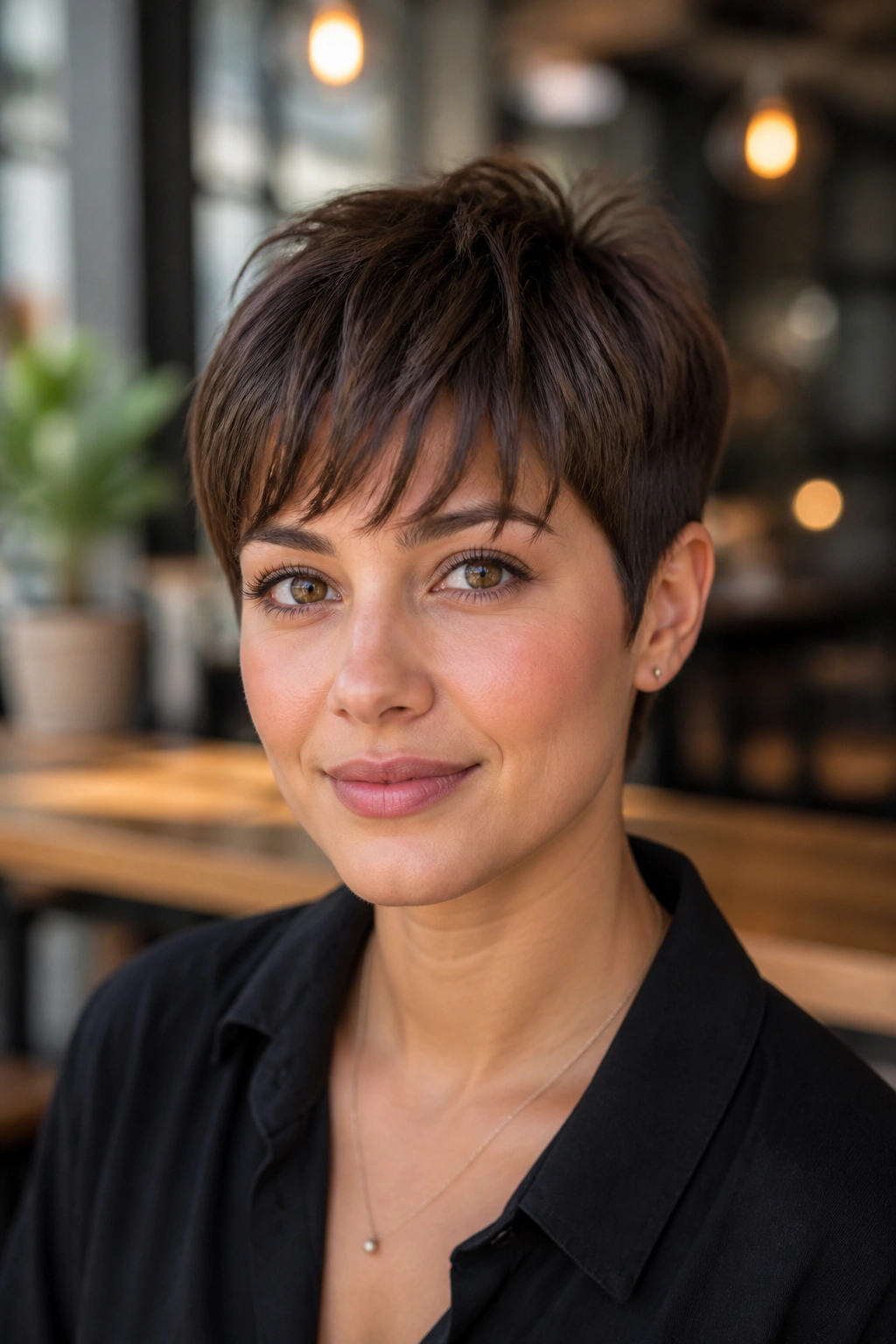
If you want the shortest version with the most face framing, start here. A tapered pixie with fringe keeps the sides and nape neat while leaving enough length in the front to shape the forehead and eyes.
On oval faces, the fringe can be the star without taking over. A soft fringe softens the upper half of the face; a piecey fringe makes the cut feel lighter and a little more modern. The taper keeps the back clean, which stops the style from feeling bulky or mushroom-shaped.
What to Ask For
- 1.5 to 3 inches at the front, depending on your hair texture.
- A tapered nape that lies close to the head.
- Fringe that can fall forward or sweep aside.
- Soft blending around the temples so the cut grows out evenly.
This cut can be sleek or roughened up with paste, which is part of the appeal. It also suits people who want a strong shape but do not want to spend 15 minutes styling every morning. The front takes a little attention. The rest mostly behaves.
It’s a clean finish to the list because it borrows the best parts of a pixie and trims away the fuss.
The Bottom Line
Oval faces have a lot of room, but the best short cuts still make choices for you. They decide where the eye lands, how much width sits at the cheeks, and whether the crown feels lifted or flat.
That is why a good reference photo matters less than a good conversation with your stylist. Bring one picture for the silhouette and another for the fringe or texture. Those are often two separate decisions, and they change the whole cut.
If I had to give one practical rule, it would be this: match the haircut to your hair’s natural behavior first, then fine-tune the shape for your face. That order saves a lot of regret.
