



A strong jawline can make almost any haircut look sharper, but it also changes the rules a little. The same blunt bob that looks crisp on one person can feel boxy on another; the same wispy fringe that softens one face can vanish on thicker hair. Hairstyles for strong jawlines work best when they either echo that structure on purpose or interrupt it with movement, not when they fight it.
A lot of people make the mistake of thinking they need to hide angular features. Usually, they do not. What they need is balance: a little bend near the cheekbones, a part that shifts the eye, a length that doesn’t stop dead at the widest point of the jaw unless that is the look you want. That small difference can change how a cut sits from the front, the side, and in a ponytail. It matters.
The nice thing about a strong jawline is that it can carry clean lines without looking severe. It can also handle softness without looking fussy. That gives you more room to play than most face-shape advice admits, and it means the “right” cut is usually the one that understands your hair texture, your part, and how much maintenance you’ll actually tolerate on a Tuesday morning.
1. Soft Side-Part Lob for Strong Jawlines

A side-part lob is one of those cuts that keeps showing up for a reason. The length hits around the collarbone or just above it, so it doesn’t stop right on the jaw and make that line feel extra hard. The side part breaks up symmetry, which is useful when your features already have a lot of definition.
Why It Works
The trick is movement. A lob with a slight bevel at the ends curves inward just enough to skim past the jaw instead of sitting on top of it. That gives the face a little breathing room without hiding anything. If your hair is straight, the cut looks polished. If it’s wavy, it looks softer and more lived-in.
Ask for ends that are lightly textured, not chopped to pieces. Heavy layering can make the shape collapse. A soft bend from a round brush or a one-inch curling iron is usually enough.
- Best on medium to thick hair
- Works well with a deep or soft side part
- Needs a trim every 8 to 10 weeks to keep the line clean
My favorite part: it looks deliberate even when you barely style it.
2. Curtain Bangs with Long Layers

Curtain bangs are a smart move if you want to keep length but take some pressure off a strong jawline. They split open at the center and fall to either side of the face, which sends the eye upward and outward instead of straight down to the jaw. That little bit of lift matters more than people think.
The long layers behind the bangs keep the cut from feeling heavy. You get movement around the cheeks, then soft tapering through the ends. On straight hair, that can look sleek. On wavy hair, it gets a bit of swing and texture that feels easy rather than stiff.
I like this style for anyone who wants change without giving up length. It’s a nice middle ground. The bangs can be blow-dried with a round brush for shape, or left a little piecey if you’d rather not fuss with them every morning. Just avoid bangs that are too short and blunt; that can pull attention right to the widest part of the face in a way that feels less balanced.
3. The Chin-Length French Bob

Why does a bob this short work on a sharp jaw? Because it doesn’t pretend the jaw isn’t there. It sits close to it, then uses shape and movement to make the whole face feel intentional. That’s the difference between a haircut and a compromise.
A French bob usually lands around the chin and carries a bit of softness in the ends. It looks especially good with a slight wave, a lived-in bend, or a barely-there fringe. The silhouette is clean, but not harsh. Think neat, not severe. That matters if your jawline already has a strong edge.
How to Style It
- Air-dry with a touch of mousse for a soft curve
- Use a flat iron to turn the ends under just a little
- Tuck one side behind the ear for asymmetry
- Keep the perimeter clean; a shaggy bottom edge can make the shape lose its point
This cut is for someone who likes structure and doesn’t mind people noticing their face first. That’s the point, really.
4. Textured Pixie Cut with Piecey Fringe

A pixie cut can be a power move on a strong jawline. Short hair exposes the bone structure, sure, but that’s not a problem when the shape is built with a little lift on top and a piecey fringe in front. You end up with contrast: clean lines at the sides, movement at the crown, and enough softness around the forehead to keep things from looking too hard.
The mistake most people make with a pixie is asking for too much uniformity. Flat top, flat sides, heavy fringe. That can make the whole cut feel helmet-like. A better version keeps the top a little longer, lets the front pieces fall unevenly, and tapers the sides close enough to show the neck and jaw without crowding them.
This works especially well if your hair is fine or medium in texture, because the cut creates the illusion of density where you want it. A little matte paste goes a long way. A pea-sized amount is usually enough; use more and the texture starts to clump.
Short hair. Big attitude.
5. Shoulder-Length Shag with Feathered Ends

The shag is one of my favorite answers for a strong jawline because it knows how to move. Instead of sitting in a solid block around the face, it breaks up the shape with layers that fall at different points. That keeps the jaw from feeling boxed in, especially if your hair is thick or naturally bends into a triangle when it grows out.
Feathered ends are the part that makes it work. They soften the bottom edge so the hair doesn’t stop abruptly at the chin or jaw. Add a little root volume and you get a cut that feels airy without looking thin. On straight hair, the shag can look cool and slightly undone. On curly or wavy hair, it gets even better because the layers separate on their own.
I like this style for anyone who wants movement but doesn’t want the upkeep of a precise bob. It’s forgiving. A little dry texture spray at the roots, a quick scrunch through the mids, and you’re done. If your hair is very thick, ask your stylist to remove weight internally, not just from the surface. That keeps the shape from puffing out at the sides.
6. Sleek Low Ponytail with Face-Framing Pieces

A low ponytail can look surprisingly elegant on a strong jawline because it lets the face do the work. Pull the hair back too high and the whole look can feel severe. Keep it low, tuck it near the nape, and leave two narrow pieces out around the cheeks, and suddenly the style feels calmer.
What Makes It Different
Unlike a high ponytail, which lifts everything upward and can make the jaw stand out even more, a low ponytail settles the silhouette. It gives the face a cleaner frame. The face-framing pieces are the detail that keeps it from looking too tight.
This is one of those styles that works across settings. Office, dinner, wedding, grocery store. It doesn’t care. A center part makes it feel sleek. A soft side part adds a little curve. If your hair is straight, add a quick bend to the front pieces with a curling iron. If it’s curly, let the texture stay loose and don’t over-smooth it.
A tiny bit of serum on the top layer helps, but don’t overdo it. Greasy roots and a strong jawline are a bad combo if the ponytail sits flat against the head.
7. Long Layers and a Center Part for Strong Jawlines

Long hair is not automatically boring, and long layers prove it. When the layers are cut to fall around the cheekbones, mouth, and collarbone, they create motion that keeps the eye moving instead of landing hard on the jaw. That’s useful if you want length but still want the face to feel open.
A center part can be a smart partner here. It creates balance, and on a strong jawline that balance keeps the look from feeling lopsided. The layers do the softer work. They add swing when you walk and keep the ends from feeling heavy or draggy.
This cut tends to look best on medium to thick hair, though fine hair can wear it too if the layers are kept light. The key is not taking so much weight out that the ends go stringy. Ask for long, connected layers rather than obvious stair-steps. That gives you movement without choppiness.
What to Tell Your Stylist
- Keep the first layer below the chin if you want less emphasis on the jaw
- Add pieces that land near the cheekbones
- Maintain length through the back so the cut still feels full
- Avoid over-thinning the ends
8. Blunt Bob with Soft Ends
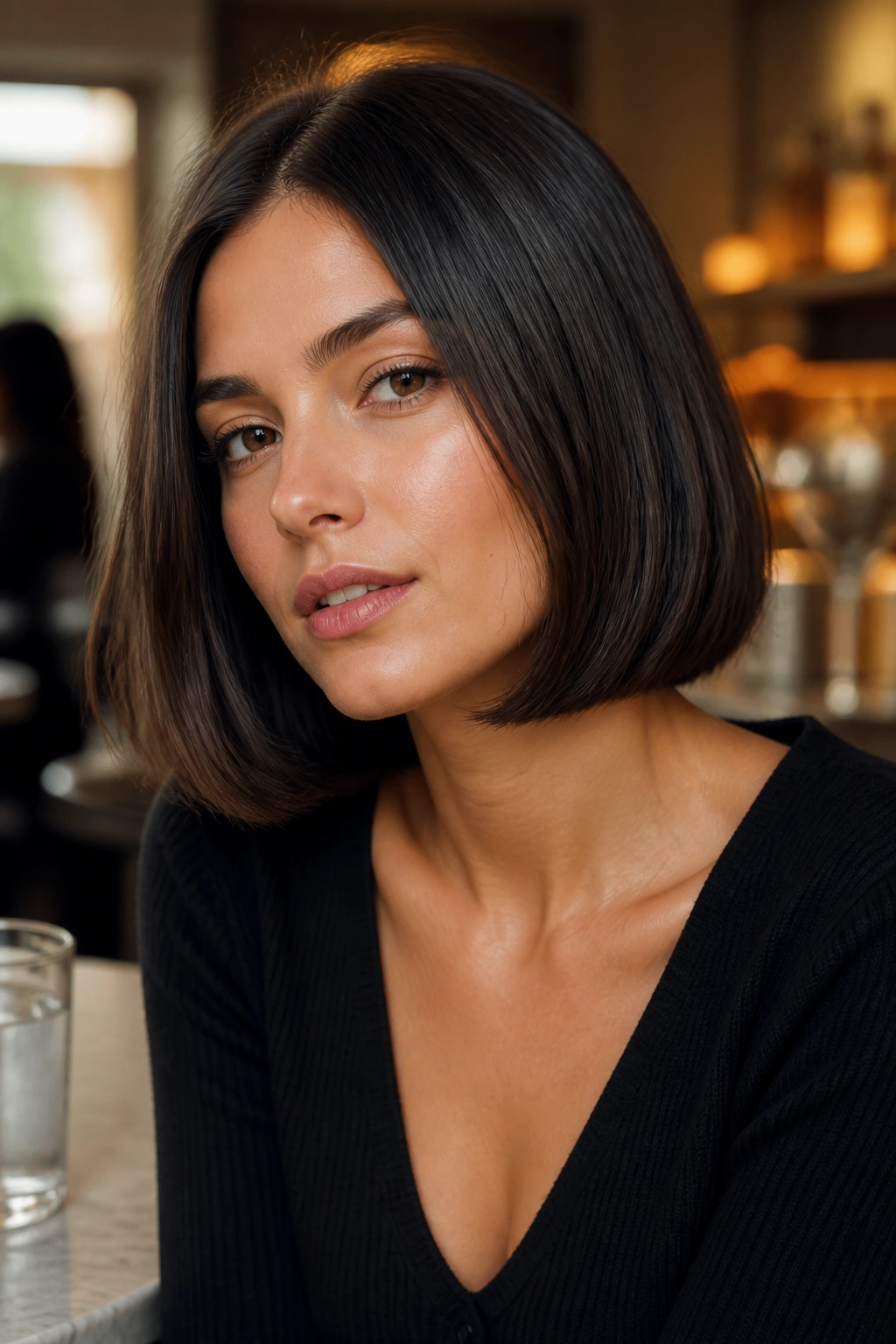
A blunt bob sounds like it would be too much for a strong jawline. Sometimes it is. But soften the ends a little, keep the length at or just below the chin, and the whole thing changes. The line stays sharp enough to feel modern, but the tips don’t sit like a ruler across the face.
I’ve always thought this style works best when the hair has a bit of natural bend. Straight hair shows off the line. Wavy hair keeps it from feeling rigid. If the cut is too precise, it can start to compete with the jaw instead of complementing it. Soft ends solve that problem fast.
There’s also a nice contrast here. The jawline brings structure; the bob brings structure; the softened finish keeps the result from feeling harsh. That’s the sweet spot. A touch of smoothing cream, a round-brush blowout, and a tuck behind one ear are often enough.
If your hair is very thick, ask for the underside to be cleaned up a little so the bob doesn’t puff out. Not much. A heavy-handed thinning job can wreck the shape.
9. Tousled Collarbone Cut

Want something between short and long? The collarbone cut lives right in that gap, and it’s one of the easiest styles to wear with a strong jawline. Because it falls below the jaw, it avoids cutting the face in half. Because it’s not long enough to drag the look down, it still feels fresh and light.
The magic is in the tousle. A little texture keeps the cut from reading as plain. You want bends, not curls that look set in stone. A few loose waves around the front will soften the lower half of the face in a way that feels casual rather than strategic, which is usually better anyway.
This is a useful cut if your hair tends to flip out at odd spots when it grows. The collarbone length gives the hair somewhere stable to land. It also works with ponytails, clips, braids, and lazy half-up styles, which makes it practical without being dull.
A quick mist of salt spray or light texture spray can help, but keep it airy. Too much product and the ends start to feel rough.
10. Deep Side-Swept Fringe with Medium Layers

A deep side-swept fringe changes the whole mood of a haircut. It sends the eye diagonally across the face, which is exactly why it works so well on strong jawlines. Straight lines can feel heavy. Diagonal lines feel easier.
The medium layers underneath matter, because the fringe needs something to connect to. If the rest of the haircut is too blunt, the front section ends up looking pasted on. A good side-swept fringe melts into shoulder-length layers or a lob, creating a soft frame around the cheek and jaw.
This style is especially useful if you have a wider forehead or you like the idea of covering one brow a little. It gives shape without needing a full bang. A round brush and a little heat at the roots help the fringe stay lifted instead of sticking to the face. If your hair is fine, a root spray at the front makes a real difference.
The one catch: side-swept fringe needs occasional retraining. If you air-dry it carelessly, it can split in odd directions and lose the sweep.
11. Half-Up Loose Waves That Show the Jaw
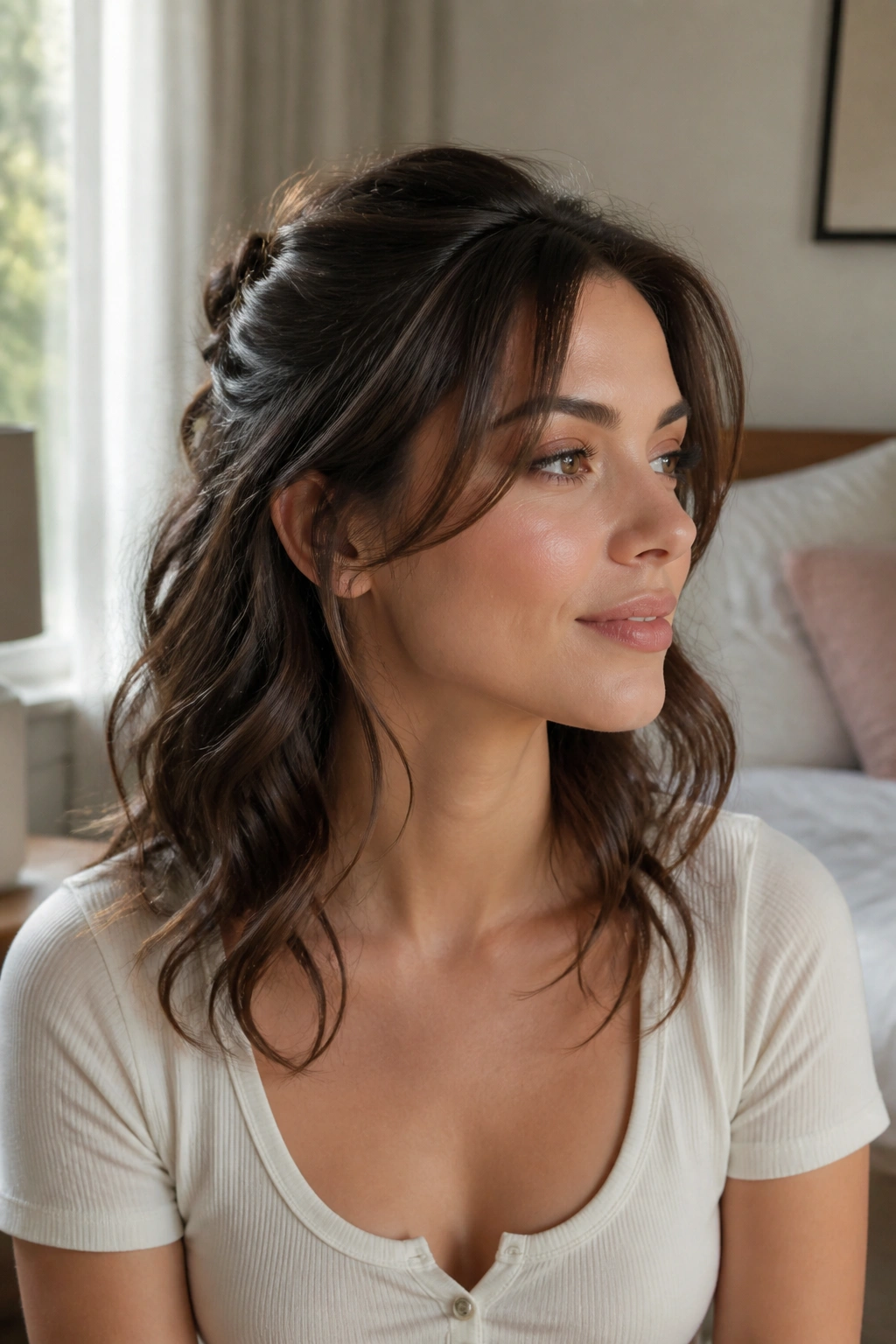
A half-up style is one of the easiest ways to keep hair off the face while still letting it move. On a strong jawline, that balance is useful. You get the lift and shape of a pulled-back style, but the loose waves soften the sides and keep the jaw from becoming the only thing people see.
Why It Feels Different
Unlike a full updo, a half-up look leaves enough hair down to frame the cheeks and neck. That matters. The hair around the lower half of the face keeps the style from looking stark, while the pinned-up top section adds height that lengthens the overall shape.
This is a good choice for busy days, but it also works when you want to look done without trying too hard. Secure the top section loosely, not tight to the scalp. Leave a little volume at the crown. Let the waves around the bottom half stay soft and uneven. Perfection is not the goal.
A velvet ribbon, a small clip, or a discreet barrette can change the tone fast. Tiny detail. Big effect.
12. Soft Wolf Cut with Airy Crown Volume

The wolf cut gets a bad reputation when people ask for it too aggressively. Heavy shag layers, chopped bangs, too much thinning. That version can look messy in the wrong way. A softer wolf cut, though, can be excellent for a strong jawline because it builds volume at the crown and keeps the lower layers loose.
That crown lift is the whole point. It pulls the eye upward and makes the face feel longer. The wispy layers around the cheeks and jaw stop the cut from sitting too heavy at the sides. You get shape, but you don’t get a hard frame.
This works best on wavy and thick hair, though straighter hair can wear it if the layering is gentle. Ask for movement, not a dramatic chop. The ends should feel light, almost feathered. If you go too extreme, the cut can overpower the face. Softness keeps it wearable.
One more thing: this cut likes a bit of mess. If you try to smooth every strand into place, you lose the texture that makes it work.
13. Slicked-Back Bun with Height at the Crown
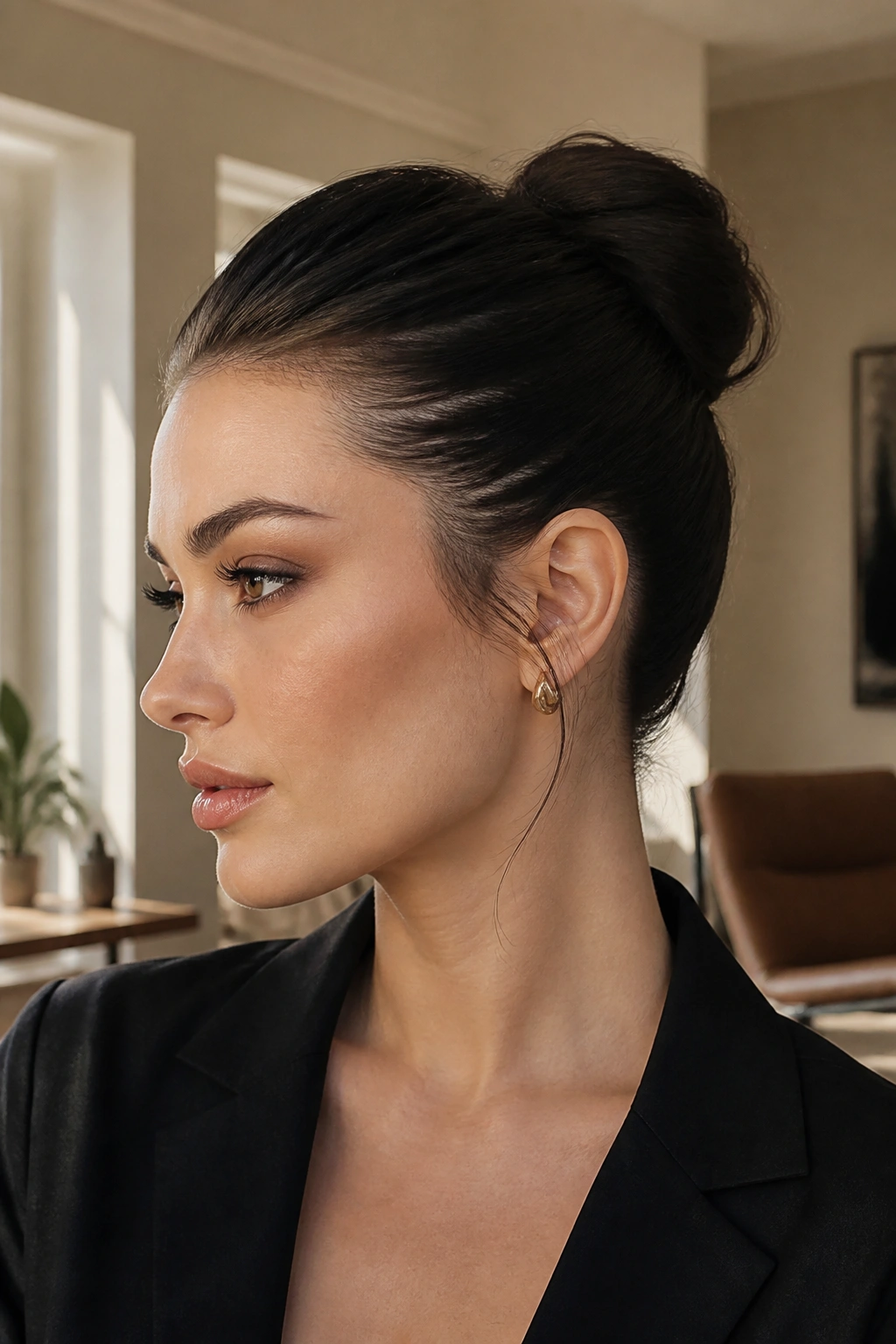
Can a pulled-back style flatter a strong jawline? Absolutely. The catch is that it needs a little lift. A bun that sits low and flat against the head can feel severe. A bun with height at the crown, even a small one, gives the face room to breathe.
The slicked-back finish shows off the jaw, neck, and cheekbones without hiding anything. That can look clean and expensive, but only if the bun isn’t too tight. A bit of looseness around the crown keeps it from looking severe. You want sleek, not strained.
The Small Detail That Changes Everything
A narrow strip of volume at the top of the head changes the whole balance. It lengthens the face slightly and keeps the strong jaw from dominating the picture. Leave a few delicate pieces near the temples if you want the look to soften even more.
This is a good style for straight, wavy, and even curly hair when you want a clear shape. A light gel or styling cream helps tame flyaways, but don’t scrape the hair so flat that the scalp shows in strips. That can be harsh under bright light. Not flattering. Just honest.
14. Bouncy Shoulder-Length Curls

Shoulder-length curls and a strong jawline get along better than people expect. The curls create roundness around the face, and that roundness softens the lower half without hiding the bone structure underneath. The result feels balanced and lively.
Curl size changes the mood. Bigger curls give a softer, looser frame. Smaller curls create more texture and a little more volume around the cheeks. Either way, shoulder length is useful because it lets the curls sit beside the jaw instead of cutting right across it. That makes the whole shape feel less boxy.
I especially like this on hair that wants body on its own. You do not need to force every curl into a perfect pattern. A diffuser, a curl cream, and a scrunch with a microfiber towel can be enough. If your curls are naturally dense, ask for shaping that removes bulk around the sides while keeping the bottom line clean.
What to Watch For
- Too much layering can make curls spring up higher than expected
- A blunt bottom edge can feel heavy on tighter curl patterns
- Moisture matters more than people think; dry curls can make angular features look sharper
Curls with some bounce. That’s the sweet spot.
15. Close Crop or Buzz Cut with Clean Edges
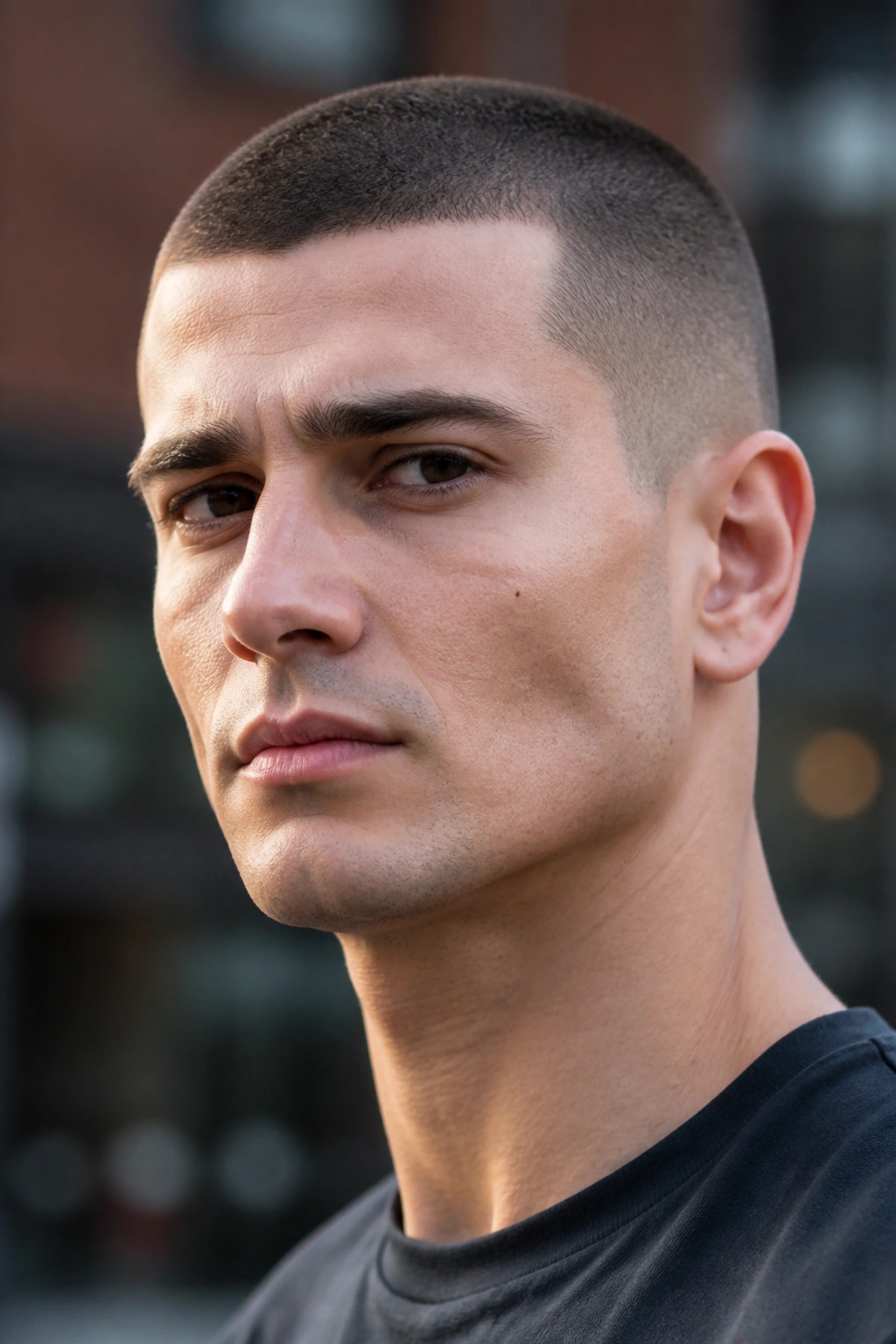
A close crop can be one of the boldest hairstyles for strong jawlines, and that is exactly why it works. There’s nowhere to hide. The shape of the face becomes the style, which means the cut has to be precise and the edges have to be clean. If the jawline is already defined, this can look sharp in the best way.
A buzz cut is a different kind of confidence. It strips everything down to line, texture, and head shape. A slightly longer crop on top gives you just enough room for movement, while the sides stay close and tidy. Clean neckline. Neat temples. No extra fluff. It’s simple, but not plain.
This style is easiest to wear when you like upkeep to be minimal. Trims matter because the shape shows quickly when it grows out. A matte paste can add a little separation if the top is long enough. If it’s very short, the cut works almost entirely on shape and symmetry.
For some faces, this is the most freeing option of all. The jaw does not need help. It needs space. And when the cut is honest about that, the result can feel fresh, clean, and surprisingly strong.
