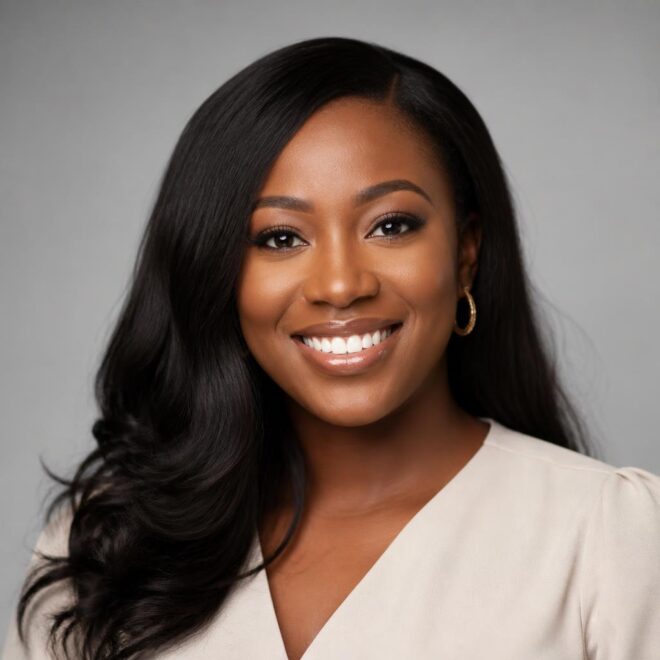


A blunt cut that stops right at the jaw can make a square face look harsher than it really is. The right hairstyles that flatter square face shapes do the opposite: they soften the edges, draw the eye upward, and leave the strong jawline looking polished instead of boxy.
That does not mean you need to hide your face shape. Square faces look striking. They have structure, and that structure can be gorgeous when the cut works with it instead of fighting it. The trick is usually a mix of movement, a little asymmetry, and lines that bend rather than stop dead.
I keep coming back to the same three things when I look at square-face-friendly hair: softness around the jaw, lift at the crown, and some kind of break in the line. A side part can do it. So can face-framing layers, waves, curls, or a fringe that sweeps instead of landing in a hard line. Tiny details matter more than people think.
And yes, the length matters too. A cut that ends exactly where the jaw is widest can look aggressive, while something that lands below the jaw or above it can feel much easier on the face. Not every square face needs the same treatment, which is why the best styles here range from short crops to long lengths and a few easy updos.
1. Long Layers That Start Below the Jaw
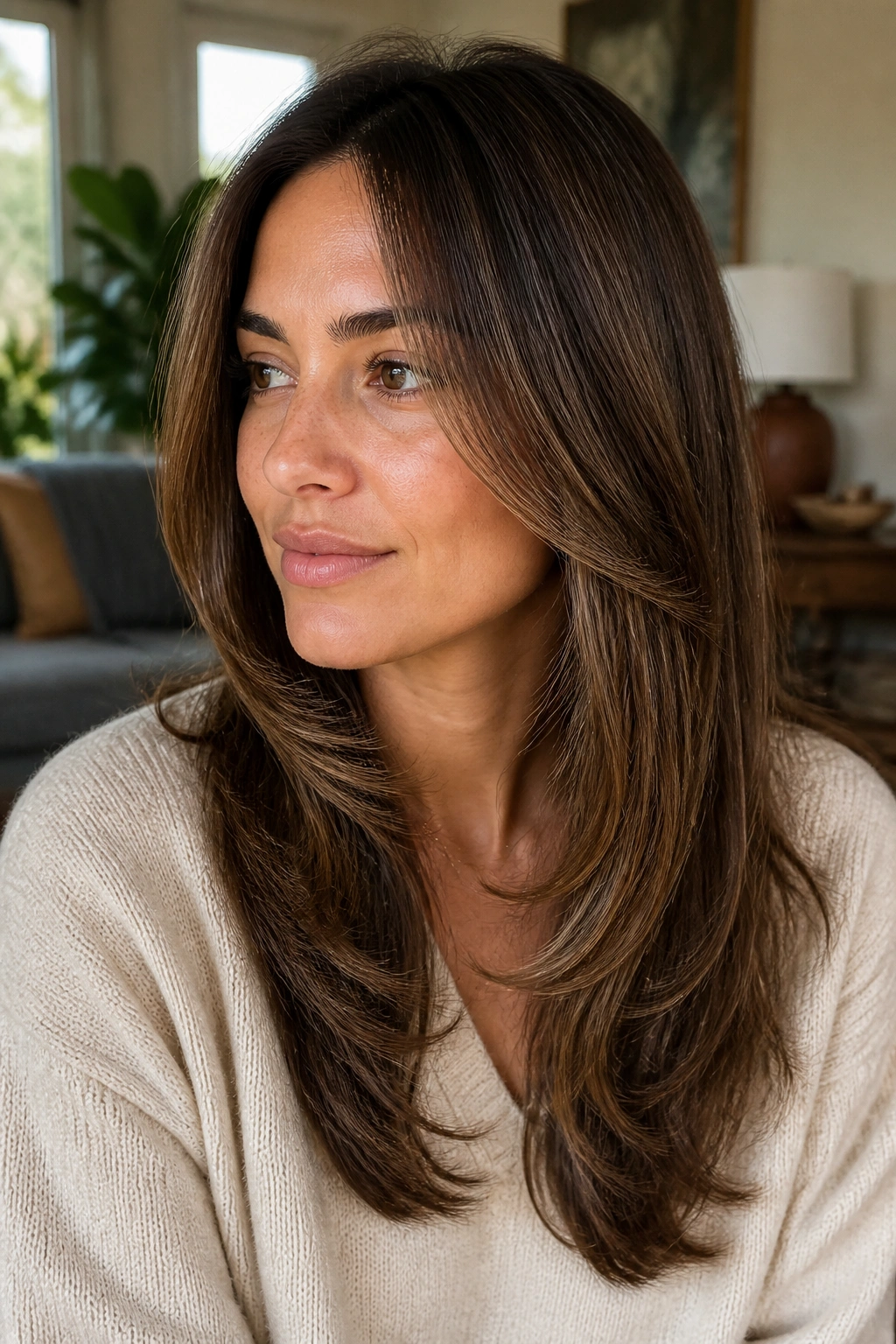
Long layers are one of the easiest hairstyles that flatter square face shapes because they keep the length you want while breaking up the straight vertical line. The important part is where the layers begin. If they start too high, you can end up with too much puff around the cheeks. If they start below the jaw, the shape looks softer right away.
Why the line matters
A square face already has clear edges. Layers that fall past the jaw give the eye something to follow downward, which makes the face feel a little longer and less boxy. I like this look best when the shortest pieces start around the collarbone or just under it.
A center part can work here, but a slight off-center part usually feels more relaxed. It keeps the look from becoming too symmetrical, and symmetry is the thing that often makes square faces look even squarer.
- Ask for layers that begin 2 to 3 inches below the chin.
- Keep the ends soft, not chopped flat.
- Blow-dry with a round brush for a slight bend at the bottom.
- Add a light styling cream so the layers move instead of frizzing out.
My favorite detail: the face-framing pieces should skim, not cling.
2. Side-Swept Bangs With a Collarbone Lob
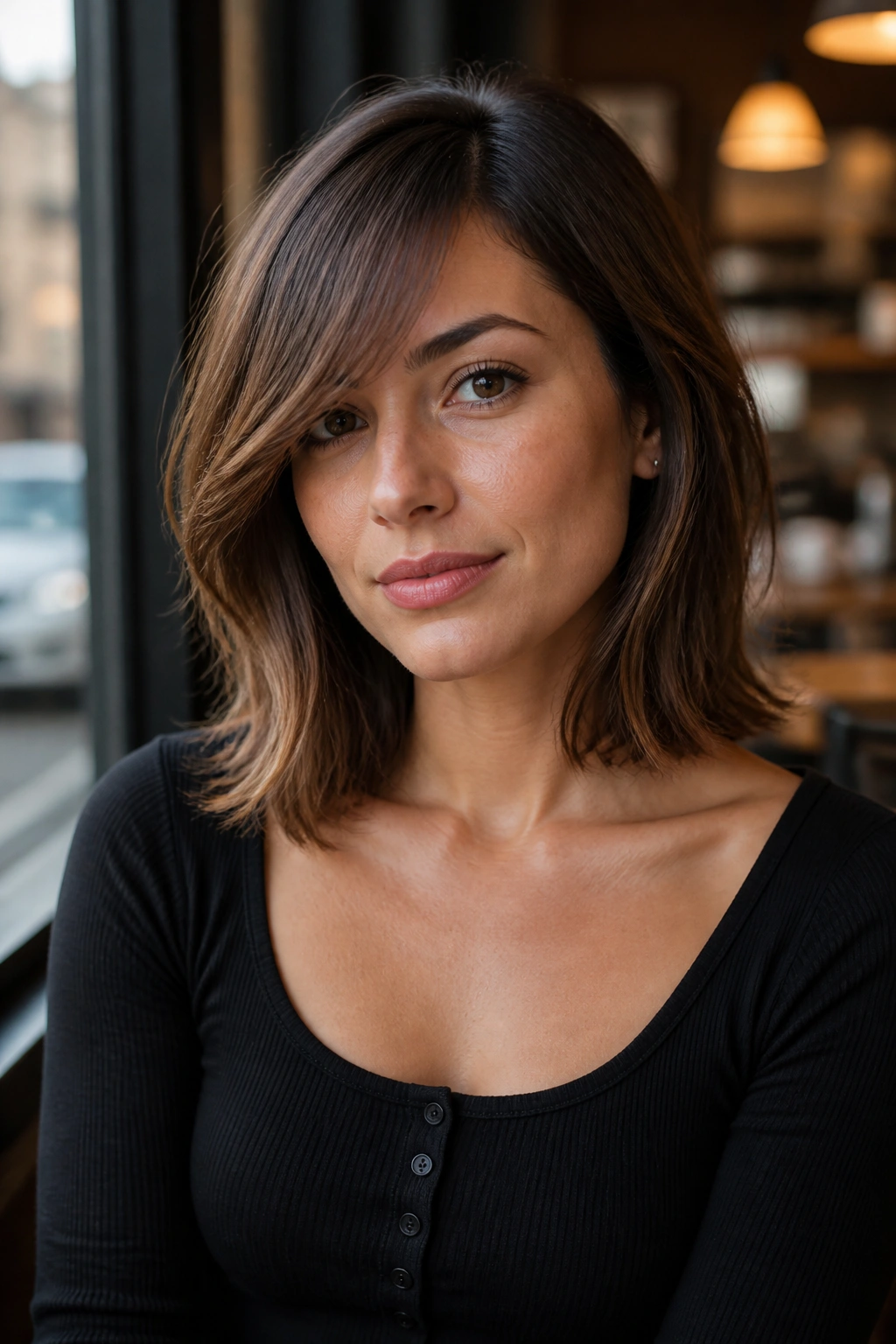
Side-swept bangs are one of those small changes that make a bigger difference than people expect. They pull the eye diagonally across the face, which interrupts the strong horizontal feel that square faces can have. Paired with a collarbone-length lob, they make the whole cut feel lighter.
A lot of people jump straight to curtain bangs, but side-swept fringe has a cleaner effect if you want something polished. It leaves one side of the forehead open and softens the other side without turning the front of the haircut into a curtain.
I’d especially recommend this if your jaw is wide and your forehead feels balanced with it. The diagonal line from fringe to length does a lot of quiet work. It makes the face seem less rigid without looking fussy.
Keep the bangs long enough to blend into the rest of the cut. Short side bangs that stop mid-forehead can feel dated fast. The sweet spot is usually just below the brow or grazing the top of the cheekbone.
3. Curtain Bangs With Shoulder-Length Layers
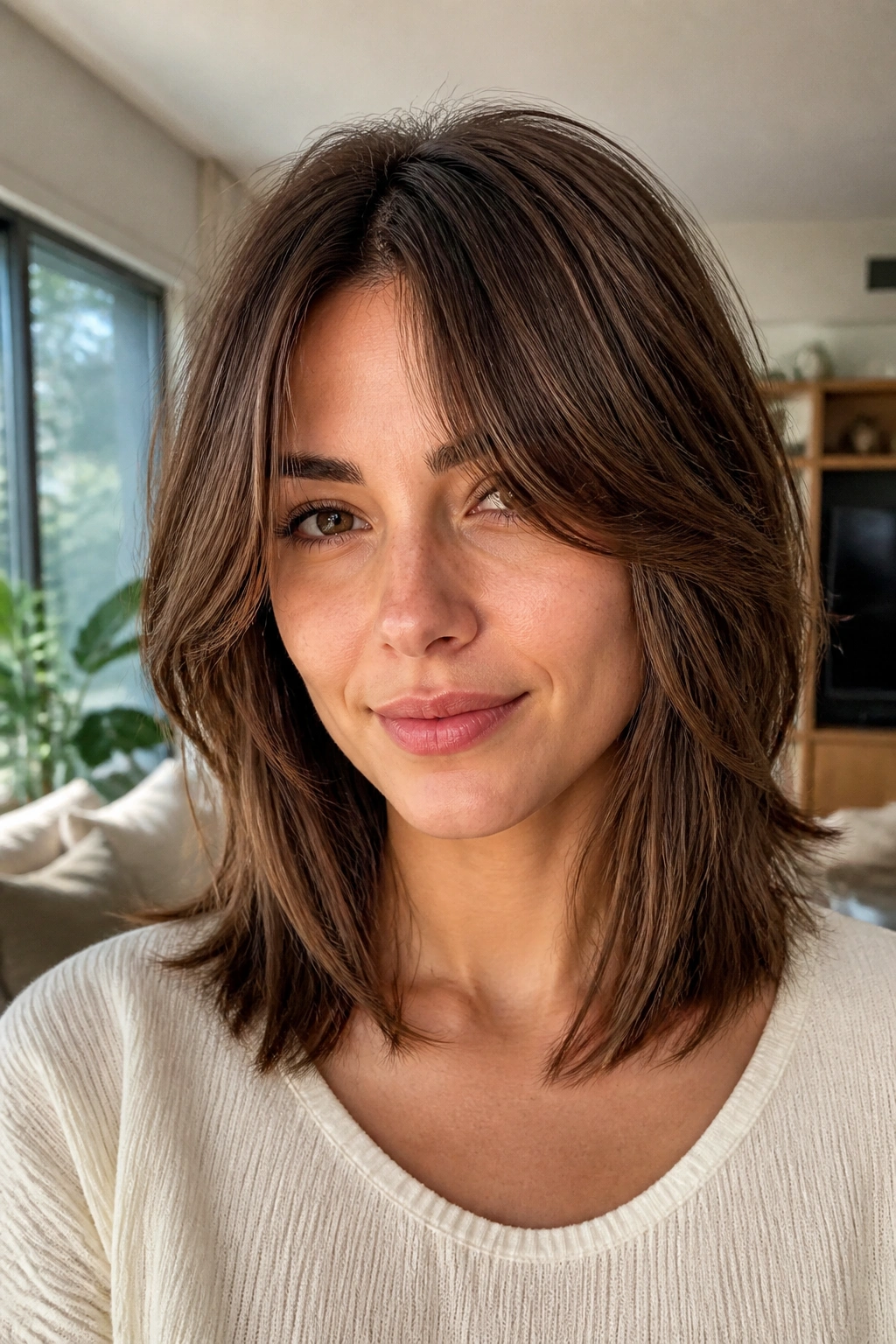
Can curtain bangs work on square faces? Absolutely—if they open in the right place. The best version starts near the brow or bridge of the nose and parts softly in the middle so the fringe falls away from the face instead of sitting across it like a shelf.
How to keep them soft
Shoulder-length layers are the best partner for curtain bangs because the length balances the width at the jaw. You get movement around the temples and cheeks, which is where square faces benefit most from softness.
The mistake is making the bangs too dense. Heavy curtain bangs can feel bulky on a strong face shape. Ask for airy, pieced-out fringe with longer outer corners that blend into the sides.
This cut works well with loose waves, but it also looks good blown smooth. If your hair is fine, a little root lift helps the bangs separate. If it’s thick, a round brush and a quick cool shot are enough to keep the front from collapsing.
4. Soft Beach Waves on Longer Hair

Picture long hair hanging straight over a square jaw. It can look severe. Add soft waves, and the whole mood changes. The bends in the hair interrupt the straight lines of the face, which is why beach waves stay on this list year after year.
The key is not curling every strand into the same shape. That gives you a pageant wave, and it can look too done. I’d rather see irregular bends, a few straighter sections, and ends that stay a little undone. That mix feels softer and more believable.
- Use a 1 to 1.25-inch curling iron.
- Alternate curl directions so the pattern doesn’t look stamped in.
- Leave the last 1 inch of the ends out for a looser finish.
- Break up the curls with your fingers once they cool.
A square face can wear long hair beautifully, but only if the hair has some life in it. Beach waves give you that without asking for a dramatic haircut.
5. A Deep Side Part With Sleek Lengths
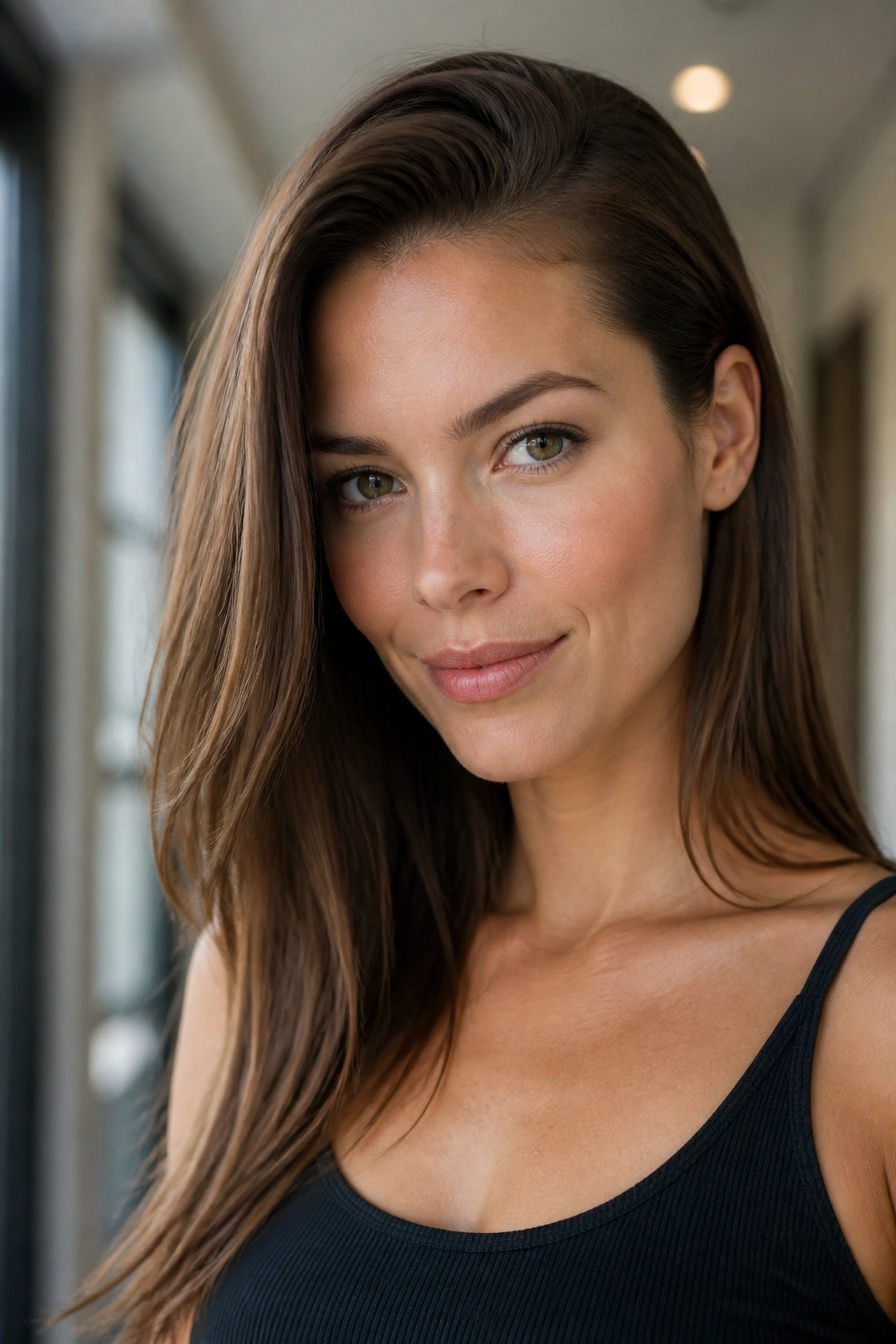
A deep side part is one of my favorite tricks for square faces because it changes the whole mood of the face without cutting a single inch. It creates asymmetry, and asymmetry is your friend when the jawline is strong. The face feels less blocky the second the part moves off center.
Sleek lengths work here because they keep the eye moving downward. The hair should stay smooth, but not flat as a board. A little root volume near the part gives the style shape, and that lift matters more than extra curl at the ends.
I’d use this look when you want something clean and grown-up. It suits straight hair, wavy hair, and thick hair that can hold a smooth finish. If your hair is very fine, a side part can help it look fuller at the top, which is a nice bonus.
This is not a style that needs much drama. In a way, that’s the point. The change is quiet, but it works.
6. An Asymmetrical Bob
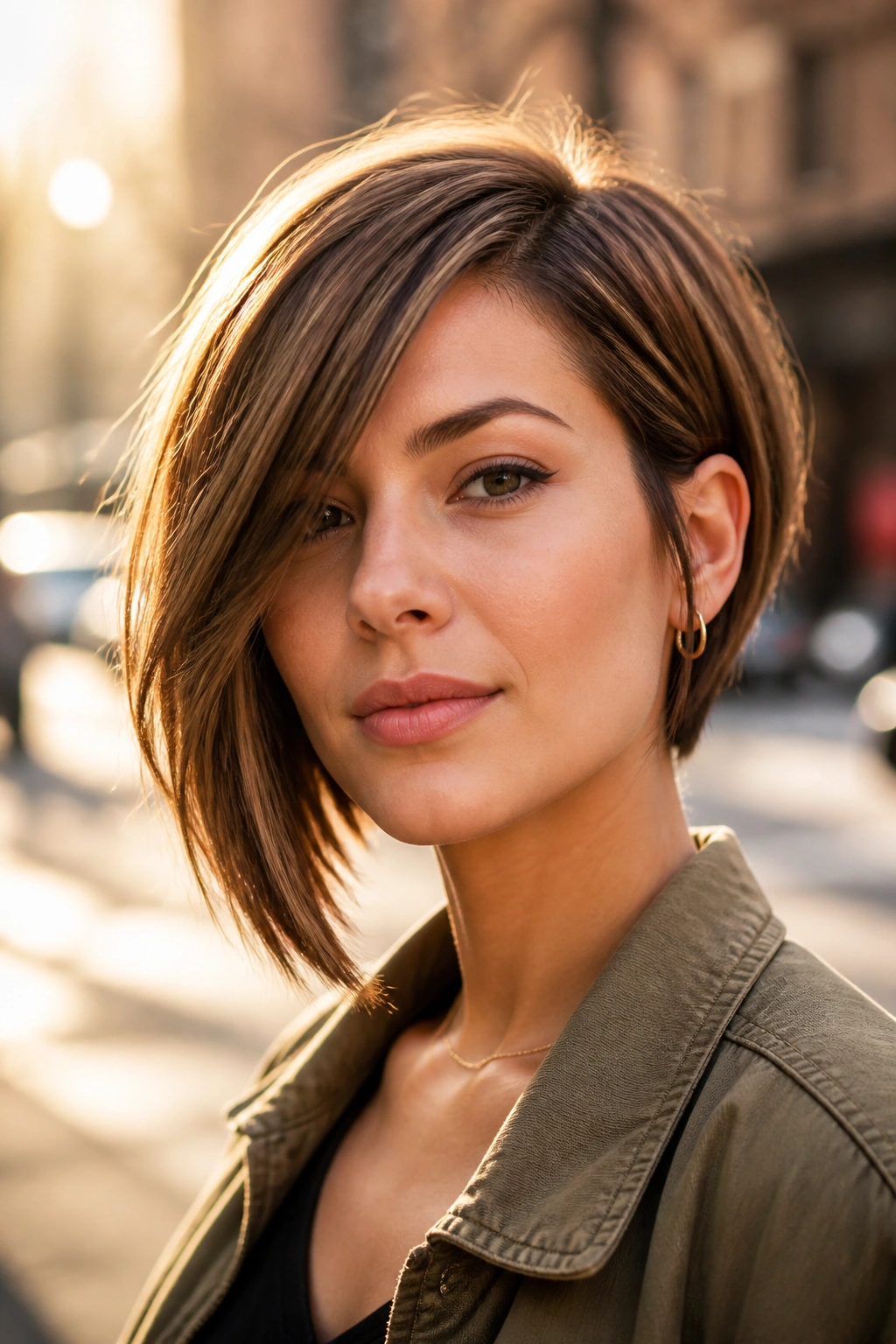
An asymmetrical bob is a sharp haircut that still plays nicely with a square face because the uneven length keeps the jaw from feeling boxed in. One side sits slightly longer, usually by an inch or two, and that tiny shift changes the whole balance.
Unlike a blunt bob that ends in a hard horizontal line, an asymmetrical bob gives your eye somewhere else to go. It breaks the width across the lower face and gives the haircut a cleaner sense of motion. I like it best when the shorter side grazes the jaw and the longer side dips toward the neck.
What to ask for
- A difference of 1 to 2 inches between the two sides.
- Soft internal layers so the cut doesn’t feel heavy.
- A side part to emphasize the angle.
- A subtle bevel at the ends, not a stiff shelf.
This cut has a little edge to it. Good. Square faces can carry edge well, as long as the line is controlled.
7. A Wispy Pixie With Lift at the Crown

Short hair is not off-limits. A pixie can look fantastic on a square face if the top has height and the sides stay tapered. The shape needs to rise, not spread outward, because width at the temples can make a square face look even more angular.
I prefer a wispy pixie over a heavy one here. Soft, separated pieces around the forehead and temples keep the cut from feeling too hard. If the fringe is short and blunt, the face can read boxy fast. If the fringe is piecey and sweepable, the whole cut lightens up.
What to tell your stylist
Ask for more length on top, feathered texture through the crown, and sides that sit close to the head. That combination gives you lift without bulk. A little mousse at the roots can keep the top from lying flat, and flat pixies tend to lose the point.
This is one of those cuts that looks expensive when it’s cut well. It also grows out in a graceful way if the shaping is done right.
8. A Collarbone Cut With Bent-Under Ends
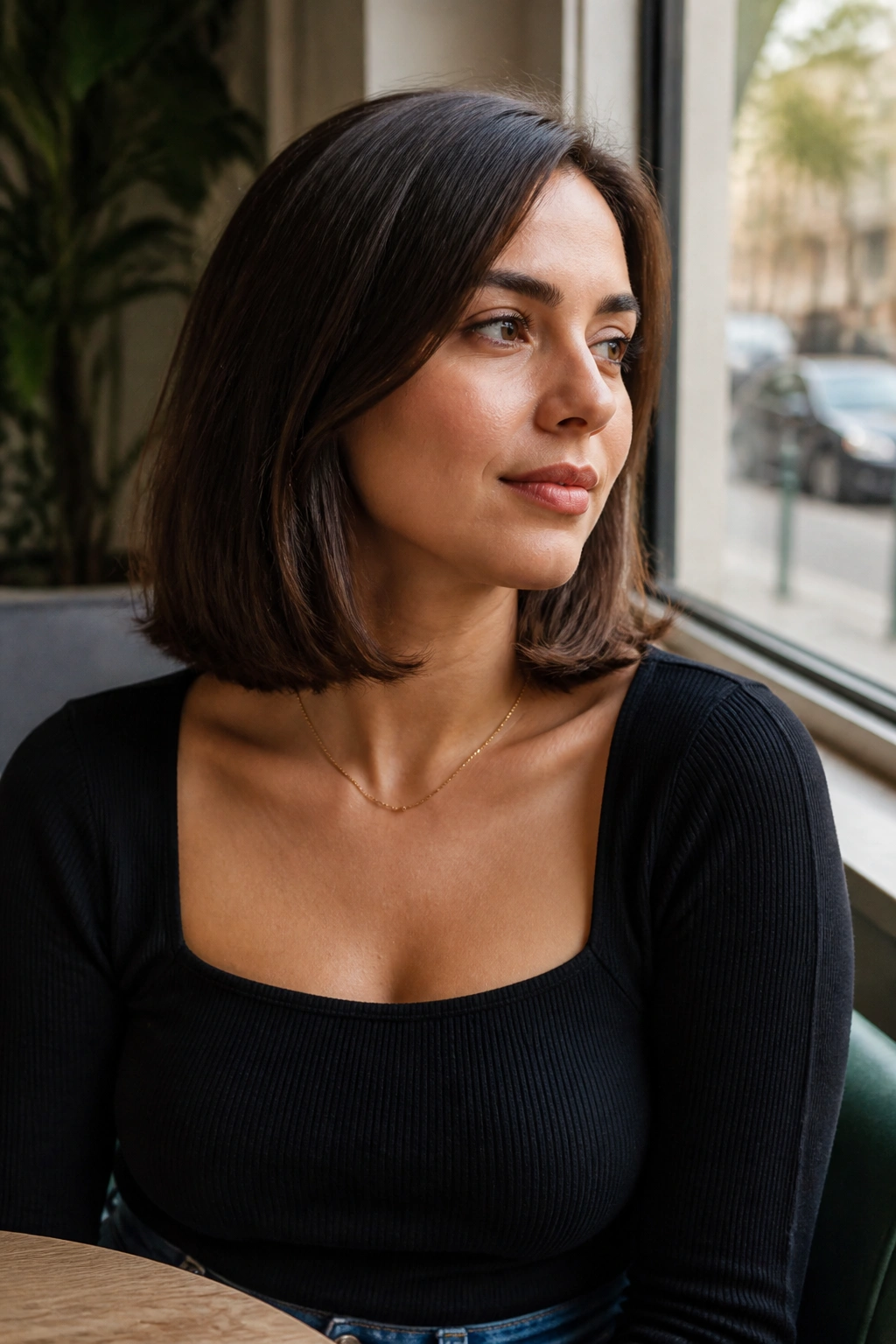
A collarbone cut sits in a sweet spot for square faces. It’s long enough to move past the jaw, but short enough to feel fresh and easy to style. The ends usually skim the collarbone, which gives the haircut a natural point of rest away from the strongest part of the face.
The bent-under finish matters more than people realize. When the ends curve slightly inward, the haircut feels softer and more controlled. Straight ends can look a little hard, especially on thick hair. A soft bend keeps the shape friendly.
This is a good choice if you want something low-maintenance but not plain. You can wear it air-dried with a little wave cream, or you can smooth it with a brush and let the ends turn under on their own. Either way, it won’t fight your face.
It’s also a forgiving length. Too many cuts on square faces live or die by one perfect styling session. This one doesn’t. It works when you’re in a rush.
9. A Layered Shag With Airy Movement

Why does the shag work so well here? Because it breaks up every hard line in sight. Square faces already have structure, so a cut with choppy layers, soft fringe, and a little messiness can be a relief. The hair moves. The face looks less fixed.
The modern shag should not feel like a helmet. That old heavy shape can widen the face in all the wrong places. You want the opposite: airy layers, separated ends, and fringe that falls loosely around the forehead instead of sitting in a hard block.
This style is especially good if your hair has natural wave or a bit of texture. It doesn’t need to be perfect. In fact, perfection can make it worse. A shag looks better when it has a little bend and swing in it.
If you like a lived-in cut and you do not want to spend much time with a round brush, this one’s worth a serious look. It has a bit of attitude without making the jaw the main event.
10. A Chin-Length Bob With a Soft Bevel

A chin-length bob sounds risky for square faces, and if it’s cut wrong, it is. But a soft, beveled version can work because the rounded edge keeps the line from sitting flat across the jaw. The shape should curve under slightly and stay a little longer in the front if possible.
The problem with the wrong chin-length bob is simple: it lands right where the jaw is already widest and stops there. That can look severe. A beveled bob softens that stop. A side part helps too, because it shifts the balance away from perfect symmetry.
- Keep the ends rounded, not blunt.
- Ask for a little extra length at the front.
- Style with a round brush or a large roller.
- Tuck one side behind the ear if you want more openness.
This cut is neat, sharp, and easier to wear than people think. It just needs softness built into the shape from the start.
11. Soft Curls With a Layered Perimeter

Soft curls are one of the simplest ways to flatter a square face because curves do what square edges cannot. They soften the jaw visually and take the edge off the forehead and cheeks too. The face stops reading as one straight set of lines.
The best version has layers through the perimeter so the curls don’t stack into a triangle. That matters. If the bottom gets too wide, the haircut can start to fight the jaw instead of easing it. I prefer curls that are loose enough to separate with fingers but still defined enough to hold shape.
A 1-inch iron, hot rollers, or a good diffuser can all do the job. The tool matters less than the finish. You want movement, not a stiff curl pattern that sits in one place. And if your hair is naturally curly, a layered cut can keep the shape from ballooning at the sides.
This look feels soft, feminine, and a little old-school in the best way. It never looks like it’s trying too hard.
12. A Feathered Mid-Length Cut

A feathered mid-length cut sits between classic and easy, which is part of why it works so well for square faces. The feathering takes weight off the sides and creates a lighter edge around the face, especially near the jaw and cheekbones. That keeps the haircut from feeling blocky.
Unlike a blunt mid-length cut, feathering gives the ends some air. The hair doesn’t stop in one hard line. It shivers a little. That tiny bit of movement makes a bigger difference than most people expect, especially if your hair is thick or naturally straight.
This cut is also good if you like brushing your hair smooth but still want it to look soft. Ask for point-cut ends or light feathering through the lower half. Too much slicing can make fine hair look stringy, so the technique should match the texture.
I’d call this a smart cut, not a flashy one. It does its work quietly, and that’s often the nicest kind.
13. A Half-Up Style With Crown Lift

A half-up style can flatter a square face more than a full updo because it lifts the top section while leaving softness around the sides. That lift matters. It elongates the face a little and keeps the jaw from carrying all the visual weight.
The version that works best has volume at the crown and a few loose strands around the temples. If you pull everything back tightly, the face can look harsher. A little looseness makes the style friendlier and less severe.
How to keep it from looking stiff
Tease the crown lightly, only at the roots, then smooth the top layer over it. Secure the half-up section with a clip or elastic placed slightly above the ears. Leave out small front pieces if you want more softness around the cheeks.
This style is handy because it works on straight hair, waves, and curls. It’s also one of the easiest ways to make second-day hair look intentional. I use it a lot for people who want structure without the heaviness of a full ponytail.
14. A Low Ponytail With Loose Face-Framing Pieces

Can a ponytail flatter a square face? Yes, if it sits low and doesn’t yank the hair straight back. The low placement keeps the style calm, and the loose face-framing pieces stop the jaw from feeling exposed.
A tight, high ponytail can make the face look harder. A low ponytail feels more forgiving. It’s the difference between a style that locks the face in place and one that lets it breathe a little.
The front pieces should be soft, not sculpted. You can curl them slightly, wave them with a flat iron, or leave them straight if they naturally bend. A middle part can work, but a soft off-center part tends to look easier on square features.
- Secure the ponytail at the nape, not higher.
- Pull a few strands free around the temples.
- Wrap a small section of hair around the elastic.
- Tug the crown gently for a bit of height.
This is one of those styles that looks simple because it is simple. That’s not a bad thing.
15. A Rounded Blowout With Flipped Ends
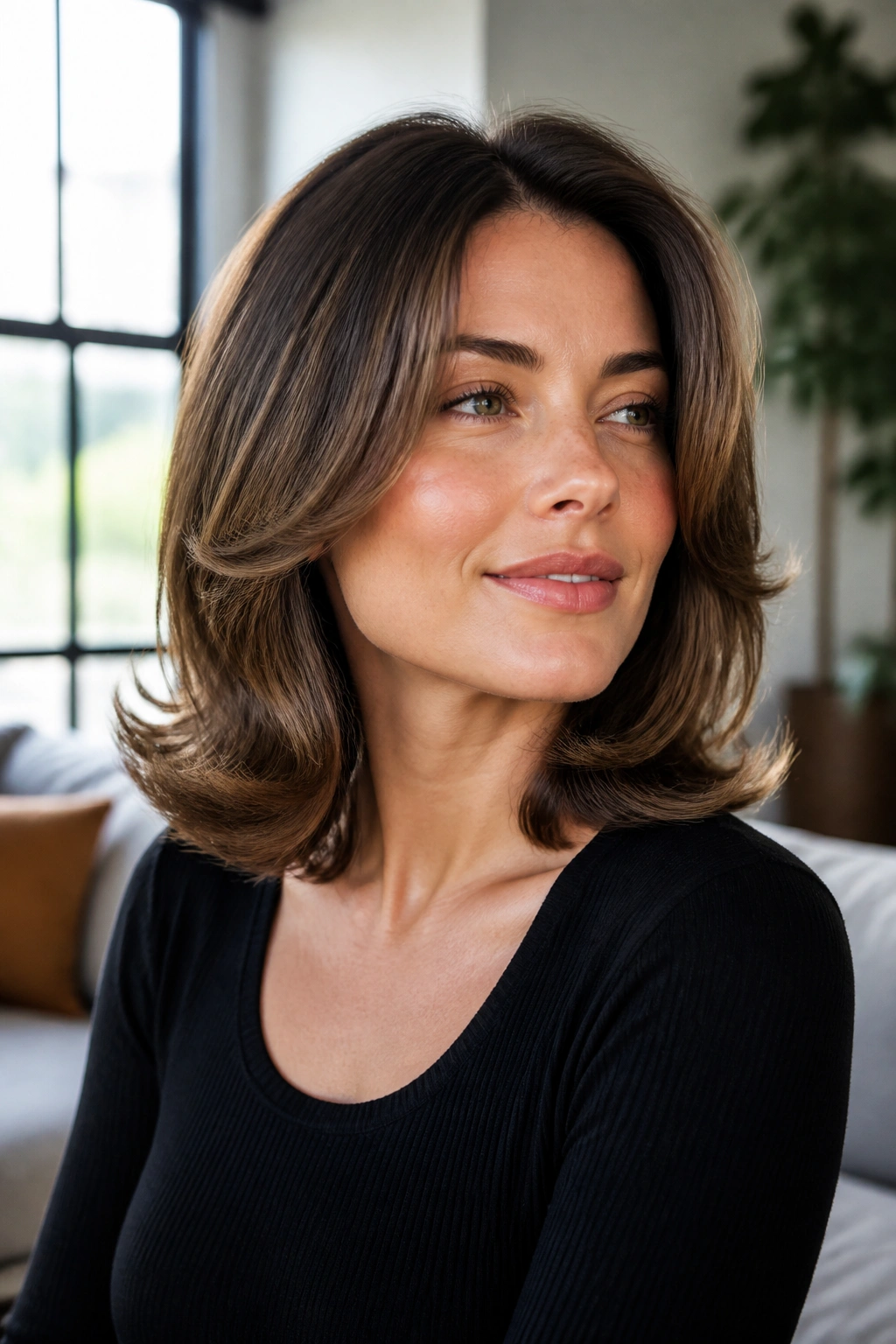
A rounded blowout adds softness in all the places a square face can use it. The blow-dry lifts the roots, rounds the body of the hair, and bends the ends away from a hard straight line. That curve does a lot of work.
I like this style on medium and long hair because it makes the whole face feel a little more oval without looking fake. A round brush around 1.5 to 2 inches wide usually gives enough bend without creating big, puffy curls. The ends can turn under or flick out, depending on what flatters your hair texture more.
This is one of the more polished looks on the list. It has a salon finish, but it doesn’t need to be stiff. The hair should move when you turn your head. If it freezes in place, the shape is too set.
A rounded blowout also plays well with side parts, curtain fringe, and long layers. It’s a flexible style, which means you can wear it to a wedding or to lunch and not feel overdressed.
16. Long Straight Hair With Invisible Layers
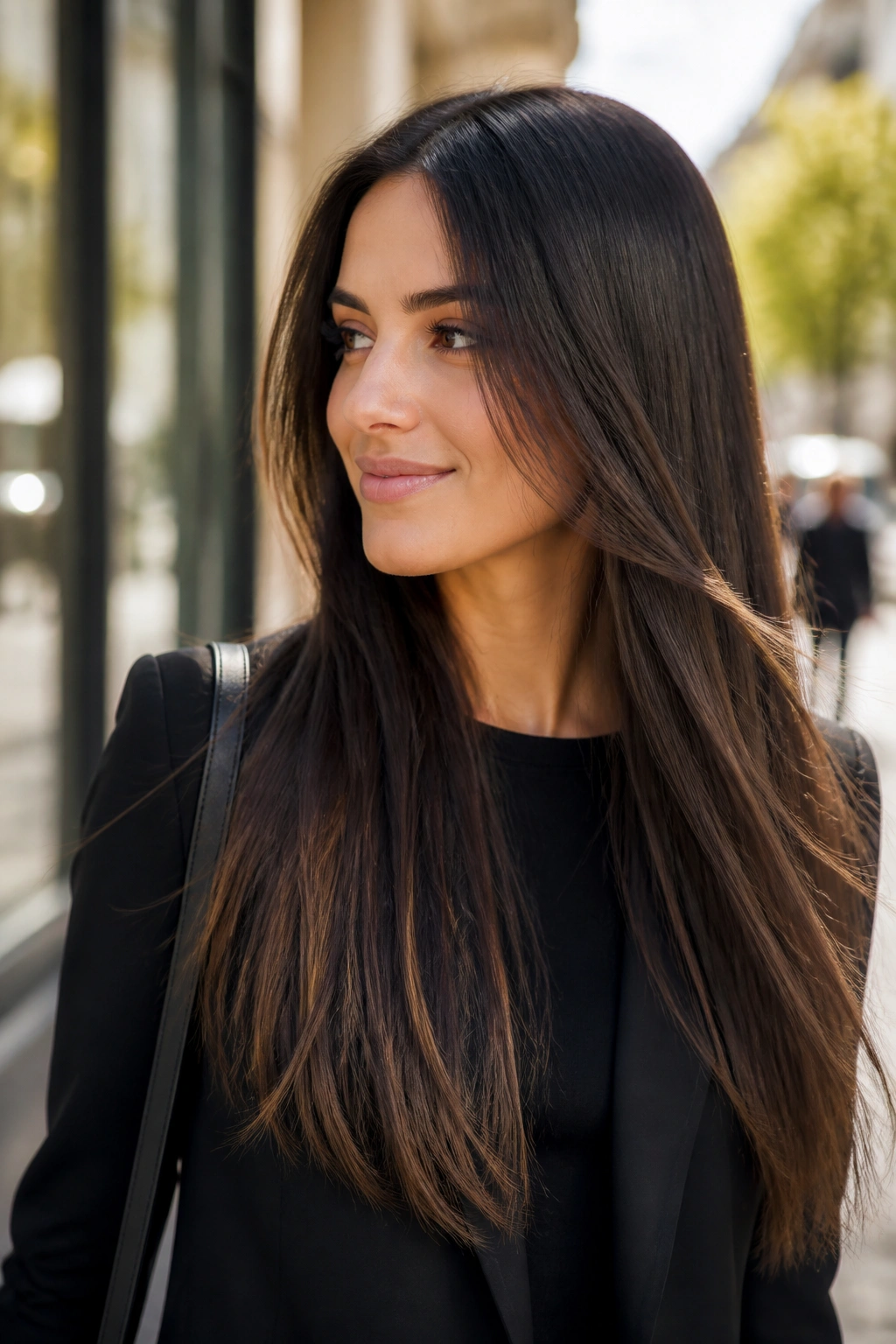
Long straight hair can flatter square face shapes if the cut has invisible layers. That means the hair looks smooth from the outside, but there’s internal shaping that keeps it from hanging in one heavy sheet. Without that, long straight hair can make the jaw look even more angular.
The invisible-layer part is the secret. It gives the hair movement when you walk, but it doesn’t chop up the line of the cut. If you like sleek hair, this is the best way to keep it from becoming severe. The face-framing pieces can start below the chin, which helps soften the lower half of the face without breaking the length.
This style works best when the hair has a little shine and a clean finish. A light smoothing serum, a careful blow-dry, and a flat iron pass only where needed is enough. You do not need poker-straight perfection. A tiny bend at the ends often looks better anyway.
Long straight hair gets a bad reputation on square faces because people imagine a flat, one-length curtain. That version is harsh. This version is not.
17. A Textured Lob With Hidden Layers

A textured lob is one of the most forgiving cuts for a square face because it sits in a balanced length and has enough movement to soften the jaw. Hidden layers keep the lob from looking heavy, but they do not steal the outline of the haircut. That makes it easy to wear every day.
I like this one for people who want structure without stiffness. The outer shape stays clean, but the inside has enough broken-up texture to avoid that solid block effect. If your hair is thick, hidden layers remove weight. If your hair is fine, they can be kept very light so the ends don’t look thin.
What makes it different
- The length usually lands between the chin and collarbone.
- The layers stay inside the haircut, not on the surface.
- A soft wave or bend helps the texture show.
- A side part gives the style a little more lift.
This is not the most dramatic option on the list, but it might be the one people actually live in. That counts for a lot.
18. A Loose Side Braid With Soft Tendrils
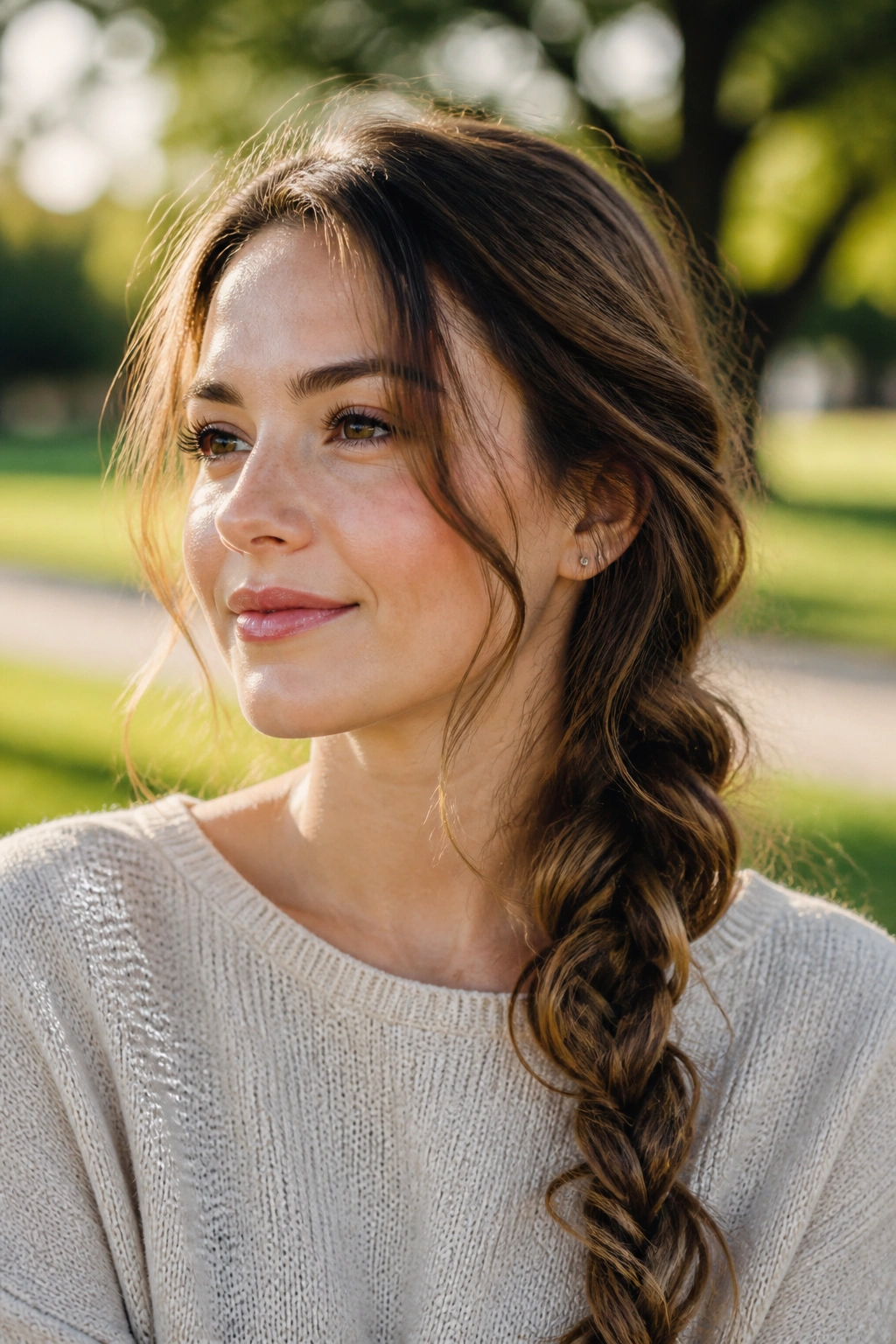
A loose side braid can flatter a square face because it shifts the visual weight off center and leaves room around the jaw. The braid itself adds texture, while the loose tendrils at the front soften the forehead and cheek area. It’s a nice mix of structure and ease.
The braid should sit low, not tight against the scalp. A soft, slightly messy braid looks better here than a polished one that pulls every hair back. The goal is to keep some movement around the face, not to expose every angle at once.
This style works for everyday wear, but it also handles dressier settings well if you wrap the braid loosely and pinch it apart a little after securing it. A few wisps around the temples make the face feel less severe. I’d avoid a tight Dutch braid pulled straight back unless you add volume at the crown, because that can sharpen the face too much.
If you want one style that feels easy, feminine, and forgiving, this is a strong finish. Keep it soft, keep it low, and let a few pieces fall where they want.