



Oval face shapes make long haircuts easier than most people think.
The trick is not to hide the face. It’s to keep the hair from swallowing it.
With an oval face, the forehead, cheekbones, and jaw usually sit in a balanced line, which gives you room to play with length, layers, bangs, and texture. A bad cut can still drag everything down—flat ends, a heavy center part, or a fringe cut in the wrong spot will do that fast—but the shape itself is forgiving in a way most people would envy.
What matters most is where the weight sits, how the front pieces fall, and whether the ends stay full or taper too sharply. That’s where long haircuts earn their keep. Some add movement near the cheekbones, some keep the outline clean, and some only need a little styling to look expensive without looking fussy. The haircut you pick should match your hair texture, your daily routine, and how much shape you want around the face.
1. Long Layers for Oval Face Shapes
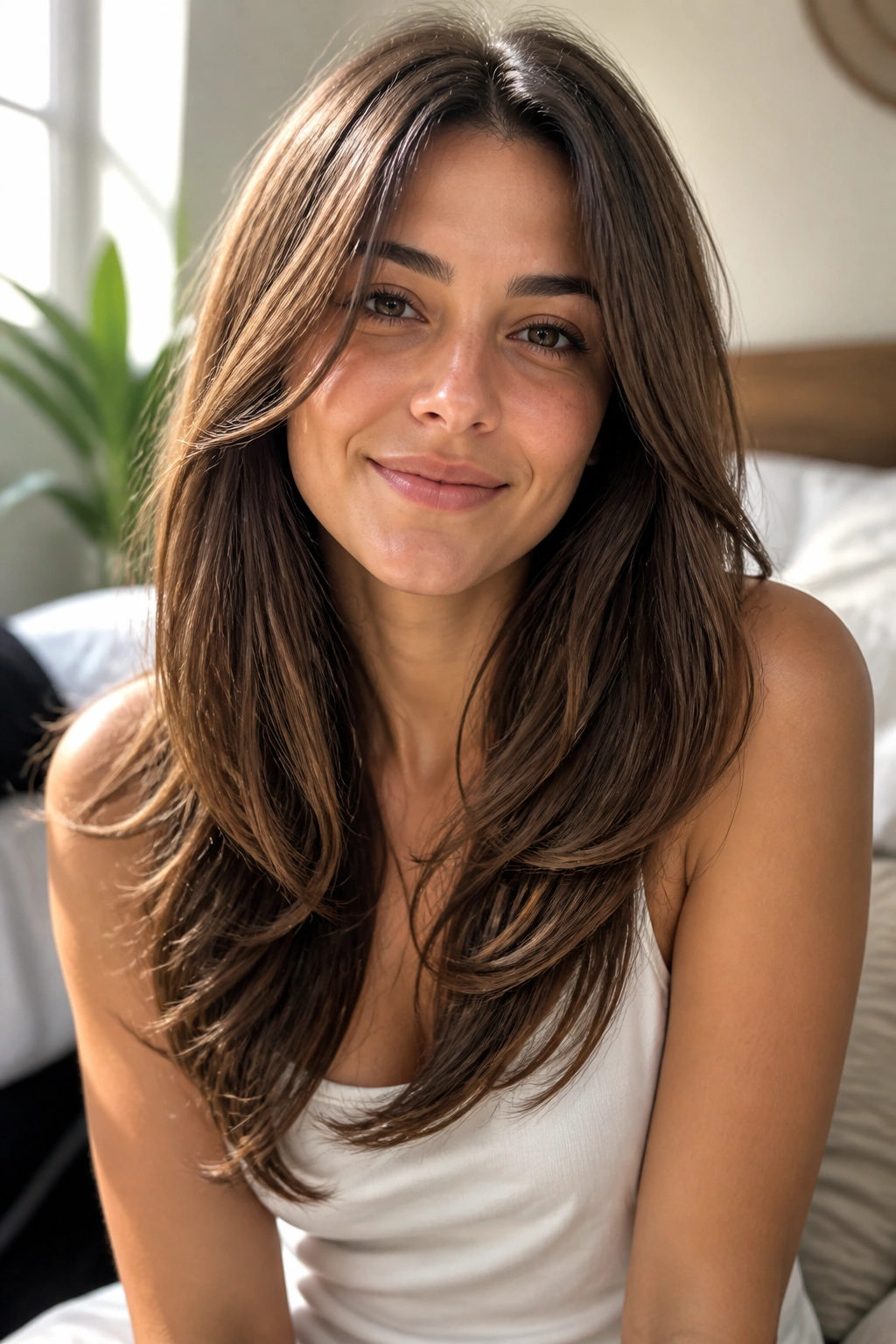
Long layers are the safest starting point if you want movement without giving up length. They keep the hair from hanging like one heavy sheet, which can make an oval face look longer than it needs to.
The sweet spot is usually a first layer that lands around the collarbone or a little below the chin. That keeps the front open while the back still reads as long and full. On thick hair, those layers take out weight. On fine hair, they add lift without chopping the ends into wisps.
Why It Works
- The face stays visible.
- The hair moves instead of sitting flat.
- The ends keep enough density to look healthy.
Best tip: ask for layers that blend softly, not chunky slices that leave the ends thin.
A good long-layer cut should still look nice when you throw it in a ponytail. That’s the hidden test. If the lengths around the face are doing all the work, the haircut will start to feel like a styling trick. If the layers are balanced, the whole shape holds up even on an unwashed day.
2. Curtain Bangs That Open Up an Oval Face

Why do curtain bangs keep showing up with oval face shapes? Because they give you the feel of bangs without closing off the forehead. That matters more than people think.
Curtain bangs work best when the shortest piece lands near the bridge of the nose or just above the cheekbone, then softens out toward the sides. The result is a gentle frame that can make long hair feel deliberate instead of simply long. They also let you tuck the bangs away on low-energy days, which is one reason people keep coming back to them.
How to Style Them
- Blow-dry them away from the face with a small round brush.
- Use a light mist of heat protectant before styling.
- Keep the finish soft, not stiff or shellacked.
- Trim every 4 to 6 weeks if you want the shape to stay open.
Curtain bangs are not the best match for every forehead height, and that’s fine. If your forehead is shorter, keep them longer so they split cleanly. If your hair has a stubborn cowlick, ask for a slightly heavier center so the pieces don’t spring apart before lunch.
3. Face-Framing Layers That Start at the Cheekbone
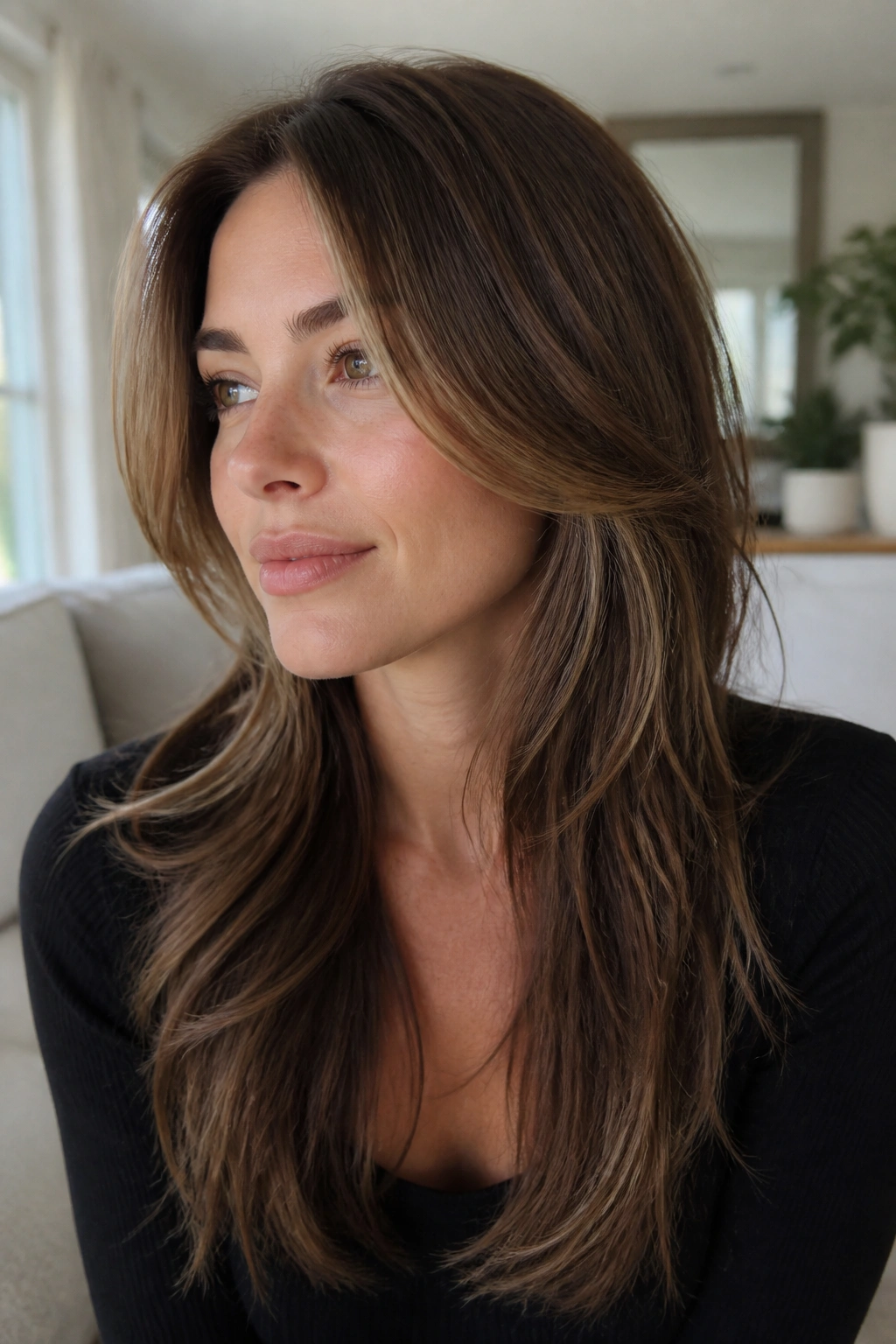
The cleanest long haircut for oval face shapes is often the one with face-framing layers and nothing extra getting in the way.
That sounds almost too simple, but simple usually works. The front pieces start near the cheekbone, curve softly past the jaw, and then melt into the rest of the hair. You get shape around the face without the choppy look that comes from over-layering. It’s a smart move for straight hair, wavy hair, and anyone who wants a cut that still looks like itself air-dried.
This is also the haircut that ages well between salon visits. When the front grows out, it still reads as a frame instead of an accident. That matters if you hate frequent trims.
The main thing is to keep the shortest front piece long enough to brush past the cheekbone. Too short, and the cut starts to feel busy. Too long, and you lose the whole point. The balance is what makes it work.
4. The Butterfly Cut With Long Bottom Length
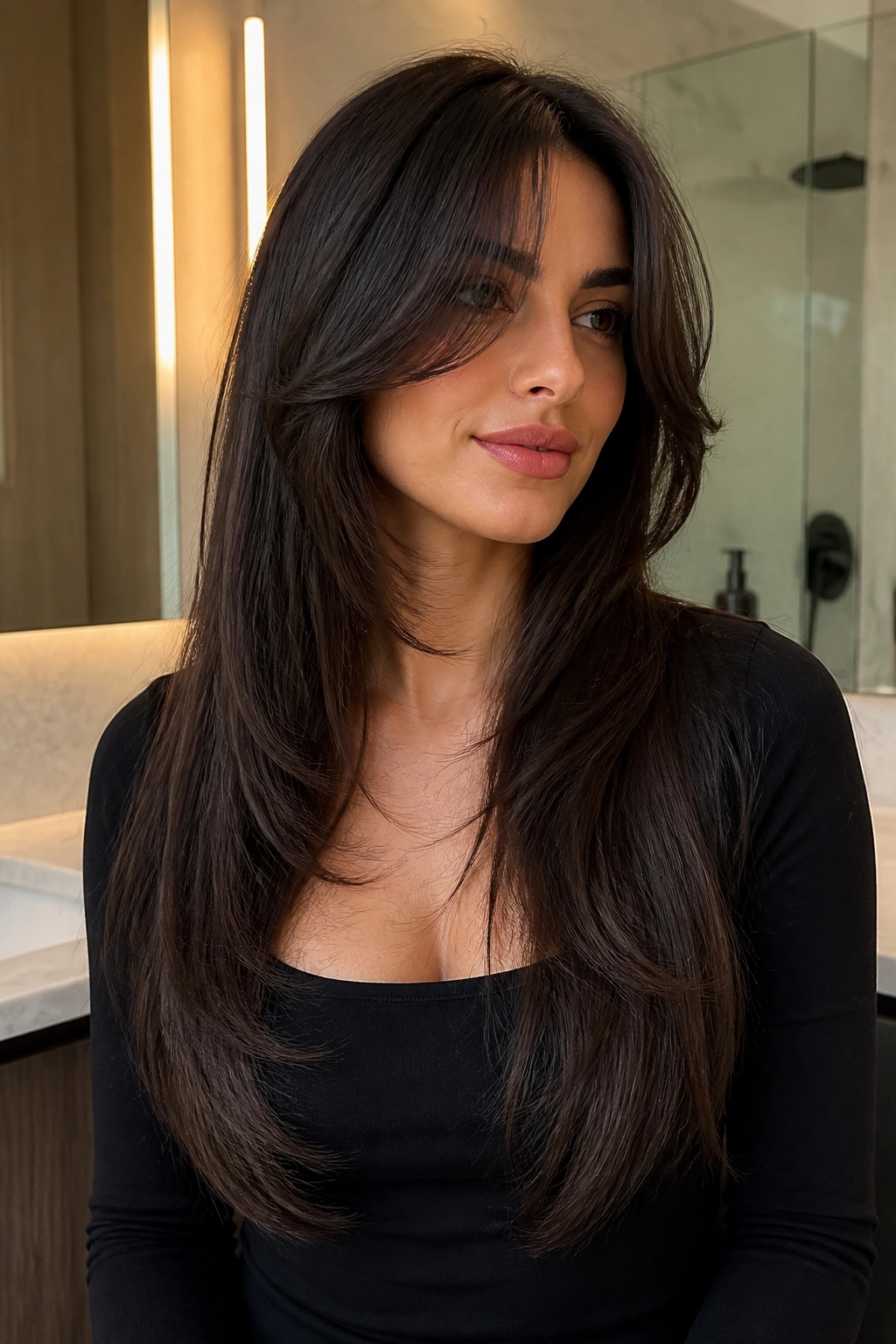
If long layers are quiet, the butterfly cut is their louder cousin. It gives you shorter pieces around the top and front, while the bottom keeps its long, dramatic length.
On an oval face, that extra lift near the crown and cheekbones can be a nice thing. It stops the face from getting visually stretched by too much hair falling straight down. The whole cut feels airy, but not thin. That’s the part people tend to like most.
What Makes It Different
- The upper layers create movement near the face.
- The bottom section stays long and obvious.
- The cut looks best with a round brush or blowout styling.
- It suits hair that has enough density to hold shape.
The butterfly cut can fall flat if your hair is very fine and sparse at the ends. In that case, the shorter layers may look great, but the longest section can start to look stringy. If your hair is medium to thick, though, this cut can look expensive without asking for much else.
Ask your stylist to keep the shortest layer at or below the chin. That keeps the shape soft and prevents the front from turning into a shaggy mess.
5. A U-Cut That Keeps the Ends Soft

A U-cut is one of those styles that looks calm from the back and polished from the front. The hemline curves gently upward at the sides, forming a soft U instead of a hard line.
That shape is useful when you want long hair to feel finished without looking severe. On oval face shapes, a U-cut keeps the outline smooth and lets the face stay open. It’s especially nice for medium to thick hair, because the curve keeps the ends from looking blunt and heavy.
Simple. Useful.
If you’ve got fine hair, the trick is to keep the U shallow. A deep curve can make the ends look too narrow, especially if the hair is long and straight. A small curve gives you the shape without sacrificing bulk where you need it most.
This cut also plays well with loose waves. The curve is subtle enough that it doesn’t fight the texture, which is the part a lot of people get wrong. They want shape, but they do not want the cut to boss the hair around.
6. A V-Cut That Adds Shape Down the Back
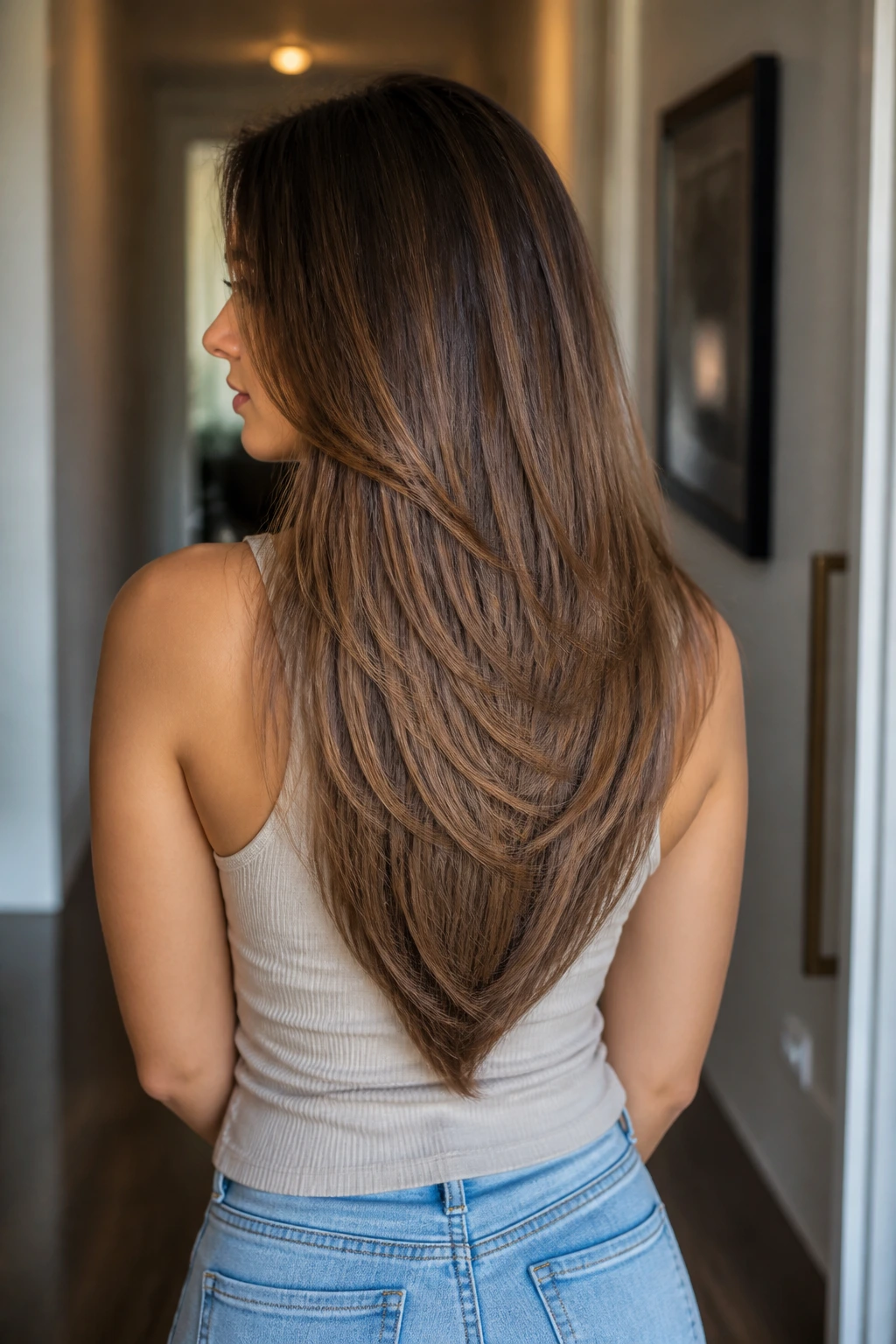
A V-cut gives long hair a clear silhouette from behind. The center falls longest, and the sides angle inward toward it, so the whole hemline forms a soft point.
That shape can look sharp in a good way on oval face shapes, especially if your hair is thick or naturally wavy. The hair keeps its drama, but the taper keeps it from feeling like one heavy rectangle. If you like the look of length but don’t want the bottom to feel blunt, this is worth asking for.
Ask for a Soft V, Not a Point
- Let the longest piece sit in the center back.
- Keep the side lengths gradually shorter, not abruptly cut.
- Ask for a blend that starts low so the front doesn’t feel chopped.
- Skip a deep V if your hair is fine or fragile.
The biggest mistake is going too sharp. A hard V can make the ends look thin and fussy. A softer version moves better and grows out more gracefully, which matters if you are not living in the salon every six weeks.
If you wear half-up styles a lot, the V shows off nicely. The shape becomes part of the look even when the hair is pulled back.
7. Center-Part Waves That Keep Oval Faces Balanced
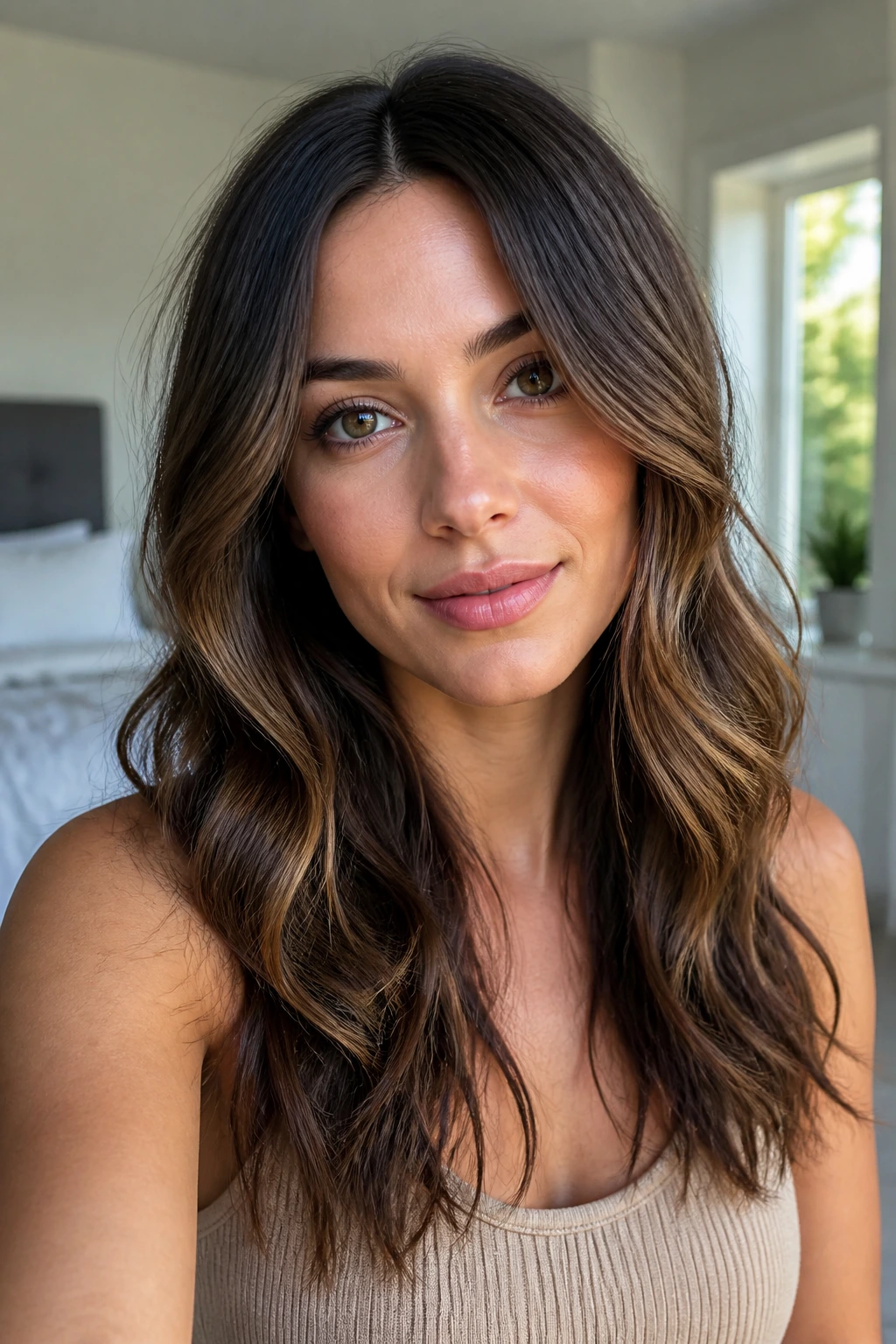
A center part can sound plain until waves enter the picture.
Then it gets interesting. On an oval face, a center part keeps the whole look balanced, and loose waves around the jaw and collarbone stop the hair from falling into a straight vertical line. The result feels clean without looking stiff. If you like the sort of hair that looks good on the second day, this is often the cut-and-style combo that delivers.
The key is where the bend starts. Waves that begin too low can drag the face down. Waves that start around the cheekbone or just below it keep things open and light around the front.
If your hair is naturally wavy, ask for long layers that encourage the bend instead of fighting it. If it’s straight, the haircut still works, but you’ll need a little heat styling or a loose braid routine to bring the shape to life. The center part is not doing all the work on its own. It just gives the haircut a clean line to rest on.
8. A Sleek Blunt Cut With Just a Little Texture

Blunt ends are underrated on oval faces.
People assume a blunt cut is too heavy for long hair, but that only happens when the hair is flat and the ends are left too bulky. On an oval face, a long, straight line can look sharp and calm at the same time, especially if the length hits the chest or bra strap. It gives the face room to stay visible while the hair does the quiet work of looking healthy.
The trick is to leave just enough texture in the ends so the haircut doesn’t turn blocky. A tiny bit of point-cutting makes a big difference. The edge still looks clean, but it moves when you walk. Heavy, over-thinned ends are the enemy here.
This cut is strongest on straight or slightly wavy hair. Thick hair can wear it well with a little internal debulking. Fine hair should keep the line crisp and avoid too much layering, because the whole point is density and shine.
9. The Long Shag With Airy, Piecey Ends
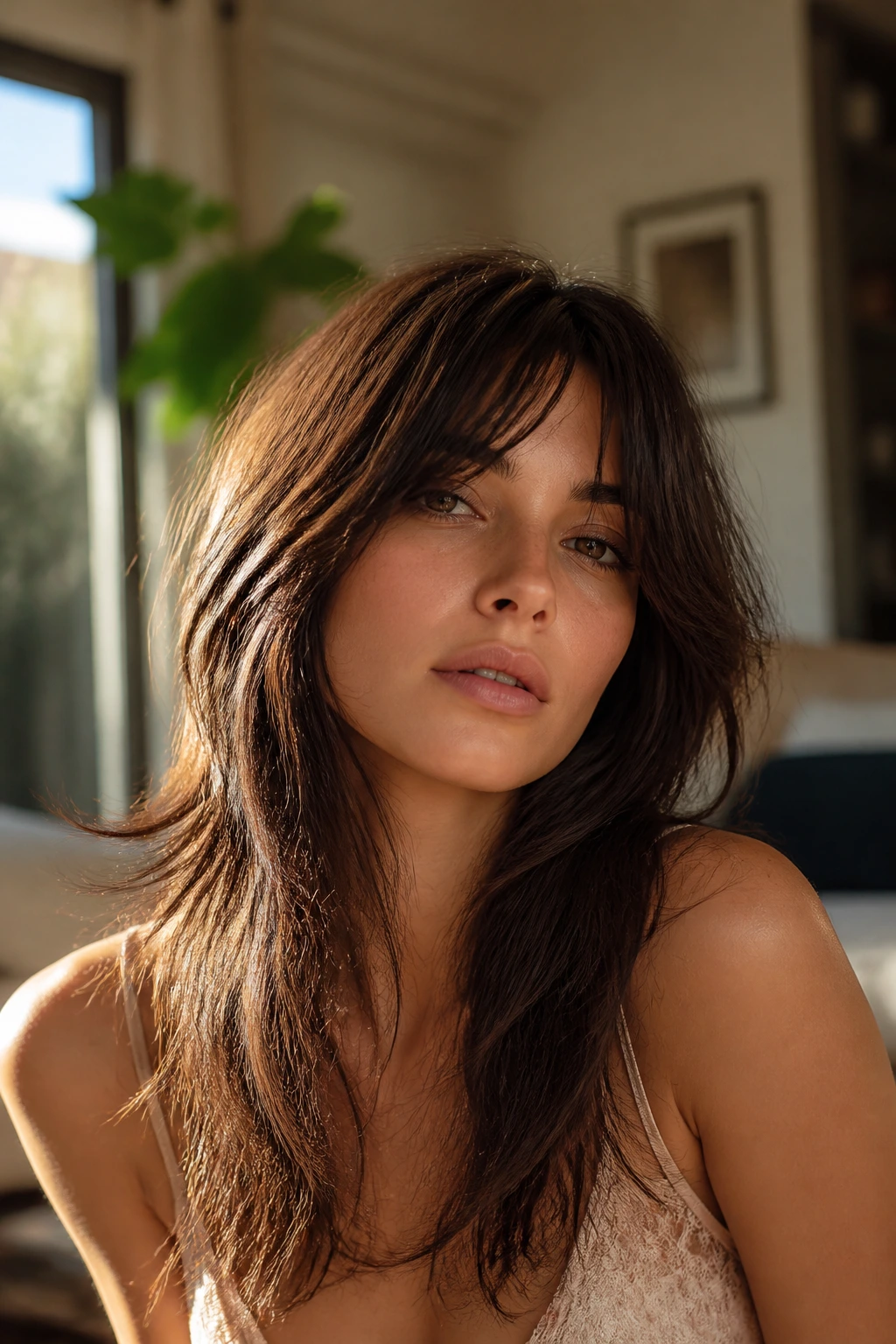
If you hate hair that behaves, the long shag is your cut.
It has a little attitude built in. Shorter layers at the crown and around the face create lift, while the longer lengths keep it from turning into a short, choppy mess. On oval face shapes, that extra height at the top can be a nice counterbalance to all the length below, especially if your hair tends to go flat after an hour.
What It’s Good At
- Creating movement without a lot of styling.
- Bringing out natural wave and bend.
- Making thick hair feel lighter.
- Giving straight hair a lived-in texture.
The long shag does ask for a certain mood. If you want sleek and polished every day, it may feel a little unruly. If you like hair that looks better with a rough dry and a scrunch of cream, this cut can be excellent.
The part a lot of people miss is that the shag should still have a shape. It is not random layers. The shorter pieces should sit where they frame the face and the crown, not scatter everywhere like a bad haircut from a college dorm bathroom.
10. Side-Swept Bangs for a Softer Oval Face
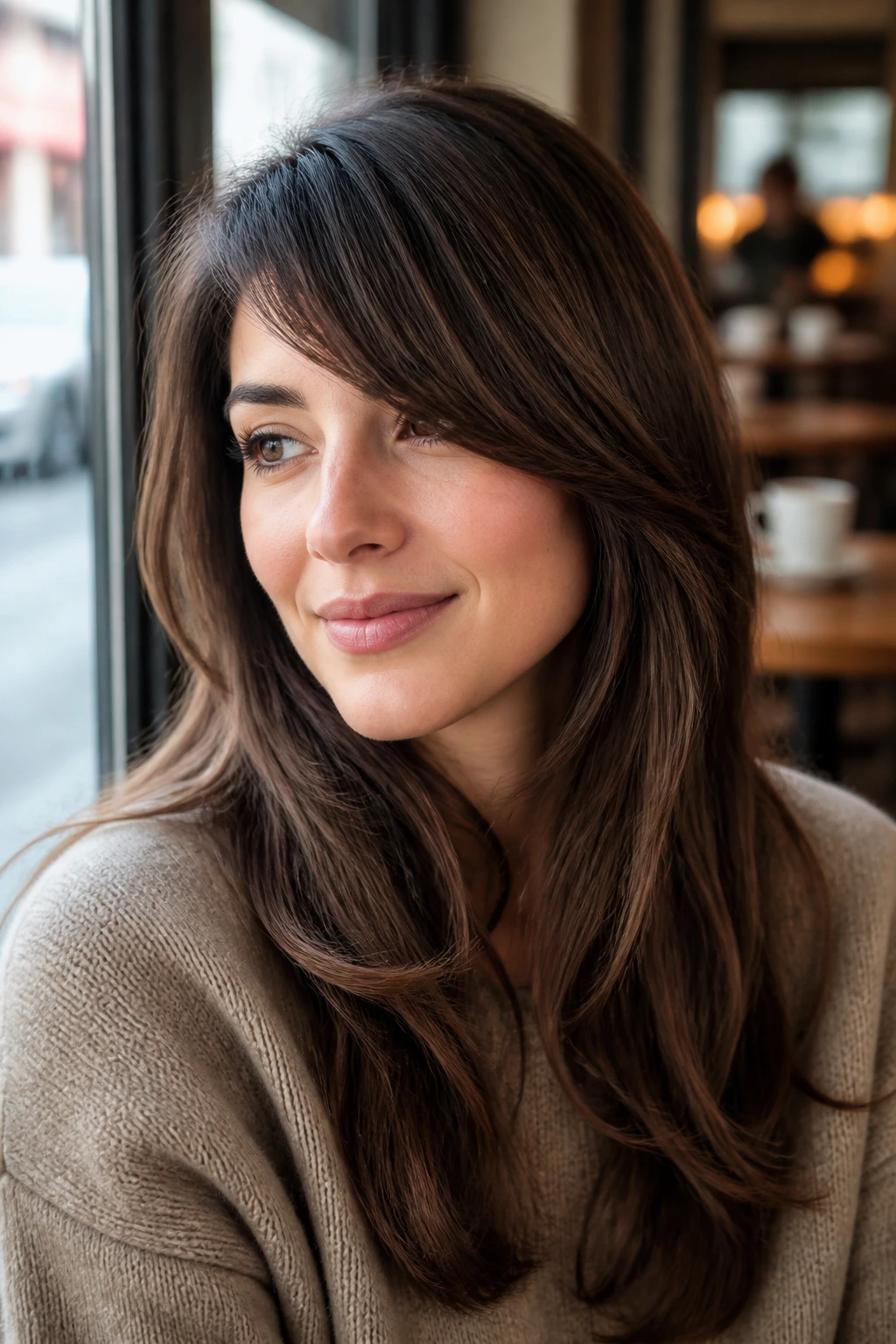
What if you want bangs, but not the full commitment of a straight fringe?
Side-swept bangs are the answer. They cut diagonally across the forehead, which softens the face and gives the haircut a little motion right where the eye lands first. On an oval face, that diagonal line can be flattering because it breaks up symmetry without fighting the overall balance.
They work best when the bangs are long enough to tuck behind the ear or blend into the front layers. Too short, and they can look dated. Too heavy, and they start acting like a helmet. The sweet spot is usually somewhere between the eyebrow and the cheekbone, depending on your hair density.
How to Style It
- Blow-dry the bangs across the forehead, not straight down.
- Use a medium round brush to keep the bend soft.
- Keep a light dry shampoo nearby if your roots get oily fast.
- Trim before they start poking into your eyes.
This style is a good fit if you want movement but not a full fringe. It also grows out better than a blunt bang, which is not a small thing.
11. Bottleneck Bangs With Long Length Behind Them

Picture a fringe that starts narrow in the middle and opens near the temples. That’s the bottleneck bang.
It’s one of the more flattering fringe shapes for long hair because it gives structure without sealing off the face. On oval face shapes, bottleneck bangs can make the forehead look soft while still letting the length do its job. They sit between curtain bangs and a classic full fringe, which is exactly why people keep asking for them.
The shape matters. The middle should be short enough to graze the brows, while the outer pieces should slide toward the cheekbones. That widening effect keeps the face open. If the bangs are cut too bluntly, they lose the point and start looking boxy.
What to Tell the Stylist
- Keep the center piece light and mobile.
- Let the outer edges blend into the face-framing layers.
- Avoid a heavy block of hair across the forehead.
- Keep the fringe soft enough to part naturally.
This cut looks best with a small round brush and a bit of patience. Not a lot. A few minutes, maybe. If your hairline is strong or your cowlick is busy, ask for a longer center piece so the bangs settle instead of fighting you all morning.
12. Rounded Layers for Thick Hair

Heavy hair can make an oval face look longer if the sides puff out in the wrong place.
Rounded layers fix that. Instead of stacking weight in a straight line, the layers curve gently inward and guide the hair around the face and shoulders. The cut still stays long, but the outline feels softer and less boxy. Thick hair needs that kind of control, because one blunt edge can turn into a shelf.
A rounded shape also makes the ends feel lighter without thinning them to death. That’s the real win. You keep the body, but you lose the bulk that makes the hair look bulky at the jaw or shoulders.
One-sentence truth: this cut needs a decent blow-dry.
If you let it air-dry with no shape, the curve can disappear and the whole thing can land in triangle territory. A paddle brush or a large round brush helps the layer pattern show up, especially around the front.
13. Wispy Fringe With Soft Long Ends

A wispy fringe is the easiest way to add face detail without giving up length.
It works because it gives the forehead a little texture and keeps the hair from reading as one long block. On oval face shapes, that extra detail can be enough to make the whole haircut feel styled even when the rest of the hair is simple. The fringe should stay light, though. Not see-through. Not frayed. Just airy.
This is a good choice if you want a softer, more delicate look. It’s also friendly to fine and medium hair, because the fringe does not need much density to sit well. Coarse hair can wear it too, but the styling has to be more careful or the fringe starts separating in odd ways.
The downside is maintenance. Wispy bangs can spread out fast in humidity, and they need regular trims if you want them to stay flattering. If you hate touching your bangs every morning, this is probably not your easiest option.
Still, there’s something nice about how little effort the rest of the cut needs. The fringe does the talking.
14. Long Layers for Curly and Wavy Hair

Curly hair can go puffy at the bottom when it’s cut all one length. Wavy hair can do the same thing, just more quietly. Long layers fix that by removing bulk inside the shape instead of hacking the perimeter apart.
On oval faces, curly and wavy textures already bring their own shape, so the haircut should support that instead of fighting it. The best approach is usually a dry or mostly dry cut, where the stylist can see how the curls sit and how much they spring up. That keeps the face pieces long enough to account for shrinkage.
What to Ask For on Curly Hair
- Keep the perimeter long and intact.
- Remove weight from the inside, not just the ends.
- Avoid over-thinning unless your stylist really knows curls.
- Leave the front pieces long enough to frame the cheekbones after shrinkage.
Please skip the razor-happy thinning if your curls already lose shape at the ends. That’s how you get frizz and weak ends. A good layered curl cut should move, not collapse. It should feel springy in the hand and look full without turning into a triangle.
15. A Slightly Asymmetrical Long Cut

A small imbalance can look sharper than perfect symmetry.
That’s why a slightly asymmetrical long cut can work so well on oval face shapes. It gives the hair a little edge without making the whole style look dramatic or hard to wear. Usually the difference is subtle—maybe one side is 1 to 2 inches longer than the other, or the front falls heavier on one side of the part.
This kind of cut is best if you like tucking hair behind one ear, wearing a side part, or letting the front pieces move when you turn your head. Straight hair shows the line more clearly. Wavy hair softens the contrast and makes the asymmetry feel less obvious, which some people prefer.
The risk is going too far. A dramatic asymmetrical cut can start to feel like a statement piece, which is not what most people want from a long haircut. Keep it quiet. Let the difference be felt more than announced.
Oval faces can handle this shape because the base proportions are already balanced. The haircut just adds a little tension.
16. Blowout Layers That Flip at the Ends

The cut that looks best after a round-brush blowout is not the same as the cut that looks best air-dried.
Blowout layers are built for movement. They usually start around the collarbone or below the cheekbone, then sweep out and away from the face with a gentle flip at the ends. On oval faces, that movement keeps the length from feeling heavy and gives the whole shape a salon-polished finish.
What to Ask For
- A soft face frame that begins around the chin or lip.
- Layers that keep the crown from going flat.
- Ends that can turn under or flip out without looking stiff.
- Enough length to hold volume after the brush comes out.
This haircut rewards a little effort. A large round brush, a heat protectant, and a cool shot at the end can make it look like you spent more time on it than you did. That’s the appeal. It’s not lazy hair. It’s hair that knows what a good blowout can do.
The best version still looks good when it relaxes. If the cut only works right after styling, it’s too dependent on one trick.
17. Waterfall Layers That Fall in a Soft Cascade
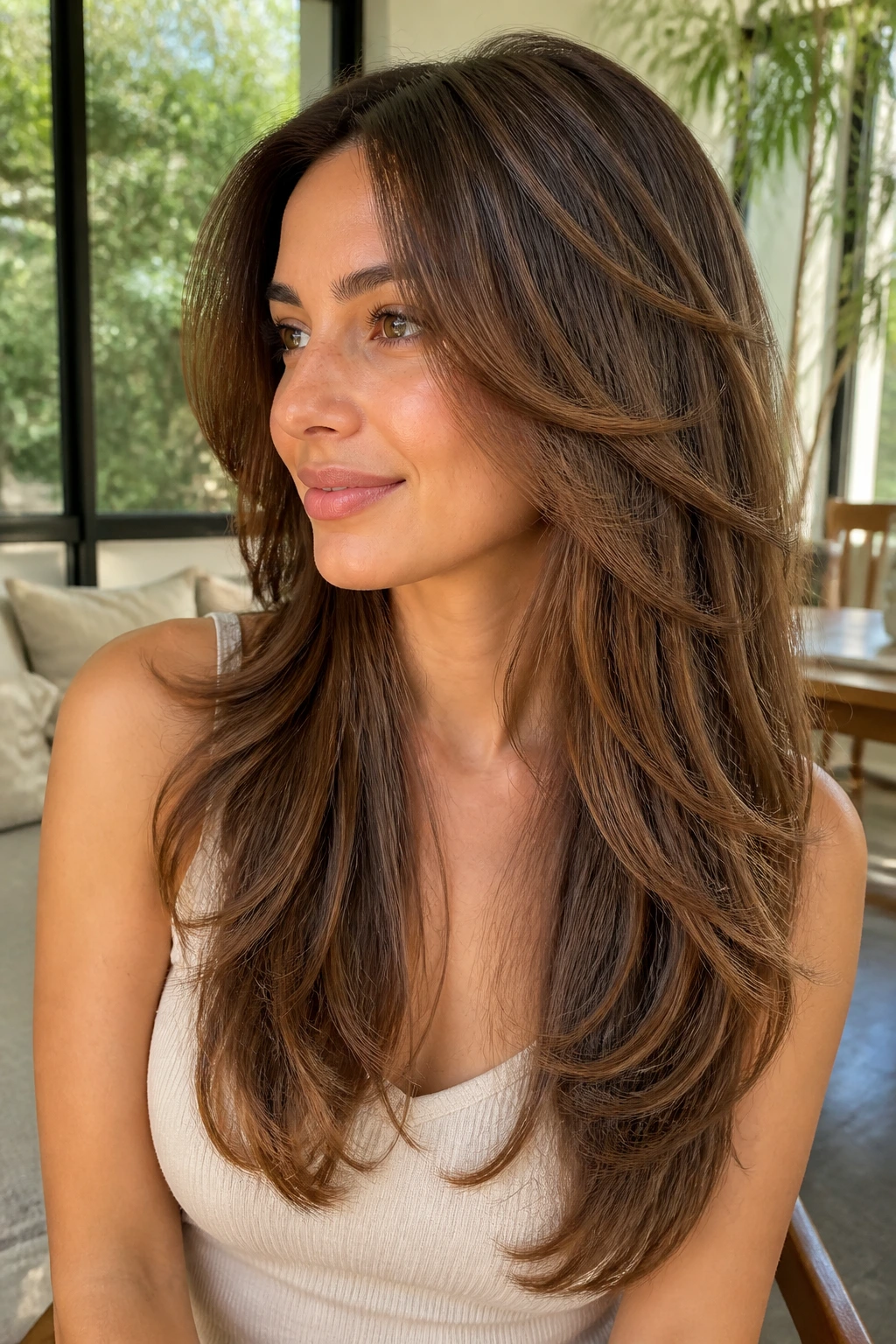
Why do some long cuts look soft without looking flat? Because the layers fall in a cascade instead of stepping down in harsh chunks.
Waterfall layers are a good fit for oval face shapes because they keep the hair moving around the face while preserving length through the ends. The layers tend to blend one into the next, so the shape feels smooth and flowing rather than chopped. That matters if you like long hair that still has some life in it.
They work especially well on medium to thick hair with a little natural wave. Straight hair can wear them too, but the cut is more visible when there’s some bend. If the hair is very fine, keep the layers subtle so the ends don’t lose their body.
How It Differs From a Shag
- A shag is rougher and more piecey.
- Waterfall layers are softer and more blended.
- A shag pushes texture forward.
- Waterfall layers let the shape fall down the length.
If you want movement but not a messy finish, this is a good lane to stay in. The whole haircut feels like it was designed, which is exactly the point.
18. Choppy Long Ends for an Easy, Low-Fuss Finish

Not every oval face needs a dramatic layer story.
Sometimes the best answer is long hair with choppy ends, a few invisible layers, and enough texture to keep the shape from going limp. On oval face shapes, that simplicity works because the face already has balance. You do not need the haircut to do all the talking. You just need it to stay neat and alive at the same time.
This is the cut for people who want length first and styling drama second. The ends are point-cut or lightly textured, which keeps the hair from looking blunt in a dated way. The front can still have a small frame if you want it, but the main idea is clean length with a bit of movement at the bottom.
It’s also the easiest long haircut to live with if you dislike frequent salon visits. The grow-out is forgiving, the shape stays soft, and the hair still looks intentional even after it’s been tucked behind your ears a few too many times.
If you want one honest rule to carry with you, use this: healthy ends beat complicated layers. Every time. A long haircut on an oval face looks best when the hair is shiny, full at the bottom, and cut with enough restraint to let the shape breathe.
