



Round face shapes are easy to overthink. The wrong haircut can make the widest part of your face sit front and center; the right one shifts the eye upward, drops a clean line past the chin, or breaks the circle with angle and movement. That’s the whole game, really.
The best hairstyles for round face shapes usually do one of three things: add height at the crown, build length below the jaw, or create diagonal lines that move across the face instead of sitting straight across it. Side parts help. So do layers that start lower, not right at the cheeks. Heavy, blunt width at the same level as the face? Usually a bad idea.
Texture matters, too. Fine hair needs lighter shaping so it doesn’t collapse. Thick hair needs enough structure to avoid turning into a wide triangle. Curly and wavy hair can look gorgeous on a round face, but the shape has to be controlled so it doesn’t puff out at the sides.
Short hair can work. Long hair can work. Bangs can work. The trick is choosing the version that gives the face a little more length or a little more angle — not the one that makes the head read wider. Start with the easiest win.
1. Deep Side Part With Long Layers
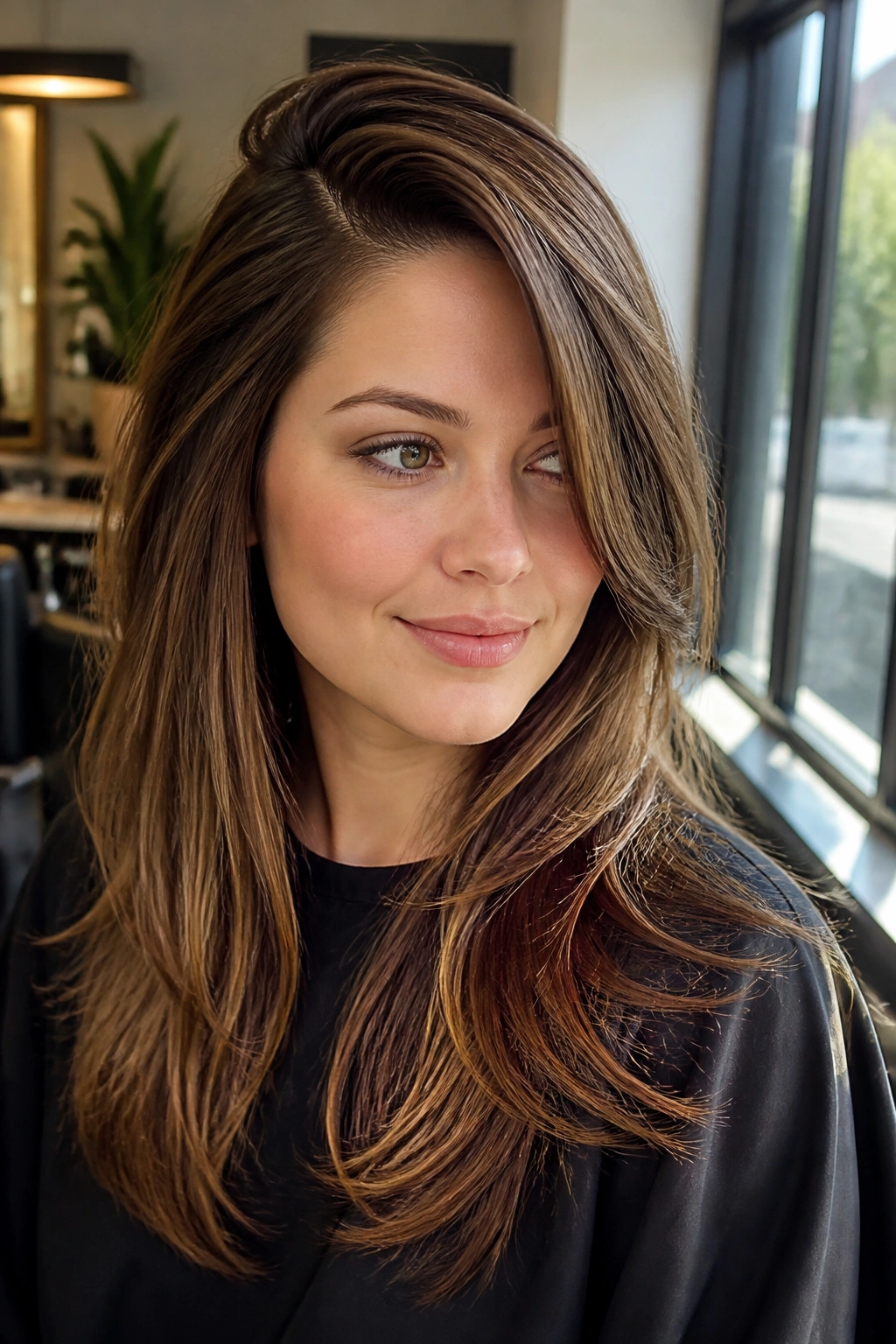
A deep side part is one of the fastest ways to change the read of a round face. It breaks that straight-up-and-down symmetry and gives the eye a line to follow, which is exactly what you want when the goal is to make the face feel a touch longer.
Why It Works
- Move the part 2 to 3 inches off center to create a stronger diagonal line.
- Keep the first layer below the cheekbone, so the width doesn’t sit right on the face.
- Add a little lift at the crown with a round brush or velcro roller.
- Keep the ends soft, not choppy, so the style falls in a clean curtain.
This is one of those styles that looks simple but does a lot of quiet work. If you’ve ever felt like your hair was flattening your features, this fixes that without needing a dramatic cut.
2. Collarbone Lob With Soft Ends
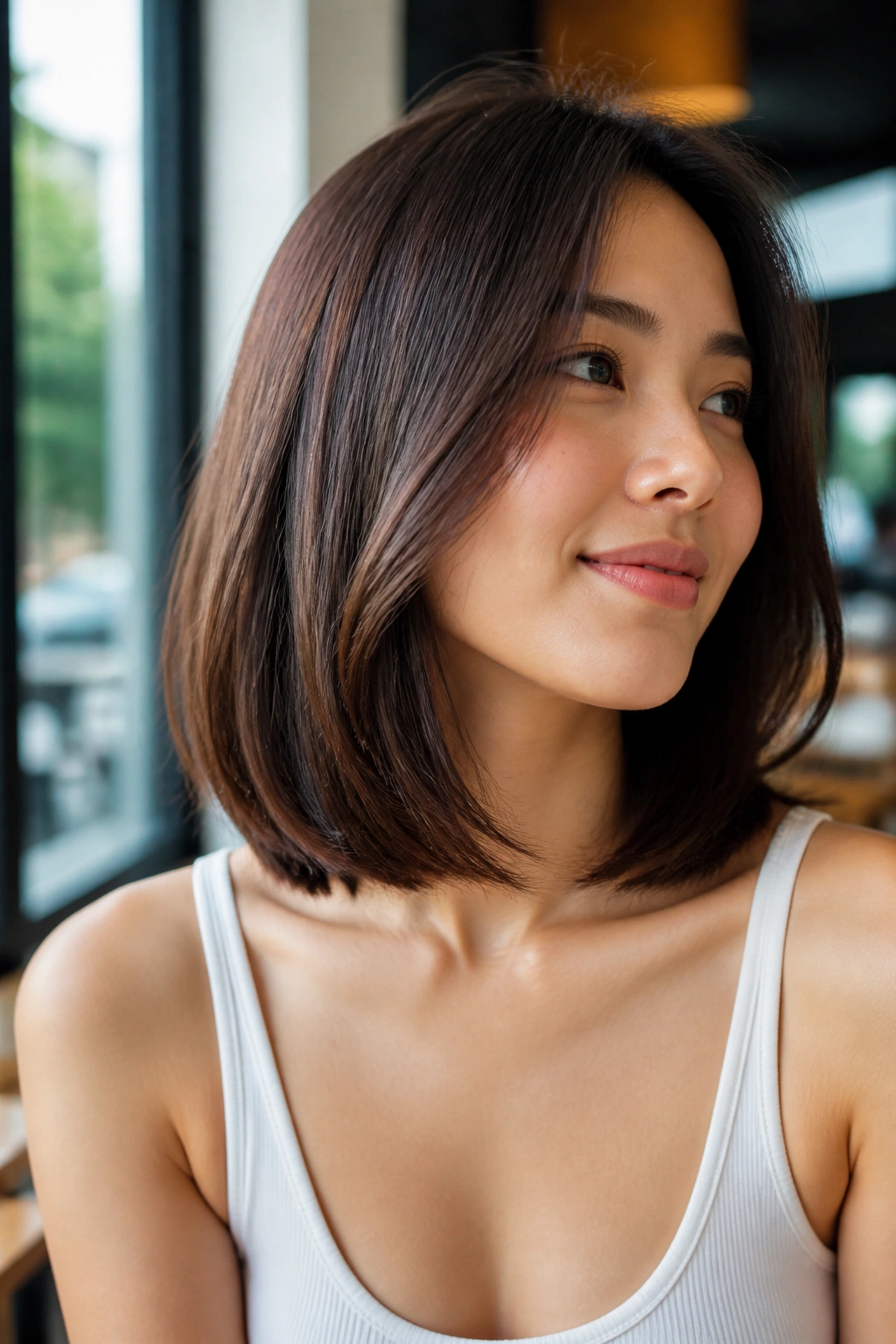
A collarbone lob sits in that sweet spot between short and long. It gives you enough length to keep the face from looking too open, but it still feels light and easy to move around. On round face shapes, the collarbone length matters because it lands below the widest part of the face instead of ending right at the jaw.
The best version has soft ends, not a blunt shelf. Ask for a tiny bit of bevel at the bottom so the hair curves inward just enough to stay neat. That small detail keeps the cut from feeling boxy.
I’d skip a lob that stops right at the chin unless it’s cut with a sharp angle. A little extra length makes a huge difference. Really.
3. Asymmetrical Bob
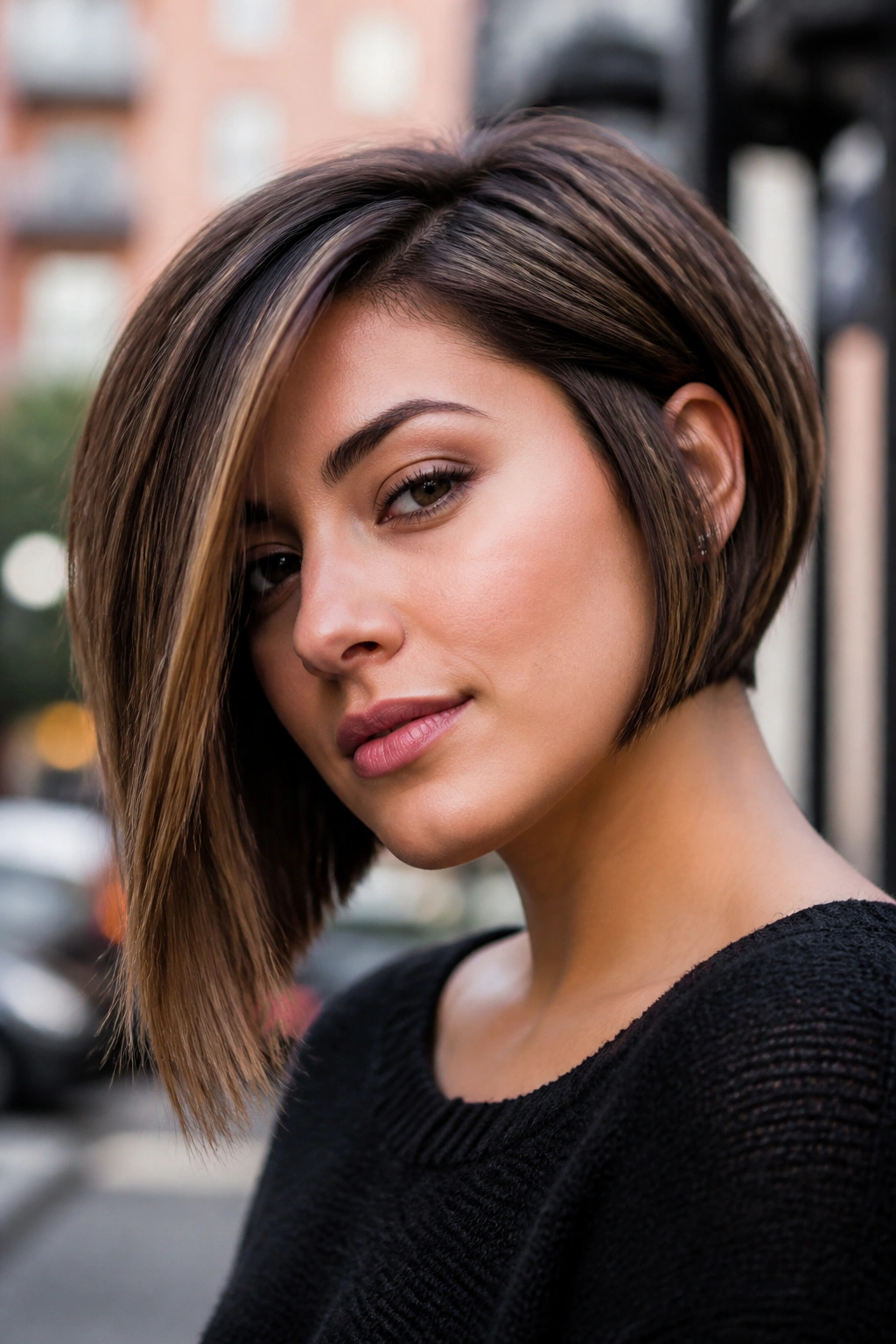
If you want short hair and you’re nervous about roundness, an asymmetrical bob is one of the smarter bets. One side sits a little longer than the other, and that uneven line interrupts the circular shape of the face in a good way. It feels sharper. More intentional.
A good asymmetrical bob doesn’t have to be extreme. Even a difference of 1 to 1.5 inches between the two sides changes the look a lot. The front pieces can graze the jaw while the back stays a bit shorter, which keeps the neck visible and the shape clean.
- Best for straight or slightly wavy hair
- Works well with a side part
- Looks strongest when the ends are lightly textured, not fluffy
It’s the bob for someone who wants polish without softness taking over.
4. Curtain Bangs With Medium-Length Layers
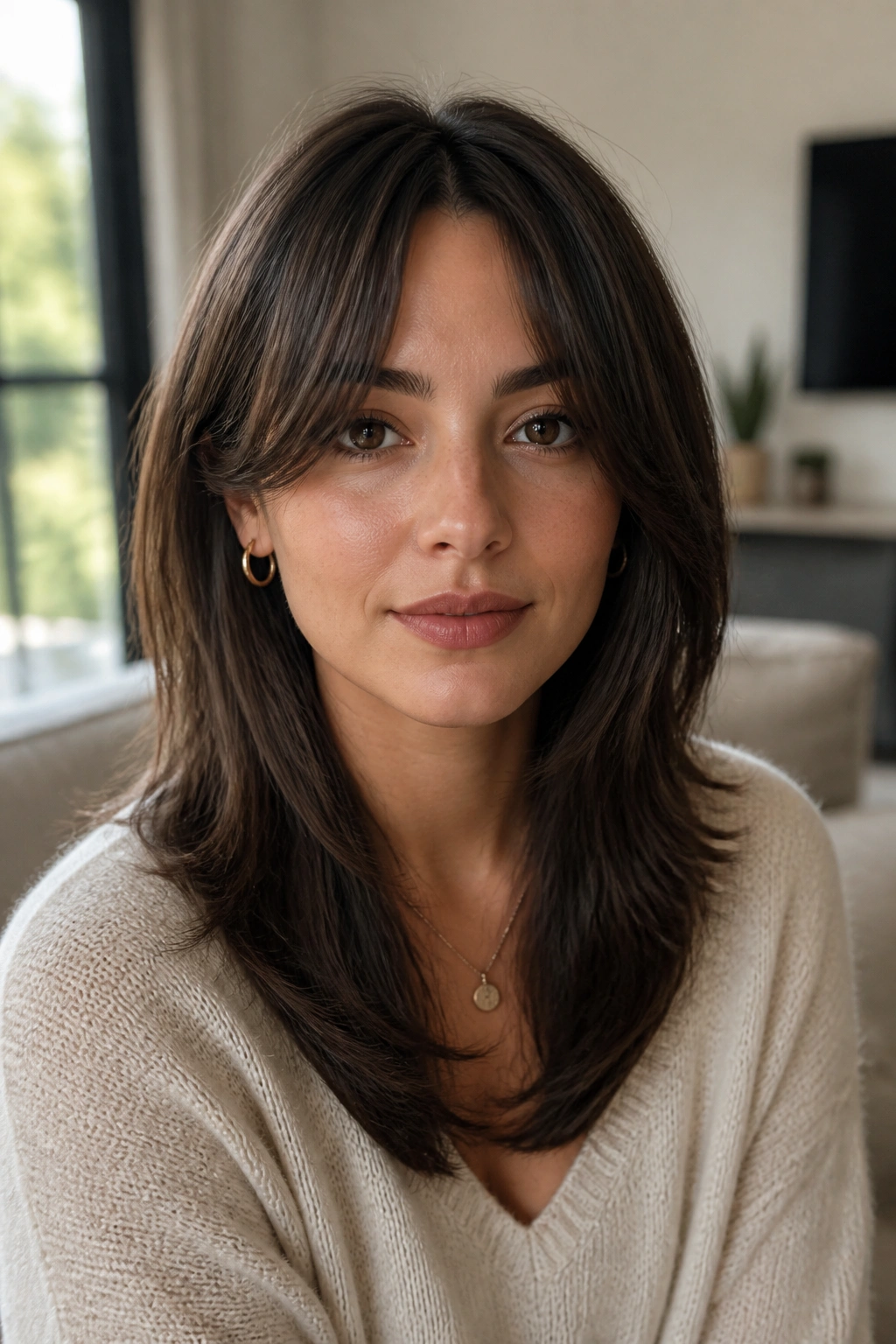
Can bangs work on round face shapes? Absolutely — when they split open instead of sitting flat across the forehead. Curtain bangs pull the eye down and out, and that little opening at the center gives the face more vertical space.
Where They Should Hit
The best curtain bangs usually start around brow level and angle down toward the cheekbone or mouth. That slope matters. If they’re too short, they can make the face feel shorter. If they’re too wide and puffy at the sides, they can do the opposite of what you want.
They’re especially good with shoulder-length or longer cuts because the bangs need somewhere to blend. Keep the layers around the face soft and avoid making the shortest piece stop right at the apple of the cheek. That’s the trap. A lot of people miss it.
5. Long Face-Framing Layers
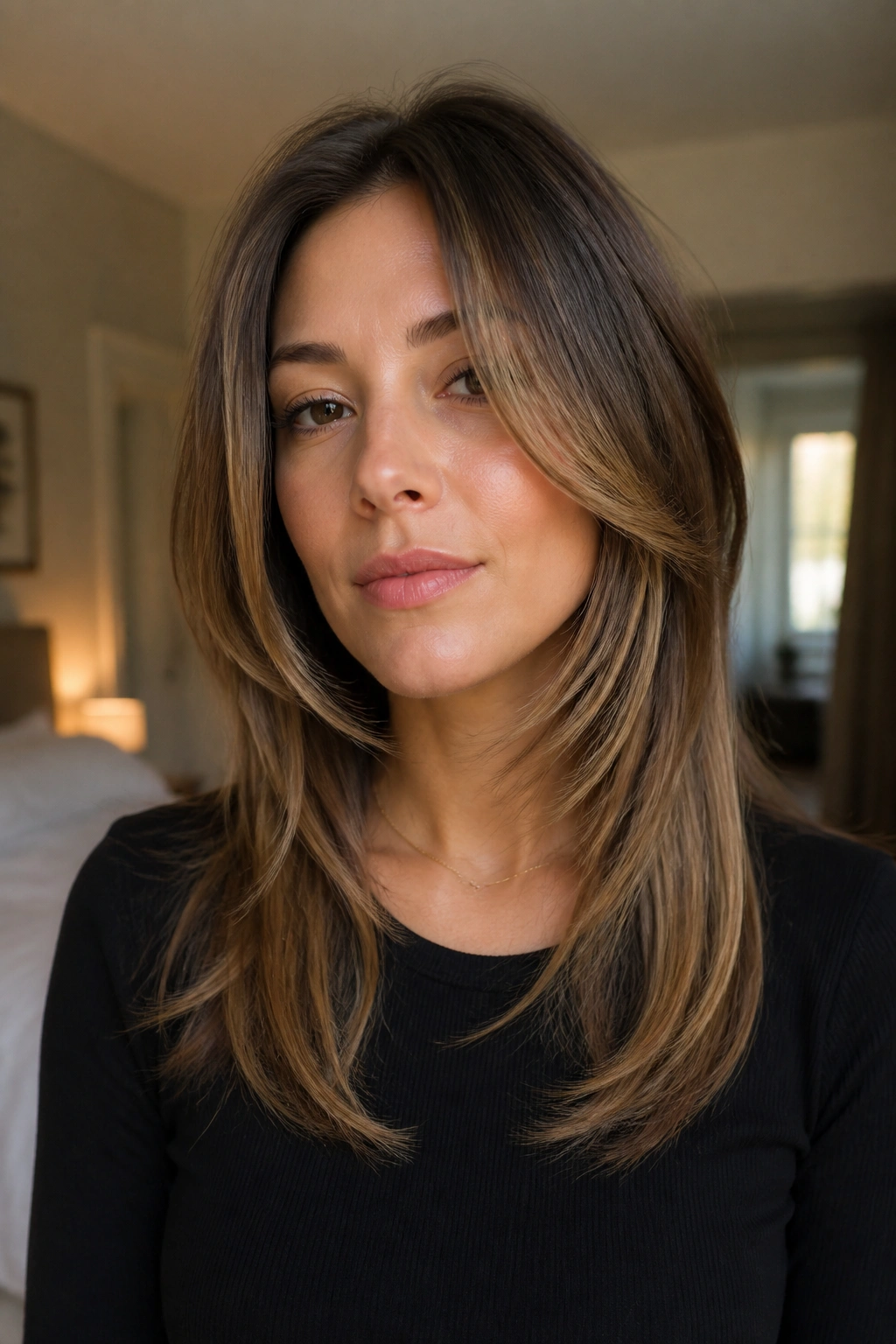
Long face-framing layers are the haircut equivalent of good tailoring. They don’t shout. They just make everything sit better. On a round face, these layers work because they start near the cheekbone or lip and drift down toward the collarbone, which stretches the line of the face without looking forced.
The longest face-framing pieces should usually fall below the chin. That’s the sweet spot. Any shorter and you risk widening the face right where it already has the most width.
I like this shape on people who want to keep their length but need a little more movement. It’s also forgiving if you tie your hair back often, because the front pieces still do some work even when the rest is up. Not flashy. Just smart.
6. Sleek High Ponytail

The high ponytail isn’t just for workouts and rushed mornings. On round face shapes, it can be one of the cleanest ways to add vertical lift without changing the cut at all. The point is the crown: pull the hair up and slightly back so the top of the head gains height before the length drops down.
What matters most is tension. Keep the sides smooth, but don’t yank them so tight that the temples look wider. The ponytail itself should sit high enough to lengthen the face, not centered in the middle of the back of the head where it can feel heavy.
The look is sharp when there’s a little height at the crown and the tail stays long and straight. Too much puff on the sides ruins it. Keep the width above the ears down, and let the height do the talking.
7. Soft Shag With Broken-Up Layers
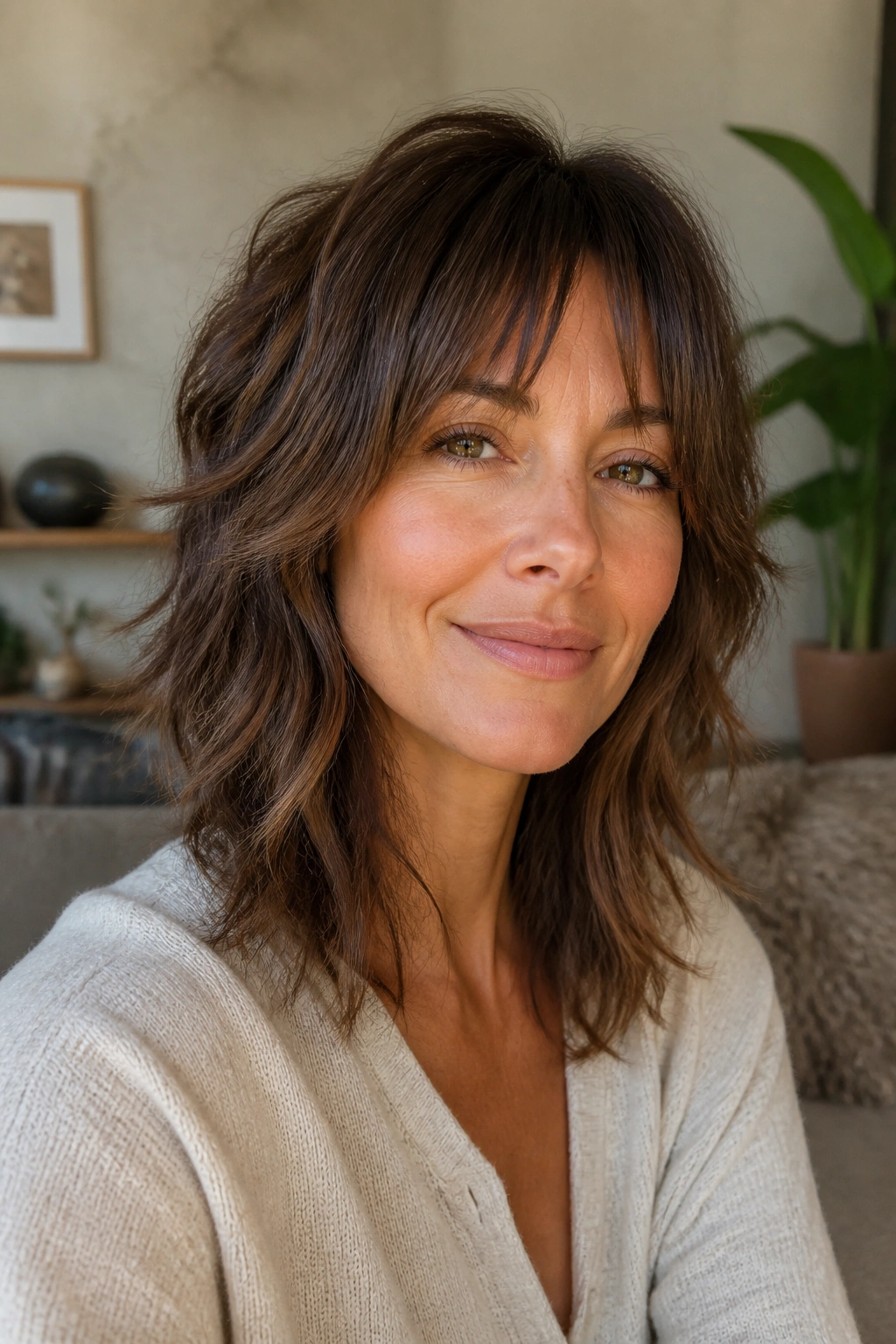
A soft shag can be a gift for round faces, especially if your hair has natural wave or a little bend to it. The shag works because it removes bulk in the right places and leaves the top with enough lift to keep the face from reading too wide.
What to Ask For
- Airy crown layers that create lift without a helmet shape
- Feathered face pieces that start below the cheekbone
- A soft fringe or curtain fringe if you want extra movement
- Tapered ends so the cut doesn’t balloon out at the bottom
The version I’m talking about is softer than the wild, heavy shag people sometimes picture. It should move. It should look broken up, not choppy for the sake of being choppy. On a round face, that looseness is the point.
8. Textured Pixie With Longer Top
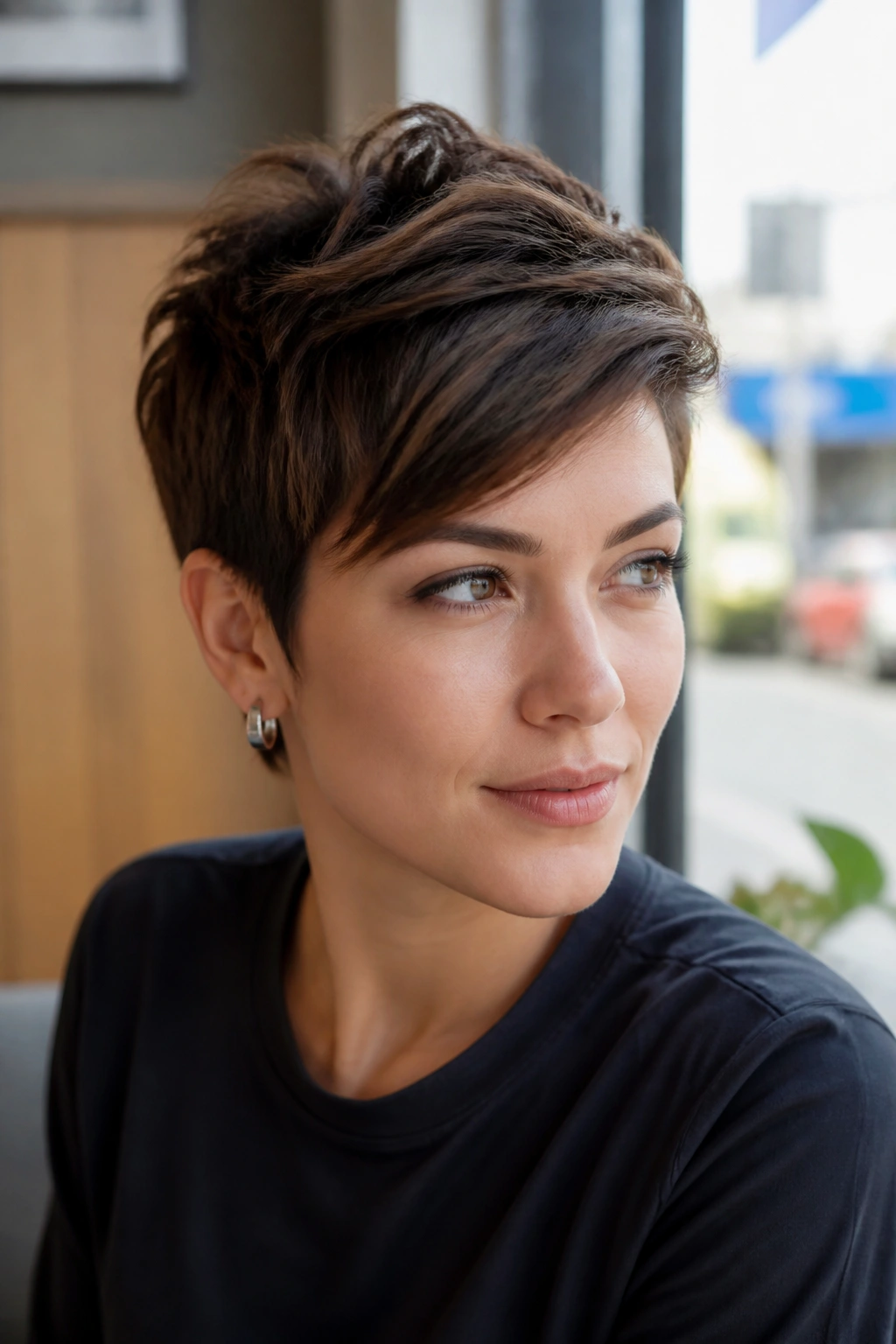
Short hair can look fantastic on round face shapes when the top has lift and the sides stay neat. A textured pixie with a longer top does exactly that. It keeps the outline close to the head around the ears, then adds height through the center, which pulls the eye upward.
The best version usually leaves 2 to 3 inches on top, with the front piece swept to one side or slightly forward. That diagonal fringe softens the forehead and keeps the style from looking too severe. The nape can be snug, even a little tapered.
This is not the pixie that spreads out. It’s the one that stacks the shape upward. Different thing.
9. Half-Up Top Knot With Loose Face Pieces

Need something fast that still flatters a round face? The half-up top knot is a solid move. It gives you height at the crown, keeps length down the back, and leaves enough hair around the face to soften the cheeks. The mix matters.
How to Make It Work
- Pull the top section from temple to temple, not too wide.
- Twist or wrap it into a small knot above the crown.
- Leave two thin pieces in front to skim the jaw.
- Keep the knot compact so it adds lift instead of bulk.
This style can feel a little casual, and that’s fine. The trick is making the top section tall enough to stretch the face. If the knot sits too low or too wide, it loses the point.
10. Loose Waves Below the Shoulders
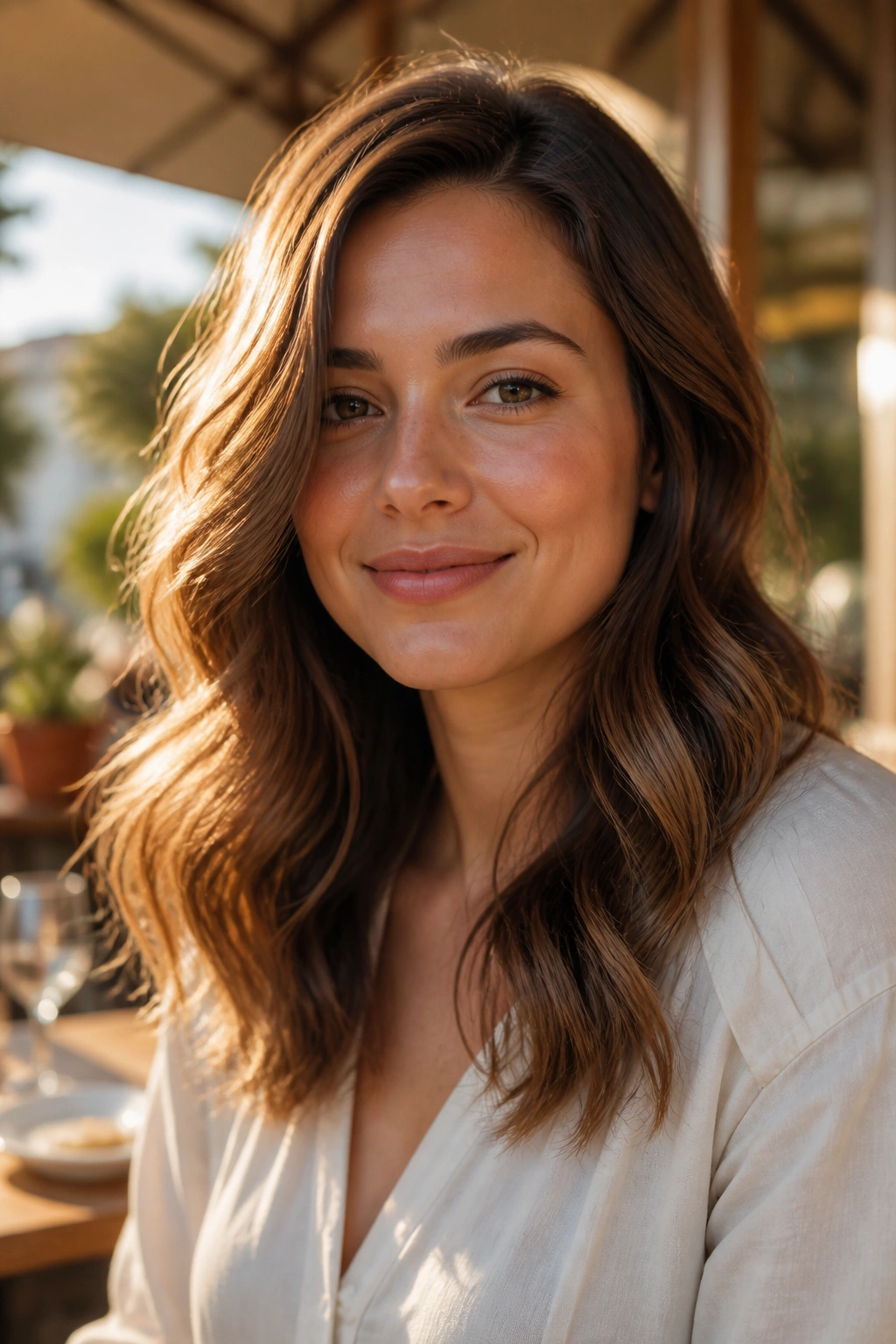
Loose waves below the shoulders are one of the easiest styles to wear on round face shapes because they let the face breathe. The waves should start lower than the cheekbone, though. If the bend begins right beside the face, the width lands exactly where you don’t want it.
A middle or off-center part can both work here. I lean toward a slight off-center part when the face is very round, because it keeps the style from feeling too symmetrical. And symmetry, on a round face, is not always your friend.
The ends should look soft and a little undone. Not frizzy. Just relaxed enough that the hair doesn’t form one hard line across the cheeks. A curling iron with a 1.25-inch barrel usually gives that shape without making the wave too tight.
11. Angled Bob
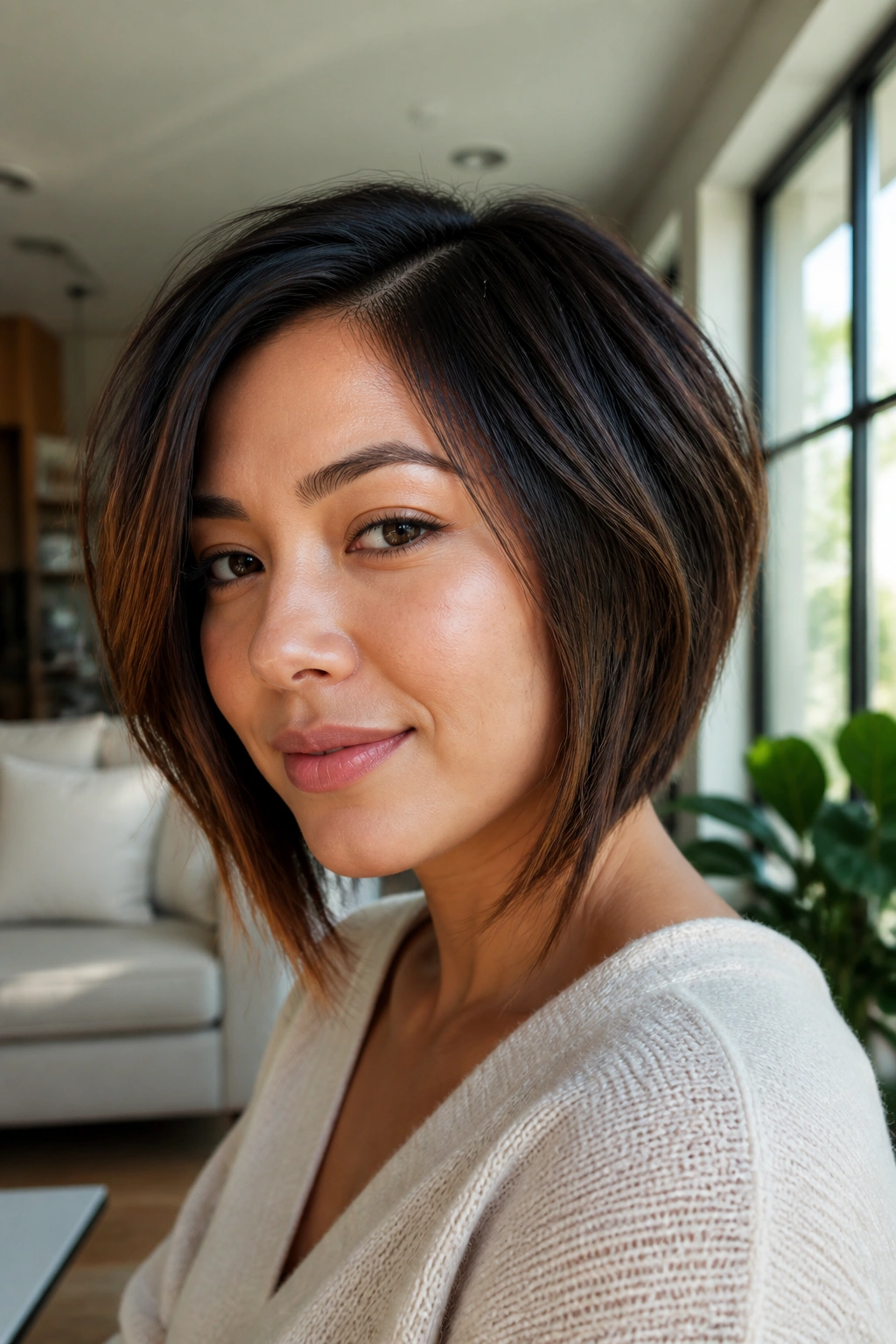
An angled bob is cleaner than a blunt bob and smarter for round faces. The back sits shorter, and the front pieces get longer as they move forward toward the jaw or collarbone. That slant creates a strong line, which is what makes the face feel less circular.
Unlike a classic chin-length bob, this version avoids stopping the shape at the widest point of the face. That’s the whole advantage. The angle gives the eye somewhere to go. Forward.
It suits straight hair nicely, but a light wave can make it look even better because the texture keeps the line from feeling too rigid. If you like polished hair that still has some movement, this cut earns its keep quickly.
12. Wolf Cut With Softened Edges
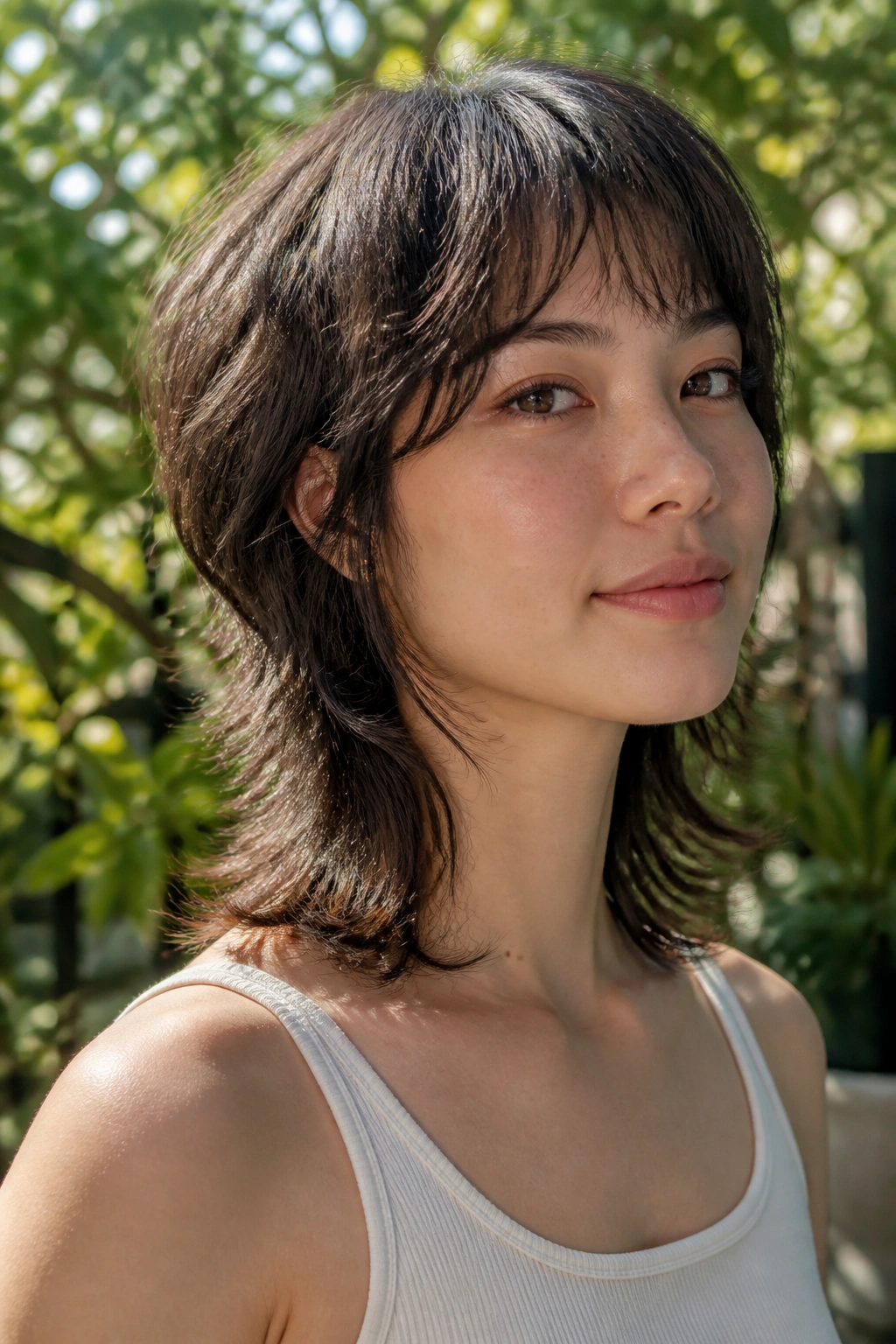
The wolf cut can look brilliant on a round face when it’s softened a bit. Too much side bulk and it turns puffy. Too little layering and it loses the whole point. The sweet spot is a shaggy top, broken edges, and front pieces that keep the width away from the cheeks.
I’d especially recommend it for thick wavy hair, because the natural texture helps the cut move instead of sitting like a helmet. Ask for shorter layers at the crown and longer lengths around the face. You want the silhouette to stay narrow through the sides and fuller through the top and back.
- Keep the face-framing pieces below the cheekbone
- Ask for texture removal, not random thinning
- Let the fringe stay soft and piecey
It’s a little messy. That’s the charm.
13. Side-Swept Fringe

A side-swept fringe is one of the quietest ways to flatter a round face. It creates a diagonal line across the forehead and breaks up the curve of the face without cutting off the forehead the way a blunt fringe can.
The Best Length
The fringe should start somewhere around the brow and sweep down to one side, usually touching the upper cheek area or even the jaw, depending on the cut. The longer side is doing most of the work. It draws the eye across the face instead of letting it stop at the widest part.
This style pairs well with long hair, a lob, or even a short crop. It’s especially useful if you like having bangs in theory but hate the maintenance of a full fringe. Which, fair enough. That maintenance can be annoying.
14. Voluminous Blowout With Soft Ends

A blowout can change a round face faster than a haircut sometimes. Seriously. The trick is not making the hair big everywhere. You want lift at the crown and through the mid-lengths, then softer ends that curve around the shoulders instead of puffing out at the cheeks.
Use a 1.5-inch round brush and dry the roots upward first. Once the hair is about 80% dry, focus on smoothing the front sections away from the face. That creates a long line through the sides, which helps a lot.
This style works best when the volume sits high, not wide. If the roundness starts at ear level, it adds width. If it starts above the temples and drops down softly, the whole face reads longer.
15. Low Bun With Crown Lift

Why do low buns often look sharper on round faces than high buns? Because they keep the base of the style low and clean while letting the crown carry the height. That combo stretches the face without crowding the sides.
The bun should sit at the nape or just above it, not halfway up the head. Pull the top section up slightly before pinning, so the crown gets a little lift. Leave the side hair smooth, then let a few fine pieces fall around the ears or temples if you want a softer edge.
This style is especially good when you want your face to look a bit longer but still need something neat for work, dinner, or a dressier event. Not fussy. Just flattering.
16. Long Straight Hair With Invisible Layers

Long straight hair can absolutely suit a round face, but it needs movement somewhere. Invisible layers do that without making the ends look thin. They sit inside the length, so the outside shape stays clean while the hair still bends and falls instead of hanging like a curtain.
A center part can work here if the hair is long enough — usually below the chest is where it starts feeling balanced. If the hair stops at the shoulders, I’d lean off-center. The length matters more than people think.
The key is keeping the front pieces just a bit shorter than the rest. They should graze the collarbone or top of the chest. Anything that ends right at the jaw can make the face feel wider. That line is easy to miss.
17. Braided Side Style
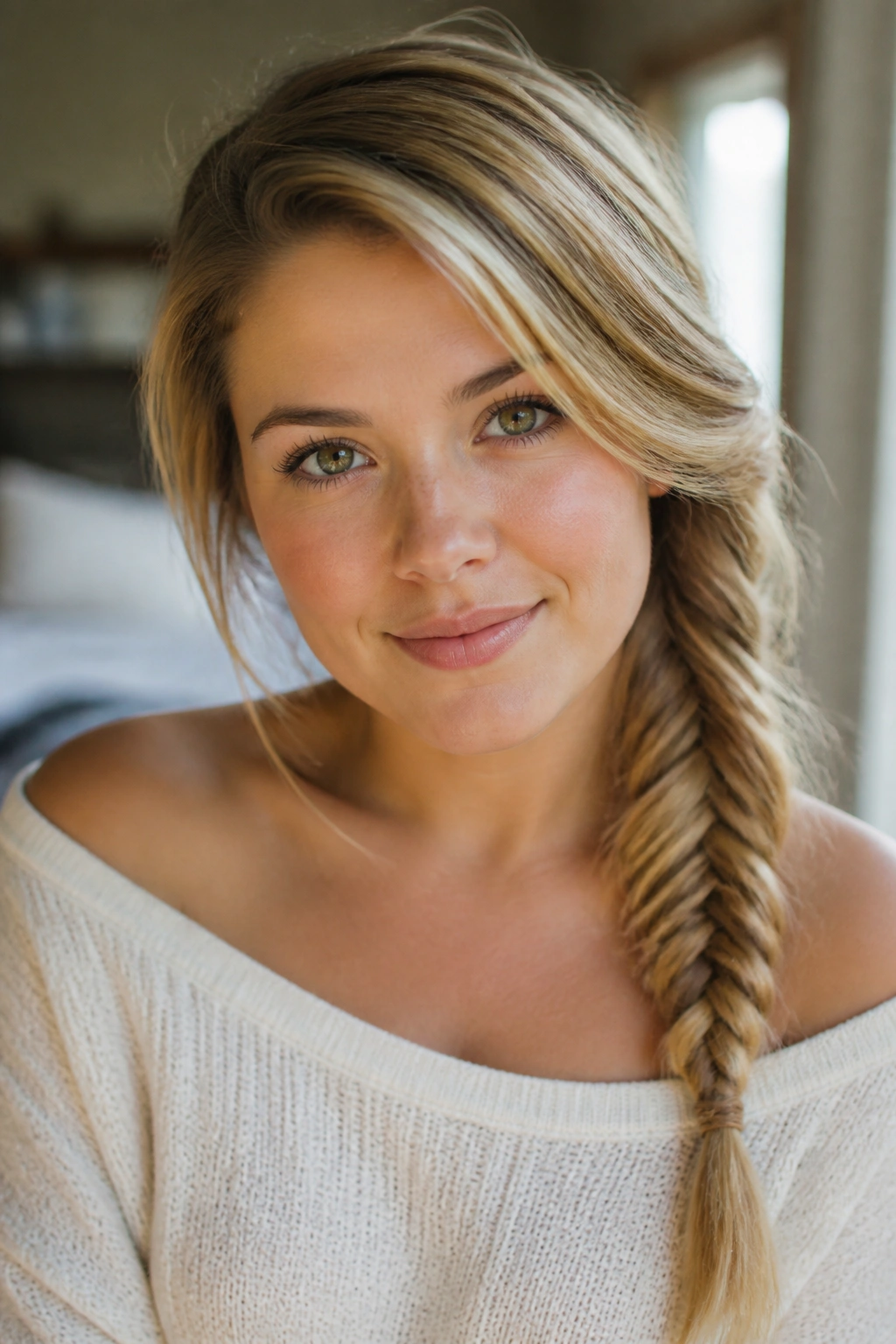
A side braid is underrated on round face shapes because it creates a diagonal from the crown down over one shoulder. Diagonal lines help. They always do. A braid also keeps the hair from spreading evenly around the face, which is often the part that makes roundness stand out.
The best version starts with a deep side part or a soft sweep of hair across the forehead. Then the braid drops to one side — loose, not pulled into a stiff rope. A fishtail braid, Dutch braid, or simple three-strand braid can all work, depending on how polished you want it.
If you want a face-slimming effect without heat styling, this is a good one. It’s practical too, which I appreciate. No special tools. No drama.
18. Shoulder-Length Cut With Flipped Ends
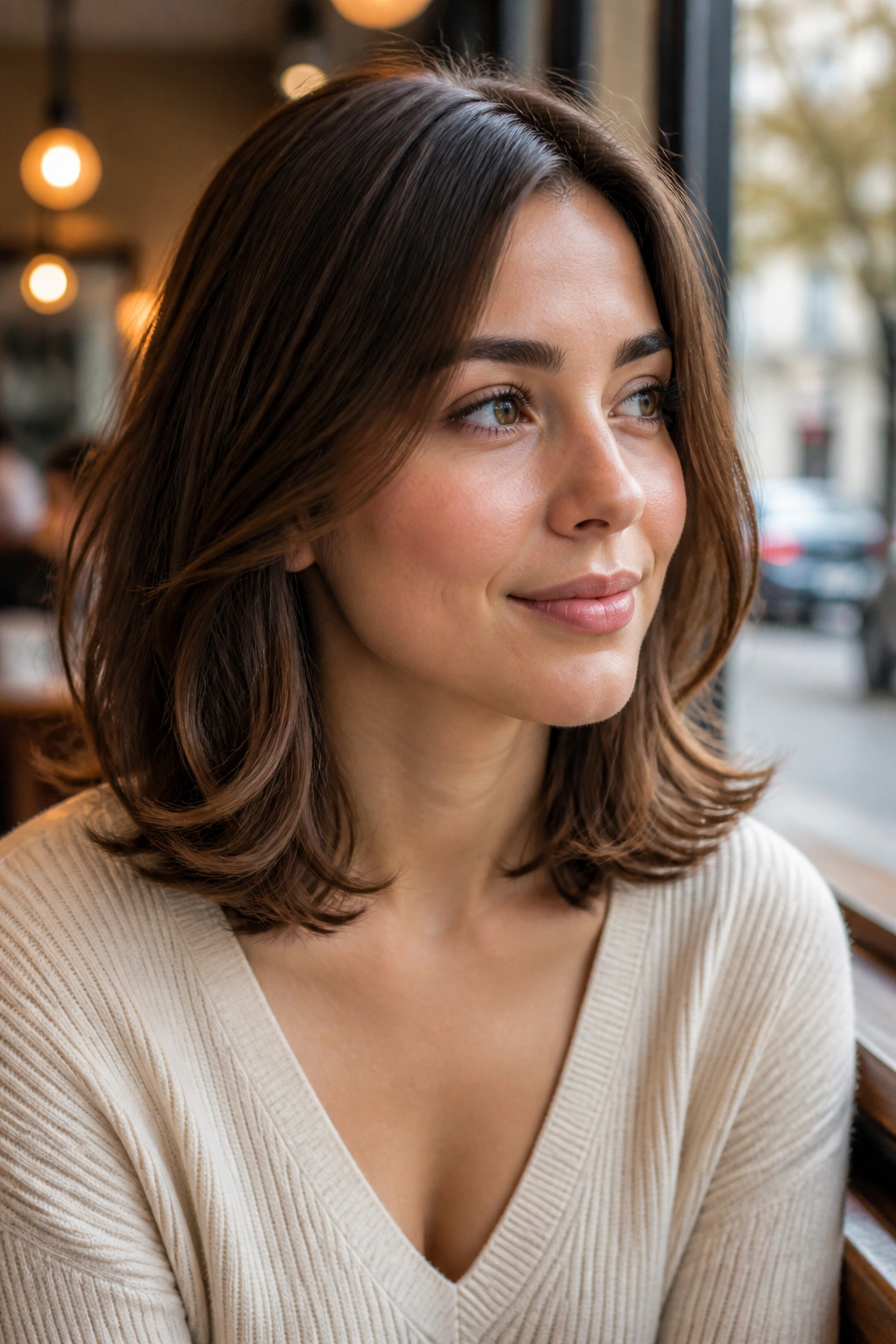
Shoulder-length hair with flipped ends has a nice built-in lift that round faces usually like. The hair skims the shoulders, then turns out slightly, which keeps the line of the cut from sitting too heavy around the cheeks.
What Makes It Flattering
- Length hits at the shoulder, not the jaw.
- Ends flip out just a little, so the shape stays open.
- Layers stay long and light, not chunky.
- A side part or soft off-center part keeps the look from reading too symmetrical.
This style can feel playful without getting too full. It’s also easy to refresh with a round brush or flat iron if the flip goes flat. The point isn’t a strong retro curl. It’s a small outward bend that keeps the shape from closing in on the face.
19. Soft Curls With an Off-Center Part
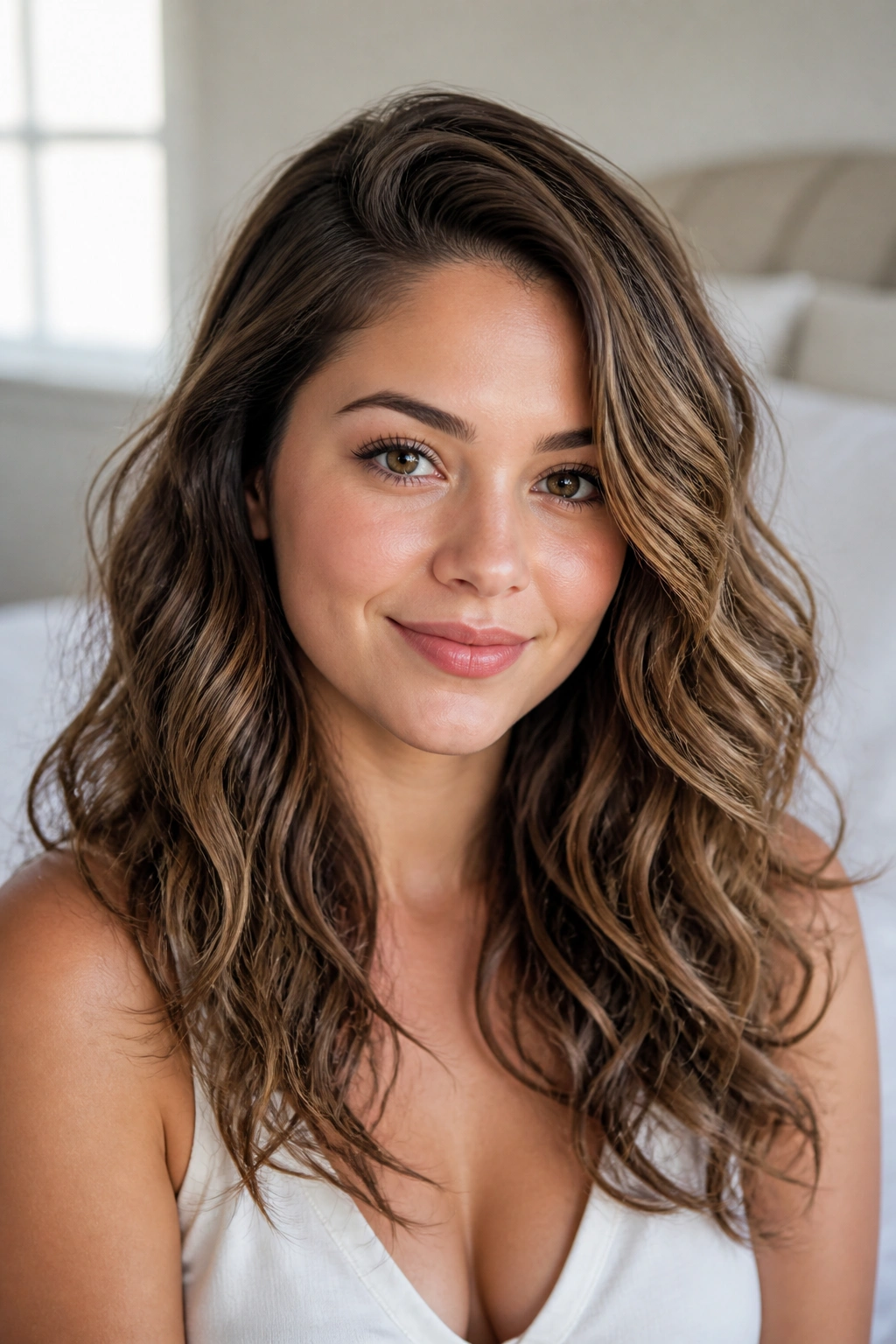
Soft curls can be tricky on round faces, but when the curl is loose and the part is a little off center, they can look lovely. The face gets softness without the sides ballooning out too much. That’s the balance.
The curls should start lower, ideally below the cheekbone. If they begin too high, the width sits right beside the face and everything looks wider. A 1-inch or 1.25-inch iron usually gives the right bend for medium-length hair, especially when you brush the curls out lightly after they cool.
One sentence matters here: don’t over-polish the curl pattern. A little separation helps the shape breathe. Too much uniformity makes the style feel rounder than the face itself.
20. Stacked Bob With Longer Front Pieces
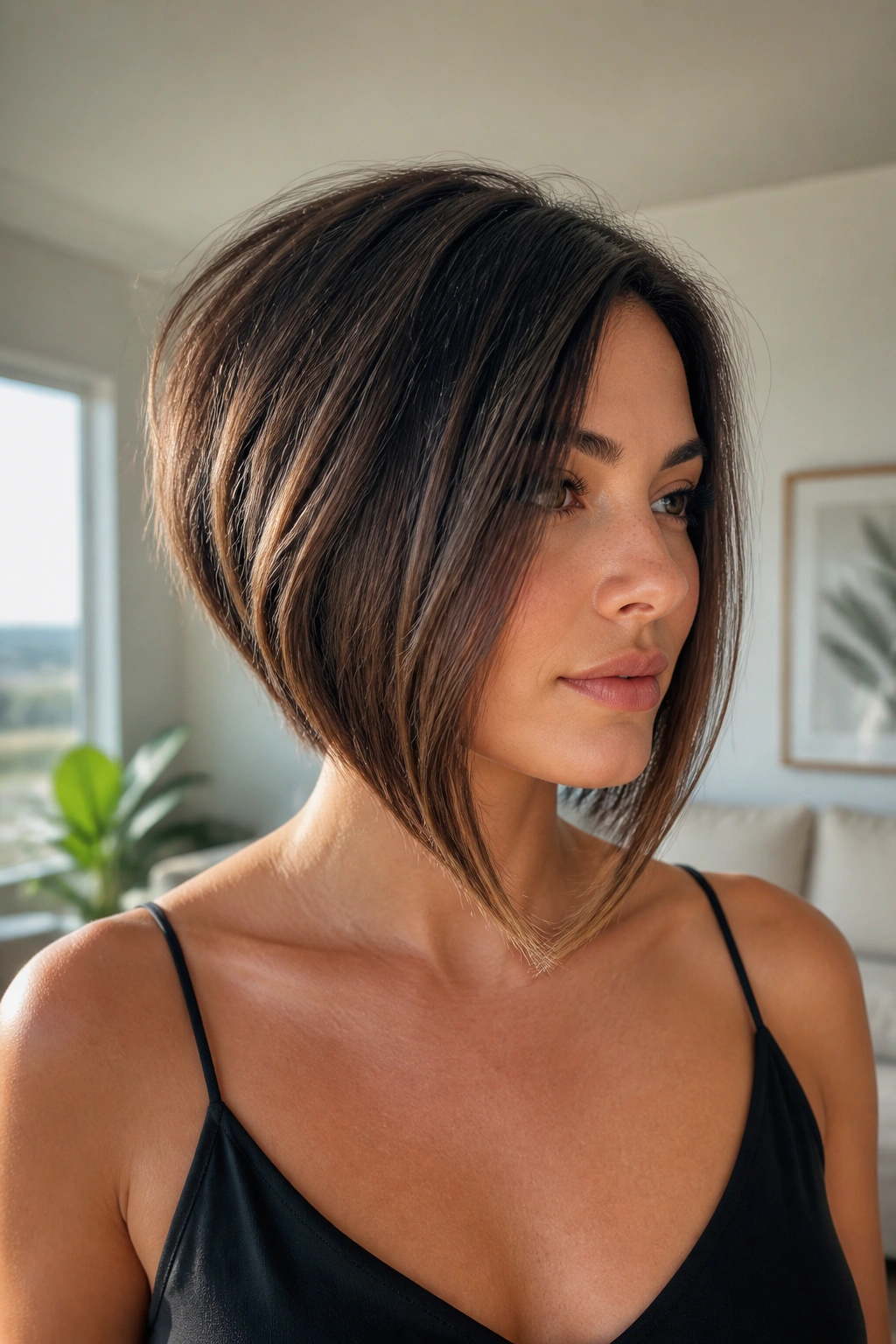
A stacked bob brings lift through the back, and that lift is useful on round faces because it shifts volume away from the widest part of the cheeks. The front pieces stay longer, which keeps the style from ending too abruptly at the jaw.
This is a cleaner, more structured cousin of the angled bob. The back is fuller and shorter, while the sides fall forward in a controlled way. If your hair is dense and you want something that sits neatly, this cut earns attention fast.
I like it best with a bit of internal texture so the stack doesn’t turn into a hard shelf. The shape should feel sculpted, not stiff. There’s a difference, and it shows.
21. Wispy Bangs With Long Hair
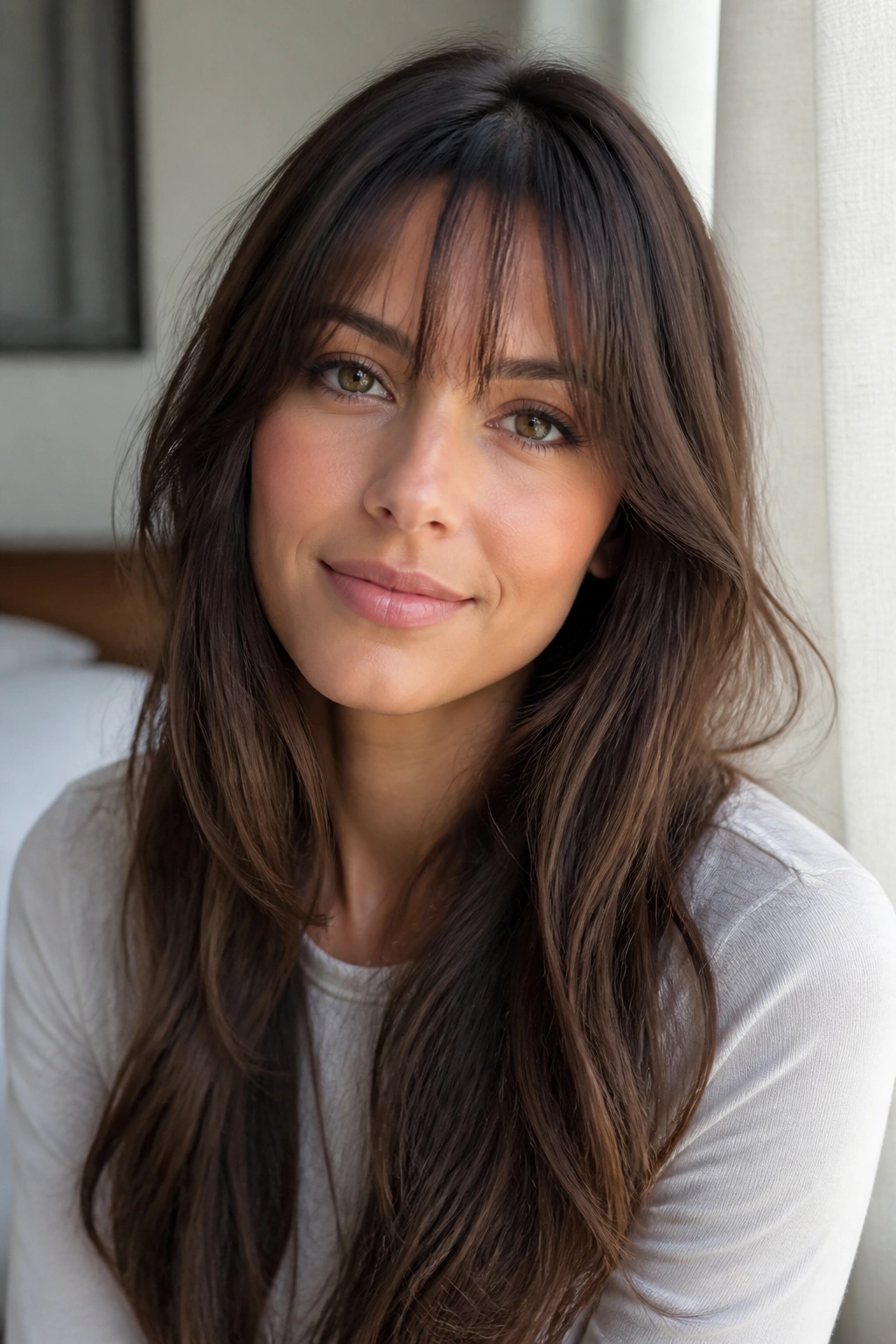
Can blunt bangs work on a round face? Sometimes, but they’re not the easy choice. Wispy bangs are far safer because they break up the forehead without cutting the face in half. They’re lighter, softer, and easier to grow out if you change your mind.
What to Watch For
Keep the bangs see-through enough that some forehead still shows. That bit of skin keeps the face open. If the fringe is too heavy, it shortens the upper face and can make the whole shape feel more compact.
Wispy bangs pair nicely with long layers, soft curls, or straight hair with movement. They’re not trying to do all the work. They just take the edge off the forehead and let the rest of the cut handle the length.
22. High Messy Bun With Loose Tendrils
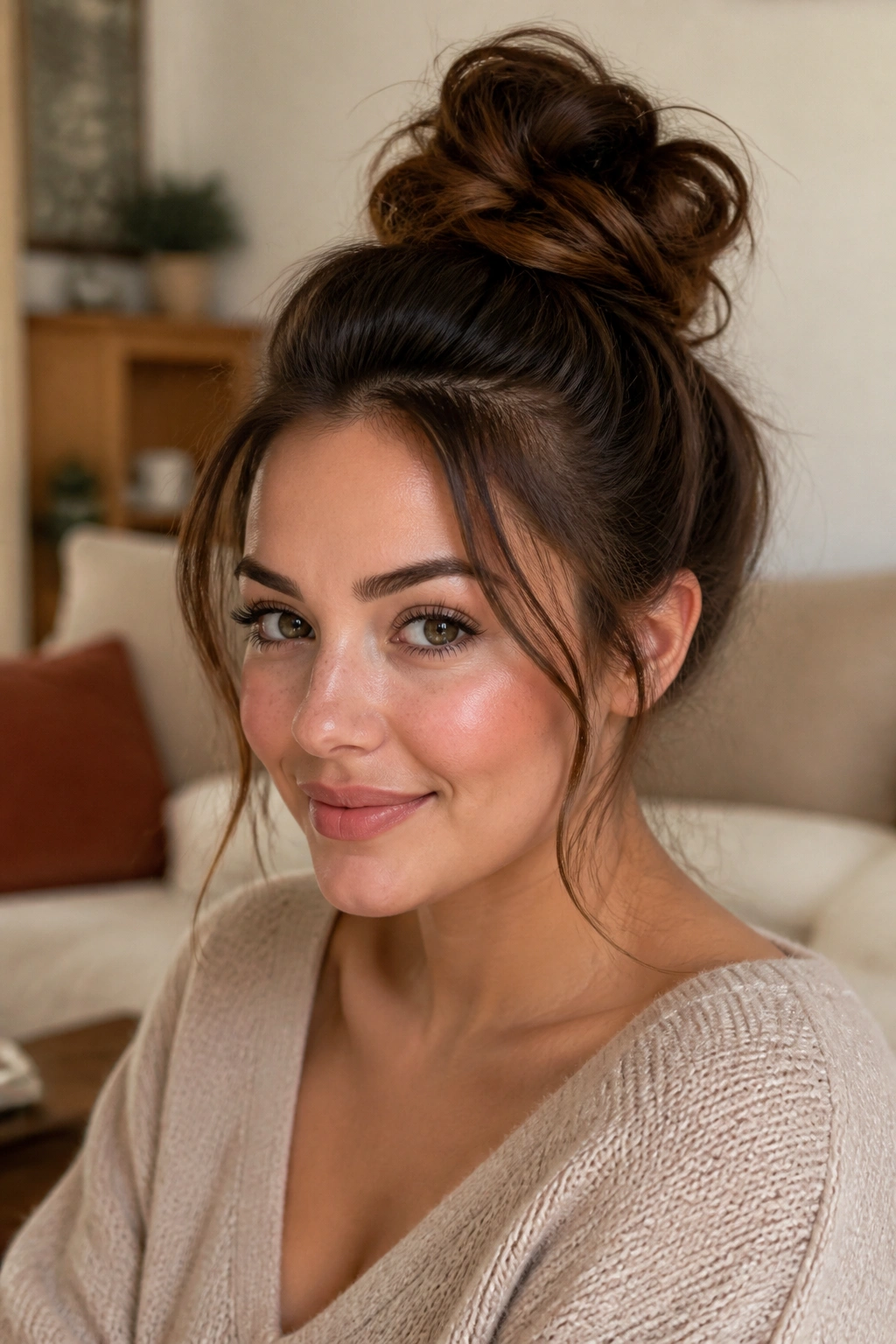
A high messy bun can flatter a round face if the height goes up before the bun does. That’s the trick. The bun should sit near the crown, not widen out at the sides like a little nest. Keep the shape compact and a touch messy, then let two or three thin pieces fall around the temples and jaw.
This style works because it opens the face and gives it a longer line. A slicked-back bun can feel severe on some round faces; a messy one with controlled height looks softer. The difference is in the placement, not the mess.
- Leave volume at the crown
- Keep the bun small to medium, not huge
- Pull out narrow tendrils, not thick chunks
- Smooth the sides before pinning
It’s quick, but it still needs a little thought.
23. Textured Crop With Side-Swept Top
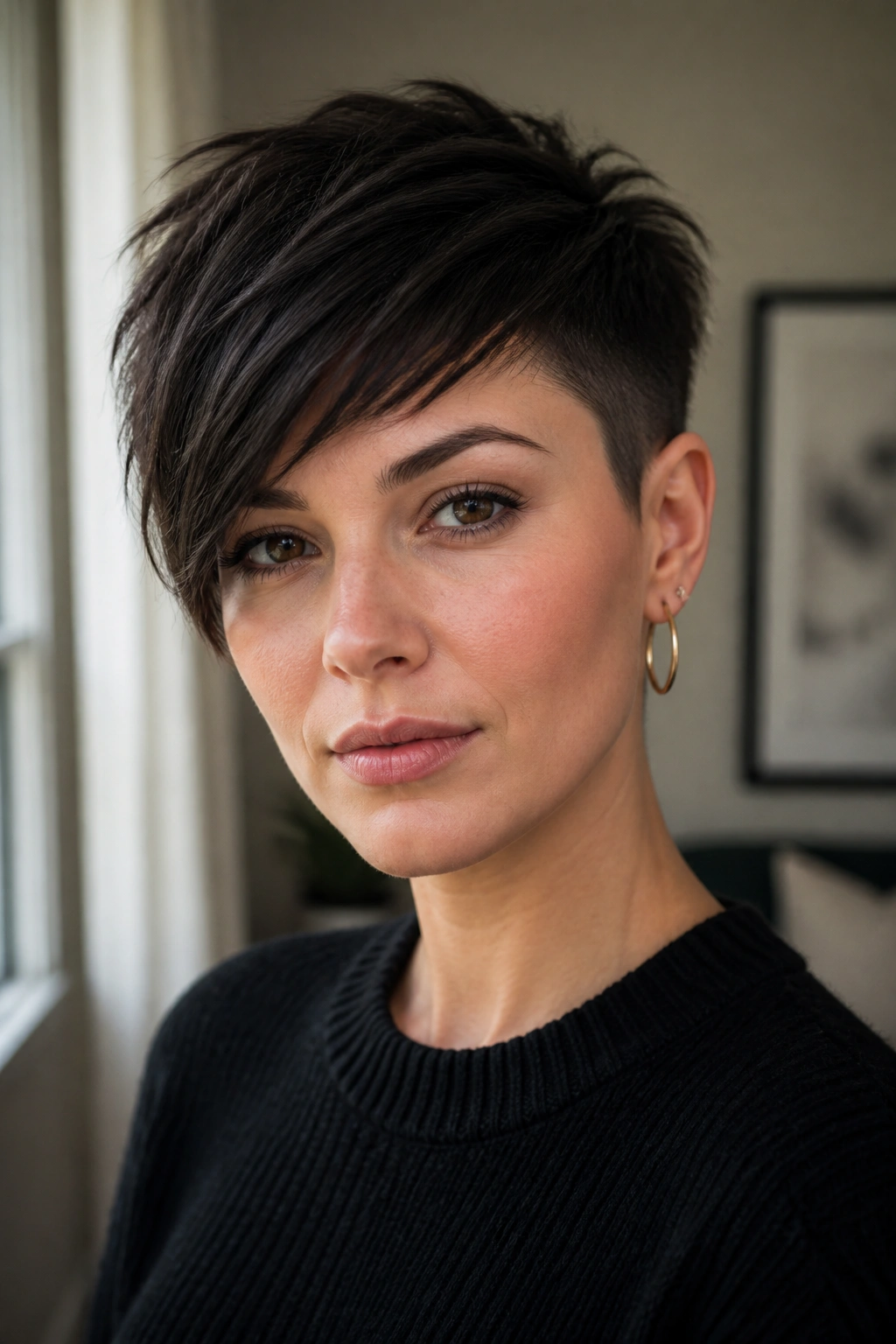
A textured crop can look sharp on a round face if the top stays longer and the sides stay close. The shape needs contrast. Short all over can make the face feel wider; short on the sides with movement on top does the opposite.
This is the kind of cut that works best when the stylist leaves enough length up top to sweep the hair to one side. A soft diagonal fringe keeps the forehead from feeling boxed in, and the tapered sides keep the outline lean. You want the eye moving upward, not outward.
It’s a strong choice for people who want short hair that still has edge. I’d call it low-maintenance in the styling sense, but not in the “ignore it and hope for the best” sense. It still needs shape.
24. Bubble Ponytail With Face-Framing Strands

The bubble ponytail looks playful, but it also does something useful for round face shapes: it creates vertical rhythm. Each bubble draws the eye down the length of the ponytail, which helps the face feel less circular. That vertical pull is the point.
Start with a mid or high ponytail, then add a thin elastic every 2 to 3 inches down the length. Gently pull each section outward until the ponytail forms soft round bubbles. Keep the bubbles even, but not tight. Too much puff makes the style bulky.
A few face-framing strands around the temples help break up the front. Without them, the ponytail can look a little severe. With them, it feels light and balanced. Small detail. Big difference.
25. Rolled French Twist With Loose Front Pieces
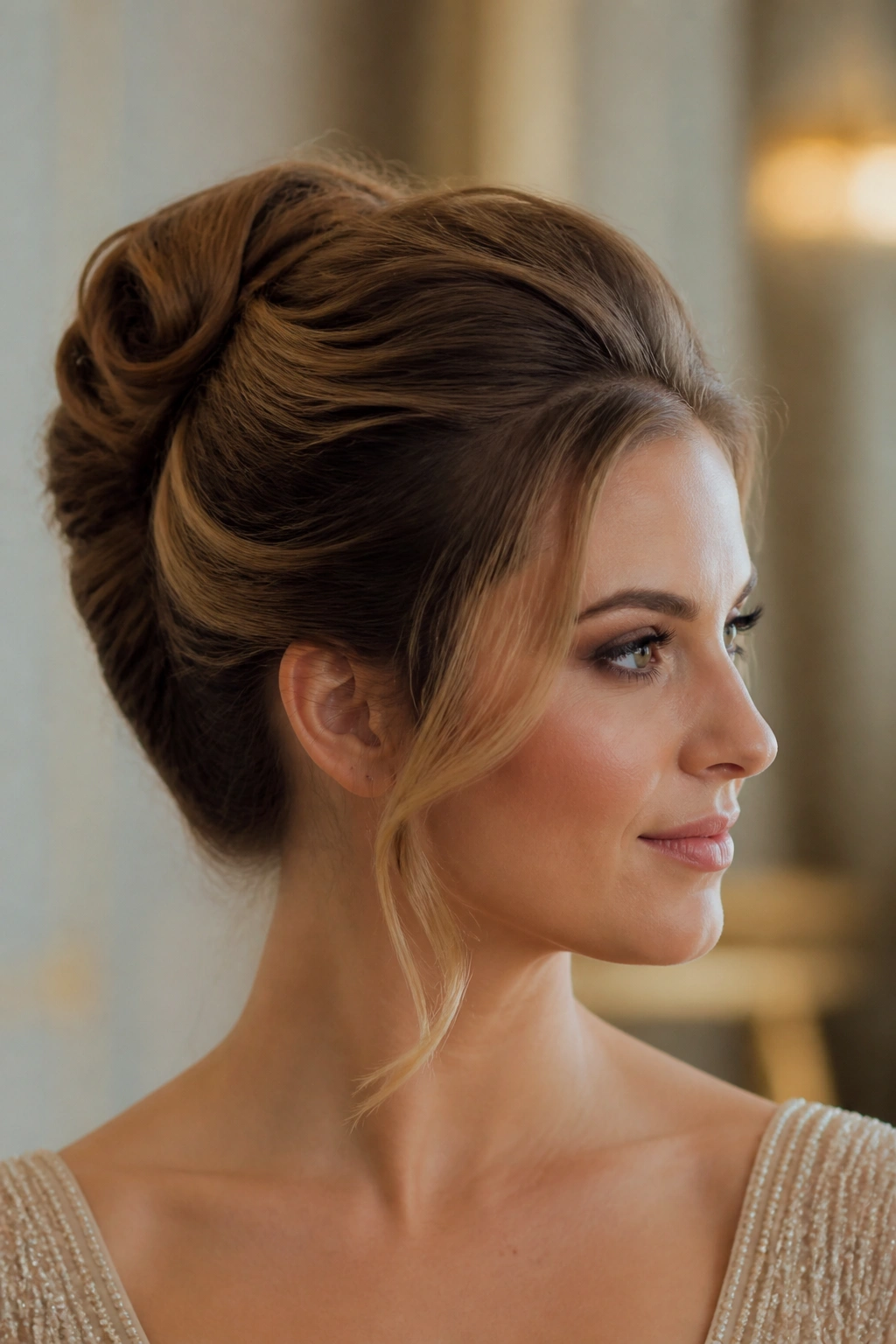
A rolled French twist can be surprisingly flattering on a round face when it’s not pinned too tight and severe. The vertical line of the twist adds height, while the smooth sides keep the shape close to the head instead of spreading outward. That’s what makes it work.
Leave two thin pieces loose at the front, especially around the temples. Those strands soften the face and keep the style from looking too formal or too narrow. If the twist is tucked low and broad, it loses that lengthening effect. If it sits tall and clean, it does the job beautifully.
This is the style I’d reach for when the hair needs to look put together and a little elegant without going stiff. It’s tidy, but not cold. And on a round face, that balance matters more than people think.
