



Ear-length haircut ideas women are trying tend to fall into two camps: the ones that look sweet, and the ones that look sharp enough to make a simple white T-shirt feel intentional. The sweet spot sits between those two. Short enough to feel fresh. Long enough to tuck behind the ear, show off earrings, and soften the jaw when you want a gentler line.
That tiny bit of length matters more than people think. A cut that lands around the ear changes how light hits the face, how much neck you show, and how much work your hair does before breakfast. It also exposes the stuff longer hair hides: a stubborn cowlick, a heavy crown, a flat side that refuses to bend. That’s not a flaw. It’s the whole point.
The best versions are shaped, not just shortened. Fine hair often needs a blunt edge to look full. Thick hair usually needs weight removed from the inside, not hacked off at the ends. Curly hair wants room to spring, and straight hair can go oddly helmet-like if the perimeter is too round. Tiny details. Big difference.
A good ear-length cut looks deliberate from every angle, including the back. That’s where the real test is.
1. The Ear-Grazing French Bob
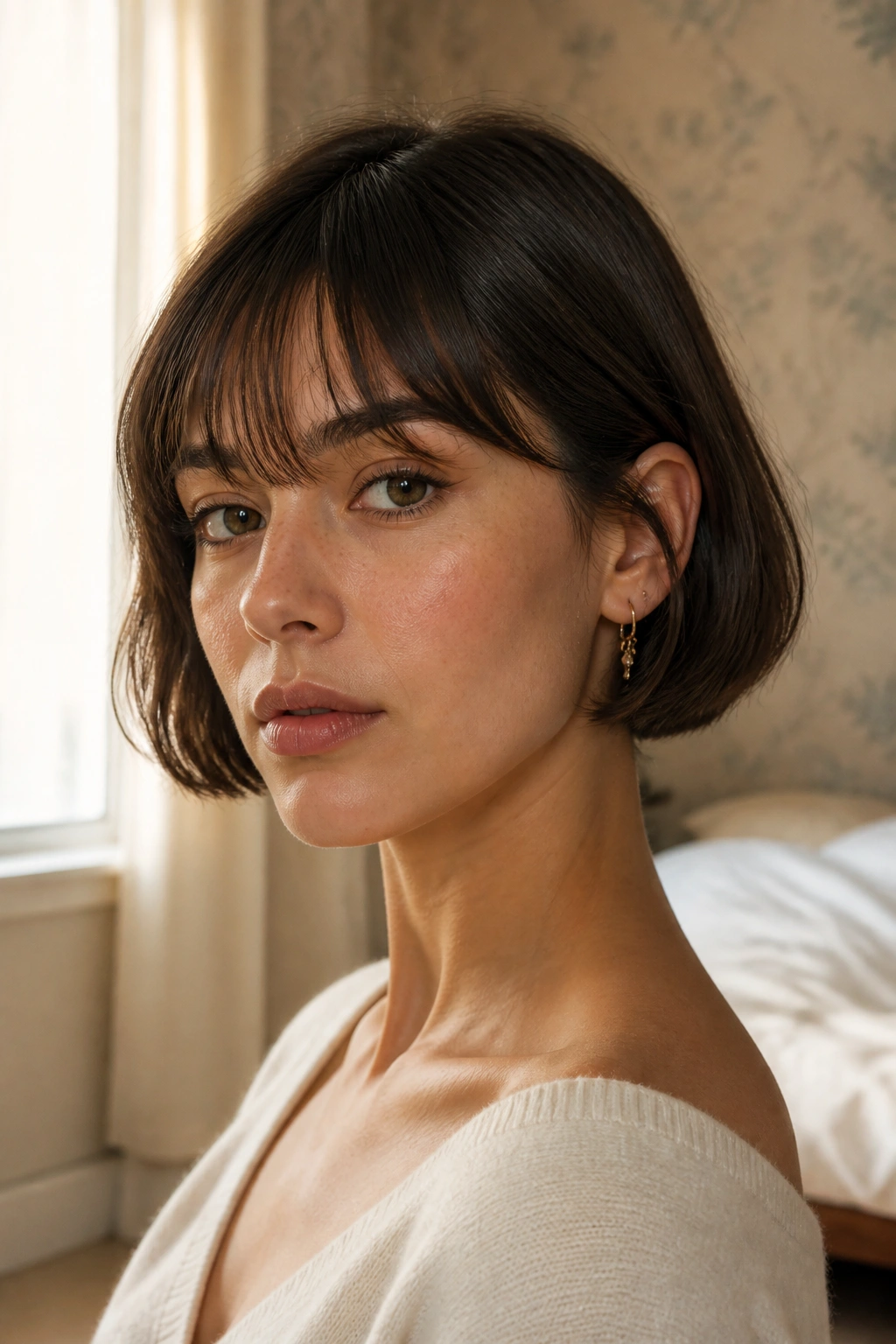
This is the haircut that makes short hair look expensive with almost no styling. A French bob that skims the ear sits between the cheekbone and the jaw, usually with a blunt edge and a soft fringe that brushes the brows or lands just above them. It has that old-film feel, but it does not need to look fussy.
Why It Works on Straight or Slightly Wavy Hair
The line is doing most of the work here. When the ends are blunt and the weight sits close to the face, the hair gets a clean shape instead of fluffing out in random directions. That is what gives the cut its polish.
A little bend in the wave helps, but it is not required. If your hair is pin-straight, a quick round-brush pass at the ends is enough. If your hair has a soft wave, even better. The shape gets a lived-in swing without losing structure.
- Length usually hits right at the top of the ear or the lobe
- Best with a one-length or nearly one-length perimeter
- Works well with micro fringe, brow-skimming bangs, or no bangs at all
- Looks especially good with gold hoops, studs, and sharp collar lines
Ask for a blunt outline first, softness second. If the stylist texturizes too much at the ends, the whole point of the French bob disappears.
2. The Soft Bixie With Feathered Fringe
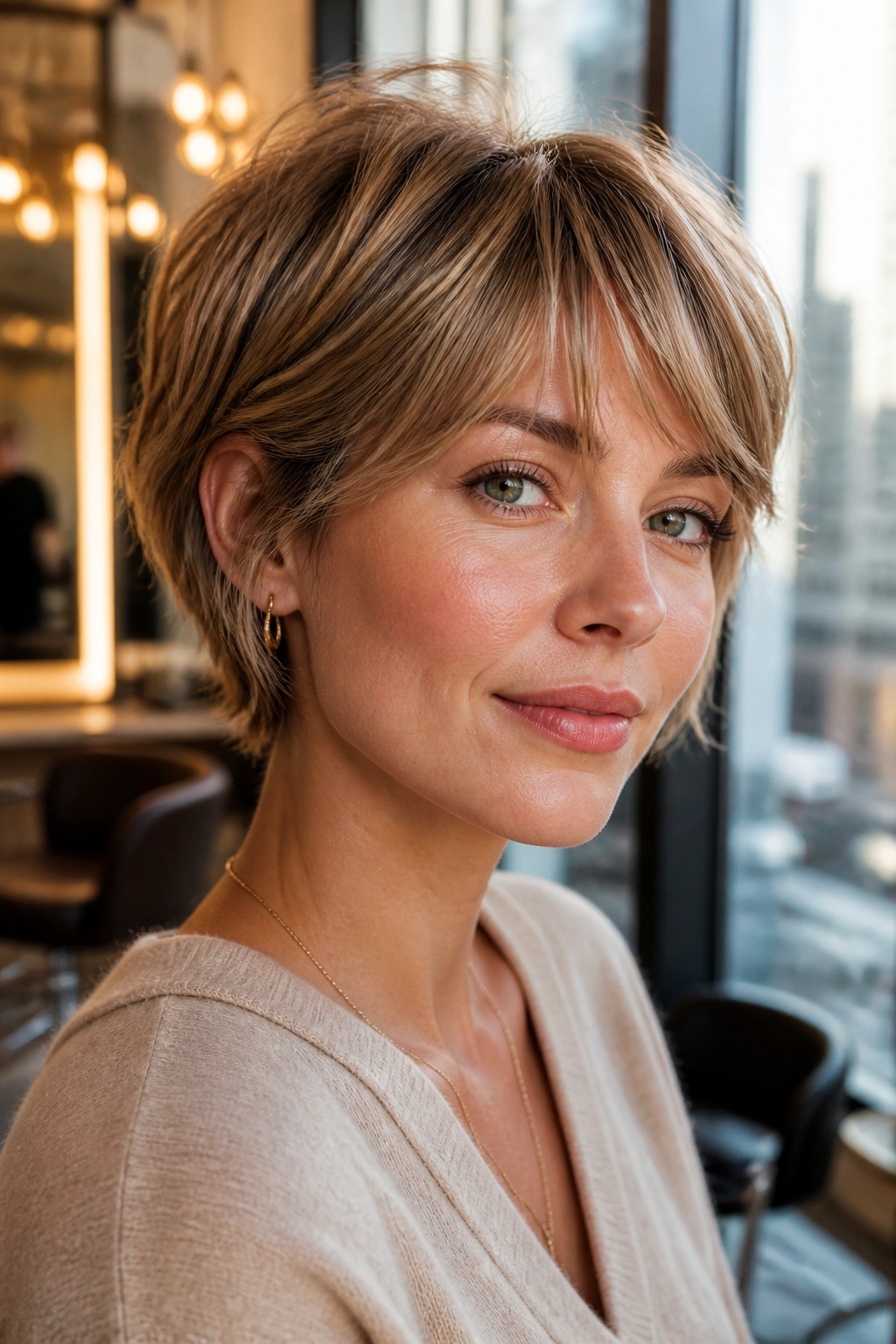
Is it a bob? Is it a pixie? That confusion is exactly why the bixie keeps showing up in salon chairs. It lands around the ear, but the crown stays a little longer, which gives you movement without the severe feel that some short cuts bring.
The feathered fringe is the part that changes the mood. Instead of a heavy bang sitting straight across the forehead, the front breaks into soft pieces that brush the brow and drift into the temples. That makes the cut easier to grow out, too. Nobody likes a grow-out that looks like an emergency.
How to Style It
A dab of mousse at the roots and a quick blow-dry with your fingers will usually do more than a full round-brush production. If your hair is fine, a pea-sized amount of styling cream at the ends keeps the pieces from flying apart.
This cut suits people who want short hair without a hard line around the face. It also helps if you hate the awkward “in-between” stage after a pixie. The bixie gives you a built-in transition.
Not too precious. That’s the charm.
3. The Rounded Micro Bob
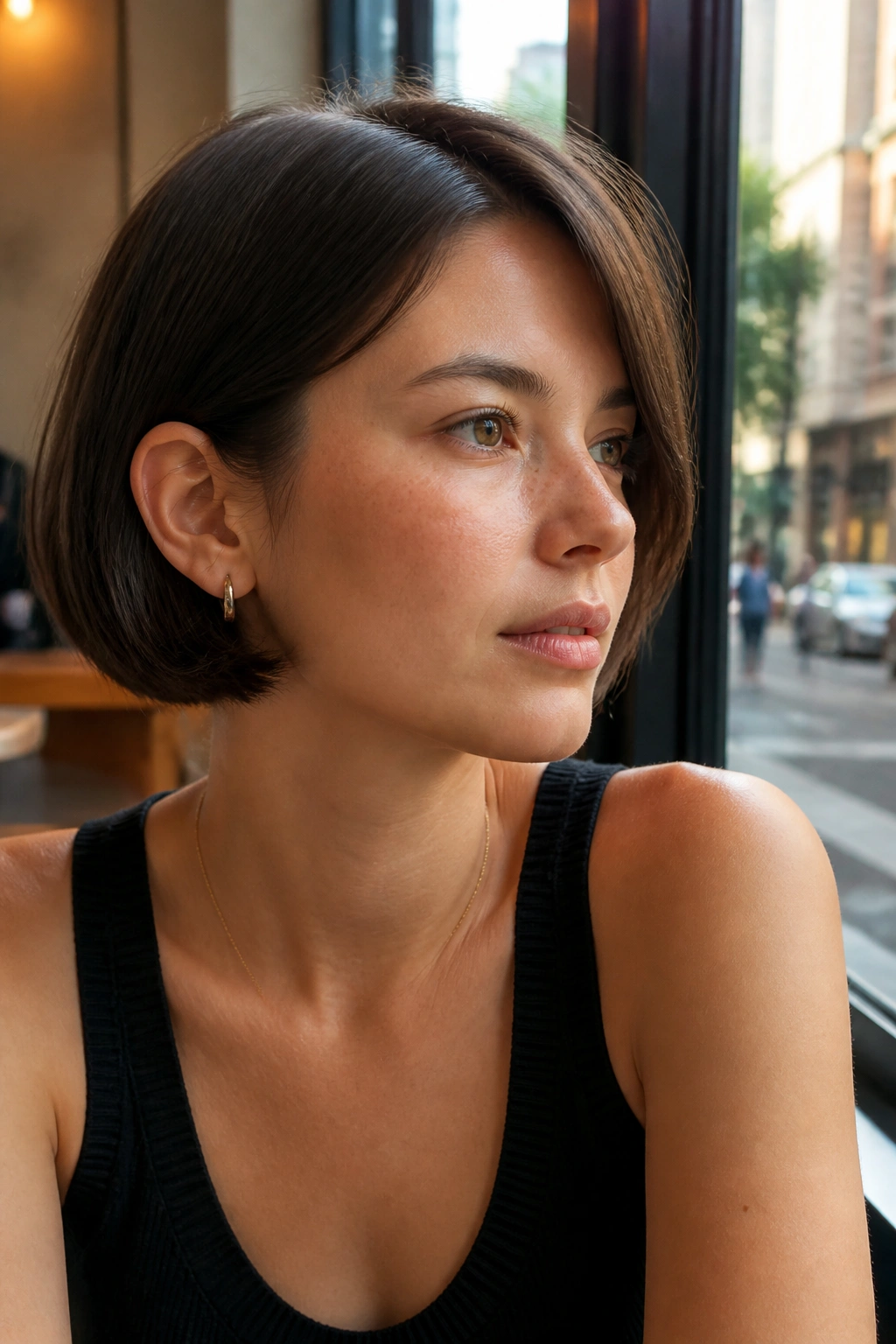
Picture a cut that curves just enough to hug the head, then stops before it gets boxy. That is the rounded micro bob. It usually sits at ear level or a hair below, with the perimeter shaped to follow the skull instead of flaring out at the sides.
This one is lovely on hair that tends to stick out. The rounded shape reins it in. It is also kinder to strong features than a dead-straight blunt bob, because the curve softens the edges around the jaw and ear.
What Makes It Different
- The shape is slightly domed, not flat
- The ends are clean, but not razor-thin
- The cut often works best with a small side part or a soft off-center part
- It handles fine to medium hair especially well
If you want a short cut that still feels neat when it air-dries, this is a smart one. It does not need much product. A little smoothing cream, a quick tuck behind one ear, done.
And that is the appeal. It looks like you meant it.
4. The Tapered Pixie With a Long Crown
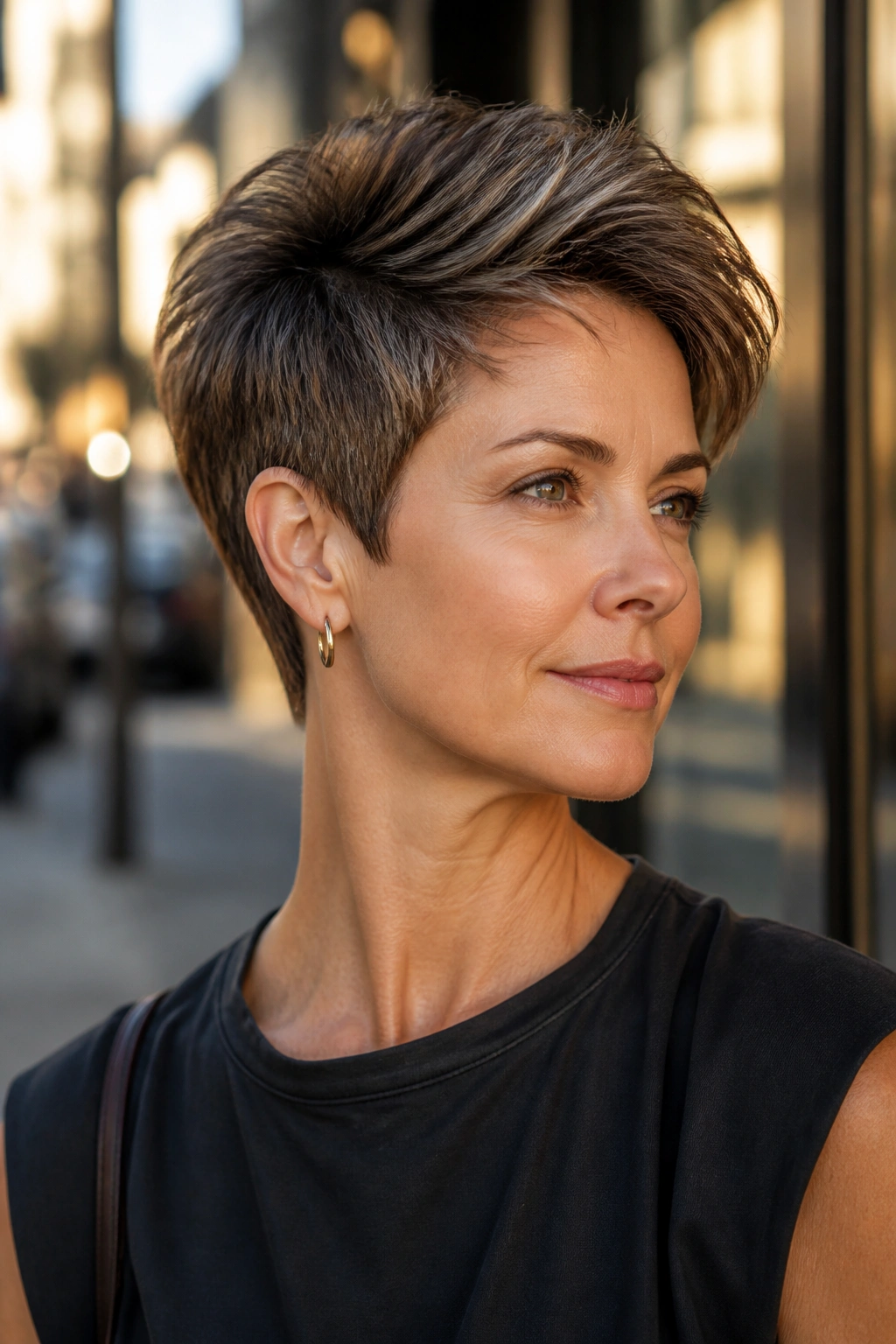
A tapered pixie gets serious points for shape. The sides and nape are cut close so the silhouette stays clean around the ear, while the crown is left longer and layered so it can lift instead of lying flat.
The trick is balance. Too much length on top and the cut starts looking top-heavy. Too little, and you lose the softness that makes it wearable. A good tapered pixie feels almost architectural, but not in a stiff way. More like the hair knows exactly where it belongs.
This cut works especially well if your hair is thick or has a stubborn bend at the back. Shorter sides remove bulk where you do not want it, and the longer crown gives you options: forward, swept up, side-swept, or tousled with a bit of paste.
It is also one of the best ear-length haircut ideas women choose when they want to show off earrings and still keep some styling freedom. The back matters here. If the nape is neat, the whole cut looks sharper.
5. The Blunt Mini Bob With a Center Part

A blunt mini bob can look severe in the wrong hands. In the right hands, it looks calm, clean, and oddly luxurious. The length usually stops at the ear or just below it, and the center part keeps the shape symmetrical and modern without making it feel stiff.
Unlike layered cuts, this one uses weight as its secret weapon. The hair sits flat enough to show the line, but not so flat that it loses body. That makes it a strong choice for finer textures that need the outline to do the heavy lifting.
It is best when the ends are cut with precision and left alone. Too much point-cutting chips away the density that gives the bob its crisp edge. If your stylist reaches for the razor here, ask what problem they are solving. Sometimes the answer is “none.”
This cut suits people who like simple clothes, clean makeup, or a polished look that does not need much fuss. It also pairs nicely with a center part that runs straight down the nose. Plain on paper. Very good in real life.
6. The Curly Ear-Length Crop
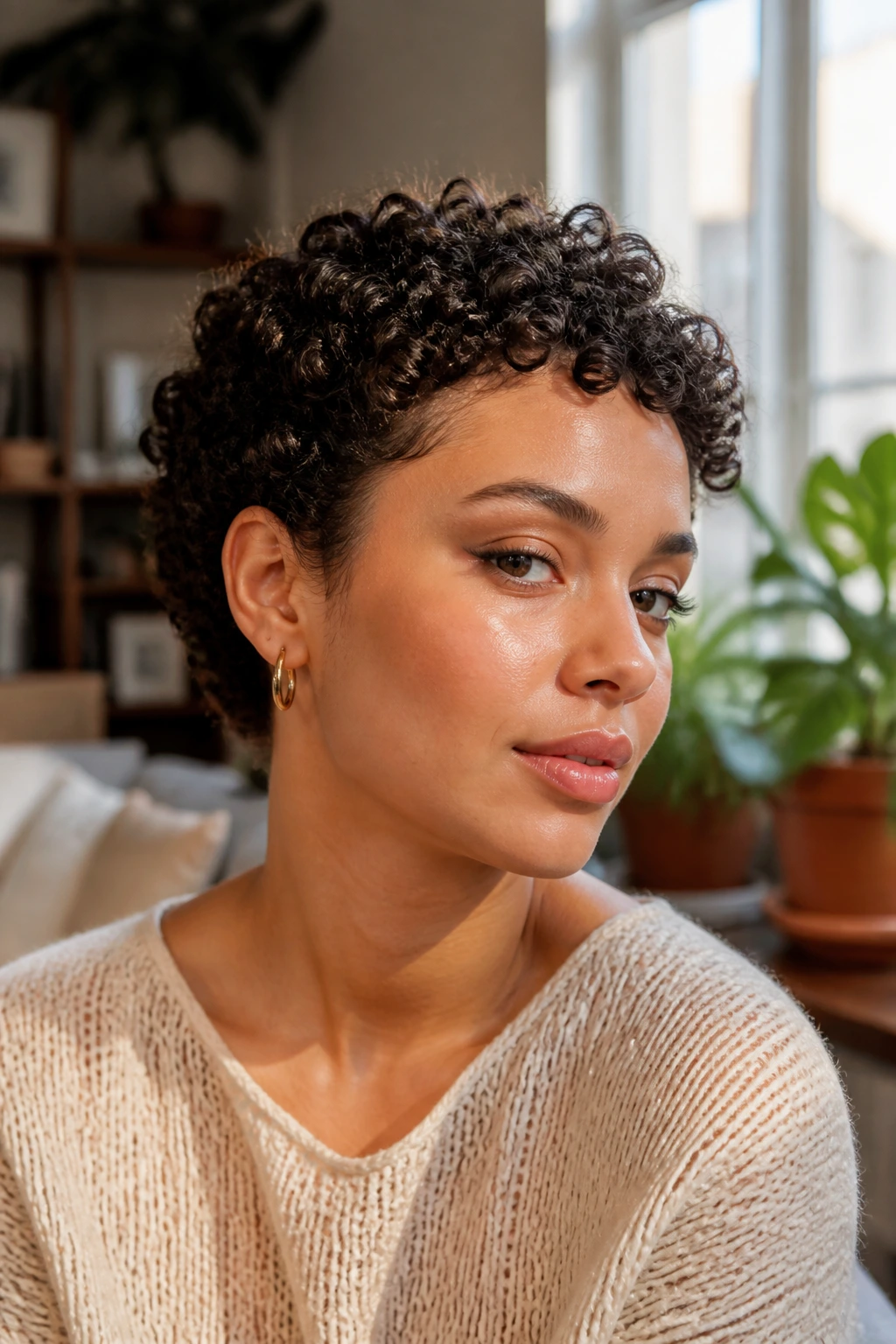
Curly hair at ear length can be gorgeous, but only if the cut respects shrinkage. That part gets ignored too often. A crop that looks perfect when wet may spring up a full inch or two once it dries, and that can change the whole mood of the style.
The best curly crop is shaped around the curl pattern, not against it. That usually means keeping enough length near the ear so the curl can coil instead of puffing out. The crown may need a touch more room than the sides, especially if your curls are tighter underneath and looser on top.
A stylist who cuts curls dry usually has a better read on the final shape. Wet hair lies. Curly hair tells the truth later.
- Ask for length left at the ear line
- Keep layers soft and strategic, not choppy everywhere
- Use a light curl cream or gel so the shape stays defined
- Diffuse until the roots are dry and the curl feels springy, not crunchy
This cut shines when the goal is bounce, not uniformity. It has personality built in.
7. The Choppy Razor Crop
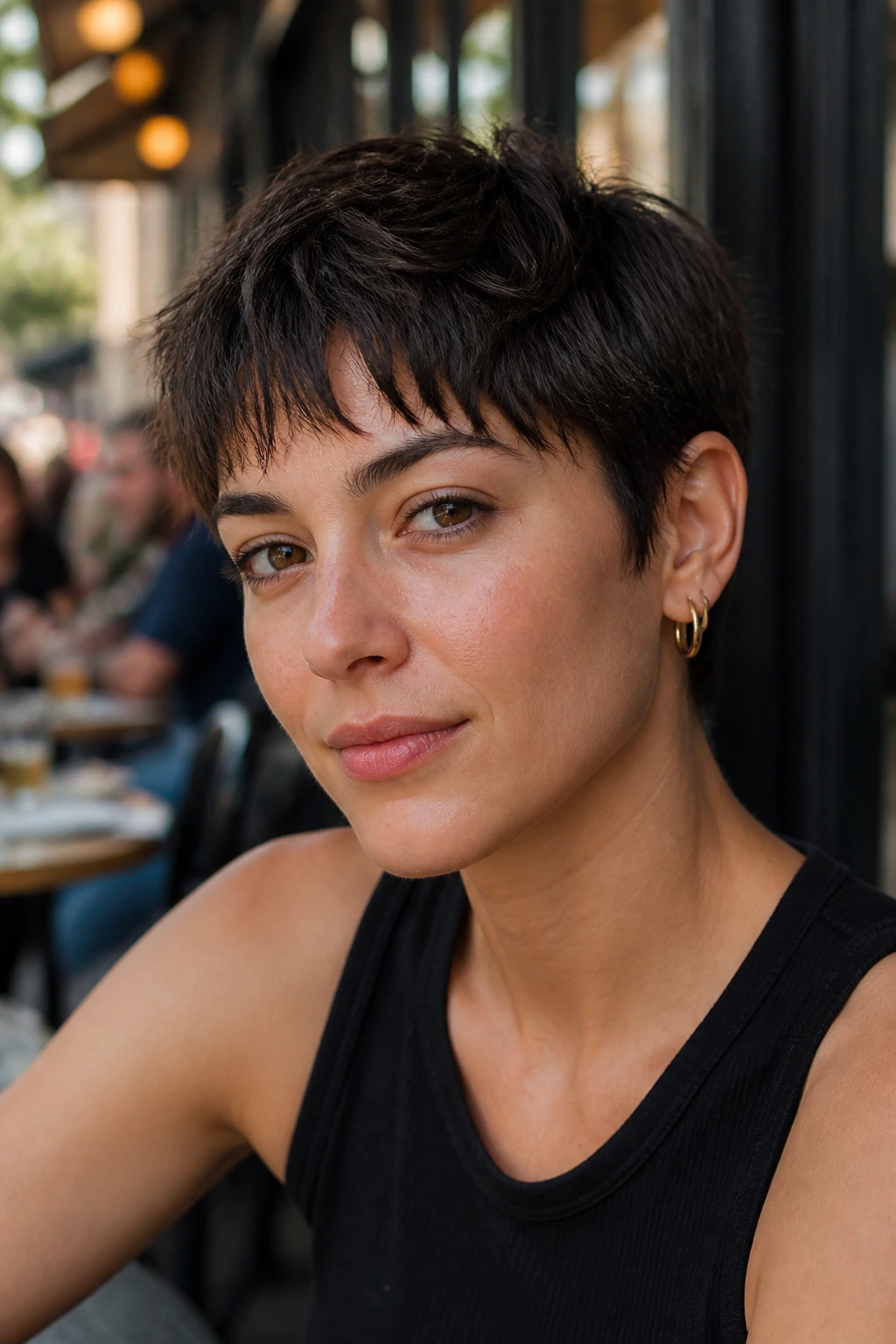
Want something a little rougher around the edges? A razor crop has that airy, broken-up finish that scissors sometimes miss. The hair feels lighter, the movement looks less boxed in, and the whole cut carries a bit of attitude without tipping into costume territory.
The razor matters because it softens the perimeter. Instead of a hard line, you get ends that separate naturally. That can be brilliant on straight or lightly wavy hair, especially if you hate the look of a heavy shelf sitting around the ear.
What to Ask for at the Salon
Tell your stylist you want piecey movement, not shredded ends. There is a difference. A good razor crop still needs shape through the sides and back so it doesn’t just fray out after two shampoos.
A bit of matte paste works well here. Rub a tiny amount between your palms, pinch the ends, and leave some space between the pieces. If everything clumps together, you lose the point of the cut.
This one has a lived-in feel that looks better when it is not over-styled. That is the whole charm.
8. The Ear-Length Shag With Wispy Ends
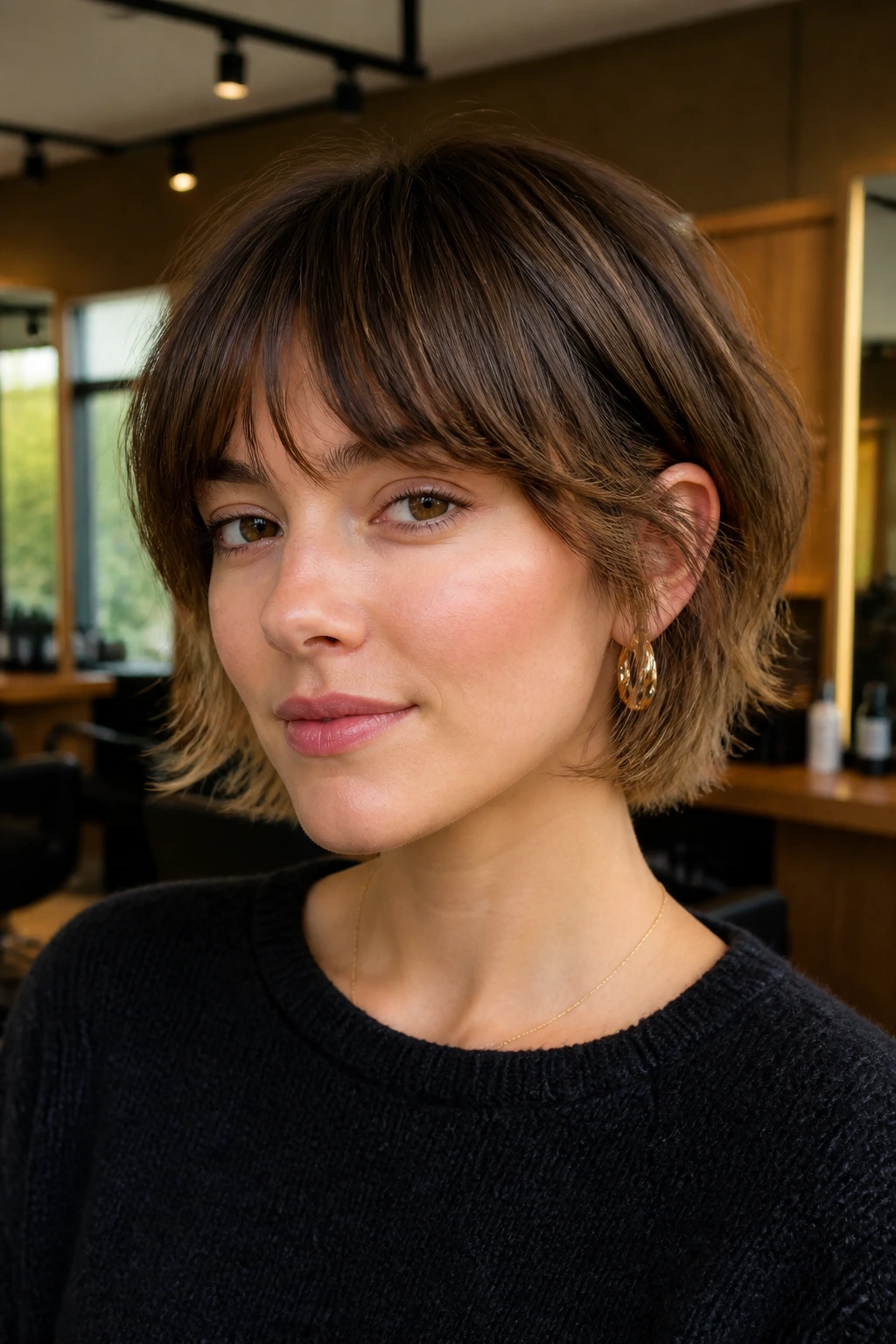
The shag is a good choice when you want short hair that doesn’t behave too neatly. Ear-length versions keep the ends light, add movement through the crown, and make the hair look fuller without weighing it down.
The wispy ends are the detail that keeps this cut from turning into a triangle. Instead of a heavy shape sitting wide at the bottom, the layers break up the perimeter and let the hair fall in a looser way. A little fringe in front helps too, especially if it is piecey rather than blunt.
This cut tends to look better on day two. The first day can be tidy; the second day gets the texture. A little dry shampoo at the roots and a bit of hand-raking can wake it up fast.
If your hair is naturally flat, this cut gives it a softer lift. If your hair is already big, ask for internal layering rather than aggressive thinning. Over-thinned shags can turn frizzy fast.
One more thing. The back needs shape. A shag with a messy front and a sleepy back is never worth it.
9. The Slick Side-Part Crop
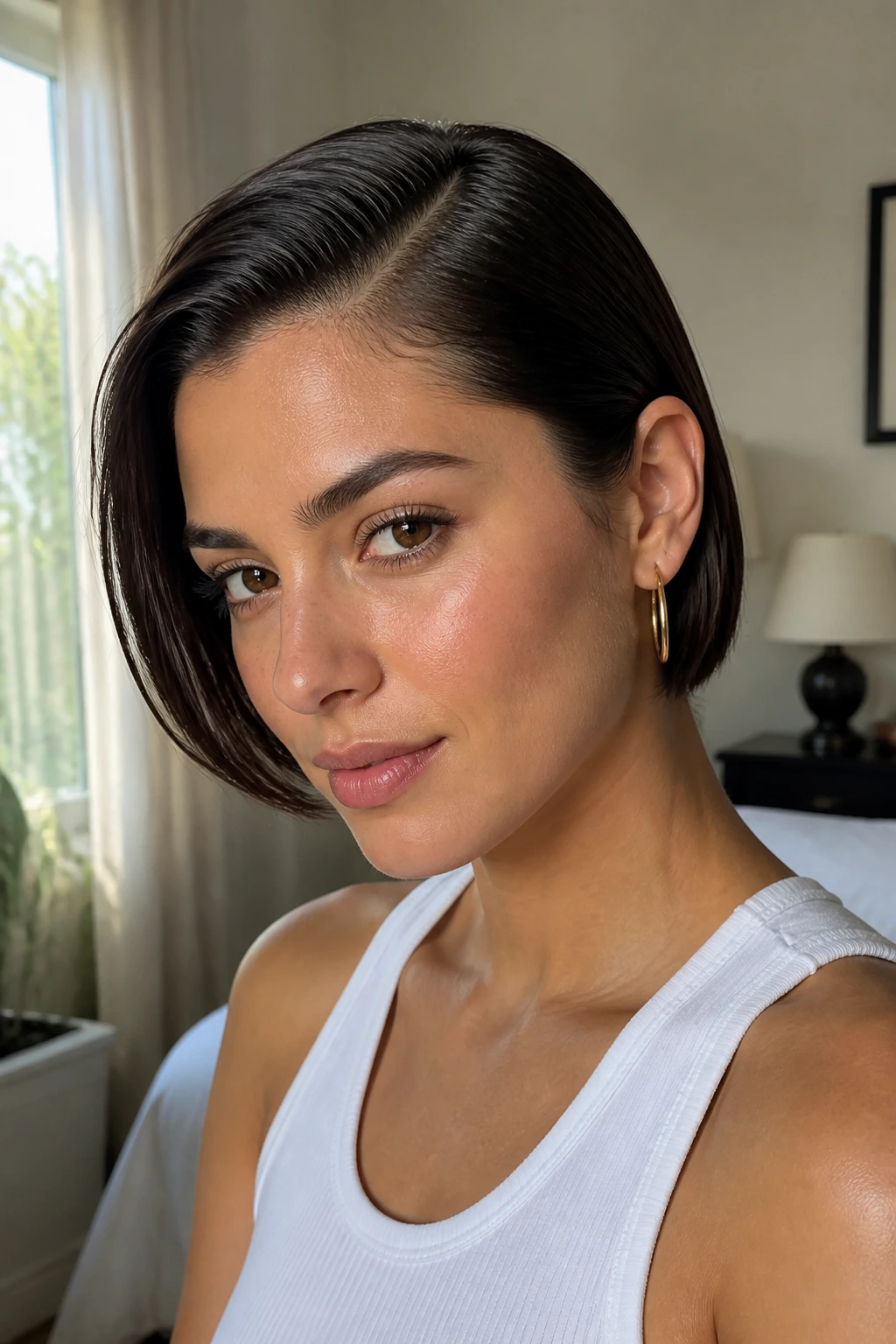
Why does a side part change everything? Because on an ear-length crop, it gives the hair direction. Instead of sitting evenly around the face, the cut sweeps to one side and creates a clean line that feels intentional and a little dramatic.
This is one of those short cuts that can look casual in daylight and dressed up after dark with almost no extra work. A smoothing cream or light gel, a comb, and a quick blow-dry in the direction of the part are usually enough. The finish can be glossy or softly controlled; both work.
How to Get the Look
- Start with damp hair, not dripping wet
- Use a fine-tooth comb to set the part cleanly
- Blow-dry the roots first so the part stays put
- Tuck the heavier side behind the ear for a sharper line
It suits straight or slightly wavy hair best, though a relaxed wave can give it more movement. The style feels especially strong on angular faces, but a softer face can wear it too if you keep the ends lightweight.
Sharp. Clean. No drama required.
10. The Asymmetrical Ear-Length Bob
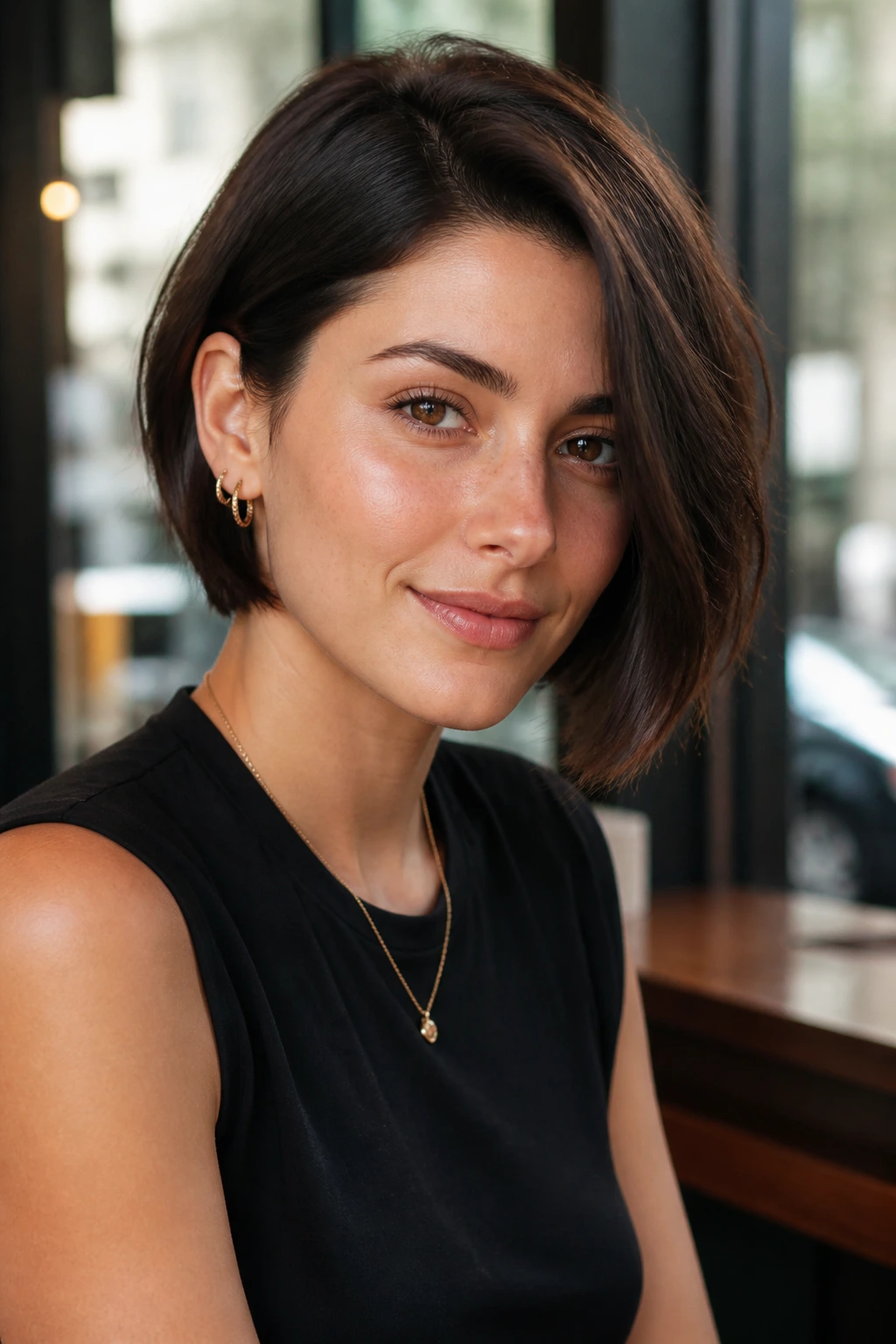
A little asymmetry goes a long way. One side brushing the cheekbone, the other sitting a touch shorter near the ear, and suddenly the haircut has motion even before you touch it. It sounds small. It isn’t.
The asymmetrical bob works because the eye has somewhere to go. A perfectly even cut can feel static; a slight imbalance gives it energy. That makes this a smart pick if you like clean shapes but do not want your hair to look too polite.
This cut is also forgiving in a sneaky way. If one side naturally flips outward and the other sits flatter, the asymmetry can make that seem intentional. A good stylist will build the difference into the cut, not fight it.
It’s best kept sleek through the perimeter, with the longer side either grazing the jaw or brushing the lobe. Too much difference and the cut starts feeling theatrical. Just enough and it looks chic in a way that photographs well in person, not just on a screen.
A side tuck helps. So does one earring, honestly.
11. The Layered Mushroom Cut
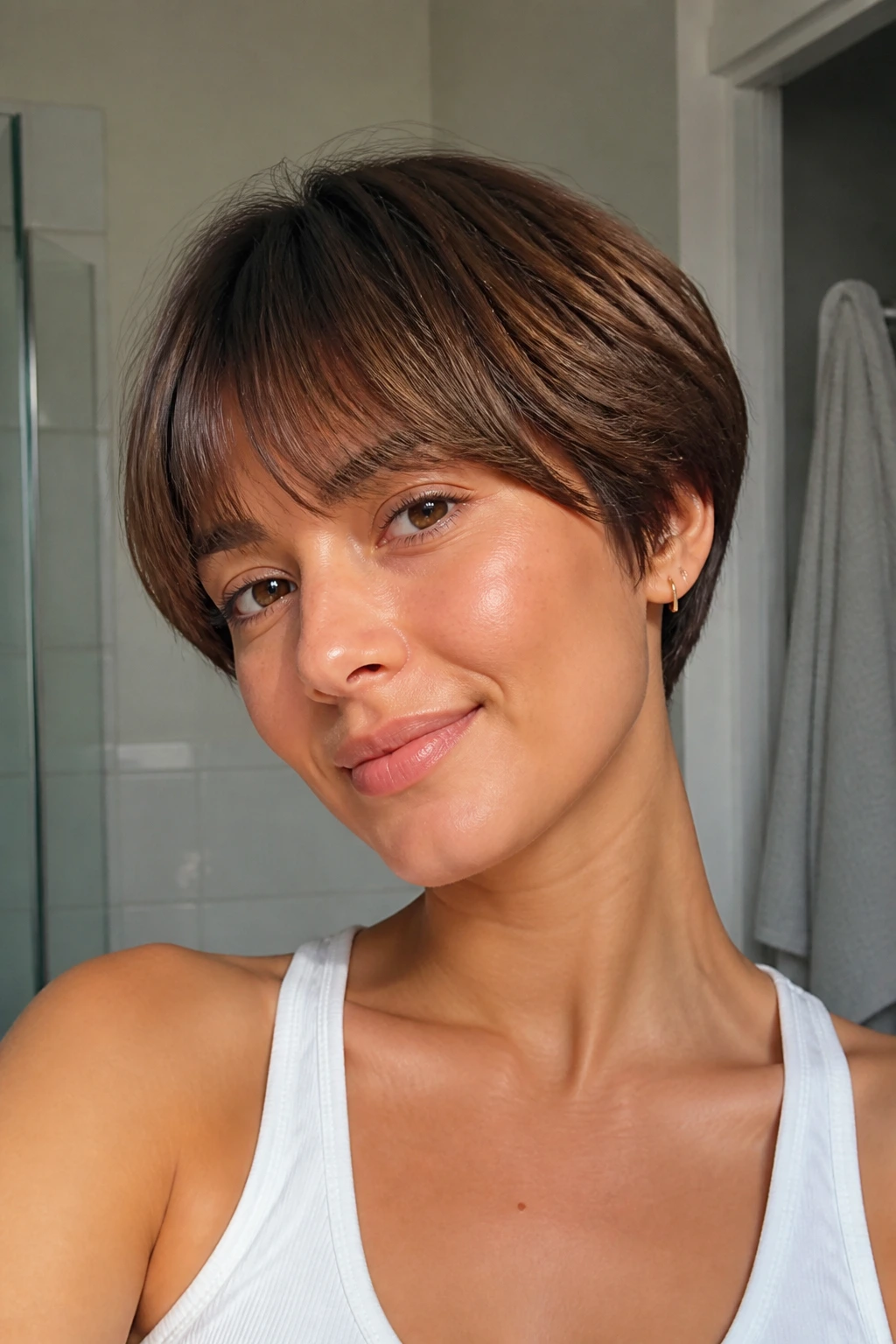
The mushroom cut gets unfairly judged. People hear the name and picture a stiff bowl from a school photo. That is not what a soft, layered version looks like when it is cut well.
What makes it work at ear length is the curve. The shape follows the head, but the layers keep it from sitting like a helmet. The sides stay neat around the ears, the crown gets movement, and the ends are softened enough to feel wearable instead of cartoonish.
This is a smart cut for dense hair that needs control without losing body. It can take a lot of hair off the sides while keeping the silhouette rounded and clean. The result is tidy, but not flat. That matters.
A tiny bit of root lift spray goes a long way here. Blow-dry the top upward, then let the sides settle naturally. If you push everything down, you lose the shape. If you fluff everything up, you lose the line. The middle is where this cut lives, and that middle is surprisingly good-looking.
Short, round, precise. Not boring.
12. The Curtain Bang Bob That Skims the Ear

Curtain bangs change the whole feeling of an ear-length bob. Instead of a straight fringe closing the face down, the bangs split at the center and open outward, which gives the haircut a softer front and more room around the eyes.
This version is especially useful if you want short hair but do not want your forehead to feel bare. The fringe can graze the brows, hit at the cheekbones, or float just above them, depending on how much face-framing you want. The bob itself can be blunt or slightly layered. The bangs are what carry the mood.
Why It’s Different
Unlike heavy bangs, curtain fringe grows out with less stress. That is the practical part people love. It also plays nicely with glasses, because the center opening keeps the frame from looking crowded.
I like this cut on people with longer foreheads, strong brows, or anyone who likes to tuck one side behind the ear and leave the other side loose. The movement feels relaxed, not lazy.
A round brush or even a quick finger blow-dry can shape the fringe away from the face. Keep the ends soft. That’s the whole trick.
13. The Tucked-Behind-the-Ear Crop
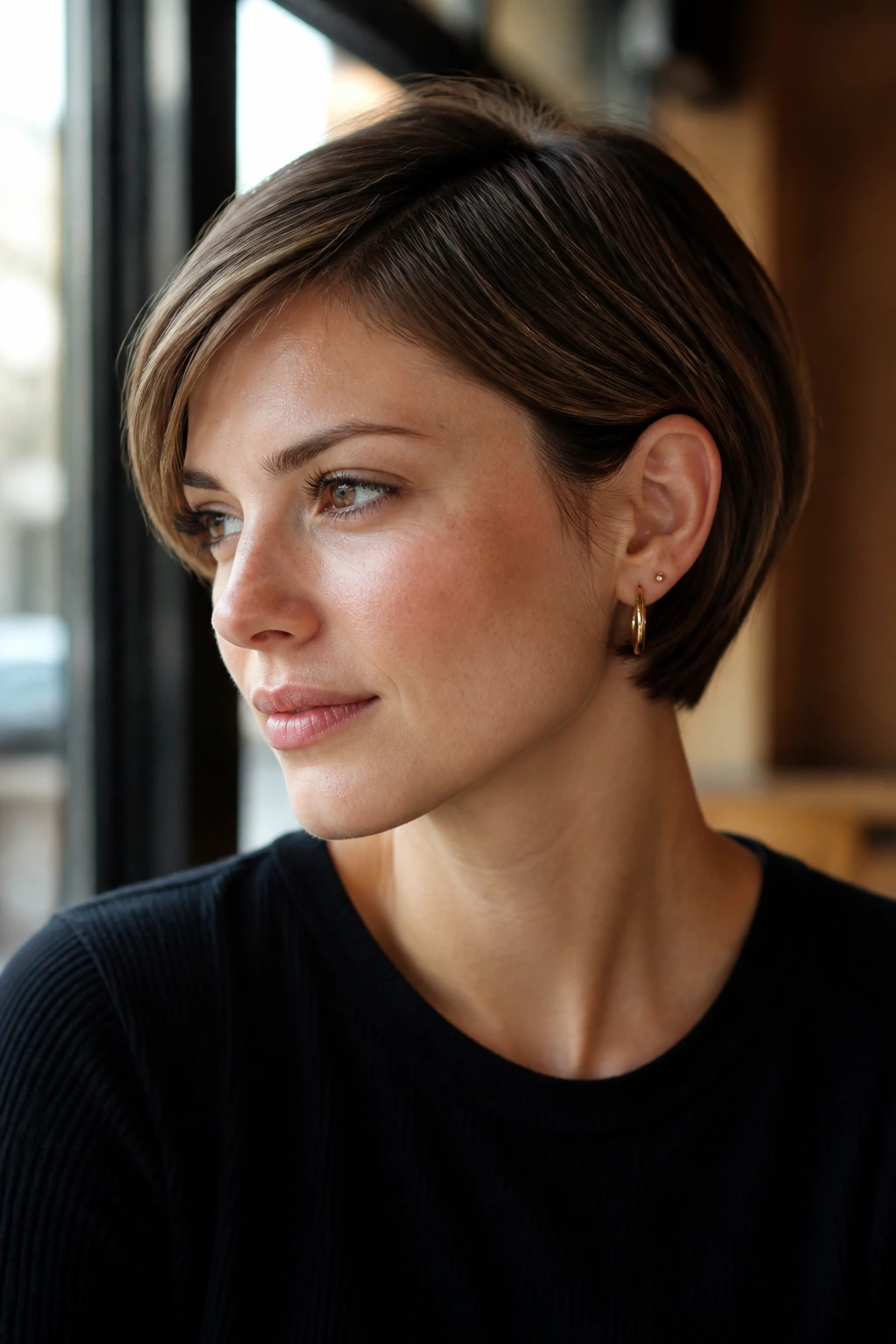
Glasses lovers, pay attention. A crop that is designed to tuck behind the ear can make short hair feel tidier without making it severe. The trick is to leave just enough length at the sides so the hair can slide behind the ear without fighting the frame of your glasses.
This cut works when the stylist shapes the area around the ear carefully. Too much bulk there and everything puffs out. Too little and the hair won’t stay tucked. That tiny zone makes a bigger difference than people expect.
The best version usually has a side part or a soft sweep through the front so the tuck feels natural. You want the ear to look intentional, not like the hair gave up. A dab of cream or a touch of pomade at the side is often enough to keep it in place.
This is a practical cut for busy mornings, office settings, and anyone who wants to put earrings, glasses, and hair all in the same conversation. Nice bonus: it makes the jawline look cleaner without needing a full styling session.
14. The Undercut Pixie Bob

An undercut pixie bob is for the person who wants less bulk and more shape. The nape and areas around the ear are clipped shorter underneath, while the top and front stay long enough to sweep, tuck, or tousle.
It sounds bold because it is. But the payoff is real. Thick hair sheds weight fast with an undercut, which means the top can sit flatter and cleaner instead of ballooning out. That makes this cut especially useful if your hair always feels too much around the ears.
The grow-out needs some planning. An undercut is easy to live with when it’s fresh, but the awkward stage can come fast if you go too long between trims. The fix is simple: keep the outline neat every 4 to 6 weeks if you want the shape to stay sharp.
And no, this does not have to look edgy in a loud way. A soft top, a side sweep, and a hidden undercut can make the whole thing feel sleek. The drama stays underneath.
15. The Soft Pageboy Cut
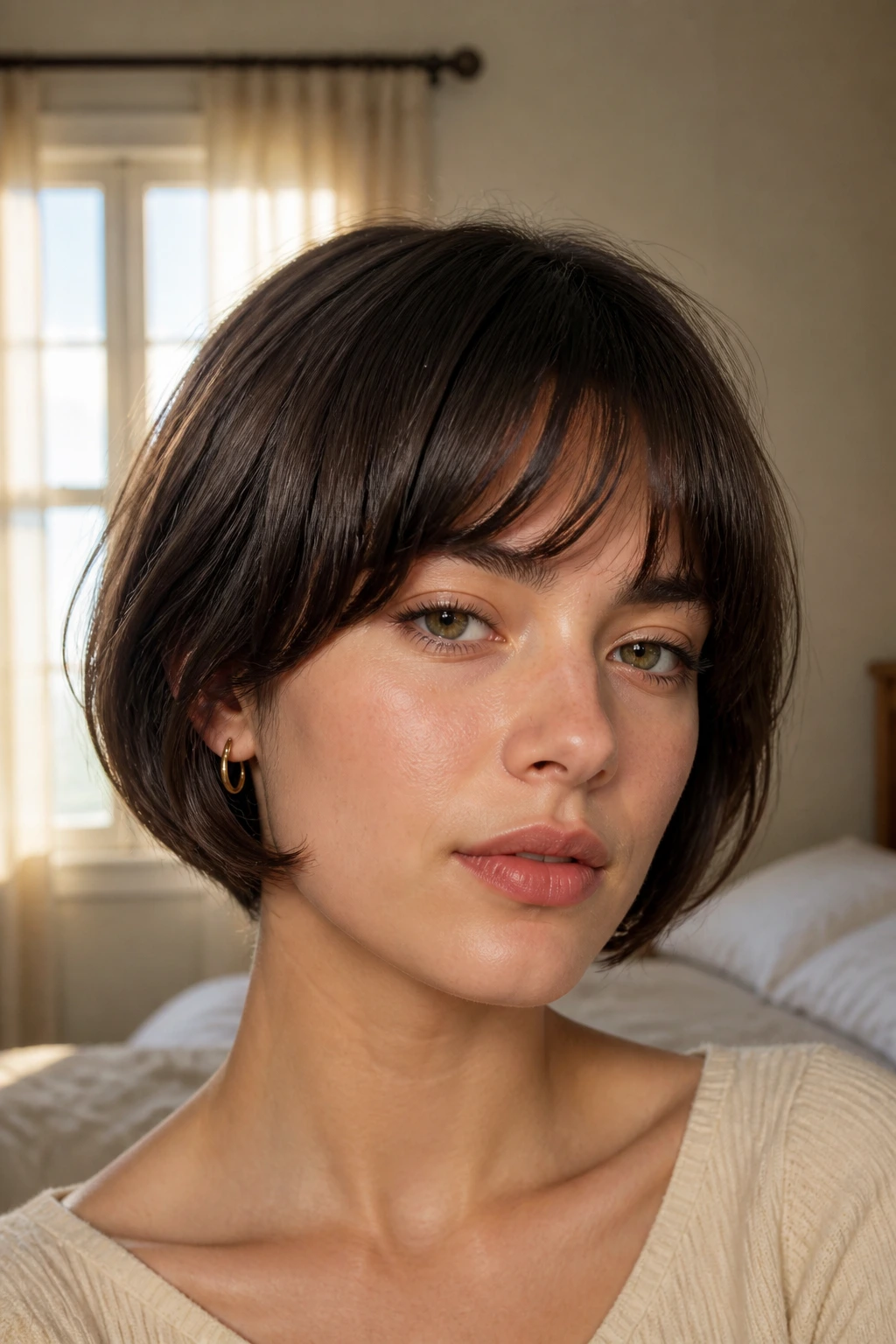
A pageboy sounds old-fashioned until you see a softened version with airy ends and a cheek-grazing fringe. Then it turns into something else entirely: neat, slightly rounded, and very good at framing the face without needing a lot of fuss.
The shape usually curves under a little at the ends, which gives the cut that classic bowl-like outline, but the modern version has softer edges and more movement. Around ear length, that curve can make the haircut feel polished without looking stiff.
What to Look For
- A rounded outline that bends inward slightly
- Ends that are softened, not chopped bluntly
- A fringe that can be full, side-swept, or barely there
- Enough length at the ear to tuck or move the hair easily
This cut suits straight hair especially well, though a soft wave can make it look less formal. It’s a strong choice if you like clean clothes, neat lines, and hair that does not need constant messing around. A little shine spray suits it. So does a calm, middle-of-the-road part.
16. The Airy Crop for Wavy Hair

If your hair waves up the second it dries, fight less and shape more. An airy crop lets the wave do the work around the ear instead of trying to flatten it into obedience.
The cut usually stays light through the ends, with enough layering to stop the wave from sitting in one heavy block. Around ear length, that gives the sides movement and keeps the top from feeling bulky. It’s especially good if your hair flips outward near the jaw and you’ve spent years blaming the wrong haircut.
A little leave-in cream is enough for most people. Scrunch the hair, let it air-dry halfway, then twist a few pieces around your fingers if they need help settling. That’s usually cleaner than blasting it with a brush and hoping for the best.
This style is best when it looks relaxed, not over-crafted. Let a few pieces sit imperfectly. That looseness is the point. The cut should feel like it belongs to your hair, not the other way around.
17. The Micro Mullet With Soft Sides
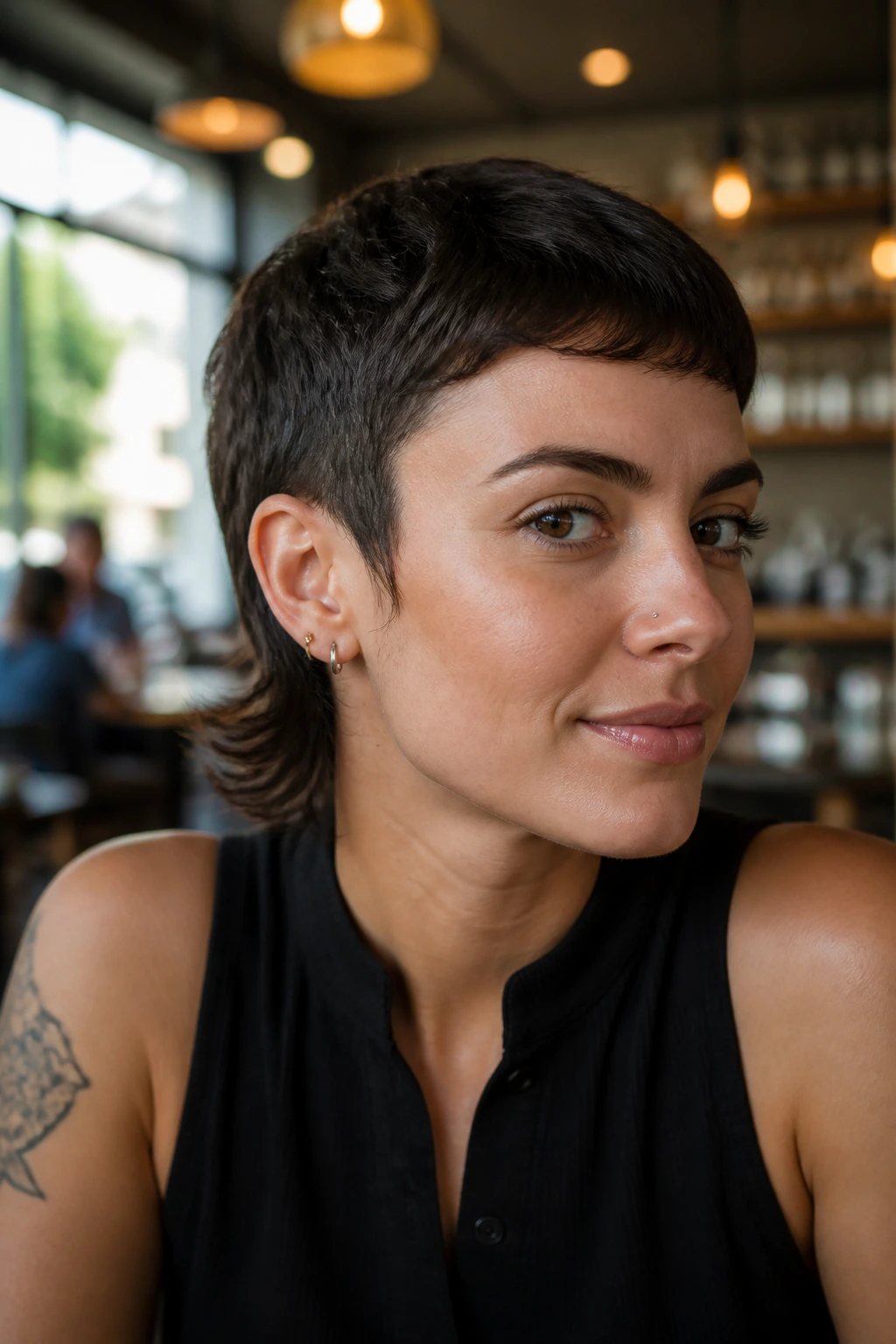
A micro mullet sounds louder than it usually is. The best versions are subtle: short and neat through the sides, a little longer through the nape, and softly broken up around the ear so the shape feels deliberate instead of punk for the sake of it.
This cut is good for people who want something with edge but still wearable at work, at dinner, or anywhere you do not want your haircut to do all the talking. The soft sides keep it from looking harsh. The slight tail in back gives it a bit of personality.
It also plays well with texture. Straight hair gets a clean graphic line. Wavy hair gets movement. Curl can make the whole thing feel playful if the layers are kept controlled.
I would not push this cut too hard if your hair is very coarse and you hate styling. It can look brilliant, but only if the back and sides are shaped with some care. Messy on purpose is one thing. Untidy is another.
A light paste at the ends and a finger-styled finish are usually enough.
18. The Feathered Pixie With a Side Sweep
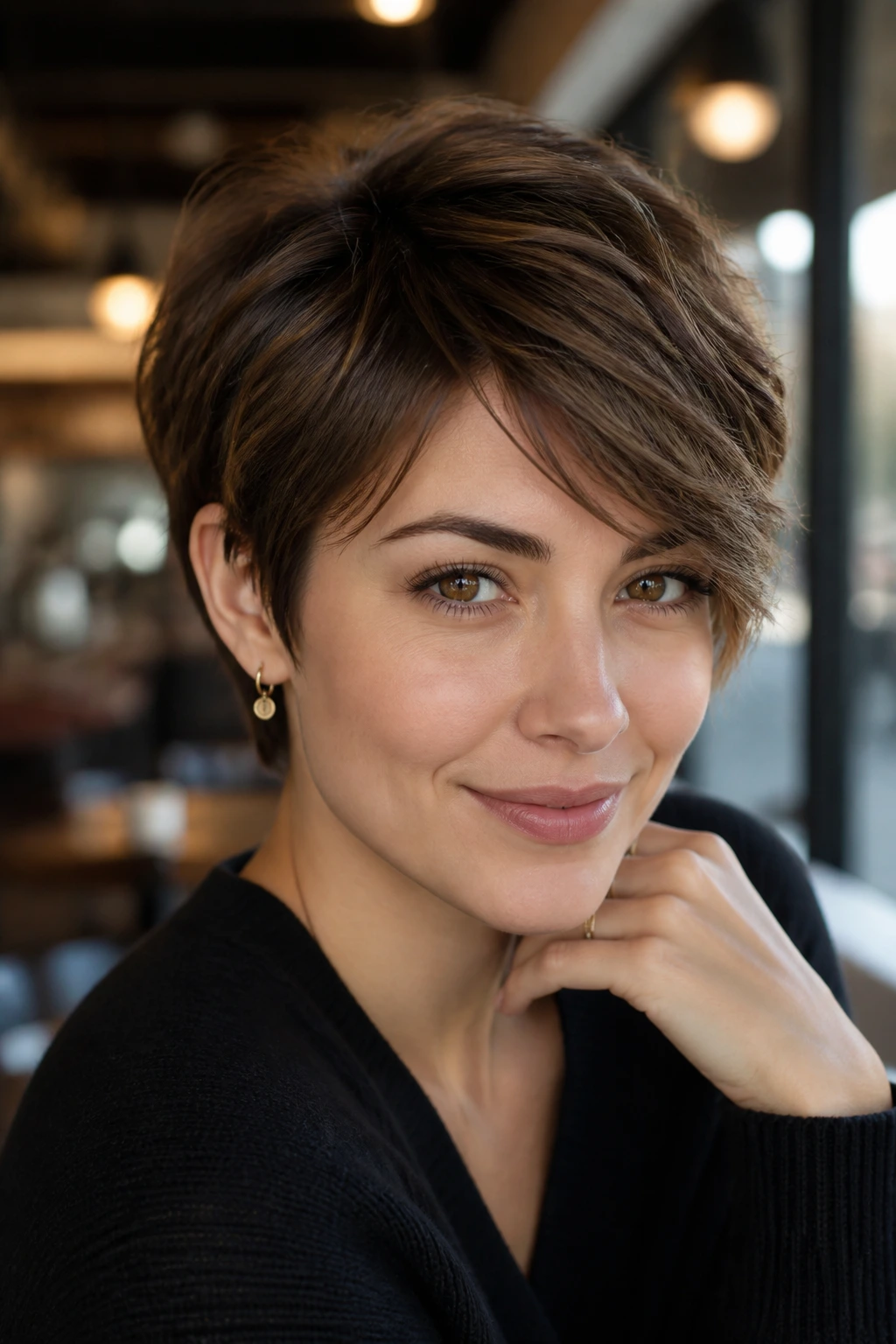
Feathering changes everything on a pixie. Instead of a hard, blocky short cut, the ends break apart into soft edges that move when you do. Add a side sweep, and the whole thing feels less severe around the forehead and ear.
Compared with a blunt pixie, this version is friendlier on fine hair because the feathered pieces create the impression of softness and lift. It can also make a short cut easier to live with if you do not love the feeling of a full-on close crop.
The sweep in front is useful, too. It lets you tuck one side, leave the other loose, or push everything back for a cleaner look. That flexibility is why people keep coming back to it.
A tiny amount of wax at the fingertips is enough. Work it through the longer top pieces only, then stop. If you overwork feathered hair, it starts to separate too much and loses its shape. Keep it airy. Keep it light.
19. The Sculpted Crop for Thick Hair
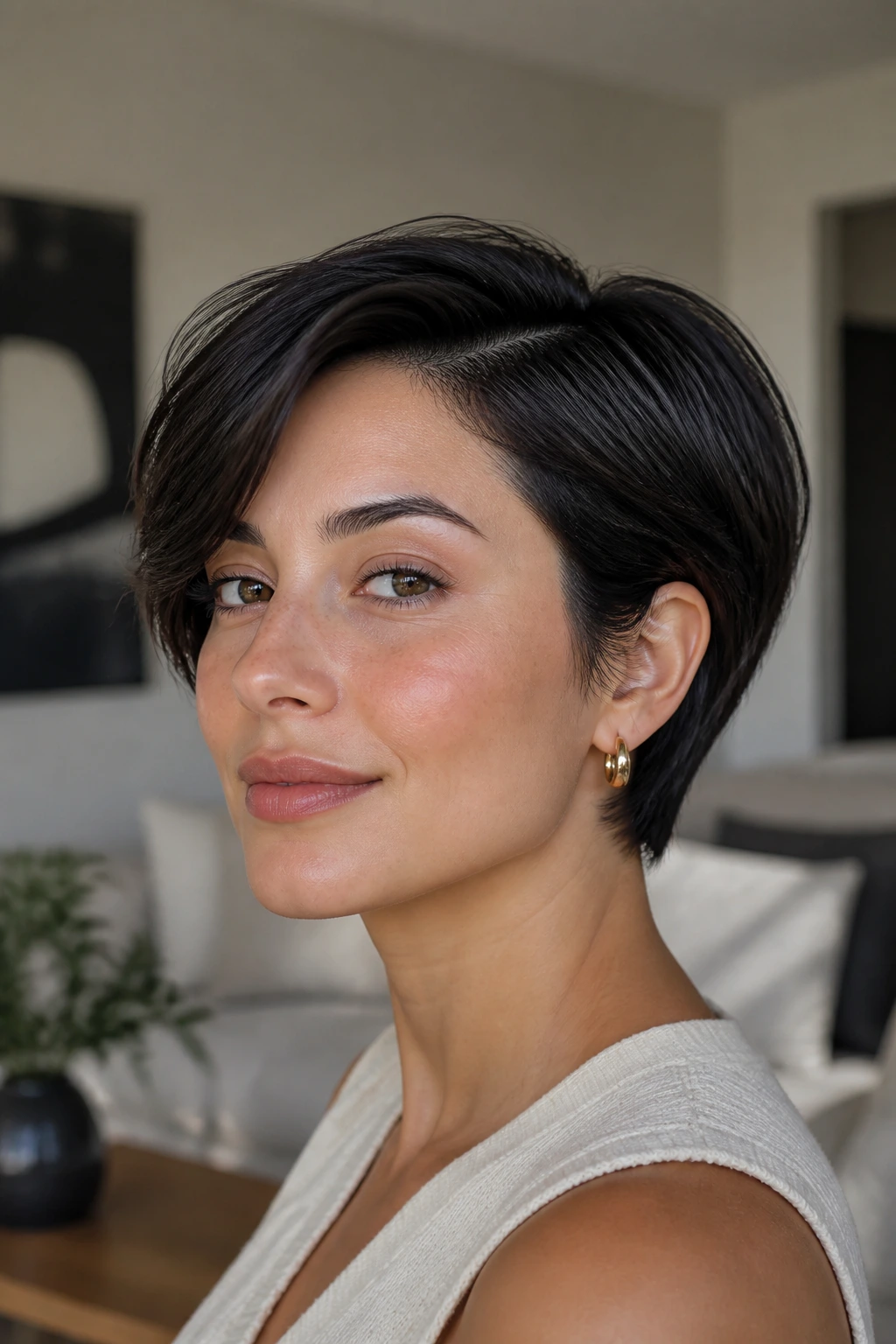
Thick hair can look wonderful at ear length, but only if the cut respects the weight. Chop it wrong and you get a puffy triangle. Sculpt it well and the shape sits close, clean, and surprisingly light.
The key is internal removal, not random thinning. You want the stylist to take bulk out from the inside while keeping the perimeter controlled. That way the cut keeps a crisp outline around the ear and does not explode outward the minute the humidity rises or the hair dries fully.
A Few Things Worth Asking For
- Preserve the outer line
- Remove weight from underneath, not everywhere
- Keep the ear area neat and close
- Avoid over-thinning the ends, which can make thick hair frizzier
This is one of the most practical ear-length haircut ideas women with dense hair can choose. It saves time, cuts down on dry time, and makes the shape easier to tuck or sweep. If your hair has a strong natural bend, this kind of crop can also stop it from turning into a mushroom by lunchtime.
Clean shape first. Texture second.
20. The Polished Minimal Crop

A polished minimal crop is for the person who wants the haircut to be the statement. No chunky layers. No busy fringe. Just a clean, ear-length line, a careful part, and enough softness at the ends that it feels calm instead of severe.
This style looks best when it is trimmed with precision. The outline should be neat enough to hold its shape between salon visits, but not so tight that it feels like a helmet. A slight bend at the ends, a tucked side, and a touch of shine cream are often enough to finish it.
The real strength of this cut is how little it asks from you. It can look intentional in under five minutes. That is a pretty good trade. If your mornings are already full, a crop like this gives you one less thing to wrestle with.
Bring a photo, yes, but also bring a habit. If you usually air-dry, say so. If you tuck one side every day, say that too. The right short haircut is not only about shape. It is about what you will actually do with it tomorrow morning.
And that’s the part people miss when they chase a short cut for the first time. The best ear-length haircuts do not just look good in the chair. They make sense when the alarm goes off, when you are late, when your hair refuses to cooperate, and when you still want to look like you meant it.
