



The best long lasting hairstyles for active days are the ones that survive real life: a sweaty gym class, a bike ride, a humid commute, a long walk with a heavy bag on one shoulder, and the odd habit of touching your hair every ten minutes. A style that looks neat for a selfie and falls apart after twenty minutes is not doing its job.
The hold usually comes from the same few things. You want a solid anchor near the scalp, a little texture so the hair can grip, and an end shape that does not flap around every time you move. That is why braids, twists, wrapped ponytails, and low buns keep winning. They are not flashy tricks. They are practical, and that is the point.
Fresh-washed hair can be slippery. Second-day hair often behaves better because it has a touch more grip, and that tiny difference can save a style from sliding halfway down your neck. A little dry shampoo at the roots, a few bobby pins placed where the style wants to loosen, or a small amount of gel along the hairline can make a bigger difference than people expect.
What follows are 15 styles that stay useful when your day gets busy. Some are polished enough for work, some are built for movement, and a few are the kind of styles you end up wearing far more often than you planned because they hold up without drama.
1. Sleek High Ponytail for Active Days

A sleek high ponytail earns its place because it puts the weight high on the head and keeps the neck clear. That sounds simple, but the difference between a ponytail that lasts and one that sags is usually the base: smooth roots, a firm elastic, and a wrapped section that hides the rough edge where things usually come loose.
I like this one for cardio, errands, and long days when you need your hair out of your face but still want a clean look. The wrapped base matters more than people give it credit for. It keeps the elastic from catching on jackets or bag straps, and it makes the style look finished even after the rest of the day gets messy.
Why It Holds Better Than a Loose Ponytail
The high placement gives you less swing and less friction at the shoulders. That matters. Hair that rubs against a collar all day starts to fray at the surface and loosen at the tie, while a tighter crown pony stays more compact.
- Brush hair up with a boar-bristle brush or a wide paddle brush.
- Smooth the hairline with a small amount of gel or styling cream.
- Tie the ponytail with a strong elastic, then wrap a thin strand around the base.
- Pin the wrapped strand underneath with two crossed bobby pins.
Tip: Leave the pony a little lower than the very top of your head if you get headaches from tight styles.
2. Dutch Braid Ponytail

A Dutch braid ponytail beats a basic ponytail when you want the style to last past lunch. The braid acts like a built-in track that keeps the hair gathered, and because Dutch braids sit slightly raised on the scalp, they grip better than flat braids when you are moving around a lot.
This is a good choice when you want one style that can go from the office to the gym without looking out of place. Start the braid at the crown, feed it down the back of the head, and stop once you reach the nape. Then secure the remaining length into a ponytail or keep braiding the ends if your hair is long enough.
A lot of people stop too early and leave the braid loose at the top. That is where it starts to slide.
What Makes It Different
The braid is doing two jobs here. It keeps the top section controlled, and it gives the ponytail a stronger base than an elastic alone. That means fewer flyaways, less slipping, and less need to fix the hair halfway through the day.
If your hair is fine, add a touch of texture spray before you braid. If it is thick, keep the braid snug but not painfully tight. You want control, not a scalp that feels angry by dinnertime.
3. Boxer Braids
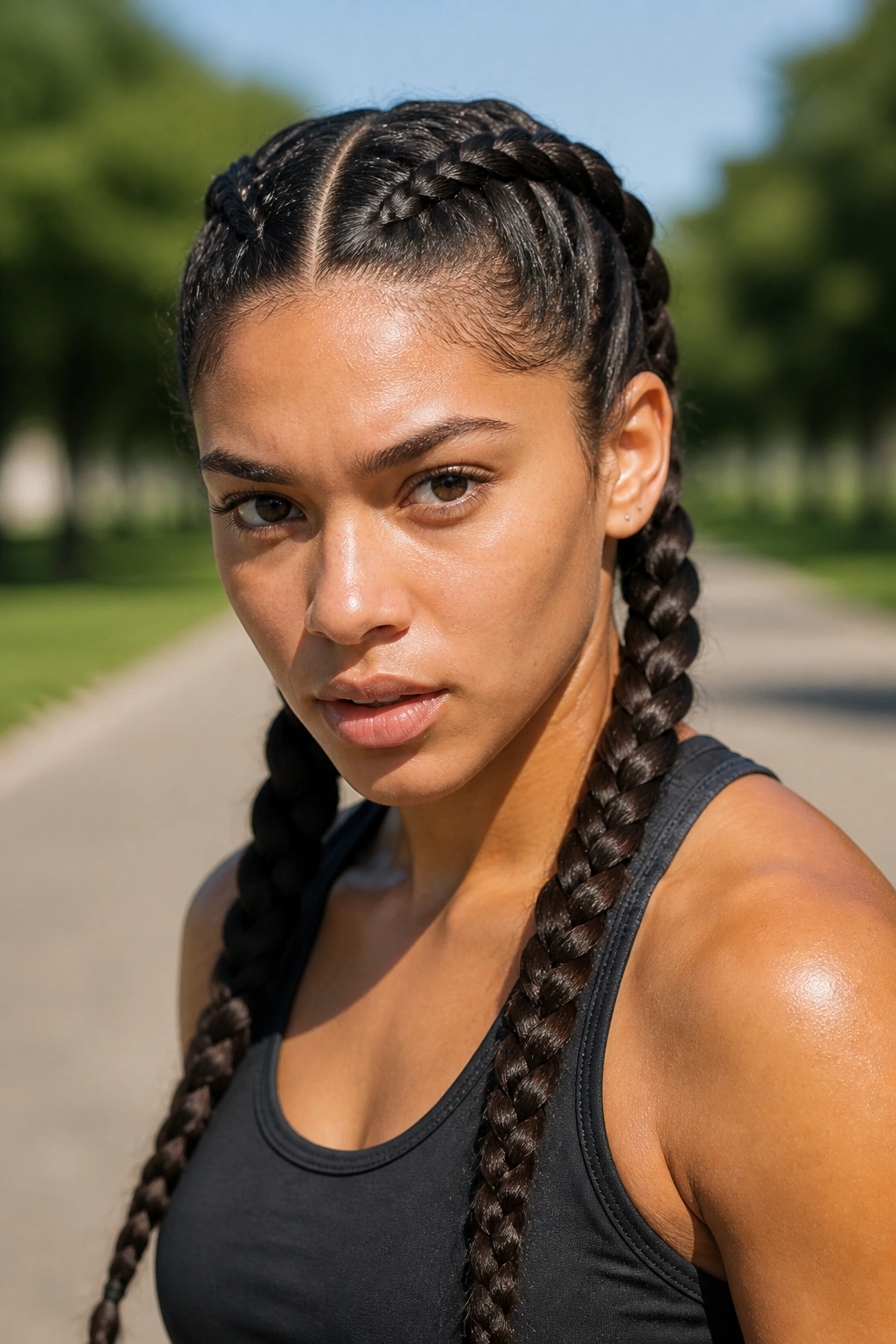
Why do boxer braids last so long? Because they spread the tension across two braids instead of one, and that makes them stubborn in the best possible way. Two Dutch braids, parted cleanly down the middle, keep hair pinned close to the scalp where movement has less chance to wreck the shape.
I reach for this style on days that involve a run, a long class, or anything where I know I will be bent over, turning, and moving my head a lot. It is also one of the few braids that stays useful for truly active days without turning into a loose mess at the first sign of sweat.
How to Wear Them Without Feeling Squeezed
The biggest mistake is pulling the braid too tight at the front. That can give you a headache fast, and it does not actually help the style last much longer. Keep the tension even, not brutal.
- Make a straight center part from forehead to nape.
- Braid each side as a Dutch braid, working close to the scalp.
- Finish the ends with small elastics.
- If you want extra security, fold the loose ends into tiny knots or mini buns.
One thing to remember: boxer braids look stronger when the part is clean. A crooked part makes the whole style feel half-done.
4. Low Braided Bun
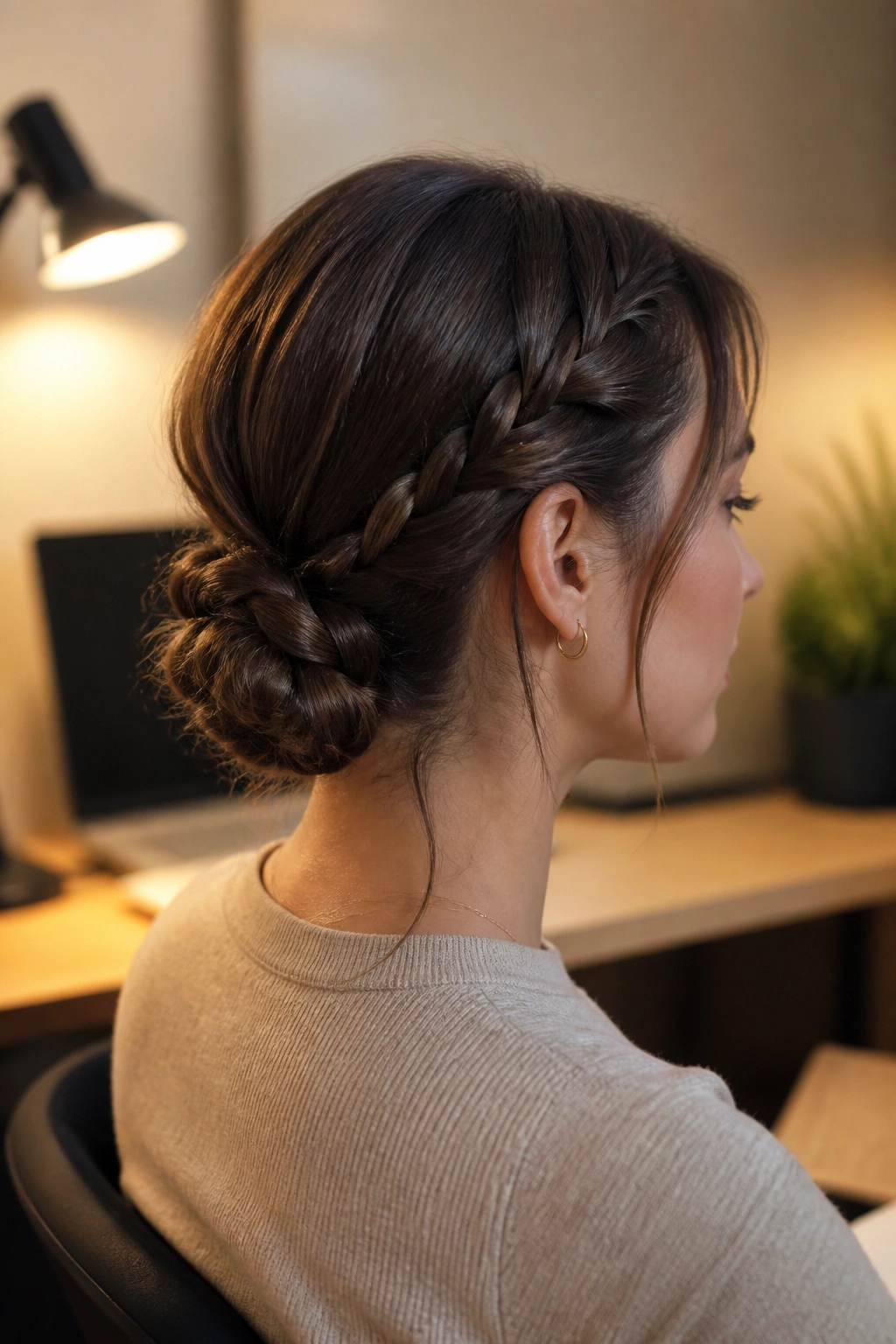
Picture a day that starts with a meeting and ends with a workout. A low braided bun handles that kind of schedule without looking too sporty or too stiff. The braid keeps the hair organized, and the bun at the nape keeps the ends from bouncing around every time you move.
I prefer this on medium to long hair because the braid gives the bun something to hold onto. That extra structure matters. A plain bun can puff up or droop, but a braided bun tends to stay more compact, especially if you pin it in a few directions instead of relying on one giant hairpin.
Where to Pin It
The bun should sit close to the base of the neck, not floating in the middle of the back of the head. Low placement makes it easier to wear under a hood, a jacket collar, or even a helmet if the bun is small enough.
- Braid the hair into one three-strand braid.
- Coil the braid around itself into a bun.
- Secure with bobby pins placed across the bun, not just into the center.
- Finish with a light mist of hairspray.
A neat low braided bun looks calm. That is the appeal.
5. Crown Braid
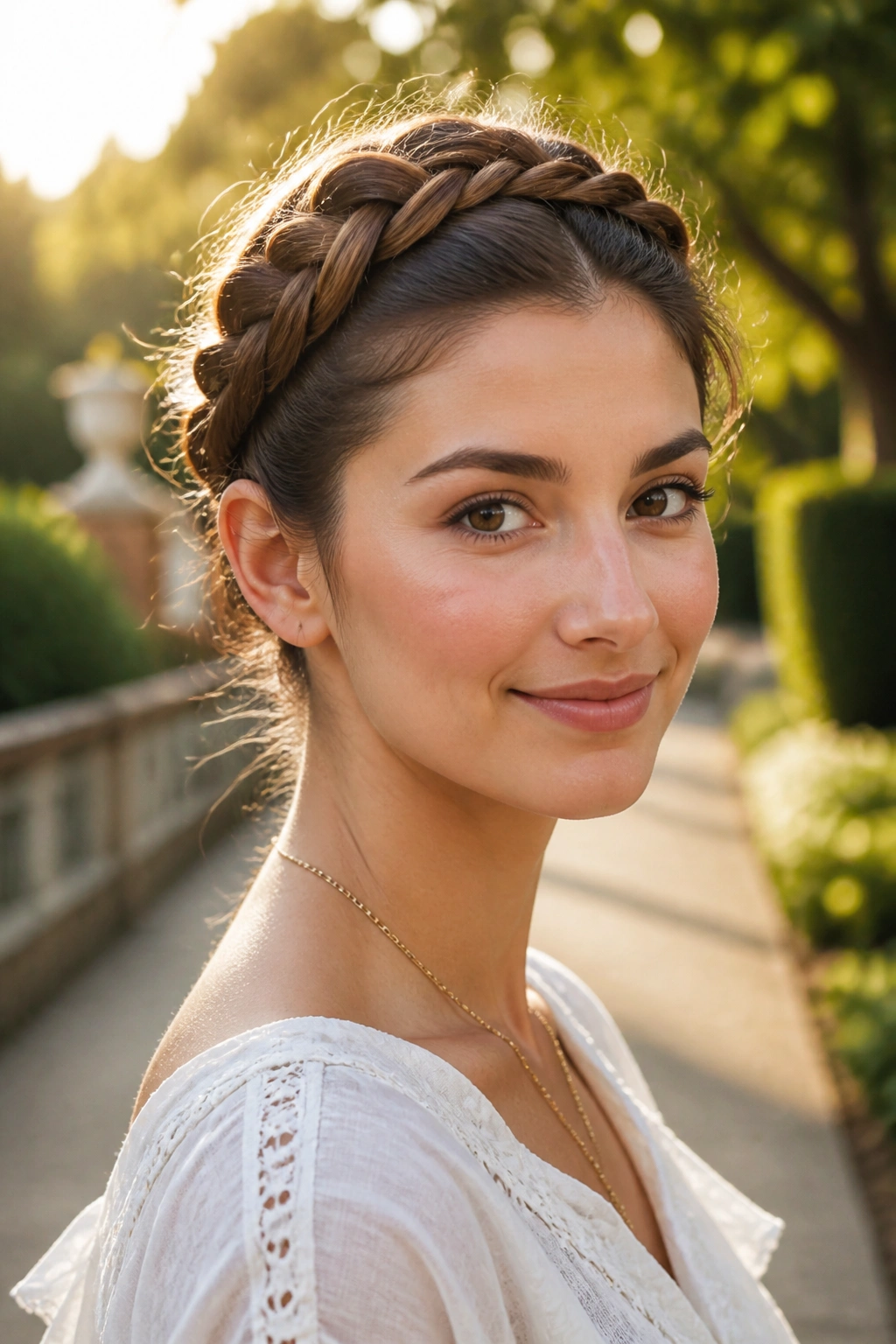
The crown braid is one of those styles that looks more complicated than it is, which is part of why people keep wearing it. Braiding around the hairline keeps the front section steady, and that is the part that usually gets frizzy first when you are active or outside for long stretches.
This style works especially well on day-two hair because the slight roughness gives the braid more grip. Clean hair can be slippery, and a crown braid needs grip more than shine. If your layers are shorter, you may need a few extra pins near the nape where the braid ends meet.
There is also a nice practical side here. It keeps hair off the face and out of the collar, which sounds boring until you spend a whole day fixing strands that keep sliding into your eyes.
What to Watch For
The braid should sit snugly, but not so tight that the hairline feels stressed. A crown braid that pulls too hard gets uncomfortable fast, especially at the temples.
If you want a softer finish, tug the outer edges of the braid very gently after it is pinned. Keep the pull light. The goal is shape, not puff. A clean crown braid holds up well on errands, walking days, and any plan that involves wind.
6. Bubble Ponytail That Stays Put

A bubble ponytail holds up better than a plain ponytail because it breaks the length into sections. Each elastic acts like a checkpoint, so the hair does not swing in one long loose tail that slowly slips lower and lower through the day.
This style is especially useful when you want something playful but still functional. It looks deliberate, which is part of the charm, and it is easier to refresh than a braid if one section starts to sag. A low bubble ponytail is usually the safest version for active days, since a high one can bounce around too much during workouts.
What Makes It Different
Compared with a regular ponytail, the bubble version controls movement better. The sections sit in place, and the elastics keep the length from unraveling as quickly.
- Start with a secure ponytail.
- Add elastics every 1 to 2 inches down the length.
- Gently pull each section outward so it looks rounded.
- Keep the gaps even for a cleaner finish.
If your hair is fine, do not over-puff the bubbles. A lighter hand keeps them from collapsing. If your hair is thick, smaller bubbles tend to hold their shape better than big ones.
7. Claw-Clip French Twist
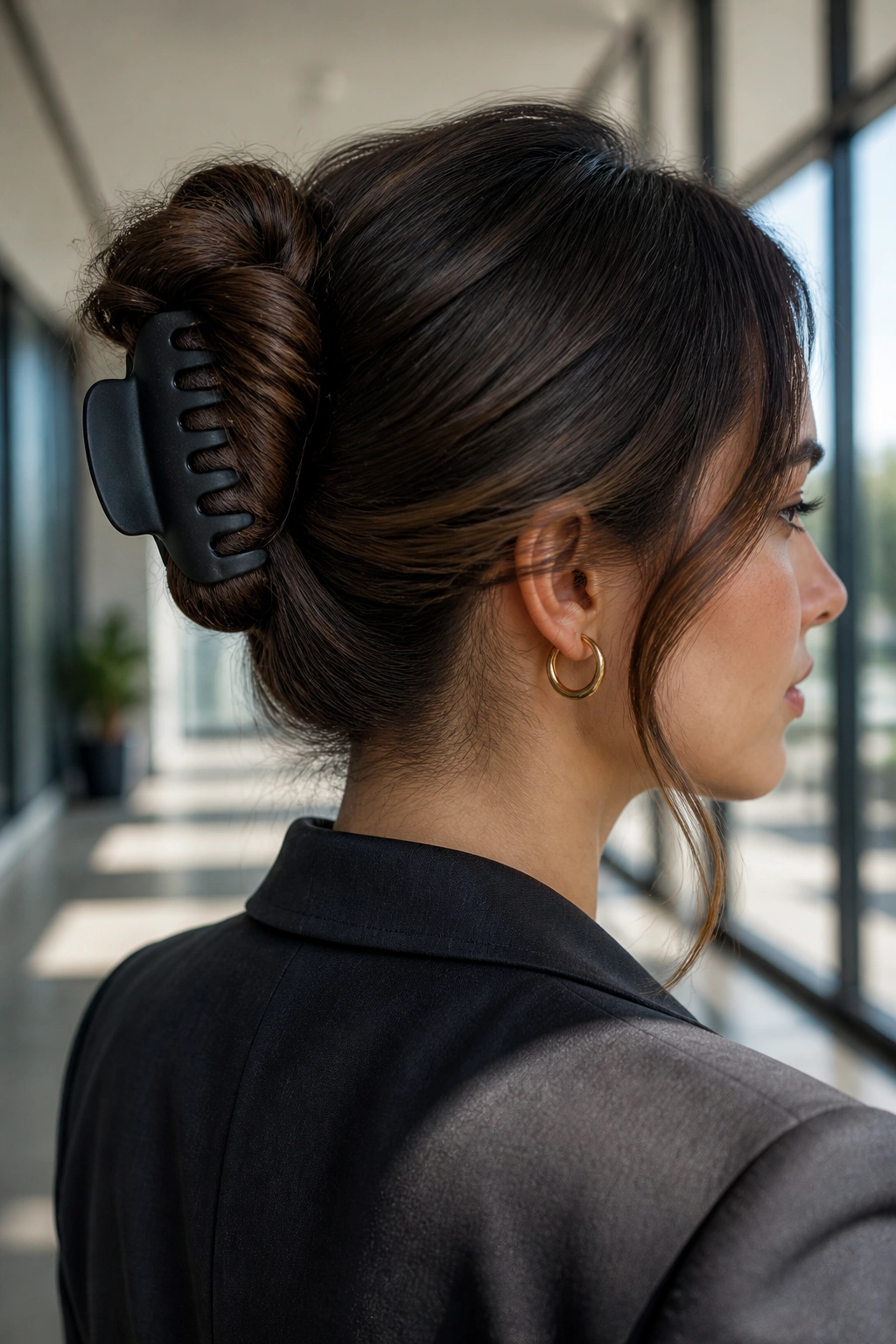
A good French twist can hold longer than people expect. The trick is not the clip itself; it is the way you fold the hair upward and tuck the ends in before the clip grabs anything. A flimsy clip slides, but a sturdy one with real teeth can keep a twist in place through a long, busy day.
This is the style I’d choose for errands, office hours, and lower-intensity movement. It is not the one I’d trust for burpees or a hard run. Be honest about that part. A French twist with a clip is practical, not invincible.
The Part Most People Miss
The twist has to be compact before the clip goes on. If the hair is still loose in the middle, the clip ends up holding air instead of hair, and the style drifts open by noon.
- Gather the hair at the back of the head.
- Twist upward until the ends are tucked in.
- Slide a large claw clip over the twist, catching the folded section.
- Add two pins at the sides if the hair is heavy or slippery.
Small detail, big payoff: a matte clip grips better than a shiny one with smooth arms.
8. Space Buns

Can space buns be practical? Absolutely, as long as you build them with enough anchors. Two buns spread the weight across the head, which keeps the style from leaning to one side, and that makes them more stable than people assume.
They are handy when you want all the hair off your neck but do not want a single heavy knot sitting in one place. I like them for long walks, dance classes, and days when the weather makes a low bun feel too warm. The trick is to make each bun small enough to stay secure, but not so tiny that it falls apart the moment you move.
Tiny buns slip. Bigger ones last.
If you braid each side before coiling it into a bun, the hold improves a lot. That added texture keeps the bun from fuzzing out too quickly, especially if your hair is layered or soft.
9. Half-Up Double Braids

When you want your hair off your face but not fully up, half-up double braids are the compromise that actually holds. The top section gets all the control, while the lower section stays loose enough to feel relaxed. That mix is useful on active days when you want movement without hair in your eyes.
The style works well on medium and long hair because the braids keep the crown flat. That is where many half-up styles fail. A clip can slide, a half ponytail can sag, but two small braids joined at the back give the upper section a stronger base.
How to Keep the Crown from Puffing Out
Part the hair cleanly and braid each top section close to the scalp. Keep the braids snug through the crown, then let them meet at the back and secure them with a small elastic.
- Best for shoulder-length hair and longer.
- Good under hats, hoodies, and loose scarves.
- Easier to refresh than a full braid crown.
- Works well with a little texture spray at the roots.
A half-up style like this is nice when you do not want the full weight of an updo, but you still need the front to behave.
10. Fishtail Side Braid

Compared with a standard three-strand braid, a fishtail side braid looks denser and tends to hold its shape once it is tightened properly. It is one of those styles that looks detailed without asking for a lot of extra tools, which makes it a strong pick for active days that still need a little polish.
The side placement matters. It keeps the braid off the back of the neck and away from jacket collars, and it also makes the style easier to tuck forward over one shoulder. If you are going to be in motion, that can be more comfortable than having hair swing straight down your back.
I usually like this best on hair that has a bit of texture already. Clean, slippery hair can work, but you will fight it more.
How to Get the Most From It
The trick is to keep the sections small and even. Big sections make the braid chunky in a way that can loosen faster. Smaller sections create that tighter woven look that stays tidy longer.
Finish with a tiny elastic and gently press the outer edges if you want a softer shape. Do not pull the braid apart so much that it starts to unravel. That is where people get carried away and lose the hold they were after.
11. Twisted Low Chignon

A twisted low chignon feels calm and controlled from the first pin. It sits at the nape, so it does not bounce around much, and the twist gives the bun a little more grip than a plain coil. That makes it a smart choice for office days that turn into long commutes or active evenings.
There is also something nice about how it keeps the outline neat even when a few small hairs escape. The style does not depend on perfect smoothness. It depends on a good twist, a low anchor, and pins that actually catch the hair instead of skimming over it.
For slippery hair, a matte spray or dry shampoo before twisting helps. For thicker hair, a few extra pins placed in different directions usually solve the problem without making the bun feel hard.
The key detail: pin across the twist, not only into the center of the knot.
A chignon that sits too high loses some of its practicality. Keep it low, keep it compact, and it will handle more movement than it looks like it should.
12. Cornrows for Sweat and Motion

If you need a style to outlast heat, sweat, and repeated movement, cornrows are hard to beat. They sit close to the scalp, stay neat for a long time, and keep the ends controlled in a way that very few other styles can match. For textured hair that suits cornrowing, this is one of the most practical options on the list.
The big thing here is tension. Cornrows should be secure, but not painful. A style that pulls too hard at the roots may look polished for a day, then feel miserable by night. If you are getting them done by someone else, speak up if the scalp feels sore before they finish the first section.
A simple straight-back pattern is the easiest place to start. Curved rows, side parts, and braid-into-bun finishes all work too, but the straight-back version tends to be the most useful when you want low fuss and steady hold.
What to Ask For
- Clean, even parts.
- Firm but comfortable tension.
- Ends secured into a bun, ponytail, or tucked finish.
- A style that matches your hair density and length.
If you wear cornrows for more than one day, a satin scarf or bonnet at night helps the rows stay smooth. That extra step is not glamorous. It works.
13. Rope Braid Low Ponytail
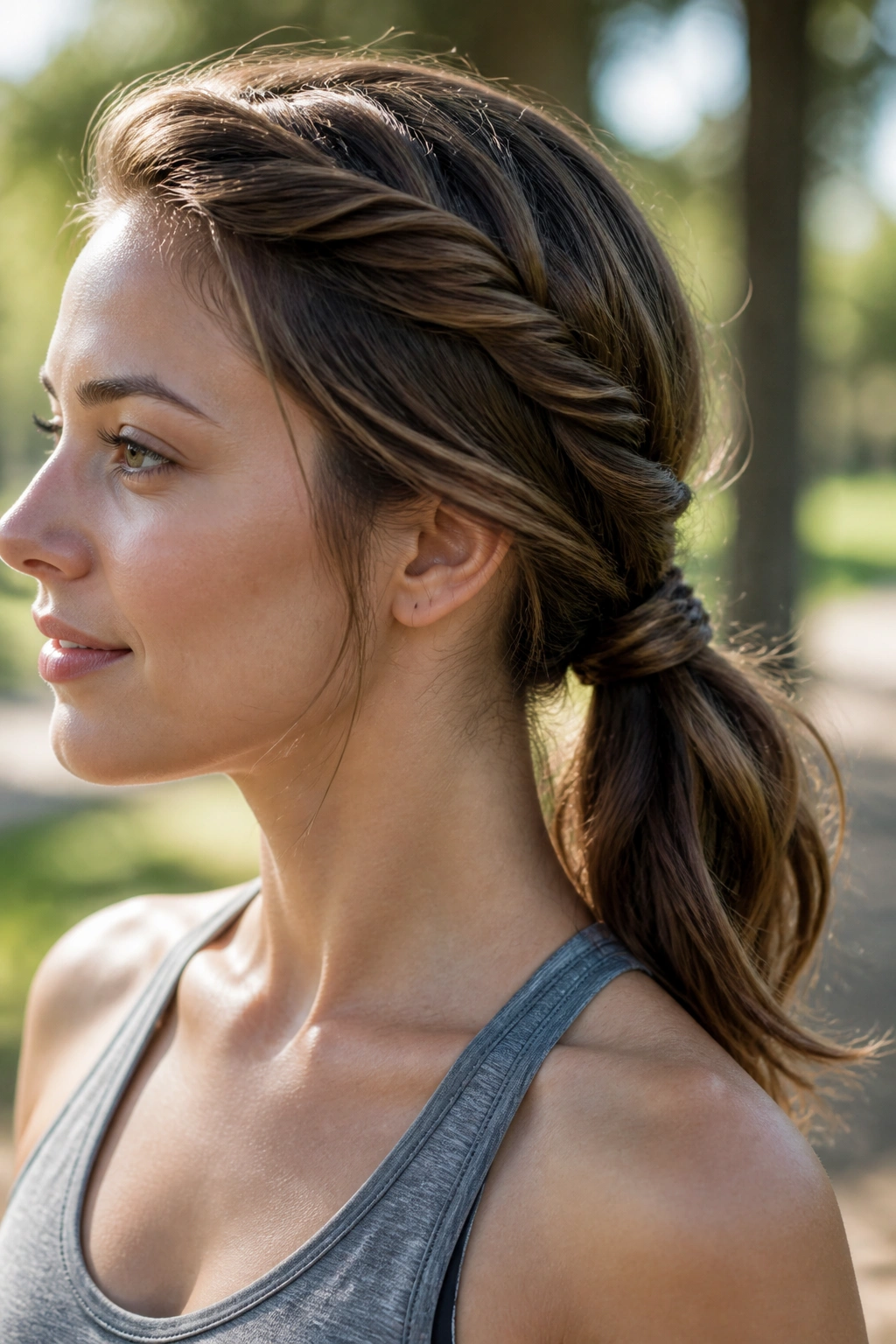
Why does a rope braid hold so well on a busy day? Because the hair twists around itself instead of crossing in the same loose pattern as a regular braid, and that gives it a neat, compact shape that does not fray as fast.
I like this style for fine to medium hair because it adds structure fast. You start with a ponytail, split it into two sections, twist both sections in the same direction, then wrap them around each other in the opposite direction. That reverse motion is what locks the shape together. Miss that part, and the braid starts to unwind.
How to Build It
- Tie the hair into a low ponytail.
- Split the tail into two equal sections.
- Twist both sections clockwise, or both counterclockwise.
- Wrap the sections around each other in the opposite direction.
- Secure the end with a small elastic.
It is fast, not fussy. That is the appeal. And because it sits low, it does not bounce much during walking, commuting, or lighter movement.
A little texture spray before you start can help the rope braid keep its grip through the day.
14. Double Low Pigtail Braids
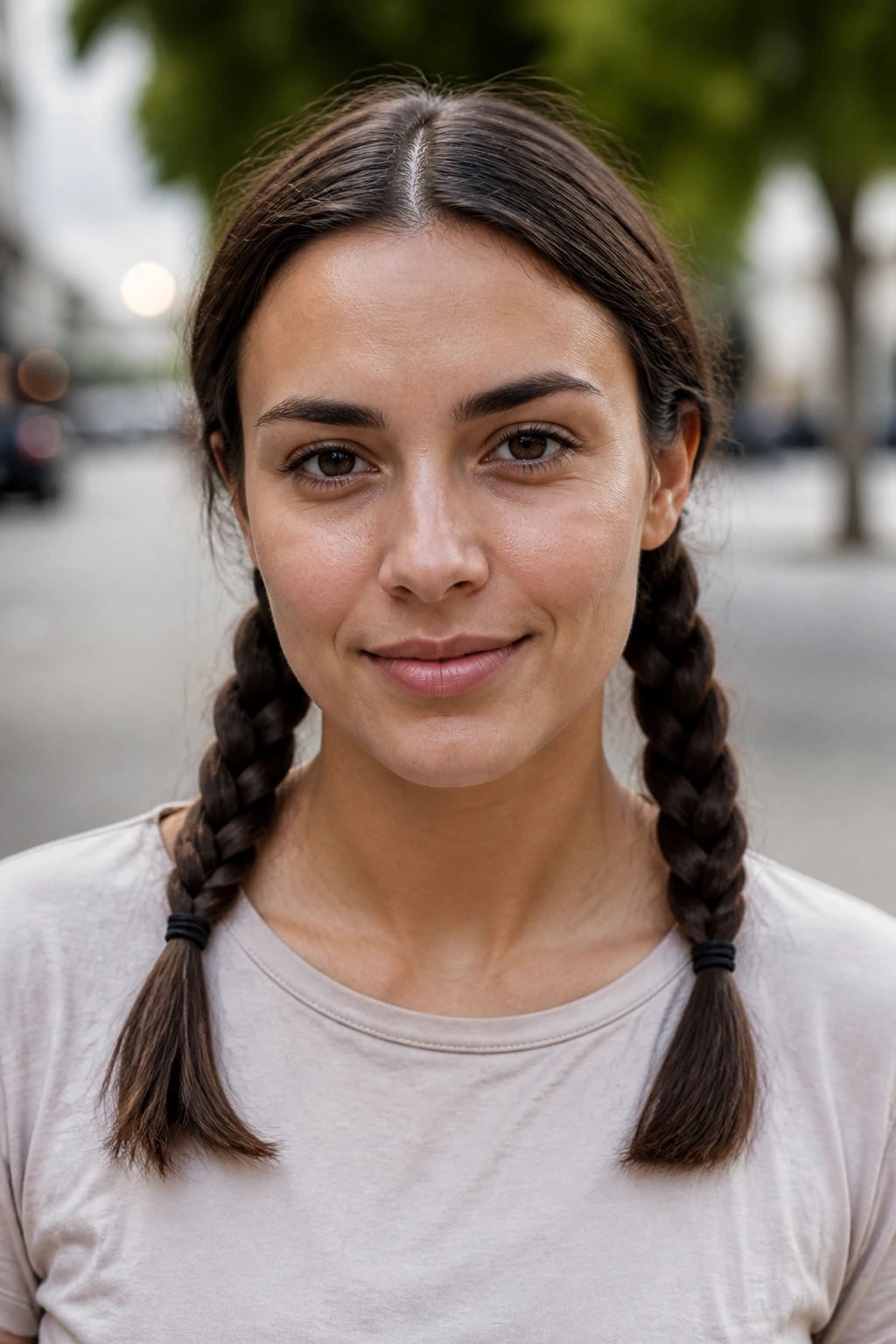
I reach for low pigtail braids when the day involves a helmet, a hood, or a lot of shoulder movement. They are practical in a way that feels almost old-fashioned, but that is exactly why they keep working. Low placement means less pull, and the two braids spread the weight instead of hanging everything from one point.
This style is also easier to keep neat than people expect. A clean center part and even tension matter more than anything else. If the parts are crooked, the whole look gets messy fast. If they are straight, the braids stay tidy and functional for hours.
You can keep them plain, or you can braid a small section from the crown into each side first if you want a little more grip.
What Helps Them Last
- Part the hair down the center with a tail comb.
- Start each braid just below the ears or at the nape.
- Keep the braid tension even from top to bottom.
- Finish with small elastics so the ends do not slip.
They are not the flashiest style on the list, but they are one of the most dependable. There is a reason people keep coming back to them.
15. Slicked-Back Top Knot for Active Days
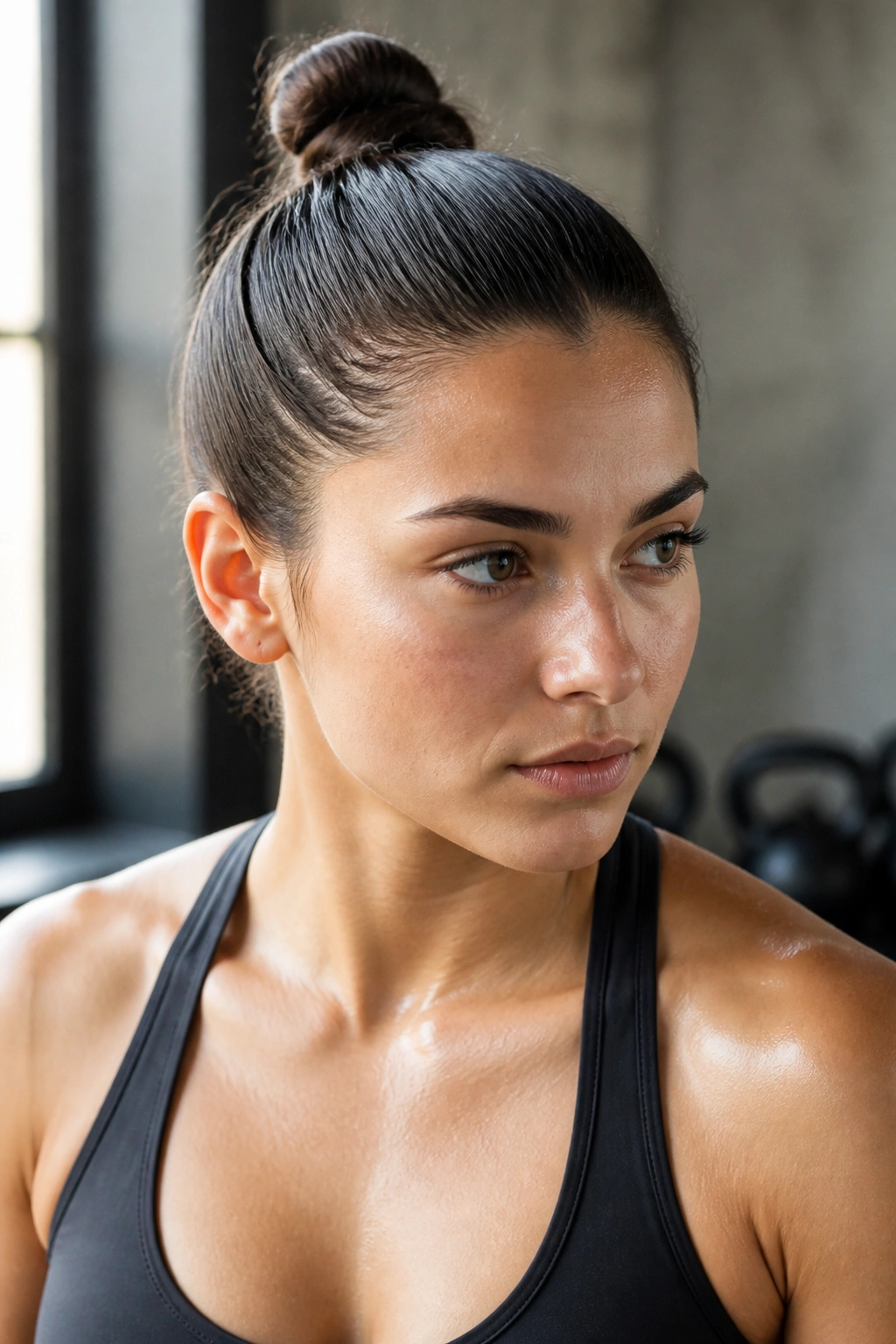
A top knot does not need to look soft to be wearable. In fact, for active days, the cleaner and flatter the base is, the longer it tends to last. The style works because the hair gets pulled into one compact point, then wrapped and pinned so the ends stay out of the way.
The mistake is making the bun too tall and too loose. A tall knot can wobble, and a loose one starts to sag as soon as you move. Keep the base firm, keep the coil close to the crown, and use a strong elastic before you even start wrapping.
A little gel at the hairline keeps the edges smooth, and a few crossed pins under the bun stop it from sliding. That is the difference between a knot that lasts and one that needs constant fixing.
My honest take: this is the style to pick when you want the least hair drama possible.
If your hair is very thick, split the ponytail in two, twist each section, then wrap them together. If your hair is fine, a smaller bun usually holds better than a big airy one.
Final Thoughts
The styles that last on active days are rarely the most complicated ones. They are the ones that give the hair a job and then keep that job simple: hold here, stay close, do not swing around. Braids and twists win because they control the length. Buns win because they keep the ends tucked away. Ponytails work when the base is strong and the finish is clean.
A tiny backup kit helps more than people admit. Keep a few mini elastics, two bobby pins, and a travel-size spray in your bag, and half the battle is already won. That is not glamorous advice, but it saves hair more often than a drawer full of fancy products ever will.
