



Long hair can make thinning hair look flatter than it is. Once the ends start to go wispy, all that extra length pulls the eye downward and leaves the top looking sparse.
Shorter haircuts for thinning hair work because they change the shape, not just the length. A blunt edge, a smart fringe, or a little lift at the crown can make the same head of hair read fuller from across the room.
Fine hair is not the same thing as thinning hair. Fine hair means each strand is narrow; thinning hair means there is less hair density on the head. The fix is different, and that is where a lot of bad haircut advice falls apart fast.
The best cuts stop fighting the hair you actually have. They keep a strong perimeter where the shape needs help, then add movement only where the hair can support it. Clean line. Smart texture. No dragging, no over-layering, no desperate attempt to make every strand do the same job.
1. Chin-Length Blunt Bob for Thinning Hair
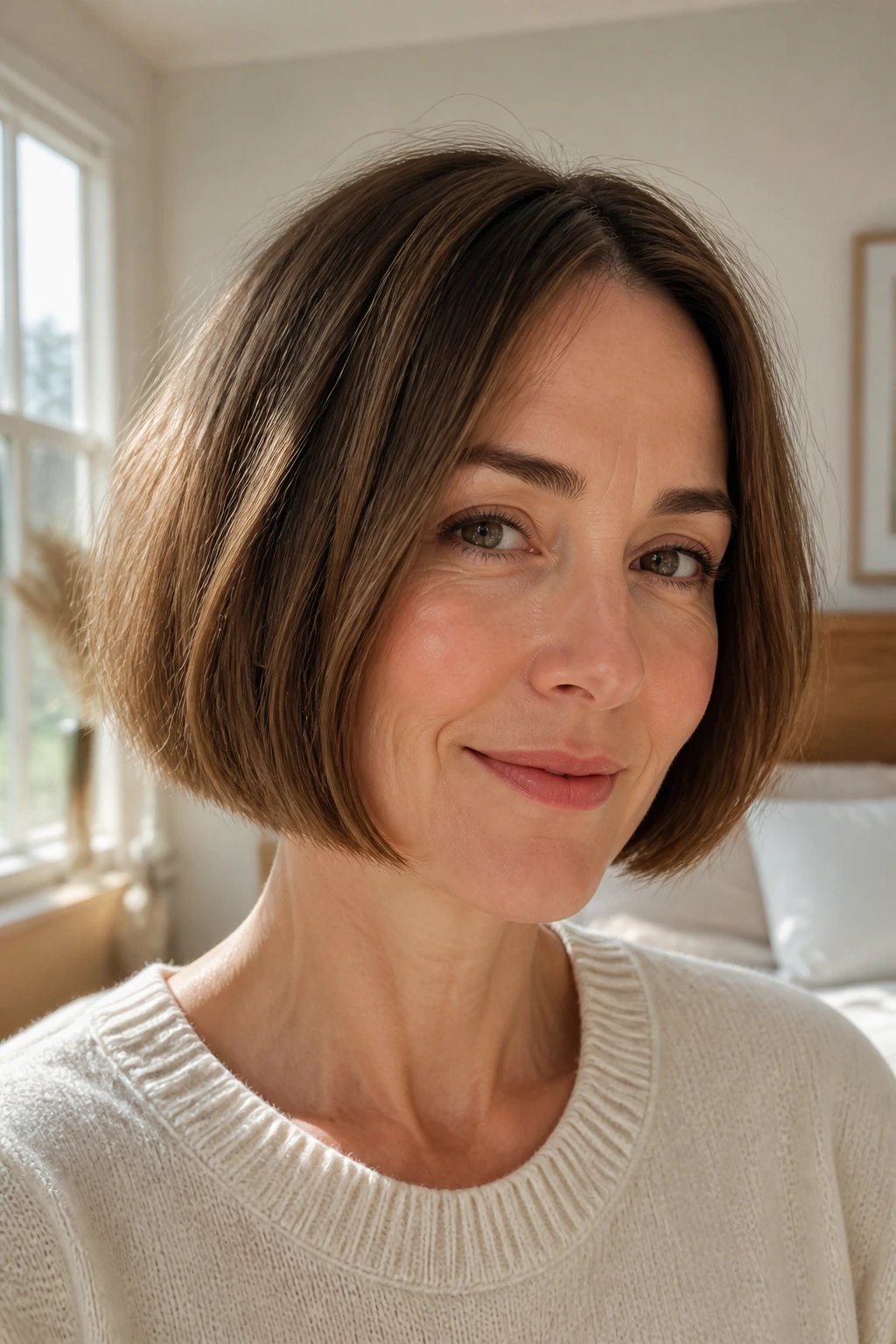
If the ends of your hair have gone see-through, a blunt bob is usually the first cut I’d point you toward. The clean line at the bottom gives you one solid edge instead of a frayed little tail, and that edge does a surprising amount of visual work.
Why the blunt edge matters
A blunt cut makes hair look denser because the eye sees a solid finish. That matters a lot when the last inch or two has started to look weak. Keep the length around the chin, maybe a touch below, and you get enough swing without letting the shape collapse.
How to wear it
Blow-dry it with a small round brush and lift the roots away from the scalp for the first 30 seconds of drying. Then let the ends stay smooth. That mix — a bit of lift at the root, a crisp bottom line — is what keeps the cut from feeling heavy.
- Best length: chin to just below the jaw
- Best texture: straight, slightly wavy, or loose bend
- Ask for: one-length perimeter, very light internal layering
- Trim schedule: every 6 to 8 weeks
Pro tip: If your hair flips out at the ends, ask for the perimeter to be cut slightly longer in front than in back. That tiny adjustment keeps the line from poofing out.
2. Collarbone Lob with Soft Ends
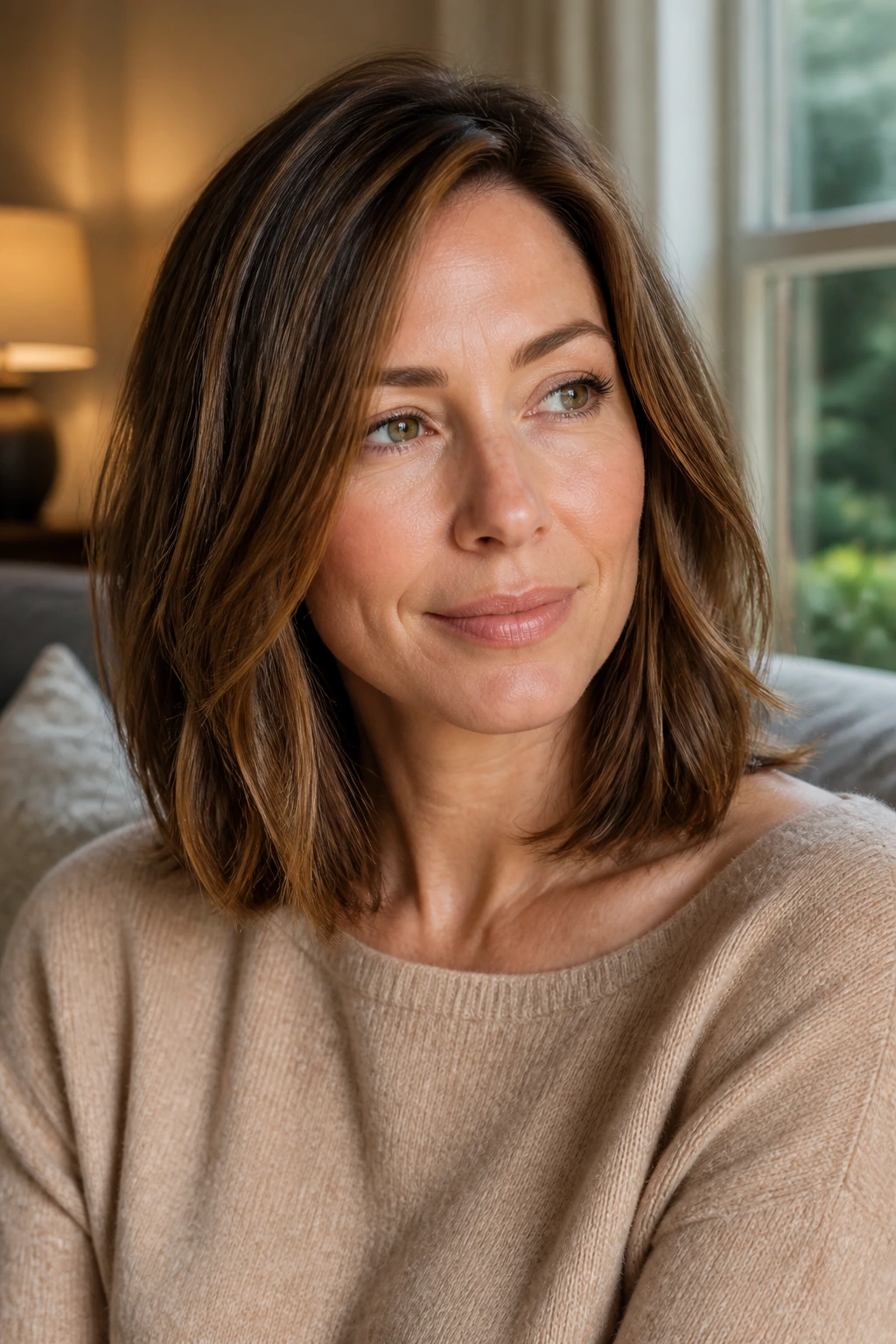
Why does a collarbone lob work so often on thinning hair? Because it sits in the one spot where hair still gets movement without looking dragged. The length brushes the collarbone, so the hair has a little swing, but it does not hang long enough to expose every weak end.
A lob like this is useful if you still want to tuck hair behind your ears, clip one side back, or pull it into a small half-up style. It gives you options without demanding thickness you do not have. That matters more than people admit.
The trick is to keep the bottom line clean while softening only the very outer edges. Too many layers through the mid-lengths and the cut starts to lose its shape. Too much length and the hair gets limp. The sweet spot sits right between those two mistakes.
I like this cut with a side part that is just off-center. It helps the crown lift a little, and it keeps the front from lying like a sheet. Add a root-lift mousse before blow-drying, then finish with a light bend through the ends. That is enough. No need to fuss.
3. Textured Pixie with Crown Lift
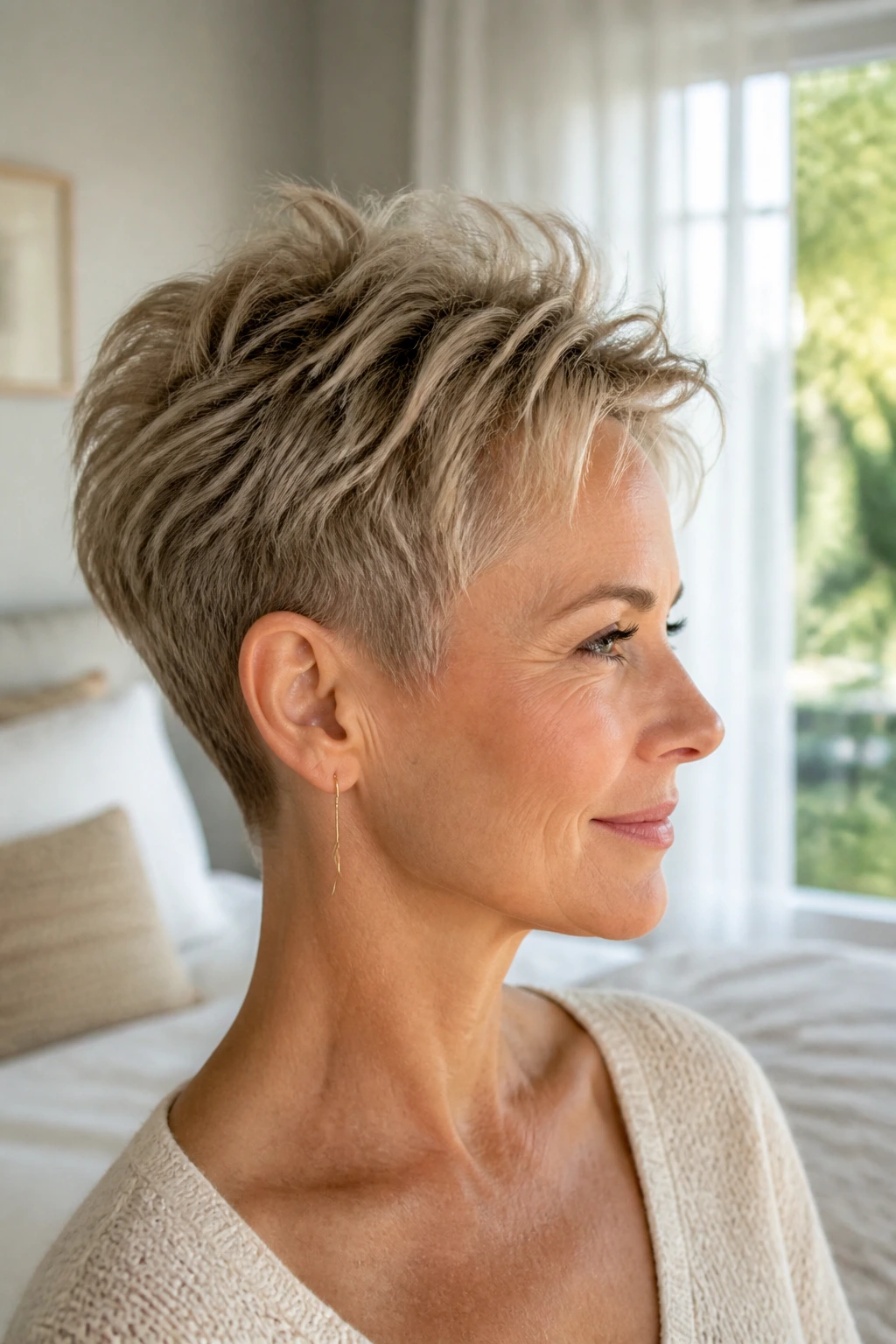
If your crown goes flat first, a textured pixie can feel like a reset button. The shorter sides take away the dead weight, and the extra length on top gives you something to push up, forward, or off to the side.
What to ask for
- Keep the top at about 2 to 3 inches
- Taper the sides and nape, but do not shave them bare unless you want that look
- Leave a little softness around the hairline
- Ask for piecey texture, not choppy shredding
How to style it
Work a pea-size amount of matte paste through dry hair. Then pinch the top sections with your fingers and push them up at the roots. If you want more lift, blow-dry the top in the opposite direction of your part for 20 to 30 seconds before settling it back down.
The biggest mistake with pixies is overloading them with product. That turns hair into a stiff helmet, and thin hair looks thinner when it is stuck together like that. Keep the finish touchable. Soft. A little uneven is good here.
Best for: hair that is sparse on top but still has decent density at the sides and back.
4. French Bob with Soft Fringe

A French bob is not a tiny bob with a fancy name. Done well, it is a density trick. The cut usually sits around jaw length, and the fringe breaks up the forehead area so the whole style feels fuller, even when the individual strands are fine.
The soft fringe matters more than people think. A brow-skimming bang or a slightly curved fringe can hide a sparse hairline without shouting about it. It also pulls attention upward, which helps when the crown is not your favorite feature.
Keep the shape loose. Too much layering and the bob stops looking like a bob. That is the problem with a lot of “airy” versions of this cut — they look delicate in photos, then turn wispy in real life. A solid outline is the whole point.
Air-drying works well if your hair has a little natural wave. Put in a light mousse, comb the fringe into place, then leave the rest alone until it’s about 80 percent dry. A tiny bend at the ends is enough. Crisp. Not fussy.
5. Layered Crop with a Side Sweep
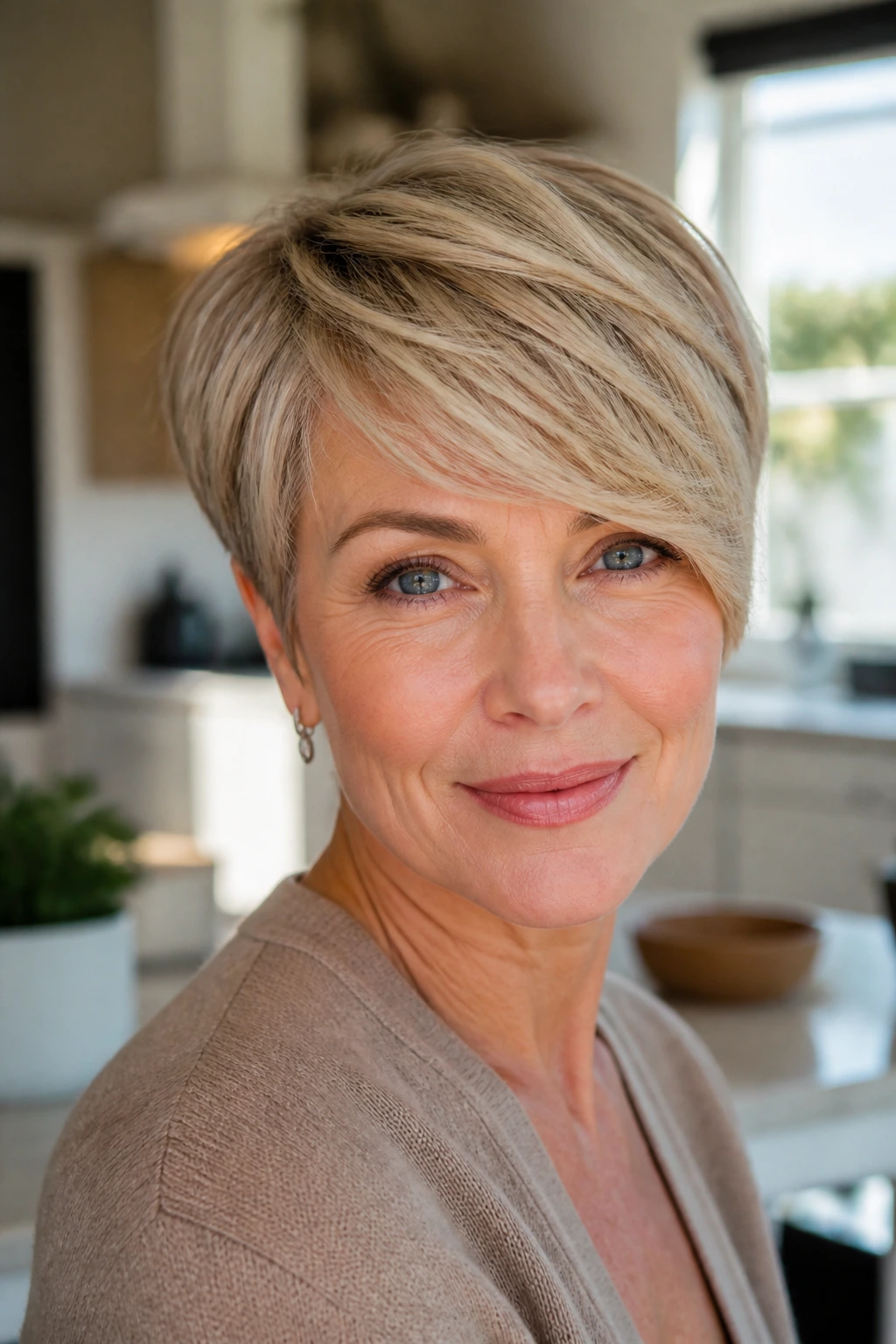
A side sweep is one of the easiest ways to fake fuller hair without changing your whole routine. The diagonal line across the forehead gives the eye movement, and movement hides thin spots better than perfect symmetry ever will.
Why the diagonal matters
A side sweep takes pressure off a flat front hairline. It also gives the top layer a job, which is important on thinner hair. Instead of the hair hanging straight down and separating into little pieces, it travels across the head in one controlled line.
What to ask your stylist for
- Keep the longest top sections around 3 to 4 inches
- Leave the sides softer, not bulky
- Build the sweep from the crown, not just the forehead
- Avoid razor-thinned ends if your hair already feels airy
A blow-dryer and a small vent brush can do a lot here. Aim the airflow at the roots first, then guide the fringe across the forehead with your fingers. Let it cool in place for a few seconds. That cooling part matters. Hair holds shape better once it sets.
Tip: If the fringe keeps splitting, clip it over while it cools. Old-school, but it works.
6. Asymmetrical Bob
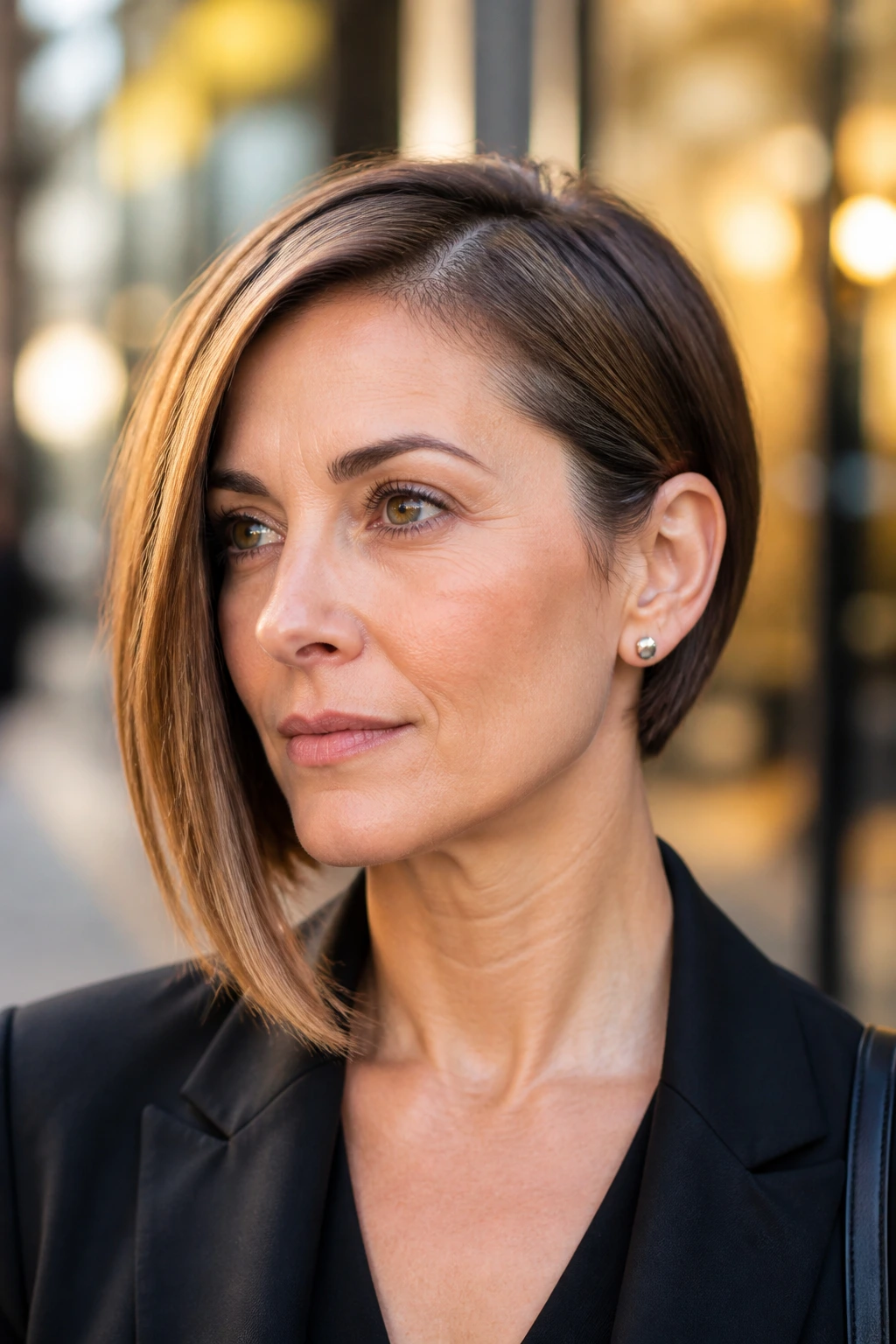
Unlike a perfectly even bob, the asymmetrical version keeps the eye moving. That motion can make thinning hair look less obvious because the shape never gives the viewer one flat line to stare at for too long.
The difference does not need to be dramatic. Half an inch to an inch on one side is often enough. If you go too far, the haircut starts to read as a statement piece instead of a smart fix for fine hair. Subtle is better here.
What I like about this cut is the way it can solve two problems at once. It gives you edge, but it also helps if one side of your hair is weaker, flatter, or grows with a cowlick that annoys you. The longer side can cover, soften, or balance that unevenness.
Ask for the shorter side to sit just below the ear and the longer side to fall around the chin. Keep the ends blunt. That clean finish matters more than the angle itself. A wobbly, over-layered asymmetrical bob loses its power fast.
7. Shaggy Bob with Wispy Layers
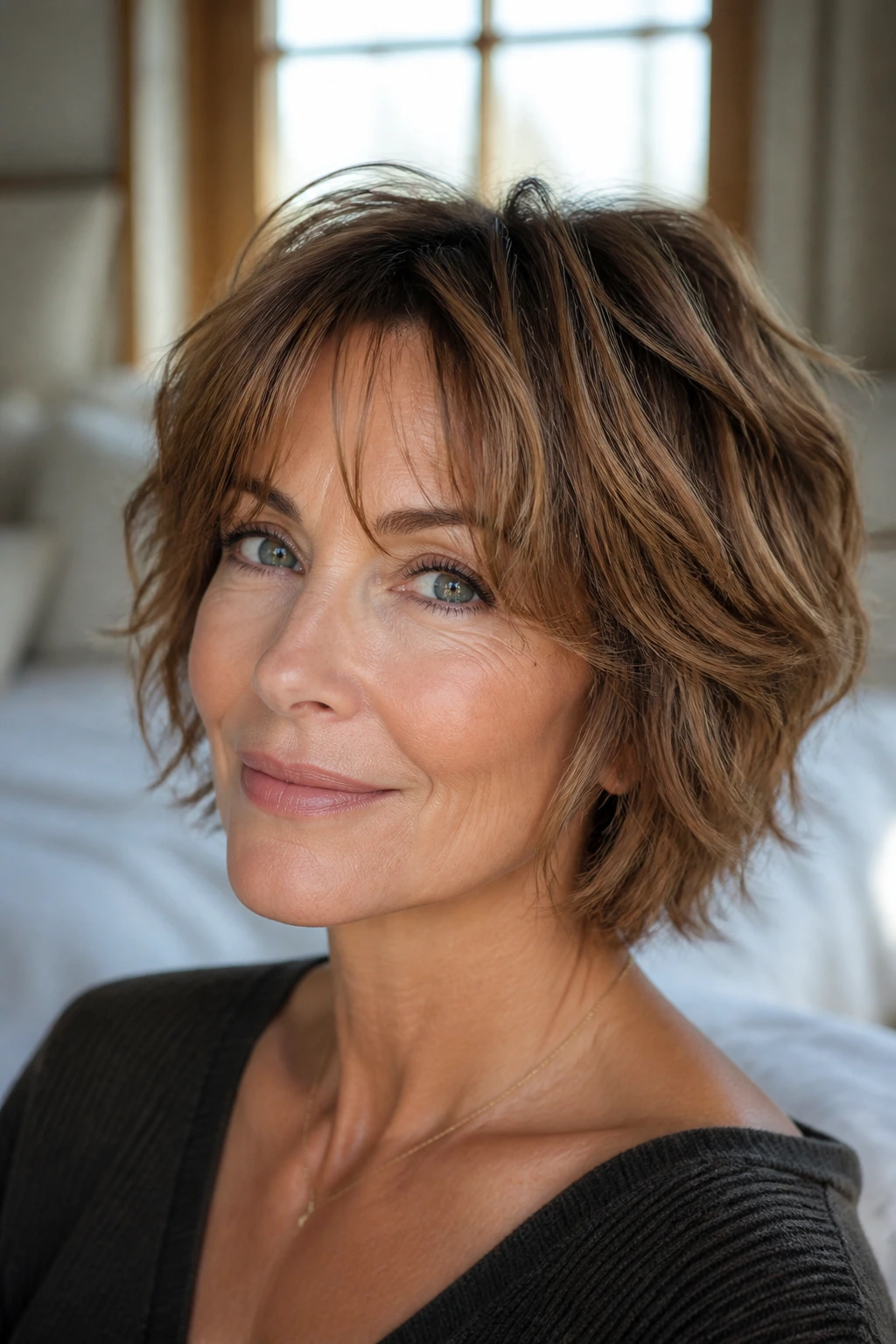
Shaggy does not have to mean messy. On thinning hair, the best shaggy bob keeps a solid bottom edge and places texture only where it helps the shape breathe.
Where the texture should live
The layers belong mostly around the top half of the cut. That gives lift without stripping the bottom line bare. If you remove too much weight at the ends, the hair starts to look see-through from every angle, and that is the opposite of what you want.
A little wave helps this cut a lot. You can rough-dry it, add a small bend with a 1-inch curling iron, then shake it out with your fingers. The point is not polished curls. The point is separate pieces that still sit inside a decent shape.
- Use a lightweight mousse at the roots
- Leave the perimeter fuller than the crown
- Bend only the top layers with heat
- Finish with a light texture spray, not a heavy wax
Closing thought: If your ends are already sparse, keep the shortest layers above the chin. Let the bottom inch stay intact.
8. Deep Side-Part Crop
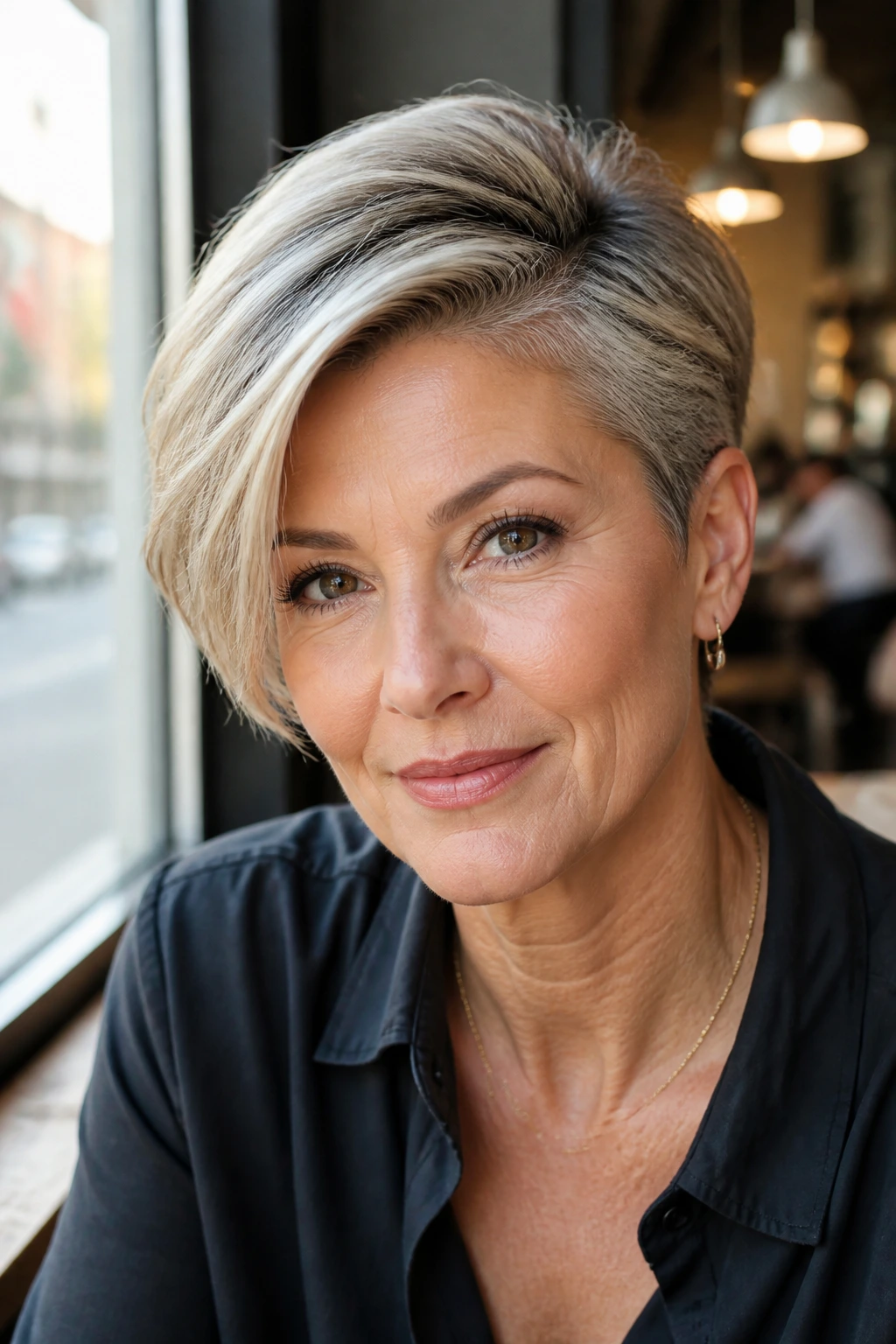
A deep side part is the cheapest volume trick in haircut form. It lifts one side at the root, creates instant asymmetry, and gives the hair more presence without asking it to grow an extra inch.
That part needs to sit farther over than your usual part — often 2 to 3 inches from center, sometimes more. The change looks small in the mirror, but it changes how the hair falls across the crown. The flatter side gets covered. The fuller side gets a little rise.
This works especially well if your hairline has started to thin at the temples. The sweeping front section softens that area and keeps the forehead from looking wide. It also pairs well with short layers on top, because the hair can lift and settle without splitting cleanly down the middle.
Set the roots with a blow-dryer nozzle and a round brush, directing the hair opposite the part for a few seconds before letting it fall back. That tiny move gives more lift than people expect. Then stop fiddling with it. The more you touch it, the faster it collapses.
9. Tapered Undercut Pixie
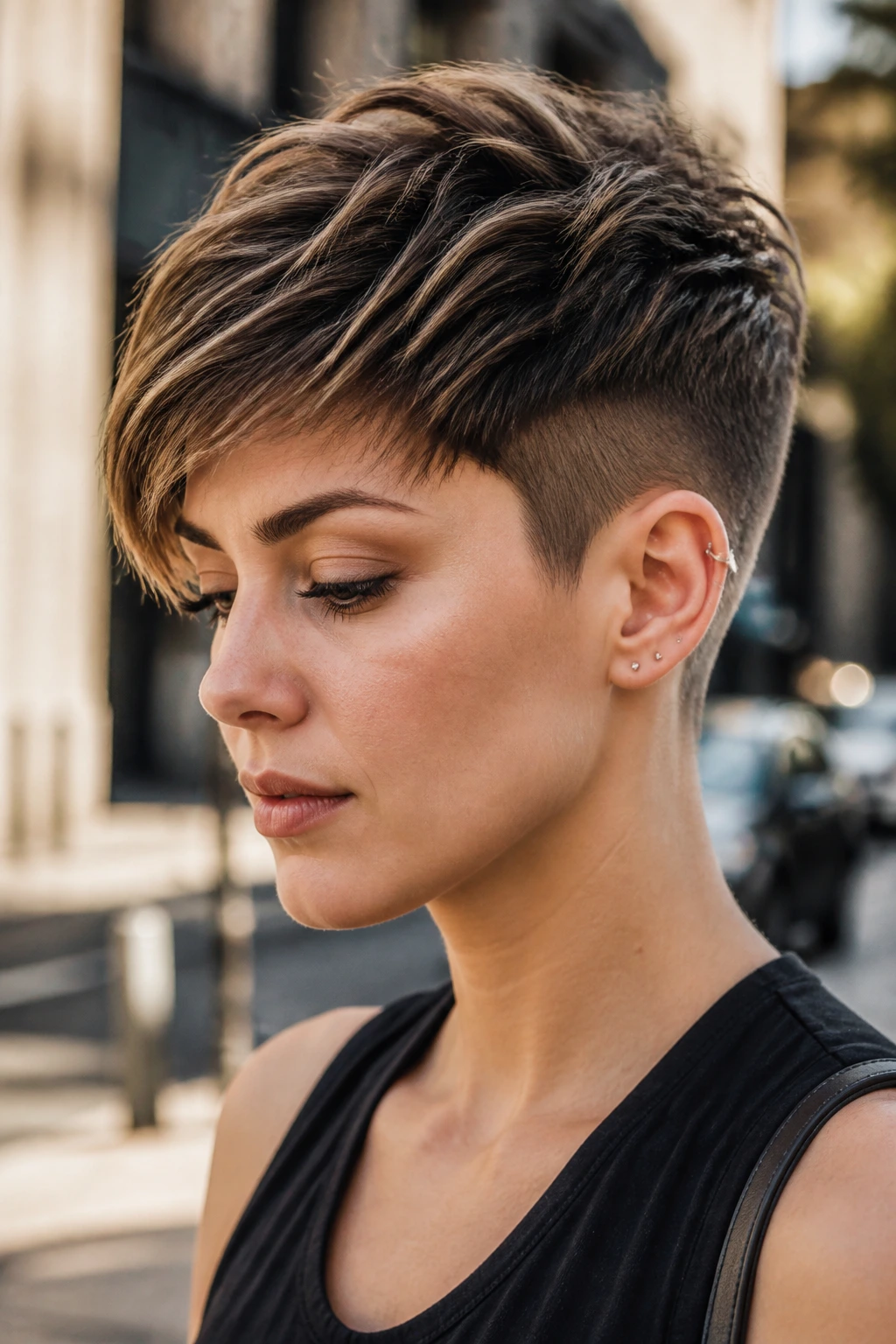
What if your hair is thick at the nape but thin on top? A tapered undercut pixie can be a sharp answer. It removes bulk where you do not need it and leaves the top with enough length to look fuller than it is.
How to use it
Ask for the nape and sides to be tightly tapered, not buzzed bald unless you want that contrast. Keep the top around 2 to 3 inches, with some extra length at the front if you like to sweep it over. That length gives the cut room to move.
This style works best when the top can be lifted and separated a little. A small amount of styling cream or paste is enough. Work it through dry hair, then use your fingertips to push the top forward or up. Done right, it looks airy, not fluffy.
- Good for dense sides and back
- Good for people who like low-fuss styling
- Better with a soft taper than a harsh shave
- Needs trims about every 4 to 6 weeks
If your temples are already sparse, keep the taper gentle. A hard undercut can make the hairline look sharper than you want.
10. Wedge Bob
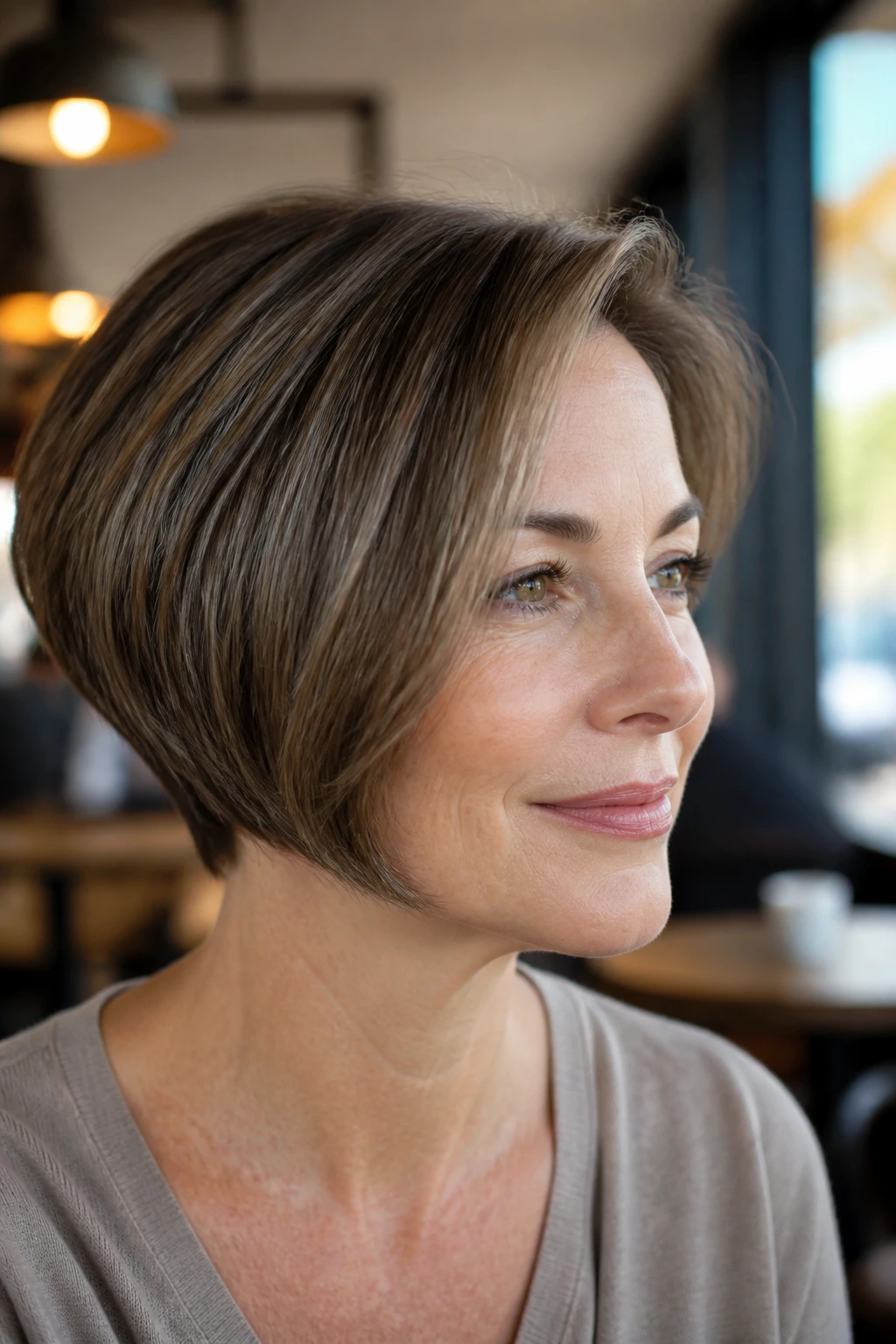
If the back of your head collapses before the rest does, a wedge bob can change the silhouette in a hurry. The stacked back gives lift where thin hair usually lies flat, and the longer front keeps the shape from feeling too old-school.
The real trick is balance. Too much stacking at the back and you get a helmet. Too little and the cut loses the lift that makes it useful. A softer wedge, with rounded graduation and a front that brushes the jaw, tends to work best on finer hair.
I like this haircut when the crown is weak but the hair around the ears still has some substance. The shape creates the illusion of fullness because the outline is curved, not flat. Your eye reads that curve as hair.
Ask for the back to be lifted subtly, not chopped in big steps. That avoids the chunky look that wedge cuts can get when they are pushed too hard. A bit of smoothing cream at the ends finishes the job. Clean, not stiff.
11. Curly Crop with a Rounded Shape

Curly thinning hair needs a different kind of respect. The mistake people make is chasing length when what the curls usually need is shape. When curls are cut too long, the weight drags them down and the top looks sparse. Too much thinning with scissors, and the whole head goes frizzy and hollow.
A rounded crop keeps the curl pattern close to the scalp while still leaving enough length for the curl to spring. That round shape matters. It stops the hair from going flat on top and puffy at the sides, which is a common problem with thinning curls.
Dry cutting is often the smarter move here, because curls lie about their length when wet. A stylist who knows curly hair will look at where the curls want to sit, then shape around that. You want the silhouette to hold once the hair dries and shrinks up.
Use a curl cream on soaking-wet hair, then scrunch gently and diffuse on low heat. High heat tends to rough up the cuticle, and rough hair looks thinner. If the curls are loose, keep the fringe a bit longer. Tight curls can take shorter layers without showing much scalp. Either way, the top should feel full and springy, not sliced up into tiny pieces.
12. Bixie Cut
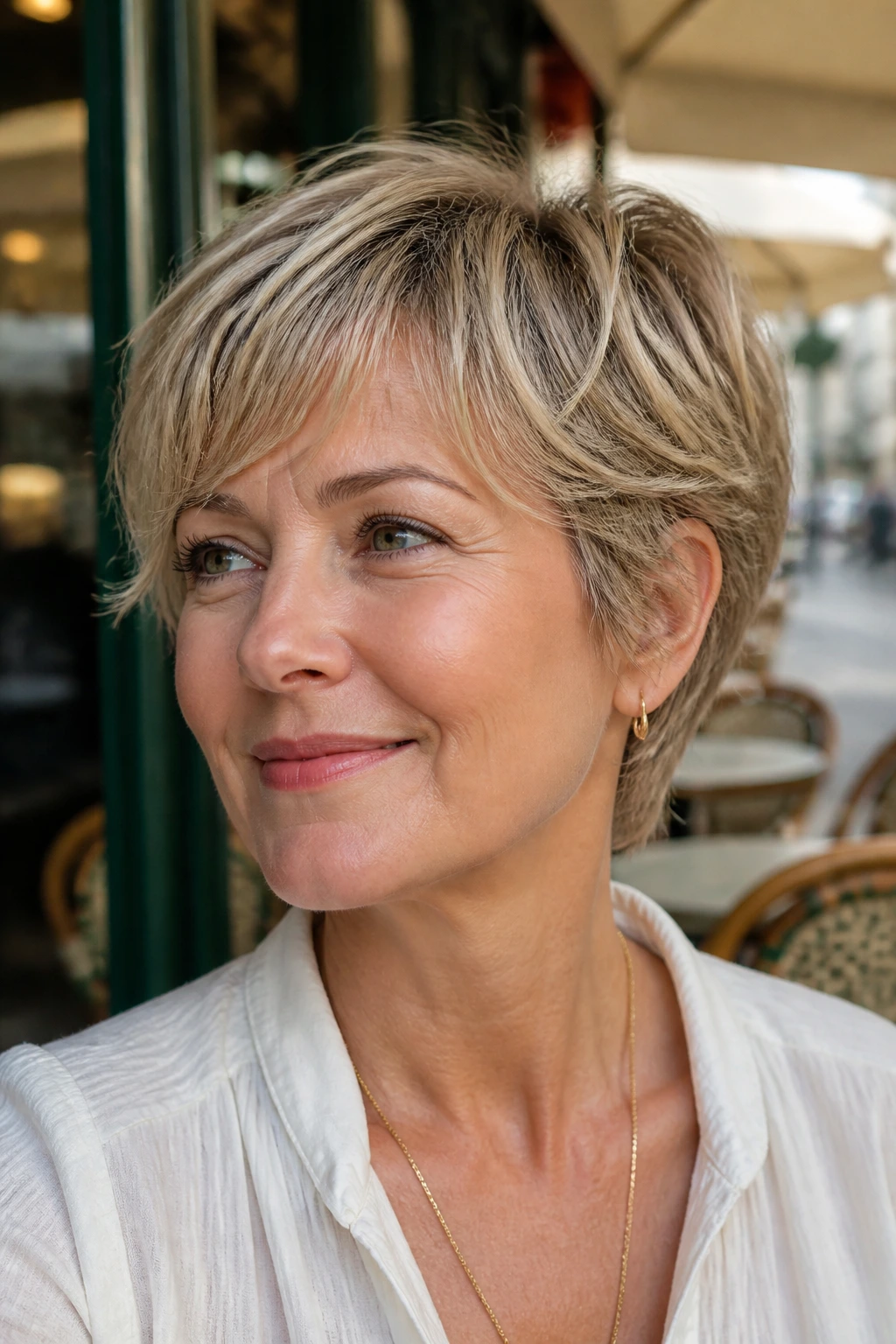
The bixie sits between a bob and a pixie, and that middle ground is useful when hair is getting finer but you are not ready for a full crop. It keeps enough length around the face to soften the look, while the shorter back and crown keep the style from sagging.
That balance is what makes the cut work. A pure bob can feel too heavy if the ends are weak. A full pixie can feel too exposed if you want more coverage. The bixie lands in the space where the hair still feels wearable on a lazy day but can also be styled up when you want a little more shape.
Ask for the nape to be softly tapered, the ears to stay lightly covered, and the top to keep enough length for a finger-combed lift. Around 2 to 3 inches on top is often enough. Leave a little more at the fringe if your hairline needs help.
This cut is a good choice if you like the idea of short hair but still want to tuck pieces behind one ear or let them fall forward. It has a casual feel. Not sloppy. Just less rigid than a classic bob, which helps when your hair density is a little uneven.
13. Feathered Crop with a Long Fringe
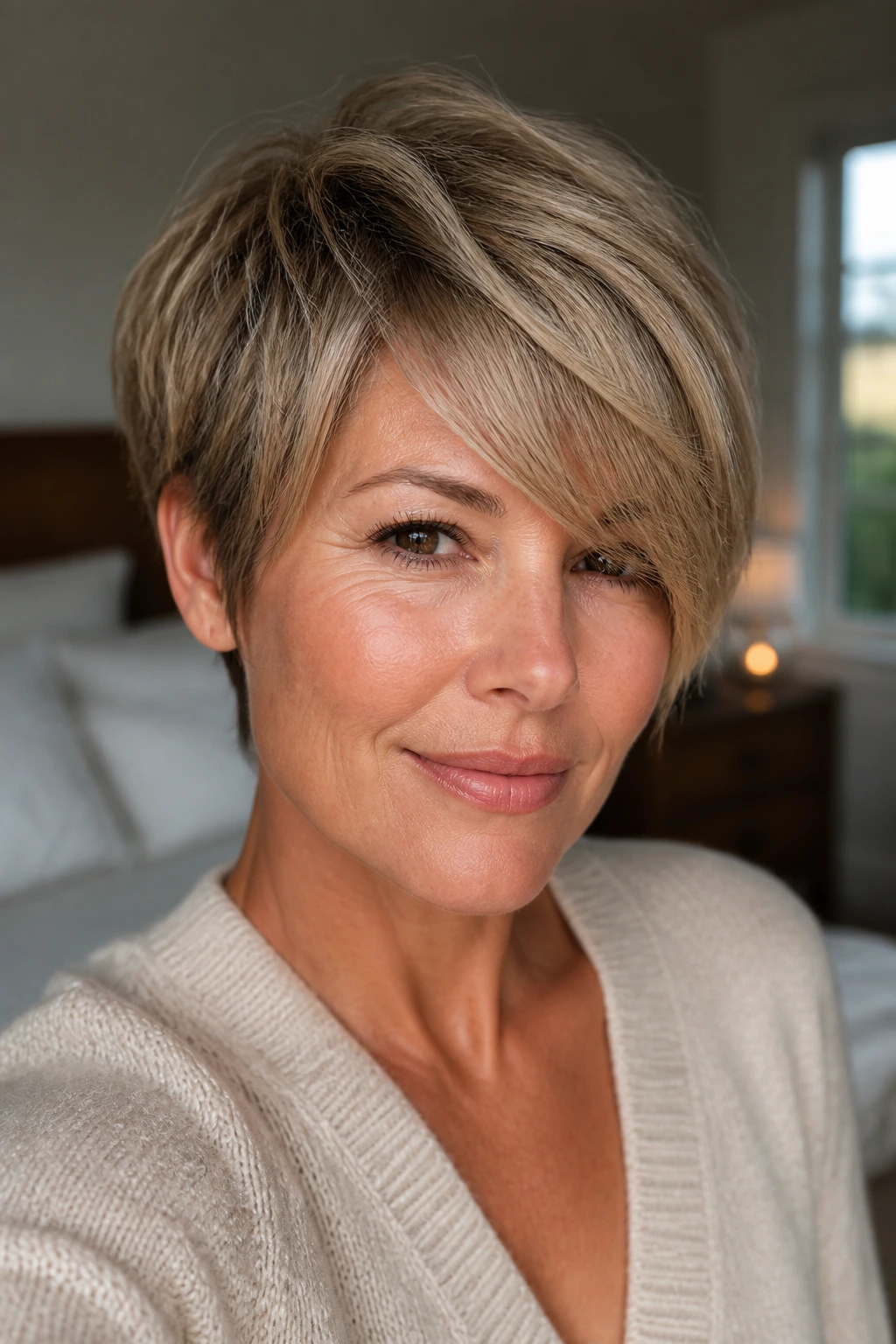
Feathering should lift the hair, not shred it. That is the difference between a crop that looks light and one that looks tired. On thinning hair, a feathered shape around the crown and fringe can soften the scalp line without removing so much weight that the cut turns wispy.
How to keep the fringe useful
A long fringe works best when it lands somewhere between the eyebrow and the cheekbone. Long enough to sweep. Short enough to stay out of your mouth. That range also gives you options if the front is the area that feels sparse.
Product and styling notes
- Use a root-lift mousse before drying
- Keep cream off the roots unless your hair is coarse
- Direct the fringe diagonally, not straight down
- Finish with a soft-hold spray so the movement stays touchable
This is one of those cuts that can look a little plain in the chair and then make perfect sense once it is dry. The pieces move. The fringe breaks up the front. The scalp does not feel so exposed. Small thing, big difference.
14. Sleek Jaw-Length Bob
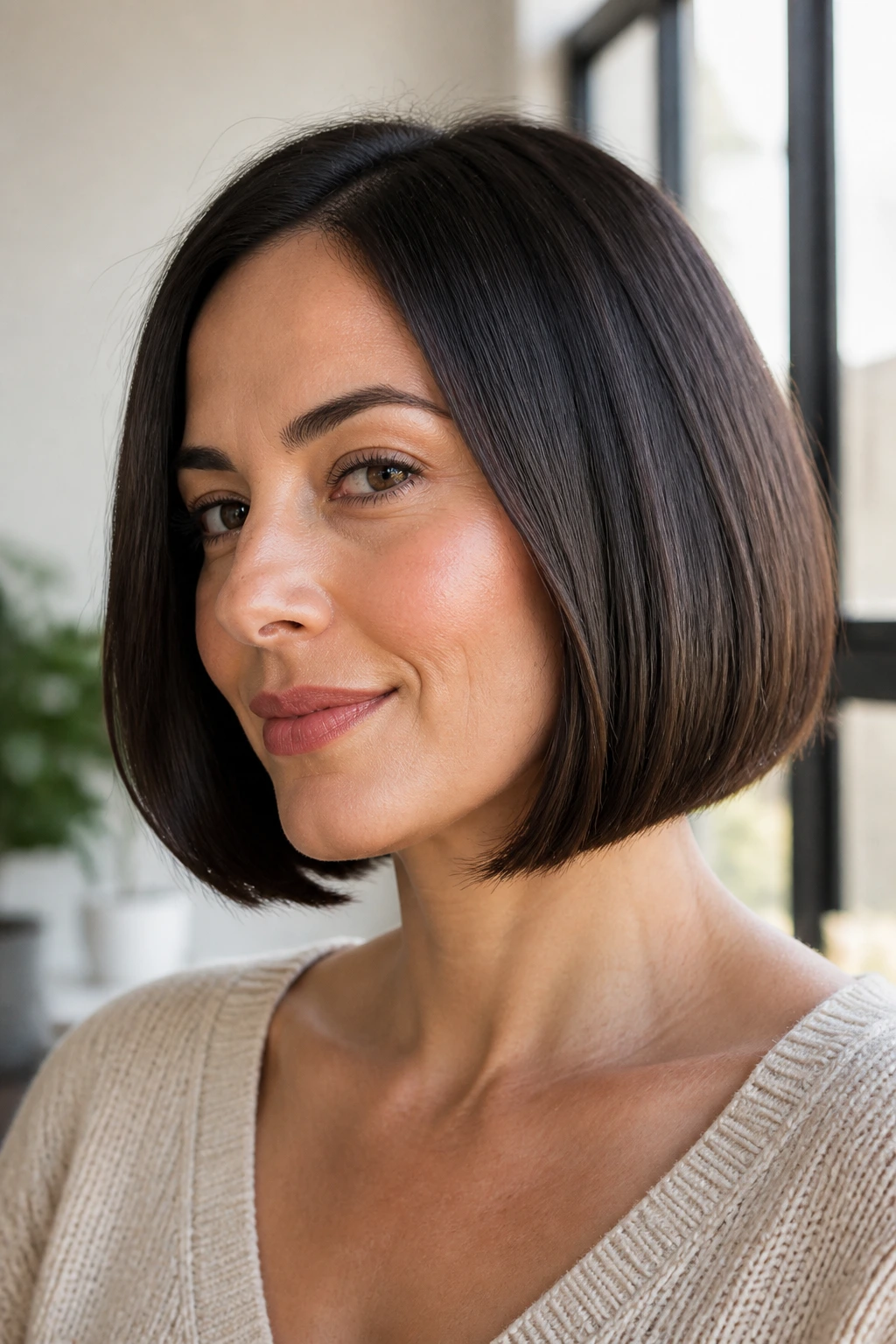
A sleek jaw-length bob is a stronger cut than people give it credit for. Fine hair often looks denser when it lies smooth in one clean line, and the jaw-length shape gives that line a place to live.
The important part is the exact length. Too long and the ends get stringy. Too short and the bob can kick out around the cheeks in a way that feels fussy. Jaw length keeps the perimeter visible, which is where the fullness comes from.
This cut is especially good if your hair is naturally straight or only a little wavy. You do not need much texture. In fact, too much texture can make the silhouette less crisp. A paddle brush, a blow-dryer, and a small amount of smoothing cream usually do the job.
If you want movement, bend the ends inward just a touch with a flat iron or round brush. Not a curl. Just a slight curve. That is enough to keep the style from looking severe, which is the danger with a lot of sleek bob advice. Clean is good. Harsh is not.
15. Soft Boyish Crop with Piecey Top
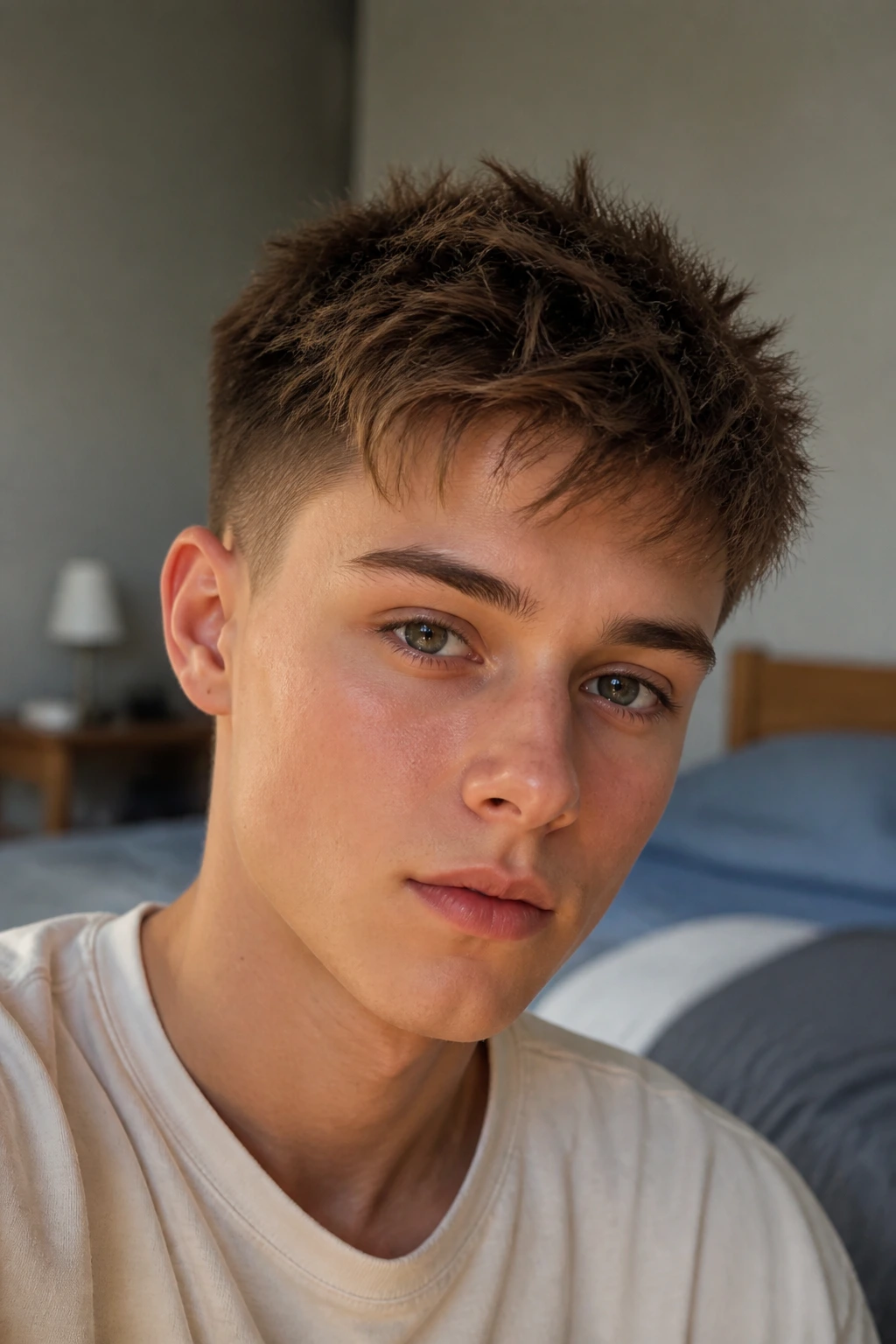
If you want very short hair without looking severe, this is the cut I’d keep on the table. A soft boyish crop leaves enough length on top for a little texture, then trims the sides and nape close enough that the whole shape feels neat instead of floppy.
The piecey top is what saves it from feeling flat. Keep the top around 1.5 to 2.5 inches, depending on your hair density, and leave a little longer fringe if the front is thin. That gives you the option to push it forward, sweep it to the side, or mess it up with a dab of paste and call it done.
This cut also works for people who want less daily styling. Wash it, towel-dry it, work in a bit of styling cream, and go. There is no long blow-dry routine hanging over your head. That matters if your hair has started to lose hold and you are tired of fighting it every morning.
A soft boyish crop is not dramatic. That is the point. It is tidy, quick, and forgiving on days when the hair refuses to cooperate, which is more useful than a glamorous haircut you have to negotiate with every single day.
