



You know that small, annoying moment when your alarm goes off, your hair is flattened on one side, and your only honest thought is, this had better be a low-effort hair day? That is exactly where easy haircuts for lazy mornings earn their keep. Good hair should not need a pep talk before coffee.
The best low-maintenance cuts do one thing well: they keep their shape when you do almost nothing. That might mean a blunt line that still looks sharp after air-drying, soft layers that fall into place instead of fighting you, or a cropped shape that makes bedhead look intentional. The haircut does the heavy lifting. You do not.
A lot of people get this wrong. They ask for “easy” and end up with a style that only looks good after 18 minutes, a round brush, two clips, and a prayer. That is not easy. Easy is a cut that works with your texture, your cowlicks, and your patience level.
So let’s get practical. These are the cuts that make sense when you want to look put together without turning your bathroom into a styling station.
1. Blunt Bob for Lazy Mornings
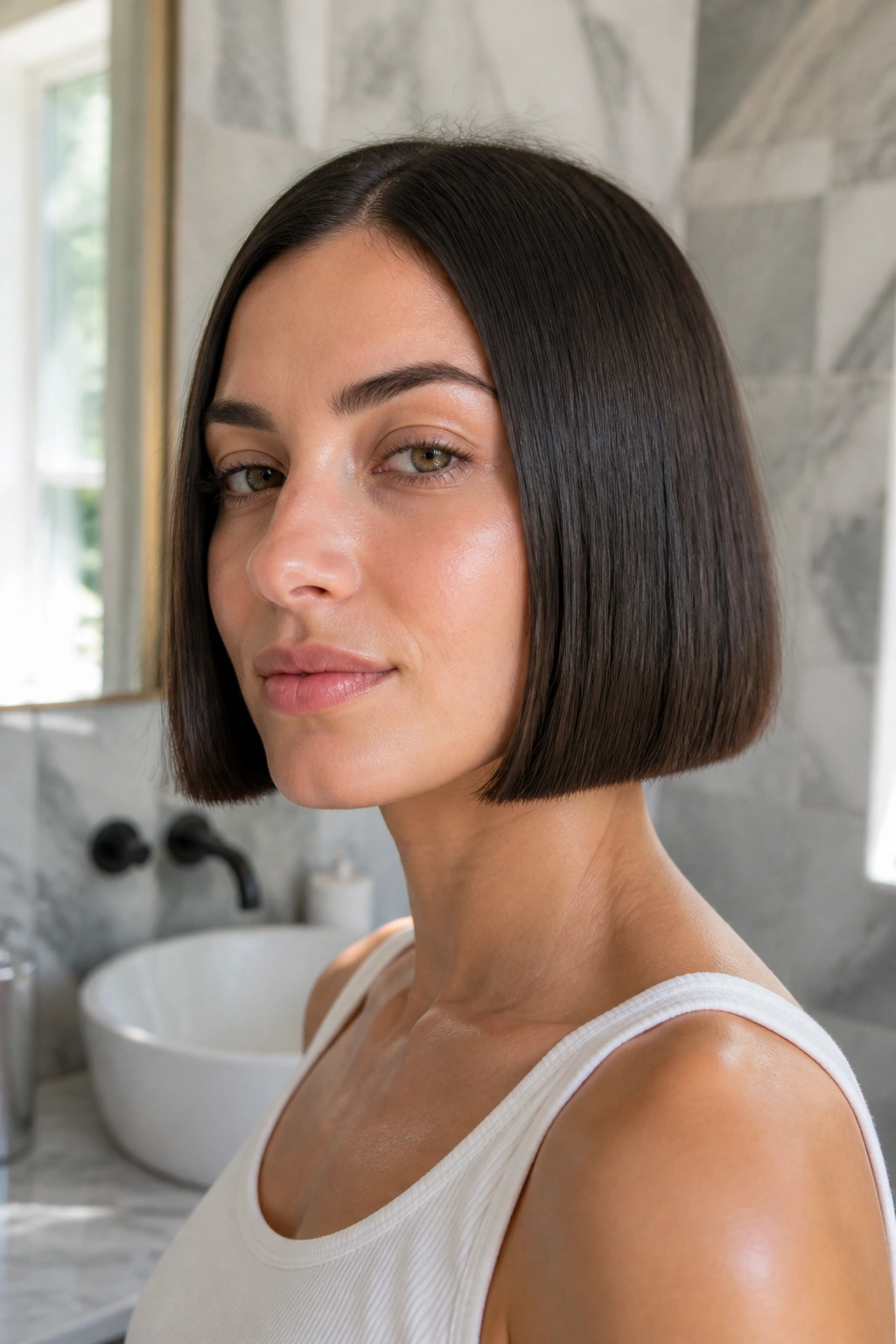
A blunt bob is one of those cuts that looks clean even when the rest of your life does not. The line is the point. When the ends are cut straight across, the shape reads as deliberate fast.
Why It Saves Time
A blunt bob keeps the visual work at the bottom edge, so you do not need a lot of styling to make it look finished. Fine hair gets a fuller look. Straight hair gets a crisp edge. Even wavy hair can wear it with a little bend and still look polished.
- Best length: jaw to just below the chin
- Best for: fine to medium hair
- Morning routine: leave-in conditioner, quick brush, done
- Trim schedule: every 6 to 8 weeks
Ask for a soft blunt line, not a chunky shelf. That tiny difference matters if your hair kicks out at the ends.
2. French Bob

The French bob is short, chic, and a little bit tousled on purpose. It sits around the cheekbone or just under the ear, which is why it has that airy, undone feel without looking messy.
A lot of people think short hair is high-maintenance. Not this one. The French bob is one of the easiest haircuts for lazy mornings because it looks better with a little imperfection. A stray wave? Fine. A soft bend from sleep? Even better. The cut likes movement, and that makes the whole thing forgiving.
It works especially well if your hair has natural texture already. If your hair is pin-straight, you can still wear it, but you may want a quick tuck behind one ear or a side part to keep it from feeling flat. Keep the ends soft, not blunt and stiff, and it gets that airy Paris-at-breakfast feeling without the drama.
3. Collarbone Lob
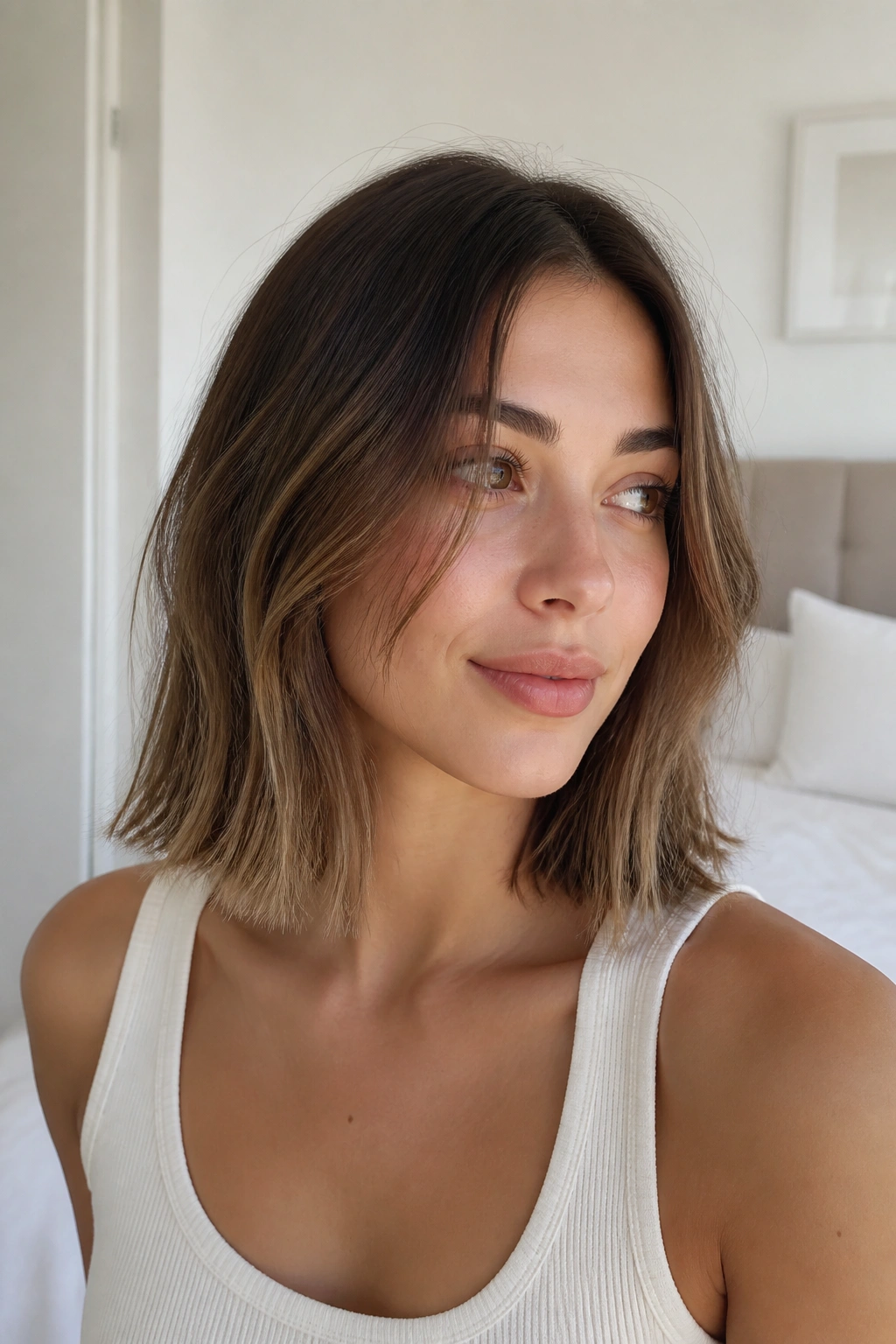
Want the cut that almost never argues back? The collarbone lob is probably it. It sits right in that sweet spot between short and long, which means it is long enough to tie back and short enough to feel fresh.
How to Wear It
This cut works because it hits at a flattering point on the body. The hair brushes the collarbone, so it moves naturally when you turn your head. That small bit of movement keeps it from looking heavy, and heavy hair is where lazy mornings start to get annoying.
You can wear it sleek, flipped under, or air-dried with a little bend. It also grows out well, which is half the battle. A lot of cuts look good for two weeks and then fall apart. The collarbone lob usually gives you a longer runway.
- Good with: straight, wavy, or slightly thick hair
- Nice detail: easy to tuck into a clip or low bun
- Trim window: 8 to 10 weeks
- Best for: people who want options without fuss
4. Soft Shag

A soft shag is what happens when layers are used with some restraint. Not every shag has to look wild. The soft version gives you movement at the ends, a little lift at the crown, and enough shape that air-drying does most of the work.
Picture this: you wake up, shake your hair out, and it already has a bit of body. That is the whole point. The soft shag is built for hair that has some natural wave or texture, and it can rescue flat hair too if your stylist keeps the layers loose.
What Makes It Easy
- The top stays light, so roots do not collapse as fast
- The ends move instead of hanging like a curtain
- You can scrunch in a cream and go
- It looks a little better the second day, which is always nice
The downside? Too many short layers can turn this into a styling job. Keep the shag soft, and it stays friendly.
5. Pixie Cut with Longer Top
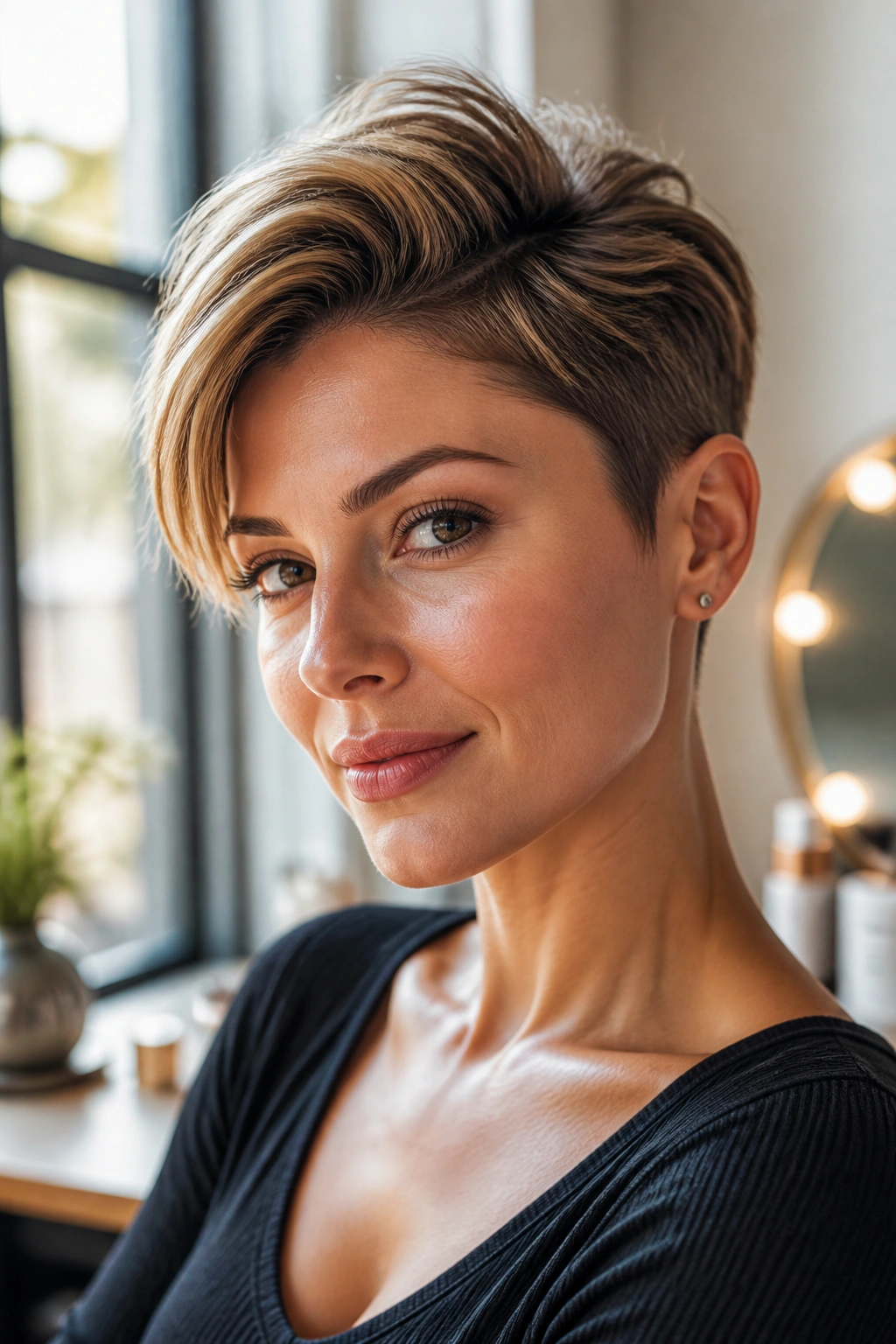
A pixie cut with a longer top is one of the fastest ways to simplify your mornings. Short sides, a little extra length on top, and suddenly you are dealing with a small amount of hair instead of a whole headful.
This cut is not boring. It just refuses to waste your time. The longer top gives you room to sweep it to one side, fluff it with your fingers, or slick it down with a tiny bit of cream if you want a neater look. The rest is nearly nothing. That is the appeal.
It does need regular trims to keep the shape clean. Skip the trims too long and the back starts to lose its edge fast. Still, if you like a cut that makes your face the focus and your routine shorter, this one earns its spot.
Short hair, short routine. Simple.
6. Bixie

The bixie lives between a bob and a pixie, and that in-between space is exactly why it works so well. It has enough length to soften the face, but not so much that you are wrestling with heavy sections every morning.
Unlike a strict pixie, the bixie gives you a little more movement around the ears and nape. Unlike a bob, it does not hang around waiting to be straightened into place. It usually has piecey ends, which helps if you want texture without a full styling routine.
This cut is especially good for dense hair that tends to puff out. The shorter shape removes some weight, and that can make your mornings easier almost immediately. If your hair is fine, ask for softer layers through the top so it does not collapse.
You need a stylist who understands balance here. Too blunt, and it turns boxy. Too choppy, and it starts looking like a haircut that needs more effort than it should.
7. One-Length Midi Cut
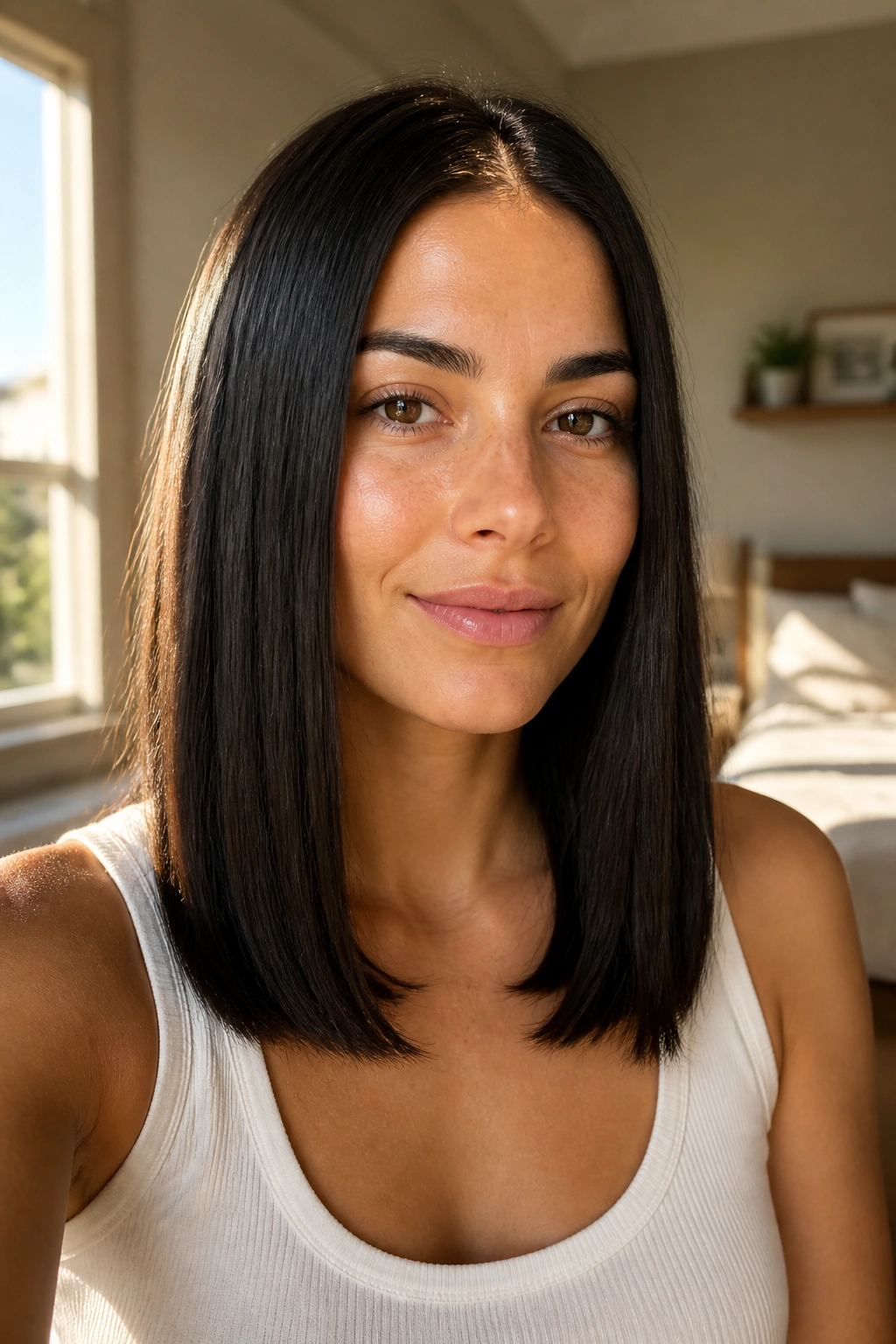
A one-length midi cut is the quiet overachiever of low-maintenance hair. It falls somewhere between the shoulders and mid-chest, with no major layers stealing the spotlight. The result is smooth, even, and calm.
Why It Behaves So Well
The lack of layers is the trick. Hair lies together more easily when it is all one length, so you spend less time trying to make pieces cooperate. It also looks good pulled back, which matters on the days when you do not want hair touching your face at all.
- Best for: straight to wavy hair
- Good with: air-drying or a quick blowout
- Shape to ask for: even perimeter, not razor-thin ends
- Nice bonus: easy to braid, clip up, or half-up
If your hair is thick, this cut can feel heavy unless the ends are cleaned up well. If your hair is fine, it can look fuller than layered cuts. That is the sweet spot.
8. Long Layers with Face-Framing Pieces
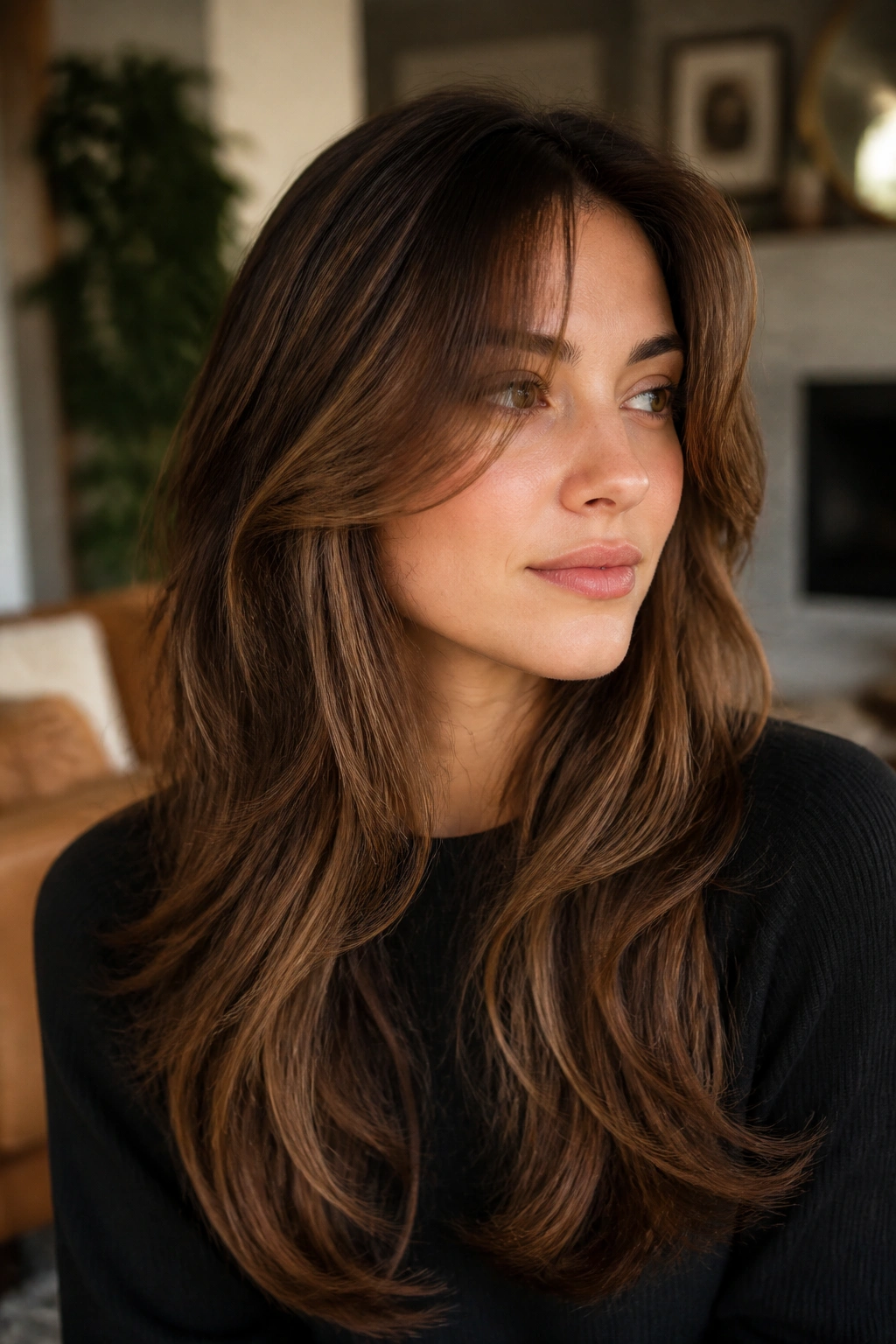
Long layers are useful when you want movement without sacrificing length. The face-framing pieces do the flattering work near the front, while the rest of the cut keeps things soft and light.
This is one of those easy haircuts for lazy mornings that looks better when you do less. The layers give the hair a little bounce so it does not sit like a sheet, and the face-framing pieces keep your features from getting buried. You can wear it down, clip it back, or braid it without the whole thing feeling heavy.
What I like most here is the flexibility. You can air-dry it, rough-dry the roots for a few minutes, or throw in a curling iron on the front pieces only. That is enough. No need to curl the entire head unless you enjoy that sort of thing.
If your layers are too short, though, the cut becomes needy. Keep them long and blended. That is where the ease comes from.
9. Curly Shag

A curly shag is one of the smartest cuts for curl pattern and morning sanity. It removes bulk, gives the curls room to stack, and stops the dreaded triangle shape that makes some curly cuts feel dated fast.
What It Does Better Than a Standard Shape
A curly shag is usually cut to work with shrinkage, not against it. That matters. Curls do not sit flat in the same way straight hair does, and a dry, over-layered approach can create random frizz and weak ends. A good curly shag keeps the form rounded and soft so the curls can spring into place on their own.
How to Use It
- Ask for shape around the crown, not a flat top
- Let the length stay a little longer if you like versatility
- Use a leave-in and a curl cream, then leave it alone
- Refresh with water and a tiny bit of product on day two
The cut is easy, but the first shaping needs skill. Curls are not forgiving of guesswork.
10. C-Shaped Layered Cut

The C-shaped layered cut is a sneaky good choice if you want movement without obvious choppiness. The layers curve inward toward the face and ends, which gives hair that soft swoop instead of a rough edge.
Imagine your hair falling in a gentle arc rather than stopping in a hard line. That is what makes this cut feel polished even when you barely touch it. It works especially well if you like to tuck hair behind one ear, wear a side part, or let the front pieces fall forward naturally.
A C-shape also helps longer hair avoid that flat, stretched-out look at the ends. It keeps the perimeter from feeling heavy. That is useful on mornings when you are not planning to round-brush anything.
The one catch is that this shape needs thoughtful layering. If the cut is too aggressive, it loses the softness and starts looking like a staircase. Not ideal.
11. U-Shaped Long Cut
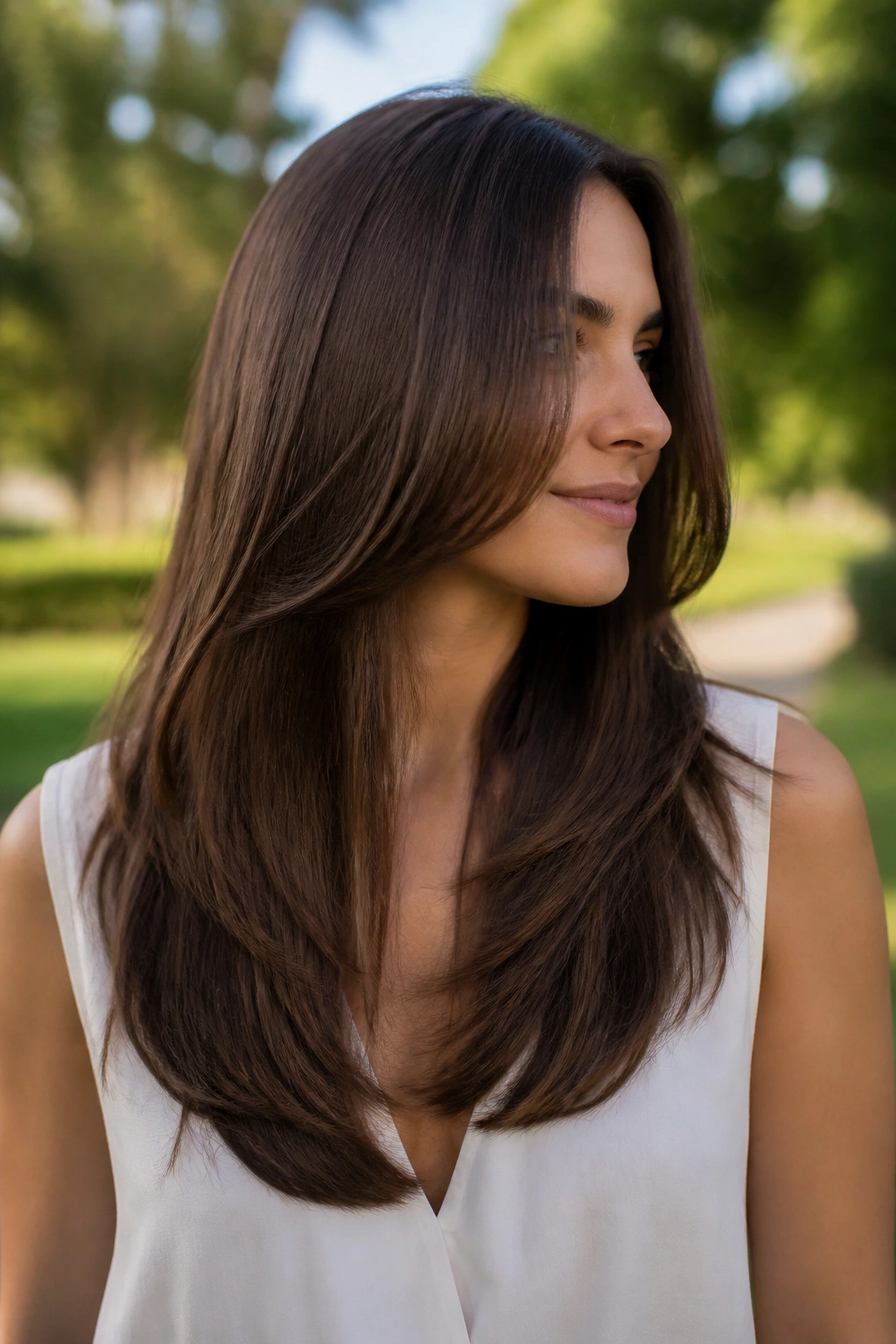
A U-shaped cut is one of the easiest ways to keep long hair from looking like one long block. The back stays fuller, the sides fall a little shorter, and the outline forms a soft curve.
That curve matters more than people think. It keeps long hair moving, which keeps it from getting bulky at the bottom. Long hair can be gorgeous and still be a nuisance on busy mornings if it hangs too straight and too heavy. The U-shape fixes that quietly.
It is a good cut if you want to keep length but you do not want to look like you are growing out a mistake. You can braid it, bun it, wear it loose, or pull the front pieces back with a clip. It behaves.
The style is best if you like low drama. It is not flashy. It is just dependable, and honestly, that’s the point.
12. Rounded Afro Cut
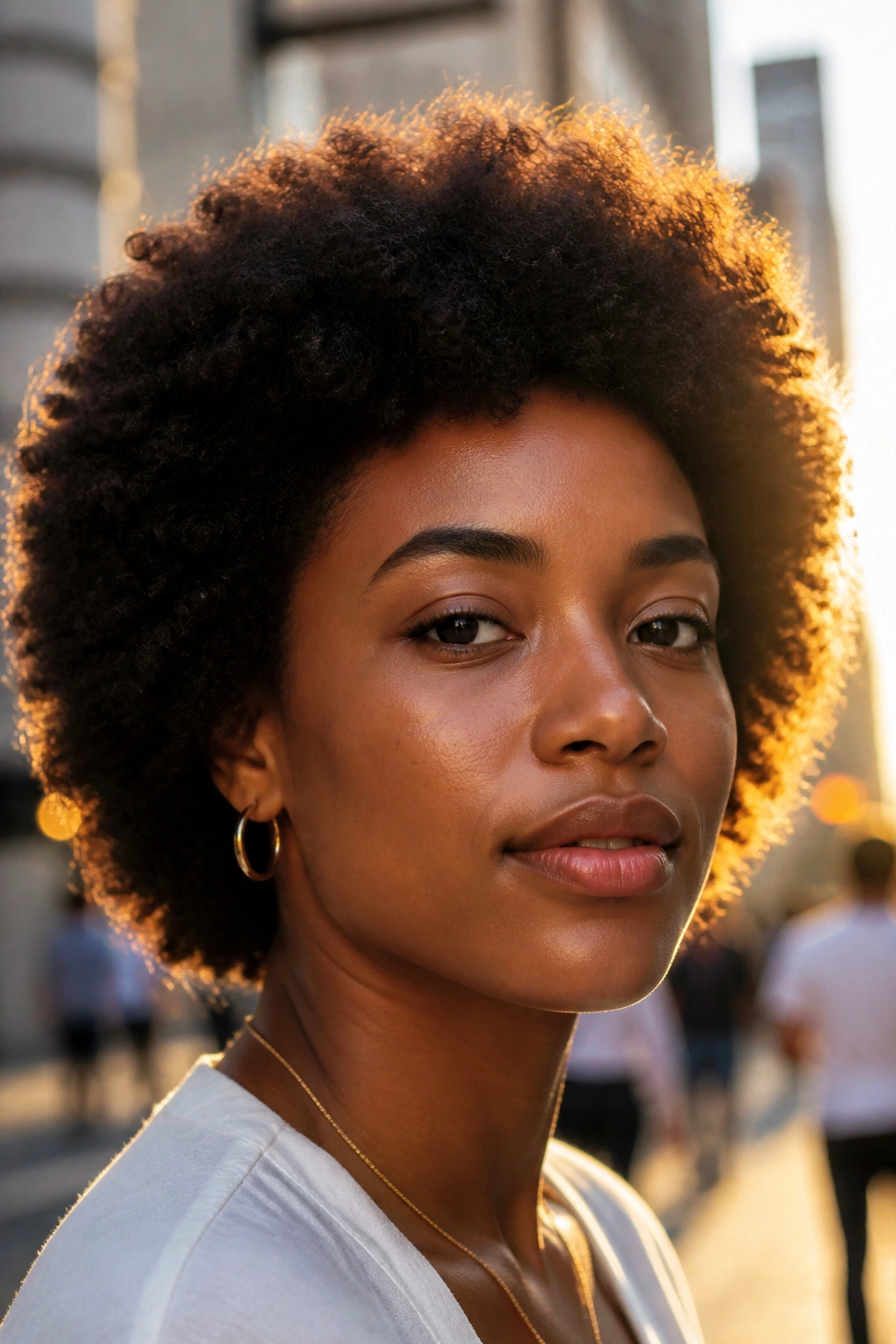
A rounded afro cut is a shape cut with intention, and that shape does a lot of work for you. Instead of fighting volume, it turns volume into the style itself. The silhouette is soft and full, with a round outline that looks balanced from every angle.
Unlike a boxy shape, the rounded version keeps the sides from feeling flat or square. That can make a big difference in the morning because the hair already has a finished look before you touch it. A pick at the roots, a little moisture, maybe some edge care if you like that polished finish, and you are moving.
This cut is especially strong for coils that like to shrink and stack. It gives the hair room to breathe. It also photographs well in real life, not just in glossy salon shots, because the shape is clear even when the texture varies a bit from day to day.
A skilled dry cut helps a lot here. Shrinkage is real.
13. Tapered Natural Cut
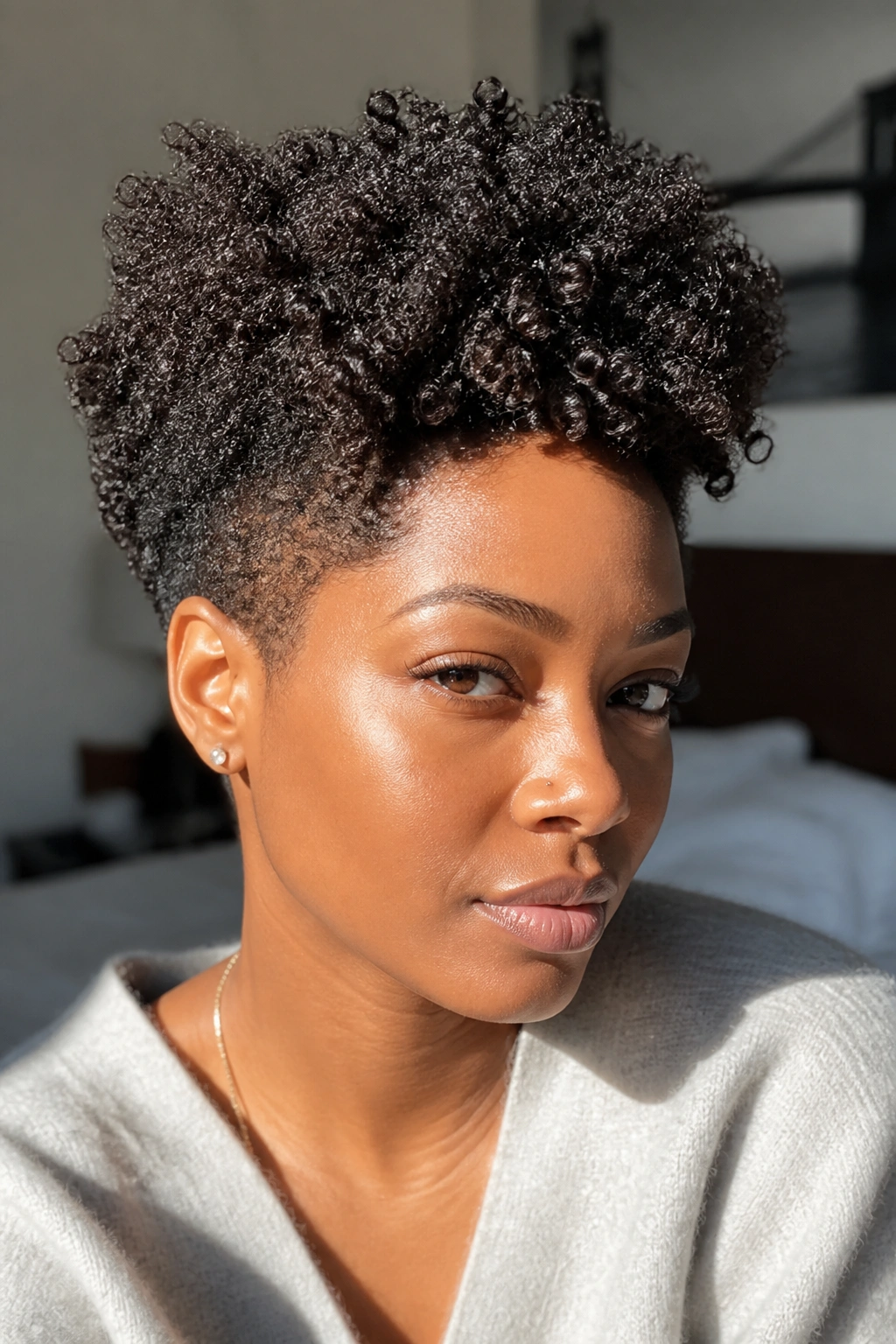
The tapered natural cut is a clean, practical shape for coily and tightly curled hair. It keeps the sides and nape shorter, lets the top carry more height, and creates a silhouette that looks intentional with very little daily fuss.
Why It Works
The shorter sides take away bulk where hair tends to puff out first. That makes morning styling easier because you are not trying to force every inch into the same shape. The top can stay fluffy, defined, or stretched, depending on how you like to wear it.
- Good with: wash-and-go routines
- Best for: coils, curls, and dense textures
- Useful product: leave-in plus gel or cream
- Trim schedule: shape it regularly so the taper stays clean
This cut is one of my favorites for people who want hair that feels shaped even on dry, sleepy days. It does not need a lot of ceremony. That’s the whole charm.
14. Shullet

A shullet is part shag, part mullet, and more wearable than people expect. The front stays soft and the back keeps a little length, so the shape feels edgy without turning into a full styling project.
It sounds bold, and it is, but the day-to-day effect is easy. The layers break up the bulk, the crown gets some lift, and the back falls in a way that looks deliberate when you air-dry it. If your hair has wave or texture, the shullet can look better with almost no help.
The key is balance. You want the cut to feel airy, not jagged. A good shullet has movement around the face and enough length in the back to keep it wearable at work, school, or anywhere you do not want to explain your hair to people.
Not everyone will love it. Fair enough. But if you like a cut with attitude that still lets you sleep in a little, this one deserves a look.
15. Inverted Bob

The inverted bob gives you a shorter back and longer front, which sounds technical but feels practical once you wear it. The shape lifts the nape, angles toward the chin, and creates movement without daily effort.
Why It Feels Easier Than It Looks
A strong shape does the styling for you. That is the real trick. The angled line keeps the cut from drooping, so even on a sleepy morning it still reads as deliberate. If your hair tends to fall flat in the back, this cut fixes that better than a standard bob.
If you wear it smooth, it can look sleek with a quick blow-dry. If you wear it a little rough, the angle still holds. That flexibility is why people keep coming back to it.
H3 — Best On:
- Straight hair that needs shape
- Wavy hair with some natural bend
- Hair that sits heavy at the neck
- People who like a little structure
It does need trimming to keep the angle clean. Let it grow too long and the shape softens fast.
16. Asymmetrical Bob
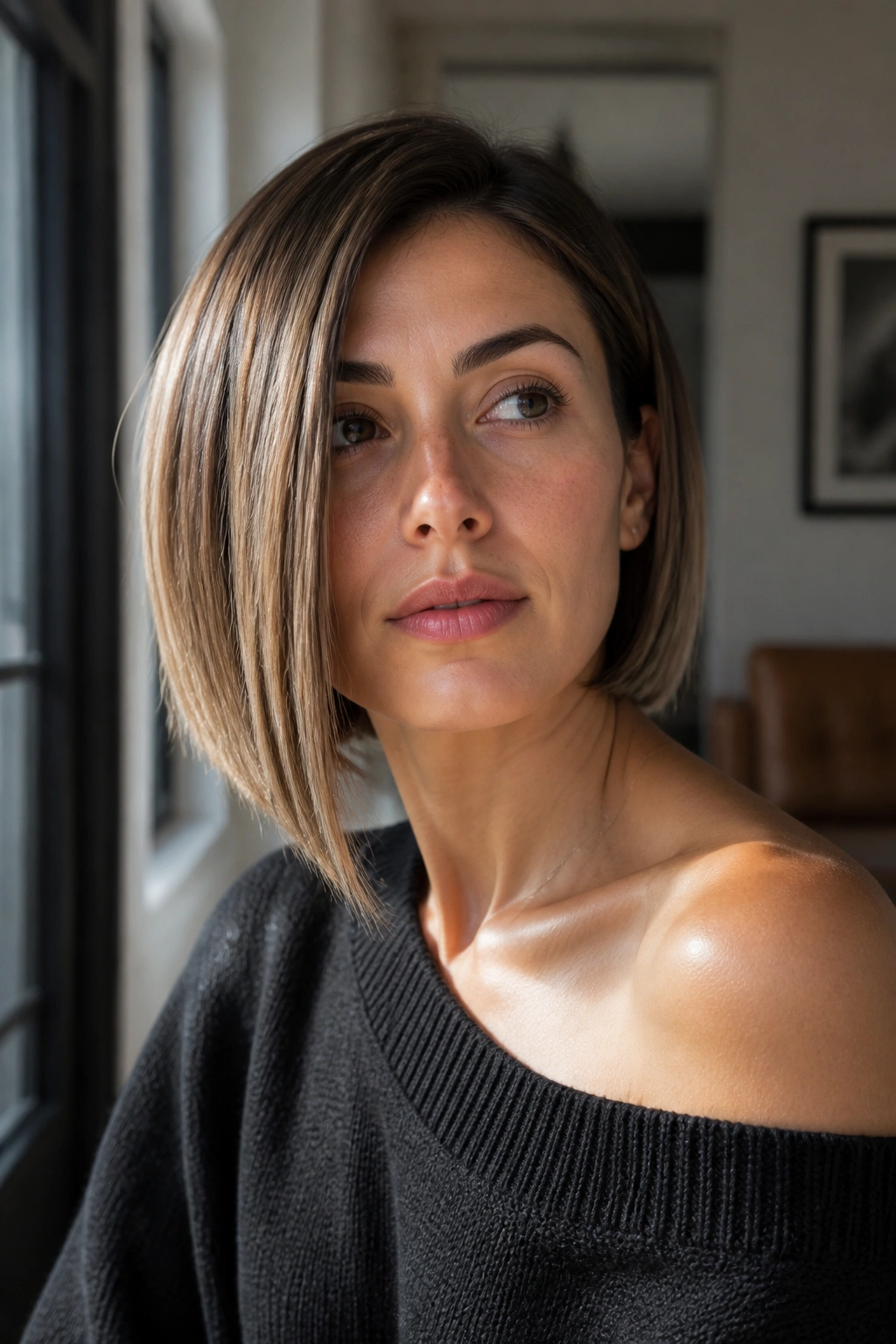
An asymmetrical bob is the cut for people who want a bit of visual interest without daily effort. One side is a little longer than the other, and that single difference gives the whole haircut personality.
A lot of easy cuts are easy because they are simple. This one is easy because the shape itself does the work. You can tuck the shorter side behind the ear, leave the longer side forward, and be done. The imbalance makes it look styled even when you have barely touched it.
What To Keep In Mind
- Keep the length difference modest if you want it easy
- Ask for clean ends so the angle stays visible
- Works well on straight to slightly wavy hair
- Needs regular trims to keep from losing the line
It is a good choice if you want to look put together without looking overly polished. That small slant is enough.
17. Curtain-Bang Lob
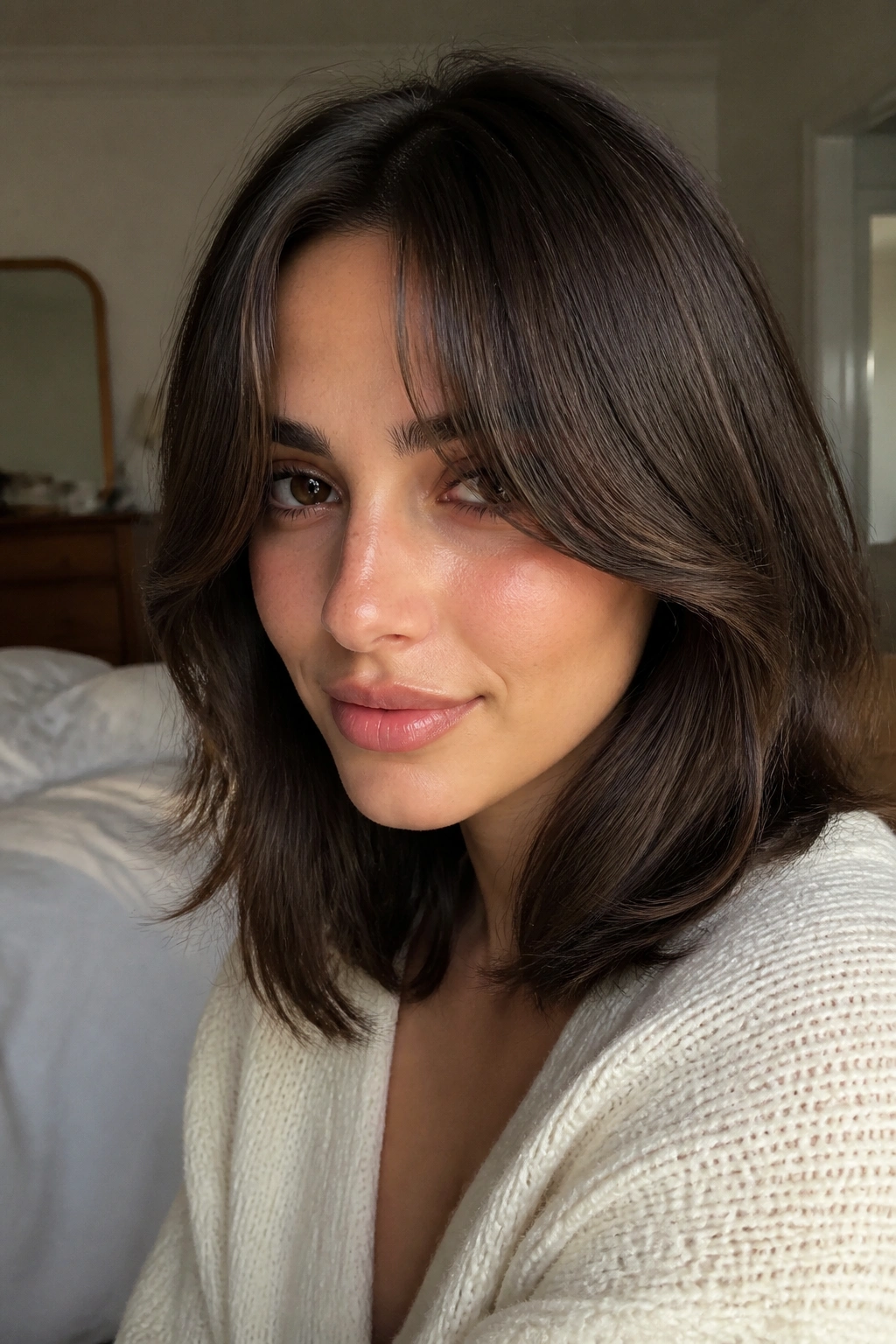
A curtain-bang lob gives you softness around the face and enough length everywhere else to keep mornings civilized. The bangs split in the middle, sweep to the sides, and blend into a shoulder-length cut that moves well.
Here’s the honest part: bangs are always a little needy. Always. But curtain bangs are the easiest version because they do not demand blunt perfection. They can be air-dried, reshaped with fingers, or lightly blown forward for a minute if needed.
The lob underneath keeps the overall cut manageable. You still have the option to clip the front pieces back, which matters on days when your forehead decides to be the main character. If your hair has some wave, the bang pieces usually fall nicely on their own.
This is a smart pick for someone who wants a fresh face-framing effect without committing to a high-maintenance fringe.
18. Chin-Length Crop with Micro Layers

A chin-length crop with micro layers is tiny in length and big on ease. It sits close to the face, gives fine hair some lift, and keeps the shape light enough that you are not spending your morning flattening and rescuing and fussing.
Unlike a classic bob, this crop has a bit more texture built in. The micro layers stop the ends from looking like a helmet, which is what makes it feel modern. It works especially well if you wear glasses, because the length clears the frames and keeps the whole look neat.
This cut is one of the fastest to style. A dab of cream, a rough dry, maybe a quick bend at the front with your fingers. Done. If you hate heavy hair on your neck, it is also a relief during warmer months, though that is not really the point here.
The main thing is shape. A clean chin-length line with tiny layers can look sharp with very little effort.
19. Butterfly Cut

The butterfly cut is long hair with built-in lift. It uses shorter face-framing layers and longer bottom layers so the hair feels lighter around the top and fuller through the ends.
This cut gets attention because it creates movement without removing too much length. That matters if you like long hair but hate how flat it can look when you do almost nothing. The shorter top layers can fall away from the face, while the longer layer underneath keeps the length visible.
Why It Earns a Spot
It gives you two moods in one haircut. Wear it smooth and the layers frame your face. Wear it loosely waved and the shape opens up. If you do a half-up style, the volume at the crown looks built in, which is a nice trick when you are in a hurry.
- Best for: medium to thick hair
- Good if you want bounce without a big chop
- Needs some blending so the layers do not feel abrupt
- Looks best when the front pieces are kept soft
It does ask for a bit more styling than a blunt cut, but the payoff is strong.
20. Grown-Out Pixie
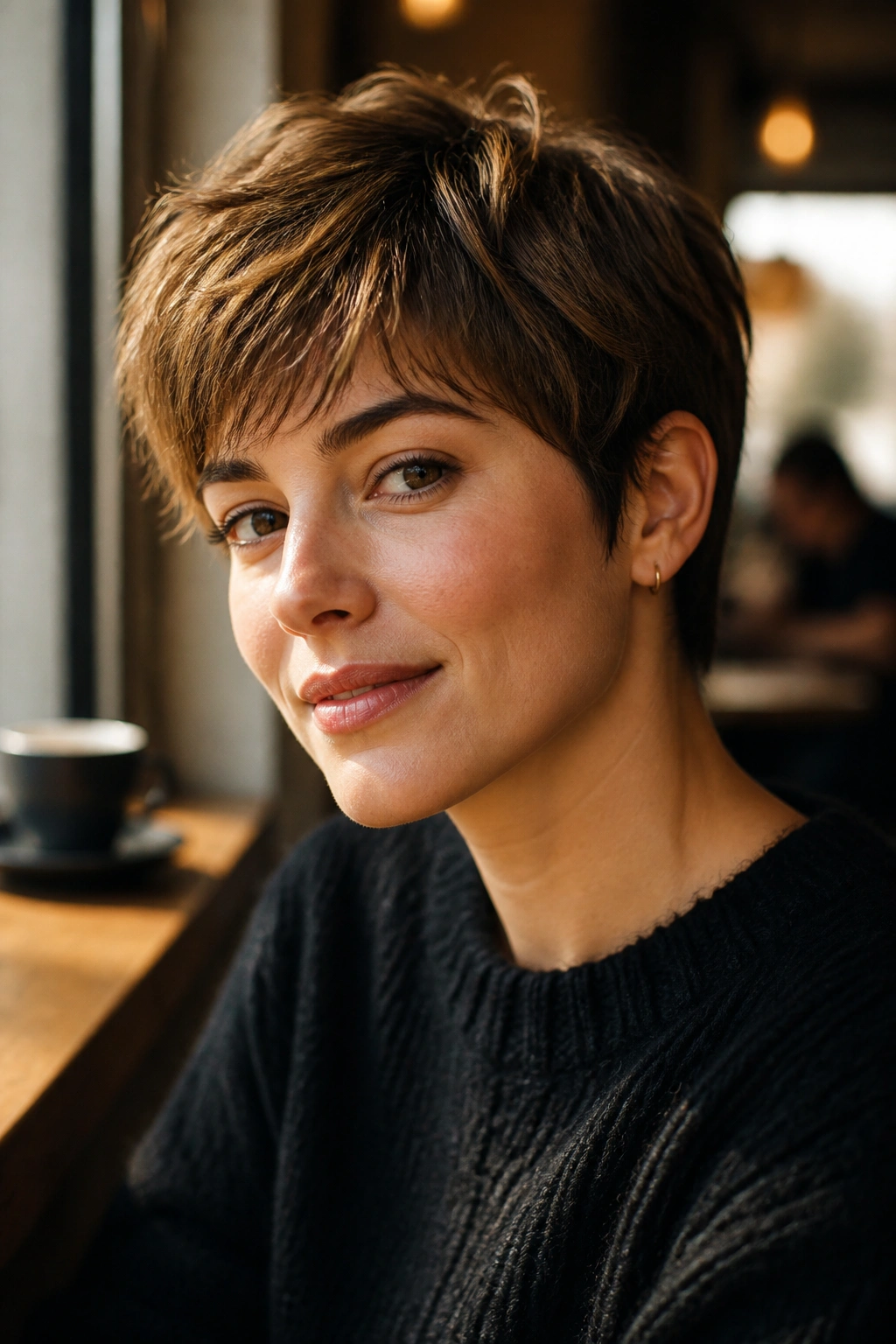
A grown-out pixie is what happens when short hair gets smarter with time. The edges soften, the top gets a little more movement, and the whole cut starts to look relaxed instead of strict.
That is why it works for lazy mornings. You are not trying to make every strand obey. You are working with a slightly lived-in shape that already has personality. A little finger-tousle, a touch of matte cream, and you are out the door.
This is also a good cut for people who liked a pixie but did not want to keep it ultra-short forever. The in-between stage can look deliberate if the shape is kept clean around the ears and neck. It is not the awkward stage people dread unless it has been neglected.
A grown-out pixie is forgiving, but not endlessly forgiving. Keep the neckline tidy and the top balanced, and it stays easy.
21. Soft Wolf Cut
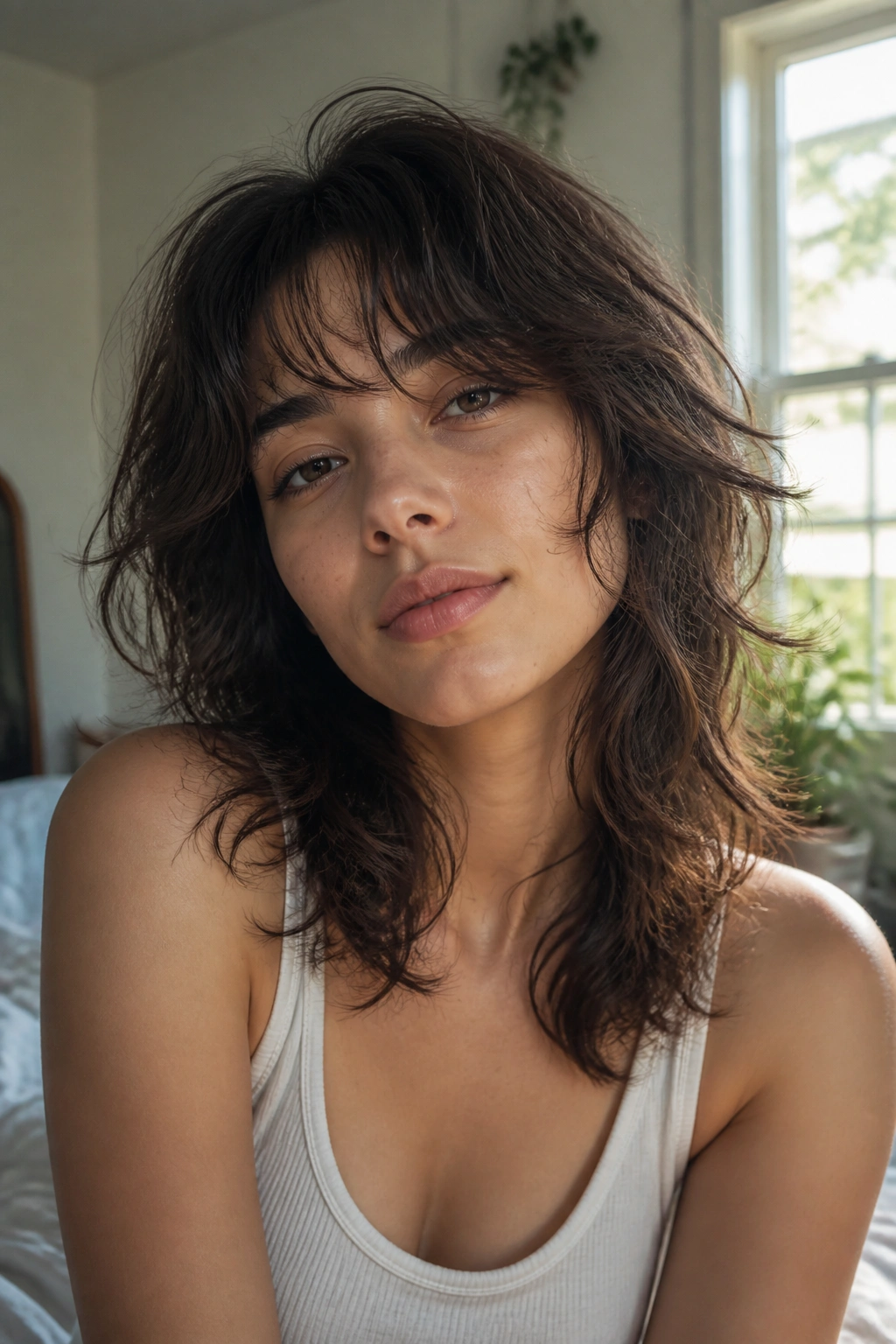
The soft wolf cut is the low-key version of an already textured haircut. It keeps the shaggy movement, but the layers are gentler and less extreme, which makes it easier to live with.
Why does that matter? Because a harsh wolf cut can look cool and still be a nuisance at 7 a.m. The soft version keeps the volume in the right places without making you style every layer into submission. It tends to work well on thick, wavy, or slightly curly hair that already has body.
How To Tell If It Fits
If you like messy texture, this is probably your lane. If you want a neat, smooth outline, skip it. The cut wants movement, and it looks best when you let that happen.
H3 — How To Wear It
- Air-dry with a curl cream or light mousse
- Scrunch the crown for extra lift
- Leave the ends a little piecey
- Refresh day two with water and a small amount of product
It is not the most formal haircut on this list. It is one of the easiest, though, if your hair has natural texture.
22. The Mixie Cut for Easy Mornings
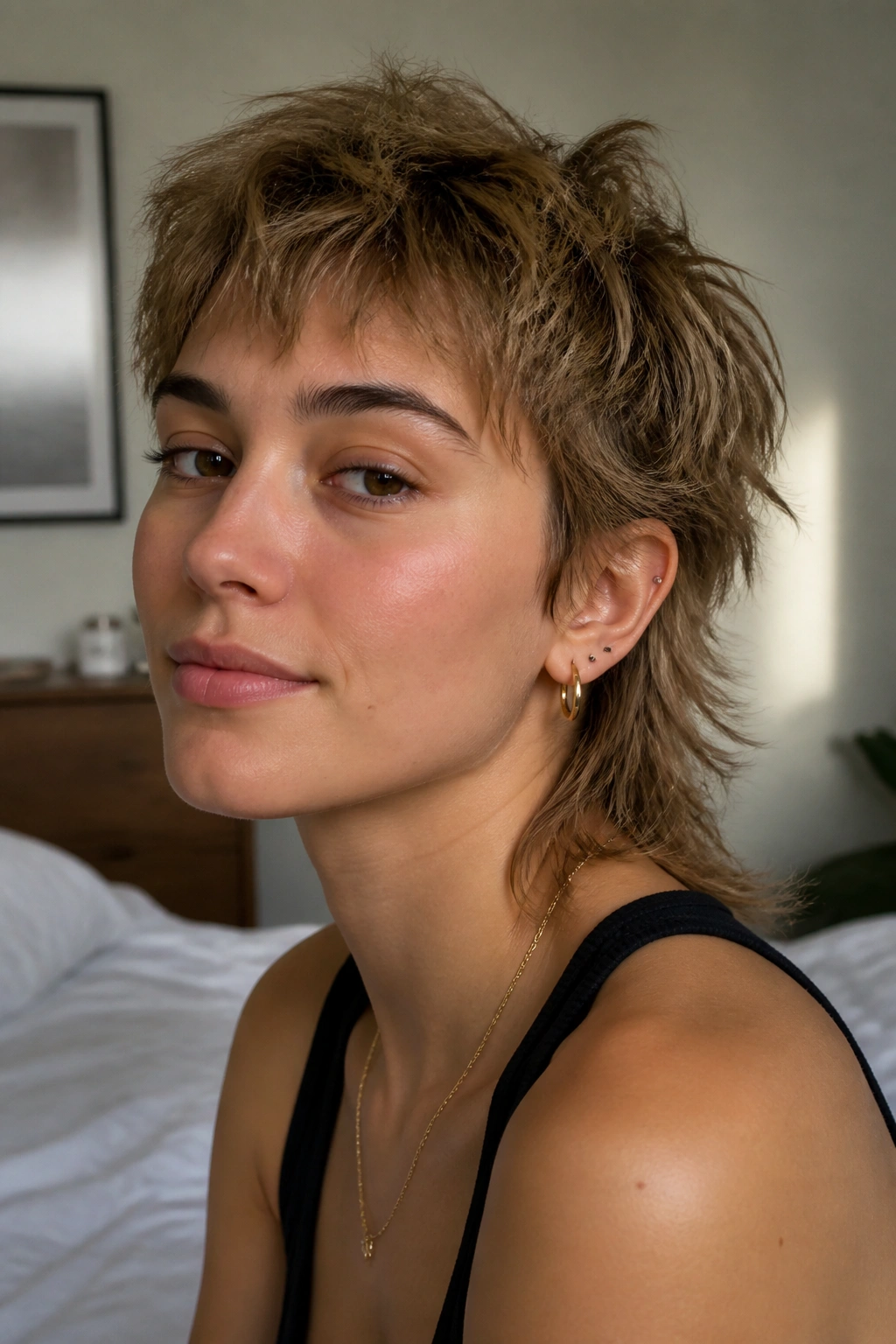
The mixie cut is a pixie-mullet hybrid, and that sounds more dramatic than it feels. In practice, it is a short cut with a little extra length in back, a bit of softness around the face, and enough texture to keep it from looking stiff.
This is a strong choice if you want short hair that does not demand a perfect styling routine. The shape is built to look good with some movement, which means your bedhead can work in your favor. That back length gives the style a bit of flow, while the shorter top keeps the whole thing light and fast.
It does best when the cut is tailored to your texture. Straight hair may need a touch of paste. Wavy hair can often air-dry and go. Thick hair benefits from careful debulking so it does not balloon out.
A mixie is not for someone who wants a safe haircut. It is for someone who wants easy hair, a bit of edge, and fewer morning battles. That is a better deal than it sounds.
