



Spring hair has a way of exposing everything. Flat roots show faster. Flyaways show faster. A style that looked fine under a coat and a scarf can fall apart the second the air gets lighter and windier. The best spring hairstyles do three jobs at once: they move, they hold, and they still look deliberate after you tuck hair behind one ear.
I like hair that looks better with a little imperfection. A braid that loosens in the sun, a ponytail with a soft bend, a bob that flips at the ends — those all feel right when the weather stops asking for heavy, closed-in styling. Big lacquered shapes can work, sure, but they often feel out of place once the sleeves get shorter and the days feel less sealed off.
The useful trick is matching the style to the day, not forcing every head of hair into the same polished look. Fine hair needs lift at the crown. Thick hair needs a shape that keeps the bulk from puffing at the ends. Curly hair usually looks best when the cut and the style cooperate instead of fighting each other. That last part matters more than people admit.
A good spring style should not eat your whole morning. It should survive a breeze, a long lunch, and that awkward stretch between errands and dinner. Some need a clip. Some need a ribbon. Some need nothing more than a center part and a brush. The first few are the simplest places to start.
1. Soft Curtain Bangs for Spring
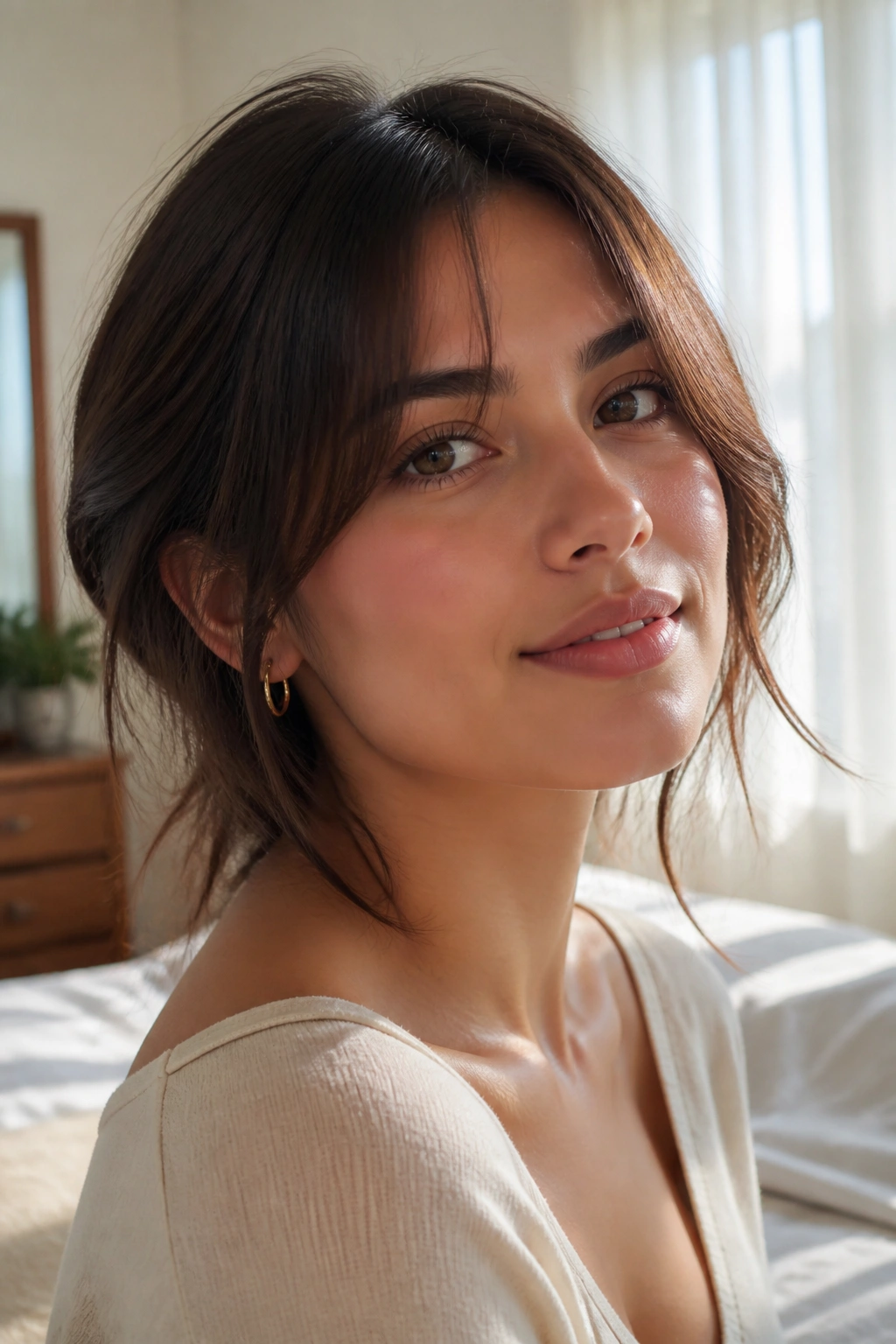
Curtain bangs are one of those cuts that earn their keep fast. They frame the face, soften a blunt outline, and let the rest of your hair stay loose without looking unfinished. When they’re cut a little longer at the cheekbone and swept away from the center, they feel light instead of heavy.
Why they work
Soft curtain bangs are a smart spring choice because they move easily. You can blow them under with a round brush, bend them with a flat iron, or leave them to air-dry with a little texture spray. They also grow out with less drama than a sharp fringe, which matters if you do not want to babysit your hair every three weeks.
- Best with shoulder-length cuts or longer layers
- Easy to pin back on windy days
- Looks good with straight hair, bends, or loose waves
A small warning: if your hair gets oily at the front, keep dry shampoo near the root area and not on the ends. That tiny detail makes the bangs sit cleaner. Tiny, but useful.
2. Low Claw-Clip Twist
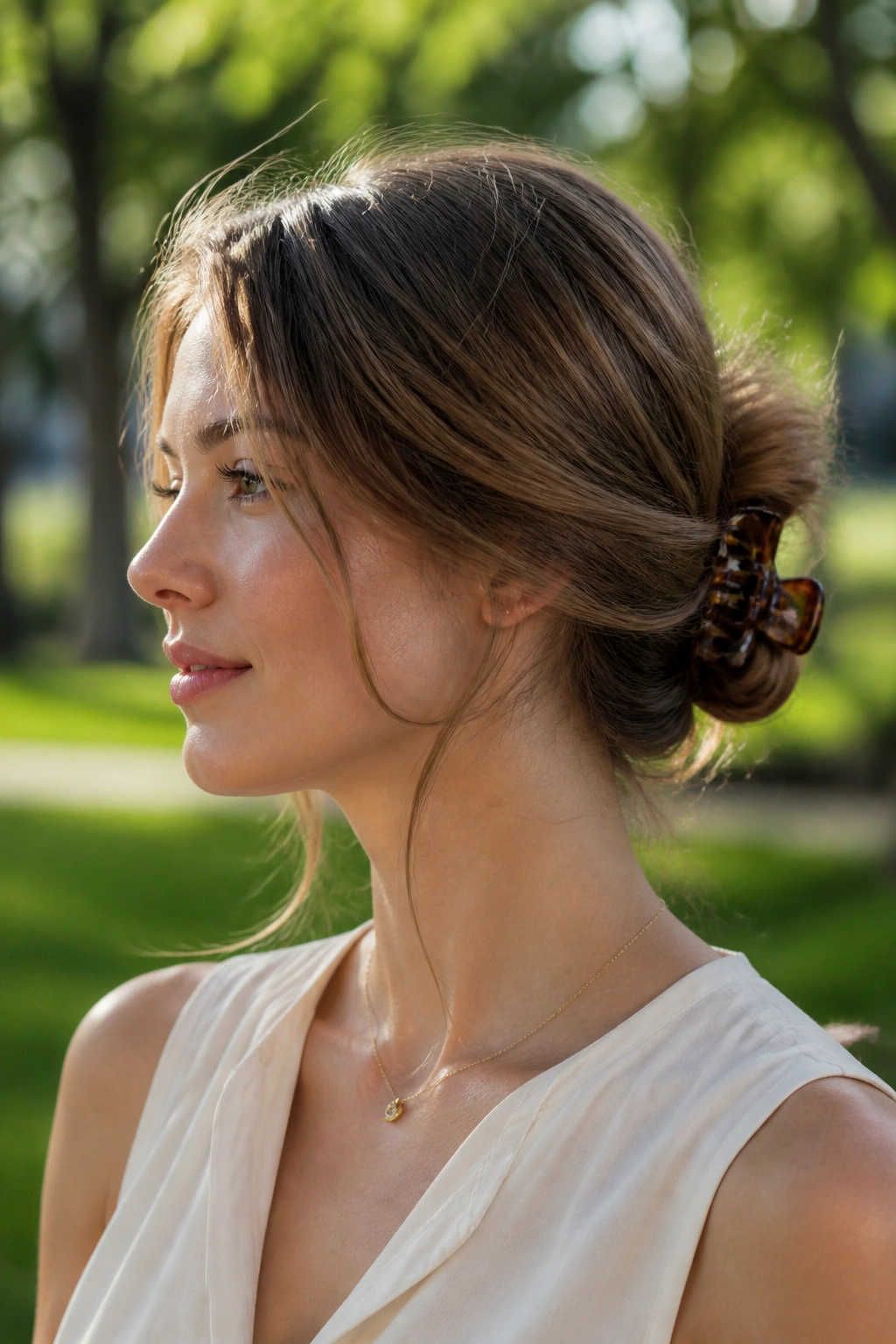
A low claw-clip twist is one of the fastest ways to look put together without pretending you spent half an hour on it. Pull the hair low at the nape, twist it upward once or twice, and clip it so the ends tuck in neatly. Done.
What makes this one work in spring is the shape. It keeps the neck open, which feels better when the weather warms up, and it stays off your face when you are walking around outside. If your hair is layered, let a few shorter pieces fall loose. That little mess keeps the style from looking stiff.
Use a medium claw clip if your hair is fine. Thick hair usually needs a larger clip with a stronger grip, or the whole twist slides apart by lunchtime. No mystery there. Just grip and placement.
3. Bubble Ponytail with Tiny Elastic Gaps

A bubble ponytail looks playful, but the real reason I like it is practical: it makes a plain ponytail look intentional in about two minutes. Tie the hair into a low or mid ponytail, then add small elastics every 2 to 3 inches down the length. Puff each section gently with your fingers.
The shape gives fine hair more body and makes thick hair feel less plain. It also holds up well when you are moving around, because each section is anchored separately. That means less sagging as the day goes on.
Small things that help
- Wrap a tiny strand of hair around the first elastic for a cleaner finish
- Pull the bubbles apart only a little; over-puffing makes the style collapse faster
- Add a mist of flexible-hold spray before the last elastic
This one is cheerful without looking childish. That’s a rare balance.
4. Braided Crown for Long Days
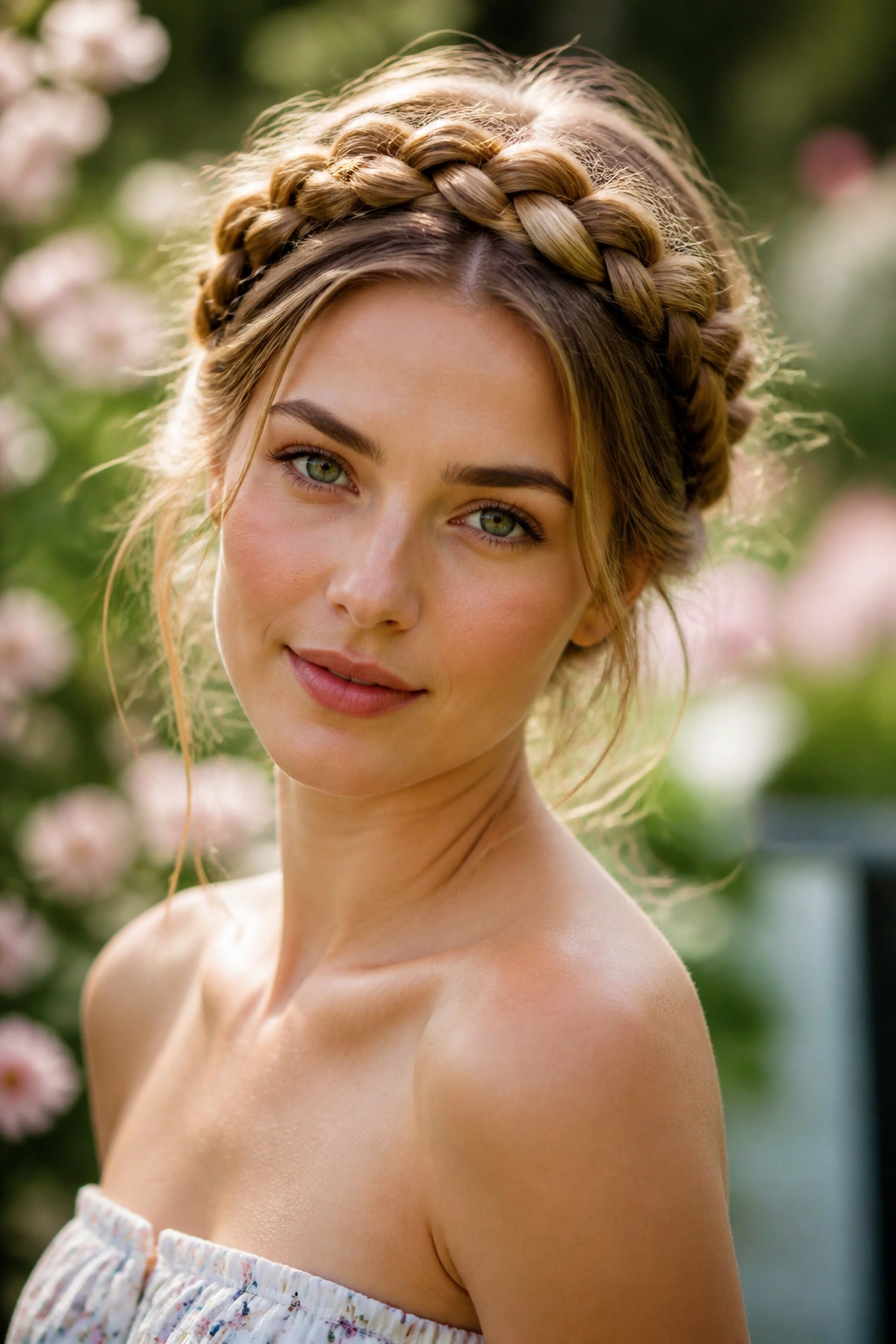
Ever need your hair to stay put from breakfast to dinner? A braided crown solves that problem better than most styles. Start a braid on one side of the head, follow the hairline around the back, and pin it near the opposite side. You end up with something that feels secure and a little romantic, without trying too hard.
Why it lasts
The braid hugs the head, so it does not swing around or get caught under jackets and bags. That alone makes it a spring win. If your hair is layered, mist it lightly first so the shorter pieces are easier to gather.
How to keep it soft
Let the braid loosen just a touch after you pin it. Not too much. A slightly puffed braid looks better in daylight than a tight, shiny one, especially if you want the style to feel less formal. A few face-framing strands make it breathe.
5. Sleek Center-Part Ponytail
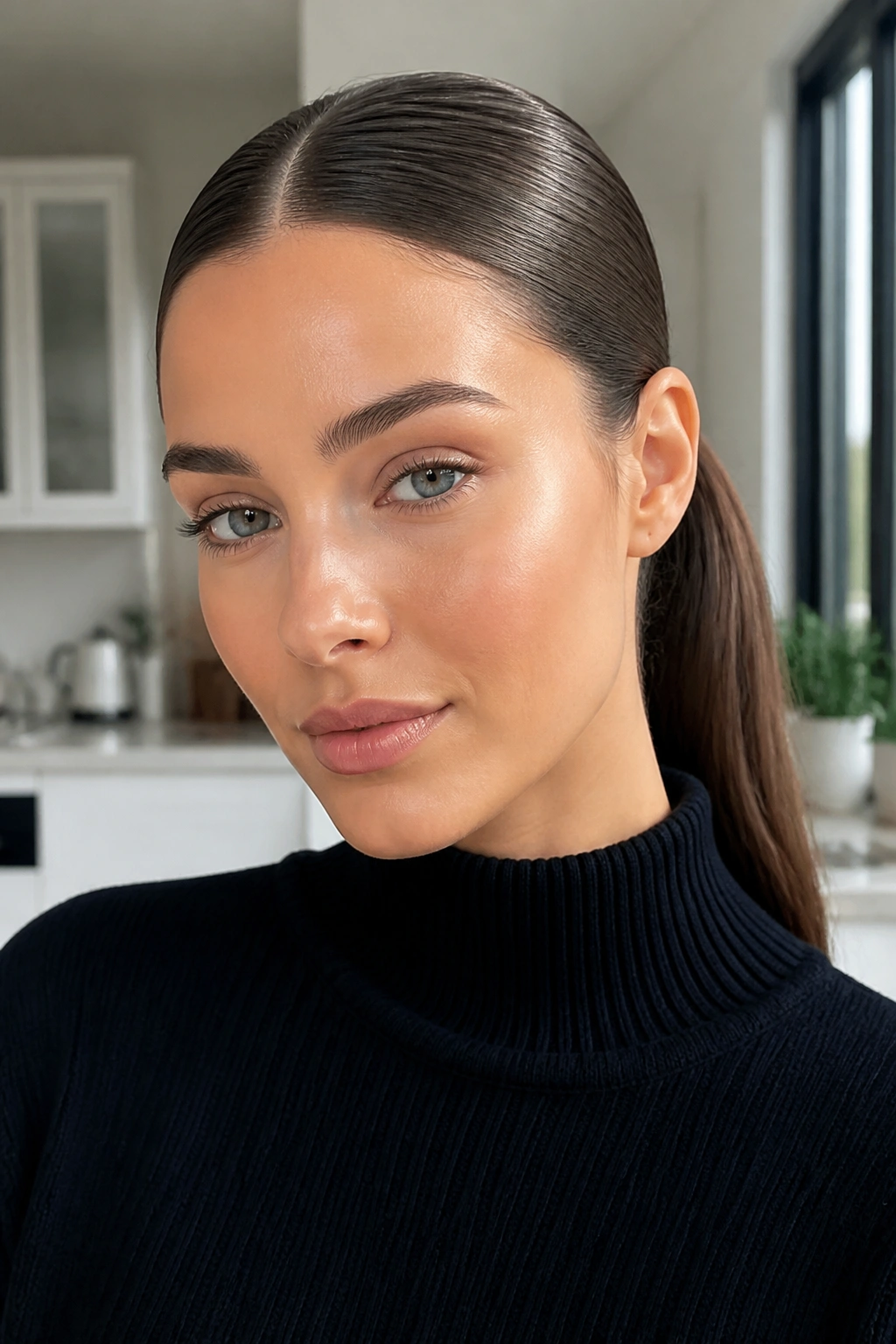
A sleek center-part ponytail can be boring if you rush it. It can also look sharp, clean, and expensive-looking in the ordinary sense of the word — neat hair that behaves. The trick is the prep. Brush the hair flat, make a clean center part, and smooth the sides with a little cream or gel before tying it low or high.
Compared with a messy ponytail, this version asks for control. That is the point. It works especially well with straight or slightly wavy hair, because the line down the middle stays crisp longer. If your hair frizzes at the crown, smooth that part first and then tie the ponytail. Do not wait until the end.
This style is good on days when you want the rest of your outfit to do the talking. The hair can stay quiet.
6. Half-Up Knot with Face-Framing Pieces
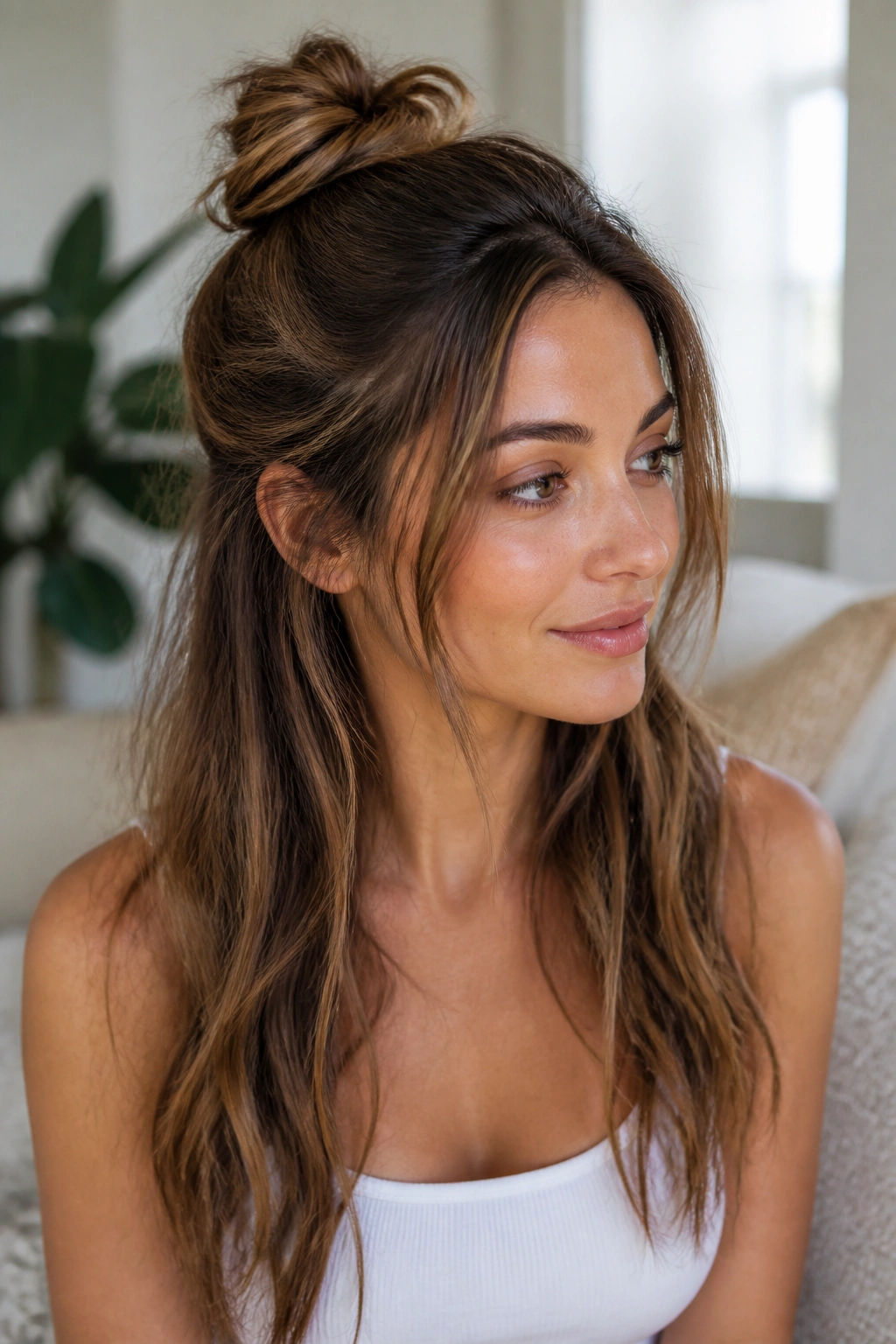
A half-up knot is one of the easiest ways to keep hair off your face while still letting the length show. Gather the top section, twist it into a small knot, and pin or tie it where it sits naturally at the crown. Then leave the front pieces out. That small bit of face-framing hair keeps the style from feeling too tucked away.
What to watch for
- Keep the knot loose, not tight
- Leave enough hair down underneath so the shape still feels soft
- Use two bobby pins crossed in an X if your knot slips
This one works well on second-day hair, which is probably why people keep coming back to it. Hair with a little grit holds the knot better than freshly washed strands. And if the knot gets messy by afternoon? Fine. That often looks better anyway.
7. Ribbon-Tied Low Braid for Spring Days
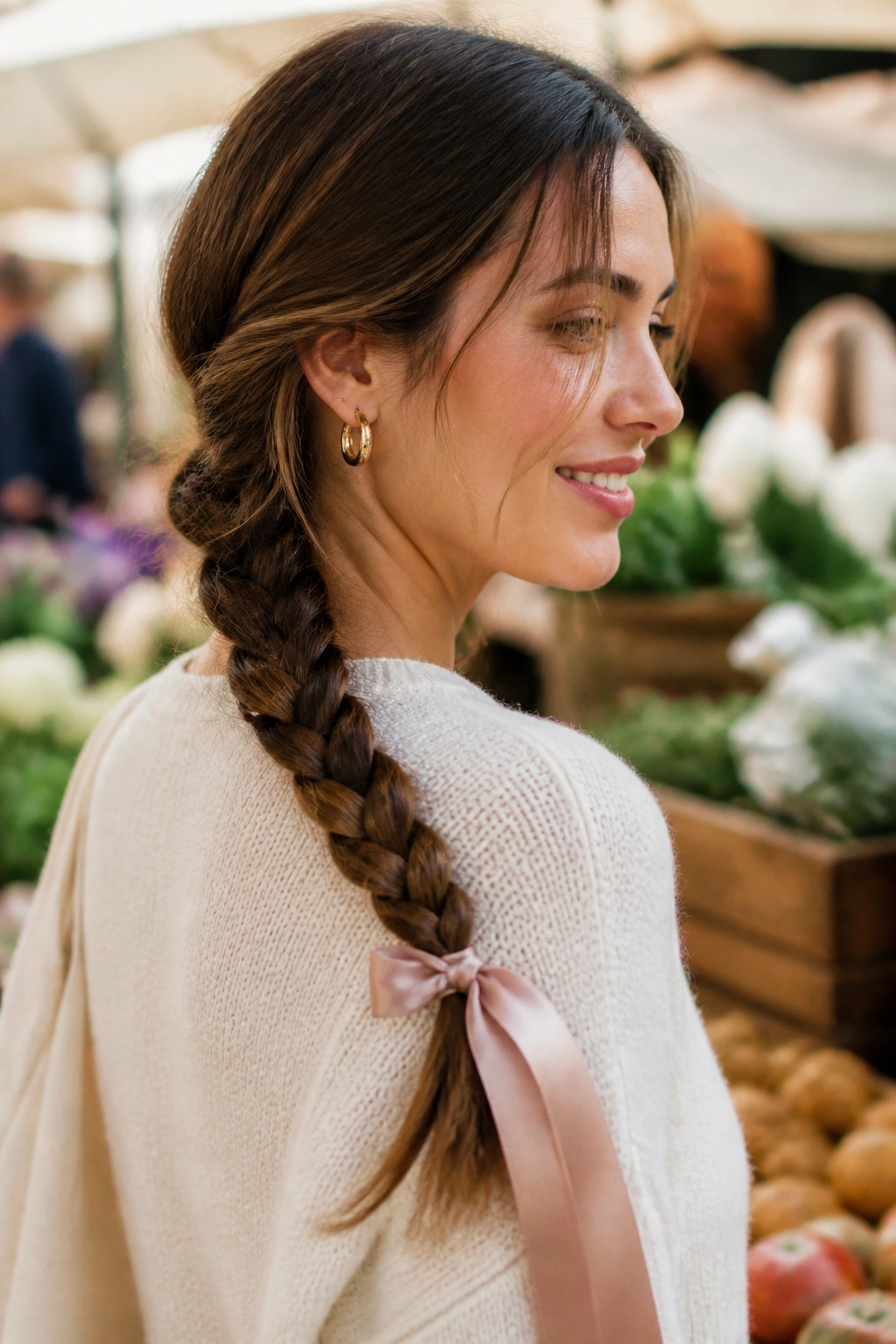
A low braid with a ribbon tied at the end has a slightly old-fashioned charm, but not in a costume way. It’s calm. A little sweet. And it makes an ordinary braid feel finished without extra heat tools or a heavy product load. Pull the braid low, tie it off, then swap the elastic at the end for a ribbon that matches your outfit or just feels fresh against the hair.
This style is best when the braid itself stays relaxed. If you braid too tightly, the ribbon looks like an afterthought. If you braid with a bit of softness, the ribbon seems like part of the style from the start. I like this for lunch plans, outdoor markets, or any day when you want hair that moves but does not get in the way.
A satin ribbon lies flatter than velvet. That matters on finer hair.
8. Parisian Bob Tucked Behind One Ear

A bob does not need extra curls to look finished. Sometimes the strongest version is the simplest one: blow it smooth, create a slight bend at the ends, and tuck one side behind the ear. That one small move changes the whole shape of the haircut.
The tucked side opens the face, which is useful when you want earrings or a collar to show. The other side keeps the cut from looking too neat. I prefer this on jaw-length or chin-length bobs, especially when the ends are blunt and clean. It gives structure without making the hair feel helmet-like.
If your hair slips out of the tuck, use one flat clip near the nape. Hidden, not obvious. No need to fight gravity all day.
9. Messy Textured Pixie
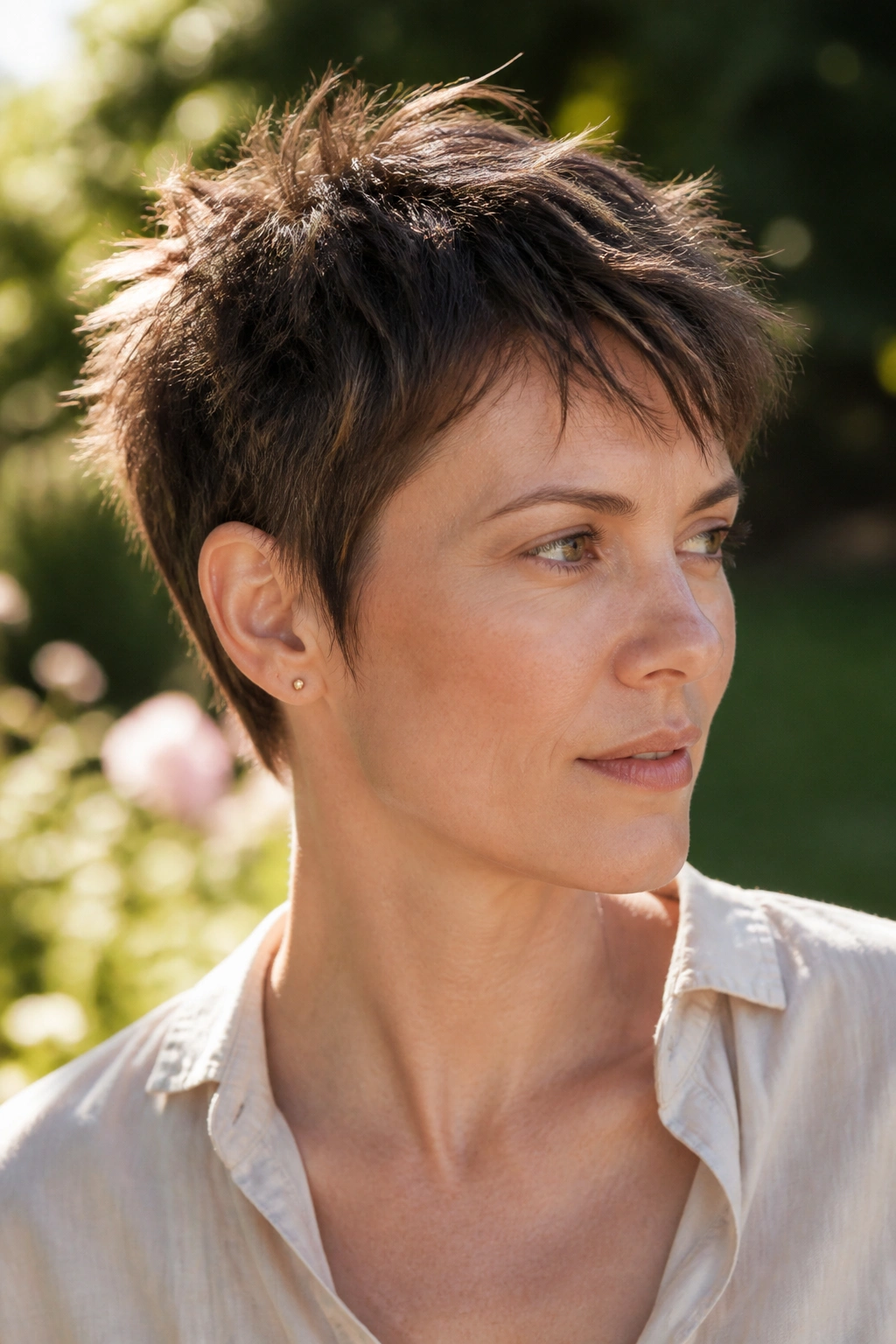
A pixie cut can look sharp in the wrong way if it is over-styled. Spring suits a softer, textured version much better. Work a pea-sized bit of paste or cream through dry hair, pinch the ends, and push the top section forward or up depending on your cut. You want separation, not crunch.
The best part is the feel. The hair should look touchable, not shellacked. A good pixie almost has movement you can see from across the room. Short pieces around the ears and forehead catch the light, which keeps the style from feeling flat.
Short hair has a bad reputation for being “easy.” It is only easy when the cut is right. This is where shape matters more than length.
10. Dutch Braid Pigtails

Dutch braid pigtails are not just for sports or school days. Done cleanly, they can look fresh and deliberate, especially when you pull them a little wider after braiding. The braid sits on top of the hair instead of sinking into it, which gives the whole style more presence.
How to keep them neat
Start with smooth, detangled hair and part it down the middle. Braid each side close to the scalp, keeping the sections even as you go. If your hair is slippery, use a touch of texturizing spray first. That gives your fingers more grip.
A lot of people pull too hard on the braid and end up with bumps that do not read as relaxed — they read as rushed. Keep the tension steady, then soften the braid at the end. That’s the better move.
11. Polished Low Bun with Side Part
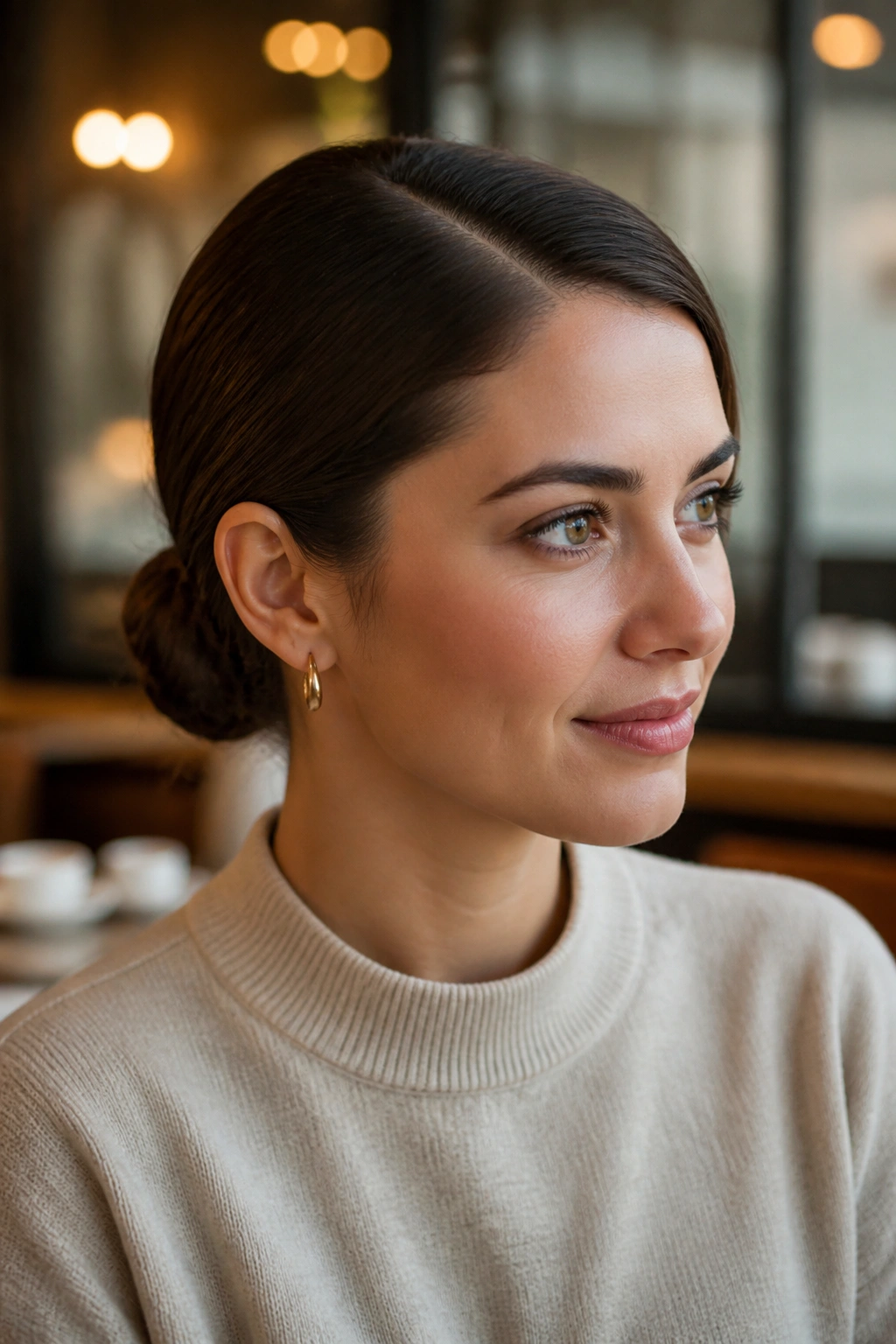
A low bun with a side part is one of the few styles that can handle a dressy dinner and a boring workday without feeling out of place. It sits low at the nape, which keeps the profile clean, and the side part gives it a little more shape than a plain center part would.
The details that make it work
- Smooth the part first before gathering the hair
- Keep the bun compact if your hair is thick
- Leave one slim face-framing piece out if you want it softer
The bun should feel secure, not stiff. If it takes more than two pins to hold, you probably need to twist the hair a little tighter before wrapping it. I like this style because it looks calm even when the rest of the day is not.
12. Shoulder-Grazing Flip Ends

Shoulder-grazing hair with flipped ends is one of those cuts that makes spring dressing easier. It sits between short and long in the best way. You get movement at the ends, but the shape still has enough weight to look styled when the wind kicks up.
Compared with long layers, a flipped lob or shoulder cut needs less work to look alive. A round brush or a flat iron bend at the last inch is often enough. That slight turn away from the face keeps the line from looking severe.
This is a strong pick if you hate hair sticking to your neck but also do not want a full chop. It has a little swing. That matters more than people think.
13. Scarf-Wrapped Ponytail

A scarf-wrapped ponytail solves two problems at once: it makes a plain ponytail look deliberate, and it hides an elastic that might not be pretty. Tie the ponytail first, then wrap a thin scarf around the base and knot it off to the side or underneath.
The scarf adds color, but it also changes the silhouette. A low ponytail can go from practical to polished in seconds. If your hair is fine, keep the scarf narrow so it does not overpower the ponytail. Thick hair can handle a wider wrap.
A few useful details
- Silk and satin slip less than cotton once tied
- A low ponytail keeps the scarf visible longer
- Use a matte scarf if your hair is already shiny
It’s a simple trick. Still one of my favorites.
14. Waterfall Braid
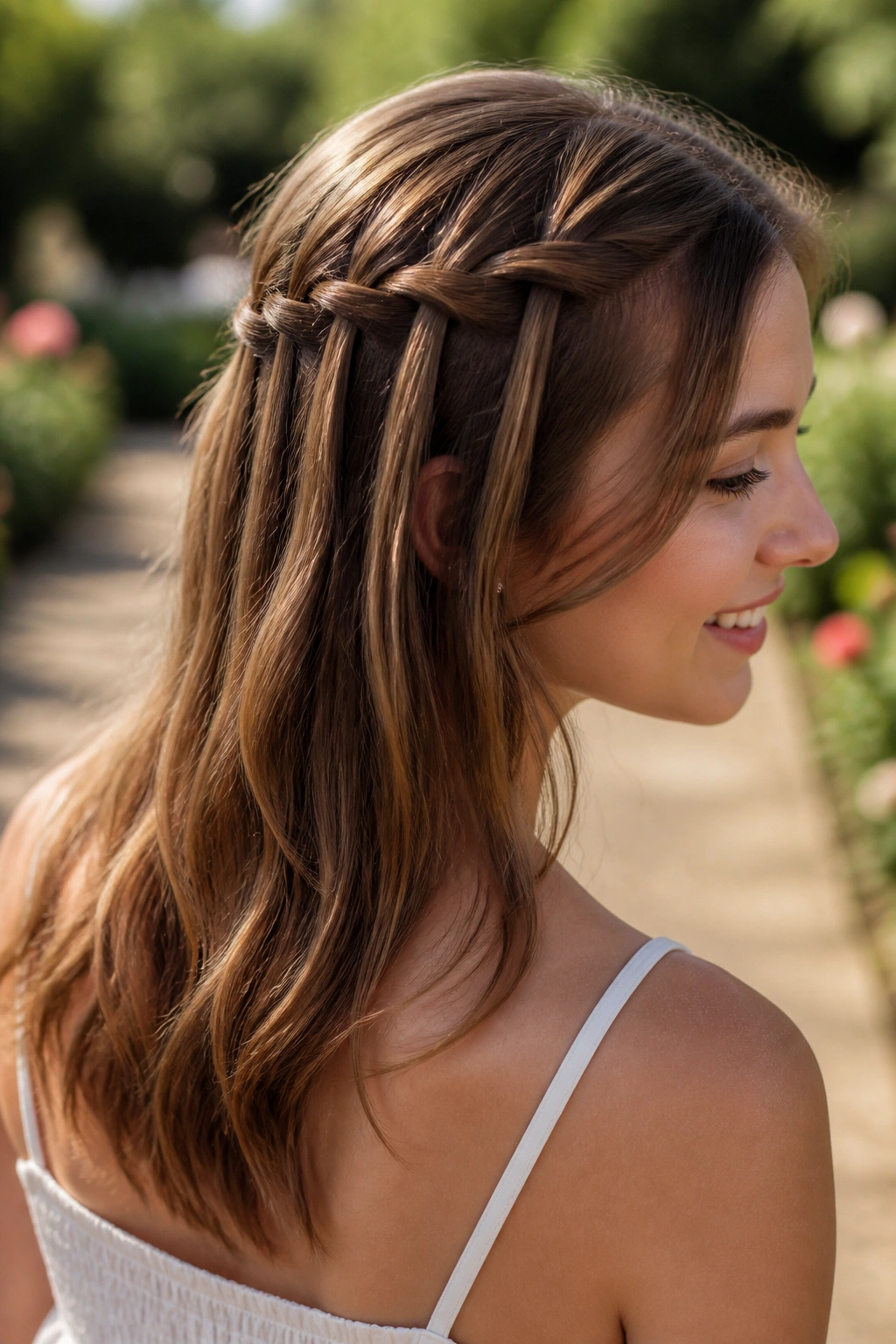
A waterfall braid looks more complicated than it is, which is part of its charm. You braid across the back or side of the head, dropping one section each time so it falls into the rest of the hair. That creates a woven line with loose strands flowing underneath.
The style works best on hair that has a little bend or wave, because the dropped pieces blend in instead of sticking out sharply. Straight hair can do it too, but it usually benefits from a soft curl first. The braid itself should sit close enough to the head to stay visible, yet loose enough to feel airy.
How to get the most from it
Use clear elastics or tiny pins if you need extra grip. Keep the dropped sections about the same thickness so the pattern stays clean. And if one side looks uneven, don’t panic. Waterfall braids forgive a little irregularity.
15. Soft Shag with Air-Dried Texture
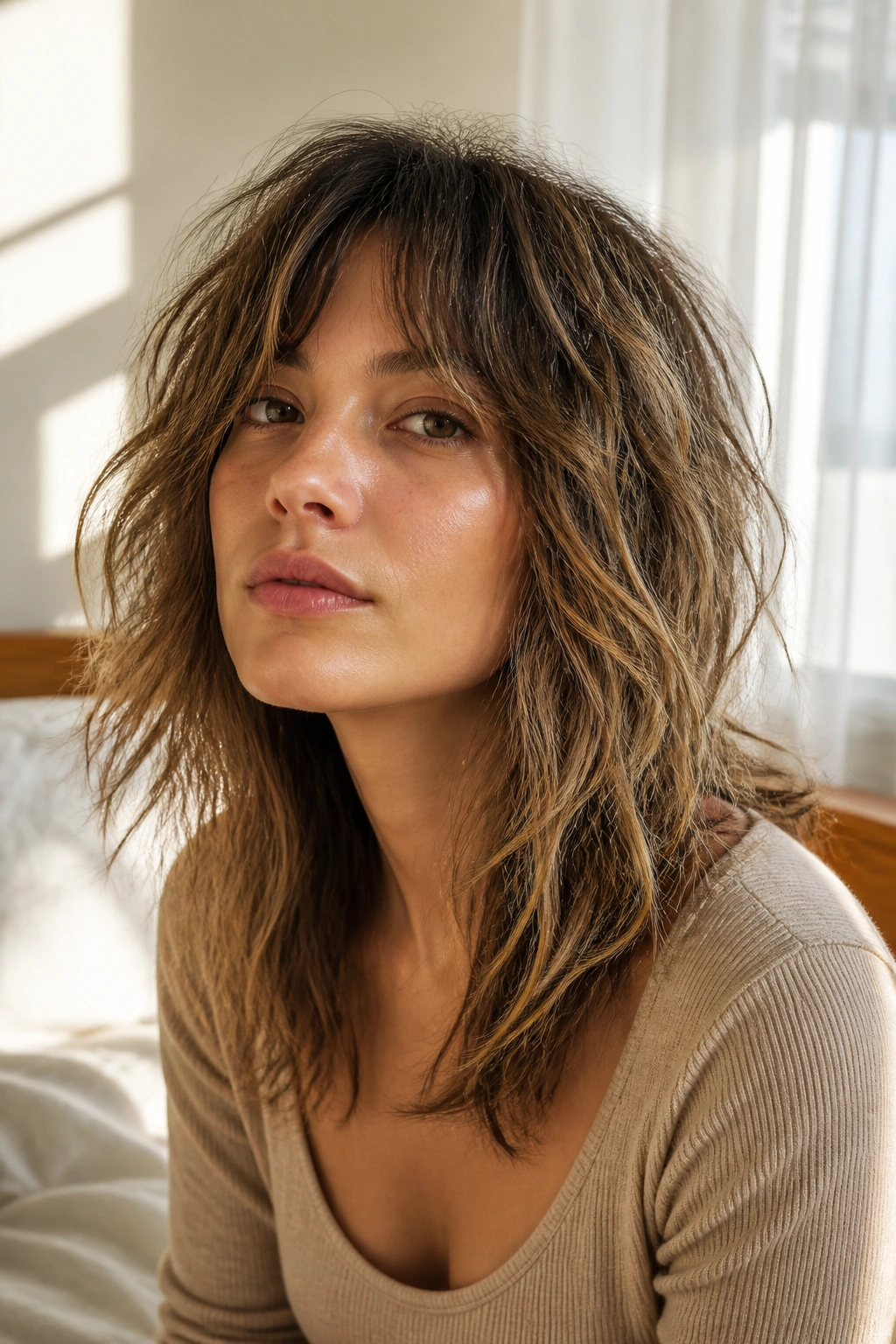
A soft shag is one of the best cuts for spring because it already looks a little undone in the right way. The layers create movement without asking you to force it. If your hair air-dries with a wave or curl, this cut can look better with almost no help.
The trick is not to overwork it. Scrunch in a light cream or mousse, then let the hair dry on its own or with a diffuser. Pick at the roots only if they collapse. Too much brushing destroys the whole point.
A shag is not tidy hair. That’s why it works. It gives you shape even when the day gets humid, and the ends still feel light instead of heavy.
16. Wrapped High Ponytail

A wrapped high ponytail is one of those styles that looks cleaner than a basic pony without much extra work. Tie the ponytail high, take a small strand from underneath, and wrap it around the elastic until it hides the band. Pin the end underneath.
Why does it matter? Because that small detail makes the whole thing feel finished. A high ponytail can look sporty, but the wrap gives it a smoother line. It also helps if your elastic does not match your hair color.
If you want more lift, backcomb the crown lightly before you gather the hair. Not a lot. Just enough to keep the base from sitting flat. A ponytail with a little height always feels more awake.
17. Twisted Half-Up on Wavy Hair

Wavy hair loves a twisted half-up style. The natural texture gives the twist some grip, and the loose lengths below keep the whole look soft. Pull two sections back from each temple, twist them toward the center, and pin them together or knot them once.
This is the kind of style I reach for when I want my hair off my face but I do not want it fully tied back. It works especially well if the waves are a little uneven, because the texture hides small flaws. A wave that bends differently on the left and right side is not a problem here. It becomes part of the look.
A small mist of texture spray before twisting helps. So does pinning under a tiny bit of hair, not over it.
18. Braided Top Knot
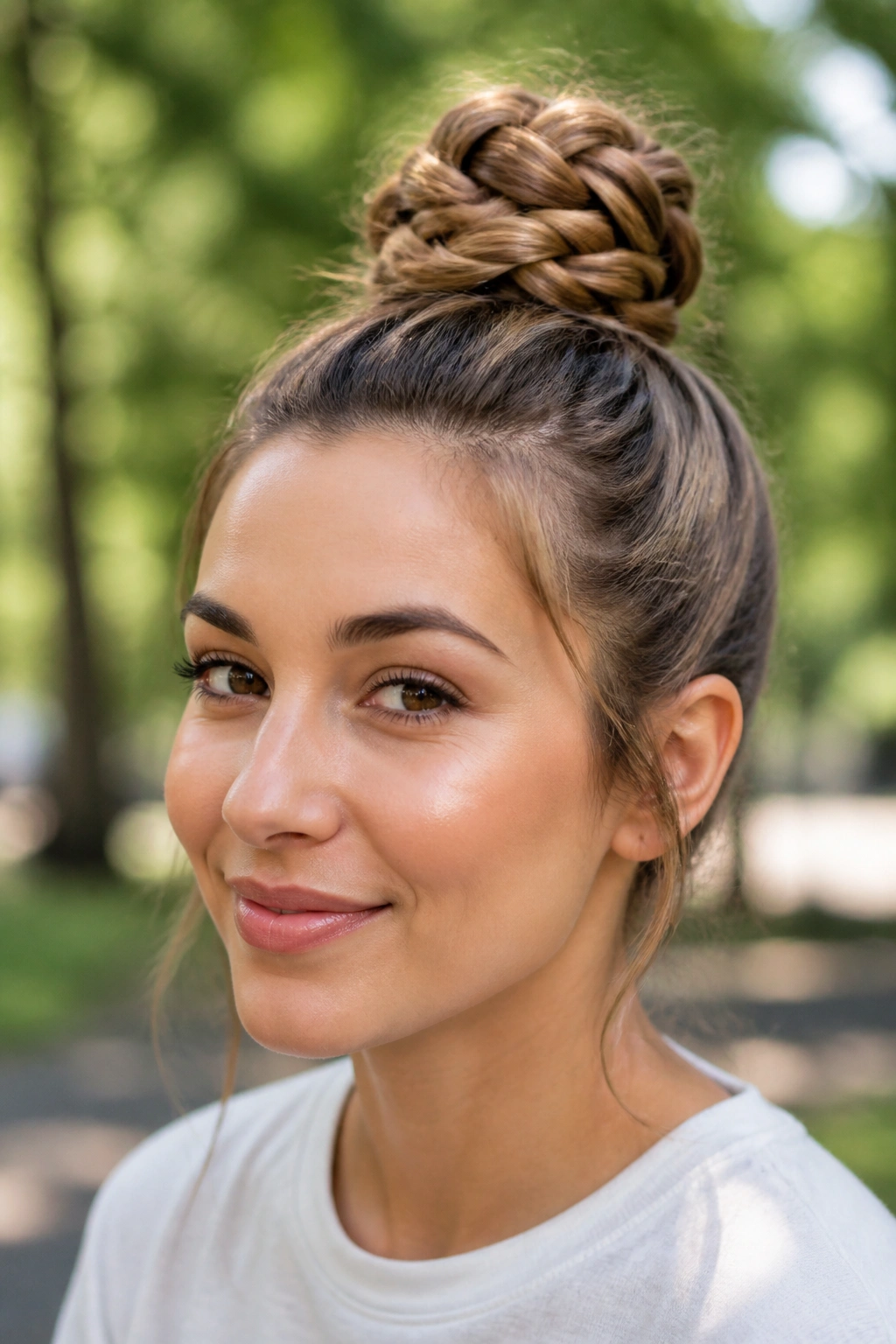
A braided top knot is a stronger version of the regular messy bun. Braid the ponytail first, wrap it around itself, and pin it high on the crown. The braid gives the bun more grip and a bit of visual texture, which helps if your hair is fine or slippery.
Compared with a plain bun, this one lasts better through movement. The braided structure keeps the shape from loosening too quickly. It also looks good with thick hair because the braid breaks up the bulk at the top.
Use this when you want height without fuss. A few loose strands around the hairline keep it from feeling severe, but don’t overdo the softness. The point is structure. Not perfection.
19. Chin-Length Blunt Bob with Tucked Ends
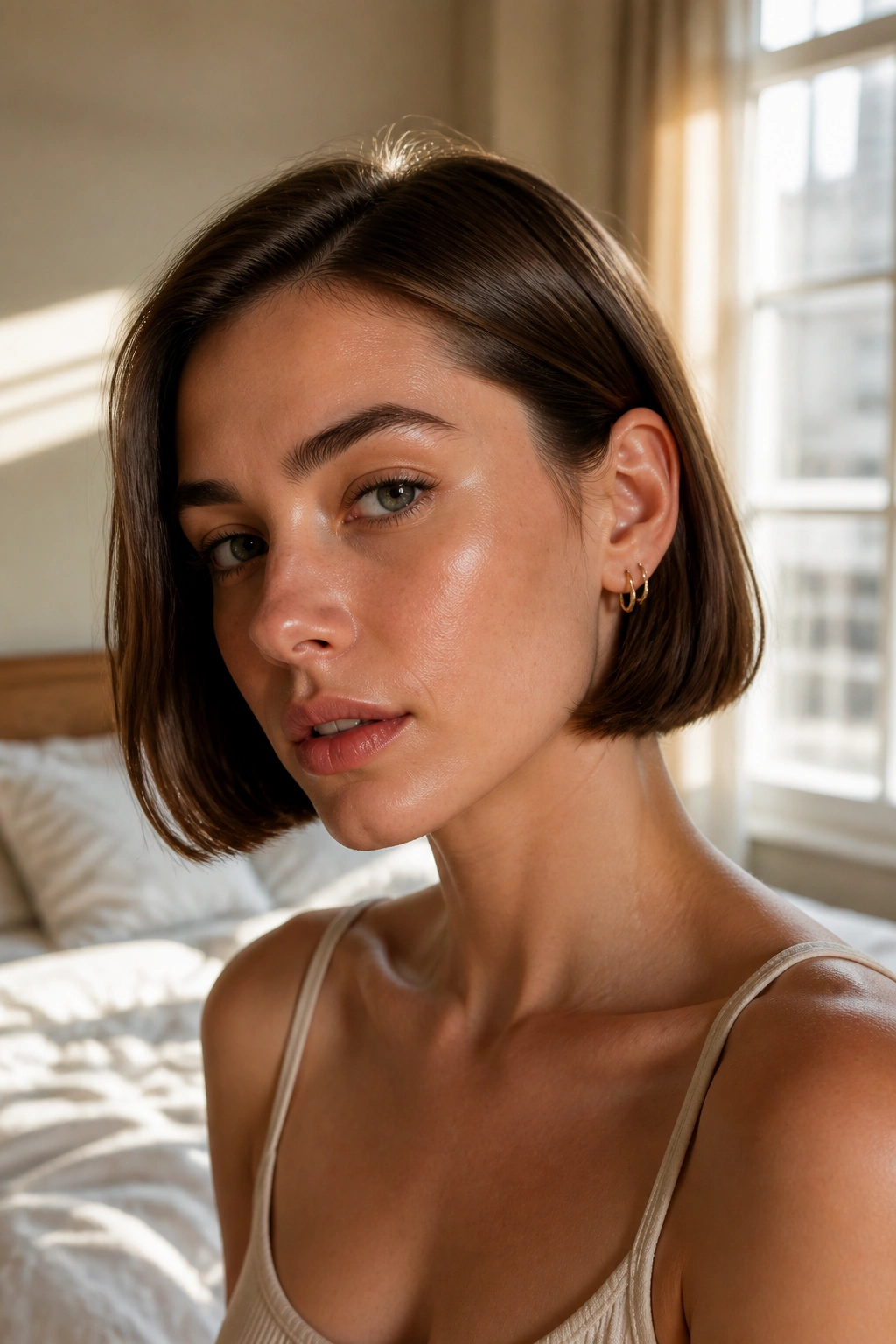
A chin-length blunt bob is crisp in the best way. When the ends are clean and the cut lands right at the jaw, the style has enough shape to stand on its own. Tuck one or both sides behind the ears, and the cut suddenly feels lighter and more open.
This is one of those haircuts that looks expensive in the practical sense: it takes little extra work to look done. A smoothing cream, a quick blow-dry, maybe a flat iron pass at the ends. That’s enough. The blunt line does the rest.
The cut looks best when the ends sit straight rather than curled under too much. You want a little edge. Too much bend and the bob loses its point.
20. Mini Space Buns

Mini space buns are playful, but they can also be clean and grown-up if you keep them small and close to the head. Part the hair down the middle, twist each side into a compact bun, and pin them flat rather than puffing them up.
The style is useful on hair that is growing out, especially when layers keep falling into your face. It also works well on second-day hair because the texture makes the buns hold better. I would not push it for a formal event, but for a casual day outside, it has an easy charm.
Keep the buns even, but not identical to the millimeter. A little mismatch keeps them from looking stiff.
21. Side-Swept Curls with a Deep Part

Side-swept curls look a little more dressed up than curls parted down the middle. A deep side part gives the front more lift, and the curls fall in a way that feels soft around the cheek and jaw. If your hair has natural curl, this style is almost too easy. If not, a curling iron and a wide-tooth comb can get you there.
Why the part changes everything
The deeper part shifts volume to one side, which is especially helpful if one side of your hair tends to go flat. It also gives the curls a direction. Without that, the shape can feel spread out and vague.
Use a light hairspray once the curls cool. Not while they’re hot. Hot curls drop faster when you mist them too soon. That part is worth remembering.
22. Low Rope Braid
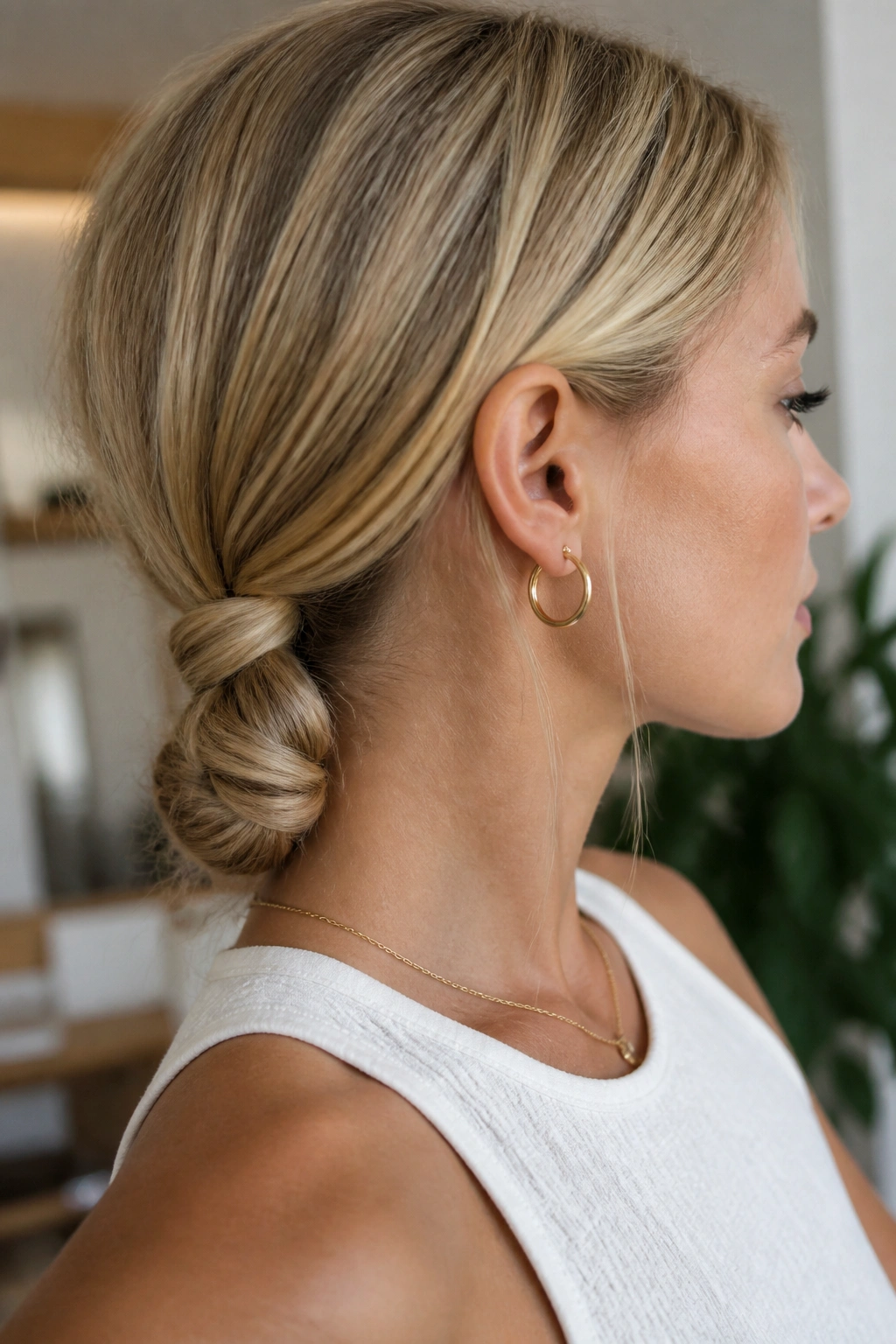
A low rope braid looks clean and a little modern without needing three-strand braid practice. Split the ponytail into two sections, twist each section in the same direction, then wrap them around each other in the opposite direction. Tie the end. Done.
It’s tidy, which makes it good for work, travel, or any day when you want your hair contained without a lot of pins. The rope braid also sits close to the neck, so it stays comfortable under jackets or light scarves.
If your hair frays at the ends, smooth a tiny bit of serum through the tail before twisting. That keeps the finish neat and stops the braid from looking dry by afternoon.
23. Pin-Back Waves with Decorative Clips
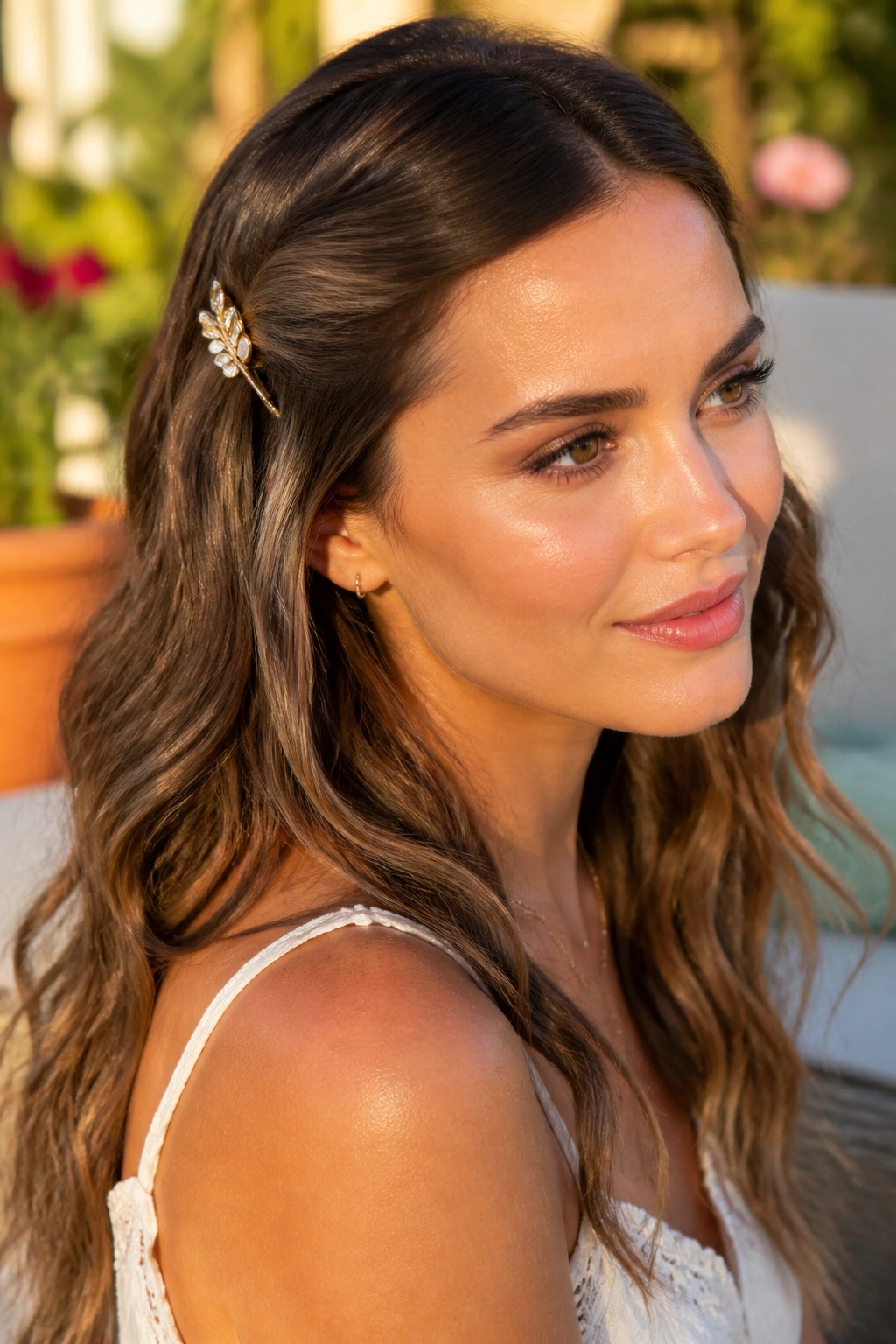
Pinning back loose waves with a decorative clip sounds simple, and that’s exactly why it works. Let the waves do their own thing, then gather one side or both temples and secure them with a metal clip, pearl barrette, or plain tortoiseshell piece. The accessory does the styling work for you.
Small details that matter
- Choose a clip that grips, not one that only looks cute
- Place it where the head curves inward, near the temple or behind the ear
- Keep the rest of the hair loose and a little messy
I like this style because it feels honest. It doesn’t pretend the hair took forever. It just makes the most of what’s already there. And if the waves fall a little during the day, the clip still gives the style a center.
24. Loose Fishtail Braid

A loose fishtail braid has more texture than a regular braid, and that texture makes it feel right for spring. Split the hair into two sections, cross tiny pieces from the outside to the inside, and keep going until you reach the ends. Then pull it apart gently so the braid gets wider and softer.
Compared with a standard braid, this one has a finer woven look. It reads as a little more detailed, which is useful when your outfit is simple and the hair needs to do a bit more of the work. It also photographs well in real life because the pattern is visible even from a few steps away.
Do not braid too tightly. Loose is the point here. Tight fishtails turn stiff fast.
25. Slicked-Back Wet Look for Spring Rain
A slicked-back wet look sounds bold because it is. That’s part of the appeal. When rain, humidity, or stray flyaways keep winning, this style stops fighting and turns the shine into the point. Coat the roots and crown with gel or styling cream, brush the hair straight back, and leave the lengths smooth or tucked into a low bun.
The key is control at the front. The hairline should look neat, not greasy. Use enough product to hold the shape, but stop before it turns heavy. A comb with fine teeth helps here, though a clean brush can work if your hair is not too thick.
This style looks best when the rest of the look is clean too. A sharp collar, a simple earring, even a plain T-shirt. It has edge. Lean into that.
26. Layered Lob with Soft Bend
A layered lob is one of the easiest spring cuts to live with because it already has movement built in. Add a soft bend through the mid-lengths with a flat iron or round brush, and the whole cut wakes up. The ends do not need to curl under neatly. In fact, a slightly uneven bend looks better.
This cut works because the layers stop the hair from sitting like one heavy block. If your hair is thick, that matters a lot. If your hair is fine, the layers help keep the shape from falling flat too soon. Either way, the lob holds a nice middle ground between polished and easy.
I think this is one of the best everyday haircuts, period. Not flashy. Just useful.
27. High Puff for Curly Hair
A high puff is a strong choice for curly hair because it lets the texture stay visible while moving the bulk upward and away from the face. Gather the curls at the crown with a stretchy band or puff cuff, then shape the sides with your hands or a soft brush.
How to shape it without flattening the curls
Keep the base secure, but don’t yank the curls too hard. The hair at the front should still have lift. A bit of edge control or light gel around the hairline can clean up the shape, though you do not need a slick finish unless you want one.
The high puff gives the face room and keeps the neck open. That makes it feel right for warmer days and busy mornings. It’s practical. It also looks good with earrings, which I never mind mentioning.
28. Twisted Crown on Natural Curls
Natural curls work beautifully with a twisted crown because the texture gives the style some grip and life. Take small sections from the front or sides, twist them back, and pin them toward the back of the head so they form a soft crown shape. Leave the rest of the curls loose.
Compared with a full updo, this keeps the curl pattern visible. That matters. Curls look better when they are allowed to move, not trapped into one fixed shape. The crown also helps keep front pieces out of the eyes without flattening the whole head.
A twist like this can be neat or loose depending on the day. I prefer loose. Tight twists can pull the curl pattern apart and leave the front looking tense.
29. Chin-Grazing Curly Bob
A chin-grazing curly bob has a real presence to it. The cut lets curls spring upward, so the shape ends up fuller and bouncier than straight hair at the same length. That bounce is part of the charm. It frames the face, shows off the curl pattern, and keeps the ends from dragging.
The best version usually has a little layering underneath so the curl stack does not balloon out into a triangle. A curl cream or foam helps, but the cut does most of the work. You should be able to scrunch it, air-dry it, and still get a shape that looks intentional.
There’s a nice freshness to this length. Not short. Not long. Just enough.
30. Simple Clip-and-Go French Twist
A simple French twist is one of the easiest ways to make hair look clean when you do not have time to think. Gather the hair low, twist it upward against the back of the head, and pin the roll into place. A slim clip can hold it too if your hair is not too thick.
The charm of this style is that it works with a few loose ends. It does not need to be perfect. If anything, a tiny bit of softness around the hairline keeps it from looking too strict. That makes it a good fit for spring events where you want a little polish without the weight of a formal updo.
If your hair slips, rough up the texture first with a touch of dry shampoo. Clean hair can be too slippery for this one.
Final Thoughts
Spring hair works best when it feels light, but not flimsy. That’s the sweet spot. You want styles that can handle movement, a little humidity, and the occasional gust without turning into a rescue mission by lunch.
A few of these ideas lean neat, a few lean messy, and that’s the point. The season rarely looks polished in a straight line, so the hair does not need to either. Pick the shape that fits the day, and let the rest be slightly imperfect. That usually looks better anyway.
