



Some kids sit still for exactly 12 seconds. Others treat a brush like a personal insult. Either way, the best hairstyle ideas for kids are the ones that look sweet, stay in place, and do not turn the kitchen into a wrestling match.
That’s the real test, isn’t it? A good kids’ hairstyle has to survive school drop-off, recess, lunch, a nap, and whatever happened on the slide. It also has to work on different hair types, because straight hair, wavy hair, curls, coils, and fine baby hair all behave in their own stubborn little way.
The smartest styles are usually the ones with one clever detail: a bubble, a twist, a braid, a clip, a scarf, a puff. Nothing fussy. Nothing that needs 25 minutes and a prayer. Just ideas that can be done fast, feel comfortable, and still look polished enough for pictures, birthday parties, or a regular Tuesday.
If you’ve ever stood behind a child with a spray bottle in one hand and a hair tie in the other, you already know the drill. So let’s get into the styles that actually earn their place in the morning routine.
1. Bubble Ponytail
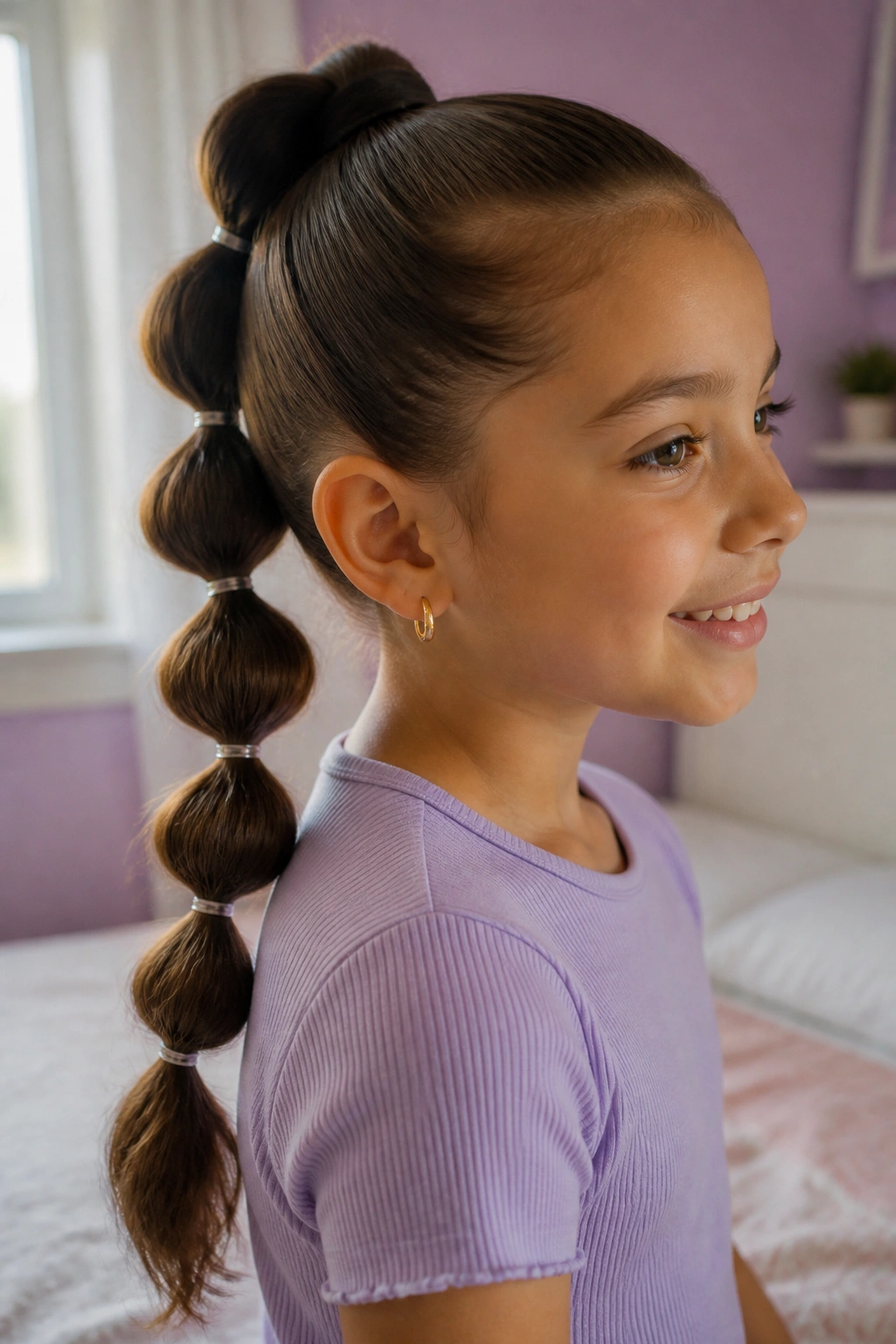
A bubble ponytail is one of those styles that looks far more complicated than it is, which is half the appeal. Pull the hair into a high or mid ponytail, then add small clear elastics every 2 to 3 inches down the length. Gently tug each section outward so the “bubbles” puff up a bit. That’s it. Done right, it looks playful, neat, and a little bit fancy without becoming precious.
Why kids love it
It moves well, it feels light, and it works on straight, wavy, or curly hair. If the hair is extra silky, a little texturizing spray or a mist of water helps the elastics grip better. For thicker hair, use two hands and a wide-tooth comb so you’re not fighting tangles while you build the ponytail.
Best use: school mornings, birthday parties, photo day, and any child who hates hair hanging in their face.
A satin scrunchie at the base keeps the style from pulling too hard. Soft. Secure. No drama.
2. Double Dutch Braids

Double Dutch braids are the workhorse of kids’ hairstyles. They keep the hair close to the head, they hold up through running and climbing, and they look tidy even when the day gets messy. Dutch braids are braided under, not over, so the braid sits on top of the hair with a raised look that reads clearly from a distance.
Why they stay put
The tension is spread across two braids instead of one, which helps if your child has thick hair or hates stray strands in their eyes. Start with a center part, then section each side cleanly. If you’re new to braiding, keep your fingers close to the scalp and add only a small piece of hair at a time. Smaller pieces make neater braids.
- Works especially well for active kids and sports days.
- Can end in pigtails, buns, or leave the ends loose.
- Holds best on hair that’s been lightly detangled first.
If the front pieces slide out, a tiny dab of gel on the hairline can help. Not a helmet. Just enough control to keep the shape.
3. Half-Up Top Knot
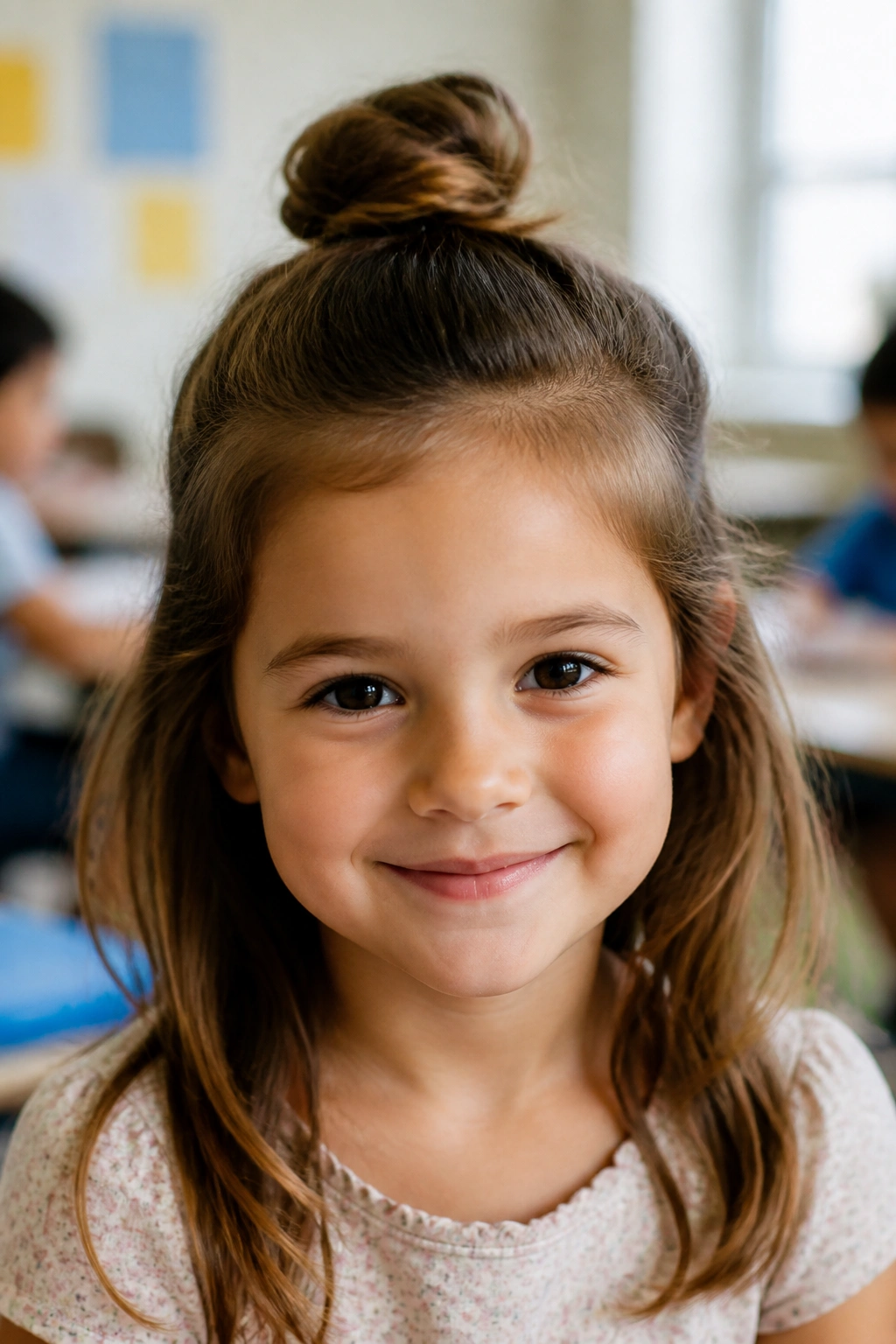
A half-up top knot is the sort of style that solves the “I want my hair down, but not in my face” problem. Pull the top half of the hair into a small bun at the crown, then leave the rest loose. It’s quick, a little playful, and one of the easiest hairstyle ideas for kids when you’re short on time.
The trick is not making the bun too big. Kids’ heads are smaller than adult heads, and an oversized knot can look clunky fast. Keep it compact, use a soft elastic, and smooth the sides with your hands rather than brushing the life out of the hair.
Works beautifully on shoulder-length hair, long bobs, and curly hair that needs a little lift. A few loose face-framing pieces make it feel softer. A few bobby pins make it stay. Both matter.
4. Sleek Low Bun
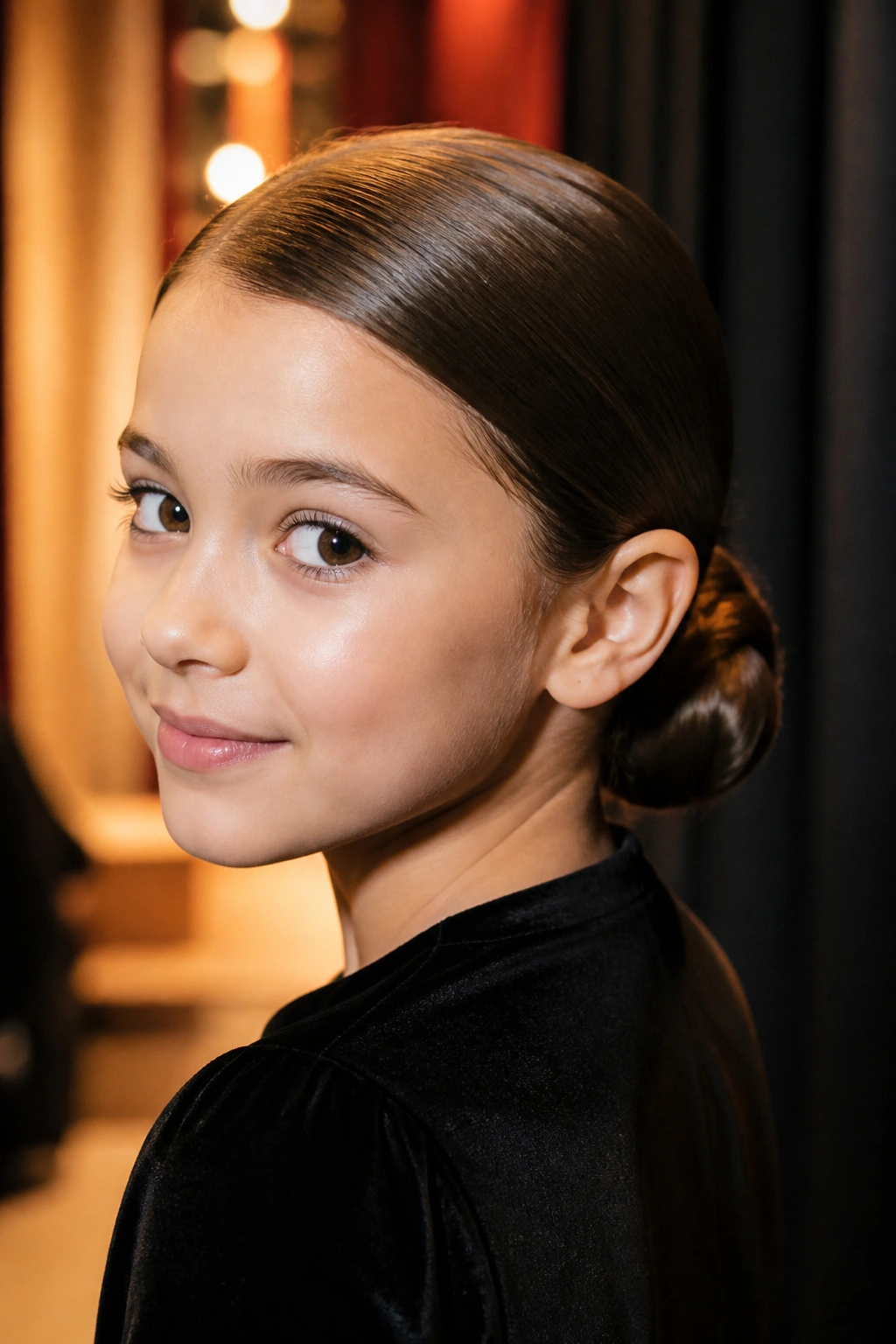
A sleek low bun is the neat little cousin of the top knot. Brush the hair back to the nape, secure it into a ponytail, twist it into a bun, and pin or tuck the ends. If the hair is dry or frizzy, a damp brush and a tiny bit of leave-in conditioner help the surface lie flatter.
This style is especially good for school concerts, family photos, or days when the teacher would prefer that hair stay out of the paint. It has a clean shape and keeps the neckline open, which matters on warm days or under jackets with high collars.
A small detail that helps
Use a soft brush, not a stiff one. Kids’ hairlines can get sore fast if you pull too hard. If you want it smoother, brush in sections and stop as soon as it sits flat. The goal is tidy, not tight.
5. Twisted Crown

The twisted crown is one of those styles that looks gentle and polished at the same time. Take a section from one side of the head, twist it back along the hairline, and pin it behind the ear or at the back. Repeat on the other side. The result is a soft frame that keeps loose strands off the face without making the style feel heavy.
It’s especially useful when bangs are growing out or when a child wants hair down but not in their eyes. You can leave the back loose, curl the ends, or pair the twists with a ponytail. It all depends on how neat or loose you want the finish to feel.
What makes it work
The front twist gives shape without needing a full braid. That’s a relief on mornings when there’s no time for perfect sections. Use two bobby pins crossed like an X if the twist keeps slipping. Small trick. Big difference.
6. High Puff
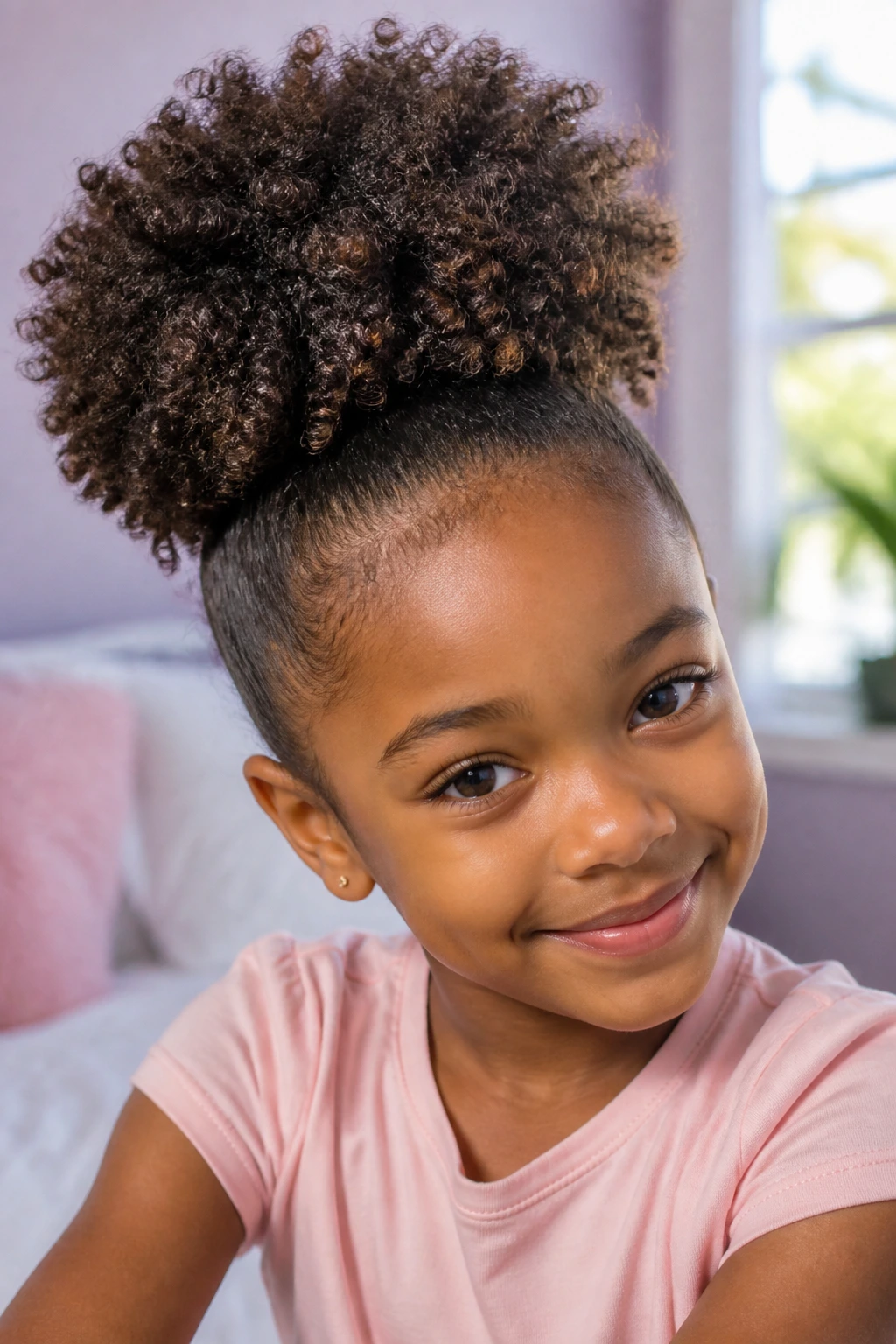
A high puff is a classic for coily and curly hair, and there’s a reason it stays popular: it’s cute, fast, and comfortable when done well. Gather the hair at the crown with a soft band, smooth the sides gently, and let the curls fan out into a rounded puff. The shape looks full and lively, not stiff.
The best high puff starts with a little moisture. A spray bottle with water and leave-in conditioner helps the curls gather without frizzing apart. Brush the sides upward with a soft bristle brush or use your hands if the hair is tender. No need to flatten everything into the scalp.
A puff band or wide elastic matters here. Thin ties can dig in and leave a sore spot. And if the puff sits a little off-center? Fine. Kids’ hair does not need to be architectural.
7. French Braid Into a Ponytail

This style gives you the neatness of a braid and the swing of a ponytail. Start a French braid at the front or crown, braid down toward the middle of the head, then stop and secure the rest into a ponytail. It keeps the top section controlled while letting the bottom hair move.
It’s a strong choice for long school days because it holds the front hair in place without fully committing to a tight all-over braid. That’s handy for kids who get cranky when every strand is pinned back. The ponytail finish keeps it soft, which makes the whole thing feel less formal.
How to make it easier
If the braid keeps slipping, work with slightly damp hair or add a tiny bit of mousse before you start. Use a rat-tail comb for parting. Clean sections help the braid look intentional instead of fuzzy.
8. Space Buns
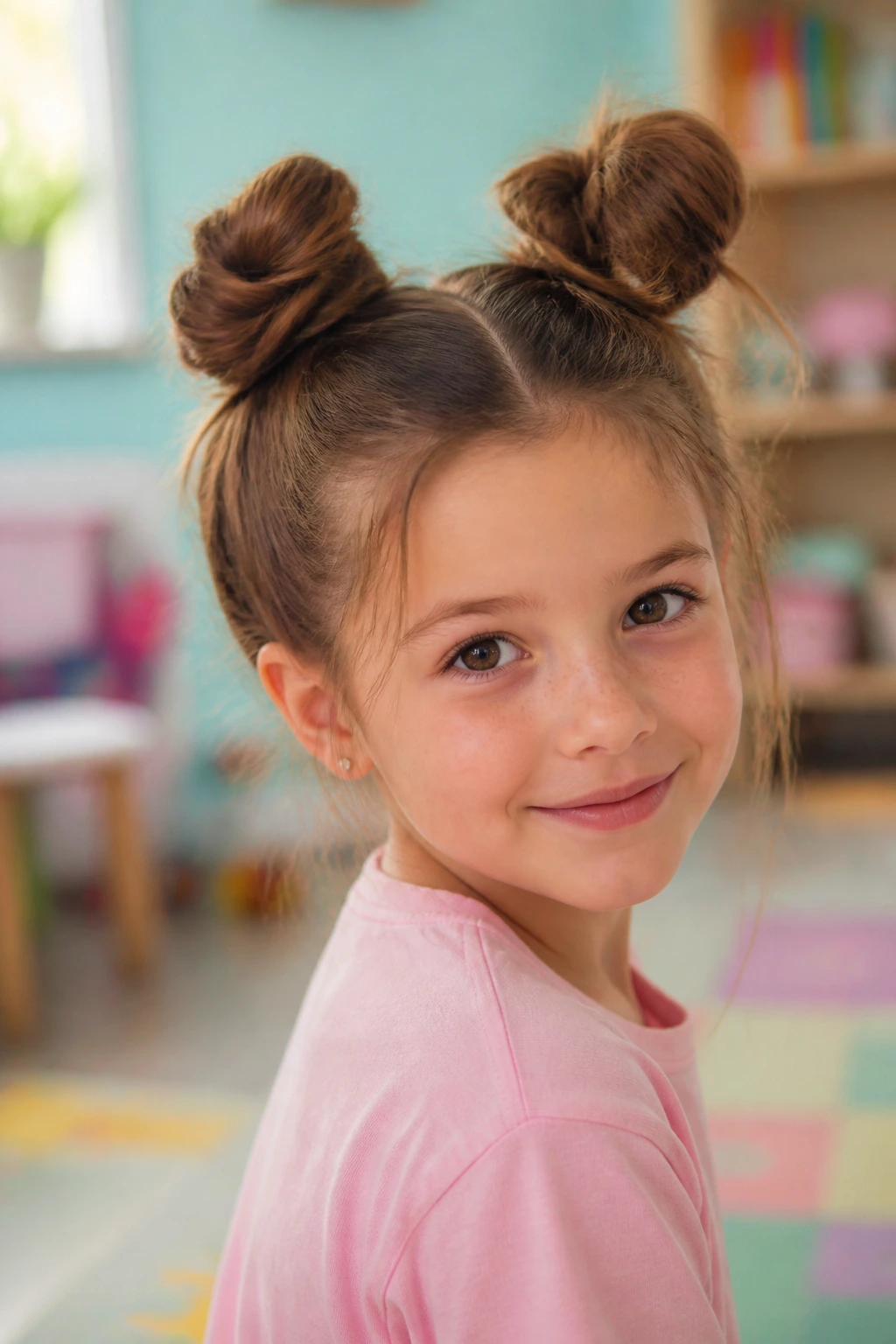
Space buns are pure fun. Split the hair into two sections, make two high buns, and secure them with elastics and pins if needed. You can wear them neat and round or leave them a little messy for a looser, more casual look. Either way, they have a bright, playful feel that kids usually love.
They work best on medium to long hair, but shoulder-length hair can handle mini buns too. If the hair is thick, twist each section before wrapping it into a bun. If it’s fine, a little backcombing at the base gives the buns more grip.
- Great for dress-up days and parties.
- Good on hair that’s been washed the day before.
- Easy to decorate with clips, ribbons, or glitter parting.
A middle part keeps them balanced. A crooked part can look cute too. Kids don’t care about perfect symmetry the way adults do, which is probably healthier.
9. Side Part With Snap Clips

A deep side part with snap clips sounds almost too easy, but it has real charm, especially for short hair or fine hair that won’t stay in a braid. Part the hair sharply to one side, smooth the front section, and place 2 to 4 colorful clips along the part or above the ear.
The style works because the accessories do the heavy lifting. You’re not forcing the hair into a complicated shape. You’re giving it a clean line and a little sparkle. For kids who get frustrated by ponytails, that’s a win.
Choose clips with rounded edges and a secure snap. Cheap clips that slide out in 20 minutes are not worth the bother. A neat side part and one bold clip can look more finished than an entire pile of fussy decorations.
10. Ribbon-Tied Pigtail Braids

Ribbon-tied pigtail braids feel cheerful without being over the top. Make two braids, then tie each end with a ribbon that matches a dress, a school color, or whatever mood the child is in. The ribbon softens the whole style and makes it feel special without requiring a salon visit.
This is one of the easiest ways to dress up a basic braid. If you want the ribbon to show well, use a wider satin ribbon instead of a thin stringy one. Satin holds its shape and looks smooth against the braid.
A practical note
Don’t tie the ribbon too tightly at the end. Leave enough room for the braid to move, or the whole thing will feel stiff. And if the child keeps tugging at bows, skip the giant floppy kind. Small loops usually last longer.
11. Curly Pineapple
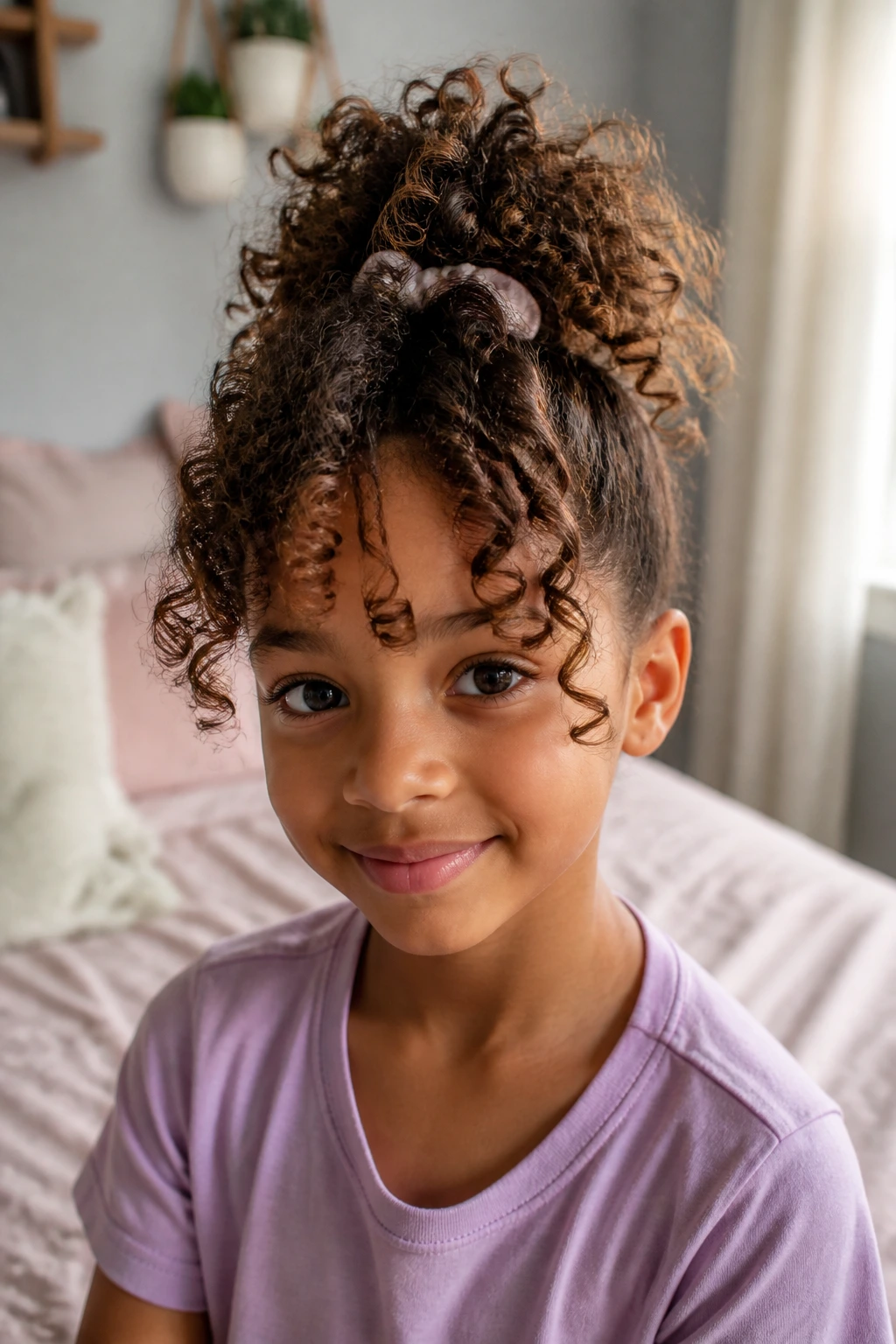
The curly pineapple is a favorite for curly kids because it protects the curl pattern while keeping hair off the face. Gather the curls loosely at the very top of the head, secure them with a soft scrunchie, and let the ends fall forward or to the side. The shape looks like a little fountain of curls. Cute. Easy. Comfortable.
It’s especially useful for second-day curls that still look good but need a quick reset. You can pair it with a headband or a few clips around the sides if the front pieces are short. If the curls are dry, mist them lightly before you gather them so they don’t frizz as much.
A pineapple should feel loose. If the band leaves a deep dent, it’s too tight. Kids should be able to forget they’re wearing it after five minutes, which is the real test.
12. Cornrow Rows

Cornrow rows are one of the best long-wear hairstyles for kids who need something that lasts. The hair is braided close to the scalp in straight or curved rows, and the finished look can stay neat for several days or longer depending on hair type and upkeep. It’s clean, practical, and protective when done gently.
This is not the fastest style on the list, and it is not the one to rush if your parting skills are shaky. Clean parts make a big difference here. A fine-tooth comb, a little styling cream, and patience matter more than speed. If you’re not comfortable braiding close to the scalp, a professional can save a lot of tears.
Be careful with tension. Cornrows should hold, not hurt. If a child complains about pulling or headaches, the style is too tight. That part matters more than how neat the row looks.
13. Faux Hawk
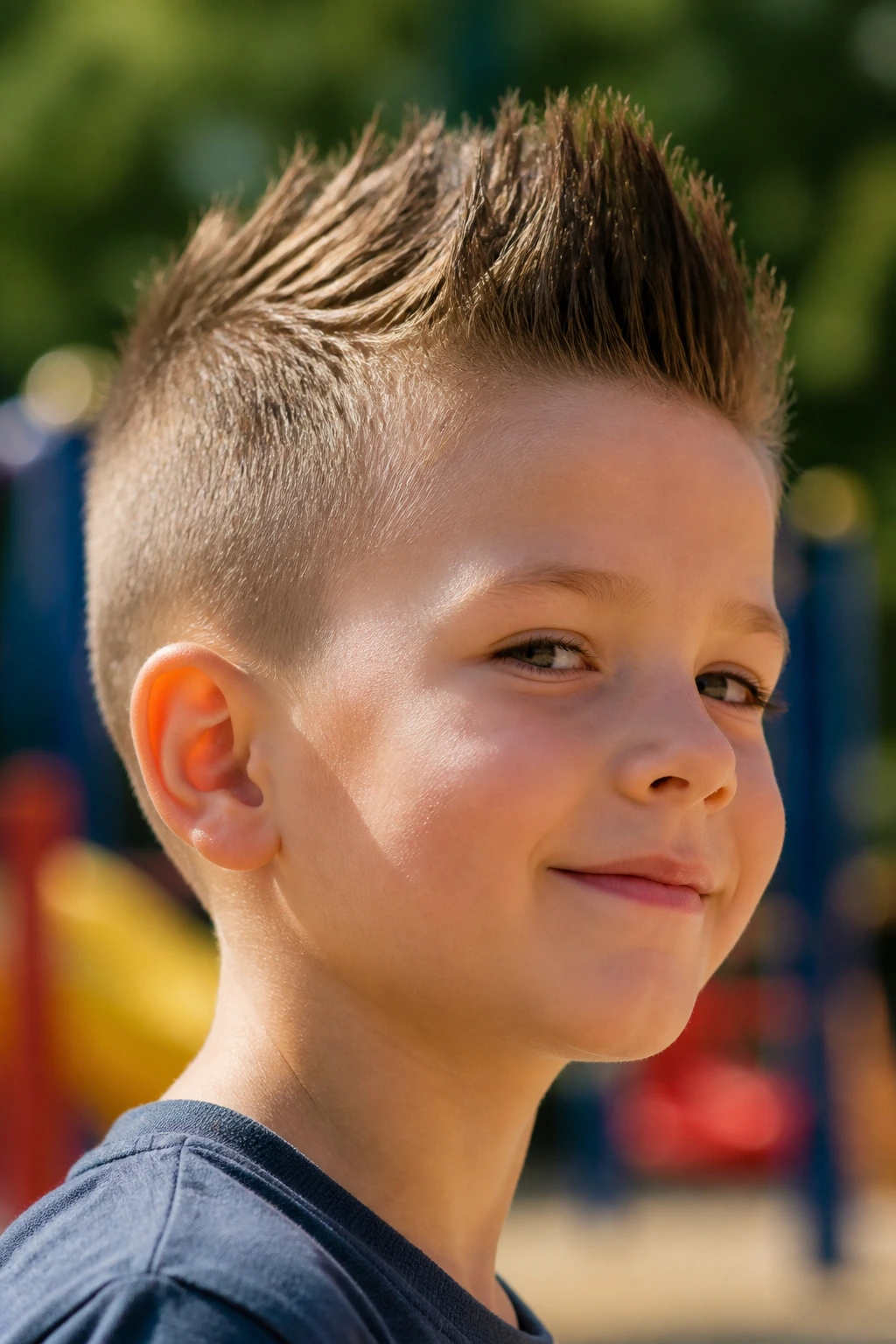
A faux hawk gives kids a little attitude without the commitment of a real cut. Smooth or pin the sides down, then leave a strip of hair running from the front to the back with more height in the middle. For curly or coily hair, the center section can be puffed up; for straight hair, it can be teased lightly for shape.
It’s a fun choice for kids who want something different. Not every hairstyle has to look sweet and shy. Sometimes the best thing is a style that feels bold and still stays school-appropriate.
What to watch for
The sides need to stay flat enough to keep the shape clear. Use clips, a soft gel, or even small braids along the side if the hair is slippery. The center should look full, not stiff. That balance is what makes the faux hawk work.
14. Braided Pigtails
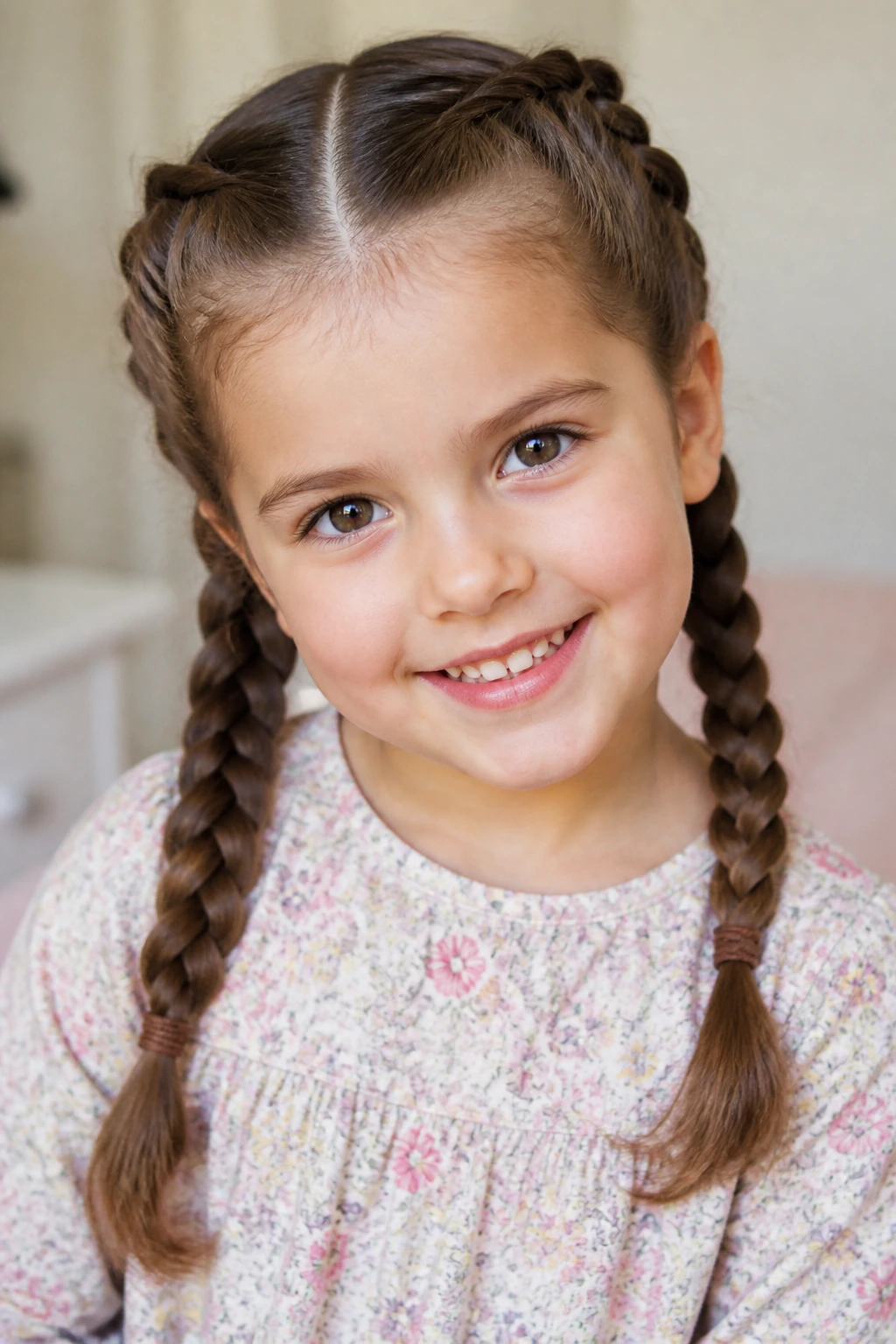
Braided pigtails are a classic for a reason. Divide the hair into two equal sections, braid each side, and secure the ends. The style keeps hair controlled, works on a wide range of lengths, and can be as neat or casual as you like. It’s one of those dependable kids’ hairstyle ideas that never really leaves rotation.
If the child has layers or shorter front pieces, tuck them in with a tiny bit of gel or a small clip at the start of each braid. That keeps the front from frizzing apart. A little ribbon at the end can change the whole mood.
Simple does not mean boring here. A center part, two tidy braids, and a little shine can look very polished. Sometimes that’s exactly what the morning calls for.
15. Low Ponytail With a Scarf
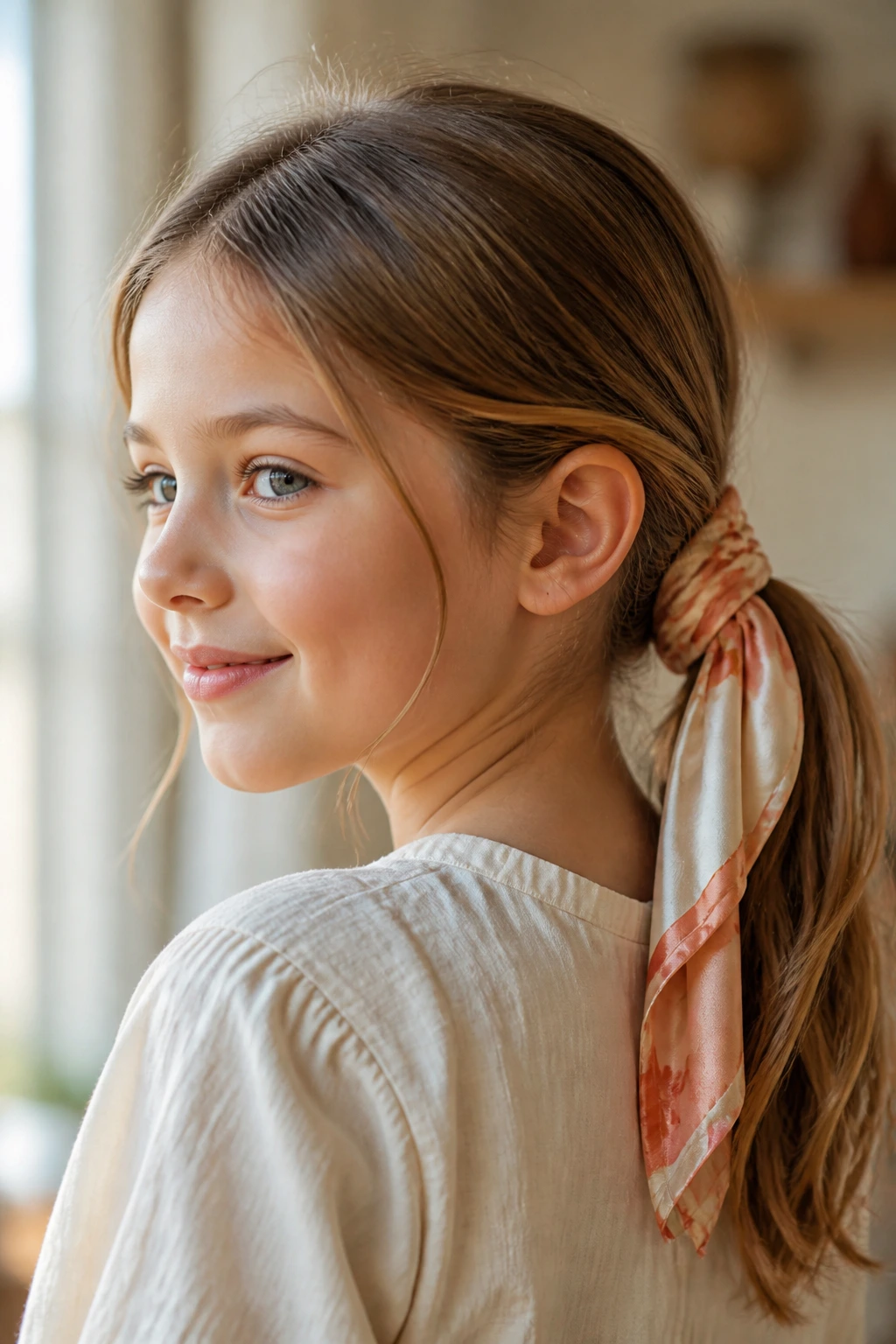
A low ponytail with a scarf takes one plain ponytail and makes it feel intentional. Tie the hair low at the nape, then wrap a silk or satin scarf around the base or weave it through the ponytail. The scarf adds color, texture, and a little softness around the face.
It works especially well on days when the hair is not freshly washed and needs a quick rescue. A scarf can hide a plain elastic, tame the look, and make the style feel dressed up in about 30 seconds. That’s hard to beat.
Choose a scarf that is soft and not too slippery if the child tends to pull at accessories. A square scarf folded into a strip is easier to manage than a long thin one. And if the ponytail is a bit messy underneath, the scarf will forgive a lot.
16. Waterfall Braid
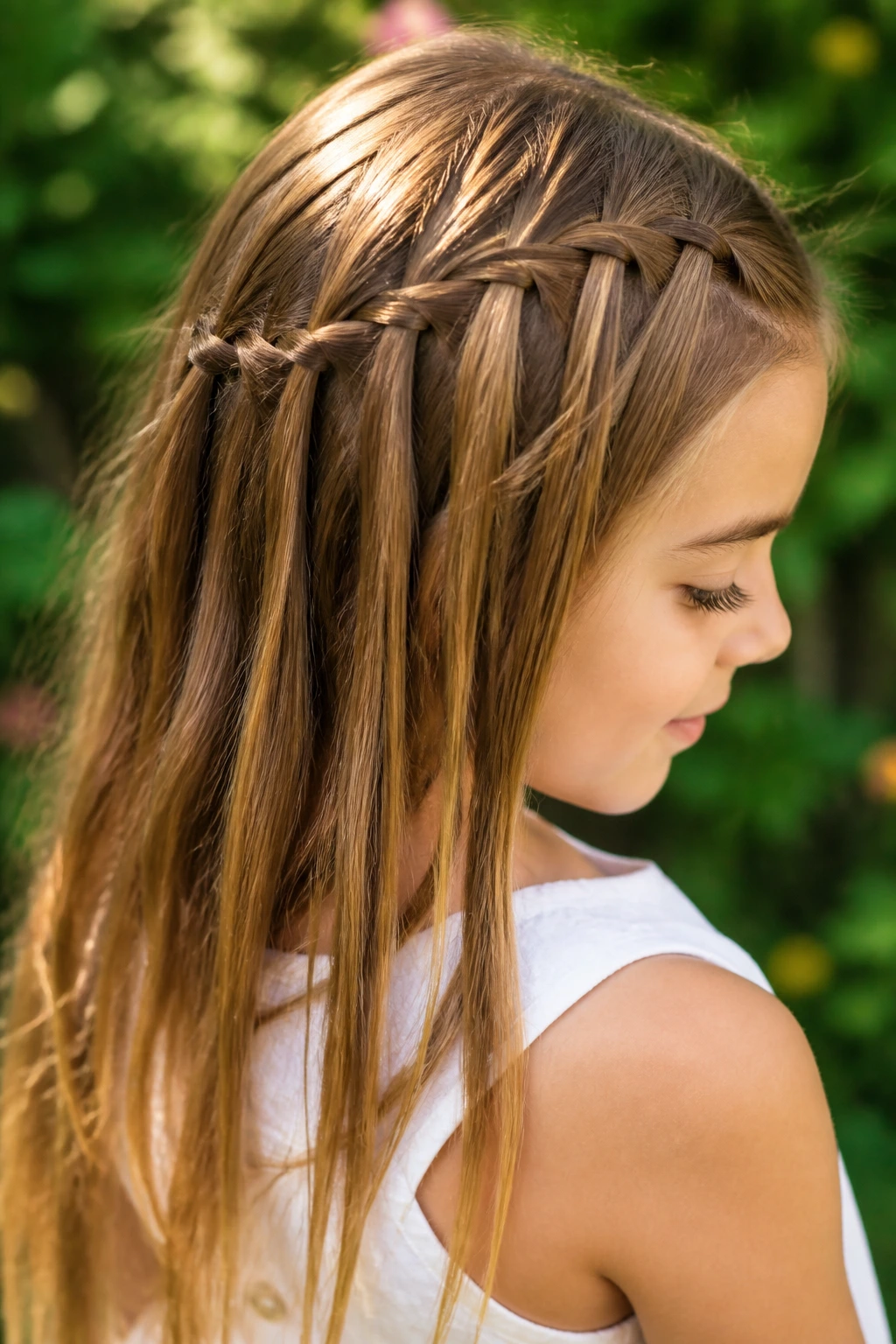
The waterfall braid looks delicate, but the actual technique is straightforward once your fingers learn the rhythm. You braid along the top of the head and let one strand drop each time, picking up a new piece to replace it. The loose strands create that draped, flowing effect that makes the braid feel airy instead of tight.
This style is best for medium to long hair, especially hair that holds a wave well. It’s a lovely pick for special occasions, but it also works on a normal day if the child likes having part of their hair down. The braid gives shape without pinning everything back.
A little patience goes a long way
The first side usually takes the longest. The second one goes faster once your hands remember the pattern. If the braid gets fuzzy, a tiny mist of water and a light comb-through before starting can make the whole thing cleaner.
17. Knotted Half-Up
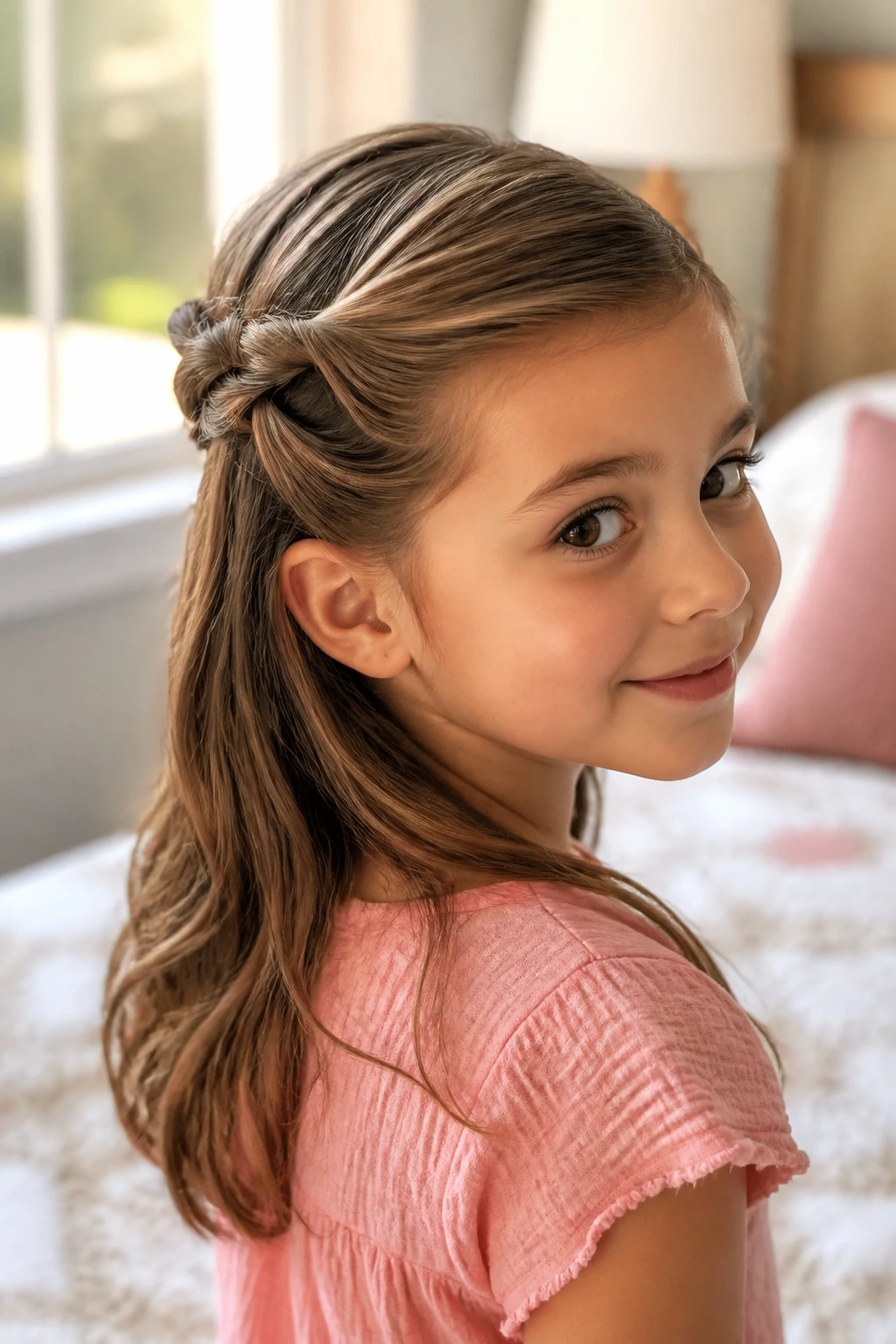
A knotted half-up style is one of those easy tricks that feels smarter than it looks. Take two sections from either side of the head, tie them into a simple knot at the back, and secure the knot with a bobby pin or small elastic underneath. Leave the rest down. That’s the whole idea.
It works well on medium-length hair and on kids who don’t want too much fuss around their head. The knot sits low enough to stay comfortable, and it gives the top of the style a little shape without needing a braid or bun. If the hair is slippery, prep the sections with a touch of texturizing spray or dry shampoo.
The best part is that it looks good even when it’s a little imperfect. A knot that’s slightly loose reads as soft. A knot that’s too tight looks like it’s trying too hard. There’s a difference.
18. Bantu Knots
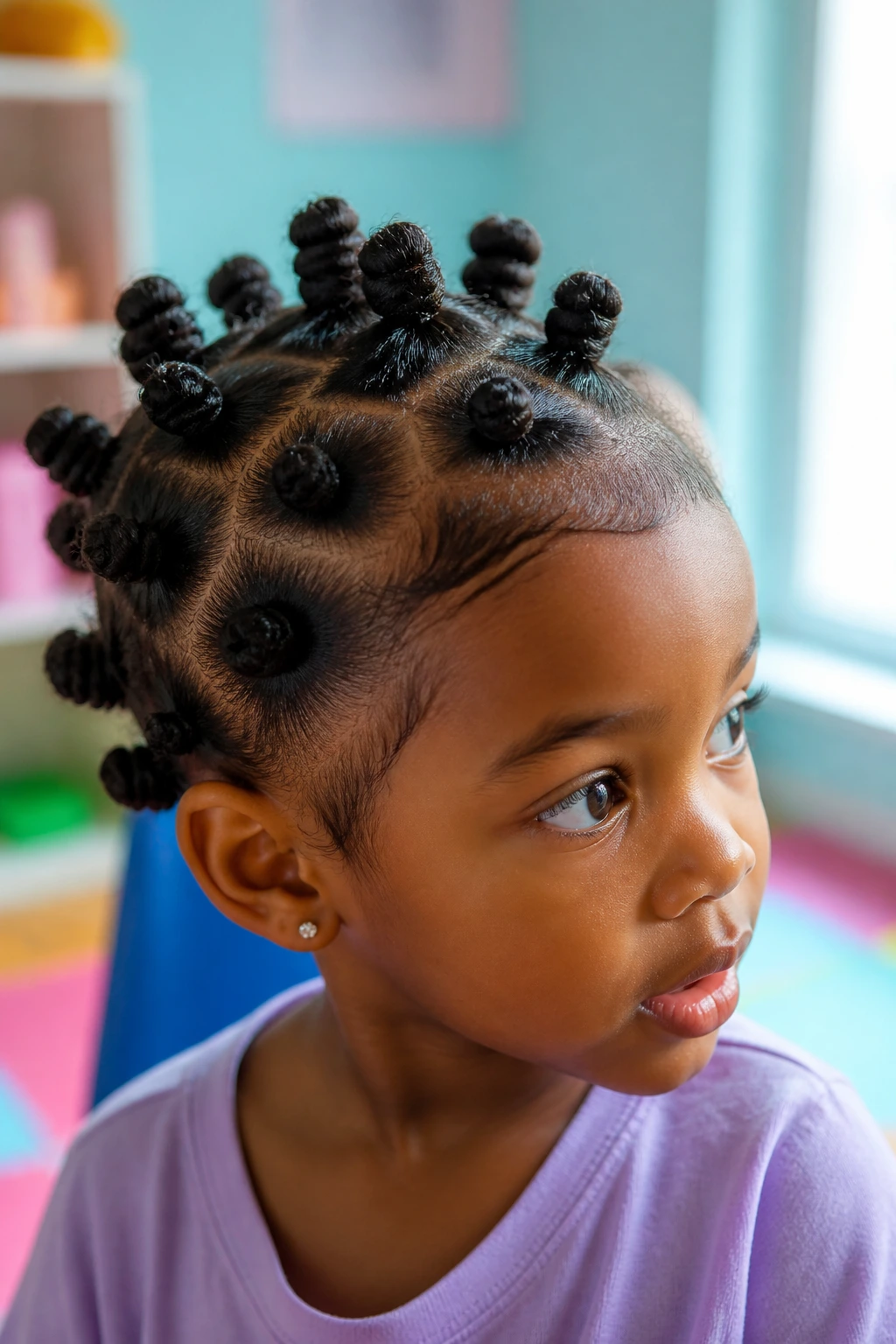
Bantu knots are bold, practical, and deeply tied to coily and textured hair care. The hair is sectioned, twisted tightly, then wrapped into small coiled knots across the scalp. They can be worn as a style on their own or taken down later for a defined curl pattern.
If you’re doing Bantu knots on a child, keep the sections small enough to be neat but not so tiny that the process drags on forever. Moisturized hair is easier to twist, and a little styling cream helps the knots hold their shape. The finish should sit close to the scalp without pulling.
This is one of those styles that deserves respect. It can look playful, elegant, or both, depending on how it’s arranged. And because it protects the ends, it can be a smart choice when hair needs a break from daily combing.
19. Topsy Tail Pony

The topsy tail pony is old-school in the best possible way. Make a low or mid ponytail, create a small gap above the elastic, and flip the ponytail through the hole. The result is a twisted, tucked look that feels tidy without much effort.
It’s perfect for mornings when you need something that looks finished in under 2 minutes. Kids with medium or long hair often like it because it gives them a little movement without letting hair swing everywhere. If you want, you can do two topsy tails stacked one above the other for extra texture.
Best part
It holds up well even when the ponytail starts to loosen a little. The twist still looks deliberate, which is more than can be said for many rushed hairstyles. A small detail. A decent payoff.
20. Chignon With a Scrunchie
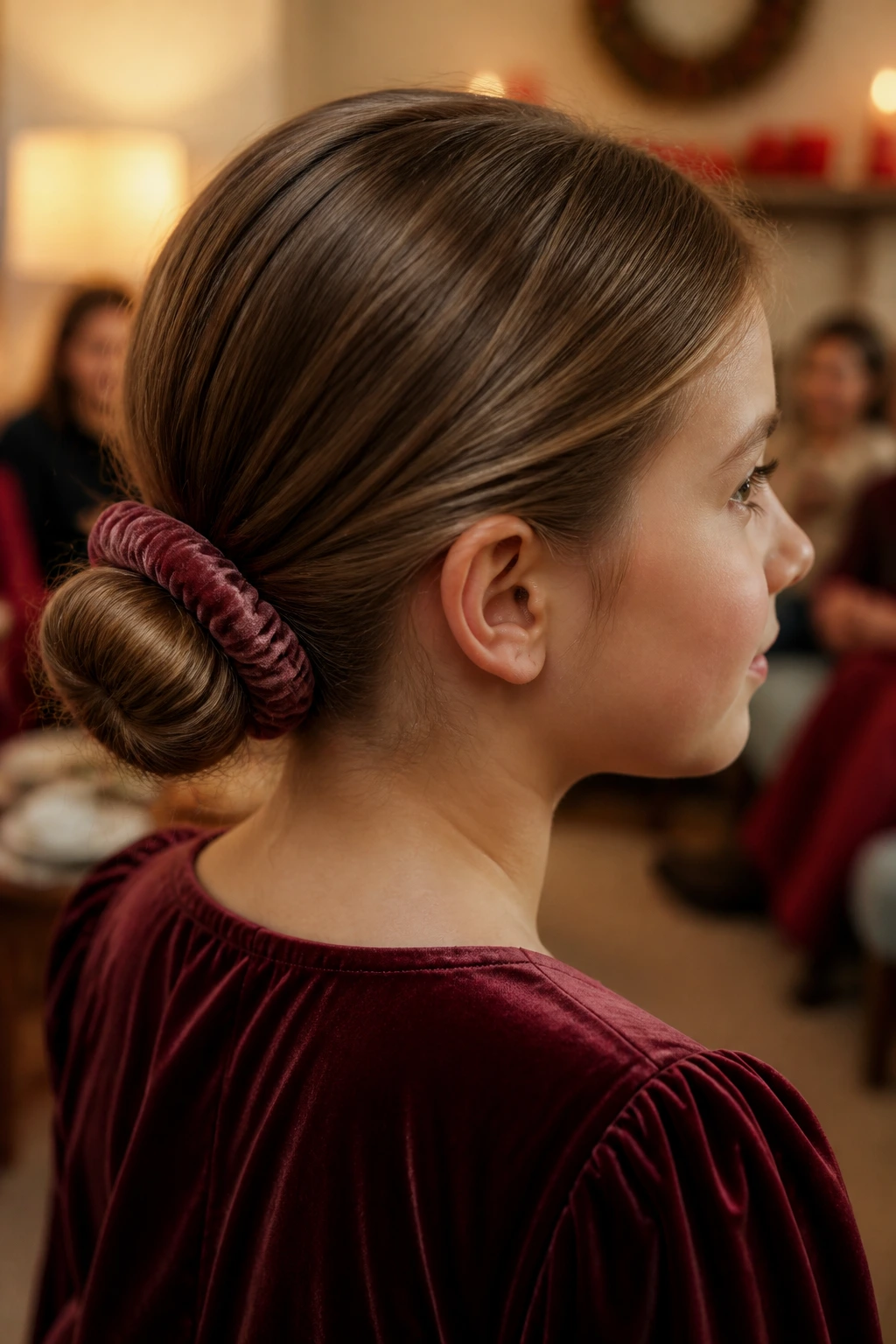
A chignon with a scrunchie is a softer version of the low bun. Twist the hair into a bun at the nape, then cover the base with a scrunchie in velvet, cotton, or satin. It feels a little gentler than a super-sleek bun and works well when you want the hair up but not severe.
This style is especially useful for events, family dinners, or days when the child wants to look polished without looking “done.” The scrunchie adds personality, and because it sits low, the whole style stays comfortable under jackets or sweaters.
If the hair slips out of the bun, secure the twist with two pins before adding the scrunchie. That gives the bun a little backbone. Not much. Just enough.
21. Two-Strand Twists
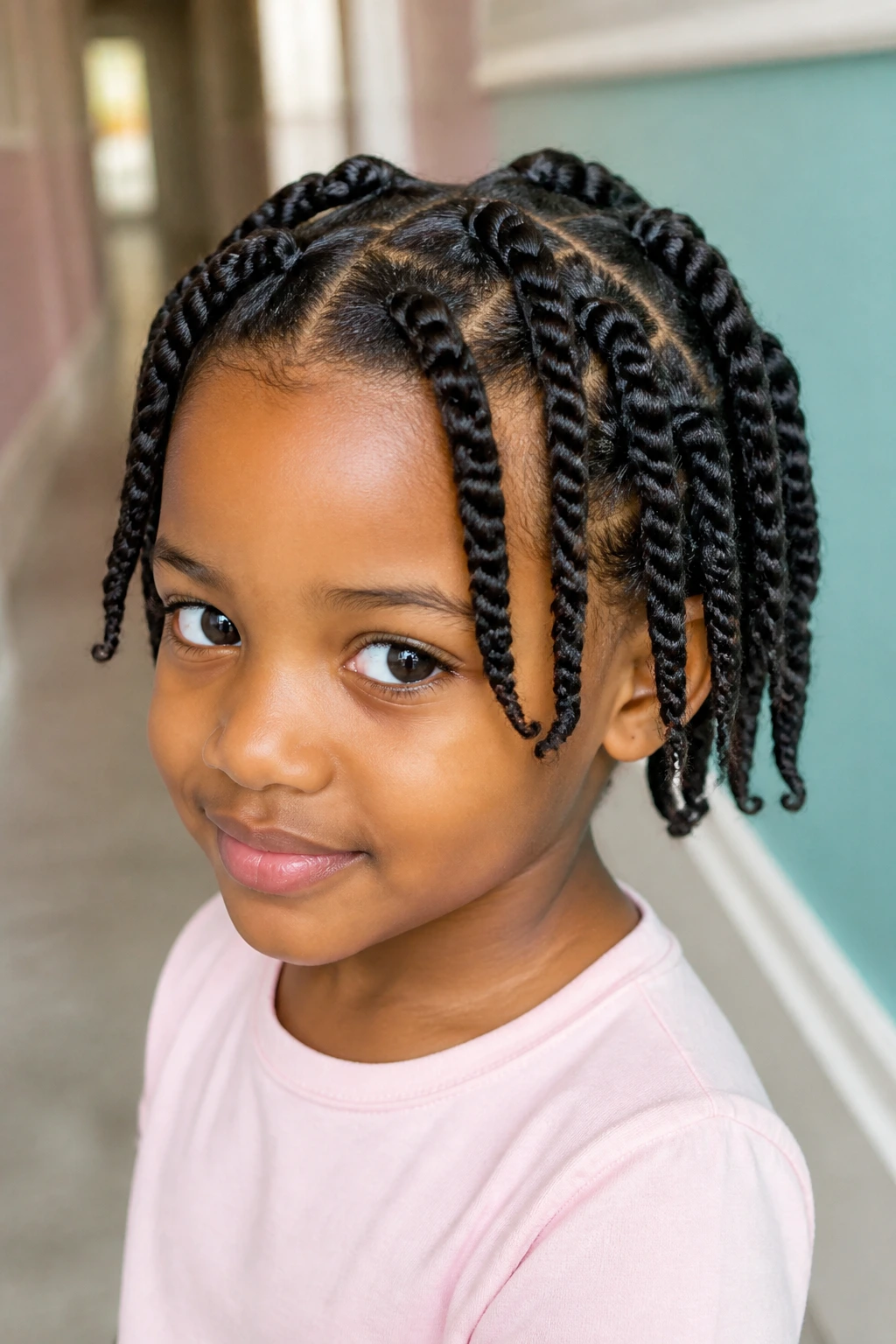
Two-strand twists are one of the most practical kids’ styles because they can live in the hair for a while and still look good as they loosen. Divide a section into two pieces, twist them around each other, and keep going all the way to the ends. The result is neat, springy, and versatile.
They work especially well on coily, curly, and textured hair, and they can be done in many sizes. Smaller twists last longer and look more detailed. Larger twists go faster and feel fuller. If the hair is dry, a light leave-in and a little sealing cream help keep the twist smooth.
- Can be worn loose at the ends.
- Can be pinned into buns or ponytails later.
- Can be taken down for twist-out curls.
This is one of the styles that rewards a calm pace. Rushing makes the parts messy, and messy parts show.
22. Mini Ponies
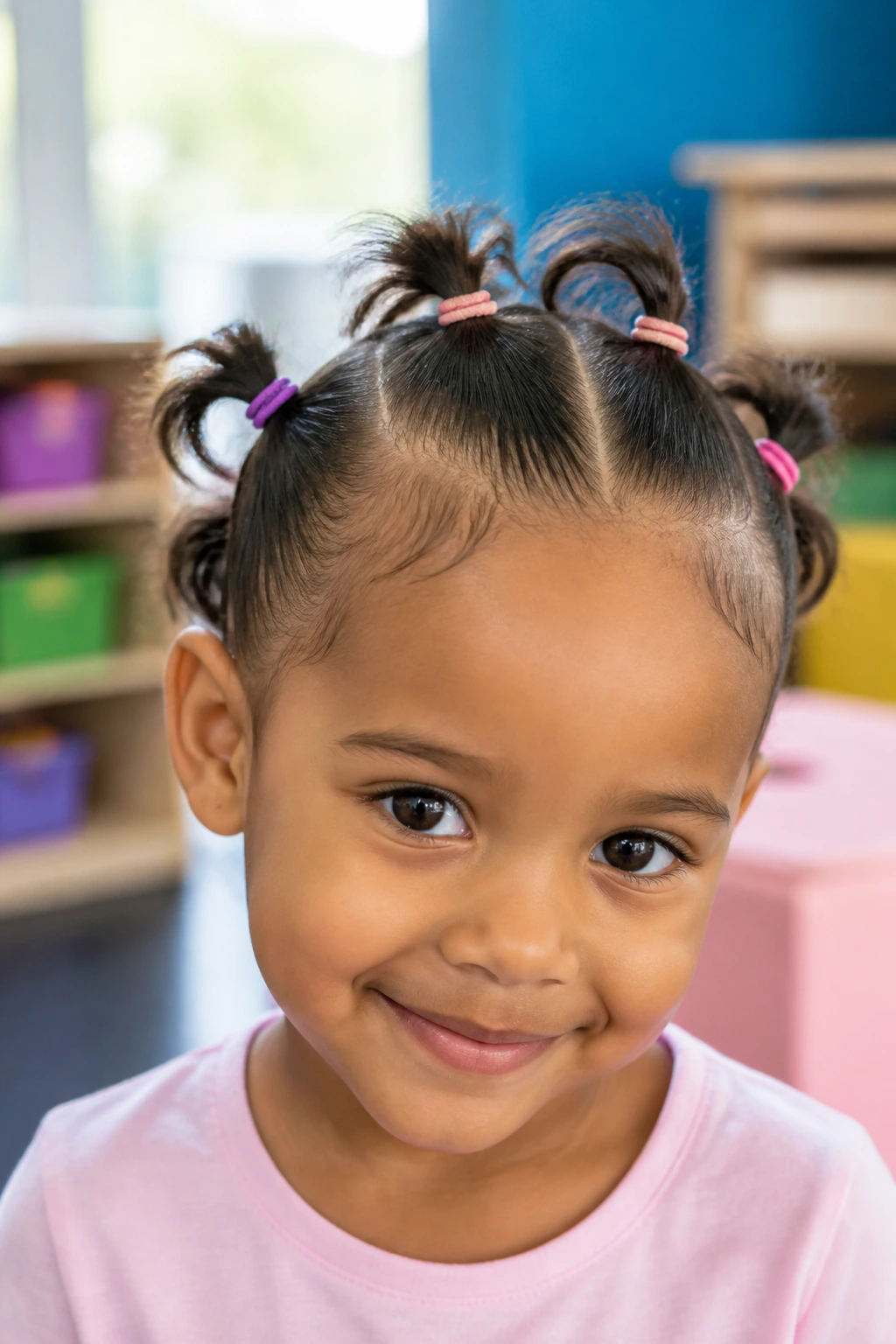
Mini ponies are playful, practical, and a little bit nostalgic. Instead of one ponytail, you make several tiny ponytails across the head in neat rows, squares, or zigzags. It gives fine hair more texture and gives thicker hair a fun, bouncy pattern.
This style works well for kids who like their hair to feel busy and full of movement. It also keeps the hair separated and controlled without needing braids. If the child has a sensitive scalp, keep the elastics soft and avoid pulling too hard at the roots.
Tiny ponies look especially cute with colored ties. A pink, blue, or clear elastic at each section turns a plain style into something cheerful. The shape matters, sure, but the little details are what make it feel like a kids’ style instead of an adult imitation.
23. Crown Puff With Bangs
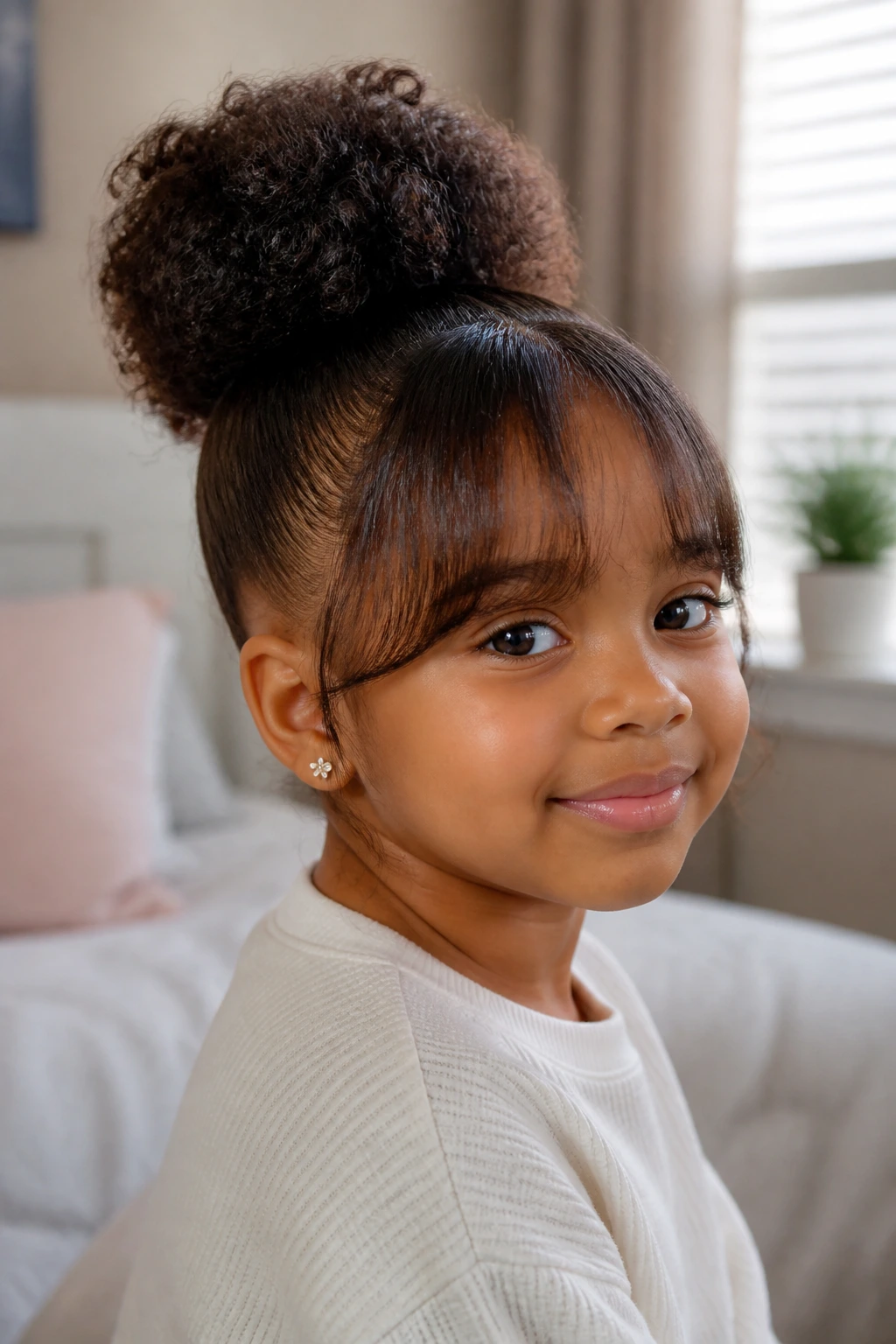
A crown puff with bangs gives textured hair a strong shape and a soft frame around the face. Gather the back and middle sections into a puff toward the crown, then leave the front curls, coils, or fringe loose. The contrast between volume on top and softness around the forehead looks lively and balanced.
It’s a smart option when you want something that keeps some hair out of the face but still lets the child keep their natural texture visible. If the bangs are short, a small gel brush can help them lie the way you want. If they’re longer, let them sit free. Sometimes that’s the better move.
This style feels especially nice because it doesn’t flatten the hair into one shape. It gives the curls room. And kids notice that more than adults sometimes do.
24. Pull-Through Braid
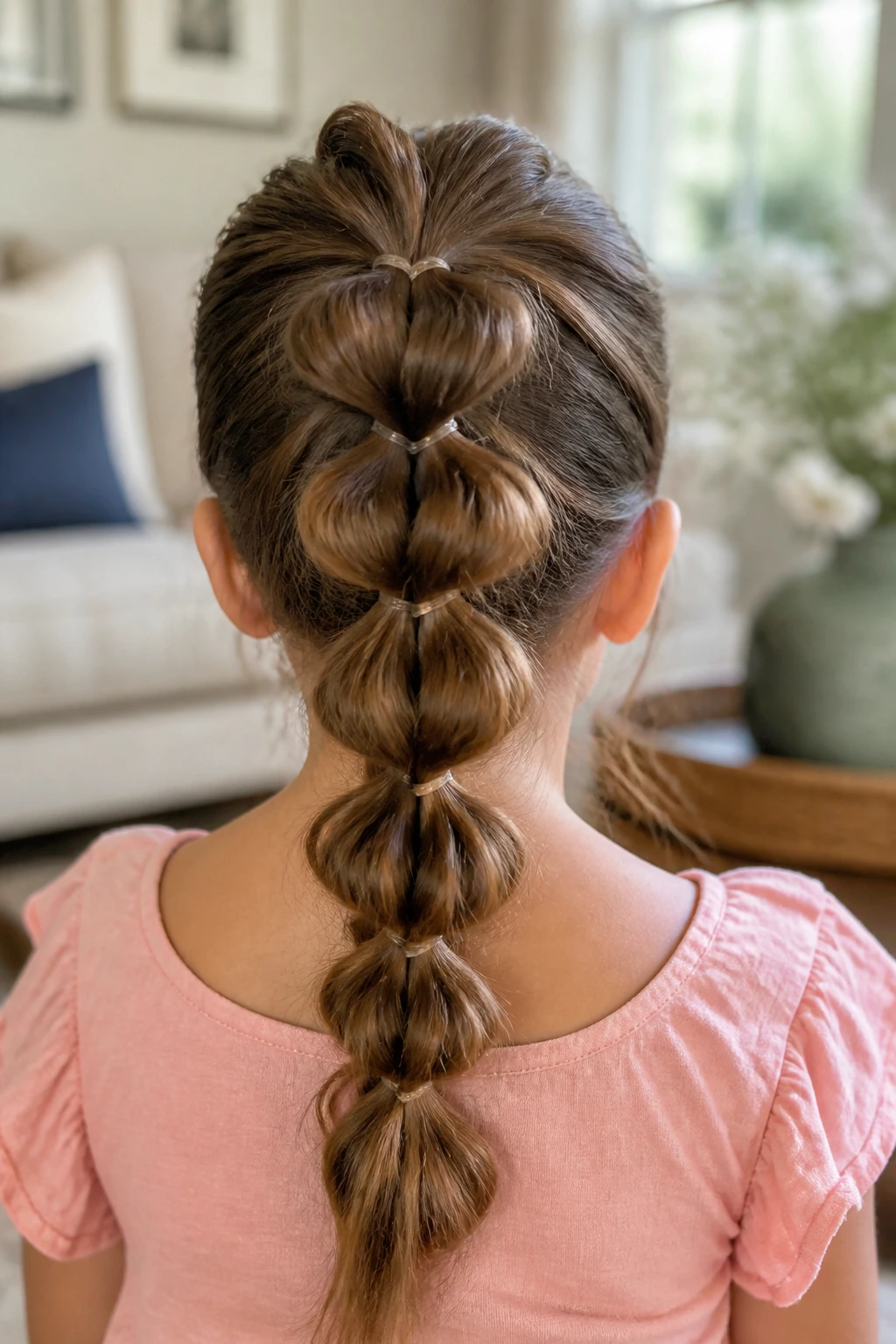
A pull-through braid looks intricate, but it’s built from ponytails instead of a traditional braid, which makes it easier than it appears. Make a row of small ponytails down the back of the head, split each one, and pull the next ponytail through the opening. Repeat until you reach the end. The final effect is full, structured, and surprisingly neat.
It’s a strong choice for long hair because it creates a lot of visual texture without requiring tight braiding. That matters for kids who get tired of sitting still. The style also holds shape well for events and photos.
If you want the braid to look fuller
Gently tug the loops after each section is secured. Don’t yank. Just widen the edges a little so the braid gets rounder. A spray of light hold mist can help if the layers are slippery.
25. Headband Tuck
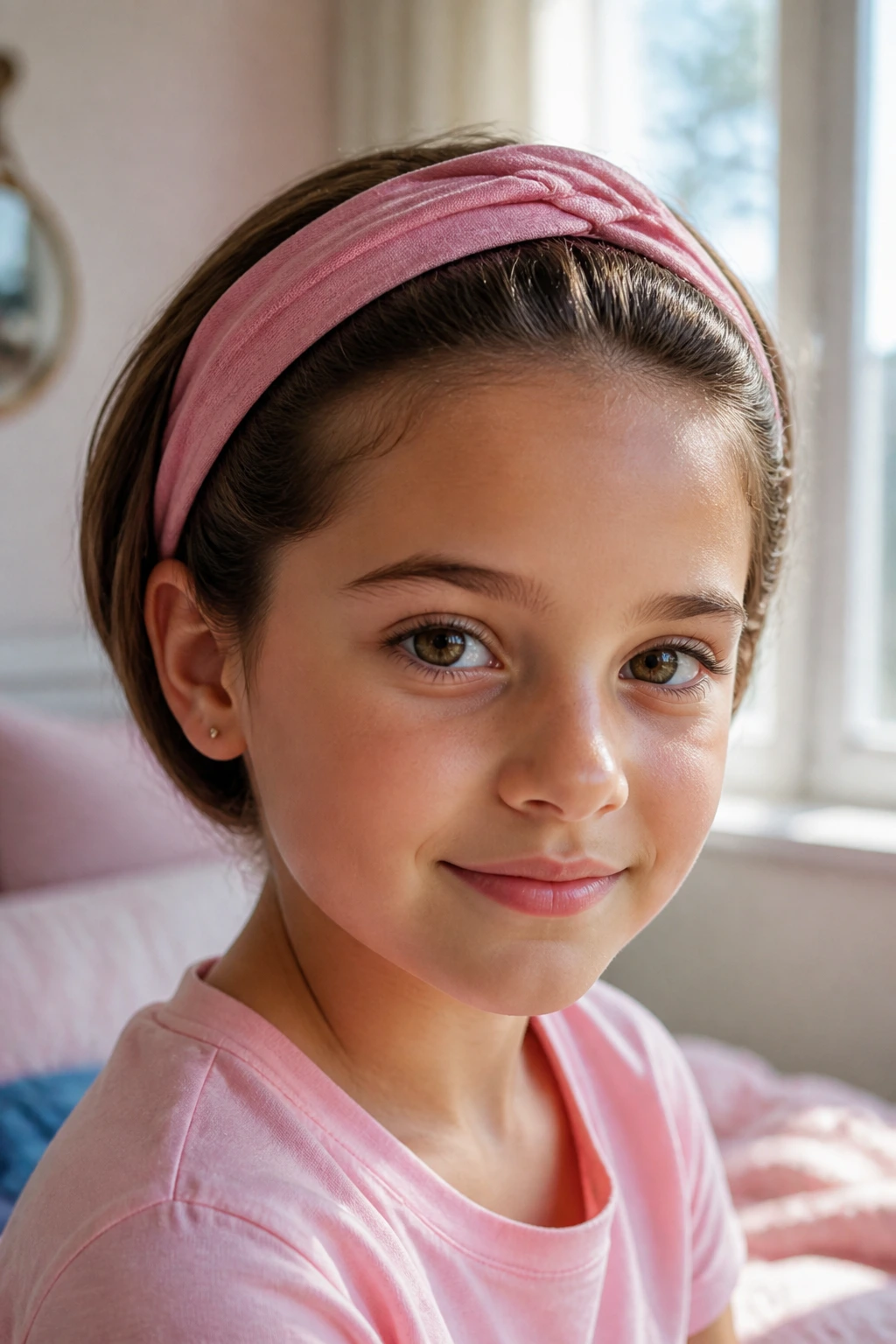
The headband tuck is one of the easiest ways to make short-to-medium hair look finished in almost no time. Slip on a stretchy headband, then tuck the hair sections up and over the band all the way around. What’s left is a tucked, rounded shape that feels tidy and a little sweet.
It’s a good option when the child has hair that won’t stay in a ponytail or when the ends are a little uneven and you’d rather not fight them. A soft, wide headband is kinder than a thin rigid one. The style works best when the hair has enough length to tuck but not so much that it becomes bulky.
One small caution: if the headband pinches behind the ears, swap it out. Kids stop caring about how cute a style is the second it starts to hurt. Fair enough.
Final Thoughts
The best kids’ hairstyles are the ones a child can wear without fussing at them every ten minutes. Cute matters, sure. Comfort matters more. If a style looks great but pulls at the scalp, slips into the eyes, or takes half the morning to fix, it won’t stay in rotation for long.
A few soft elastics, a spray bottle, a rat-tail comb, and one or two favorite clips can cover a surprising amount of ground. That little kit saves time. It also keeps you from making every morning feel like a tiny emergency.
Pick two or three styles that fit your child’s hair and temperament, then keep them in the regular rotation. The easiest wins are usually the ones that end up becoming family favorites.
