



Short hair can look expensive with almost no effort — or it can go flat in forty minutes and make you want to reach for a hat. The difference usually has nothing to do with length. It comes down to a few small moves: where the part sits, how much texture you build, and whether the ends look polished or half-forgotten.
Easy hairstyles for short hair work best when you stop fighting the cut. A bob does not need to become a long ponytail to feel styled. A pixie does not need twelve pins to look intentional. A clean tuck, a tiny twist, or a smart accessory can do more than a complicated updo that collapses before lunch.
What short hair gives you is speed. Less weight means less waiting around for curls to cool, fewer tangles, and a lot less hair to pin into place. That also means tiny details matter more — a bent front piece, a side part that lands two inches off center, a mini claw clip placed too high. Those little things change the whole look.
The styles below lean on that. Some are polished. Some are messy on purpose. All of them work with short lengths, which is the part that matters when your hair won’t cooperate and you still need to look like you meant it.
1. The Clean Side Tuck
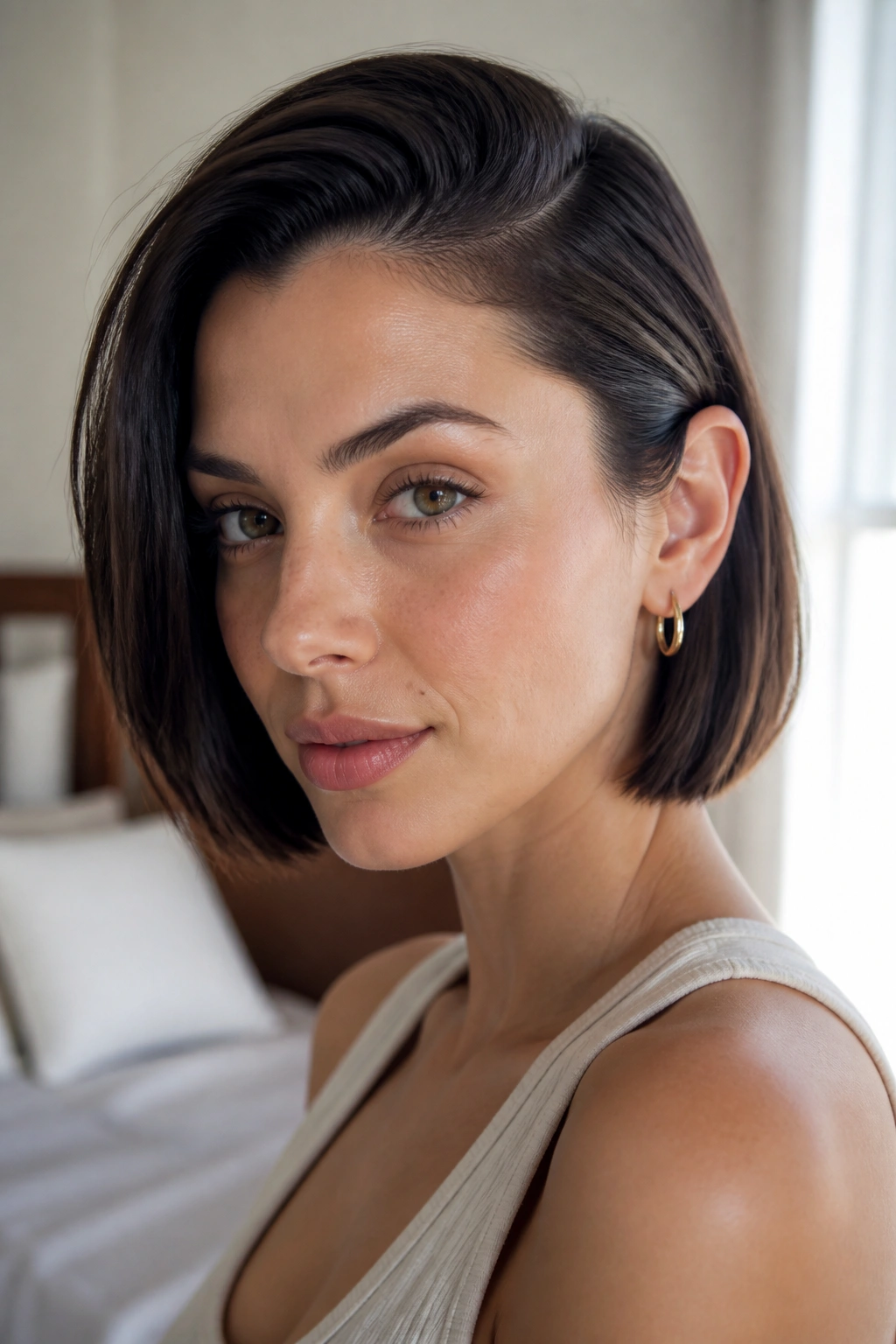
A deep side part and a neat tuck behind one ear can make a bob look sharper than a full blowout. Smooth a pea-size amount of cream or light pomade through the front, comb the part where you want it, and tuck the heavier side back so the face opens up. One flat bobby pin hidden under the top layer keeps the tuck from slipping.
Best on chin-length bobs and grown-out pixies. It looks especially good with a small hoop or stud because the ear stays visible. Skip heavy oil here; too much shine makes short hair separate into odd little strands.
2. The Tiny French Twist at the Back
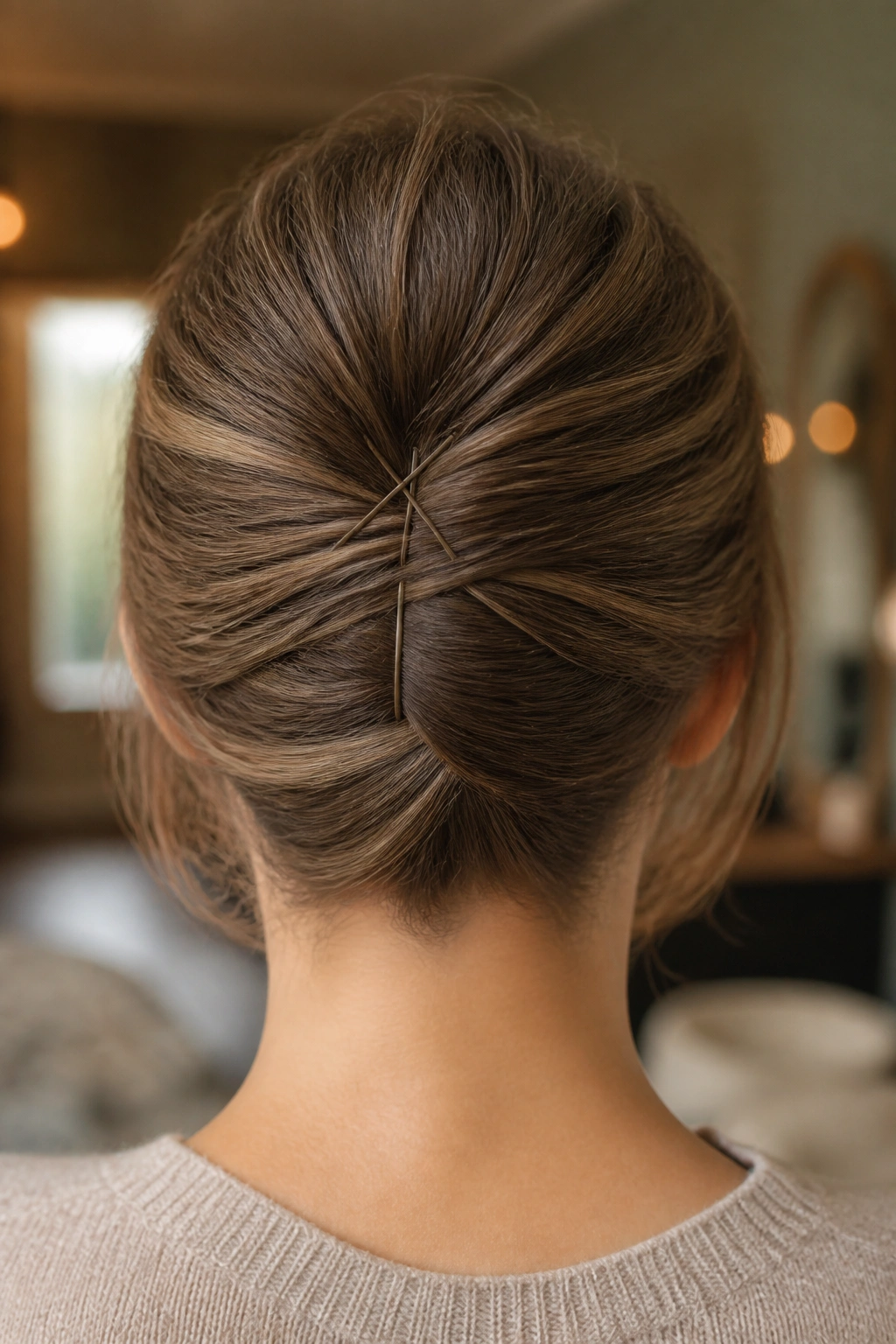
Can a short bob really do a twist? Yes, if you keep it small and pin the roll tight against the nape. Gather both sides back as if you were making a low ponytail, twist the length upward, and hide the ends under the fold. Two crossed bobby pins do most of the work; a third pin at the center keeps the shape from sagging.
What Makes It Hold
- Start with hair that is slightly day-old rather than freshly washed.
- Use pins that match your hair color, or the twist will look dotted with metal.
- Spray the finished shape from about 10 inches away so the surface stays soft.
- If the ends poke out, tuck them under with the tail of a rattail comb.
Short hair twists fail when people try to make them look bigger than they are. Keep this one tight and small. That is what makes it neat.
3. The Pin-Straight Middle Part
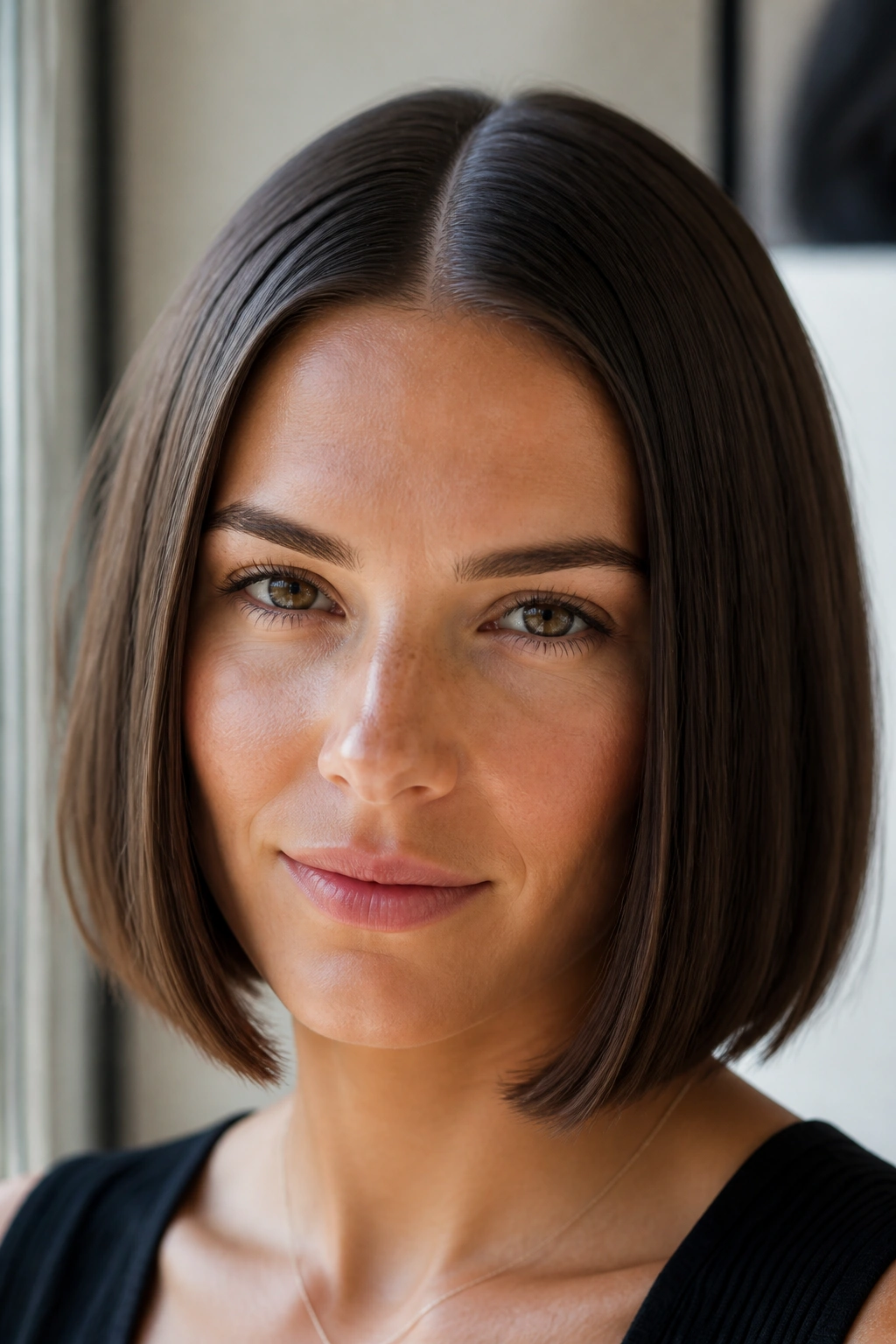
A blunt short cut with a middle part has a very specific attitude. It looks calm, clean, and a little severe in the best way. A heat protectant, a flat iron with 1-inch plates, and a slow pass from roots to ends are enough. At the very end, bend the iron slightly inward so the tips do not stick out like a helmet.
This style works when you want the haircut itself to do the talking. If your ends are dry, a drop of serum rubbed between palms will tame them without making the whole head greasy. Keep the root area light. That’s where most people overdo it.
4. Soft Bends at the Ends
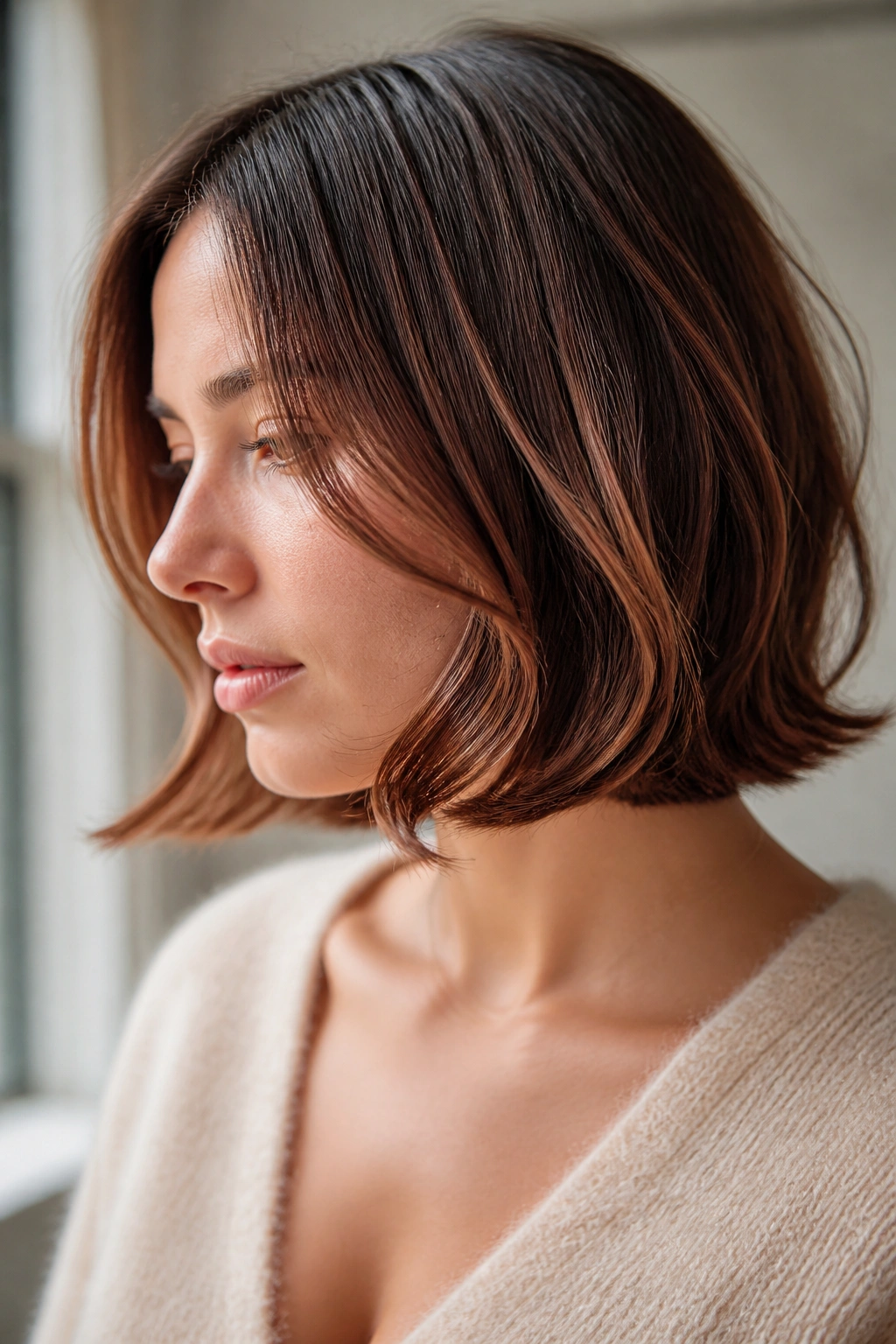
Not every short style needs a full curl pattern. Sometimes the smartest move is to add a small bend near the bottom half of the hair and leave the rest smooth. Wrap the mid-lengths around a curling iron for one turn, then release early so the ends fall in a soft curve instead of a tight spiral.
That little bend changes the whole feel of a bob. It softens blunt lines and makes the cut look fuller without turning it into pageant hair. Alternate the direction of each section if you want texture that reads relaxed, not rigid. A finger comb at the end is enough. Really.
5. The Half-Up Mini Pony
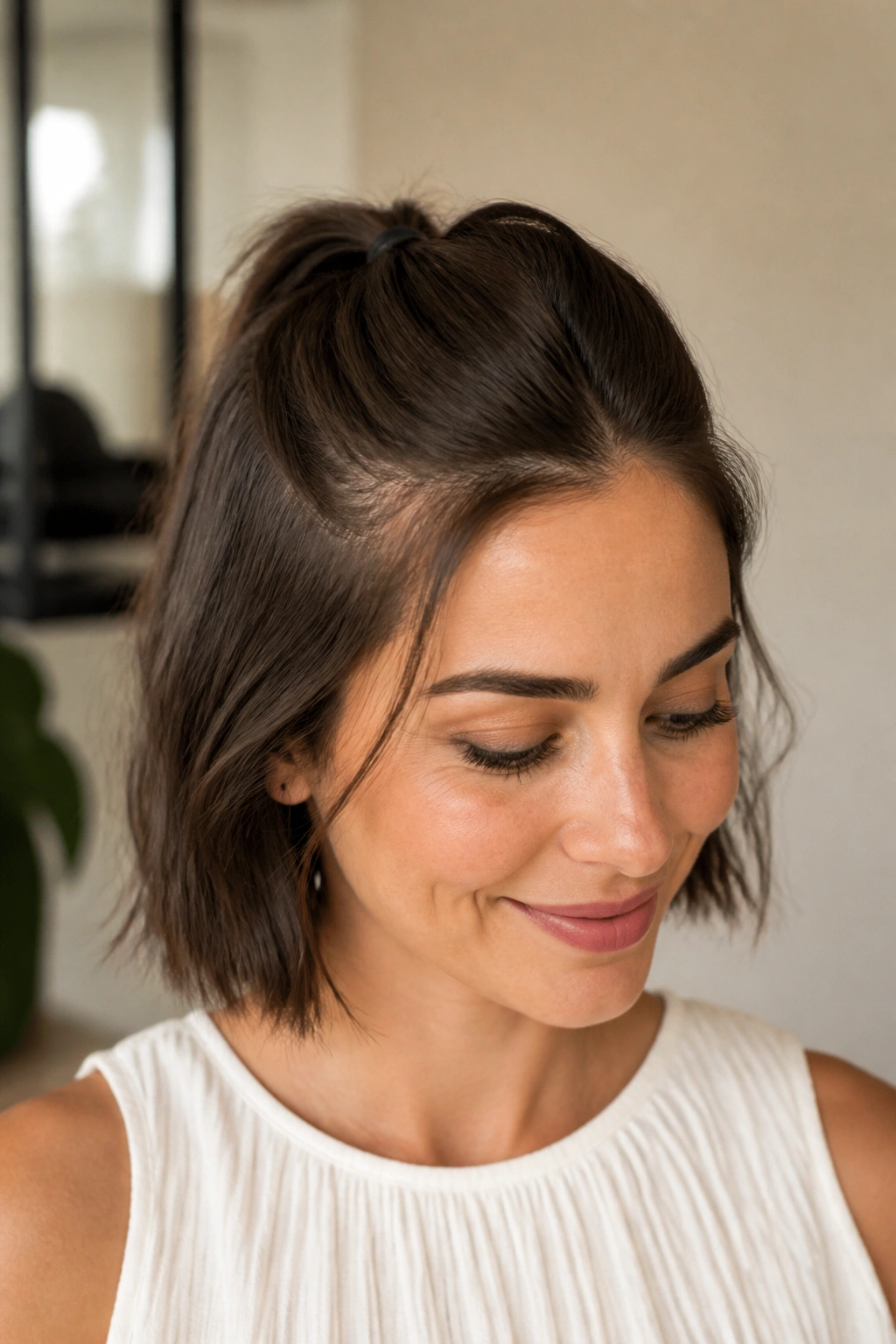
This is the short-hair version of a workhorse. Pull the top half from temple to temple, secure it with a small elastic, then tug the crown up by a few millimeters so it does not sit flat against the scalp. Leave a thin piece near each temple loose if your face frame needs softness.
- Works best on chin-length bobs and lobs
- Use a clear elastic if you want the pony to disappear
- Wrap a tiny strand around the band for a cleaner finish
- Add a mist of texture spray before tying if the hair slips
The trick is keeping the pony small. If you pull too much hair up, the style turns awkward fast. Tiny is better here.
6. The Tiny Top Knot

Can a bob make a bun? Yes, but it has to be a small one. Gather the top third of the hair, twist it once, and pin it into a knot that sits high on the crown. If the length is too short to wrap, fold the ends under and pin them flat instead of chasing a neat loop that will not happen.
This is a good move when the front looks fine but the back feels tired. A little dry shampoo at the roots gives the bun something to grab. Leave the edges slightly imperfect. A too-perfect mini bun on short hair tends to look like it’s trying hard.
7. The Quick Claw-Clip Twist

A mini claw clip is one of the most useful things in a short-hair drawer. Twist the back sections once or twice, lift them up, and snap the clip in place so the ends spill out below it. The shape should feel secure but not stiff.
This style is best when your hair is between “freshly brushed” and “needs washing.” The clip does the heavy lifting, and you get a little lift at the back without teasing or heat. Pick a clip that’s smaller than you think you need. Oversized clips often slide on short layers and that gets annoying fast.
8. The Swept-Over Bobby Pin Side
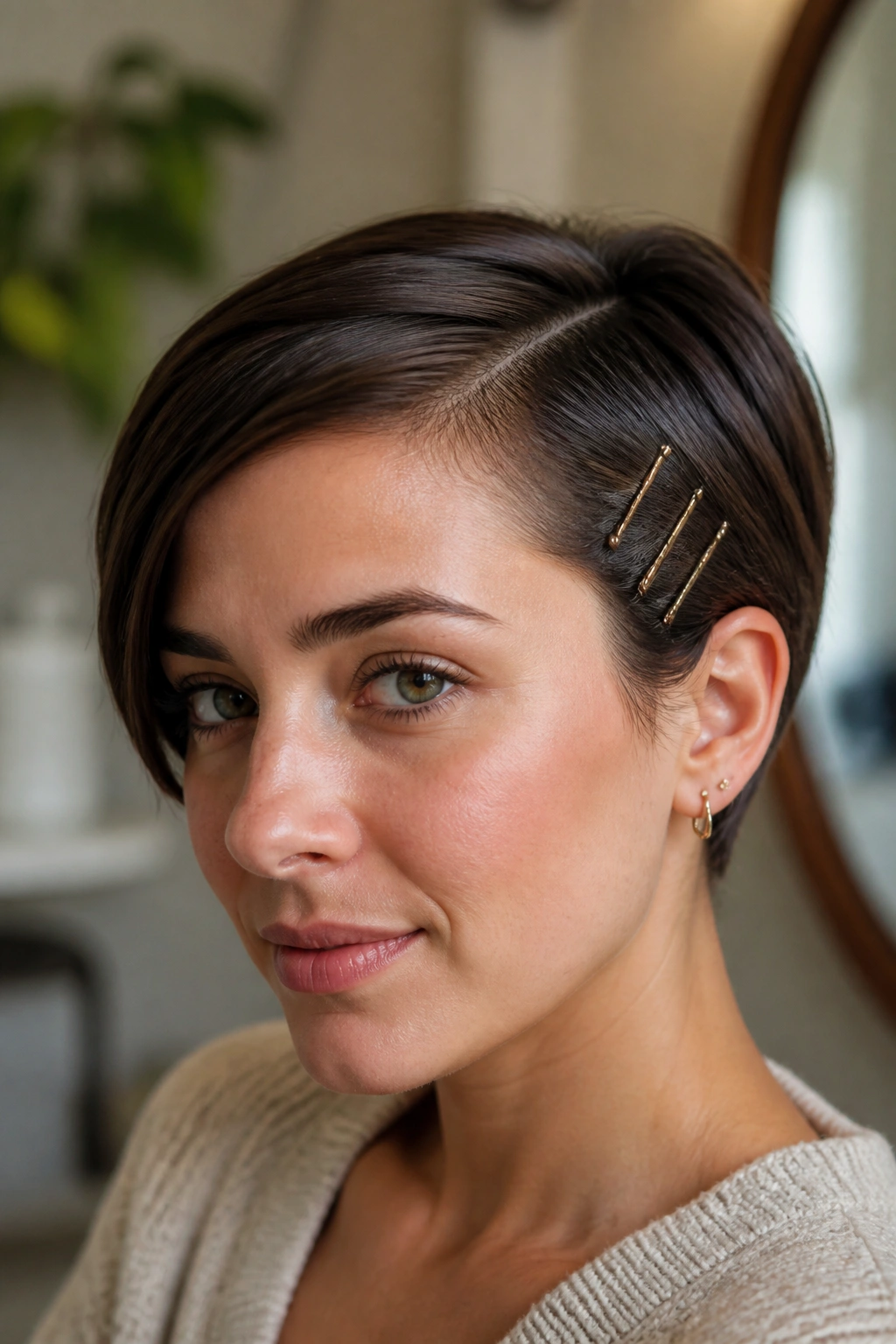
Growing-out bangs? This one saves the day. Make a side part, sweep the front section across the forehead, and pin it back at the temple in a clean line. Two or three bobby pins stacked close together look intentional; a single pin often looks like you gave up halfway through.
How to Make the Pin Line Look Tidy
Use pins that match the hair or go metallic on purpose. Either works. Brush the front section smooth before pinning, then flatten the hair just above the pins with the palm of your hand.
This is one of those easy hairstyles for short hair that looks more polished than it feels. It buys you time when bangs are awkward, and it keeps hair out of the eyes without dragging everything back.
9. The Faux Bob Tuck

A faux bob is a neat little illusion, and it works best on a lob or a longer bob. Curl the ends under slightly, then fold the bottom section upward and pin it at the nape so the outer layer falls over the tucked hair. You end up with a shorter-looking shape that still has movement.
The key is hiding the anchor points. Use three pins at minimum, and place them under the top layer where the eye won’t catch them. This style gets easier after you’ve done it once. The first attempt always feels a bit fussy. After that, it’s a five-minute trick.
10. The Wide Headband Push-Back
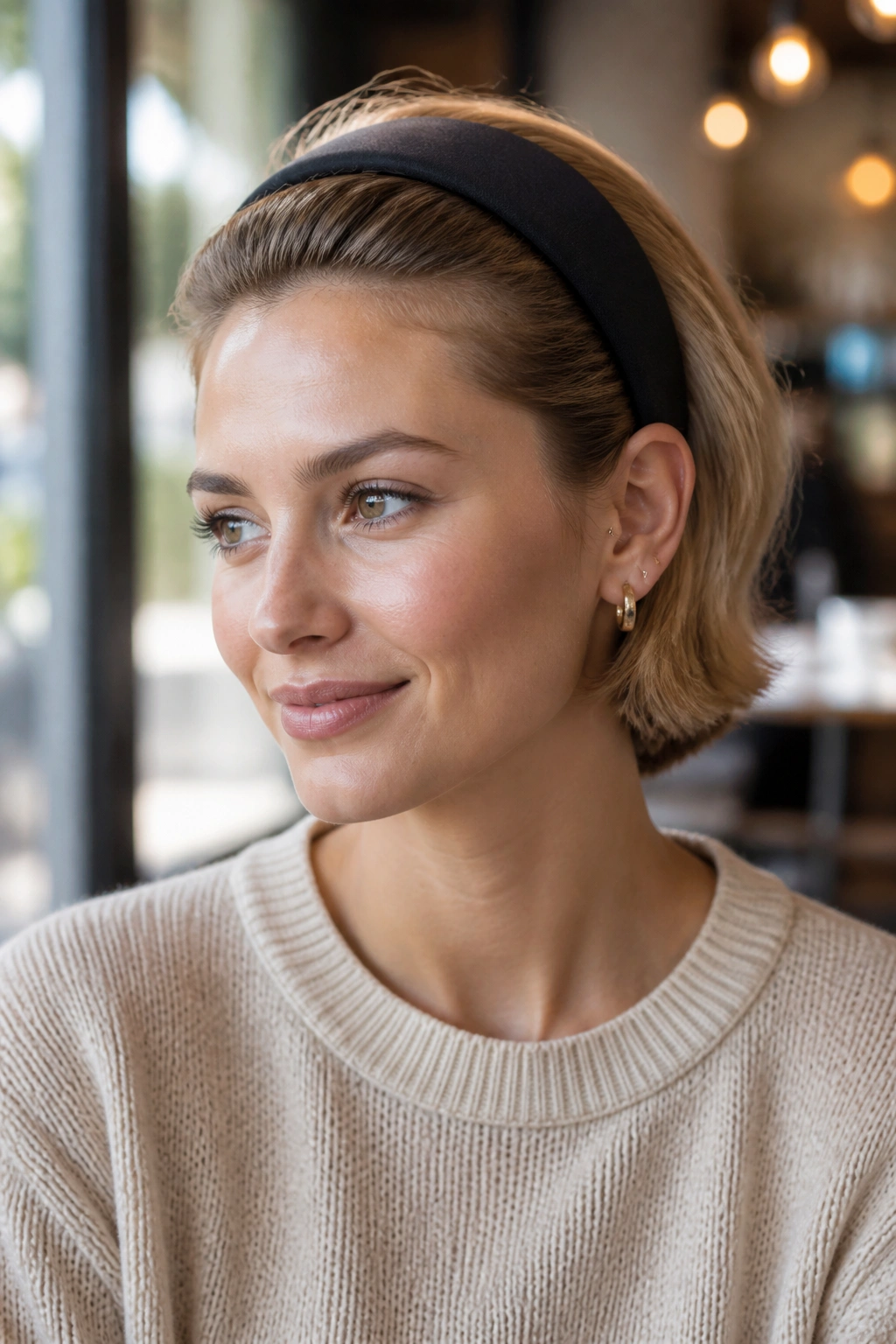
A wide headband can do a lot more than hide a bad hair day. Push the hair back just behind the ears, then gently lift at the crown so the front does not collapse. Cloth bands, padded bands, and satin bands all work; the point is the shape, not the label.
- Best for second-day hair
- Use dry shampoo at the roots before the band goes on
- Leave a little volume in front so it doesn’t look flattened
- Tuck the ends behind the band near the nape if needed
This one is especially handy when you need something fast and neat. It looks casual, but not careless.
11. The Messy Pixie Spikes
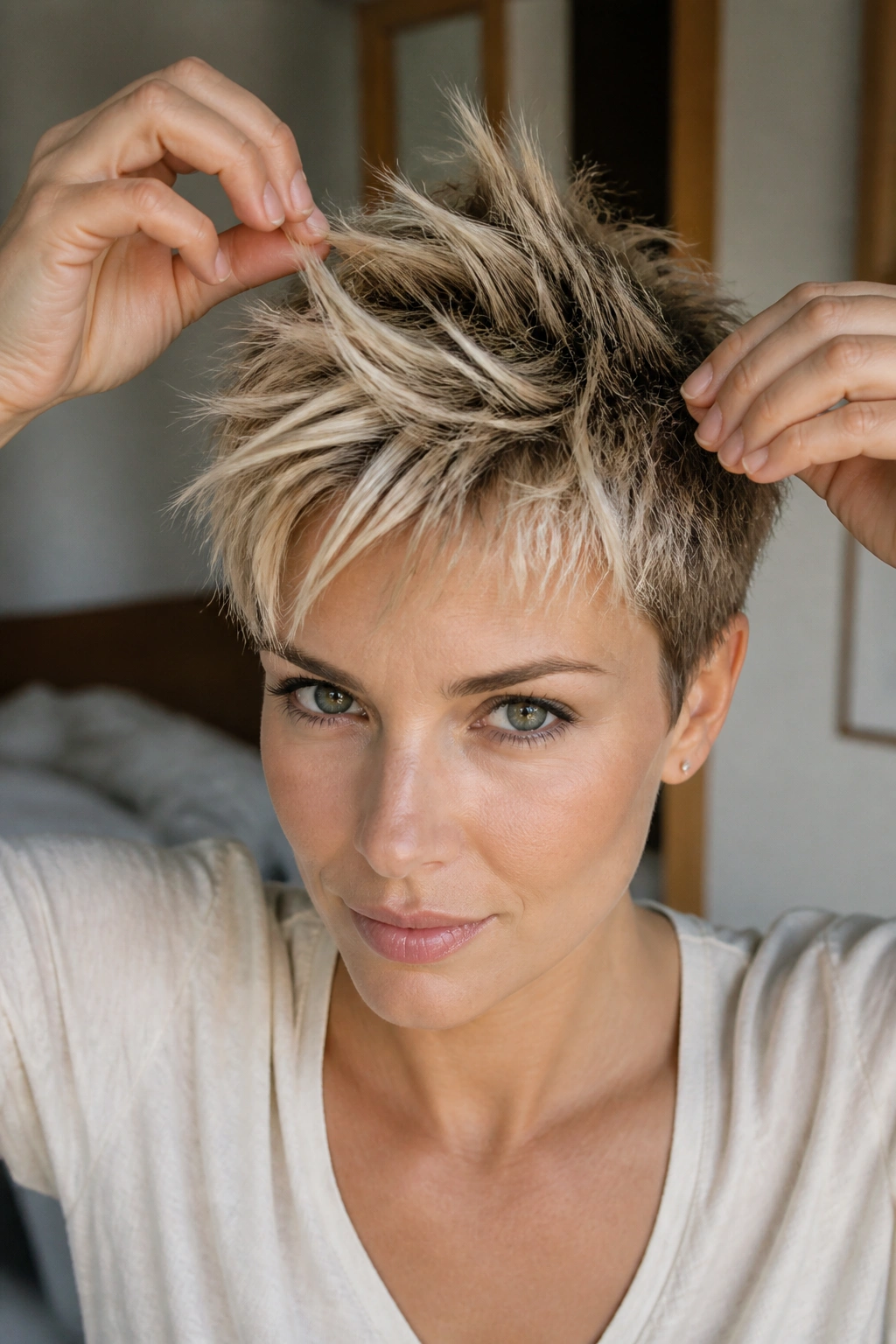
Pixie cuts do not need much to look styled. Warm a pea-size amount of matte paste between your fingers and pinch small sections upward and forward. The goal is separation, not stiffness. If the paste turns glossy on your hands, you used too much.
What to Use
- Matte paste for control without shine
- A tiny dab of pomade for the fringe only
- Dry shampoo at the roots if the top lays flat
- Fingers, not a comb, for the finish
This style works because it respects the cut. No need to smooth everything down. A little roughness gives a pixie shape and keeps it from looking helmet-like.
12. The Finger Wave Side Part
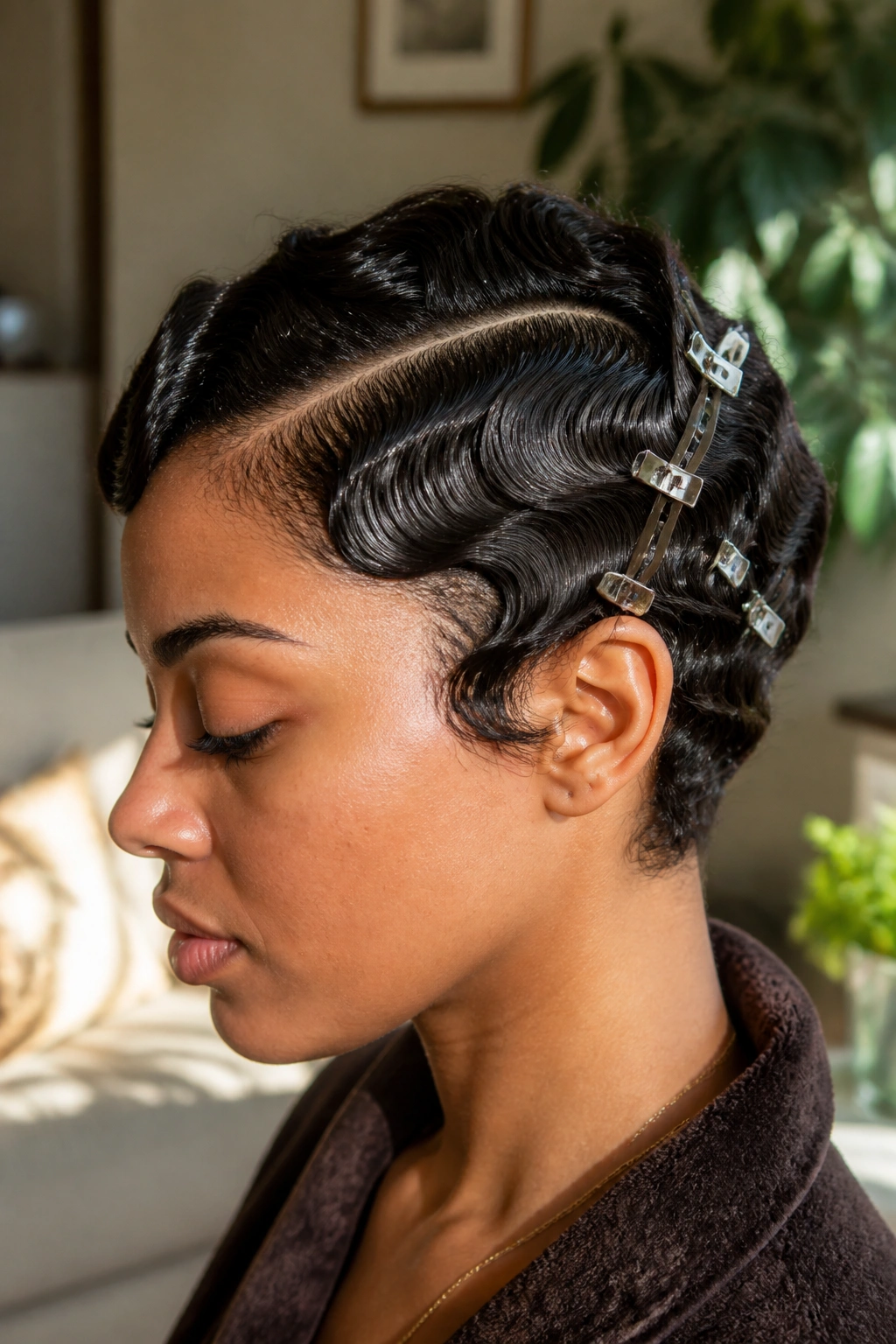
Want something with a bit of old-school flair? A finger wave on short hair can look polished without taking forever. Apply setting gel to damp hair, carve in a deep side part, then mold small “S” shapes with a comb and your fingers. Clip the curves while they dry so the pattern stays put.
The finished look is sleek near the scalp and soft at the edges. It suits pixies and short bobs that have enough length to hold a bend. If your hair is very thick, work in smaller sections. Big sections will fight you.
13. The Mini Braided Crown
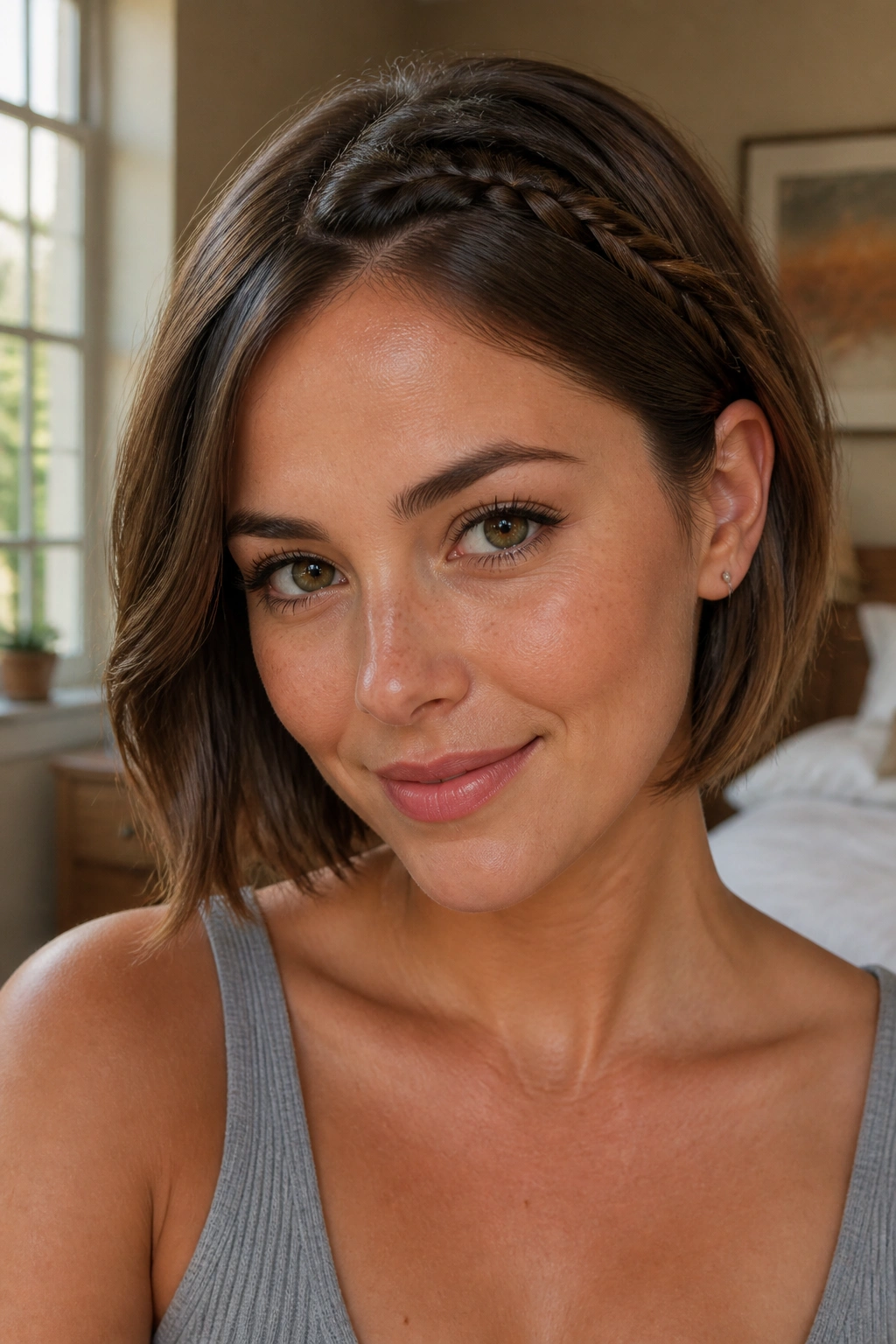
A tiny braid along the hairline gives short hair a little detail without asking for more length. Start near one temple, braid a slim section across the top, and pin it behind the opposite ear. The rest of the hair can stay loose and smooth, which keeps the style from feeling overworked.
This is a good option when you want the front off your face but don’t want a full updo. If the braid keeps slipping, mist the section with a light spray before you start. A slippery bob is a stubborn bob.
14. The Front Twists at the Hairline

Two small twists can do what a full hairstyle sometimes cannot: make short hair feel finished in under five minutes. Take a section from each side of the part, twist it back toward the ear, and pin it in place with a small bobby pin. Leave the rest of the hair loose.
The style works best when the front pieces are a little longer than the rest. It’s clean, face-opening, and easy to redo if one side starts to loosen. If you want it to last longer, cross the pins instead of placing them flat. That tiny detail matters.
15. The Slicked-Back Wet Look
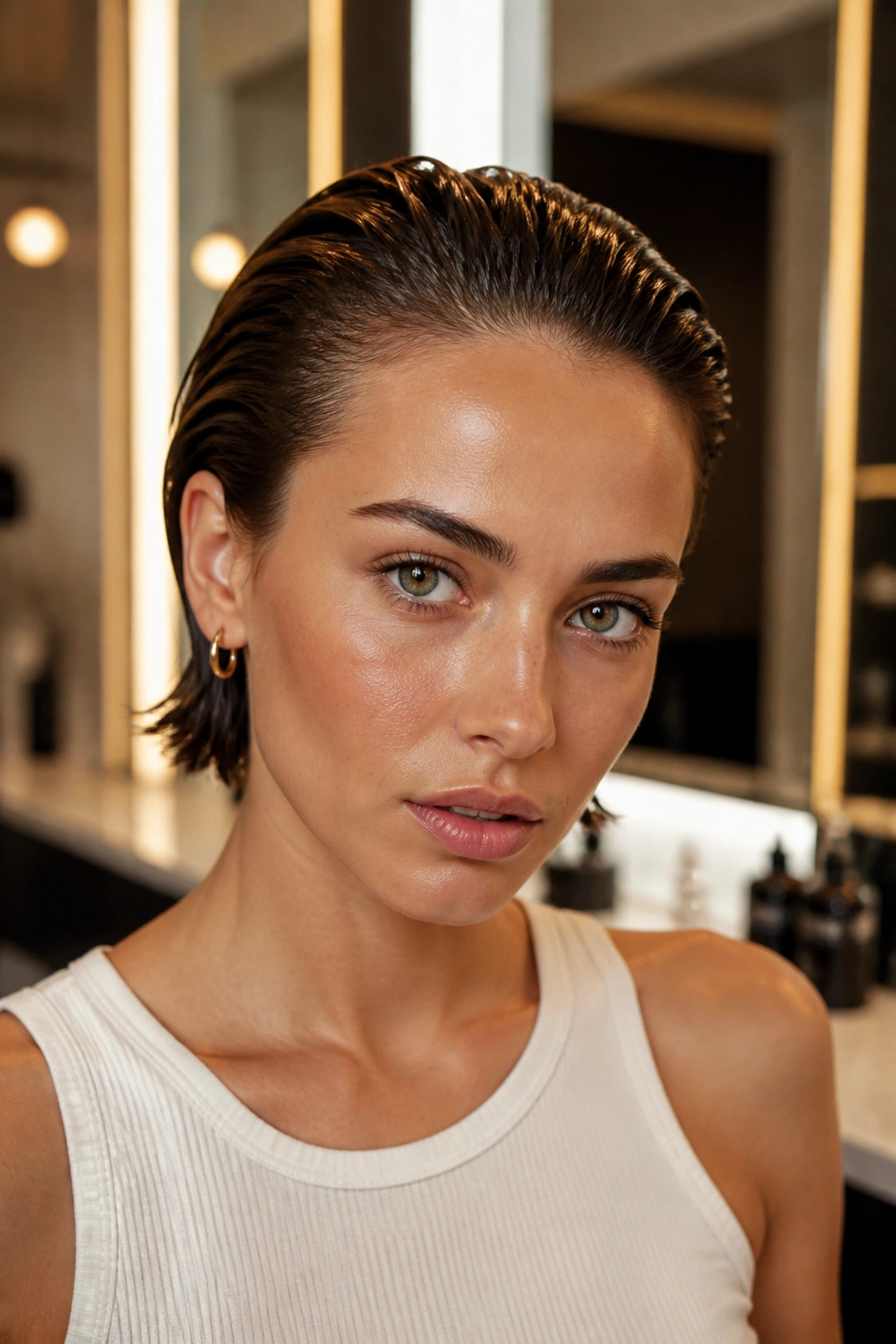
This one looks best when you commit. Work gel through damp hair from roots to mid-lengths, comb everything back, and let the front lie smooth and shiny. You can leave the ends softer if you do not want a hard finish, but the top should be clearly controlled.
A slicked-back look is smart for short hair because it turns the cut into a shape, not a problem to fix. Use a fine-tooth comb for a tighter result, or your fingers for something looser. Either way, keep the product even. Patches of gel are the enemy.
16. The Low Side Twist
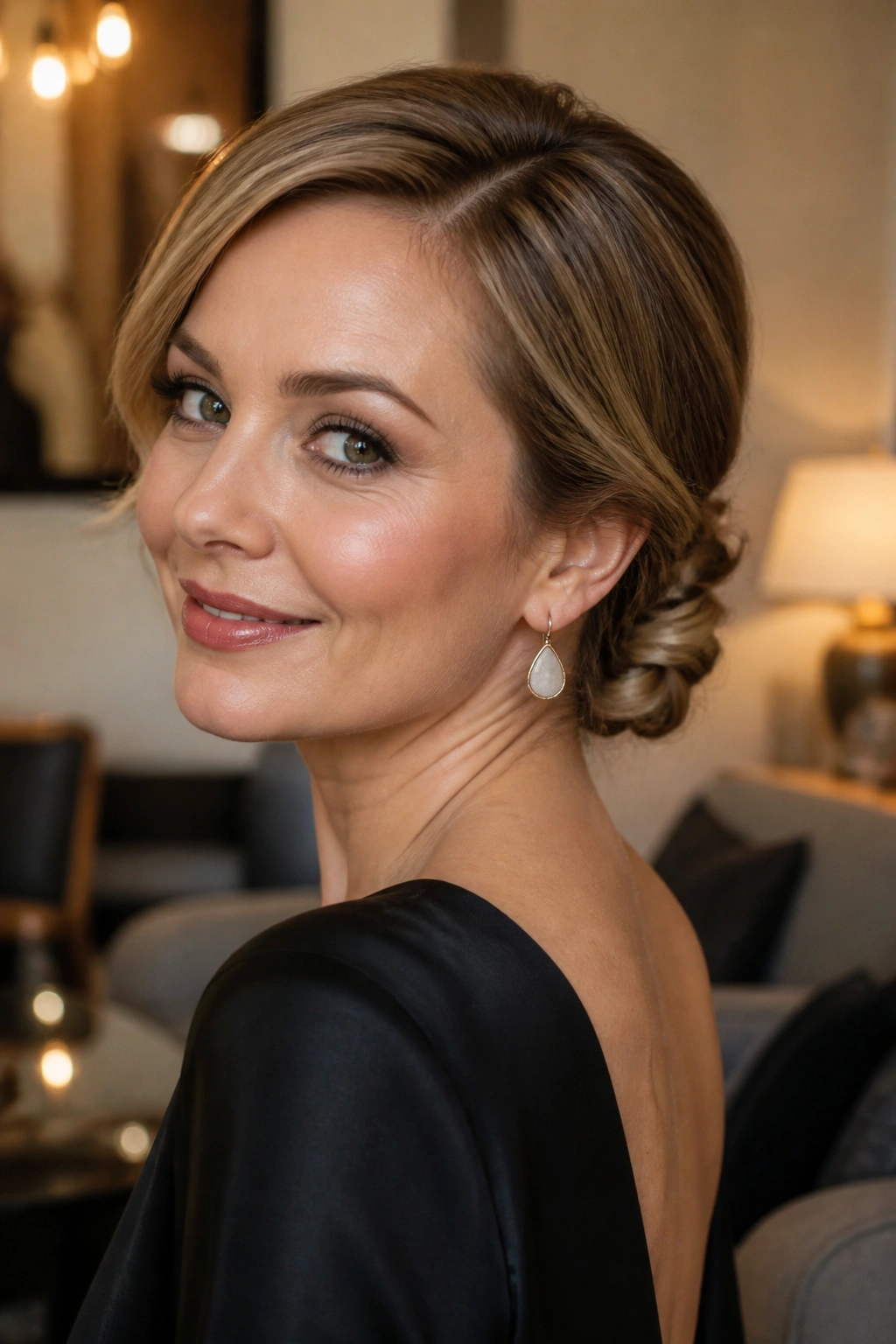
A low side twist gives short hair a little evening energy without asking much of it. Move the part slightly to one side, gather the hair toward the stronger side of the neck, and twist it once or twice before pinning it low and hidden. The whole shape should sit close to the head.
This works nicely for short cuts that have some length through the front and crown. Add a small pin cluster if the twist feels flimsy. A little body at the roots helps, but don’t tease it into a cloud. The style should look soft, not puffy.
17. The Mini Pigtails
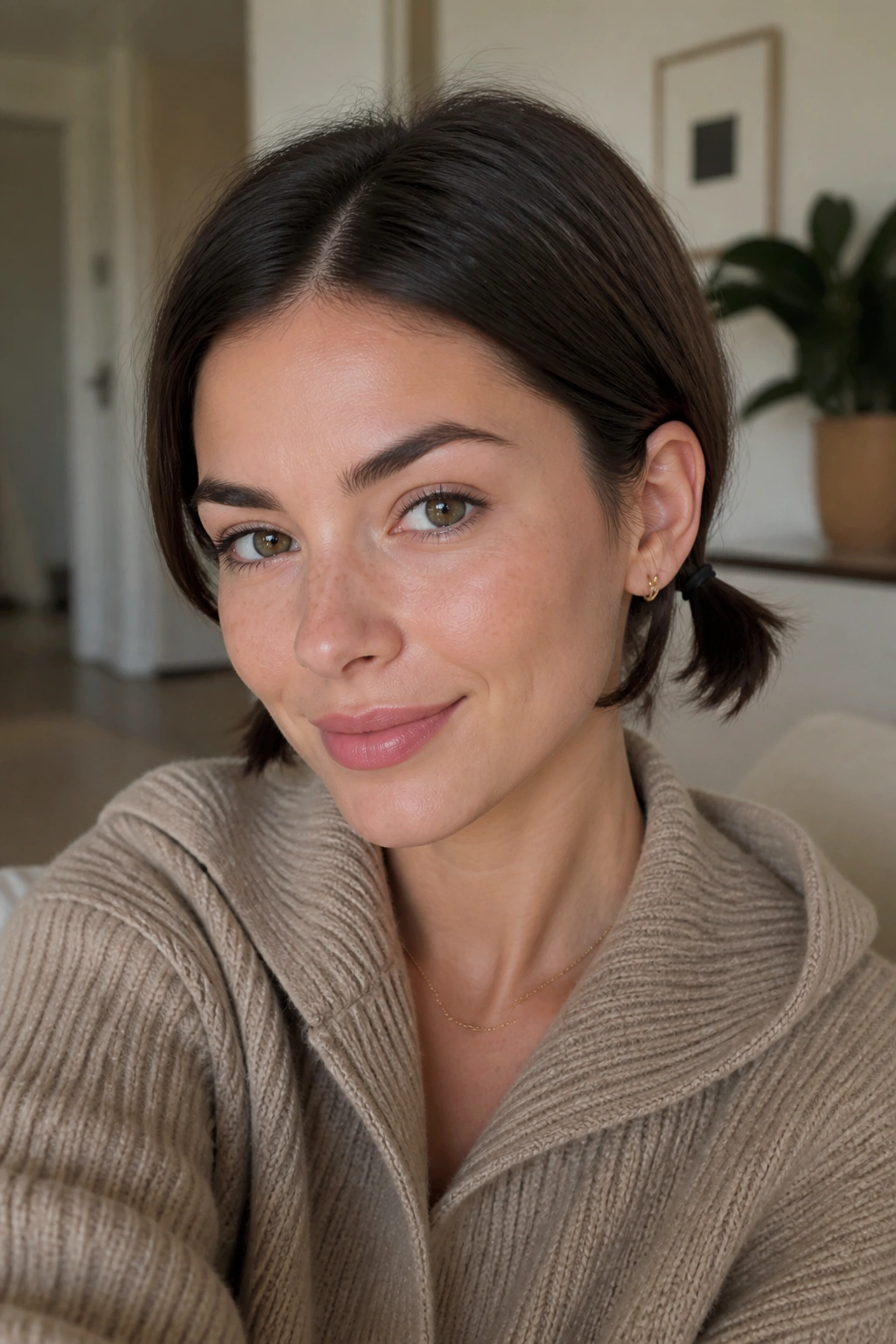
Pigtails on short hair can look playful without looking childish if you keep them low, loose, and textured. Part the hair down the center, make two tiny ties just below the ears, and tug gently at the roots so the top gets a little lift. The ends can stay blunt or slightly bent.
This is one of the easiest hairstyles for short hair when you want something that feels light. It’s also useful for working from home or weekends when you want your hair out of your face but still have some shape. A small elastic on each side is enough. Nothing fancy.
18. The Bubble Ponytail for Short Hair

A bubble ponytail sounds like a long-hair trick, but it works on a bob if you keep the sections short. Make a low ponytail, add clear elastics every 1 to 1½ inches, then gently pull each section wider so it rounds out into a bubble shape. The effect is soft and a little sporty.
How to Keep It From Sagging
- Start with textured hair, not glassy hair
- Use small elastics that grip without stretching the section
- Puff each bubble with your fingers, not a brush
- Hide the first elastic with a wrapped strand if the base needs polish
The style looks fuller than it is. That’s half the charm.
19. The Rope Braid Half-Up
A rope braid is the answer when your layers are too short for a regular braid. Split a small section into two pieces, twist each piece in the same direction, then wrap them around each other in the opposite direction. Secure it at the back with a small elastic or pin.
It gives short hair texture without demanding a long tail. Keep the braid narrow so it doesn’t fight the rest of the cut. If the ends poke out, leave them. A little roughness looks better here than a fake attempt at perfection.
20. The One-Side Barrettes Stack
A row of barrettes on one side can turn plain short hair into a deliberate style. Use three to five clips, line them up from the temple toward the ear, and vary the size if you want the look to feel less stiff. Gold, black, tortoiseshell — all of them work if the spacing is clean.
This is a good trick for growing-out bangs or a bob that needs a little structure. Don’t scatter the clips all over the head. One side only. That’s what makes the look feel sharp instead of random.
21. The Curly Pineapple Puff
Curly short hair has its own rules, and the pineapple puff is one of the easiest ways to keep shape without flattening the curl pattern. Gather the top gently with a silk scrunchie so the curls pile upward, then let the sides fall where they want. It should look soft, not scraped tight.
Best Way to Wear It
Use it as a daytime style, but it also works for sleeping if the puff sits high enough to protect the curls underneath. A little edge control at the hairline can smooth the front without killing the texture. This is one of those styles that looks better the less you overthink it.
22. The Defined Wash-and-Go Curls
If your short hair is curly, a clean wash-and-go can be the prettiest option in the room. Work curl cream through soaking-wet hair, add a light gel for hold, then scrunch upward and let the curls form on their own. A diffuser helps if you want shape faster, but air-drying works too.
The big mistake is touching the curls too much while they dry. Leave them alone. Once they’re set, shake the roots out with your fingers and separate only the pieces that are clumped together. A few well-defined curls beat a frizzy cloud every time.
23. The Blowout Flip Ends
A short blowout with flipped ends has a friendly, slightly retro feel. Use a round brush or a flat brush with a blow-dryer, lift the roots, and curve the ends outward instead of under. The shape should feel airy, not stiff.
This style works especially well on bobs that sit right at the jaw. It gives the cut movement and keeps it from hanging straight down. If the front layers are shorter, flip them away from the face and let the back move in the same direction. Consistency matters here. Messy flipping looks accidental fast.
24. The Flat-Iron Wave Pattern
Flat-iron waves are sharper than soft bends and less fussy than full curls. Clamp a small section near the roots, turn the iron halfway, slide a few inches, then turn it the other way. That back-and-forth motion creates an S-shape that reads modern and lived-in.
This style is best on chin-length bobs or lobs with enough room for the wave to show. Keep the sections narrow, around 1 inch wide, or the waves blur into nothing. A light spray at the end keeps the shape from drooping by midday.
25. The Mini Bun at the Crown
A mini bun at the crown looks neat when the hair is rolled instead of loosely tied. Gather the top section, roll the ends inward, and pin the shape flat against the head so it sits like a small dome. This works better than trying to force a long, loose bun from hair that won’t reach.
The result is polished and tidy, which makes it useful for dinners, meetings, or any day when you want a little structure. Leave the lower layers down so the style still feels like short hair, not a failed updo. That balance is the whole point.
26. The Low Knot at the Nape
A low knot gives short hair a quiet, clean shape. Pull the length to the base of the neck, twist it once, and fold the ends back into a small knot. Pin it from underneath so the hardware stays hidden and the knot sits close to the head.
This style is prettier than a messy bun on very short hair because it stays compact. Smooth the top with a brush if you want it neat, or leave a little texture if you want a softer finish. Either way, keep the knot low. High knots on short cuts often look strained.
27. The Scarf-Wrapped Short Hair
A scarf is one of the easiest ways to make short hair feel styled on purpose. Fold it into a band, tie it around the crown, and let the ends sit at the side or back. You can also wrap it around a low pony or tuck it behind the ears like a headband.
- Satin scarves help reduce friction
- Cotton scarves give more grip
- Tie the knot slightly off-center for a softer look
- Use the scarf to hide flat roots on day two hair
The style does a lot of work fast. And it keeps things interesting when you do not want heat tools in your hands.
28. The Cap-Friendly Tuck
Some days, the best style is the one that works with a cap, not against it. Tuck the hair low at the nape, smooth the sides, and leave the ends tucked under the cap’s edge so they don’t puff out awkwardly. A little texture at the front helps once the cap comes off.
This works with baseball caps, beanies, and any other hat that tends to flatten short hair into a strange shape. Add dry shampoo at the roots before the hat goes on. That way the hair keeps a bit of lift instead of collapsing into a slick sheet.
29. The Side Braid Into Loose Ends
A side braid does not need long hair to be useful. Start at the temple, braid toward the ear, and stop once the hair gets too short to continue neatly. Secure it, then let the rest fall loose around the shoulder. The braid creates structure, and the loose ends keep it from feeling heavy.
This is one of those easy hairstyles for short hair that reads a little romantic without trying too hard. It works best when the front layers are long enough to catch in the braid. If they aren’t, pin them into the braid instead of fighting them.
30. The Crimped Texture
Crimped hair is back in the sense that it never really left; it just got quieter for a while. On short hair, it adds grip and volume fast. Use a crimping iron on small sections, or braid damp hair overnight for a softer version. Either way, the texture gives short cuts more body.
Keep the crimping to the mid-lengths if you want the ends to stay smooth. Full crimp from root to tip can look boxy on a bob. A little frizz control at the top also helps, because crimped hair can go wide if the crown is left unchecked.
31. The Velcro Roller Volume Lift
Velcro rollers on short hair are old-school for a reason: they work. Roll the crown, the front pieces, and any short layers that keep falling into your eyes, then let them cool fully before taking them out. Fifteen to twenty minutes is usually enough if the hair started warm from a blow-dry.
Where to Place the Rollers
- Put the biggest rollers at the crown
- Use smaller ones at the temples
- Roll away from the face for lift
- Remove them only when the hair feels cool to the touch
The result is soft volume that lasts longer than finger fluffing alone. It’s boring to do. It works anyway.
32. The Crown Twist Into a Bob
This style gives short hair a little shape without changing the overall cut. Take a section from each temple, twist both back toward the center, and pin them together so they meet in a small crown shape. The rest of the hair stays down and loose.
It’s a nice middle ground between a full half-up and a plain tuck. The twist lifts the front, which helps shorter layers behave, and the pinwork stays hidden once the hair falls over it. If your bob is layered, anchor the twists with extra pins near the scalp.
33. The Deep Side Part With a Tucked Side
A deep side part changes short hair more than people expect. Push most of the volume to one side, smooth the smaller side back behind the ear, and leave the fuller side loose with a little bend at the ends. The shape is asymmetrical, which is why it feels so deliberate.
This is different from a plain side tuck because the balance matters. You want height on one side and calmness on the other. If the top lies flat, lift the root area with a round brush or a little mousse before styling. That’s the whole trick.
34. The Space Buns for a Bob
Space buns on short hair should be tiny. That is the point. Divide the hair into two sections, gather each one high enough to see, and twist them into small buns that sit like little loops or knots. Leave the ends tucked in or let them poke out a bit if the hair is too short to behave.
This is playful without being childish when the buns are neat and the part is clean. A little texture spray helps the sections hold while you pin. If one bun feels bigger than the other, loosen the smaller side instead of making the larger one even bigger.
35. The Micro Ponytail at the Nape
A micro ponytail is exactly what it sounds like: a tiny pony at the base of the neck that uses all the hair you can gather without forcing it. Smooth the hair back, secure it with a small elastic, and leave the tail straight or bent under slightly. It’s minimal, tidy, and weirdly chic on very short cuts.
This is the style for days when you want everything contained but do not want a bun or twist. If the tail is too short to hang, pin the ends flat under the elastic. That still counts. Short hair gets to bend the rules.
36. The Slick Side Twist
The slick side twist keeps the front tight and the rest soft. Use gel or styling cream to smooth one side back from the part, twist that section once along the hairline, and pin it just behind the ear. Leave the opposite side with more movement so the contrast stays visible.
This style has a bit more polish than a simple tuck, but it does not take much longer. It’s a smart choice when you want the hair to look controlled without going full wet look. A little shine at the twist makes the shape read clean. Too much makes it heavy.
37. The Ribbon-Tied Half-Up
A ribbon can turn the plain half-up into something that feels finished in seconds. Make the top section into a small pony or twist, then tie a ribbon around the base and let the ends drape. Satin and grosgrain both work; the texture changes the feel more than the color does.
This style suits short hair because it adds detail without extra length. Keep the ribbon narrow if the hair is fine, or wider if the cut has more body. The goal is a small accent, not a giant bow that takes over the head.
38. The Clipped-Back Curtain Fringe
Curtain fringe can be a blessing and a nuisance. When it falls the right way, it frames the face. When it doesn’t, it gets in the way all day. Two small clips at the temples can sweep the fringe back and create a clean center opening without making the hair feel pinned down.
This is one of the fastest short-hair fixes because it works with the shape you already have. You can keep the rest of the hair loose, waved, or flat. The clips become the style. That’s the whole point of good accessory work: small effort, obvious payoff.
39. The Loose Roll-and-Pin Updo
A roll-and-pin updo is the nearest thing short hair gets to a soft chignon. Start at the ends, roll sections upward toward the nape, and pin the rolls flat so they stack into a low shape. It should look a little airy, not compressed into one hard knot.
This takes more pins than a side tuck, but not much more patience. The style works well for formal events because it keeps the neck clear and the silhouette neat. Leave a few ends tucked loosely so the look still feels like short hair. Too much perfection steals the charm.
40. The Five-Minute Finger Ruffle Finish
Sometimes the best answer is not another style at all. Lift the roots with your fingers, pinch a few ends for shape, and separate anything that looks stuck together. Add a mist of dry shampoo at the crown if the hair has gone limp, then smooth one side behind the ear so the whole look feels deliberate.
This is the move I reach for when the hair is fine, stubborn, or slightly misbehaved and still has to go out the door. It works because it respects the cut instead of fighting it. Short hair often looks best when it’s touched last, not overworked.
