



A good set of goddess braids can save a whole week of thinking about hair. They keep your hair tucked away, give you room to play with length and parts, and still leave those soft curly pieces that make the style feel alive instead of helmet-stiff.
That balance is why goddess braid styles stay a favorite for Black women who want something protective but not flat. The braids can be sleek and neat, or big and dramatic, and the loose curls bring movement around the face, the shoulders, or the ends. I’m picky about that part. If the braid base is neat but the style still moves when you turn your head, that’s the sweet spot.
One thing I always look at is tension. If the braids hurt when you smile or if the scalp feels hot at the end of the install, the style has gone too far. Pretty does not excuse pain, and a good braider knows the difference.
Some styles lean formal, some are gym-friendly, and some are pure fun. The trick is matching the braid pattern, length, and finish to your life, not to a photo. The first classic version is a safe bet, and from there the options get more playful, more sculpted, and a little bolder.
1. Classic Goddess Braids With Curly Ends
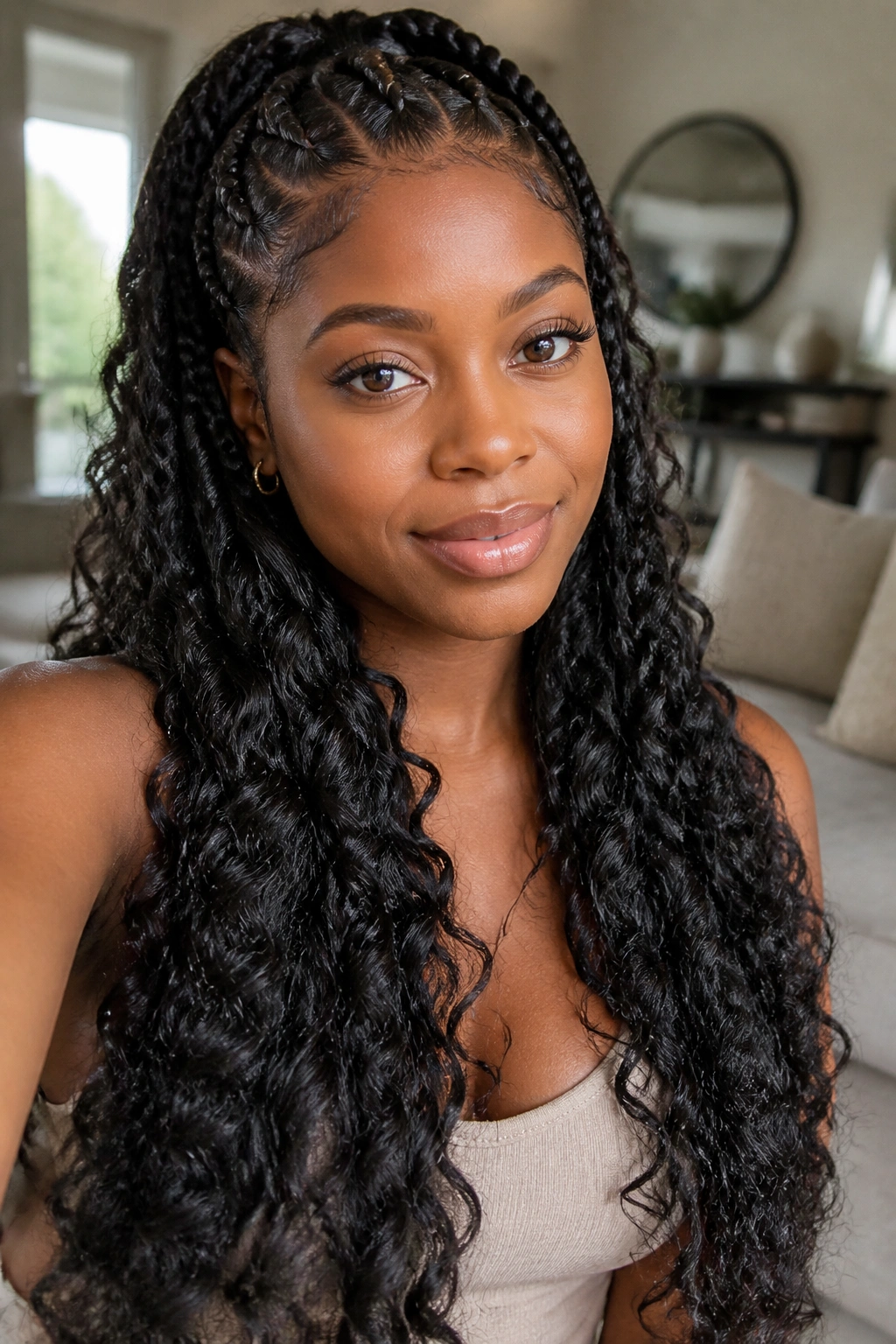
The classic version earns its place because it does a little bit of everything. You get neat cornrow or feed-in braid work at the scalp, then soft curls left out at the ends so the style does not feel stiff or severe. That contrast is the whole charm.
Why it works so well
- The braid base keeps your natural hair tucked away and out of daily friction.
- The loose curls soften the shape around the shoulders and back.
- The style works with a middle part, a side part, or straight-back rows.
- It can look polished enough for work and relaxed enough for a weekend.
If you want a version that photographs cleanly without looking overdone, start here. Ask for braid sizes that match your hair density. Giant parts on fine hair can look sparse, and tiny parts on thick hair can turn the install bulky fast.
My one real rule: keep the braid base snug, not tight. The style should sit on your head, not fight it.
A small finishing note
A light pass of mousse over the curls helps them stay defined longer, and a silk scarf at night keeps the roots from puffing up before their time. Simple stuff. It works.
2. Side-Swept Goddess Braids With a Deep Part
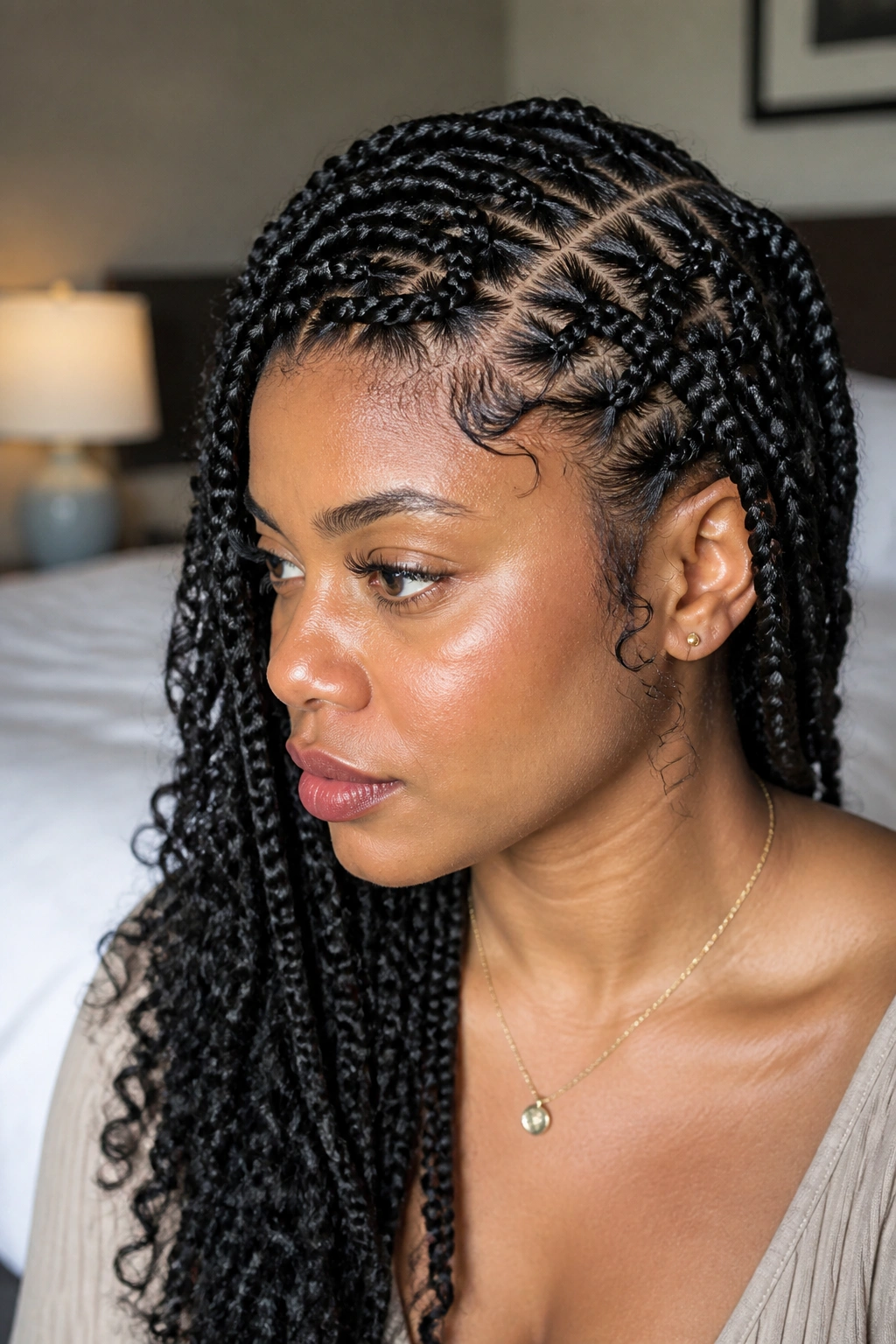
A deep side part changes the mood immediately. The same braid pattern that feels plain in the center suddenly looks softer, sharper, and a little more styled when it sweeps across one side of the head. That shift matters more than people think.
This version is especially good when you want to show off one eye, one cheekbone, or a pair of earrings. It also gives the face more angle, which is handy if you like braid styles that create shape without loading on extra length. I like it on oval and heart-shaped faces, but I’ve seen it work on plenty of other face shapes too because the part does so much of the visual work.
The key is balance. If the side with more hair feels heavy, the whole look can drag. If the part is too shallow, you lose the sweep and the style starts looking like a regular straight-back set with an accident in the middle. Tell your braider where you want the most hair to fall, and stand in front of a mirror before they start adding the longer curly pieces. A few inches can change the whole thing.
3. Goddess Braid Ponytail for Busy Days
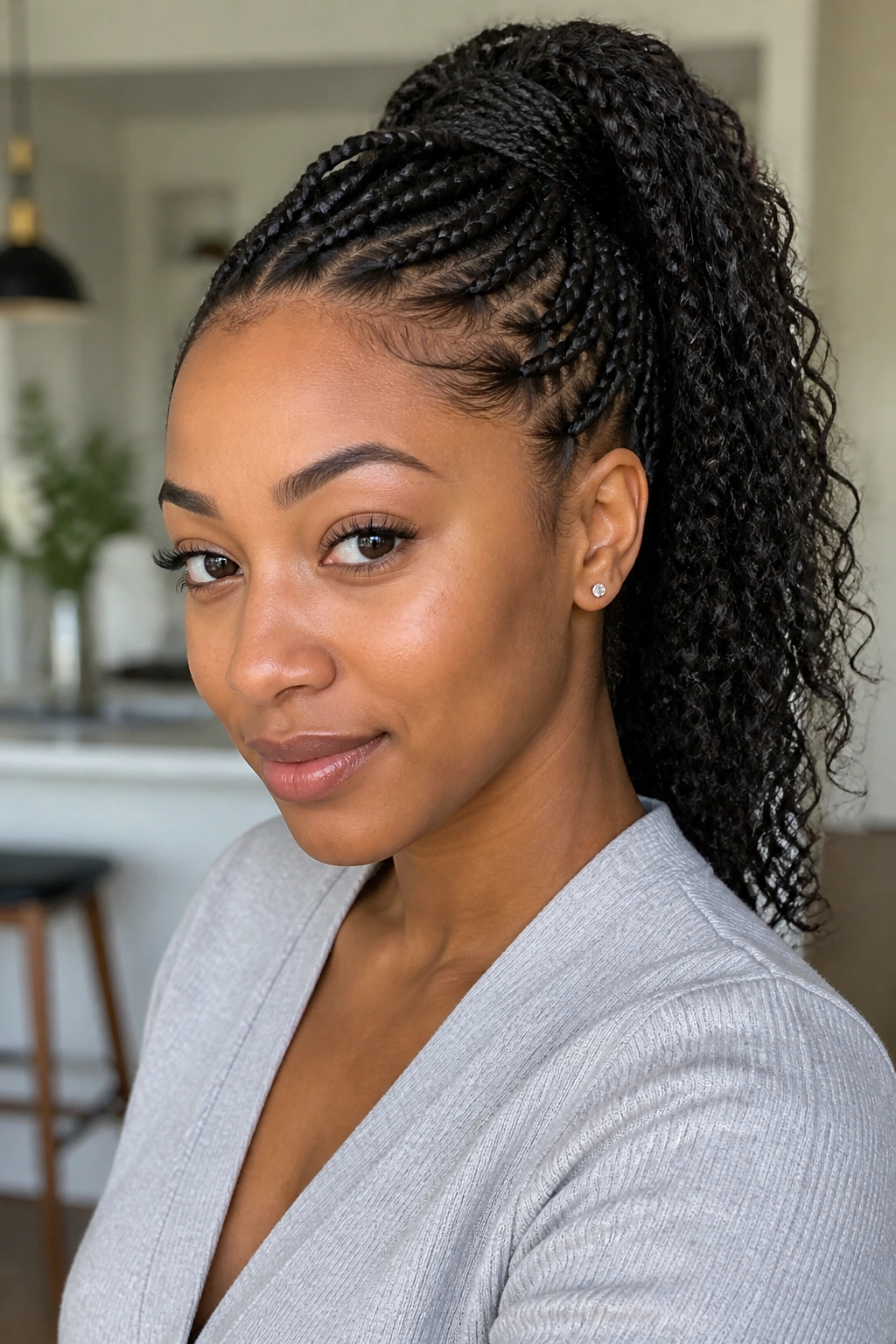
Want a style that clears your neck and still looks dressed up? A goddess braid ponytail is one of the easiest answers. It gives you that lifted, clean shape, but you still get the softness of curly ends instead of a hard, wrapped ponytail that can feel too formal.
Where the ponytail sits matters
- A high ponytail gives you a sharper, more athletic line.
- A mid ponytail looks balanced and works well with hoop earrings.
- A low ponytail feels calmer and is easier to wear for long hours.
- Wrapping a braid around the base hides the elastic and makes the whole thing look finished.
This style is one of my favorites for people who hate hair touching the back of the neck. It stays out of the way at the gym, on the train, or while you’re cooking, which sounds boring until you remember how annoying loose braids can get when they keep brushing your shoulders.
Keep the ponytail base smooth, though. Flyaways around the elastic make the style look rushed. A little edge control at the front and a light mousse at the tail is enough. You do not need a shellacked helmet.
4. Half-Up, Half-Down Goddess Braids
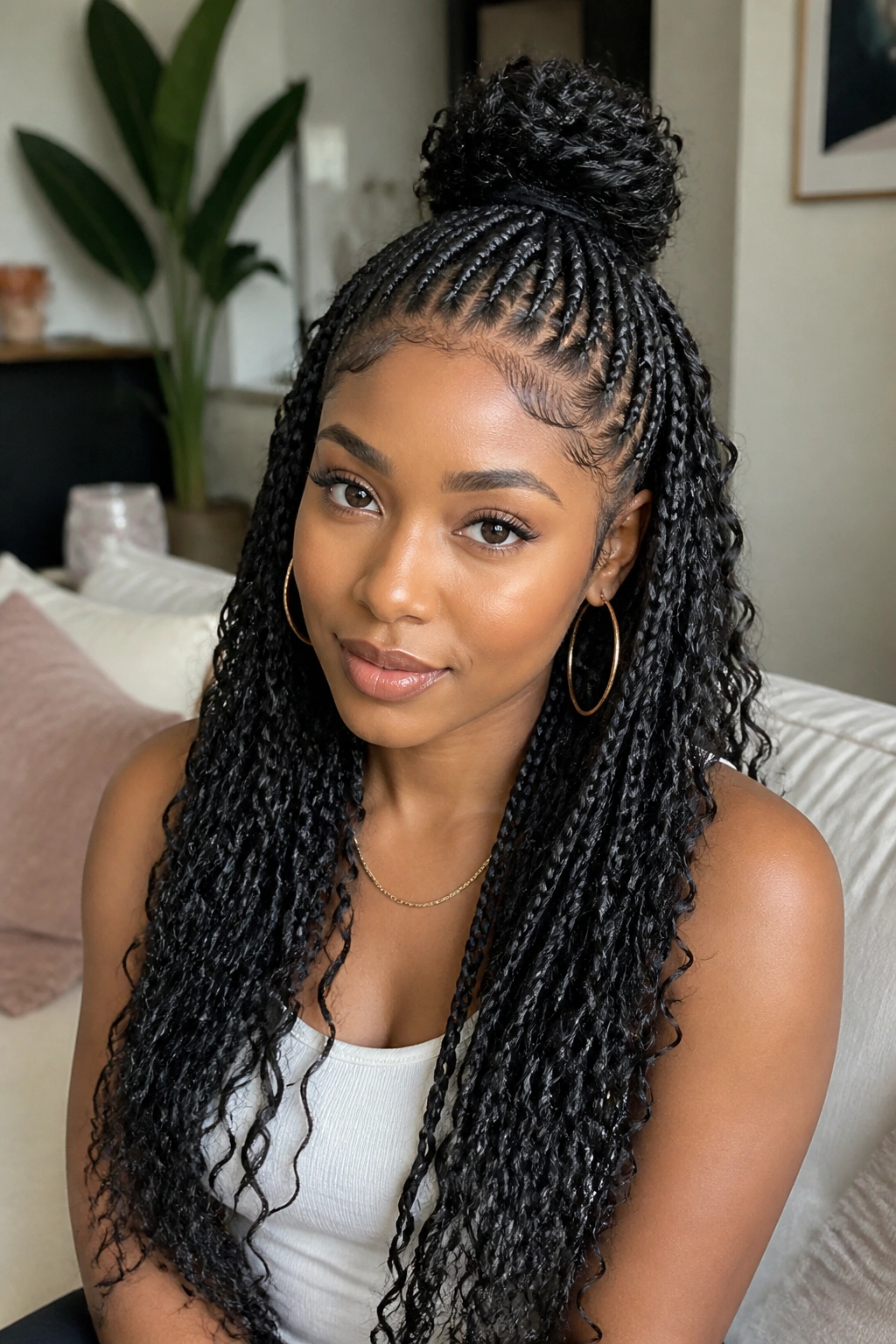
The half-up, half-down version is what I suggest when someone wants length and movement but does not want hair falling across the face all day. It gives you the best kind of compromise: some braids pulled away from the front, some left loose for shape and swing.
I reach for this style when the outfit is doing a lot. A high neckline, a bold earring, or a dress with details at the shoulders can all get lost under a full cascade of braids. Half-up keeps the frame open. It also lets the curls at the bottom do their job without competing with every strand near the crown.
A few things make this version look cleaner. Keep the top section tight enough to stay put, but not so tight that the front pulls back awkwardly. Leave the lower layer full enough to show off the pattern. If the bottom is too thin, the style can look top-heavy, and that is never flattering.
This is one of those styles that feels a little more dressed up even when the braids themselves are simple. Nice trick.
5. Goddess Braid Bun at the Nape
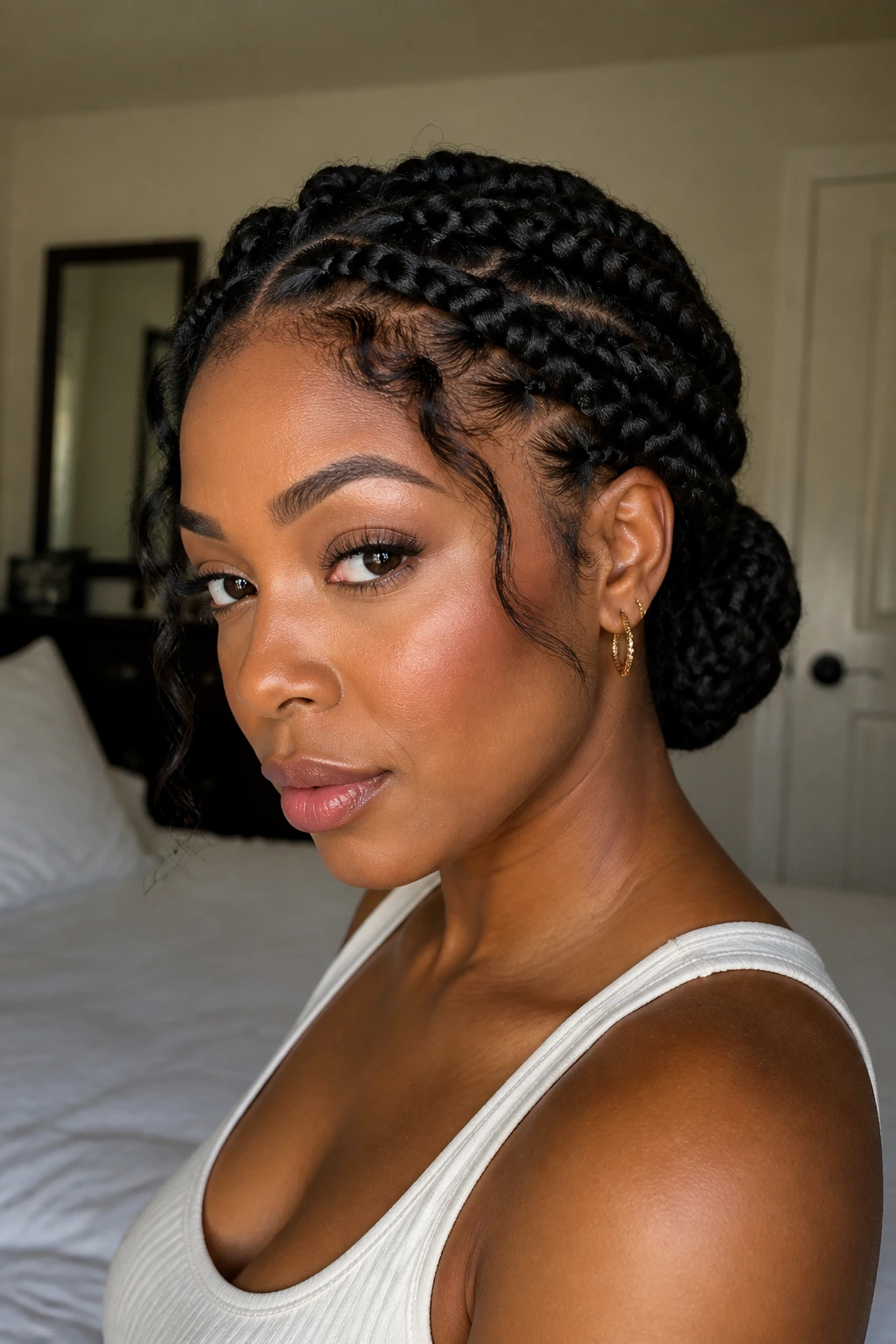
A low bun at the nape has a quiet kind of polish that never feels forced. The braids wrap back smoothly, the ends tuck into a rounded shape, and the curly pieces can peek out just enough to keep the bun from looking too strict. I love this one for jobs, events, and any day when you want your hair to behave.
The shape sits low and stable, so it tends to wear comfortably for hours. That matters. A high bun can start to feel heavy if the braid length is long, but a nape bun spreads that weight out more evenly. It also pairs well with collars, jackets, and scarves because the hair stays below the line of your clothes instead of bunching at the neck.
The cleanest versions usually have a middle part or a neat side part leading into the bun. If you like a softer finish, leave two curly pieces out near the temples. If you want a sharper look, tuck everything in and let the bun carry the style on its own.
A good nape bun should look deliberate from every angle. From the front, it should feel smooth. From the back, it should look full, not lopsided.
6. Fulani-Inspired Goddess Braids With Beads
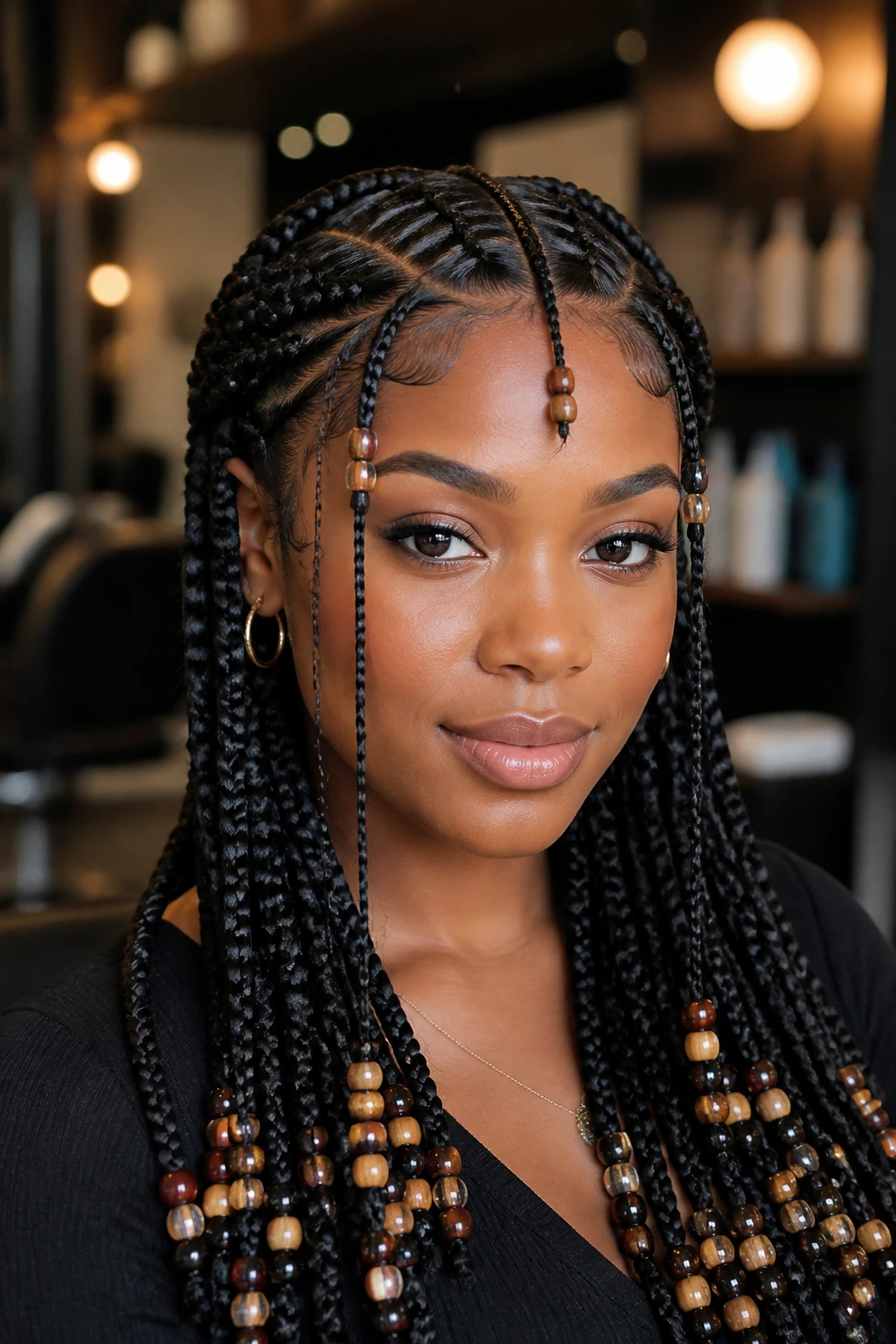
Fulani-inspired braid styles bring structure, pattern, and history together in a way that plain straight-back braids never quite do. You usually get a center braid or a front-to-back braid line, then smaller side braids and decorative touches like beads or cuffs. The look has real rhythm.
What makes this version stand out
The parting pattern is part of the design. That means the scalp work has to be clean, because sloppy sections show right away.
Beads can sit at the ends, near the temples, or along select braids. You do not need to load every braid with decoration.
This style is best for someone who likes detail and does not mind a little weight at the ends. Beads clack a bit when you move. Some people love that. Some don’t. I’m in the first group, but only when the bead count is controlled.
There is also a cultural side here that deserves respect. Ask for a Fulani-inspired version, not a rushed imitation. The pattern should feel intentional, and the accessory placement should match the braid size. Too many beads on tiny braids can snag and drag. A few well-placed pieces look smarter than a crowded row.
7. Knotless Goddess Braids for a Lighter Feel
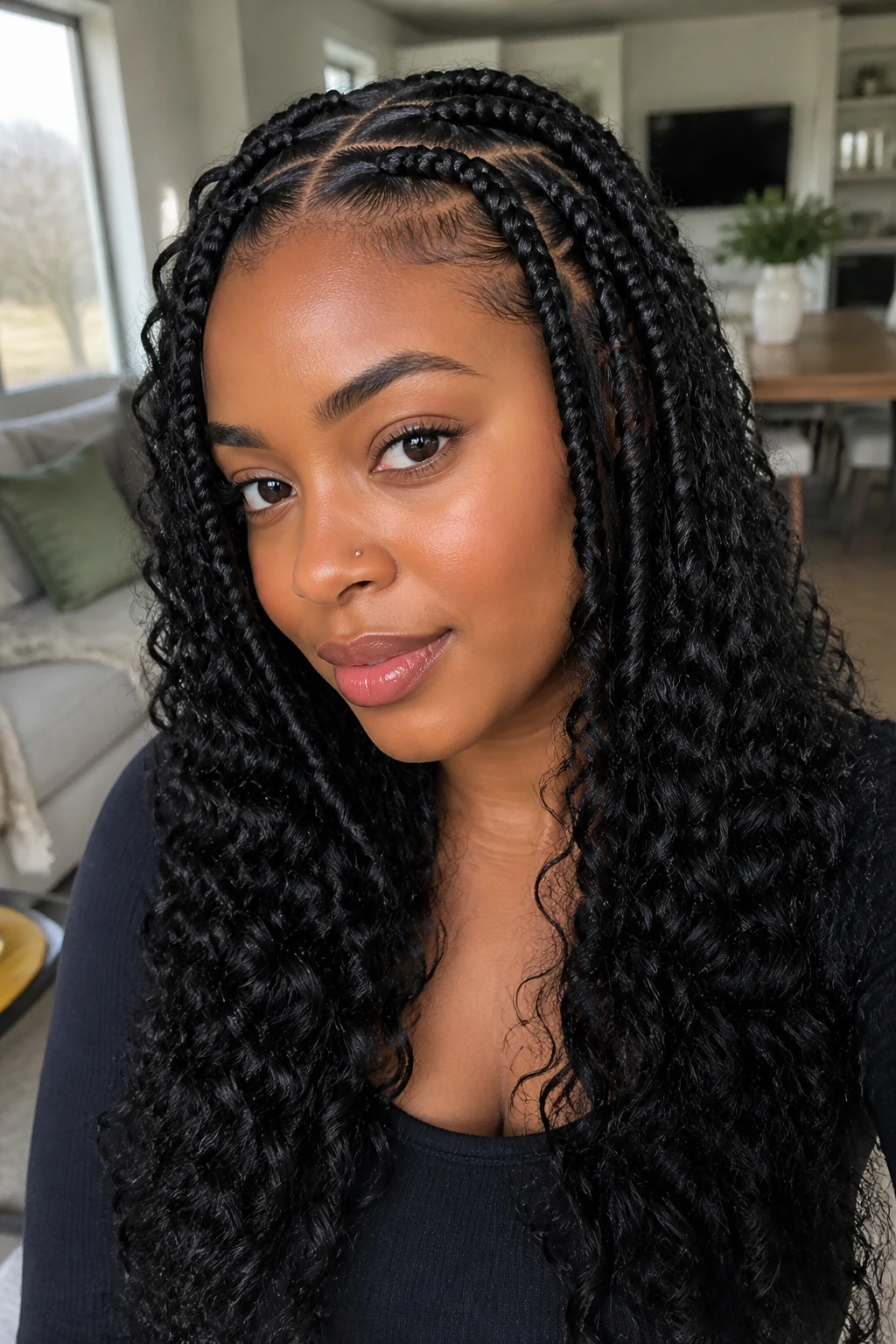
Knotless goddess braids are the option I reach for when someone says, “I want the look, but my scalp is sensitive.” That small change at the base matters a lot. Instead of starting with a tight knot, the braid begins more naturally with your hair and then the extension hair is fed in gradually. The result feels lighter at the root.
That lighter feel is not a magic trick. The install still needs skill, and the braider still has to control tension, but knotless work usually lies flatter and moves better than a stiff, knotted start. It can also look more natural along the part line, which is one reason people come back to it.
The tradeoff is time. Knotless work takes longer to install, and a rushed braid job will still pull. So if you book this style, give the stylist time to do it properly. Worth it.
It’s a solid choice for long wear, workouts, and anyone who wants a braid style that settles in instead of sitting on top of the scalp like a row of wires.
8. Jumbo Goddess Braids That Make a Statement
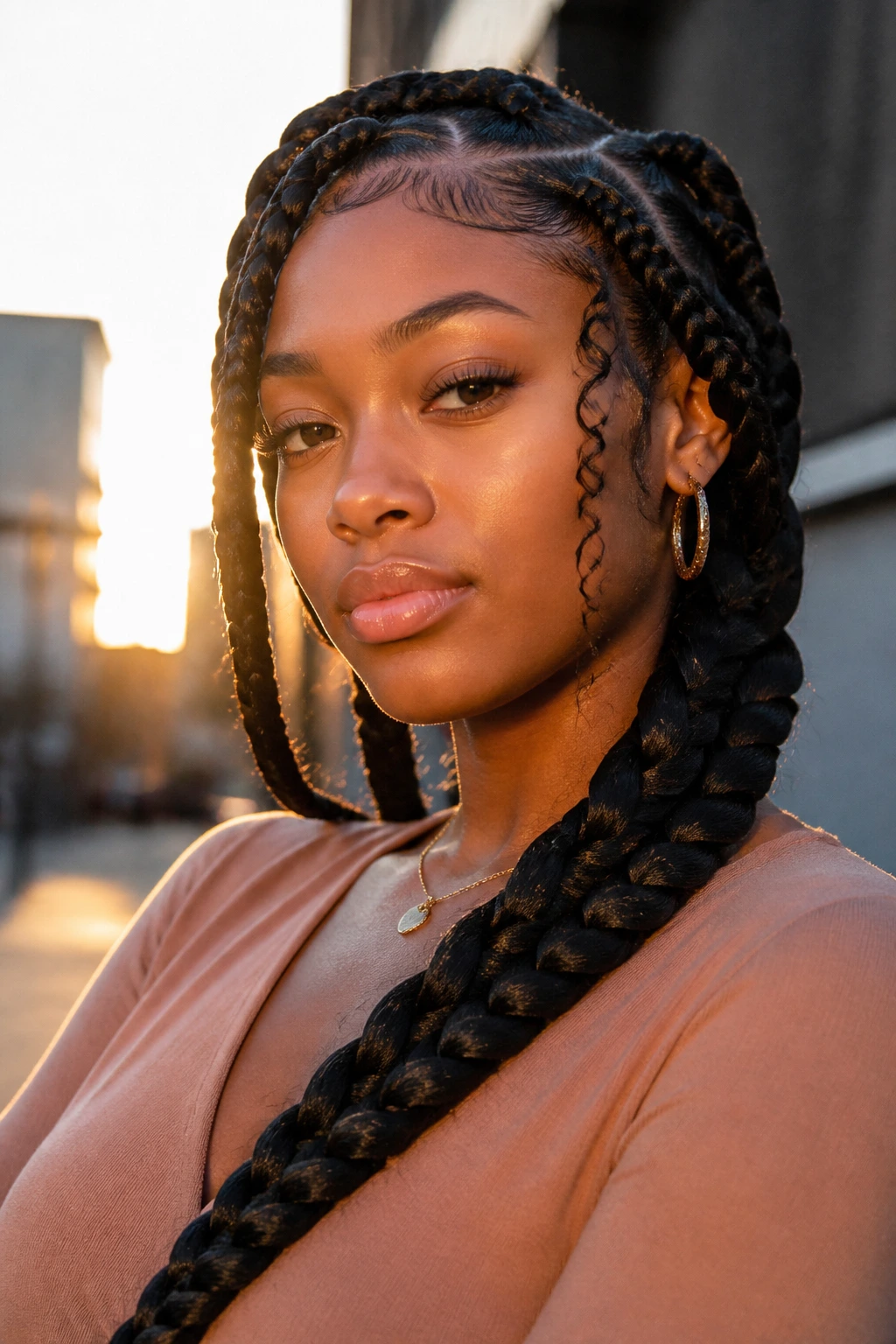
Big braids do not whisper. They walk into a room and take up space. That is the appeal. Jumbo goddess braids give you a strong shape fast, and because there are fewer sections, the install can be quicker than a smaller, more detailed set.
The look works especially well if you like structure around the face. One thick braid swooping over the shoulder or across the back can look richer than six smaller braids that never quite settle. There is a confidence to it. Not loudness. Confidence.
Best parts of jumbo braids
- Faster installation than very small braids.
- Strong visual impact with fewer sections.
- Easier to gather into a bun or ponytail.
- Good choice when you want less overall braid count.
The only caution is the weight. A jumbo braid that is too heavy for your hairline can start to feel like a headache waiting to happen. If your edges are fragile or your scalp is sensitive, ask for a slightly lighter feed-in at the front. You still get the dramatic shape, just without the drag.
9. Medium Goddess Braids With Face-Framing Curls
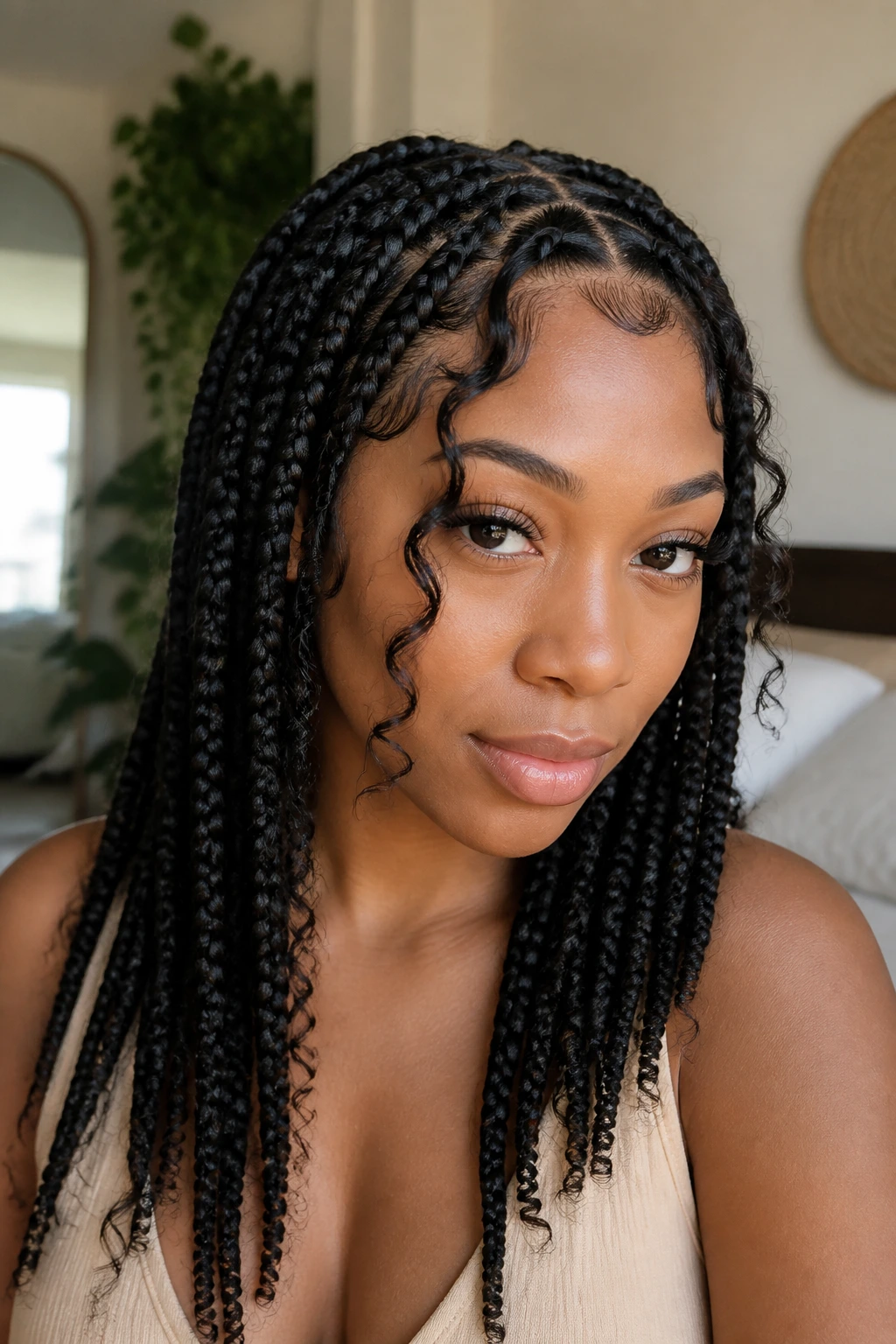
Why do some braid styles look soft even when they’re neat? Usually it comes down to the face-framing pieces. Medium goddess braids get that effect right by keeping the braid size moderate and leaving a few curly sections loose near the temples or cheekbones. The face gets shape, but it never feels boxed in.
Where to place the loose pieces
- Near the temples if you want the face to open up.
- Around the cheekbones if you want softness without covering the eyes.
- At the jawline if you want more movement near the collar.
- Just one or two pieces if you prefer a cleaner front.
This style is a good middle ground for people who do not want tiny braids and do not want giant ones either. The medium width makes the scalp pattern easy to read, and the curls keep the overall look from getting too severe. It’s one of those styles that works in daylight and still feels finished after dark.
If you hate when braid styles swallow your features, this is a smart place to land. Keep the loose pieces hydrated with a light curl mousse, and avoid piling too much oil on the ends. Too much product weighs the curls down fast.
10. Feed-In Goddess Braids With Clean Parts
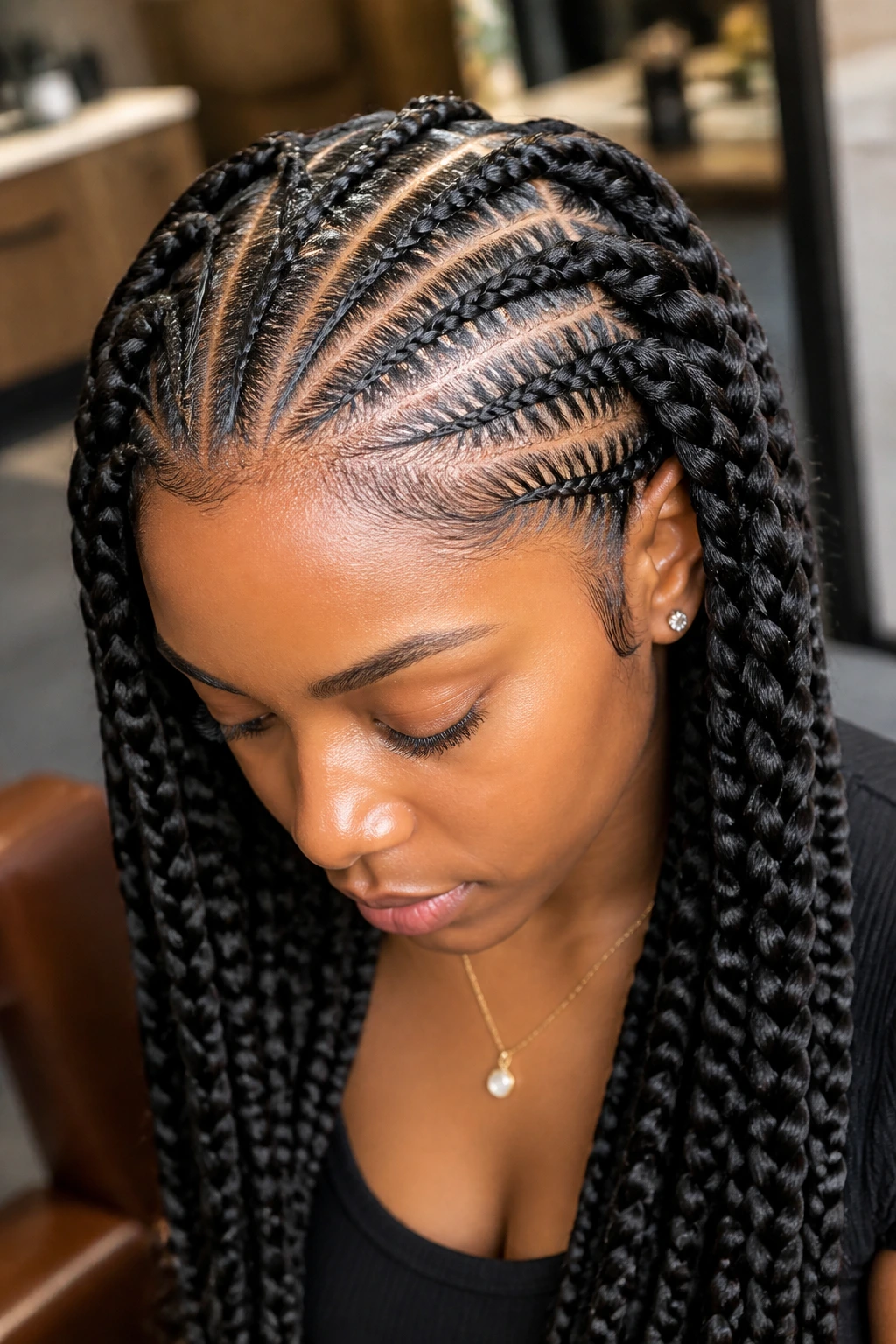
Feed-in goddess braids are the closest thing braid work has to line art. The sections are neat, the parts are crisp, and the braid seems to build right out of the scalp instead of sitting on top of it. That clean start gives the whole style a sharper profile.
I like this version when someone wants the braid pattern to be the star. The feed-in technique lets the braids grow gradually from small to full, which makes the rows look smoother and keeps the front from looking chunky. If the parting is done well, the style almost has its own geometry. That is the good part. The bad part is that you can see sloppy part lines from across the room, so there is nowhere to hide.
This style works beautifully on people who like a neat, tailored look. It also holds accessories well if you want to add cuffs later. Ask your braider to keep the sections even and the braid direction consistent; mismatched rows can make the style look crooked even when the braids themselves are fine.
It’s a clean, disciplined braid look. No fluff. That is exactly why it works.
11. Low Side Bun Goddess Braids
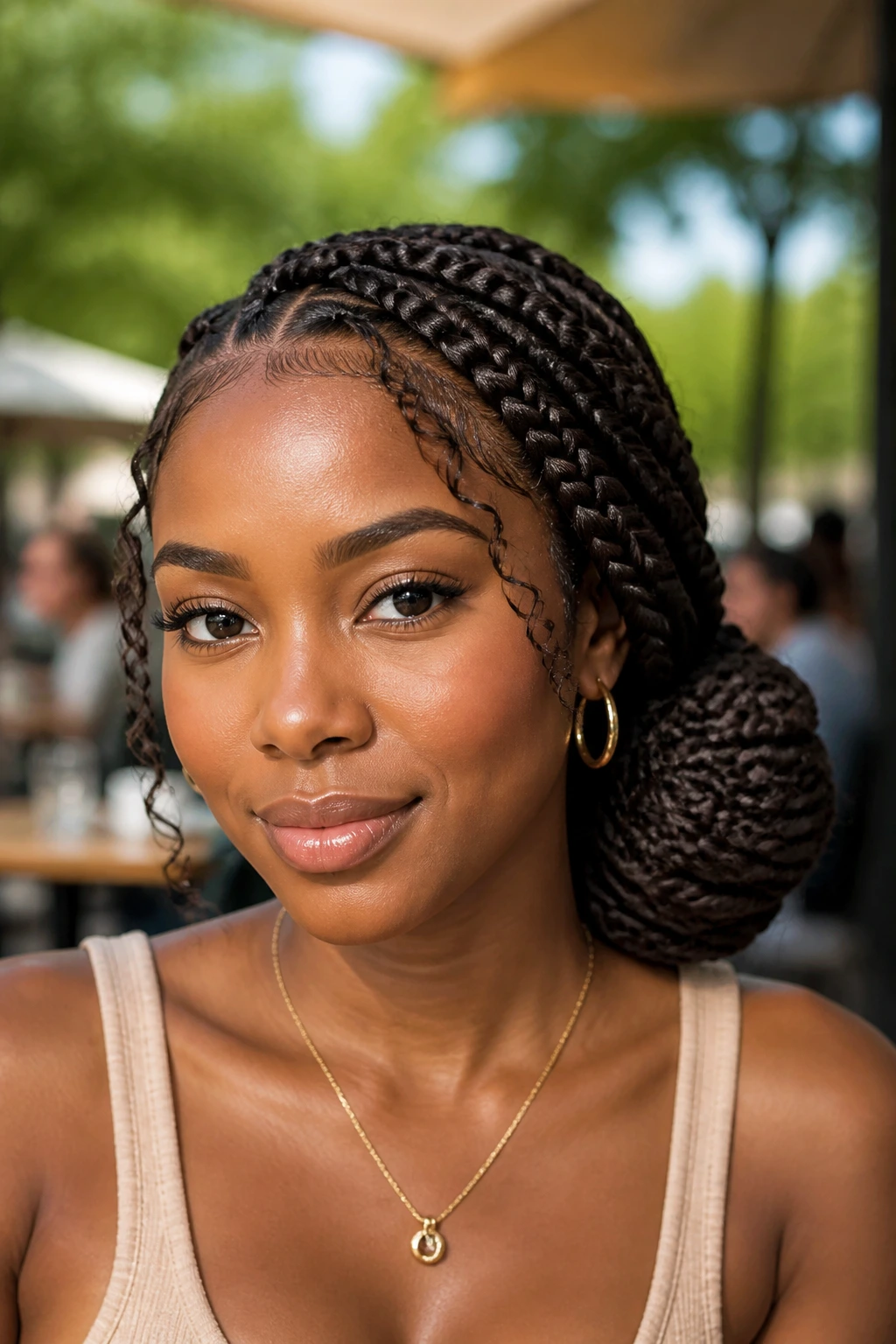
A low side bun is the braid style I reach for when I want my neck clear but do not want a severe updo. The braid pattern falls toward one side, then gathers into a bun that sits low and slightly off-center. The shape feels elegant without trying too hard.
That side placement gives the face a softer line than a straight-back bun. It also works well when you want one earring or one shoulder detail to stay visible. I’ve seen this style look especially good with deep side parts, because the whole head starts to feel lightly sculpted instead of symmetrical in a stiff way.
Good things about a low side bun
- Keeps hair off the neck and out of the way.
- Leaves room for statement earrings.
- Feels calm enough for daytime and polished enough for events.
- Lets the curly ends peek out in a controlled way.
The bun should sit close to the head, not drift low and saggy. If it’s loose, the style loses shape fast. Pin it properly, smooth the front, and keep the braid ends tucked. A tidy side bun looks intentional; a sloppy one looks like you gave up halfway through.
12. Crown Goddess Braids That Wrap the Hairline
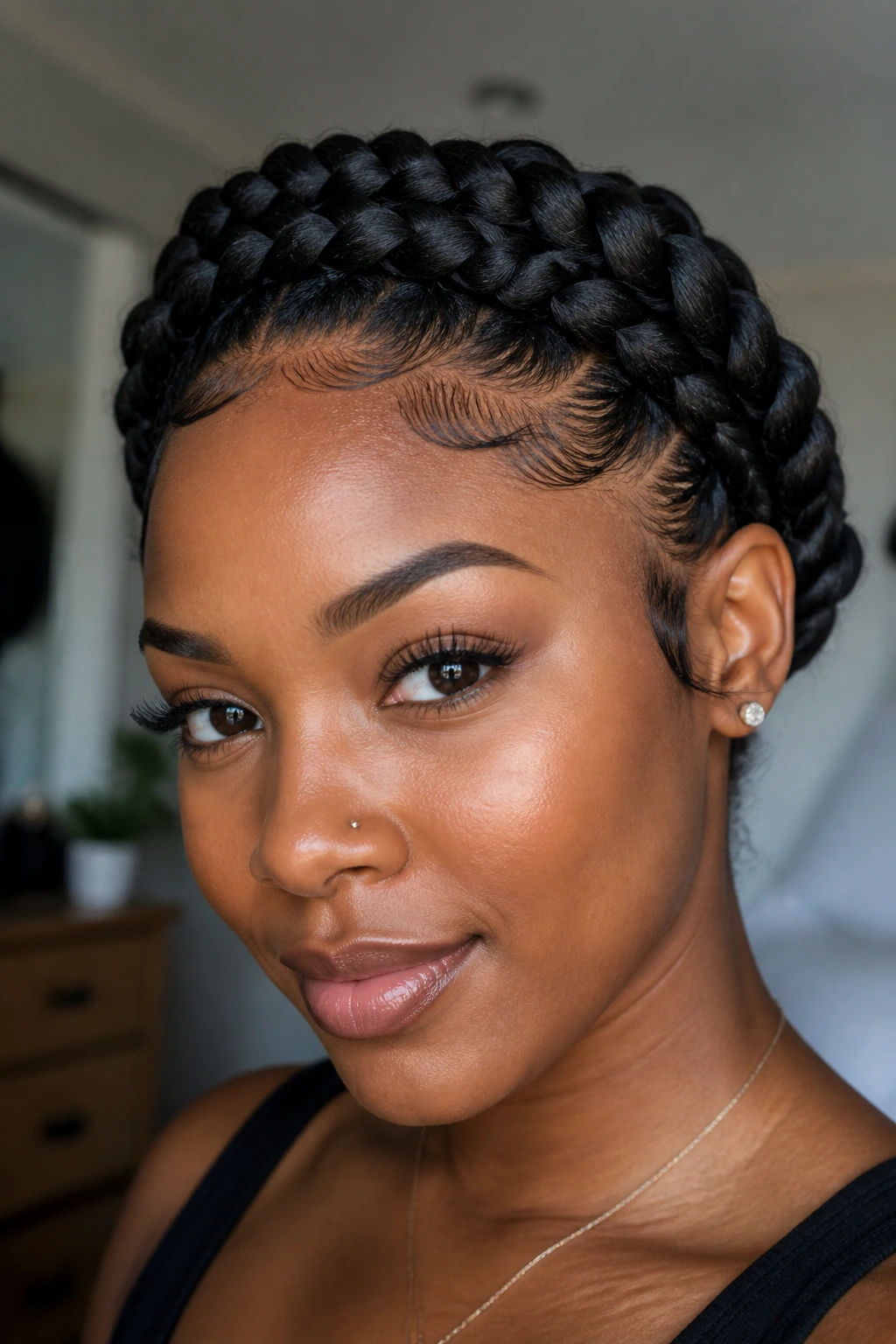
Unlike styles that hang long and loud, crown goddess braids stay near the head and let the braid pattern do the talking. They wrap around the hairline like a halo, which gives the face a framed, lifted look without adding bulk to the back.
This style is a nice pick when you want to show off earrings, a neckline, or a scarf. It also works well for people who do not love long braid ends brushing against their clothes all day. The braids sit where the eye naturally goes, which means the parting and braid direction have to be clean. A rough crown braid is hard to ignore.
The best versions feel balanced from temple to temple. If one side sits too high or too low, the whole crown tilts. That is the thing to watch. Ask for even arc placement, and do not let the front get too tight near the edges. A crown style should frame the face, not squeeze it.
It’s a quiet showpiece. I like that.
13. Triangle-Part Goddess Braids
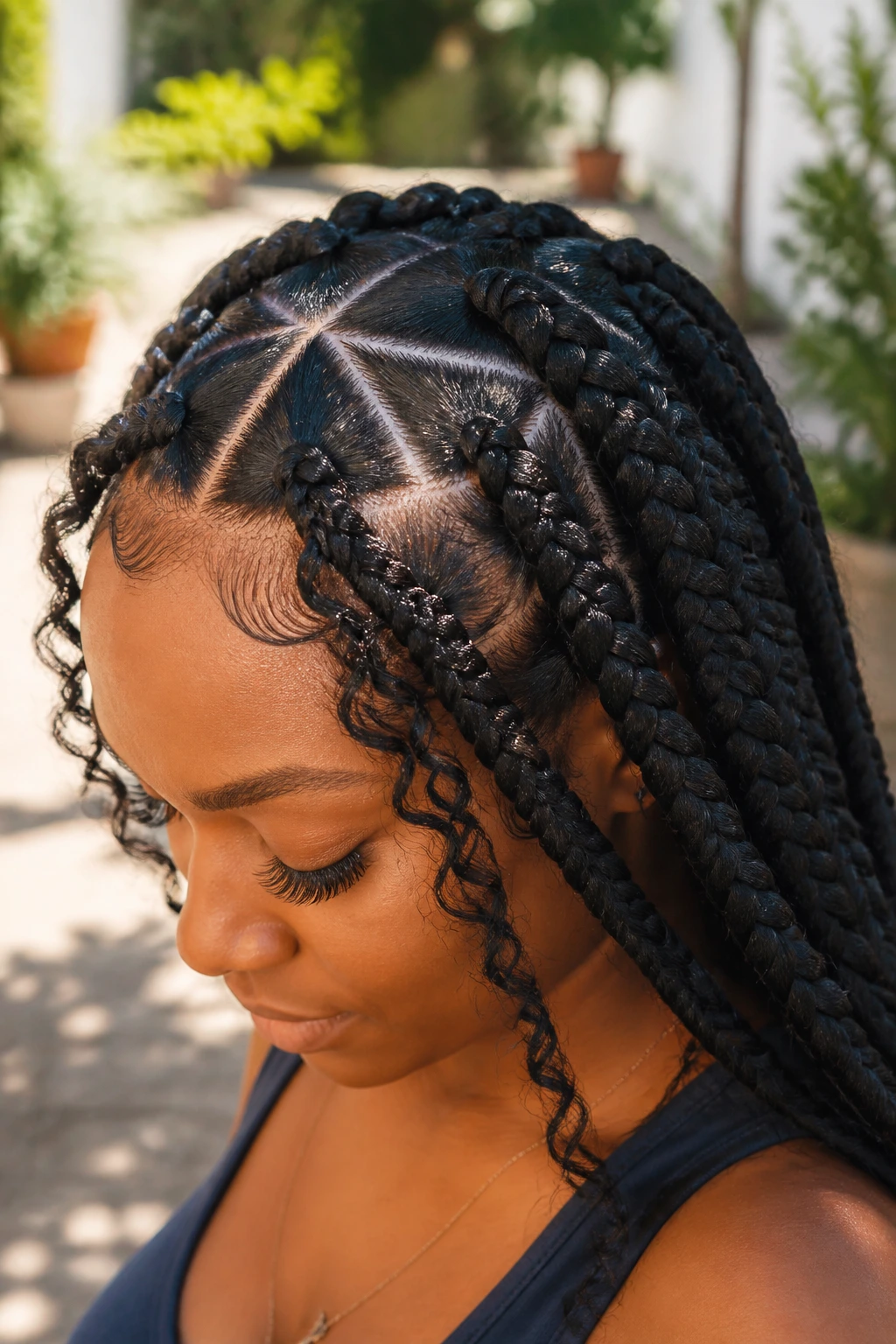
Triangle parts can change the mood of a braid style before the first braid even starts. The braids themselves might be medium or jumbo, but the part shapes break up the grid and make the look feel sharper and more deliberate. It is a small thing, and it makes a big difference.
People notice the parts more than they expect. Square sections are clean, sure, but triangle parts add movement even when the hair is held still. That matters if you want your style to look designed instead of routine. It also gives the scalp a slightly less predictable pattern, which I find more interesting than rows that go on forever with no variation.
This style is best for someone who likes details. If you are the kind of person who notices stitch lines on a jacket, triangle parts will probably make you happy. If you want something subtle and invisible, skip it. The braid work takes longer, and the lines have to be neat, because wonky triangles look messy fast.
I like triangle parts on medium-length goddess braids with curly ends. The geometric base and the soft finish play well together.
14. Long Boho Goddess Braids With Loose Waves
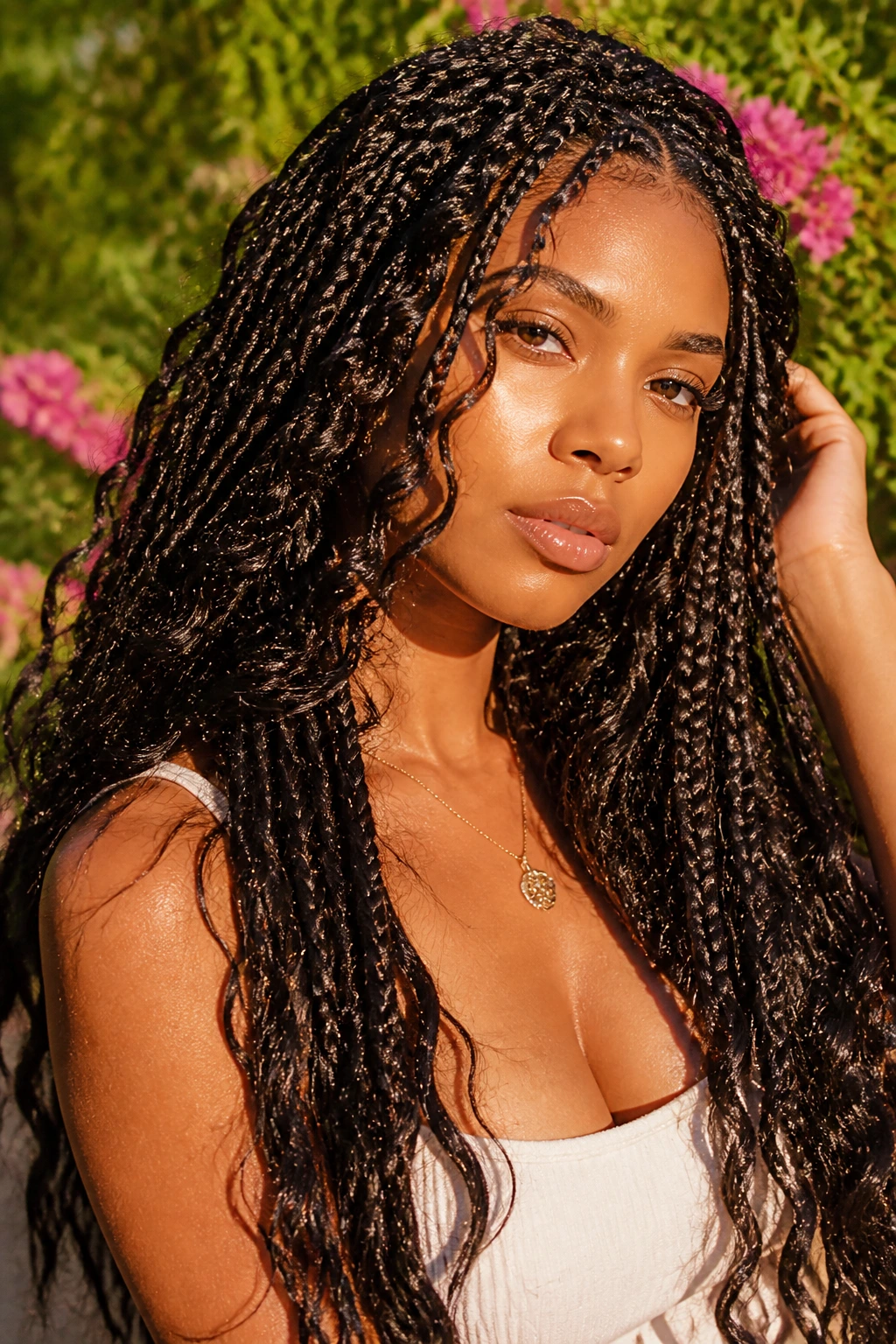
What makes long boho goddess braids feel different is the looseness. The braids are still there, but the added wavy or curly pieces make the whole style feel softer and more lived-in. It’s less strict, more layered, and better if you like hair that moves when you walk.
How to keep the curls from turning fuzzy
Use a small amount of mousse on damp curls and scrunch gently from mid-length to ends.
Sleep with the curls gathered loosely and covered with a satin scarf or bonnet.
Avoid heavy creams on the loose pieces; they flatten the wave and make the braids feel greasy.
Long boho styles look beautiful when the curls stay separated instead of clumping together. That means the install needs good extension hair, and the maintenance has to be light-handed. Too much product ruins the airy feel. Too much manipulation does the same thing.
This is a good choice for people who want a romantic braid style without going full formal. It works at brunch, at a party, at a dinner, and probably on any day when you want your hair to look a little softer than the rest of your outfit. The only real downside is tangling at the ends, so keep a wide-tooth comb nearby and do not drag through the curls roughly.
15. Short Goddess Braid Bob

A short goddess braid bob is the clean answer for anyone who likes braids but does not want hair down the back forever. The shape sits around the jaw, chin, or upper shoulder, which makes it lighter, easier to wash around, and less likely to snag on everything you own.
It also has a sharper edge than long braid styles. A bob can look chic in a plain T-shirt or with a blazer, and the shorter length means the parts and curl placement show more clearly. There is less hair to hide behind. That is part of the appeal.
This style is especially nice if you have a busy routine. It dries faster after washing, it is easier to pack under a scarf, and it does not swing into your face as much when you move. The tradeoff is that it can require a little more shaping at the ends so it does not puff outward in a boxy way.
If you want the bob to feel modern, keep the braid size consistent and let the ends curl softly inward or outward. Both can work. What you want to avoid is a blunt finish that looks cut by accident.
16. Zigzag Part Goddess Braids
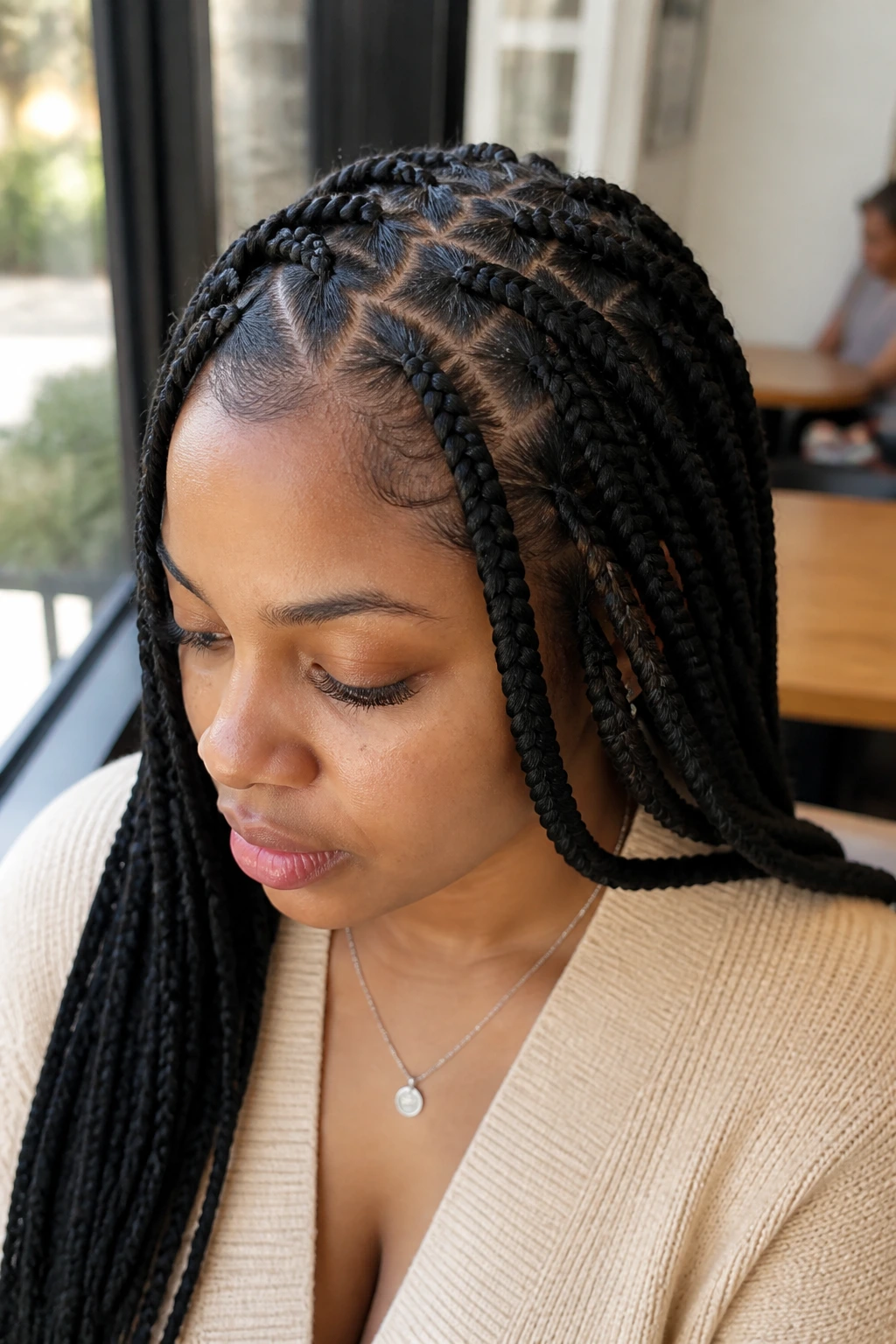
The part itself does the work here. Zigzag sections turn a standard goddess braid setup into something with a little more attitude, and they do it without relying on extra length or heavy accessories. If you want visual interest before the braids even begin, this is a strong choice.
The lines look best when they’re crisp. A zigzag that wobbles or gets too wide loses the point. That is why this style needs a stylist who is patient with the rat-tail comb and not rushing through the prep. The braid rows can stay simple; the scalp pattern carries the energy.
This is a good style when you want something playful but not childish. It has shape. It has edge. It does not need beads or cuffs to work. I actually like it better when the accessories are minimal because the parting is already talking.
If you choose this look, ask for a clear front section so the zigzag can be seen from the mirror. A hidden pattern is a wasted pattern.
17. Goddess Braids With Cuffs and Beads
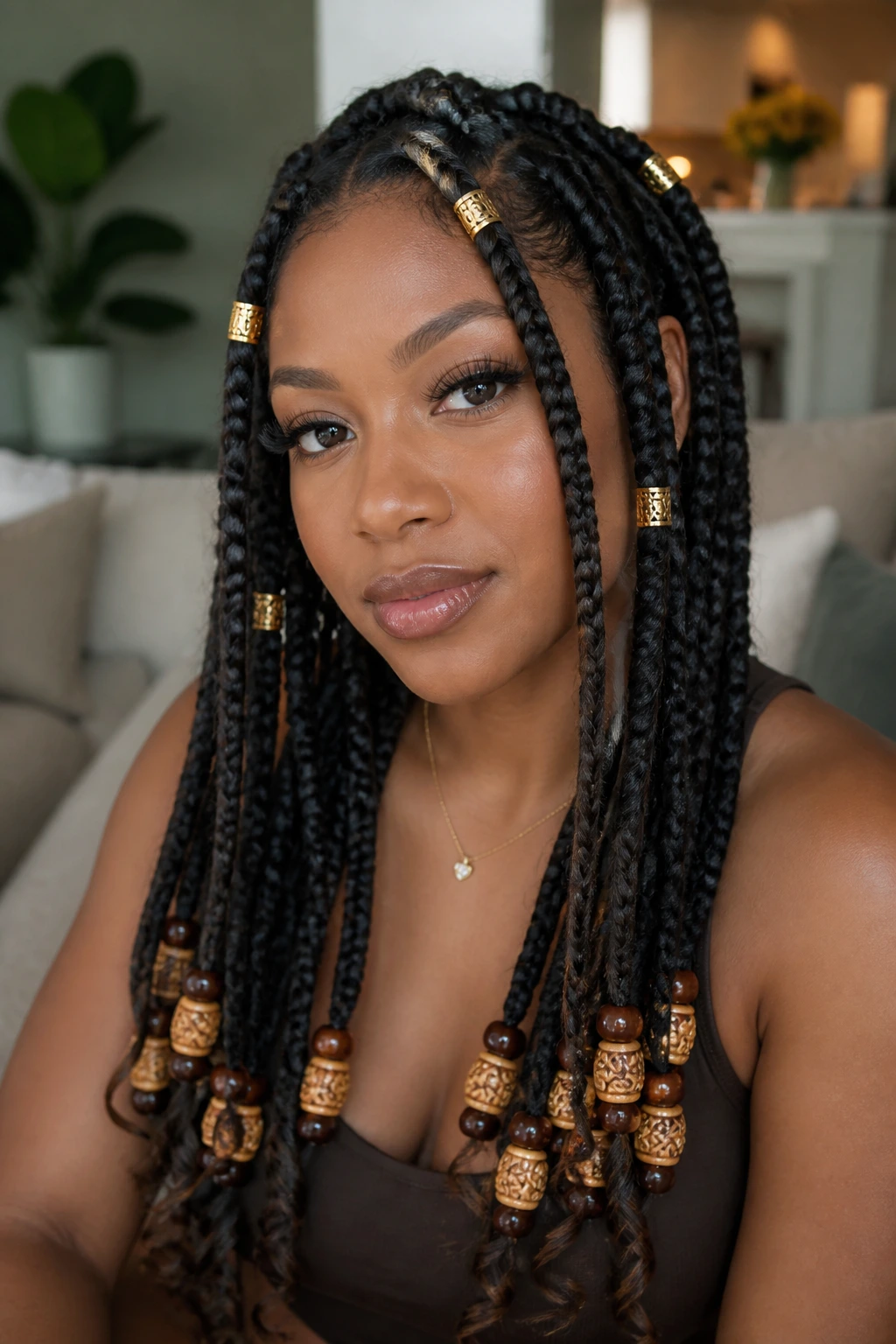
Accessories can rescue a braid style that feels too plain, but they can also ruin one if you go overboard. Goddess braids with cuffs and beads work because the decorations are doing one job: highlighting the braid line, not burying it. That’s the whole trick.
A few cuffs near the front can catch the eye without weighing the braids down. Beads at the ends bring sound, movement, and a little personality. The style looks best when the braid shape is already clean. Decorations should support the braid, not distract from a weak install.
A practical rule I like
- Use cuffs on the braids that frame the face.
- Put beads on thicker ends so they do not slip.
- Keep the accessory count uneven and selective.
- Stop before it starts looking crowded.
This version is nice for birthdays, photos, concerts, and any time you want your braids to feel more styled. Still, there is a limit. Too many beads can snag on clothing and pillows, and too many cuffs can make the style feel busy. One or two strong details beat a pile of small ones every time.
18. Lemonade Goddess Braids
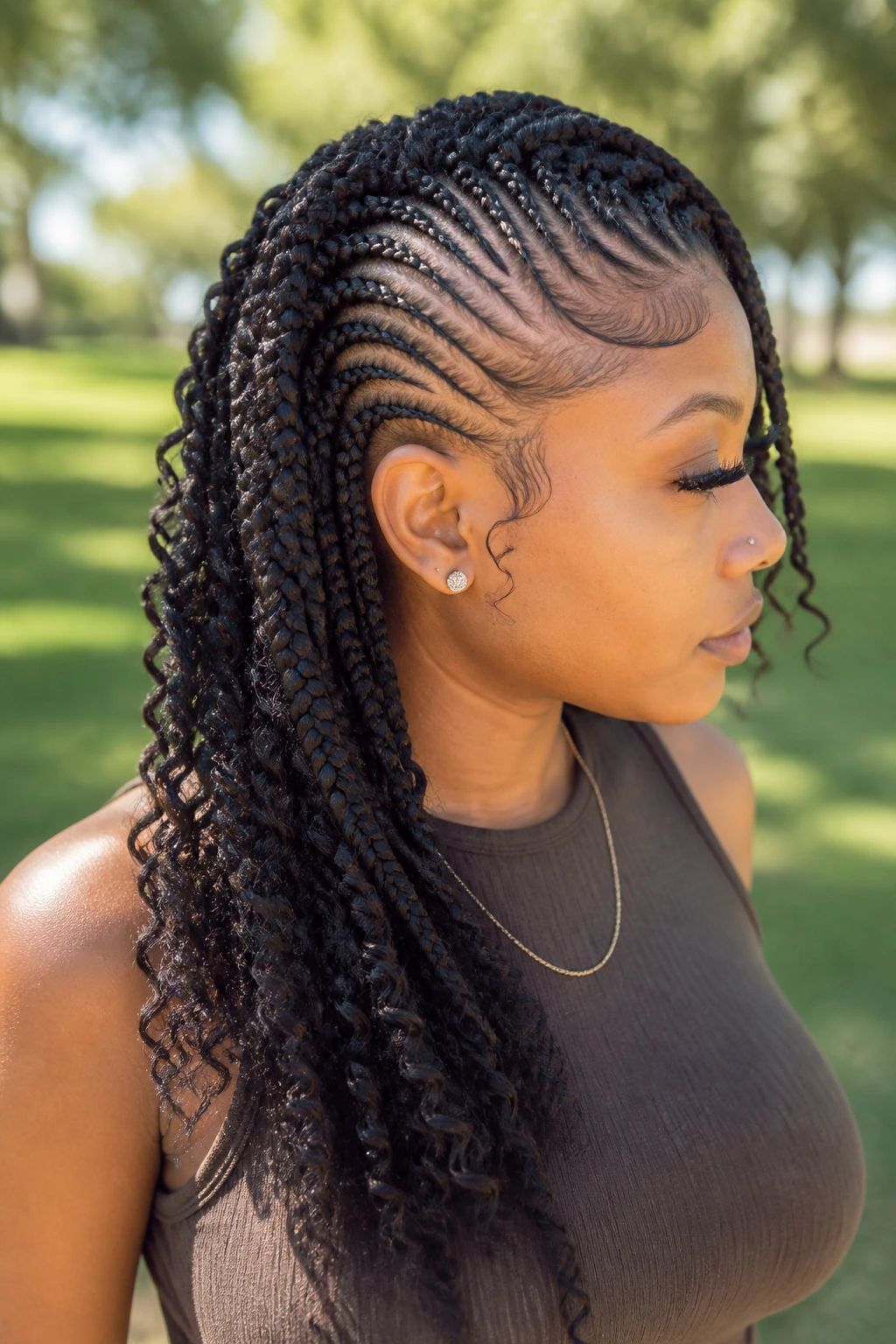
Lemonade braids have that long, sweeping side motion that keeps the whole style feeling dynamic. They follow the curve of the head and fall in a direction that flatters the cheekbone, jaw, and neck. The goddess version softens that shape with curly ends or loose pieces, so the style does not land too hard.
This is a strong pick if you like a side-facing silhouette. It lets you show off one side of the face while keeping the other side cleaner. That contrast is flattering, and it also gives you room to wear a bold eye, a sharp lip, or chunky jewelry without the hair competing for attention.
I like lemonade-inspired goddess braids on people who want the braid pattern to feel sleek but not severe. The curve matters more than braid size here. If the angle is off, the whole style loses its flow. Tell the stylist which side you part on naturally, because forcing the opposite side often creates tension at the root and leaves you fighting the shape all week.
It’s a style with motion in it. That’s why it keeps coming back.
19. Goddess Braid Mohawk Updo
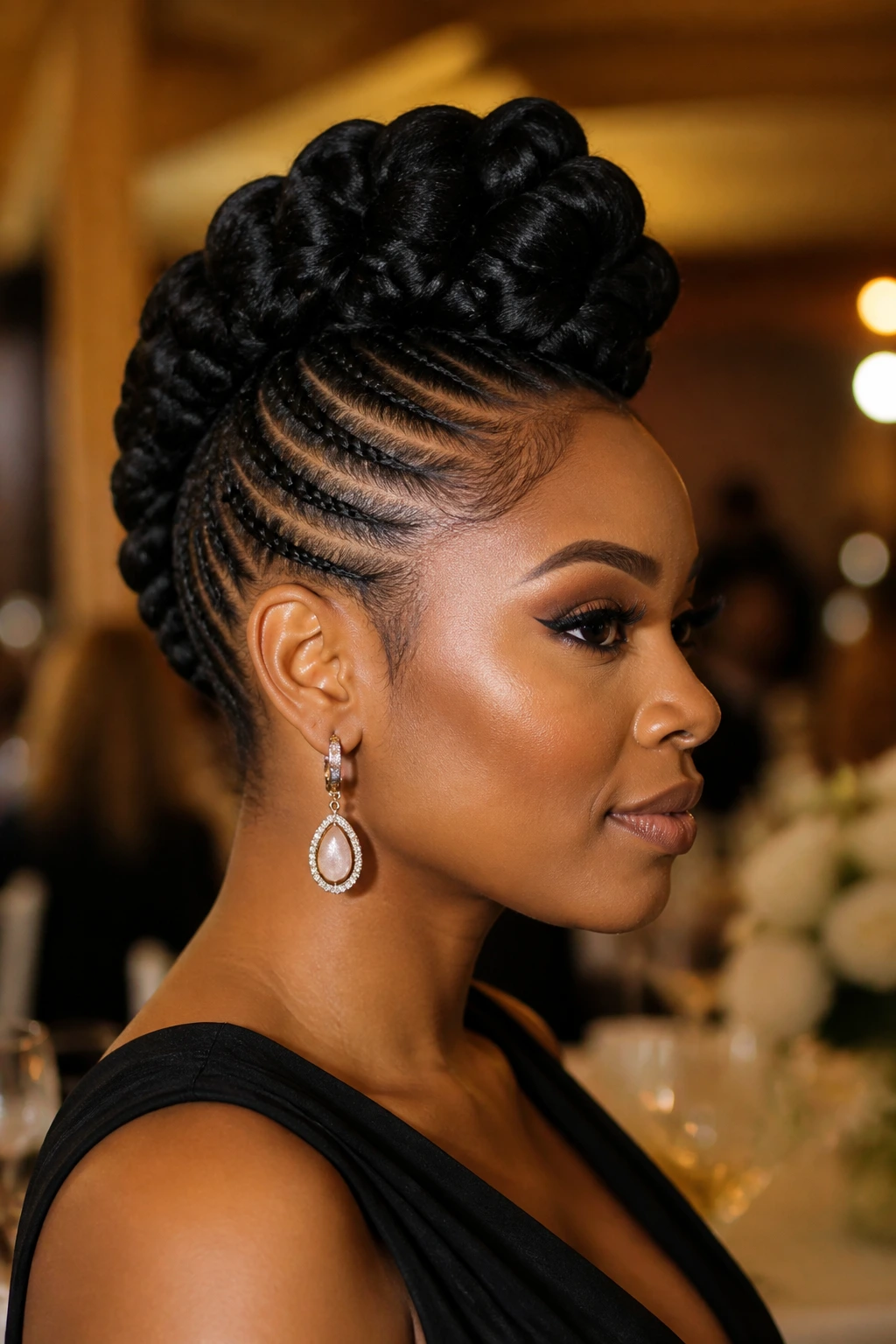
A braid mohawk updo gives you height without making the style feel stiff. The sides are pulled tight or braided close to the scalp, while the center section rises up and back in a ridge, bun, or pinned braid mass. The result feels bold, but not messy.
What makes this style work
The sides need to be smooth. If they puff out, the mohawk shape disappears.
The center has to carry enough volume to read as a crest, not just a small bump.
Pinned ends should be hidden so the finish looks deliberate from the back.
This is a good option for special events, but it also works for days when you want your hair completely away from your shoulders. I’ve seen it look fantastic with dresses that have open backs or high collars because the braid line becomes part of the outfit. That said, it does ask for a braider who knows how to balance height and stability. Too tall, and it feels costume-y. Too flat, and it loses the point.
If you like drama with structure, this one hits the mark.
20. Twin Goddess Braided Space Buns
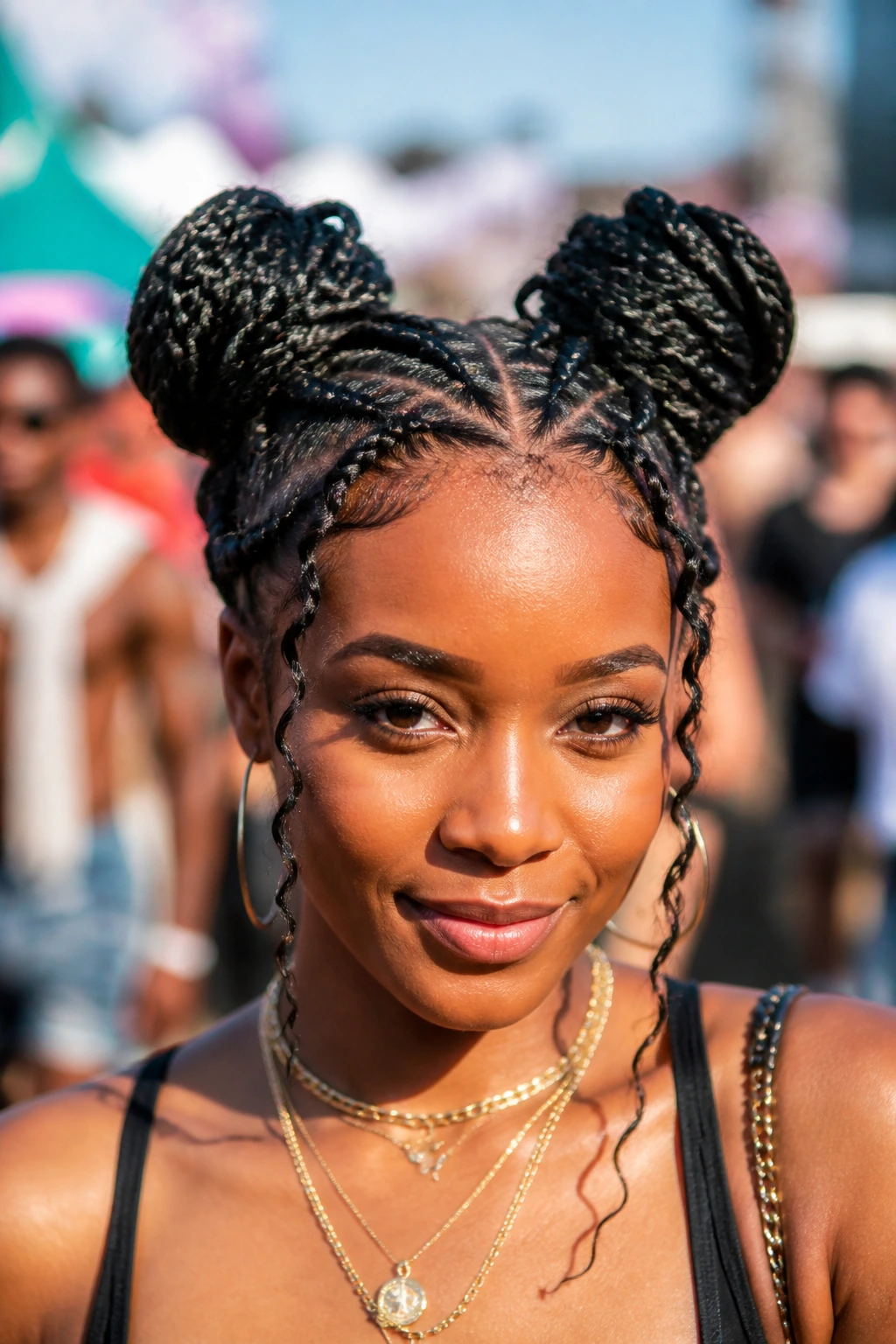
Twin space buns sound playful, and they are, but they do not have to look childish. With clean parts, smooth braid bases, and tucked ends, the style can feel sharp and modern. Two buns also spread the weight out, which is kinder to your head than one giant knot in the middle.
The shape works well when you want something up and out of the way without defaulting to a plain bun or ponytail. It’s a good pick for festivals, birthdays, travel, or any day when you want your braids to feel a little lighter and more open around the face. Leave a few curly pieces near the temples if you want softness. Keep the front sleek if you want the buns to read as the main event.
What I like most is how flexible this style is. The buns can sit high and perky, low and rounded, or slightly off-center if you want them to feel less exact. That little bit of variation keeps the look from feeling stiff.
If you ask me, the smartest space-bun versions are the ones that still look good after a full day of wear. That means neat parts, secure wrapping, and no tension near the hairline. Get those three right, and the style carries itself.
