



Big box braid styles for long lengths have a different personality than shorter braids. They swing harder, show off parting more clearly, and make every little styling choice louder than you expect. A clean center part looks sharper. A sloppy ponytail looks sloppier. A well-placed accessory can carry the whole look.
That’s the fun of it, though. Long box braids give you shape, movement, and a little drama without asking for much back. They can sit neat and straight down the back one day, then turn into something polished, playful, or flat-out regal the next. The catch is weight. Long braids can tug at the hairline, crowd the neck, and turn a cute style into an annoying one if you force the wrong shape.
So the best styles aren’t the ones that hide the length. They’re the ones that use it. Big braids need room to breathe. They look best when the style respects the bulk, keeps the scalp comfortable, and lets the ends do some of the talking. That usually means bigger shapes, fewer tiny pins, and a little restraint with accessories.
Some looks are easy and casual. Others are more dressed up. A few only take a minute, which is exactly what you want when your arms are tired and the braids feel heavy. The good news is that long lengths give you enough material to work with, so the styling options are broader than people think.
1. Waist-Length Center-Part Big Box Braids
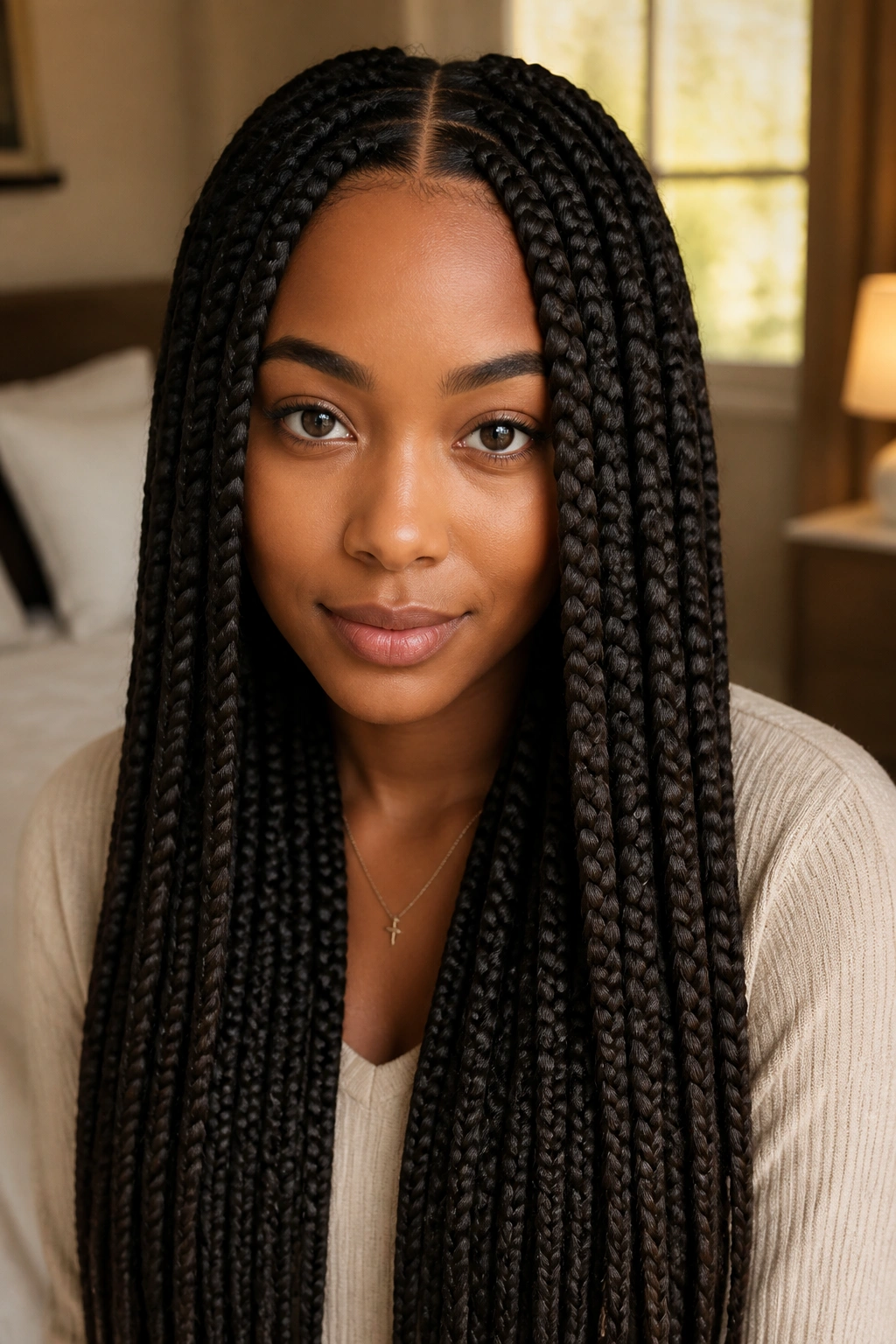
This is the classic for a reason. A clean center part lets long box braids fall in two even curtains, and that symmetry makes the length look deliberate instead of accidental. There’s a certain confidence to it. No trickery, no fuss, just long braids doing what they do best.
Why It Works on Long Lengths
The center part gives the eye a straight line to follow, which helps the braids look tidy even when they’re thick. It also keeps the weight balanced on both sides of the head, which matters more with long installs than people like to admit. When one side is much heavier, you feel it.
- Best with medium-to-large braids that hang past the chest.
- Works well with simple outfits because the braids become the focal point.
- Looks cleaner when the roots are laid flat and the part is crisp.
- Easy to dress up with cuffs, ribbon, or one bold earring.
Tip: keep the roots smooth and the part straight. A wavy center part makes the whole style look off, even if the braids themselves are neat.
2. Big Side-Swept Braids Over One Shoulder

This one has range. Sweep the braids over one shoulder, let the other side stay open, and suddenly the whole style feels more styled without needing extra work. It’s a little softer than a center part and a little more dramatic too.
This is the easiest way to make long braids look polished fast. The side sweep works because it turns all that length into one heavy, glossy line. Instead of hanging evenly and blending into your clothes, the braids become a single visual move. That’s especially useful if your outfit has a high neckline or you want the braids to show in photos.
You do not need a complicated setup. A loose pin at the back, or even one hidden braid tucked under the opposite side, is often enough. If the braids are very long, let them rest naturally over the shoulder instead of forcing them into a sharp curve. Forced curves look stiff.
This style is also kind to your neck. The weight lands in one place, which can feel better than having braids spread across both sides all day.
3. Jumbo Half-Up, Half-Down Box Braids
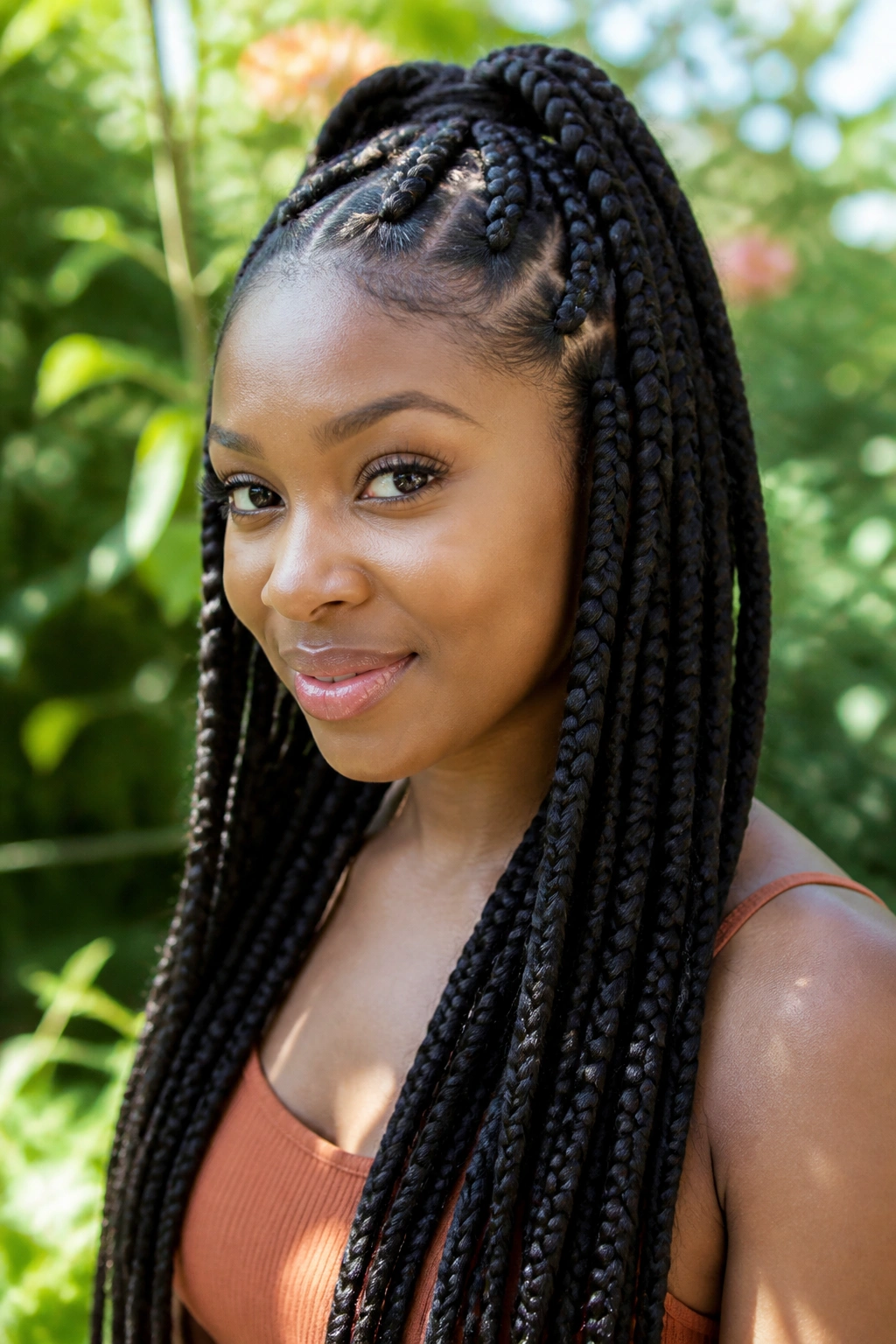
Why does this style work so well on long braids? Because it splits the job. The top section gets lifted away from your face, and the rest of the length still gets to hang out and show off. You keep the drama without wearing every ounce of it on your scalp.
How to Wear It Without Flattening the Braids
The best version starts with a loose section from temple to temple. Pull only the top third of the braids back, then secure them with a snag-free elastic or a covered band. Leave the rest down. That’s enough. If you gather too much, the bun or ponytail starts looking bulky in the wrong way.
- Use a wide elastic that won’t cut into the braids.
- Keep the top section loose enough that the roots don’t look strained.
- Let a few face-framing braids fall forward if you want softness.
- Wrap one braid around the base when you want the elastic hidden.
I like this one for long days. It keeps the face clear but still lets the braids move. Simple. Useful. No drama from the hairline.
4. High Ponytail With a Long Tail

If you’ve ever put long box braids into a high ponytail and felt that instant lift, you already know why this works. The face opens up, the neck feels lighter, and the tail down the back gives the style a clean, athletic shape.
The key is placement. Too low, and it just looks like a regular ponytail with extra steps. Too high, and the base can feel tight and awkward. Aim for the crown area, then secure the braids with a strong elastic and, if needed, a second one underneath for support. Long braids are heavy, so the anchor matters.
Use this style when you want a sharper silhouette. It looks good with hoop earrings, a strong brow, or a plain outfit that needs one clear focal point. It can also be a practical move for dinner, errands, or anything where braids swinging into your sleeves would be annoying.
Skip this one if your scalp feels tender. A high ponytail should feel secure, not like it’s pulling your thoughts sideways.
5. Single Thick Braid Down the Back
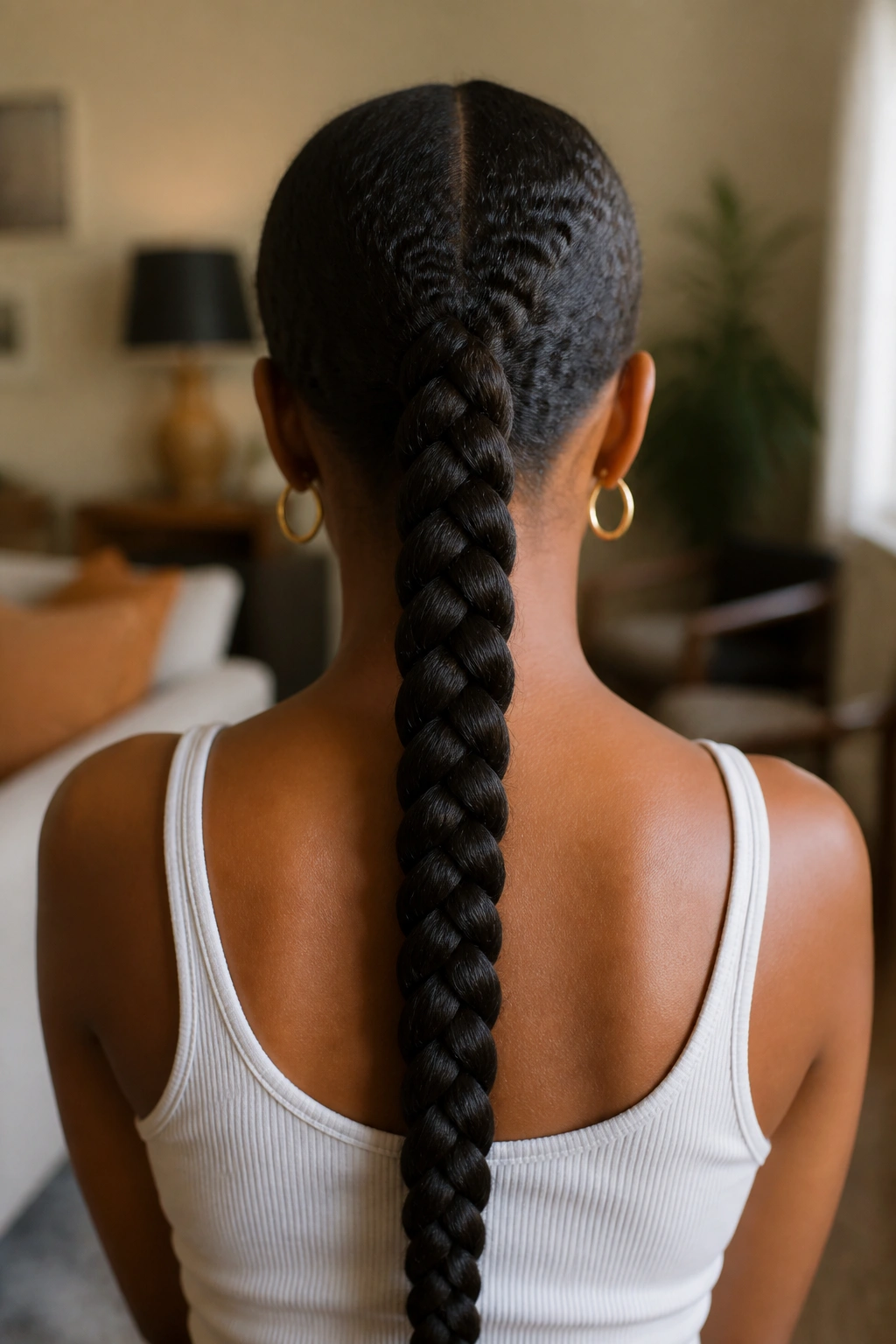
This style has a calm, almost quiet kind of strength. Instead of leaving the long box braids loose, you gather them into one thick braid that runs straight down the back like a rope. It reads neat, deliberate, and a little unexpected if people are used to seeing the braids worn loose.
The trick is not to overthink the braid itself. You’re not trying to make a tiny, tight plait. You want a broad, chunky shape that keeps the scale of the box braids intact. If the hair is very long, start the braid a little below the crown so the base doesn’t get too bulky. Let the ends fall cleanly.
This style is useful on windy days, during travel, or anytime you want the length contained without putting everything into a bun. It also shows off how long the braids really are, because the braid becomes one continuous column instead of a scattered curtain.
A satin scarf at night helps keep the braid from fuzzing up. Otherwise, the structure starts to fray faster than you’d like.
6. Triangle-Part Long Box Braids
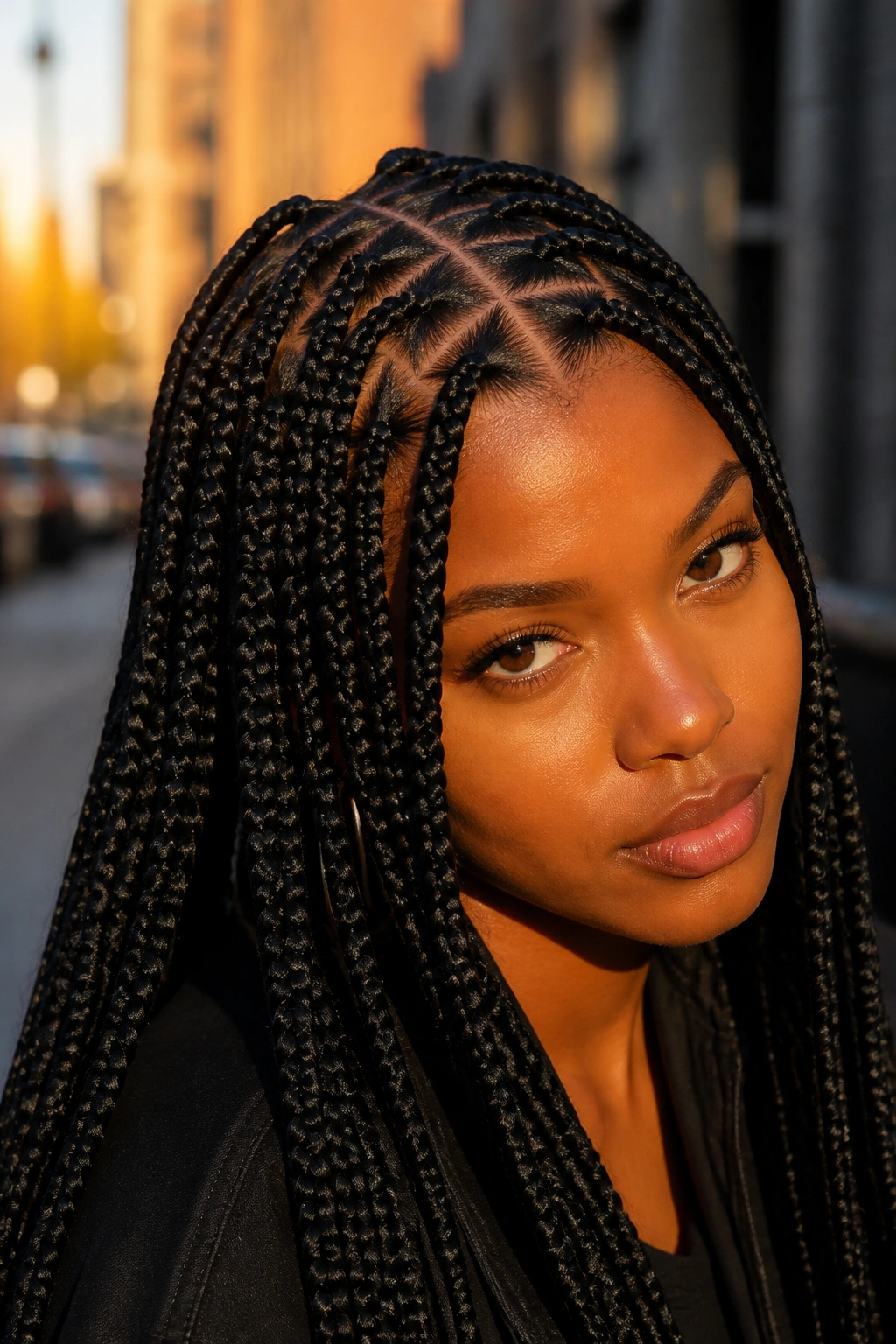
Triangle parts change the whole mood. Square parts are the familiar choice, but triangle parting gives long box braids a sharper, more graphic look. The scalp pattern becomes part of the style, not just the foundation underneath it.
Triangle parts work best when the braids are thick enough to carry the geometry. Tiny triangle sections can look fussy on long lengths. Bigger triangles feel bolder and read better from a distance. That matters when the braids reach the bust, waist, or lower.
This style is for anyone who likes structure. The parting does a lot of the talking, so you do not need heavy accessories or lots of styling. A few cuffs near the front can be enough. Too many extras, and the parting loses its clean edge.
I also like triangle parts because they soften as the braids get older. The shape stays visible even when the roots stop looking brand-new, which gives the style a longer useful life than some of the more delicate looks.
7. Space Buns With Long Hanging Braids
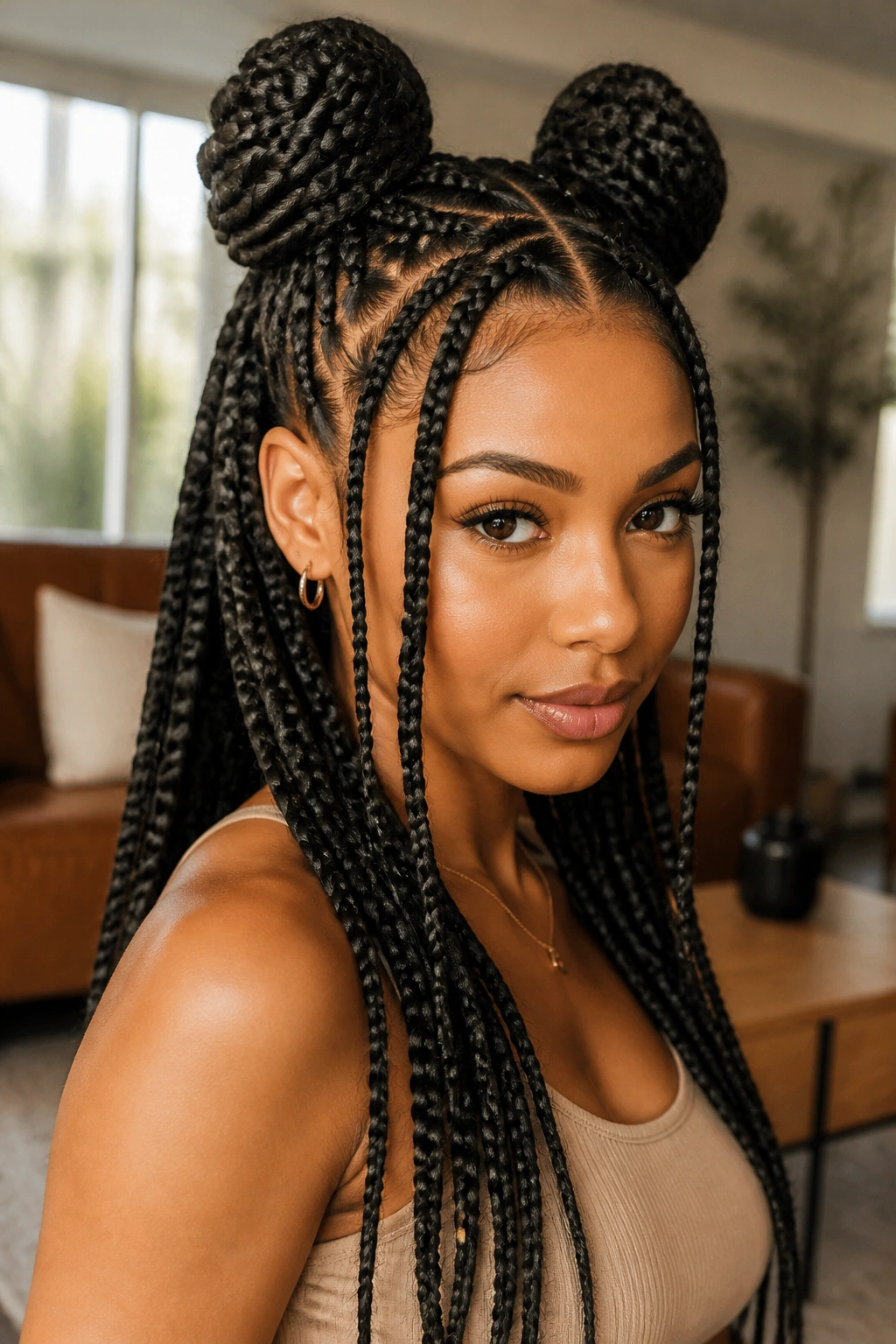
Space buns on long braids sound playful, but they can look surprisingly polished when the buns are kept full and the hanging lengths stay neat. The style lifts some of the weight off your scalp and gives the rest of the braids a fun, almost animated swing.
Picture this: two buns sitting high enough to be visible, while the remaining braids fall down the back and shoulders. It’s a little bold, a little casual, and much less juvenile than people think when the buns are made with large braids instead of tiny ones.
- Keep the buns soft, not twisted into hard knots.
- Use a strong elastic first, then a few bobby pins if needed.
- Leave the back section loose and smooth.
- Let the buns sit slightly apart, not jammed together at the crown.
The shape works best when the buns are roomy. Tiny, tight buns make the style look strained. Big braids need space, and this is one of those styles where giving them room makes the whole thing better.
8. Beaded Ends for Long Box Braids
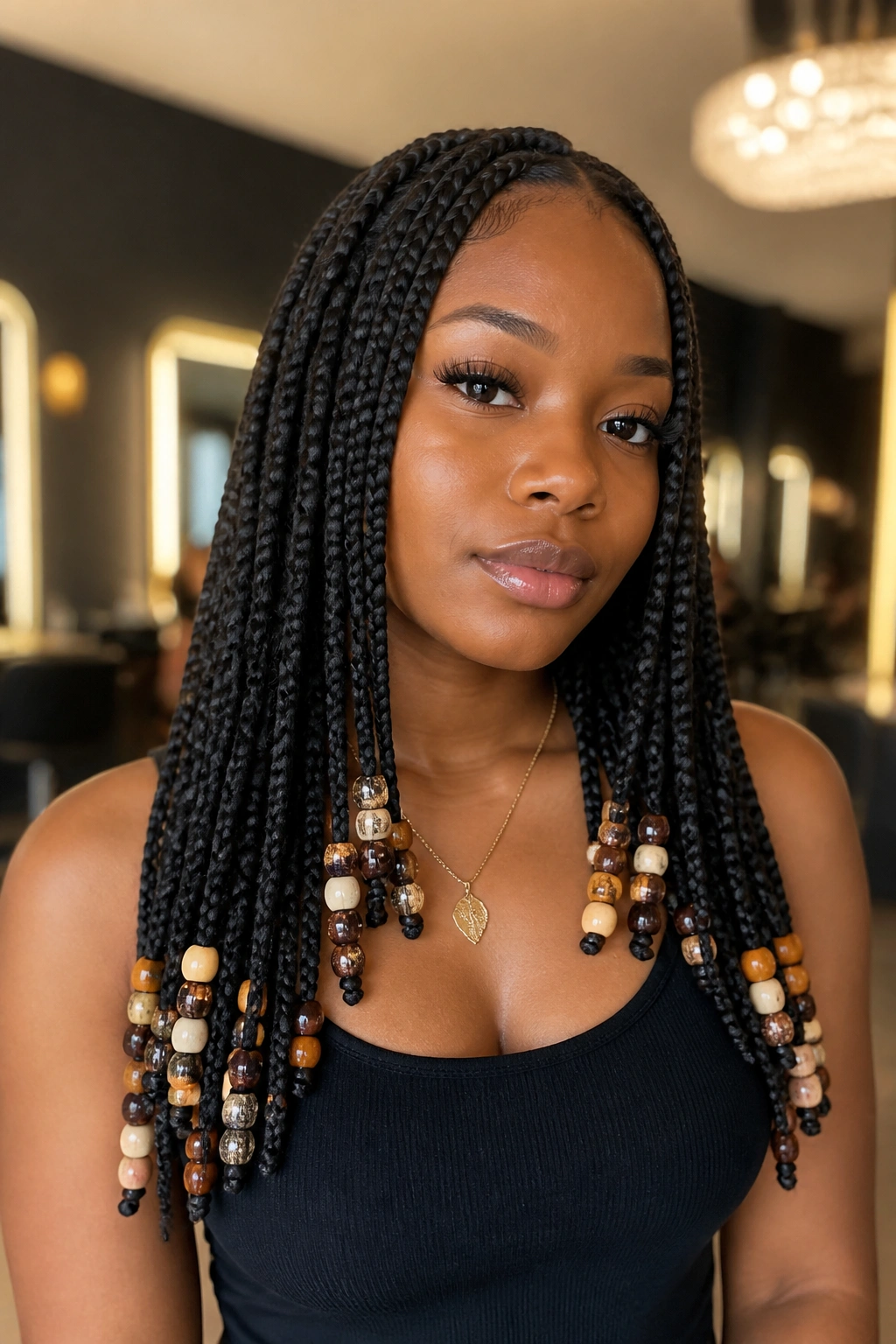
Beads do something plain braids can’t. They add sound, movement, and a little weight to the ends, which makes long box braids feel more finished. Even one or two beads per braid cluster can change the whole rhythm when you walk.
The smart move is to use beads sparingly. A full head of heavy beads can drag on already-long braids and make them uncomfortable fast. A few at the ends near the front, or on braids framing the face, gives you the visual payoff without turning the style into a workout. Wood beads feel different from clear acrylic, and metal rings have their own sharper look.
This style works well when you want the braids to feel personal. It’s also one of the easiest ways to refresh an older install without redoing anything. Slide on a few accents, and the braids suddenly look styled on purpose.
If you’re going for long lengths, place the beads low enough that they don’t tug at the roots. That tiny detail matters more than people realize.
9. Curled-End Box Braids
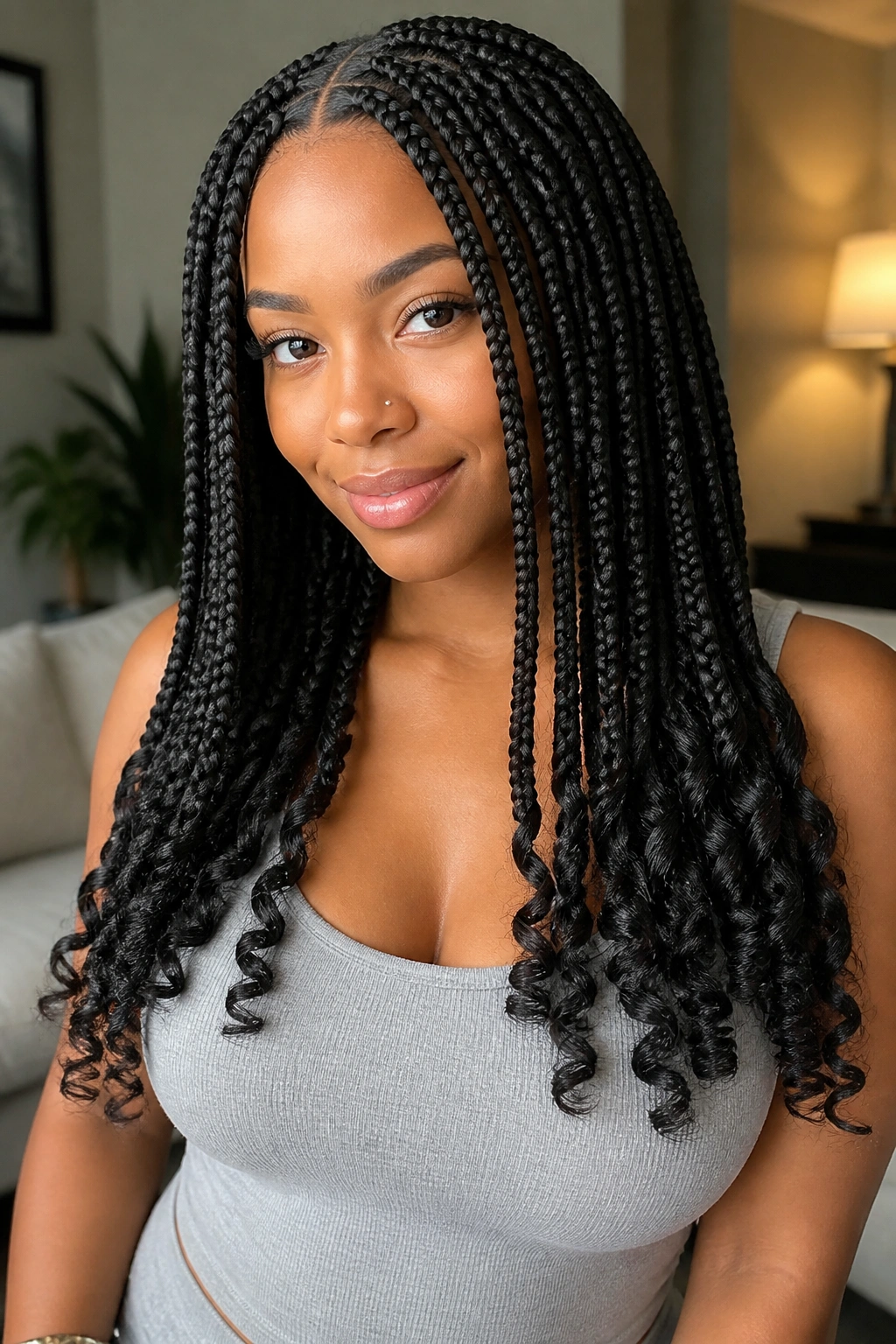
Straight box braids are the default. Curled ends change the story. They soften the weight at the bottom, add bounce, and keep long lengths from looking too boxy or stiff. The whole style feels more alive when the ends bend instead of hanging like straight cords.
The curl can be loose and soft, or tighter and springier, depending on the look you want. Flexi rods give a softer bend. Perm rods give a firmer shape. Some braiders set the ends with hot water when the extension hair allows it, then let the curls cool fully before taking anything out. Rushing that part is a bad idea. The curl falls flat.
This style is especially useful when the braids are very long. Straight ends can start to look heavy at the bottom, almost blunt. A curl breaks that line and gives the eye somewhere lighter to rest.
I like this one with simple clothes. The hair already has enough movement, so the rest of the outfit can stay easy.
10. Color-Blocked Long Box Braids

Two colors can do more for long box braids than a pile of accessories ever could. A color-blocked install makes the length feel planned from the start, not just added on later. Dark roots fading into caramel ends. A black-and-burgundy mix. A warm brown panel beside honey blonde. The effect is immediate.
Unlike a single-tone install, color blocking gives the length a built-in visual break. That matters when the braids are long enough to cover your back. Without some variation, all that length can blend into one flat curtain. Color gives it shape.
This style suits people who want the braids to do the styling work. If your wardrobe is mostly black, cream, denim, or other simple pieces, the braids become the color story. If your clothes are already loud, keep the braid colors a little more restrained.
A good rule: let one color dominate and let the second one support it. When both shades compete equally, the effect can get busy fast. One shade should lead. The other should follow.
11. Low Side Bun With Cascading Length

This is one of the most grown-up-looking styles in the group. Pull the braids into a low side bun near the nape, then let the remaining length spill over one shoulder or down the back. It feels neat without going stiff, which is a hard balance to get right with long braids.
The side placement matters. A bun centered at the nape can be tidy, sure, but shifting it off-center gives the style a softer line and keeps it from looking too formal. Use a large pin or a few strong bobby pins instead of tiny clips. Tiny clips are a joke with heavy braids. They slip.
This look is useful when you want the neck clear but don’t want every braid pinned up. It suits dinners, events, and those days when you want the braids to look intentional with almost no effort.
A little shine product on the roots helps the bun read cleaner. Not much. Too much grease near the part makes the style look heavy, and long braids already bring enough weight on their own.
12. Half-Up Crown Twist
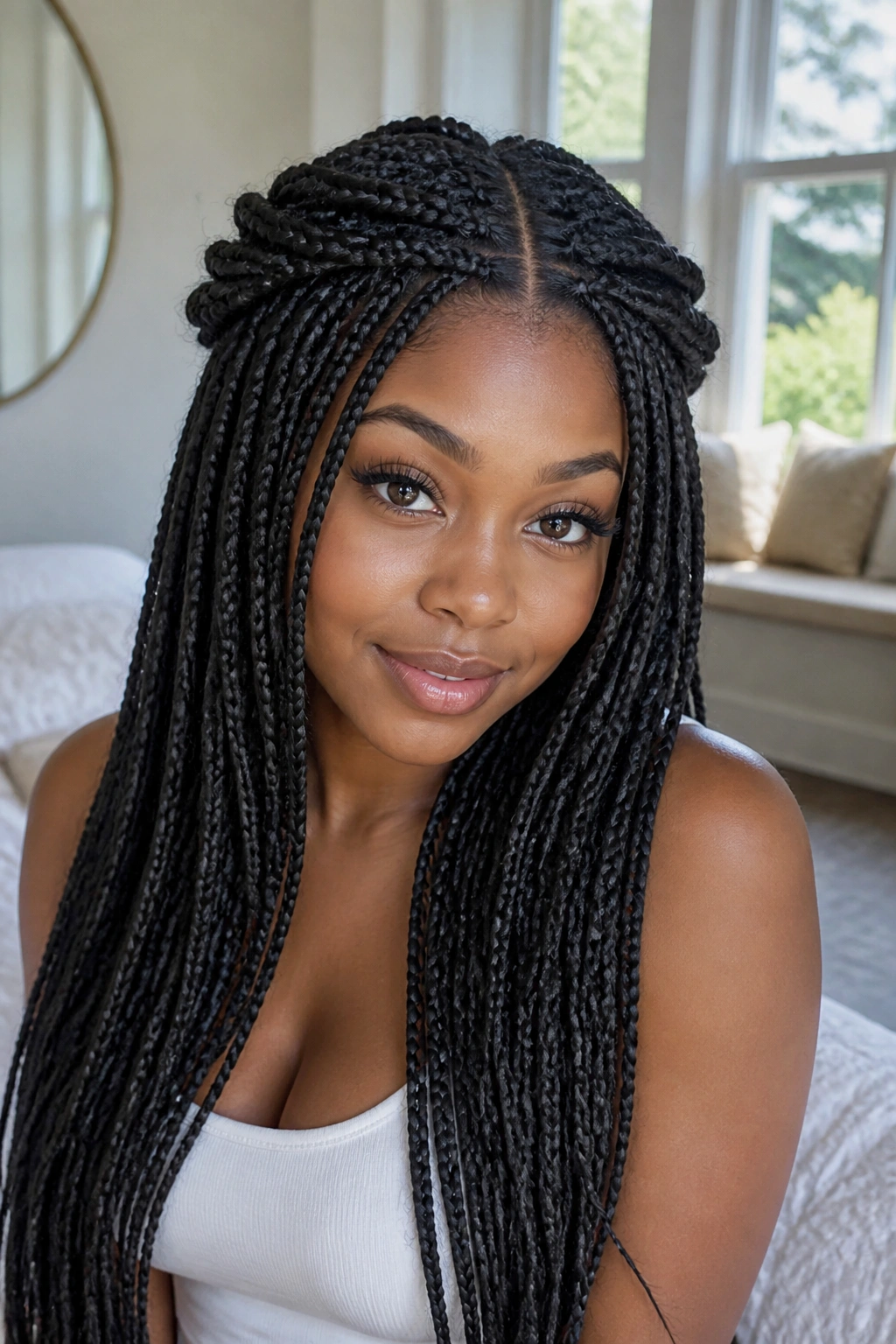
Need a style that keeps braids out of your face without hiding the length? This is the one. The front and side sections get twisted back into a crown shape, while the rest stays down and loose. It has that easy, put-together feel people always want from protective styles.
The crown twist works because it creates a frame. Your face gets a little lift, the parts stay visible, and the long lengths still move behind you. It’s especially nice when the braids are fresh and the parts look sharp. The style shows them off instead of burying them.
You can keep the twist low and close to the head for a smoother finish, or let it sit a little higher if you want more height. Either way, the back stays free. That’s the part that makes it useful for long box braids. You’re not giving up the length just to get some control.
I reach for this shape when I want the braids to look like they were styled, not just worn. There’s a difference.
13. Scarf-Wrapped Low Ponytail
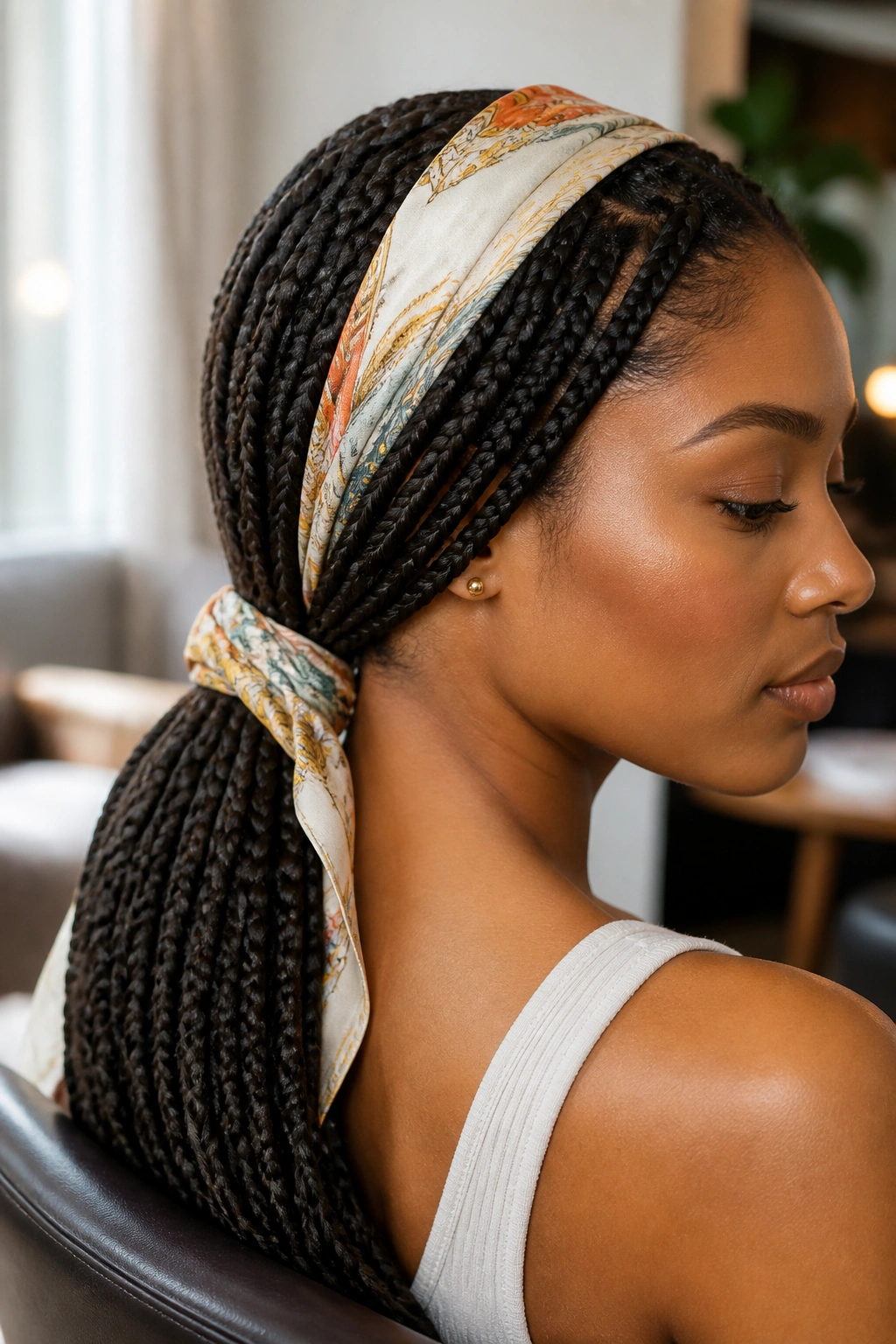
A scarf can fix a lot. Frizz, a plain elastic, an awkward ponytail base — all of it gets a little better once a silk or satin scarf enters the picture. On long box braids, a low ponytail wrapped with a scarf feels relaxed but still finished.
Start with the ponytail low at the nape. Then wrap the scarf around the base or knot it so the fabric sits where the elastic would normally show. A square scarf around 20 to 25 inches works well because it has enough fabric to stay visible without swallowing the braids. Smaller scarves can disappear into the style.
This look is one of the easiest ways to make long braids feel softer. The scarf breaks up the thickness and adds a bit of color near the face or neckline. It’s also practical if the roots are a little fuzzy and you don’t want to redraw the whole style from scratch.
Choose a scarf that feels sturdy, not slippery. Otherwise it slides around and starts behaving like an argument.
14. Front-Only Braid Accessories
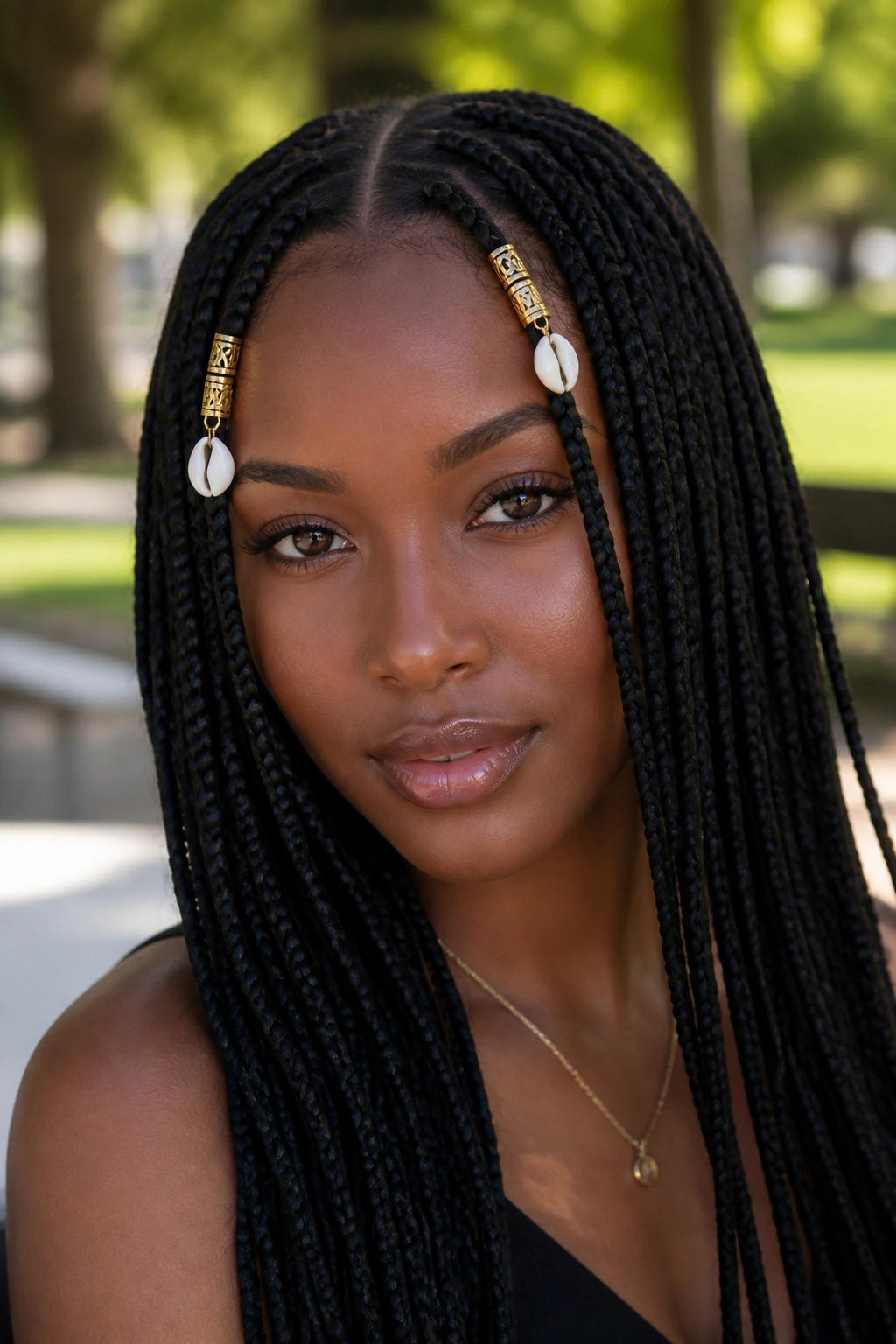
Sometimes the smartest styling move is restraint. Add cuffs, rings, or a few shells only to the braids around the hairline, and leave the rest of the length alone. The result feels focused instead of crowded, which is useful when the braids are already long and heavy.
That front-only approach keeps the face bright and the rest of the style calm. You get the sparkle where people look first, but you don’t make the whole head feel busy. It’s especially good when the braids are very thick, because too many accessories can make them feel clunky.
- Use 2 to 6 accents total.
- Place them on the braids near the temples or just off the part.
- Keep metals and shells away from any spots that already feel tender.
- Match the accessories to one detail in your outfit, not every detail.
I prefer this version when the braids are the main event. That’s enough. You don’t need to decorate every inch to prove they’re styled.
15. Deep Side-Part Long Box Braids

A deep side part changes the entire face shape of long box braids. Instead of falling straight down in the middle, the braids sweep across the head with a little more attitude. The style feels less neat, more sculpted.
The side part is especially useful when the braids are extra long, because the weight naturally wants to pull one way or the other. A deep part works with that pull instead of fighting it. Tuck one side behind the ear, let the other side fall forward, and the whole look gets a little richer.
This style looks strong with little effort. That’s the appeal. You can wear the braids loose, add one cuff at the front, or pin back one small section and stop there. The part carries the style.
It also flatters people who like a little asymmetry. Symmetry can feel formal. A deep side part feels more relaxed, and that matters when you want the braids to read lived-in instead of overdone.
16. Double Crown Buns With Long Ends

Two crown buns give long braids a playful lift without hiding the size of the install. They sit higher than low space buns and feel a little cleaner than a loose half-up style. The braids still show plenty of length, but the top of the head gets a stronger shape.
This style is best when you want height without a full ponytail. The buns take some pressure off the neck while keeping the overall look balanced. Use two soft elastics, twist the sections only once or twice, then wrap the ends around the base instead of cramming everything into a tight knot.
It looks good when the rest of the braids hang down with a little movement. That contrast — tight up top, loose below — is what makes it work. If the buns are too small, the style can look unfinished. Bigger is better here.
This one is fun without tipping into costume territory. That’s harder to pull off than people think.
17. Wrapped Chignon at the Nape
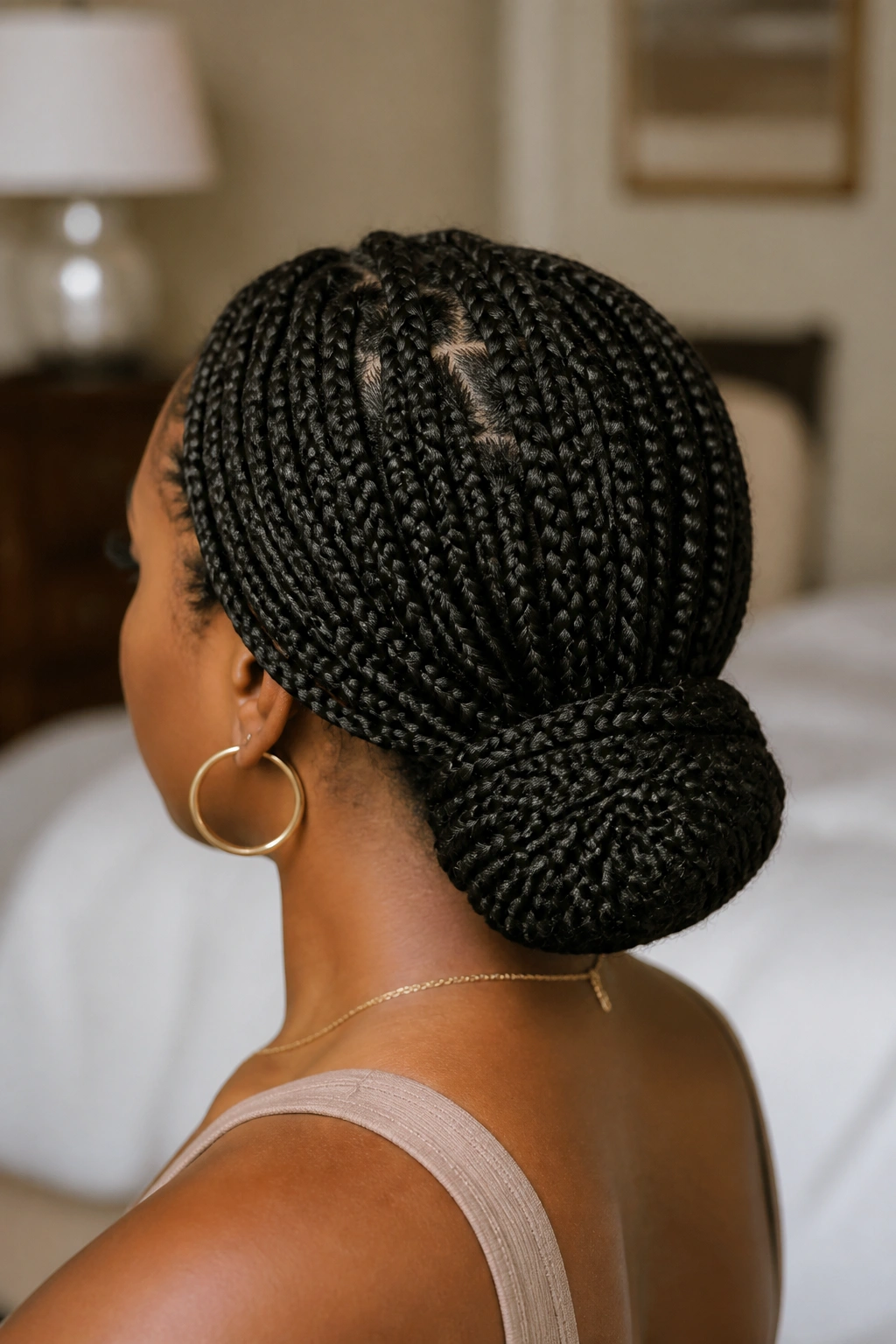
A low wrapped chignon is one of the few formal styles that does not fight long box braids. The hair gets gathered at the nape, folded into a rounded shape, and pinned until it sits low and smooth. Simple idea. Very specific payoff.
The reason it works is the shape. Long braids can look messy when they’re tossed into a loose bun, but a wrapped chignon turns the length into a compact form that still feels polished. It’s neat enough for dressier settings and calm enough for everyday wear if you want your neck free.
Use more pins than you think you need. Braids slip. That’s not a criticism, just reality. A few extra pins hidden under the chignon make the style last longer and stop the whole thing from sagging halfway through the day.
This is the style I’d pick when I want long braids to look grown and clean. Not flashy. Just composed.
18. Loose Back Sweep With One Statement Part

Sometimes the best style is the least decorated one. A strong side part, long braids swept back off one side of the face, and the rest left loose can look cleaner than any bun or ponytail if the install is neat. The shape is the statement.
This works especially well on very long braids because the length itself becomes the styling element. You don’t need to pile on accessories or twist everything into a shape. One side tucks back. The other side falls. Done.
It’s a good choice when you want the braids to feel easy but not lazy. There’s a difference. The part has to be sharp, the roots should lie flat, and the front section needs enough space to frame the face without collapsing into it. If those pieces are right, the style holds its own.
I like this one because it leaves room for the braids to move. Long lengths shouldn’t always be forced into submission. Sometimes the smartest thing you can do is let them swing.
Final Thoughts
Long box braids are at their best when the style works with the weight instead of pretending the weight is not there. That’s why the biggest-looking styles are not always the most complicated ones. A clean part, a solid ponytail base, one good scarf, or a single braid sweep can change everything.
The nice part about big box braid styles for long lengths is that you can move between moods without changing the install itself. One day you want structure. The next, you want swing. Then you want the braids out of your face because your neck is tired and your patience is thin. Fair enough.
Pick the shape that matches the day, not the fantasy. Long braids already bring enough presence on their own. The right style just gives that presence a direction.
