



A good Ghana braid style should feel secure by lunchtime, not sore by dinner.
That’s the part people skip when they talk about braid hairstyles. The shine, the parts, the pretty finish — all of that matters, sure — but Black women know the real test is how the style wears after the first day, after the scarf comes off, after you’ve slept on it, worked in it, and lived in it. Ghana braids sit in that sweet spot between sleek and practical when they’re done well. They give you structure at the scalp, fullness through the length, and enough styling room to keep things interesting without turning your head into a project.
In many salons, Ghana braids and feed-in braids are used almost interchangeably. The overlap is real. The braid starts small at the hairline, then hair is added little by little so the row builds smoothly instead of landing in one blunt lump. That feeding motion is what makes the style look so clean, and also why tension matters so much. Tight does not equal neat. Tight just means you’ll be counting the minutes until you can take them down.
The styles below cover the full range: simple rows, side parts, buns, ponytails, beads, color, curved parts, and shapes that do a lot of the talking for you. Some are quiet and office-friendly. Some are loud in the best way. Some are fast, some take time, and some exist mainly because a talented braider got bored and decided to make your scalp the canvas. Fair enough.
1. Classic Straight-Back Ghana Braids
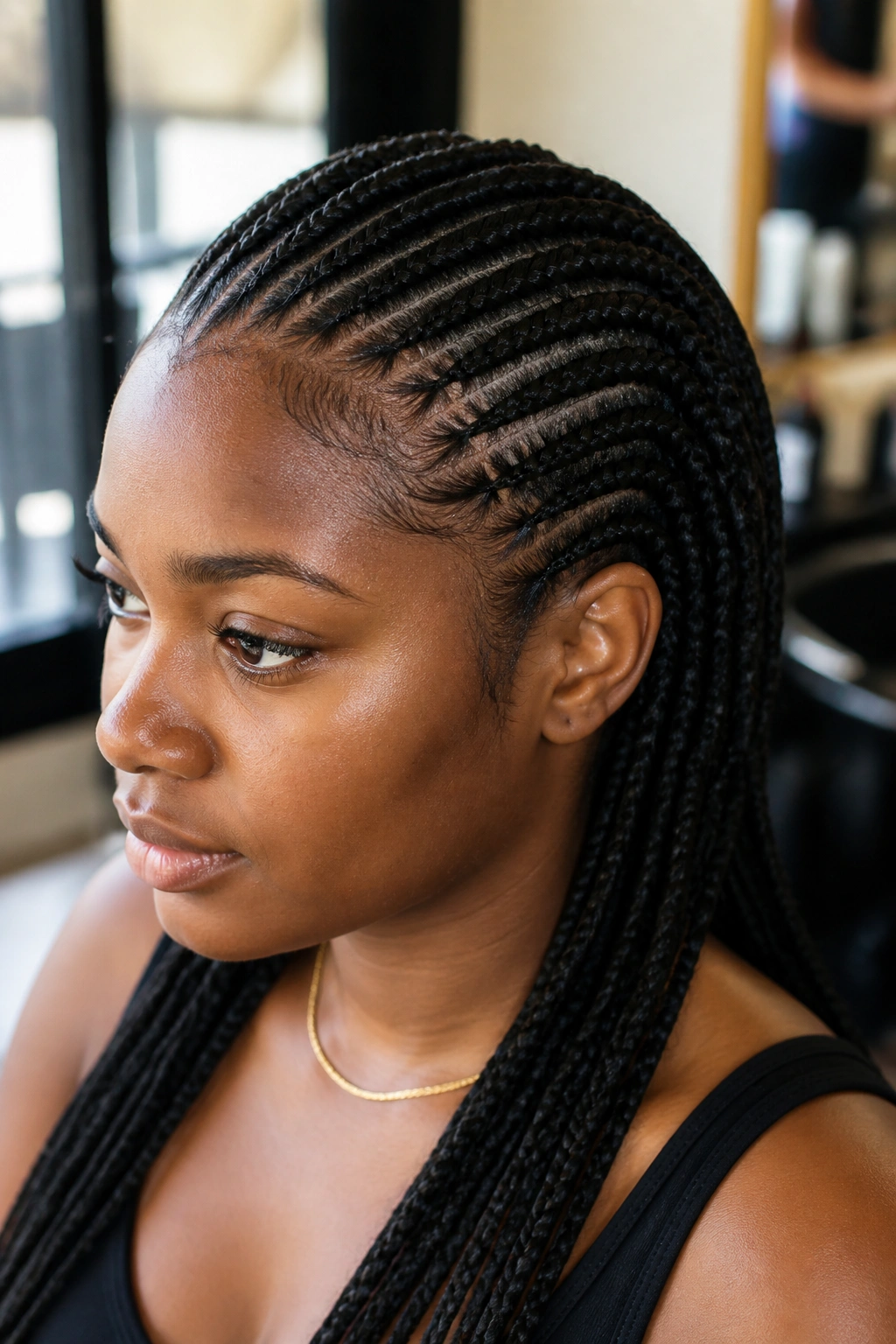
Straight-back Ghana braids are the style people picture first, and honestly, that makes sense. Clean rows running from the front hairline to the nape never go out of place. They look crisp, they stay out of your face, and they give you that organized, pulled-together feel without asking for a lot of fuss once the install is done.
What makes this version so useful is the balance. The braid starts slim at the root, then grows fuller as extension hair is fed in along the way. That gives the scalp a neat start and keeps the rows from feeling bulky right at the front. Medium-sized rows usually hit the sweet spot here. Too small, and you spend forever in the chair. Too large, and the whole thing can feel heavy.
This is the style I’d point a first-timer toward. It gives you the shape of Ghana braids without forcing a dramatic part or a lot of extra design work. You can wear it long, shoulder-length, or cut it to a bob. All three work.
One practical note: keep the first inch of each braid snug, not tight. If your scalp starts to feel hot or tender before you leave the chair, that’s the warning sign.
2. Middle-Part Ghana Braids
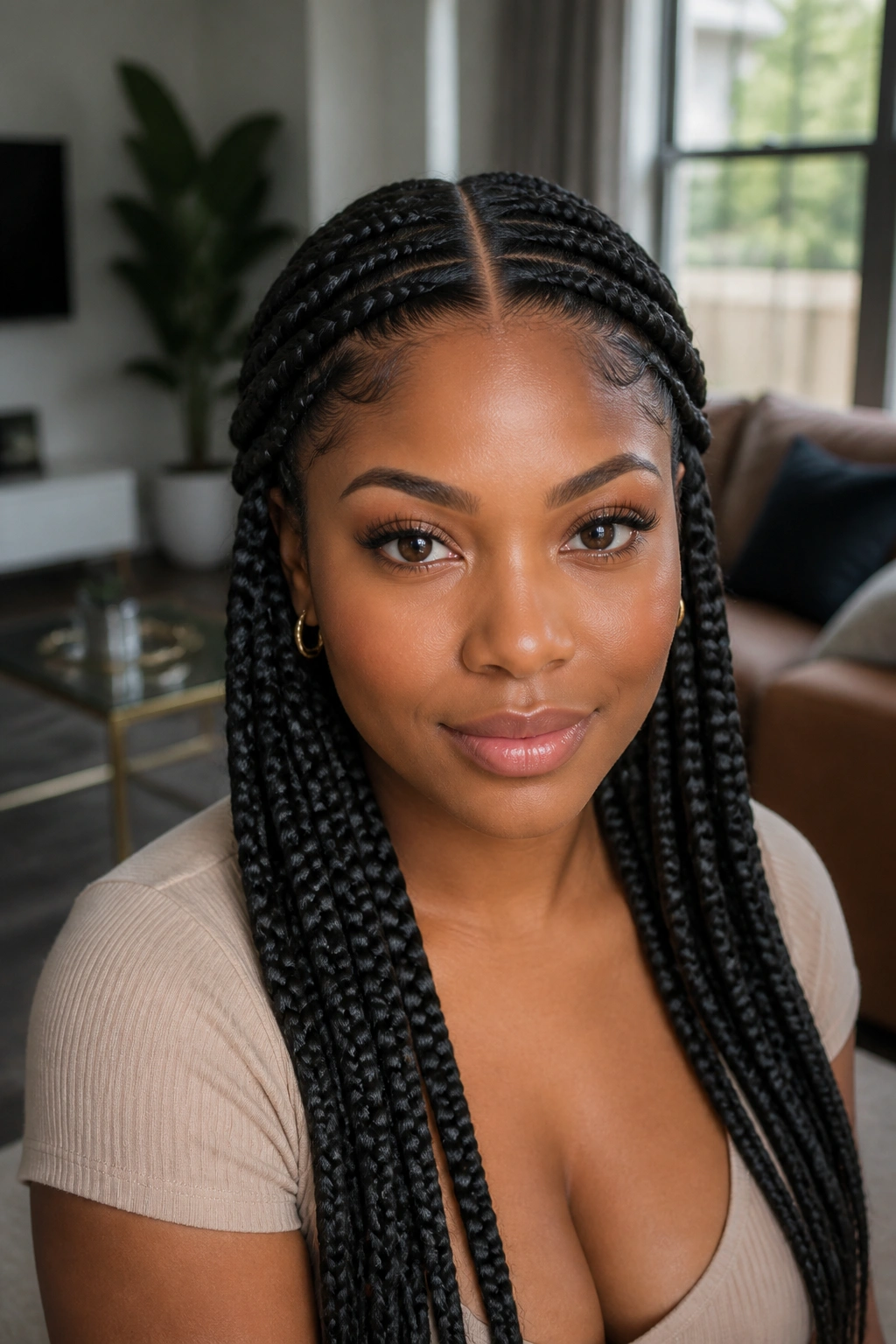
A middle part changes the whole mood. The style reads more symmetrical, more deliberate, and a little more tailored than straight-back rows with no clear center line. On Black women, that center split can sharpen the face nicely, especially when the braids fall evenly on both sides.
Why the Middle Part Works
The middle part gives the braids a clean anchor point, which helps the feed-in sections stay balanced. It also makes the style easy to tuck behind the ears, pull into a low ponytail, or leave hanging when you want that straight-down curtain effect. If your features are naturally strong, the part keeps the look from swallowing your face.
The other advantage is visual order. Some braid styles can feel busy fast. A middle part cuts through that and gives the whole style a calm, neat line from forehead to crown. It’s a small thing, but small things matter here.
How to Wear It
- Keep the rows even on both sides so the part stays sharp.
- Add cuffs or beads at the ends if you want the center part to look more finished.
- Ask for a slightly deeper part if you want more hair draped to one side.
- Pair it with a low bun on days when you need the braids off your neck.
The middle part is tidy without feeling stiff. That’s why people come back to it.
3. Side-Part Ghana Braids
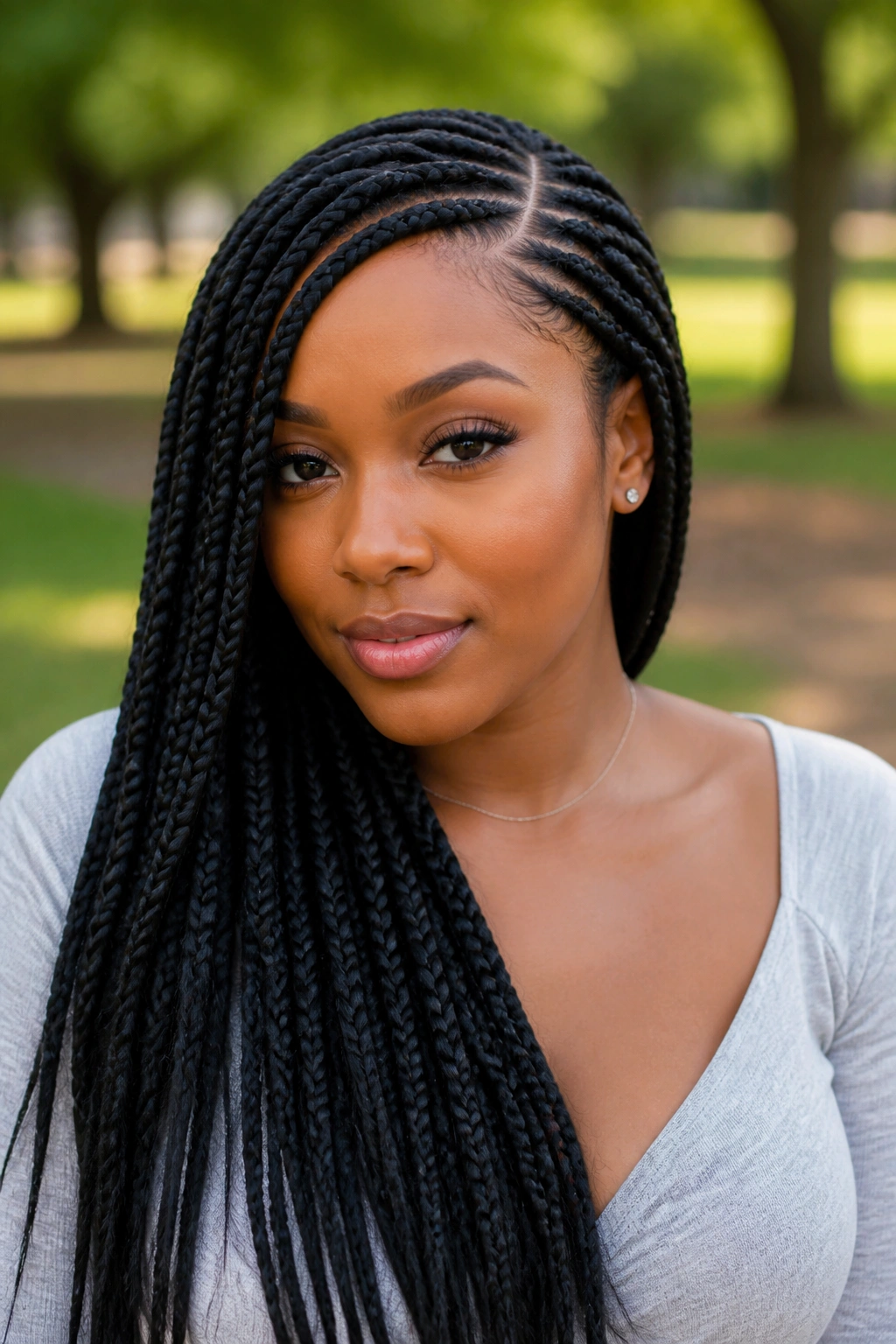
A side part softens Ghana braids in a way a center part never quite does. The whole style shifts a little, which makes it feel less formal and a bit more relaxed around the face. If you like clean braid work but don’t want a strict look, this is one of the easiest places to start.
Side parts also help when your hairline isn’t perfectly even, because the eye follows the angle instead of staring straight at the center. That sounds small. It isn’t. A good side part can make a style feel intentional even when your edges are doing their own thing.
This version works especially well with long braids that fall over one shoulder. It also plays nicely with a low bun or a side sweep at the end. The braid rows don’t have to be dramatic to matter; even a slight shift off-center changes the whole silhouette.
I like side-part Ghana braids when the goal is polish with a little movement. Not too formal. Not too plain. Right in the middle, which is usually where the good braid styles live anyway.
4. Jumbo Ghana Braids
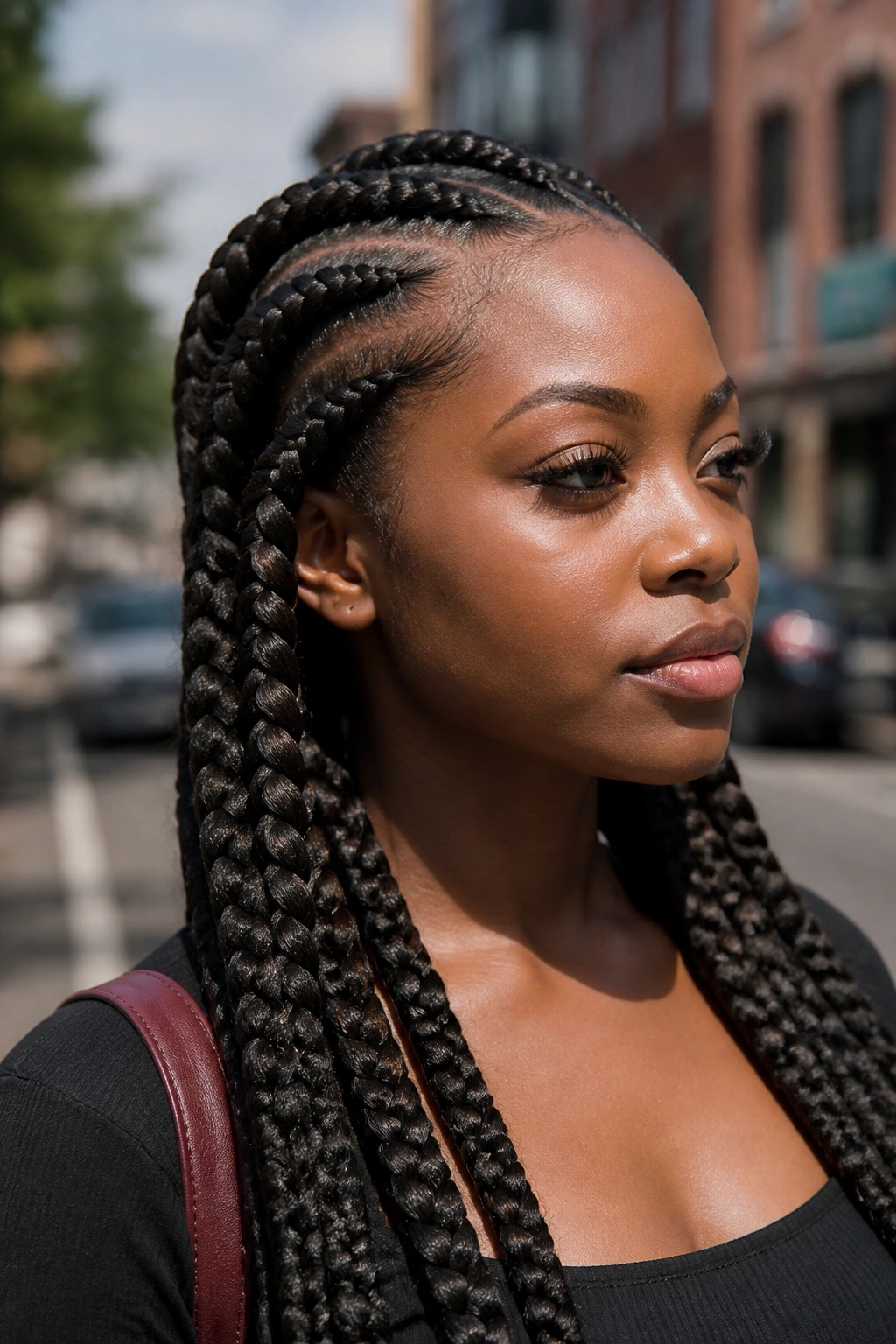
Jumbo Ghana braids are for the days when you want impact without sitting under a braider’s hands all afternoon. Fewer rows. Bigger sections. More hair per braid. The result is bold and chunky, with that thick-rope look that reads from across the room.
There’s a tradeoff, though. Jumbo braids are heavier, so the install has to be careful. The front rows especially need a gentle hand. If the braid is too dense at the root, you’ll feel it fast. Big braids should still move. They should not feel like tiny bricks.
Here’s where jumbo braids shine:
- They cut down on install time.
- They look strong and graphic.
- They work well with long lengths and waist-length extensions.
- They make simple parting look more expensive because the braid itself carries the style.
Keep the tension light at the hairline. That’s the difference between a bold style and an irritating one. If you want volume with less chair time, jumbo Ghana braids are the obvious pick.
5. Ghana Braid Ponytail
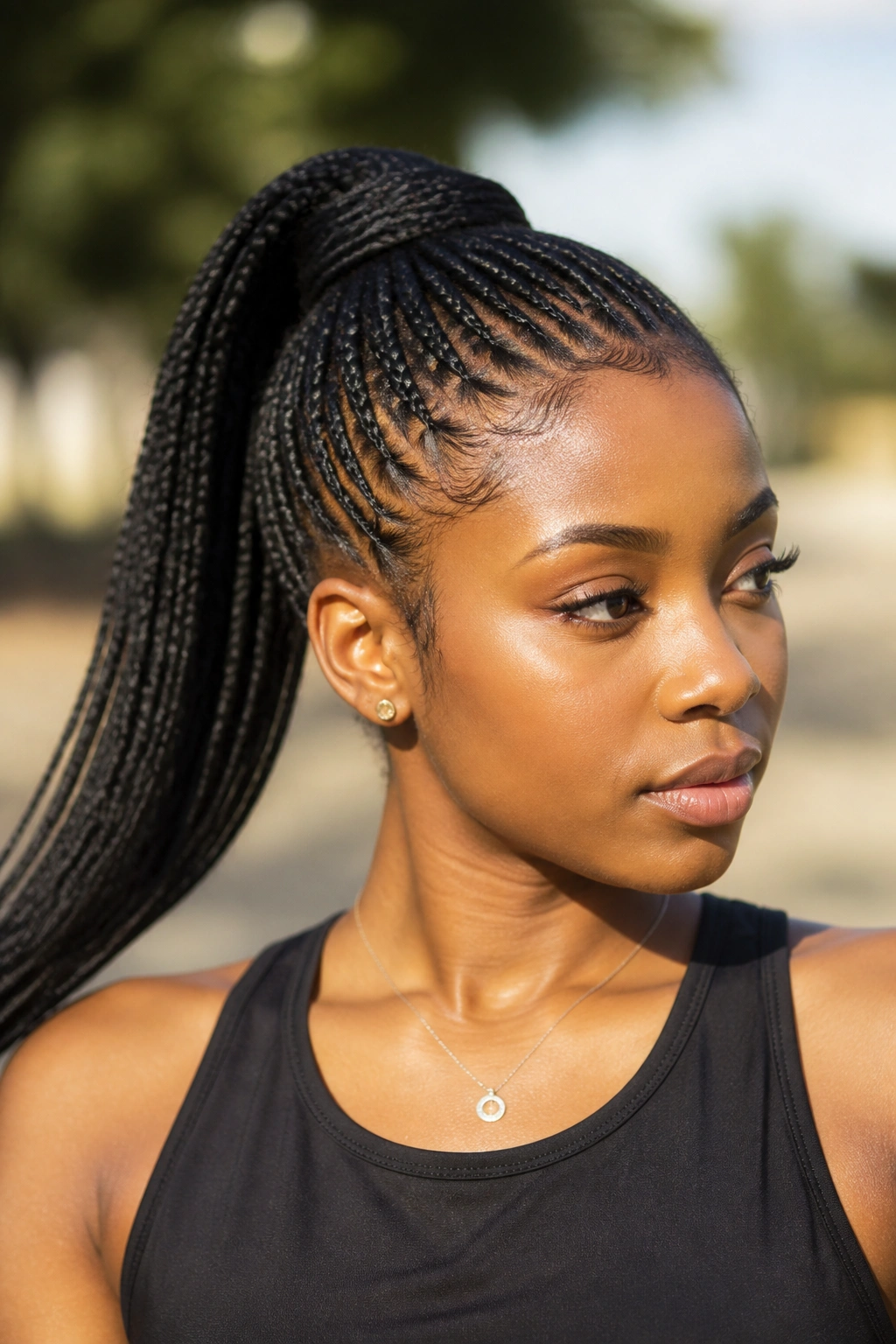
A Ghana braid ponytail is one of those styles that looks simple until you see it done cleanly. Then it suddenly looks sharp, athletic, and a little fancy all at once. The braids can be gathered high at the crown, mid-level at the back of the head, or pulled low for a smoother finish.
The beauty of this style is motion. Loose hanging braids can swing around and get in the way. A ponytail pulls everything together and gives your face a lift without needing a full updo. It’s a good option for long days, warm rooms, workouts, or any moment when you don’t want braids brushing your shoulders every five seconds.
A wrapped base makes a big difference here. Take one braid and wind it around the ponytail holder so the tie disappears. That small move turns a functional style into one that looks finished. You can also leave a few face-framing braids out if you want a softer front.
The ponytail version works best when the rows at the front are neat and the crown doesn’t feel crowded. If the top looks too stuffed, the ponytail ends up heavy in a bad way. Less bulk up top, more swing at the back. That’s the balance.
6. Ghana Braid Bun
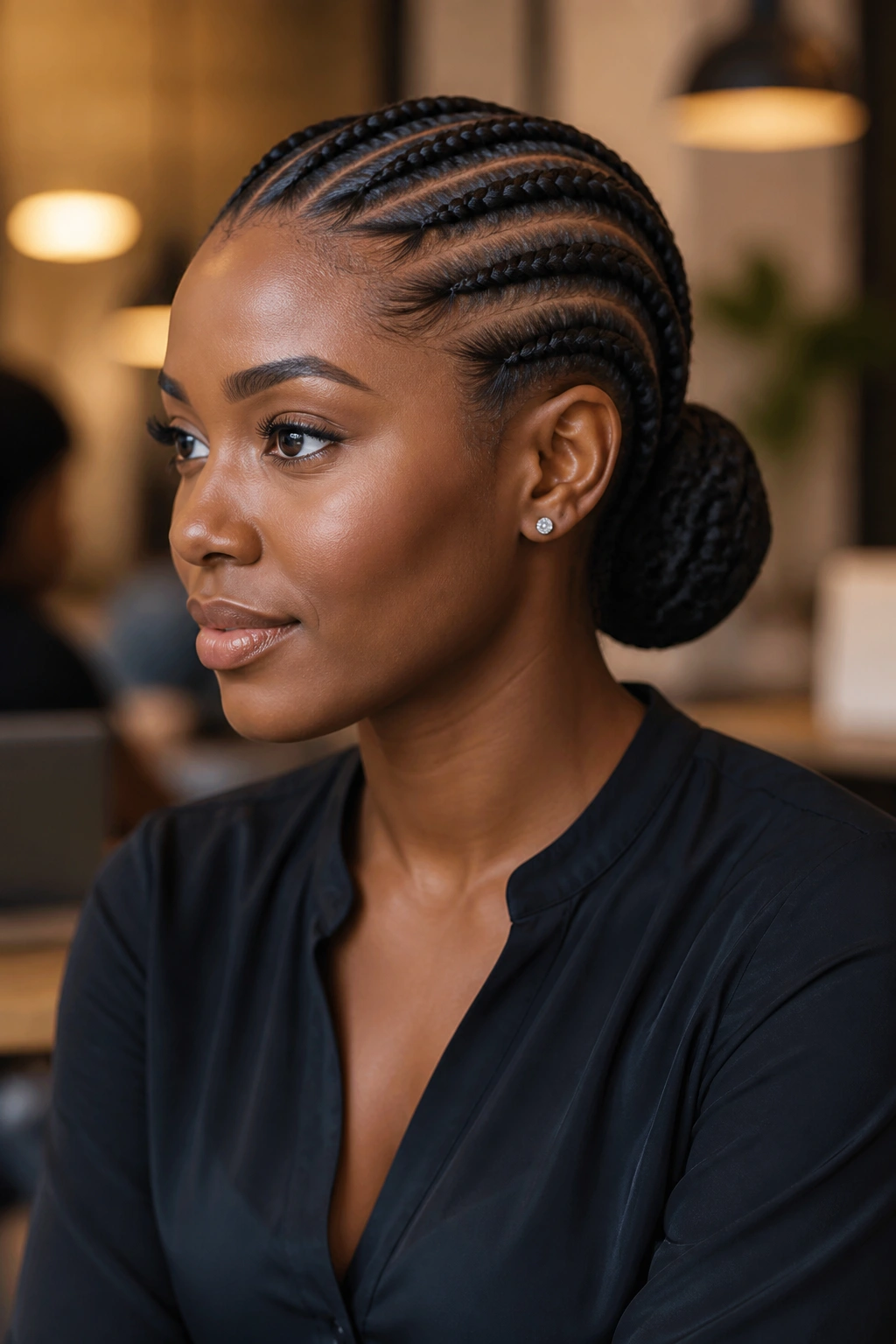
A Ghana braid bun gives you a completely different feeling from loose braids. The style sits closer to the head, the ends disappear, and the whole look becomes neat in that quiet, grown-woman way that doesn’t need much help from accessories. It’s one of the cleanest braid options for work, events, or days when you want your neck free.
Low buns feel especially good if your braids are long and you’re tired of the weight pulling backward. The bun shifts the load toward the center or the nape, which can be easier to wear. High buns bring more height and a little drama, but they also expose the braid pattern more clearly.
What Makes a Good Bun Here
- The base should be wrapped tight enough to hold, loose enough to keep the scalp calm.
- A bun pin or U-pin works better than a pile of tiny clips.
- Braids with medium thickness usually coil more cleanly than very jumbo ones.
- A smooth front row helps the bun look intentional instead of improvised.
I’m partial to low braided buns because they look expensive without trying hard. That sounds vague, but it isn’t. The lines are clean, the shape is compact, and the style stays in place when done right.
7. Half-Up Half-Down Ghana Braids
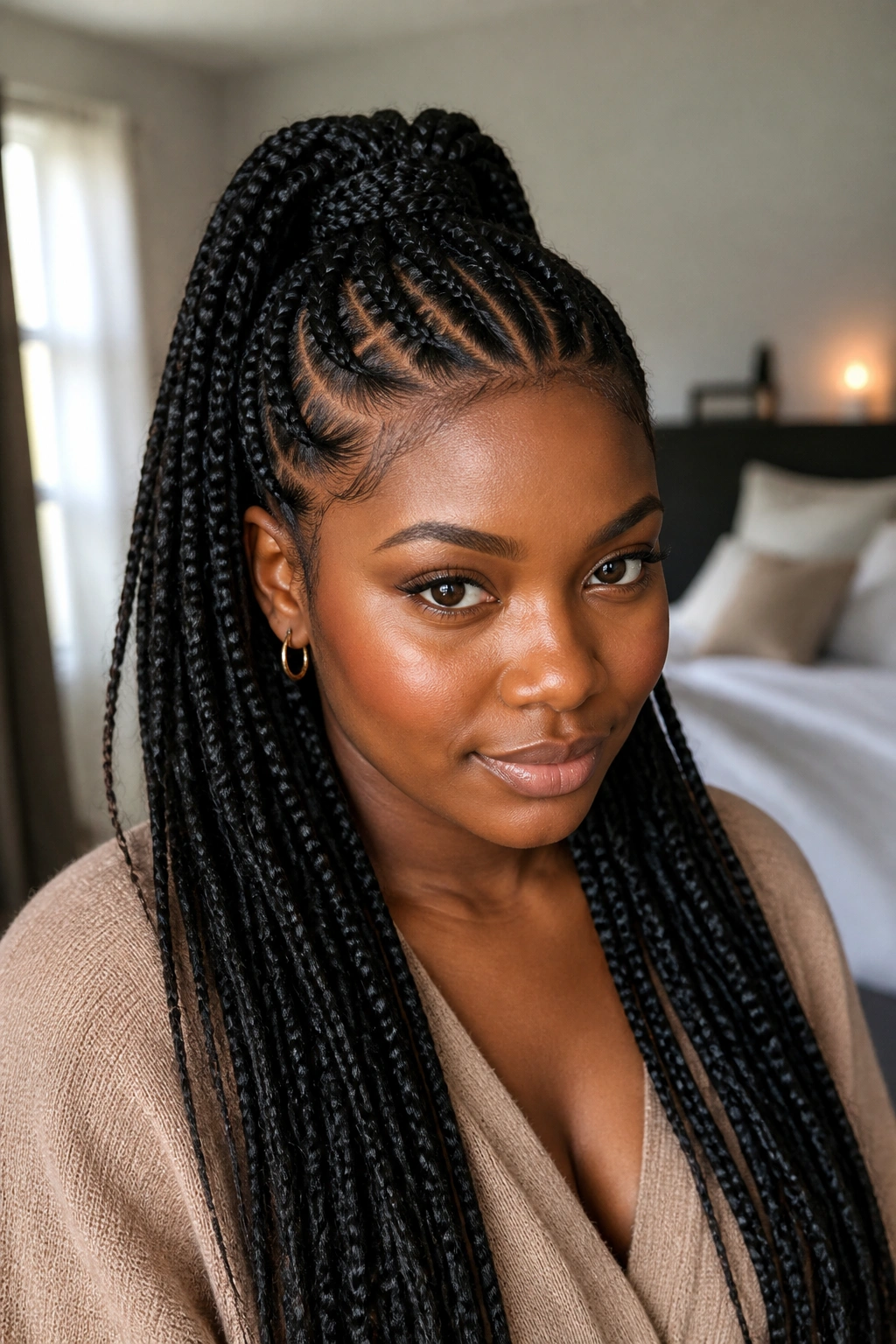
Half-up half-down Ghana braids are the answer for anyone who likes the look of long braids but wants some control around the face. The top section gets lifted into a ponytail, puff, knot, or small bun, while the rest stays loose. That split gives you structure up top and movement below.
Why do people keep coming back to it? Because it solves two problems at once. Hair out of your eyes. Length still visible. You get the frame of an updo and the feel of a down style, which is a very nice compromise when you do not want to choose one or the other.
How to Wear It
You can keep the top half sleek and tight, or leave a few braids loose around the temples for softness. A small braided bun at the crown feels neat and tidy. A puffier top knot looks more playful. Either way, the lower braids do the heavy visual work.
This style looks especially good when the braids are long enough to show movement. Shorter lengths can still work, but the effect is different. The best versions keep the top section secure and let the bottom section fall naturally, not lumpy or over-pulled.
8. Curved Ghana Braids
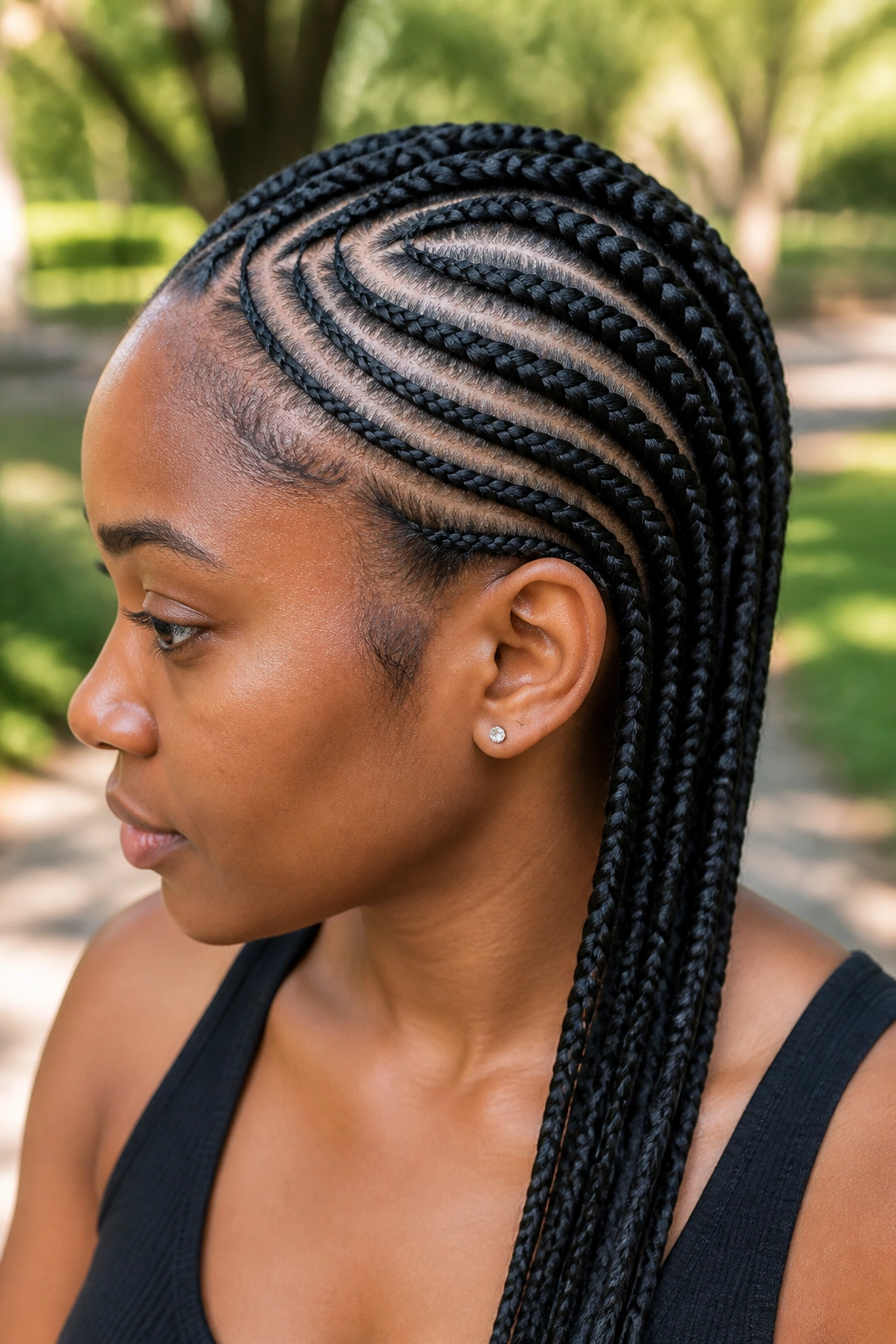
Curved Ghana braids bring motion into the parting itself. Instead of straight rows marching back in a line, the braids arc around the head in soft sweeps. The result feels more artistic, and a little more custom, because the parting follows the shape of the scalp instead of fighting it.
A curved pattern takes a steadier hand. The braid lines have to flow cleanly, or the whole thing looks crooked in a bad way. When it works, though, it is gorgeous. The parts seem to pull the eye around the head, and that gives the style a sense of movement even before the braids start hanging down.
This is a style for someone who likes detail. Not loud detail. Just enough to make people look twice. It can be done with long braids, a bob, or a ponytail finish, but the curved pattern should stay visible at the scalp. If the braids are too thick, the design gets lost.
A side swoop or deep arc at the front can make the whole style feel softer. And if you want one design choice that feels more special without piling on extras, curved parts do that well.
9. Ghana Braids with Beads

Beads change the sound and the mood of a braid style. Even one or two rows with beads at the ends can make Ghana braids feel more playful, more personal, and a little less serious than plain ends. On Black women, beads also bring back a strong sense of rhythm and memory. They do not need to be loud to matter.
The trick is placement. Too many beads all over the head can turn the style heavy fast, especially on long braids. A cleaner choice is to place beads on the ends of a few front braids or on the outer rows, where they’re visible when you move. That gives you enough detail without making the style drag.
How to Keep Beads Working for You
- Use lightweight beads on finer braids.
- Keep heavier wooden beads for thicker rows.
- Stop a few inches above the ends if you want easier sleeping.
- Match bead color to the braid tone for a cleaner finish.
A little bead work goes a long way here. You do not need ten kinds of beads. Two or three shades is enough. The braid pattern should still be the main event.
10. Ghana Braids with Cuffs and Thread

Metal cuffs and thread wraps give Ghana braids a sharper edge. Where beads feel playful, cuffs feel cleaner and a bit more structured. They catch the eye in a different way — less bounce, more line. Thread wraps sit somewhere in between, adding color without taking over the whole style.
This kind of detail is especially nice on medium or long braids. The cuffs can sit near the ends, along a front row, or clustered around one side if you want a stronger focal point. Thread works well when it’s used in short sections instead of being wrapped all the way down every braid. A few inches of color is usually enough.
I like this version when the braids themselves are simple. Straight-back rows or a side part make a clean base, and then the accessories get to do their job. If the parting is already busy, cuffs can start to feel crowded.
A small warning: metal pieces can snag if they’re too tight or placed too close to the scalp. Leave a little room. Your fingers will thank you later.
11. Ghana Braid Bob
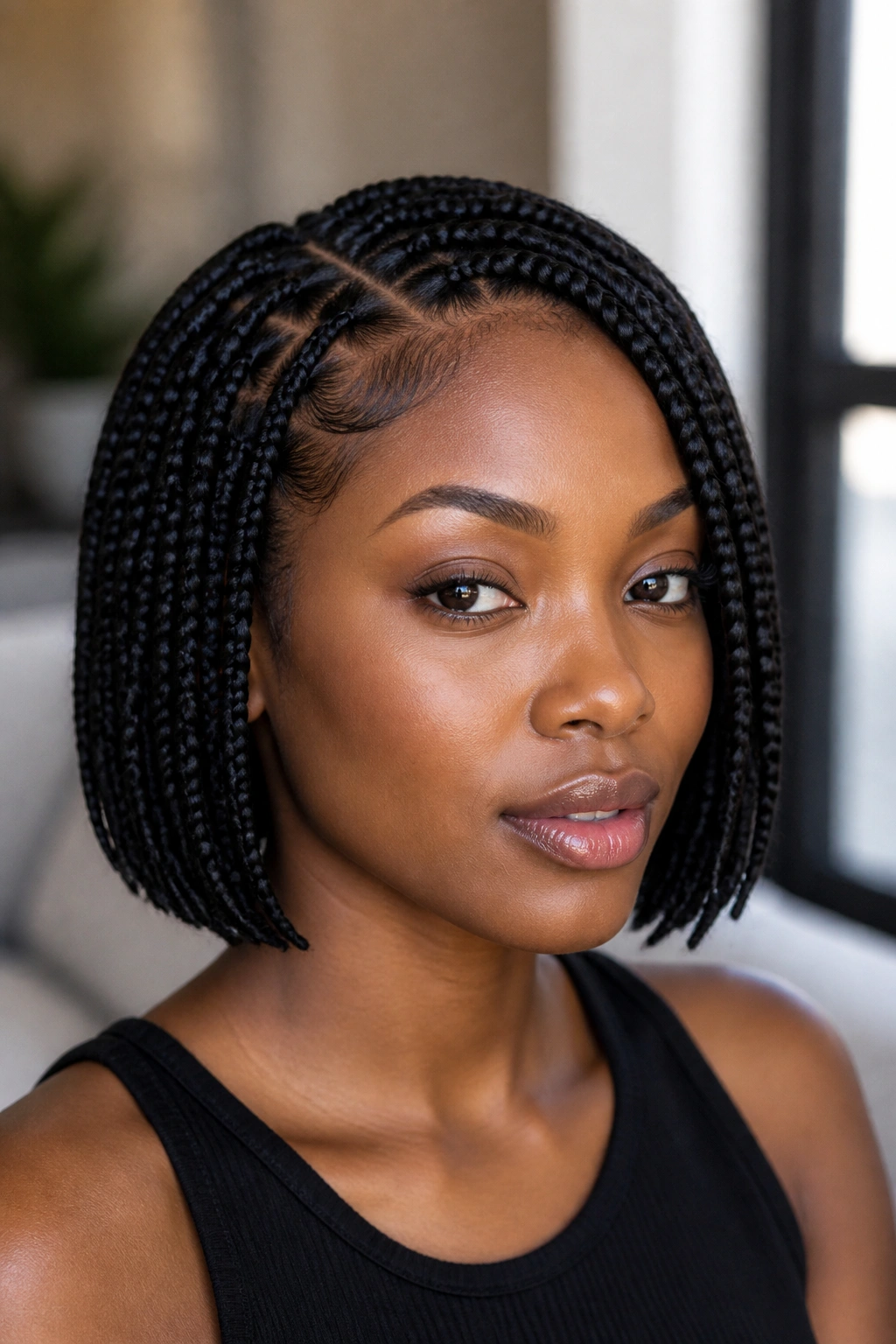
A Ghana braid bob trims the drama down to a smarter, sharper shape. The length usually lands around the jaw, chin, or collarbone, and that shorter line makes the braids feel lighter and easier to manage. It is one of the best braid cuts when you want style without carrying a lot of weight on your back.
The bob works because the braid pattern stays visible. You still get the rows, the feed-in start, the neat parts — all of that — but the shorter length changes the way the eye reads the style. It feels cleaner. Faster. Less crowded. If you have a strong jawline or like styles that frame the face, this one is worth a serious look.
A blunt bob looks polished and modern. An angled bob, where the front pieces hang a little longer than the back, gives a softer slope. Either version can be tucked behind the ears or pinched at one side with a cuff.
Shorter braids also make daily life easier. Less snagging on coats. Less hair getting caught in bags. Less braid swinging into your soup, which is a real thing and not a glamorous one.
12. Ghana Braids with Curly Ends

Curly ends soften Ghana braids in a way that plain sealed ends never quite do. The whole style keeps its structure at the scalp, then loosens visually at the bottom. That contrast is the charm. Tight at the root. Soft at the finish.
If you like braid styles that move when you walk, this one has a lot going for it. Curly ends break up the long straight line and make the braids feel less rigid. They can be done with pre-curled extension hair, or by setting the ends on flexi rods after dipping, depending on how your braider works.
The finish changes the mood of the whole style. A boxy braid style can read serious fast. Curly ends make it feel lighter and a little more romantic without losing the protective structure. That is a useful trick when you want braid wear that still feels feminine and soft.
One thing to watch: the curls need room. If they are pinned under coats or smashed flat at night, they lose their shape fast. A loose bonnet or silk scarf helps keep the ends from getting rough and frizzy before you are ready.
13. Low Bun Ghana Braids
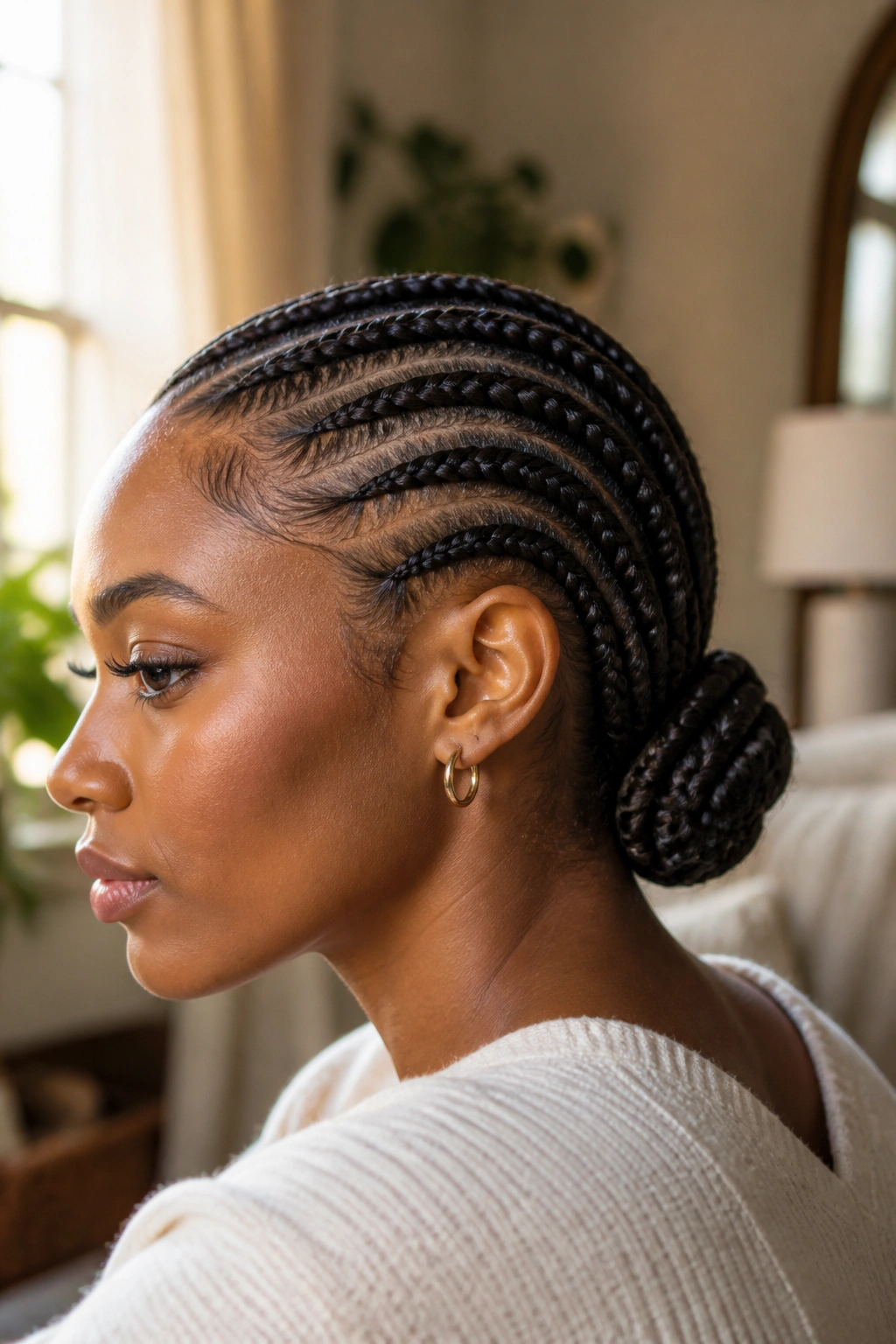
Why does a low bun look so calm? Because it keeps the shape close to the nape and lets the braids settle into one clean line instead of spreading out across the head. The style has a quiet confidence to it, and that has a lot to do with how controlled the silhouette feels.
Low buns are especially useful when you want Ghana braids to feel grown and tidy without turning them into a formal updo. They work for meetings, dinners, church, errands, or those days when you want your look to stay in place no matter what the rest of the day is doing. If your braids are thick, a low bun can also spread the weight in a more comfortable way than a high knot.
How to Make It Sit Right
Pull the braids back at the crown first, then twist or coil them low enough that the bun lands just above the nape. That keeps the bun from bumping the head or poking out awkwardly. If you want softness, leave one or two slim rows loose at the front.
A low bun looks best when the front rows are neat and the parting is crisp. The bun itself can be tight or loose, but the base should look clean. Messy at the nape reads accidental. Clean at the nape reads intentional.
14. Heart-Part Ghana Braids
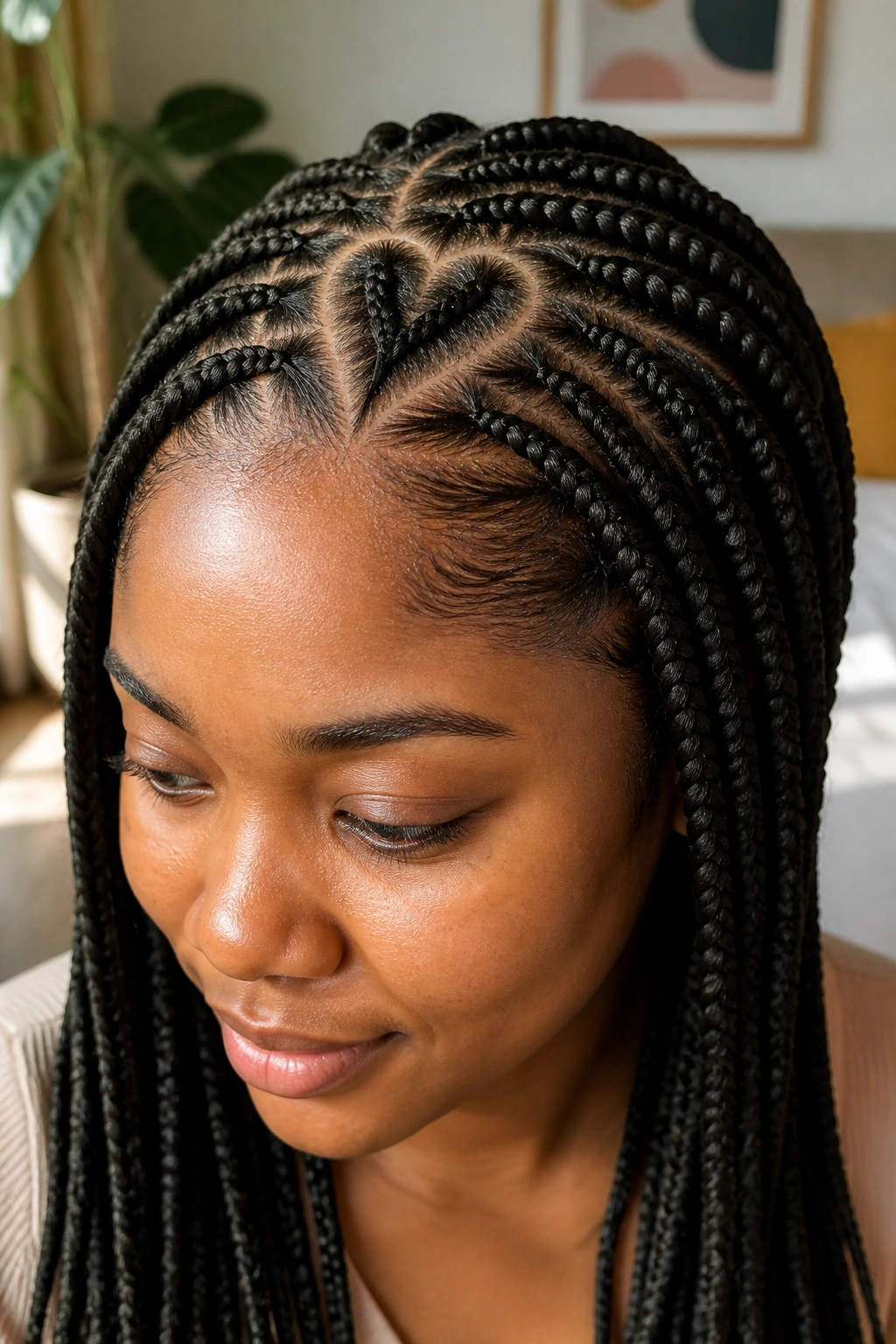
Heart parts are a little extra, and that is exactly why people love them. The shape shows up at the scalp before the braids even start moving, which gives the whole style a custom feel. It is one of those details that looks playful, but not childish, when it’s done with a steady hand.
The best heart parts usually sit in a visible spot near the front or crown where the shape can be seen easily. If the part is too small or tucked under a lot of other rows, the design gets lost. Medium-size braids tend to show the heart best because the pattern has room to breathe.
This style works well for birthdays, shoots, weekends, or any day when you want your hair to say a little more. You do not need a full head of designs. One strong heart part can carry the look.
Keep the rest of the style simple. That is the part people forget. If the parting is already decorative, the braids themselves should stay clean and balanced so the design has space to stand out.
15. Zig-Zag Part Ghana Braids
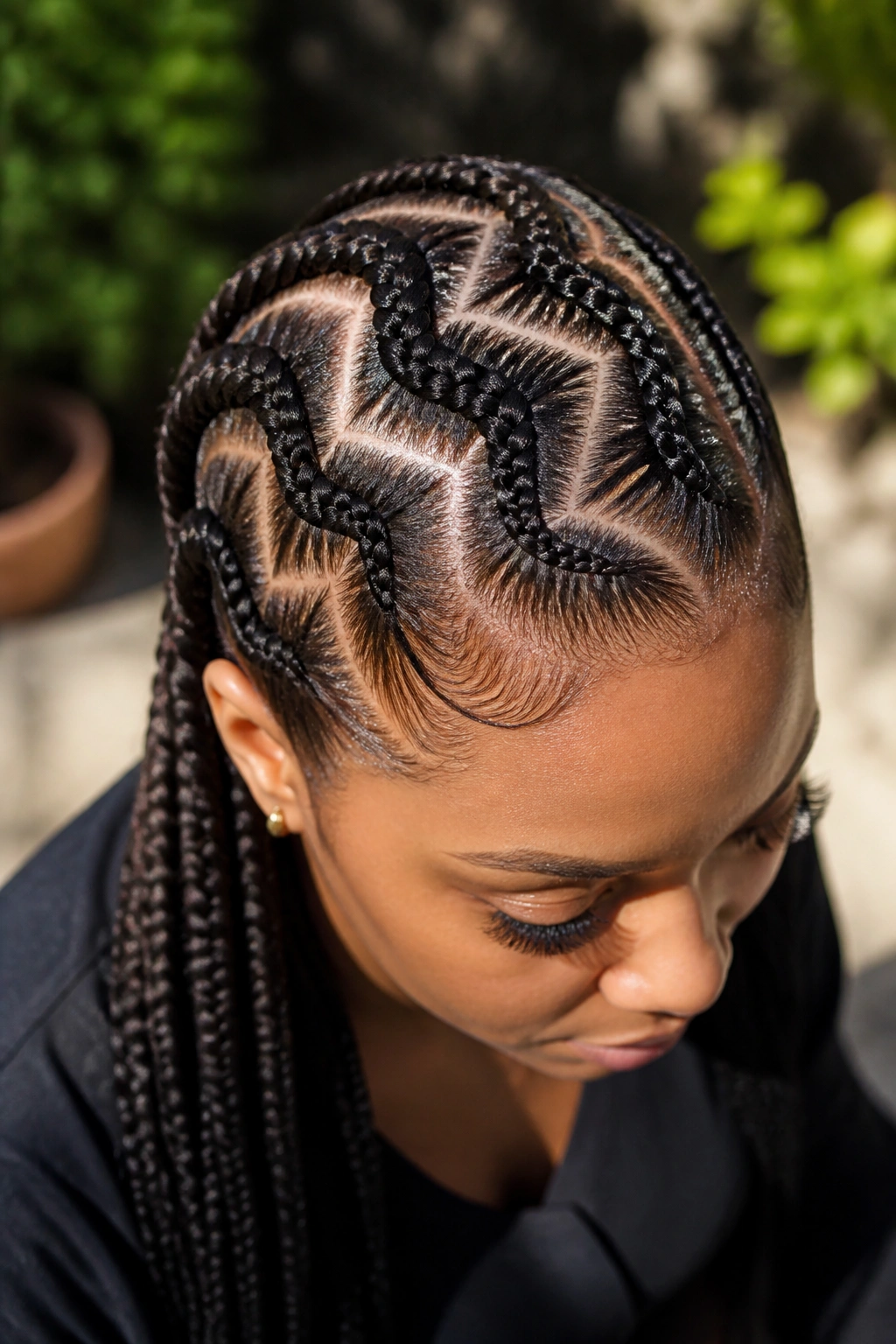
Zig-zag parts give Ghana braids a little edge right from the root. Instead of straight rows or smooth curves, the section lines break into sharp angles, which makes the scalp pattern feel lively before the braids even start to hang. It is a good choice if you want the style to look deliberate without being fussy.
I like zig-zag parts on medium braids because the shape is easier to read. Tiny rows can make the pattern look busy, while very jumbo rows can hide the angles altogether. The middle ground lets the scalp work show up properly.
Key Details to Ask For
- Clean points where the zig-zag changes direction.
- Even spacing so the design does not drift.
- Medium or shoulder-length braids if you want the pattern to stay visible.
- A neat front hairline, since the parting is doing a lot of the visual work.
The look is sharper than a plain center part and less formal than a straight-back row pattern. That makes it a nice middle lane for Black women who want braid styles with some movement at the scalp, not only at the ends.
16. Two-Layer Ghana Braids
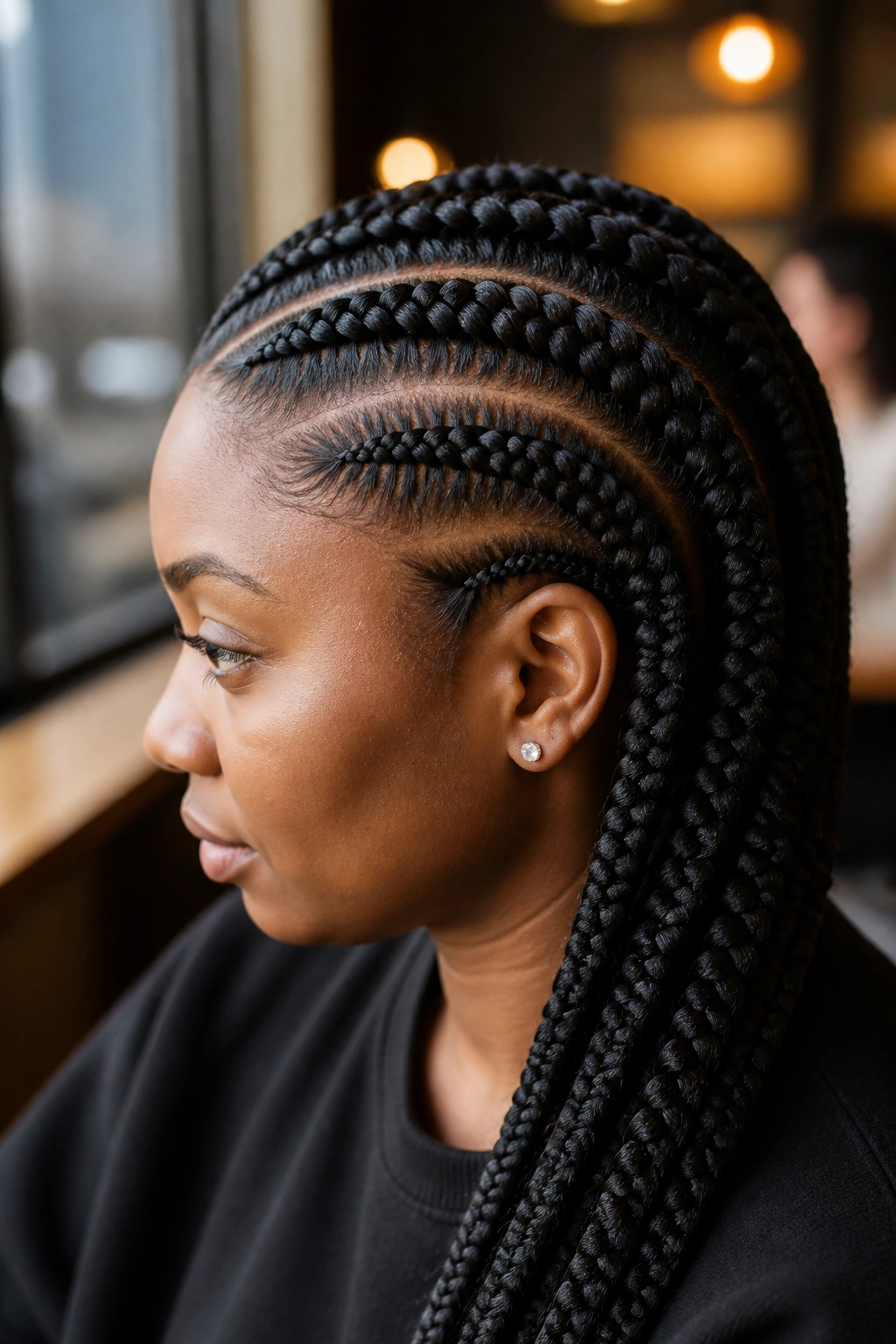
Two-layer Ghana braids split the head into upper and lower levels, which gives the style more shape before the braids even get long. The top rows sit slightly above the lower rows, and that simple shift creates depth. It’s a strong choice when you want the braid pattern itself to feel fuller and more dimensional.
Unlike all-back rows, the two-layer version gives the scalp some visual stacking. That can help if you like braid styles that look structured from every angle. It also works well on thicker hair, because the weight is distributed across more of the head instead of being packed into a single flat row set.
The style is especially nice when worn long, since the layers keep the top from disappearing into the length. You can also wear the bottom layer shorter and the top layer longer if you want more contrast. That little change gives the style a lifted feel.
If you want a shape that reads clean but not plain, this is one of the stronger options. It looks thoughtful. Not overworked. That matters.
17. Colored Ghana Braids
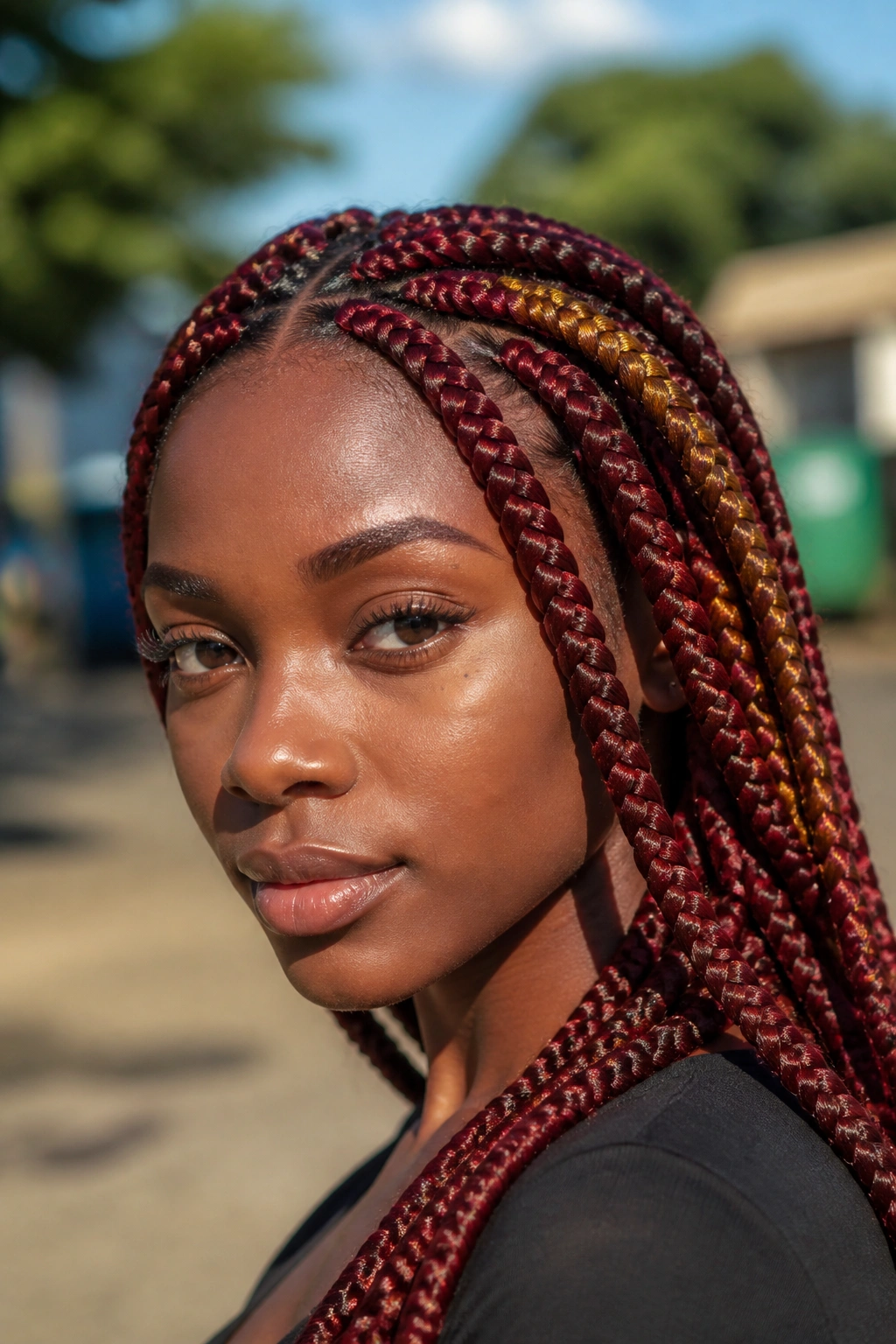
Color changes the whole story. A deep burgundy set of Ghana braids feels rich and warm. Honey blonde brings brightness. Copper has a little fire in it. Blue, purple, or green can go bold fast, but even a softer brown blend can shift the mood more than people expect.
The smartest way to wear colored Ghana braids is to let one shade lead. Too many shades fighting each other can make the style look noisy. One main color with one accent tone usually reads cleaner. If your natural hair is dark, leaving the roots close to your own shade makes the transition feel smoother and the install look less abrupt.
Colored braids are strongest when the parting stays simple. Let the color do the visual work. Straight-back rows, a middle part, or a low bun all give the shade room to show off.
There’s also a nice practical side here. If you want to play with color without bleaching your own hair, extensions give you the freedom to do that. The style stays protective. The color still gets to be fun. No sacrifice needed.
18. Scalp-Design Ghana Braids
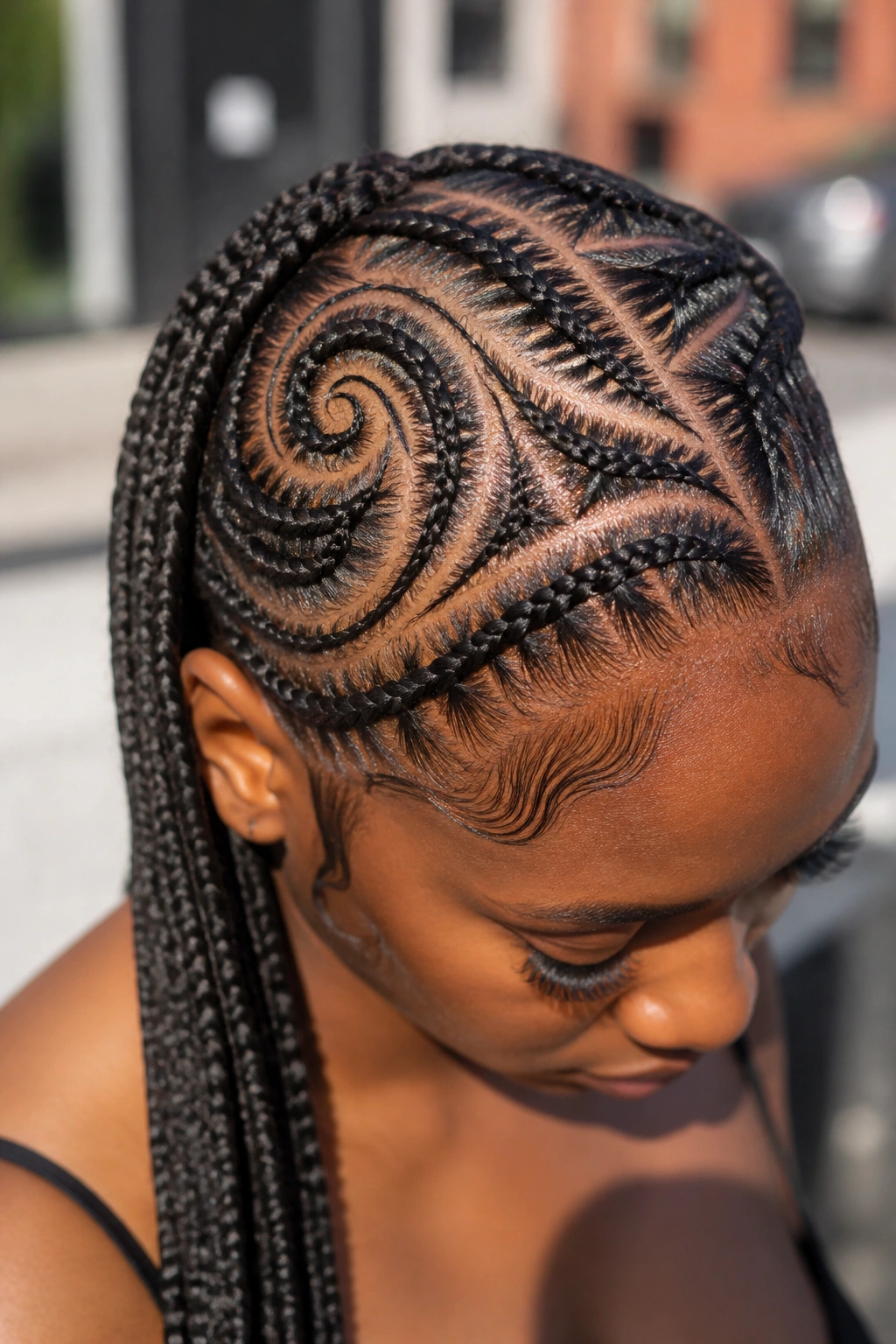
Scalp design braids are for anyone who likes the parting almost as much as the braids. Swirls, triangles, arcs, and small stitched shapes can sit across the scalp and turn the entire head into a pattern. It feels a little architectural, which sounds dramatic, but that is exactly the point.
The design works best when the parts are crisp and the rows are not too thick. If the braids are oversized, the scalp art gets swallowed. Smaller or medium braids leave more of the pattern visible. That means the style can be detailed without becoming crowded.
What to Ask Your Braider For
- Clear part lines that hold their shape.
- A balanced design on both sides of the head.
- Enough spacing between patterns so each shape can be seen.
- Braids that follow the part instead of covering it too early.
This is one of those styles that gets attention from the front and the side, not only from one angle. It also gives you a chance to make plain Ghana braids feel custom without adding beads, cuffs, or color. Sometimes the parting itself is enough.
19. Ghana Braids with Feed-In Side Braids
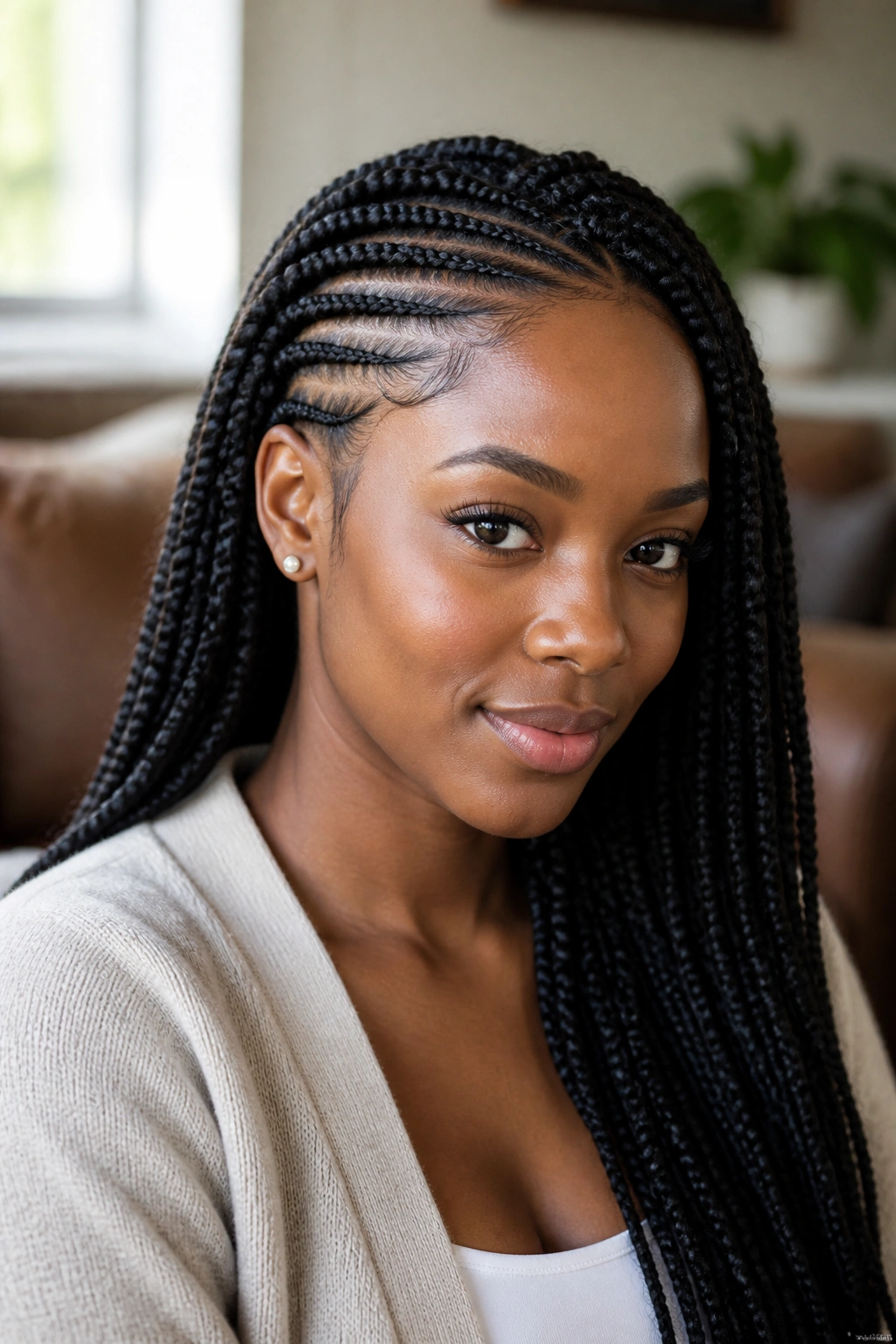
Feed-in side braids start near the temple and move backward with a gentle sweep, which gives the face a softer frame. The style can run asymmetrical, with one side carrying more braid work than the other, or it can stay balanced with mirrored side rows. Either way, the side placement changes the energy a lot.
This is a smart choice if you want the front of your hair to feel lighter. The rows move away from the face instead of straight down it, which can make the cheekbones stand out and keep the style from feeling boxy. It also works well with longer lengths because the side feed creates a natural direction for the braids to fall.
A lot of people like this style because it blends detail and ease. The braids are still protective. The parting still looks clean. But the side sweep makes the style feel less rigid than straight-back rows. That little bit of diagonal movement does more than people think.
If you want one version that feels especially flattering in photos and in person, this is a strong pick. The shape has flow, and flow matters.
20. Side-Swept Ghana Braids

Side-swept Ghana braids are what I’d reach for when I want the style to feel soft at the front and full through the length. The braids move over one shoulder or sweep across the chest, which gives the whole look a slanted line instead of a strict center drop. That shift makes a real difference.
The style works with long braids, medium braids, and even a bob if the angle is strong enough. It can be worn with a deep side part, a curved front row, or a row pattern that already leans in one direction. The main point is movement. You want the braids to travel, not sit frozen in place.
It’s a nice pick when you want something that feels easy to live in but still looks finished. Loose braids can sometimes spread too much. Side-swept braids keep the length contained while still giving you that swing and texture that makes Ghana braid hairstyles so satisfying on Black women.
If you’re choosing one look from this whole set, start here if you like low effort after install and a clean finish at the front. It wears well, it frames the face, and it doesn’t ask for much once you’re out the chair.
