



Curly hair lies about its length.
A cut that brushes your shoulders in the chair can land well past your collarbones once the curls dry, and that one little trick changes everything about how a long shape behaves. That’s why long curly shag haircuts for women are such a smart choice when the goal is movement, volume, and enough length to still throw your hair into a clip on lazy days.
The shag gives curls room to breathe. It keeps the bottom from turning into a heavy curtain, lifts the crown, and lets each curl group do its own thing without fighting the rest of the head. But not every shag works on curls. Some are too choppy, some are too thin at the ends, and some look fine on day one before they puff out like they’ve got a secret grudge.
A good curly shag is more about shape than drama. The right layers should fall where your curls need them, not where a salon poster says they should. Dry cutting helps. Point cutting helps. So does being honest about your curl pattern, your density, and how much styling you’ll actually do before coffee.
1. Soft Face-Framing Curly Shag
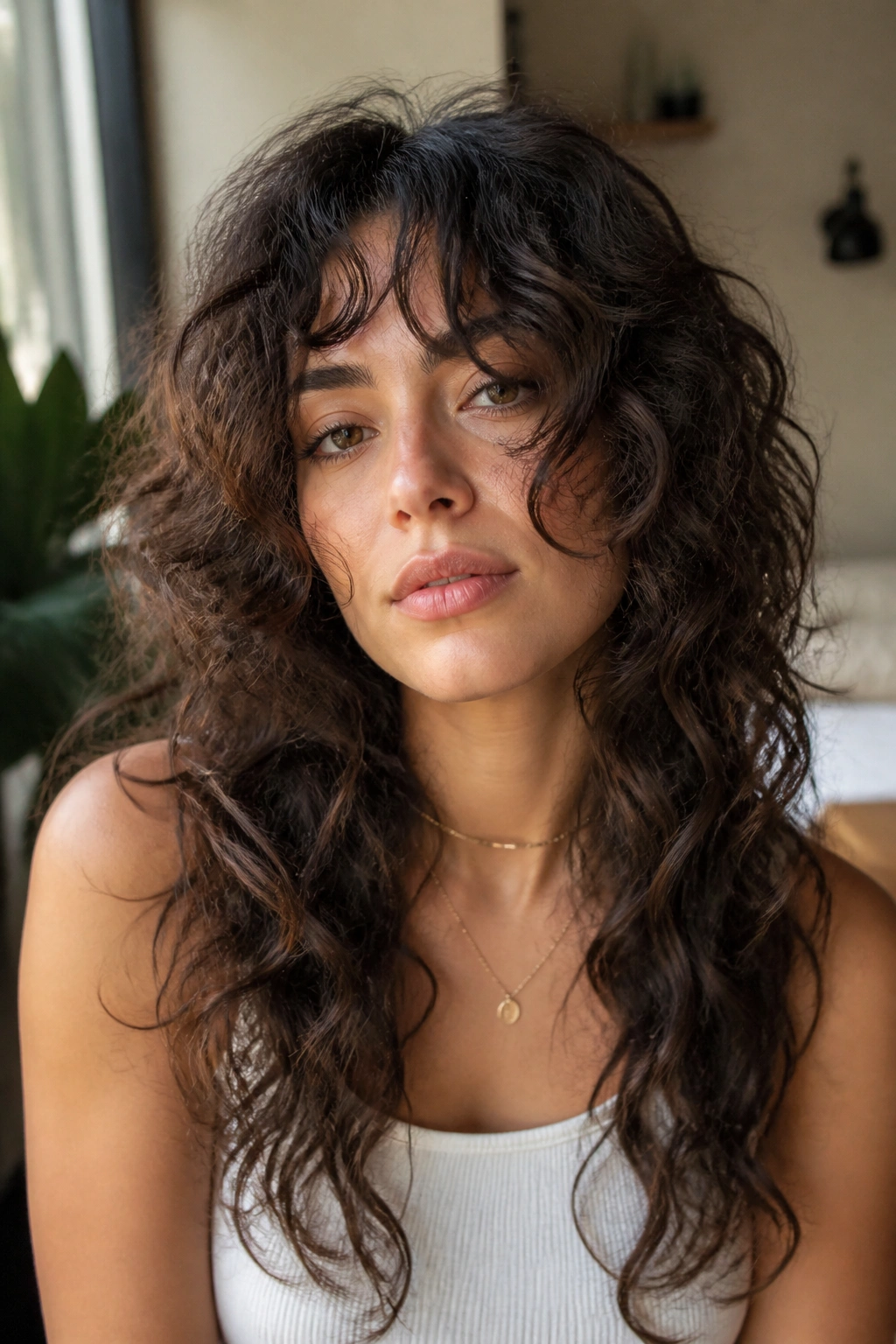
This is the cut I’d hand to someone who wants movement without feeling like the haircut is wearing them. The layers start softly around the face, then drift into longer lengths through the sides and back, so the overall shape still feels feminine and easy. It’s the kind of shag that makes curls look lighter without losing the length people usually fight to keep.
What to Ask for at the Salon
Ask for long face-framing layers that begin around the cheekbone or just below it if your curls spring up hard when dry. That one detail matters more than people think. If the shortest layer is cut too high, the front can shrink into a puff.
- Keep the perimeter long and softly layered.
- Ask for point-cut ends, not blunt chop marks.
- Tell the stylist you want movement around the face, not a heavy fringe.
- Mention your curl pattern and shrinkage before the first snip.
This cut works especially well if you wear a center part or a slight off-center part. It opens the face without forcing you into a severe style.
Best trick: let the front pieces dry in the direction you want them to live. Curly hair remembers shape better than people give it credit for.
2. Long Curly Shag with Curtain Bangs
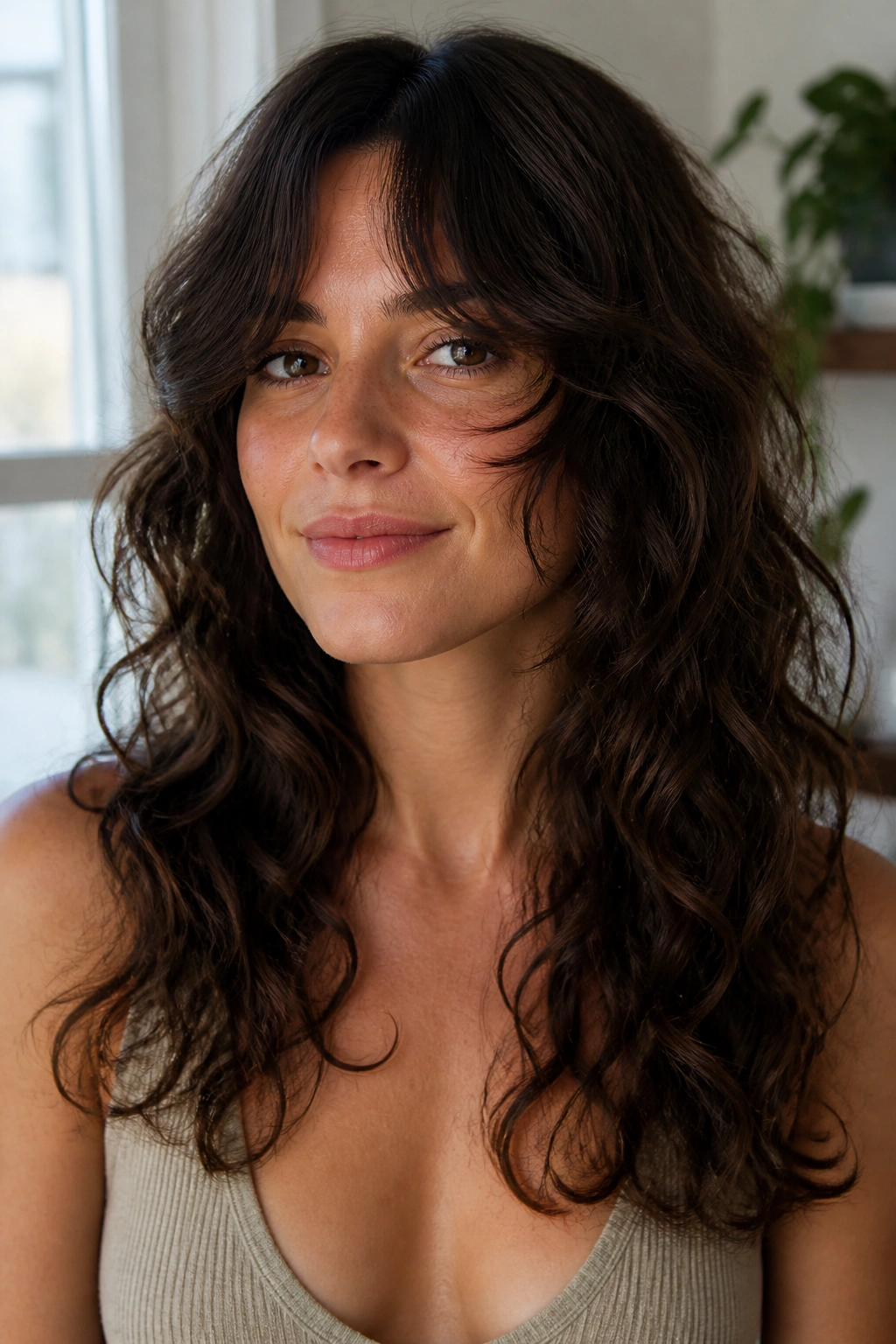
Curtain bangs and curls get along better than most people expect.
The reason is simple: the bang opens in the middle, so the curl pattern can fall in a looser, more forgiving way. A full straight-across fringe can be a lot to manage on curly hair, but a curtain shape lets the front move with your texture instead of against it. It also softens a long face and gives the whole cut a little old-photo charm without tipping into costume.
The sweet spot is length. Curtain bangs on curls should usually start long enough to hit around the cheekbones when dry, sometimes even lower if your hair has a lot of spring. Too short, and they bounce up into a shelf. Too long, and they just look like random face-framing pieces. That middle zone is where the magic lives.
I like this version for women who want their shag to feel styled even when the rest of the hair is doing its own thing. The bangs create the shape. The curls do the rest.
A little mousse at the front helps, especially if you scrunch the bang section forward and then separate it with your fingers once it’s dry. Don’t overplay the center part. A soft split is enough.
3. Rounded Curly Shag for Thick Hair
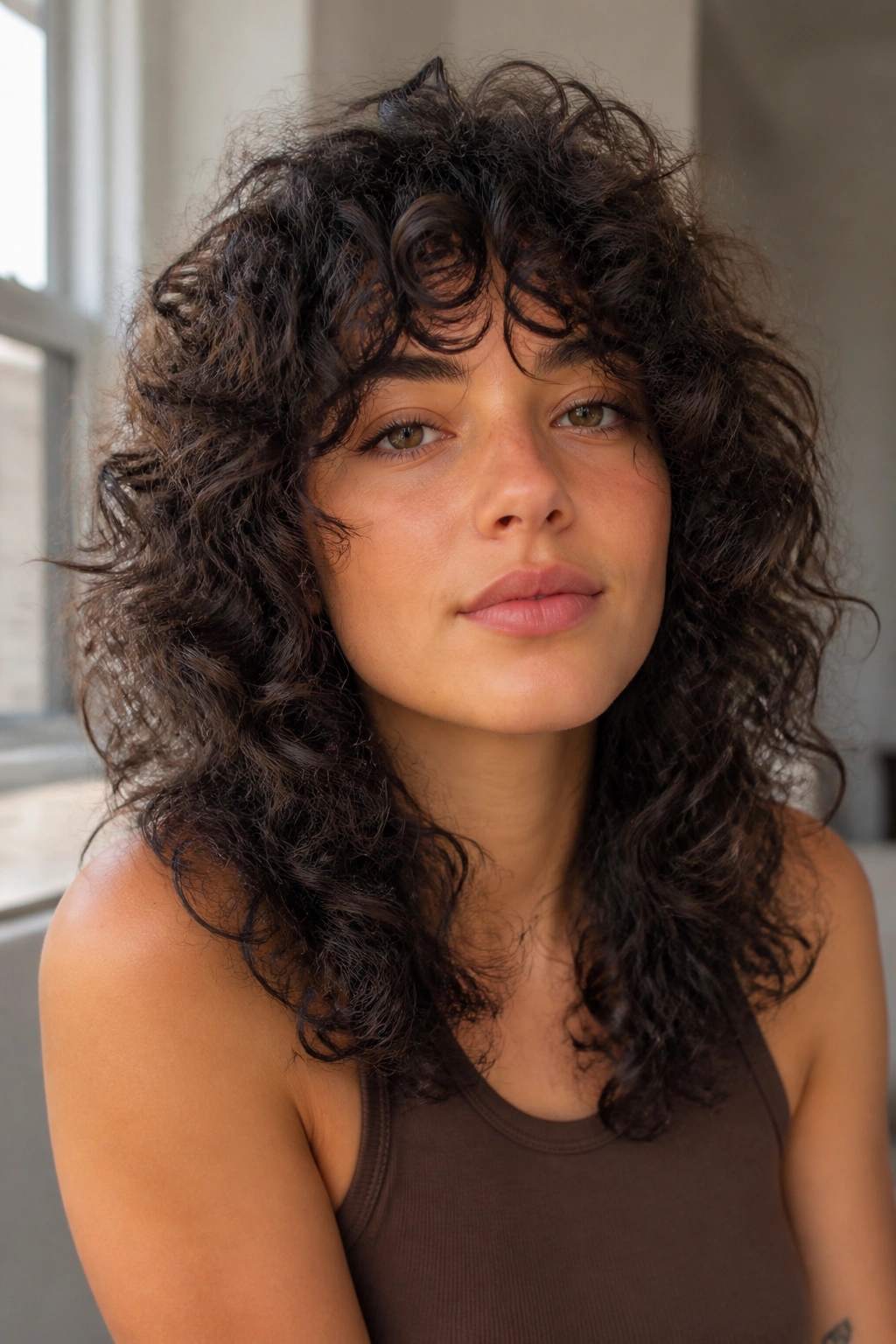
Why does a rounded curly shag work so well on dense hair?
Because thick curls already have volume. They do not need to be bullied into submission. They need a shape that contains width without flattening the crown, and that’s exactly what a rounded shag does. The top keeps lift, the sides taper in a controlled way, and the whole cut stops that dreaded pyramid look that shows up when dense hair is left too blunt.
This one is especially good if your hair grows outward before it grows down. You know the feeling. You walk out of the salon looking tidy, then two days later your outline seems to widen at the temples and the lower half feels too heavy. A rounded shag solves that by removing weight from the interior instead of stripping away all the ends.
How to Style It
- Diffuse on medium heat and low airflow to keep the curls round, not blasted apart.
- Clip the crown while drying if your roots collapse.
- Use a curl cream with enough slip to help dense hair separate cleanly.
- Don’t over-thin the ends; thick hair needs some substance to keep shape.
The best versions of this cut still look rich at the bottom. That matters. A rounded shag should feel airy, not threadbare.
4. Wolf Cut-Influenced Curly Shag
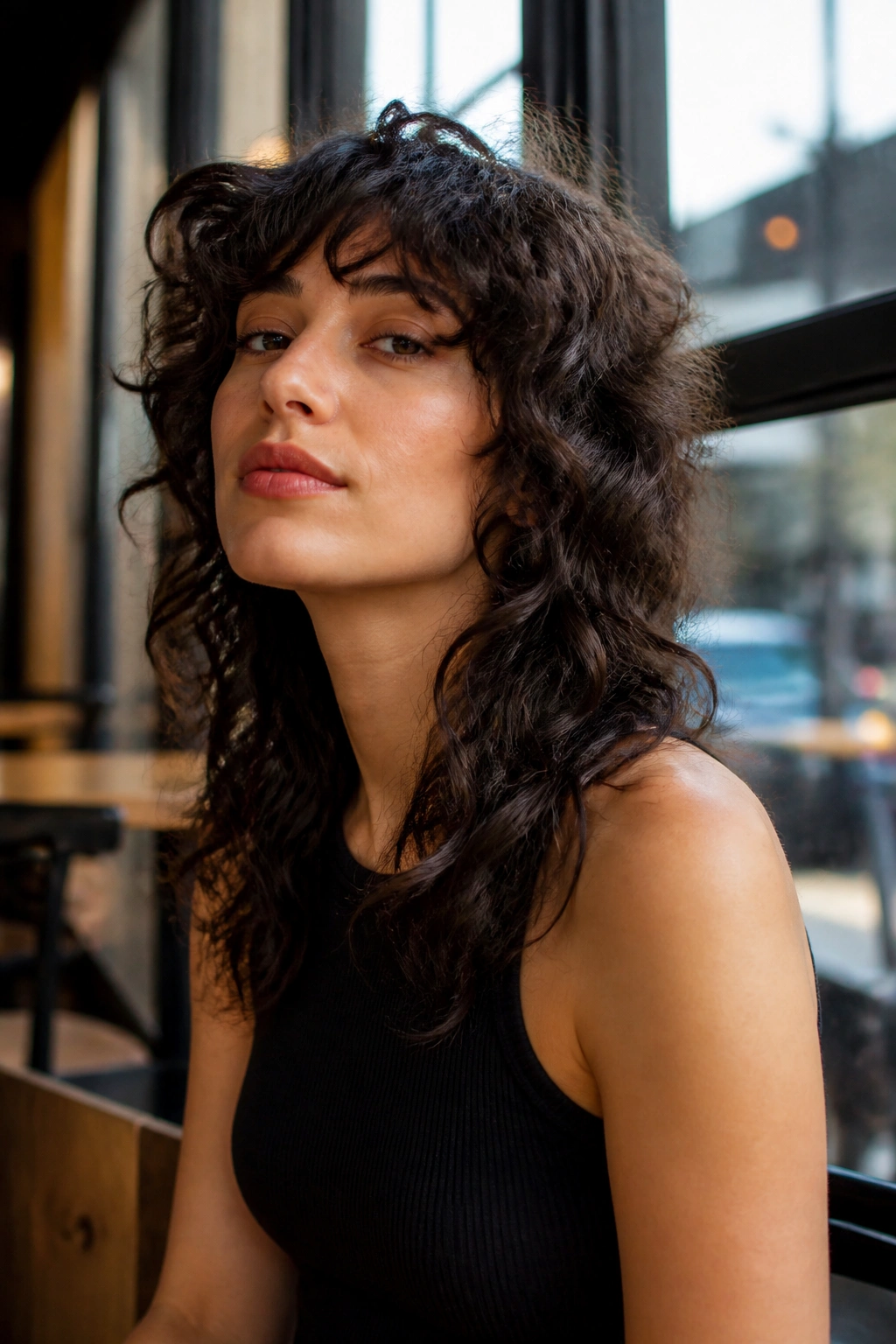
Picture this: you want edge, but you still want to look like you can wear the haircut to dinner, work, and a grocery run without feeling underdressed. That’s where the wolf cut-leaning curly shag comes in.
It borrows the lifted crown and broken-up layers from a wolf cut, then softens the whole thing so the curls don’t turn into a rigid triangle. The top is a little shorter, the perimeter stays longer, and the transition between the two is blended enough that the shape still reads as a shag. It’s a little wild. Not messy. There’s a difference.
This cut likes texture. A lot of it. If your curls are already springy and full of personality, the wolf-ish version makes them look intentional instead of unruly. On straighter curl patterns, though, it can lose some of its bite and just look over-layered. That’s where people get disappointed.
Key Details That Matter
- Shorter crown layers create lift near the top.
- Longer sides keep the cut from feeling too severe.
- A bit of separation at the ends gives it that lived-in, piecey look.
- It grows out well, which is a real advantage if you hate frequent trims.
My advice? Keep the length past the shoulders if you want this version to stay wearable. When the bottom gets too short, the whole thing starts shouting instead of talking.
5. Low-Maintenance Long Curly Shag
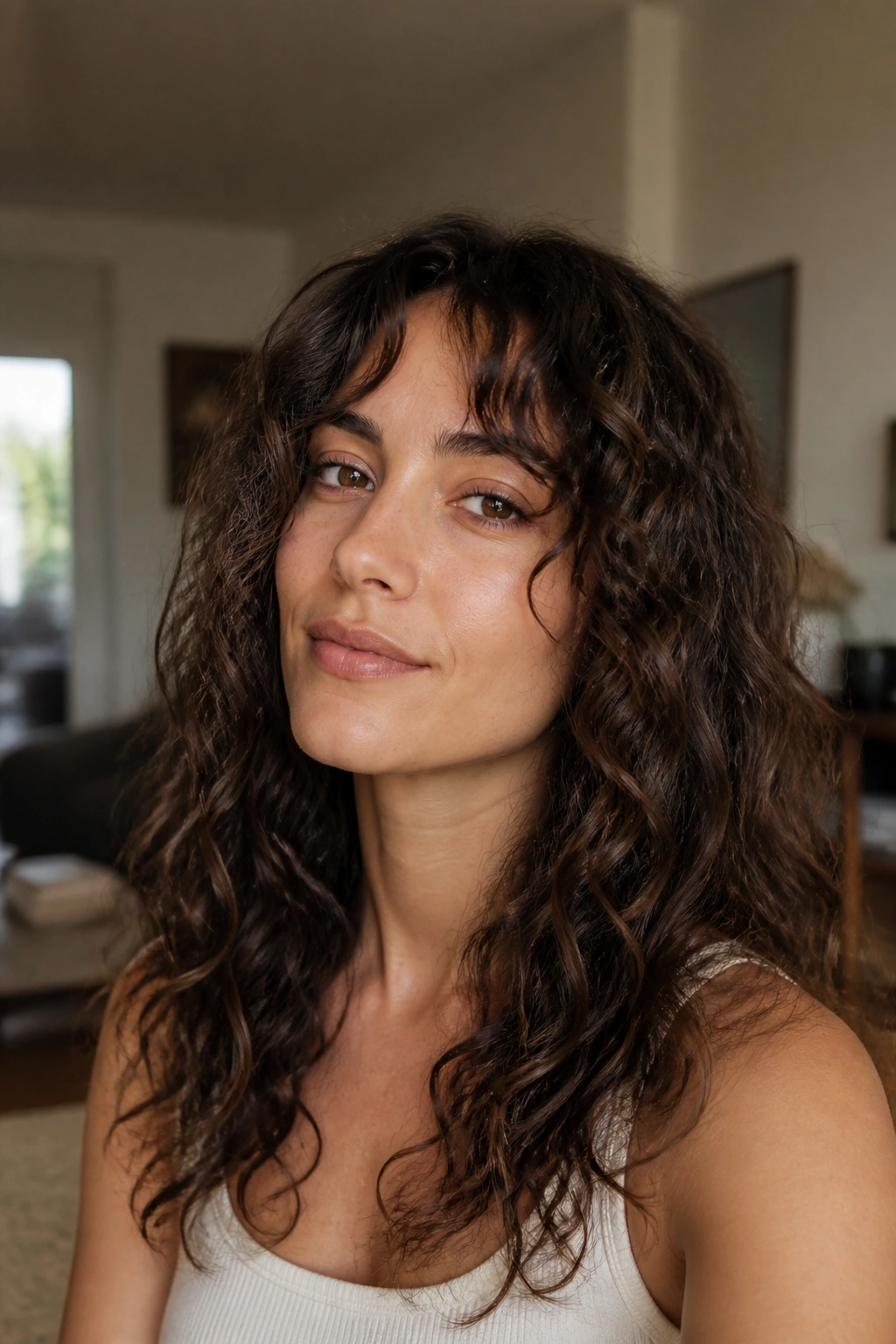
The right kind of messy is the point.
Some haircuts look polished only if you commit to a full styling ritual every morning. This one doesn’t ask for that. A low-maintenance long curly shag keeps the length intact, uses fewer obvious layers, and lets the curls fall into a softer, looser silhouette that still has shape. It’s a good fit for women who like their hair to look finished without spending half an hour negotiating with a diffuser.
The best versions are not the most chopped-up ones. They keep the ends healthy, put the shortest layers around the crown or upper cheeks, and leave enough weight through the lower half so the hair doesn’t spread out into frizz. That weight is your friend. It’s what keeps the cut from floating away from the face.
This is also the shag I’d recommend to someone who styles on a two-day rhythm. Wash, scrunch, air-dry, sleep on it, refresh with a spray bottle, done. If you need a haircut that behaves when life gets busy, this is the one I’d point to first.
One sentence matters here: less structure can mean more control when curls are involved.
Use a light leave-in, a medium-hold mousse, and stop fussing once the curls are defined. That’s usually enough.
6. Long Curly Shag with Side-Swept Bangs
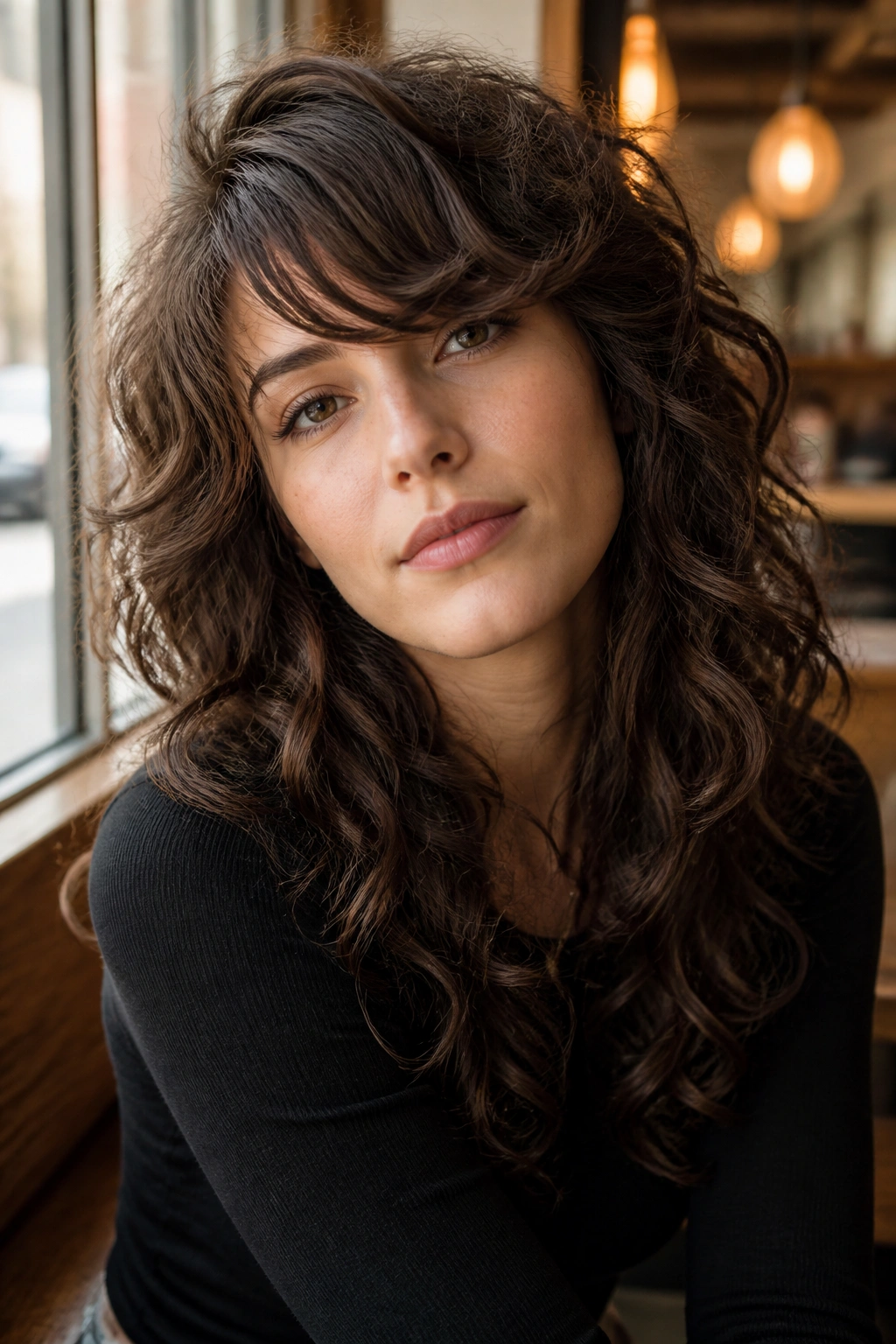
Unlike curtain bangs, side-swept bangs let you steer the eye in one direction. That sounds small, but on curly hair it changes the whole mood of the cut. The fringe crosses the forehead at an angle, which helps soften a strong jawline, balance a wider forehead, or hide a cowlick that refuses to cooperate.
This version feels a little less symmetrical and a little more relaxed. If center parts make your face look too long, or if your curls always fall heavier on one side, side-swept bangs can make the whole haircut feel more lived-in. They’re also kinder to people who don’t want to separate the front section every single morning.
The trick is not to cut the bang too short. Curly side-swept bangs should usually hit around the bridge of the nose or lower when wet, because they bounce up as they dry. If you cut them with straight-hair logic, they’ll end up hovering awkwardly above the brow and that is a headache nobody needs.
This shag is best for women who like a bit of asymmetry. It has more motion than a classic layered cut, but less commitment than a heavy fringe. I’d call that a solid trade.
7. Big-Volume Curly Shag for Dense Curls
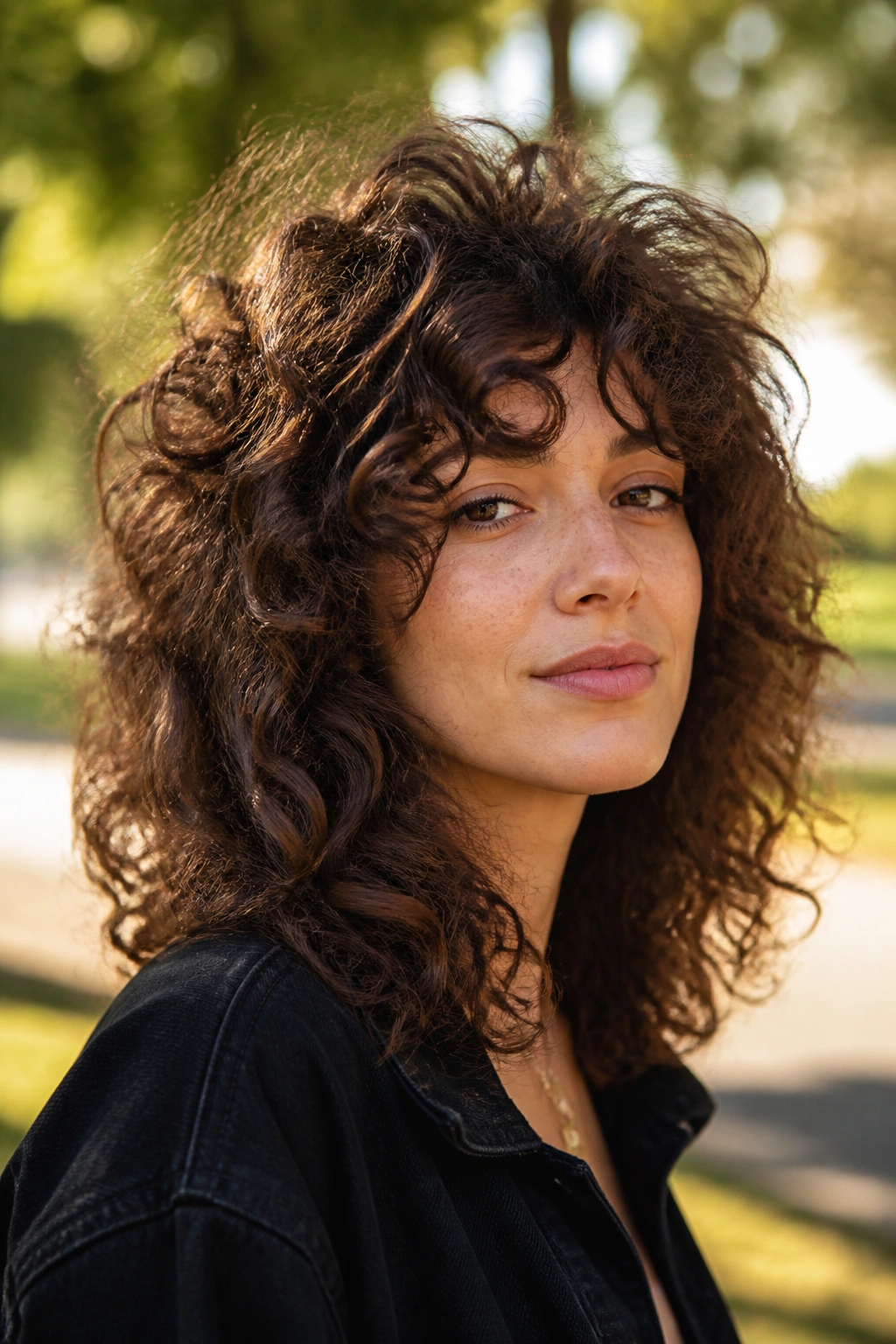
Dense curls need room at the root, not a lot of aggressive thinning.
That’s the heart of this cut. The goal is to give the top layers enough lift so the hair doesn’t collapse into one heavy mass, while keeping enough strength at the perimeter that the ends don’t disappear. A big-volume shag is especially good on hair that looks flat near the scalp and suddenly huge from ear level down. You want that volume to rise earlier, not all the way at the bottom.
Cutting Notes for Dense Curls
- Ask for internal layers near the crown to help the top bounce up.
- Keep the longest length below the shoulders if you want weight at the base.
- Avoid over-texturizing the ends, which can make dense curls frizz faster.
- Point cutting works better than blunt slicing on most dense curl patterns.
This cut wears best when the crown gets a little help from styling. A root clip at the front and a quick diffuse upside down can make a dramatic difference. Not a huge, theatrical difference. Just enough to keep the shape from sinking.
Dense curls are beautiful when the silhouette is controlled. This haircut does that without flattening the texture that makes dense hair worth showing off in the first place.
8. Long Curly Shag for Fine Hair
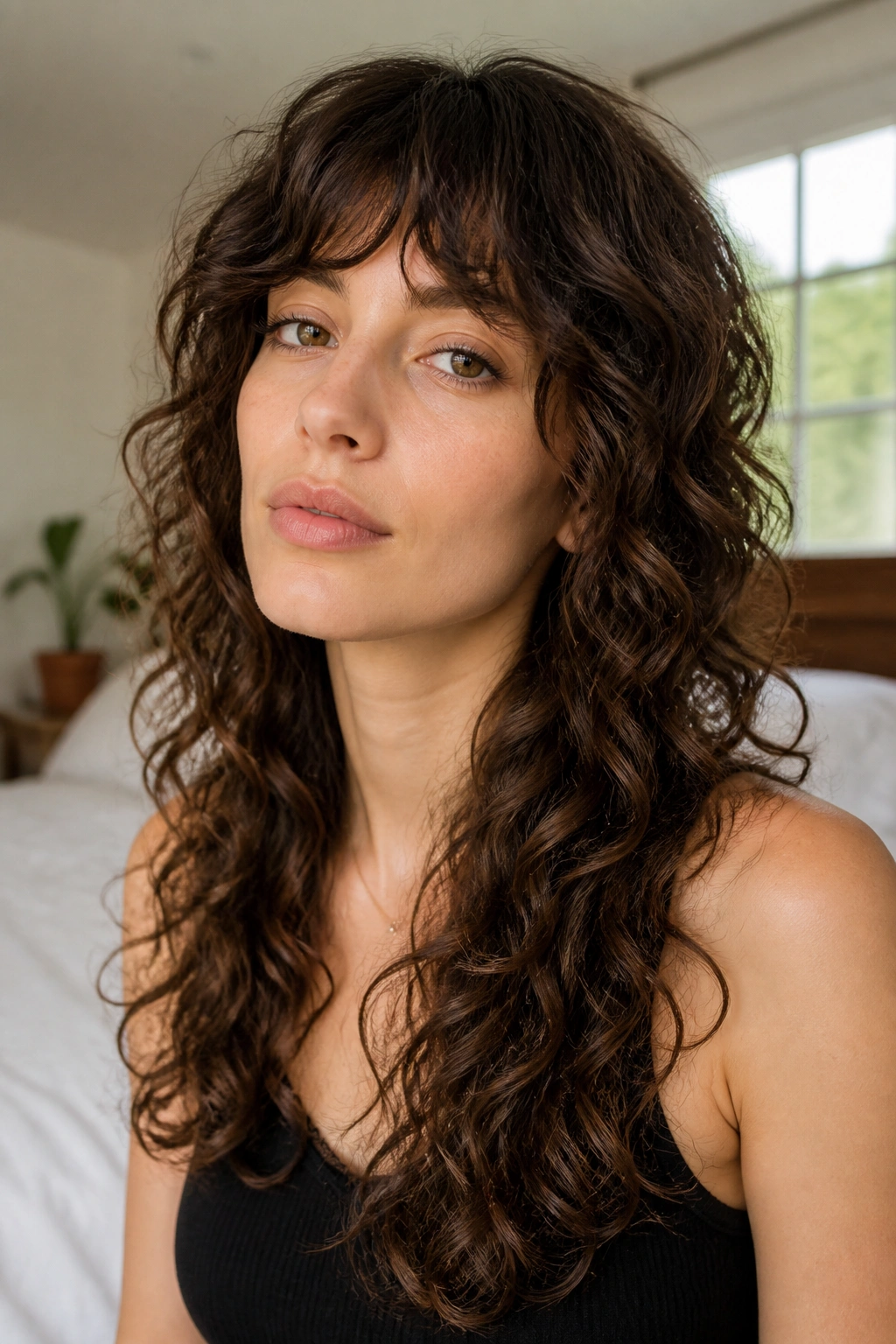
Fine curls do not need fewer layers. They need smarter ones.
That’s the part people get wrong. When fine curly hair is left too heavy, it can droop and lose its pattern. When it’s chopped too high all over, it turns wispy and weird at the ends. A good long shag for fine curls threads the needle: long enough to keep substance, but layered enough to avoid a limp, stringy shape.
This version usually works best with a soft crown lift and a gentle face frame. The shortest layers should live where they can create the look of fullness without removing so much density that the curl clumps fall apart. If a stylist starts taking short chunks everywhere, I’d back away a little. Fine curls need a hand that knows when to stop.
A mousse with grip helps here more than a rich cream. Cream can weigh the hair down fast, especially near the roots. A lighter product gives the curls enough support to stand up, and the shag shape does the rest.
I also like this cut because it grows out in a useful way. Even when the shape softens, the hair usually keeps enough movement to look intentional. That counts for a lot.
9. Invisible-Layer Curly Shag
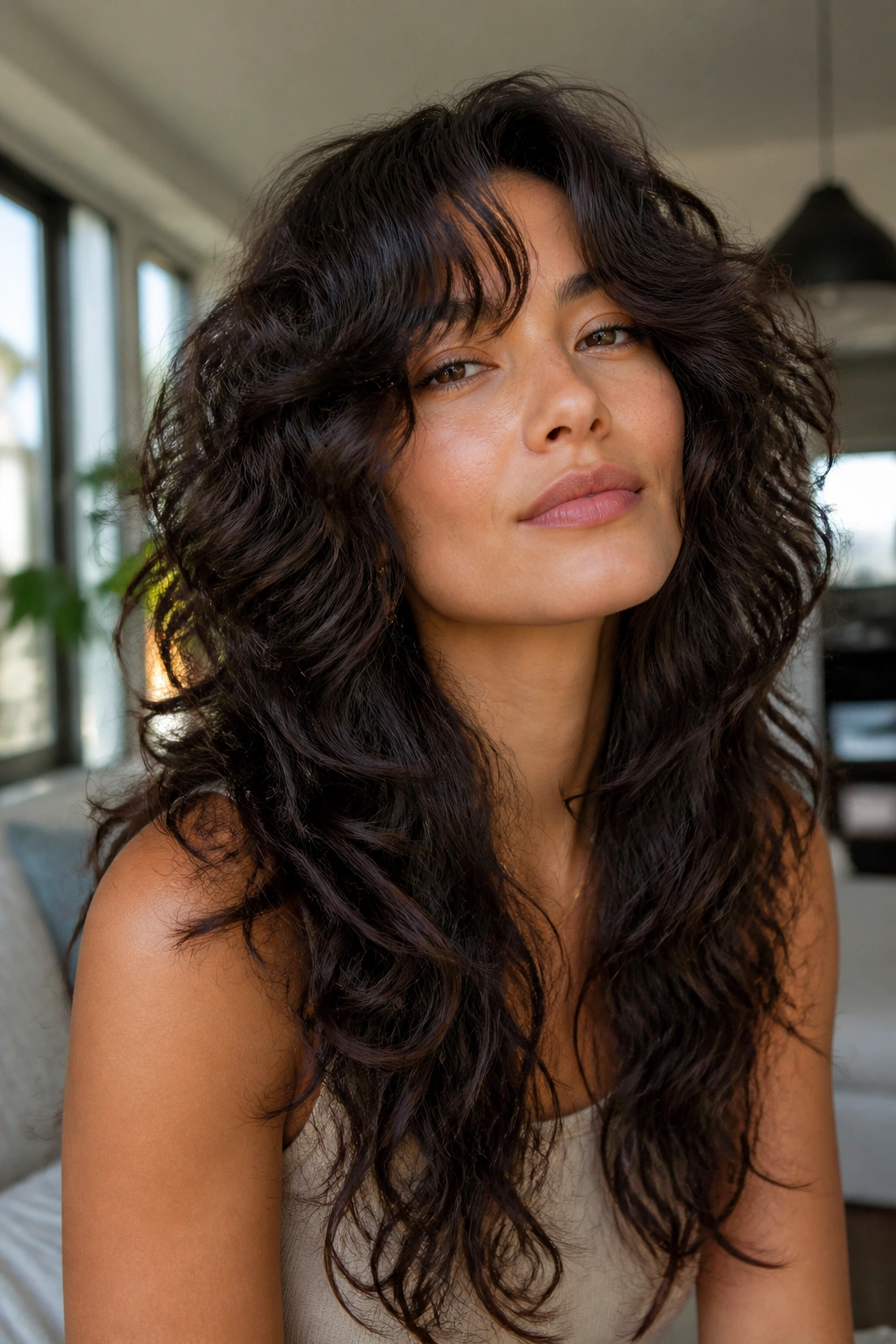
Can a shag have layers you barely notice?
Absolutely. In fact, some of the prettiest curly shags rely on hidden layering rather than obvious stair-step pieces. Invisible layers are cut inside the shape, so the hair keeps its long outline while still getting lift and movement from within. On curly hair, that means the cut can feel lighter without looking chopped to bits.
This is a smart option if you love length and hate the idea of looking like you’ve lost too much hair in the chair. The layers don’t shout. They just change how the curls fall. You still get bounce at the crown, and the front can still frame the face, but the overall effect stays sleek for a shag.
How to Ask for the Cut
- Say you want internal layers, not a heavily disconnected look.
- Point to the spots where your hair feels bulky when dry.
- Ask the stylist to leave the perimeter long and blended.
- Bring a photo of the finished shape, not only the bangs.
Invisible layers are also kind to people who wear their curls in different ways. Air-dried, diffused, clipped up, half pulled back — the cut keeps working. That flexibility is the whole point.
10. Long Shag for Coily Curls
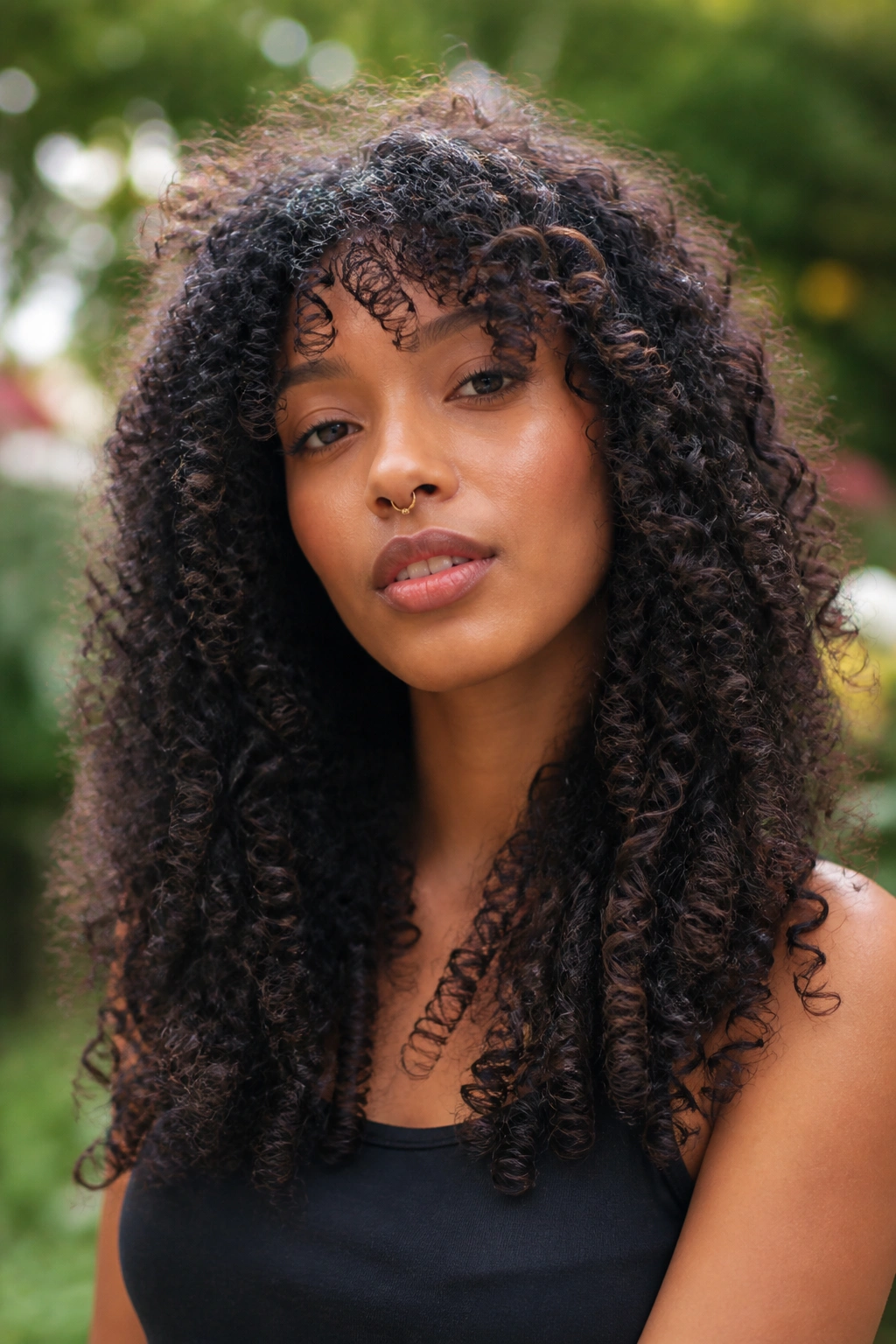
If your curls spring tight and sit higher once dry, this shape has to be handled with more care. Coily hair can look stunning in a shag, but the layering needs to respect shrinkage, density, and the fact that the curl pattern often has a lot of range even on one head.
A long shag for coily curls works best when the stylist shapes it in a way that keeps the outline long and the layers gradual. Too much short layering can make the cut jumpy, and jumpy is not the same thing as full of life. You want movement, yes. You do not want a halo of uneven ends around your face unless that is the exact look you love.
This cut is especially good if you wear your hair stretched one day and fully curly the next. A soft shag can handle both. It gives you a shape when the hair is stretched and keeps a nice contour when the coils shrink up. That kind of versatility is rare enough to matter.
- Ask for a dry cut or curl-by-curl shaping if possible.
- Keep the front pieces long enough to account for shrinkage.
- Avoid thin, wispy ends that disappear into frizz.
- Use a rich leave-in and seal the ends well.
The strongest versions of this cut feel deliberate, not decorative. That’s the line to watch.
11. Heavy Fringe Curly Shag
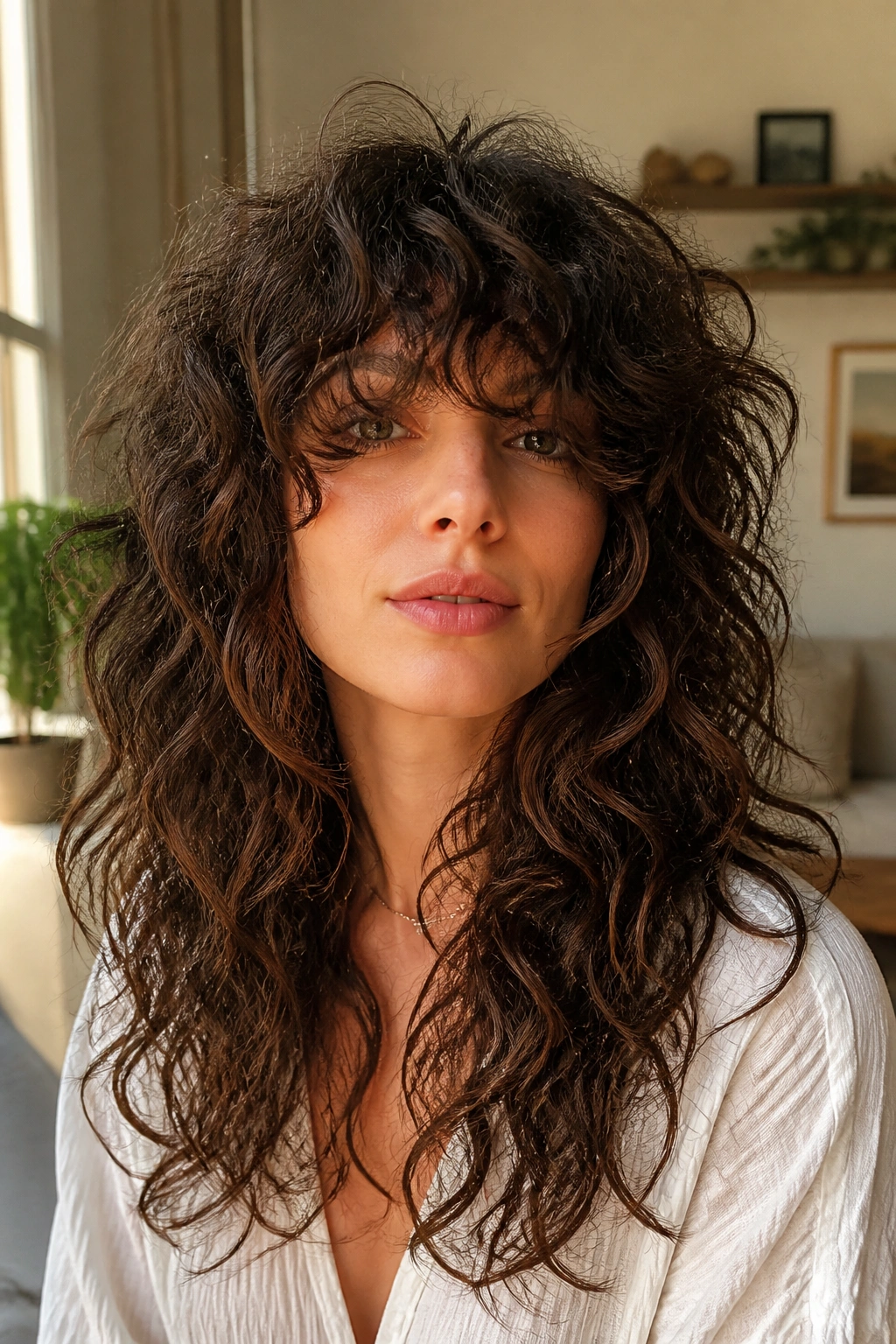
A heavy fringe on curly hair is a bold move, and I mean that in the useful sense.
It brings the eyes straight to the face, gives the shag a clear top line, and makes long curls feel a little more styled from the start. But it also asks for maintenance. A lot of women love the look in photos and then get annoyed when the fringe needs shape every few weeks. Fair enough. Curly bangs are not passive roommates.
This version works best when the fringe is dense enough to hold together after shrinkage, and when the curls near the forehead are strong enough to keep their own pattern. If the front section is too fine, the bangs can separate into awkward pieces. If the hairline has a stubborn cowlick, the fringe may need more daily coaxing than you want to give it.
I like this cut on women who want drama at the top and length through the rest of the hair. The contrast is the point. The fringe feels full, the layers get lighter as they move down, and the whole haircut reads with more attitude than the softer shag styles.
Give the fringe its own styling pass. Don’t just hope it behaves while you diffuse the rest.
12. Square-Face Curly Shag
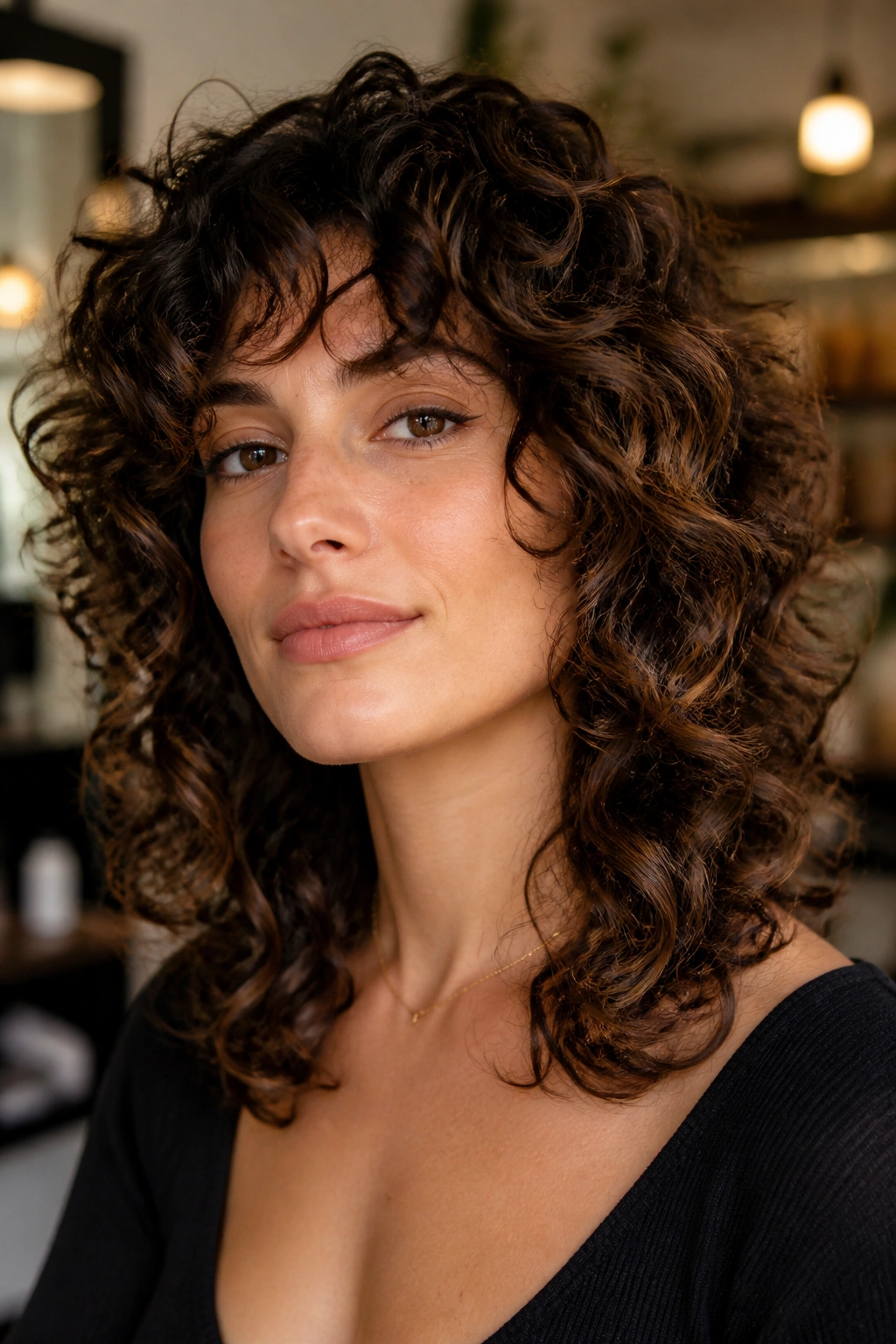
A square face doesn’t need softness everywhere. It needs the right softness in the right places.
That’s why a long curly shag can be such a good match. The layers can break up a strong jawline without hiding the bone structure, and the curls can add movement around the cheeks instead of sitting in one blunt block. If the face shape feels angular, the haircut should work with that, not cover it like a tarp.
The key is to avoid a straight, heavy line at the jaw. Keep the front layers longer and a little curved, so the hair bends inward and around the face rather than cutting across it. Side volume helps too, as long as it isn’t too puffy. You want lift, not width for width’s sake.
This is one of those cuts where the salon photo matters. Bring a picture that shows the front angle, not just the back. A stylist can do a lot with curl shape if they know where the layers should land.
A square face usually looks strong with a shag that starts softness around the cheekbones and continues downward in loose, broken layers. That balance is the whole game.
13. Razored-Ends Curly Shag
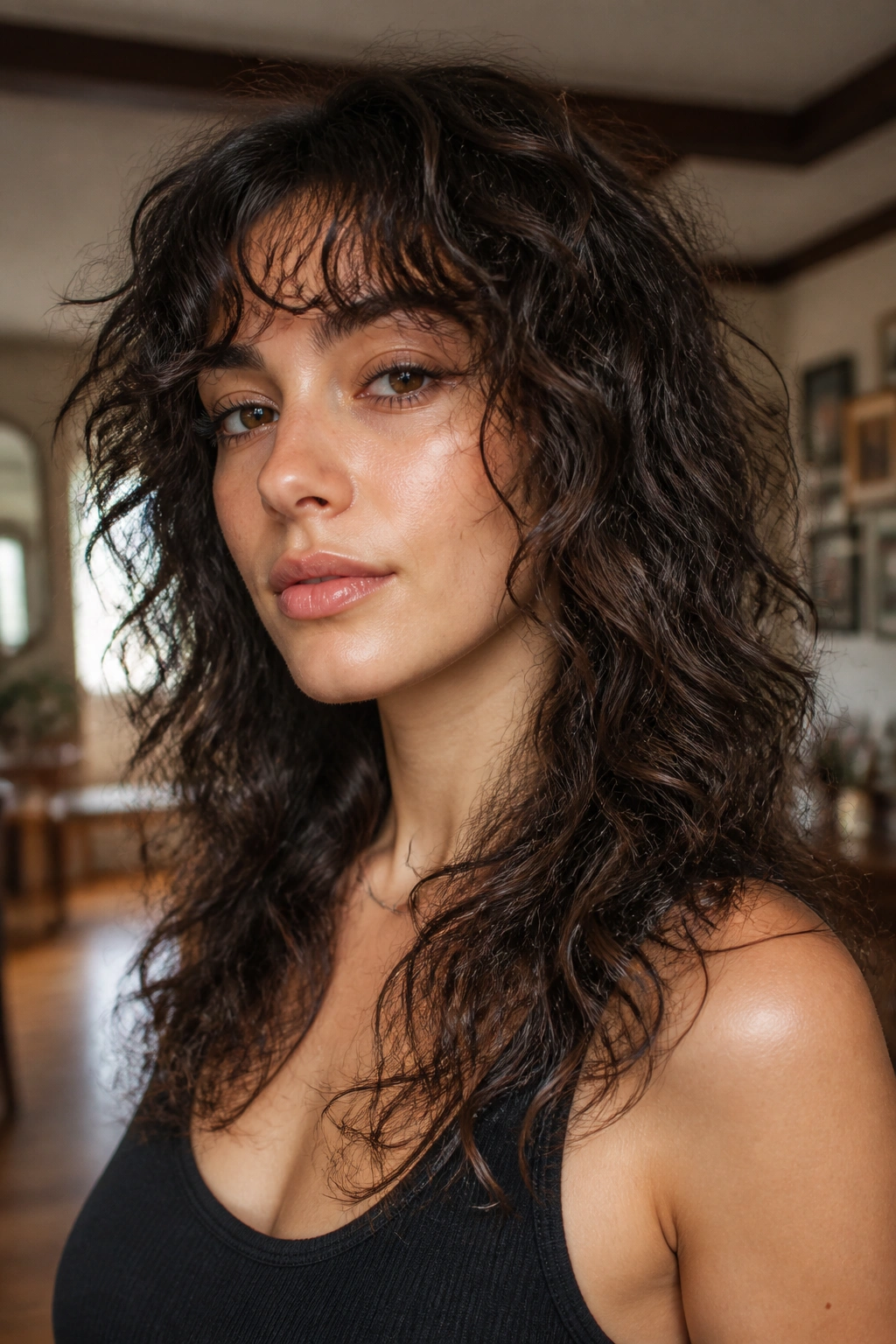
Razored ends can look fantastic on curls — if the stylist knows when to stop.
The appeal is easy to see. A razor can take weight out of the ends, create a softer edge, and make long curls fall with more air between the pieces. On the right curl pattern, that gives the shag a slightly feathered finish that feels relaxed rather than carved up. On the wrong one, it can make the ends puff and fray. So yes, this one is a little technical.
What to Ask for
- Ask whether the stylist cuts curly hair with a razor often, not occasionally.
- Request soft texturing at the ends, not aggressive thinning.
- Make sure the perimeter stays long enough to hold curl clumps.
- Tell them if your hair frizzes easily in dry air.
Razored ends work best when the goal is movement at the bottom without a thick shelf. I like them on hair that feels heavy even when the layers are already in place. But if your curls are delicate or your ends split easily, point cutting may be safer.
This is one of those styles where a little restraint matters. A careful razor pass can be lovely. A heavy hand can turn the whole cut fuzzy fast.
14. Boho Long Curly Shag
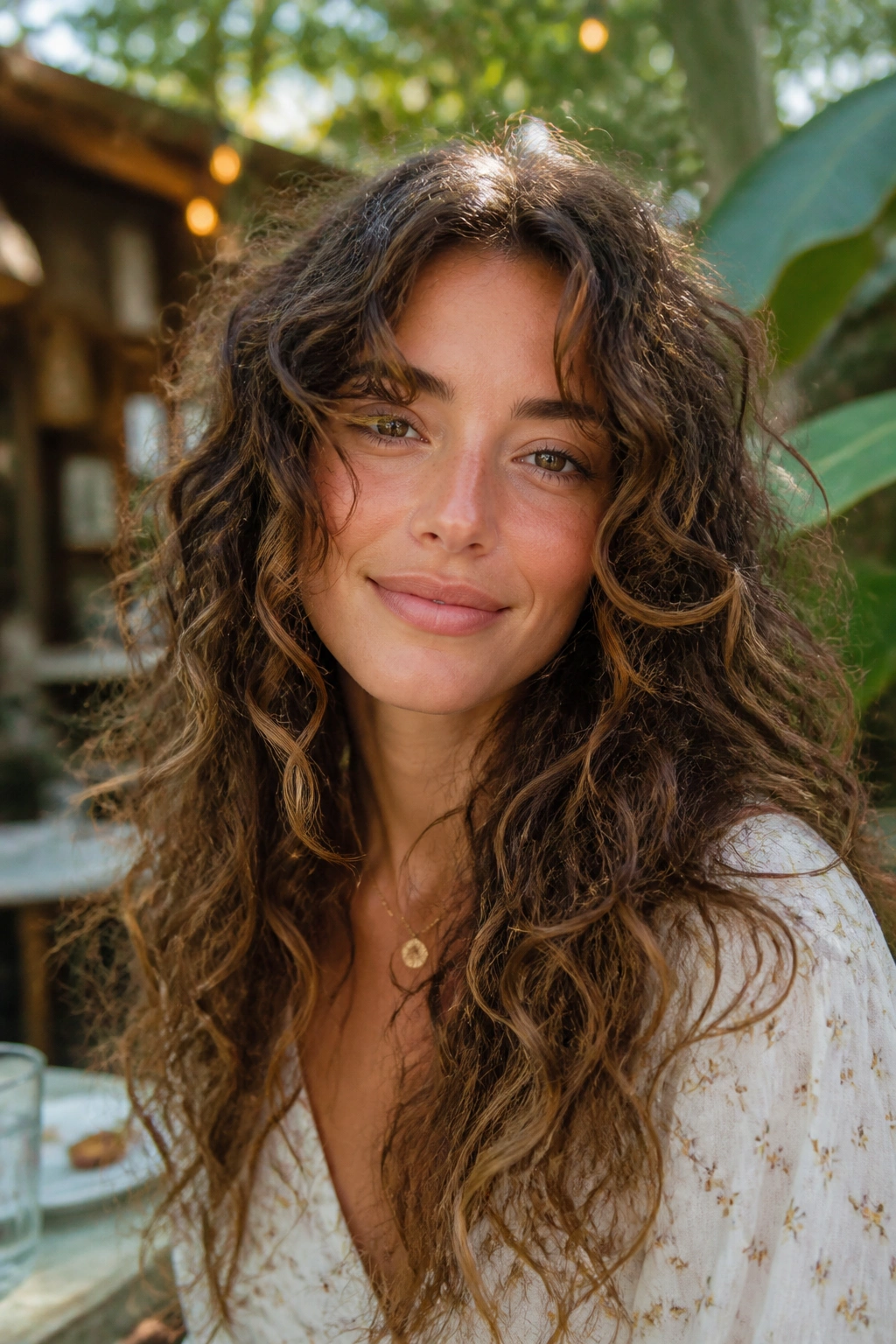
This is the version that looks lived-in on day three and somehow better on day five if you don’t keep touching it.
The boho curly shag leans into softness. The layers are long, the face frame is relaxed, and the overall outline feels a little undone in a good way. It usually reads a touch romantic, a touch messy, and fully unbothered. That’s the charm. It doesn’t need crisp lines to make sense.
I like this cut for women who wear hair natural most of the time and don’t want the haircut to look overworked. A center part, loose curls, a little separation at the ends — that’s the lane. It pairs well with hair that has some bend to it, because the shape depends on motion. Straight or barely wavy hair can lose the whole effect.
Keep the styling simple. A light leave-in, a medium-hold mousse, and maybe a few drops of oil on the ends once dry. Too much product can kill the airy feel, and this cut lives on air.
There’s a reason this version keeps showing up on long curly heads. It feels easy without looking plain, and that is a harder balance than people admit.
15. Soft Mullet Curly Shag
How close can a shag get to a mullet before it stops feeling wearable?
Pretty close, honestly, if the transition stays soft. The curly mullet shag keeps the crown and front a little shorter, lets the sides break up into layers, and preserves length through the back. On curls, that structure can look sharp without turning cartoonish, because the texture blurs the edges in a flattering way.
This is the cut for someone who wants shape with some edge. It’s not shy. It gives lift near the top and makes the back feel deliberate, not forgotten. But it still needs blending, especially around the temples and behind the ears. If the cut gets too disconnected, it can go from cool to confusing fast.
How to Wear It Without Losing Length
- Keep the back long enough to anchor the shape.
- Let the front pieces graze the cheekbones or chin.
- Style with a diffuser or air-dry cream to keep the layers from flipping out too hard.
- Trim the perimeter before the ends get shaggy in a bad way.
I’d call this one the most fashion-forward of the bunch. It’s not for everyone. It is for the woman who likes a little grit in her haircut and wants people to notice the shape before they notice the effort.
Final Thoughts
The best long curly shag is the one that fits your curl pattern instead of fighting it. Some versions want volume at the crown, some need a softer fringe, and some are really about keeping the ends full while the top gets all the movement.
What matters most is not the label on the haircut. It’s where the layers start, how much weight stays at the bottom, and whether the stylist understands how your curls shrink once they dry. That last part changes everything.
Bring photos, yes. Bring one or two things you do not want, too. A clear “not that short at the front” or “please don’t thin out the ends” can save you from a haircut that looked good in theory and wrong in your mirror.
And if you find a shag that makes your curls sit the way you’ve always wanted, keep that cut on repeat. The good ones are worth holding onto.
