



Some cornrow styles do more than keep hair neat. They change the whole mood of your face before you say a word.
That is why cornrow hair design ideas for Black women can feel so personal. A straight-back set reads calm and clean. A deep side part feels sharper. Curved rows, tiny rows, jumbo rows — each one sends a different signal before the length, the beads, or the bun even enters the picture.
Parting is the whole story.
I care about tension too. A braid that starts too tight at the hairline will stay annoying long after you leave the chair, and repeated pulling around the temples is one of the fastest ways to turn a pretty style into a problem you feel every time you wash your face. Good cornrows should protect the hair, not fight it.
The styles below lean into shape, scale, and wear time. Some are polished enough for a dressy night out. Some are the sort you can wear to work, tie down at night, and wake up looking almost suspiciously put together. Start where the shape feels right, because that usually tells you more than trends ever will.
1. Straight-Back Feed-In Cornrows That Sit Clean From Hairline to Nape
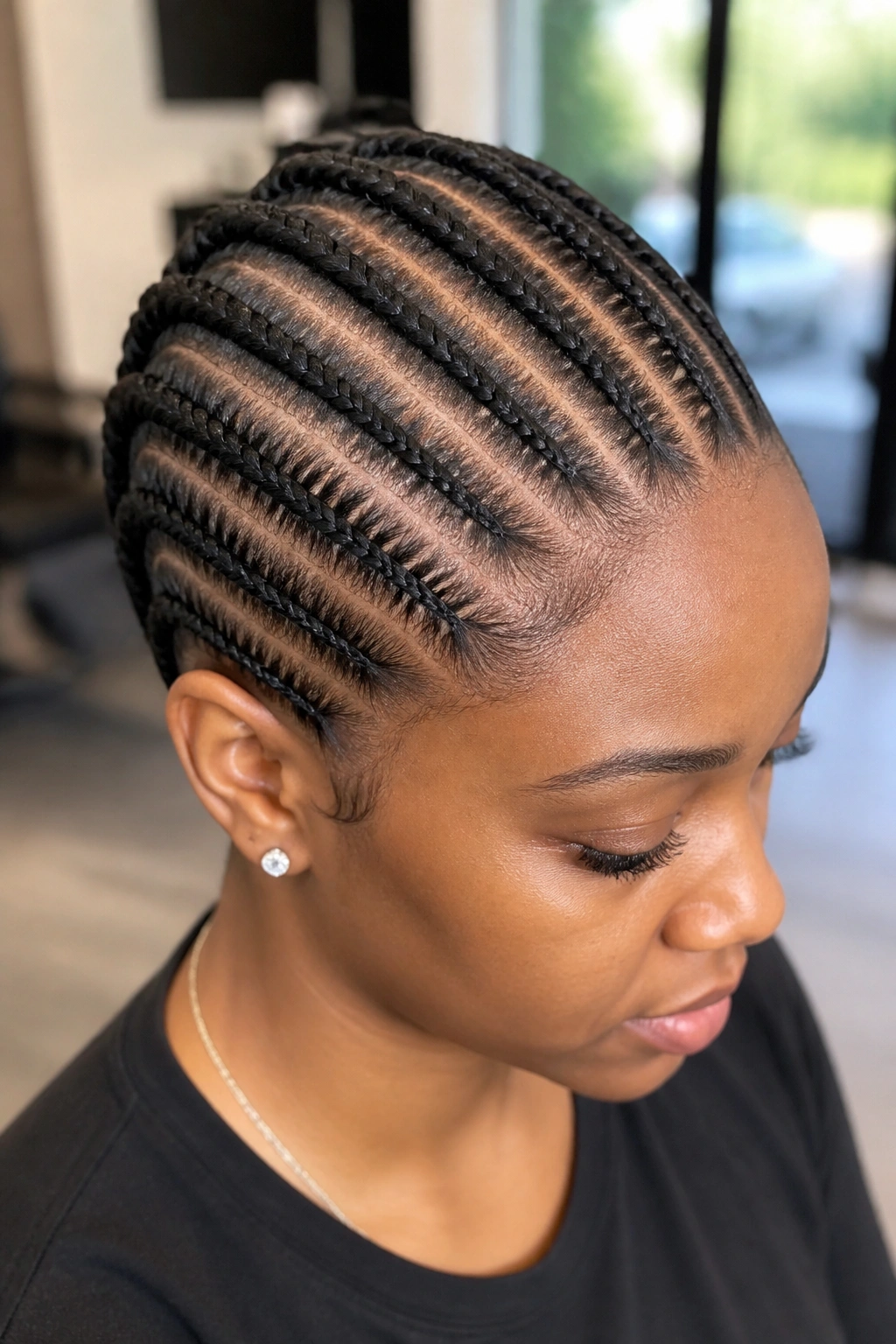
Straight-back rows are the workhorse style. They are the pair of jeans in the cornrow world: easy to trust, easy to dress up, and hard to mess up when the parts are clean.
Why they keep working
Feed-in braids soften the start of each row, which helps the hairline look less abrupt. That little detail matters more than people think. A braid that begins with a smoother base usually lays flatter and grows out a bit more gracefully.
These are the cornrows I’d point to first if you want a style that fits school, work, errands, and a last-minute dinner plan. They look neat with a middle part, a few side braids, or a simple ponytail at the back. Nothing fussy.
- Best for medium to thick hair that can hold a straight line
- Usually looks clean with 6 to 10 rows, depending on density
- Easy to tuck into a bun, ponytail, or scarf wrap
- Ask for a gentle start at the hairline so the first inch does not feel tight
My one rule: if the first few rows hurt before you leave the chair, say something.
2. Deep Side-Part Cornrows That Sweep Across the Crown
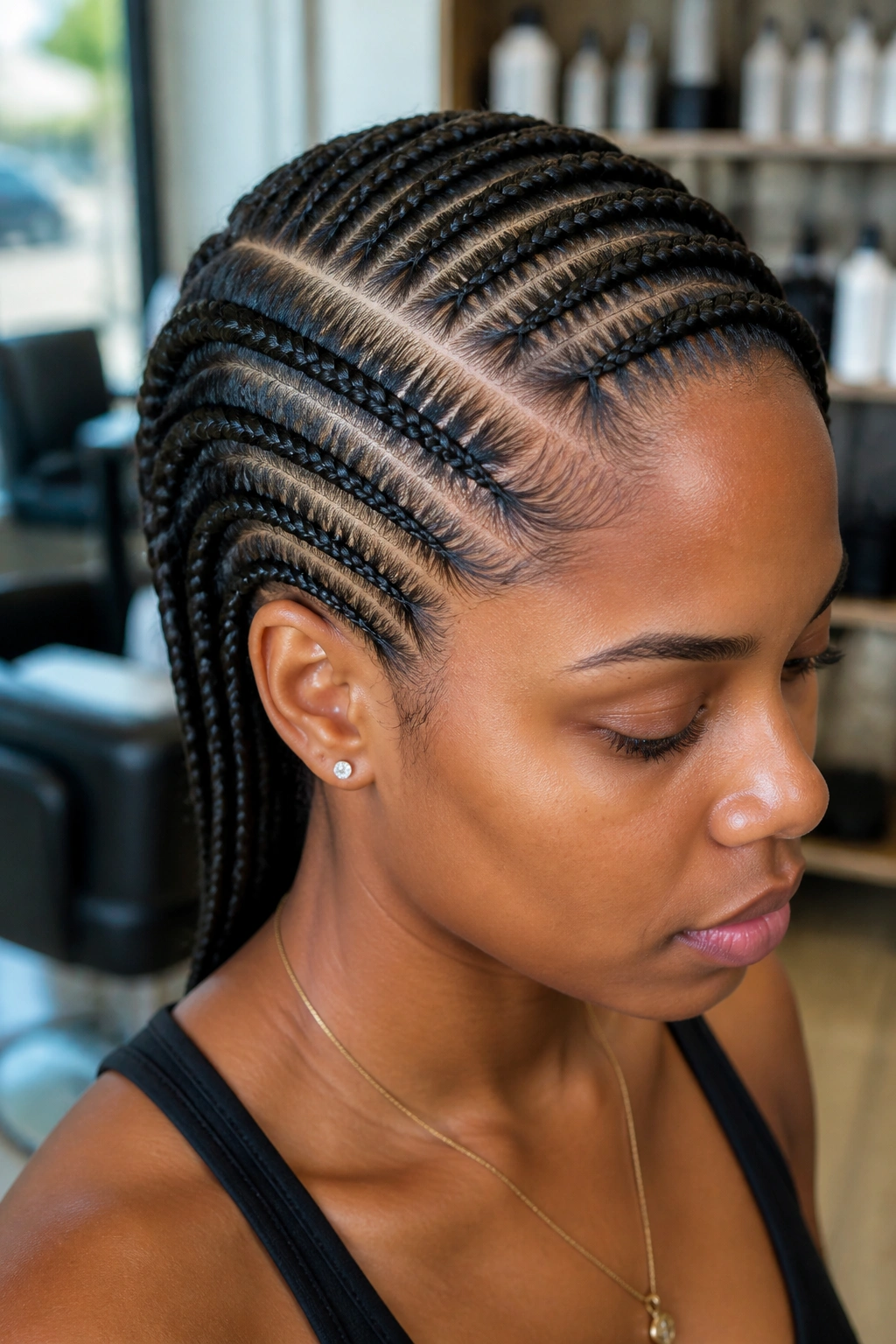
A side part can do more than an extra row ever will. It changes the whole balance of the style.
The sweep of a deep side-part set gives the face a little drama without making the braids themselves loud. It works especially well if you like one side of your face more than the other, or if you wear big hoops, a bold lip, or a clean collar line that needs some movement near the forehead.
There is also a nice practical bonus here. A side part can make a simple braid pattern feel more styled, even when the braid count stays low. That means less time in the chair and less weight on the scalp.
If you wear glasses, this can be a smart choice too. The part pulls attention away from the temples and gives the frames a cleaner frame of their own. Small detail. Big difference.
3. Curved Cornrow Rows That Follow the Shape of the Head
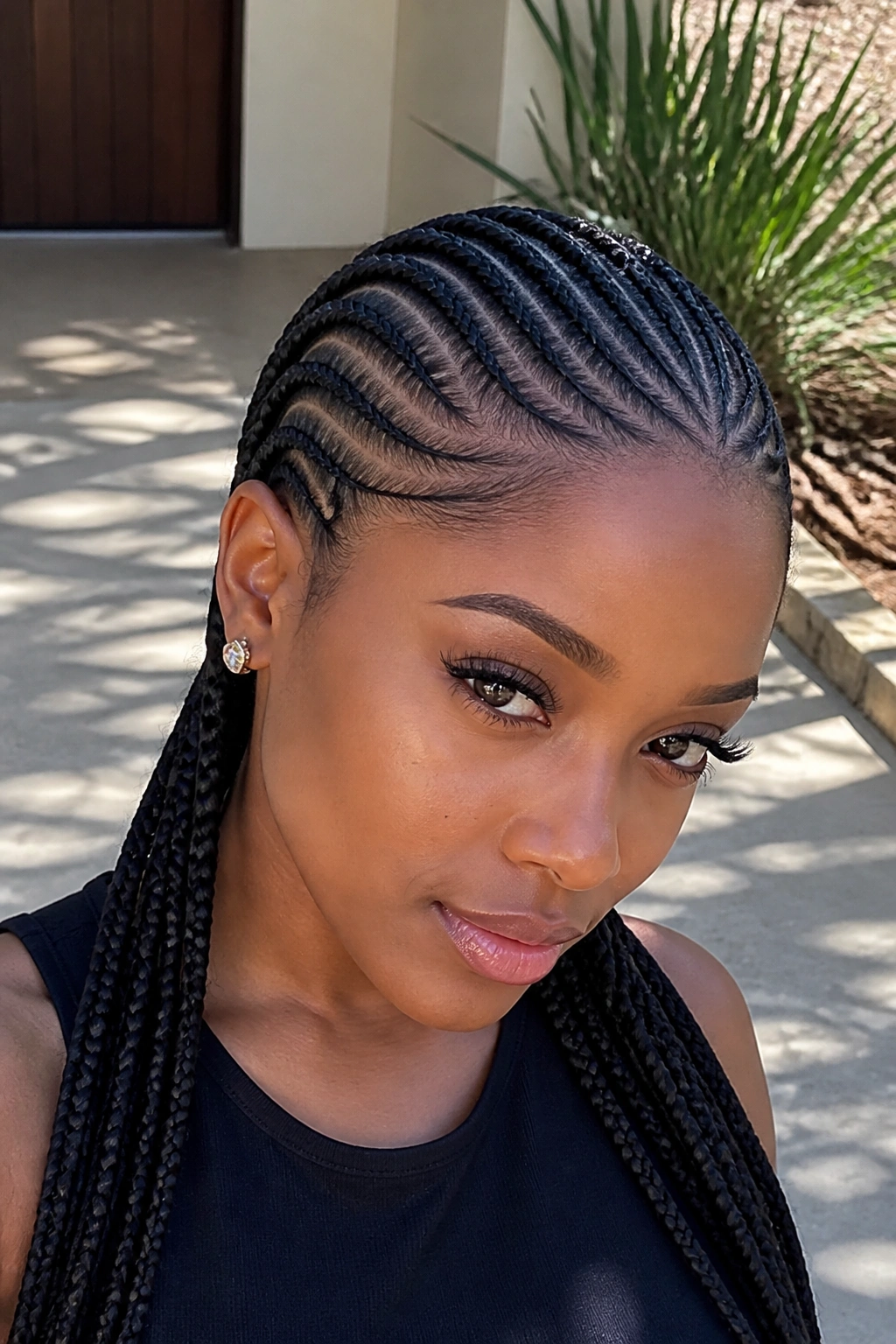
Why do curved rows feel softer than straight ones?
Because the eye likes movement. A curved part or a curved braid line follows the scalp in a way that feels deliberate, almost like the style is guiding the gaze instead of blocking it. It also hides grow-out better than a rigid pattern, which is one reason curved cornrows keep looking tidy even when they’ve been on the head for a little while.
The trick is spacing. If the curves are too close together, the style starts to look crowded. If they are too wide, you lose the flow that makes the design work in the first place. A good braider will keep the arcs even from temple to crown so the shape looks smooth instead of wobbly.
How to wear the curve
Ask for soft, even arcs instead of hard bends. The line should feel like it belongs to your head shape, not like someone drew it on a board and copied it over.
Curved rows look especially nice when you keep the rest of the style simple. No need to overload the set with extra parts or beads. Let the shape do the talking.
4. Jumbo Cornrows for a Faster Braiding Day
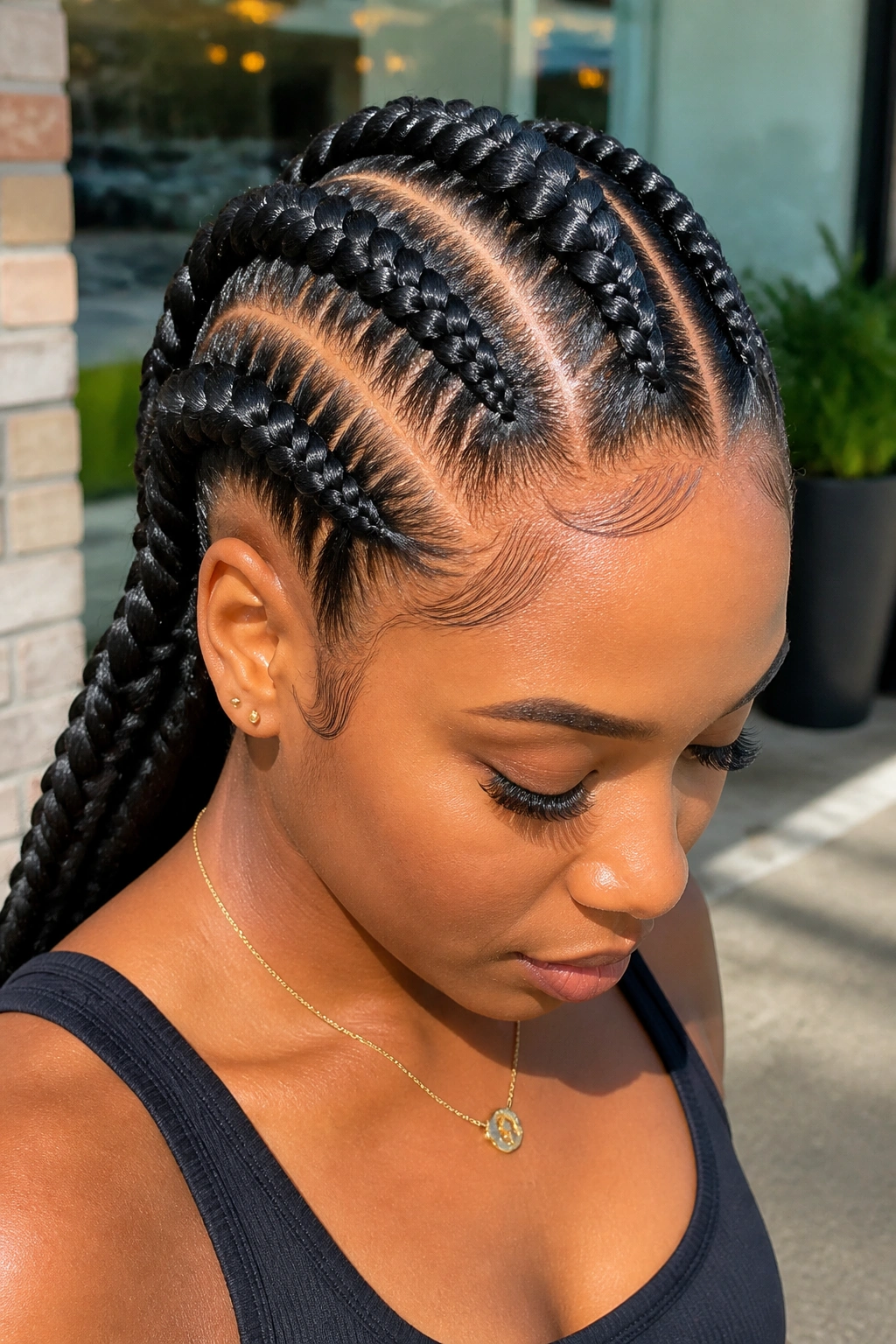
If you have ever sat in a chair for hours and sworn you would not do that again, jumbo cornrows are worth a serious look.
Fewer sections mean less time parting, less manipulation, and a lighter overall style. That matters if your scalp gets tired fast or if you just do not want a marathon braiding session. Jumbo rows also give a strong, clean look on thick hair because the size of each braid holds its own.
They are not the answer for every head, though. If your hair is very fine or your edges are sensitive, giant rows can feel heavy if too much extension hair gets packed in. The braid should sit big, not pull big.
- Usually looks best with 4 to 8 rows
- Works well when you want a style that can flip into a bun
- Better for people who like bold lines over tiny detail
- Keep the base snug, not yanked tight
The nicest jumbo sets have a little breathing room between the rows. That space keeps the style from feeling crowded.
5. Tiny Micro Cornrows That Make the Scalp Pattern the Star
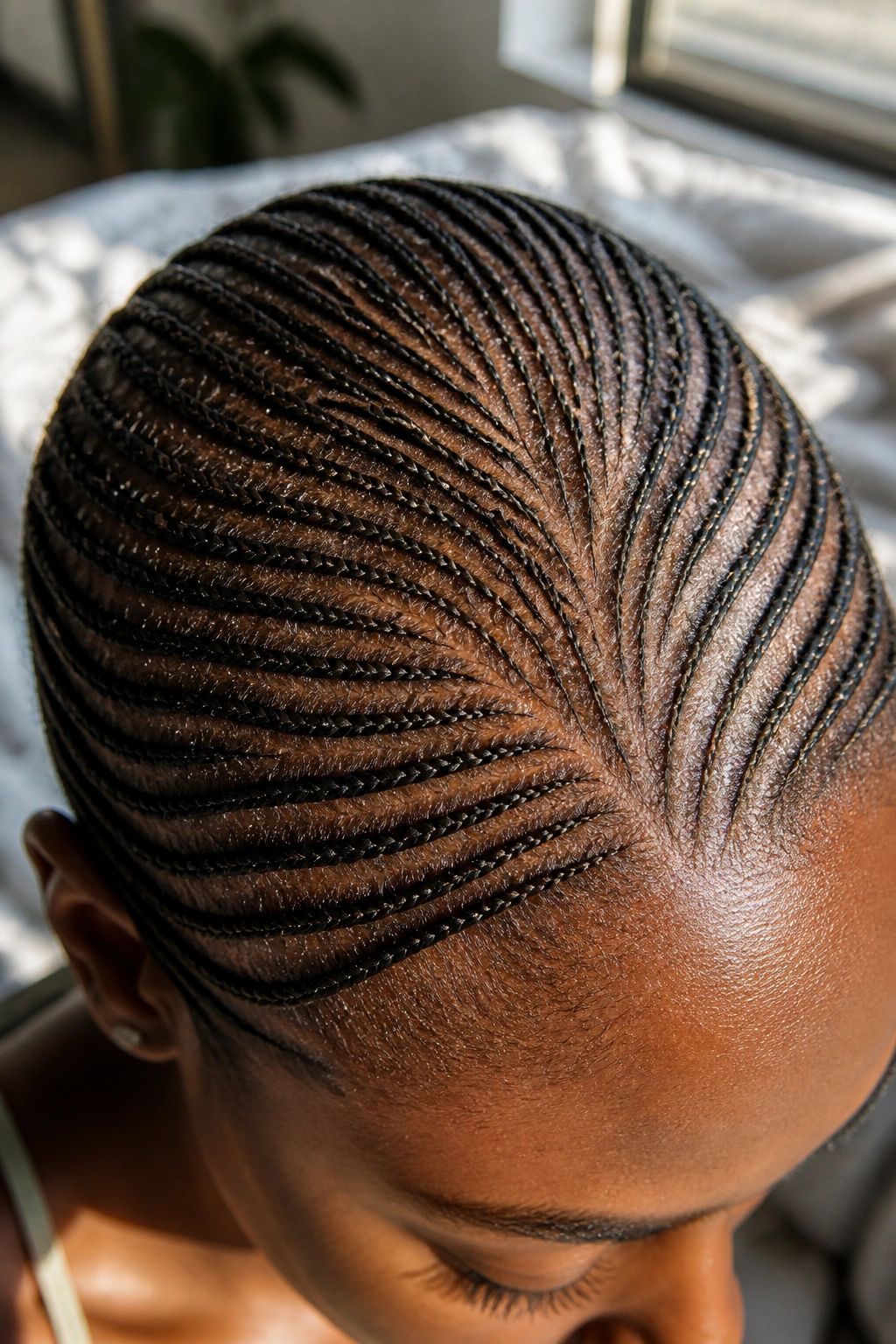
Micro cornrows are for someone who loves detail. Not the kind of detail people only notice up close, either. These rows can turn the scalp itself into the design, and that’s the point.
Small is not always softer.
When rows get very tiny, the braid pattern becomes more delicate-looking, but the chair time goes up and the tension can too. You want a steady hand and a braider who knows how to keep the grip even from the front to the back. If the rows are packed too tightly, your scalp will let you know long before the style starts to grow out.
Micro rows work beautifully when you want a sculpted look without a lot of extra length. They also let color, beads, or a neat middle part stand out in a quieter way. The style feels intricate, but not noisy, which is a nice line to walk.
If your scalp is tender, this is not the first place I’d start. Save it for a day when you want the detail and are willing to sit for it.
6. Stitch-Braid Cornrows With Sharp, Raised Lines

Stitch braids look crisp because the sections show. That’s the whole appeal.
Unlike smoother cornrows that blur a little into the scalp, stitch braids leave visible “steps” along the braid path. The result is a sharper, more graphic finish that reads well from a distance and even better in photos. If you like a braid set that looks deliberate and structured, this is a strong pick.
They work especially well when the braid count stays moderate and the parting is clean. Too many rows can make the head look busy; too few can make the stitch detail feel unfinished. The sweet spot is usually somewhere in the middle, with enough spacing that the line pattern has room to breathe.
This is a good style for dressy events, bold earrings, or a simple outfit that needs a little edge. It is not subtle. That’s the fun of it.
7. High Cornrow Ponytails That Lift the Whole Style

A high ponytail makes cornrows look dressed up fast.
There is something about the lift at the crown that changes the whole read of the style. The face looks more open, the neck looks longer, and the braids get a little swing when you move. A high ponytail also gives you a tidy way to get all the length off your shoulders, which is handy when you want the style to stay off your clothes.
What to ask for at the chair
- Build the ponytail base at the crown, not at the hairline
- Keep the front rows smooth so the lift looks clean
- Use a wrapping braid or a small braid strand to hide the ponytail base
- Ask for enough support at the base so the weight does not drag backward
If you get headaches from tight ponytails, go for a mid-high version instead of a sky-high one. Same energy. Less strain.
A high ponytail does not need to be huge to look good. It just needs to sit in the right place.
8. Half-Up, Half-Down Cornrows With Curls Left Free
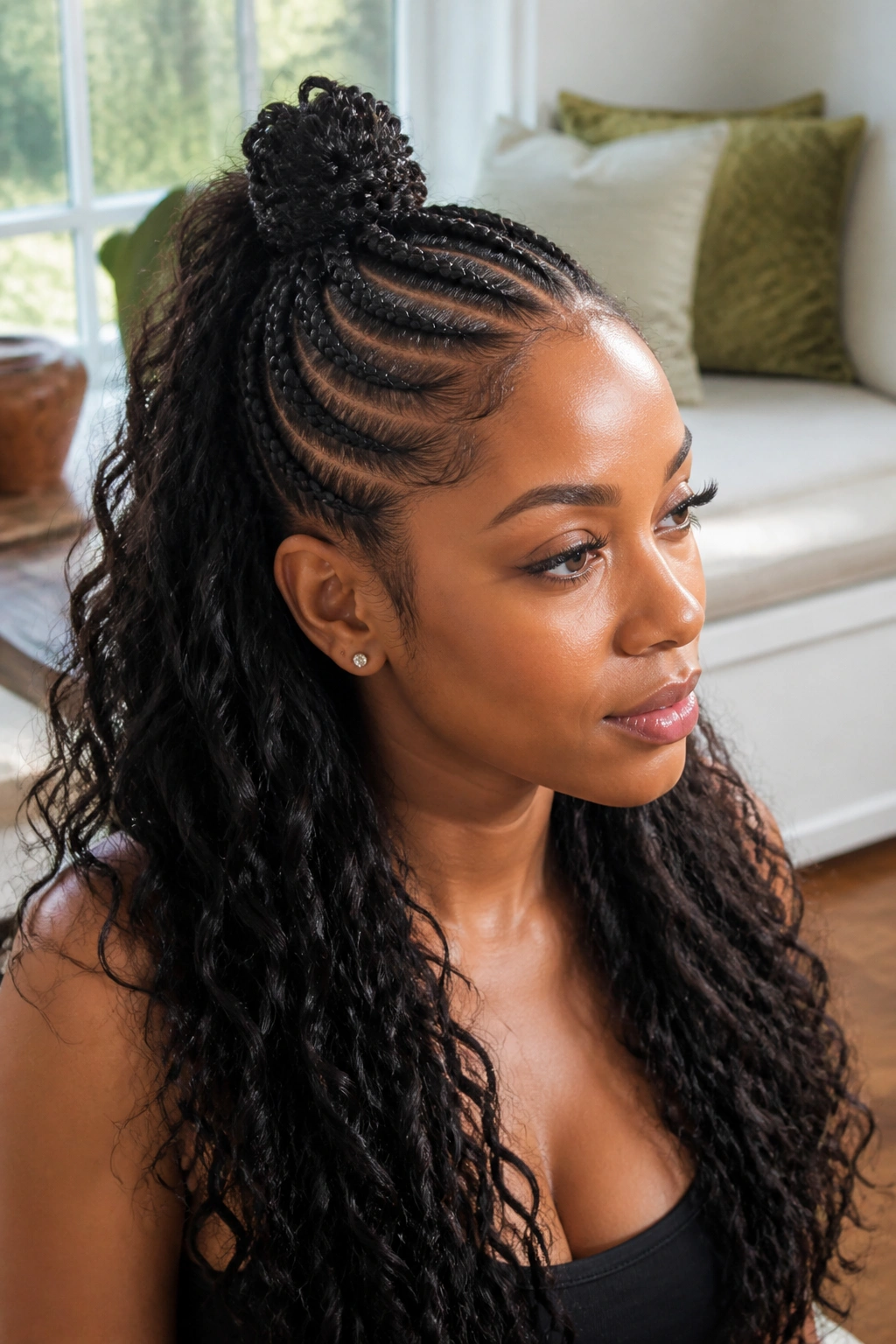
Want structure without giving up movement? This is the answer.
Half-up, half-down cornrows keep the scalp pattern neat at the top, then let the rest move around the shoulders. That mix of control and softness is why the style works so well for birthdays, dinner plans, and anything where you want your hair to do a little more than sit flat. The curls or loose ends give the look a bit of bounce, which keeps it from feeling too severe.
The cleaner this style is at the crown, the better it reads. If too many rows compete with the loose section, the eye gets lost. I like this set best when the top has a clear shape and the lower half stays full but not puffy.
You can also keep this one going longer by refreshing the crown with a little mousse and re-tieing the top section at night. The loose ends are the part that need the most attention.
9. Braided Bun Cornrows for a Sleek Low Finish

There are days when you want your hair off your neck and still want shape. A braided bun solves that neatly.
Low bun cornrows have a calm, polished look without drifting into stiff territory. The braid pattern can stay simple — straight back, side part, or curved — and the bun itself becomes the anchor. If the bun sits low and close, it feels clean. If it sits too high or too bulky, the style can start to look top-heavy.
I like this one for long workdays, church, weddings, or any situation where you do not want to think about your hair every 20 minutes. It also pairs well with earrings because the neckline stays open.
- A low bun is easier on the scalp than a tight high knot
- Tucking the ends under a silk scrunchie keeps the shape soft
- A side part can make the bun feel less formal
- Good for people who wear glasses or headwraps
A bun can be plain in the best way. That is not a flaw.
10. Cornrow Mohawks With the Sides Kept Close
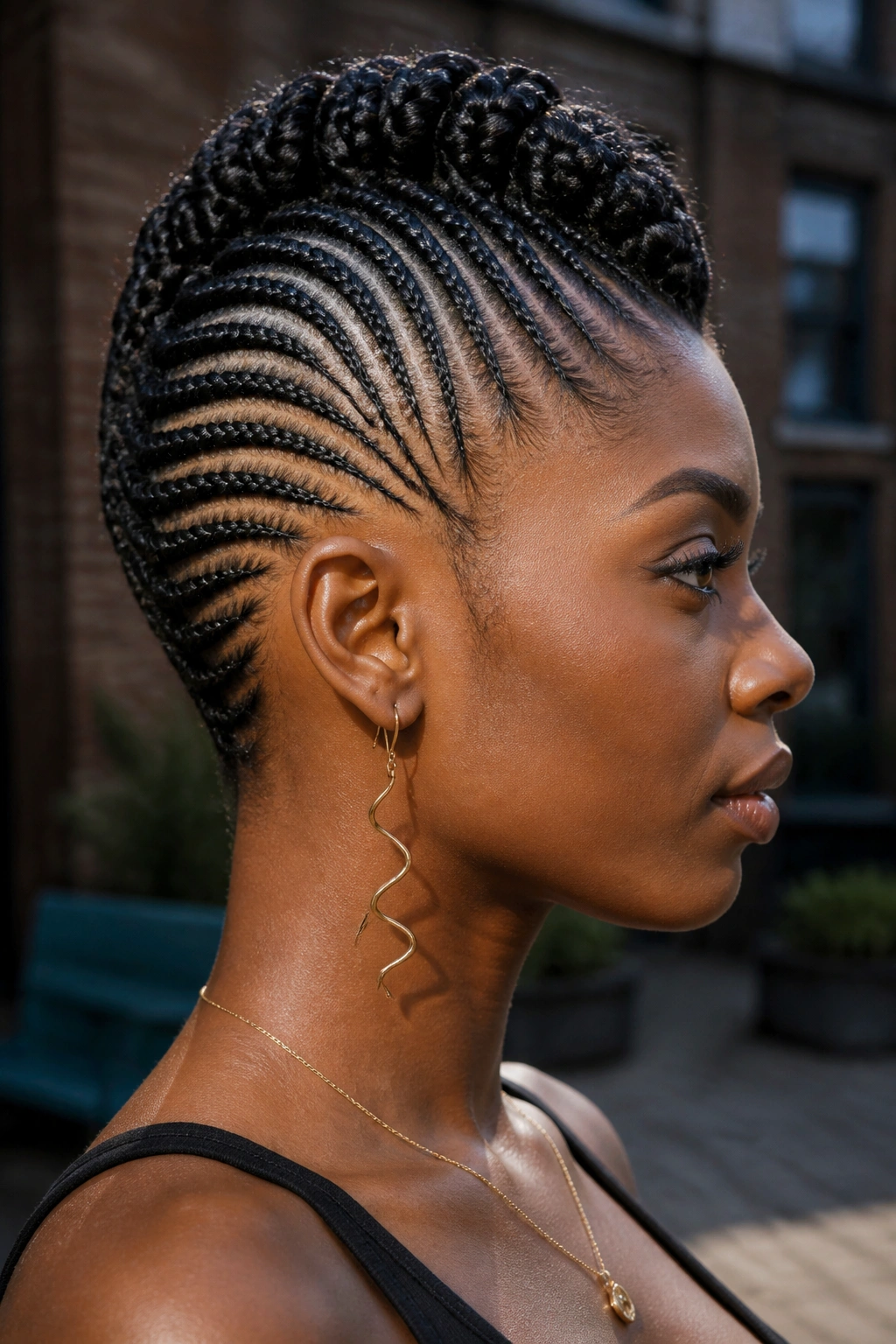
It has attitude.
A cornrow mohawk gives you height through the center and a tighter look on the sides, which makes the whole style feel a little louder without needing extra length. Some people wear the sides fully braided down. Others keep them very close to the scalp so the center ridge does all the work. Either way, the shape is the point.
This style is especially good if you like braids that show from the front and the profile. The lifted middle catches the eye, while the flatter sides keep the shape controlled. That balance is what stops the look from tipping into costume territory.
If your hair is thick, the mohawk shape can give it room to breathe. If your hair is finer, keep the center rows moderate so the style does not feel overloaded. The best versions look sturdy, not puffy.
11. Crown Halo Cornrows That Wrap the Head Like Jewelry
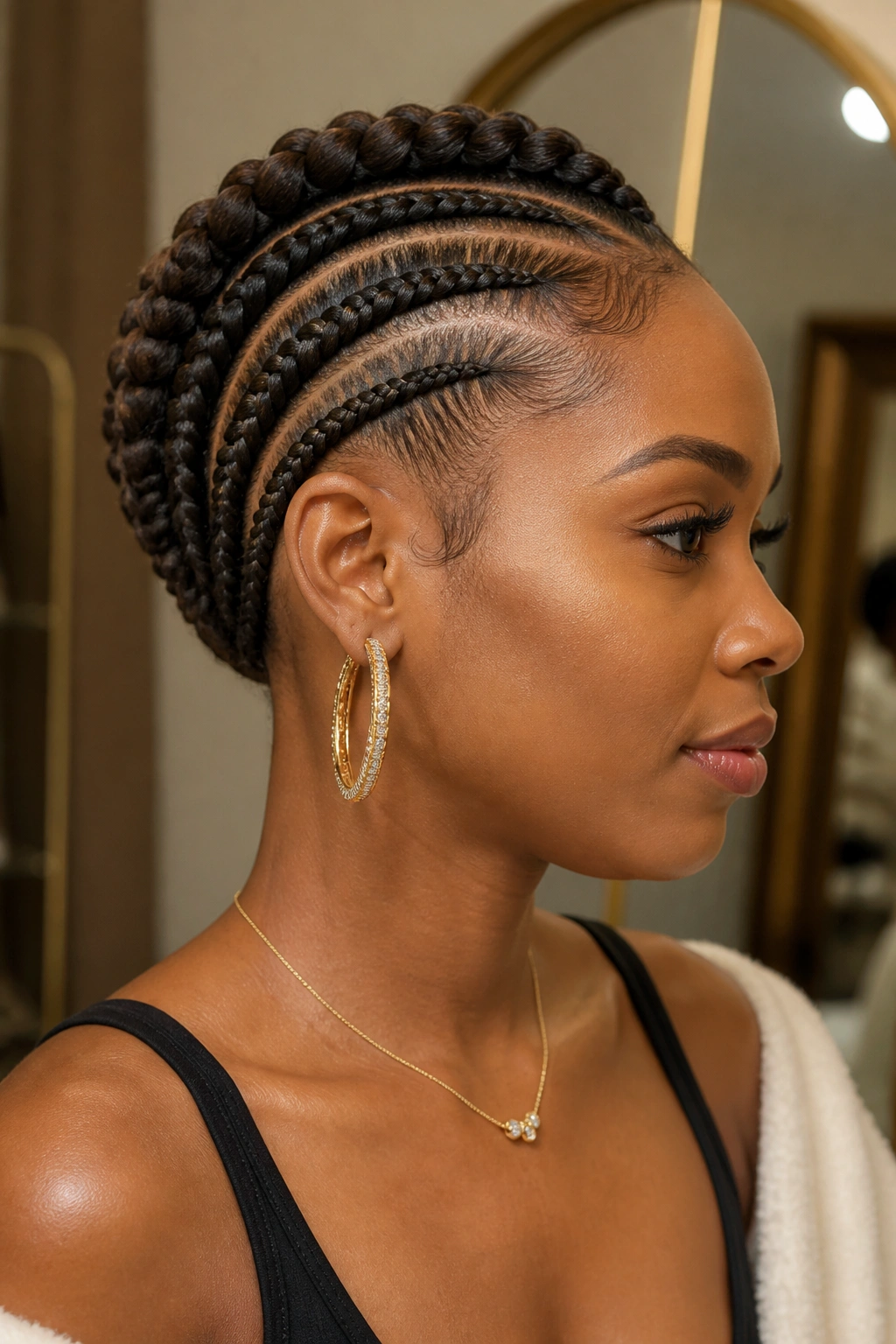
A halo set changes the frame around your face.
Unlike rows that travel straight back, a crown halo curves around the perimeter and creates a circle, or near-circle, that feels intentional and dressed up. It is one of those styles that can look simple from the front and surprisingly detailed from the side. If you want a protective style that reads elegant without trying too hard, this one earns its place.
The halo shape is also useful when you want the rest of the hair tucked away. It opens the face, keeps the neckline clear, and gives you a spot for pins, cuffs, or a plain scarf if you want to change the mood later. If the rest of the outfit is busy, the halo keeps the hair from competing.
This style often needs a careful hand around the ears and nape. Those are the spots where rushed braiding shows first. A neat halo should feel smooth all the way around.
12. Zigzag-Part Cornrows That Put the Parts on Display
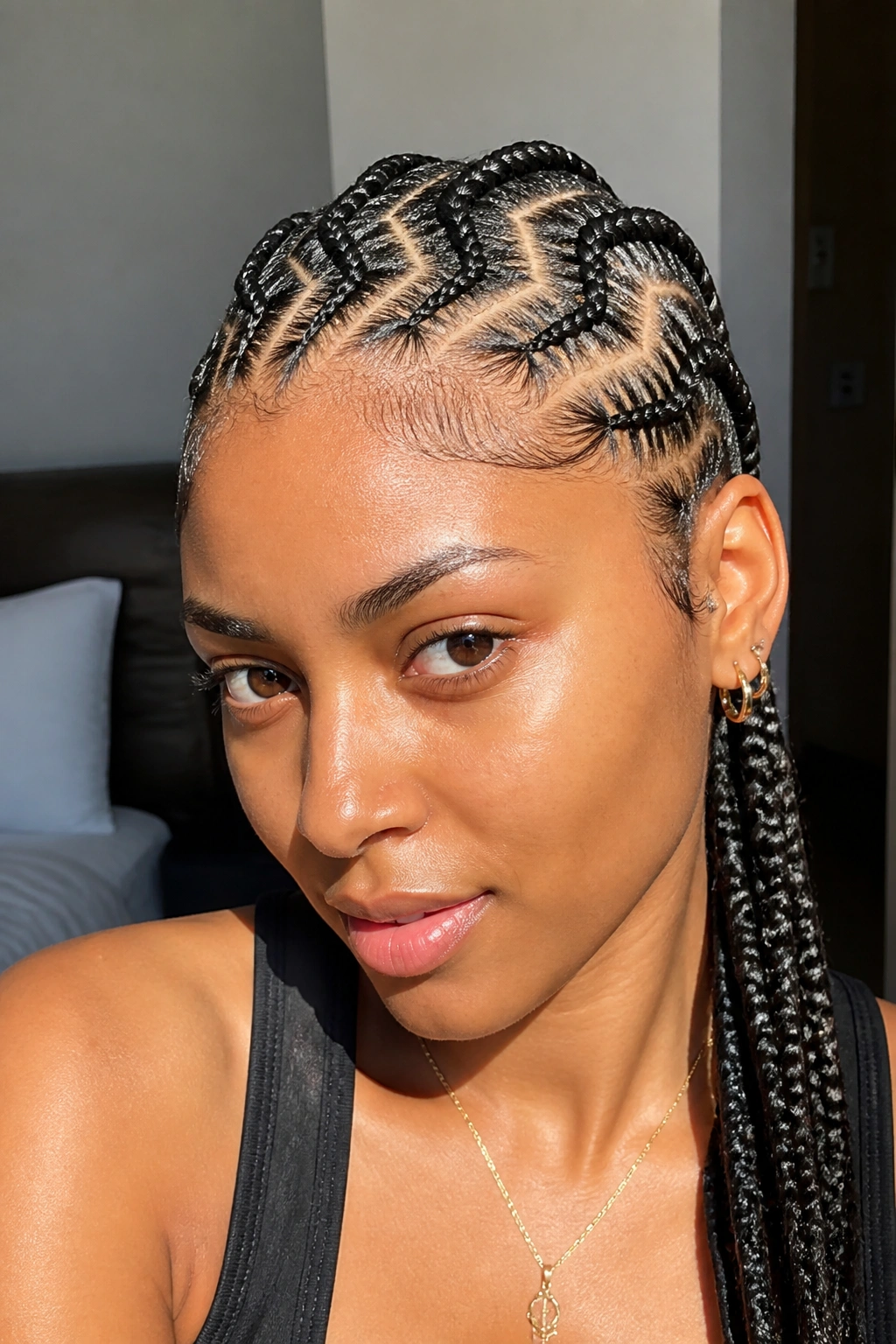
Sometimes the parting is the whole point. Zigzag cornrows prove that in a pretty blunt way.
What the zigzag does
The zigzag part breaks up the straight line and makes the scalp pattern feel active. It can soften a set that might otherwise look too plain, and it works especially well when the braids themselves are simple. The eye lands on the angles first, then follows the rows.
Zigzags also give you some forgiveness as the style grows out. A crisp straight part can start looking blunt fast. A zigzag has a little motion built in, so the grow-out looks less severe.
- Best when the braid count stays moderate
- Works with center parts or side parts
- Needs a clean rat-tail comb and a steady hand
- Looks strongest when the zigzag stays consistent from front to back
My advice: if you want one playful detail, use it in the part, not everywhere else.
13. Triangle-Part Cornrows for a Cleaner Geometric Pattern
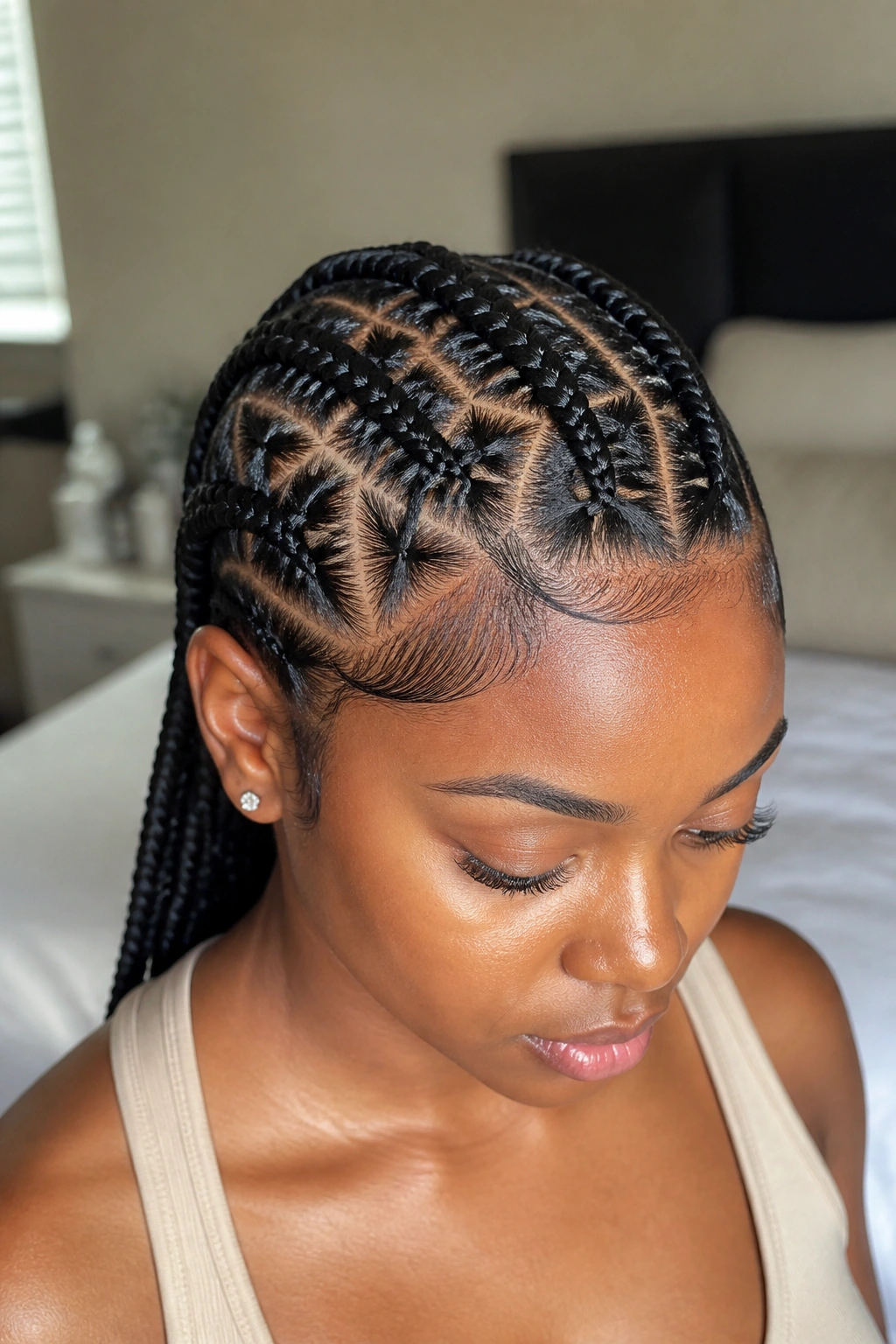
Triangle parts make cornrows feel sharper than squares. They break the grid.
That little change matters because it changes how the whole head reads. Triangle sections catch the eye in a different way, and they can make even a simple straight-back style look more designed. They also work well on hairlines that do not love harsh square sections, since the angles can follow the head a bit more naturally.
This is a smart choice if you want geometry without going all the way into a highly detailed braid pattern. Triangles give you the visual interest, but they do not ask the style to carry too much extra shape. That makes them a nice middle ground.
I especially like triangle parts near the front, where people notice the detail first. If the back stays cleaner and simpler, the whole set feels balanced instead of crowded.
14. Heart-Part Cornrows That Add One Small Detail People Notice
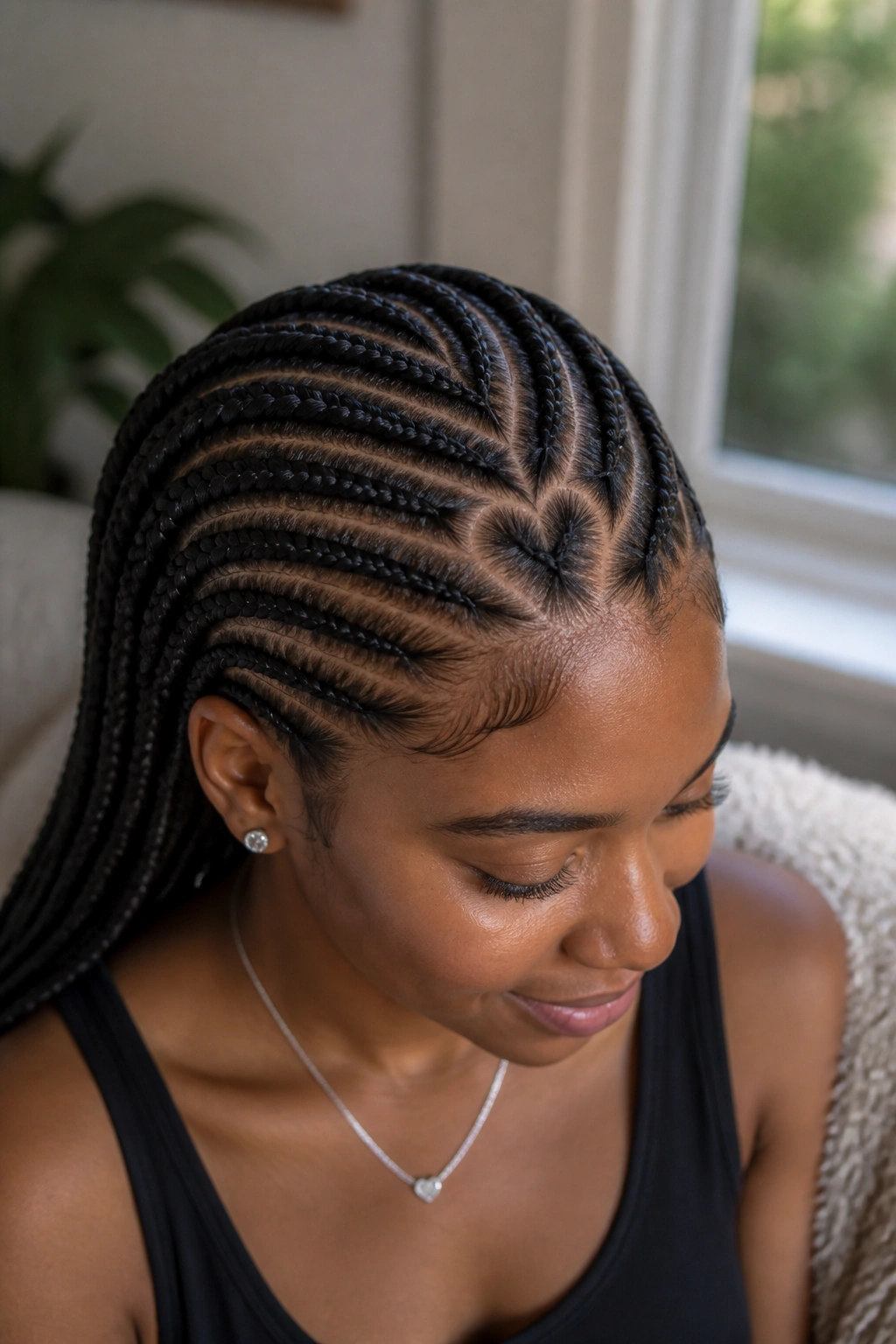
If you want one tiny twist, put it in the part.
A heart part can sit near the hairline, at the temple, or a little deeper into the crown, and it gives the style a softer, more personal feel. It is cute without needing a lot of extra decoration. That is the part I like most. You can keep the cornrows themselves simple and still end up with something that feels special.
Where the heart should sit
Keep the heart small enough that it reads cleanly from normal distance. If it gets too big, the shape starts to blur and the whole detail loses its charm. Pair it with neat rows around it, not a busy set with six competing shapes.
A heart part works well for birthdays, photos, date nights, or any moment when you want the style to feel a little more thoughtful. It does not need beads or color to make its point. The shape is enough.
A tiny detail can carry a lot of weight.
15. Diagonal Cornrows That Sweep Toward One Side
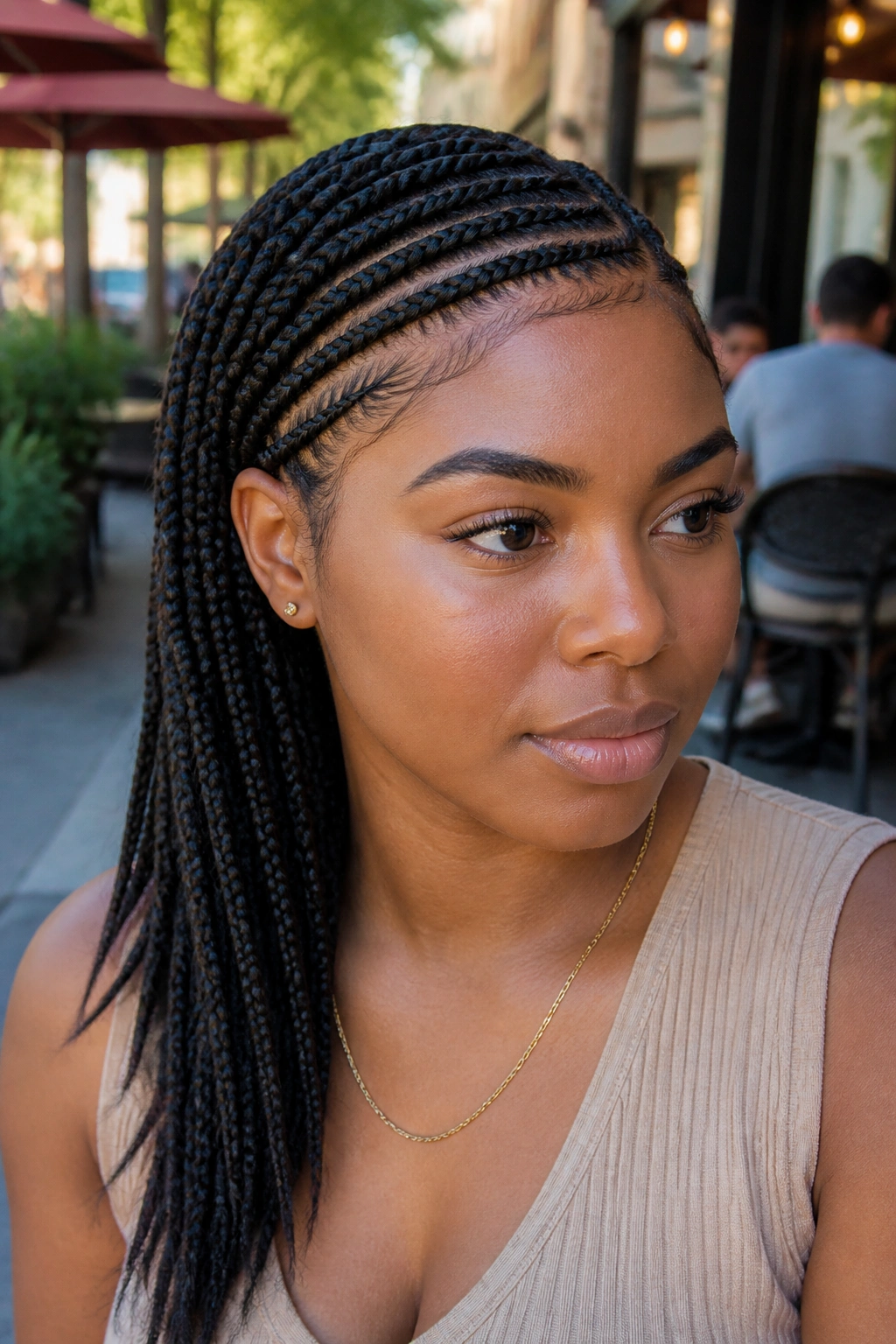
A diagonal set is the style I’d hand to someone who wants movement without a lot of extras.
The lines travel at an angle instead of running straight back, which gives the head a bit of lift and makes the braids feel less predictable. Diagonal cornrows also play nicely with side-swept makeup, one statement earring, or a long braid tail resting over one shoulder. The whole style starts to feel directional.
This shape can flatter a lot of face shapes because it pulls the eye across the head rather than down the center. That makes it a good option if a middle part feels too severe or if straight rows look a little too formal for your taste.
It also helps when you want a braid style that looks intentional from every angle. Straight lines can go quiet from the side. A diagonal pattern keeps its shape no matter where you stand.
16. Shoulder-Length Braided Bob Cornrows That Stop at the Collarbone
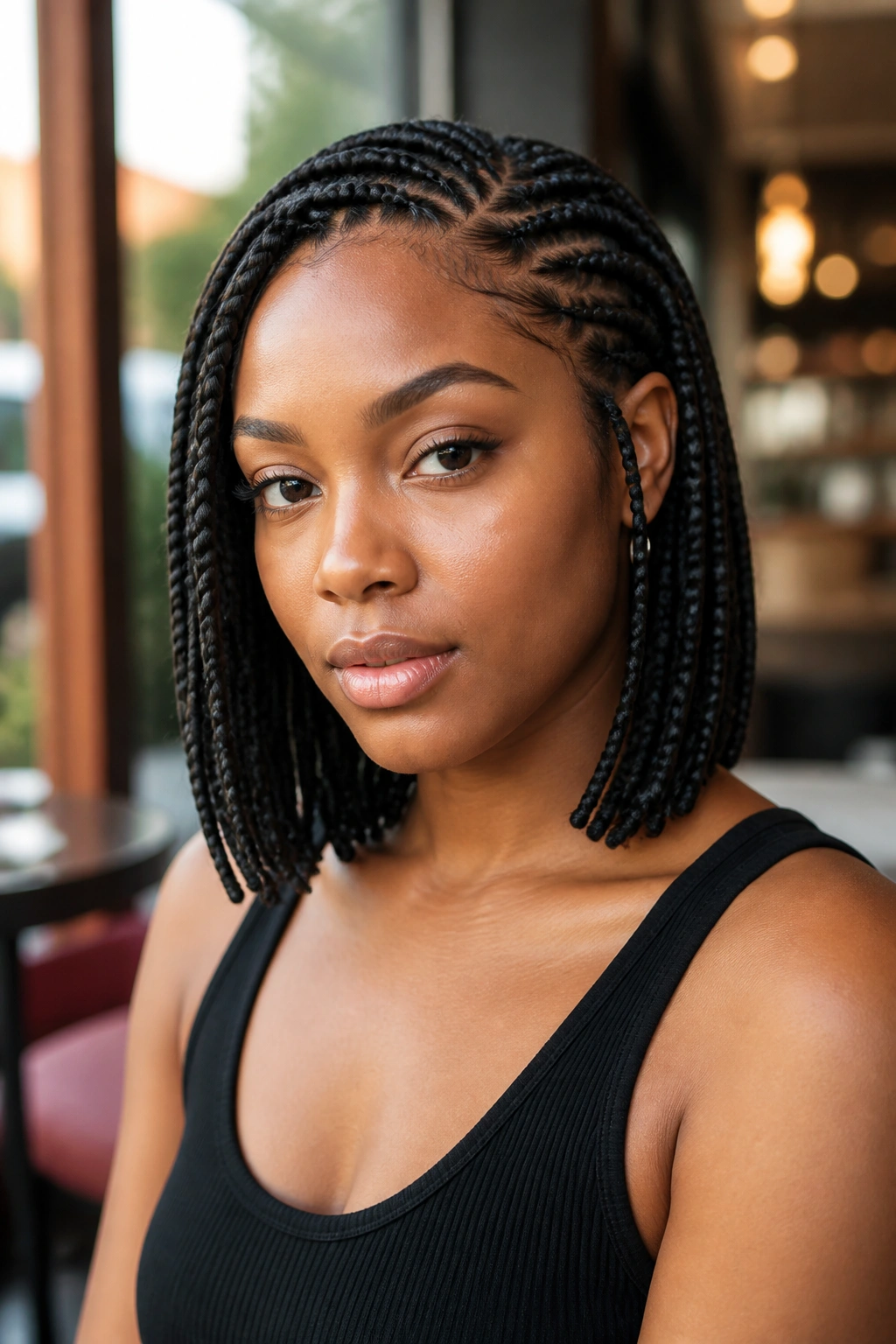
Length changes everything.
A shoulder-length braided bob keeps the polish of cornrows but removes some of the weight. That can be a relief if long braids start to feel like a lot by day three. The collarbone length also sits in a sweet spot: long enough to swing a little, short enough to stay out of the way when you’re wearing jackets, tote bags, or a seatbelt.
This is one of my favorite options for people who want a lighter braid season without losing style. A bob length can look blunt, curled under, or slightly flipped at the ends depending on the finish. Each one changes the mood.
The style is also easier to wash around the scalp because you do not have a heavy curtain of hair hanging down your back. That sounds small until you live with it.
A bob makes cornrows feel fresh.
17. Close-Cropped Cornrows on Short Natural Hair

Short hair can carry cornrows beautifully.
Unlike long feed-ins, this style works with the length you already have and lets the scalp pattern take the lead. That means clean rows, close placement, and a finish that feels sharp without needing much extra hair. If your hair is short and tightly coiled, a skilled braider can make the parts look almost architectural.
The main thing here is grip. You want the braid to hold without yanking. A little setting foam at the roots can help the hair lay flat, but heavy gel can leave flakes or make short coils feel sticky. The style should look neat, not coated.
- Good for short natural cuts that need low manipulation
- Usually looks strongest with 4 to 10 rows
- Works well with a side part or straight-back setup
- Needs a braider who knows how to handle shorter lengths without overpulling
If you wear short hair often, this is one of the cleanest ways to switch the shape without changing your whole cut.
18. Cornrows With Curly Ends and Loose Tips
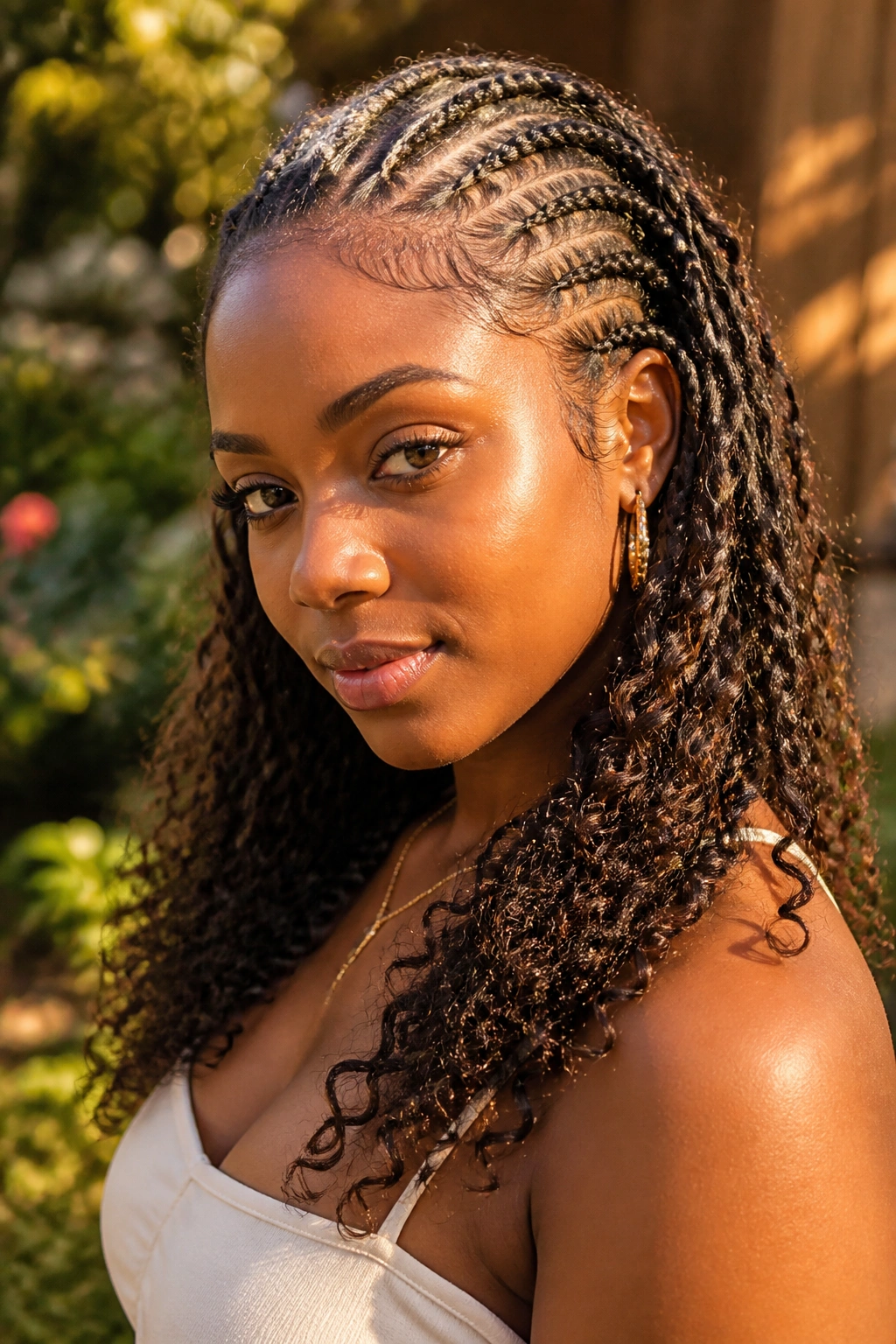
Braided bases with curly ends move differently. That matters.
The tight scalp work gives you structure, then the loose or curled ends give the style some swing at the bottom. It keeps the look from feeling too rigid, which is a nice balance if you like braids but want more softness around the shoulders and collarbone.
How to keep the curls alive
Ask for enough length at the ends to set a curl properly. If the tips are too short, the curl falls flat fast. Flexi rods, wand curls, or even a careful foam set can help the ends keep shape, but the finish matters most in the first day or two.
A satin scarf at night helps, yet the ends still need a little fluffing in the morning. That’s normal. Curly ends are not the lowest-maintenance option, but they do give the style a more lived-in feel than blunt braid tips.
This one looks especially nice when the braids at the scalp stay neat and the curl pattern stays uniform. Too many different textures at the ends can make the style look messy instead of soft.
19. Crisscross Cornrows That Interlock Across the Scalp
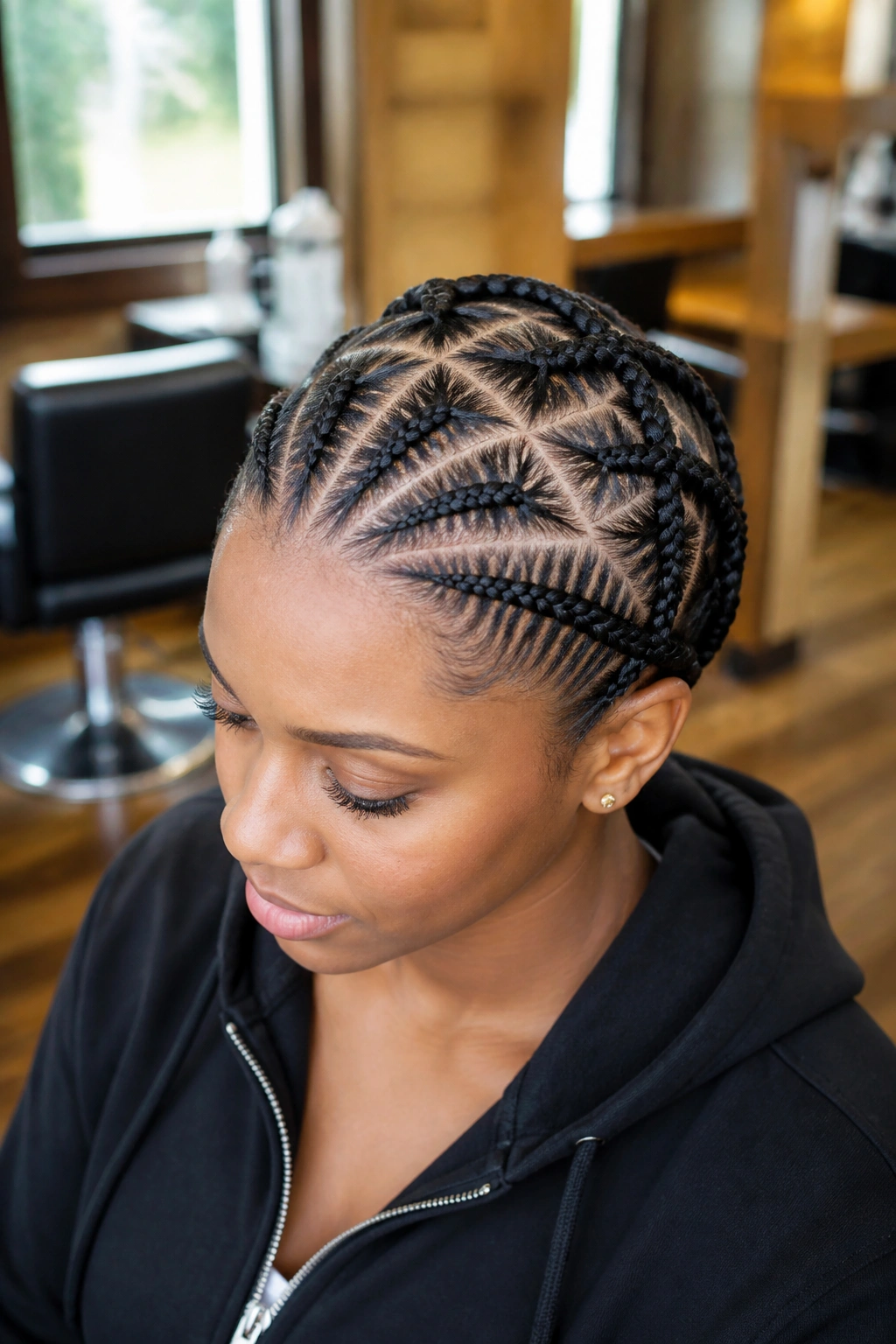
Crisscross braids look complicated from a distance, and that is part of the fun.
The rows move over and under each other in a way that creates X-shaped or woven effects across the scalp. It gives the style a sense of motion even when the hair itself is sitting still. If you want a braid set that makes people look twice, this is one of the stronger choices.
It does ask for a steady hand. The parting has to stay clear, and the intersections need to line up cleanly or the whole pattern starts to wobble. You can get away with a lot in a plain set. Crisscross styles are less forgiving, which is why a good braid artist matters so much here.
- Best on stretched hair so the sections stay smooth
- Can be paired with a low bun, ponytail, or loose ends
- Looks strongest when the intersections are even
- Works well for anyone who likes a more crafted finish
If you want the style to carry the outfit, this is a strong move.
20. Center-Part Cornrows That Stay Sharp Every Day

A center part is not flashy, and that is exactly why it keeps winning.
The symmetry makes the style feel calm and balanced, which helps if you like braids that wear well with almost anything. A clean center part also gives you room to change the rest of the look later. Add cuffs. Pull it into a bun. Leave the length down. Change the vibe without taking the whole style apart.
I like this option for people who want a set that can move from a workday to a night out without much drama. The line down the middle frames the face cleanly, and the rows on either side can be as simple or detailed as you want. If you are torn between ideas, start here. It is one of the easiest shapes to live with.
And if you decide you want something bolder next time, good. That is the nice part about cornrows: one neat set can lead straight into the next one, and the next one can be a little braver.
