



Wispy bangs for short hair do something blunt fringe often can’t: they soften a crop without stealing its shape. A good wispy fringe should feel light around the eyes, a little broken at the ends, and never like it’s sitting on top of the haircut as an afterthought.
Short hair changes the rules. A bob, pixie, or shag already has a strong outline, so bangs have to work with that line instead of fighting it. Heavy fringe can make the whole cut look boxy. Too little fringe can look like a mistake. The sweet spot sits between those two extremes, and that’s where a lot of people get stuck.
Lightness matters.
Texture matters too. Fine hair usually needs a softer point-cut and a smaller bang section, while thick hair often needs some interior removal so the fringe doesn’t hang like a curtain. Cowlicks make the front behave in their own stubborn little way, which is why a bang that looks easy in a photo can turn strange in real life if the cut ignores the natural growth pattern.
The styles below lean into that reality. Some are soft and face-skimming, some are sharper, and some are made for grow-out so you’re not trapped in one look forever.
1. Feathered Pixie Fringe

A pixie can absolutely wear bangs without looking severe. The trick is keeping the fringe feathery enough that it melts into the top layers instead of sitting as a hard strip across the forehead.
This style works best when the shortest pieces are cut with a light point-cut, not a blunt line. Ask for the center to fall around the brow bone, then let the sides taper longer so the fringe can follow the shape of the face. On very short hair, that soft taper matters more than people think. It keeps the cut from feeling helmet-like.
Why It Works on Cropped Cuts
Feathered fringe gives a pixie a little motion near the eyes, which is where short hair can sometimes feel a bit bare. It also keeps the top from looking too flat on days when you skip a full blowout.
A tiny round brush, about 1 inch across, is enough here. Dry the bangs from side to side first, then push them forward at the end so they settle with a bend instead of a stiff curve.
- Best for fine to medium hair
- Ask for point-cut ends, not blunt edges
- Keep the center slightly shorter than the sides
- Use a pea-size amount of light cream, not wax
Good pixie bangs should move when you blink.
2. Side-Swept Wispy Bangs for a Bob
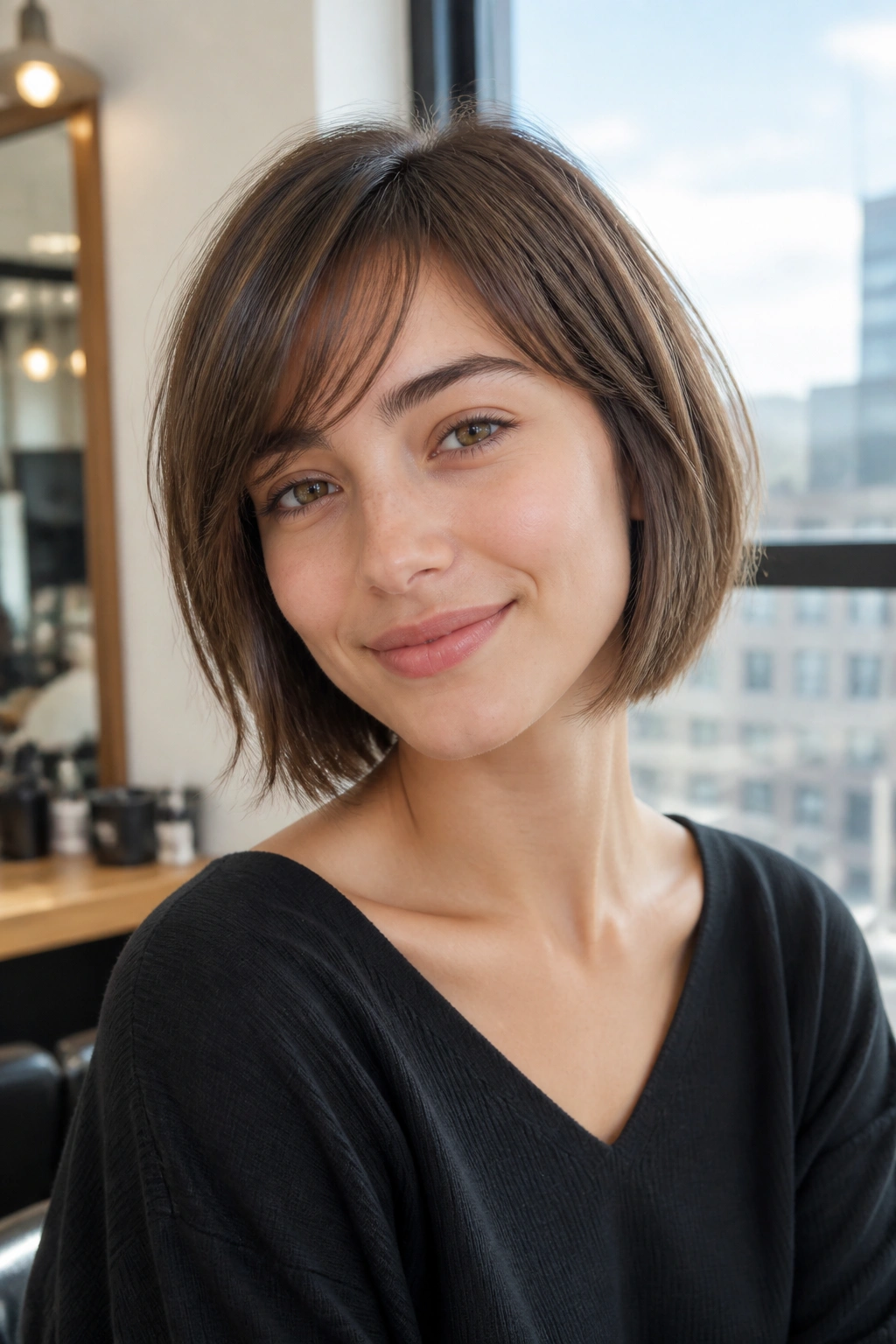
If your bob already has a side part, don’t fight it. Side-swept wispy bangs are one of the easiest ways to add softness without making the front of the haircut feel crowded.
This shape is especially kind to chin-length and jaw-length bobs. The fringe starts a little deeper on one side, then skims across the forehead in a thin, airy layer. It’s a smart move if you want bangs but still need them to tuck back behind the ear on busy mornings. That part matters. A lot.
The best version is not a heavy swoop. It’s more like a light brush stroke across the face—enough to soften the outline, not enough to cover half your features. Blow-dry the fringe in the opposite direction of your part first, then sweep it over at the end so it doesn’t collapse flat against the scalp.
A bob with side-swept wisps also grows out cleanly. That’s one of its nicest qualities. You can push it more center, deepen the side part, or let it turn into a face-framing piece without an awkward stage in between.
3. Curtain Wisps on a Chin-Length Cut
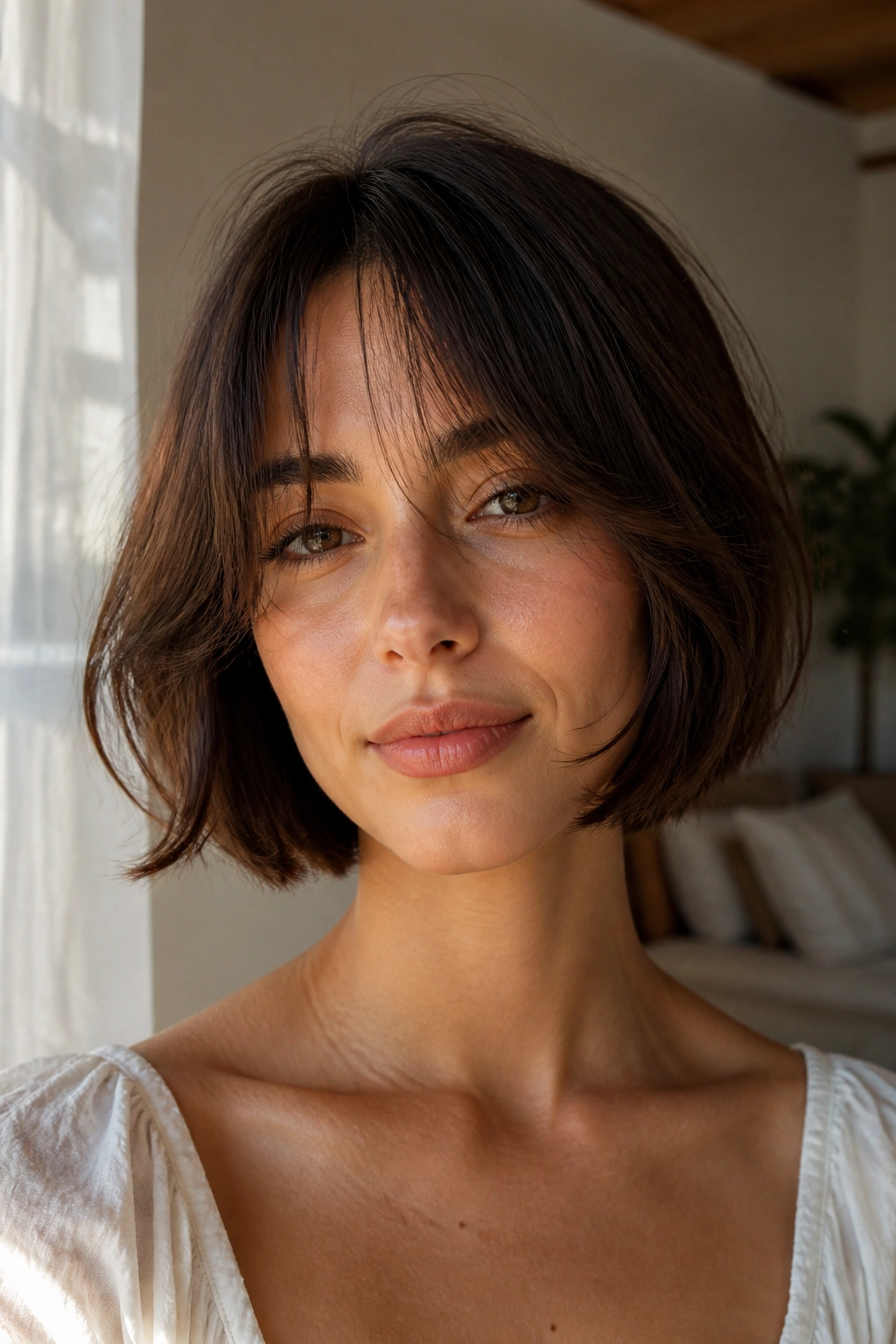
Curtain bangs are not only for longer hair. On a chin-length cut, a soft curtain fringe can make the whole shape feel less rigid and more alive.
The key is keeping the center short enough to open the face, while the outer corners graze the cheekbones. That little difference in length is what creates the split. Too much difference and it looks overworked. Too little and the fringe turns into one flat chunk. Short hair shows every mistake, which is annoying, but also useful. You notice fast when the line is off.
Curtain wisps work especially well on bobs with a slight bend at the ends. If the haircut already turns under a bit, the bangs can echo that curve and make the front feel linked to the rest of the cut. A round brush helps, but so does a dry finger-twist when the hair is nearly dry. Sometimes that’s enough.
If you like low-maintenance styling, this is a good one. Part the fringe in the middle, give each side a quick blow-dry away from the face, and finish with a light mist of flexible-hold spray. No crunchy finish. No stiff little helmet pieces. Good.
4. Bottleneck Bangs with a French Bob
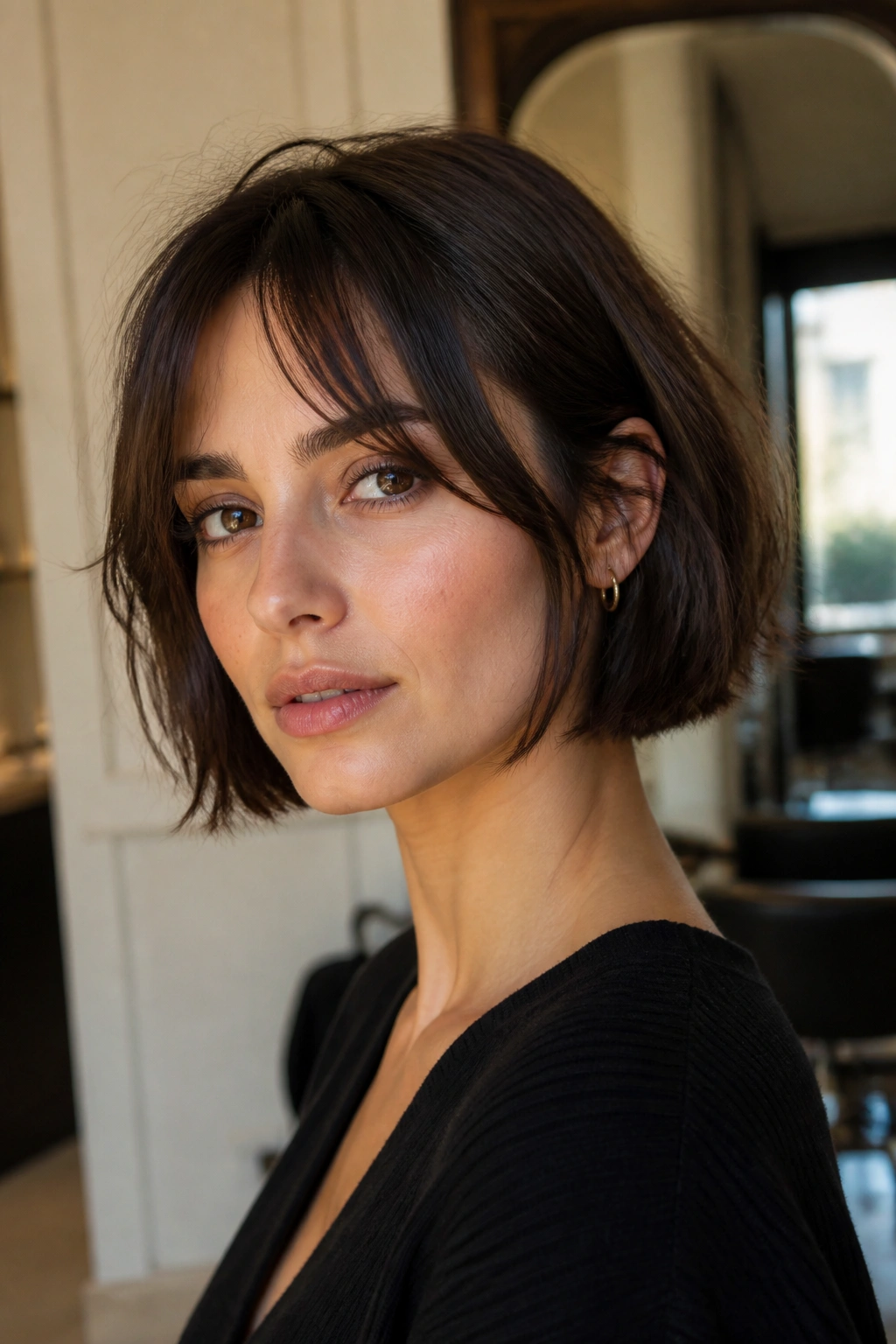
What if you want fringe, but not a straight line? Bottleneck bangs solve that problem beautifully, especially on a French bob.
The shape is narrow in the center and slightly wider as it moves out toward the temples. That makes the forehead look open without exposing everything at once. On short hair, that shape keeps the cut from feeling boxy around the eyes. It’s a small detail, but it changes the whole mood of the haircut.
How the Shape Sits on the Brow
Bottleneck bangs should start a touch shorter in the middle, then drift longer as they move outward. The shortest part usually sits around the upper brow area, while the outer edges can skim the cheekbone or even the top of the frame if you wear glasses.
The French bob makes this even better because that haircut already has a clear outline. The bottleneck fringe adds softness without muddying the shape. It’s clean, but not hard. That’s the point.
Ask for dry cutting if your hair has a wave or cowlick at the front. Wet bangs can look longer than they really are, and on a short cut that can mean a fringe that lands too low once it dries.
- Soft center, longer sides
- Good for fine, straight, or slightly wavy hair
- Easy to part down the middle or off-center
- Needs a quick trim every 3 to 5 weeks
5. Piece-Y Micro Fringe for Edgy Short Cuts
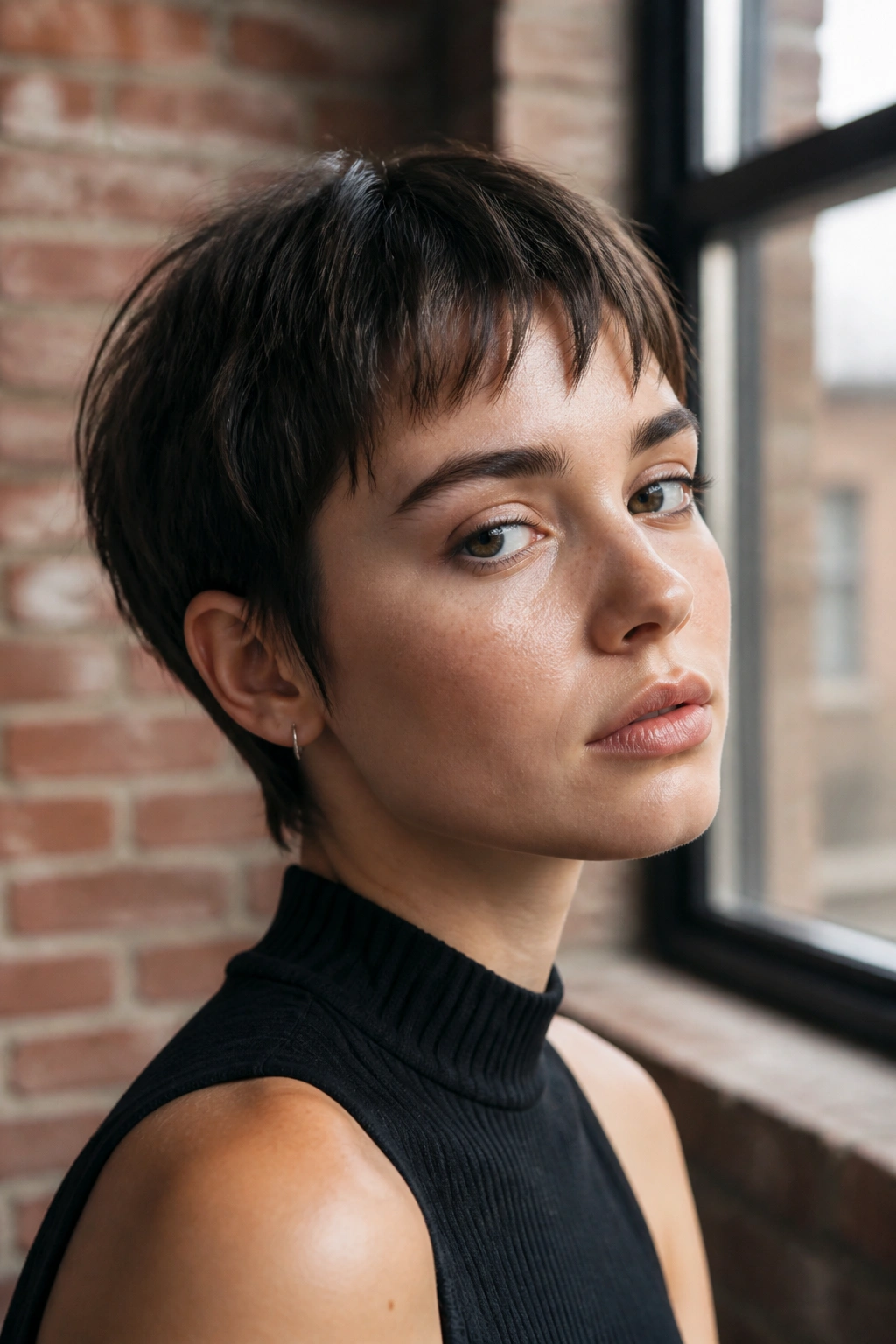
A micro fringe does not have to look severe. If the ends are softened and broken up, it can read as sharp in shape but still airy in feel.
This is the style for a crop that already has a little attitude. Think short pixie, shrunken bob, or anything with strong texture through the top. The fringe usually sits well above the brows, but the trick is avoiding a thick solid block. You want a few separated pieces, a bit of negative space, and enough edge that the front doesn’t melt into the rest of the cut.
It’s not the easiest bang to grow out, so be honest about that part. A micro fringe looks best when you’re okay trimming it often and keeping the shape tidy. If you like to let your hair wander for months at a time, this one may irritate you. If you like structure, it can be brilliant.
A tiny bit of matte paste rubbed only through the ends helps separate the pieces. Don’t coat the whole fringe. That’s how a light shape turns sticky and flat.
6. Airy Shag Fringe for Cropped Layers
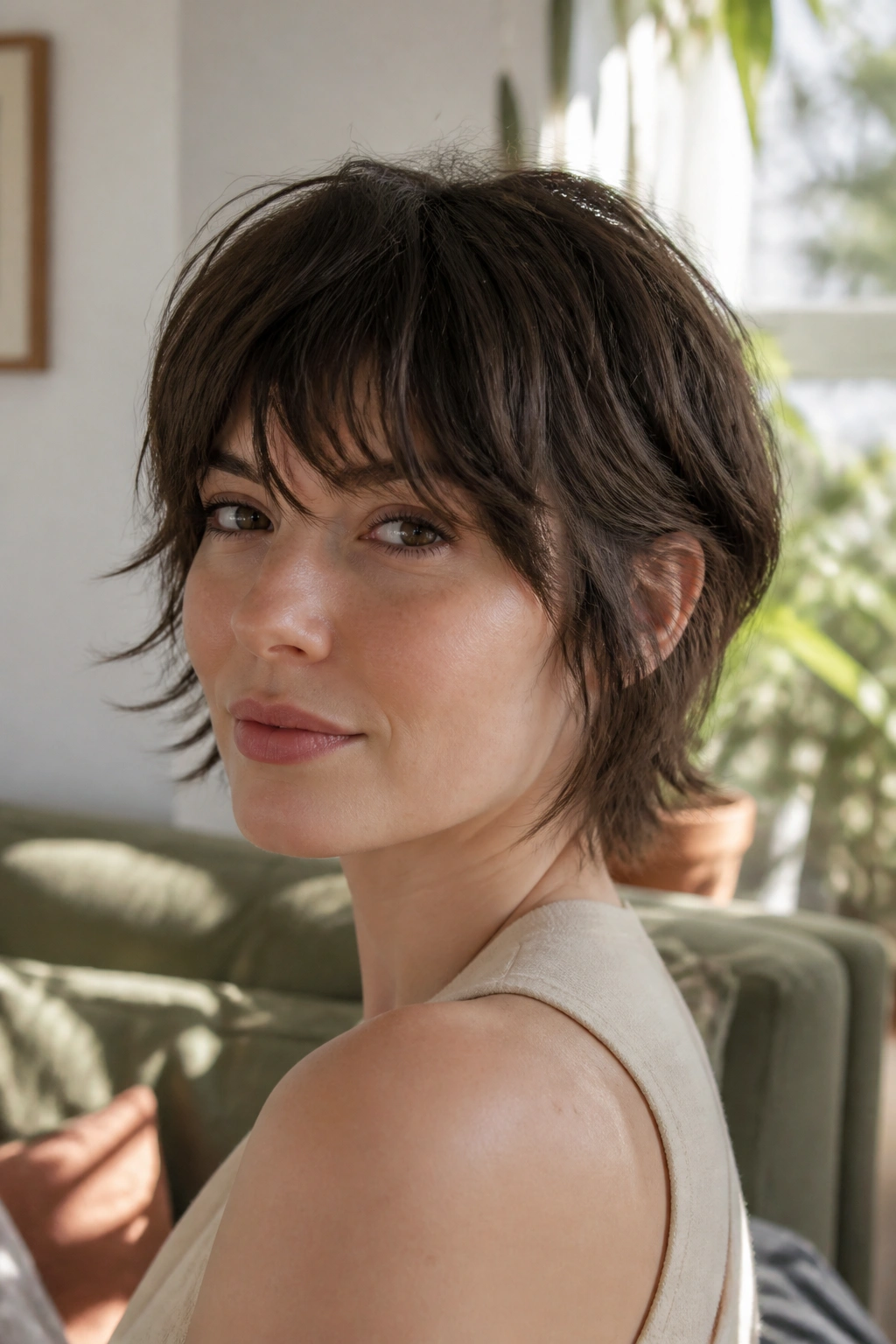
A shag and wispy bangs are natural friends. The haircut already has uneven layers, so the fringe can be loose, a little wild, and still look finished.
This version is especially good if your short hair has movement but not much bulk. The bangs blend into the top layers, then break apart around the temple area so the front doesn’t feel too neat. A neat shag is almost a contradiction anyway. The charm is in the mess, but a controlled mess.
What to Ask for in the Chair
Ask your stylist to connect the fringe to the crown layers instead of cutting it as a separate section. That keeps the front from looking pasted on. If the hair is thick, some interior removal helps; if it’s fine, too much thinning can leave the bangs too wispy and see-through.
A diffuser works well here. Dry the bangs with a little mousse, scrunching them up and then guiding the front pieces with your fingers. Don’t blast the roots straight down. That usually makes the fringe split in awkward places.
This style also handles second-day hair better than most. A quick mist of water and a dab of curl cream or styling foam can wake it back up in under a minute.
7. Brow-Grazing See-Through Bangs
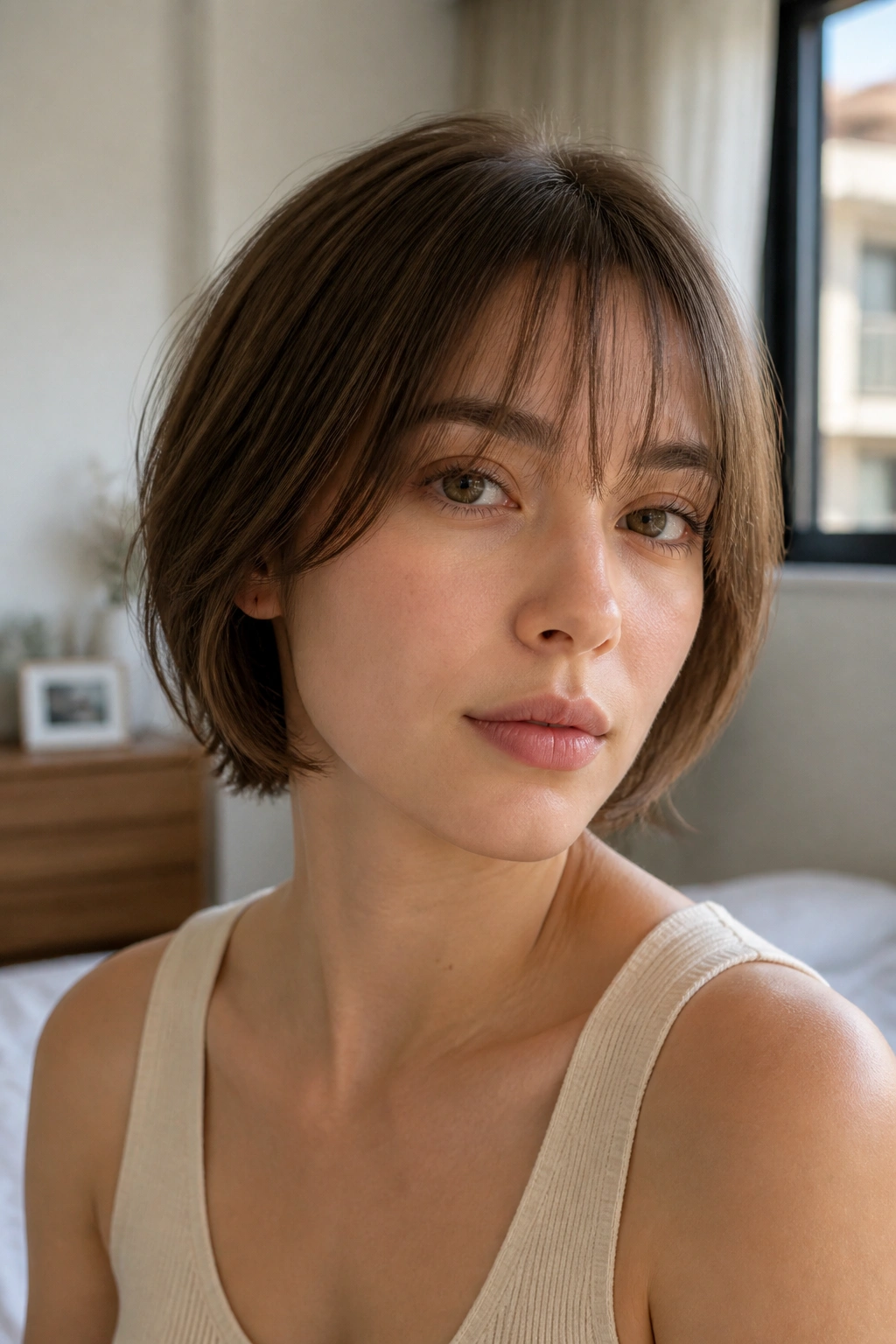
You can almost see your forehead through them. That’s the whole appeal.
See-through bangs are thin on purpose, but short hair needs them to be cut with a little more care than people expect. If the fringe gets too sparse at the ends, it starts looking unplanned. If it’s too dense, the airy effect disappears and the haircut feels heavier than it should. The sweet spot is a soft veil that falls just at or slightly above the brows.
This style is a strong choice for fine hair because it doesn’t ask for much density. It also plays well with short cuts that already have a clean outline, like a blunt bob or a tidy crop. The bangs add texture near the eyes without filling up the whole forehead space.
Heavy they are not.
Keep styling simple. Dry them forward with a flat brush, then shake them apart with your fingers once they cool. A little dry shampoo at the roots keeps the front from looking slick or separated in the wrong way.
8. Rounded Wisps for a Soft Box Bob

A box bob can feel sharp fast. Rounded wispy bangs take the edge off without turning the haircut into something fluffy or vague.
The rounded shape follows the curve of the brow rather than lying flat across it. That means the center sits a little shorter, the sides a little longer, and the whole fringe bends gently toward the temples. On a box bob, that tiny arch is gold. It breaks up the square line around the jaw and keeps the cut from reading too hard.
This is a nice option if your hair is straight and you want a polished look that still has movement. The rounded fringe also works on thicker hair because the shape gives the front some lift without demanding a lot of volume. A round brush and a quick bend under the ends are enough. You do not need a full salon blowout every morning.
- Best with a bob that ends around the jaw or just below it
- Ask for soft graduation, not a blunt brow line
- Use a medium round brush, around 1.5 inches
- Finish with a light hold spray so the curve stays put
The result is tidy, soft, and a little more relaxed than a strict straight fringe. That’s a good thing.
9. Choppy Fringe with a Blunt Bob

A blunt bob with a blunt fringe can feel a little too severe unless that is exactly the look you want. Choppy bangs change the tone fast.
The hair at the bottom stays clean and solid, which gives the cut structure. The fringe breaks that structure up. Those uneven little pieces across the forehead keep the bob from looking like a neat block, and on thick hair that contrast is especially useful. It gives the eye somewhere to move.
This is one of those styles that looks best when the ends are intentionally imperfect. Ask for point cutting or a light razor finish, not heavy thinning. Too much thinning on a blunt bob can make the fringe fray in a cheap-looking way. That’s a bad trade. Keep the pieces defined but soft.
If you like a little polish, blow-dry the bob smooth and leave the bangs slightly piece-y. That mix is what makes the cut feel modern without trying too hard. A flat iron can add a tiny bend if your hair refuses to cooperate, but don’t iron the bangs straight as a board. That kills the shape.
10. Wispy Bangs for Short Curly Hair
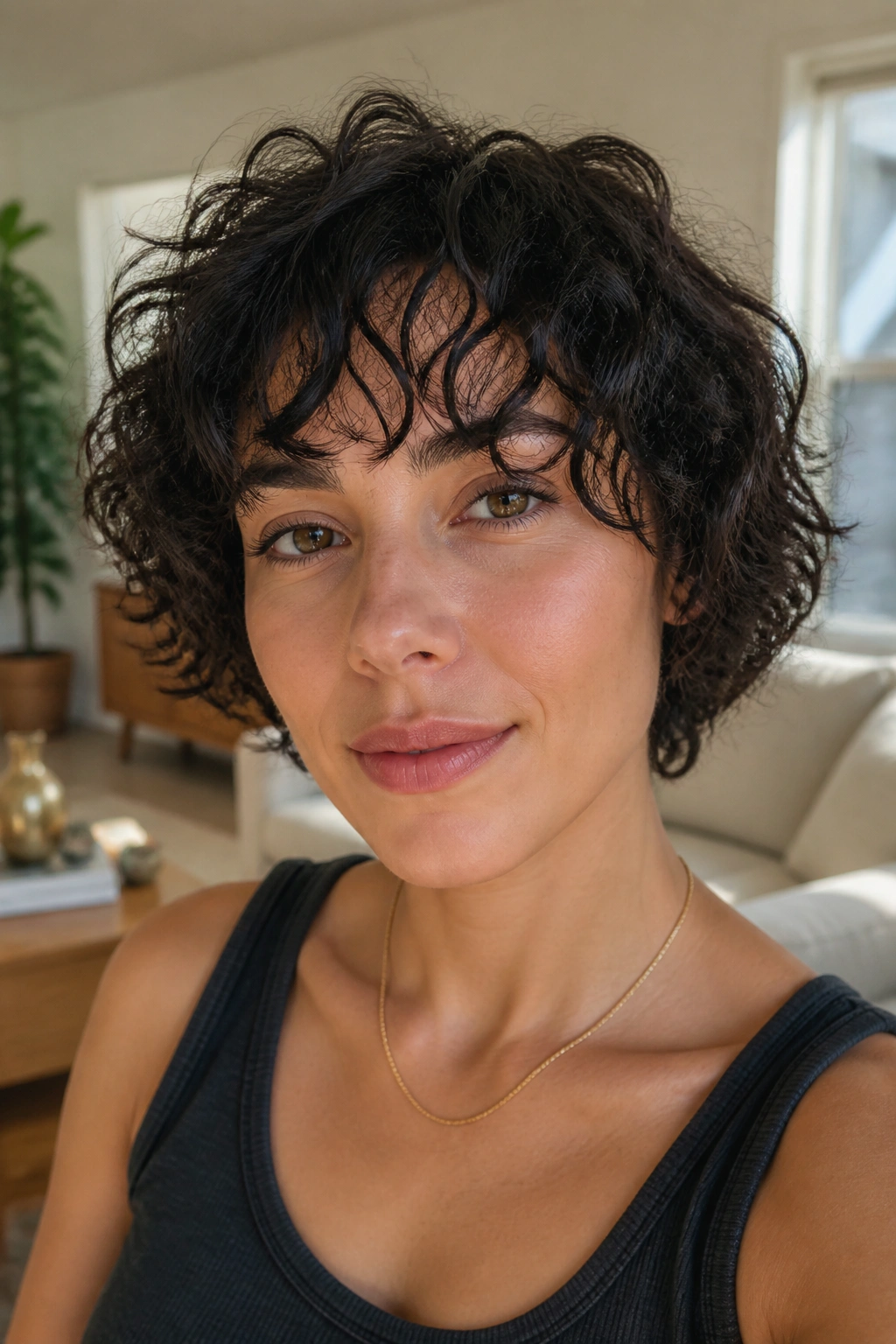
Can curls wear fringe without turning into a triangle? Yes, if the cut respects shrinkage and the bangs are shaped curl by curl.
Short curly hair needs fringe that leaves room to spring up. A curl that looks forehead-length when wet may bounce up half an inch or more once it dries, sometimes even more if the pattern is tight. That means the stylist should cut the bangs dry, or at least nearly dry, so the final line makes sense in real life. Wet-cut curly bangs often come out too short. That mistake is painful.
Best Styling Routine
Start with damp hair and a small amount of curl cream through the fringe. Then use your fingers to encourage the curls to sit forward, not sideways. If the bangs start to split, clip them for a few minutes while they dry in place.
A diffuser on low heat helps. Keep it moving. Don’t bury the bangs in the bowl of the diffuser and walk away. That usually makes the front frizzy and irregular.
- Cut longer than straight hair bangs
- Keep the fringe loose enough to follow the curl pattern
- Avoid heavy oils at the roots
- Trim once the curl shape has settled, not while it’s puffed up
Short curly wisps can look soft and playful, and they don’t need to be perfect. They do need room.
11. Ear-Tucked Fringe for a Crop with Glasses

If you wear glasses, bangs are not the enemy. The wrong bangs are the enemy.
Ear-tucked fringe works because it gives you soft hair around the face without crowding the frame line. The bangs are short enough to sit above the glasses or sweep around them, and the sides stay light enough to tuck behind the ears when you want a cleaner look. That flexibility matters more than people admit.
The best version leaves a little space between the bang ends and the top of the frames. If the fringe sits exactly on the lens line, you’ll spend all day pushing hair out of the way. A tiny bit of separation keeps the shape readable. It also keeps your glasses from flattening the front of the haircut.
This style is useful for a crop that needs softness but not commitment. You get movement near the eyes, and you can still switch the fringe off your face with one hand. That sounds small. It isn’t. Convenience changes how often people actually wear bangs.
A side part helps on days when you want the fringe to disappear into the cut. So does a light root spray at the front, which gives the hair enough lift to stay off the frames.
12. Arched Wisps for Heart and Oval Faces
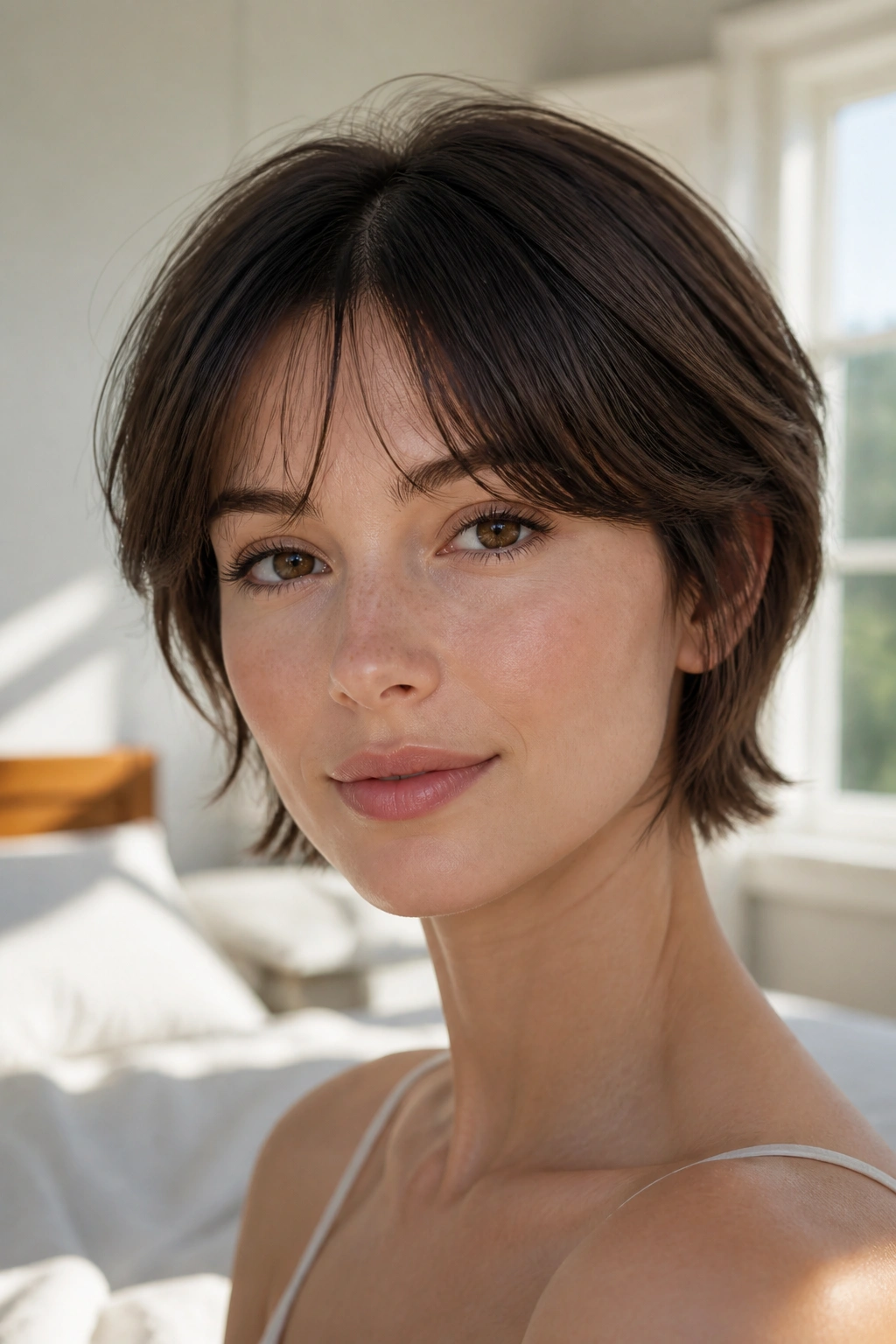
A forehead-heavy face often looks better with a soft arch than with a dead-straight fringe. Arched wisps open the center, then widen near the temples so the face looks balanced without losing softness.
This shape is subtle. The center is trimmed a touch shorter, the sides are left longer, and the whole fringe curves in a gentle frame across the upper face. On a heart shape, that can calm a broader forehead. On an oval face, it adds shape without making the features feel crowded. The styling is light, but the effect is clear.
The best part is that arched wisps work with short cuts that already have some movement. A rounded bob, a shaggy crop, even a neat pixie can take this fringe well. It doesn’t need a lot of height. It needs a clean curve and a little separation at the ends.
If your hair is dense, ask for minimal bulk at the center so the arch doesn’t sit flat. If it’s fine, keep the removal light and avoid over-thinning the sides. A little controlled weight helps the fringe stay in place.
One quick pass with a small round brush is usually enough. More than that and the arch starts looking over-done, which is not the mood here.
13. Split Fringe for a Lived-In Lob

A split fringe isn’t just curtain bangs with a different name. On short hair, the split can be looser, less symmetrical, and a little more lived-in.
This works well on a lob that sits somewhere between jaw and collarbone, especially if the cut already has soft layers around the face. The bangs break in the middle or slightly off-center, then fall into the side pieces without a hard divide. It feels casual, but not lazy. That distinction matters.
How It Differs from Curtain Bangs
Curtain bangs usually aim for a cleaner center part and a more even fall on both sides. A split fringe can be messier. One side may sit a bit fuller, the other may tuck away more easily, and that asymmetry is part of the charm.
Use a blow dryer with a nozzle and direct the fringe away from the face first, then let it settle naturally into the split. A flat iron can add a tiny bend if one side flips out too far. Keep it soft. You want movement, not a hard bend at the eyebrow.
This style suits anyone who likes a haircut that looks better after a little wear. On day one it may seem tame. By day two, after some real life and a bit of movement, it gets better.
14. Baby Wisps for a Short Shag

Tiny bangs can still feel soft. They just need texture.
Baby wisps are a short-fringe answer for a shag that already has layers everywhere else. The bangs sit high on the forehead, but they’re not meant to look crisp or severe. Instead, they break into little pieces that echo the rougher texture of the haircut. On a shag, that can be a strong look. On the wrong haircut, it can feel accidental. The difference is all in the balance.
This style works best when the top layers around the crown are also a little broken up. If the rest of the cut is neat and the fringe is tiny and choppy, the front can feel disconnected. Keep some texture through the sides so the bangs look like they belong.
A light wax on the very tips helps hold the shape without weighing it down. Use almost nothing. A grain-of-rice amount is enough for most short fringes. Too much product and the wisps clump together, which ruins the point.
- Good for short shags with lots of movement
- Best when cut dry
- Needs regular tiny trims
- Looks strongest with a slightly undone finish
15. Grown-Out Wispy Bangs for the In-Between Stage
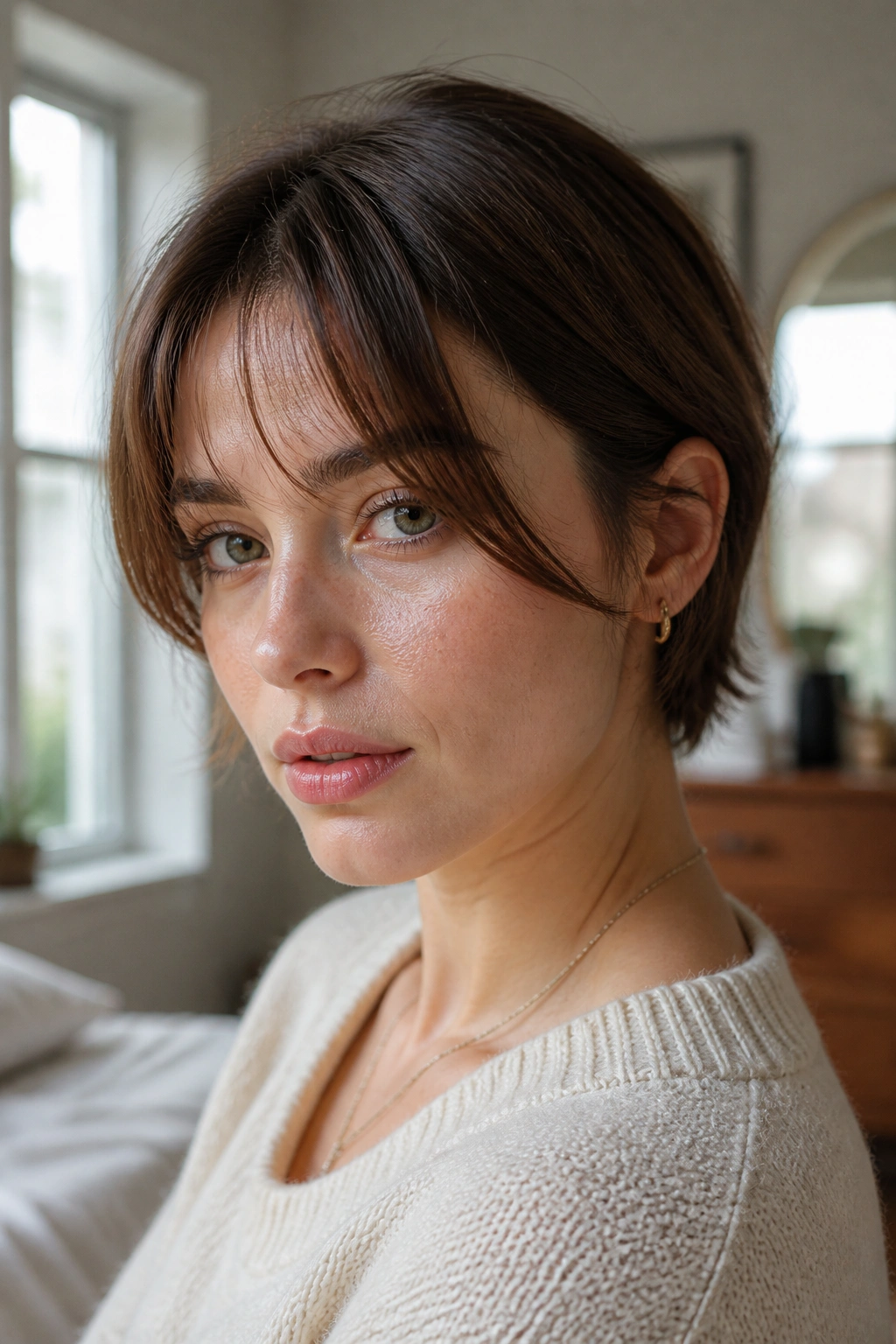
Growing out bangs does not have to mean living through a bad phase. If the fringe is cut into wispy layers from the start, the grow-out stage can look deliberate.
The trick is letting the shortest pieces soften into face-framing layers instead of waiting until the bangs get heavy and awkward. On short hair, that means the fringe can move from brow-skimming to cheek-skimming without a hard reset. You can part it off-center, tuck one side back, or let the front blend into the top of the bob or crop. It gives you options while the cut changes shape.
This stage is where a lot of people panic and make the bangs too short again. Resist that urge. If the front is already soft, a tiny trim every few weeks is usually enough to keep it neat while the rest catches up. Ask for dusting, not a full restart, and leave the sides a touch longer so the transition stays smooth.
A small round brush, a bobby pin, and a bit of dry texture spray go a long way here. So does patience. Not glamorous, maybe, but useful.
The best wispy bangs on short hair look like they belong to the haircut, not like they were dropped on top of it. Keep the line soft, respect the texture you already have, and pick a shape that still makes sense on a rushed morning. That part tends to matter more than the photo on the screen.
