



Choppy bangs are one of the fastest ways to make a haircut feel less polite. The ends are broken on purpose, and that tiny bit of disorder changes the whole face.
A blunt fringe can look neat. Choppy bangs look lived-in, sharper, and a little tougher. They can soften a strong forehead, interrupt a perfect line, and give even the simplest haircut some bite. That edge comes from the cut itself, not from overstyling it into submission.
The part people miss is this: not every choppy fringe behaves the same way. Hair density, cowlicks, and texture change everything. A fringe that floats on fine straight hair can disappear on thick hair, and a wet-cut bang on a strong wave can spring up a half inch shorter than anyone expected. That is how a cute idea turns into a weekly regret.
Some versions are soft enough for everyday wear. Some look almost punk. A few sit right in the middle, which is where I think the sweet spot lives for most people. Start with the shape that suits your hair, then push the edge a little farther than you think you need.
1. Brow-Grazing Choppy Bangs

Brow-grazing fringe is the easiest place to start if you want choppy bangs without jumping into a dramatic micro cut. The line sits right at the eyebrows, but the ends are point-cut or shattered so the fringe never looks blocky. That broken edge gives the haircut movement even when the rest of your hair is clean and smooth.
What to ask for
- Keep the center pieces at or just below the brows.
- Leave the outer corners a touch longer so the fringe bends instead of sitting flat.
- Ask for point cutting, not a blunt snip across the whole line.
- Style with a 1-inch round brush or a flat iron bend, then stop before the hair turns too polished.
Tiny difference. Big payoff.
This shape works especially well if you want your bangs to feel edgy but still wearable with a blazer, a tee, or a messy bun. A little texture spray at the roots helps the fringe separate into soft pieces instead of one solid curtain. If your hair is pin-straight, this is one of the few bang styles that can still look intentional after a day of moving around, because the uneven finish keeps it from falling stiff.
2. Side-Swept Choppy Bangs

Want fringe that survives the grow-out phase without looking awkward? Side-swept choppy bangs do exactly that. The diagonal line pulls the eye across the face, and the choppy ends keep it from reading too sweet or too finished.
These are a good choice if your hair has a stubborn cowlick at the front. A middle bang can fight that ridge every single morning. A side sweep works with the bend instead of against it, which means less heat, less brushing, and less arguing with your hair in the mirror.
How to style the sweep
- Blow-dry the bang in the opposite direction first, for about 10 seconds.
- Push it back over while it is still warm.
- Touch the ends with a pea-sized dab of lightweight pomade.
- If the fringe starts to split, mist the roots with dry shampoo and rake through with your fingers.
The look is soft at a glance, but the texture keeps it from feeling formal. I like this version on medium-density hair because it moves instead of lying there. It also grows out cleanly, which is the part nobody cares about until week four arrives and the fringe starts talking back.
3. Piecey Choppy Bangs

Picture hair that falls apart in a good way. That is the whole charm of piecey choppy bangs. Instead of one continuous line, the fringe is cut into small, uneven bits that separate naturally when you shake your head or run your fingers through it.
This style works well if you hate the feeling of heavy hair sitting on your forehead. The pieces let skin show through, so the bang never feels boxed in. It also plays nicely with a shag, a collarbone cut, or long layers, because the fringe looks like part of the haircut instead of a little add-on tacked to the front.
A few things make this look work:
- Keep the bang section narrow. Too wide, and it starts looking bulky.
- Use a matte cream or texture paste instead of a shiny serum.
- Twist small sections around your fingers while drying, then let them fall.
- Skip the brush after the first rough dry. Fingers do the job better here.
This is a good option if you want that slightly undone feel without looking like you slept in your hair for three days. The edges should separate, not frizz. There is a difference, and it matters.
4. Curtain-Style Choppy Bangs
Curtain bangs are not soft by default. With the right cut, they can look sharp enough to change the whole mood of a haircut. A choppy version keeps the center shorter, then lets the sides fall longer toward the cheekbones. The result feels split, broken, and a little rebellious instead of beachy and safe.
This shape is flattering because it opens the face without exposing everything at once. The center should usually sit around the bridge of the nose or slightly above it, while the sides sweep down toward the top of the cheeks. That longer edge matters. It keeps the bang from turning into a flat shelf across the forehead.
A choppy curtain fringe usually looks best when the ends are cut with small vertical snips rather than one clean horizontal line. Ask for that, or you can end up with a fringe that looks almost too tidy. The magic is in the uneven finish.
If you like a middle part but want more attitude, this is a smart place to live. It works with thick hair, wavy hair, and a blunt cut that needs a little friction. It can even make a simple ponytail look deliberate.
5. Razor-Cut Choppy Bangs

Unlike scissor-snipped fringe, razor-cut bangs have a sliced edge that moves when you turn your head. That movement is the whole point. A razor removes weight in a softer, more feathered way, so the bangs can look airy without turning wispy in a weak way.
This cut makes sense on straight to slightly wavy hair. On very curly hair, a razor can fray the ends faster than you want, especially if the hair is already dry or color-damaged. A good stylist will know how to use the blade lightly, not hack at the front section like they are trimming paper.
When a razor makes sense
- Your hair is dense but not coarse.
- You want a fringe that bends instead of sitting flat.
- You like a bit of separation at the ends.
- You do not want to fight for a sleek finish every morning.
A drop of lightweight serum on the very ends is enough. Too much product, and the sliced pieces stick together and lose the texture that made them interesting in the first place. This is one of those cuts that looks best when it moves a little.
6. Choppy Bangs with a Shag Haircut
If your hair air-dries with a bend, this is the cut that can make you look styled on a lazy day. A shag and choppy bangs belong together because both cuts like unevenness. The fringe blends into the top layers, so nothing feels separate or forced.
The shape usually works best when the bang pieces are left a little longer on the sides and broken up through the center. That lets the fringe merge into the rest of the haircut instead of sitting like a hard line on the forehead. You want the front to feel shaggy, not heavy.
A little mousse at the roots helps the front piece lift instead of collapsing. If you use a diffuser, keep the heat low and stop before the bangs dry into a crisp helmet. Nobody wants that. A quick squeeze with your fingers while the hair is 80 percent dry will keep the fringe loose and undone.
The shag version has a natural edge to it. It suits people who want their hair to look like it has personality even when they have done almost nothing to it.
7. Curly Choppy Bangs
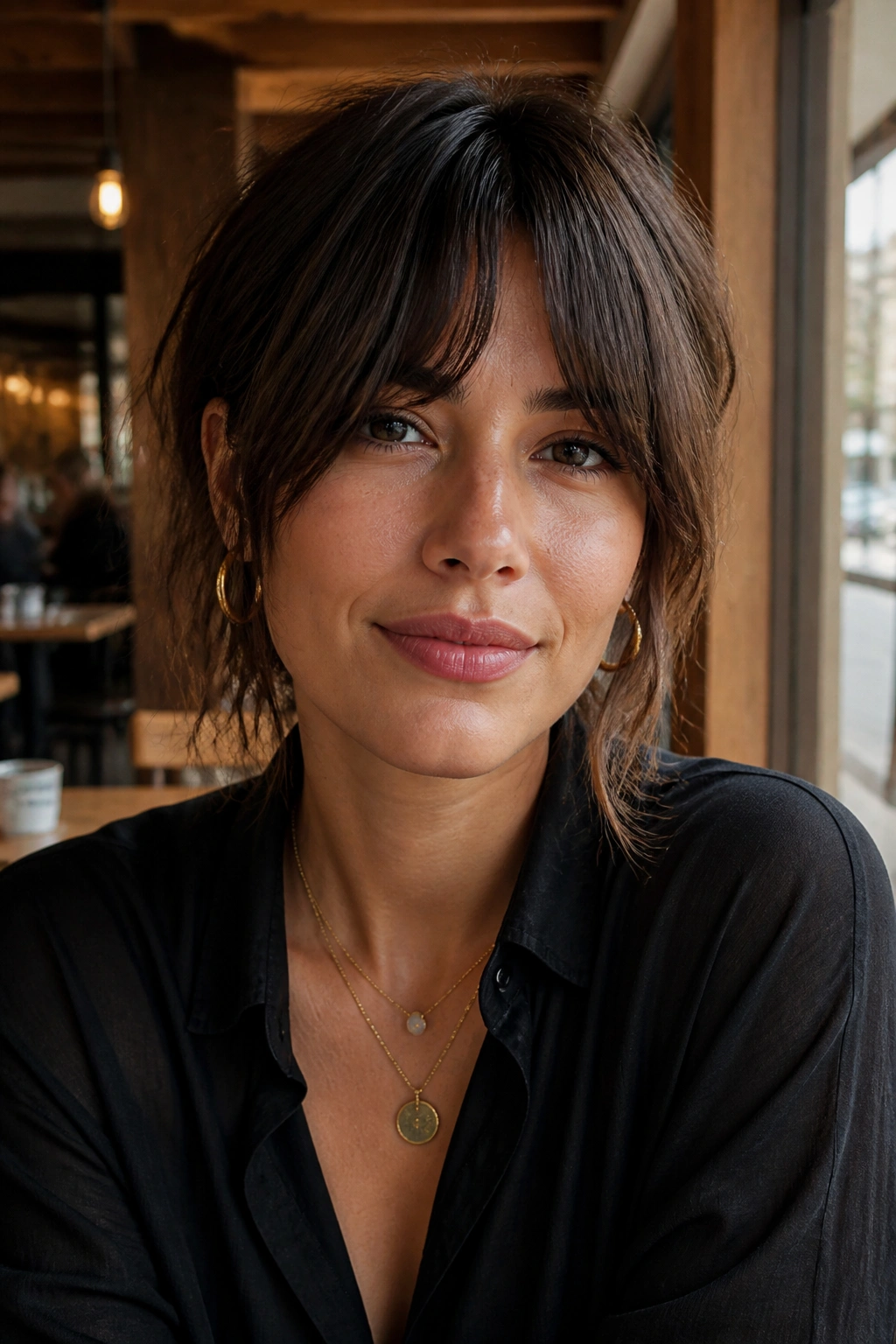
Curly bangs can look sharper than straight bangs when they are cut dry and shaped by curl pattern, not by fantasy. That is the real trick. Curl has its own shrinkage, its own spring, and its own little surprises, so the front has to be cut where it lives, not where someone hopes it will land after styling.
A curly choppy fringe should usually be cut with the curl left in place, often a little longer than the final target. A springy curl can bounce up a full inch, sometimes more, and nobody enjoys a bang that lands in the middle of the forehead after a wash. Dry cutting or dry checking matters here.
What to tell your stylist:
- Cut the bang in its natural curl pattern.
- Leave room for shrinkage.
- Keep the edges broken, not blunt.
- Shape each curl group on its own instead of chasing one straight line.
Use curl cream or a light gel, then scrunch the front gently and let it form. A diffuser on low heat can help, but the front should never be blasted until it frizzes. Curly choppy bangs bring edge in a way straight bangs often cannot. They look confident. A little wild, too.
8. Asymmetrical Choppy Bangs
Why pretend both sides need to match? Asymmetrical choppy bangs are a nice answer if you want a fringe that feels deliberate but not precious. One side sits a little shorter, the other side drops longer, and the whole thing leans in one direction.
The shape adds movement before you even style it. It can also help balance a stubborn cowlick or a forehead that feels wider on one side than the other. That matters more than people admit. Hair does not live in a perfectly even world, so a little imbalance can look more natural than chasing symmetry forever.
A side part usually makes this cut look best, though you can push the longer piece toward the cheekbone or sweep it across the brow. A bit of styling wax on the fingertips helps define the longer end without making it stiff.
This style is sharp without being severe. It suits angular faces, yes, but it can also soften a square jaw because the eye keeps moving along the diagonal. That movement is the point. It keeps the cut from going flat.
9. Choppy Bangs with a Blunt Bob
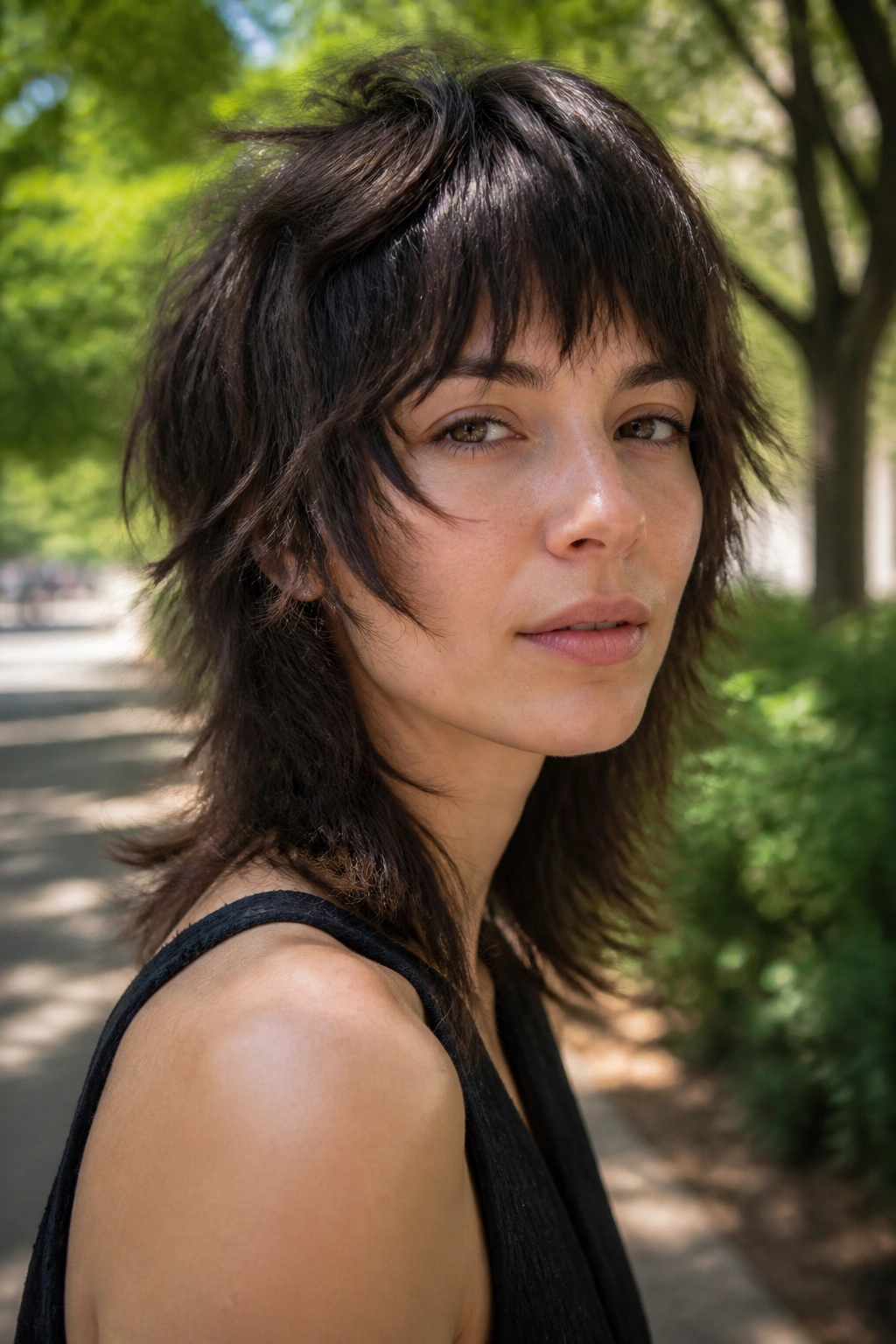
A blunt bob can look almost severe on its own. Add a shattered fringe, and the whole thing wakes up. The contrast is what makes it work: the bob stays crisp at the ends, while the front breaks apart and gives the haircut some grit.
If the bob is cut at the jaw or just below it, you do not want a thick, heavy bang competing with that line. Keep the fringe lighter and a little narrower so the front does not turn into a helmet. The edge should feel intentional, not sealed shut.
This pairing is especially good on fine to medium hair because the bob gives structure while the bangs add texture at the front. You can blow-dry the bob smooth and leave the fringe a little broken, which creates a nice tension between polished and rough.
A flat iron bend through the bang helps, but keep the motion subtle. The goal is a soft kink, not a curled ribbon. When both the bob and the fringe hit too hard, the haircut loses that cool, spare look that made it appealing.
10. Long Choppy Bangs
A fringe does not need to sit at the brow to count. Long choppy bangs can hit the cheekbones, brush the bridge of the nose, or fall right around the top of the lashes, and they still bring plenty of edge. The longer length gives you room to tuck, pin, or part them when you want a break.
This shape is good if you like the idea of bangs but want some escape routes. On busy days, you can split them in the center, sweep them off to one side, or twist them back with a clip. That flexibility makes the style easier to live with than a short, heavy fringe.
How to keep them from looking limp
A 1-inch curling iron or flat iron works well. Wrap the bang once, release it quickly, and let the ends fall in a soft bend. Then pinch the pieces apart with dry fingers. That little bit of separation keeps the fringe from lying like a curtain.
Long choppy bangs also grow out in a nicer way than shorter cuts. They slide into face-framing layers without a harsh line, which is useful if you know you are not staying committed forever. Some people call that practical. I call it smart.
11. Wispy Choppy Bangs for Fine Hair
Fine hair gets dragged down by heavy bangs. That is the part people forget when they bring in a screenshot. A wispy choppy fringe solves that problem by using lightness on purpose. The hair is still cut with shape, but the density is thinned enough that the front never feels weighed down.
The mistake to avoid is overthinning. If a stylist removes too much, the bangs can split into random strings that never come back together. You want airy, not sparse in a panicked way. A little point cutting at the ends is usually enough to create movement without hollowing out the line.
For styling, a quick side-to-side blow-dry builds lift at the root. After that, a dry shampoo mist at the base can give the fringe a bit of grip. Do not pile product into the ends. Fine hair shows every drop, and too much cream will make the bang collapse by lunchtime.
This version works because it keeps the forehead partly open. You get the attitude of fringe without the weight of a dense block. If your hair gets flat easily, this is often the safer bet.
12. Bottleneck Choppy Bangs
Want fringe that opens at the center and lands softly at the temples? Bottleneck bangs do that, and the choppy version makes them feel less polished. The middle is shorter, then the sides widen out and taper down, almost like the narrow neck of a bottle opening into a wider shape.
This cut flatters long faces and heart-shaped faces because it gives width near the cheekbones without making the forehead disappear. It also works if you like a middle part but want something with a little attitude. The broken ends stop the style from reading too neat.
A few details that matter
- Keep the shortest center pieces around the upper bridge of the nose.
- Let the outer corners hit closer to the cheekbone.
- Cut the edges with small vertical snips so the finish stays rough.
- Style with fingers first, brush second.
The result is softer than a micro fringe and more directional than a classic curtain bang. It sits in that useful middle ground where the haircut still feels relaxed but not boring. That is a good place for most people to be.
13. Heavy Choppy Fringe for Thick Hair
Thick hair needs removal, not just trimming. That is the mistake I see most often with dense fringes. If the stylist only shortens the front line and leaves all the weight inside, the bangs swell up, stick out, or hang in one big block across the forehead.
A heavy choppy fringe solves that by taking out bulk from the middle of the section and breaking the ends so they do not sit like a shelf. Texturizing shears can help, but they need a light hand. Too much thinning on thick hair can leave the bangs frizzy at the edges, which is its own kind of problem.
This style looks best when the front is dried enough to show the real shape. If you cut or style it while the hair is too damp and then let it dry on its own, the fringe may puff up wider than you expected. A paddle brush and a quick blast from a dryer can keep the line under control.
It has a strong, graphic feel. Good. Thick hair can handle that. If you want the bangs to look intentional rather than bulky, leave the center full enough to have presence, but break the perimeter so it does not feel blunt.
14. Soft Choppy Bangs for Round Faces
Round faces usually look better when the fringe moves up and out instead of straight across. That is why soft choppy bangs can work so well. The broken edge gives structure, while the slight lift at the center and longer sides keep the face from looking boxed in.
The shape should create a little vertical line near the center of the forehead, then slope toward the temples. You do not need a hard arch. You need enough variation to keep the eye moving. A single straight line across the brow can make a round face look wider than it is, and that is easy to avoid with a smarter cut.
A side-swept finish helps here, but it does not have to be dramatic. Even a slight off-center push can make the whole fringe feel lighter. Use a round brush or your fingers to direct the front pieces away from the widest part of the face.
This is one of those styles that looks gentler in motion than in photos. The real win is how it breaks up the forehead without stealing all the attention. That restraint matters.
15. Choppy Bangs with a Pixie Cut
A pixie without fringe can feel sweet. Add broken bangs and it gets sharper fast. The front pieces give the crop a little attitude, and that single change can make the whole cut feel less neat and more deliberate.
With a pixie, the bangs should still be short enough to sit inside the shape of the cut, but long enough to move. If they are too short, the fringe can stick up in a way that looks accidental. If they are too long, they can swallow the eyes and make the pixie lose its shape. Balance is the whole game here.
A touch of matte paste is usually enough to bend the pieces where you want them. Pinching the ends with your fingers gives a better finish than brushing the front flat. Finger styling works better than precision here, which is nice because pixie cuts rarely enjoy being overworked.
This pairing is good when you want a cropped haircut with a little edge around the face. It has a bit of rebellion in it, but not the kind that demands a cape and boots. Just a short cut with a sharper front.
16. See-Through Choppy Bangs
Sparse does not mean boring. See-through choppy bangs let the forehead show through, but the broken ends still give the style some grit. That little bit of transparency keeps the cut light, which is useful if you want fringe without full coverage.
This shape is especially handy on fine hair that would look too heavy with a denser bang. It also works if you like makeup-heavy eyes and do not want hair sitting across them all day. The style can frame the face without becoming the center of it.
The key is not to overcut the ends. You want separated pieces, not a fringe that looks thin because it ran out of hair. A small amount of texture powder at the roots can help lift the front, but the product should stay close to the scalp. Putting too much on the ends makes them stringy.
I like this version because it looks casual even when the rest of the hair is neat. It has a kind of quiet edge. Not loud. Not fussy. Just enough to change the mood.
17. Choppy Bangs with Face-Framing Layers
The smartest fringe often does not stop at the forehead. Choppy bangs that melt into face-framing layers create one long line of motion from brow to cheek to jaw. That makes the haircut feel connected, which is useful if you dislike a bang that looks like it was dropped onto the front as an afterthought.
This style starts with shorter broken pieces in the center, then gradually lengthens into the first layers beside the face. The shift should feel natural, not sudden. If the bang ends too abruptly, the cut can look chopped in the wrong way. If the transition is soft but still uneven, it reads as intentional and modern.
A twist-dry with your fingers helps here. Wrap the front pieces away from the face while drying, then release them before they set too smooth. A light spray wax can keep the front separated without turning crunchy.
This is a good option for medium and long hair, especially when you like wearing it down but still want some shape around the face. It also grows out better than a hard bang line. The layers take over when the fringe gets tired.
18. Arched Choppy Bangs
Want something between a blunt arch and a curtain fringe? Arched choppy bangs land right there. The center sits a little shorter, the sides curve downward softly, and the whole fringe follows the brow shape without copying it too exactly.
That shape is useful if you want some forehead coverage but do not want a heavy block across the face. It gives a bit of lift in the center and then softens at the edges, which can be flattering on oval and long faces. The broken finish keeps it from turning sweet.
A round brush helps create the arch, but do not overcurl the ends. A bend is enough. You want the shape to look like it moved naturally, not like it came out of a barrel iron on purpose. A small amount of texture spray can keep the arch from collapsing.
This one is a nice middle path. It feels polished enough for work, but the choppy ends keep it from going prim. That balance is rare, and I think that is why it works so well.
19. Choppy Bangs with a Lob
A collarbone lob can look tidy. The right fringe keeps it from feeling too safe. Choppy bangs add movement at the front, which is useful when the rest of the haircut is deliberately clean and simple.
The contrast matters here. A lob already has a quiet shape, usually somewhere between the jaw and the shoulders. If the bangs are too smooth, the haircut can turn flat. Broken fringe gives the style some life, and the edges keep the front from reading too neat.
You can style this with a soft bend at the ends and let the rest of the hair air-dry or wave lightly with a 1-inch iron. The fringe should be loose enough to move when you turn your head. A stiff bang against a blunt lob feels dated fast.
This is one of my favorite pairings for people who want low drama but still want a point of view. The lob carries the structure. The bangs bring the attitude. That is usually enough.
20. Grown-Out Choppy Bangs
The grown-out version is the one I keep coming back to. It has all the edge of a fringe, but the length gives you options. You can split it in the middle, sweep it across the brow, pin it to one side, or let it fall forward when you want the full effect.
This style works because it looks good between trims, which is where a lot of bang cuts fall apart. The pieces should sit somewhere around the eyes to cheekbones, with the shortest bits still broken enough to keep the shape from looking heavy. A grown-out fringe can feel intentional if the layers around it still have some movement.
A little dry shampoo at the roots and a quick finger-twist through the front can bring the style back in under a minute. That is the appeal. It does not need a full round-brush session every morning, and it does not punish you for missing a trim by a few weeks.
If you want choppy bangs with less upkeep and more flexibility, this is the version I would point you toward first. It still feels sharp. It just does not act like a tyrant in the mirror.
