



Round faces do not need to be hidden behind a curtain of hair.
They need angles, softness, and a little movement near the eyes. That matters even more after 40, when a bang can either lift the whole haircut or sit there like a blunt line nobody invited.
The old rule that says people with round faces should avoid bangs is tired advice. The real issue is shape. A heavy horizontal fringe can widen the face, while the right cut pulls the eye up, breaks the width at the cheeks, and gives the haircut some life. Fine hair, thick hair, straight hair, waves, cowlicks, glasses — all of it changes the answer. So does maintenance. So does how much forehead you want to show.
The styles below cover the sweet spot between flattering and realistic. Some are soft and airy. Some are fuller and sharper. A few are sneaky about how well they work, which is usually my favorite kind.
1. Side-Swept Feathered Bangs

Side-swept feathered bangs are the safest place to start if you want shape without a big commitment. The diagonal line breaks up the width of a round face, and the feathered ends keep the fringe from feeling boxed in or heavy.
Why They Work So Well
The trick is simple: the eye follows the diagonal, not the width. That means your face reads a little longer, especially when the shortest piece sits near the outer brow and the longest piece brushes the cheekbone.
Ask for softness at the ends, not a sharp slice. A stylist can point-cut the fringe so it moves instead of sitting in one hard block. That matters on mature hair, which often looks better when it has some bend and texture rather than a stiff edge.
- Best for medium to thick hair with a little natural movement.
- Easy to tuck behind the ear on busy days.
- Looks good with a side part or a soft off-center part.
Tip: Blow-dry the bangs in the direction you want them to fall, then give the roots a quick lift with a round brush so they do not collapse flat against the forehead.
2. Curtain Bangs

Why do curtain bangs keep showing up on round faces? Because they open the face in the middle and soften it at the sides, which is a smart little trick when the cheeks are the widest part. They give you shape without fencing off the forehead.
The version that works best here is usually a little longer than people expect. The center can skim the brow or sit just below it, while the sides slide into the cheekbone area. That longer edge matters. It keeps the fringe from stopping right at the widest part of the face, which is where a lot of bang cuts go wrong.
They also age well in the best sense of the word. Not stiff. Not fussy. If you wear your hair up half the time, curtain bangs still make sense because they frame the face even when the rest of the hair is clipped back. A middle part is the obvious styling choice, but a soft off-center part works too.
How to Style Them
Use a blow-dryer brush or a 1-inch round brush, and bend each side away from the face. A tiny bit of root lift at the center keeps them from splitting flat and looking lazy.
3. Bottleneck Bangs
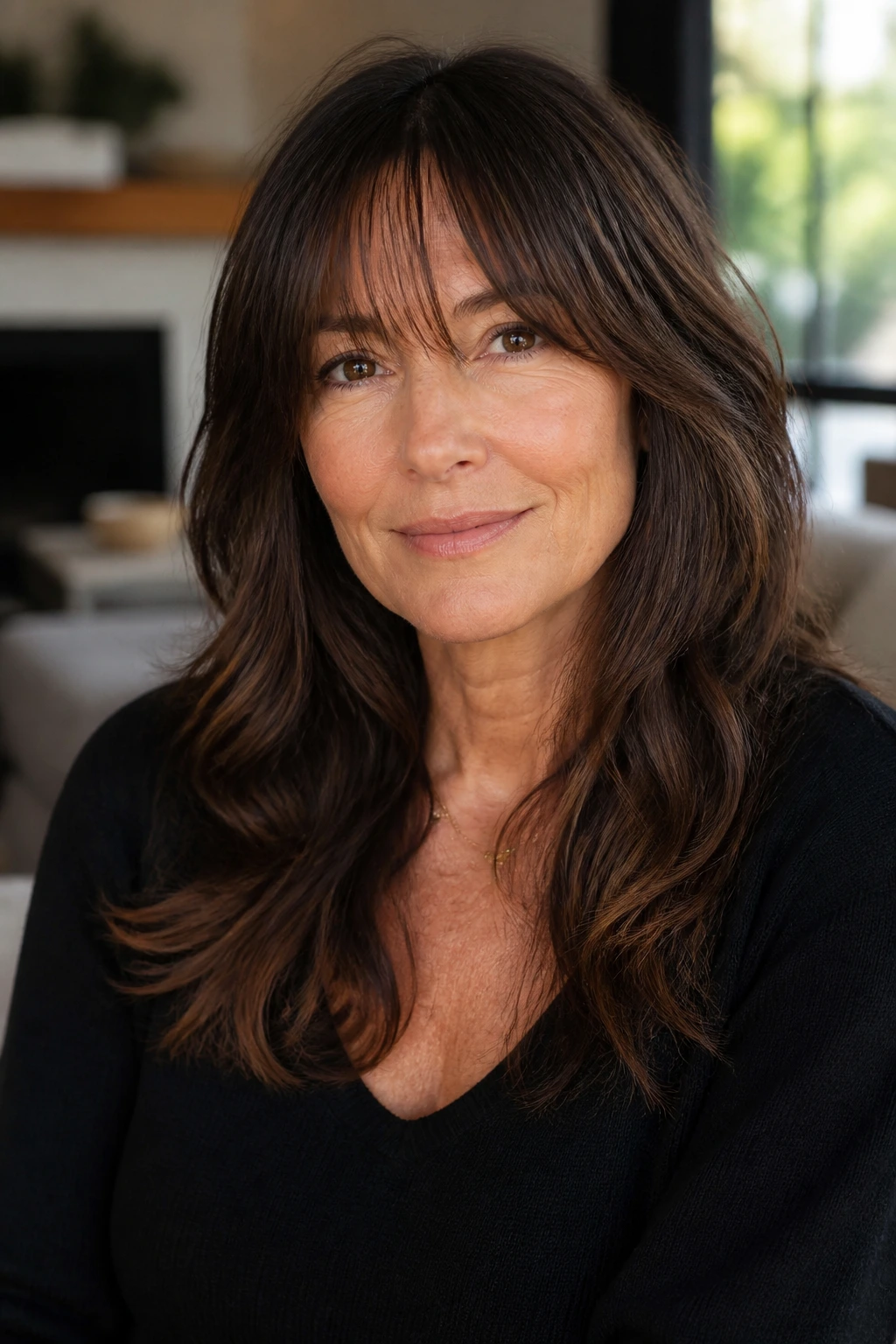
Bottleneck bangs are better than they sound. The center is a little shorter, the sides get longer, and the overall shape narrows in the middle before opening out again. That makes them one of the smartest bang styles for round faces over 40, because they add structure without drawing a hard line across the forehead.
What I like most is the softness around the cheeks. The longest pieces usually land near the cheekbone or a touch below it, which gives the face some vertical movement. The shorter center keeps the eyes in focus, and the longer sides keep the fringe from feeling blunt.
They also work well if your hair has medium density. Too little hair, and the center can look sparse. Too much hair, and the shape can get bulky unless the stylist removes some internal weight. Ask for a light hand, not a heavy chop.
This is one of those cuts that looks modern without trying too hard. It has shape. It has air. It does not scream for attention.
4. Arched Eyebrow-Grazing Bangs
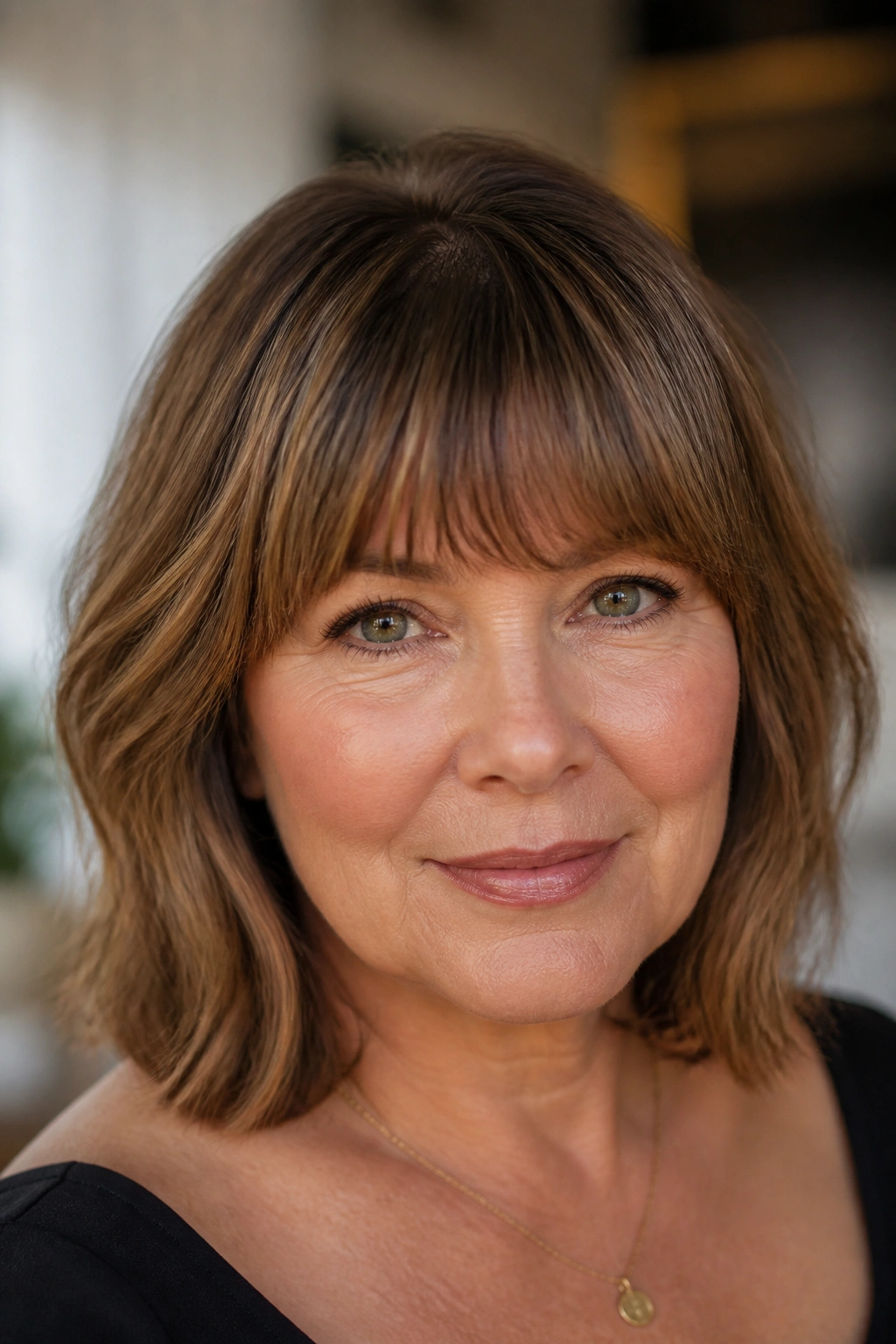
A soft arch across the brow can be a nice fix when a straight bang feels too severe. The arch follows the shape of the brow a little, which makes the fringe look intentional instead of sliced straight across the face.
That tiny curve matters more than people think. On a round face, a flat line can stop the eye cold. An arched line keeps it moving upward and outward. The face reads softer, and the bangs feel more tailored to the features instead of pasted on top of them.
I especially like this style for someone who wants to show a little forehead but not all of it. It gives coverage without closing off the face. If you wear glasses, the arch can keep the bangs from sitting right on the frames, which is one less thing to fight in the morning.
Ask your stylist to keep the middle a touch shorter and the sides soft enough to brush into the temples. That shape is easy to wear and even easier to grow out.
5. Wispy Micro Bangs
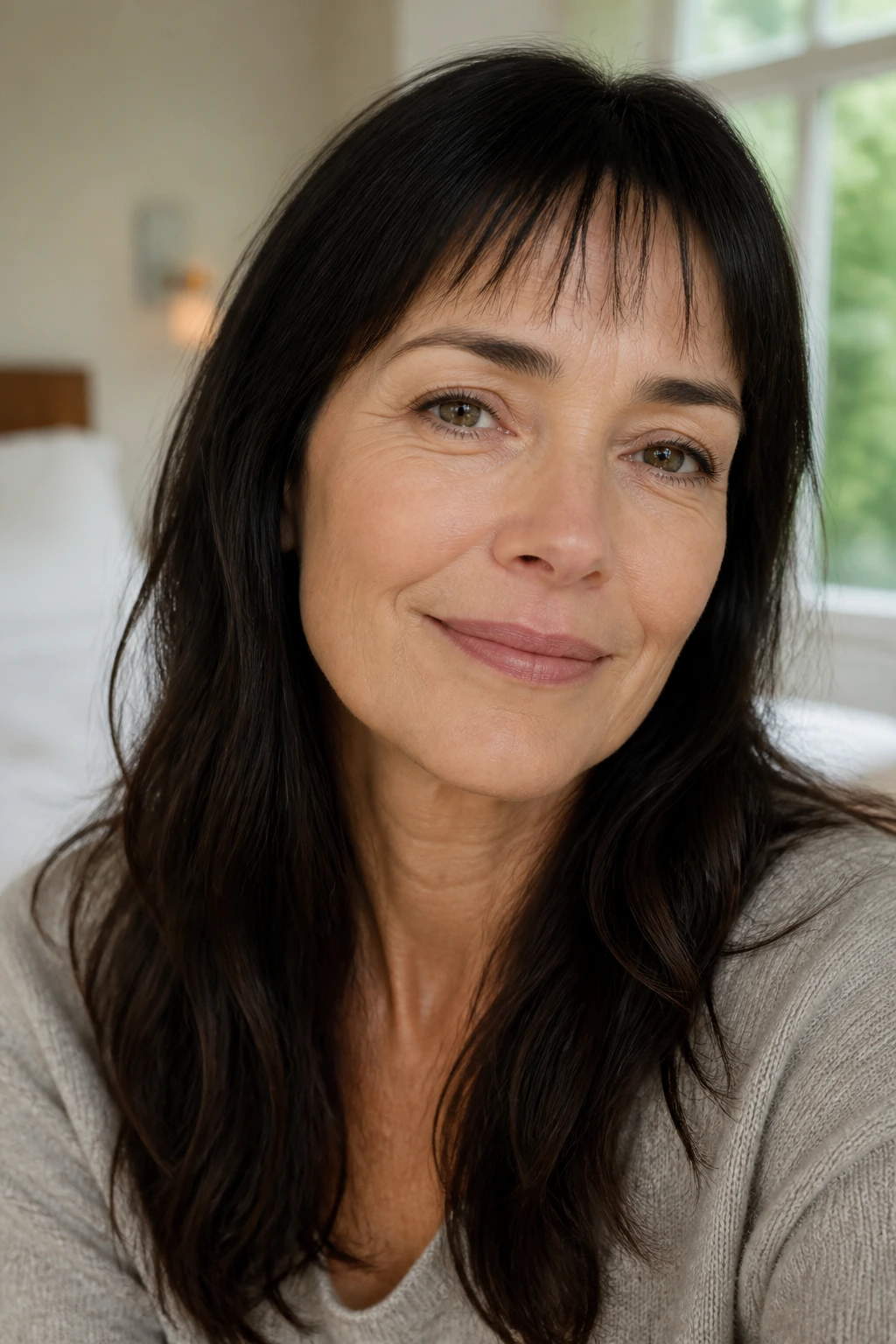
Tiny bangs are not the obvious choice for a round face, and that is exactly why they can work. When they are cut softly and left a little shattered at the ends, wispy micro bangs create a small, sharp break in the face shape without adding width.
They are not for everyone. Let’s be honest. If you want to hide your forehead or avoid regular trims, skip them. But if you like a little edge and you already wear strong brows, a short airy fringe can look clean and modern. The key is keeping them soft, never blocky.
On a round face over 40, I would avoid a thick, dense micro fringe. That can make the face feel shorter. A lighter version opens space around the eyes and keeps the cut from getting too hard. It is a small detail, but it changes everything.
One more thing: this style is happiest on straight or slightly wavy hair. Strong curls can make the shape jump around unless you are willing to style it often.
6. Long Blended Fringe

A long blended fringe is for the person who keeps saying, “I want bangs, but I do not want bangs.” Fair enough. This cut starts around the temples and melts into the rest of the haircut, so the front never looks like a separate little cap sitting on top of your head.
What to Ask For
Tell your stylist you want the fringe to blend into the layers rather than stop in one obvious line. Point cutting helps. So does keeping the ends soft around the cheekbone.
- Ask for a longer starting point at the temples.
- Keep the center only slightly shorter than the sides.
- Make sure the fringe connects to face-framing layers.
This is one of the easiest styles to live with because it can pass as a regular layered haircut on low-effort days. If your bangs need a bit of help, a quick bend with a flat iron is enough. If they need to disappear, they tuck into the rest of the cut without a fight.
For round faces, that blend is useful. It keeps the eye moving downward and outward, which is where you want it.
7. Choppy Textured Bangs
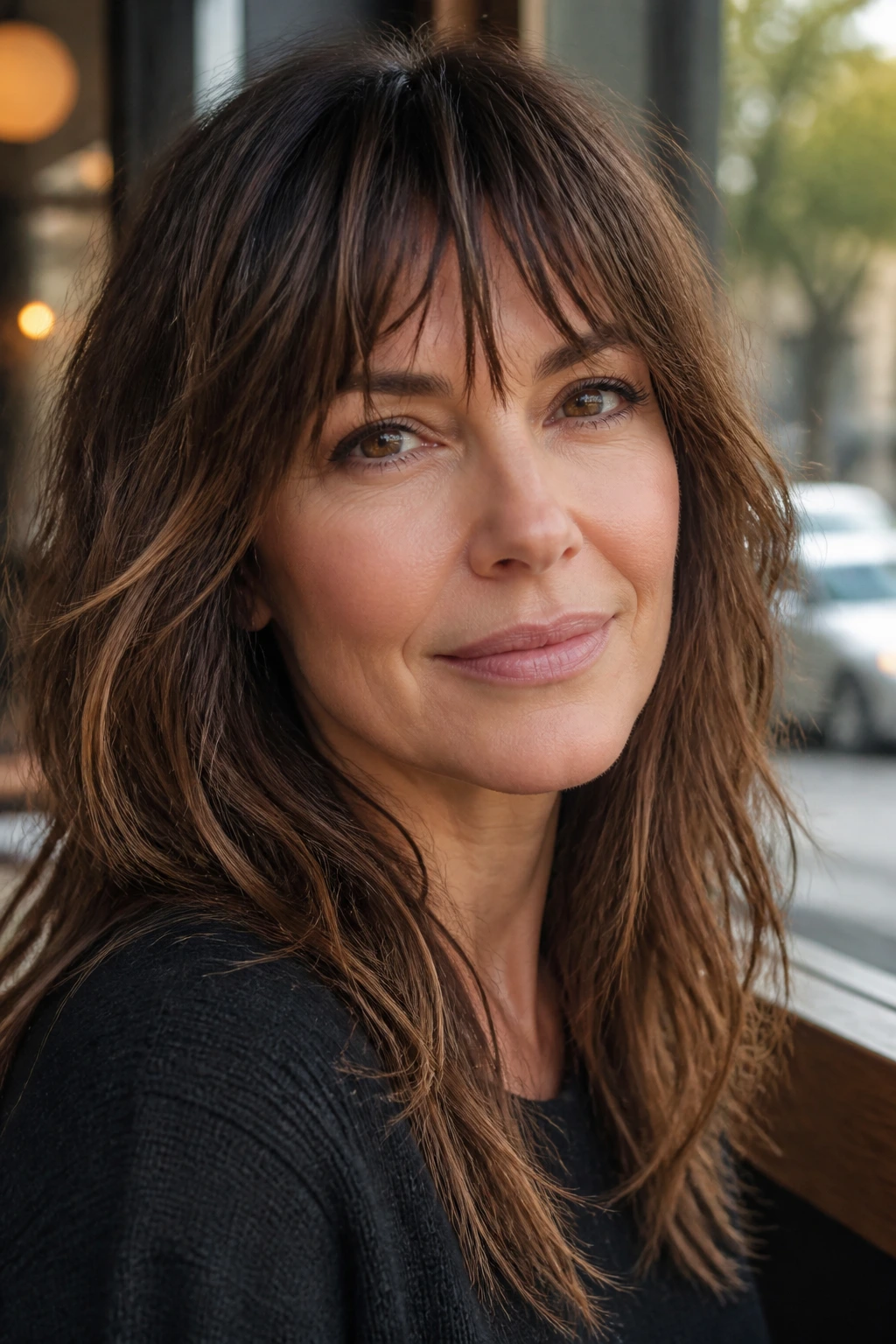
Choppy does not mean sloppy. In fact, on a round face, a little broken texture can be the difference between a bang that flatters and one that just sits there. The uneven ends soften the straight-across line, so the fringe feels lighter and less heavy on the forehead.
These bangs work especially well on wavy hair or on hair that likes to hold a bend. The texture gives the cut some personality, and that matters if your features are already soft. A perfectly smooth, thick fringe can feel too neat. A choppy one has room to breathe.
What They Need to Look Good
A small amount of styling paste or texturizing spray helps separate the pieces. Use too much, and the fringe turns sticky. Use too little, and the cut can look flat by lunchtime.
- Best on medium-density hair.
- Good for anyone who wants a slightly undone finish.
- Easier to refresh than a blunt fringe.
I would skip this style if you want a polished, glossy blowout every single day. It has a little attitude. That is the point.
8. Swoopy Fringe

If your hair naturally falls to one side, lean into it. A swoopy fringe uses that movement instead of fighting it, which is why it looks so easy on a round face. The line curves across the forehead, then slides outward toward the cheek, creating a shape that feels soft but not sleepy.
This is not the same as a heavy side-swept bang. Swoopy fringe usually has more curve and a touch more length, so it can feel airier around the face. That air matters. It keeps the style from stacking too much volume near the cheeks.
I like this one for people who want to soften the face but still see some forehead. It also works nicely if your hair has a slight wave. You do not need a rigid styling routine. A quick blow-dry with a round brush, plus a light mist of flexible spray, is usually enough.
One good cut can save you from twenty minutes of morning wrestling. This is one of those cuts.
9. Piecey Bangs

What makes piecey bangs so easy to wear on a round face? They break the fringe into little sections, so the eye never gets trapped by one heavy horizontal shape. That tiny gap pattern is doing more work than it looks like.
How to Style Them
Piecey bangs usually look best when they are dried with fingers first, then refined with a small round brush only at the roots. After that, a touch of texturizing spray or a matte pomade on the ends creates the separated look.
- Keep the pieces soft, not stringy.
- Use a tiny amount of product.
- Refresh with dry shampoo if the roots fall flat.
These bangs suit straight hair, wavy hair, and slightly coarse hair in different ways. On straight hair, they read crisp. On wavy hair, they look a little more lived-in. On coarse hair, they need a bit more smoothing, or the texture can turn into frizz.
I prefer piecey bangs over overly polished ones when the face is round, because the open spaces stop the forehead from feeling boxed in. They have room in them. That’s the whole point.
10. French-Girl Bangs

French-girl bangs are really just a soft, fuller fringe with a little attitude. They usually sit near the brows, carry some texture, and never look like they were ironed into place for a school photo. That loose quality is what makes them interesting on round faces.
The style works because it keeps the front of the haircut present without making the face wider. You still get the line across the forehead, but the ends are broken enough that the shape feels airy. The fringe can be a little imperfect. It should be.
I would not recommend a heavy, thick version of this on a very round face unless the rest of the haircut has serious movement. A soft bob, loose layers, or a shag helps balance it out. Without that, the bangs can sit too squarely on the face.
If you have fine hair, ask for a lighter density and a softer edge. Otherwise the cut can fall flat and lose the lived-in feel that makes it work in the first place.
11. Layered Side Fringe
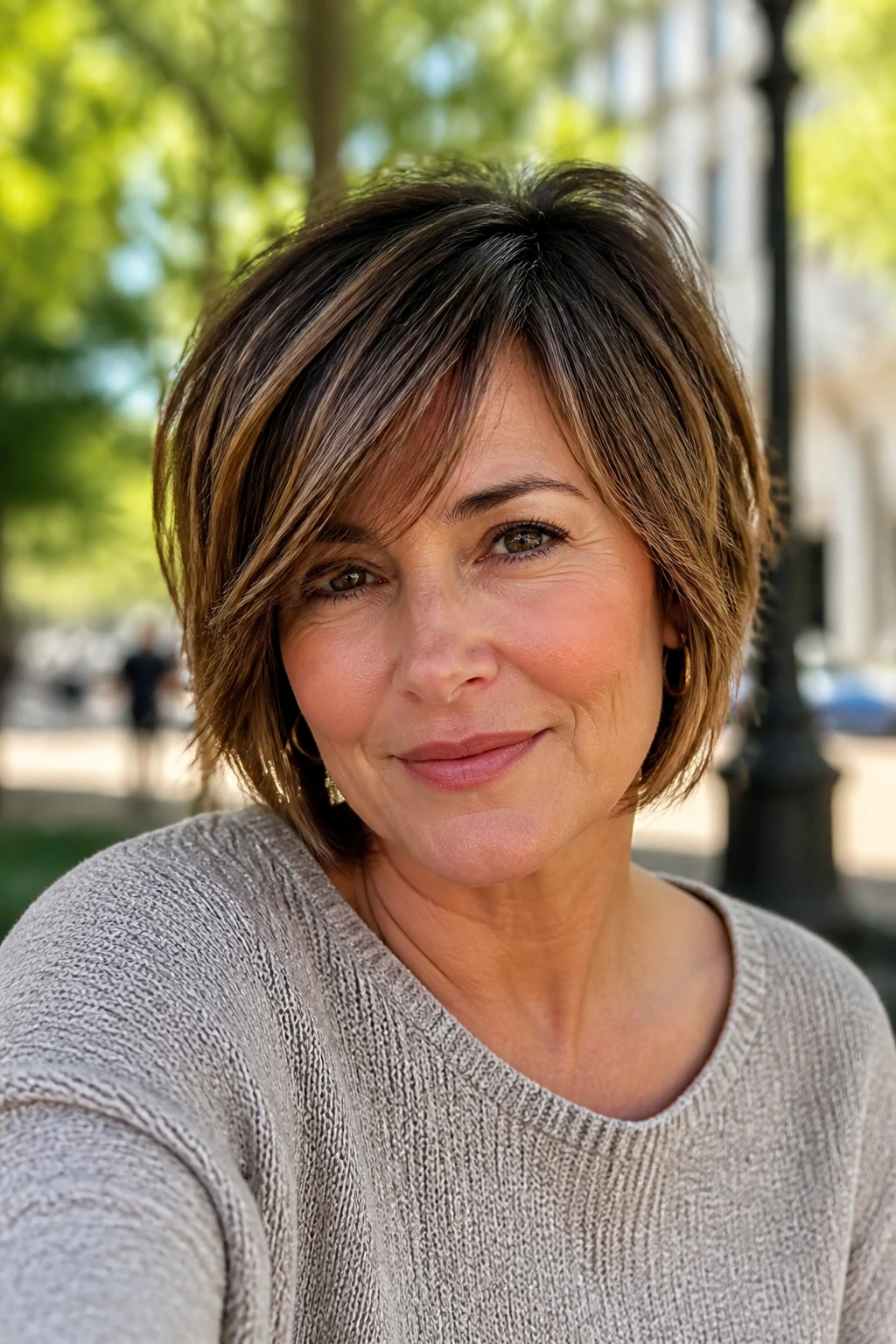
This is the bang style for the person who still wants to throw her hair into a ponytail and not think about it again. A layered side fringe blends into the haircut so well that it does not announce itself every morning. It just helps.
The shape usually starts around the temple and drops toward the cheekbone in a soft sweep. Because the fringe is layered, it does not act like one solid curtain. That makes the face look longer and keeps the cut from crowding the middle of the face.
I like this option for someone whose hair grows fast or whose schedule does not leave room for constant trim appointments. It forgives a little grow-out. It also plays nicely with layered lobs and shoulder-length cuts, which is a sweet spot for a lot of women over 40.
If you ask for anything, ask for connection. The fringe should flow into the rest of the haircut, not feel pasted on top of it.
12. Crescent Bangs
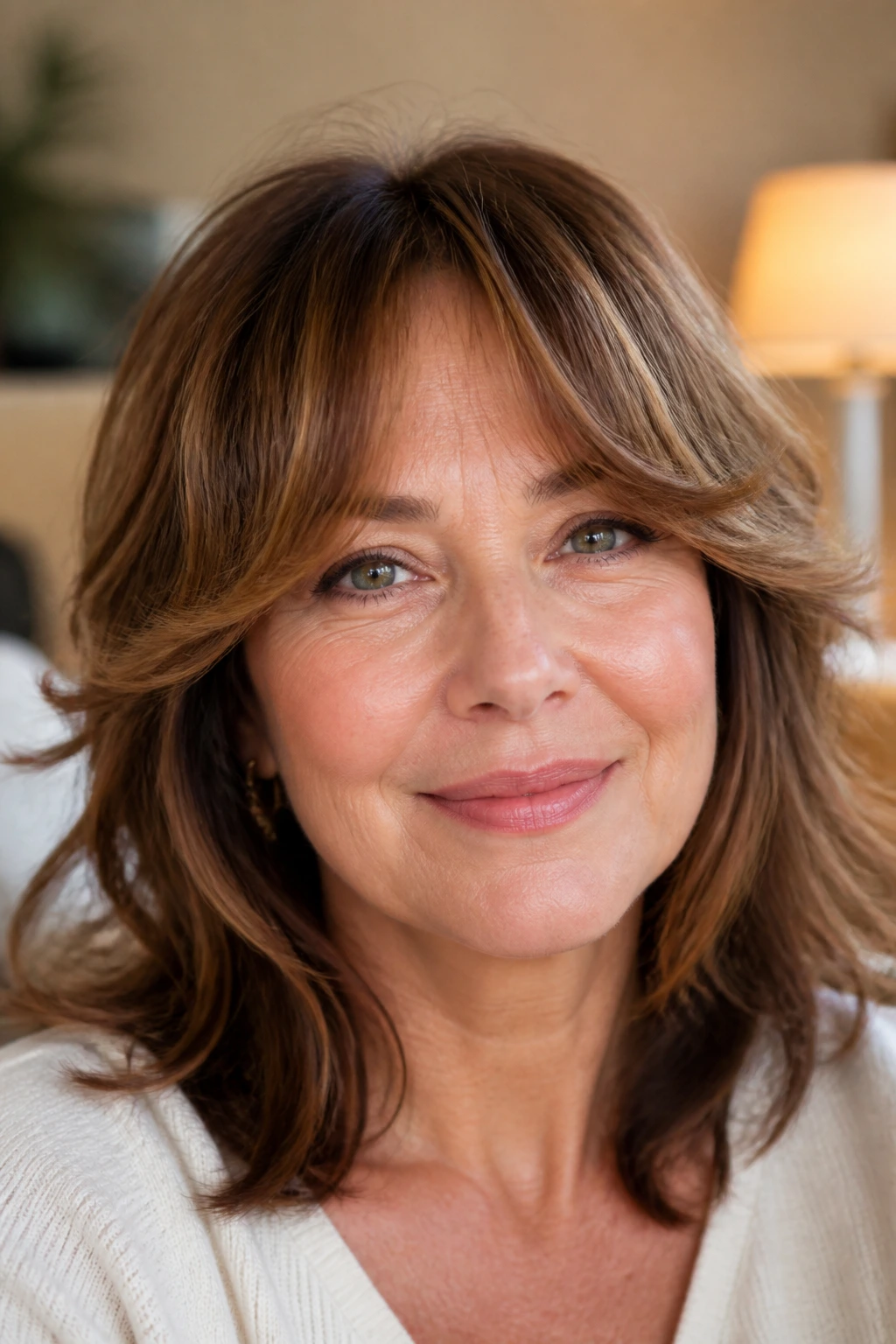
Crescent bangs are underrated on round faces. The shape curves gently, which sounds like it would mimic roundness, but the longer sides actually pull the eye outward and upward. That little bit of lift is what keeps them from feeling too circular.
They usually work best when the center is soft and the sides are longer, almost like a shallow arc across the forehead. The effect is elegant without being stiff. You get coverage at the front, movement at the sides, and a shape that feels a little more polished than curtain bangs.
This cut is especially good if your face has soft cheeks and a smaller chin. The curve keeps the front from getting too blunt, which matters a lot if your features are already gentle. It can also help frame the eyes in a way that feels flattering without being fussy.
One caution: crescent bangs need a clean trim line. If they grow too uneven, the curve turns messy fast. Keep them neat, and they look expensive even when the rest of the haircut is simple.
13. Soft Blunt Bangs

Blunt bangs can work on a round face. There, I said it.
The mistake is making them too thick, too heavy, or too straight. A softer version that skims the brows and has a bit of texture at the ends can frame the face without making it look wider. The key is restraint. You want presence, not a wall.
On hair over 40, soft blunt bangs can bring focus to the eyes and cheekbones, especially if the rest of the cut has movement around the jaw. They look best when the fringe is dense enough to feel deliberate, but not so dense that it blocks the forehead entirely. That middle ground is the sweet spot.
I would avoid this cut if your hair is very fine and sparse at the front. It can look stringy. But on medium-density hair, especially with a clean brow line, it can look chic in a way that feels straightforward and mature.
One good trim can make all the difference.
14. See-Through Bangs

See-through bangs are all about restraint. The fringe is light enough that you can still see pieces of forehead behind it, which helps a round face avoid that boxed-in feeling. The whole look is softer than a full fringe and less committed than a heavy curtain.
The Restraint Matters
The mistake here is trying to make them too full. If the bangs are packed with too much hair, they stop being see-through and start looking thin in the wrong way. You want airy, not sparse.
They work well on fine to medium hair and on people who do not want to spend ten minutes every morning coaxing the fringe into place. A quick blow-dry and a touch of root lift usually do it. If the hair tends to separate on its own, that separation can actually help the style.
This is a nice option for round faces because it softens the forehead without adding weight at the cheeks. It gives you a little motion near the eyes, which is where bangs often do their best work anyway.
If your hairline is very strong or your cowlick is stubborn, ask for a slightly longer version. Short see-through bangs can turn fussy fast.
15. Long Curtain Bangs with Layers

Long curtain bangs with layers are a smart move if you want the framing effect but need more length around the face. The bangs usually start high enough to feel intentional, then drop into layers that hit near the cheekbone, jaw, or even lower.
Best Details to Request
Ask for the shortest point to sit in the center, then let the sides get longer and blend into the haircut. The layers should not stop abruptly. They should melt.
- Keep the center soft and narrow.
- Let the longest pieces graze the cheekbone or jaw.
- Ask for internal texturing if your hair is thick.
This style is useful on round faces because it stretches the face visually. Long lines do that. They are calm, almost understated, but they quietly change the whole shape of the haircut.
I also like how forgiving it is. If you pin the front back, the layers still work. If you wear it down, the fringe gives shape. That flexibility is worth a lot when you do not want a high-maintenance bang.
16. Diagonal Bangs

Diagonal bangs are the quiet cousin of side-swept fringe. The difference is that the line often feels a touch sharper, so the style reads more polished and a little more deliberate. On a round face, that diagonal is useful because it pulls the eye off the widest part of the cheeks.
This style is especially nice when you want the haircut to look tidy without feeling stiff. The angle can start near one eyebrow and fall toward the opposite temple, or it can be a softer slant that blends into side layers. Either way, it creates direction. Direction matters.
I find diagonal bangs work well with shoulder-length hair and with bobs that have some movement through the ends. If the rest of the haircut is flat, the fringe can feel disconnected. If the haircut has shape, the diagonal line looks intentional.
A little note for glasses wearers: make sure the longest piece clears the frame line. Otherwise the fringe can feel crowded, and nobody needs that.
17. Shag Bangs
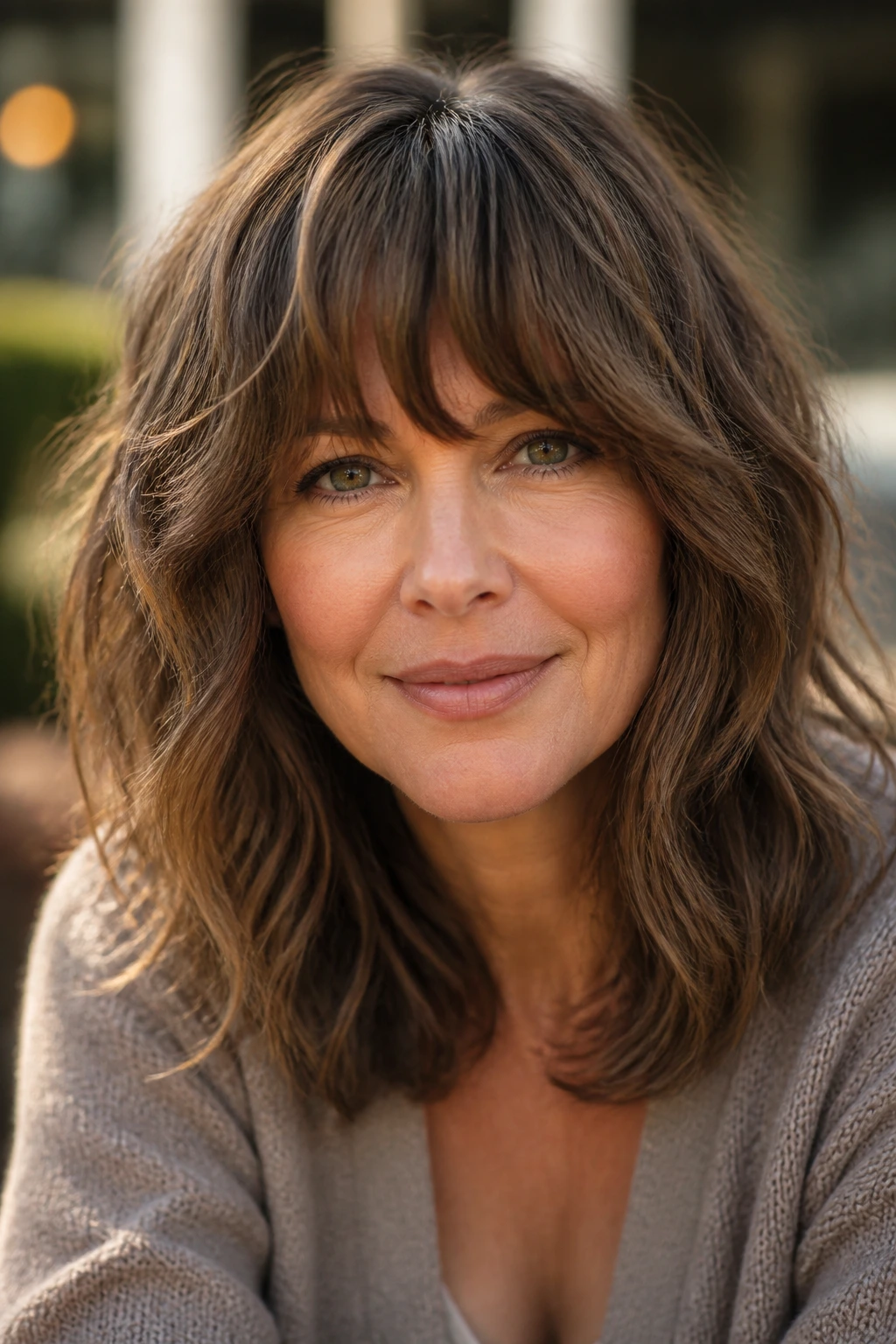
There is a reason shag cuts keep coming back. They understand round faces. The bangs are usually broken up, airy, and connected to the rest of the layers, which means they do not sit like a hard line across the forehead.
Shag bangs work because the whole haircut shares the same energy. The fringe is not doing all the work alone. The layers around the crown and cheeks help stretch the face and keep the shape from feeling too sweet or too round.
If your hair has wave, this is a strong option. A little scrunching, a little diffuser work, and the bangs fall into place with minimal fuss. Straight hair can wear a shag too, but it usually needs more texturing so the fringe does not collapse.
I would call this style relaxed, but not lazy. There is a difference. It should look like the hair has movement on purpose.
18. Sweep-Over Bangs

Sweep-over bangs are softer than a classic side-swept fringe and a little more dramatic in motion. The hair is directed across the forehead, then lifted and released so it falls with a curve rather than a straight slide. That movement helps a round face look longer and less wide.
If you have a cowlick or a strong natural part, this style can save you a lot of frustration. You are not trying to force the hair into the wrong direction. You are guiding it where it already wants to go, then refining the shape with a brush and a bit of styling cream.
I like sweep-over bangs for someone who wants a romantic feel without a lot of forehead coverage. The style lets some skin show through, but not so much that the front feels empty. It also grows out gracefully, which is a real bonus.
Fighting your hair all morning is exhausting. This cut asks for cooperation instead.
19. Face-Framing Fringe
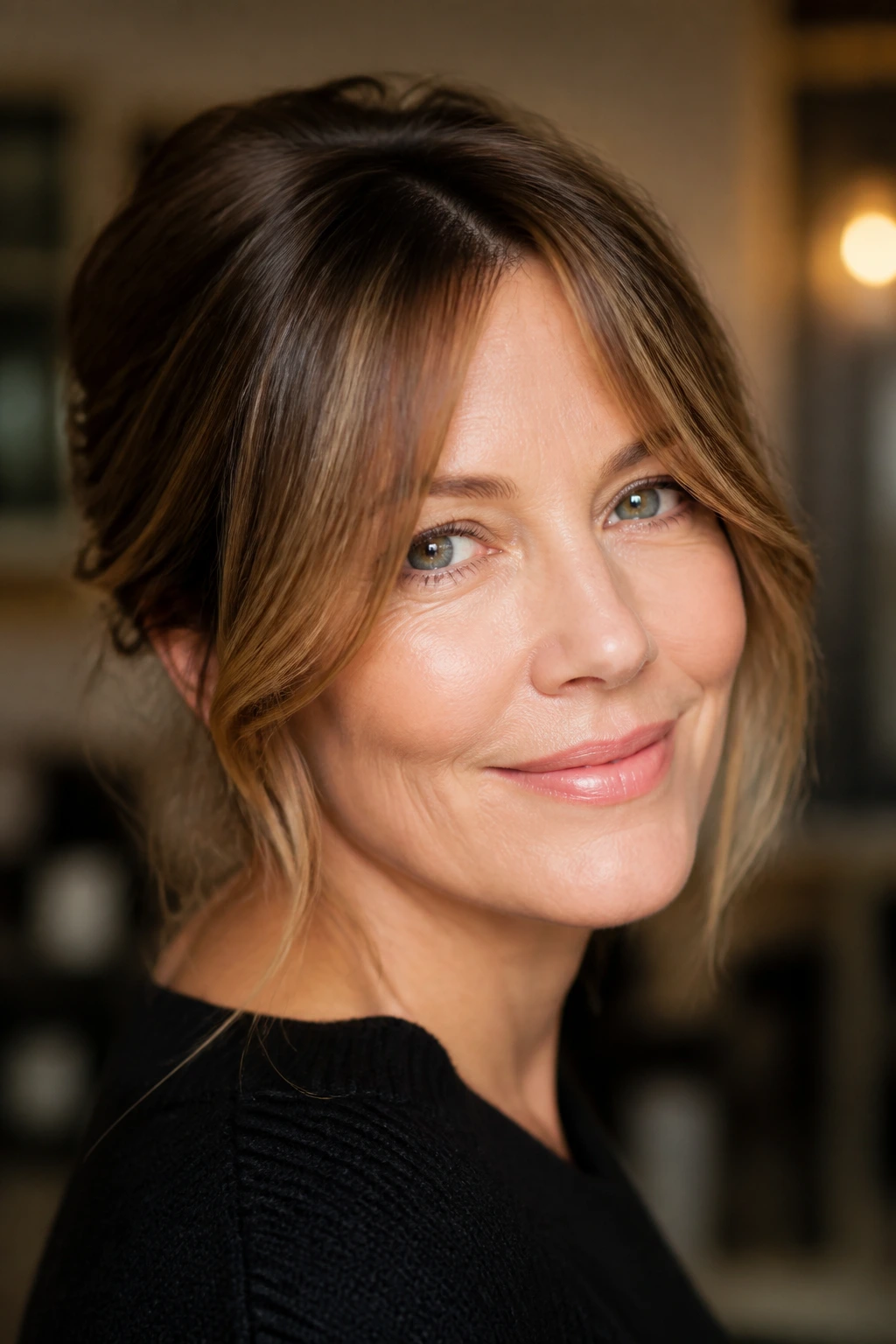
Face-framing fringe is a good option when you want the effect of bangs without a full fringe at all. The front pieces start around the temples and land around the cheekbones or jaw, creating soft lines that steer the eye vertically instead of across the cheeks.
Why It Matters More Than the Front Edge
A lot of people focus on the center of the forehead. I think the sides matter more. The side pieces are what change the shape of a round face, because they interrupt the width where it counts.
This style is especially kind to curly and wavy hair. The pieces can dry in their own direction and still look intentional. On straight hair, a quick bend at the ends is enough. It also works well if you wear your hair half-up, since the front pieces still frame the face even when the rest is pulled back.
If you are unsure about actual bangs, start here. It is a softer commitment. Less drama. More flexibility. Sometimes that is exactly what the haircut needs.
20. Brow-Skimming Bangs

Want the eyes to be the main event? Brow-skimming bangs do that well. They sit close to the brow line, which draws attention upward and gives the haircut a clean, focused look.
On a round face, the danger is making them too full. If the fringe is dense and heavy, the face can feel shorter. A lighter version that just brushes the brow keeps the front open enough to stay flattering. That little bit of air is the difference between chic and boxed in.
These bangs are especially flattering when your brows are shaped well and your hair has a little smoothness through the front. If the texture gets frizzy, the line can puff up and lose its neat shape. A smoothing cream or a quick pass with a flat brush helps.
I would not call this low maintenance. It needs regular trims. But the payoff is strong, sharp eye focus without giving up softness around the rest of the face.
21. Split Bangs
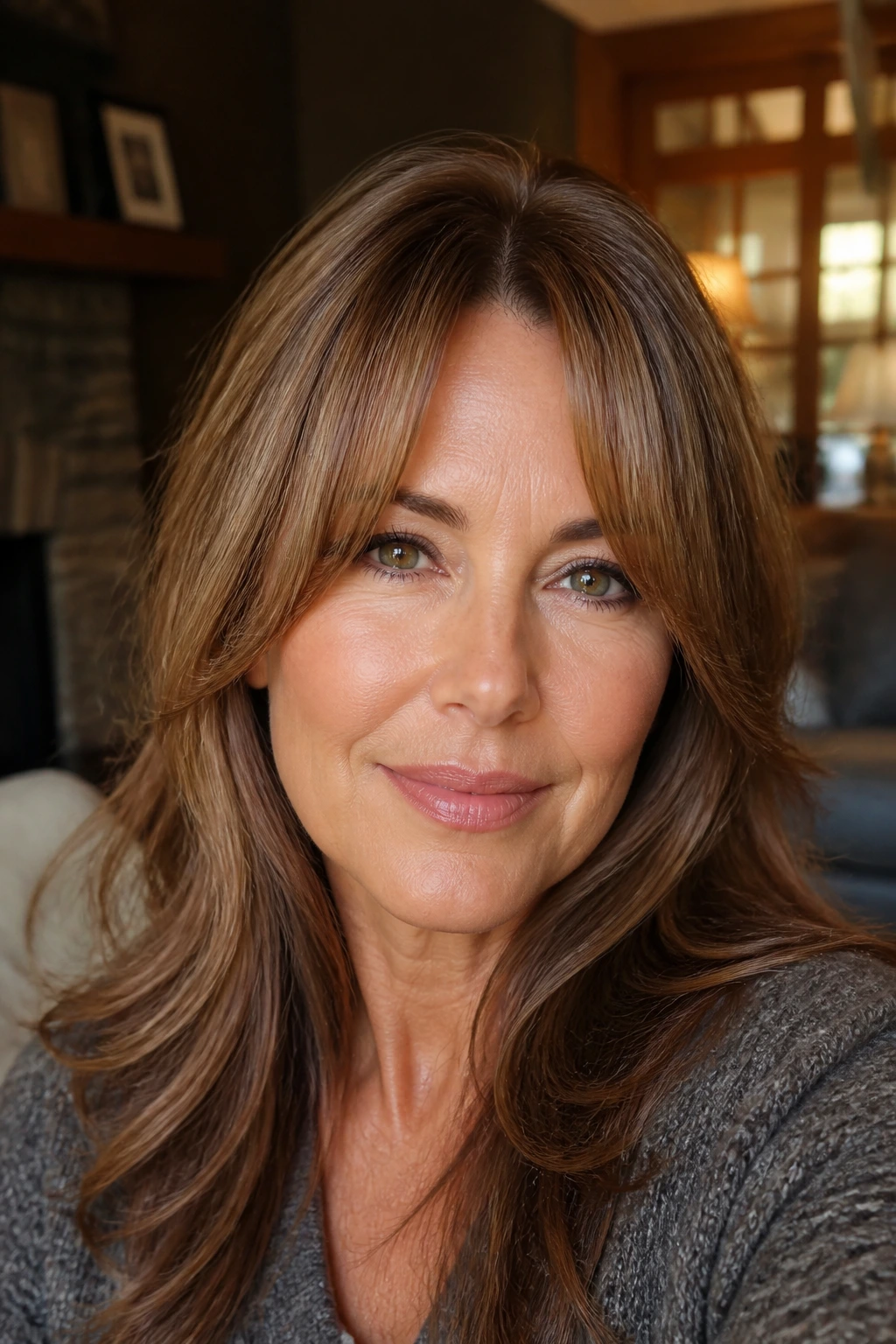
Split bangs are made for people who want space in the center of the face. The fringe parts near the middle or just off-center, then falls to each side in two soft sections. That open gap helps a round face look longer because the eye has somewhere to go besides straight across.
What Makes Them Different
This is not quite the same as curtain bangs. Split bangs are often a little shorter and a little more separated, so the part reads more clearly. That gap at the center gives the style a lighter feel.
- Good for someone who likes a flexible part.
- Works well with wavy or straight hair.
- Easier to pin back than a full fringe.
If you have a stubborn cowlick, this cut can be a blessing. You stop fighting the split and make it part of the style. That’s usually the smarter move. Hair has opinions. You may as well listen.
Round faces benefit because the split opens the forehead and keeps the cheeks from feeling overemphasized. It is simple, but it works.
22. Grown-Out Bangs

Grown-out bangs are not a failure stage if the cut is done well. In fact, on a round face, they can be one of the easiest ways to keep softness around the front without the upkeep of a sharp fringe.
The ideal grown-out bang sits somewhere between the brow and the cheekbone, then melts into the rest of the haircut. It should be long enough to tuck, flip, or pin back when needed. That flexibility makes it useful for women who do not want to feel trapped by a bang appointment every few weeks.
I like this style because it looks deliberate when the cut is good. It does not feel forgotten. It feels relaxed. There is a difference. The front pieces can be swept to the side, split down the center, or worn loose with a bend through the ends.
If you are between bang shapes, this is often the easiest bridge. It gives you softness now and options later.
23. Feathered Tapered Bangs
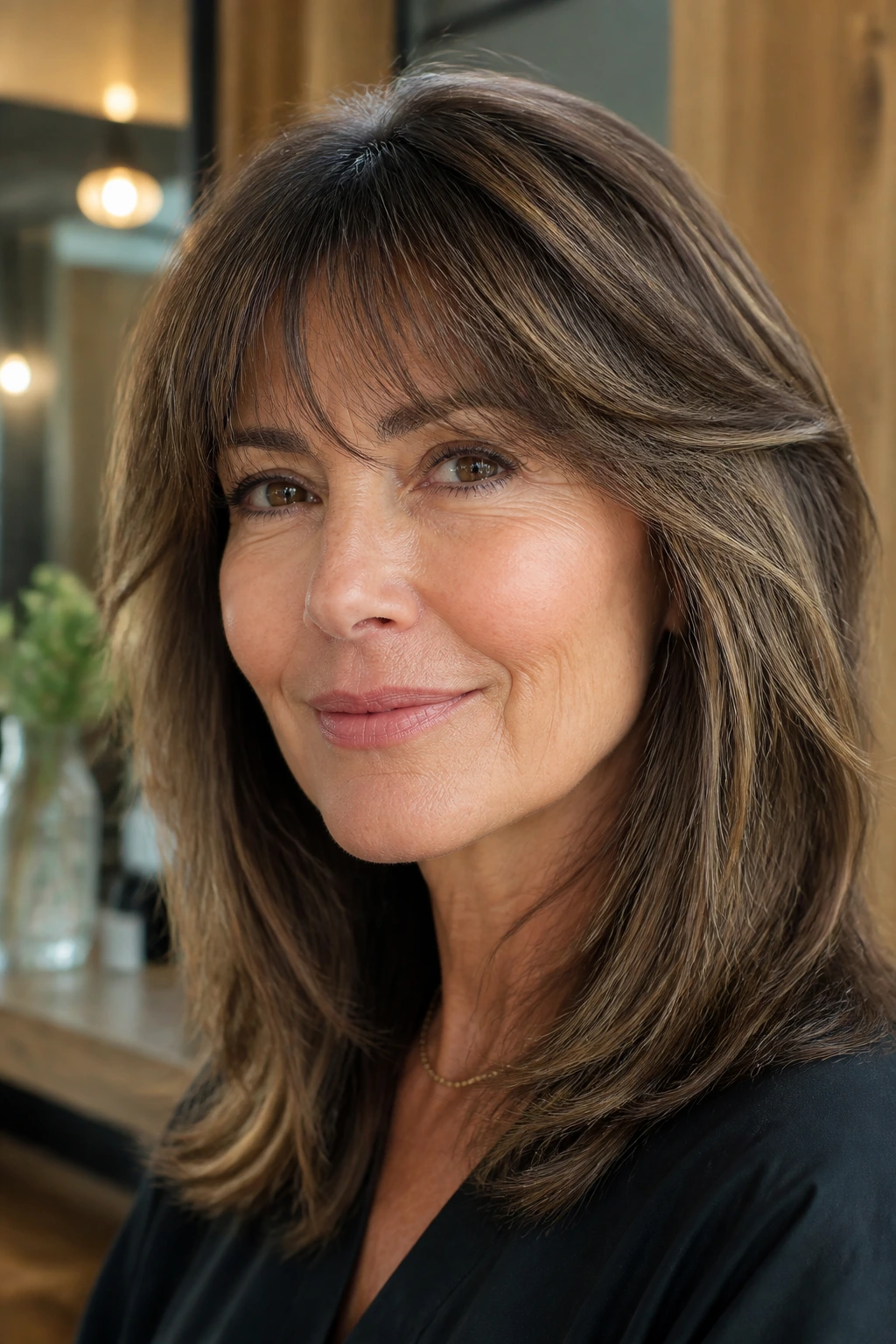
Feathered tapered bangs are one of the smartest choices for thick hair on a round face. The taper removes bulk at the temples and keeps the fringe from sitting like one heavy band across the forehead. The feathering makes the line softer, which helps the face read a little longer.
What makes this cut useful is the shape control. A stylist can thin the edges more than the center, so the bang has a light center of gravity and softer sides. That makes it easier to wear with layers, bobs, and shoulder-length cuts. It also keeps the fringe from taking over the face.
I would not choose this if I wanted a severe, graphic look. It is too airy for that. But if your goal is movement and a softer outline, it is a very good option.
This is the kind of bang that looks better after a little movement. It likes to be touched.
24. Temple-Length Fringe
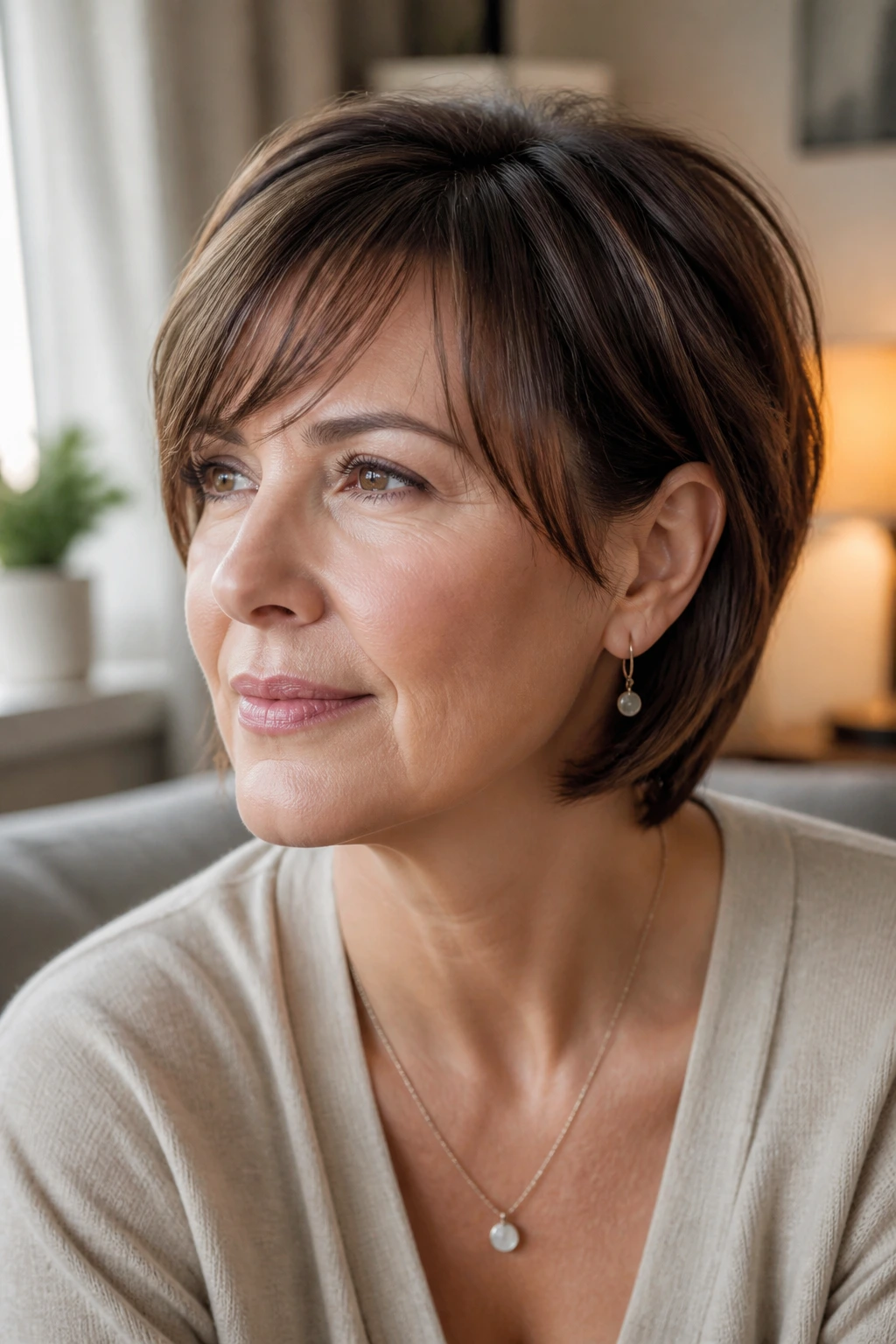
Temple-length fringe is a nice middle ground for people who want bang styling without a true forehead cover. The pieces begin at the temple area and slide down toward the cheekbone, which helps redirect attention away from the width of the cheeks and toward the eyes.
This style is a quiet fix for a lot of face-shape issues. It can help soften a jaw, blend into layered cuts, and make a round face look a little narrower without trying hard. It also works well if you wear your hair up a lot, because the fringe still does something even when the rest of the hair is clipped back.
I especially like it on hair with a little wave or bend. Straight hair can wear it too, but the movement gives the style more shape. Ask for the end pieces to be light and mobile, not all one length.
If you want a fringe that feels grown-up and low-drama, this is a strong choice.
25. Veil Bangs
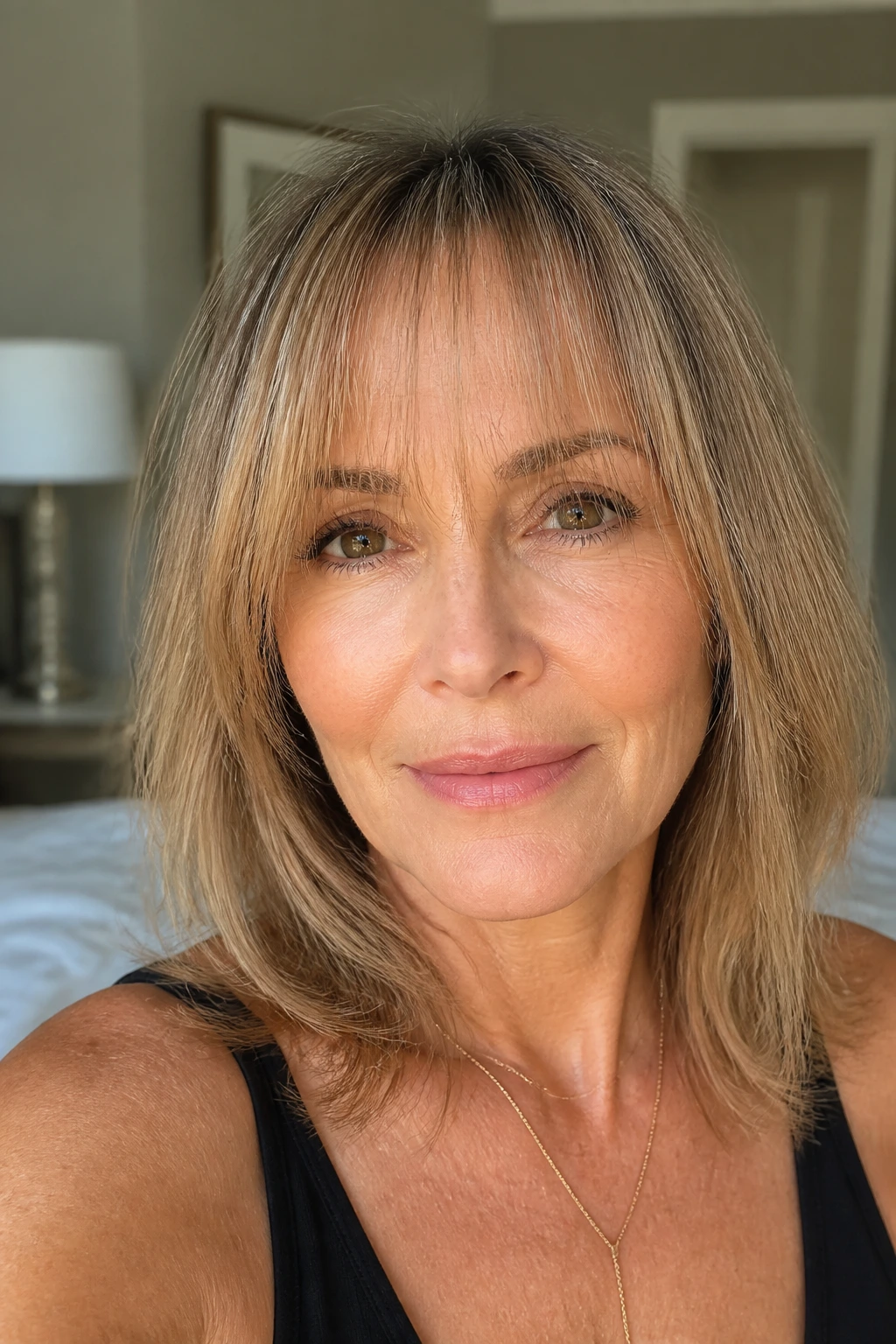
Veil bangs are the softest version of the fringe family. They sit lightly over the forehead, often a little longer than classic curtain bangs, and they let pieces of skin show through. On a round face, that transparency matters because it keeps the front of the haircut from feeling heavy.
I like veil bangs for someone who wants a softer frame around the face and does not want to keep fighting for perfection every morning. They can be parted in the middle, slightly off-center, or even pushed to one side if the mood changes. They grow out with grace, which is a small mercy but a real one.
If you only try one shape from this whole list, I would start here. It is flexible, it suits a lot of hair textures, and it does not box in the face the way denser bangs can. The style leaves room for your features to show, which is often the point after 40 anyway — not hiding, just shaping.
And if you are still on the fence, that is usually the clue. Start soft. You can always go fuller later.
