



A haircut can look sharp in the chair and limp by lunch. Medium short hair cuts with curtain bangs sit in that awkward, useful middle ground where the shape still moves, the length still tucks behind your ear, and you do not have to commit to a full short cut with a hard edge.
That middle ground is why these cuts keep hanging around. They work on straight hair that wants to fall flat, on waves that need a little direction, and on thicker hair that needs the bulk broken up before it turns into a helmet. The fringe matters too. Curtain bangs are at their strongest when the shortest point lands around the cheekbone or upper lip, not too high on the forehead, because then the whole face frame looks intentional instead of choppy.
I like these cuts for one simple reason: they do shape work without looking overworked. A blunt line can feel chic, sure, but it can also feel rigid if your hair has any bend at all. Curtain bangs soften that. They break up a solid perimeter, flatter a lot of face shapes, and give you something to do with your front sections on lazy mornings when a full blowout feels like a bad joke.
The 15 cuts below lean into different textures, densities, and moods. Some are polished. Some are a little shaggy. A few are built for thick hair that refuses to sit still, and a few are kinder to finer strands that need every bit of help they can get.
1. Blunt Collarbone Lob With Curtain Bangs
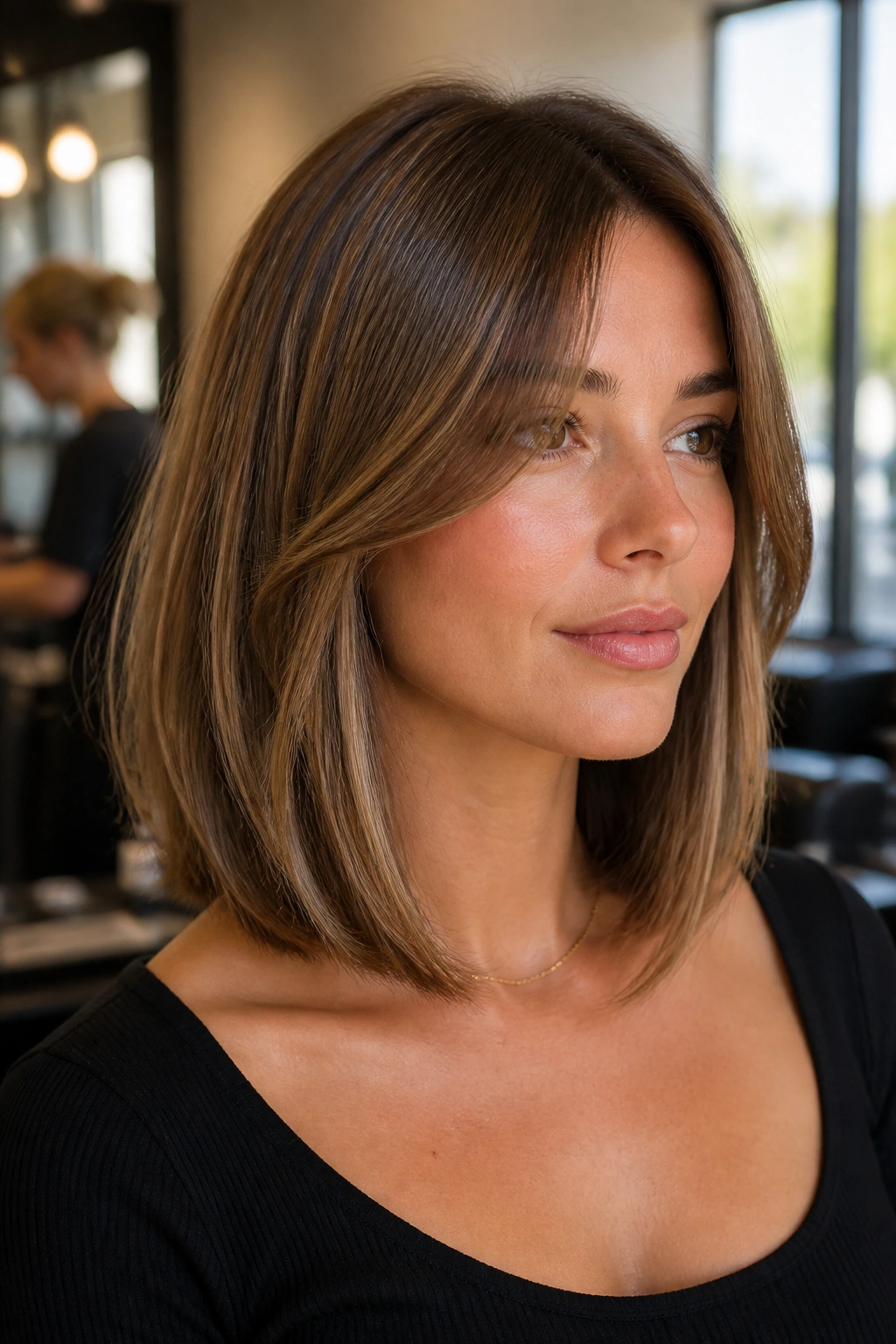
A blunt collarbone lob is the cleanest way to wear curtain bangs without making the whole haircut feel busy. The length sits just at or a touch below the collarbone, which gives the bangs a solid base to fall into. If the cut is too short, the fringe can take over. Here, it balances things out.
Why It Feels So Polished
The blunt edge keeps the outline strong, and that matters when you want the bangs to be the soft part of the cut. The contrast is what makes it work. You get a sleek perimeter in back and sides, then those parted front pieces break the line just enough to keep it from feeling severe.
For styling, this cut likes a round brush or a medium barrel brush through the bangs and a quick bend on the ends of the lob. You do not need a perfect curl. A slight underflip is enough. The whole point is that the haircut does some of the work before your tools even show up.
- Ask for the length to land at the collarbone or 1 inch below it.
- Keep the curtain bangs longer at the temples so they melt into the sides.
- Use a 1.25-inch round brush to bend the front pieces away from the face.
- Finish with a light mist of flexible hairspray, not a stiff shell.
Tip: if your hair flips out at the ends, ask for a tiny internal bevel instead of more layering. That keeps the line clean.
2. Soft Layered Lob With Cheekbone Curtain Bangs
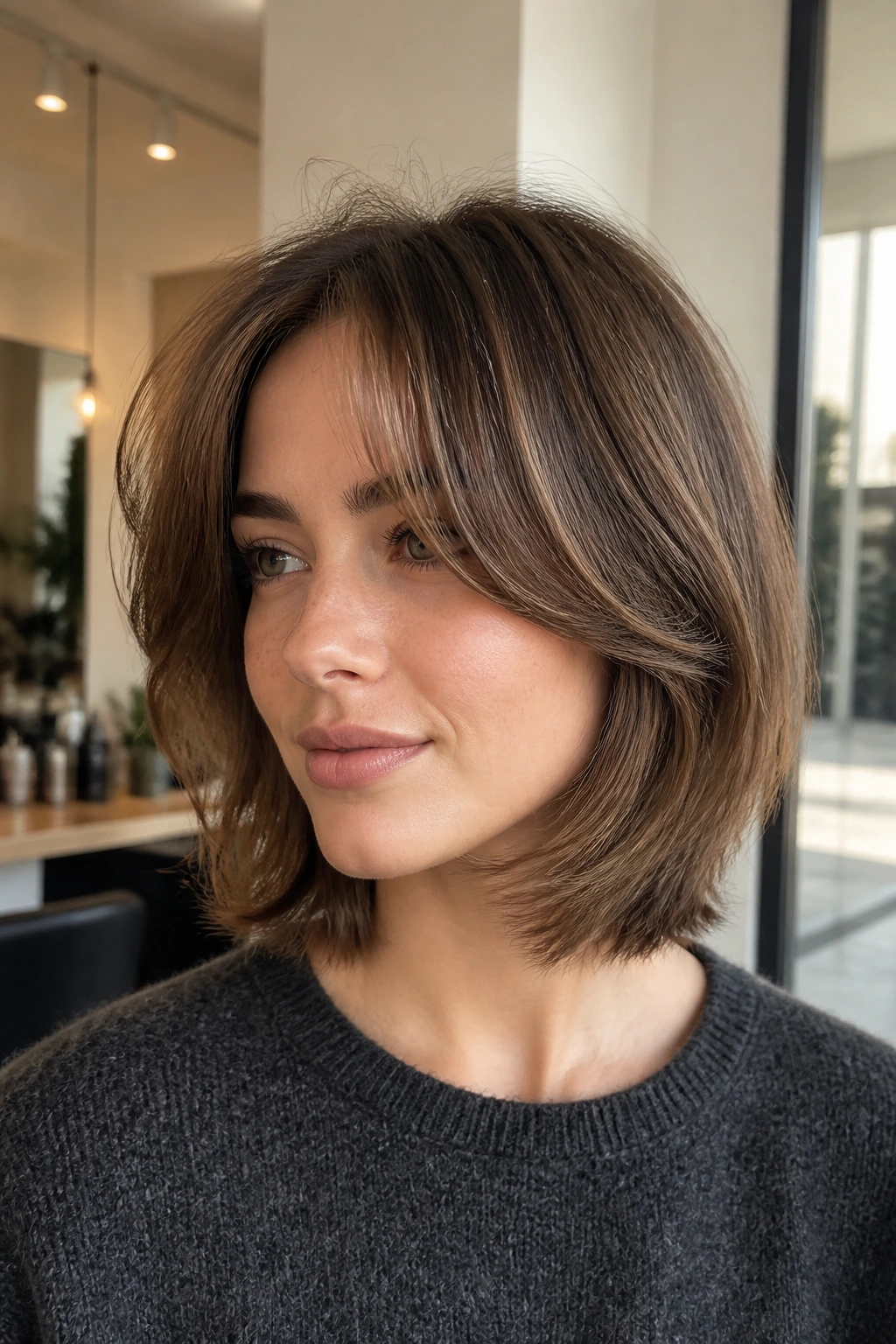
This is the haircut I recommend when someone says they want movement but does not want to look like they got “layers” on purpose. The soft layered lob gives you lift through the mid-lengths, so the curtain bangs do not have to carry the entire shape on their own. Everything feels easy, but not lazy.
The trick is in the spacing of the layers. You want them light enough to stop the ends from feeling heavy, yet not so short that the haircut starts kicking out in weird places. Cheekbone-length curtain bangs are the sweet spot here because they frame the face without cutting off the rest of the shape.
I like this cut on hair that has a bit of bend. Straight hair can wear it, too, but it benefits from a quick blow-dry with a little root lift. Use a mousse at the crown, then dry the bangs side to side before splitting them. That gives the fringe a softer fall and keeps the part from looking carved in.
For people who wear their hair down most of the time, this is one of the more forgiving medium short hair cuts with curtain bangs. It looks good when polished, and it does not fall apart when you skip a day of styling. That is worth something.
3. French Bob Grow-Out With Curtain Bangs
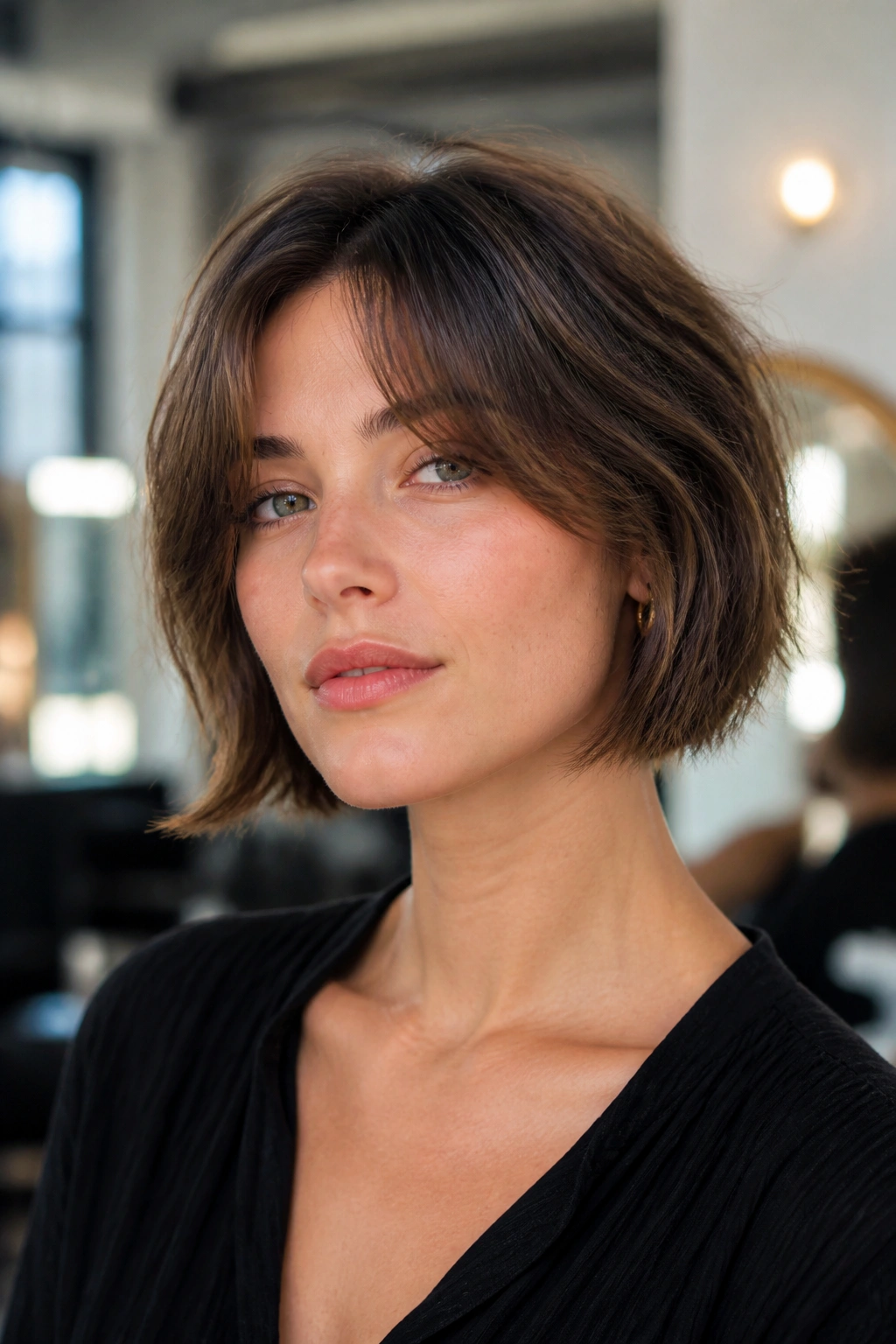
Why do French bob grow-outs look so good with curtain bangs? Because the shape already has attitude, and the fringe keeps it from feeling too blunt around the face. Once the bob starts brushing the jaw or the top of the neck, the cut gains a little swing, which makes the parted bangs feel natural instead of pasted on.
The best version keeps the perimeter just long enough to tuck under the chin or skim it. That gives the front pieces somewhere to land. If the bob is too short, curtain bangs can start fighting with the line of the cut. If it is too long, you lose the charm and end up closer to a lob.
How to Wear It
Dry the bangs first, then use the rest of the hair to build the shape. A small round brush, about 1 inch across, helps the front pieces bend out and away from the face. The body of the bob can stay a little messy. In fact, it often looks better that way.
- Best for straight to wavy textures.
- Strong on hair that has a little natural volume.
- Looks especially good with a side part that is not dead center.
- Needs trims every 6 to 8 weeks if you want the bob line to stay crisp.
The charm here is that it feels French without trying too hard. That sounds vague, but you know the look when you see it: clean outline, soft front, no fuss.
4. Shoulder-Length Shag With Curtain Bangs
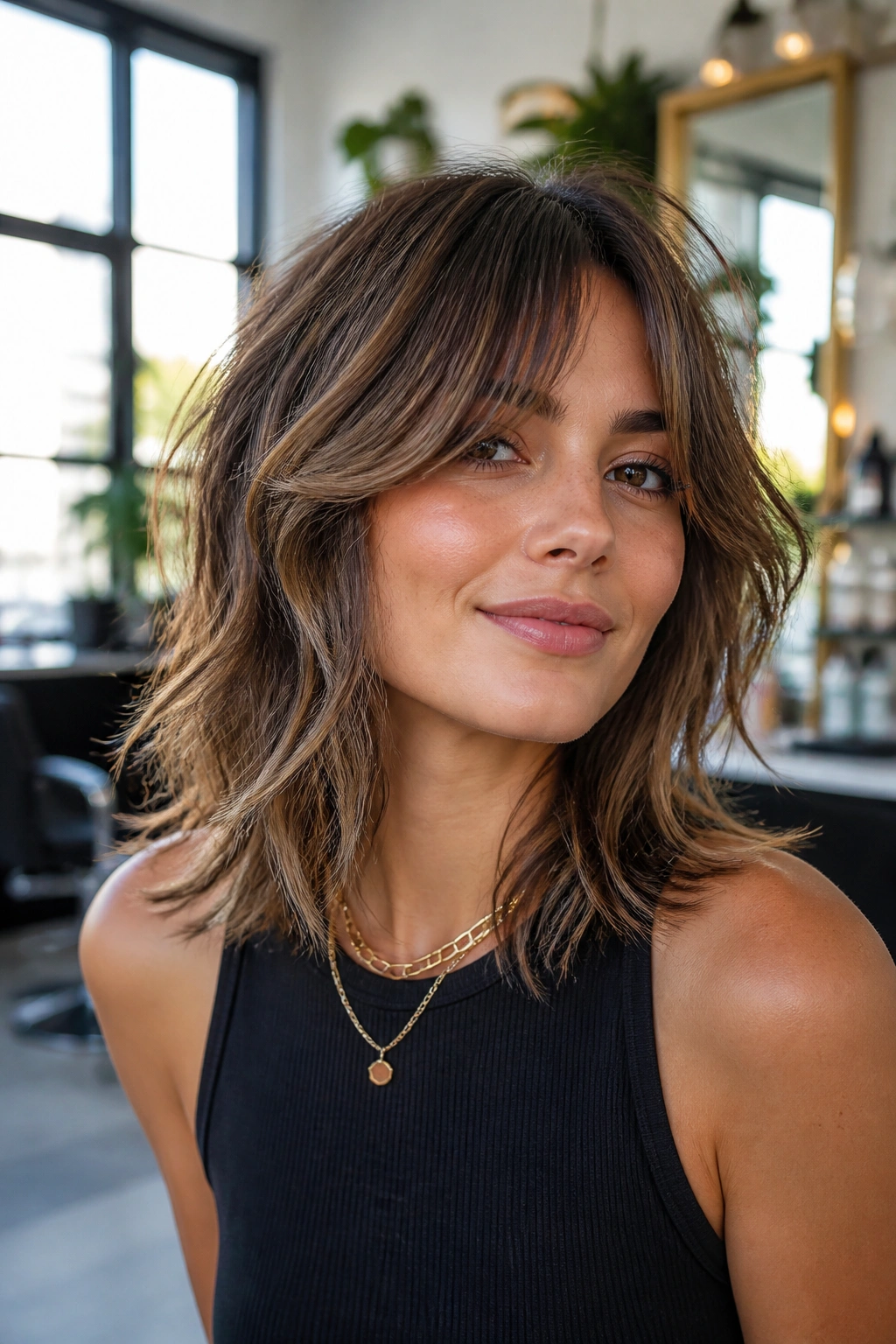
Picture the haircut someone wears after a long day when they have not touched a brush, and it still looks cool. That is the shoulder-length shag with curtain bangs. It has enough edge to feel lived-in, but not so much that it tips into full rock-band territory.
The shag works because the layers are placed to let the hair move around the head instead of hanging in one sheet. The curtain bangs are part of that motion. They connect the face frame to the rest of the cut, so the whole thing reads as one shape, not bangs plus separate hair.
What Makes It Different
- Layers start higher than they would in a lob.
- The ends are lighter, but not wispy.
- The bangs can be blown out smooth or left bendy.
- It likes texture spray more than heavy cream.
A shag like this can be a dream on wavy hair. On very straight hair, it needs a little help to avoid looking flat at the crown. On very thick hair, the interior layering keeps the bulk from building up around the ears. That part matters more than people think.
I would not choose this if you hate mess. It has personality, and personality brings a little maintenance with it. Still, if you want a medium short cut that looks better with movement than with perfection, this one earns its keep.
5. Butterfly Cut For Medium Short Hair With Curtain Bangs

The butterfly cut can sound dramatic, but on medium short hair it is often the least dramatic way to create lift. The layers are built so the top pieces fall around the cheekbones and jaw while the bottom keeps enough length to anchor everything. Add curtain bangs, and the whole haircut starts feeling airy instead of boxy.
What I like most is the way it opens the face without sacrificing structure. The front can feel soft and feathery while the lower section stays fuller. That split personality is useful. You get movement near the face, but the back still has enough weight to sit neatly under a jacket collar or clip into a half-up style without collapsing.
The cut does ask for a little styling discipline. A big round brush or a blow-dry brush helps the top layers curve away from the face, then you can rough-dry the lower lengths and let them fall where they want. If you let everything air-dry with no direction, the layers can separate too much and the shape gets fuzzy.
Still, this is one of those medium short hair cuts with curtain bangs that pays you back if you spend ten minutes on it. Not thirty. Ten. That is the difference between a cut you enjoy and a cut you start resenting.
6. Angled Lob With Long Curtain Bangs
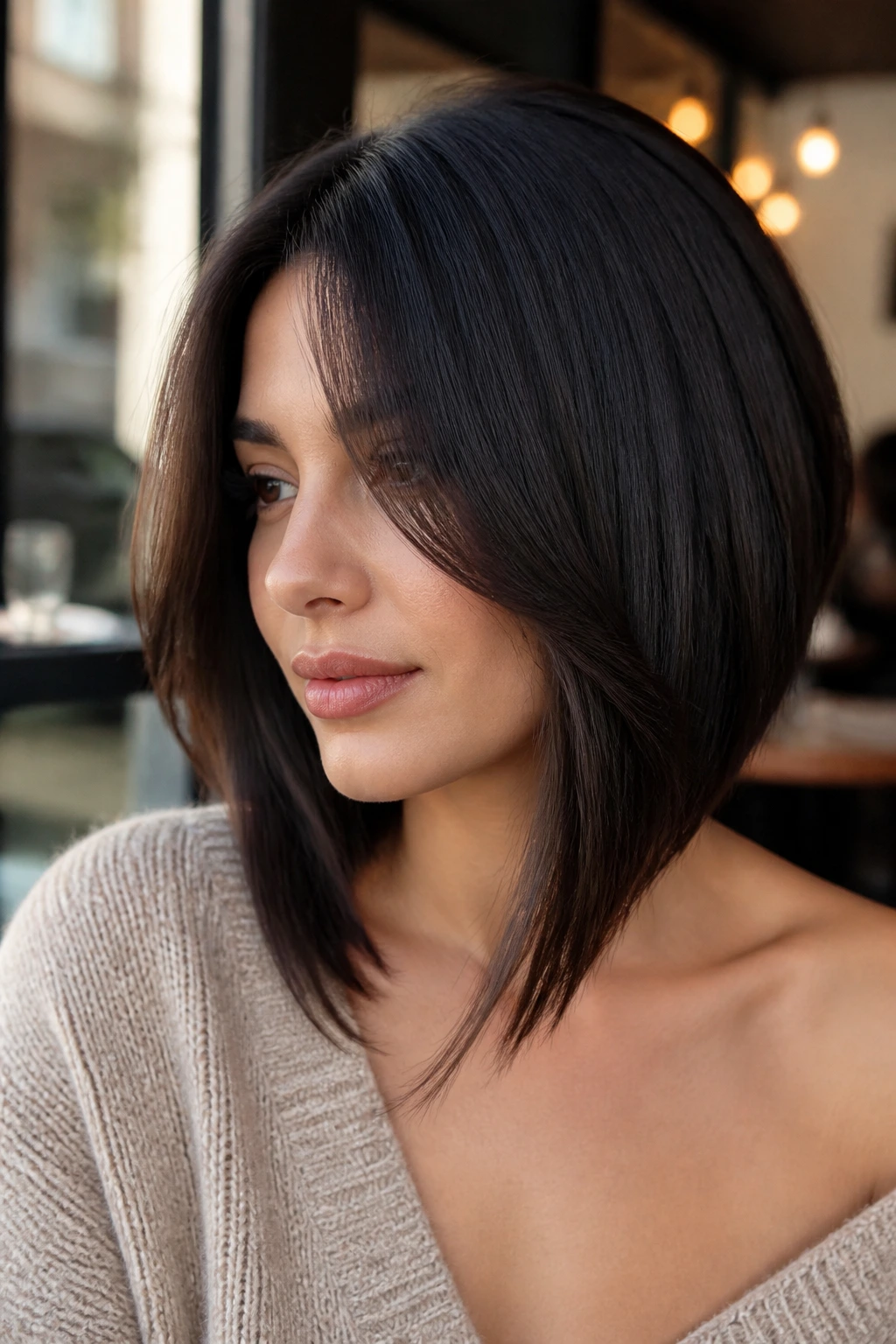
Compared with a straight lob, the angled lob gives the front more length and the back a cleaner rise. That slope changes how curtain bangs sit, because the fringe gets a diagonal partner instead of a blunt wall. If you like a haircut that feels a little sharper, this is the one to watch.
The angle does a lot of quiet work. It elongates the neck, draws the eye down the front, and keeps the bangs from looking too heavy at the cheekbones. Long curtain bangs suit this shape because they can sweep into the longer front pieces instead of stopping abruptly. The result is sleeker than a shag, less rigid than a blunt lob.
This cut is especially good if you wear one side behind your ear a lot. The longer front length gives you that option without wrecking the shape. It also plays nicely with flat irons. A tiny bend through the mid-lengths and a soft turn at the ends is enough.
If you want a haircut that reads neat from the front and a little more dynamic from the side, this is a smart pick. It is not flashy. It just works hard.
7. One-Length Midi Cut With Soft Curtain Bangs

A one-length midi cut sounds plain until you see how much mileage it gets from a good curtain fringe. The body of the haircut stays even from left to right, which gives the style a calm, expensive-looking line. Then the bangs cut a soft opening right through the middle and stop the whole thing from feeling flat.
Why It Suits So Many Hair Types
The one-length perimeter is a friend to fine hair because it keeps the ends looking dense. Thick hair likes it too, as long as the stylist removes bulk underneath so the ends do not puff out. The curtain bangs help both versions by making the top feel lighter without hacking into the full shape.
How to Style It
- Blow-dry the bangs forward first, then split them.
- Use a flat brush on the body if you want a sleeker finish.
- Add a ½-inch bend only at the front if you like a little softness.
- Keep the part loose; a hard center line can make the cut feel severe.
I tend to recommend this style when someone wants a haircut that can move between polished and casual fast. It looks good with a blazer. It also looks good with a tee and damp hair. That range is useful.
8. Choppy Lob With Airy Curtain Bangs

Choppy layers can rescue heavy hair, but they can also make thin hair look see-through if the ends are cut too aggressively. That is the line you need to walk here. A good choppy lob keeps the shape loose and broken up, while the curtain bangs stay soft enough to anchor the front instead of fraying it.
The airy finish is the whole point. The ends should look separated, not shredded. That means the texture lives mostly in the mid-lengths and through the front pieces, where it can frame the face and give the style some lift. If the chop goes too far into the bottom edge, the haircut starts looking unfinished.
This cut likes a salt spray or a light texture spray scrunched through damp hair, then a quick rough-dry with fingers. If you use a heavy cream, the choppiness gets swallowed. If you use too much mousse, the whole thing can go crunchy. Light hand. That is the rule.
I reach for this shape when hair feels bulky at the ends and a blunt cut would sit too solidly on the shoulders. It gives room. It breathes a little.
9. Rounded Midi Cut With Curtain Bangs
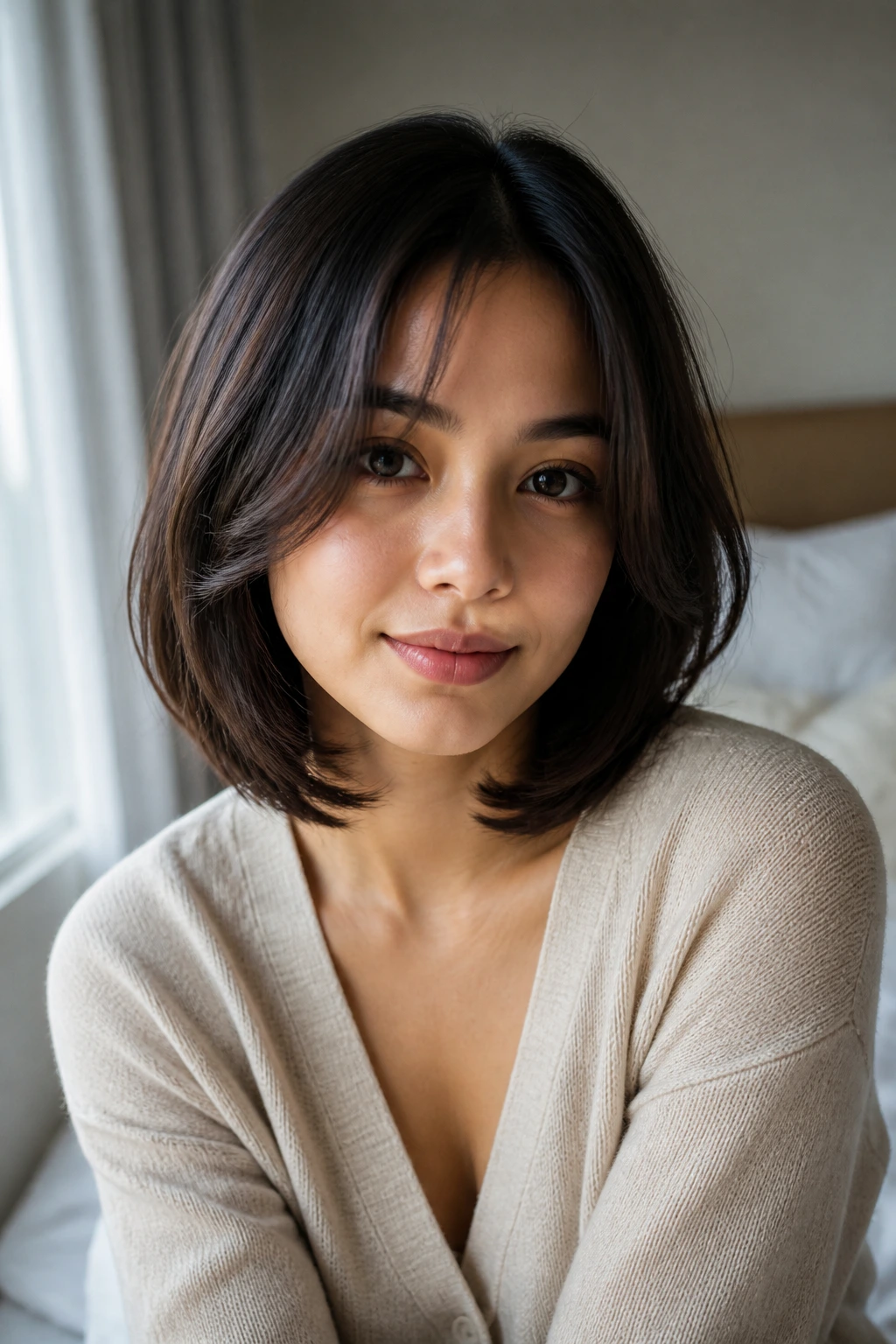
Why does a rounded midi cut feel so soft around the face? Because the perimeter bends inward instead of sitting in a straight line, and that inward curve makes the curtain bangs blend instead of compete. The whole haircut feels cocooned in the best way.
This is a nice option if your hair grows outward at the ends or tends to puff at the sides. The rounded outline reins that in. The bangs then become the transition point between the top and the rest of the length. You get a smooth fold around the cheekbones, which is often more flattering than a hard edge.
How to Ask For It
Ask your stylist to keep the bottom line full but slightly curved, with the longest front pieces grazing the upper chest or collarbone. The bangs should start long enough to part cleanly and drop into the sides without a big gap. A wet cut can help here, but the final shape should be checked dry. Hair lies differently once it settles. Always does.
This cut is calm. That is not a bad thing. If you want a haircut that behaves, air-dries in a reasonable way, and does not scream for attention every morning, the rounded midi is worth a serious look.
10. Deep Side-Part Lob With Sweeping Curtain Bangs
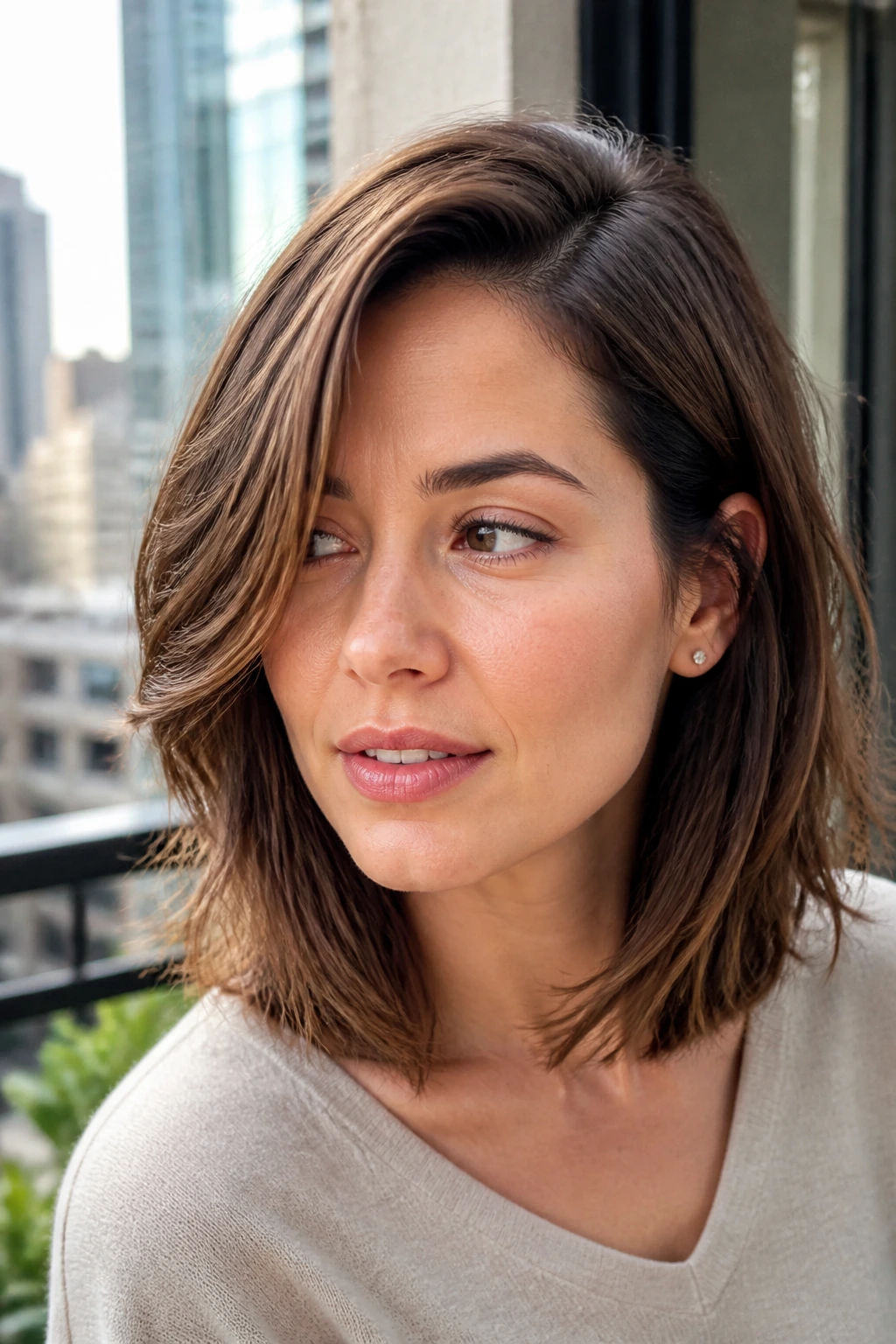
A deep side part changes curtain bangs more than people expect. Instead of a tidy split in the center, you get a sweep that crosses the forehead and melts into the longer front layers. The look is softer on one side and more lifted on the other, which gives the lob a little drama without needing extra length.
I like this on days when the hair needs a reset but you are not ready for anything extreme. The side part creates volume near the crown, and the sweeping fringe makes the forehead area feel intentional rather than just parted away. It is a good move for hair that sits flat at the roots.
The styling note is simple: direct the bangs opposite the part while drying, then flip them back. That little bit of back-and-forth gives the root some memory. A 1.5-inch round brush works well if your hair is thick; a vent brush can be enough if it is finer. Either way, keep the ends soft. A hard curl on this cut would ruin the line.
This is a flattering shape when you want face framing that feels a little more grown-up. Not severe. Just refined in a quiet way.
11. Wavy Mid-Length Cut With Invisible Layers
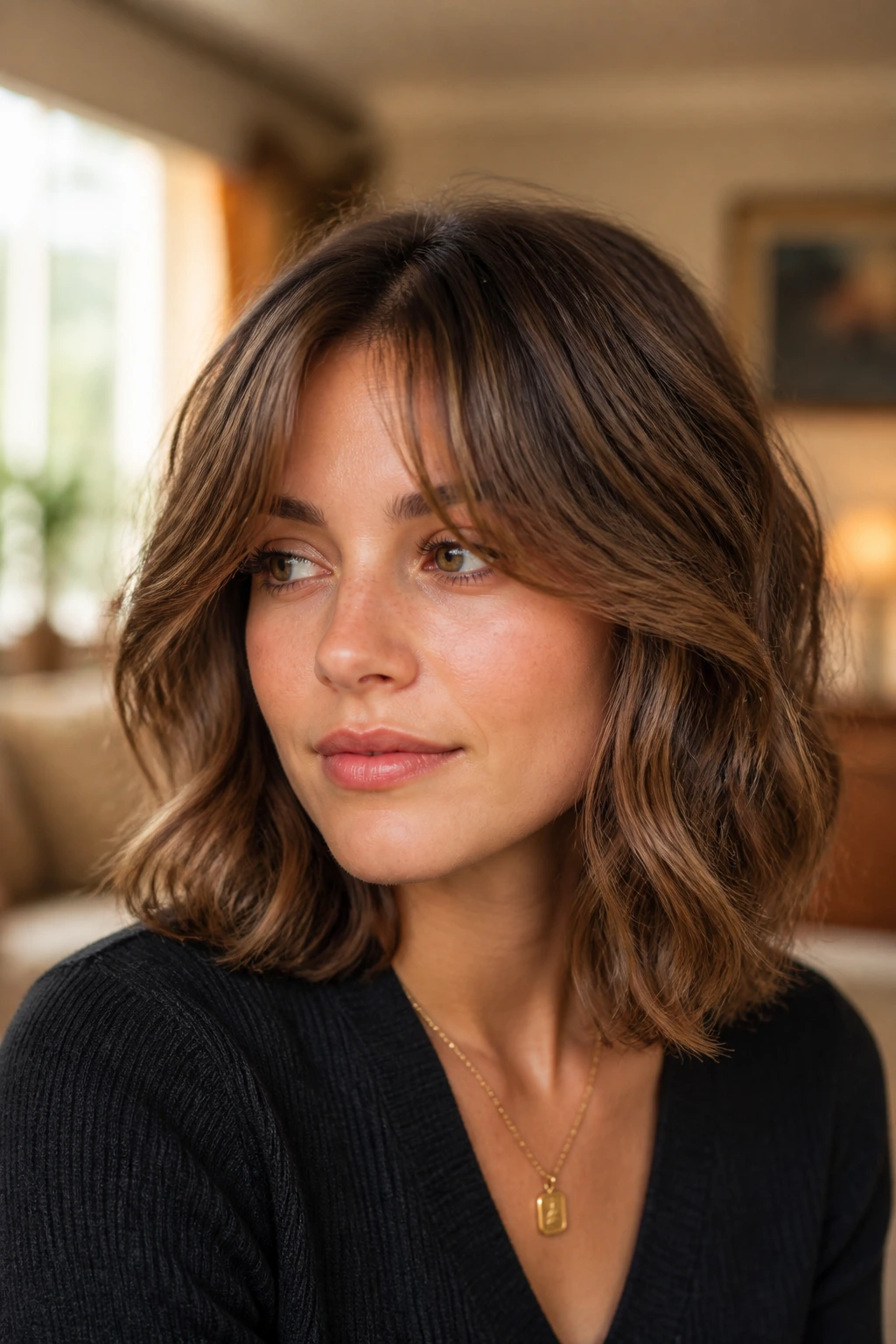
Invisible layers are one of those things stylists talk about when they do not want the haircut to look layered, and here that is exactly the point. A wavy mid-length cut with curtain bangs needs shape support without visible stair-steps. The layers sit inside the haircut, so the waves can collapse and expand without exposing every cut line.
The bang area matters here too. The curtain fringe should be long enough to vanish into the wave pattern once it dries. If it stops too short, it can stick out from the rest of the hair and break the rhythm. A longer bang with a soft center part tends to behave better.
Air-drying works well if the wave pattern is decent on its own. Scrunch in a light cream, twist the bangs away from the face while they are damp, and leave the ends alone as much as possible. Touching them too much tends to create frizz in the front, which is annoying because that is the first place people look.
This is one of my favorite cuts for medium short hair because it does not fight texture. It lets texture show up, which is not the same thing.
12. Wolfy Medium Cut With Curtain Bangs
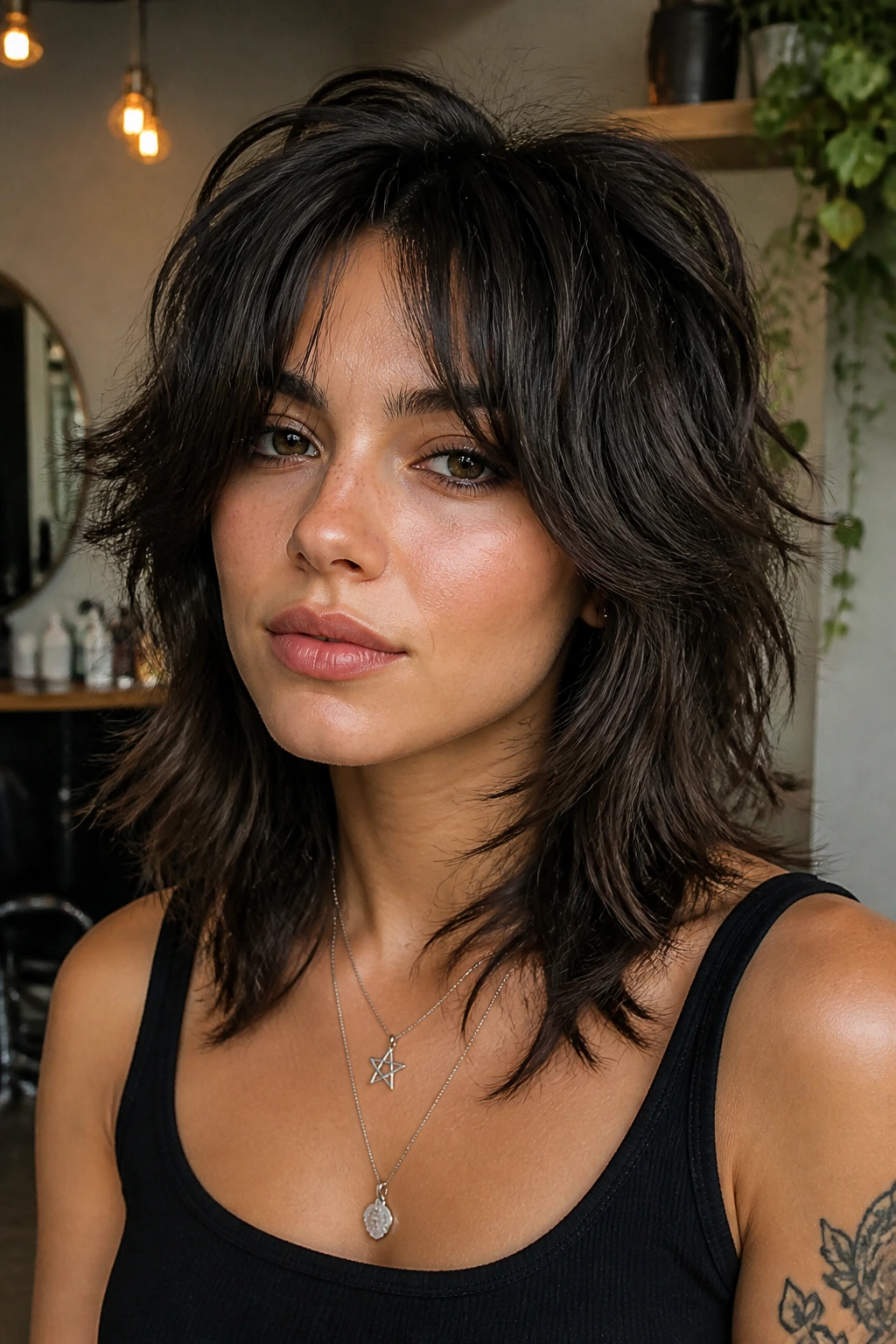
The wolf cut and the shag are cousins, but the wolfier version pushes the volume higher and the ends slimmer. On medium short hair, that gives you a cut with a little bite. The curtain bangs sit right in the middle of that mood, softening the front enough that the whole thing does not look too sharp.
Compared with a classic shag, this shape is less tidy and more deliberately uneven. The crown has lift. The lengths are piecey. The front sections fall open in a way that feels a bit rebellious, but not costume-y if the layers are handled well. It suits hair that already has movement or can be coaxed into it with a diffuser.
What To Watch For
- Too many short layers can make the silhouette too wide.
- The bangs need to stay long enough to connect with the cheek area.
- A curl cream works better than a heavy oil.
- Diffusing at low heat helps keep the top from falling flat.
If you like a haircut with some edge and you do not mind a little styling, this one has personality. It will not be the quietest thing in the room. That is the appeal.
13. Chin-Skimming Layered Bob-To-Lob With Curtain Bangs

A chin-skimming cut sits in that useful place where it can feel like a bob on some days and a lob on others. With curtain bangs, the shape gets a little more grace around the face, which helps keep it from looking boxy at the jawline. The layered interior makes the transition smoother, especially if your hair has strong growth patterns or flips outward.
Why It Avoids the Helmet Look
The answer is in the placement of the layers. They are subtle enough to keep the outline full, but not so subtle that the haircut turns into one solid block. The curtain bangs soften the top and break up the width around the cheeks. That matters a lot on hair that tends to sit heavily at the sides.
- Good for jaw-length to just-below-jaw hair.
- Works well when the ends are tucked slightly under.
- Needs the fringe trimmed before it falls into the eyes.
- Looks clean with a side tuck on one side and a loose front on the other.
I reach for this idea when someone wants structure but does not want to lose movement. It gives both. And if you are tired of blunt cuts that make your face feel boxed in, this is the escape hatch.
14. Heavy Layered Cut For Thick Hair With Curtain Bangs
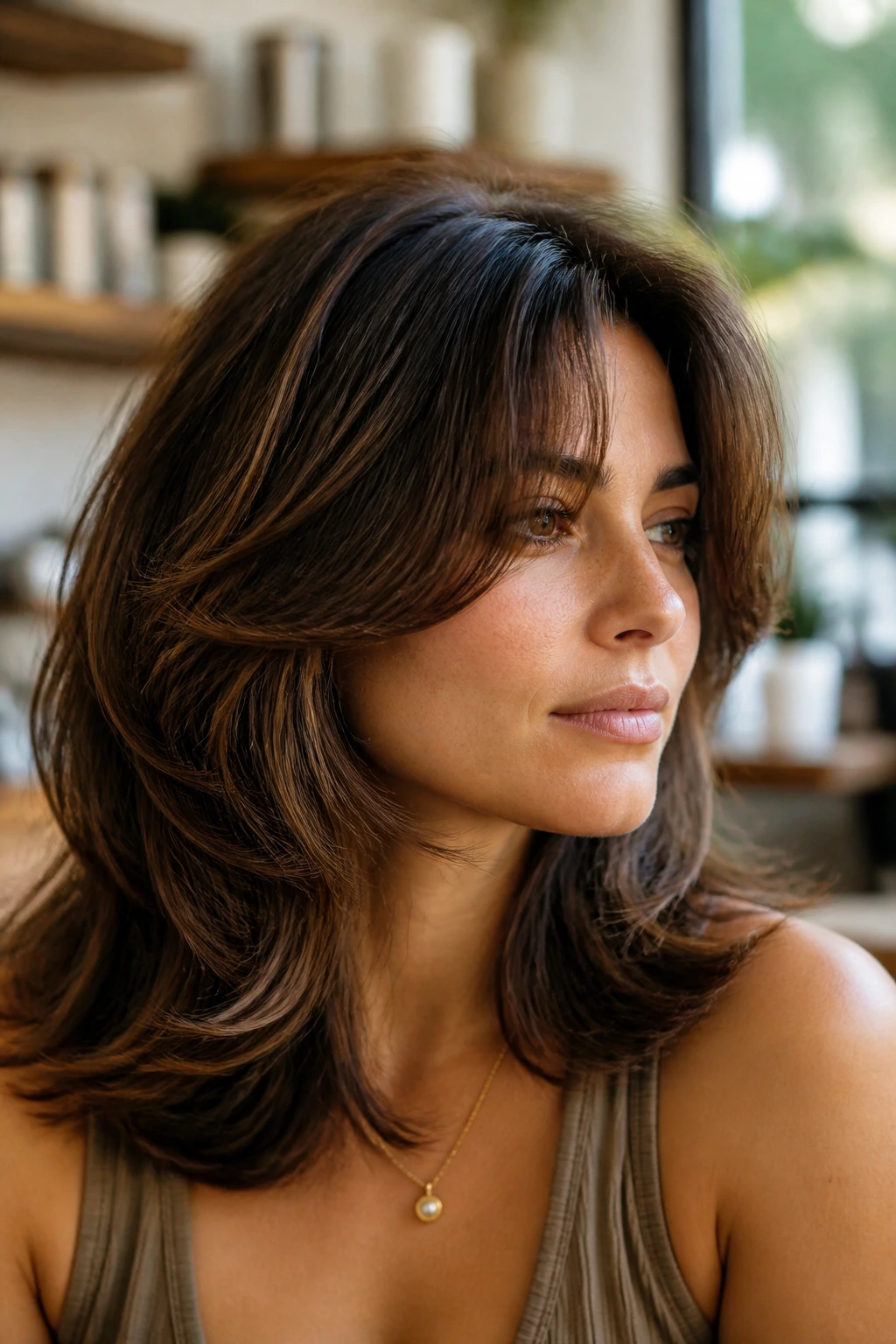
Thick hair needs a cut that removes bulk in the right places, not one that just chops it into shape and hopes for the best. Heavy layers do that job when they are placed with care. The crown stays controlled, the sides lose weight, and the curtain bangs help break up the density right where it can feel overwhelming.
This is not the same as a shag. The goal is not endless choppiness. The goal is to keep thick hair from puffing into a triangle while preserving enough fullness to look healthy and strong. A good stylist will carve out weight underneath and leave the outer shape clean. That is the part that keeps the haircut wearable.
Blow-drying this cut without tension is a mistake. Use a paddle brush on the main lengths, then a round brush only on the bangs and top layers. If you round-brush the whole head, the shape can get too fluffy. Thick hair has opinions. It will tell you when you have overdone it.
For people with a lot of hair, this can be a relief. Less bulk, more movement, no fight with the mirror every morning.
15. Soft Blunt Cut For Fine Hair With Curtain Bangs

Fine hair usually looks best when the ends stay full, and that is why a soft blunt cut with curtain bangs makes so much sense. You keep the perimeter dense so the hair does not look wispy, but the curtain fringe opens the front and gives the whole style a lighter feel. It is a smart trade.
The word “soft” matters here. A harsh blunt edge can look a bit severe on fine strands if the hair lacks body. A soft blunt line keeps the edge clean but not stiff, and the bangs prevent the cut from reading like one long sheet. If your hair has trouble holding volume, this is one of the more forgiving shapes around.
A root-lifting spray at the crown and a quick bend in the bangs are usually enough. You do not need a whole styling routine. In fact, too much product can weigh the ends down and make the haircut lose its shape by midday. Light mousse, small brush, low heat. That is the whole game.
If I had to point one direction for someone with fine hair who wants medium short hair cuts with curtain bangs, this would be near the top of my list. It gives body where you need it and softness where you want it, which is a nicer combo than people give it credit for.
A good haircut is one that still looks like itself when you stop fussing with it. That is the test I keep coming back to. Medium short hair with curtain bangs passes that test more often than most shapes because it leaves room for movement without giving up structure.
The smarter versions are the ones that match the hair you actually have, not the hair you wish would show up every morning. Fine hair wants density at the ends. Thick hair wants bulk removed in the right places. Wavy hair wants room to bend. If the cut respects that, the bangs stop being decoration and start doing real work.
