



Thin hair and bangs used to feel like a bad trade. Cut the fringe too heavy, and the front collapses by lunch. Cut it too light, and it can look like the haircut stopped halfway through.
The sweet spot is shape, not bulk. Bangs for thin hair work when they use angles, softness, and a little clever placement to create the feeling of fullness without stacking too much hair across the forehead.
That’s why some fringe styles look expensive on fine strands and others fall flat in the literal sense. A narrow curtain bang, a side sweep, or a cheekbone-skimming cut can make the hairline look fuller than a blunt block ever will. Heavy bangs are not the hero here. Light, intentional ones are.
1. Wispy Curtain Bangs
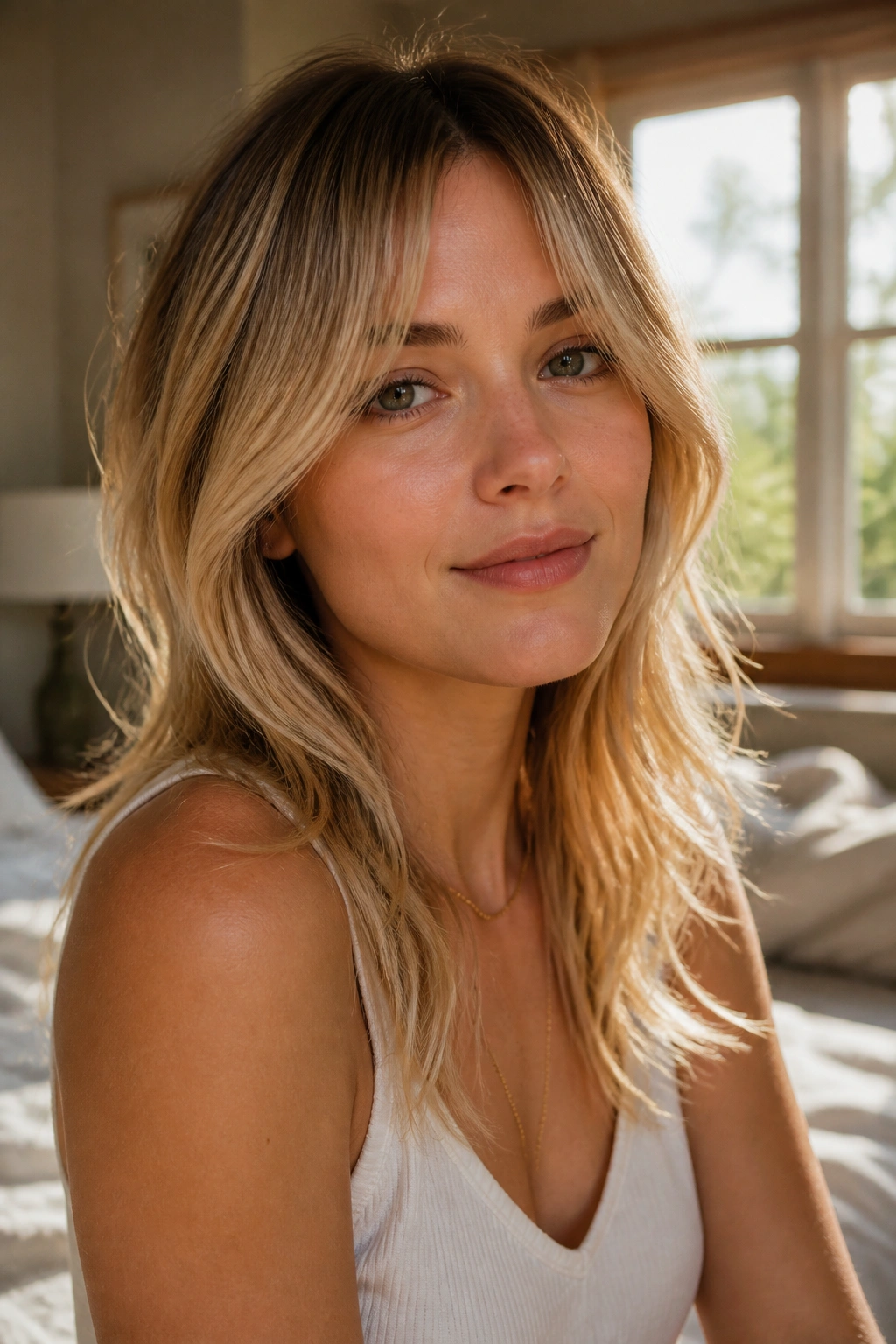
Wispy curtain bangs are one of the safest places to start if your hair is fine and you want some forehead coverage without losing airiness. The center stays a little shorter, the sides taper softly, and the whole thing falls open instead of sitting in one dense strip.
Heavy is the enemy here. You want the fringe to split naturally at the middle and melt into the front layers, not perch across the forehead like a shelf.
Why they work so well on thin hair
- They spread the hair across the face instead of piling it in one spot.
- They leave enough scalp showing that the fringe does not look forced.
- They grow out in a forgiving way, which matters when your hair goes flat fast.
- They work especially well with a loose bend from a round brush or a 1-inch curling iron.
Ask for soft point-cutting at the ends, not a blunt chop. That little bit of texture keeps the bangs from looking stringy. If your hairline is sparse at the temples, keep the outer pieces longer so the fringe blends instead of exposing more skin.
2. Side-Swept Fringe

A side-swept fringe is still one of the smartest moves for thin hair because it creates a diagonal line across the face. Diagonals usually read as fuller than straight horizontal lines, and that matters when the front section is not packed with density.
The nice thing here is the movement. The bang doesn’t have to sit perfectly in place to look good. It can fall a little differently from day to day and still keep its shape.
If your hair clings to your forehead, this style can save you. Ask your stylist for enough length to tuck the fringe behind one brow without it disappearing into the rest of the haircut.
You’ll get the best result if you blow-dry the roots in the opposite direction first, then sweep them over with a medium round brush. A dab of volumizing mousse at the root helps too. Keep it light. Too much product makes fine hair look greasy before lunch.
3. Bottleneck Bangs
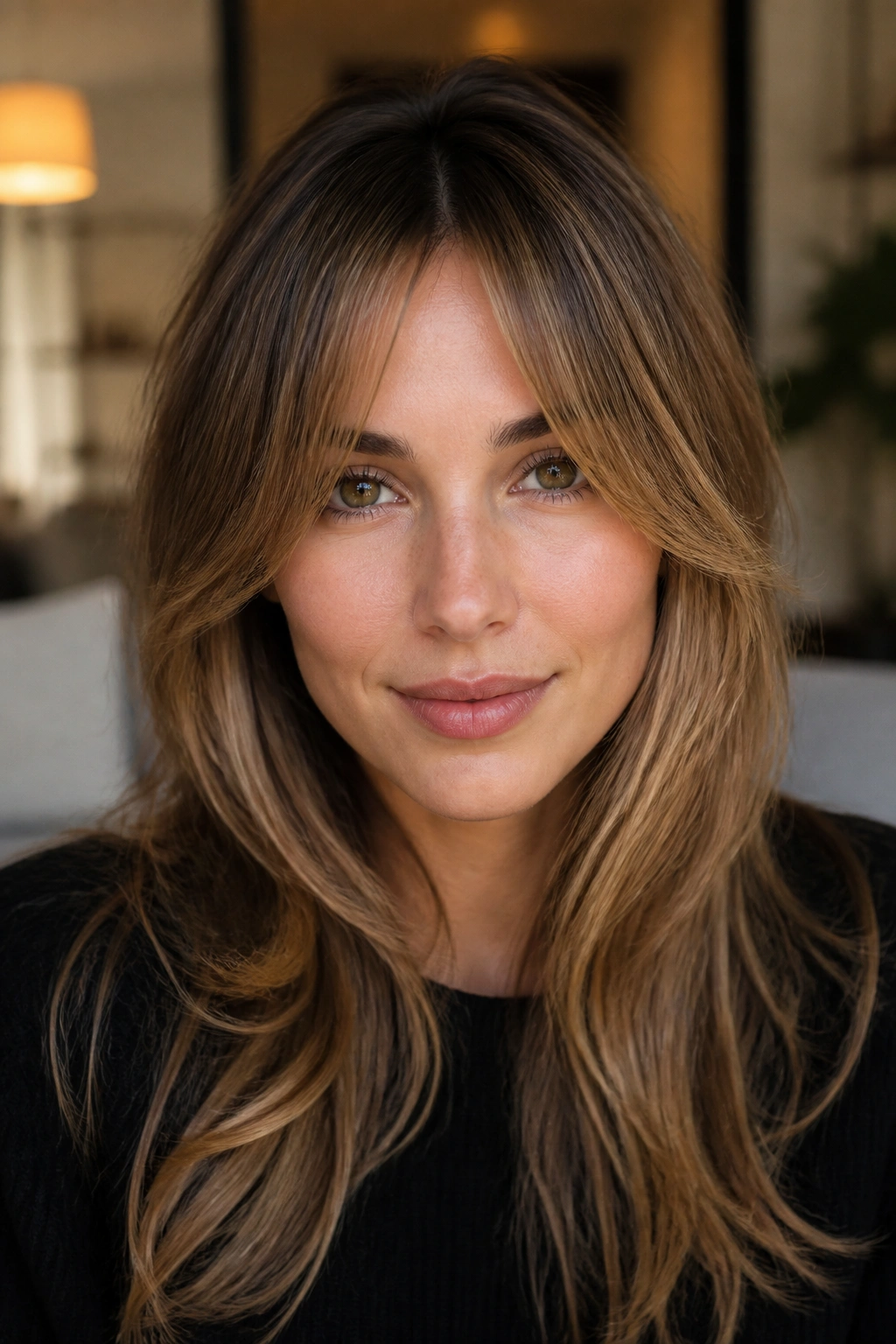
Why do stylists keep recommending bottleneck bangs for thin hair? Because they give you a little fullness at the temples without forcing the center section to carry all the weight.
The shape starts narrower in the middle, then opens out around the eyes and cheekbones. That matters. Thin hair usually looks best when the front is framed, not packed.
How to use them
The center should skim the forehead, not bury it. The sides should graze the cheekbone area so the whole cut looks soft and balanced. If the bangs are cut too short at the center, the style loses its easy feel. If they’re too long everywhere, they stop reading as bangs and just become face-framing layers.
I like this cut on people who air-dry a lot. It has enough shape to survive a messy morning, and it still looks deliberate when the ends separate a little. That separation helps. It does not hurt.
4. Feathered Baby Bangs
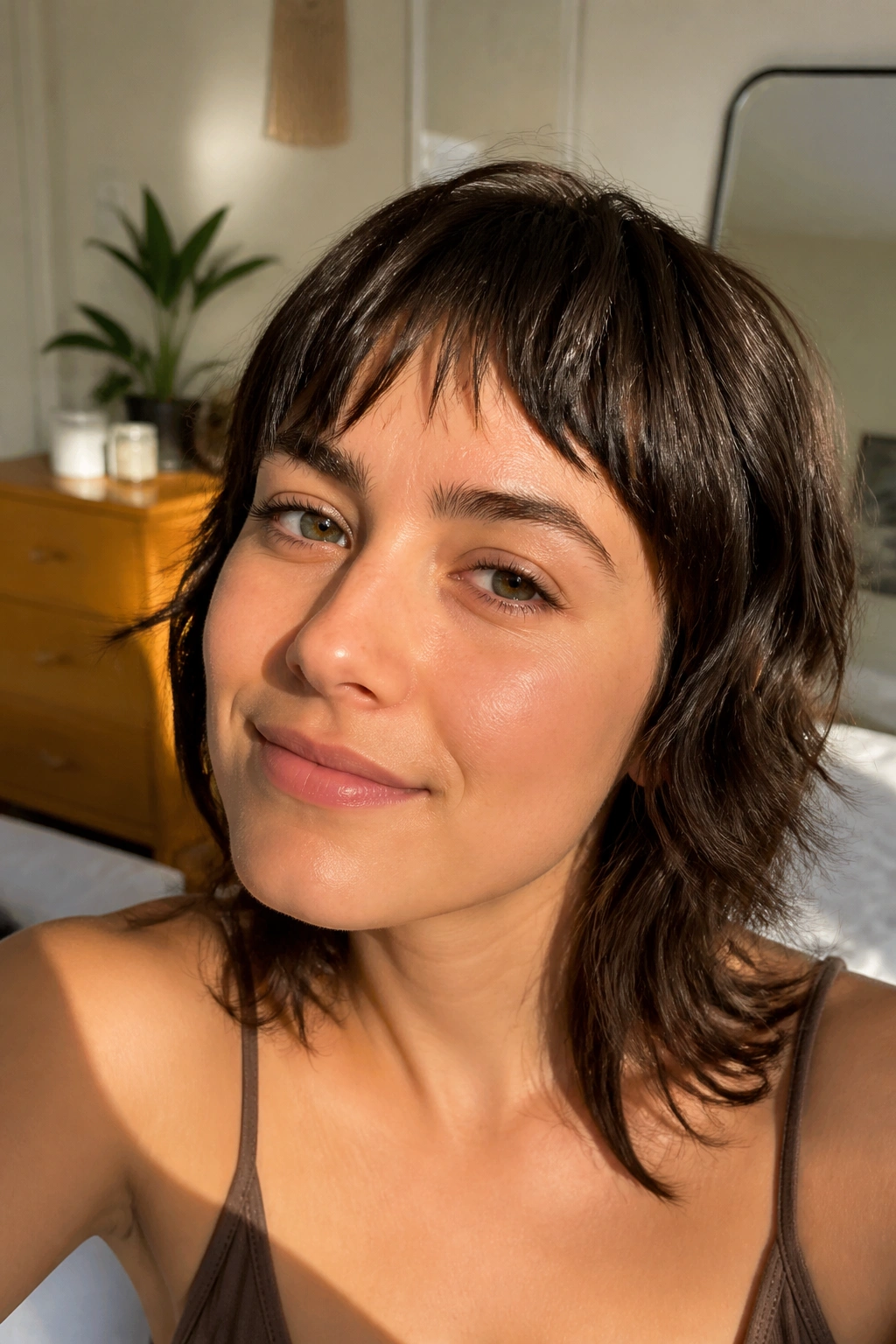
Feathered baby bangs are for the person who wants a little edge but does not want a heavy curtain across the forehead. The trick is the soft edge. Short does not have to mean severe.
Think of them as a tiny frame, not a full block of hair. The cut usually sits above the brows, but the ends should be feathered so the fringe doesn’t look stiff or chunky.
A blunt mini fringe on thin hair can be unforgiving. A feathered one feels lighter, and that lightness is what keeps the haircut from looking sparse.
- Best for: short foreheads, straight or lightly wavy hair, and people who like a bit of character up front.
- Skip it if: your hairline is very uneven or your front grows in a strong cowlick.
- Styling note: use a small flat brush or just your fingers with a touch of cream.
One clean line is hard to fake. Softness buys you room.
5. Long Face-Framing Bangs
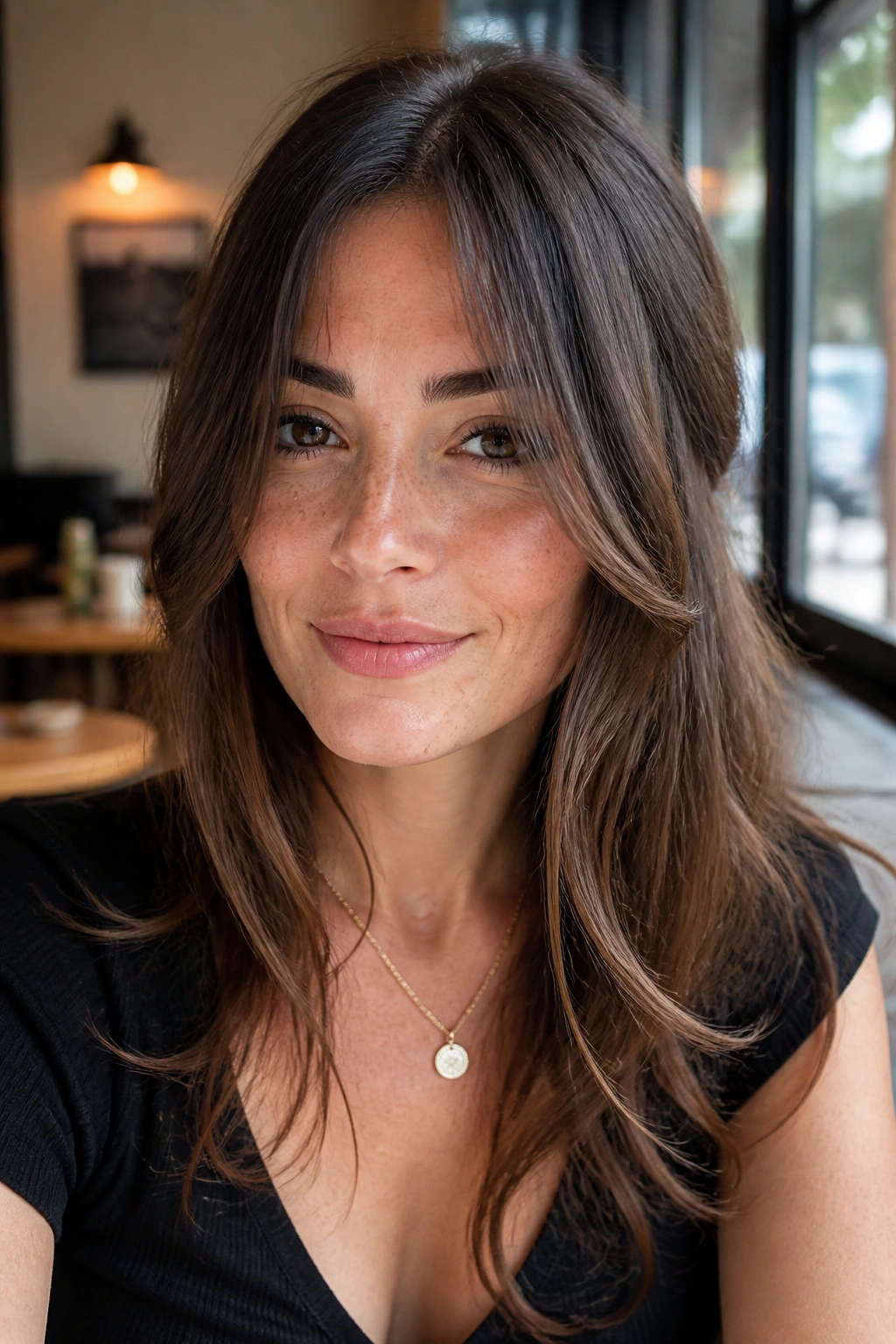
These are not bangs in the classic heavy sense. They behave more like front layers that live around the cheeks and jaw instead of sitting across the entire forehead.
That makes them brilliant for thin hair, because the front section never has to do too much at once. The layers create movement around the face, and the eye reads that movement as fullness.
I especially like this option if you wear your hair up often. You can pull the rest back and still have a few front pieces doing the work. The shape survives ponytails, clips, and messy buns better than a short fringe ever will.
The other upside is grow-out. Long face-framing bangs can turn into regular layers without that awkward “what happened here?” stage. If you are nervous about committing, this is one of the gentlest bets you can make.
6. Choppy Textured Fringe
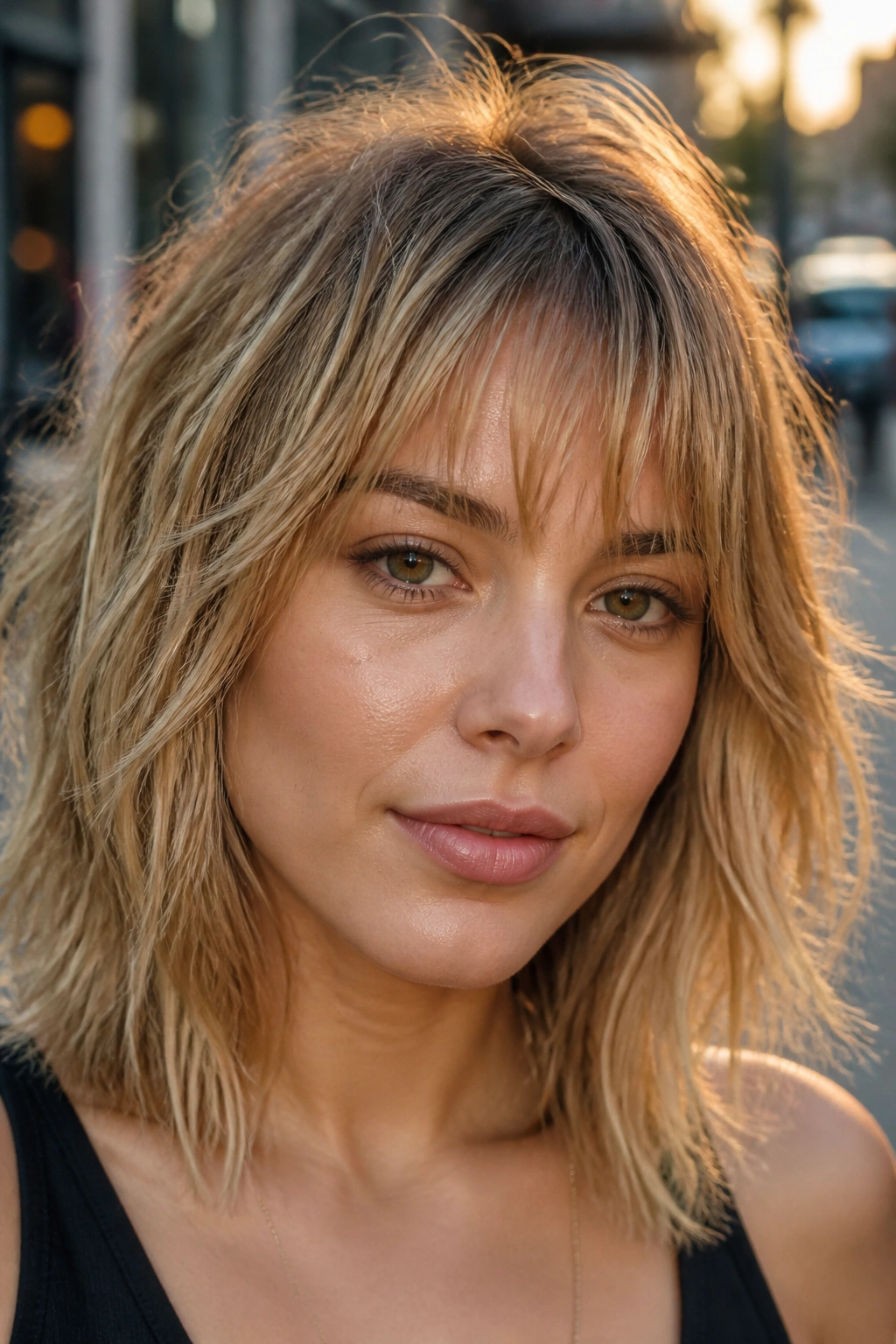
Choppy textured fringe brings life to thin hair because it breaks up the line. Instead of one obvious strip of hair sitting across the forehead, you get little pieces that move and separate in a way that feels airy.
That separation is the whole point. Fine strands look fuller when they have texture, not when they’re all forced into one solid row. This is why a good point-cut can do more than a blunt trim on sparse hair.
A small warning: if your hair is already fragile, ask for controlled texture, not aggressive thinning. Too much slicing can leave the ends looking wispy in the wrong way. You want pieces, not gaps.
This one tends to suit people who like a bit of edge and do not mind running their fingers through the front every now and then. It can look slightly undone, and that is part of the charm.
7. See-Through Bangs

If you want bangs without a heavy upkeep routine, see-through bangs are a very smart place to live. They leave gaps between the strands on purpose, so the forehead shows through a little.
That “almost there” quality is what keeps them from overwhelming a fine hairline. You still get a frame around the eyes. You just do not have to carry a thick block of hair every morning.
Less can be more, but only if the line stays soft. Ask for narrow sections in the front and keep the ends airy. If the bangs get too wide, they stop looking delicate and start looking sparse in the wrong way.
Finger-styling works better than combing here. A little dry shampoo at the root and a quick bend with a mini round brush is usually enough. If your hair separates easily, this style can look polished without trying too hard.
8. Brow-Grazing Rounded Bangs

Can full bangs work on thin hair? Yes, if they are rounded, lightly layered, and not cut like a helmet.
Brow-grazing rounded bangs sit close to the eyes but curve softly at the edges. The curve matters because it keeps the front from looking boxy. A heavy straight line can expose thinness fast, especially if the hair starts to split at the center.
The styling trick
Blow-dry the fringe forward first, then wrap the ends slightly under with a small round brush. Let the center sit just at the brows and let the corners stay a touch longer. That tiny difference makes the cut look more natural.
This is a good option if you want your eyes to be framed and you don’t mind a bit more maintenance than a curtain bang. It needs a quick refresh most mornings. Nothing dramatic. Just enough to keep the shape from collapsing.
9. Deep Side-Part Bangs
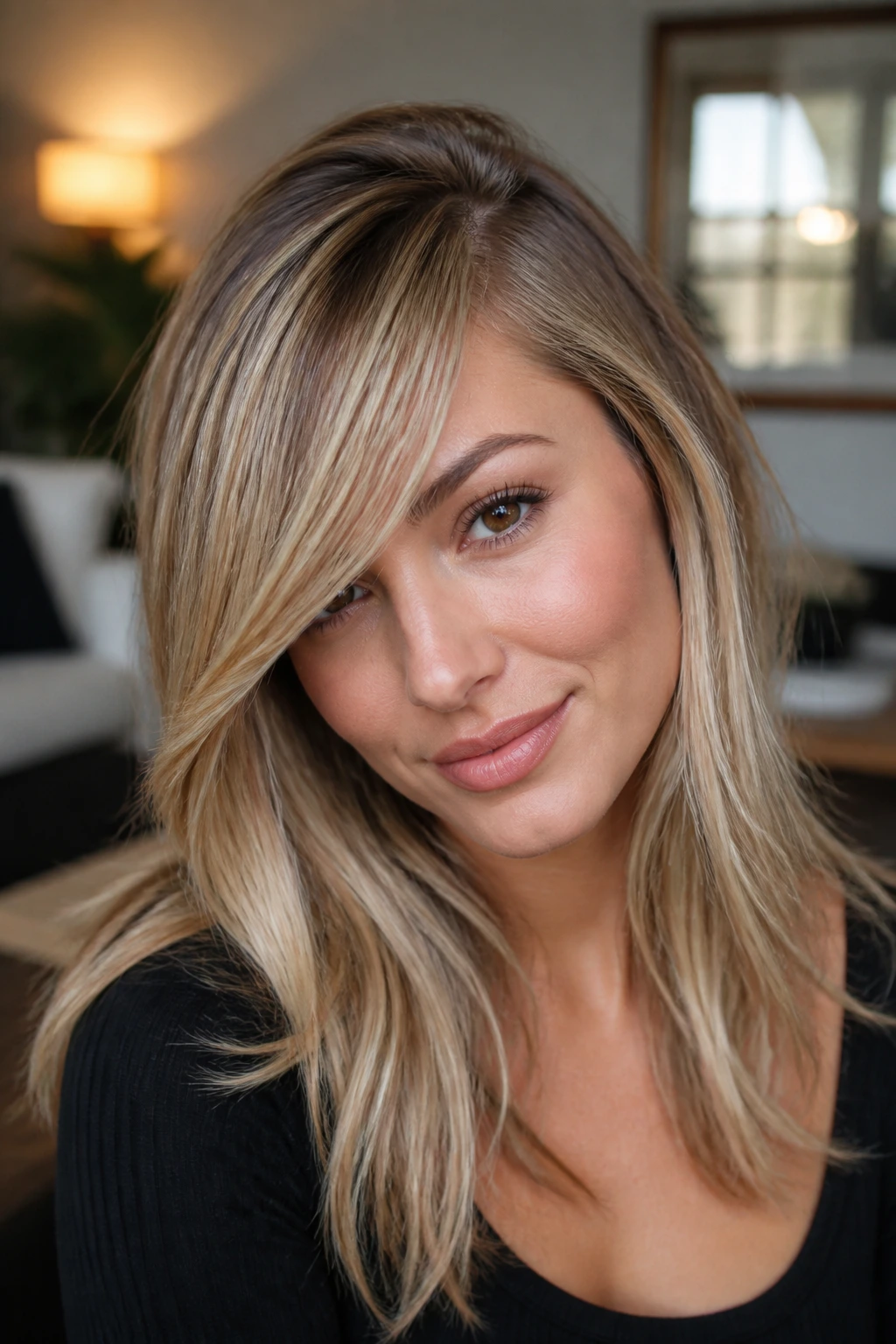
A deep side-part bang can make thin hair look like it has more root lift than it really does. The part pushes the fringe across the forehead at an angle, which adds shadow, movement, and a little drama.
That angle also helps hide weak spots at the hairline. If one side of your front section is a little finer than the other, this cut hides the mismatch instead of announcing it.
- Great for: cowlicks, flat roots, and fine hair that refuses to stay put.
- Works best with: layered cuts and a bit of root-lift spray.
- Not ideal for: anyone who hates hair touching the eyes all day.
I usually prefer this on days when the hair needs a visual lift more than a lot of length. It looks casual, but not sloppy. That’s a harder balance than people think.
10. French-Girl Fringe
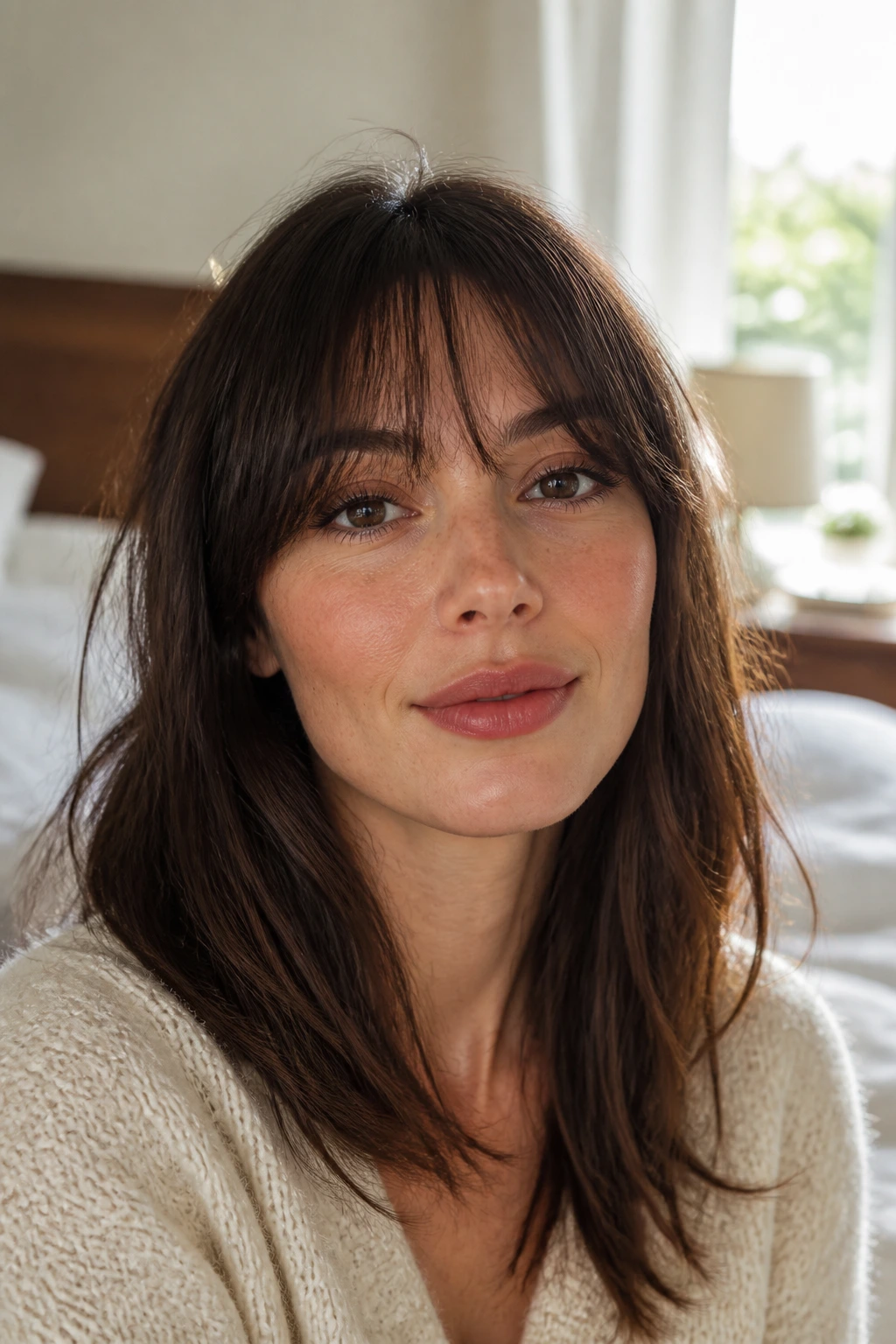
French-girl fringe is less about thick bangs and more about a soft, lived-in front section that falls around the brows with a little separation. On thin hair, that separation is gold.
The cut should feel light at the ends and slightly imperfect. That is the point. You do not want every strand glued into one neat line, because fine hair can lose all its energy that way.
If your hair is pin-straight, a tiny bend with a flat iron can help the fringe behave. If it already has a slight wave, even better. Let it do half the work.
I like this style on people who want the front to feel interesting but not fussy. It has enough attitude to matter and enough softness to stay wearable. That combination is rare.
11. Razor-Cut Bangs
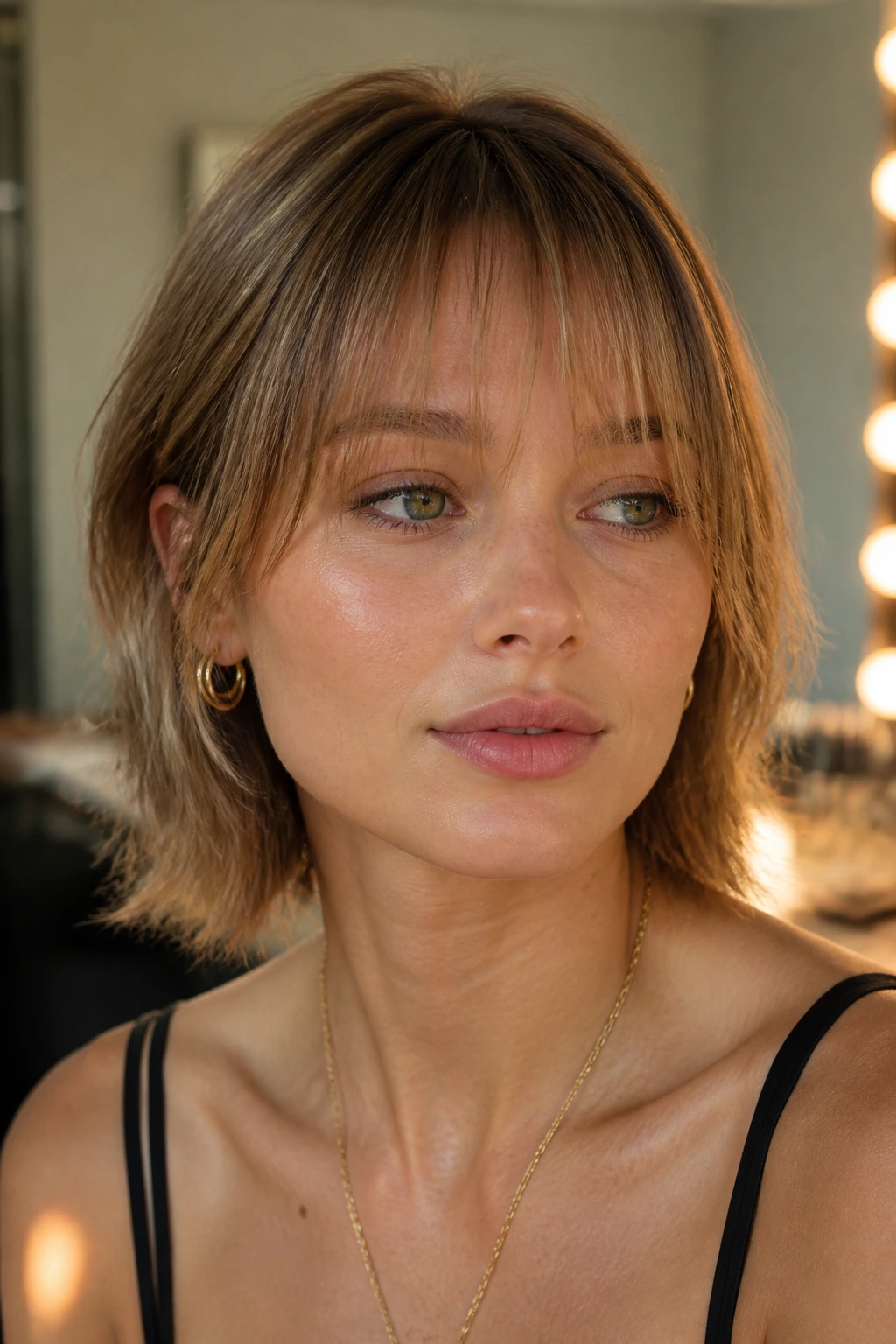
Razor-cut bangs can be lovely on thin hair, but only when the hand behind the razor knows exactly how much to take off. A razor softens the edge and gives the fringe a feathery finish that scissors sometimes miss.
The catch is obvious. Too much razor work can make already-fine ends look frayed. So this is not a style I’d hand to just anyone with a pair of thinning shears and a mirror.
What makes it different
A scissor-cut fringe gives you a cleaner edge. A razor-cut fringe gives you a softer, airier finish. For straight fine hair with enough density in front, the razor can be a gift. For hair that frizzes easily, it can be a headache.
If you try this, ask for minimal debulking and a dry finish check before the stylist removes more. You want the fringe to move, not fall apart.
12. Cheekbone Curtain Bangs
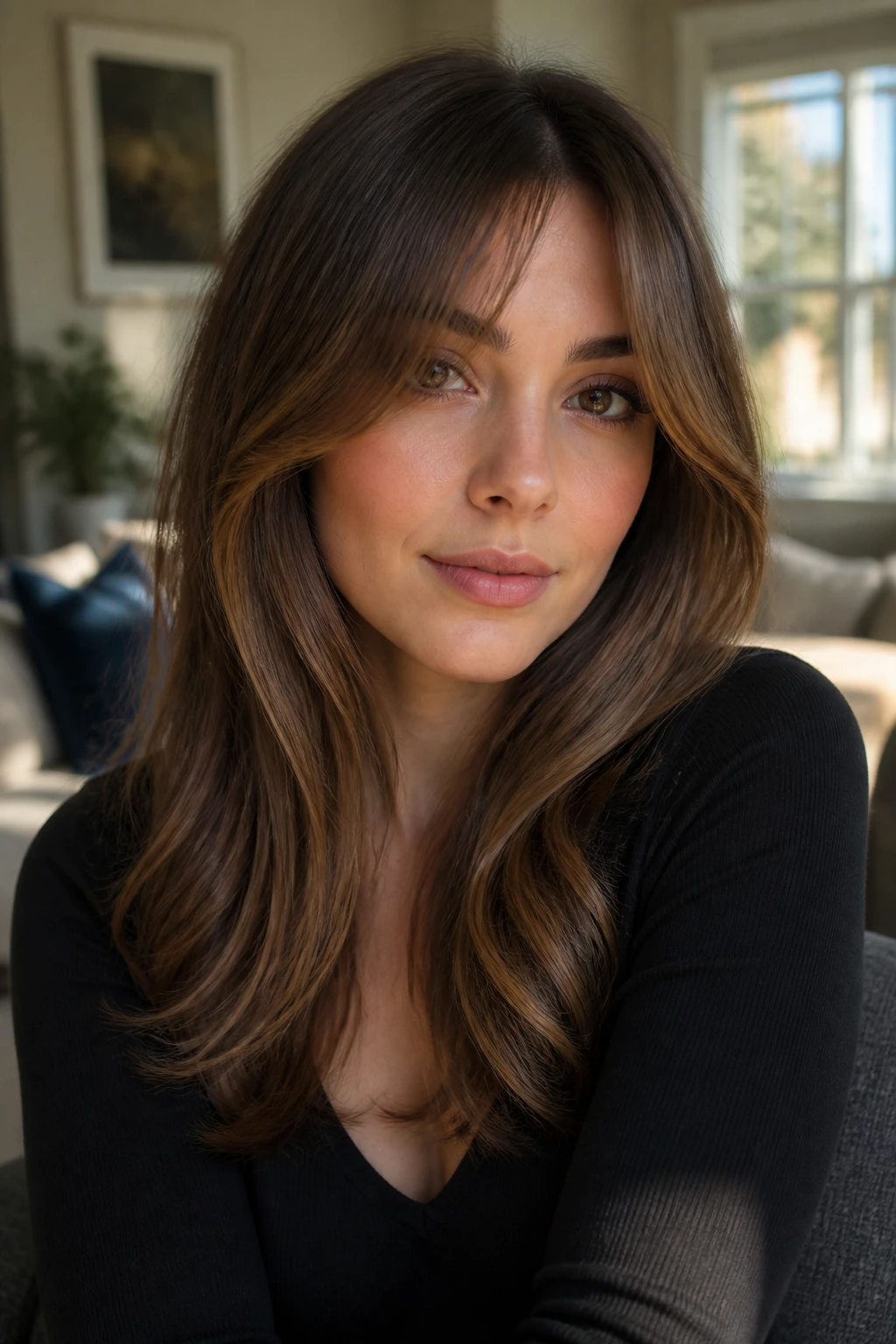
Cheekbone curtain bangs are one of my favorite ideas when someone wants the face framed without sacrificing the look of density at the top. The longer pieces land around the cheekbones, which gives the front a graceful shape and keeps the center lighter.
That length helps thin hair in a sneaky way. The eye sees more surface area around the face, so the haircut feels fuller even if the actual amount of hair hasn’t changed.
- Flattering for round and heart-shaped faces.
- Easier to grow out than a blunt fringe.
- Easy to tuck away when you want your forehead open.
Ask your stylist to keep the shortest point around the bridge of the nose, then let the sides fall lower. That range gives the hair room to move. Flat, short curtain bangs can look stingy. Longer ones breathe.
13. Tapered Split Fringe
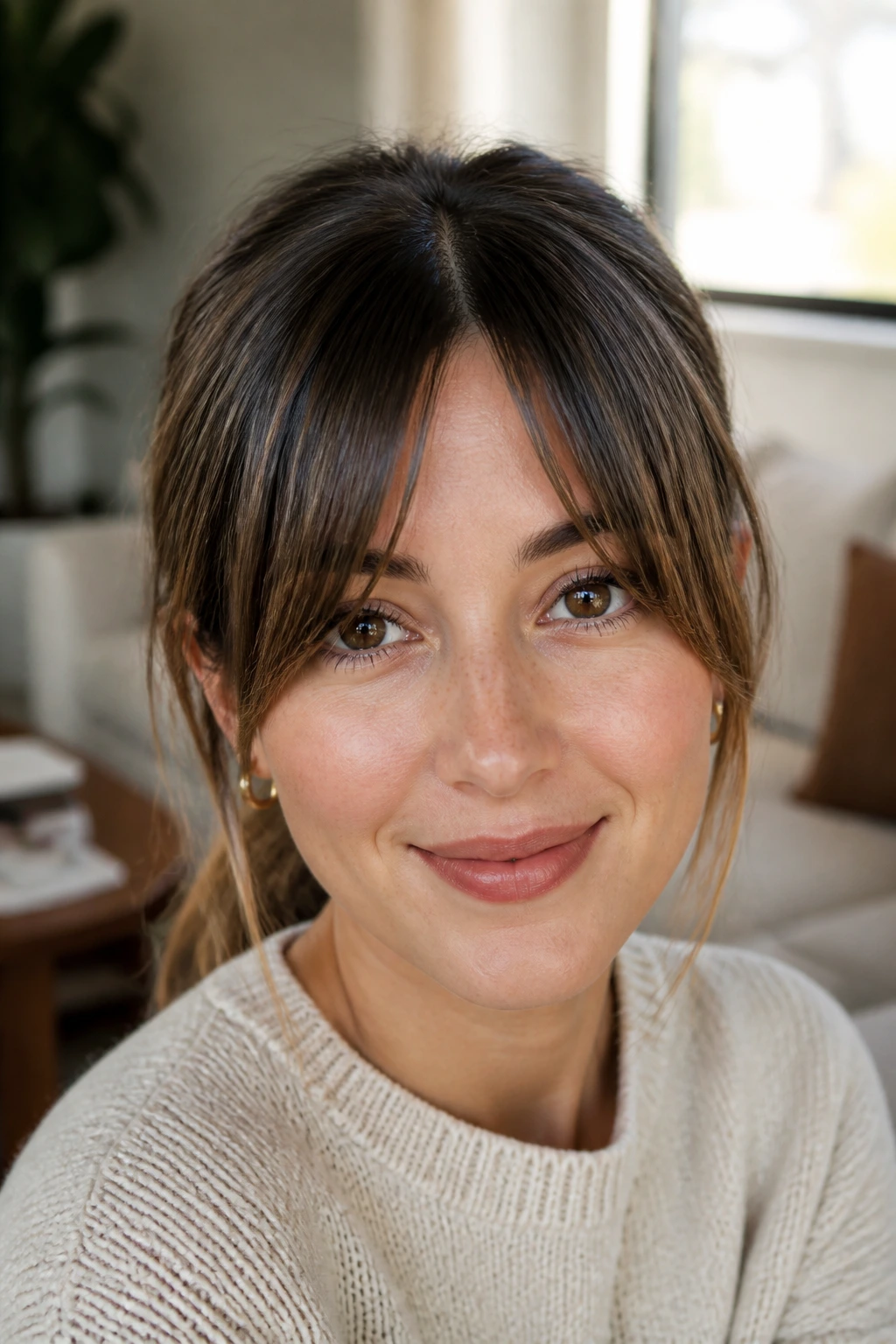
Why does a tapered split fringe work so well on thin hair? Because the center stays open and the sides carry the shape.
That split keeps the forehead from being buried under one heavy line. Instead, the bang breaks apart gently and lands where the face needs framing most. It feels light, but it still looks intentional.
What makes it work on thin hair
The taper is doing the real work. Each side should get slightly longer as it moves toward the temples, which gives the cut a soft edge instead of a blunt finish. If the split is too sharp, the bangs can look like they were meant to be curtain bangs but gave up halfway. That is not the effect.
This is a solid choice if your hair falls forward easily but you don’t want a full fringe. It gives shape without making the front section too busy.
14. Airy Micro Fringe

Airy micro fringe is a bold choice, and I mean that in a practical sense, not a dramatic one. Short bangs can look sharp on thin hair if they are narrow, feathered, and cut with real restraint.
A lot depends on the width. Keep it too wide and the fringe can expose the hairline. Keep it narrow and soft, and it becomes a little accent instead of the whole story.
- Best for: short haircuts, strong brows, and people who like a sharper look.
- Not great for: sparse temple areas or a very uneven hairline.
- Styling tip: keep the root flat enough to avoid a puffy triangle.
This one is a dare. It works when the cut is precise and the styling is clean. If either one is off, you’ll know fast.
15. Shaggy Layered Bangs

Shaggy layered bangs are a nice fit for thin hair because they never ask the front section to be too perfect. The fringe blends into the rest of the haircut, which means the whole style can look fuller through movement instead of weight.
That matters. Thin hair often looks better when there’s a little chaos at the ends and a little lift at the roots. A shag gives you both.
I’d lean into this if your hair has any natural wave at all. The layers help the bangs fall in pieces, and the pieces create the impression of more hair than is actually there. That is not cheating. That is smart haircutting.
A little dry shampoo at the root can help keep the front from collapsing. Don’t overdo it. A dusting is enough.
16. Crown-Lift Curtain Bangs
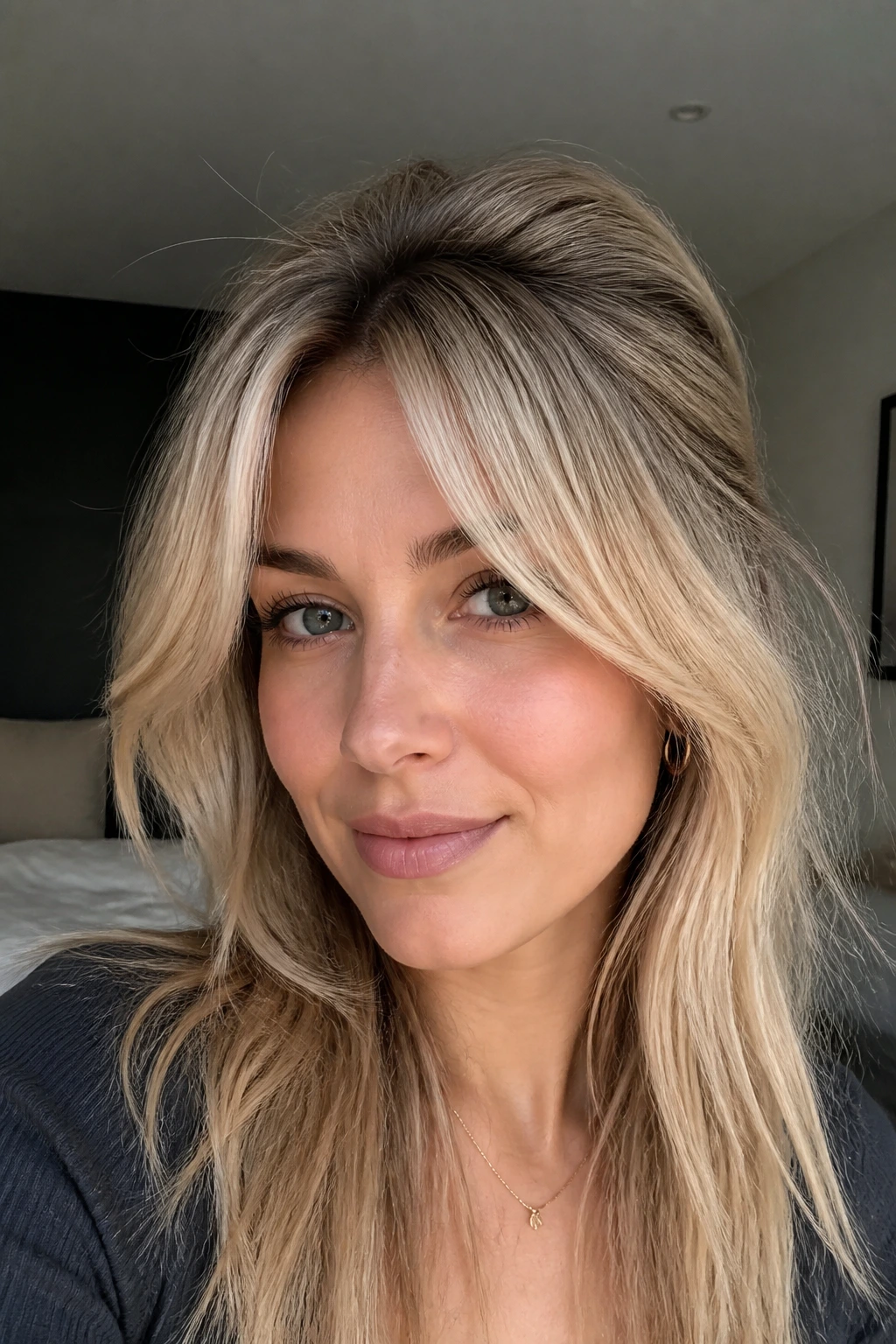
Crown-lift curtain bangs are basically curtain bangs with a job to do. The job is volume at the root.
Without lift at the crown, curtain bangs can split too flat and leave the center looking thin. Add a little height, though, and the whole front section opens up in a better way.
A small round brush or a velcro roller at the front root makes a bigger difference than people expect. Even 5 minutes can change the shape enough to matter. You’re not trying to build a tower. You’re trying to keep the hair from lying dead against the scalp.
This style is especially useful if your hair is straight and slippery. It gives you something to work with before the rest of the day flattens everything back down.
17. Curly Fringe

Curly bangs on thin hair can be gorgeous, but only when the cut respects the curl pattern. Thin curls need room to spring, and they need length so the fringe doesn’t pop up too short.
A dry cut is the cleanest route here. Wet curls lie. They shrink later, and that can turn a neat fringe into something much shorter than you bargained for.
Do not cut curly fringe like straight fringe. The shape should be checked curl by curl, with the stylist looking at how the curl falls naturally around the forehead.
For styling, a light curl cream or foam is usually enough. Heavy creams can weigh down fine curls fast. If you want the fringe to look full, leave some separation at the ends instead of trying to force every curl into one shape.
18. Wavy Bottleneck Bangs
What makes wavy bottleneck bangs so easy to wear? The wave does part of the styling for you.
The shape starts narrow in the center and opens around the face, but the wave keeps the edges soft. On thin hair, that softness helps the bangs look fuller than a straight, precise line would.
How to get the wave to sit right
Let the bangs dry halfway before touching them. Then twist the front pieces away from the face with your fingers and finish with a diffuser on low heat or a quick bend from a small iron. You do not need tight curls. You need a loose S-shape that keeps the front from lying flat.
This style is a good fit if your hair already bends a little on its own. It’s also forgiving on busy mornings, which is worth a lot when the front of your haircut wants to misbehave.
19. Soft Arch Fringe

Soft arch fringe gives the eyes a frame without boxing in the forehead. The center sits a little shorter, and the sides sweep down in a gentle curve.
That shape can be a lifesaver for thin hair because it avoids a hard horizontal line. Hard lines tend to show every weak spot. Soft arches blur them.
This is a nice option if your forehead is a little long or your hairline is uneven. The curve creates balance without drawing too much attention to the exact amount of hair in the front. That’s the subtle trick here.
A small round brush helps the edges curl under just enough. Don’t over-roll it. If the arch gets too round, it can start looking puffy at the center and thin at the sides.
20. Shattered Fringe

Shattered fringe sounds edgy because it is, but the idea is practical: the fringe is broken into pieces so it never reads as one thick block.
Thin hair usually benefits from that breakup. A solid line can show too much scalp or split in awkward places. A shattered edge gives you movement and a little built-in disguise.
The key is restraint. You want deliberate pieces, not fringe confetti. Too much texturizing can leave the front too flimsy, and that can be worse than having no bangs at all.
I like this cut for people who wear their hair slightly messy and do not want to spend 15 minutes shaping the front every day. It can look cool with very little effort, which is rare and useful.
21. Peekaboo Bangs
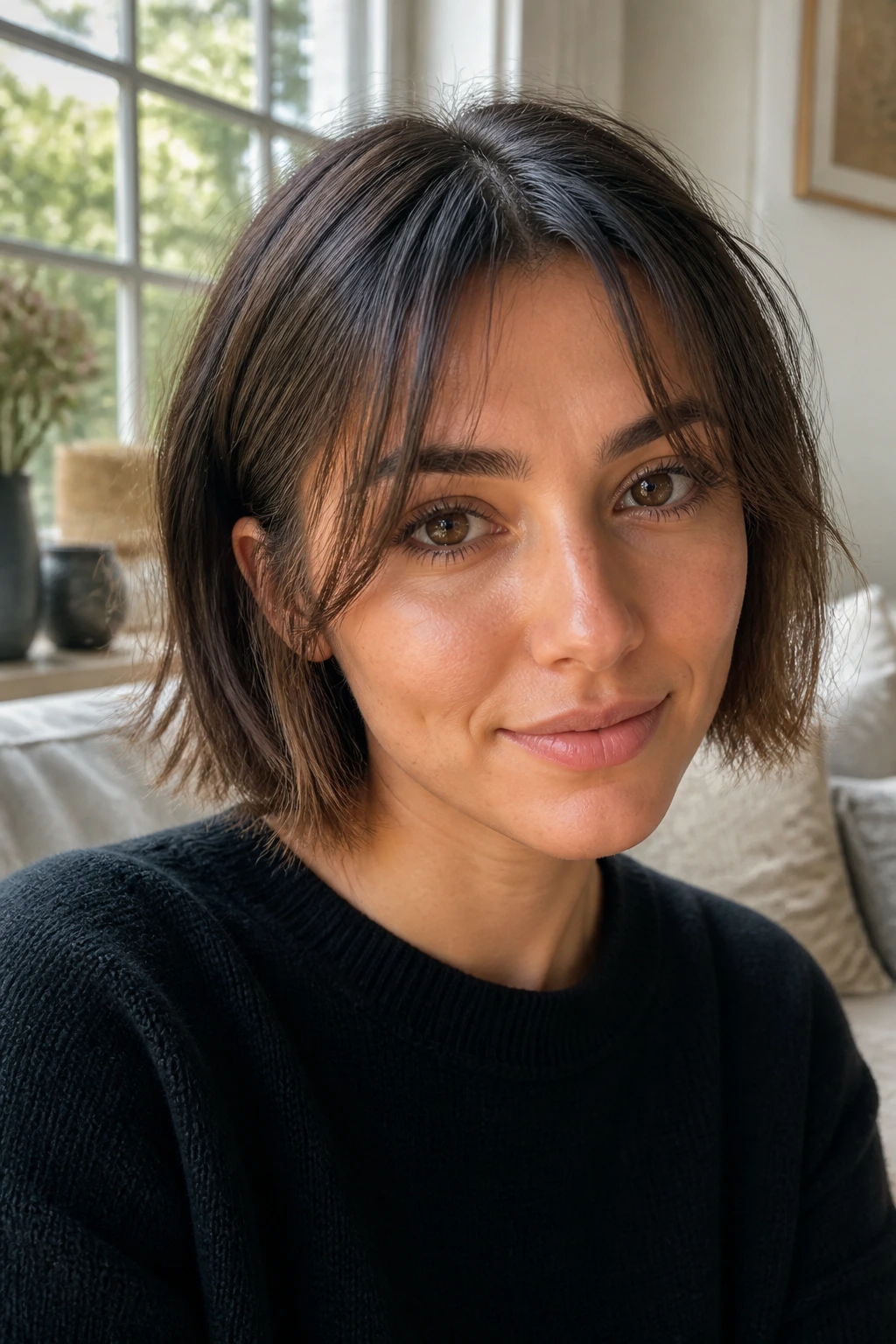
Peekaboo bangs are a lighter version of a fringe, with small pieces that appear around the eyes and then disappear back into the rest of the hair. They’re good for thin hair because they give the suggestion of bangs without demanding a full front section.
That makes them easy to live with. You can pin them back, split them, bend them, or let them fall wherever they want to fall.
Unlike heavier bangs, peekaboo pieces do not announce themselves from across the room. They soften the face in a quieter way. That can be a relief if you want to test the waters before making a stronger cut.
They’re especially handy if you wear glasses or if your forehead gets sweaty under a heavier fringe. Small pieces are easier to manage and easier to grow out.
22. Grown-Out Bangs
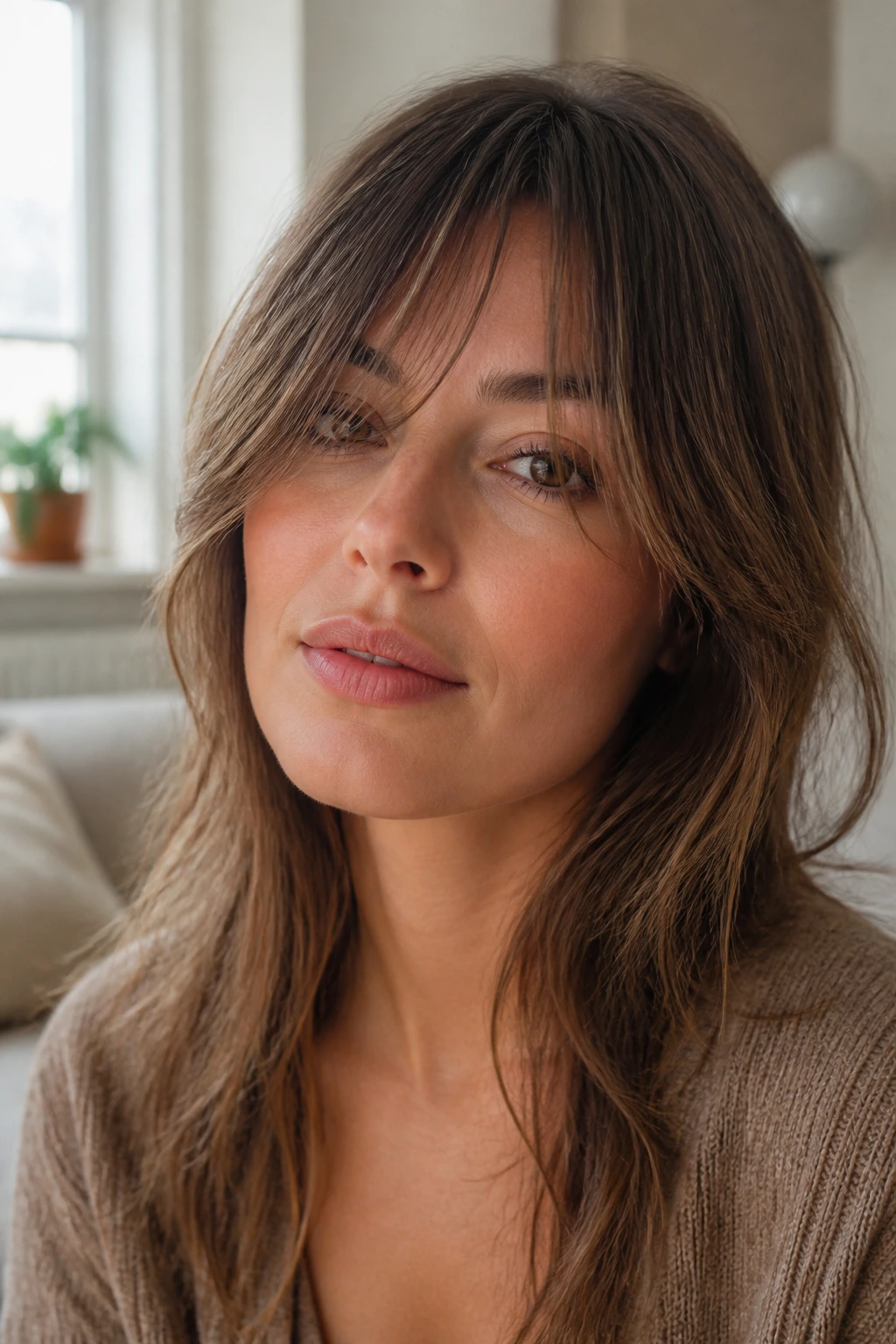
Grown-out bangs are not a compromise. On thin hair, they can look better than a freshly cut fringe because the extra length adds a little gravity.
That weight helps the front stay together instead of separating into skinny little sections. It also makes the haircut easier to tuck, bend, pin, or sweep aside depending on the day.
A lot of people cut bangs too short and then spend months trying to force them into submission. You do not have to play that game. If your hair is fine, leaving the fringe a little longer often gives you more styling options and a fuller look.
Ask for the shortest pieces to land around the cheekbone or just above the nose bridge. That gives you room to move without losing the feeling of bangs.
23. Temple Bangs

Temple bangs are a smart answer when the sides of your hairline feel thinner than the center. Instead of cutting a full fringe, the stylist creates small face-framing pieces right at the temples.
That little detail can change the whole front of the haircut. It fills in the corners, softens the face, and avoids the bluntness that sometimes makes thin hair look stringy.
How to ask for it
Say you want two narrow sections cut near the temples and blended into the front layers. Do not ask for a thick block. The point is to build shape at the sides, not to make more hair than you actually have.
This style is a nice fit if you usually wear the middle of your forehead open but want the face frame to feel a little richer. It’s subtle. Subtle is good.
24. Diagonal Fringe

A diagonal fringe can be a gift for thin hair because it moves the eye across the face instead of stopping it at one straight line. The angle creates the feeling of motion, and motion makes hair look less flat.
This is especially useful if your hair falls in a stubborn direction. You can work with the direction instead of fighting it. That alone saves time.
- Good with side parts and layered cuts.
- Easy to tuck behind the ear when needed.
- Helpful if you want bangs that grow out quietly.
The main thing to watch is balance. Too much angle and the fringe starts looking accidental. Keep the line soft, and let the longer side taper into the rest of the haircut.
25. Blended Halo Fringe
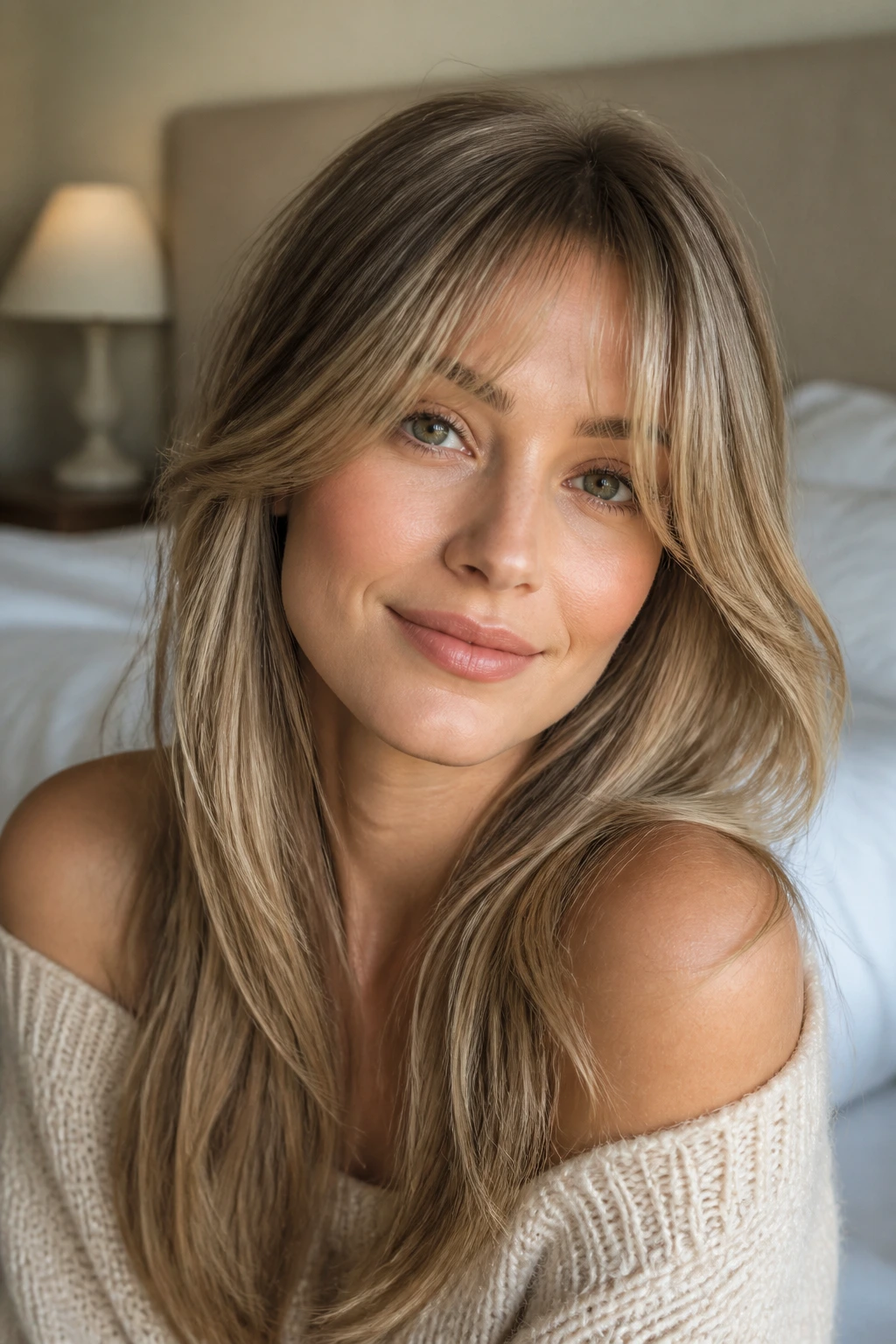
Blended halo fringe is one of the quietest options on this list, and maybe one of the smartest. The bangs do not sit as a separate chunk. They fold into the crown layers and wrap softly around the face.
That softness matters for thin hair because a hard fringe line can expose every weak spot. A blended halo shape spreads the attention around the face instead of pinning it to one thin strip.
I like this style when someone wants a fuller front but hates the feeling of having bangs. It keeps the haircut open, light, and a little romantic without getting precious about it.
If you bring photos to the salon, bring one from the front and one from the side. The side view matters here more than people think. It shows exactly how much weight sits at the temples, and that’s where thin hair either looks smart or starts to sag.
Final Thoughts
The most useful bangs for thin hair are the ones that respect how little weight the front section can actually carry. Soft edges, smart parting, and a little texture do more for fine strands than a heavy, dense fringe ever will.
My strong preference is to keep the front lighter than you think and build the fullness around it instead. That usually gives you more movement, less separation, and fewer mornings spent fighting your mirror.
Bring photos, yes. Bring a realistic styling habit too. If you know you’ll only spend three minutes on your bangs, say so out loud before the scissors come out. That tiny detail changes the cut more than face shape ever does.
