



Curly bangs can look like a soft frame around the face, or they can look like a fight you had with a blow-dryer. The difference is rarely the curl itself. It’s usually the shape, the length at the starting point, and whether the cut respects shrinkage instead of pretending it doesn’t exist.
That’s why bangs ideas for curly hair need their own rules. A fringe that sits neatly on a straight texture can land somewhere completely different once curls dry, spring, and settle into place. A piece that looks eyebrow-grazing in the chair might bounce to the middle of the forehead later. Another one may collapse flat if it was thinned too much. Messy? Sometimes. Worth it? Absolutely, when the shape is right.
I’ve always trusted curly bangs that look a little too long at first. A good curly fringe usually feels cautious in the salon mirror, then loosens up and makes sense after it dries. That tiny bit of hesitation is often a sign the cut was done by someone who understands curl pattern, density, and the fact that some curls want room to move.
The trick is not finding one magical fringe for every head of curls. The trick is matching the bang shape to the way your hair actually behaves — tight, loose, high-shrinkage, low-shrinkage, thick, airy, or somewhere in between. The first few styles are the easiest place to start.
1. Soft Curtain Bangs That Split at the Brow
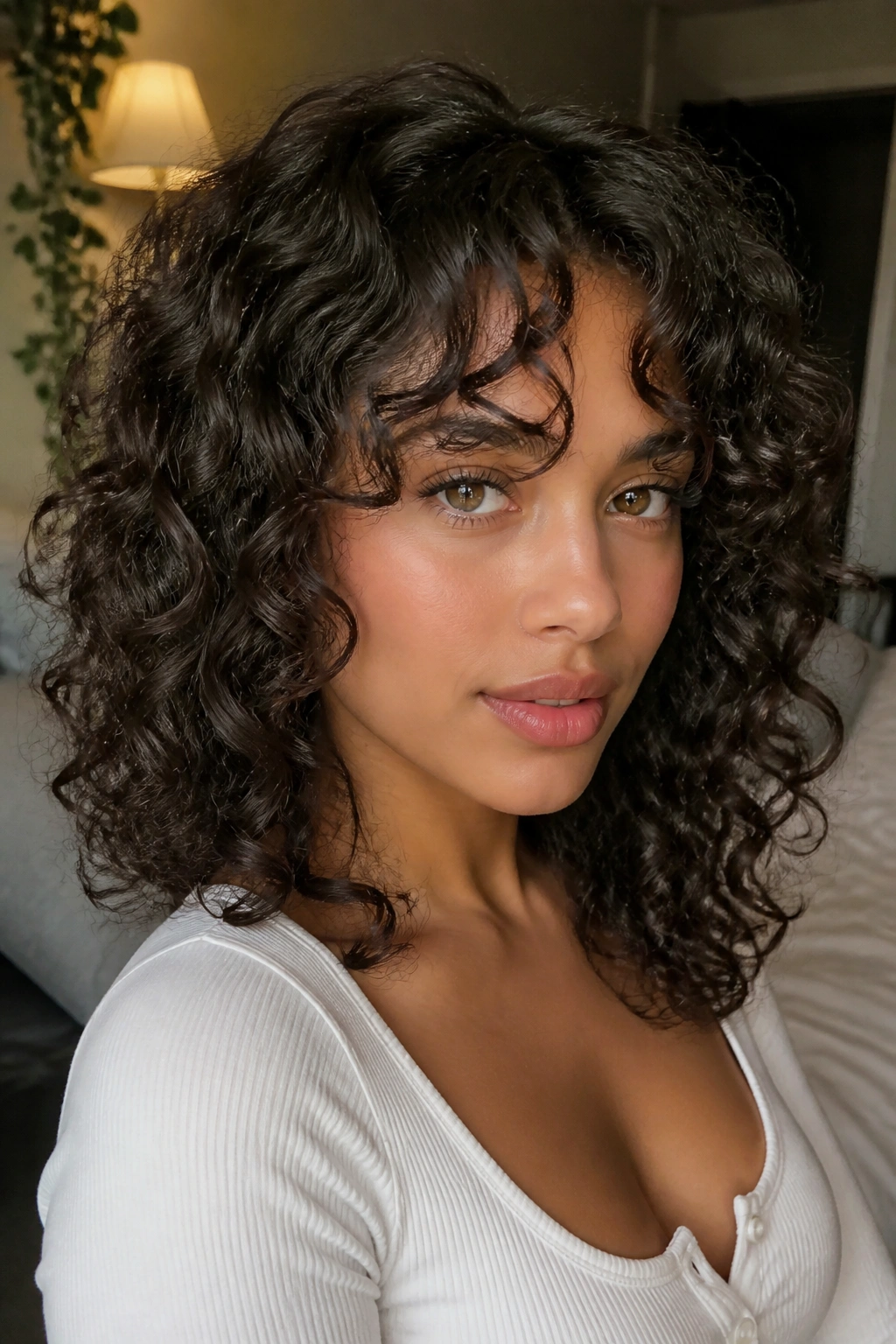
Curtain bangs on curls are the safest doorway into fringe territory. They part in the middle, fall away from the eyes, and let your curl pattern do the heavy lifting instead of forcing a neat line. On wavy and curly hair, that softness matters a lot.
Why They Work
The best version starts a little below the brow at the center and gets longer toward the temples. That longer edge gives curls space to spring without turning the front of the hair into a wall.
- Best for medium to thick curls
- Good if you want movement without a blunt edge
- Easy to pin back on lazy days
- Works well with shoulder-length cuts and longer layers
Ask for the shortest point to be cut longer than you think. On curly hair, that caution saves a lot of regret.
2. Bottleneck Bangs That Narrow at the Center
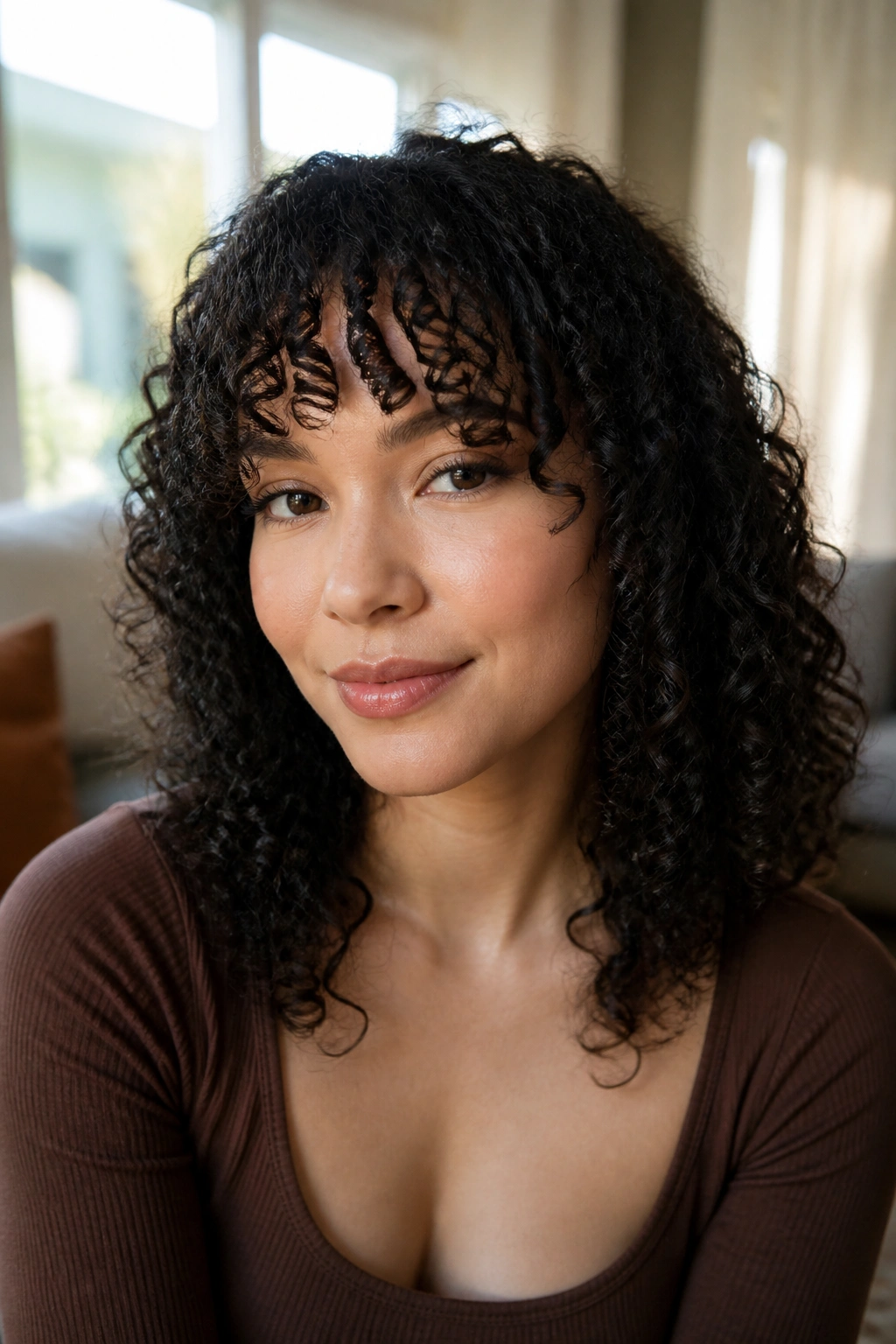
The bottleneck shape earns its keep because it looks soft near the middle and fuller at the sides. That little curve keeps the fringe from feeling boxy, which is a real risk on curls that expand as they dry. It’s a tidy shape without being stiff.
What I like here is the balance. The center opens the face, while the side pieces carry enough weight to feel deliberate. If your curls are loose at the front but denser near the temples, this shape often lands better than a straight-across cut.
It also grows out politely. Not gracefully. Politely. That matters more than people admit.
3. Curly Shag Fringe With Lots of Lift
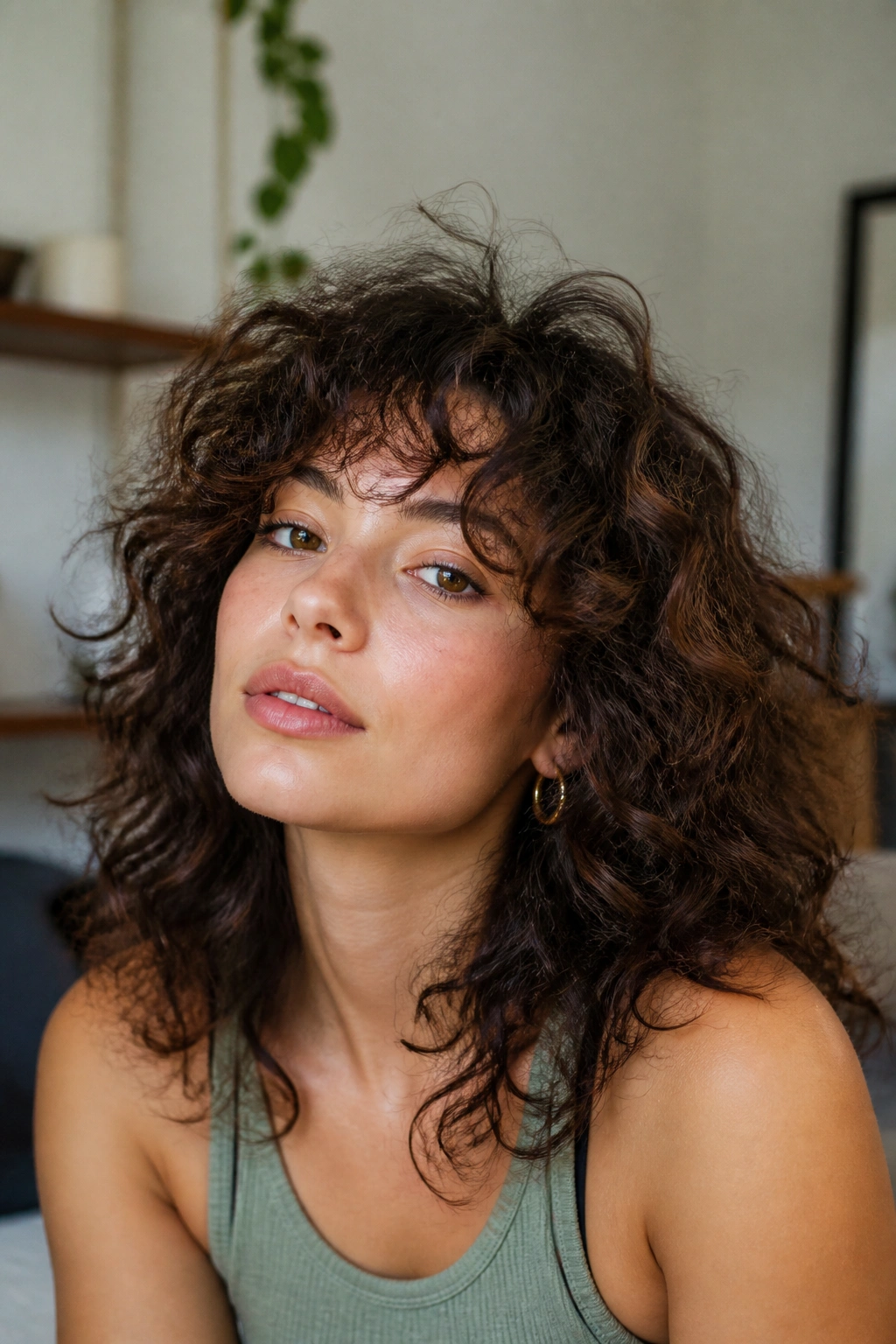
Want height at the crown without that mushroom shape nobody asked for? A shag fringe does the job. It leans into layers, broken texture, and a slightly undone front that makes curls look bigger in a good way.
What Makes It Different
A shag fringe is less about one obvious bang line and more about a front section that melts into the rest of the haircut. The front curls can be shorter near the nose or cheekbone, then gradually join the side layers.
That makes this cut a smart choice if your curls are dense, springy, and prone to puffing. The fringe feels lively, not heavy.
- Ask for layers that start high, around the cheekbone
- Keep the front pieces soft, not razor-thin
- Best with a diffuser and a little root lift
If you like movement over neatness, this is a strong pick.
4. Micro Bangs That Sit High on the Forehead
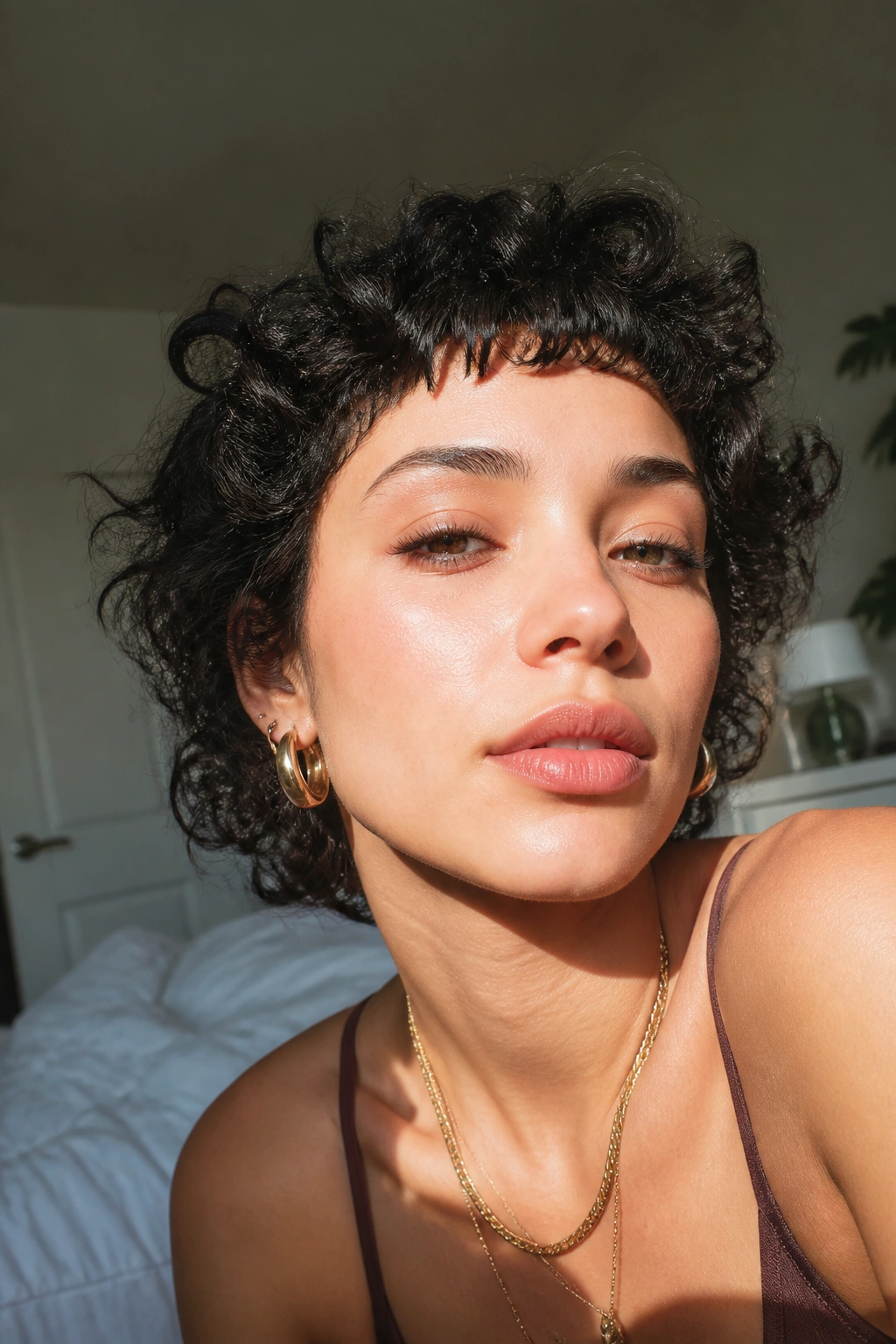
Tiny curly bangs are not shy. They put the forehead on display and make the curl pattern part of the statement. On tight curls, they can look sculptural; on looser curls, they can look playful in a way that feels almost graphic.
The catch is shrinkage. Micro bangs are the least forgiving length on this list, which means the cut has to be done with a clear eye for where the curls land once they dry. Too short, and they can jump awkwardly. Too long, and the whole effect is lost.
I like micro bangs on people who already wear bold glasses, sharp liner, or short cuts. They hold their own. They do not whisper.
5. Side-Swept Curly Bangs for an Easy Off-Center Look

A side-swept fringe is the quiet fix when you want bangs but not a full curtain across the forehead. One side carries the shape, the other side gives you breathing room. That off-center fall is flattering on rounder faces and on hair that puffs up fast in humidity.
The nice part is how little fuss it needs. You can let it fall naturally, clip it back, or tuck it behind the ear when you need to change the shape. It never feels boxed in.
This is one of those cuts I’d call low-stress rather than low-maintenance. Small difference. Big truth.
6. Rounded Curly Fringe That Follows the Brow Line
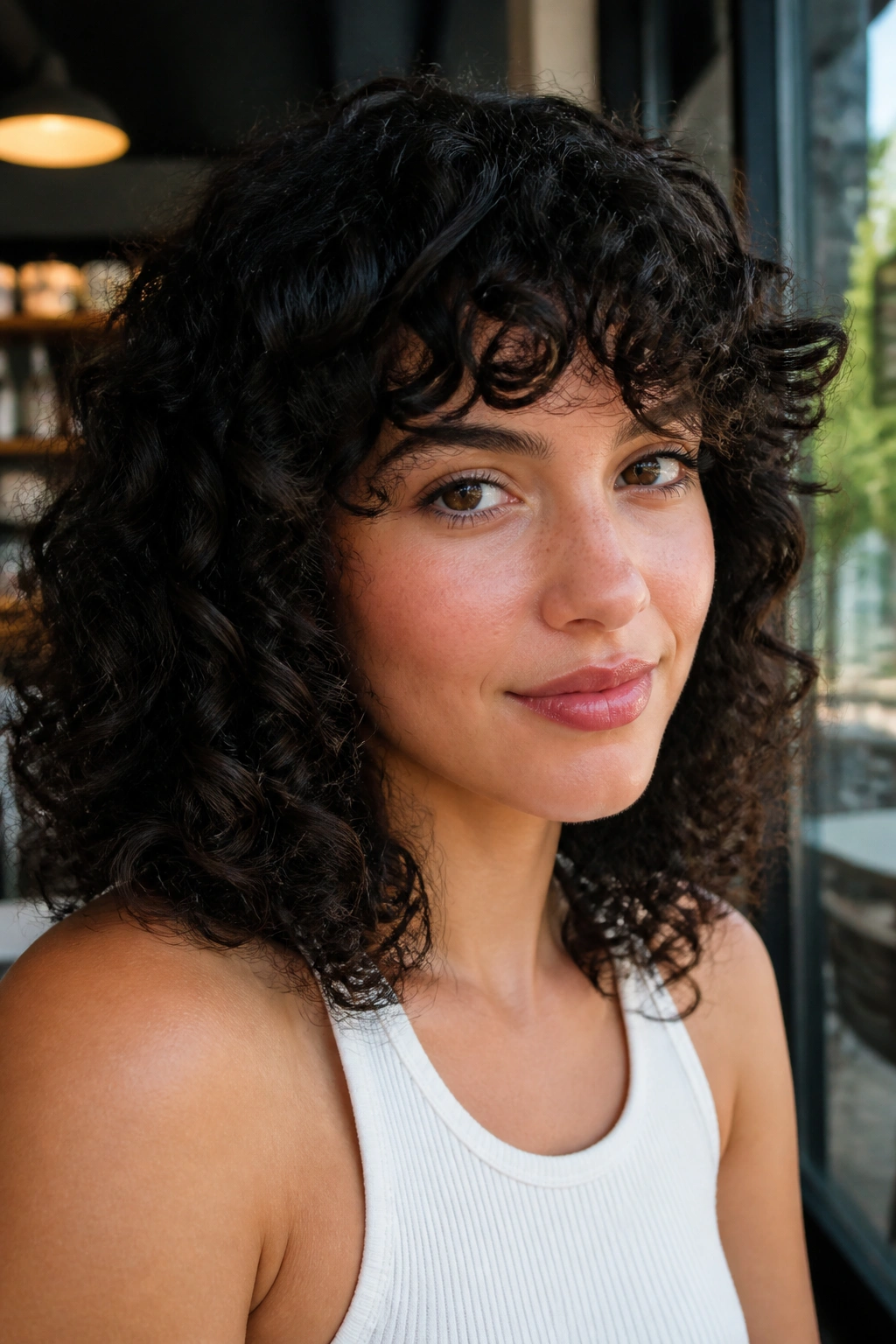
Unlike curtain bangs, a rounded fringe hugs the shape of the forehead and brow area a little more closely. It gives curls a soft arc instead of a split, which can be lovely on oval or longer face shapes.
The shape works because the eye reads the curve before it reads each individual curl. That keeps the front from looking choppy. It also lets you keep the fringe a touch longer in the middle while the sides fall neatly toward the temples.
A Good Fit If You Want:
- A softer alternative to blunt bangs
- A shape that feels polished without being severe
- A fringe that works with one big curl clump or several smaller ones
Rounded bangs need a good dry cut. Wet curls lie.
7. Brow-Grazing Blunt Bangs With Dense Curly Hair
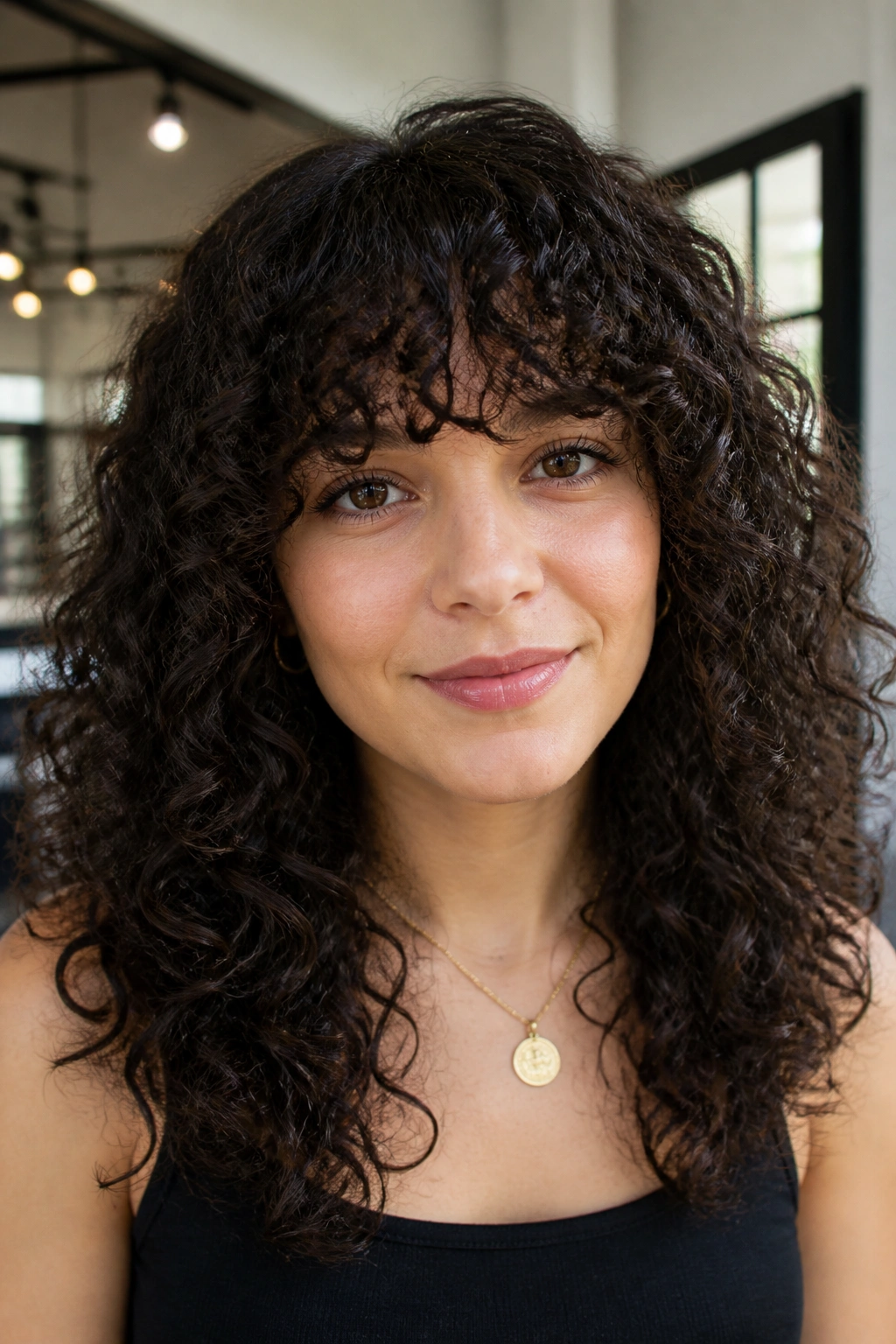
A blunt line on curly hair sounds scarier than it is. Done well, it gives the front of the haircut a clean edge while the curl pattern keeps it from looking flat or stiff. Dense curls handle this especially well because they keep enough weight to support the shape.
The key is restraint. Too much thinning and the line falls apart. Too much layering and the blunt effect disappears. A good stylist will leave the fringe full, then fine-tune it so the ends don’t look bulky.
This style feels strongest when the curls are uniform. If your pattern changes a lot from one section to the next, the line can get wobbly fast.
8. Long Grown-Out Bangs That Brush the Cheekbones

Long bangs are the ones I trust when someone wants a soft change without committing to a short fringe. They sit around the cheekbone or jaw, which means they can tuck, twist, or fall forward depending on the day.
They’re also kind to curl shrinkage. A piece that starts long has room to spring up without becoming too short. That makes them easier to live with between cuts, which is not a small thing.
If you’re nervous, start here. Seriously. Long bangs are the calm middle ground, and they still give you that face-framing shift people notice right away.
9. Feathered Face-Framing Bangs With Soft Ends
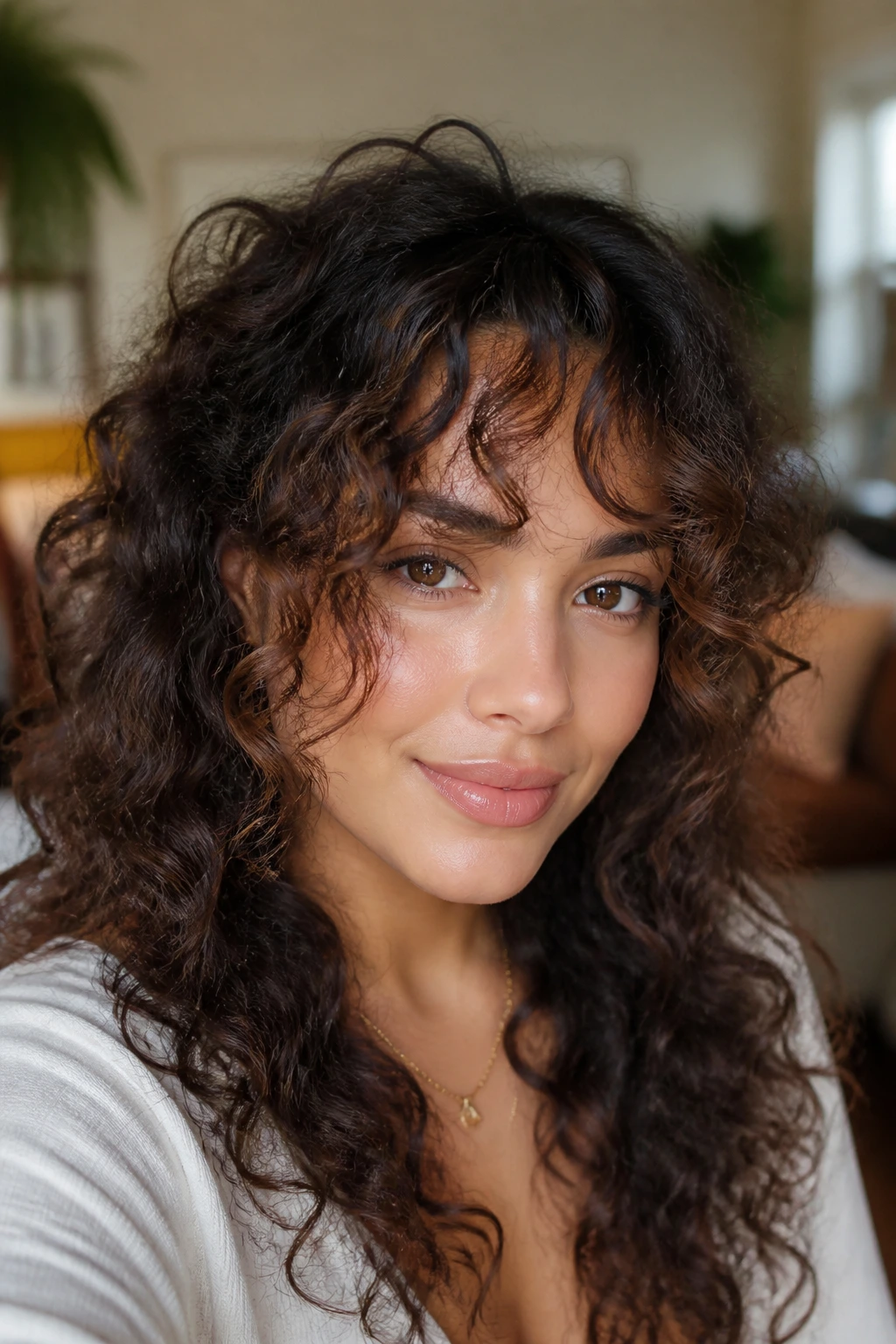
Face-framing feathering works when you want movement, not a full curtain. The front section is cut into light, separated pieces that fall around the eyes and cheeks instead of making one heavy shape across the forehead.
That softness matters on curls that like to clump. Rather than fighting the clumps, the cut uses them. A few front pieces can take the lead while the rest sit back and blend into the layers.
This style suits hair that has some bend but not a ton of density at the front. It also plays well with layered medium-length cuts. You get bangs. You also get escape routes.
10. Spiral Baby Bangs That Let Each Curl Stand Up
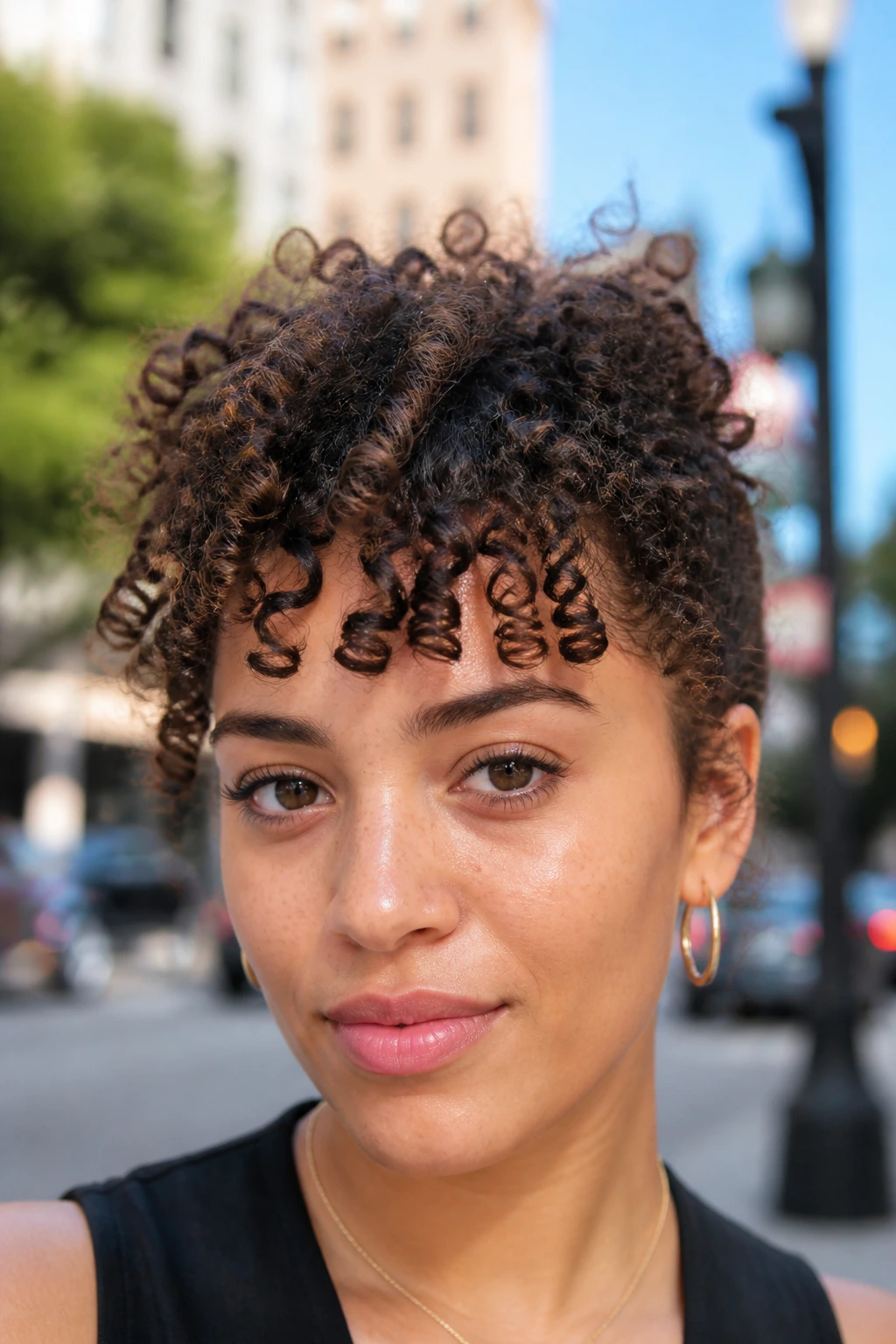
Spiral baby bangs are short enough to show off the curl pattern itself. Each coil or ringlet becomes its own little shape, which gives the forehead area a playful, almost decorative look. They’re tiny, but they’re not quiet.
How to Wear Them Well
The best version avoids over-cutting the front. Short curls shrink hard, and if the bang starts too high, it can pop upward in a way that feels accidental. Leave enough length so the curl can form a full loop.
- Best for tight curls and coils
- Needs regular reshaping
- Looks strongest with a short or cropped haircut
- Works well if you like a face-framing style with attitude
These bangs are a statement first, a convenience second.
11. Wolf-Cut Bangs That Melt Into the Layers
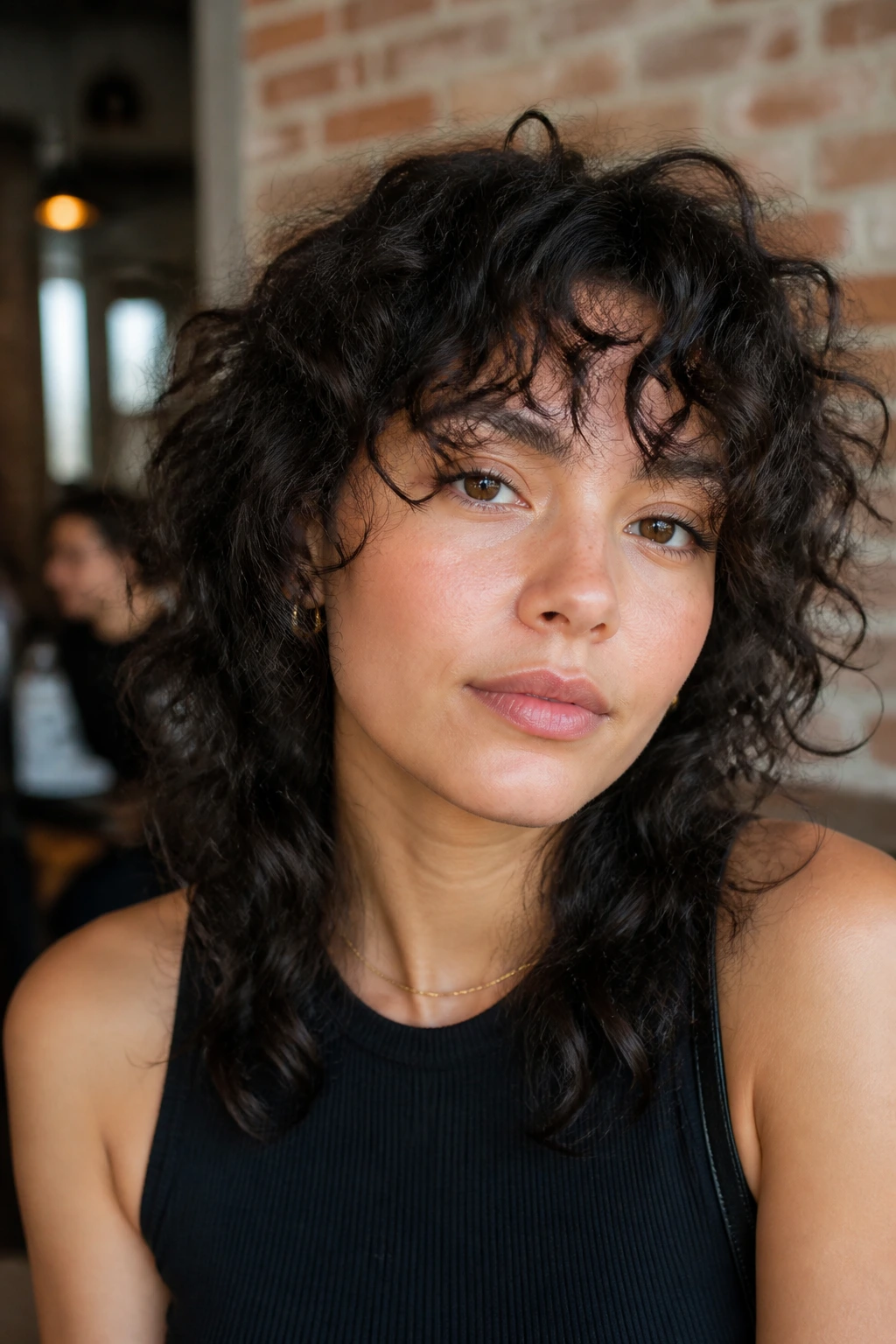
If your hair already loves texture, the wolf-cut fringe is the least fussy match. It’s choppy, layered, and built to blend into the rest of the haircut instead of standing apart like a separate piece. On curly hair, that blur is the whole appeal.
The front can be a little longer in the center and broken up around the sides, which keeps the shape from feeling too square. I’d choose this cut for someone who wants a rockier edge without a lot of styling time.
It does need a cut that respects balance. Too much weight at the front, and the whole thing gets heavy. Too little, and the bangs vanish.
12. Birkin-Inspired Curly Fringe With a Soft, Dense Finish

The Birkin-style version sits between soft and dense. It skims the forehead, keeps a slightly messy edge, and lets curls create a lived-in finish rather than a polished one. On curly hair, that looseness is the point.
What makes it different is the density. It isn’t see-through. It has enough hair to feel like a real fringe, but the ends are not cut into a hard line. The shape looks a little romantic, a little casual, and never overworked.
This is a good choice if you want bangs that feel vintage without turning costume-like. Keep the length just below the brows, then let the curls decide the final line.
13. Deep Side-Part Bangs That Sweep Across the Forehead

Drop the part far to one side and the whole forehead changes shape. Deep side-part bangs give you that sweep without forcing a full fringe, and they’re especially useful if one side of your hair naturally lies flatter than the other.
The front section should be long enough to curve across the face, then taper into the rest of the cut near the cheekbone. That taper keeps the shape from looking abrupt. It also stops the bangs from fighting your natural part.
This style feels a little dramatic in motion. Wind hits it nicely. So does a good ear tuck.
14. Heavy Dense Bangs for Thick Curl Patterns
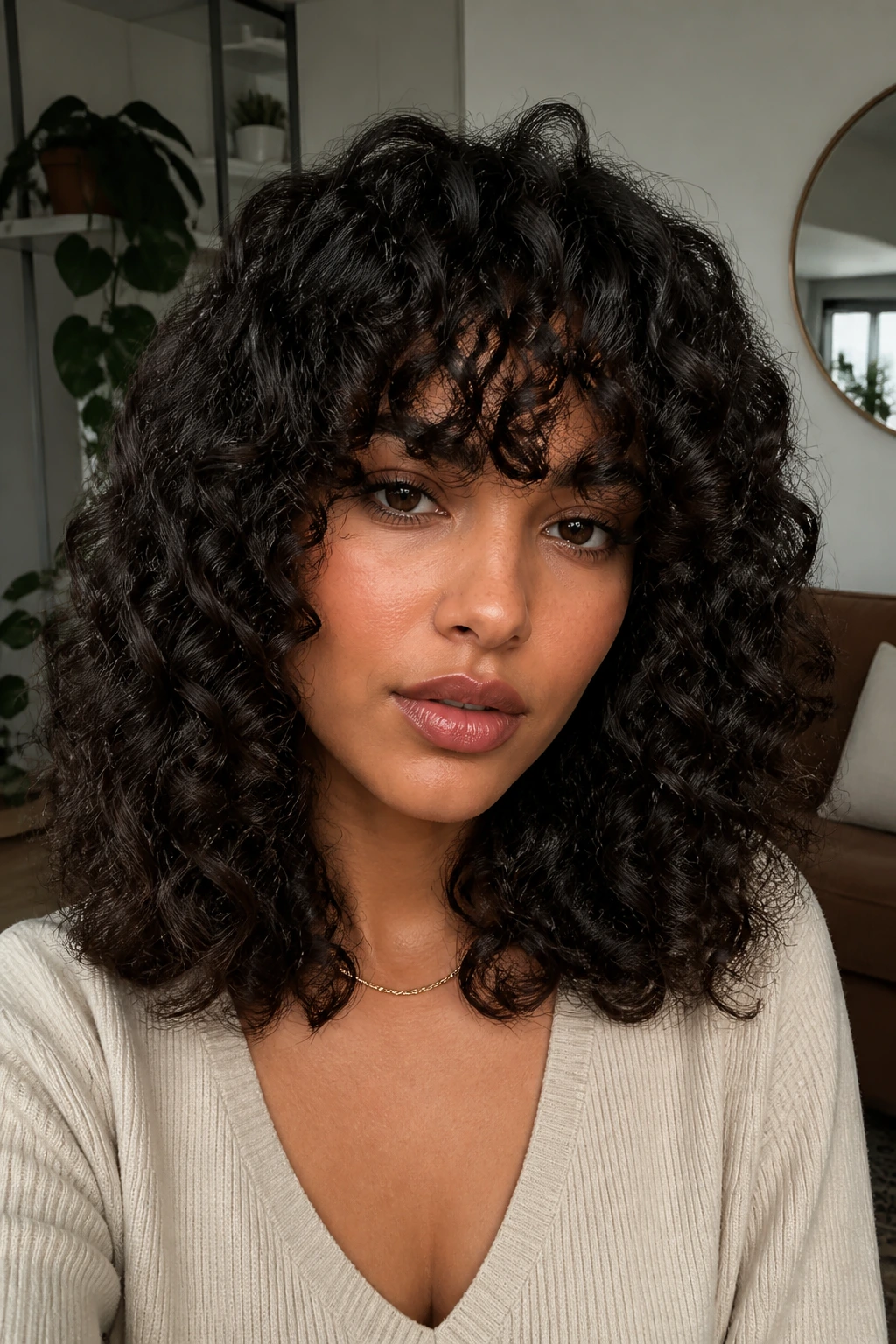
Dense curls can carry more weight at the front. That’s why a heavy fringe sometimes looks better on curly hair than it does on straight hair. The curls break up the thickness, so the bang reads full rather than blocky.
The mistake people make is thinning too aggressively. Leave the density. Shape it. The hair needs enough substance to keep its line once it dries and expands.
I’d choose this if your hair is thick from root to end and you like the feeling of a strong frame around the face. It’s a bolder look than curtain bangs, and it can be gorgeous when the curl pattern is consistent.
15. Wispy Airy Bangs for Fine Curls

Fine curls need a different game. Heavy bangs can swamp them, which leaves the front looking sparse and the rest of the hair looking louder than intended. Wispy bangs solve that by keeping the front light, separated, and soft around the eyes.
The trick is not to over-layer them into nothing. You still need enough hair to show a shape. Just enough. Too much thinning and the fringe disappears the moment the hair dries.
This version is best when you want the idea of bangs more than a big, obvious statement. It’s subtle, which can be a relief if your curls already do plenty on their own.
16. Coily Halo Bangs That Frame the Whole Face
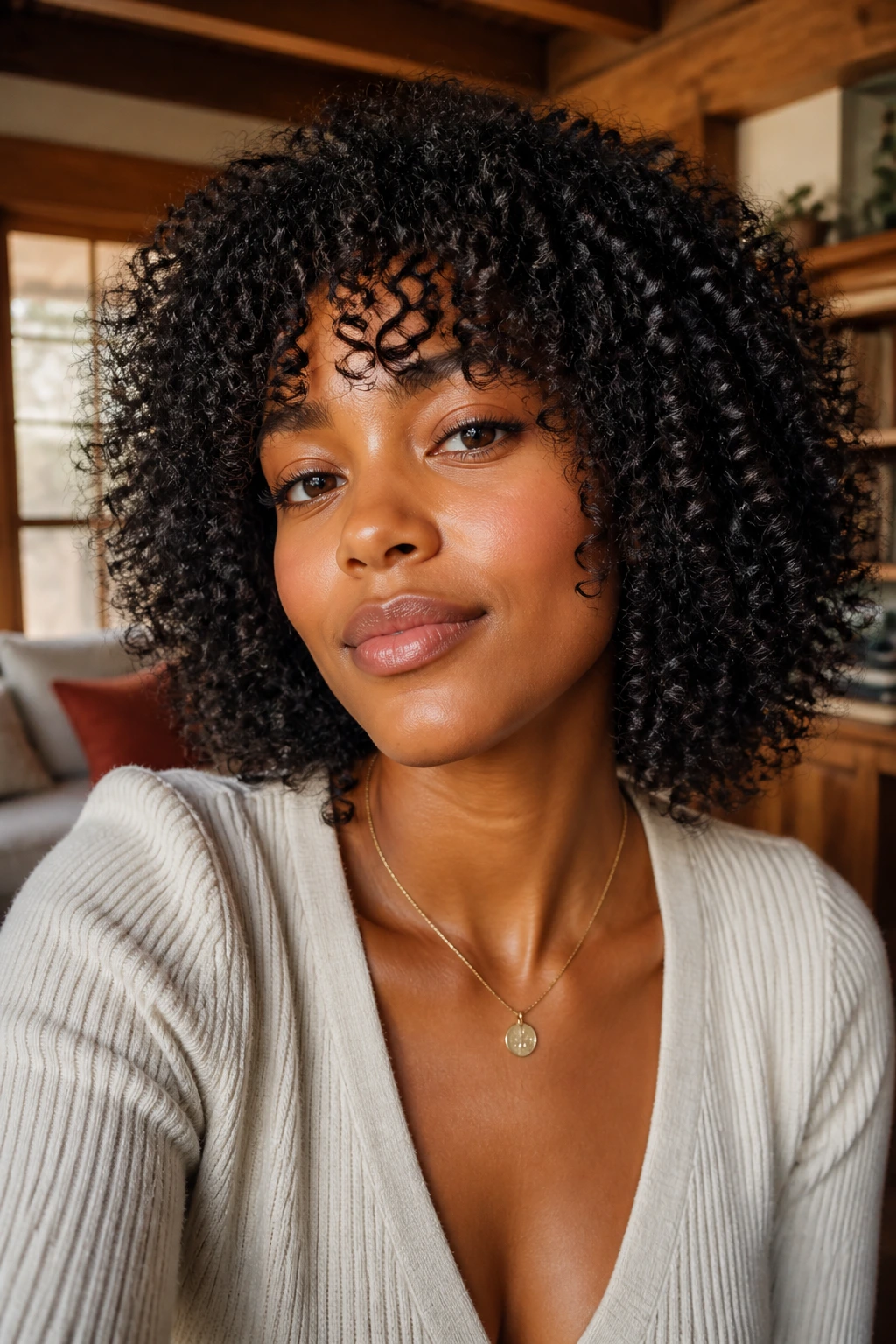
A coily halo fringe turns the front of the head into part of the silhouette. Instead of one flat line, you get a soft ring of curls that sits around the forehead and temples like a frame. The result is fuller and more sculpted than most straight-across bangs.
Why It Stands Out
This style works because coils create shape upward and outward. A careful cut keeps the curls balanced so the front doesn’t balloon into a triangle.
- Best for 3C to 4C texture
- Looks strongest with rounded shaping
- Needs moisture to keep the coil pattern defined
- Can be paired with tapered sides or a short afro shape
It’s one of the few fringe styles that actually gets better when the curls look alive.
17. Tapered Pixie Bangs With a Tight Front Edge
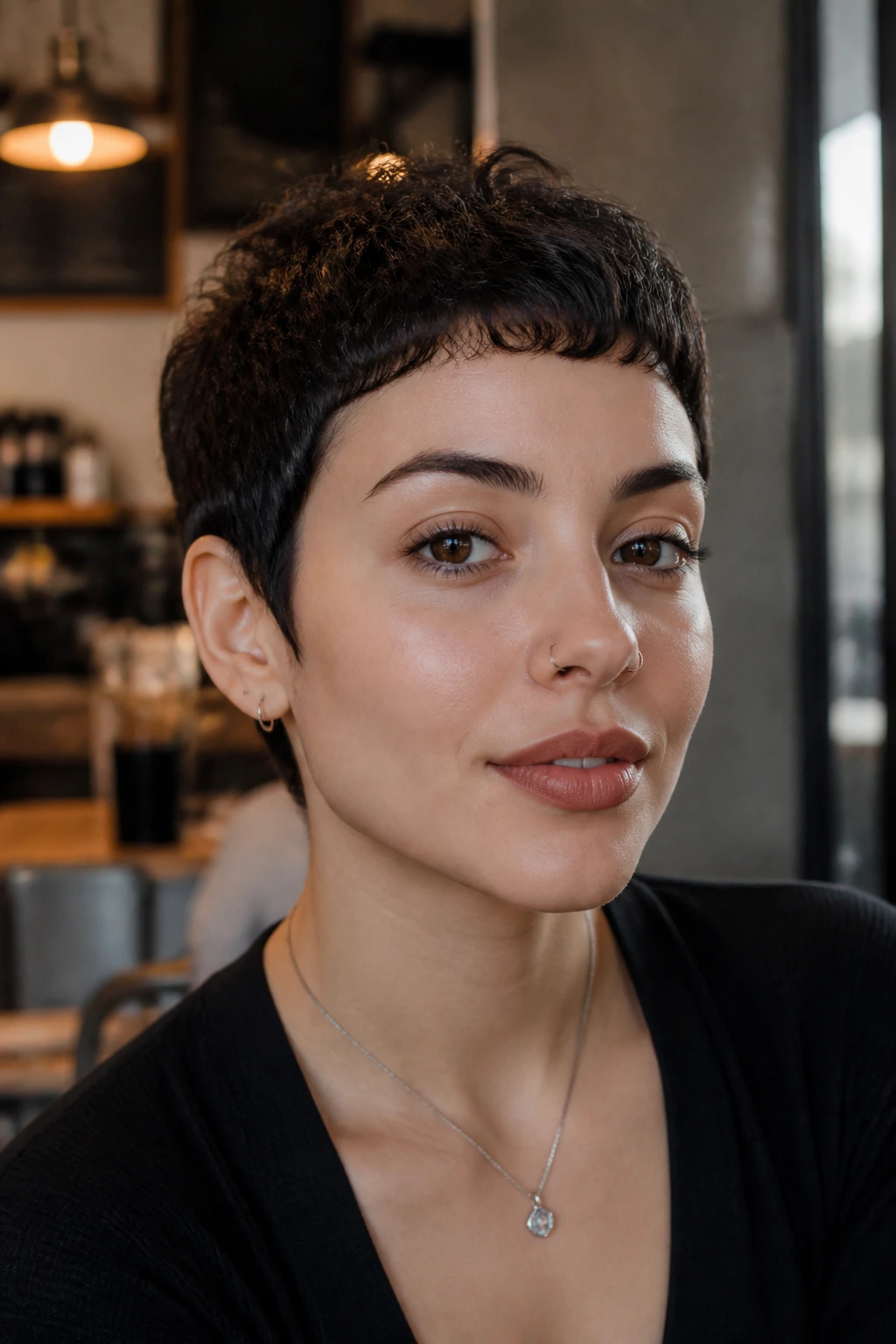
Short pixie bangs are about balance, not just daring. The cut keeps the sides and back close while leaving enough in front to create a tiny fringe that kisses the forehead. On curls, that can look sharp in the best sense.
The taper matters. If the sides are too bulky, the whole head can feel top-heavy. If the top is left too long, the bang loses its crispness. The cut has to be clean, then softened just enough for the curl pattern.
This is a strong move for anyone who wants short hair but still wants a front feature. It’s neat. It’s expressive. It also grows out faster than people expect.
18. Arched Bangs That Trace the Brow Shape
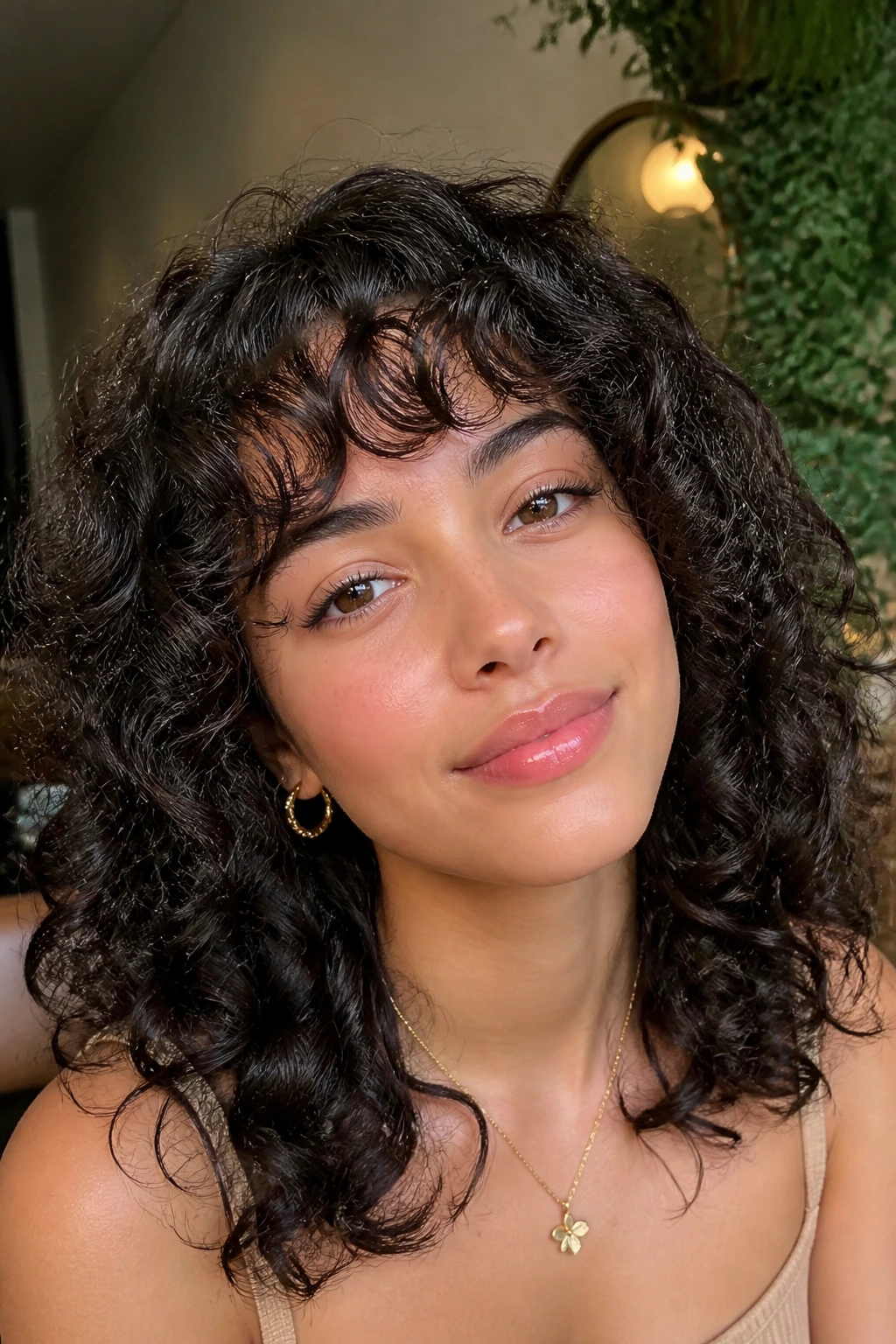
An arched line can be softer than it sounds. Instead of cutting the fringe flat, the shape rises slightly in the center and lowers toward the outer corners, following the natural curve of the brow. That gives curly bangs a tailored look without making them stiff.
The arch works because it mirrors the face. Your eyes land on the shape, then the curls. The whole front feels intentional even when the texture is a little unruly.
I like this cut when someone wants a polished outline but still wants curl movement. It’s not fussy. It just looks considered.
19. Chin-Length Fringe That Blends Into the Jaw

A chin-length fringe is really a face-framing layer wearing bangs’ clothes. The front pieces are long enough to brush the jaw or chin, which makes them easy to tuck, twist, or leave loose. On curly hair, that extra length keeps the shape from bouncing too high.
This is a nice middle road for people who can’t decide between bangs and no bangs. You get the frame, the softness, and a lot of styling options. You also get room to change your mind later.
It works especially well on longer faces because the front length opens the cheek area without swallowing it. That balance is the whole trick.
20. Split Fringe With a Center Part

Split bangs are the easiest way to show skin without losing softness. They part in the middle, but unlike a full curtain fringe, the shorter pieces stay a bit more compact and focused around the eyes.
That makes the forehead feel open while still giving the haircut a clear front shape. On curly hair, the split can look especially good when the two halves fall slightly unevenly. A little asymmetry keeps it from feeling too neat.
If your curls clump in a way that creates natural strands, this style is kind to them. It gives the hair a place to go instead of forcing a straight line.
21. Asymmetrical Bangs That Lean to One Side

Asymmetry can fix a forehead that wants movement on one side. One section is kept shorter, the other longer, and the curl pattern does the rest. The result feels a little art-school and a little practical, which is a nice combination.
The best part is how it shifts attention. A slightly uneven fringe makes the eye move across the face instead of stopping dead at the middle. That can soften strong features or add edge to a softer cut.
What to Watch For
- One side should still blend into the layers
- The shorter side needs enough length to curl, not spike
- Works best when the part is intentional, not accidental
It’s a good choice if symmetry bores you.
22. Temple-Start Bangs That Keep the Center Open
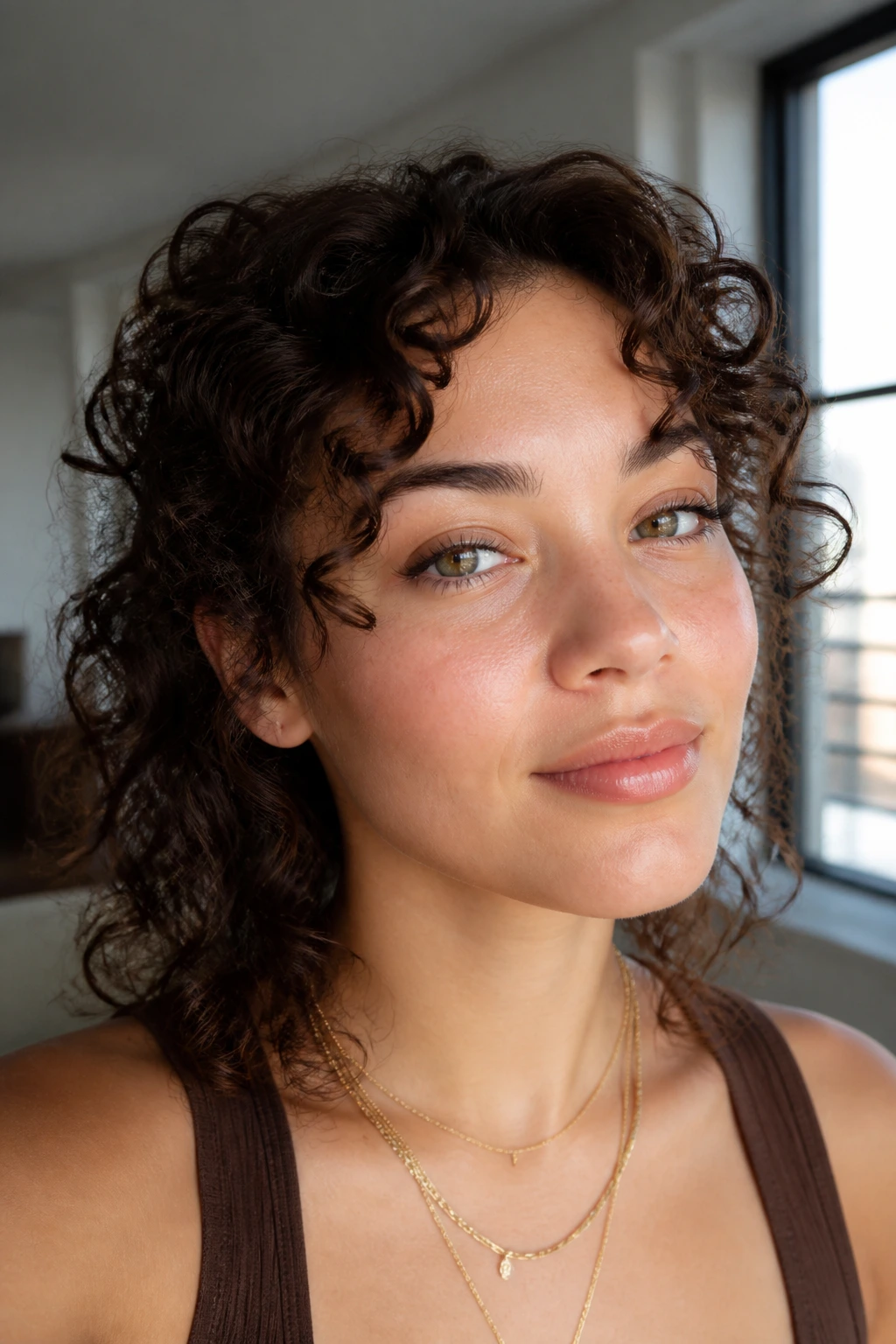
Temple-start bangs keep the middle open and let the fringe begin farther out on the head. That means less weight across the forehead and more emphasis on the eyes, cheekbones, and side profile.
The style feels airy because the front center stays visible. The bangs live near the temples instead, where they can soften the face without swallowing it. That’s a smart move for curls that expand a lot after drying.
This shape is especially kind to people who wear glasses. The frame and the fringe don’t compete. They talk to each other.
23. Rounded Mop-Top Bangs With a Casual Finish
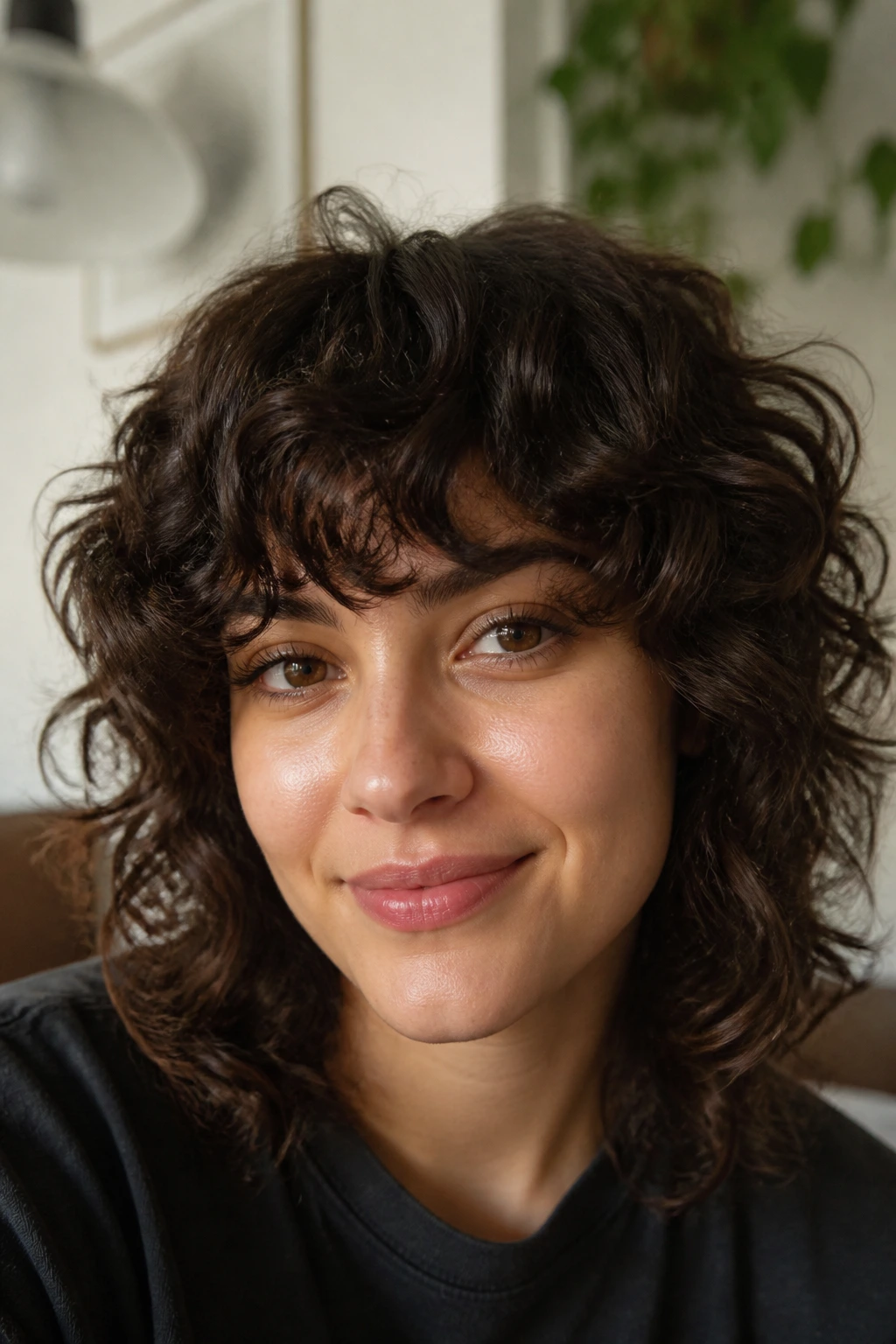
A rounded mop-top fringe looks casual until you see how much shape it gives. The curls land in a soft dome around the forehead, usually a little fuller in the center and shorter at the sides. It has a vintage feel without being precious.
The shape works best when the hair has natural bounce. If the curls are limp, the whole idea falls flat. If the curls are springy, the fringe creates an easy, almost effortless silhouette.
This one is a little cheeky. Not in a loud way. In a “I woke up like this, but I also know a good haircut” way.
24. Layered Bangs for a Curly Lob
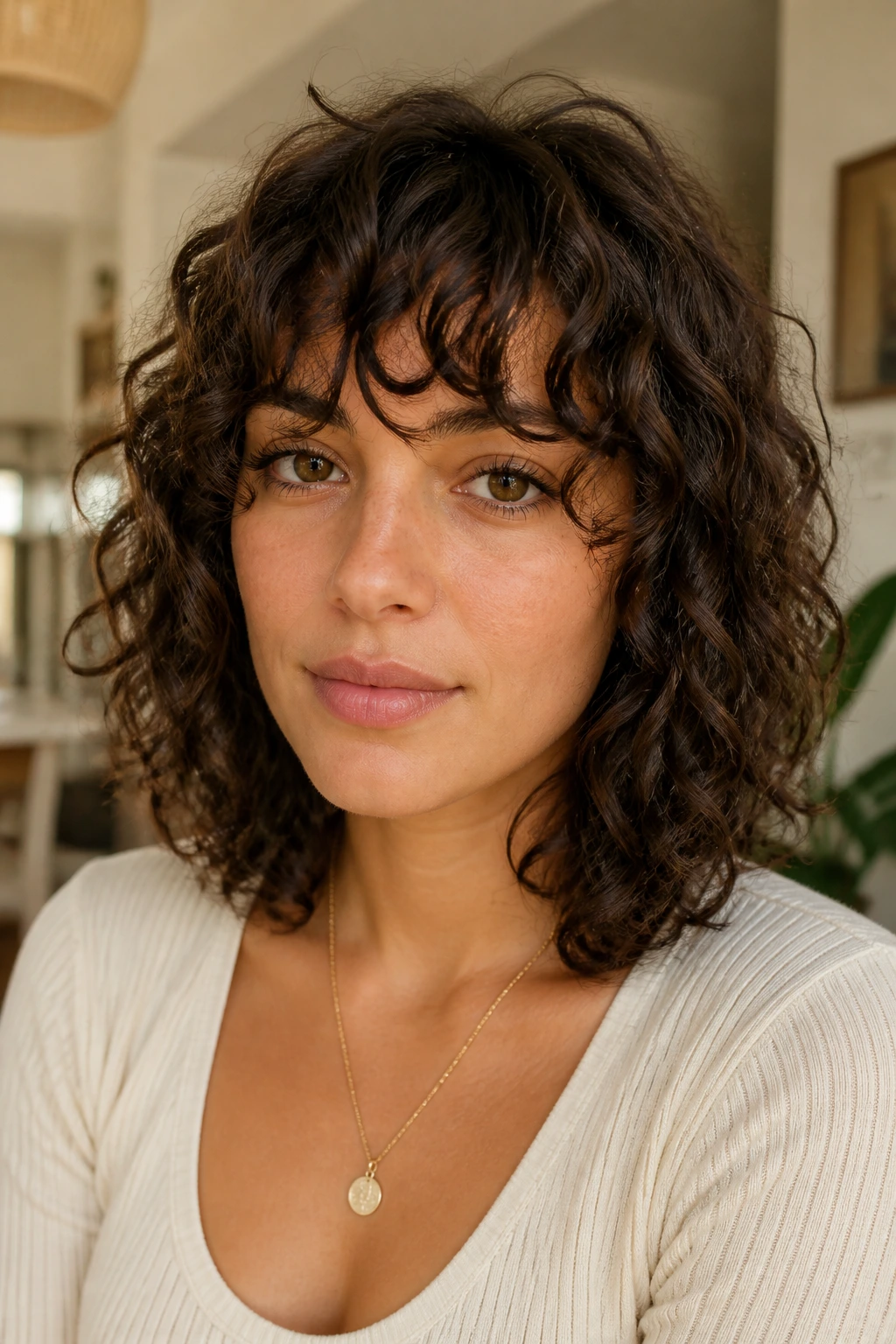
A curly lob with bangs is a safer haircut than people think. The front pieces can be shaped to sit around the eyes while the rest of the lob keeps the length and weight in the back. That balance gives you fringe without losing the clean line of the cut.
The layers matter here. Too few, and the front looks heavy. Too many, and the whole lob turns fluffy. A good version keeps the bangs light enough to move but not so light that they break apart.
This is a solid pick if you like structure. It’s not a wild haircut. It’s a sensible one with a little personality.
25. Full Fringe With Long Layers Behind It

Full fringe plus long layers is the dense, romantic option. The bangs sit across the forehead with enough hair to feel substantial, while the lengths behind them stay long and broken up. On curly hair, that contrast is lovely.
It works because the fringe has a clear job. It shapes the face. The longer layers handle movement elsewhere. That keeps the haircut from feeling crowded at the front.
I’d choose this when the goal is softness with presence. It’s not subtle, but it doesn’t need to be. The curls already bring enough texture.
26. Under-Curved Bangs That Bend Inward

An under-curved fringe bends inward instead of hanging flat. Think of it as bangs with a little tucked shape at the ends, which helps them sit closer to the face. On curls, that bend keeps the fringe from kicking out in random directions.
The curve is useful when the front of the hair wants to puff away from the forehead. A shaped edge can pull the eye downward and make the cut feel neater.
This is a nice choice for someone who likes clean outlines but still wants curly movement. It’s tidy without being severe.
27. Short Cropped Bangs for Tight Coils
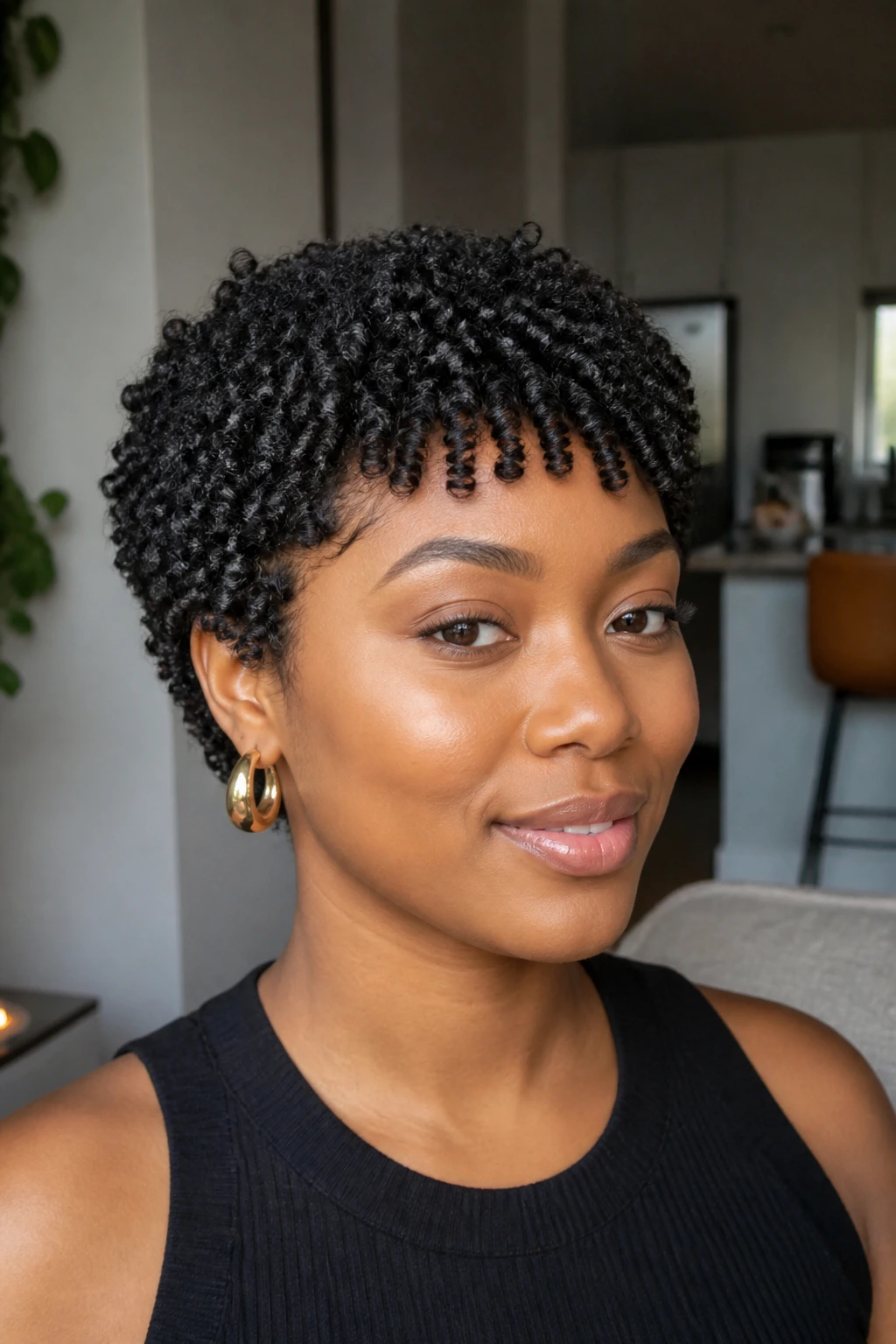
Short cropped fringe looks best when it respects shrinkage. On tight coils, the hair can spring up a full inch or more, so the cut has to leave room for that bounce. Done right, the result is crisp and lively.
The shape usually sits high on the forehead and can be paired with a tapered or rounded cut. The bangs become a tiny focal point, not a heavy strip. That keeps the look light even when the texture is dense.
This style is not for someone who wants to hide. It is for someone who likes their hair to have a little attitude.
28. Long Swoop Bangs That Move Across the Face
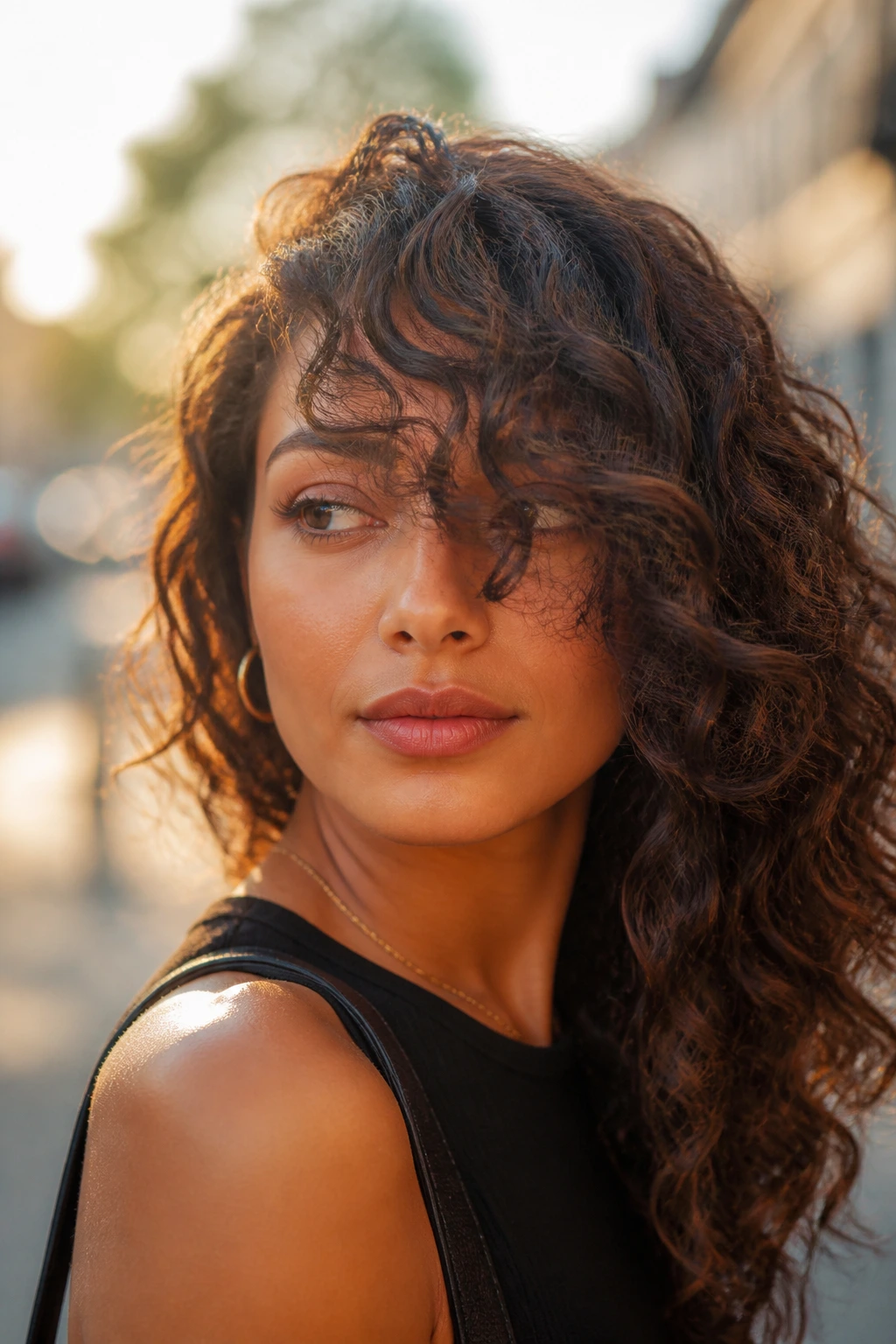
A long swoop gives you bangs without blocking the eyes. The front section starts at a deep part and curves diagonally across the forehead, landing near the cheekbone or jaw. That diagonal line is flattering because it softens straight-on symmetry.
The curl pattern adds motion. Even if the bangs don’t stay perfectly in place, the swoop shape still reads clearly. That makes it easier to wear than a precise straight fringe.
I like this cut on people who want something stylish but not high-maintenance. It has shape, and it forgives a messy morning.
29. Fringe With Curled-Out Ends for a Retro Feel
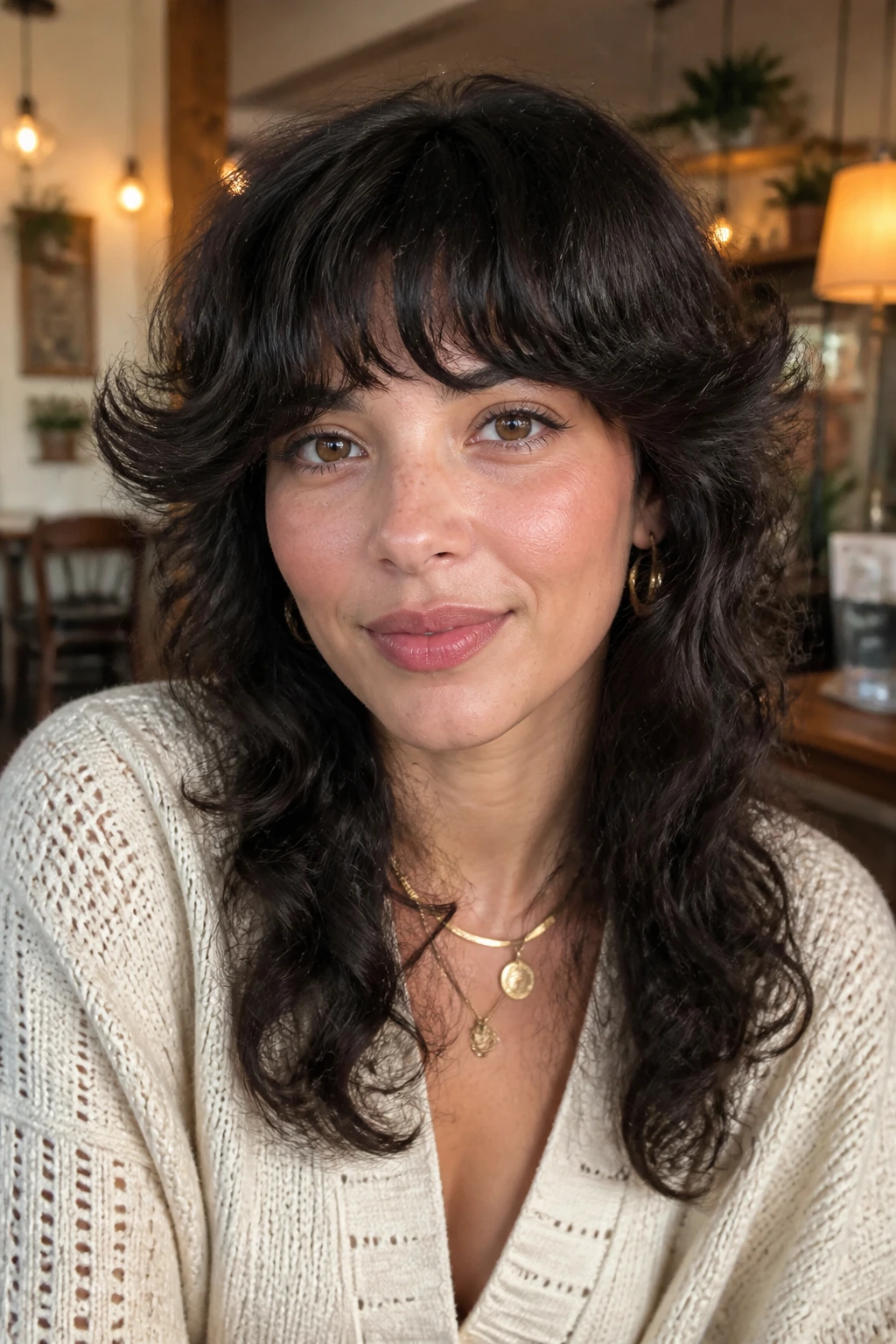
Curl the ends out and the fringe feels retro without turning costume-y. The shape gives the bangs a little bounce away from the face, which can be very flattering on mid-length curls and layered cuts.
The trick is keeping the front long enough that the ends can flip instead of sticking out like short bristles. That small detail makes the difference between cute and awkward. A little length buys you movement.
How to Get the Most From It
- Use a diffuser on low airflow
- Twist the front pieces once while damp
- Let the ends dry with a soft bend, not a stiff clamp
It’s a charming option when you want the front to feel playful.
30. Soft Piecey Bangs That Break Into Small Sections
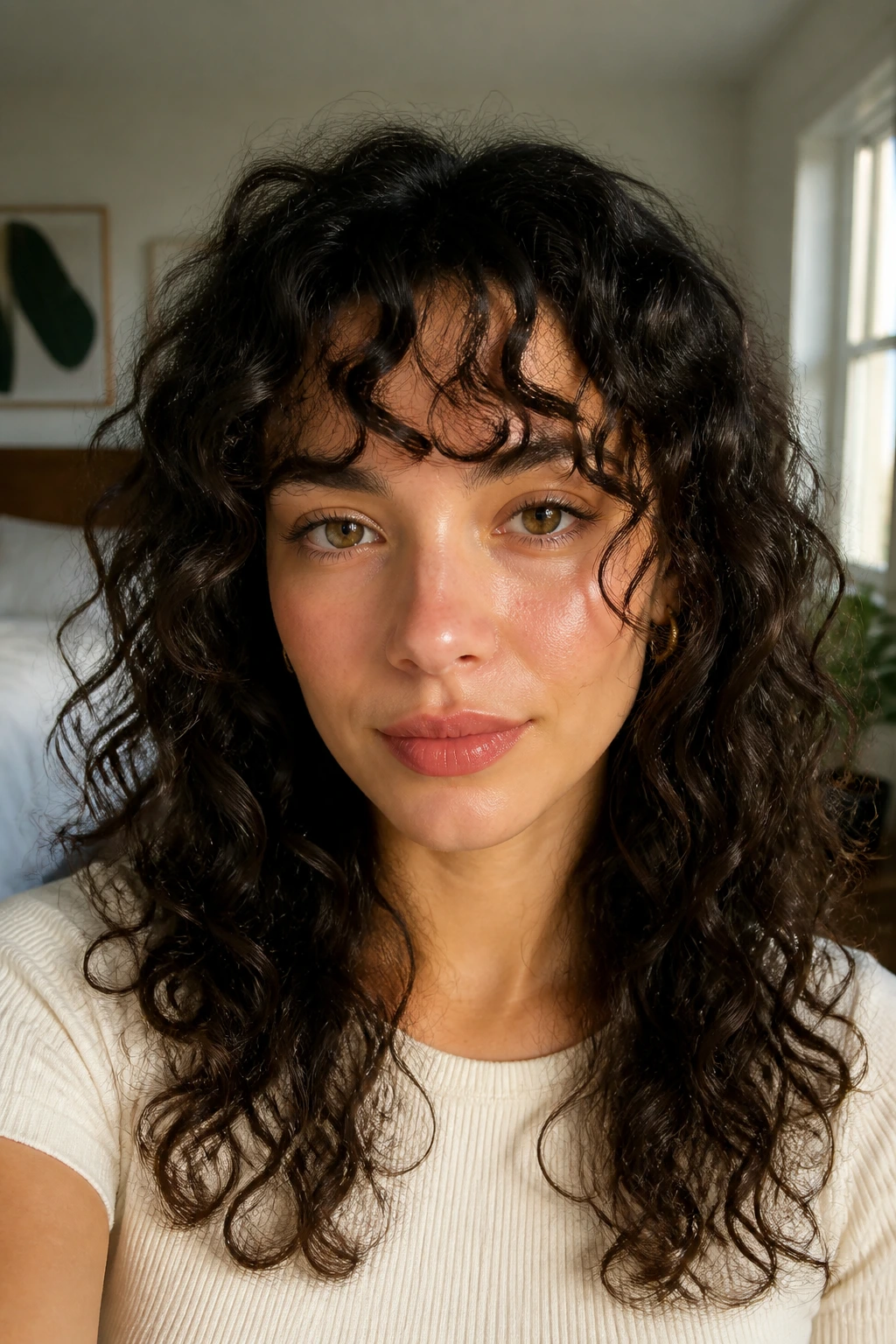
Piecey bangs are the easiest way to keep a curly fringe from looking helmet-like. Instead of one solid curtain, the front breaks into smaller curls or separated chunks, each with its own direction. That gives the face room to breathe.
The style works because curly hair naturally wants to clump. A piecey cut gives the clumps a nice shape instead of flattening them into one line. It’s one of the most forgiving fringe ideas on the list.
This is a good answer if you hate heavy bangs but still want a clear front frame. The texture does the work. The rest stays easy.
31. Curly Bangs With an Undercut

An undercut changes the whole mood. By removing bulk underneath, you let the front fringe sit lighter and cleaner, which can be a relief if your curls are thick around the temples and ears.
The contrast is the point. The top keeps its shape, the sides stay slim, and the bangs have room to fall instead of puffing outward. That makes the front feel sharper without needing a lot of heat styling.
This is a bold choice, but not a fragile one. It grows out with a bit of edge intact, which is part of the fun.
32. Face-Framing Curl Tendrils That Act Like Bangs
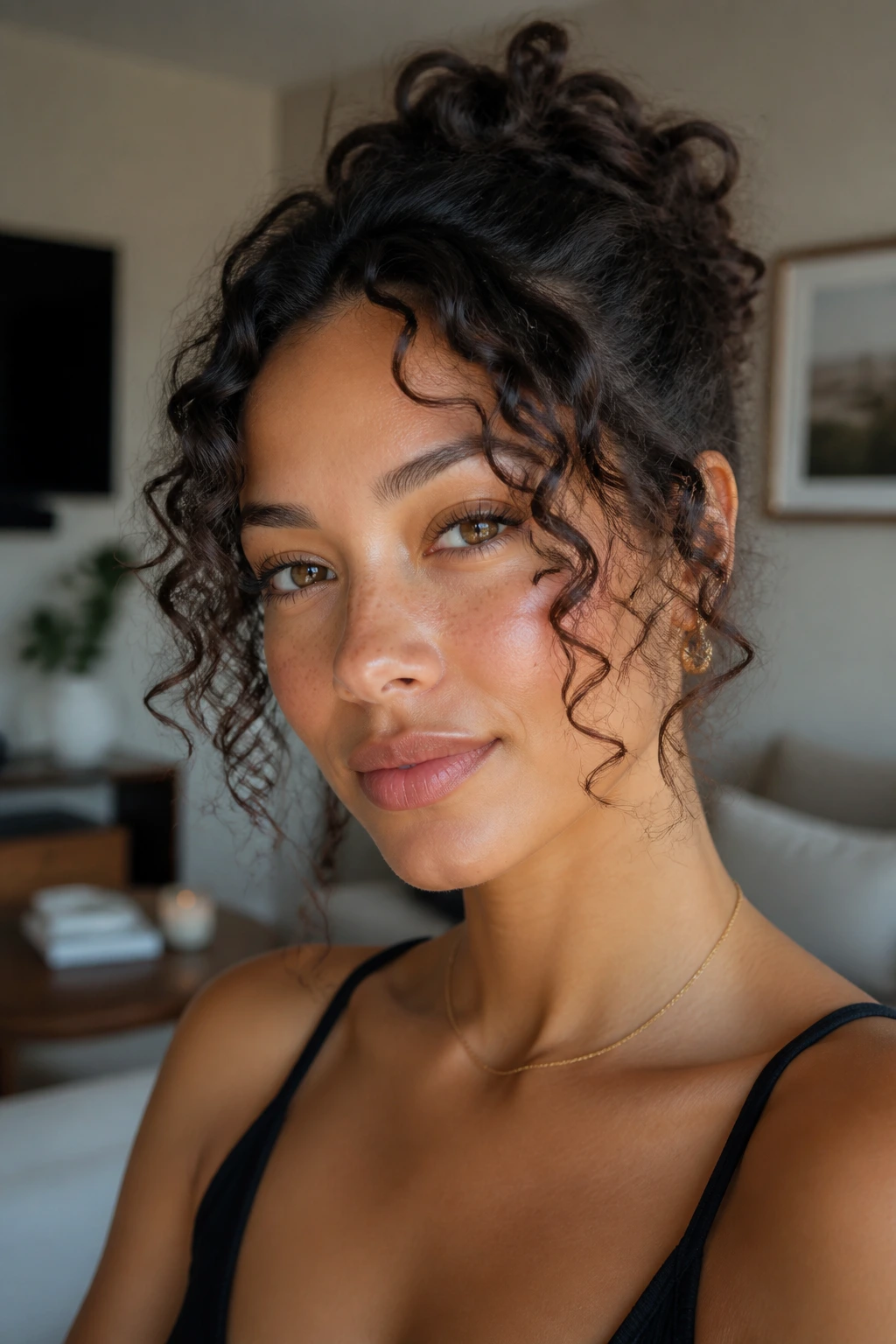
Sometimes the best bangs are not bangs at all. Face-framing tendrils let a few front curls hang loose around the cheeks and forehead while the rest of the hair stays back or layered. It gives you the feeling of fringe without the commitment.
This works especially well if your curls form strong front pieces on their own. Those front curls can be encouraged into a frame instead of cut into a separate section. Less risk. More flexibility.
If you want to test the idea before going shorter, this is the place to start. Clip the sides back, let the front hang, and see what your face likes.
33. Textured French Bob Bangs With a Short Neckline
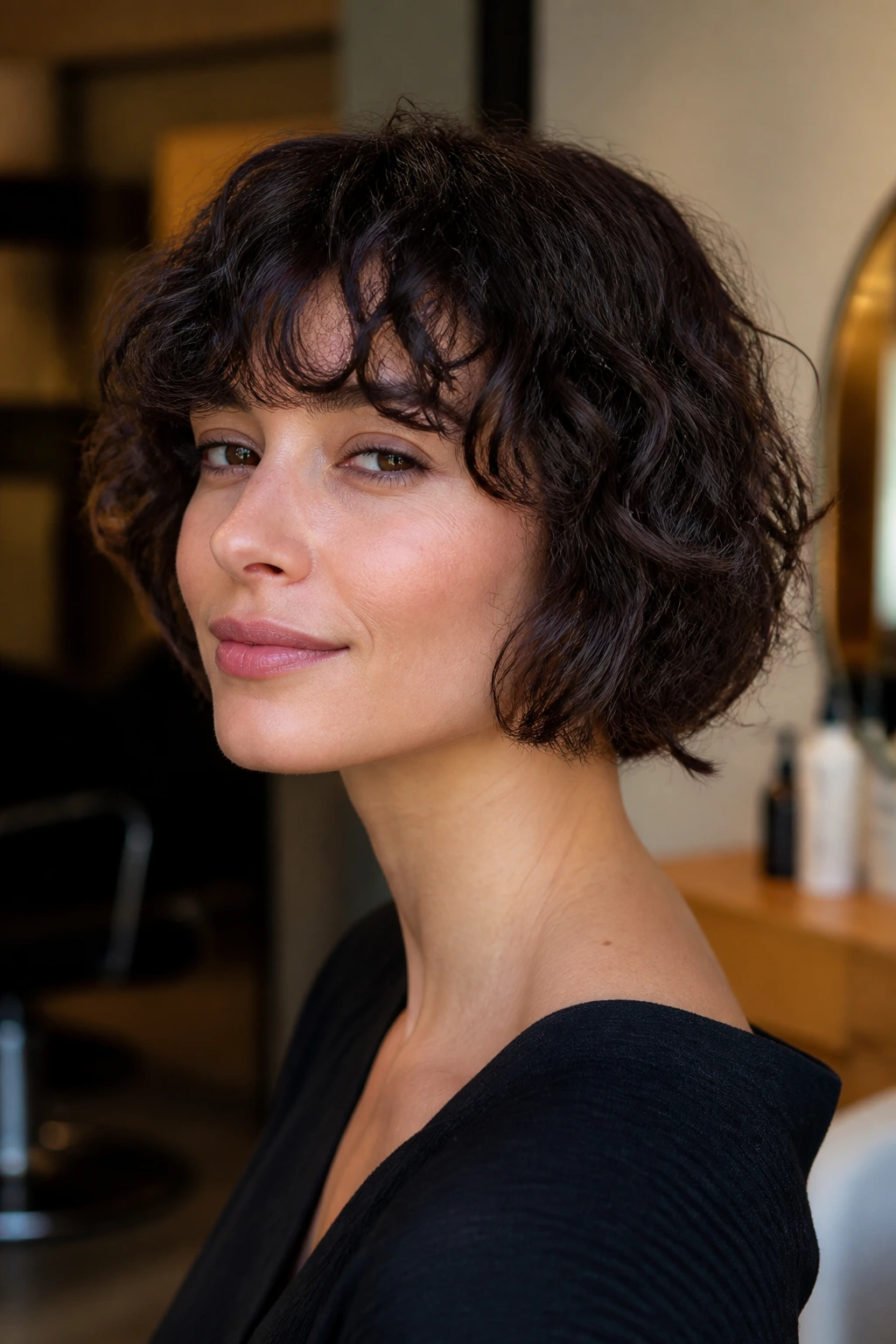
French bob bangs work when the cut has enough neck exposure and enough shape around the jaw. The bangs themselves sit light and textured across the forehead, while the bob keeps the whole look compact and a little airy.
The front should not be too thick. The goal is movement, not a blunt wall. On curls, a small amount of texture goes a long way because the shape expands as it dries.
This cut feels neat, but not stiff. It has that nice contradiction people always want and rarely name correctly.
34. Choppy Razor Bangs That Keep the Edge Soft
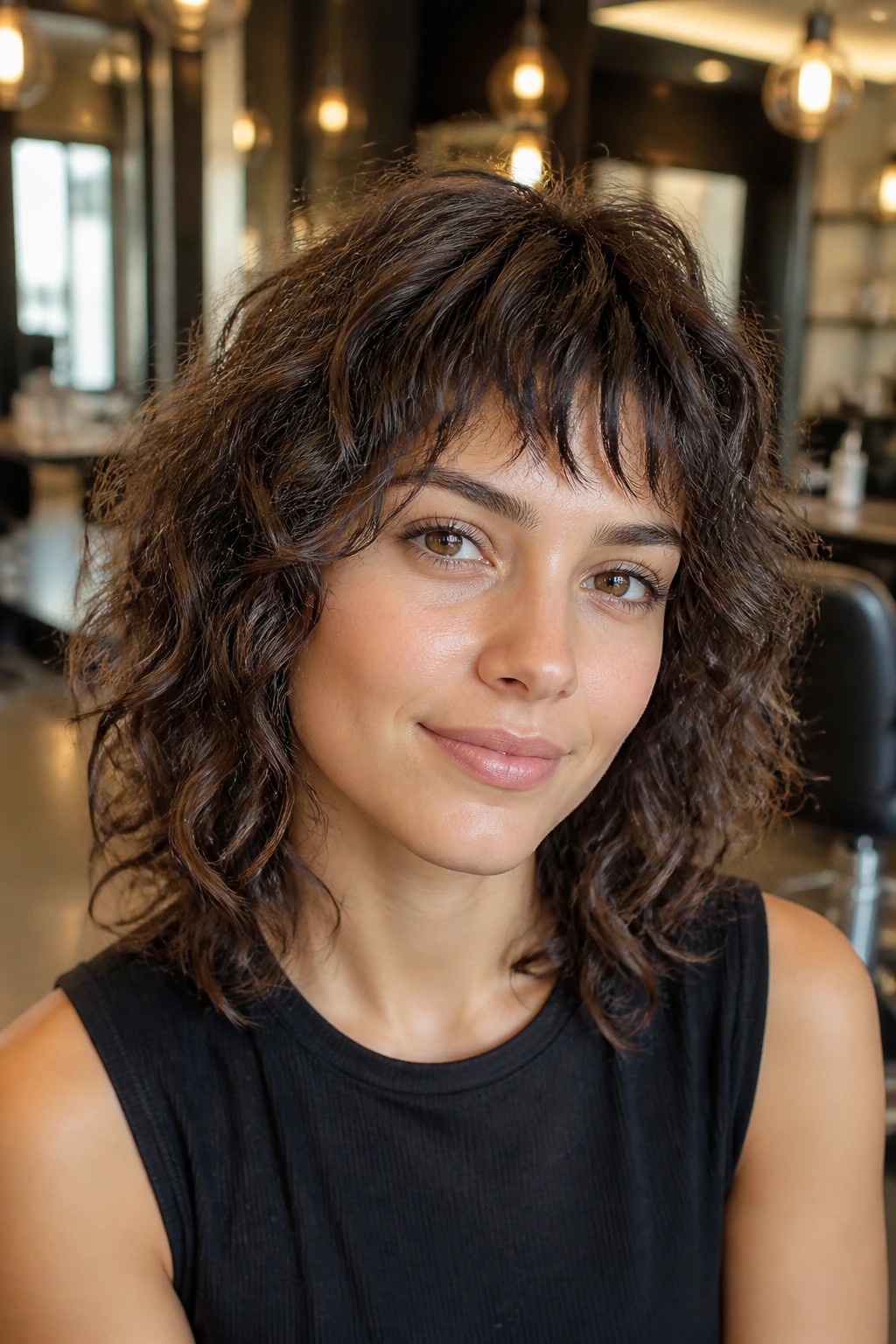
A razor fringe is for people who hate hard lines. The tool leaves a softer end, which can be useful when curly hair tends to spring up unevenly. That broken edge helps the fringe blend instead of standing like a shelf.
The style works best when the curl pattern has some looseness. Very tight coils can lose the definition if they’re overtextured. Lighter waves and loose curls usually carry this shape more easily.
I’d ask for choppiness around the ends, not all over. That keeps the bangs airy while preserving enough weight at the base.
35. Side Fringe With a Stacked Bob
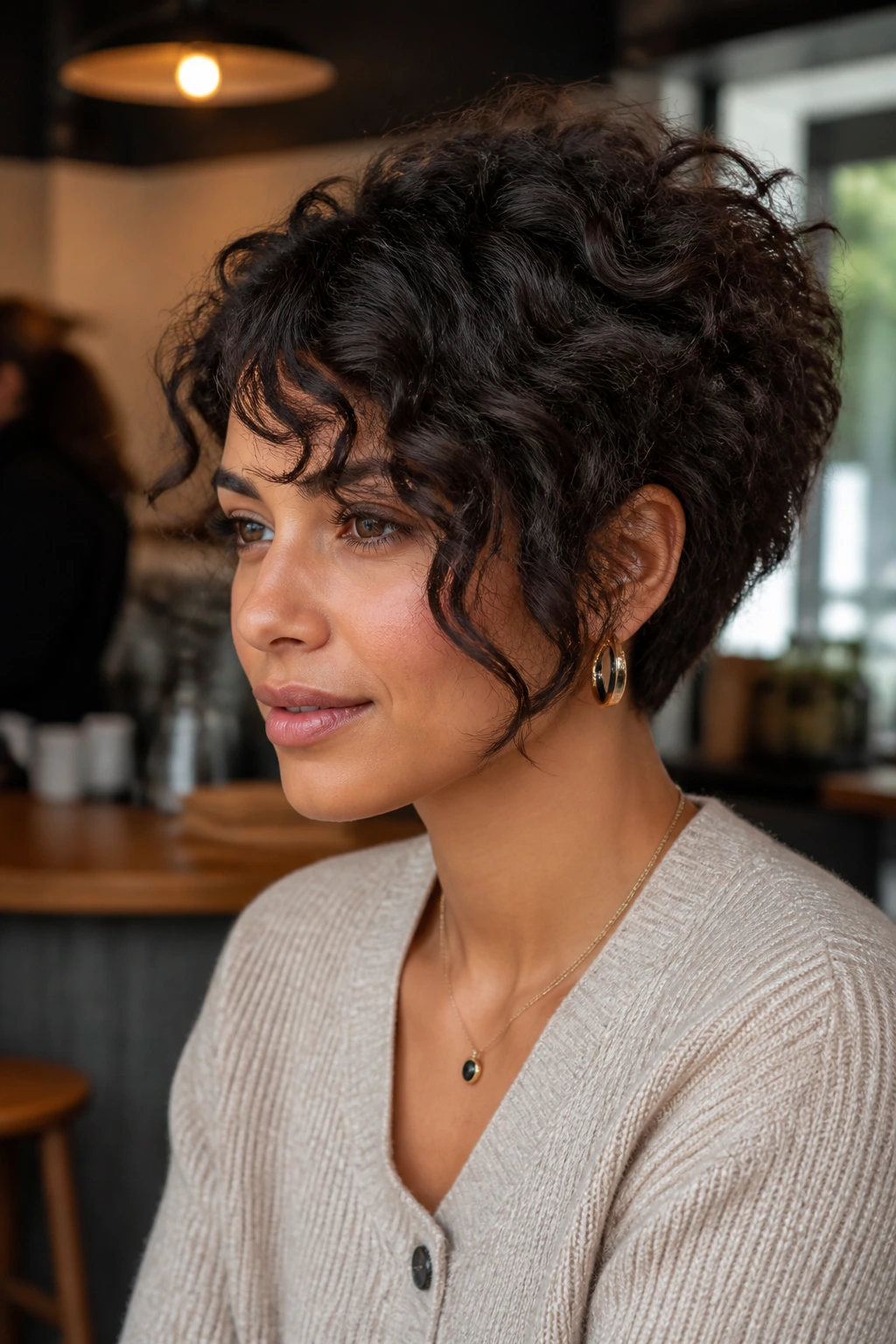
Side fringe plus a stacked bob gives you lift at the back and softness at the front. The stacked shape creates a little volume at the nape, which makes the side-swept bangs feel more balanced and less heavy.
That combination is neat on curls because it directs the hair on purpose. The back gets shape, the side fringe angles across the face, and the whole haircut feels clean without losing texture.
Best For
- Curly bobs that need structure
- Round faces that like a diagonal line
- Hair that gets bulky in the back
If your curls puff at the nape, this shape can calm the whole silhouette.
36. Low-Density Airy Bangs for Puff-Prone Hair

A low-density fringe is a smart move when your hair puffs up fast. The front stays light enough to move, but there’s still enough hair to make a real bang shape. That balance matters on curls that expand a lot between wash day and day three.
The cut should leave room around the forehead so the bangs don’t feel crowded. Too much weight creates a triangle. Too little and the front disappears. The sweet spot is a small, soft curtain of curls that sit close to the face.
This is one of the easiest ways to keep bangs from overwhelming the haircut. Light. Clean. No drama.
37. Thick Blunt Bangs That Put the Fringe First
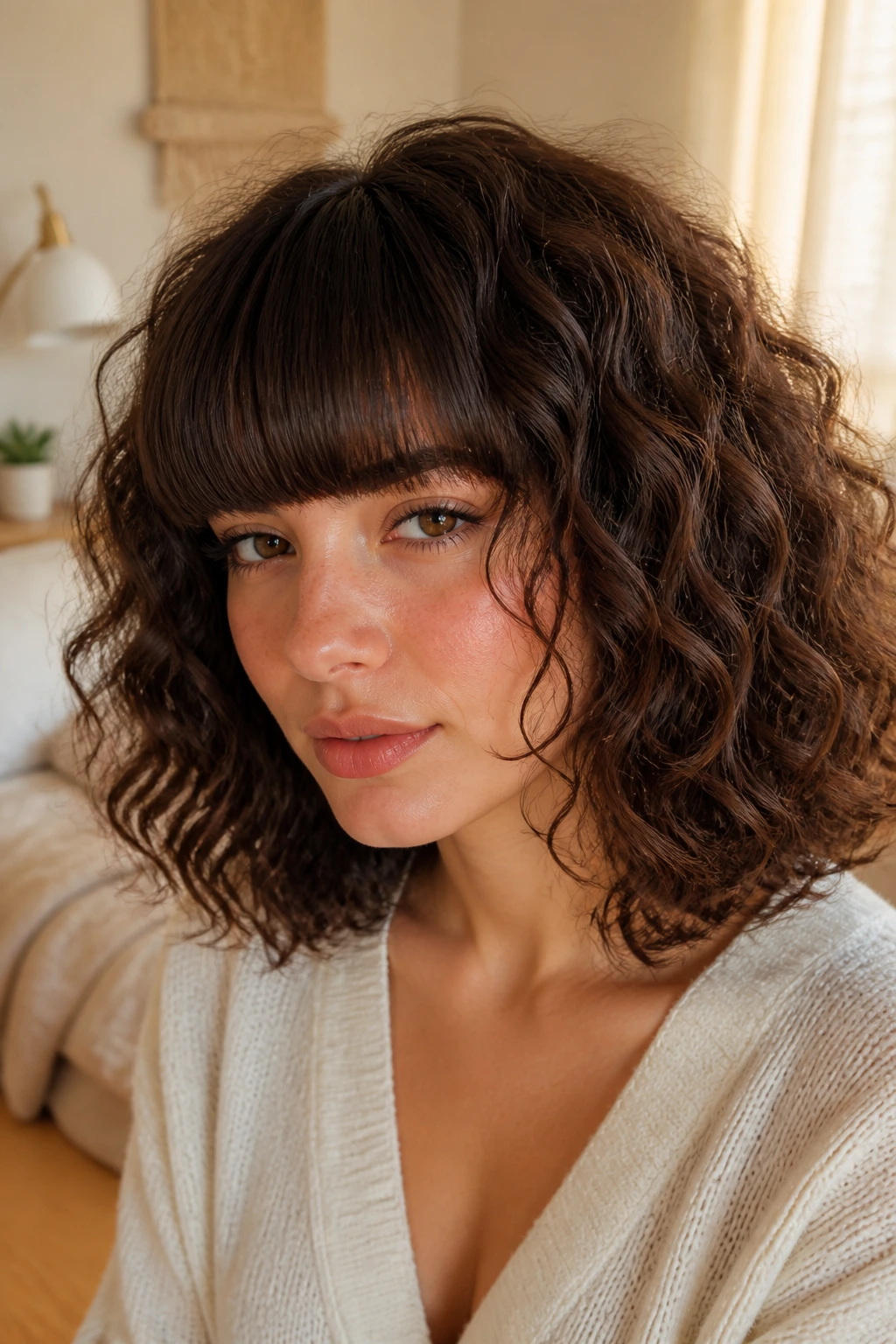
A thick blunt fringe is unapologetic. It puts the bangs in charge and lets the curls create texture inside a strong outline. On dense hair, that can look powerful in a way softer bangs never do.
The cut needs enough fullness to hold its line. If the hair is too sparse, the blunt effect falls apart. If the hair is thick and springy, though, the fringe can look rich and deliberate.
This style suits people who like a clear shape on the face. No guessing. No halfway measure.
38. Fringe That Blends Into Layers

The most convincing curly bangs often disappear into layers. The front still frames the face, but you can’t draw a hard line where the bangs end and the rest begins. That seamless shift keeps the haircut soft.
It’s especially good if you dislike the feeling of having a separate “bang section.” Some people just want the front to fall better. This gives you that without making the fringe the whole story.
The blending approach works because it grows out without much awkwardness. That alone earns it a place near the top of the list.
39. Grow-Out Friendly Bangs That Stay Nice for Months

Grow-out friendly bangs save you from the awkward middle months. They start longer at the temples, keep a little softness in the center, and avoid a strict line that turns annoying fast. On curly hair, that flexibility pays off.
The style matters if you like changing your part or wearing the hair half up. The bangs can shift with the rest of the cut instead of demanding one exact styling pattern every morning.
I’d recommend this to anyone who wants to test fringe life without locking into it forever. That’s the honest version of a good haircut, and honestly, I respect that.
40. Faux Bangs With Pinned Sides

Faux bangs buy you the look without the scissors. You pull the front section forward, pin the sides back, and let the curl pattern create a fringe shape that sits around the forehead. It’s the easiest way to test the idea before a real cut.
The beauty of this option is how fast it tells you the truth. If you hate the shape, you can undo it in ten seconds. If you love it, you’ve just found a direction worth taking to the salon.
Start here if you’re nervous. Keep a couple of bobby pins handy, play with where the front curls fall, and watch what your face likes best. That little test drive can save you from a lot of haircut regret.
