



Bob haircuts have a strange talent for making hair look deliberate even when the styling is barely there. A blunt line can make fine hair feel fuller, a soft bend can calm thick hair, and a collarbone-grazing length can survive a rushed morning with less drama than long layers usually allow.
That’s why the bob keeps hanging around. It does not need a lot of length to do its job. It needs a clean shape, a smart weight line, and the right finish for the hair sitting in the chair. Cut it without a plan and the ends flip out in a way that feels careless. Cut it with intention and it looks polished even when you air-dry it.
The best part is how many directions the bob can take without losing its backbone. Short, chin-skimming, sleek, wavy, French, angled, stacked, blunt — the family resemblance is there, but the mood changes fast. The styles below are the ones that keep earning their place because the shape still makes sense after the novelty wears off.
1. Blunt Bob
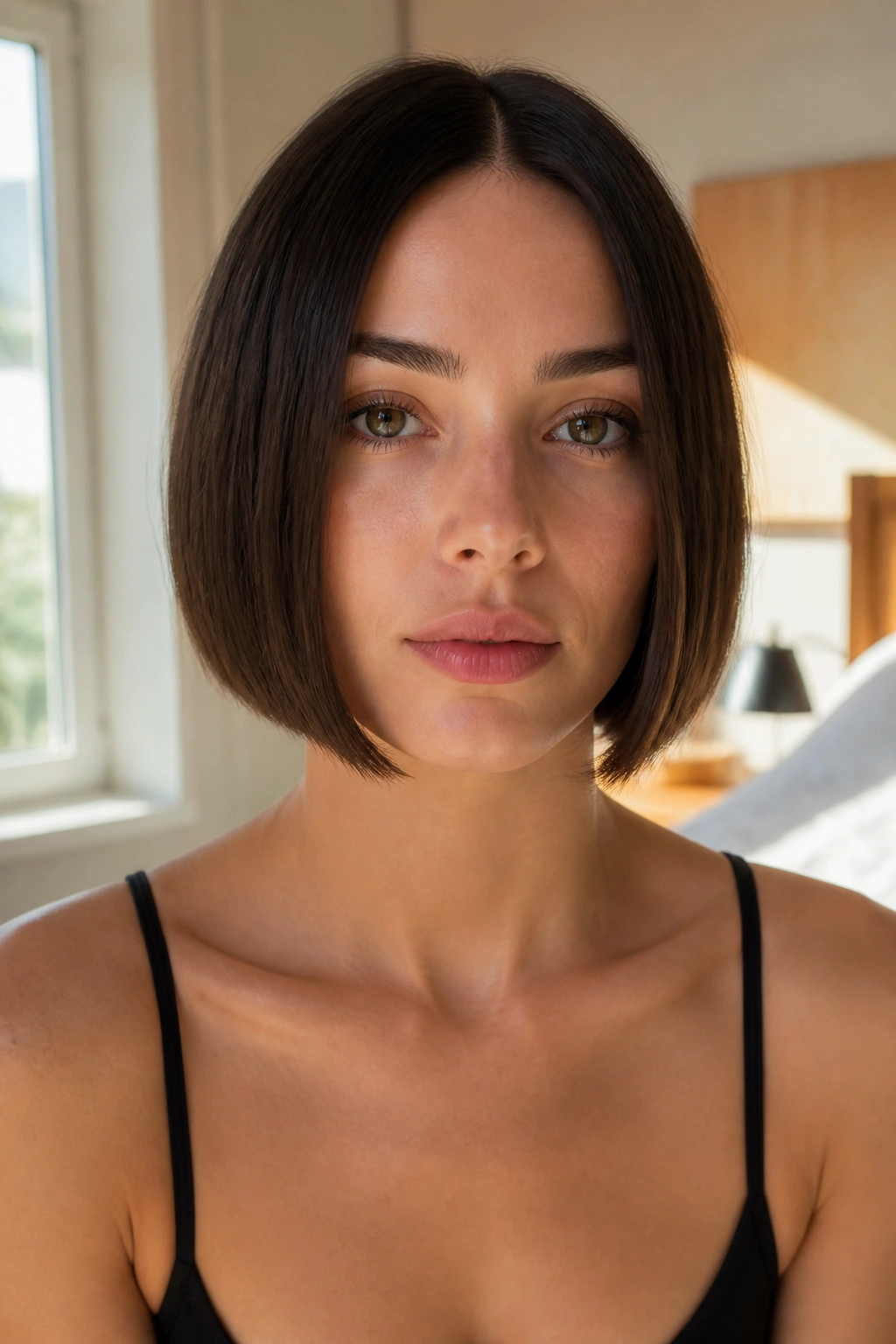
A blunt bob is the cleanest answer to the question, “What if the hair just stopped here?” The edge sits in one solid line, usually at the jaw or a touch below it, and that single decision does most of the work. Fine hair looks denser, straight hair looks sharper, and thick hair looks controlled instead of puffy.
Why It Still Works
The blunt bob never asks for extra decoration. It gets its power from the perimeter, which is the outer line of the cut. Keep that line crisp and you get instant structure. Let the ends get wispy and the whole thing loses its punch.
- Best for hair that lies fairly straight or only bends a little at the ends.
- Ask for minimal internal layering so the bottom edge stays heavy.
- The sweet spot is usually jaw length or just below the chin.
- A flat brush and a quick blow-dry can make the line sit neatly.
Tiny tip: trim it every 6 to 8 weeks if you want that sharp edge to stay clean. A blunt bob grows out fast in a way the eye notices.
2. French Bob

Why do French bobs look good even when they’re a little undone? Because they don’t fight the hair’s natural movement. The cut usually sits around the chin, sometimes a touch above it, with a soft fringe or a loose face frame that keeps the shape from feeling stiff. It has attitude without looking fussy.
The French bob works especially well when hair has a little bend, because the imperfect finish is part of the appeal. You can tuck one side behind the ear, leave the fringe a little piecey, and still look like the cut was thought through. That’s the charm. It feels lived-in, not lazy.
A lot of people try to over-style this one and miss the point. A light mousse, a rough blow-dry, and a bit of finger shaping usually do more than a round brush marathon. If your hair has a slight wave, you’re already halfway there. If it’s pin-straight, a soft bevel at the ends keeps it from looking severe.
3. Chin-Length Bob
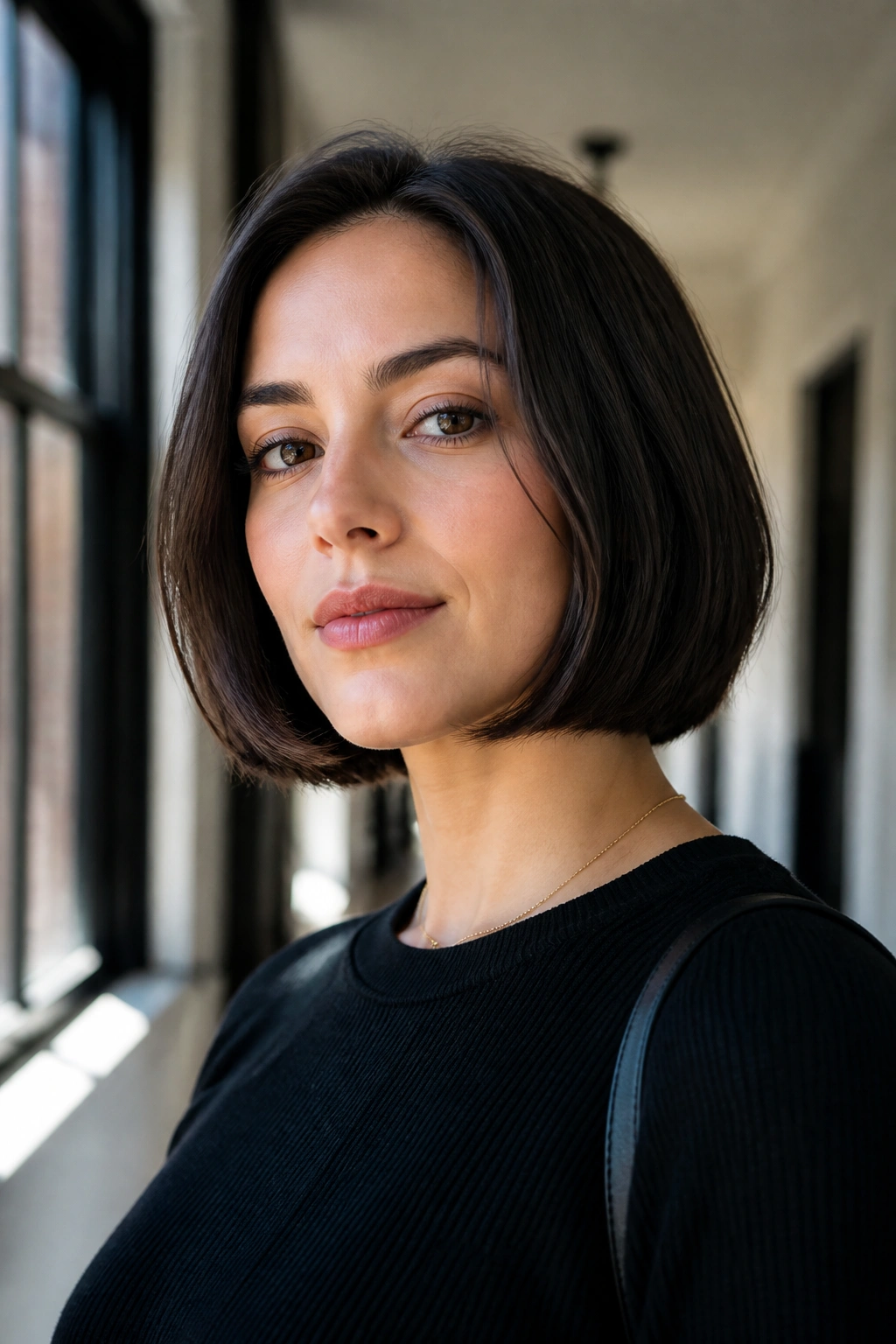
A chin-length bob is one of those cuts that quietly changes the whole face. The line lands right where the jaw starts to matter, so the haircut ends up framing bone structure instead of hiding it. That’s the whole trick. It puts the attention on the mouth, jaw, and earrings without screaming for it.
This length is especially useful if you want something short enough to feel fresh but not so short that you lose all your ponytail options. There’s a small practical bonus too: it usually takes less time to dry than shoulder-length hair, and the ends don’t drag on coats or scarves in colder weather.
Best Features of a Chin-Length Cut
- Shows off a strong jawline.
- Gives rounder faces a little edge.
- Leaves enough length for a soft side tuck.
- Works with blunt, layered, or softly curved ends.
I like this bob on people who want the haircut to do some of the styling work for them. It sits in that useful middle ground where it still feels like hair, not a shape carved out of hair.
4. A-Line Bob
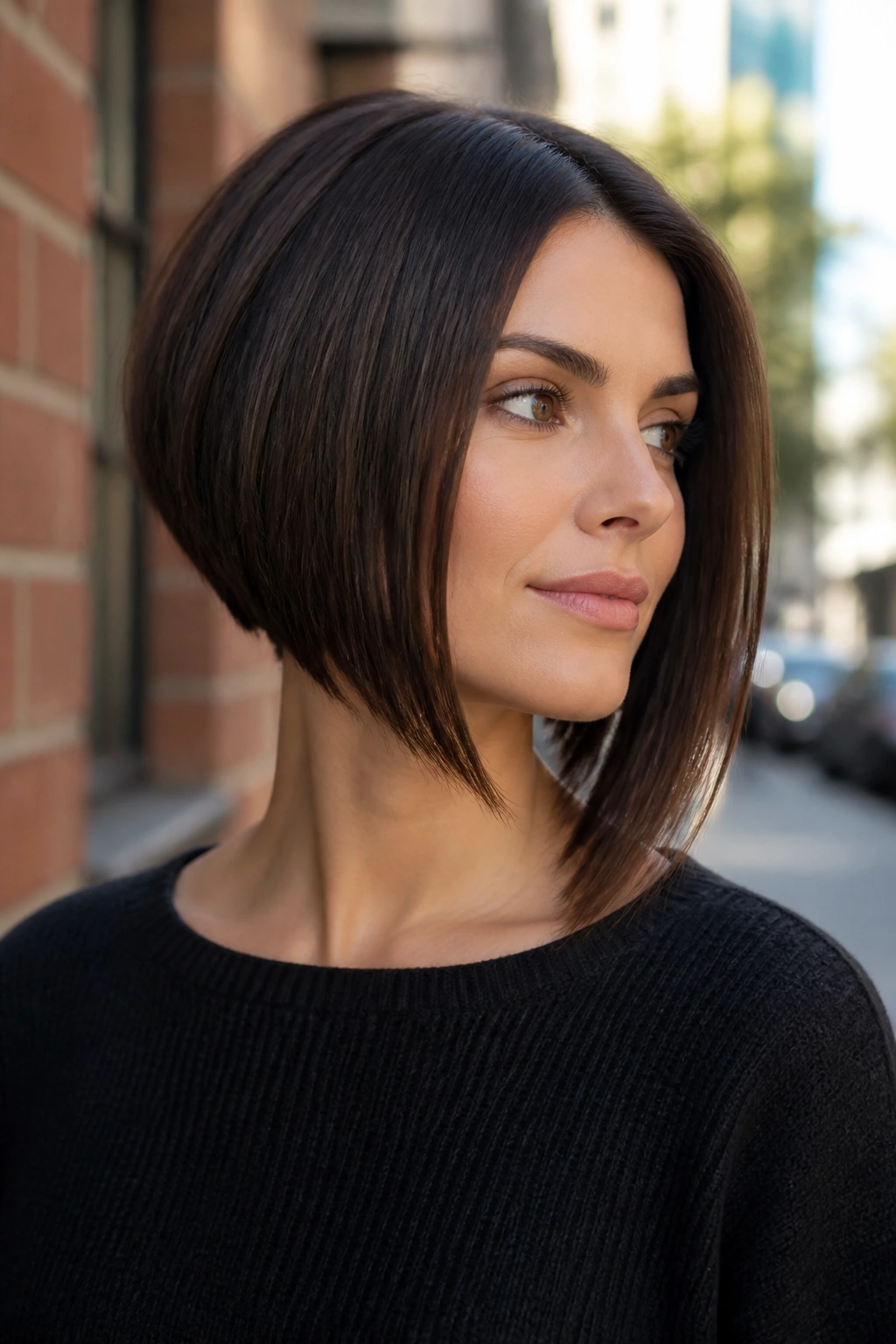
An A-line bob is not just a bob that happened to lean forward. It’s built that way on purpose: shorter in the back, longer toward the front, with a visible slope that gives the haircut motion even when you’re standing still. That angle is the point.
This shape is a smart choice when you want a bob that feels a little longer around the face. The front pieces can skim the jaw or drift toward the collarbone while the nape stays neat and compact. That gives the cut a cleaner neck line and a bit of drama up front without needing bangs.
It also solves a real problem for some hair types. If your hair tends to puff out at the sides, a controlled forward angle can help narrow the silhouette. If your hair is flat, the stacked shorter back gives a hint of lift. Not magic. Just good geometry.
A lot of stylists keep the angle soft rather than extreme because the softer version grows out better. A severe A-line can look dated fast. A gentle slope stays useful longer.
5. Inverted Bob
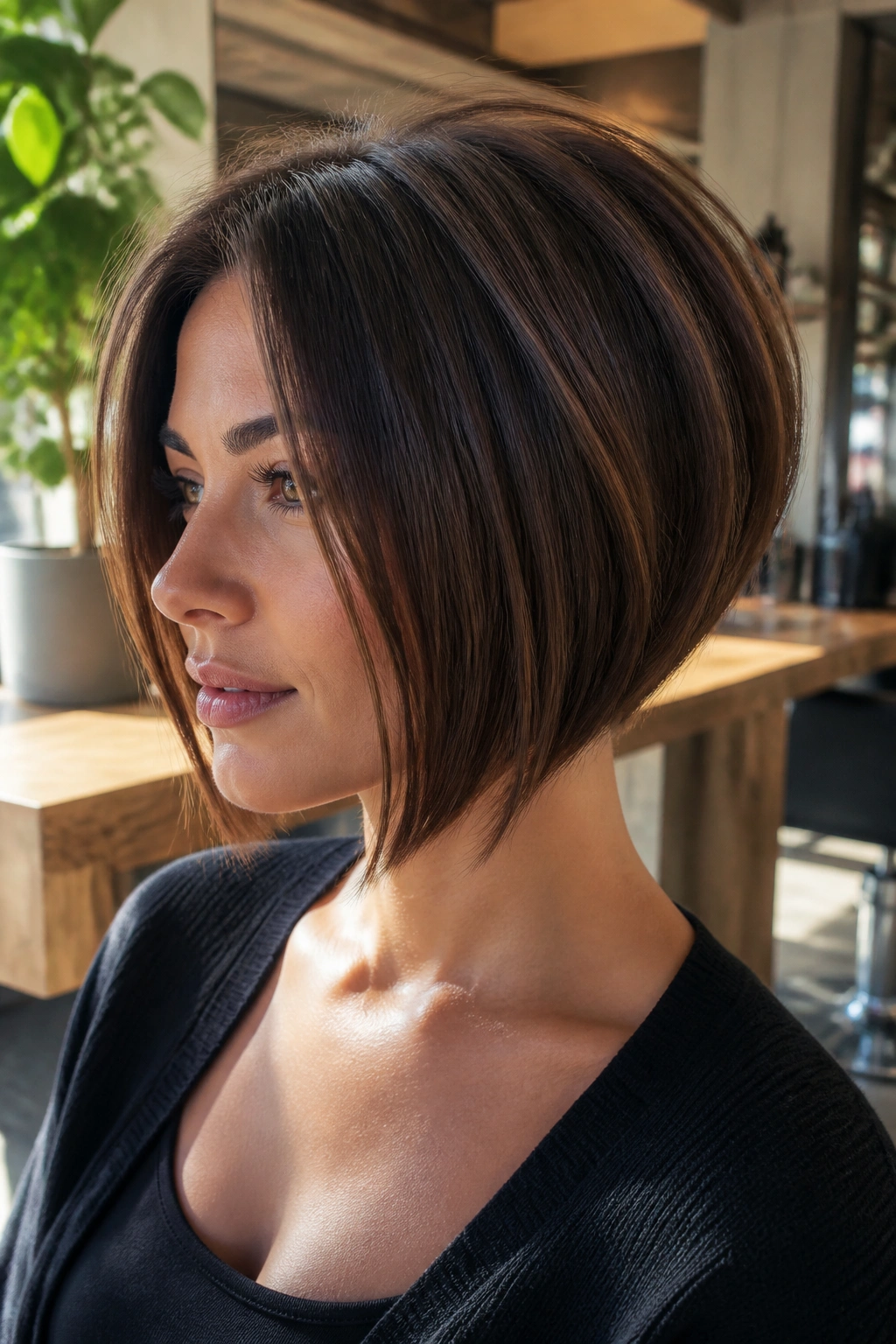
What separates an inverted bob from an A-line? The back is usually stacked more clearly, with shorter layers that build shape at the crown and then angle down toward the front. It has a little more lift, a little more edge, and a touch more structure around the nape. It is the more engineered cousin.
The cut shines when you want volume without the mess of long layers. Those stacked layers in the back create a rounded bump of shape that can make fine hair look fuller. On thicker hair, the back can be thinned out enough to stop that helmet feeling that no one likes to admit they’ve had.
How to Wear It
- Blow-dry the crown first so the lift sets before the front dries.
- Use a round brush at the nape if you want the back to hug the neck.
- Keep the front sleek if you want the angle to read clearly.
- Skip heavy creams near the roots; they can flatten the stack.
This is a cut with some backbone. If you like hair that looks a little designed, not accidental, it earns its place fast.
6. Stacked Bob
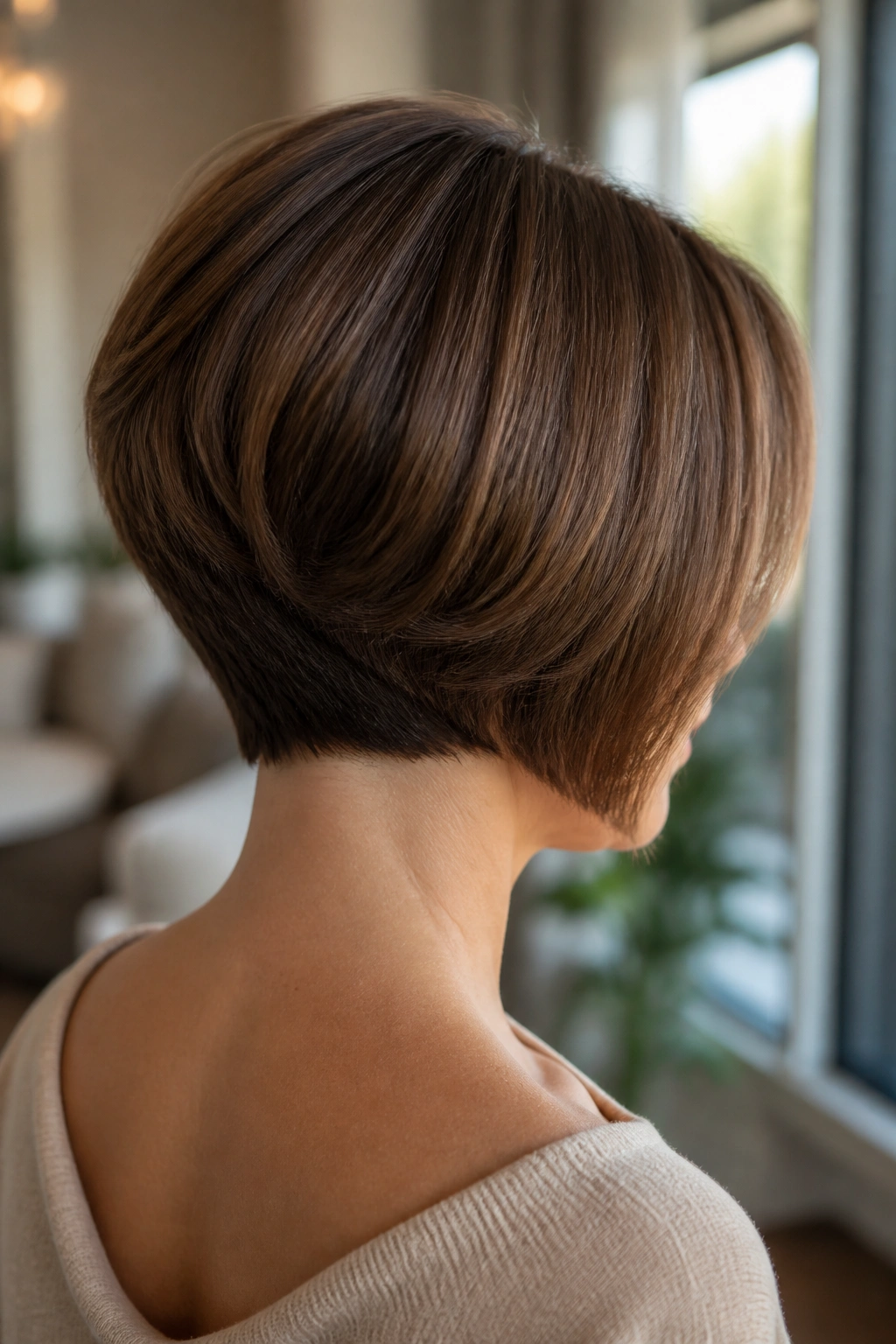
Walk out of a salon with a stacked bob and the back does a lot of the talking. The layers are cut closer together at the nape, then gradually lengthen as they move up and forward. That creates a compact, lifted shape in the back and a cleaner sweep around the sides. It’s a volume cut with discipline.
The stacked bob is one of my favorite answers for flat hair that refuses to hold body. The layers give the crown somewhere to sit, so the cut doesn’t collapse against the head. It also suits hair that looks better with a defined outline rather than a soft one. You feel the shape immediately when you run your hand across the back.
A good stacked bob needs regular maintenance, though. The back grows out first, and once that neat slope loses its line, the whole effect softens. That’s fine if you like a more relaxed look. If you want the stacked shape to stay crisp, you have to keep up with it.
- Ask for visible stacking, not random choppy layers.
- Keep the perimeter smooth.
- Use a root-lifting spray at the crown.
- Avoid too much weight in the top layers.
7. Layered Bob

A layered bob is the one you pick when you want movement without giving up shape. The layers are blended through the interior so the cut doesn’t sit like one heavy block. The result is softer, lighter, and easier to bend into place.
This style is especially kind to hair that feels bulky at the ends. A few well-placed layers can stop the bottom from spreading out and give the whole cut more swing. The trick is restraint. Too many short layers and the bob turns fuzzy. Too little and you’re back to a heavy rectangle.
What Makes It Softer
Layers work best when they’re placed with a reason. A stylist might keep the bottom line solid and add movement just above it. Or they might carve in gentle face-framing pieces that start around the cheekbone. Either way, the shape should still read as a bob.
- Best for medium to thick hair that needs a little release.
- Useful when hair dries with a bulky bottom edge.
- Can be worn straight, wavy, or tucked behind the ears.
- Looks good with a side part or a loose center part.
This is the bob for people who want movement more than strict polish. It still looks finished. It just doesn’t look ironed into place.
8. Lob
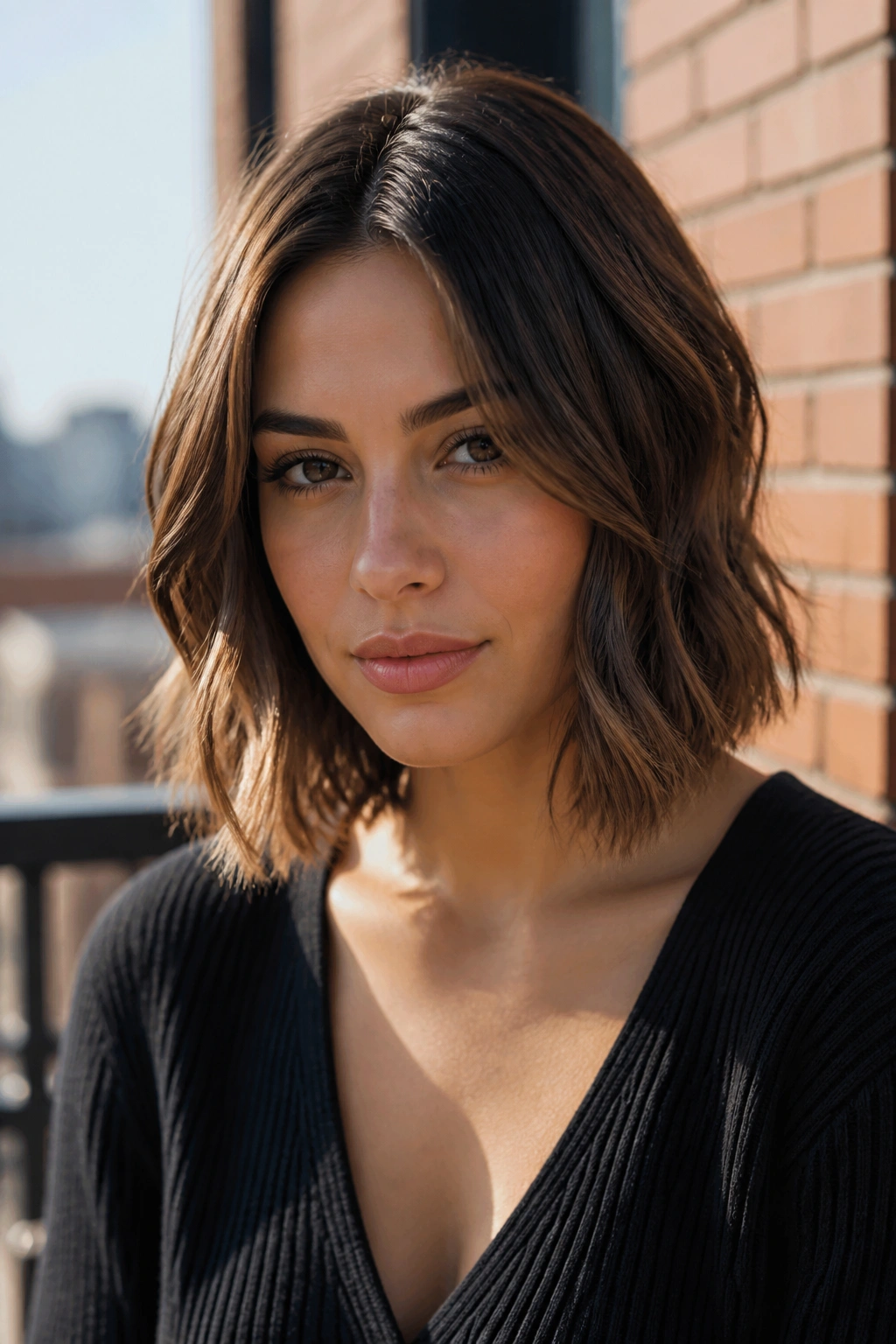
The lob is the bob for people who are not quite ready to go short, or who went short once and decided a little more length was their peace treaty. It usually lands between the collarbone and the shoulders, which gives it enough weight to swing but not so much that it feels heavy. That length is its whole advantage.
A lob holds up well in real life. You can curl it, wave it, straighten it, or let it air-dry with some bend and still have a cut that feels intentional. It’s also one of the easiest bob haircuts to grow out because the in-between stage already looks like a style rather than a mistake.
How to Make a Lob Feel Intentional
Use a one-and-a-quarter-inch iron if you want a soft wave, or keep the ends blunt if you like a cleaner line. A middle part gives it a calmer feel. A side part gives it more lift. The cut can shift personality without a salon visit, which is part of why people keep coming back to it.
If you want a safe bet with room to play, this is the one.
9. Box Bob
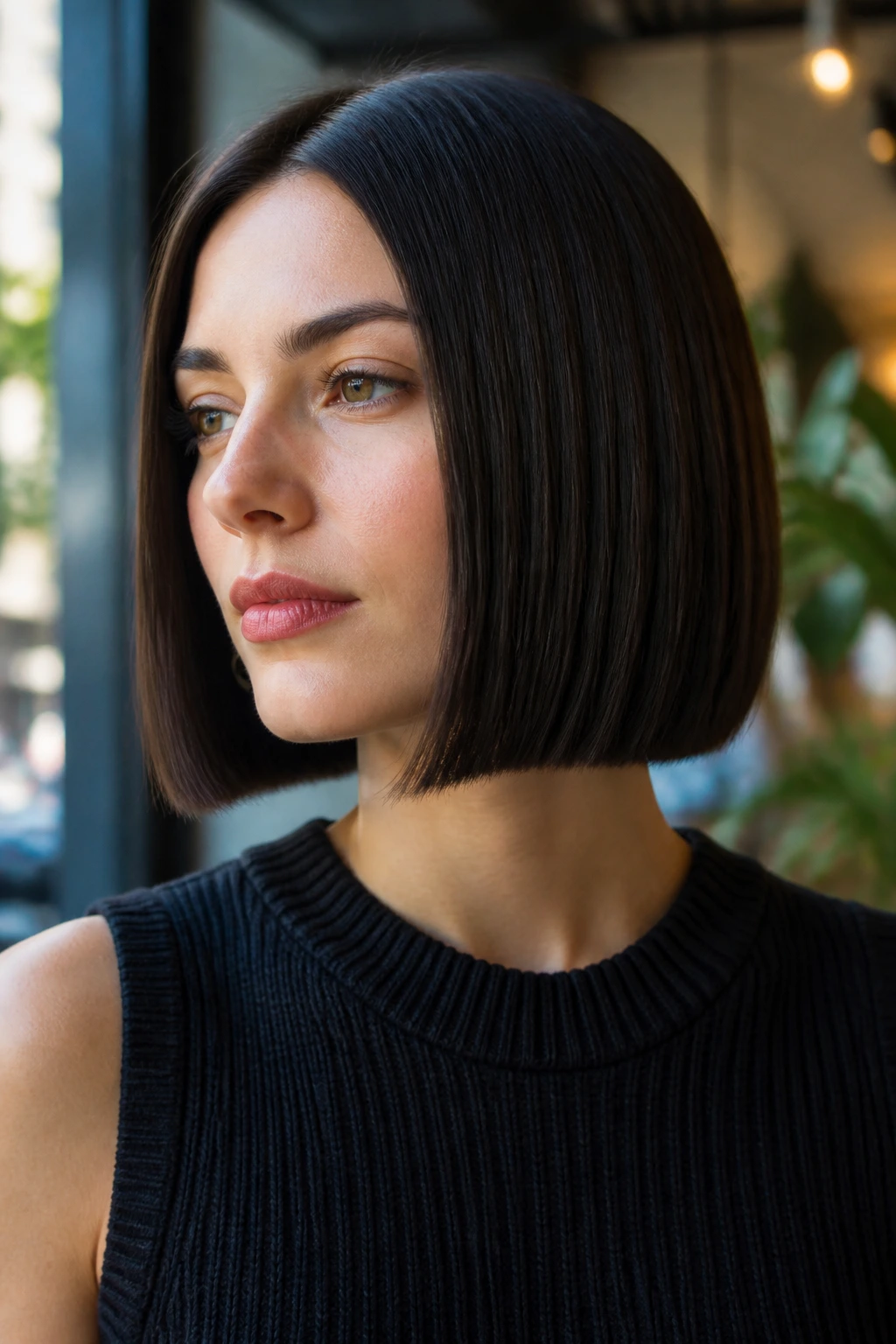
A box bob has edges. Real ones. The shape is straighter at the sides and squarer through the bottom, so the cut reads almost architectural compared with a softer rounded bob. It looks strongest when the line is clean and the shape is visible.
This is not the bob for someone who wants a whisper of a haircut. It’s for hair that can carry a shape. Straight hair loves it because the perimeter stays obvious. Thick hair can handle it if the bulk is removed inside the cut without softening the outer frame too much.
The box bob is especially good if you like clothes with clean lines — sharp collars, tailored jackets, simple necklines. The haircut holds its own beside them. There’s a little retro energy in it too, but not the sugary kind. It feels confident and a bit graphic.
A side part can soften it if the square shape feels too rigid. A middle part makes the geometry clearer. Either way, the cut is doing what it was built to do: hold a shape without apology.
10. Curved Bob
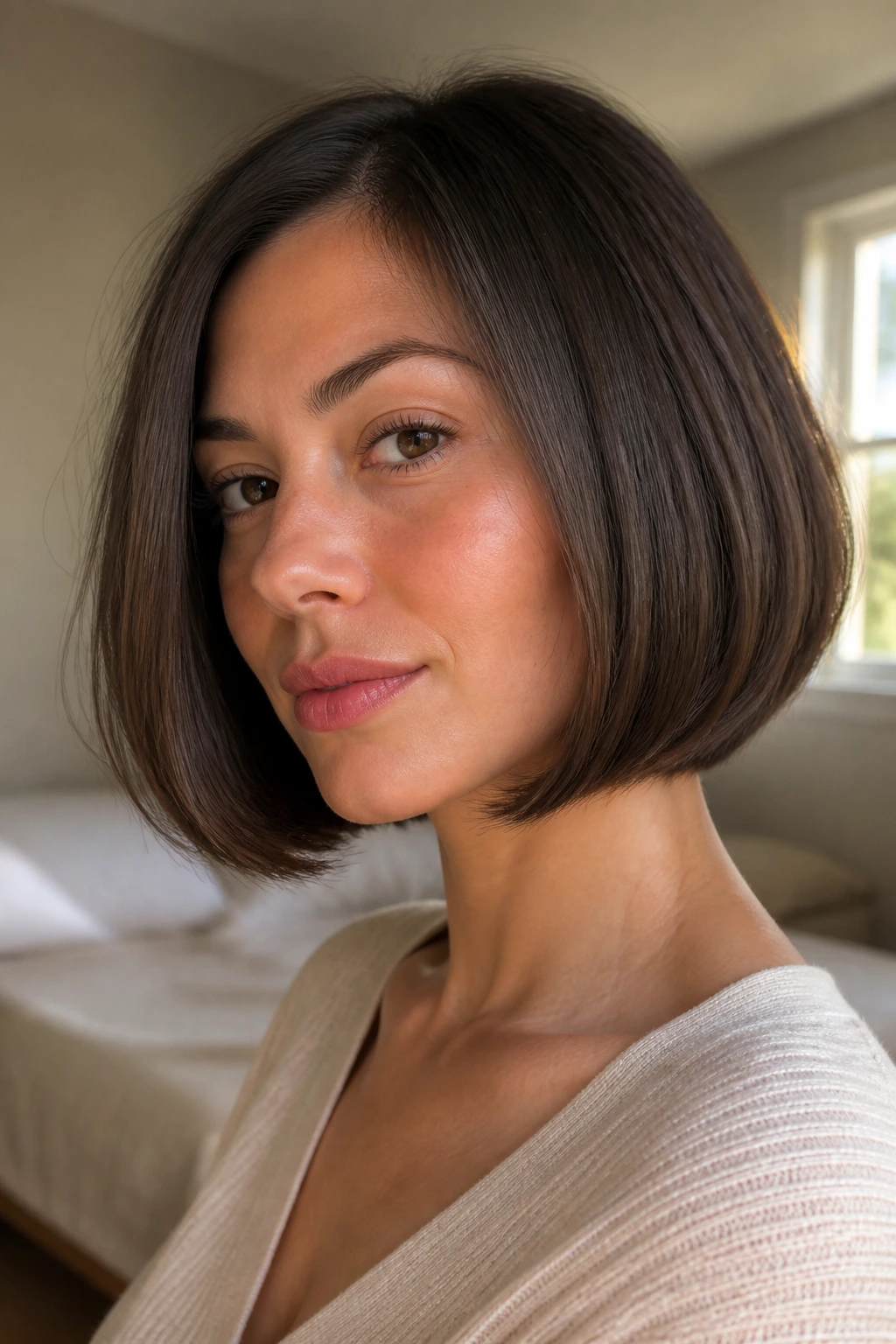
A curved bob is all about the ends turning inward just enough to hug the jaw. It’s softer than a blunt bob, but it still keeps a tidy outline. The curve is subtle, not curled under like a page from a hairstyle book in the 1990s.
This cut is friendly to people who want polish without spending 20 minutes fighting a flat iron every morning. A good blow-dry with a round brush can give the ends that gentle arc, and once the curve is there, it usually behaves for the day. The shape works especially well on hair that has a little natural body.
The reason it stays timeless is simple: it flatters the face without demanding attention. The line follows the jaw, which makes the haircut look finished even in plain clothes and no earrings. That’s useful. A haircut that needs a whole outfit to make sense is not much of a haircut.
- Best with medium-density hair.
- Keep the bottom line full.
- Use a round brush, not a tiny curling wand.
- Finish with a light serum on the ends only.
11. Side-Part Bob
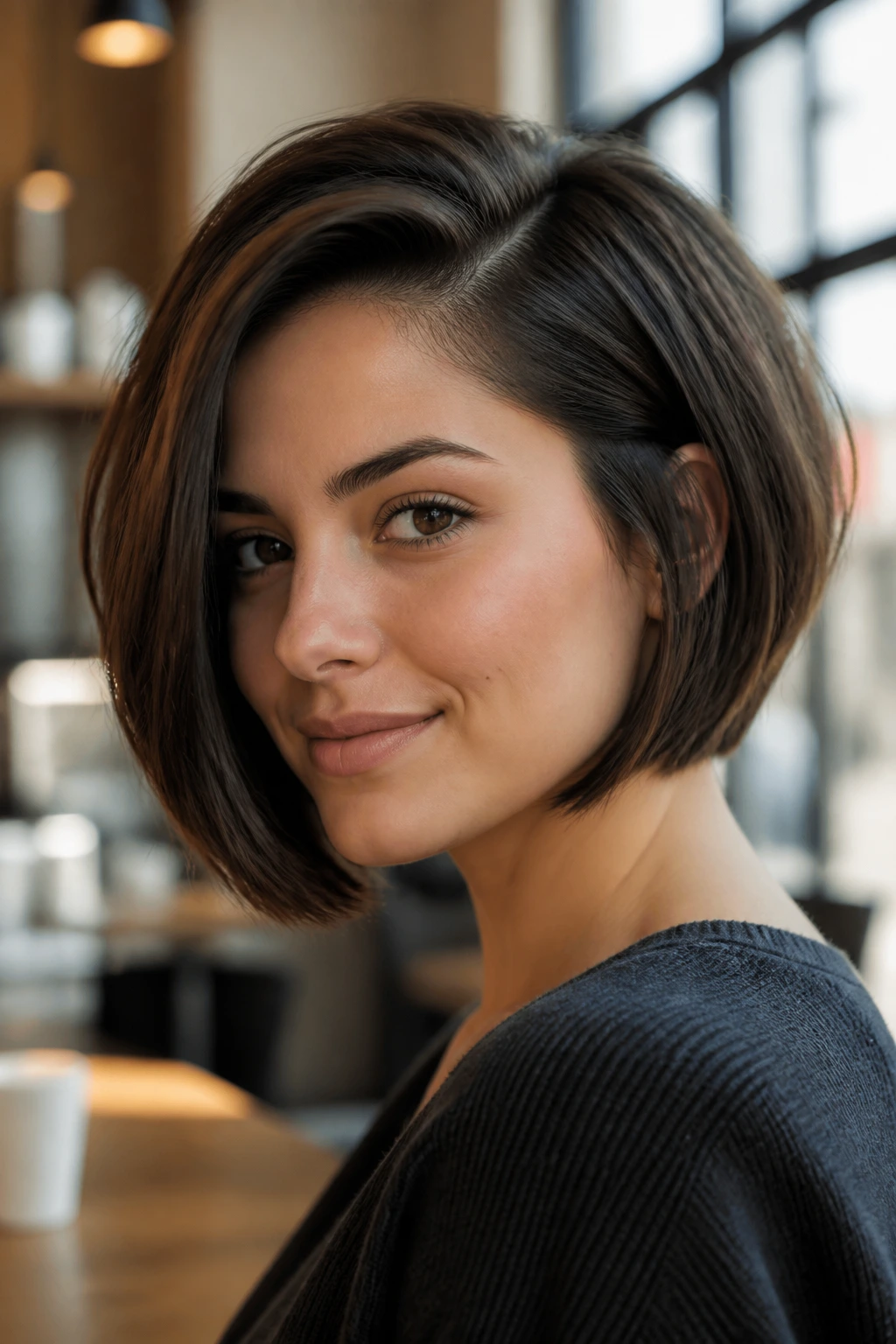
Why does a side-part bob make hair look a little more awake? Because the part shifts weight off the center line and gives the crown a bit of natural lift. That matters more than people think. A good side part can change the whole mood of a bob without changing the cut at all.
This style is useful if your hair falls flat at the top or if your face feels too symmetrical with a center part. The side part breaks that straight-down-the-middle feeling and opens one side of the face. It can also soften a strong forehead or balance a round face by changing where the eye lands first.
Where It Helps Most
- Flat crowns that need a little lift.
- Hair that wants to fall forward in one direction.
- Bobs with blunt or softly layered ends.
- Styles that need a little movement near the face.
A side-part bob can feel more casual than a center-part one, which makes it easy to wear. It’s not loud. It just knows how to lean in the right direction.
12. Center-Part Bob
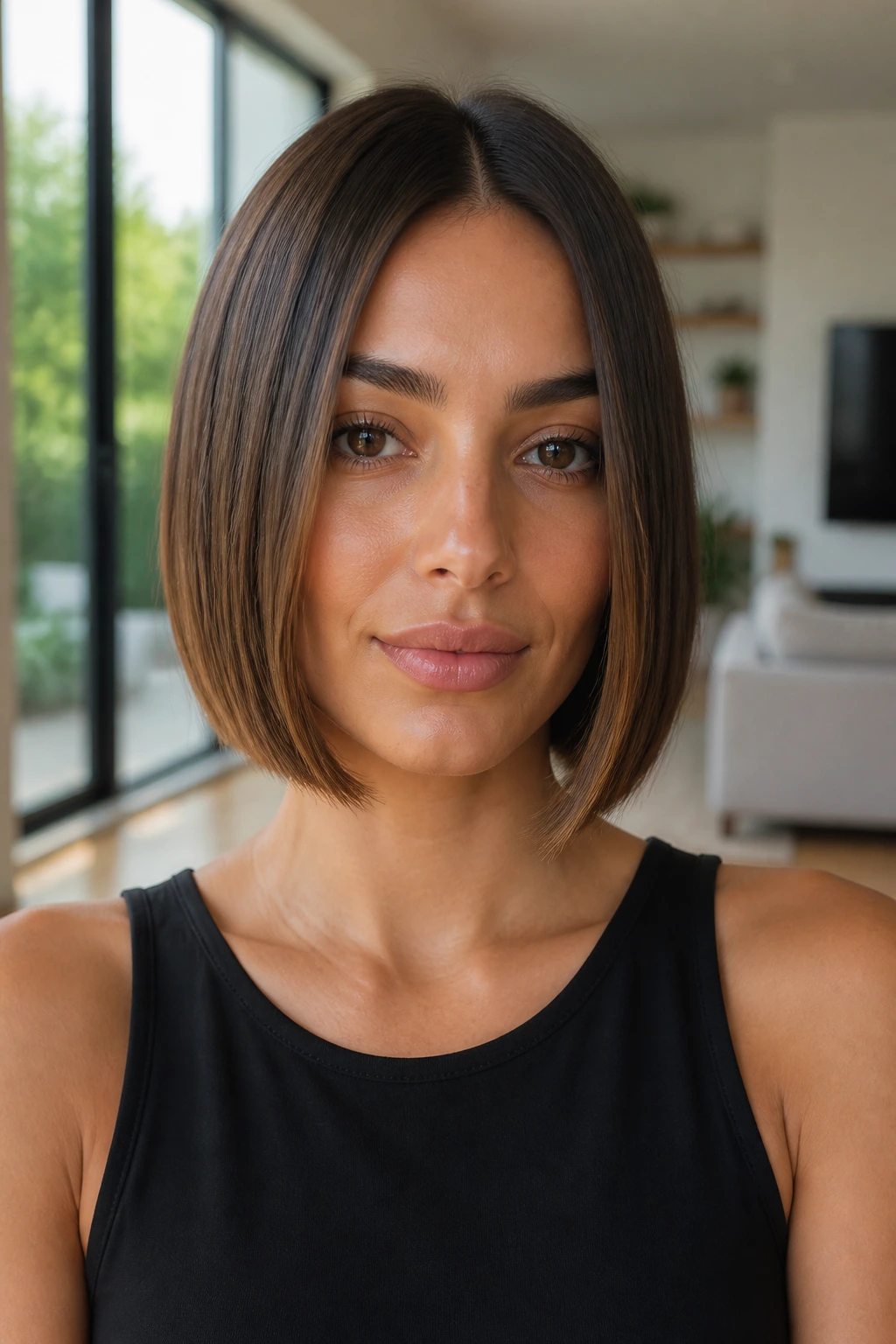
A center-part bob asks a lot from a haircut, and that’s why it looks so clean when it works. Both sides have to behave. The lines have to be even. The ends have to sit where they’re supposed to sit. When the shape is right, the effect is calm and crisp.
This parting works especially well on bobs with a blunt edge or a mild curve, because the symmetry gives the cut a kind of quiet force. It can make the face look longer and more open through the middle. On hair with strong natural movement, though, it may need a little extra coaxing in the morning. A few seconds with a flat brush usually gets it there.
Unlike a side-part bob, which can hide a slightly uneven perimeter, a center part puts every tiny imbalance on display. That sounds harsh. It is. But it also means a clean cut really shines here. If your stylist is good with precision, a center part bob can look remarkably sharp without any extra styling tricks.
I like this best on hair that’s naturally straight or on loose waves that fall in a predictable pattern. It makes the cut look deliberate in a way people notice.
13. Wavy Bob

A wavy bob has that good kind of movement where the hair seems to live a little. The ends bend, the middle pieces shift, and the whole shape feels less strict than a straight bob. The texture does half the styling for you.
This cut is a gift if your hair already bends, because you don’t have to force it into another personality. A bit of sea salt spray, a diffuser, or a loose bend with a 1-inch iron can be enough. The point is not curl. The point is motion. You want the waves to look like they belong there, not like they were pressed into service.
How to Keep It From Turning Puffy
Use a light mousse through damp hair, then scrunch with a towel that does not rough up the cuticle too much. If the ends spread wide, the bob loses shape. A little product near the mid-lengths usually fixes that faster than piling more on the top.
A wavy bob is one of the few cuts that looks better when it is not perfect. That’s useful when you want a haircut that can survive real weather, real schedules, and real mornings.
14. Sleek Glass Bob
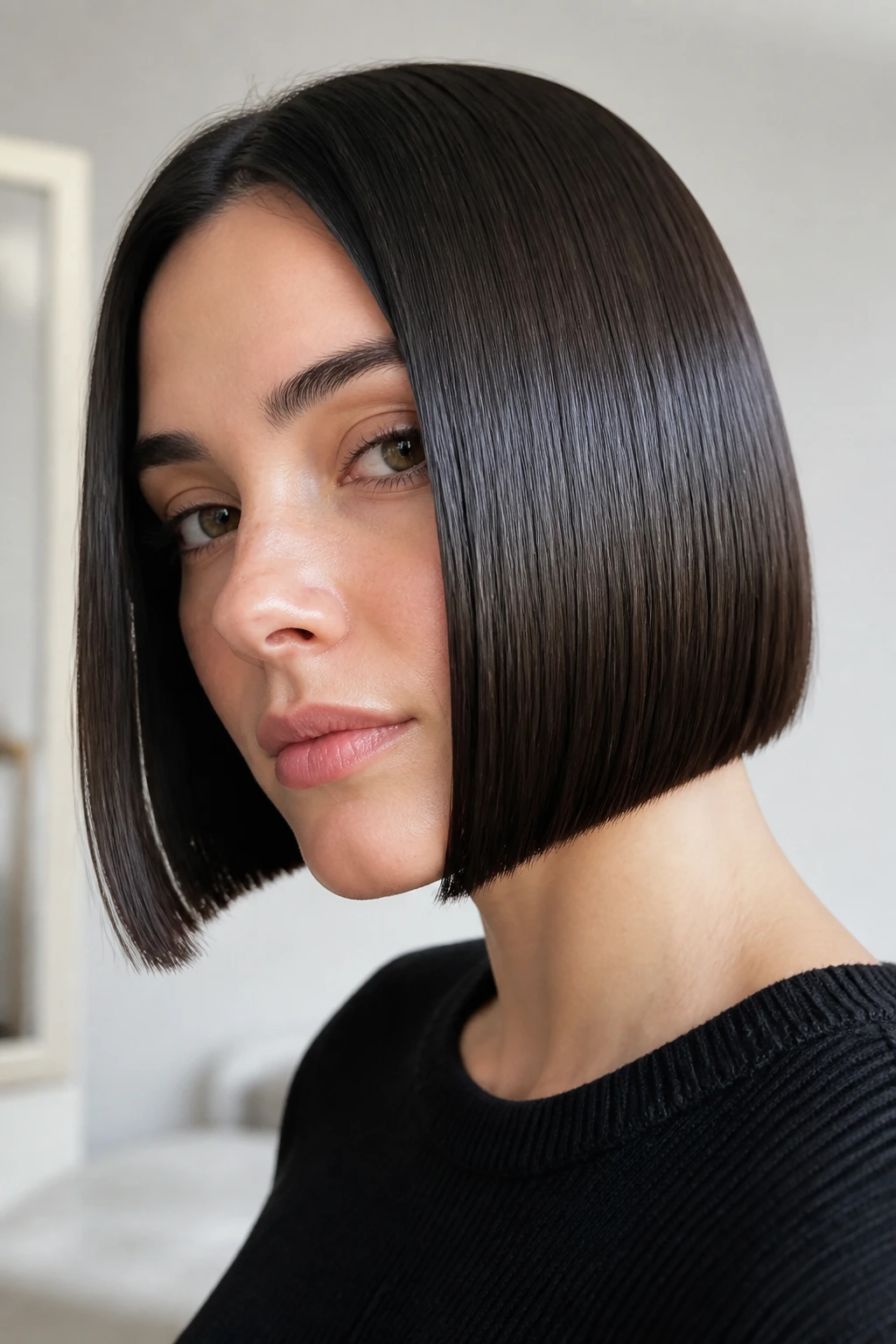
If you like shine, the sleek glass bob is your blunt instrument. It has a smooth surface, a tight outline, and enough gloss that every bend in the hair becomes part of the style. There’s nowhere for frizz to hide, which is exactly the point.
This cut makes the most sense on hair that can hold straight lines without fighting them. A heat protectant, a blow-dry with tension, and a flat iron pass on small sections are usually enough to get the finish. The goal is not stick-straight plastic hair. The goal is a reflective surface that still moves when you turn your head.
It’s also one of the easiest bobs to dress up for evening because it needs so little decoration. The cut itself is the accessory. A center part sharpens it. A tucked-behind-one-ear finish makes it feel even cleaner. Keep the ends trimmed, though. Split ends break the illusion fast.
This is the bob for people who like precise lines and don’t mind doing a little styling. Not a lot. A little.
15. Curly Bob

Curly hair and bob haircuts get treated like they’re sworn enemies. They are not. They just need a shape that respects the spring in the curl instead of fighting it. A good curly bob is cut around the curl pattern, not against it.
That usually means the length looks a little different when it’s wet versus when it’s dry. Curl shrinkage is real, and a bob that hits the chin when stretched may land higher once it dries. A smart stylist checks where the curls land in their natural state before making the final line. Dry cutting often helps because you can see the actual movement.
The best curly bob keeps the bottom from turning triangular. That can happen when the lower layers are too full and the top is too flat. A few interior adjustments usually fix it. Some people like a rounded silhouette, while others want more width at the sides. Both can work if the cut is balanced.
If your curls are tight, plan for shape more than exact length. That shift in mindset saves a lot of disappointment.
16. Shaggy Bob
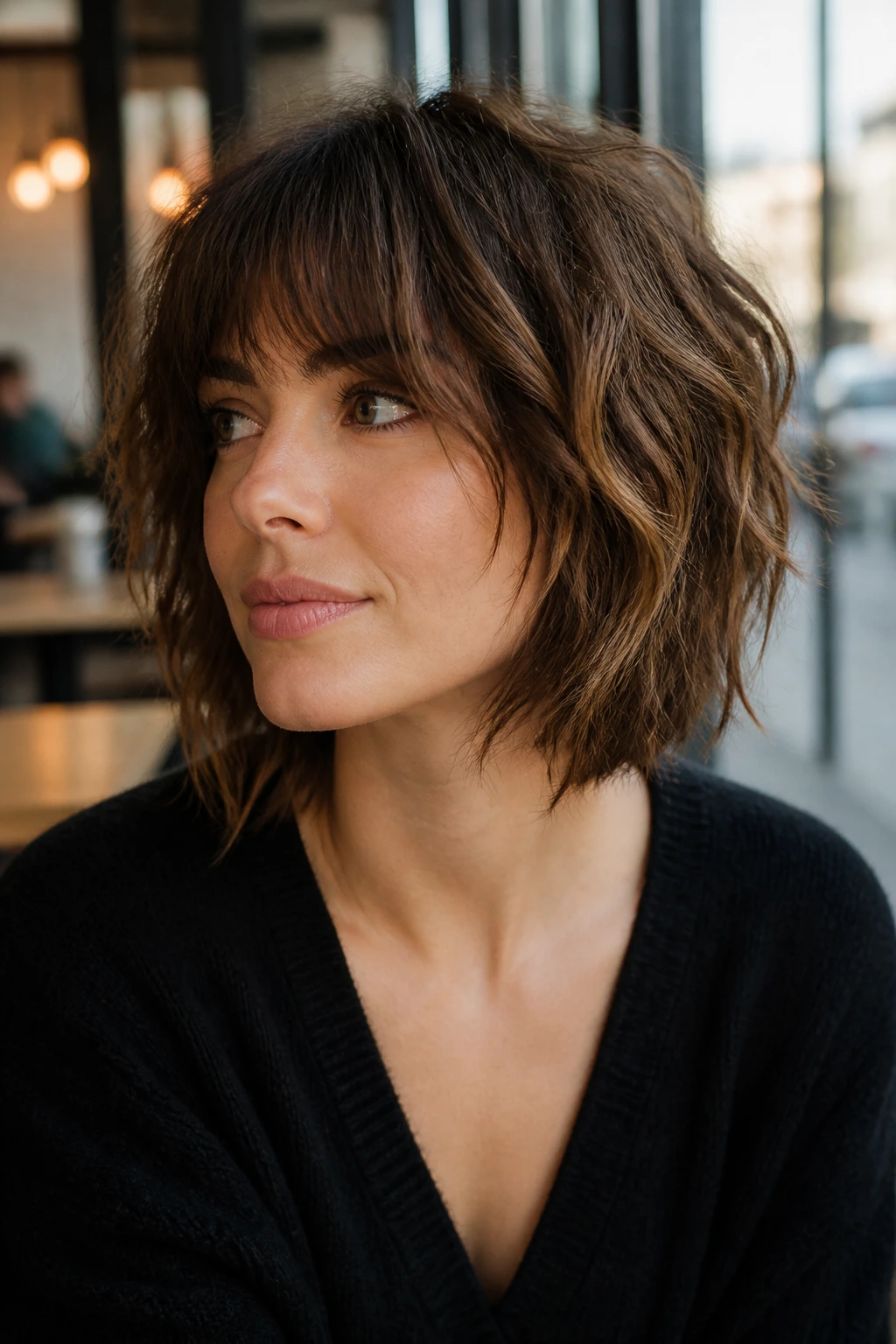
The shaggy bob is what happens when a bob decides it wants air and movement instead of a hard edge. The layers are choppier, the ends are softer, and the whole cut carries a little rock-and-roll energy without turning into a full shag. It’s relaxed, but not careless.
This cut is useful for hair that feels too heavy when it sits in one line. The broken-up layers keep the ends from stacking too neatly, which helps the shape move when you walk or turn your head. It also works well with texture sprays and finger-drying. If you hate spending time with a brush, that matters.
A shaggy bob is not the best choice if you want a razor-sharp silhouette. It wins by looking a little lived-in. I think that’s why people return to it after trying more polished bobs. It gives them permission to stop fussing.
- Keep the layers soft around the crown.
- Leave enough weight at the bottom so it still reads as a bob.
- Use dry texture spray sparingly.
- Let the front pieces fall where they want.
The cut should feel like movement first, shape second.
17. Graduated Bob
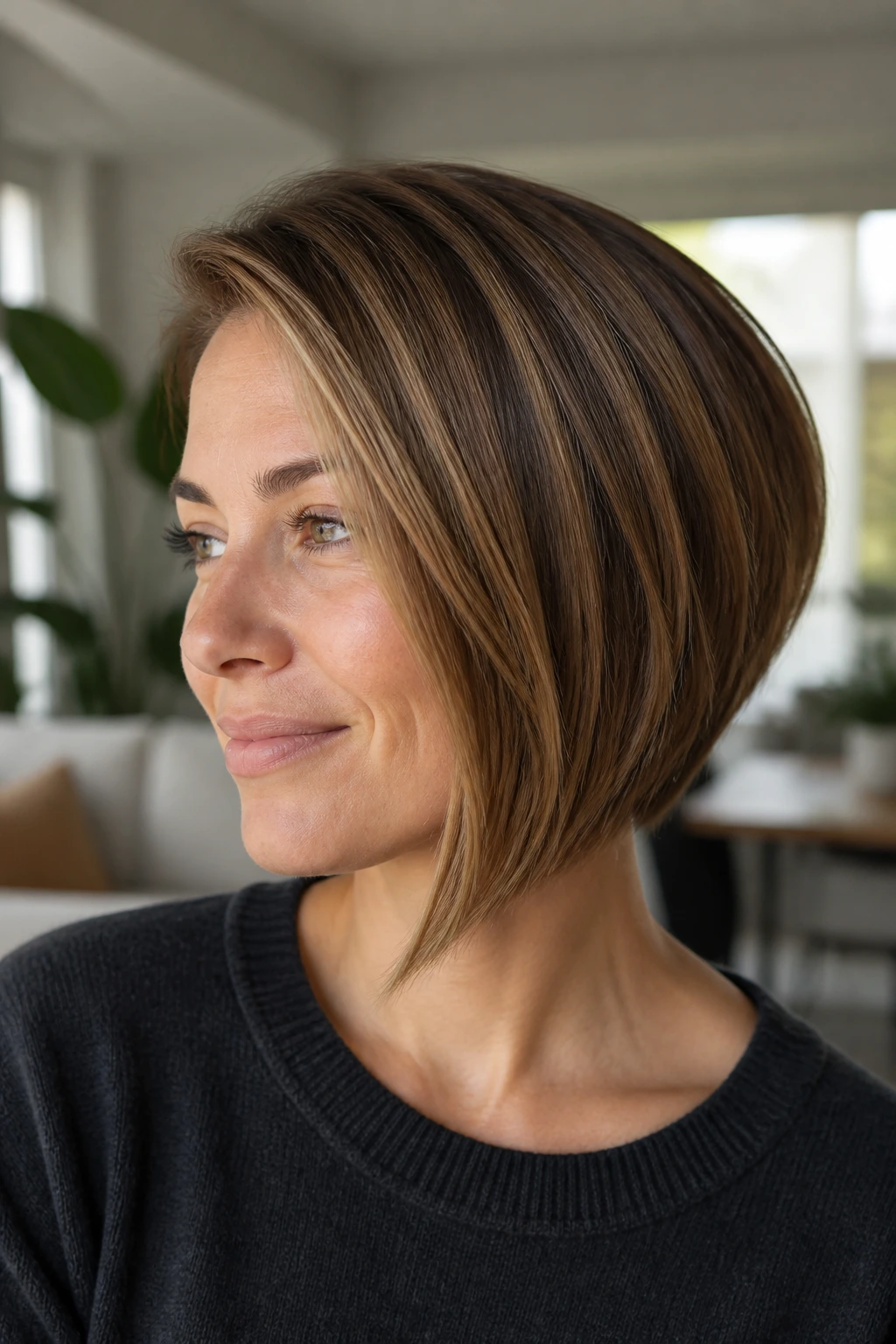
A graduated bob has a more measured slope than a stacked bob. The back is shorter, yes, but the transition toward the front is smoother and less dramatic. It gives you shape without shouting about it.
That smooth graduation can be a lifesaver for hair that needs lift but not a lot of visible layering. Fine hair gets a little boost at the nape. Medium hair gets a cleaner outline. Thicker hair can keep some internal bulk removed while the outer shell stays polished. The haircut sits in that sweet zone where people notice the shape before they notice the technique.
What I like here is the restraint. Too many bobs are overworked. This one has a clear structure and does not need extra drama on top of it. If your face shape likes a gentle angle rather than a sharp one, this is an easy place to start. A subtle side part can soften it even more.
It’s one of those cuts that behaves well in real life, which is maybe the highest praise a haircut can get.
18. Asymmetrical Bob
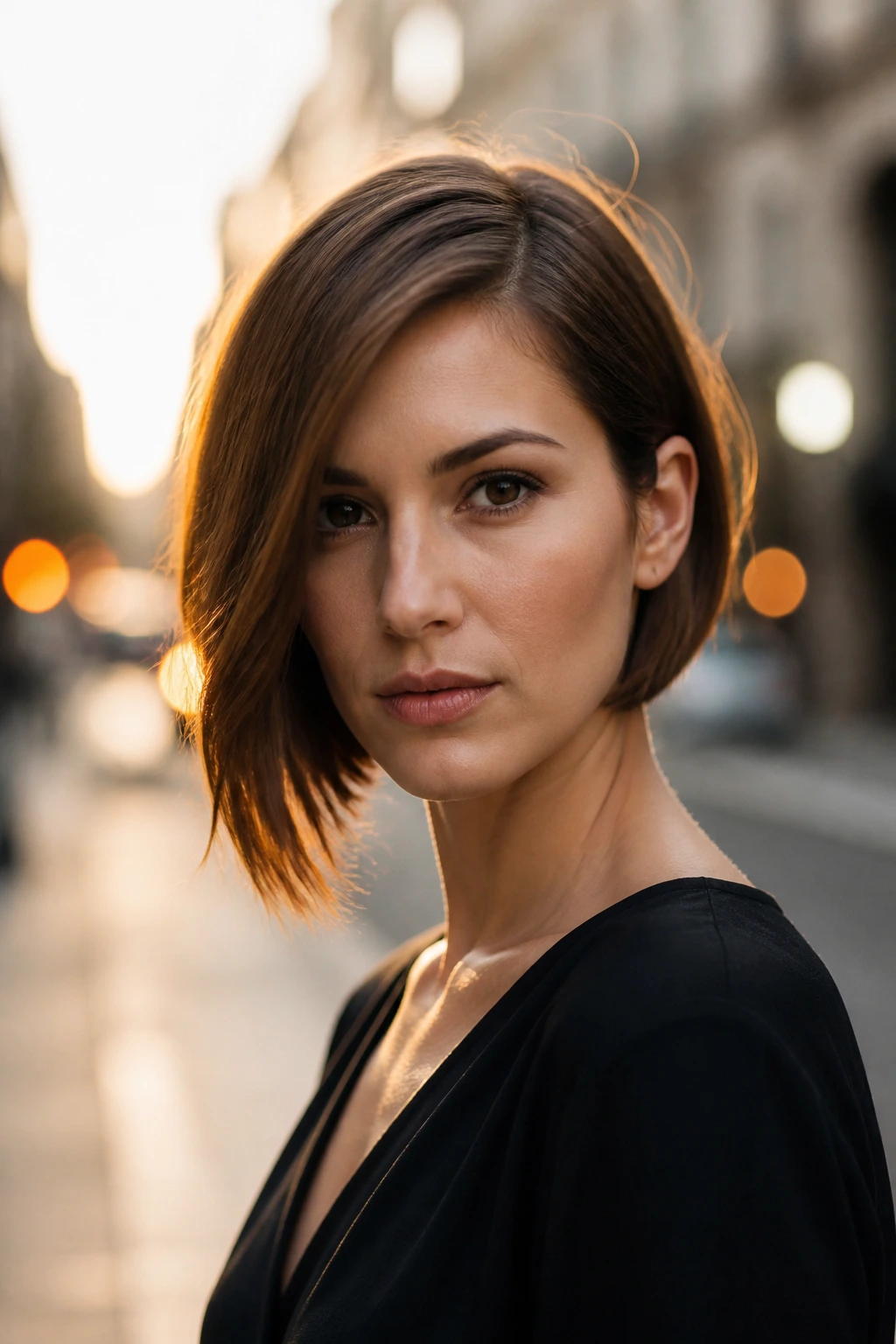
An asymmetrical bob is what you choose when you want a bob with a little tension in it. One side is longer than the other, and that difference gives the haircut movement even when it’s standing still. It feels modern without needing wild length or heavy layers.
The trick is keeping the imbalance deliberate. If the difference is too tiny, the cut can look accidental. If it’s too extreme, the shape starts to dominate the face. A moderate difference — enough to notice when the hair shifts, not enough to look lopsided — is usually the cleanest place to land.
This cut is especially good if you want a bob that softens one side of the face or draws attention to a collarbone, cheekbone, or earring. It also works nicely with straight hair because the uneven line reads clearly. Wavy hair can wear it too, but the texture should be controlled or the asymmetry gets lost.
A side tuck on the shorter side can show off the shape. Or you can leave both sides loose and let the cut reveal itself naturally. That part depends on how much you want people to notice.
19. Bob with Bangs

Can bangs change a bob more than the length does? Yes. Sometimes a lot more. A clean fringe shifts the whole frame of the face, and once it’s paired with a bob, the cut starts feeling unmistakably styled. The bang line becomes part of the haircut’s personality.
A bob with bangs can go soft or sharp. Blunt bangs make it feel graphic. Curtain bangs make it gentler. Side-swept bangs keep it easy if you do not want a full-on forehead commitment. The key is making the fringe match the weight of the bob below it. A heavy bob with wispy bangs can feel disconnected. A balanced pair looks intentional fast.
Fringe Choices That Work
- Blunt bangs for a bold, compact shape.
- Curtain bangs for a softer frame around the cheekbones.
- Side-swept bangs for people who want low-fuss upkeep.
- Piecey fringe for a lighter look on finer hair.
A bang needs regular trims more often than the rest of the cut, and that’s the part people forget. If you are fine with that, the payoff is big. A bob with bangs can make a simple haircut feel finished before you even reach for styling tools.
20. Pageboy Bob
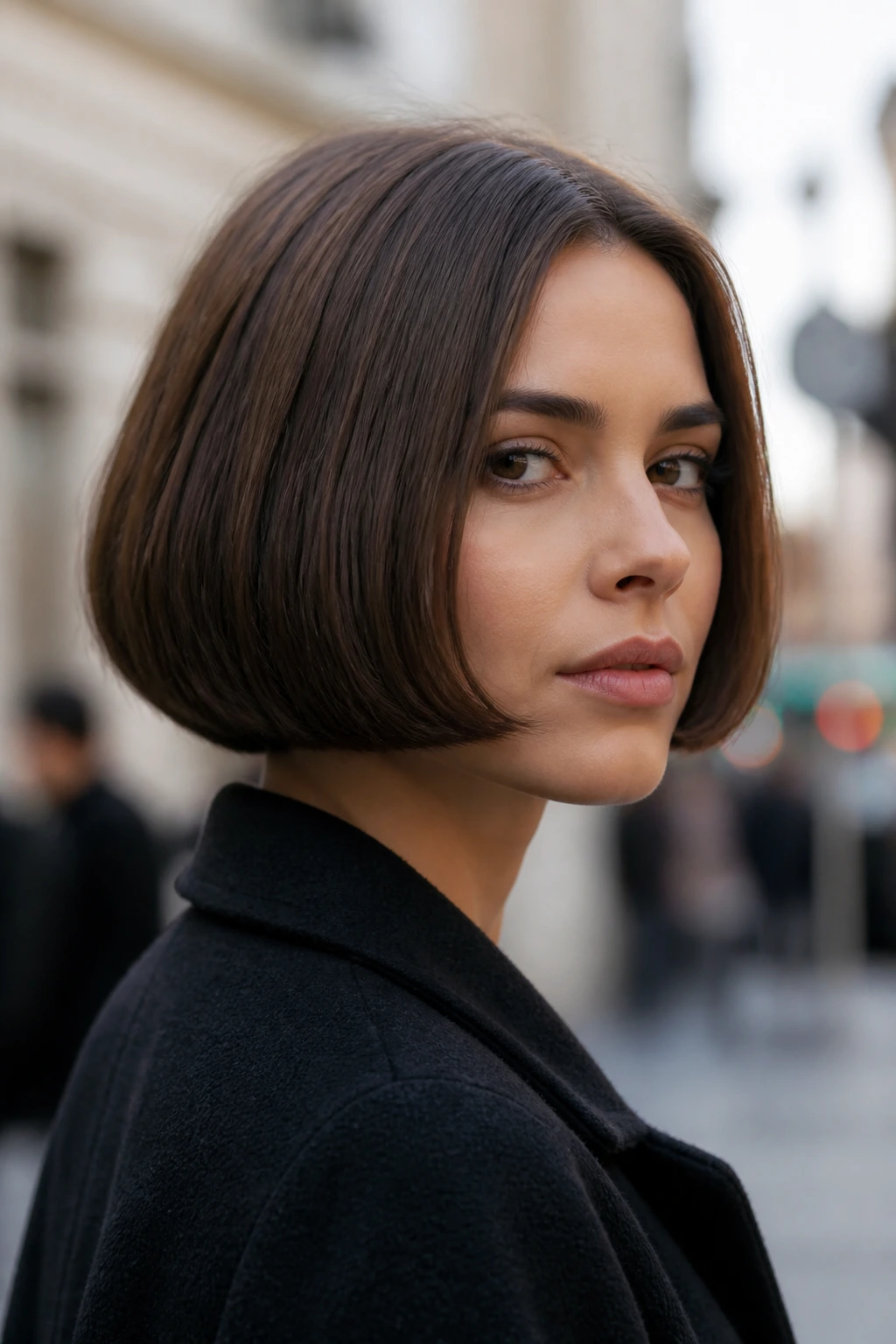
The pageboy bob has that old-school curve that never stops looking put together. The ends turn under, the outline stays rounded, and the shape sits close to the head in a way that feels neat without being stiff. It has a little vintage polish, but not in a costume way.
This cut usually works best when the hair is smooth and the ends can be trained under with a brush or a quick pass of the blow-dryer. It’s especially flattering if you like a bob that frames the cheeks and jaw with a soft edge. The curve gives the haircut a tidy finish, which can be a relief if your hair tends to spread out when it dries.
It also has a useful built-in honesty. If your hair is frizzy, the pageboy shape will show it. If the ends are dry, it will show that too. That can sound unforgiving, and it is. But it also means a healthy version of this cut looks crisp in a way that is hard to fake.
I think of it as one of the quiet classics. No tricks. No extra fluff. Just a shape that knows exactly where it wants to sit.
Final Thoughts
A bob works best when the shape matches the hair you actually have, not the hair you wish would show up after a 12-minute blow-dry. Clean edges, smart length, and the right amount of movement matter more than chasing whatever sounds exciting in a salon chair.
Shorter bob haircuts tend to win when you want structure. Longer ones win when you want room to tuck, wave, or grow out without panic. The sweet spot is usually the cut that gives you one less thing to wrestle with in the morning.
If you are stuck between two versions, pick the one with the better line. Hair grows. A good shape still looks intentional when it starts to move out a bit, and that is the quiet reason these classic bobs keep staying useful.
