



Fine hair doesn’t need more hair—it needs smarter shape, and choppy bobs for fine hair are one of the few cuts that can make the strands look fuller without turning the head into a puffed-up triangle. The right bob gives the ends some bite, keeps the outline crisp, and leaves enough movement that the hair doesn’t collapse by lunch.
A bad one does the opposite. Too much razoring, too many short layers, and the ends look see-through instead of airy. Too much weight removal near the bottom, and the whole cut starts to wobble in a way that flat hair never forgives.
Fine hair is a tricky beast because the strand itself is thin, but the head shape, growth pattern, and part line do most of the visual work. A good bob pays attention to all three. The back can be slightly shorter, the perimeter can stay firm, and the movement can live in the top and front where it helps the eye read “fuller” instead of “thinner.”
The 15 cuts below use those tricks in different ways: jaw-grazing French shapes, blunt little power bobs, softly stacked backs, longer lobs with chopped front pieces, and a few messier styles for people who want body without a lot of brush work. Some are neat. Some are lived-in. All of them are built for hair that needs a little help holding its shape.
1. Jaw-Skimming French Bob With Soft, Choppy Ends
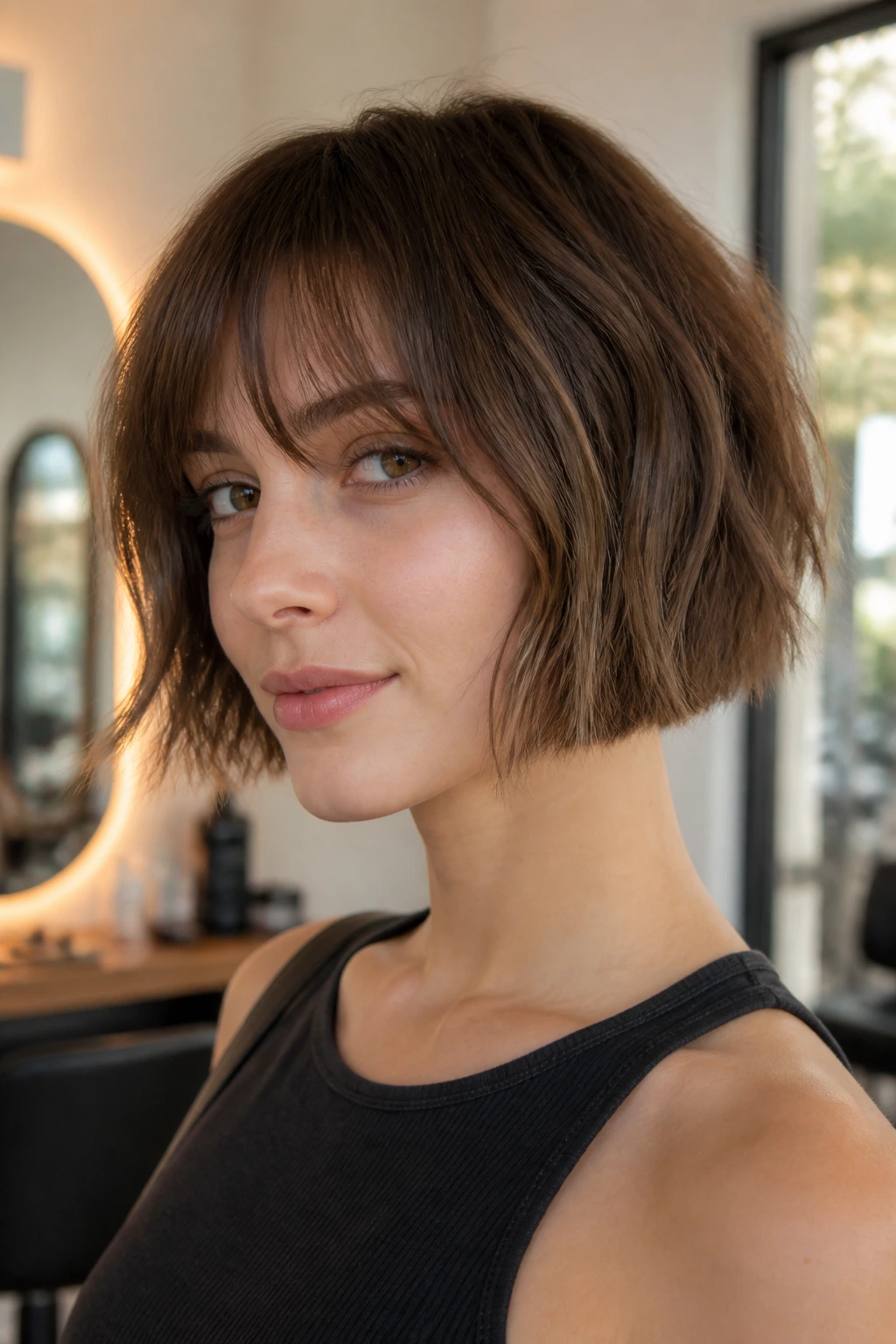
This is the bob I’d hand to someone whose hair goes limp the second it dries. The jaw length gives fine hair a solid line to hang on to, and the soft choppiness keeps that line from looking stiff or helmet-like. It sits in that sweet spot between polished and undone.
Why it adds body
A jaw-skimming length gives the eye a clear endpoint, which makes the hair look denser than a longer cut with wispy ends. The soft choppy finish also helps the bob move when you turn your head, so the style doesn’t sit there like a block.
Ask for a blunt perimeter with lightly point-cut ends. That means the bottom stays strong, but the tips get a little broken up so they don’t fall into one flat curtain. If your stylist starts slicing heavy layers into the interior, slow them down. Fine hair usually needs less cutting than people think.
- Keep the length at or just below the jaw.
- Leave the top fairly compact.
- Ask for soft point cutting, not aggressive thinning.
- Style with a 1-inch round brush and a light mousse at the roots.
Best for: straight or slightly wavy fine hair that needs shape without a ton of daily styling.
2. Blunt Micro Bob With Invisible Texture
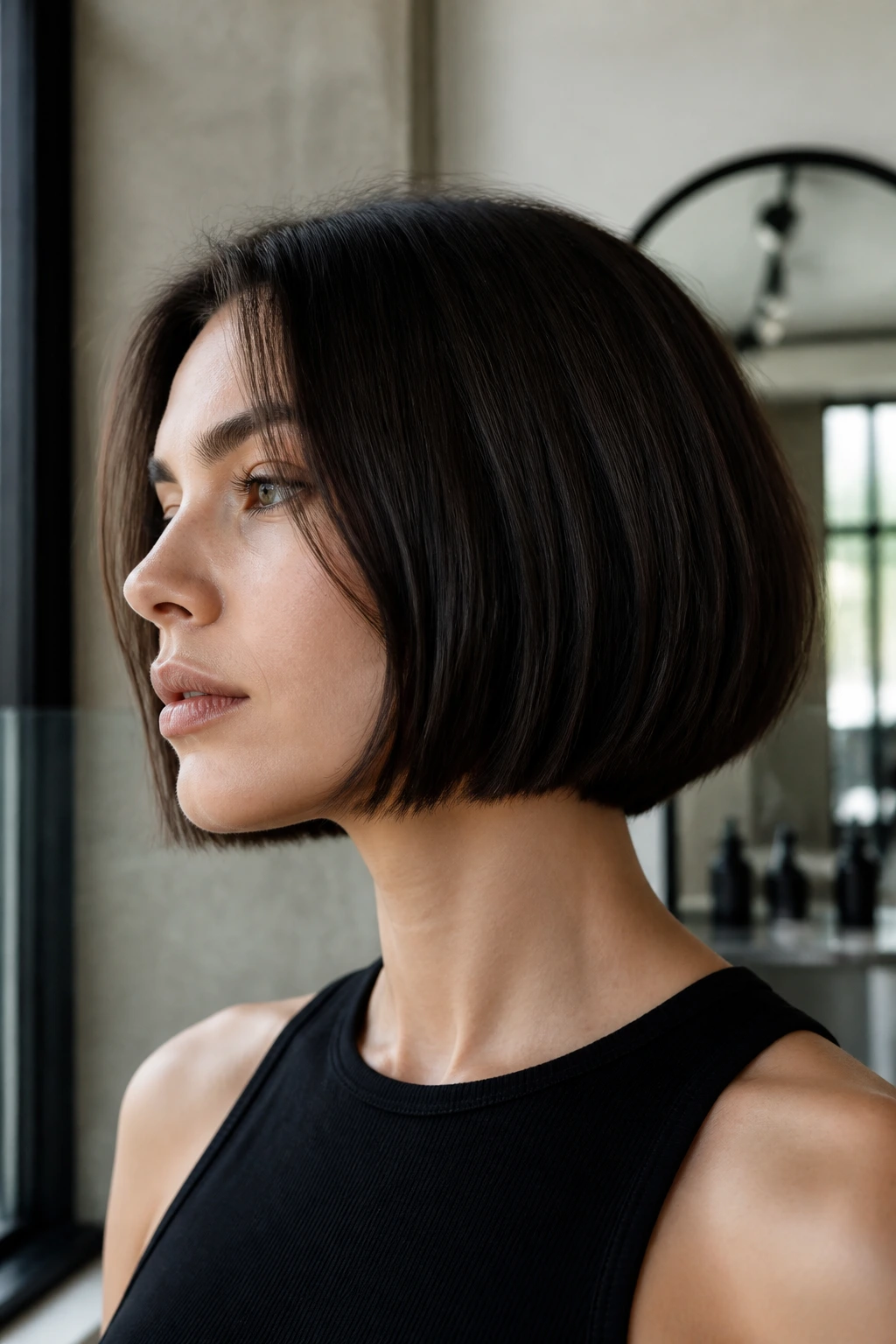
You know that sharp little bob that looks expensive even when it’s barely styled? That’s this one. The trick is that the texture is tucked inside the cut, not chewed into the perimeter, so the ends still look thick and deliberate.
A micro bob sits a little above the chin, sometimes brushing the cheekbone. On fine hair, that shorter length can be a blessing because the hair has less distance to go before it loses volume. The cut reads as dense because the line is clean, not because the hair is thick. Different thing.
Styling note
Use a light volumizing spray at the roots and blow-dry with a paddle brush if you want a smooth finish. Or bend a few ends with a small flat iron if you want that slightly broken-up look. Don’t overdo the texture spray. Fine hair can go stringy fast, and stringy is not the goal.
A micro bob works best when the shape does the work for you. That’s the whole point.
3. Chin-Length Bob With Piecey Layers
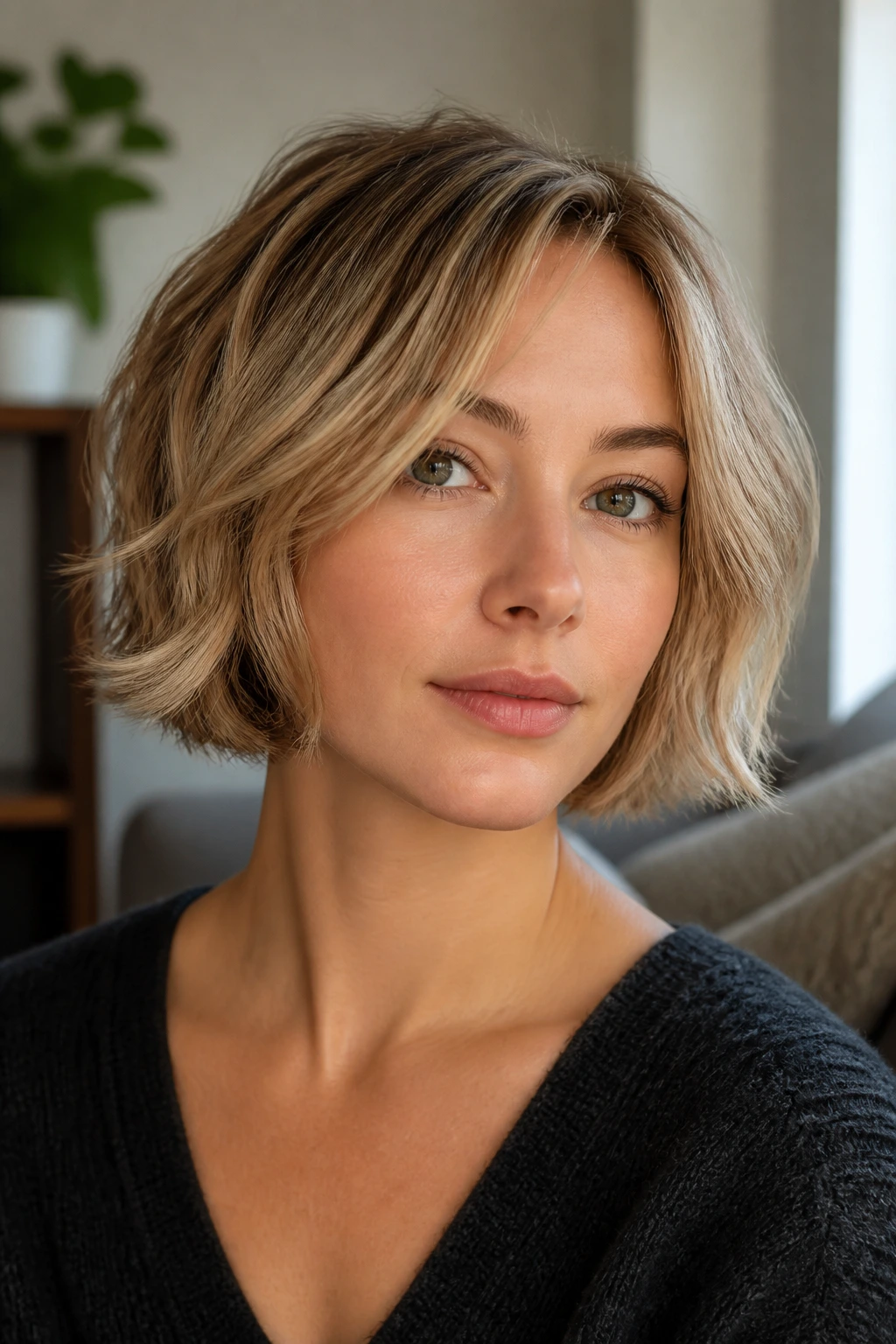
Why does chin length work so well on fine hair? Because it keeps the weight close to the face, where the cut can hold a shape without fighting gravity. Add a few piecey layers around the cheeks, and the whole thing starts to feel lighter without losing its backbone.
This is a good middle ground for someone who wants movement but doesn’t want a shag. The layers should be long and selective, not stacked all over the head. I like this cut when the hair has a little natural bend, because those bends catch the ends and make the bob look fuller without a lot of effort.
What to ask for
- Chin-grazing length
- Soft layers around the cheekbones
- A strong bottom line
- Minimal thinning near the ends
If your hair is pin-straight, a quick bend with a 1-inch curling iron on the middle section only can make this cut come alive. Keep the ends a bit straighter for that piecey finish. The contrast is what gives it body.
4. Stacked Bob With A Clean Nape
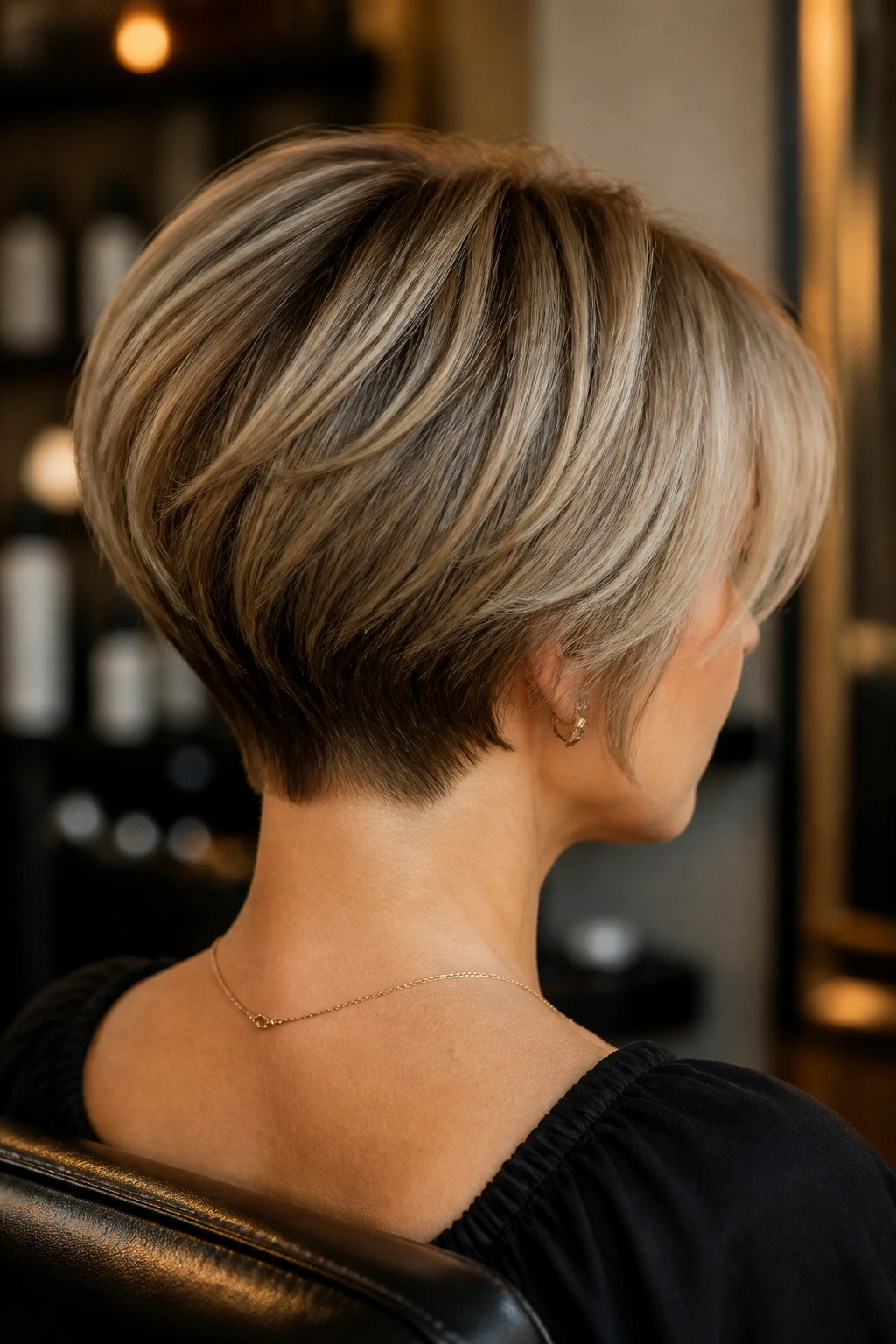
The back of the head is doing more work here than people realize. A clean nape with a gentle stack builds lift under the crown, which is exactly where fine hair often falls flat. You get a rounded shape without making the cut look dated or overdone.
The important part is restraint. A heavy stack can look wedge-shaped fast, and that’s not flattering on most faces. What you want is a subtle rise in the back, enough to support the top layers so they don’t collapse into the neck. Think neat, not bulky.
This cut shines on straight fine hair that refuses to hold volume for long. It also helps if your hair grows flat at the crown, because the shorter back creates a natural push upward.
Best trick: blow-dry the back with a small round brush, lifting at the root and directing the hair slightly forward before smoothing it back into place. That tiny bend gives the stack room to show.
5. Collarbone Lob With Choppy Face-Framing
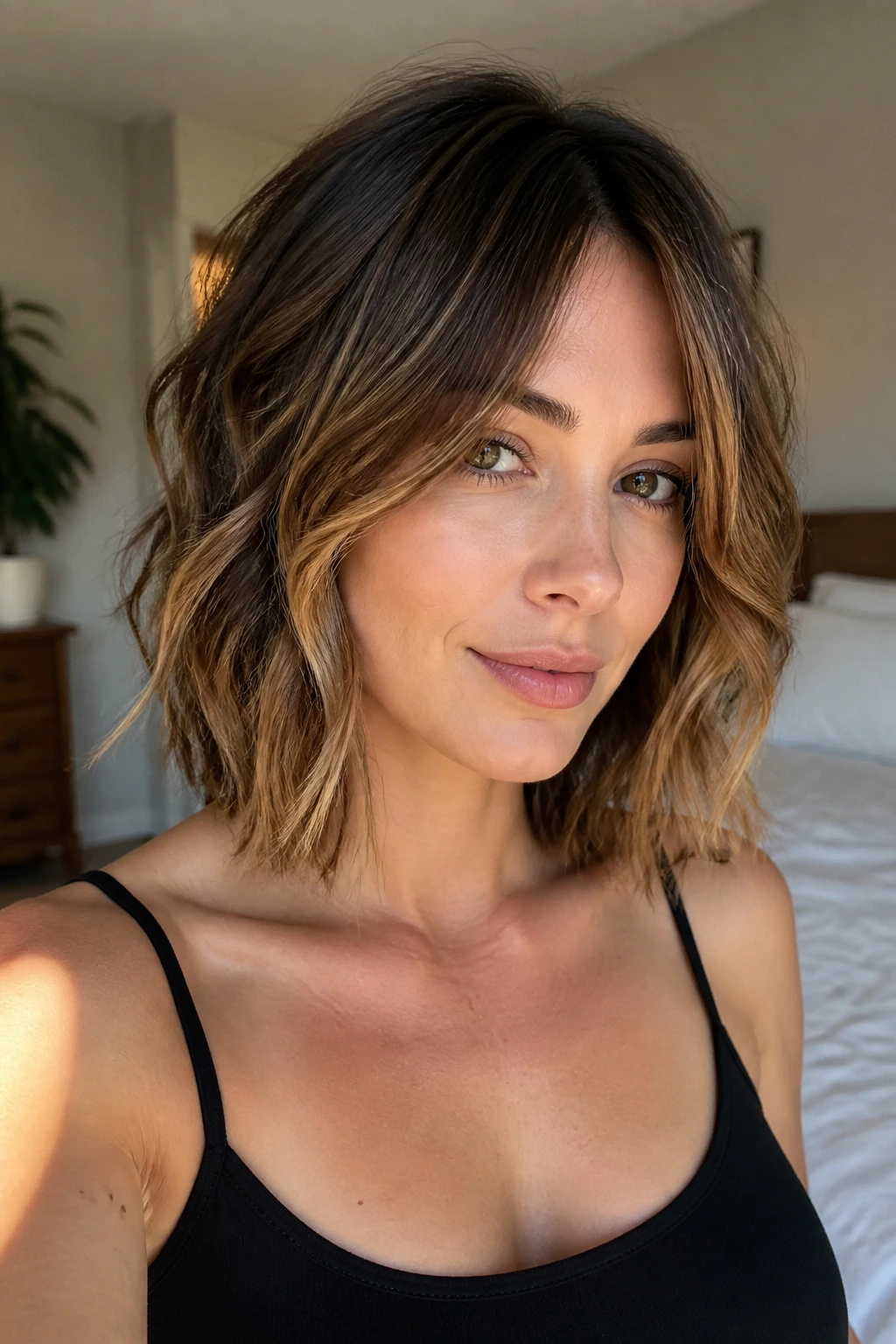
A lot of people think fine hair has to stay short to look full. Not true. A collarbone lob can hold body beautifully if the ends are kept strong and the front is cut with enough shape to frame the face instead of hanging there like one long sheet.
This version works because the length stays just long enough to feel soft, but the choppy face-framing pieces keep it from going flat around the jaw. I like this cut for anyone who wants to tuck hair behind one ear, clip it half up, or still throw it into a small knot on bad days.
There’s a small sweet spot with the face-framing pieces. Too short, and they kick out. Too long, and they disappear into the rest of the hair. Ask for pieces that start around the cheekbone or lip and taper down toward the collarbone.
Fine hair at this length usually looks best with a low-maintenance wave, not tight curls. Loose bends give the illusion of thickness without making the ends look frayed.
6. Asymmetrical Bob With A Longer Front
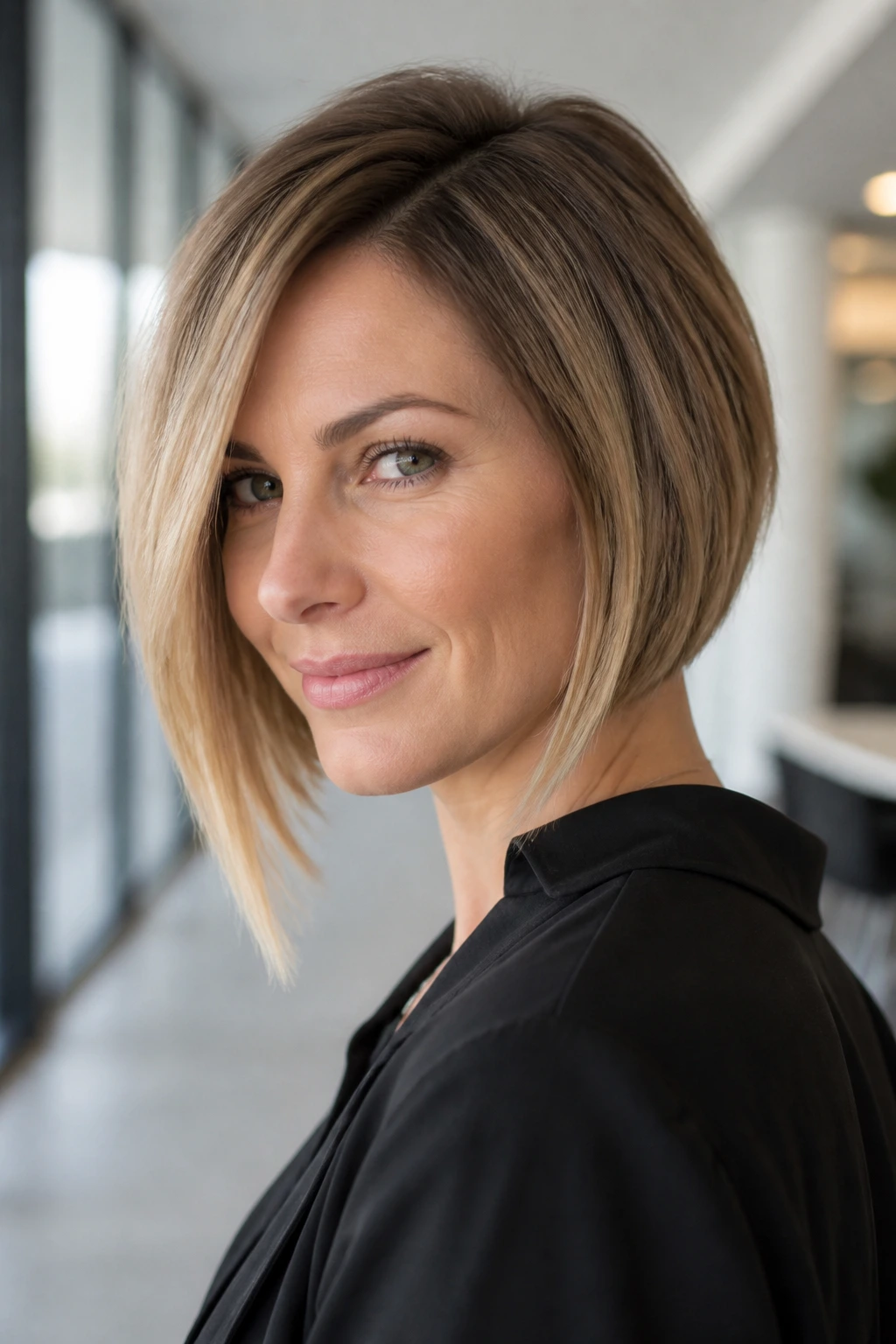
A slightly uneven bob can add more body than a perfectly even one, which sounds backward until you see it in the mirror. The longer front pulls the eye forward, while the shorter back keeps the crown from drooping. That little difference is enough to make fine hair look more deliberate.
Keep the asymmetry subtle. You do not need a dramatic angle unless you want one. A front section that’s only an inch or two longer than the opposite side is often enough to make the cut feel lively. Push it too far and the style starts to look fussy, which is the last thing fine hair needs.
What makes it useful
- It creates motion without extra layers.
- It works well with a deep side part.
- It flatters round or square faces by stretching the eye line.
- It still tucks behind the ear on one side, which is handy.
I prefer this cut when someone likes a little edge but still wants the hair to look neat on a workday morning. It’s a small twist, but it changes the whole read of the bob.
7. Razor-Cut Bob With Feathered Ends
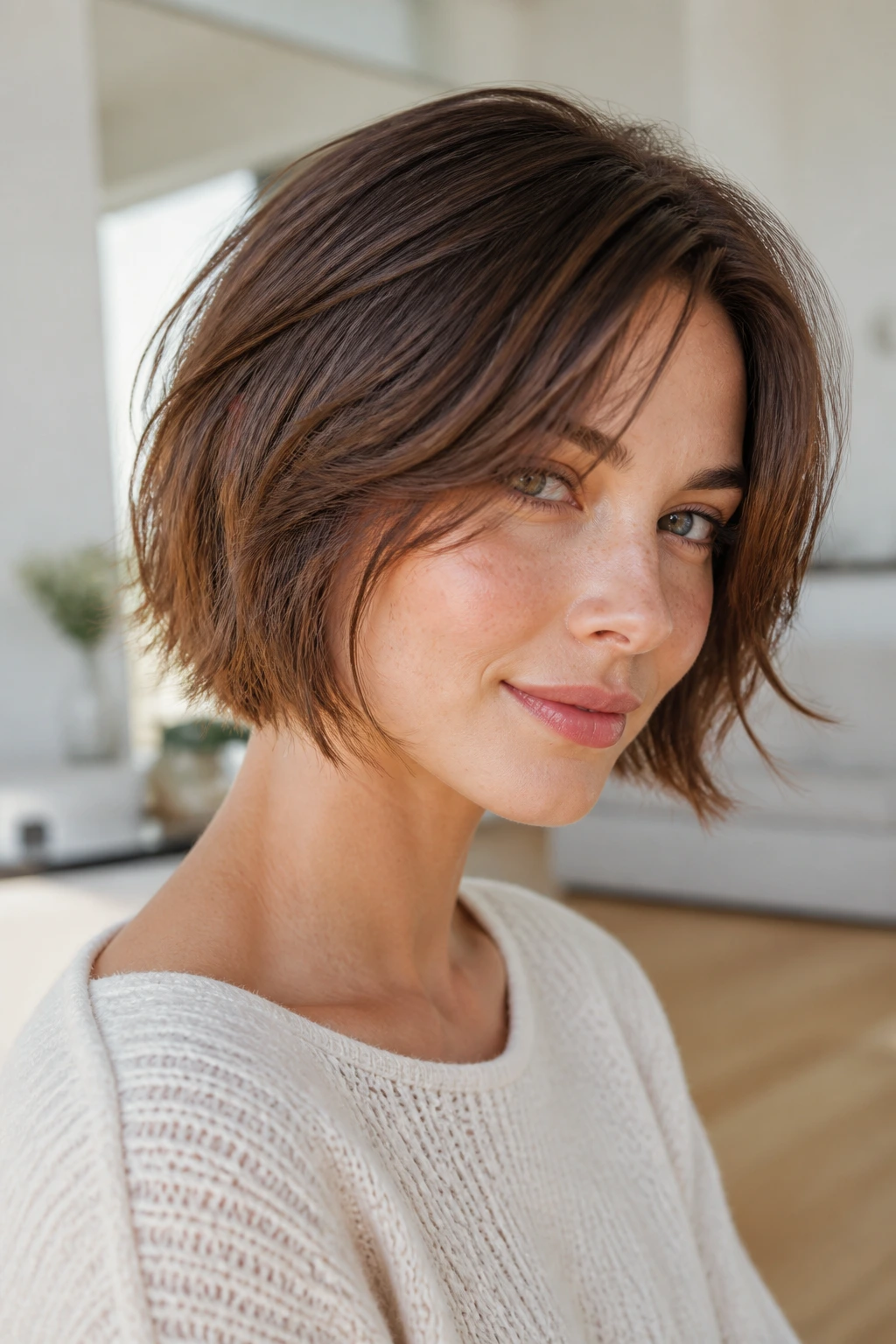
A razor cut can be lovely on fine hair, but only when the hair itself can handle that softness. The ends look feathered, almost airy, and that can give the bob a sense of movement that scissors sometimes miss. Done badly, though, it frays the hem and you end up with hair that feels thinner than before.
That’s why this one needs a steady hand. I’d only choose it with a stylist who knows how little pressure fine hair needs. The goal is lightness at the edges, not shredded strands. You want the ends to move when you run your fingers through them, but you still want them to look full when the hair is down.
Razor-cut bobs work best on straight to slightly wavy hair. Curly fine hair can puff up at the ends if the razor is too aggressive. If your hair already leans dry, ask for a softer version with scissors and point cutting instead.
A tiny bit of smoothing cream on the mids and ends is enough. Heavy oils make this cut slump.
8. Bob With Curtain Bangs And Broken-Up Layers
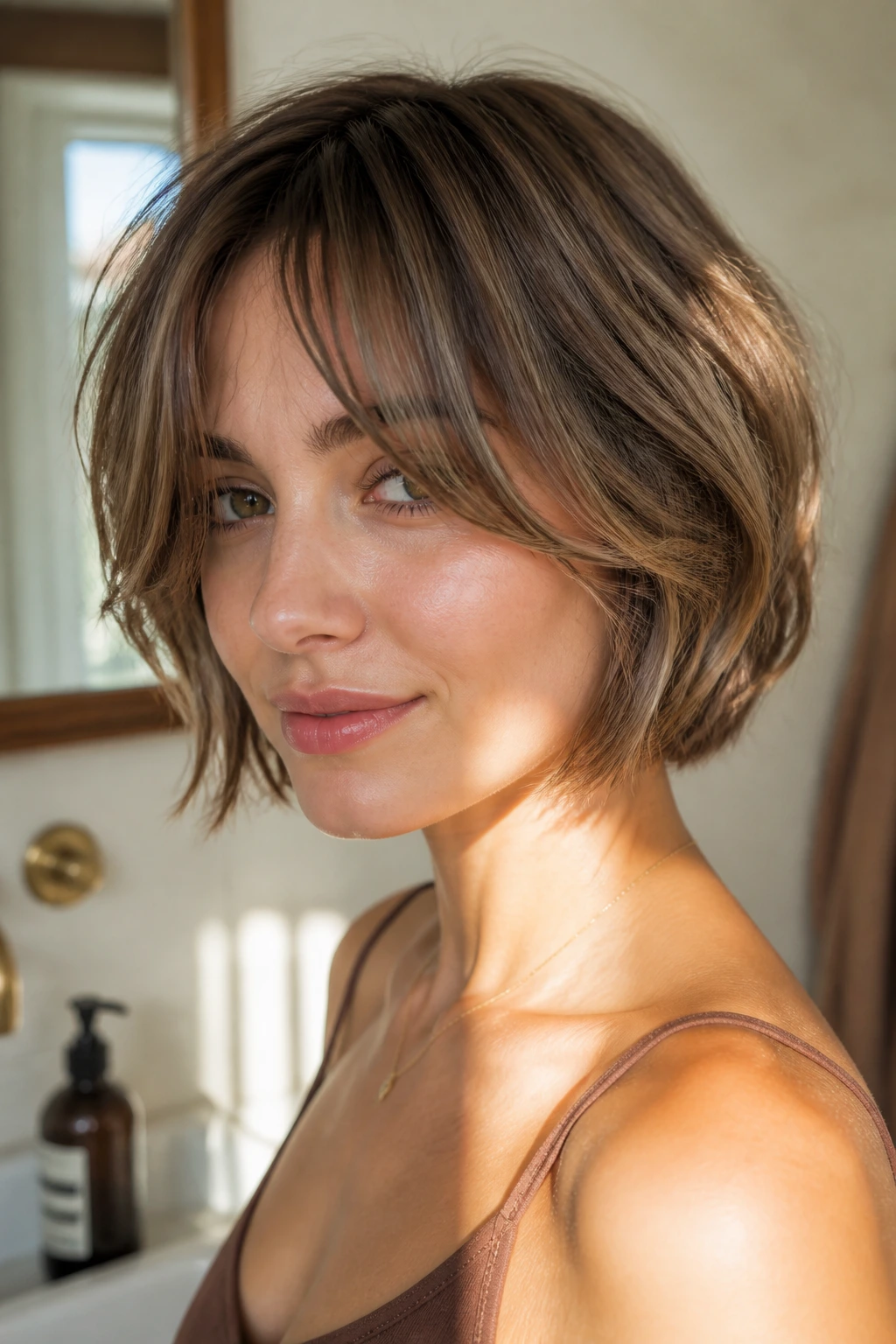
Can bangs help fine hair look fuller? Yes, if they’re the right kind of bangs. Curtain bangs are long enough to blend into the bob, and that broken-up front shape gives the face more structure without stealing too much density from the rest of the cut.
The smartest version of this style keeps the bangs soft at the center and longer at the sides, where they can flow into the bob. That keeps the front from looking choppy in a bad way. The layers through the sides should stay light and selective. You want movement, not a lot of short pieces floating around your cheeks.
How to style it
- Blow-dry the bangs away from the face first.
- Use a round brush only at the bend, not from root to tip.
- Let the rest of the bob air-dry a little before shaping it.
- Finish with a light texture spray at the mid-lengths.
This cut is a good choice if you want something a little softer than a strict bob. It has shape, but it doesn’t feel severe.
9. Inverted Bob With Airy Crown Volume
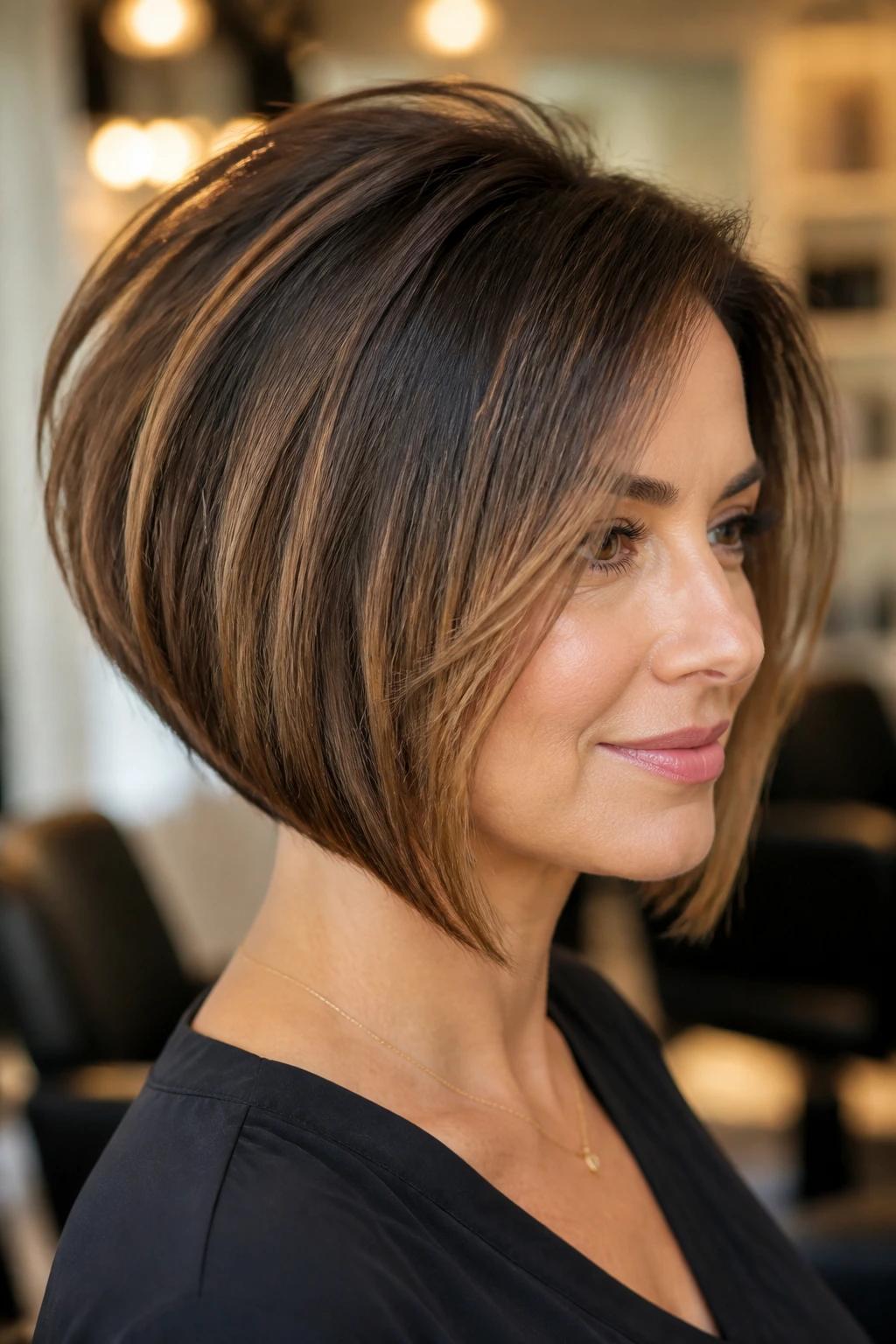
The crown is the whole story here. An inverted bob shifts the weight so the back sits higher and the front falls longer, and that angle can do wonders for fine hair that goes flat at the top. It gives the style a built-in lift, which means less wrestling with round brushes every morning.
The version I like for fine hair is softer than the old-school inverted bob. The back should rise gently, not spike upward. The front can graze the chin or sit a little lower, depending on how much length you want to keep around the face. That slope helps the hair look fuller because the eye sees a stronger silhouette.
This cut also helps if your hair grows flat at the nape. Shorter back pieces get air under them, which is exactly what fine hair needs. You can keep the front smoother and let the shape do the volume work.
A quick root lift spray and a blow-dry with the head tipped forward usually do enough. Simple. Effective.
10. Shaggy Bob With Loose Waves
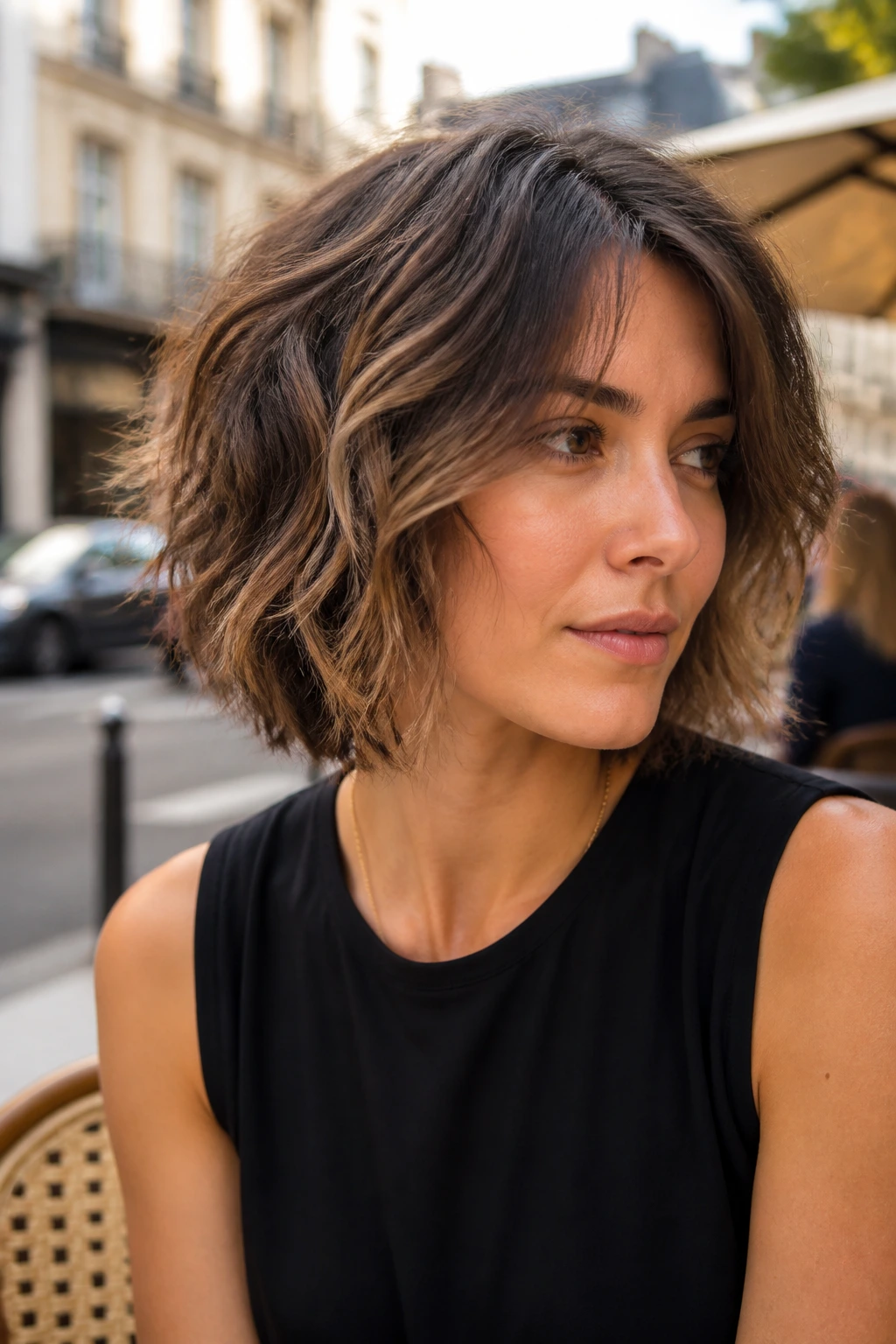
If your hair only looks full after you curl it, a shaggy bob may be the better answer. The shape gives the hair some broken-up texture, and the loose waves make the whole cut feel bigger than it really is. It’s not neat. That’s the point.
This is the bob for someone who likes a little mess and doesn’t want to spend 20 minutes making every strand behave. The layers should be long enough to fall in soft bends, not short enough to kick out in random places. Fine hair needs texture that reads as movement, not as frizz.
What to watch for
Too much layering near the crown can make this cut look sparse. Keep the density at the ends and use the wave pattern to add the body. A diffuser helps if your hair is naturally wavy, but don’t blast it with high heat. Fine hair gets fluffy fast when it’s overheated.
A little mousse scrunched into damp hair goes a long way. Let it dry, then shake it out with your fingers. Done.
11. Rounded Bob With Internal Layers
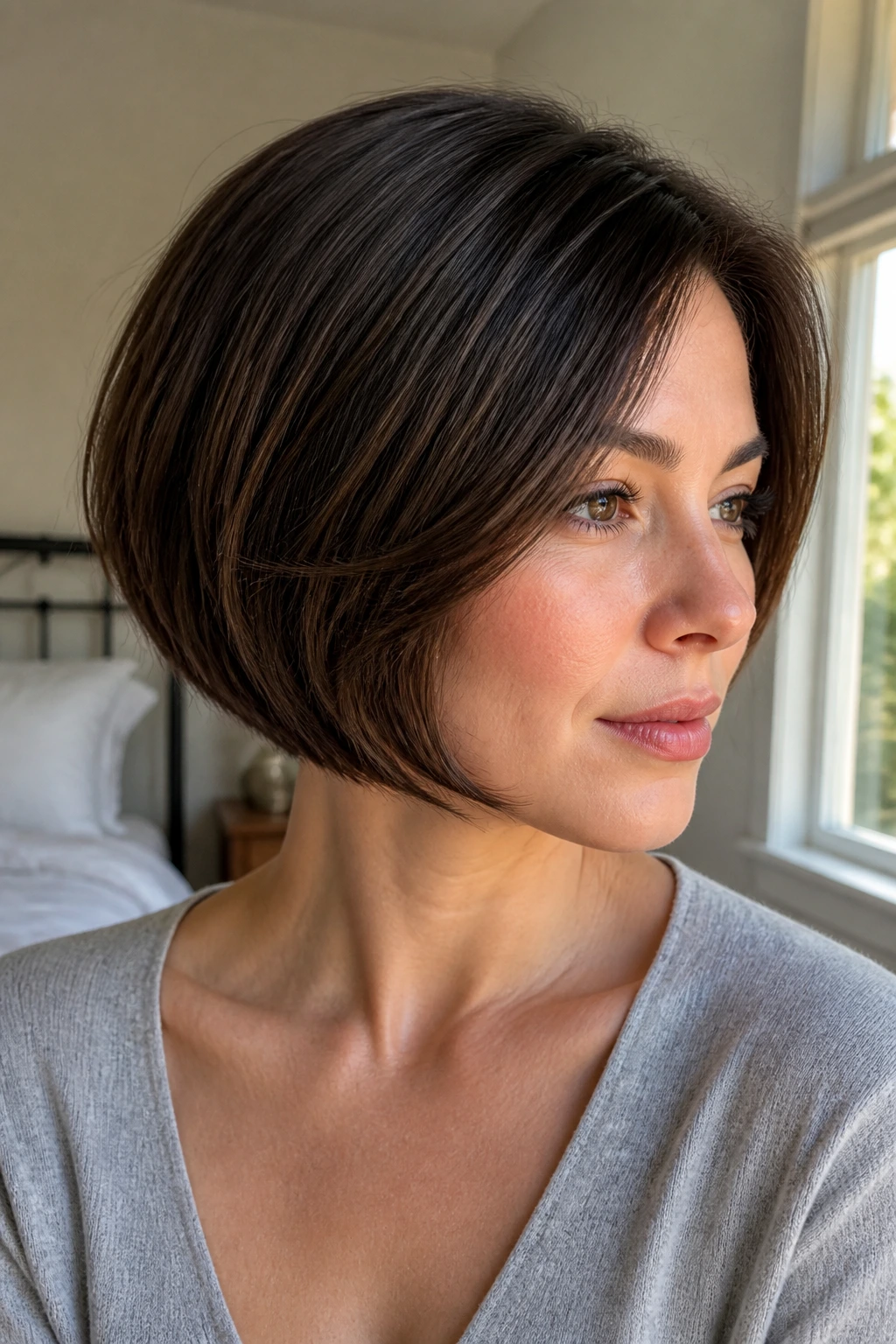
A rounded bob sounds old-fashioned until you see it on fine hair. The shape hugs the head in a way that makes the hair look intentional, and the internal layers keep the surface from going bulky. It’s one of the most useful cuts for someone who wants polish without a lot of styling fuss.
The trick is that the shape is built from the inside. The outside line stays smooth, while the hidden layers create room for movement. That means the cut can look full without showing obvious steps or choppy lines. Fine hair often benefits from that kind of quiet structure.
This bob works especially well if you like a smooth blowout finish. A medium round brush, a little tension, and a cool shot at the end are usually enough. You don’t need huge volume at the roots. You need the crown to sit cleanly and the sides to curve in a way that flatters the face.
If you want a bob that reads neat in daylight and still holds shape at night, this is a smart one to keep on the list.
12. Tousled Side-Part Bob With Lift At The Roots

A side part can save a fine-hair bob when the center part starts showing too much scalp. That little shift changes where the hair falls, creates instant lift, and makes the top section look richer. It’s one of the simplest fixes in the whole haircut family.
The best version of this cut has a slightly tousled finish, not a perfect bend. You want the root area to feel lifted and the ends to move a little. A strong center part can flatten fine hair right down the middle; a side part breaks that line and gives the style a natural bit of push.
Why the part matters
- It moves weight to one side, which creates volume.
- It hides any flat spots at the crown better than a center part.
- It gives you more options for tucking or clipping one side back.
- It often looks fuller after a quick re-flip with your fingers.
I like this cut for people who want a bob that feels easy and casual, not styled within an inch of its life. A mist of root spray and a rough blow-dry are usually enough.
13. Box Bob With Textured Ends

A box bob sounds blunt, and it is—but that bluntness is the point. Fine hair often looks better when the perimeter is strong, because a firm line makes the ends appear thicker. The box shape gives you that density at the edges, while the textured ends keep it from feeling like a solid block.
This is one of those cuts that looks simple until you try to recreate it without a good shape. The outline needs to stay clean. If the ends get thinned out too much, the whole effect disappears. If they’re left too blunt and heavy, the cut can feel severe. The sweet spot is a firm border with just enough softening to let the hair move.
This one suits people who like structure and don’t want a lot of fluff. It can look especially good on straight fine hair because the line shows up well. Add a slight bend at the very ends if you want it to feel softer around the face.
My blunt opinion: this is one of the best choices if your hair tends to look sparse after a bad haircut. Strong outline, less drama, better density.
14. Wavy Bob With Deep Point-Cut Layers

A wavy bob needs a different kind of cutting. The shape should work with the wave, not fight it, and deep point-cut layers can make that happen without removing too much weight. The result is loose, piecey, and fuller than a flat cut that’s been over-layered.
Point cutting is gentler than chopping straight across the ends. It lets the hair break up in a softer way, which matters when the strand itself is fine. You still keep enough mass to make the bob look full, but the wave pattern gets room to show up. That’s the real win here.
What to ask for
- Long layers that follow the wave pattern
- A perimeter that stays mostly even
- Soft face-framing pieces, not short pieces everywhere
- Ends that are point-cut, not thinned to dust
This cut is especially useful if your hair looks good only when it air-dries with a bend. A curl cream or light mousse is enough. Skip heavy creams. They flatten the wave and steal the lift you’re trying to build.
15. Soft Tapered Bob With Long Face-Framing Pieces
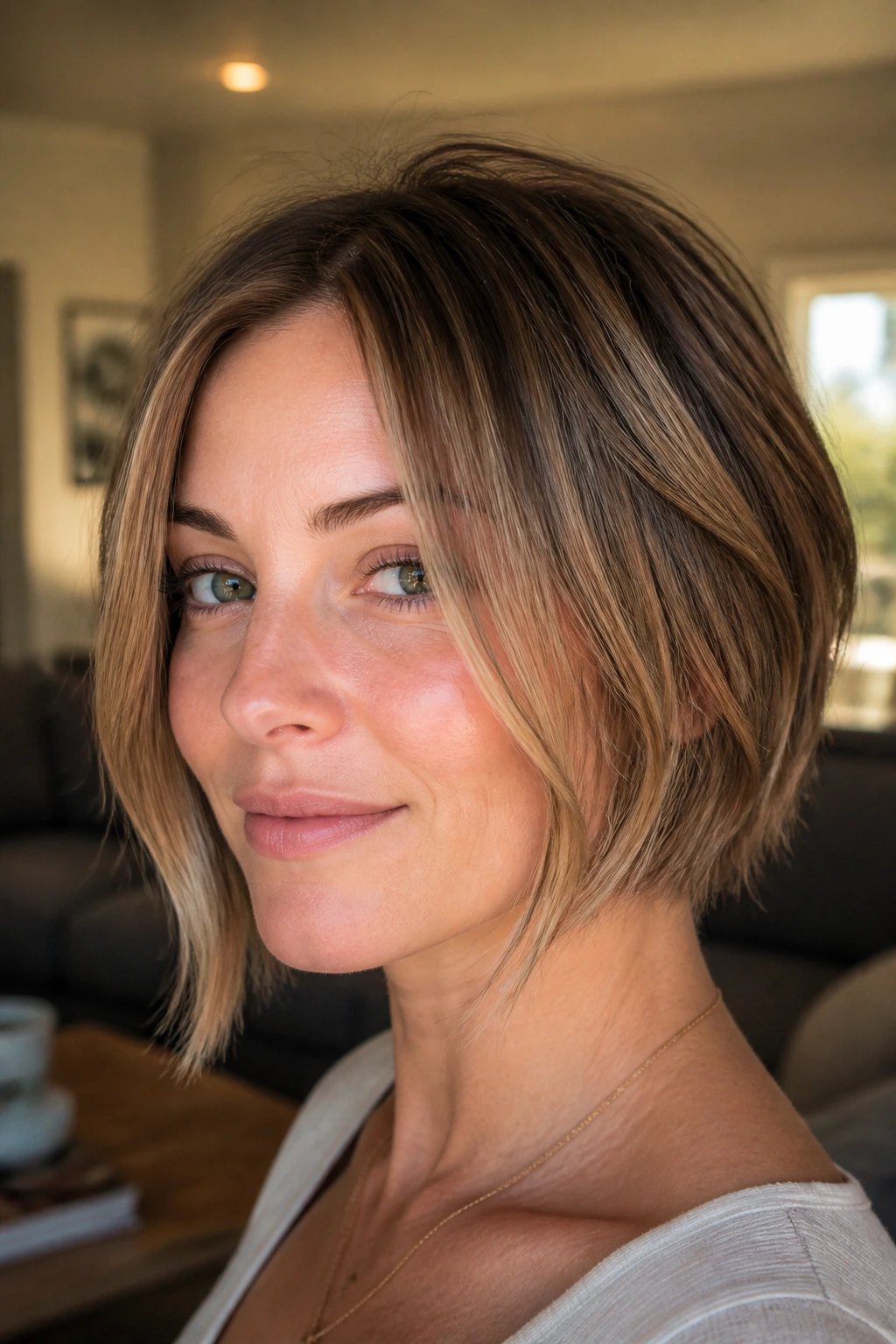
If you want one bob that plays nice with almost everything, this is the one I’d start with. The taper gives the back a little lift, the longer front pieces soften the face, and the whole cut keeps enough movement to stop fine hair from looking sheet-like.
The beauty of a soft taper is that it doesn’t scream for attention. It just makes the hair sit better. The nape stays neat, the sides don’t puff out, and the front falls in a shape that flatters without needing much styling. That matters when you’re dealing with fine hair, because the more you overwork it, the faster it loses life.
This is also the easiest style to live with if you’re not into a lot of heat styling. A quick blow-dry with a small round brush, a touch of mousse at the roots, and a finger-scrunch through the ends can be enough. Not fancy. Just good shape.
If your hair is very fine and you’re nervous about going too short, this is the safest place to begin. It gives body without making you feel like you’ve lost all your length, and that balance is usually what makes people keep wearing a bob long after the first cut.
