



A choppy bob with bangs can rescue hair that feels flat, blunt, or a little too polite. Choppy bobs with bangs work because they break up the line around the face and keep the ends from sitting in one hard sheet of hair.
That roughness is the point. A clean bob can look sharp, sure, but a choppy one has movement in it; the hair flicks, bends, and lands in pieces instead of behaving like a helmet. Add bangs, and the whole cut gets a little more attitude right away.
What matters most is the relationship between the fringe and the ends. If the bangs are too heavy, the cut feels boxed in. If the layers are too soft, you lose the bite that makes the style worth wearing. A good stylist usually works with point cutting, razor work, or light texturizing near the ends — not so much that the shape falls apart, just enough to keep it alive.
Some versions are neat enough for straight hair. Others are built for natural wave, cowlicks, or thick hair that refuses to lie flat. The fun part is that the same family of cuts can go from polished to messy fast, depending on how you dry it and where you let the fringe sit.
1. Micro-Bang Choppy Bob With Ruffled Ends
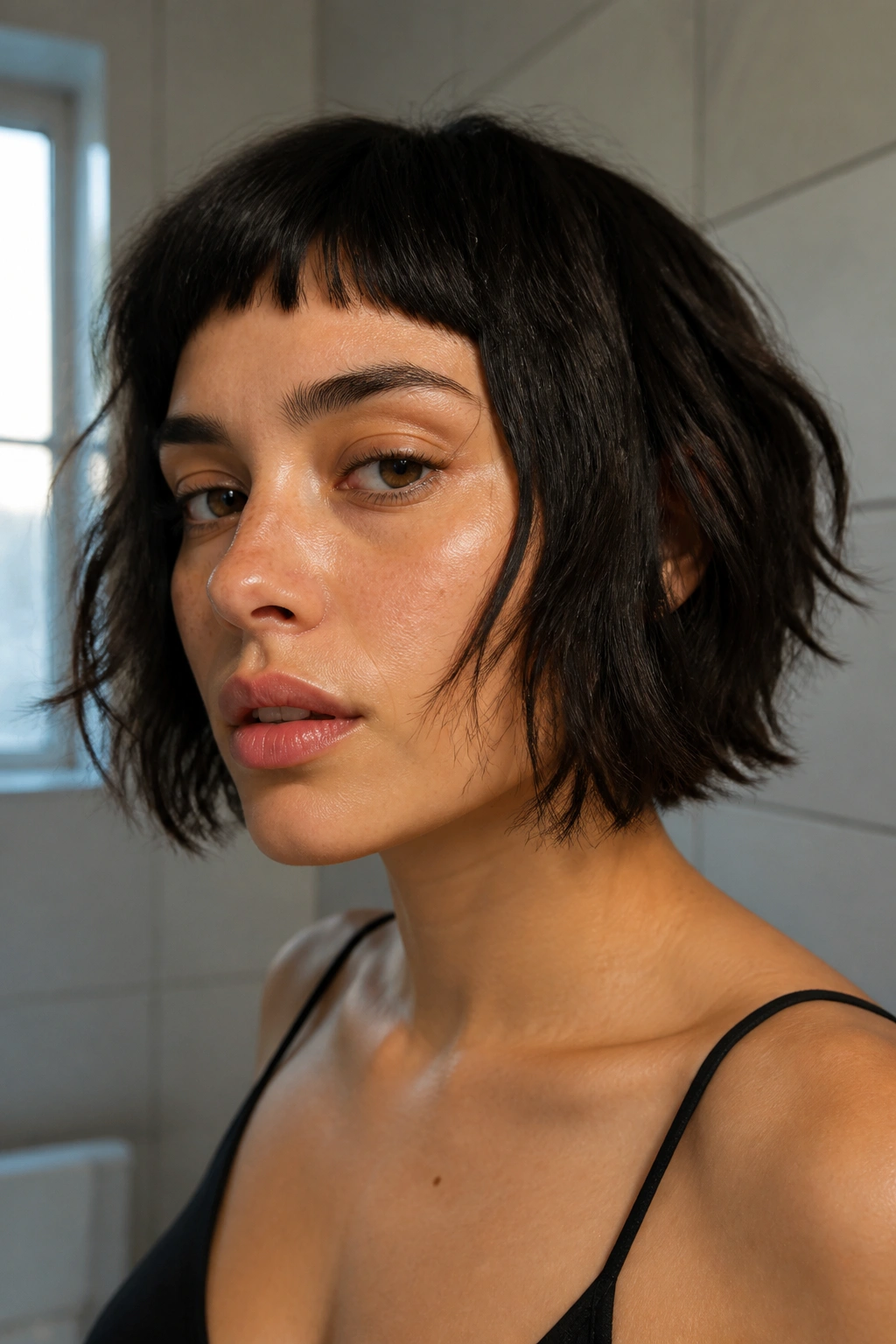
Micro bangs are not shy. This cut has edge built in, because the fringe sits short above the brows while the bob stays jagged through the ends, so the whole look feels deliberate even when you barely style it.
Why It Works
A micro-bang bob depends on contrast. The tiny fringe draws the eye up, while the choppy perimeter keeps the haircut from looking severe. That mix is what keeps it from feeling costume-y.
I like this cut most on hair that has some natural bend or enough density to hold a shape. If your hair is pin-straight, it can still work, but the ends need a little roughening with a flat iron or a dry texture spray. Otherwise the fringe steals all the attention and the rest of the cut just sits there.
- Ask for the bangs to be cut dry or nearly dry so the length doesn’t spring up too far.
- Keep the ends lightly piecey with point cutting, not heavy layering.
- Style with a pea-sized amount of matte paste, rubbed only through the last 2 inches.
- Best on oval, long, or angular faces that can handle a short fringe.
Pro tip: Leave the fringe a touch longer on the first cut; micro bangs can go from edgy to awkward fast.
2. Jaw-Length Choppy Bob With Piecey Side Bangs

This is one of the easiest ways to wear texture without looking overdone. The jaw-length shape keeps the cut compact, while the side bangs break up the front so the whole thing feels softer and more wearable than a blunt crop.
The side fringe also buys you flexibility. You can tuck it back, sweep it over, or let it fall across the cheekbone when you want more shape around the face. That matters if you wear glasses or if your hair has one stubborn cowlick that refuses to cooperate at the front.
This version works especially well when the ends are cut a little uneven on purpose. Not hacked apart. Just broken enough that they move when you turn your head.
The practical part is simple: blow-dry the bangs from the root with a small round brush, then rough up the ends with your fingers. If the front collapses by lunchtime, use a light dry shampoo at the root rather than piling on more product. Too much cream will flatten the whole point of the cut.
3. French Bob With Curtain Bangs and Airy Texture

What makes a French bob work is restraint. The cut is short, cheeky, and clean at the outline, but the curtain bangs stop it from feeling severe, and the choppy texture keeps it from turning into a pageboy.
The curtain fringe matters here because it opens the face. You get that little split in the center, then the bangs fall out toward the cheekbones, which makes the haircut feel softer around strong features. On wavy hair, this can look almost effortless — though I’d call it controlled more than effortless.
How to Wear It
A round brush gives the front some bend, but you do not need a blowout that looks too polished. In fact, a French bob gets better when the ends are touched with a flat iron just enough to flip them slightly inward or outward. Two or three quick bends are usually enough.
- Keep the bob around chin length for the classic shape.
- Let the curtain bangs start a little higher than the cheekbones.
- Use a light mousse on damp hair if your strands go limp fast.
- Air-dry the fringe a bit before finishing the shape with a brush.
This is one of those cuts that looks best when it is not trying too hard. That is exactly why people keep coming back to it.
4. Stacked Choppy Bob With Wispy Fringe
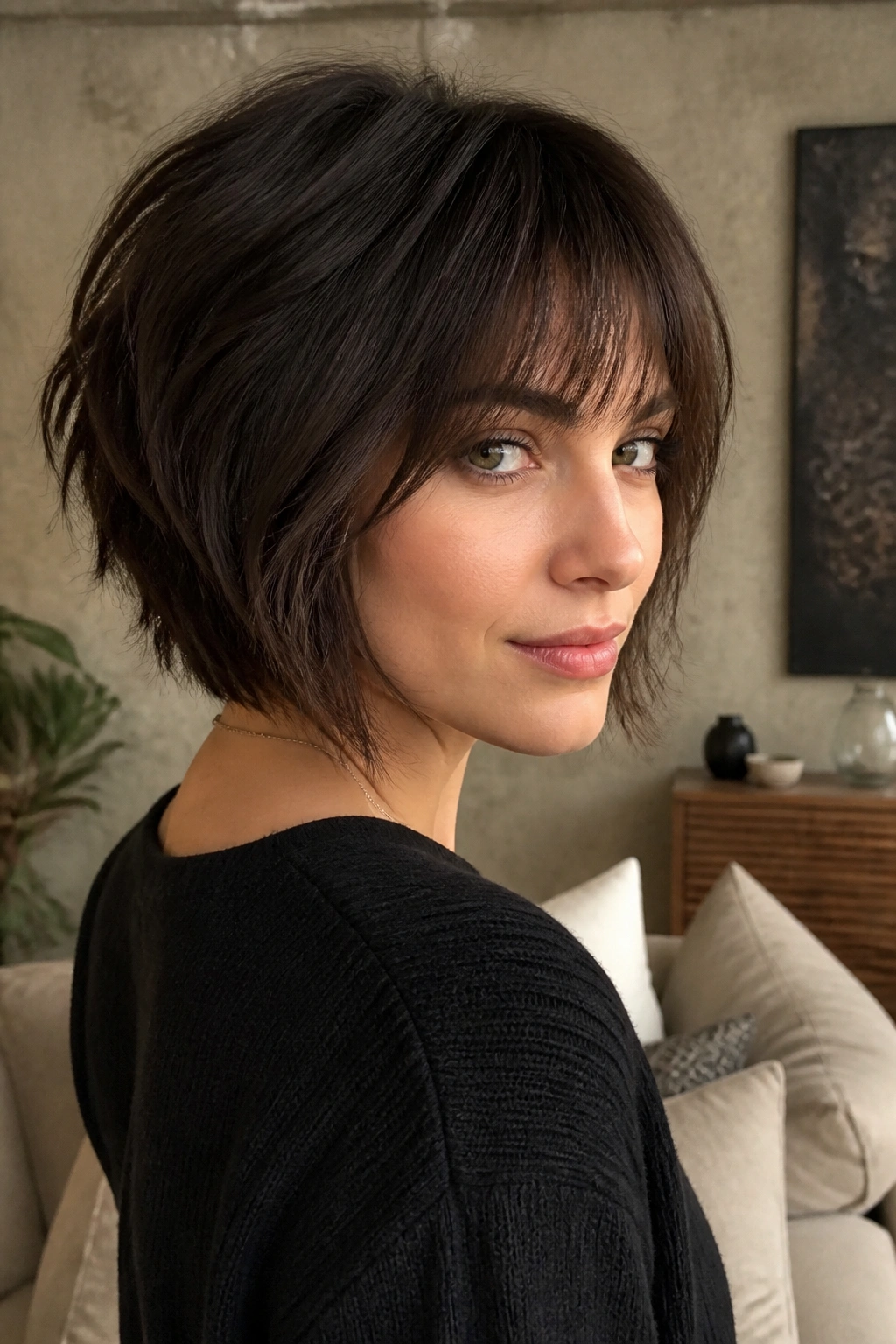
A stacked bob can look old-school if it’s done too neatly. Add wispy bangs and broken-up ends, and it shifts into something sharper, lighter, and easier to live with.
The back is the whole story here. Shorter layers at the nape build lift, while the front stays airy so the cut doesn’t get heavy around the eyes. That balance is useful if your hair falls flat in the crown or if you want the bob to feel fuller without loading on mousse.
The fringe should stay soft. Not see-through in a weak way — just light enough that it doesn’t fight the stacked shape. A heavy straight bang would drag the cut down and make the top look boxy, which is the last thing you want.
If you like a haircut that holds its shape even after a messy night’s sleep, this is a strong pick. It still needs trims. Of course it does. But the grow-out tends to stay neat because the back already carries enough structure to keep the cut from collapsing.
5. Chin-Length Tousled Bob With Baby Bangs

This one has a little theater in it. Baby bangs plus a tousled bob give you a look that feels fashion-forward without needing a complicated styling routine, and that’s the charm.
The short fringe is the loud part. It puts the face front and center, so the rest of the bob needs to stay broken up and slightly imperfect or the haircut can feel too fixed. I’d keep the ends loose and a bit bent, almost like they were air-dried and then nudged into place with a styling cream.
The best thing about this cut is the way it changes the face shape. A chin-length line creates a strong frame, while the tiny fringe draws attention to the eyes and brows. If you have a longer face, the balance can be especially nice. If your forehead is short, though, the look can crowd the face fast.
One honest warning: baby bangs are not low-maintenance. They show grow-out quickly, and they don’t hide in the same way longer fringe does. Still, if you like your hair to say something, this cut says it clearly.
6. Razor-Cut Bob With Side-Swept Bangs
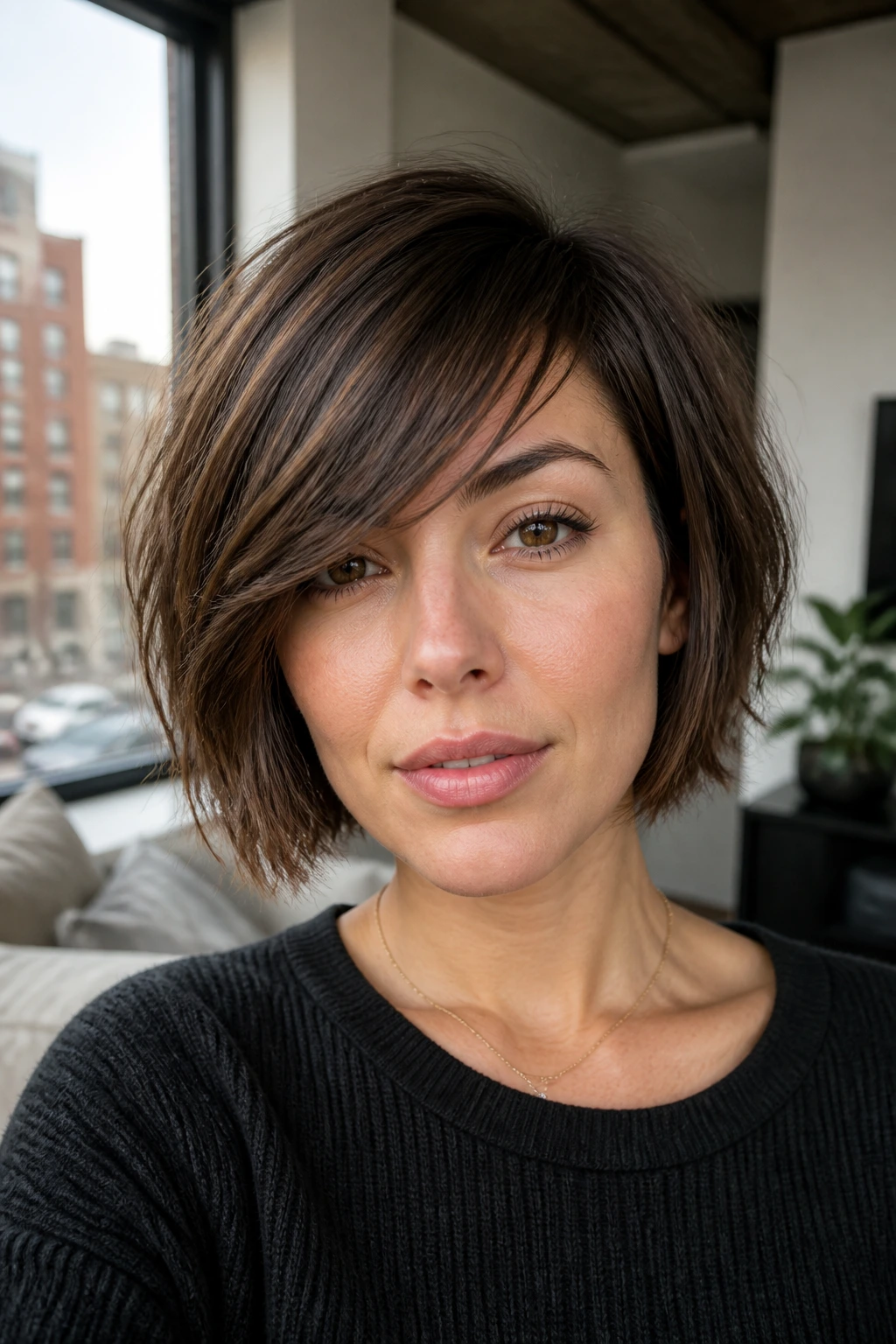
A razor-cut bob has a different feel from a scissor-cut one. The edges look softer and more feathery, and the side-swept bangs echo that movement instead of fighting it.
This is one of my favorite shapes for coarse hair that wants to look a little lighter. A razor can take bulk out of the ends without making the cut feel stripped bare, though a heavy hand will fray the hair and make the shape fuzzy. That is the mistake people make most often. They ask for texture, but what they really want is controlled movement.
What Makes It Different
The side-swept fringe adds a diagonal line across the face, which helps if your features feel very symmetrical or if a straight bang would make the cut too rigid. The bob itself can sit anywhere from lip length to just below the jaw, but the movement has to be visible from the front.
If you wear your hair straight, keep a styling balm on the ends and a little lift at the root. If you wear it wavy, scrunch it and leave the edges imperfect. This is not a haircut that likes over-smoothing.
Best for: thick hair, strong jawlines, and anyone who wants texture without the obvious choppiness of a shag.
7. Messy Box Bob With Full Fringe

A box bob sounds strict until you mess it up on purpose. That roughness is what gives it edge, because the strong outline keeps the shape clean while the full fringe and broken ends stop it from looking too severe.
The trick here is contrast again. The perimeter should still read as a bob — solid, defined, easy to see from across the room — but the interior should have just enough irregularity to keep light moving through it. A full fringe works because it anchors the front and gives the haircut weight, which matters if your hair is thick or naturally puffy.
- Keep the fringe just above the lashes or grazing them.
- Ask for internal texture, not random thinning.
- Blow-dry the bangs first so they sit flat at the roots.
- Use a flat brush on the bob to keep the box shape visible.
I’d choose this cut when I want a bob that looks intentional even with imperfect styling. It does need regular trims, because the clean outline is part of the appeal. Once that edge grows out, the whole look gets softer in a way that’s less striking.
8. Asymmetrical Choppy Bob With Long Bangs
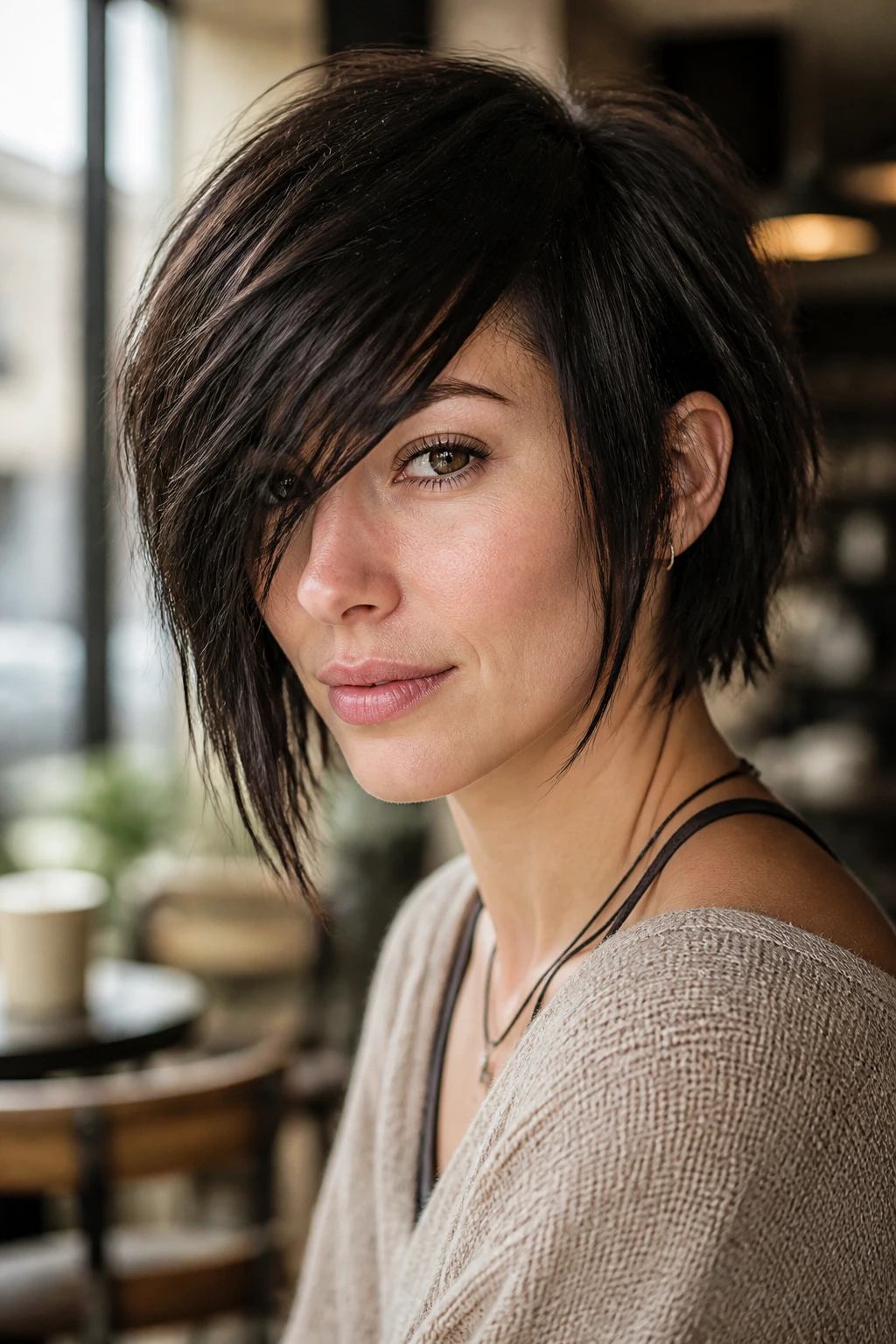
Asymmetry changes everything. One side sits a little longer, the bangs sweep across at an angle, and suddenly the bob feels less classic and more restless in a good way.
This cut works because the eye never gets a single clean stopping point. It moves from the fringe into the longer side, then down toward the jaw. If you have a rounder face, that diagonal line can be flattering because it keeps the cut from sitting too evenly around the cheeks. If your face is narrow, the extra length on one side gives the haircut a little more substance.
The bangs should stay long enough to blend into the side length. Short bangs would interrupt the line and make the asymmetry feel chopped off instead of deliberate. I like this cut with a deep side part, since it exaggerates the movement and makes the front look a touch undone.
It’s a strong choice if you want your hair to look like it has an opinion. And honestly, that’s half the appeal.
9. Layered Bob With Arched Bangs

Arched bangs are underrated. They open the center of the face, then curve down toward the temples, which gives the bob room to breathe without losing the fringe altogether.
The layering here should be subtle. Too much and the shape starts to fray; too little and the arched bangs lose their lift. What you want is a clean bob that has enough internal movement to stop it from sitting like a cap. A little roughness at the ends is enough.
This cut suits people who want bangs but do not want the heaviness of a blunt fringe. The arch keeps the eyes exposed, which can be easier if you wear makeup or if your brows are one of your best features. It also softens stronger foreheads without swallowing the face.
A round brush helps the bangs hold the curve, but don’t chase a perfect sweep. Slight irregularity makes the cut look more natural. A too-perfect arch can feel stiff, and stiffness is not what this haircut is about.
10. Wavy Choppy Bob With Bottleneck Bangs

Bottleneck bangs earn their name honestly: they start narrower near the top, then widen a little as they fall toward the cheeks. On a wavy choppy bob, that shape feels relaxed and a little romantic, but still textured enough to keep the edge.
This cut is especially useful if you want your wave pattern to do some of the work. The bangs break around the center of the forehead, then soften as they land closer to the cheekbones, so the face gets framed without a heavy block of hair sitting on top of it. That makes the bob feel lighter, especially if your hair is medium thick or naturally airy.
How to Style It
Use a diffuser if your wave has a mind of its own. If you prefer more control, a one-inch curling iron can bend the front sections away from the face, then you can brush them out with your fingers for that loose finish.
- Scrunch in a light curl cream while the hair is damp.
- Dry the bangs first so they don’t separate too much.
- Leave the ends slightly irregular instead of forcing symmetry.
- Finish with a soft-hold spray, not a hard shell.
This cut loves movement. Static, not so much.
11. Airy Bob With See-Through Bangs
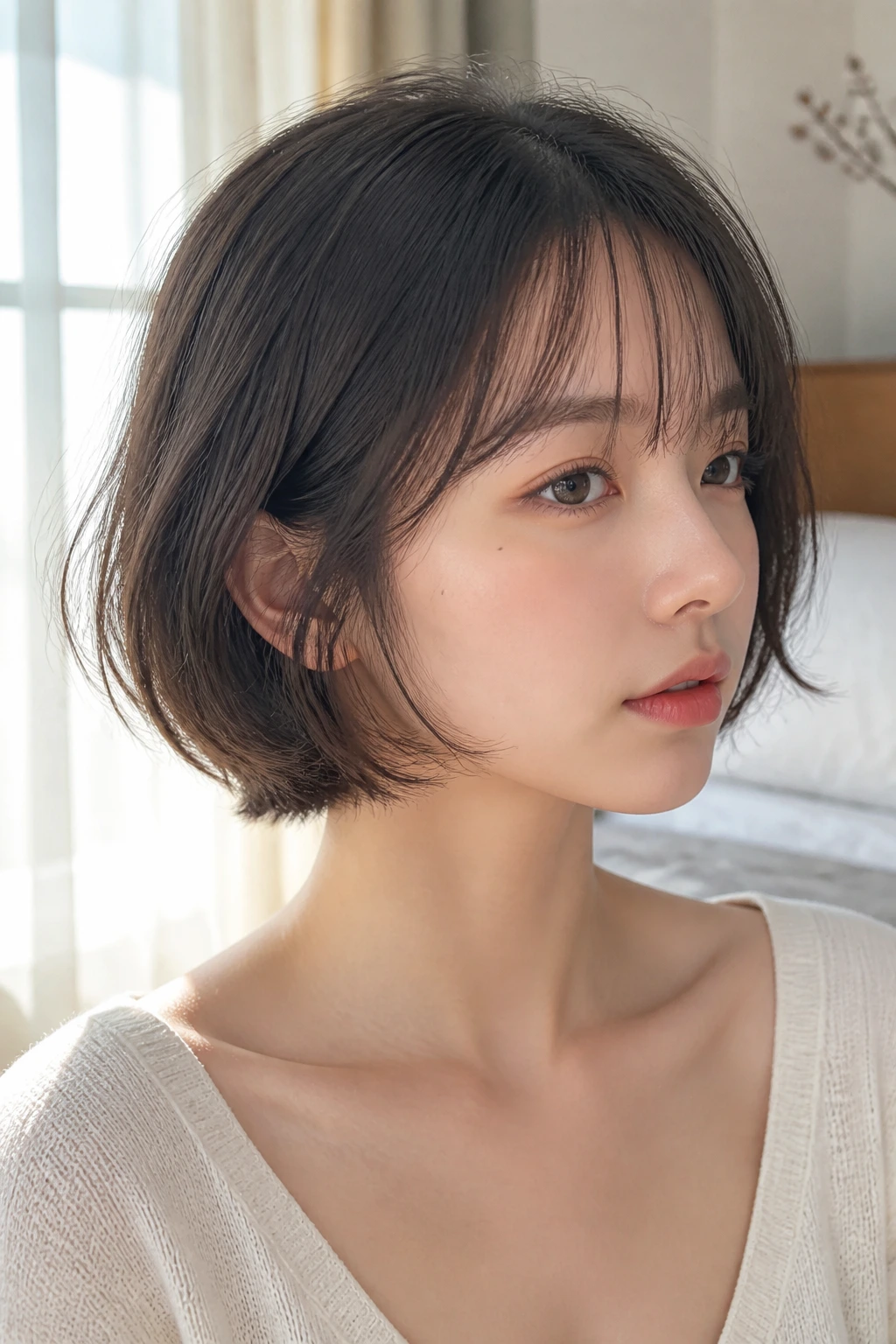
See-through bangs are a smart move when you want fringe without density. They let the forehead peek through, which keeps the haircut light, especially if the bob itself is already textured and short.
Fine hair benefits from this shape because it avoids the heavy block that can make the crown look flatter than it is. The bangs stay soft and narrow, while the bob gets a little roughened at the ends so the whole cut looks fuller. That part matters. Without the choppy perimeter, see-through bangs can look thin instead of intentional.
You can style this one with a small round brush and a quick blast of heat at the roots. Don’t overwork it. The appeal lies in that airy, slightly broken look, not in a shiny finish that makes every strand stand up and announce itself.
This is also a forgiving choice for someone who wants bangs but hates the feeling of having hair plastered to the forehead. The fringe is there. It just doesn’t take over.
12. Blunt-Edge Bob With Broken-Up Fringe

A blunt edge and broken fringe sound like opposites, but that tension is exactly why the cut works. The perimeter stays strong, while the front gets irregular enough to keep the shape from feeling formal or boxy.
This version is good when you want a polished outline and a little grit. The ends should be cut cleanly enough to read as a straight line, then lightly texturized so they don’t look stiff. The fringe does the opposite job: it starts full, then gets broken up into chunks that sit a little unevenly across the brow.
That combo flatters straight hair especially well. Straight hair shows every line, so a blunt bob can look too flat if the front is also blunt. The broken fringe changes the rhythm. It gives the eye somewhere to move.
If your hair is thick, ask for internal weight removal under the top layer so the cut doesn’t balloon out. If it’s fine, keep the texturizing light. Too much thinning on fine hair turns the whole look wispy in a tired way.
13. Shaggy Bob With Curly Bangs
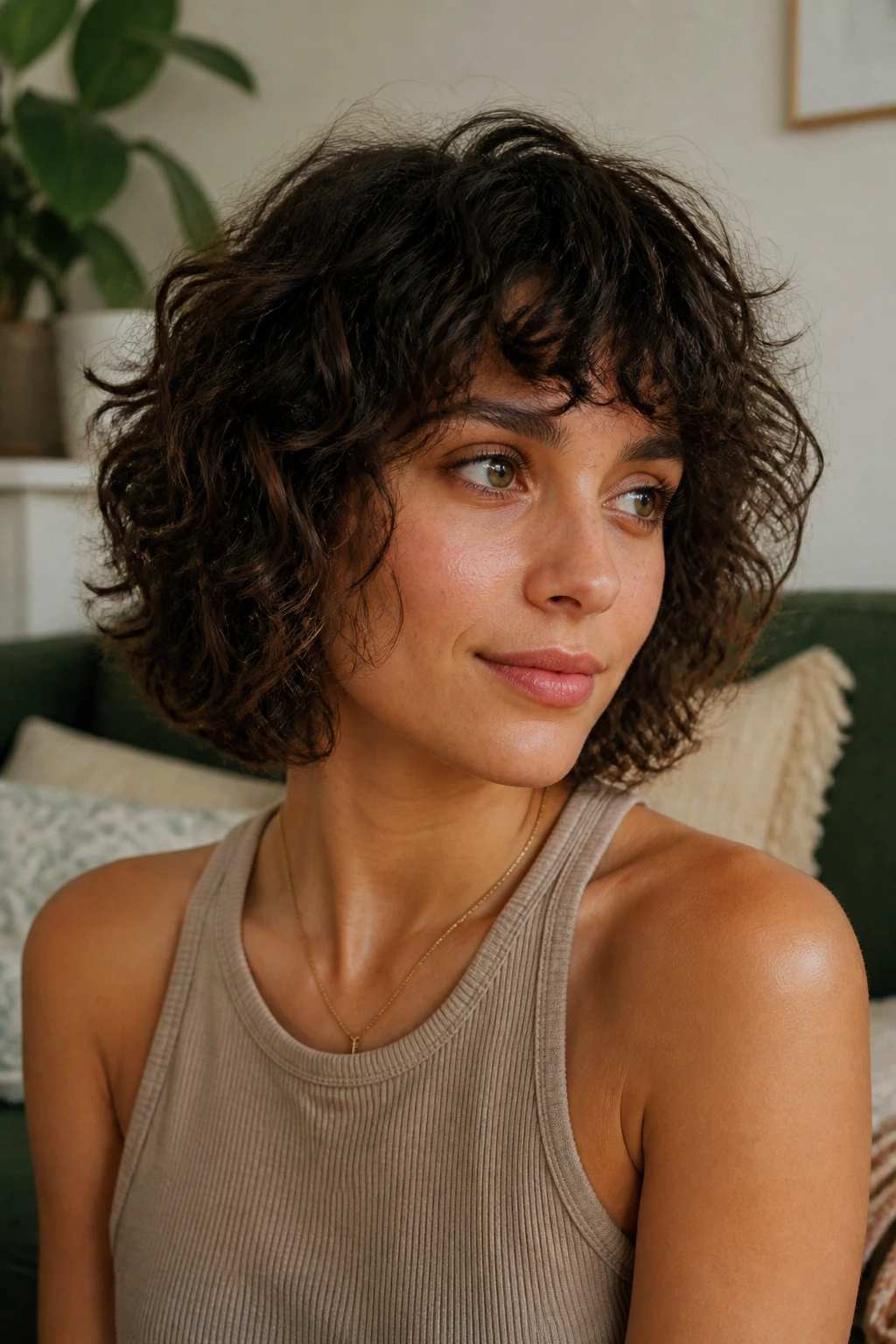
Curly bangs can be a headache if the rest of the cut doesn’t understand them. A shaggy bob does understand them. It lets the curl pattern stay loose, which means the fringe can bounce instead of fighting for control.
The cut should follow the curl, not force it into a straight shape. That means leaving the bangs a little longer than you might expect and cutting in a dry state if possible. Wet curly hair lies. Dry curly hair tells the truth. The same goes for the bob itself — you want soft layers that let the ends move without puffing up into a triangle.
What to Watch For
- Avoid over-thinning the curls near the face.
- Use curl cream on damp hair, then diffuse on low heat.
- Let the bangs settle before trimming again; curly shrinkage is real.
- Keep the bob shape loose enough to breathe, not razor-sharp.
The appeal here is texture on texture. The fringe doesn’t sit apart from the cut; it belongs to it. That makes the whole haircut feel honest, which is not a word I use lightly with curly hair.
14. Collarbone Bob With Feathered Bangs

A collarbone bob gives you room to play. It’s long enough to tuck behind the ears or pull into a small clip, but short enough that the layers still feel fresh, and the feathered bangs keep the front from getting heavy.
This is a good cut if you’re easing into shorter hair or growing out something sharper. The length sits in that useful middle zone where it can look put together on a clean day and slightly undone on a busier one. Feathered bangs help because they don’t create a hard line across the forehead. They melt into the sides instead.
I like this one on hair that gets frizzy at the ends. The extra length helps weigh it down a bit, while the feathering near the face keeps the cut from feeling blocky. If your hair is very fine, the style can still work, but the ends need a blunt-enough baseline so the whole thing doesn’t disappear.
It’s one of the more forgiving choppy bob shapes. Not lazy. Forgiving.
15. Sleek Choppy Bob With Brow-Grazing Bangs
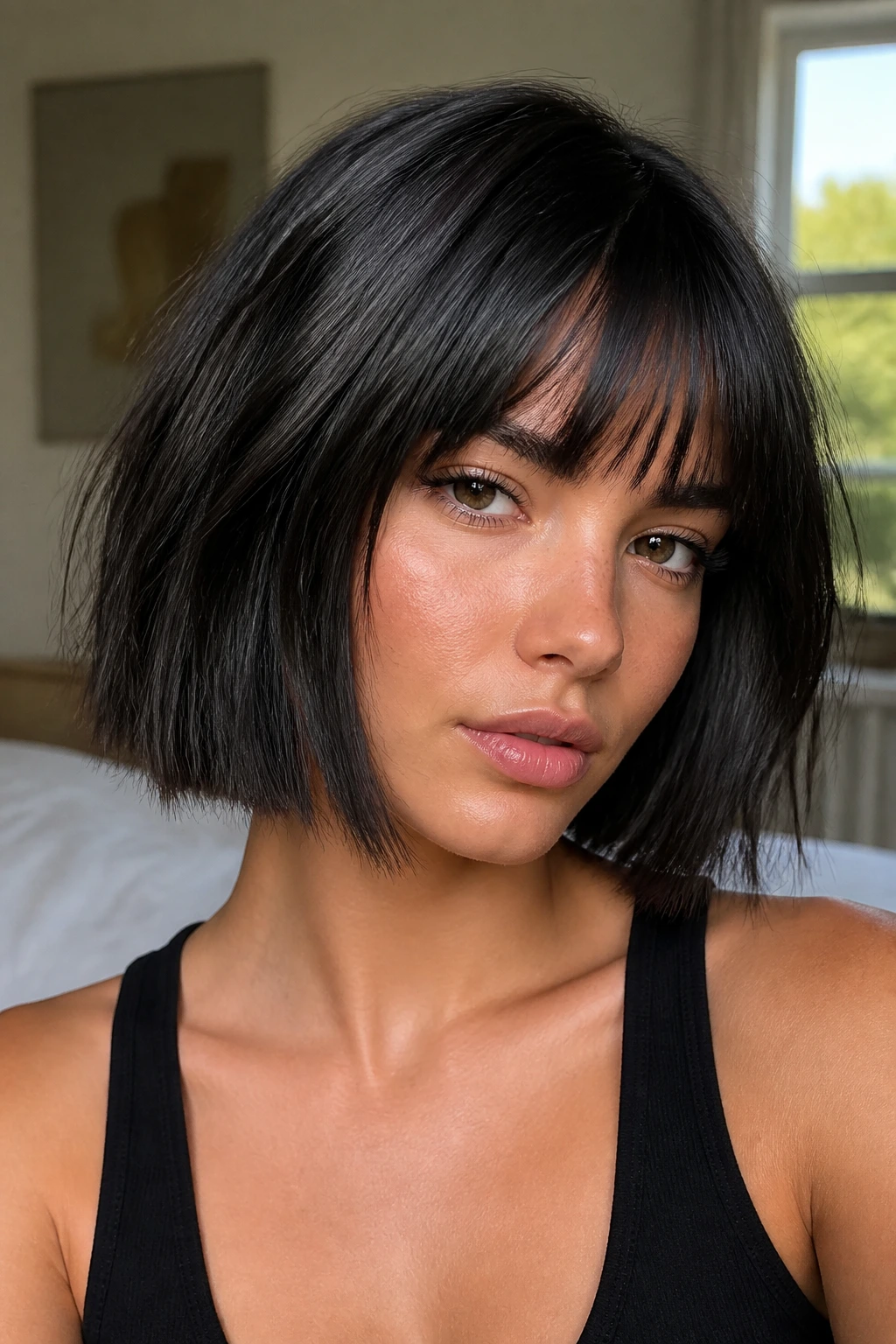
Sleek and choppy sounds contradictory, and that’s why it looks good. The shine makes the cut feel modern, while the broken ends keep it from becoming a plain polished bob with nothing to say.
Brow-grazing bangs sit right in the sweet spot for people who want fringe that frames the eyes but doesn’t box them in. They also grow out better than very short bangs, which makes this style easier to live with if you don’t want to visit the salon constantly. A flat iron can keep the length smooth, but I’d still leave a little texture at the very ends so the bob doesn’t read as too tidy.
This cut works especially well on straight to slightly wavy hair. If your hair is coarse, smoothing serum helps the bangs lie flat without looking greasy. If your hair is fine, use almost nothing at all. A drop too much and the fringe separates in a way that looks accidental.
It’s a good choice when you want a bob that can move between sharp and soft without much effort. That flexibility is the whole point.
16. Curled-Under Bob With Bardot Bangs

Bardot bangs bring a little retro softness to a choppy bob. They part in the center, skim the cheeks, and blend into the sides, which means the haircut gets frame and movement without a blunt block across the forehead.
The curled-under ends give the bob some shape, but not a stiff one. Think gentle bend, not pageant hair. A medium round brush or a one-and-a-quarter-inch curling iron is enough to make the ends tuck in slightly. The bangs should stay loose and touchable, which keeps the whole cut from feeling too styled.
This is one of those cuts that flatters a lot of face shapes because the bangs open the forehead while the ends round the jaw a bit. If your jawline is sharp, the softness helps. If your face is longer, the wider fringe line makes the proportions feel more balanced.
The thing I like most here is the grow-out. When the bangs get longer, they slide into the side layers instead of turning into an obvious problem. That saves you from a weird in-between stage.
17. Nape-Length Bob With Cropped Fringe
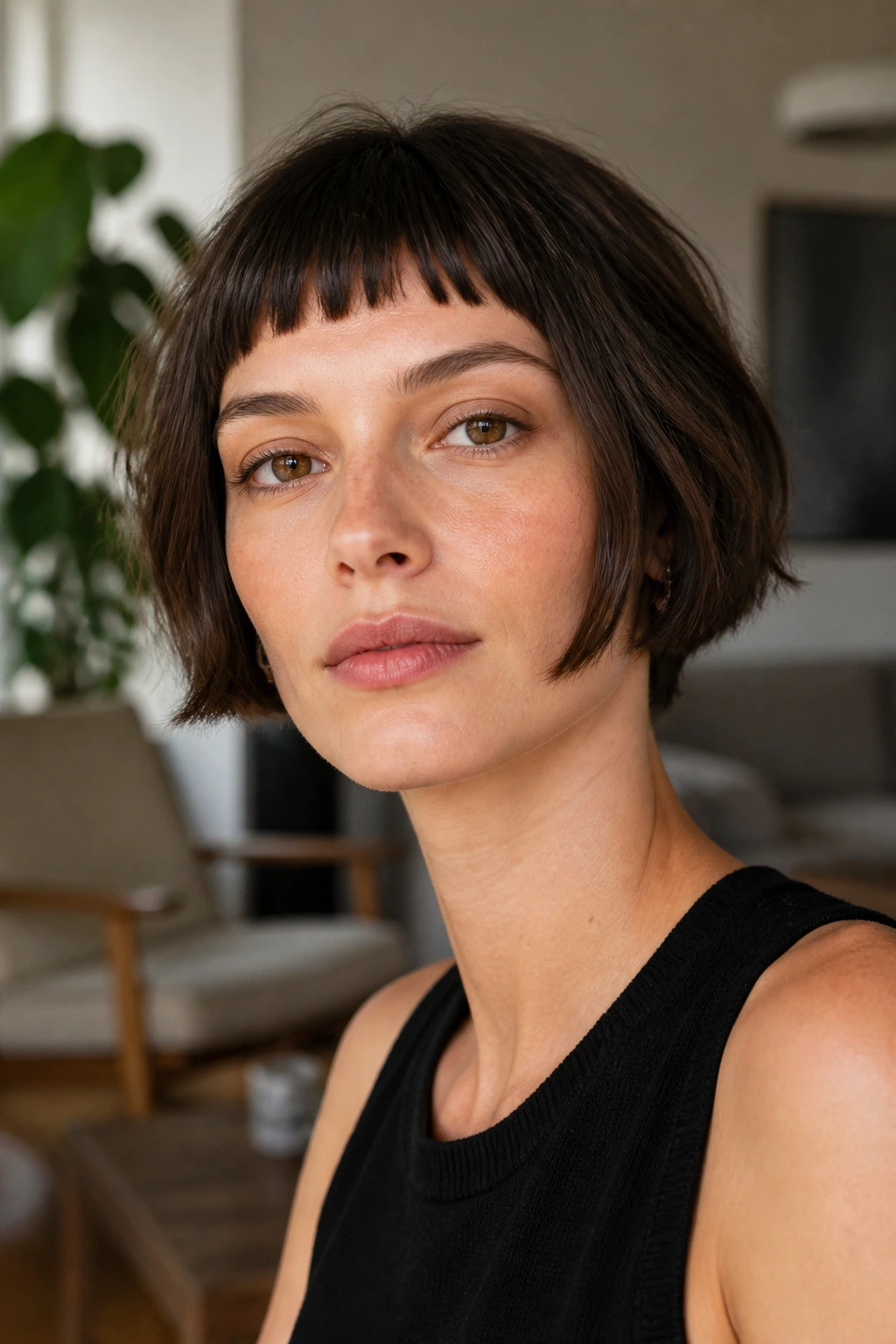
Short hair at the nape always has a little bite to it. Add a cropped fringe, and the whole cut starts to feel compact, graphic, and unapologetically short.
This is not a hairdo for someone who wants to hide behind layers. The neckline is exposed, the fringe sits high, and the whole thing puts the face out front. That can be fantastic if you like strong earrings, visible brows, or a haircut that doesn’t need much explanation. It can also be unforgiving if you prefer softness around the face.
The choppy texture matters because a nape-length bob can look severe if the edges are too neat. A bit of broken movement through the top and sides keeps it from feeling military. If your hair grows fast or your nape tends to puff out, plan on frequent trims. Short cuts show grow-out faster than people expect.
Good match for: straight hair, fine hair that needs shape, and anyone who likes a strong neckline.
18. Chin-Grazing Bob With Side Bangs

Side bangs are often the easiest place to start if you want bangs but don’t want a full front fringe. They give you movement, help soften the front of a chin-length bob, and leave room to shift the part when you need a change.
This cut works because the chin length keeps the shape light around the jaw, while the side bang breaks the front into a diagonal line. That diagonal does a lot of quiet work. It can soften a broad forehead, redirect attention from the center of the face, and make the bob look less square.
If you wear glasses, this is one of the friendlier options. The fringe can sit above or beside the frames without crowding them. If your hair is thick, keep the interior layers controlled so the shape doesn’t swell out under the ears. If it’s fine, a little root lift at the part makes the whole cut look fuller.
It’s not the loudest haircut on the list. That’s fine. Not every choppy bob needs to shout.
19. Razor-Textured Bob With Long Curtain Bangs

Long curtain bangs give you room to play. They split in the center, drop toward the cheekbones, and blend into the bob so the front feels framed instead of fenced in.
A razor-textured bob leans on movement more than structure, which is why the bangs matter so much here. They keep the face open while the ends stay feathered and broken up. If the cut were too clean, it would lose the loose edge that makes it interesting. If it were too shaggy, it would drift toward mess. The sweet spot is somewhere in between.
I’d choose this style for medium to thick hair that can hold a shape but still likes to bend. Blow-dry the bangs away from the face first, then let them fall back naturally. That one step makes a difference. It gives the fringe enough lift so it doesn’t lie flat and disappear into the rest of the cut.
The longer fringe also makes the haircut easier to grow out. That’s not glamorous, but it matters.
20. Face-Framing Choppy Bob With Soft Fringe

This is the one I’d recommend to someone who wants edge without making a hard commitment to a dramatic fringe. The face-framing pieces do the work, while the soft bangs keep the front light and easy to wear.
The shape can sit anywhere from lip length to just below the jaw, but the texture should stay visible around the face. That means the shortest pieces should hit somewhere near the cheekbones, where they can break up the line without cutting the face in half. The bangs should feel soft rather than heavy, with enough separation that you can see skin through them.
A cut like this gives you a lot of room to adjust how it reads. Push the fringe more center-parted, and it feels relaxed. Sweep it a little to one side, and the bob looks sharper. Tuck one side behind the ear, and the whole thing changes shape again. That flexibility is a big part of why this style sticks around.
If you want the most usable version of a choppy bob with bangs, this is a smart place to land. It has texture, movement, and enough softness to survive bad weather, busy mornings, and the occasional decision to do almost nothing with your hair. That counts for a lot.
