



Hair on a humid day has one job: cling to your neck, frizz at the crown, and make you regret every loose strand you left out. Easy summer hairstyles are the answer I keep coming back to because they don’t fight the weather so much as work with it — a low bun, a braid, a clip, a twist, something that holds its shape even when the air feels wet enough to wring out.
The trick is not chasing perfection. It’s choosing a shape that gives your hair a little structure and a little escape route. Some styles are better on day-two hair. Some need a touch of texture spray. Some need five bobby pins and a bit of nerve. That’s fine. Hot-weather hair is rarely about precision; it’s about getting through the day without touching your crown every ten minutes.
And yes, the right style changes with texture. Fine hair needs grip. Thick hair needs weight taken off the ends. Curly hair needs room to do its thing without turning into a puffball by lunch. The good news is that you do not need a curling wand, a salon mirror setup, or a half hour of patience to make any of this work.
1. Sleek Low Bun for Summer Humidity
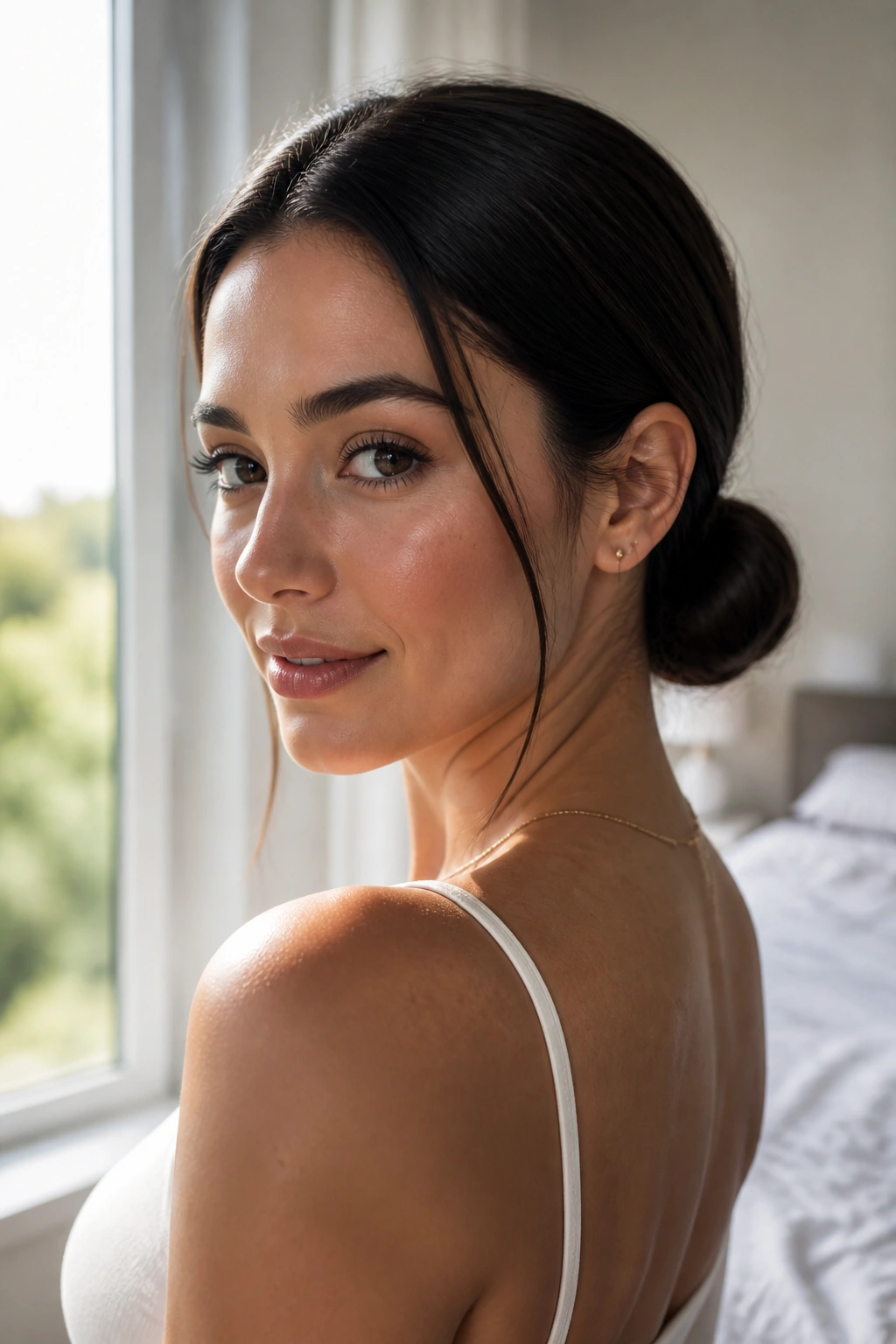
The low bun is the old reliable. It keeps the neck clear, calms down puff at the crown, and still looks intentional when the rest of the day gets messy.
I like this one best when hair is a little lived-in. Fresh-washed strands can slide around, but second-day hair has just enough grip to stay put. A pea-sized amount of smoothing cream through the outer layer is usually enough; if you load up the roots, the bun can go flat and greasy fast.
Why it stays put
- Brush hair back into a low ponytail at the nape.
- Twist the ponytail until it starts to coil on itself.
- Wrap the coil into a bun and pin it from three directions so it does not lean.
- Smooth the hairline with a soft brush or your fingers, not both.
A low bun also solves the sweat-on-the-neck problem better than most people realize. It sits below the hottest part of your head, which means less frizz from movement and less hair sticking to damp skin. If your hair is thick, split the ponytail in half before twisting; the bun lies flatter and the center feels less bulky.
Best little upgrade: leave one thin strand out, wrap it around the elastic, and tuck the end under the bun. It takes thirty seconds and makes the whole style look more finished.
2. Claw-Clip French Twist for Hot Humid Days
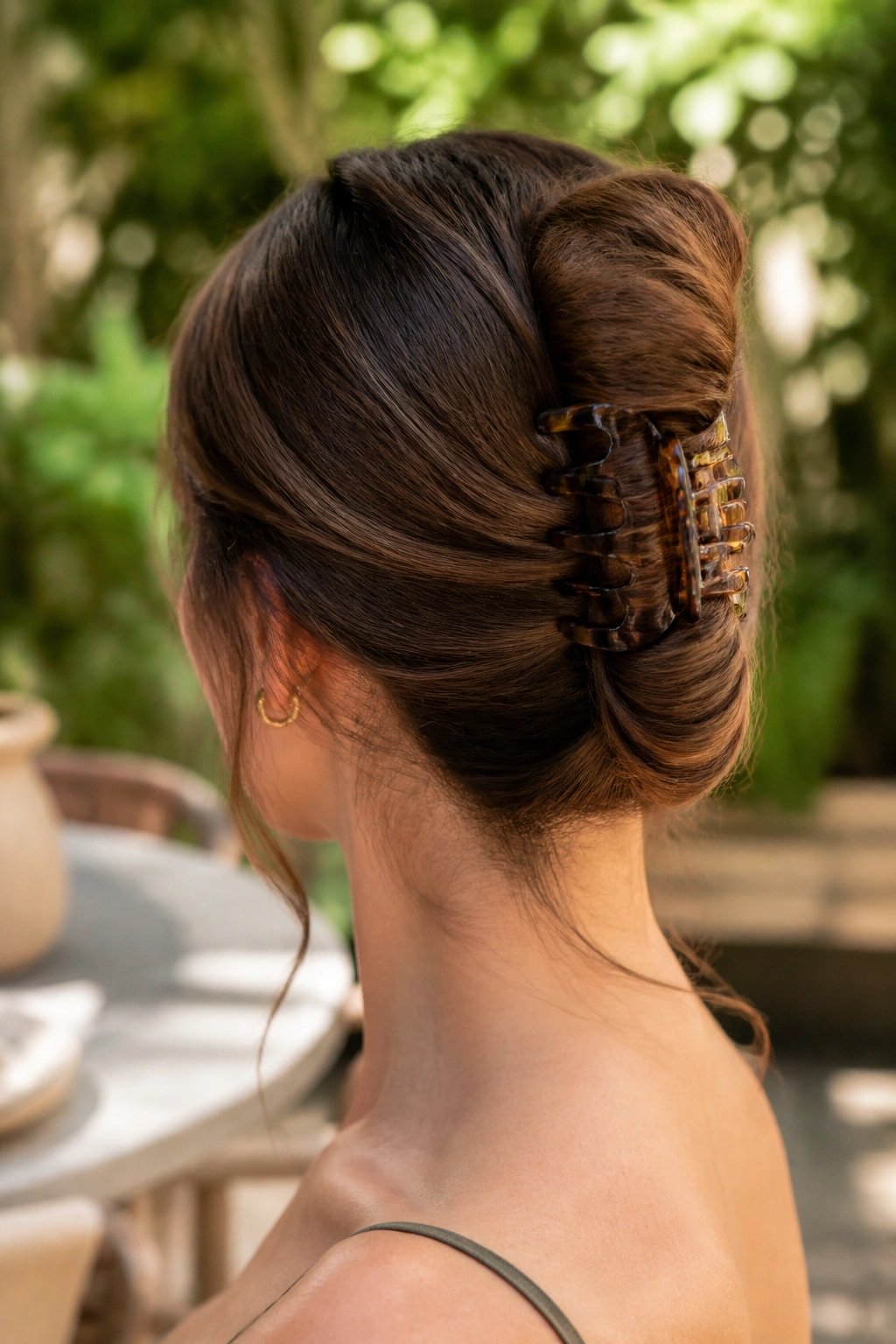
Got a clip and sixty seconds? You’re halfway there.
The claw-clip French twist is one of those styles that looks like you meant to spend time on your hair, even when you didn’t. It lifts the length off your neck, lets some texture show through, and keeps the back from turning into a sweaty tangle. The only real rule is this: the clip needs to grab a solid fold of hair, not just skim the top layer.
Where the clip should sit
- Gather hair with both hands as if you’re making a low ponytail.
- Twist upward until the ends fold back toward the crown.
- Fold the twist in half and clip it straight across the ridge, not at an angle.
- Let the ends fan out a little if you want softness.
This works best with medium to long hair, but shorter layers can still make it look good. A quick mist of dry shampoo at the roots helps the clip hold, especially if your hair is silky. And skip the tiny decorative clip that looks cute but slips after lunch. You want teeth with some bite.
A tiny loose piece at the front is fine. Too polished can feel stiff in warm weather, and a little movement around the face keeps the whole thing from looking severe.
3. Loose Side Braid That Rests on One Shoulder
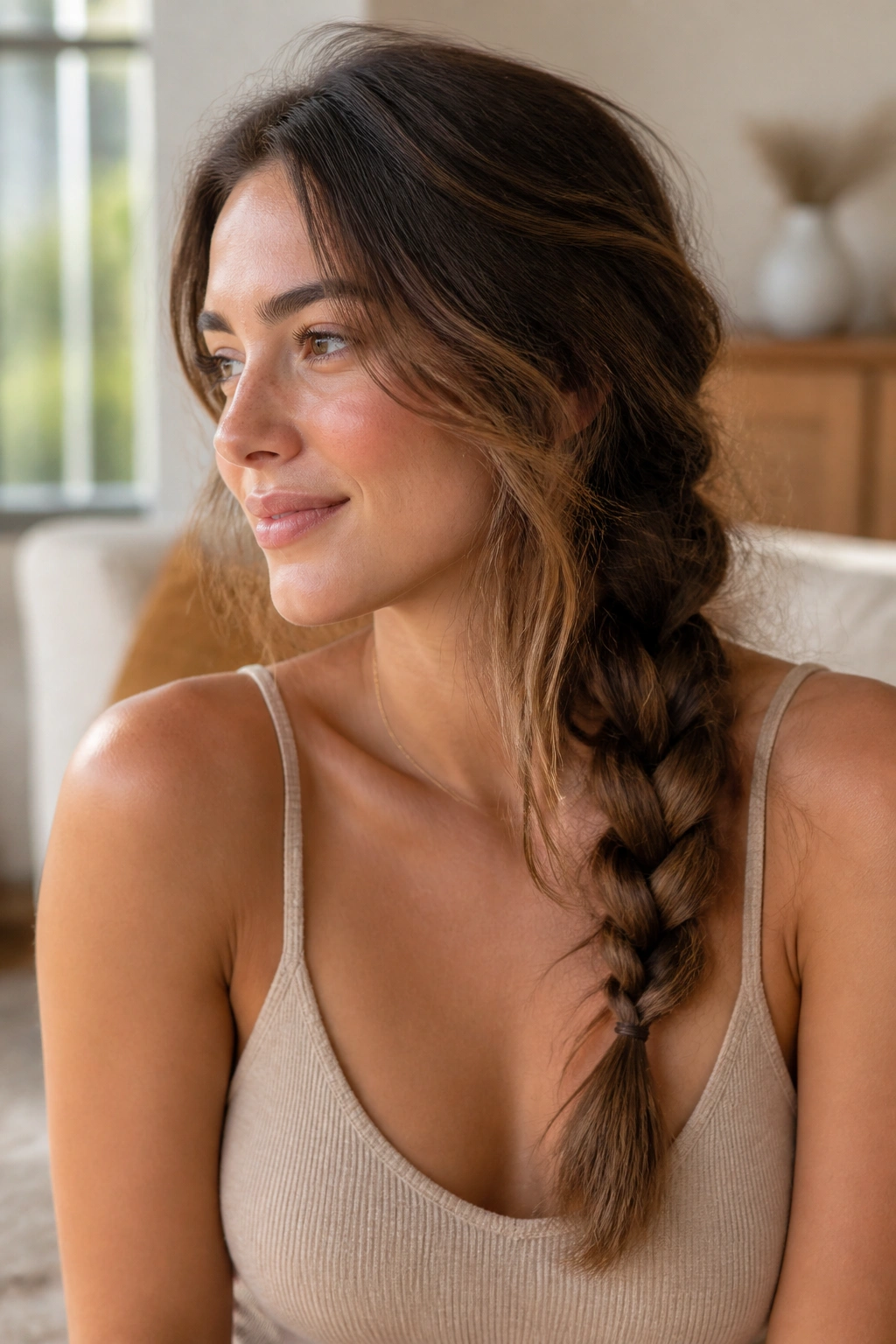
A side braid has a small unfair advantage. It gets the hair off your back, but it still feels softer than a tight braid pulled straight down the middle.
I reach for this one when I want something simple that won’t unravel into a knot by the time I get home. Start your part where you normally wear it, then sweep the hair to one shoulder and braid loosely from just below the ear. Keep the sections a little bigger than you think you need; tiny sections can make the braid look stringy, especially in humid weather.
If your hair is wavy, braid it while it’s only partly dry. That gives you a softer shape and less puff at the ends. Straight hair can use the same trick with a touch of texturizing spray first. The braid does not need to be perfect. A few pulled-apart loops actually make it look better and help it sit wider, which is useful when the air is sticky and hair wants to collapse.
This is one of the easiest hot weather hair ideas for errands, travel, or any day when you want to look put together without thinking about it. It’s also forgiving if you have layers. The shorter pieces can fall out near the face, which looks intentional here instead of messy in a bad way.
4. Bubble Ponytail for Humid Weather
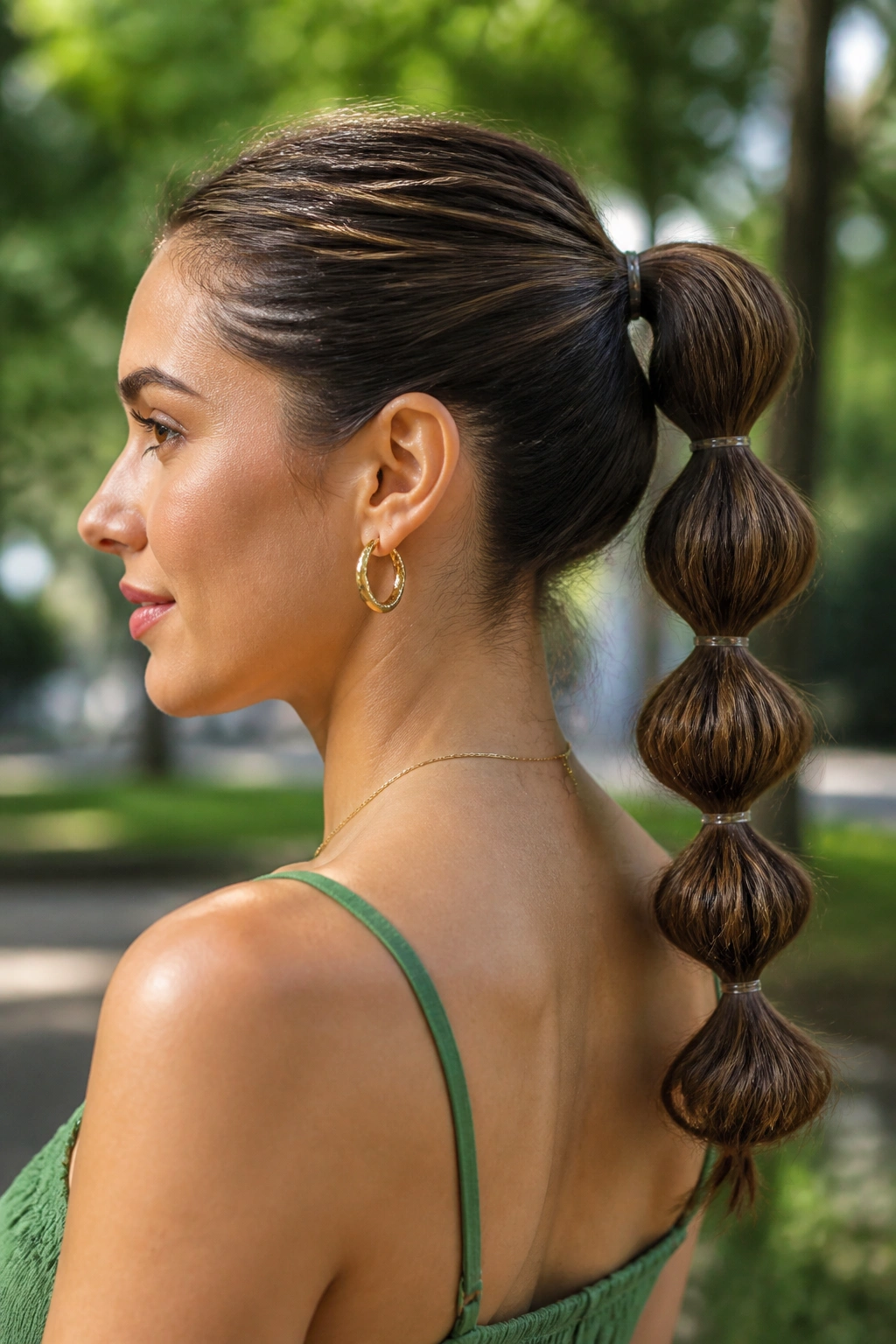
Bubble ponytails look fancier than they are. That’s half the appeal.
The shape breaks the length into sections, so frizz between the elastics matters less than it does in a plain ponytail. It also gives fine hair a little more visual weight. If your hair tends to puff up in the humidity, this style gives you something better to look at than one long, limp rope.
- Pull hair into a low, mid, or high ponytail.
- Add small clear elastics every 2 to 3 inches.
- Tug each section outward with your fingers until the “bubble” rounds out.
- Wrap a tiny strand of hair around the first elastic if you want a cleaner finish.
A lot of people pull the bubbles too hard on the first pass. Don’t. Start with a gentle tug, then adjust. If the sections are too wide, the ponytail can collapse in the middle, especially on finer hair. Smaller bubbles stay neater and last longer.
I like this style for straight and wavy textures because it gives the hair shape without asking it to behave like a braid. It’s also a good fix when the ends are dry but the roots are still decent. The bubbles distract the eye from a lot.
5. Half-Up Top Knot That Keeps the Crown Off Your Face
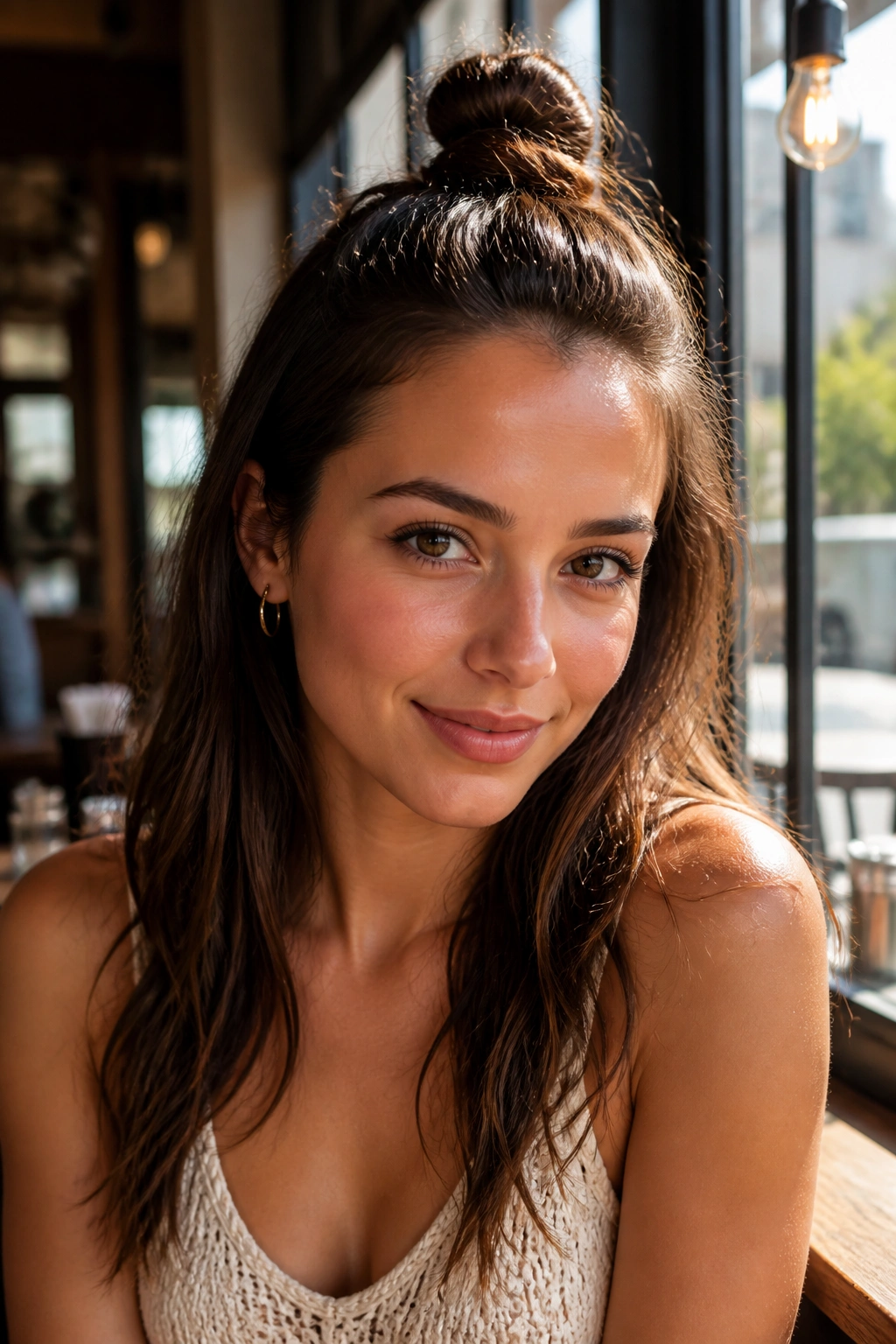
If your roots swell the second you walk outside, lift them.
The half-up top knot is one of the easiest ways to keep hair off your forehead while leaving the rest of the length down. That matters on hot days when you want some movement, but not the constant slap of hair on your neck. A small knot works better than a giant one here. Giant knots tend to flop, especially if your hair is heavy or layered.
Placement matters
- Section off the top half of your hair from temple to temple.
- Gather it at the upper crown, not all the way to the front.
- Twist the section once or twice, then coil it into a knot.
- Pin under the knot with 2 to 4 bobby pins if your hair has weight.
A compact knot gives the style balance. Too much height can make your head feel top-heavy, and it can pull the front pieces loose before the day is over. If your hair is curly, leave the knot loose and let the curl pattern stay soft. If it’s straight, a little dry texture spray at the roots gives the knot more grip.
The best part is how fast it is. It takes the place of a full updo when you don’t need one, and it keeps the forehead clear without flattening the rest of your hair.
6. Double Dutch Braids That Stay Close to the Scalp
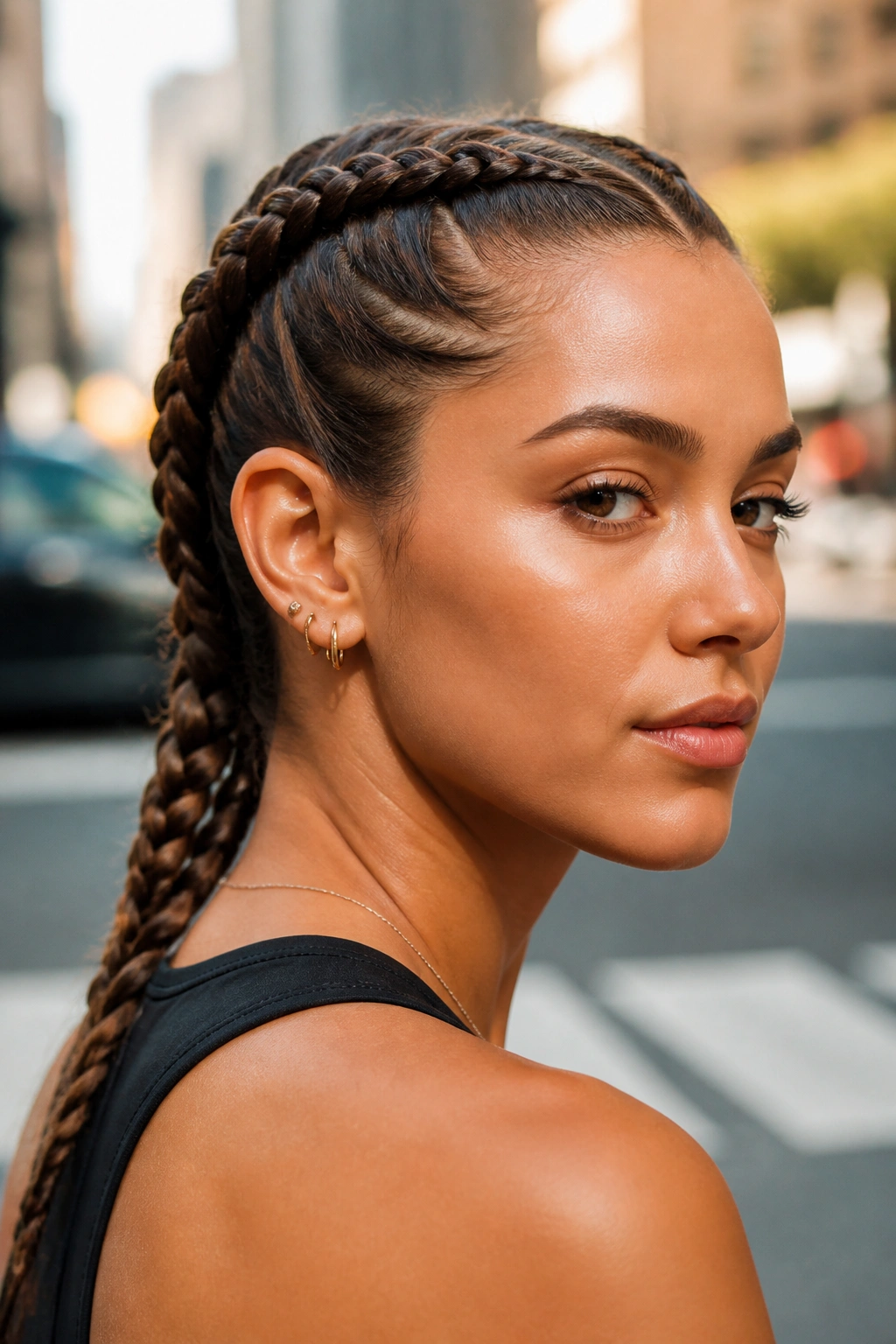
Tight braids are not the only braids that hold.
Double Dutch braids are one of the best styles for long, sweaty days because they keep hair close to the scalp and away from the neck. Dutch braids sit on top of the hair instead of sinking into it, which gives them a bit more shape and keeps them visible even if the day gets humid. They also stay put better than loose braids when you’re moving around a lot.
Who should try them first
- Anyone with long or medium-length hair.
- People whose hair goes puffy at the first sign of moisture.
- Anyone who wants a style that survives a long walk, a commute, or an outdoor afternoon.
Start with a clean center part. Braid each side by crossing the outer strands under the middle strand, not over it. Keep your hands close to the head so the braid stays snug at the roots. The tension should feel secure, not painful. If you end up with one braid slightly thicker than the other, leave it alone. Symmetry is nice, but a tiny mismatch looks human and keeps the style from feeling too rigid.
I’d call this a workhorse hairstyle. It’s not delicate, and that’s the point. Once the braids are in, you can leave them all day and still have a decent-looking texture when you take them out later.
7. Rope-Braided Low Ponytail for Fast Styling
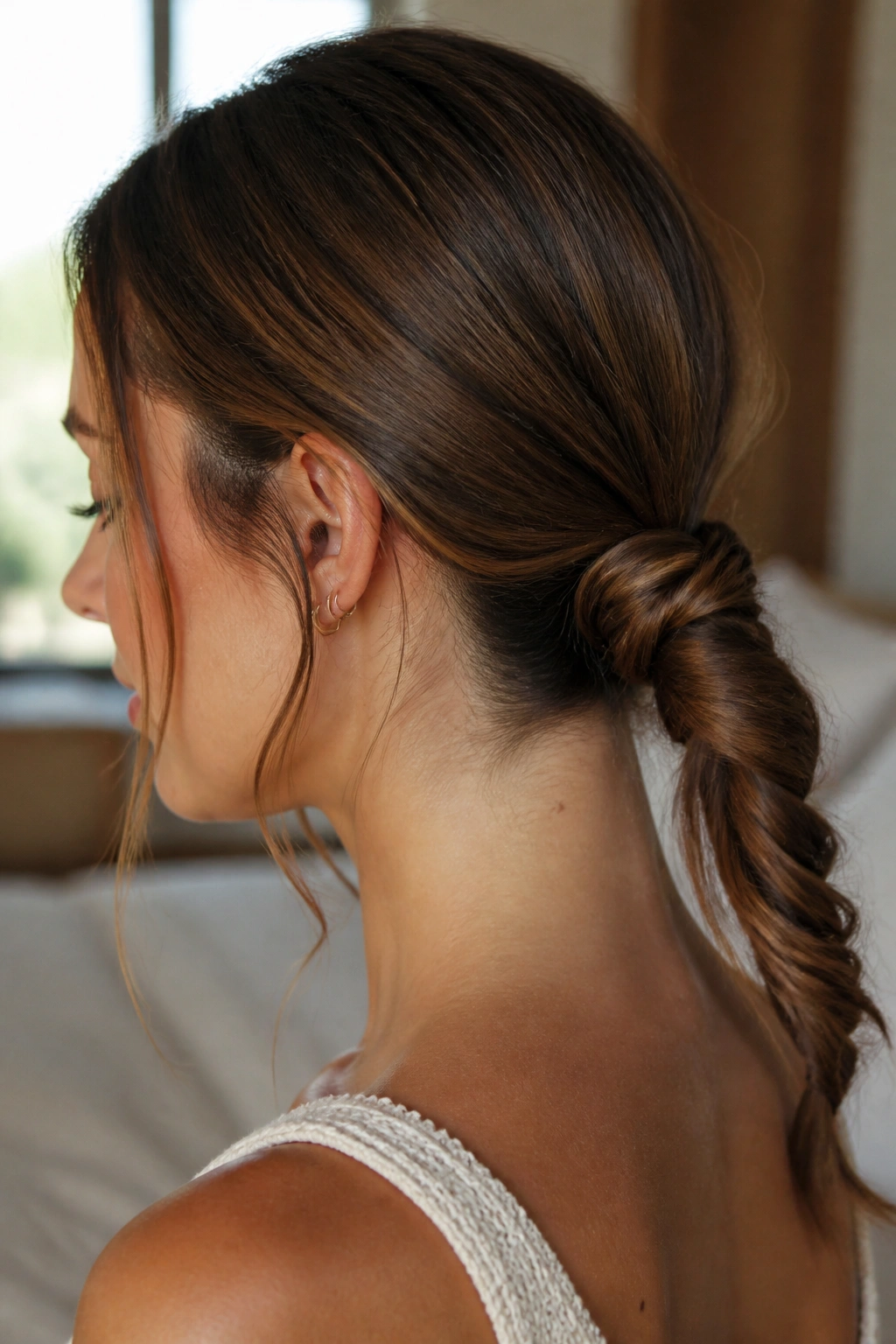
Need a clean style without learning French braiding? Rope braids are your friend.
The technique is simple: make a low ponytail, divide it in two, twist each section in the same direction, then wrap the two twisted pieces around each other in the opposite direction. That last part matters. If you twist both pieces the wrong way, the braid loosens fast and starts to look tired before noon.
The reason this style holds up so well in humid weather is that the twist creates a tighter shape than loose loose hair, but it doesn’t demand perfect sections. If your hands are a little clumsy with braids, rope braids forgive that. They also work nicely on layered hair because the twist keeps short ends tucked in better than a plain three-strand braid.
The small detail that matters
Use the same amount of tension on both sides. If one strand is twisted hard and the other is loose, the finished braid leans and starts to unravel at the bottom. A light mist of leave-in on the ends helps them stay smooth, especially if they’re dry or color-treated.
This is the style I’d choose when I want something tidy and don’t want to think about it again. It’s quick, it sits flat, and it does not need much product to behave.
8. Messy High Bun with Face-Framing Pieces
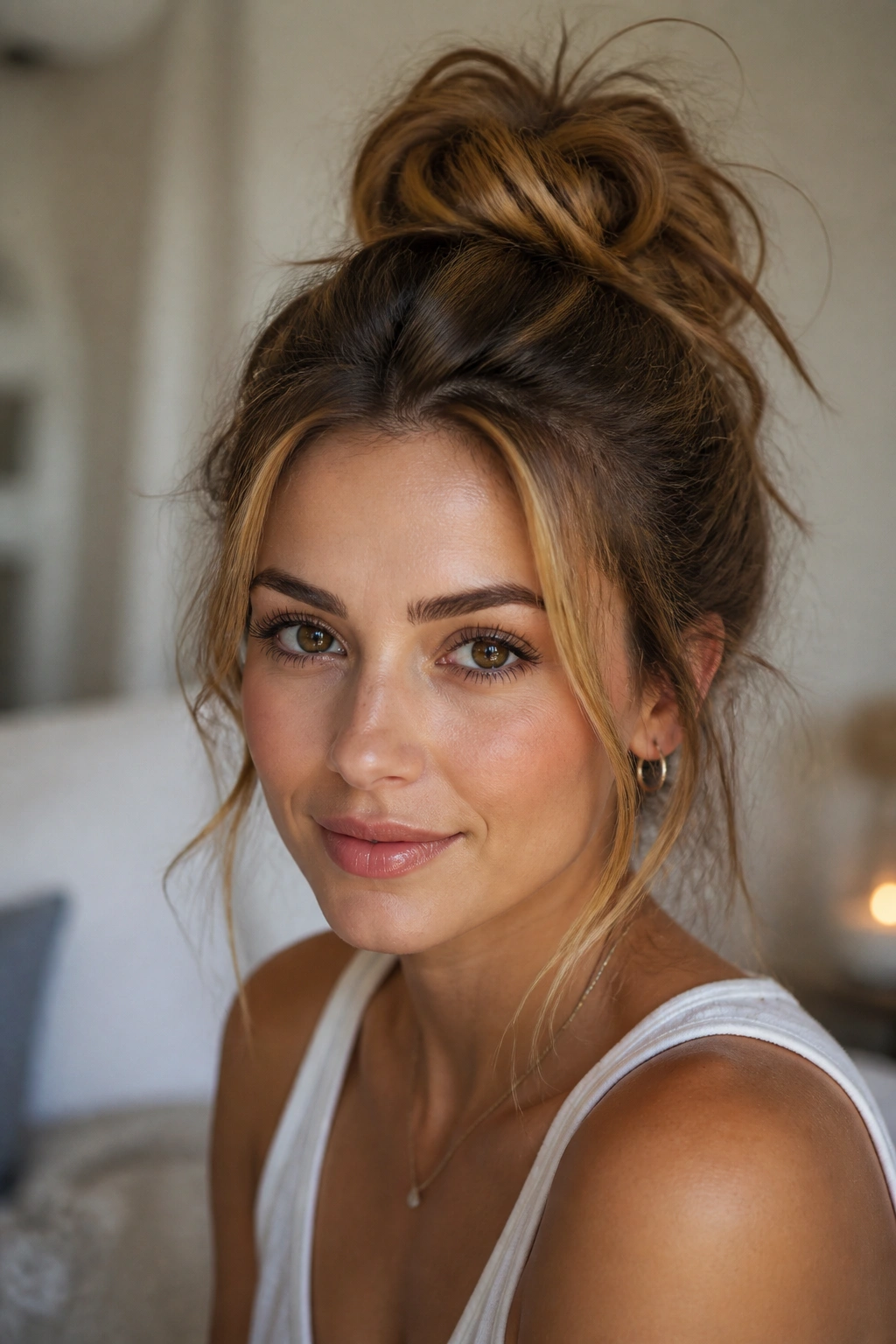
Not every bun has to be sleek.
A messy high bun earns its place because it handles humidity without looking precious. It lifts the hair off the neck, lets the crown breathe, and keeps a little softness around the face so the whole thing doesn’t read as severe. The face-framing pieces matter here. Two thin sections left out near the temples can make a high bun look much less accidental.
If your hair is fine, rough it up a little with dry shampoo before you gather it. That gives the bun some texture and keeps it from sliding down as the day goes on. Thick hair can skip most of that and go straight to the twist and pin stage. Either way, keep the bun compact. A giant looped shape tends to sag in heat.
One thing I see people do wrong: they pull every strand tight. That steals the softness and makes the bun feel too polished for the weather. Leave a few tiny irregular pieces around the hairline. A little looseness makes sense here.
Quick fix if the bun feels flat: tug the top layer gently with your fingertips before pinning the last bobby pin. That tiny lift gives the style more shape without making it look teased.
9. Scarf-Wrapped Ponytail with a Soft Tie
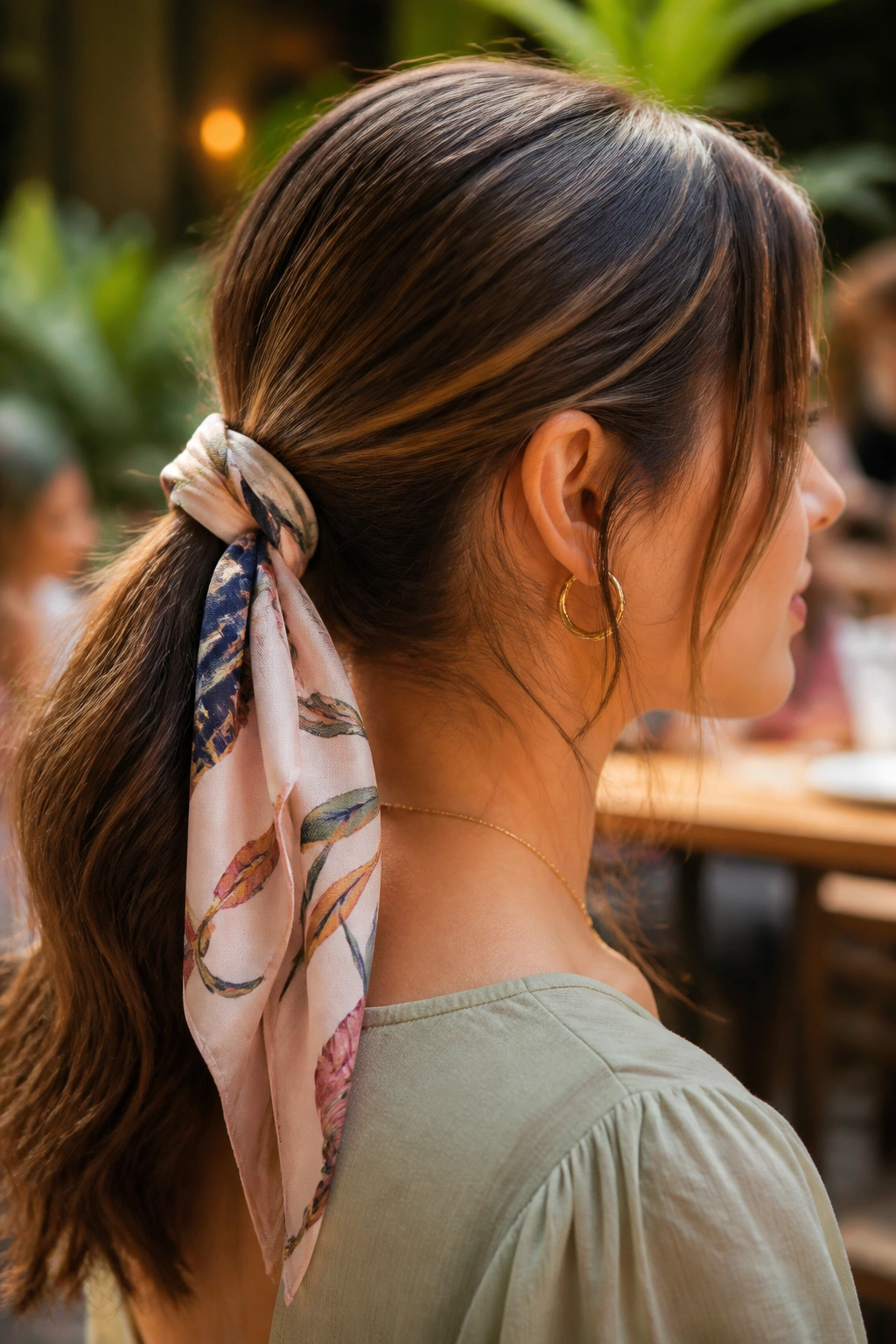
A soft scarf against sweaty hair solves two problems at once.
It hides the elastic, adds a little color, and keeps the ponytail from looking like an afterthought. More useful than that, it changes how the eye reads the style. A plain ponytail can start to feel too simple by late afternoon. A scarf gives it shape without making the whole thing fussy.
Picking the scarf
- Use a 20-inch square scarf for most ponytails.
- Choose cotton if you want grip and a matte look.
- Choose silk or satin if your hair tangles easily.
- Keep the fabric light so it doesn’t tug the ponytail down.
Tie the ponytail first, then knot the scarf around the base. Let the tails hang loose or wrap them once around the elastic. If your hair is curly, don’t bind the scarf too tightly. The goal is to accent the shape, not flatten it.
This style works especially well when the ends are a little dry or fuzzy. The scarf distracts from that in a way a plain elastic never can. It also looks good on second-day hair because the texture underneath gives the whole style a lived-in feel. Nothing about it needs to be perfect, and that’s half the charm.
10. Low Twisted Chignon for Neat, Cool Hair
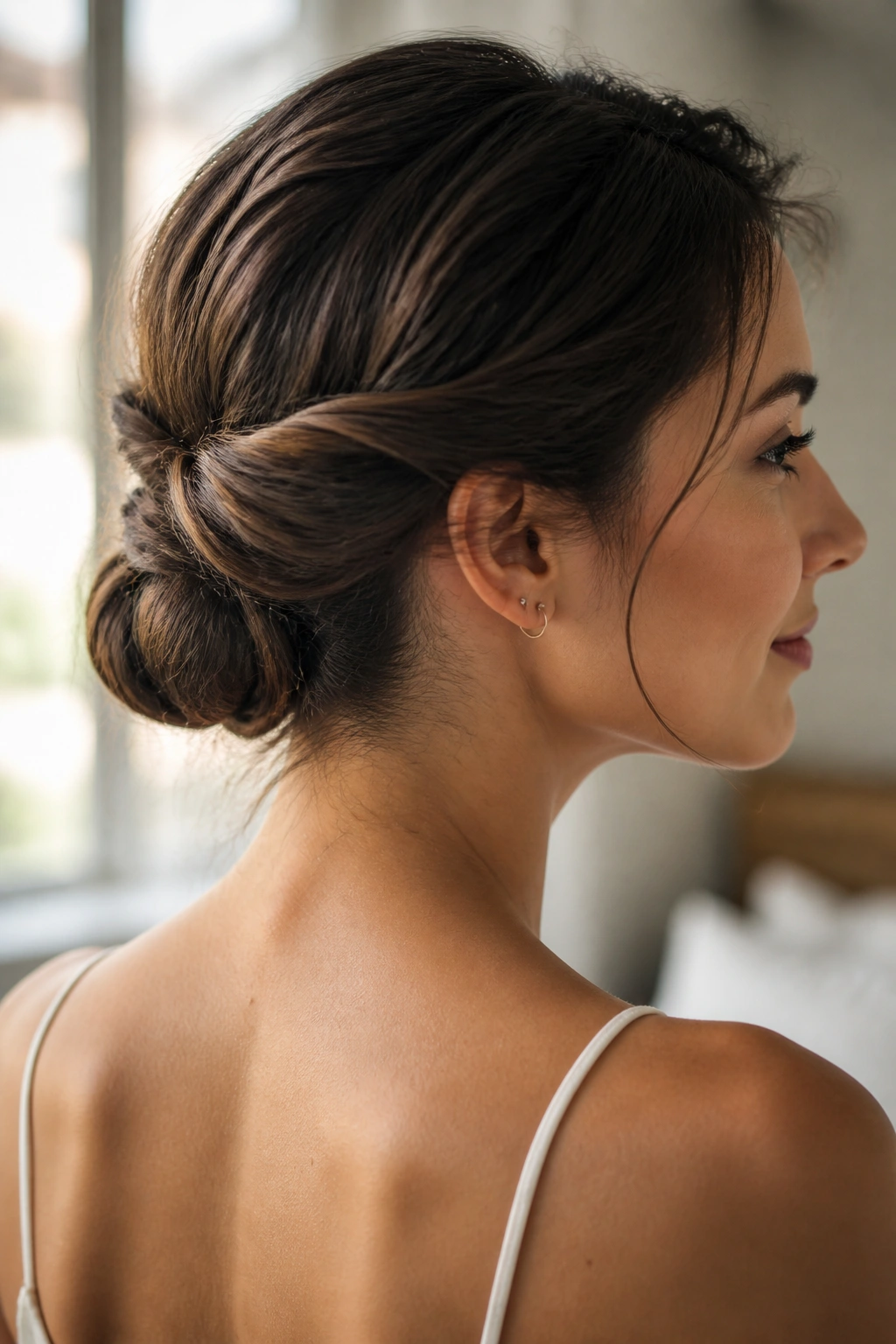
When you need your hair to look neat for dinner but don’t want a stiff updo, the low twisted chignon is the sweet spot.
It sits low enough to keep the back of your neck cool and polished enough to look deliberate. The shape is soft, not shellacked. That matters in humid weather, because overly stiff styles can start to fray at the edges fast. A chignon with a little bend and texture usually survives better than one that looks glued into place.
Where the pins go
- Start with a low ponytail, held a little left of center or straight at the nape.
- Split the ponytail in two.
- Twist each half, then wrap both pieces into a flat knot.
- Secure with U-pins or 2-inch bobby pins, crossing them for hold.
The little trick here is pinning into the base, not just the loose coil. If you only pin the surface, the knot slips when you move your head. A tiny mist of flexible-hold spray on the ends before coiling helps the shape stay together, too.
This one is excellent for medium and long hair because it takes the weight out of the ends. It’s also a good choice when you want to look a little dressed up without using heat. Clean lines, cool neck, and no fuss. Hard to beat that.
11. Braided Crown That Acts Like a Hair Headband
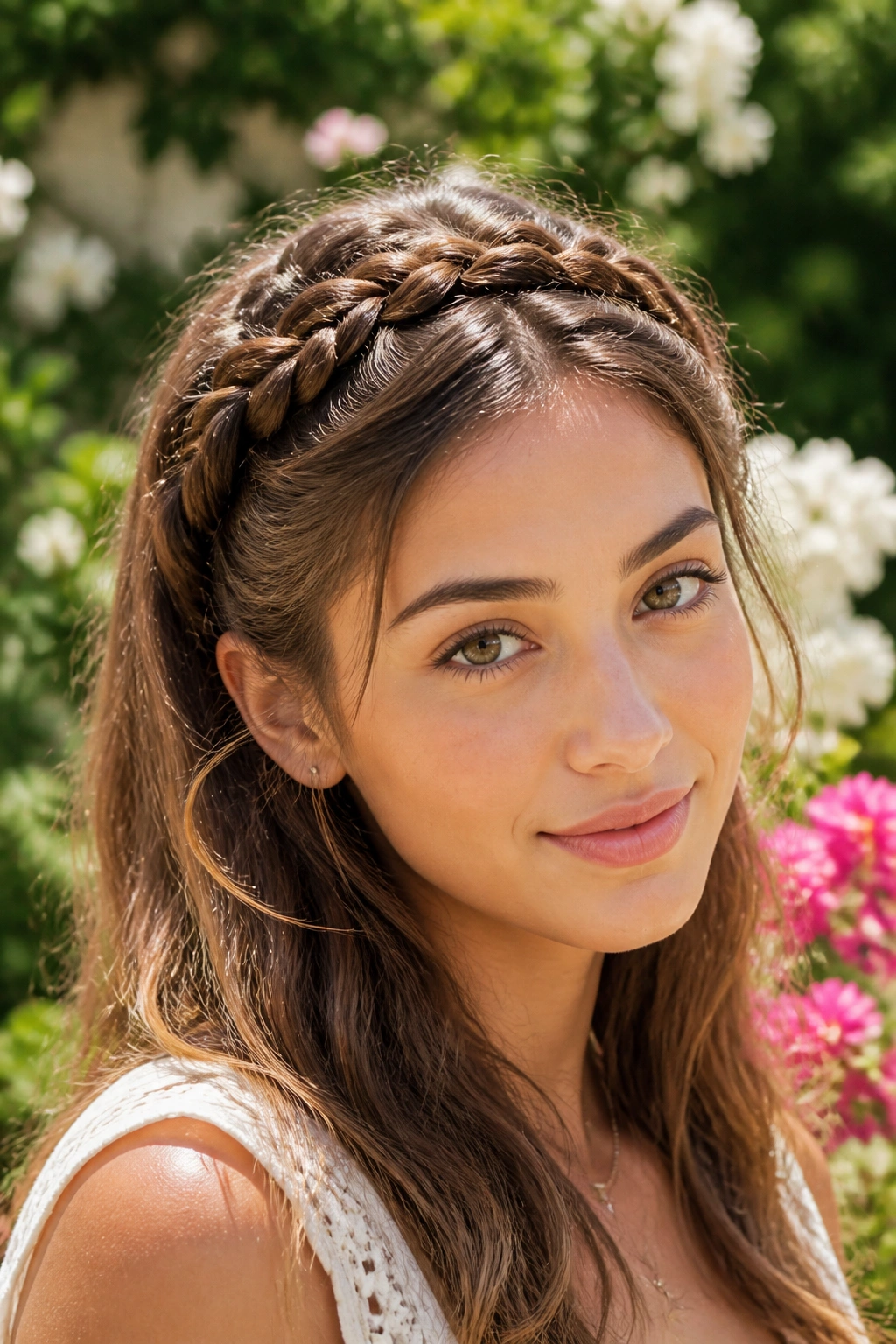
Want hair off your face without giving up a little softness?
A braided crown does the job beautifully, and it does not have to be complicated. Think of it as a built-in headband made from your own hair. In humid weather, that’s useful because it keeps the front pieces from puffing around your forehead while still letting the rest of your hair move. If you’ve got layers or a bit of frizz, this style hides both better than you’d expect.
The easy version is the one I’d recommend first: make two small braids near the temples, pull them back, and pin them across the top of the head like a crown. You can leave the rest of your hair loose or tuck it into a low bun. Either way works. A full wraparound braid takes more practice, and you don’t need that extra effort just to keep cool.
How to keep it from slipping
- Pin the braid into its base, not just through the outer weave.
- Add pins where the braid crosses the part line.
- Use a little dry shampoo near the roots for grip if your hair is silky.
The look is softer than it sounds. It has enough structure to survive a warm day, but it still feels airy. That combination is rare.
12. Wet-Look Sleek Ponytail That Beats Humidity
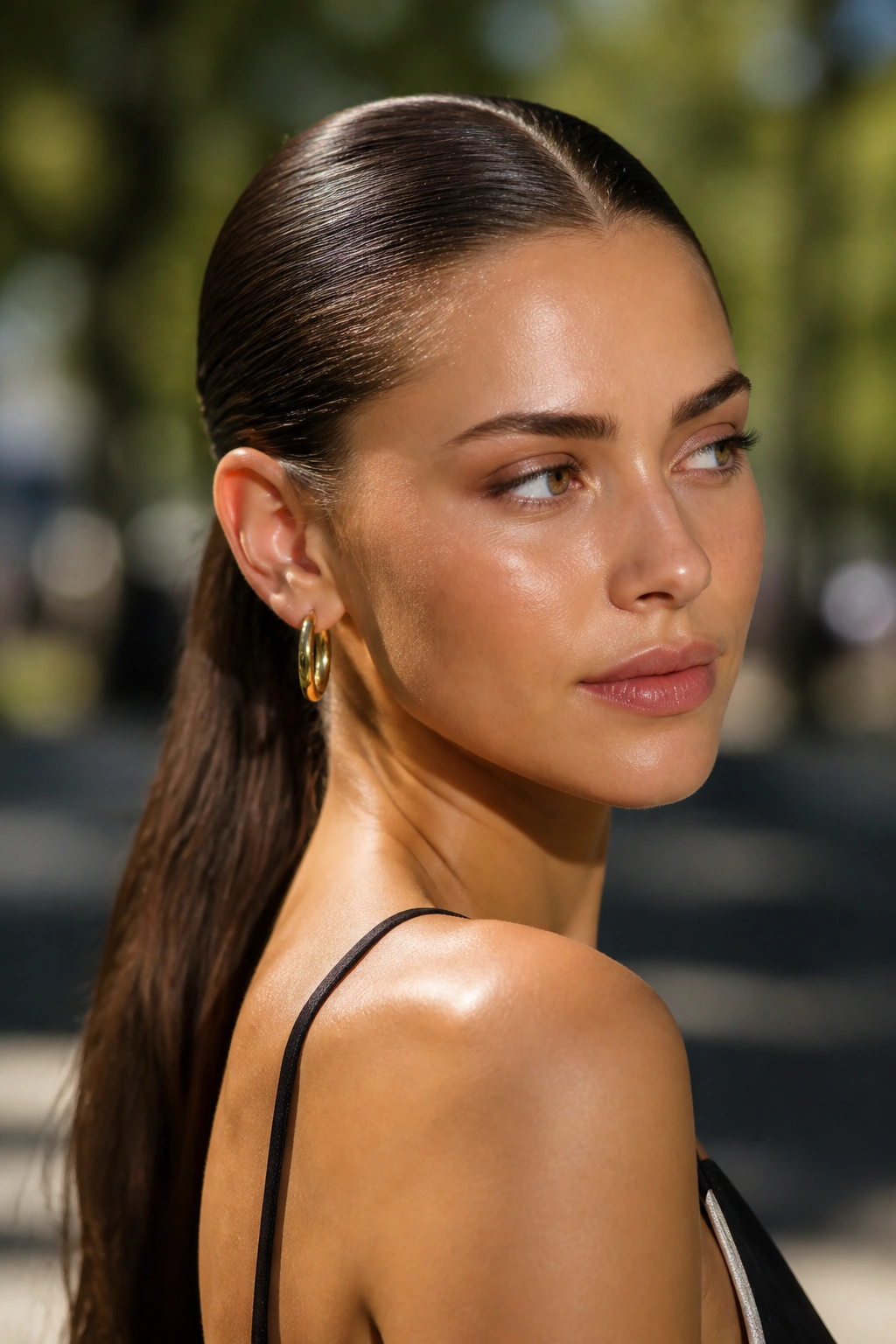
Wet-look does not mean greasy.
That’s the mistake people make. A proper wet-look ponytail is controlled and glossy at the surface, with the hair neatly brushed back and secured low or mid-height. It works on humid days because it embraces shine instead of fighting it. If the air is already adding a little puff to your hair, this style turns that into part of the look.
Start with damp or freshly misted hair. Work a light gel or styling cream through the top and sides, then use a fine-tooth comb to brush everything back. Keep the product mostly at the surface and hairline. The lengths can get a touch of serum, but they should not feel slick or heavy.
What you need at the front
- A fine-tooth comb.
- A light gel or edge control.
- One strong elastic.
- A small brush or toothbrush for the hairline.
The ponytail can sit low for a more polished feel or mid-height for something sharper. If your hair is thick, secure the first elastic and add a second one right over it. That extra hold matters once the day gets warm. And if a few tiny frizz pieces show at the temples, leave them. A little movement keeps the style from looking painted on.
13. Space Buns for Short or Medium Hair
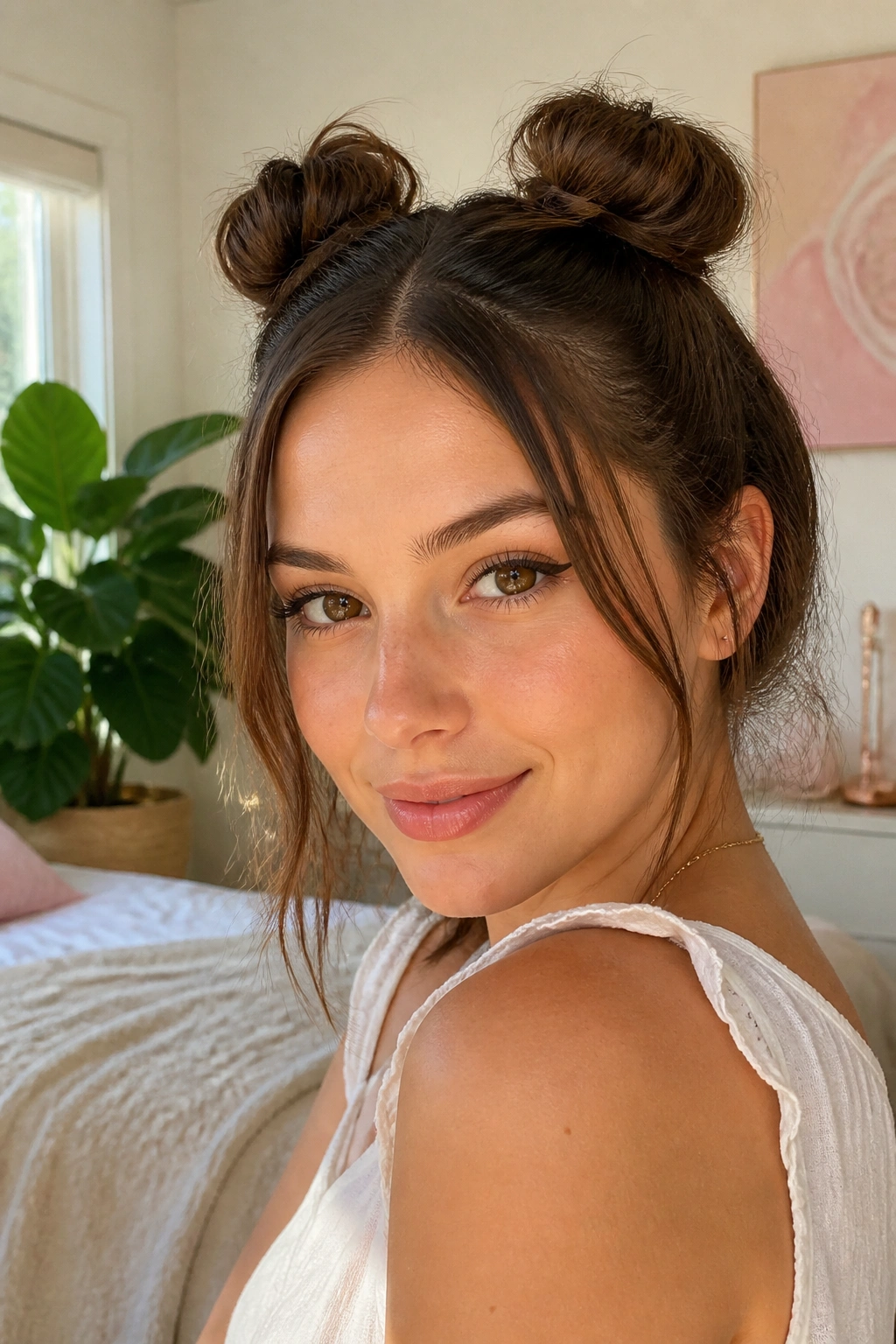
Space buns are not only for festivals.
On short or medium hair, they can be one of the fastest ways to get hair off the neck and off the face without needing a full updo. The size of the buns matters more than the exact placement. Keep them small and slightly high, or set them just behind the ears if you want a softer look. Two tidy buns can read playful or sleek, depending on how much you smooth the front.
If your hair is shoulder-length, split it down the middle and twist each side into a compact bun. Secure with an elastic first, then add 2 bobby pins per bun to keep the ends tucked in. Fine hair benefits from a little texturizing spray at the roots before you start. Thick hair usually needs one extra pin and a little patience at the nape.
A lot of people make space buns too tight, which leaves the hairline looking stretched. Don’t do that. Leave a little softness at the front and let a few pieces frame the temples. The style feels less costume-y that way and handles humidity better because it has a little breathing room.
14. Pull-Through Ponytail with Built-In Volume
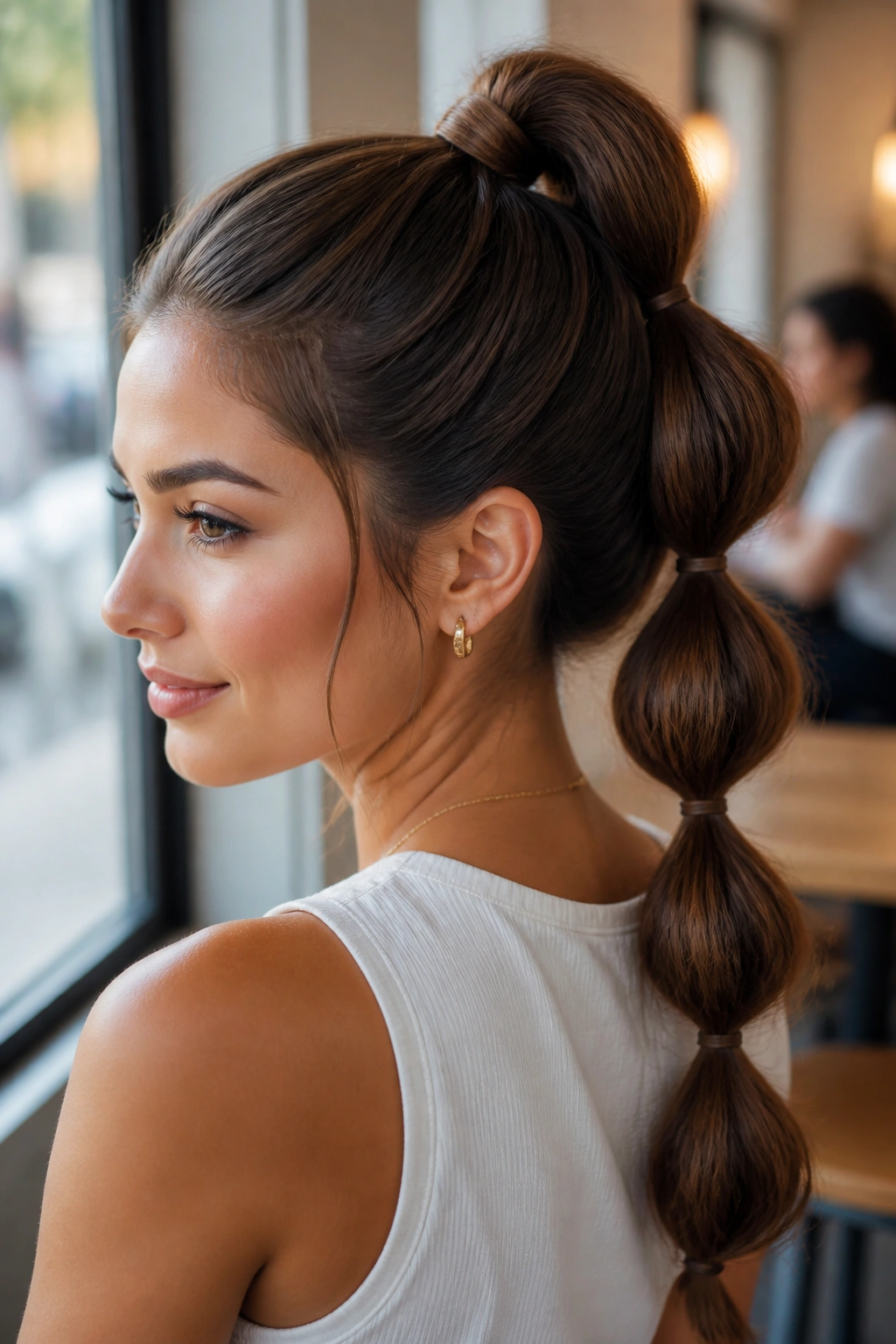
Pull-through ponytails look like extra work, but they’re mostly elastic placement.
That’s why I like them for long, thick hair on sticky days. The shape breaks the length into sections, which keeps the ponytail from dragging and gives you more control over the volume. It also looks fuller than a regular ponytail without needing teasing or heat.
The spacing trick
- Make a high or mid ponytail and secure it.
- Add another elastic 2 inches below the first.
- Split the hair between the two elastics and pull the tail through.
- Repeat the same pattern down the length.
After each section, tug the sides gently so the shape fills out. Keep the crown smooth on the first pass; that’s the part people notice most. If your hair is thin, make the sections smaller so the bubbles stack neatly. If it’s thick, you can go a little wider and still keep the ponytail balanced.
This style is a good fit when plain ponytails tend to droop by noon. It has enough structure to stay interesting, but it’s still easy enough to do without thinking. Once the elastics are in place, the rest is just shaping with your fingers.
15. Curly Pineapple Puff for Humid Days
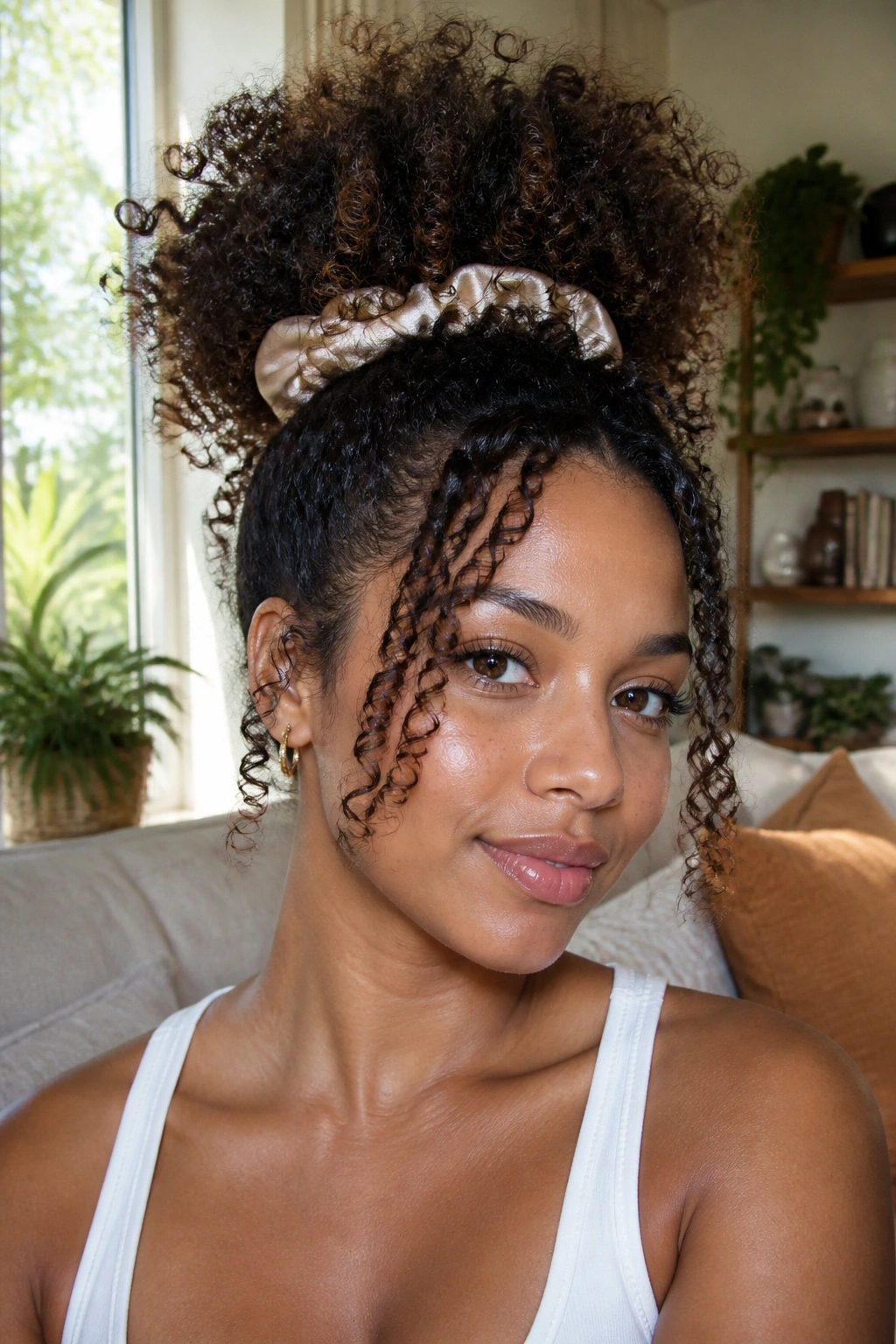
Curly hair deserves its own rulebook.
The pineapple puff is one of the simplest hot-weather styles for curls because it protects the curl pattern while pulling the weight up and away from the neck. Instead of fighting the volume, it uses it. That’s a much better deal on humid days, when curls often want to expand no matter what you do.
Gather the hair loosely at the crown and secure it with a satin scrunchie or a soft elastic. Do not yank it tight. The puff should sit high enough to keep the curls from rubbing against your collar, but low enough that the curls still fall naturally around the face and sides. A little leave-in on the ends can help, but too much cream near the roots will weigh the whole thing down.
If your curls are loose
- Keep the ponytail higher and looser.
- Let a few curls fall around the temples.
- Use one scrunchie, not two.
If your curls are tight
- Lift the hair only to the point where it feels comfortable.
- Secure the base without flattening the curl shape.
- Fluff the crown lightly with your fingertips after setting it.
This style is also useful for second-day curls that need a reset without a full wash. It lets the shape survive the weather instead of trying to erase it, which is usually smarter anyway.
16. Twisted Half-Up Half-Down for a Soft Finish
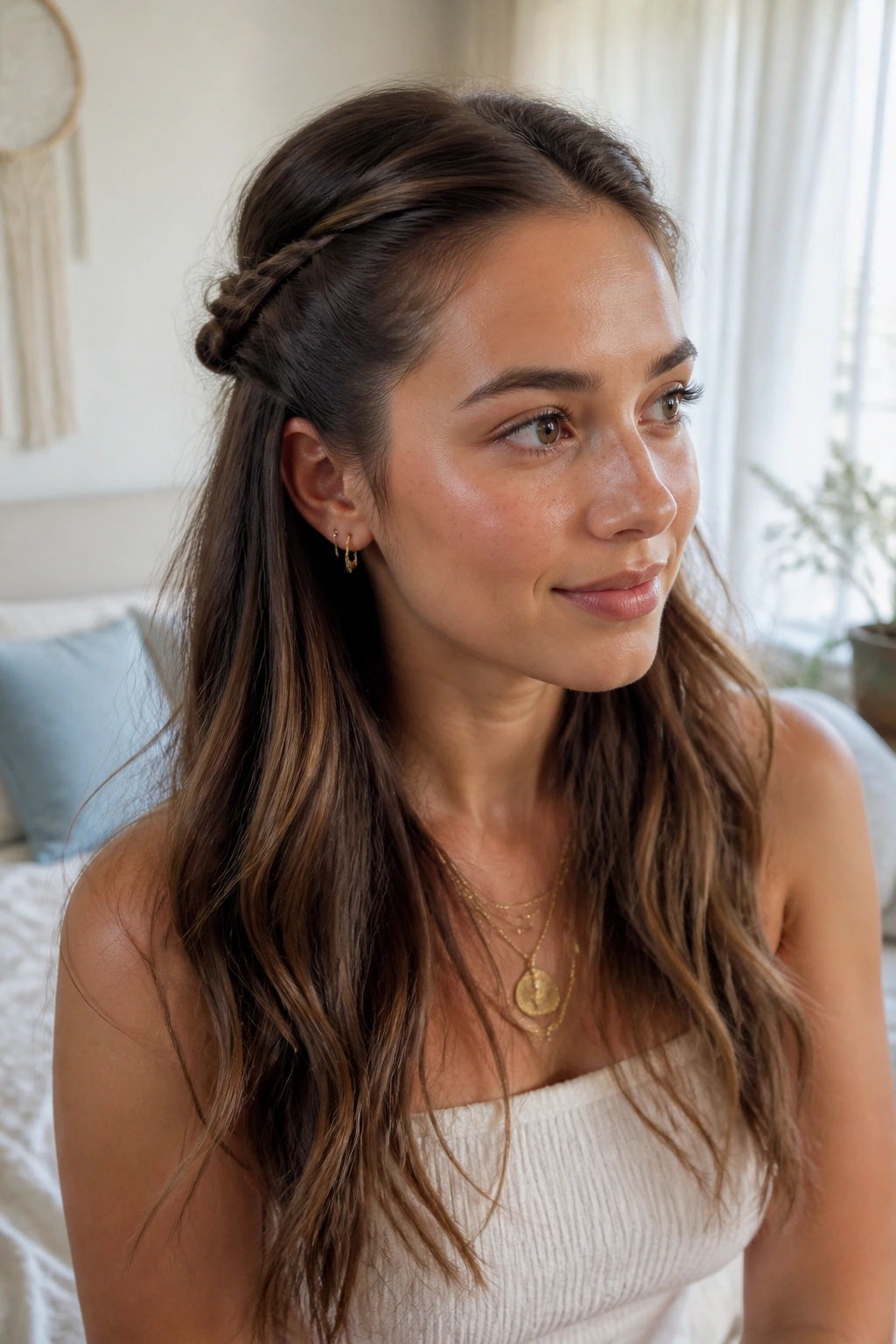
A twisted half-up half-down keeps hair down but out of the way.
That balance is the whole reason it works so well on warm, sticky days. You get the movement of loose hair, but the front stays off your face, and the crown has enough structure to avoid collapsing into frizz. It’s especially nice on wavy or straight hair that feels too flat for a full braid but too annoying to wear completely down.
Take two small sections from the front, one from each side of the part. Twist each section back toward the middle, then pin them together at the back of the head. You can leave the ends loose under a clip or tuck them under the pinned section for a cleaner finish. If the twists slip, rough up the underside with a bit of dry shampoo first. That little bit of grit helps more than people expect.
A one-sentence truth: this style is about restraint.
Don’t overdo the back section. If you pull too much hair into the twist, the style gets heavy and stops looking airy. A few neat sections are enough. The rest can stay down and do its thing.
17. Low Pigtail Braids for Hot Humid Days
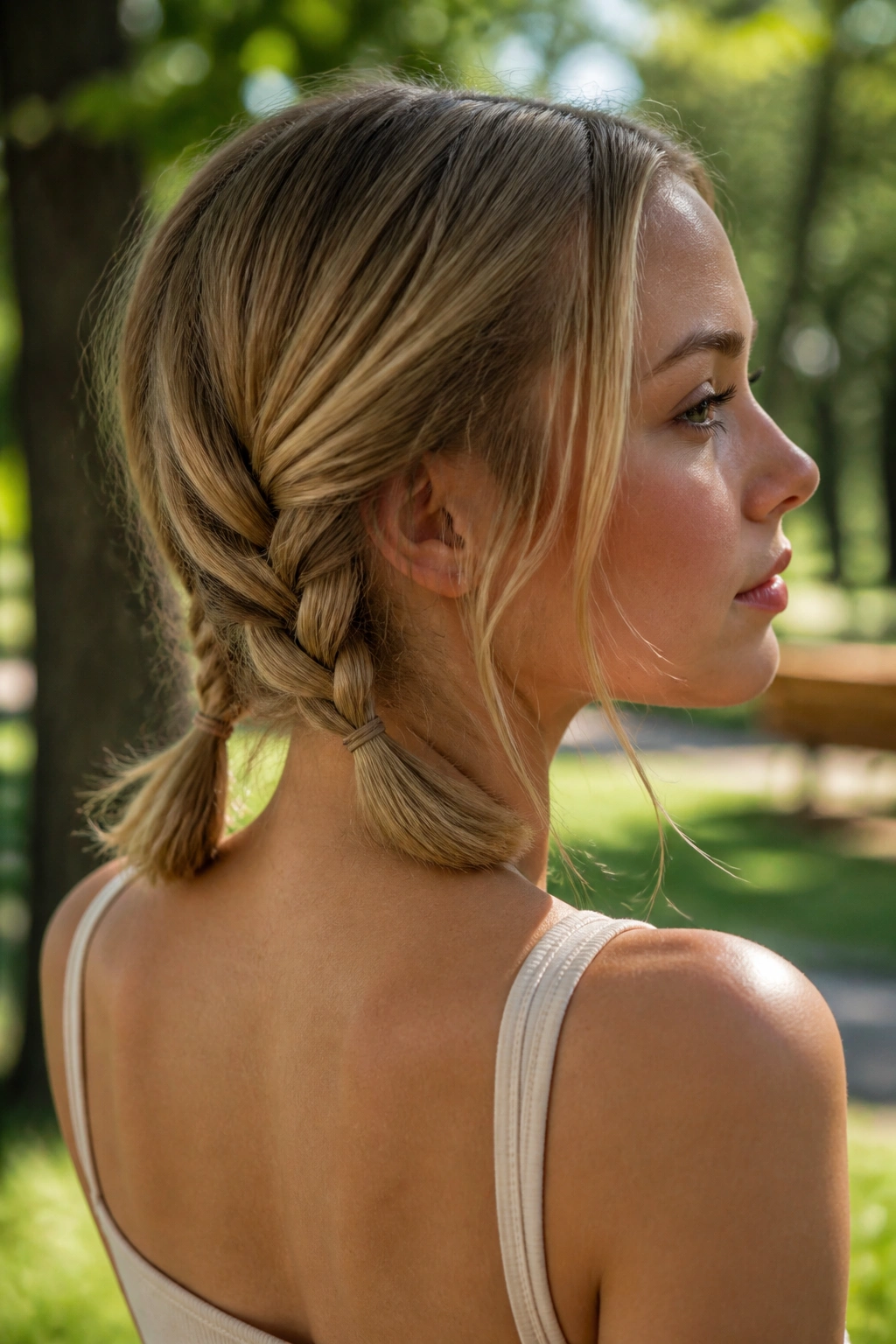
Low pigtail braids are the underrated answer for sticky afternoons.
People think of pigtails as youthful, but when they sit low, loose, and slightly undone, they read clean and practical instead. They also work better than a single braid for some hair types because the weight gets split in two. That means less tug at the scalp and less frizz fighting against one long strand down the back.
Start with a center part, then braid each side low near the nape. Keep the tension soft at the roots so the hairline doesn’t look pulled. If you want a softer finish, tug the outer edges of each braid just a little once they’re secure. That gives the braids a wider shape and helps them feel less strict. A tiny elastic at the end is enough; you don’t need a heavy finish.
If you have layers, the shortest pieces may fall out around the face. Fine. That is part of the look. If they bug you, pin them back with one or two small bobby pins and move on. The whole point of this style is to stay tidy without asking for much attention.
When humidity is high and you want zero drama, low pigtail braids are hard to beat. They keep the ends contained, they sit comfortably under a hat if you need one, and they still look decent when the day turns into errands, a walk, and whatever else gets thrown at you.
