



Long hair can look effortless right up until it gets caught in your tote strap, falls into your coffee, and starts slipping out of every clip you own. That is the annoying part nobody puts in hair tutorials.
The best everyday styles for long hair do not try to make your hair behave like a salon blowout all day. They work with a little movement, a little texture, and a little imperfection. A loose bend near the face, a braid that settles better after an hour, a low ponytail that sits softly at the nape — those are the looks people keep returning to because they survive real life.
A style earns repeat use when it’s fast, comfortable, and not precious. You can run errands in it, sit through a long workday, take it down later, and still have hair that feels like yours. That matters more than looking “done” for ten minutes.
1. Soft Low Ponytail With Face-Framing Pieces
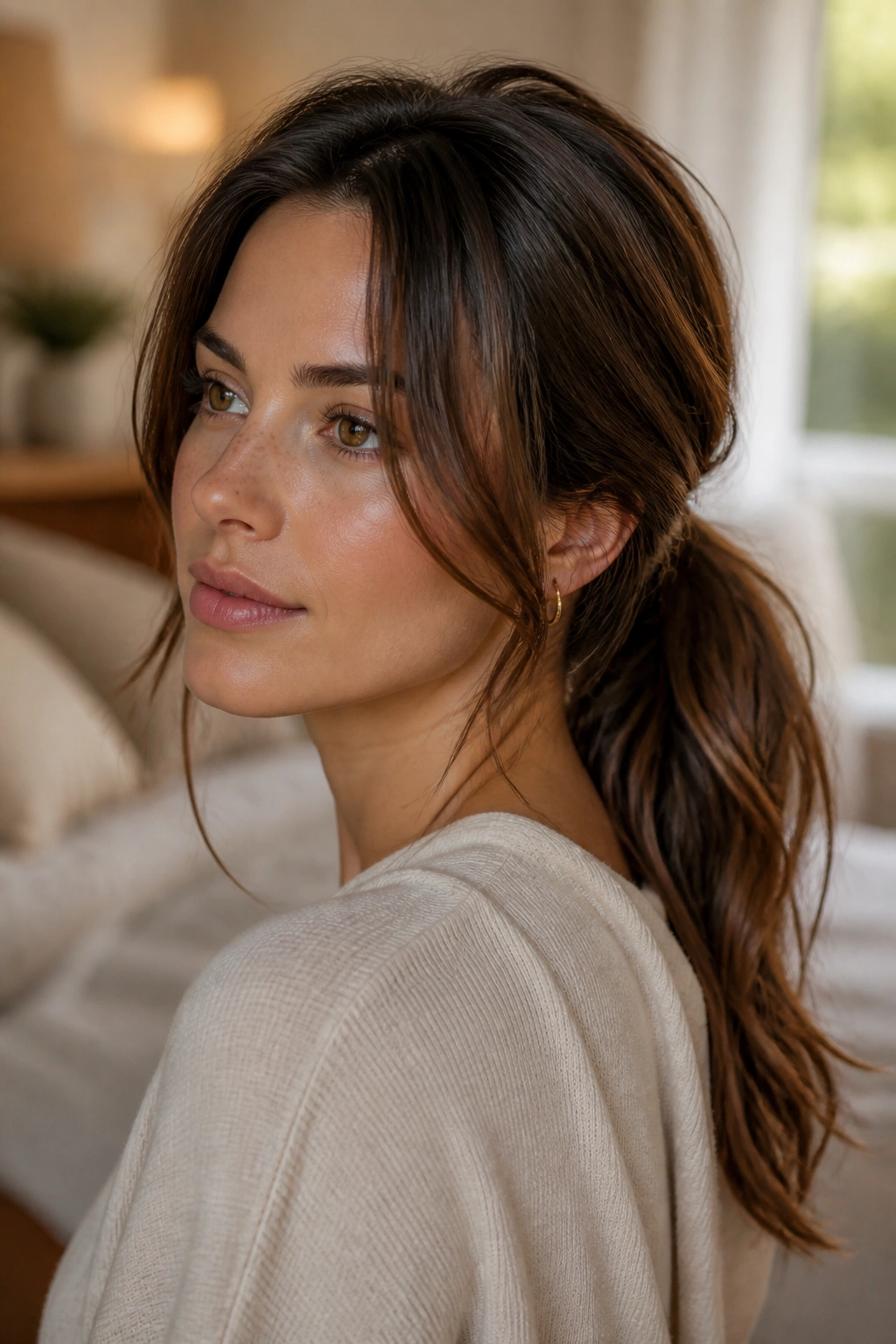
A low ponytail is boring only when it’s pulled tight and left there. The minute you loosen the crown, leave out a few front pieces, and keep the elastic low at the nape, it starts looking intentional instead of rushed.
This is the style I reach for when hair needs to stay out of the way but still look soft. It works especially well on long hair with layers, because the shorter front pieces do half the styling for you. If your hair is fine, a little dry shampoo at the roots gives the ponytail more grip and keeps the crown from collapsing by lunch.
Why It Feels Easy Instead of Flat
The best part is the shape. Long hair in a low ponytail keeps its length, so you still get that swing when you walk, but the weight sits lower and feels calmer. Pull two small pieces loose near the temples, then let the ends stay straight, waved, or lightly curled.
Tip: Wrap a 1-inch strand around the elastic and pin it underneath. It takes twenty extra seconds and makes the ponytail look much cleaner.
- Best with: straight, wavy, or lightly textured hair
- Hair tool: a soft brush and one elastic
- Finish: a mist of light hairspray, not a stiff shell
A little movement around the face keeps it from looking severe. That is the whole trick.
2. Claw-Clip Twist
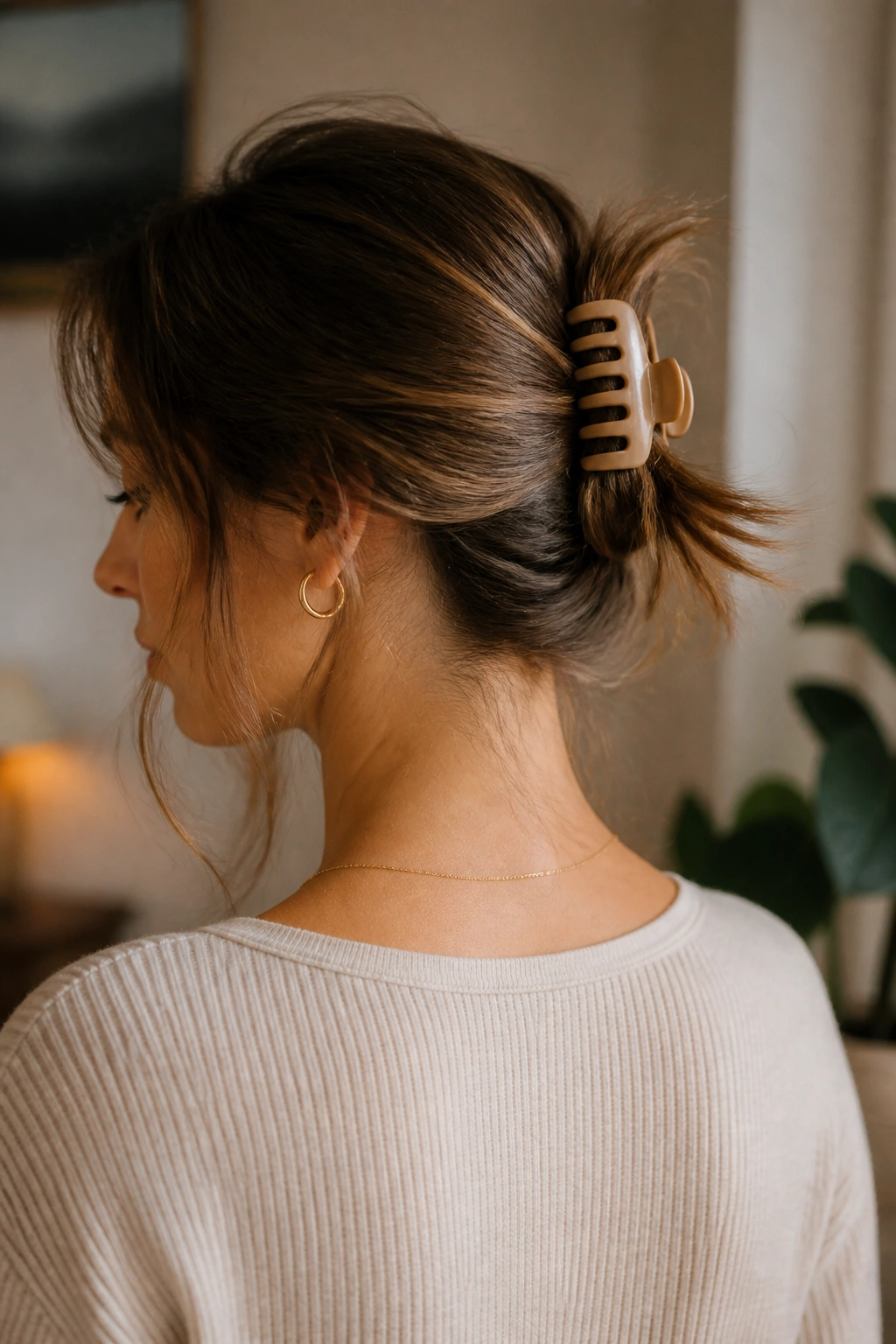
A good claw-clip twist is the closest thing to a five-second rescue for long hair. You gather the length, twist it upward, fold the ends under or let them fan out, and clamp the clip over the center.
The style works best on second-day hair, which has enough texture to hold the shape without a fight. Very clean hair can slip, especially if it is silky, so a small cloud of texturizing spray at the roots helps. Thick hair usually needs a bigger clip than you think. Thin clips snap. Ask me how I know.
It should feel loose, not armored. If the twist is so tight that your scalp starts complaining, it is too tight. A few face pieces can fall out on purpose — that messy edge is what keeps the look from turning formal.
One small detail matters more than people expect: place the clip a little lower than the crown, not all the way at the top of the head. That keeps the style relaxed and stops it from looking like you copied a dance recital updo.
3. Half-Up Knot at the Crown
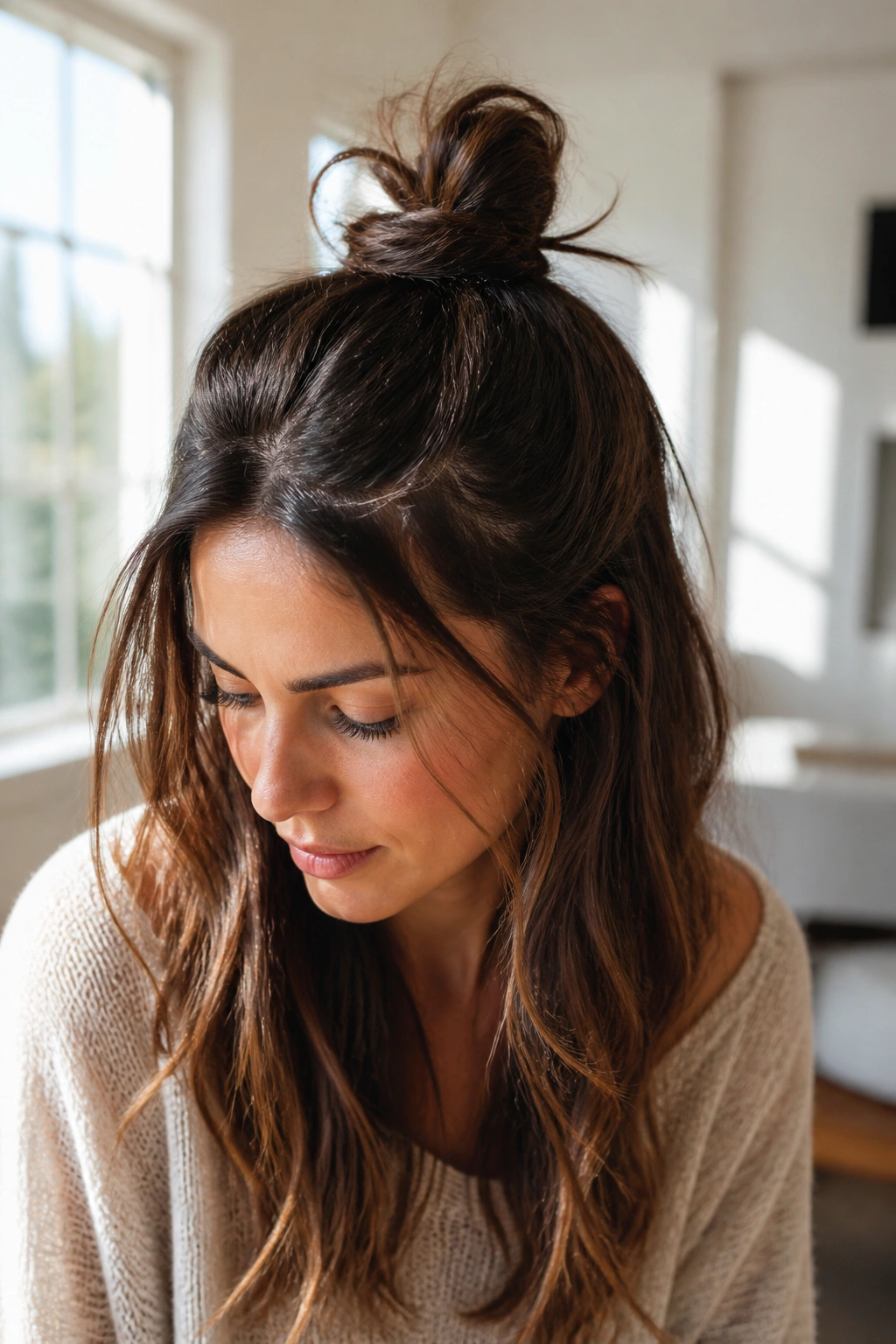
Why does a half-up knot look casual even when it takes almost no time? Because it gives you the little lift of an updo and leaves the rest of the hair down, which softens the whole thing.
Section off the hair from the temples to the back of the crown, twist it once or twice, and tie it into a small knot or topknot. If your hair is layered, the ends may poke out a bit. Leave them. That tiny bit of mess reads better than a perfectly sealed knot.
Where to Place the Knot
Too high, and it starts feeling childish. Too low, and it loses the lift that makes the style work. The sweet spot is right at the crown, where the knot gives the head a little shape and keeps hair off your face.
If you want extra hold, slide in two crossed bobby pins under the knot instead of relying on a tiny elastic alone. A strong elastic can work too, but it can leave a crease if you take the style down later. I prefer the pin method when I know I’ll be wearing the style for most of the day.
This one is especially good when your roots need a break from full-down hair. It still feels easy. It just looks more awake.
4. Soft Center-Part Waves
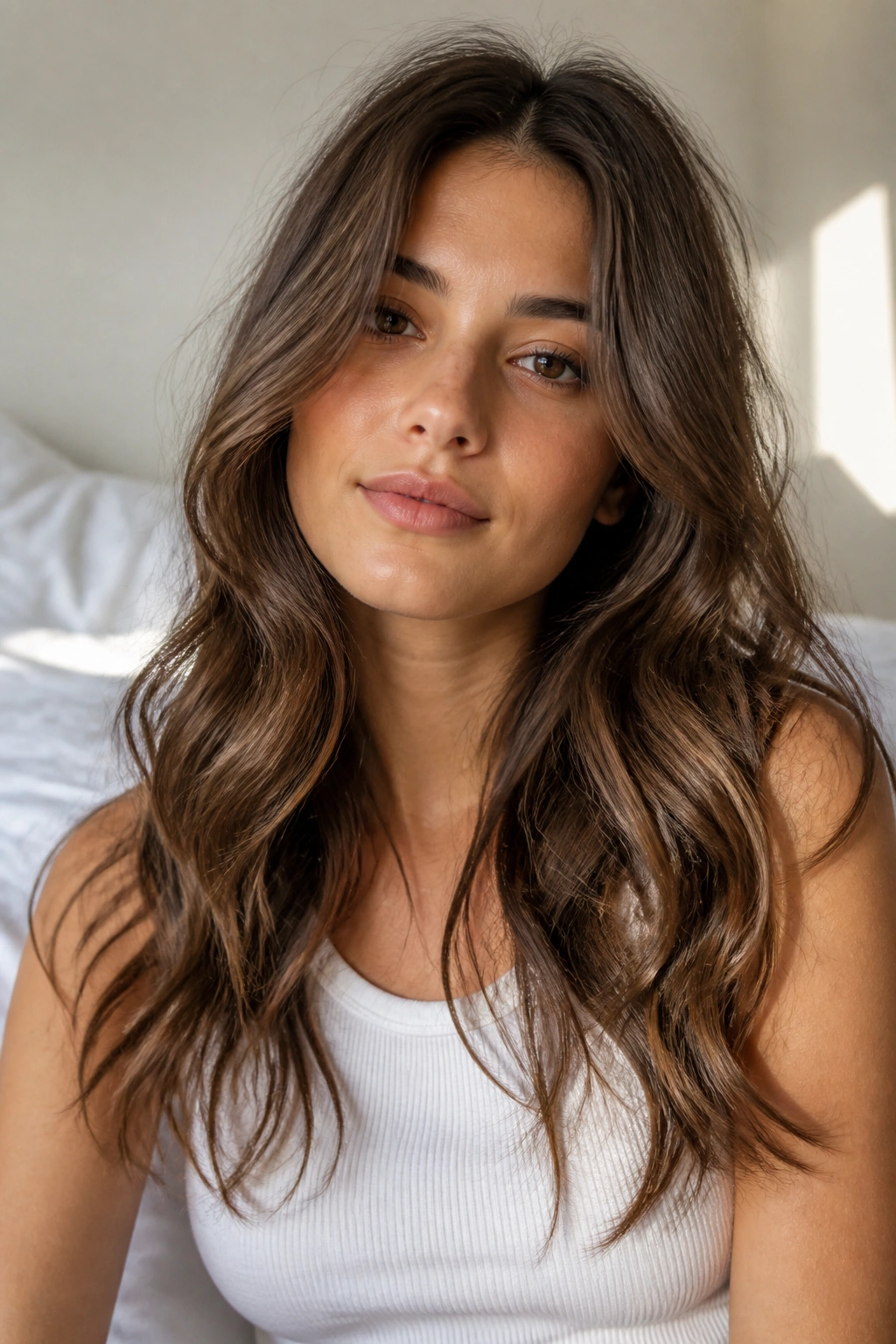
Loose waves do not need to be perfect to look deliberate. In fact, the more even they get, the more they start looking stiff, and that is usually what makes a casual style feel overworked.
A center part keeps the shape simple, while the waves do the rest. You can get them with a 1-inch or 1.25-inch curling iron, or you can braid damp hair and let it dry with a bend through the lengths. Either way, the point is not a polished curl pattern. It is a soft shape that moves when you do.
I like brushing the waves out once they cool. Not aggressively. Just enough to break them into loose ribbons instead of ringlets. A pea-sized amount of serum on the ends adds shine and stops the frizz halo that can show up around the face.
- Best on: medium to thick hair that holds shape well
- Skip: heavy oil at the roots
- Nice finish: tuck one side behind an ear and let the rest fall forward
A bend at the ends is enough. You do not need perfect symmetry.
5. Bubble Ponytail
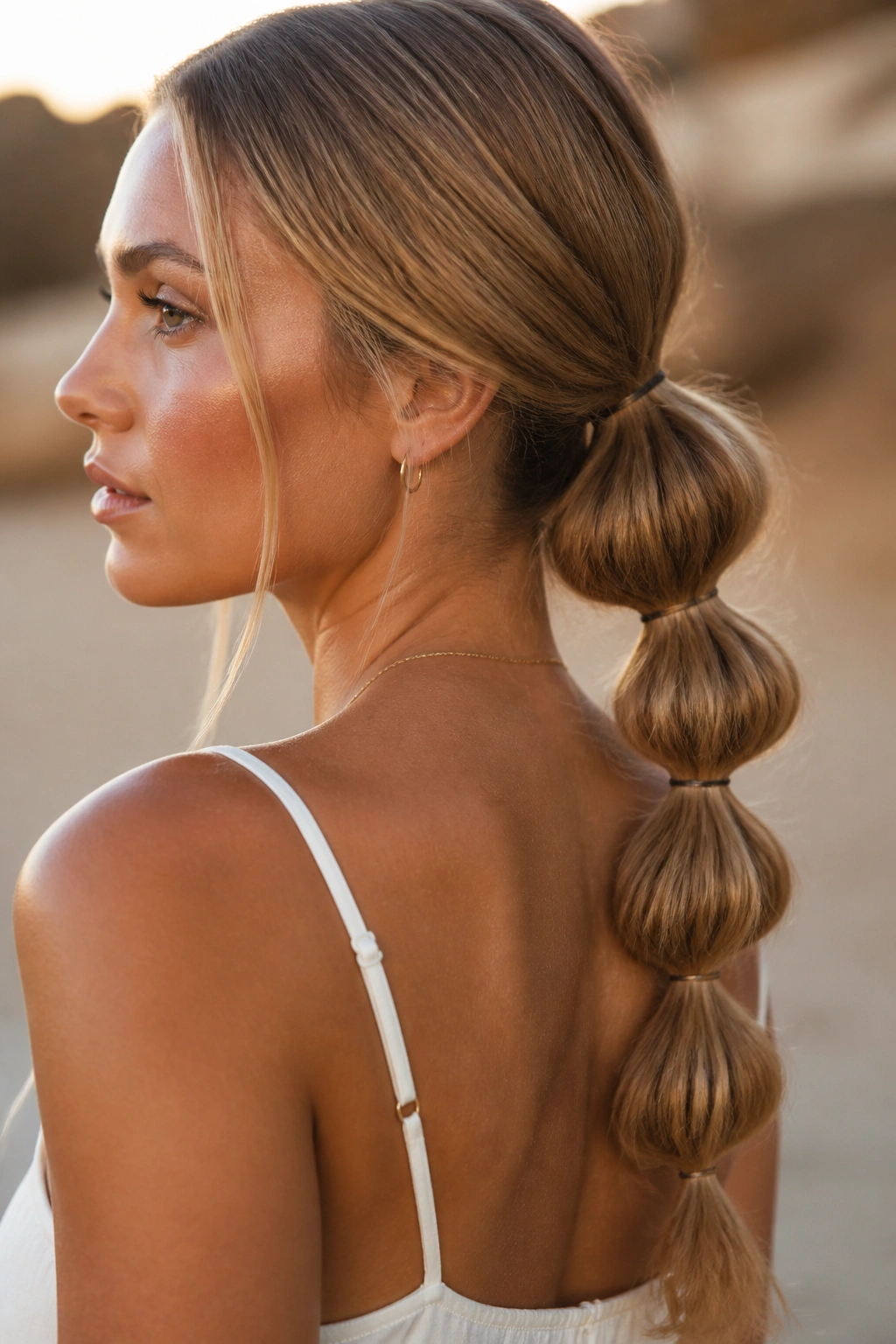
Bubble ponytails look playful, but they are calmer than they sound. The style is just a ponytail with a few evenly spaced elastics down the length, then each section puffed out into rounded “bubbles.”
Start with a low or mid-height ponytail and secure it firmly. Then add clear elastics every 2 to 3 inches, depending on how long your hair is. After each elastic, gently tug the section between bands until it fills out. Do not yank from the sides too hard or the bubbles become lopsided.
This one is especially useful if your hair is layered but you still want something more interesting than a plain ponytail. The elastic spacing gives the look structure, and the rounded sections keep long hair from hanging like a heavy rope.
Best move: keep the first bubble smaller and the lower ones a little larger. That makes the ponytail look balanced and helps the end of the hair blend in instead of looking like an afterthought.
A bubble ponytail also hides uneven hair days better than most styles. That alone is reason enough to keep it in rotation.
6. One-Shoulder Side Braid
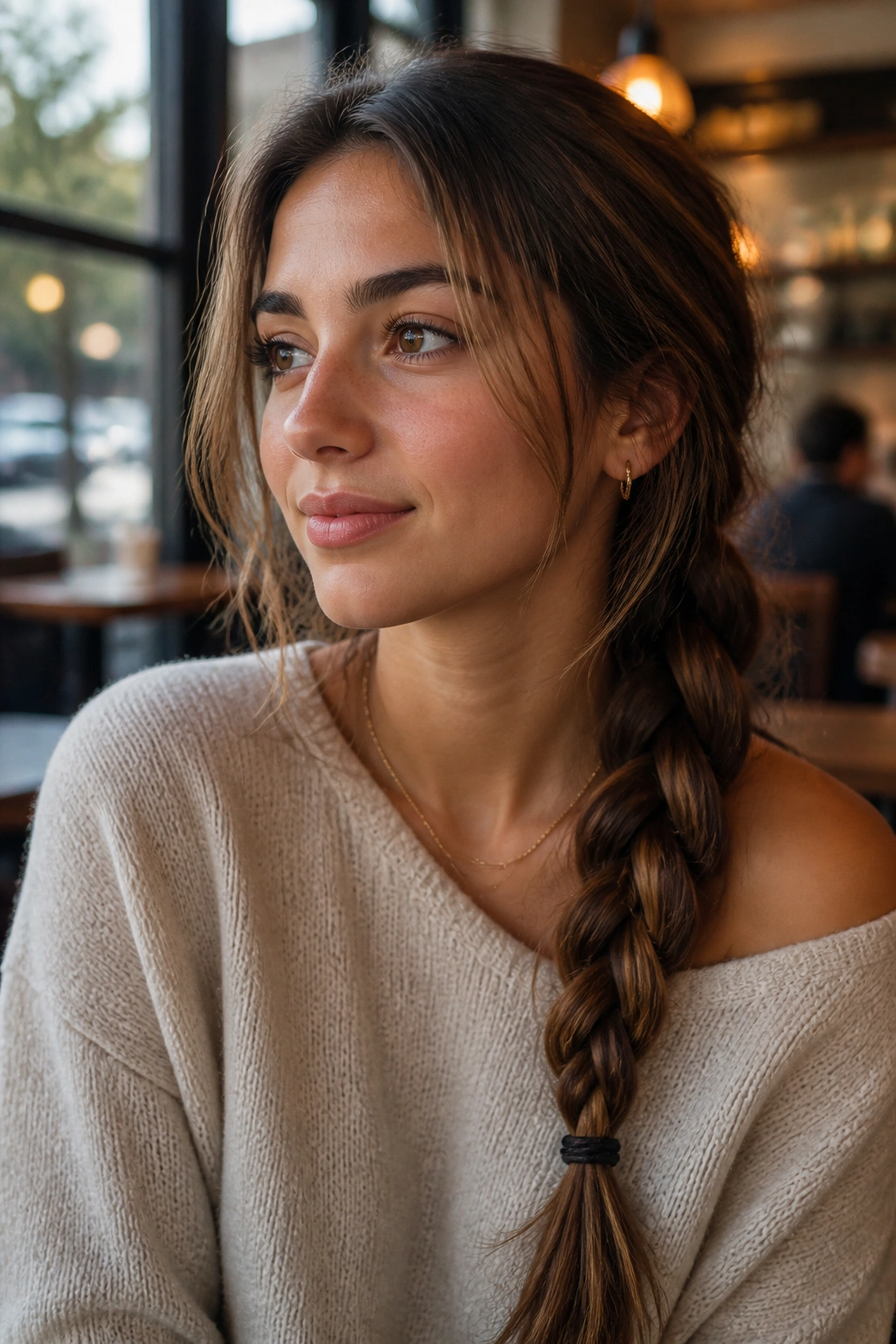
Some mornings, hair wants to live on one shoulder and stay there. A side braid leans into that instead of fighting it, which is why it works so well for long hair that feels too much for a full ponytail.
Pull the hair over one shoulder, choose a simple three-strand braid, and keep the tension soft at the top. If you braid too tightly near the scalp, the whole thing starts to look stiff and can pull in a way that’s uncomfortable by the end of the day. Leave the top a little loose and tighten only enough to keep the braid from unraveling.
This style looks especially good with sweaters, wide-neck tops, and jackets that sit close to the throat. The braid keeps length from getting trapped under straps or caught in zippers. And if you have layers, a little frizz around the braid makes it look lived-in rather than neat for the sake of being neat.
A tiny elastic at the end is fine. A ribbon works too, if you want a softer finish without making the style feel dressed up.
7. Sleek Low Braid
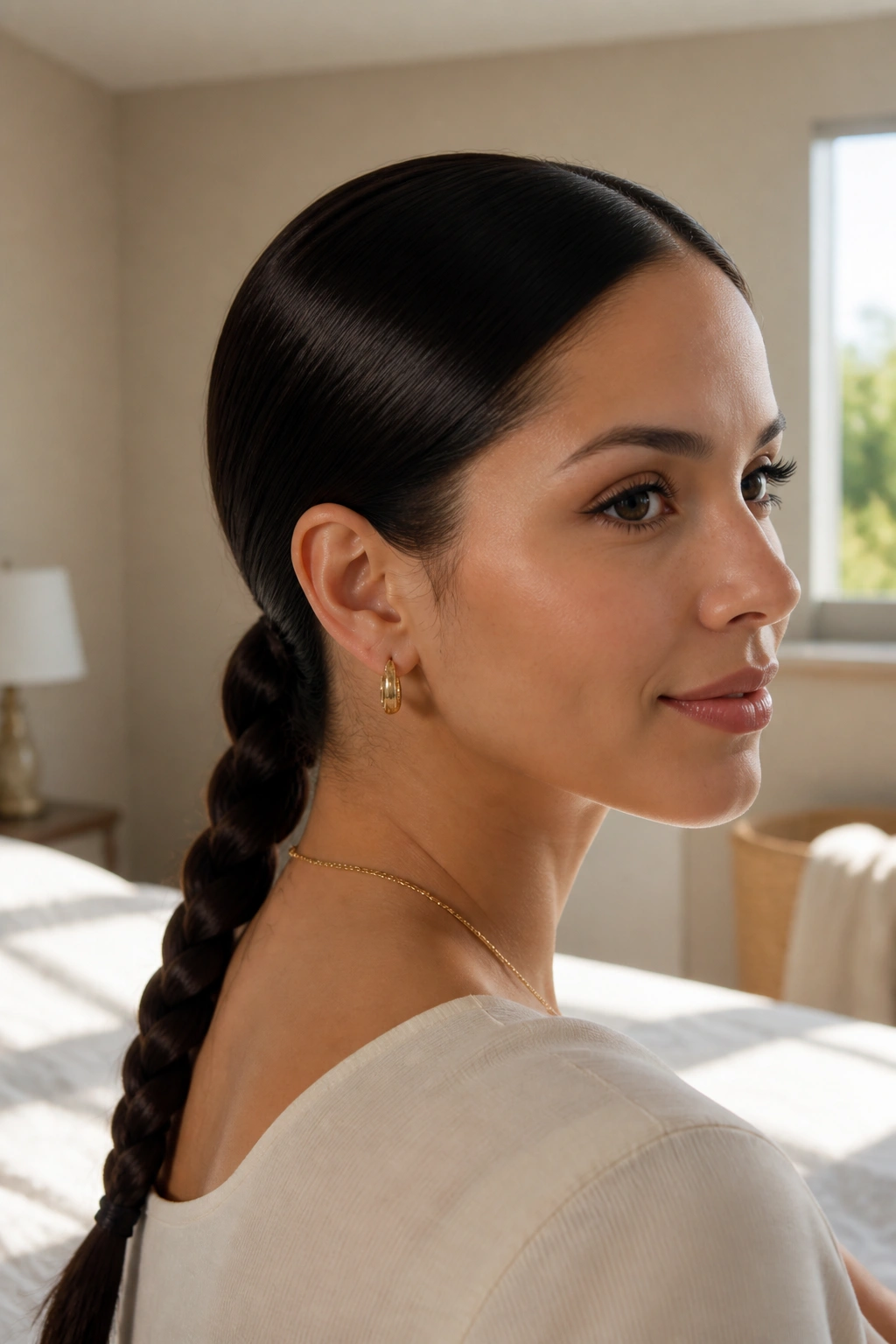
A braid does not have to read as sporty. When the hair is brushed smooth, the part is clean, and the braid starts low at the nape, the whole thing feels sharper and more polished without turning formal.
This style is one of my favorites for long hair that gets tangled easily. You smooth it back with a brush, add a little leave-in conditioner or lightweight cream through the lengths, then braid it low and tight enough to stay put. Not so tight that it tugs. Tight enough that the braid keeps its shape through the afternoon.
The key here is the finish. A drop of serum over the outside of the braid keeps flyaways down, especially around the crown. Skip heavy product if your hair is fine, though. Too much and the braid starts looking greasy instead of sleek.
What to Watch For
- Keep the part straight if you want a cleaner look
- Use a clear elastic or a small color-matched one
- Flatten the top with a soft brush, not a comb that scrapes the scalp
- Leave the end slightly loose so it doesn’t feel severe
This is a good braid for humid weather, workdays, or anytime you want long hair that behaves.
8. Messy Nape Bun
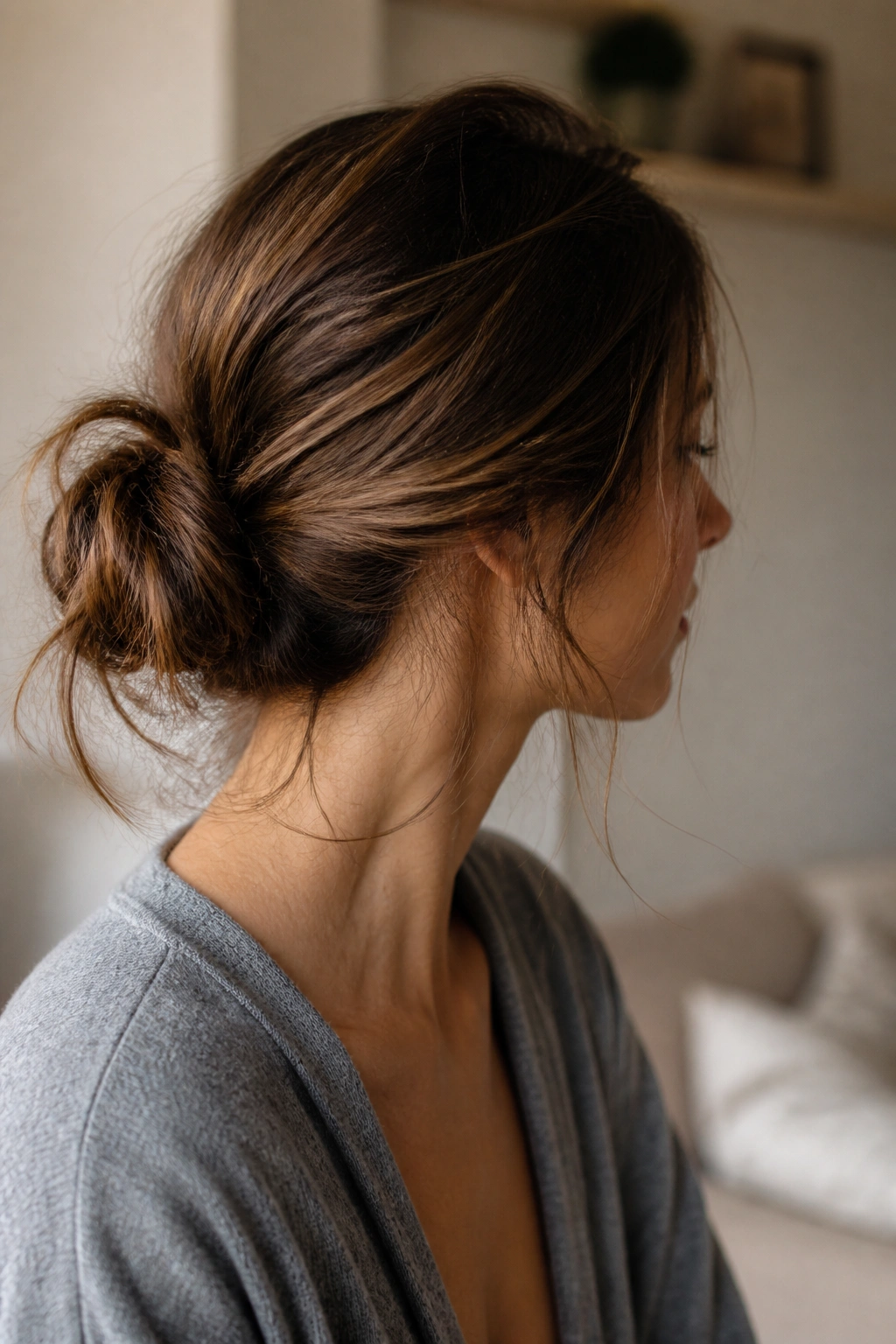
Need your hair off your neck before you’ve even left the house? A messy nape bun solves that without asking for precision. It is the kind of style that looks better when a few pieces slip out.
Gather the hair low, twist it once, then wrap it into a loose bun at the nape. Secure it with a coil elastic, a scrunchie, or a few pins. If your hair is very long, tuck the last few inches out instead of forcing them under. The bun will sit flatter and feel less bulky.
A few flyaways help.
That is not me being lazy. It’s honest styling. The looseness around the crown keeps the bun from looking severe, and a little unevenness near the ears makes the whole thing feel softer. If you want to control the shape a bit more, pinch the bun gently after pinning and tug the crown a quarter inch for a small lift.
This is the style I’d use for errands, travel days, and long stretches at a desk. It stays comfortable even when you forget about it, which is half the point.
9. Half-Up Crown Braid
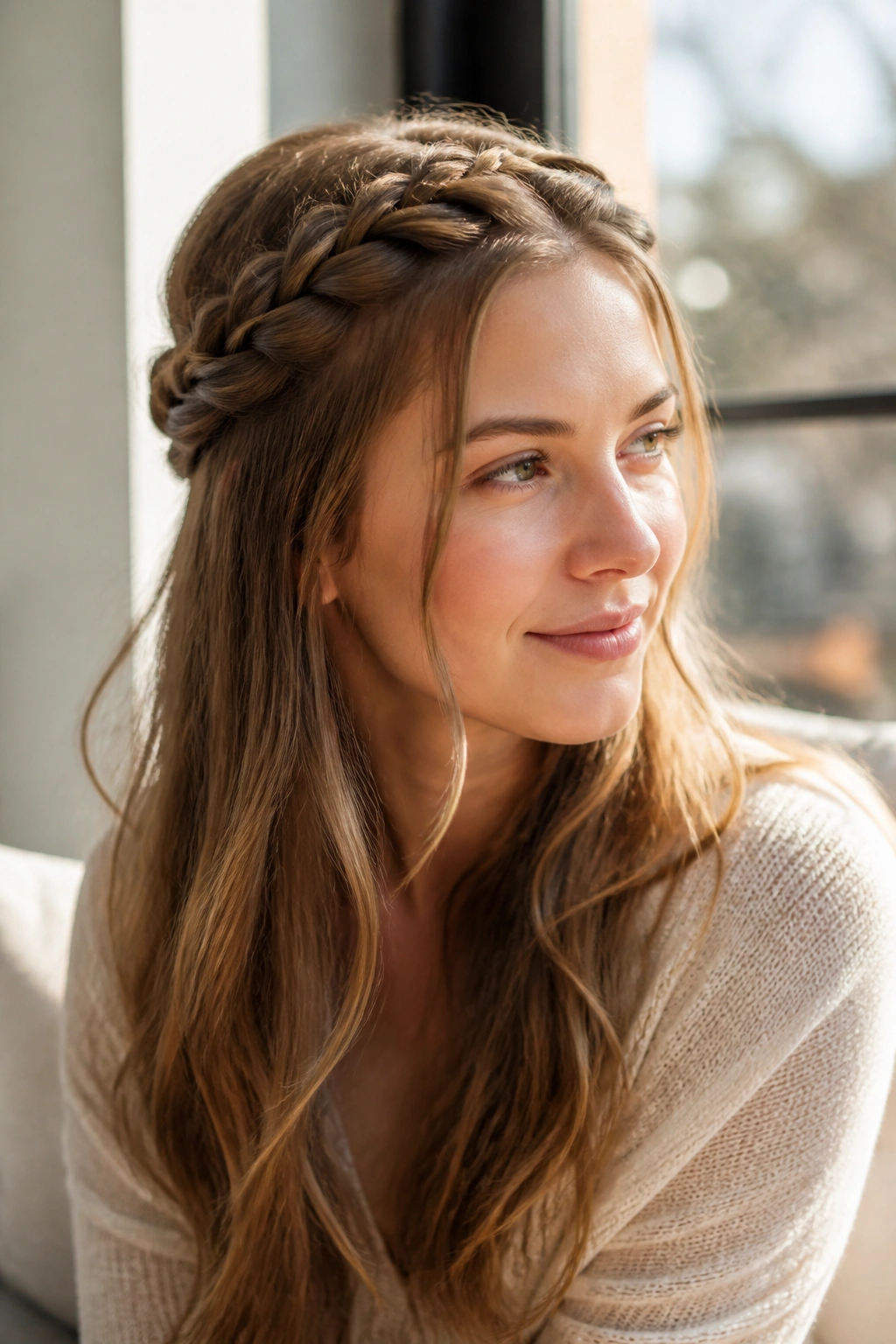
A half-up crown braid does something a plain clip cannot: it holds the front hair back while leaving the length down in a way that still looks thoughtful. It sits somewhere between practical and pretty, which is probably why it gets worn so often.
Start a braid near one temple, following the hairline toward the back of the head. Pin it behind the opposite ear, or do the same from both sides and meet them in the middle. If your hair is layered, keep the braid slightly loose so shorter pieces can fall out naturally instead of poking at the finished shape.
The Part People Skip
The braid should sit close enough to the head to stay put, but not so tight that it creates a hard ridge across the scalp. That ridge is what makes the style look dated. A soft, flatter braid feels much more current and much more wearable.
This style is especially handy when you want to show off waves or curls in the lower half of the hair. It also keeps the front sections from falling into your eyes, which sounds small until you spend a whole afternoon brushing them back.
Use two flat pins where the braid ends meet the rest of the hair. They disappear better than a chunky clip.
10. Loose French Braid
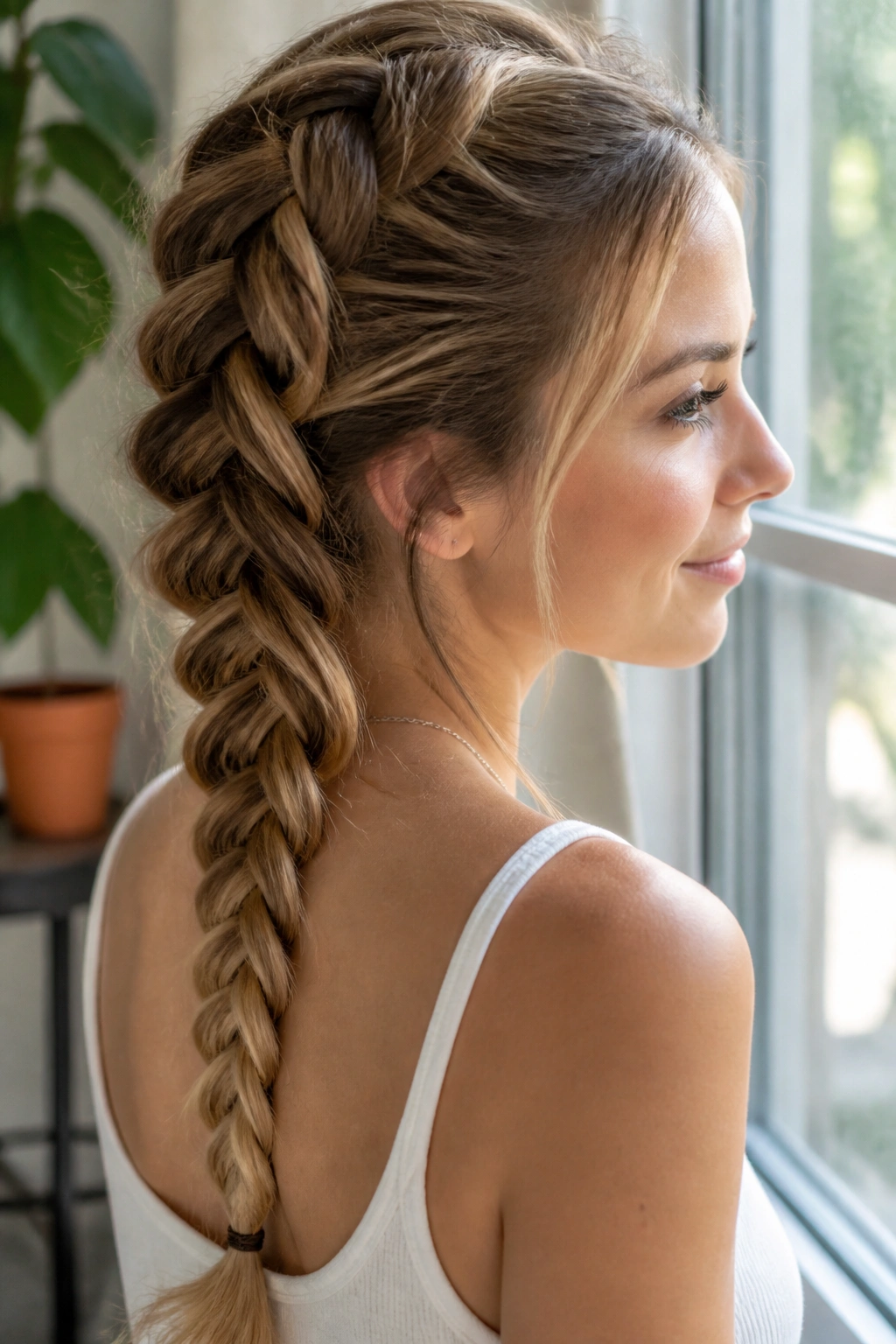
Why does a loose French braid hold better than people expect? Because the braid grabs hair from the scalp as it goes, which gives long lengths more structure than a standard braid that starts lower down.
Begin near the crown, add sections gradually, and keep the braid soft. Once it’s tied off, pull the outer loops a little wider with your fingertips. That little widening step — people call it pancaking — makes the braid look fuller and more relaxed.
I like this one on day-two hair, especially if the roots are starting to separate a bit. Clean hair can be too slippery for a French braid, while slightly lived-in hair tends to stay put. If your hair is freshly washed, a small amount of dry shampoo at the roots helps the braid grip.
- Good for: commuting, classes, errands, long workdays
- Better with: hair that has a little texture
- Not ideal for: extremely slippery, freshly conditioned hair without product
The braid can sit down the back or drift to one side. Either way works. The soft finish matters more than perfect geometry.
11. Twisted Half-Up Sections
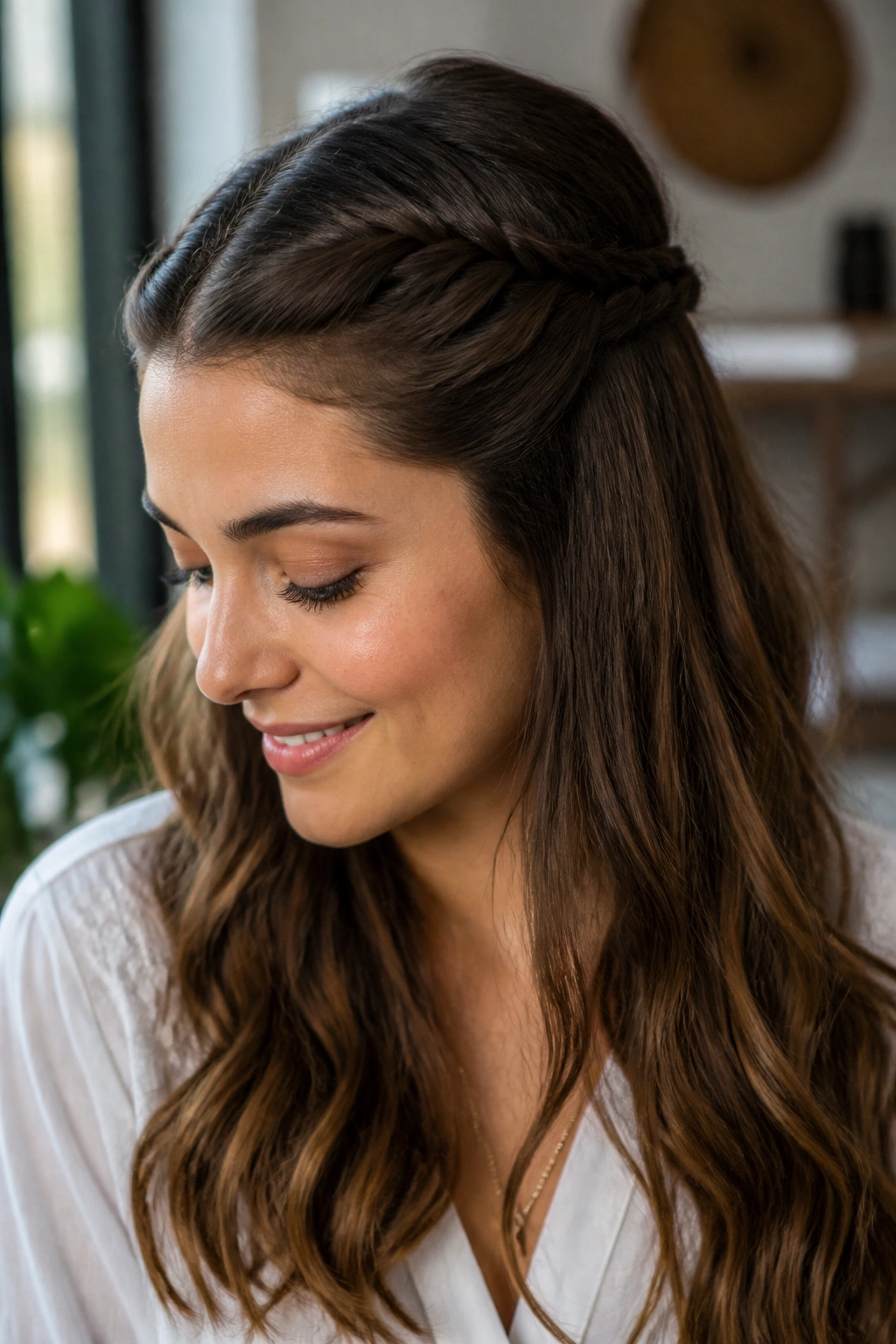
Twisted half-up styles are the kind of thing people dismiss until they actually need one. Two twists take hair off the face, show off length, and look neat without acting like a full updo.
Take a section from each temple, twist it back toward the center, and pin or tie the two pieces together. That’s it. You can leave the ends straight, wavy, or curled. On longer layers, the twists may loosen a little during the day. I like that. It keeps the style from turning too polished.
This works well when your hair is clean and there is not much grip for braids or clips. It also plays nicely with side parts, which can sometimes feel awkward in full-down styles. The twist gives the part a reason to exist instead of letting it sit there by itself.
If you want a small upgrade, slide in tiny clear elastics before pinning the twists together. They hold the sections more securely and keep the twists from unwinding while you move around.
This one is fast, useful, and easy to fix if one side loosens.
12. Braided Low Bun
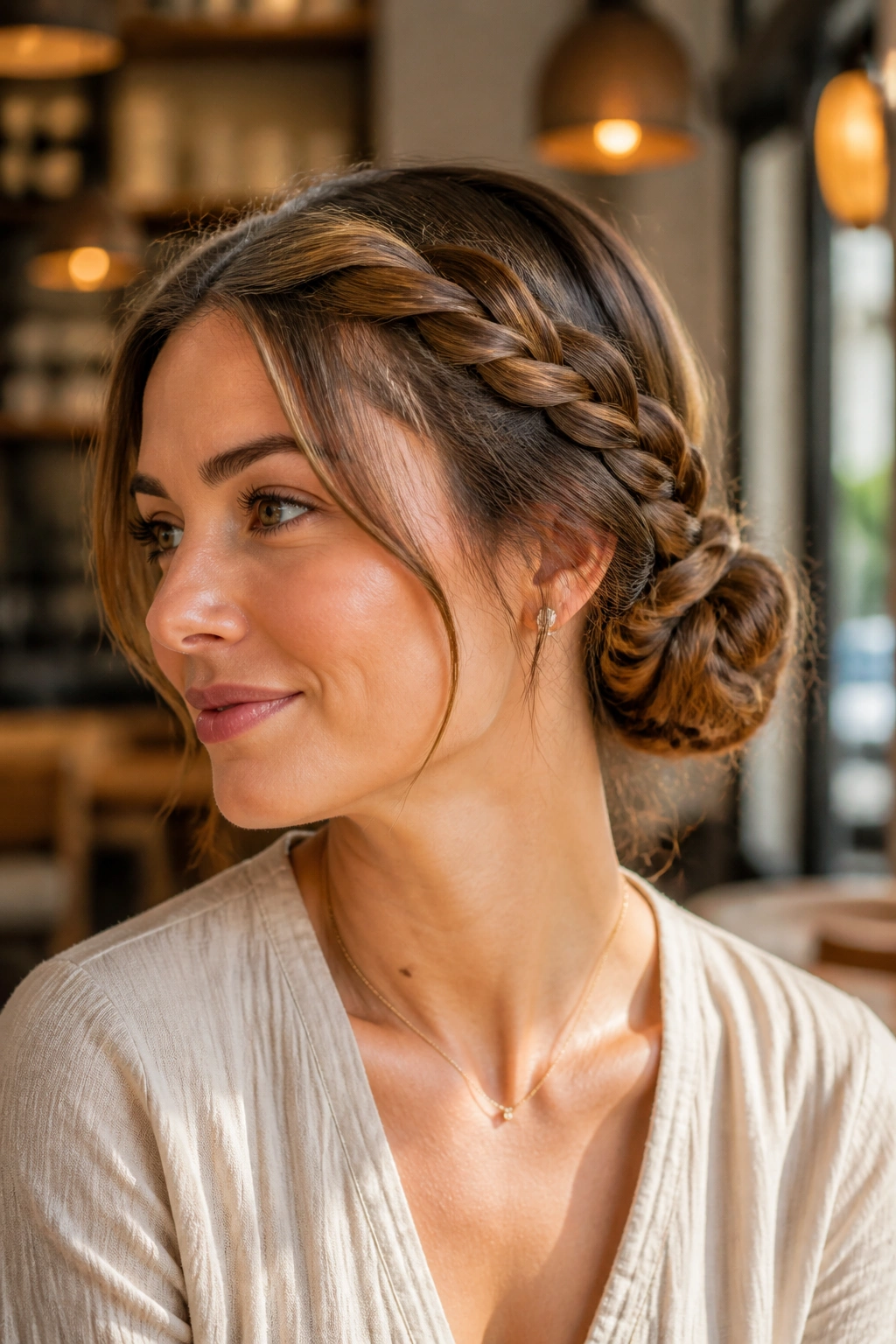
If the day asks for a little more polish, a braided low bun gets there fast. It keeps long hair tucked away, but the braid gives the bun a bit of texture so it does not look like a plain coil slapped onto the neck.
Start with a low ponytail, braid the length, then wrap the braid around the base and pin it in place. Keep the braid snug but not tiny; a slightly thicker braid gives the bun more shape and keeps it from looking thin on long hair. If your hair is very thick, split the braid into two loose coils and pin them side by side. Less bulk that way.
This bun has a useful trick up its sleeve. It tends to stay flatter than a regular bun because the braid distributes the hair more evenly. That makes it comfortable under coats, scarves, and high collars.
A few shorter pieces around the hairline make it feel softer. A strict bun can look a bit severe. A braided bun with one or two loose wisps feels friendlier and easier to wear on an ordinary day.
13. Hair Scarf Tie-Back
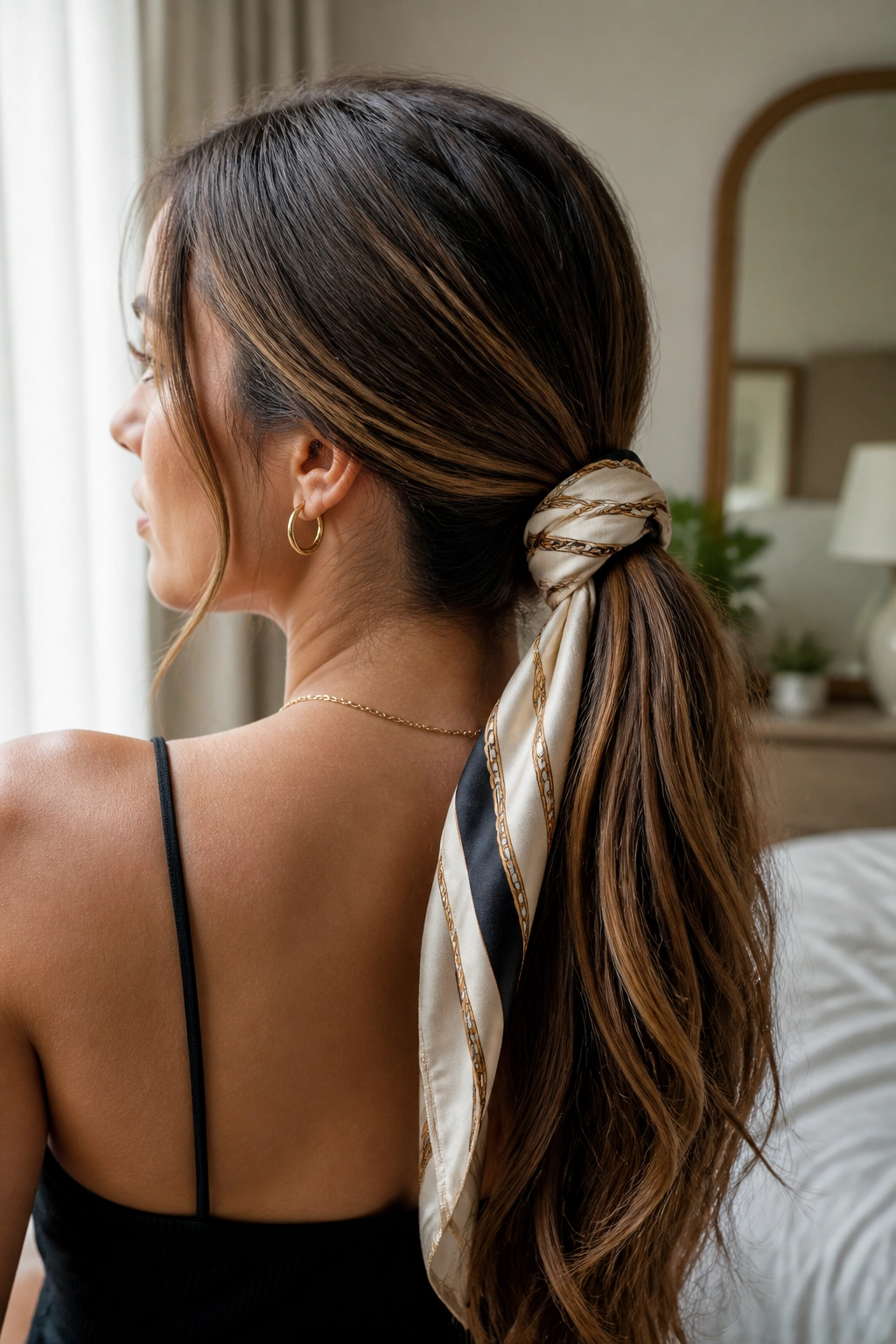
A scarf does more than decorate the hair. It can hide oily roots, calm flyaways, and make a basic style look like you thought about it for longer than you did.
Fold a silk or cotton scarf into a strip about 2 to 3 inches wide, then tie it around a low ponytail, over a loose down style, or around the crown for a headband effect. Silk sits smoother and glides better, while cotton gives a more casual feel and holds a little more friction. If your hair is fine and slippery, the rougher fabric helps the knot stay in place.
What the Scarf Actually Does
It gives the eye something else to focus on besides the roots. That is handy on days when hair is not fresh but you do not want to pile it up. It also protects the hairline a bit from wind and keeps shorter front pieces from escaping.
I like scarf styles most with loose waves or a low ponytail. They feel easy, not costume-like. Choose a print that is simple enough to wear with your usual clothes, and the style suddenly becomes a regular option instead of a special one.
A scarf also saves a very plain ponytail from looking forgotten.
14. Rope-Braid Ponytail
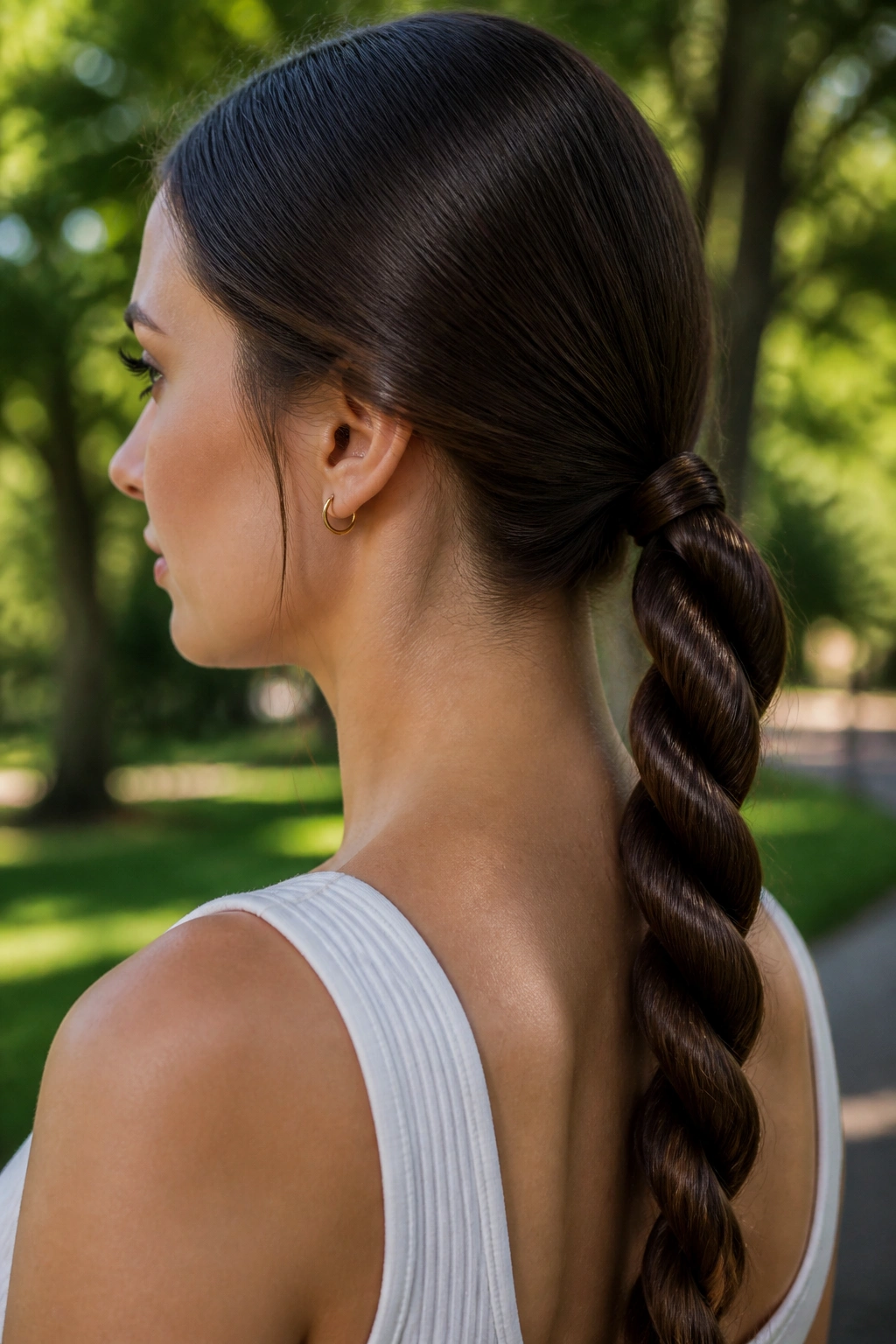
Unlike a three-strand braid, a rope braid twists faster and looks clean even when each section is not perfect. That makes it a smart everyday option for long hair that you want controlled without spending forever on it.
Pull the hair into a low or mid ponytail, divide it into two equal sections, then twist each section in the same direction. After that, twist the two pieces around each other in the opposite direction. The braid locks into place naturally if the twists are even. If one side gets tighter than the other, the whole thing starts to spin, so keep your hands steady.
This style works especially well on fine hair because the twist gives it a little more visual thickness. It also holds a low-profile shape under jackets and doesn’t get frizzy as fast as a softer braid can.
Best tip: mist a little water or leave-in spray on the sections before twisting if your hair is dry and staticky. The rope braid will look smoother and feel less crunchy.
It is a small thing. It matters.
15. Two Micro Braids
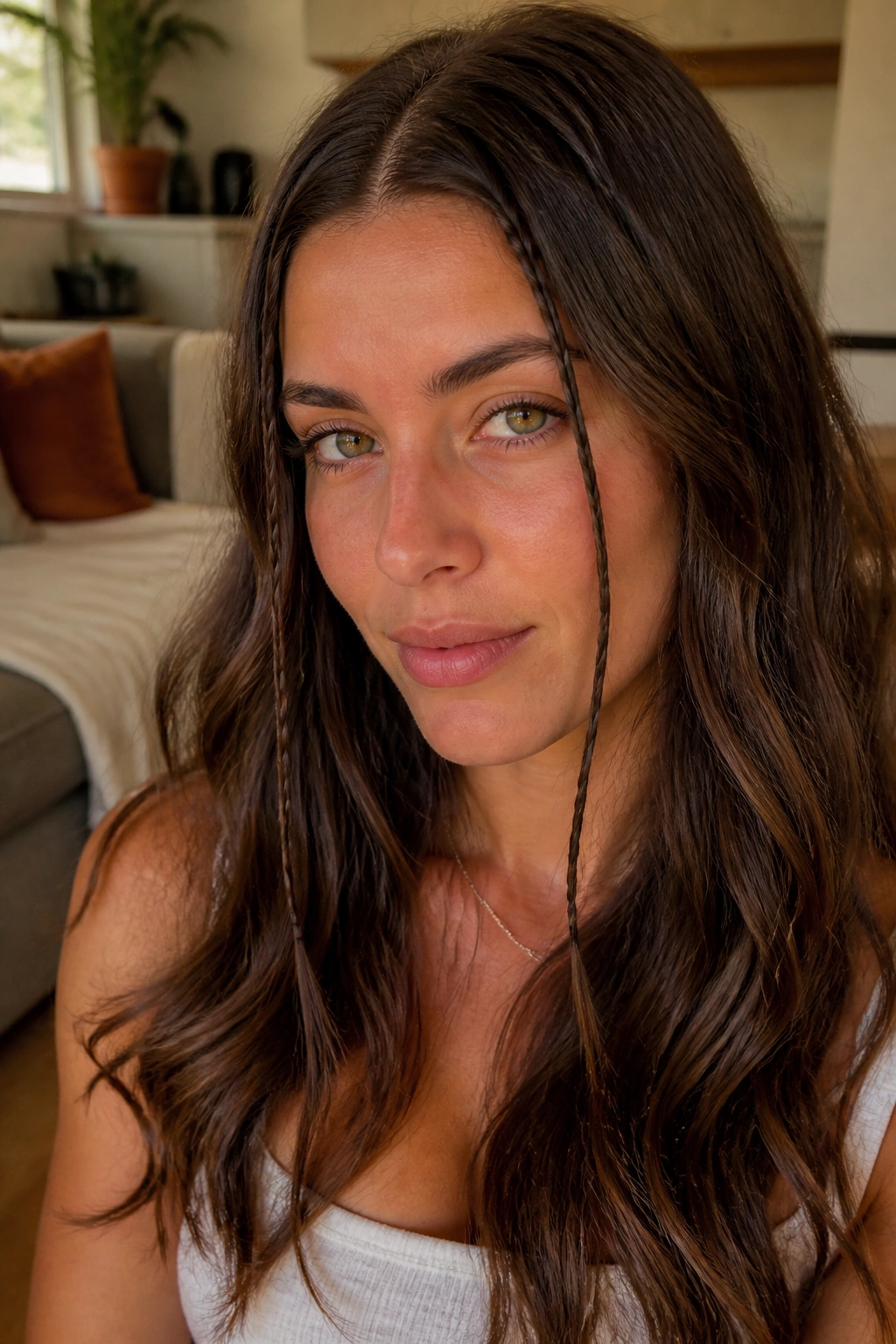
Two tiny braids near the face can change the whole mood of long hair. They keep strands out of your eyes, add texture without taking over the style, and work whether the rest of the hair is straight, waved, or a little messy.
Take a narrow section on each side of the face — about the width of a finger or two — and braid each one down a few inches. Leave them hanging, tuck them behind the ears, or pin them back into the rest of the hair. A tiny elastic or a clear band finishes the ends without adding weight.
This style is especially handy for people who like wearing their hair down but hate constant brushing. The braids act like little anchors. They also work well with grown-out bangs, which can be awkward on their own. A micro braid gives them somewhere to go.
- Keep the braids loose near the hairline
- Use a comb if you want the sections symmetrical
- Pair with loose lengths or soft waves
- Skip heavy gel unless you want a sharper finish
It is a small detail, but small details are what make everyday hair feel styled instead of random.
16. Wrapped-Base Low Ponytail
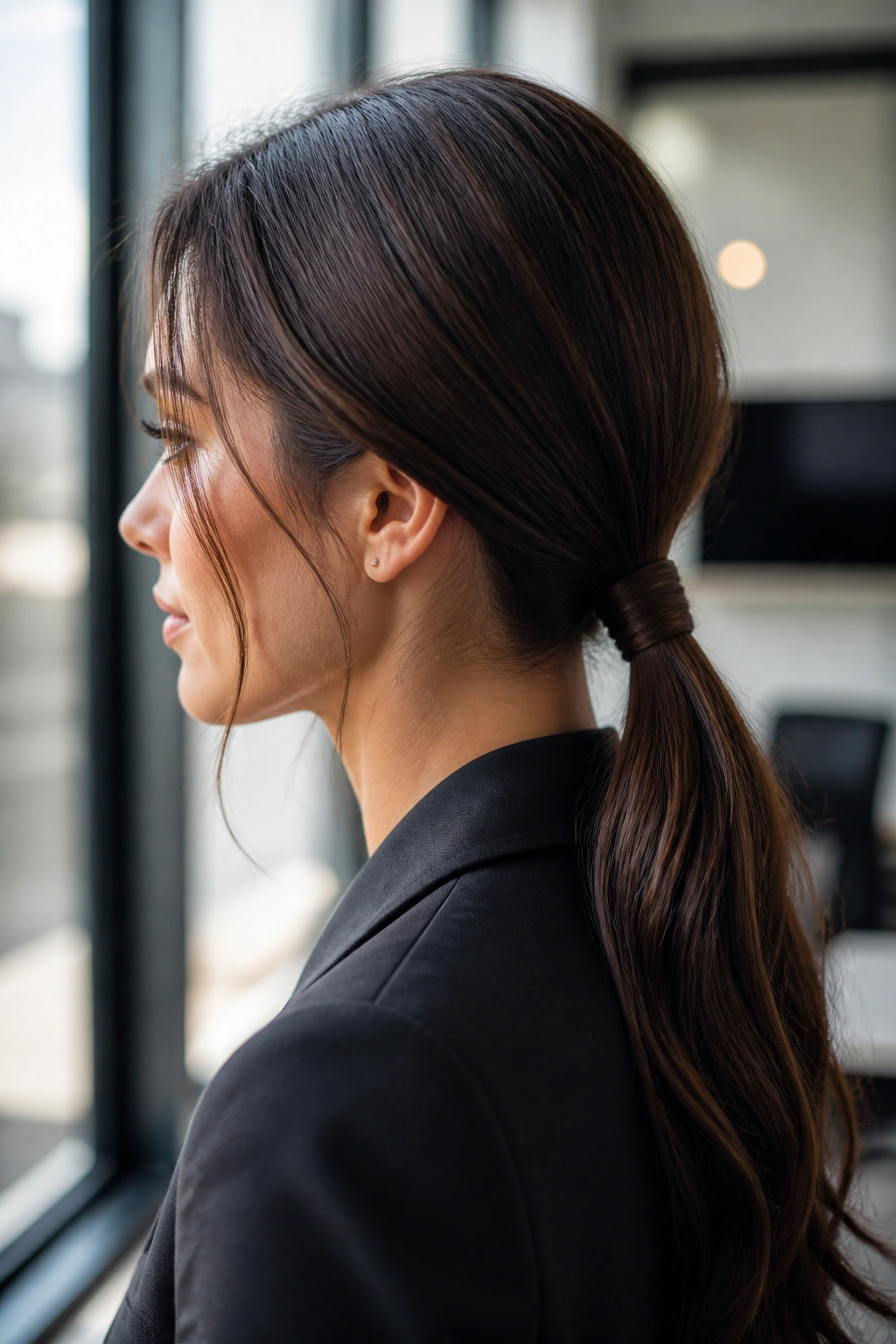
The wrapped base is the fastest way to make a basic ponytail look finished. It takes one extra strand of hair and about thirty seconds, but the payoff is real because the elastic disappears.
Start with a low ponytail and secure it tight enough that it won’t slide. Then take a 1-inch strand from underneath, wrap it around the elastic until the band is hidden, and pin the strand underneath the ponytail. If your hair is thick, you may need a second pin. If it is fine, one pin usually does the job.
Why It Works So Well
A visible elastic can make even nice hair look rushed. Covering it changes the whole line of the style. The eye reads the ponytail as cleaner and more deliberate, even though the shape itself is almost the same.
This version is a smart choice for interviews, quick dinners, or any day when you want long hair out of the way but do not want the style to feel too casual. It also looks good when the ends are straightened, because the smooth finish carries through to the wrapped base.
A small curl at the ends gives it a softer finish. Straight ends feel sharper. Pick the mood you want.
17. Air-Dried Scrunched Waves
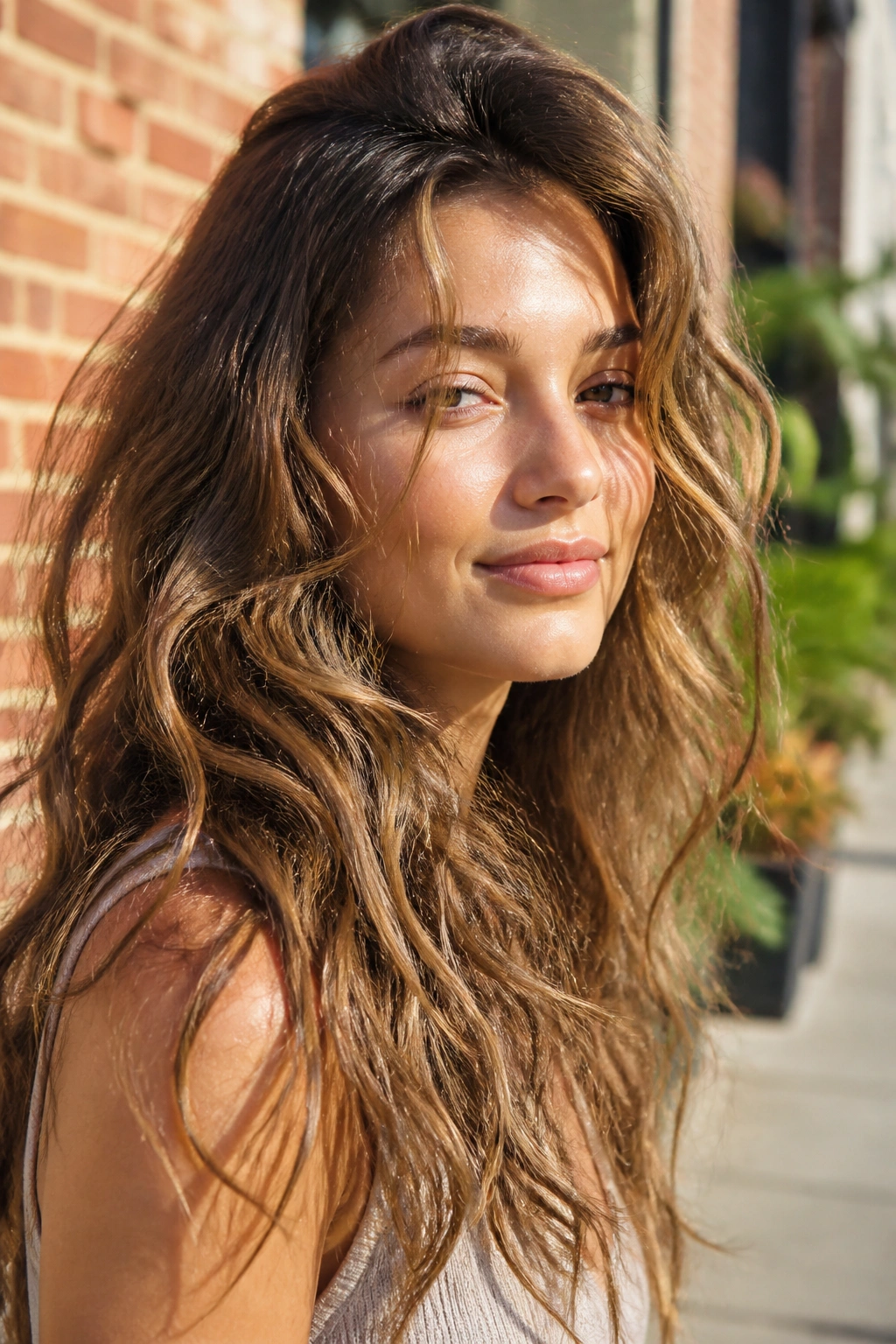
Wet hair that dries into soft bends has a different feel — lighter, less staged, and usually easier to wear than a heat-made curl pattern that tries too hard. That is why air-dried waves keep showing up in everyday hair routines.
Work mousse or curl cream through damp hair, then scrunch the lengths upward with a cotton T-shirt or microfiber towel. Avoid rubbing. Rubbing roughs up the cuticle and leaves the surface puffier than you want. Let the hair air dry as much as possible before touching it again. If you have to speed things up, use a diffuser on low heat and low speed.
When the hair is dry, break any hard cast from styling product with a small dab of serum on the ends. Not the roots. The ends. That keeps the waves soft instead of crunchy.
This style is great because it does not need exact sectioning or perfect heat technique. The bends can be uneven and still look good. In fact, uneven is usually the point. Long hair with natural movement often looks better when it keeps a little of its own shape.
Some days, the simplest wave wins.
18. Dutch Braid Into a Ponytail
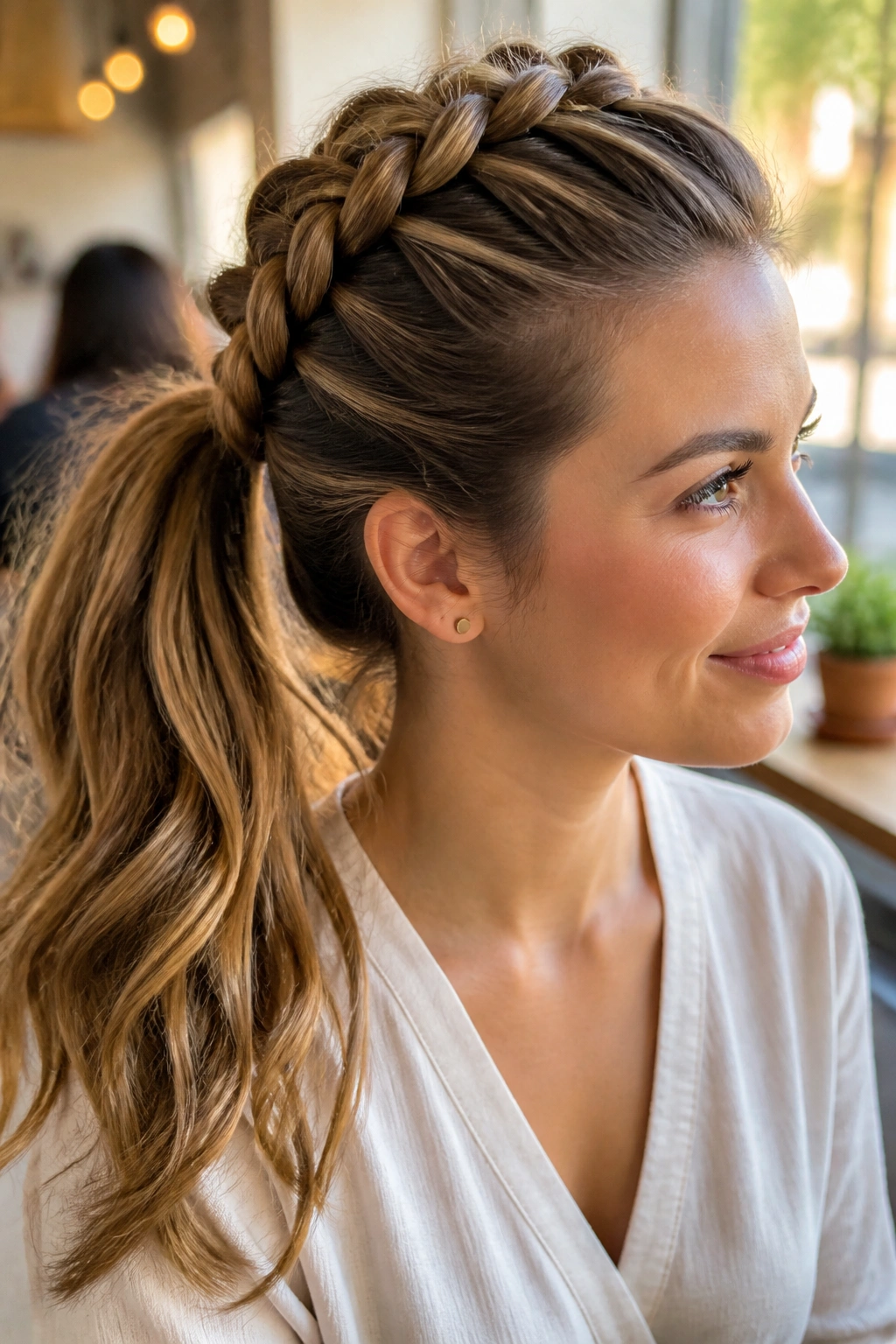
Want braid control without committing to a full plait? A Dutch braid into a ponytail gives you both. The braid keeps the front and crown secure, and the ponytail lets the rest of the hair stay loose.
Start at the hairline, braid under instead of over so the braid sits raised, and continue until you reach the crown or the back of the head. Tie the remaining hair into a ponytail from that point. If your hair is thick, the braid can be the star and the ponytail can stay simple. If your hair is fine, the braid adds body where it matters most.
This style holds well on active days because the braid anchors the front sections. It also keeps long hair from dragging around the face while still leaving plenty of length visible. That balance is useful if you like to wear your hair down but need more control in the front.
A little dry shampoo at the roots can make the braid look fuller, especially if your hair is freshly washed. The braid does not need to be huge. It just needs to be solid enough to carry the rest.
19. Half-Up Claw Clip
Fast. Reliable. Slightly messy. That is the charm of a half-up claw clip on long hair.
Take the top half of your hair, gather it loosely at the back of the crown, twist once, and clip it in place. Leave the lower half down so the length still shows. This is the style that rescues grow-out bangs, awkward layers, and the kind of hair that feels too heavy when it is completely down.
A medium or large clip works best here. If the clip is too small, the top section spills out. If it is too huge, the style starts sitting awkwardly on the head. You want the teeth of the clip to catch the twist, not crush it.
A few face-framing pieces make the style feel softer. So does letting the ends fan out instead of tucking every strand away. People often try to make the half-up clip neat. I think that misses the point. The loose edges are what make it feel casual enough for every day.
This one is hard to beat when you need your hair up and still want some length on show.
20. Loose Top Knot With Ends Out
The best top knot for long hair is never the one that tries too hard. If it sits high, feels slightly undone, and lets the ends peek out a little, it looks relaxed in the good way rather than messy in the forgot-my-hair-tie way.
Gather the hair high or just above the crown, twist it once, and wrap it into a loose knot. Do not force every inch of the tail under the base. Let the last few inches spill out if they want to. A scrunchie gives the knot a softer hold than a tight elastic, and a couple of pins underneath keep it from sliding.
This style works when the hair is flat, frizzy, or somewhere in between. It also handles day-three texture better than most updos, because a little grit helps the knot hold shape. If the crown feels too bare, tug it up a touch with your fingertips. Not much. Just enough to avoid the helmet look.
The whole point is ease. A top knot like this should feel like a practical habit, not a special event. Put it up, leave a little mess in it, and get on with your day.
