



Long hair looks easy until it starts acting like a curtain. It hangs there. It swallows the face, drops the shape, and turns even good hair into something flat and heavy by lunchtime.
That’s why Korean hairstyles for long hair have such staying power. They don’t fight length. They redirect it. Soft bangs, face-framing layers, low knots, ribbon ties, airy bends — the whole point is to keep the hair moving without making it fussy.
There’s a reason these styles travel so well from salon chair to real life. They can look polished at work, relaxed at brunch, and neat enough for dinner without needing a full reset. The tricks are usually small: a bend at the cheekbone, a bit of crown lift, a cleaner part, a softer edge at the ends.
Heavy hair needs shape.
1. Soft See-Through Bangs With Long Layers
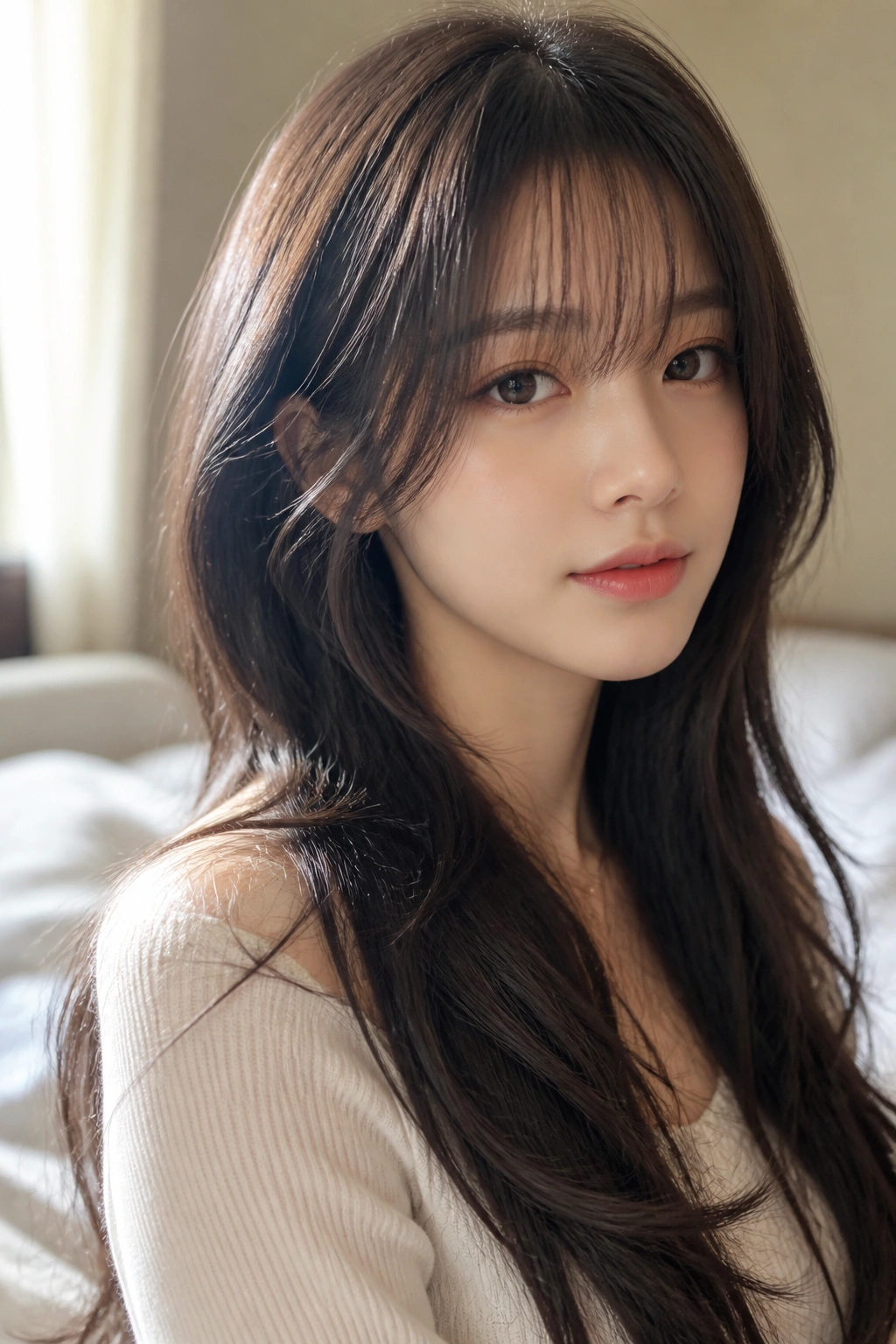
The soft fringe is the whole trick here. See-through bangs thin out the forehead area just enough to make long hair feel lighter, while the layers below keep the length from hanging like one solid sheet.
What I like about this look is that it doesn’t need to be loud to work. A little forehead showing through the fringe changes the whole balance of the face. Add long, blended layers that start around the cheekbone or collarbone, and suddenly the hair has movement instead of weight. That’s a big part of why this style shows up so often in Korean hairstyles for long hair.
Keep the bang section narrow and airy, not thick and blunt. Blow-dry it downward with a small round brush, then give the ends the tiniest inward curve. The layers should fall softly, not flick out hard at the ends. If the cut is too chunky, the whole style loses that delicate feel.
A light root spray helps here, but only at the front. Too much product makes the fringe separate into strings, and that’s a fast way to ruin the softness.
2. Glassy Center-Part Straight Hair
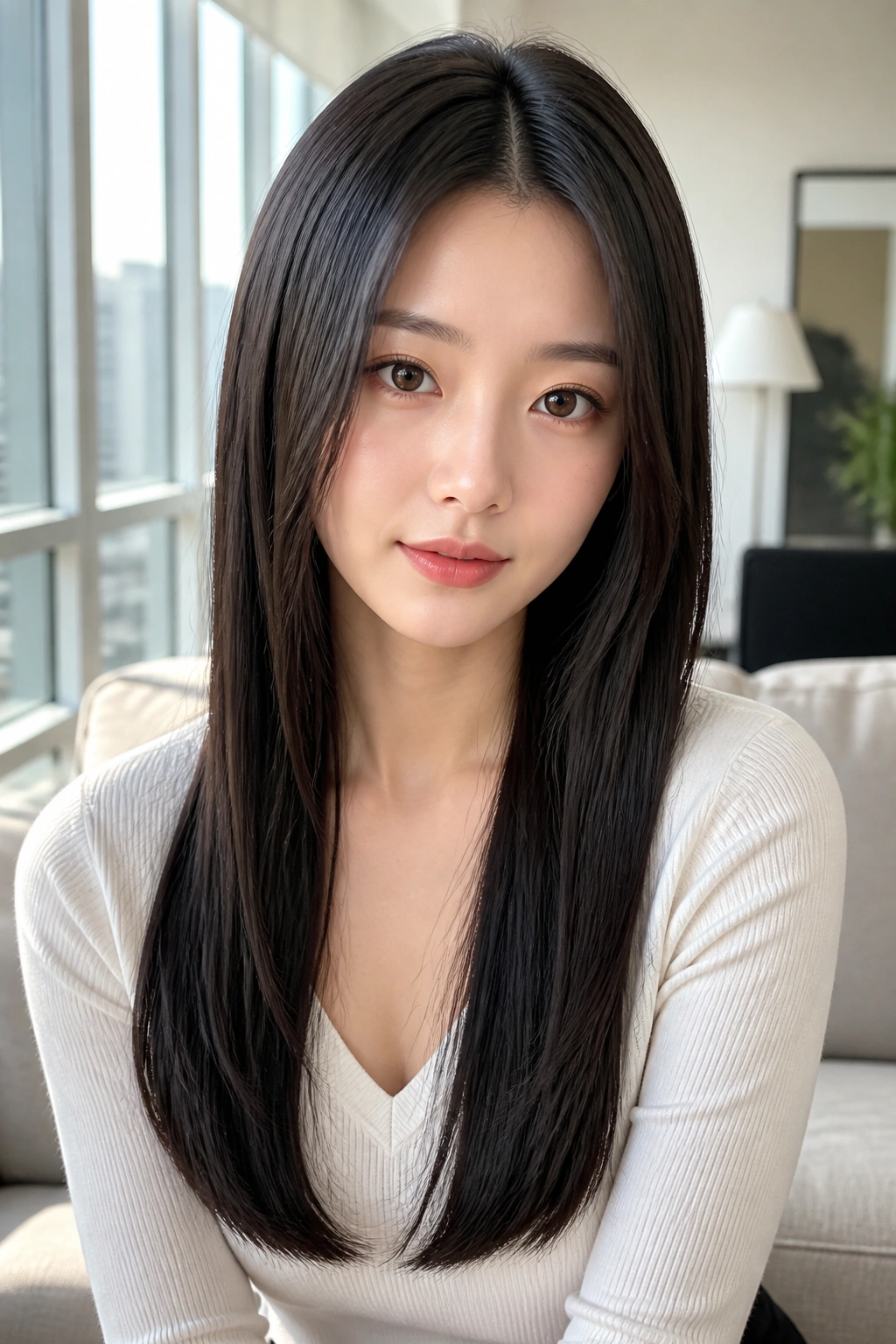
Why does this look work so well on long hair? Because it makes the length look intentional instead of accidental. A dead-straight finish with a center part turns long hair into a clean line, and that line does a lot of the work.
The key is shine, but not greasy shine. You want the hair to look smooth from roots to mid-lengths, then keep the ends soft enough that they don’t look stiff. A 1-inch or 1¼-inch flat iron is usually enough if the hair is already fairly straight. If it’s wavy or thick, take smaller sections and move slowly once instead of going over the same strip three times.
How to keep it flat without frying it
Use a heat protectant with a light finish, then dry the hair fully before ironing. Damp hair and high heat do not mix well.
- Smooth a pea-size amount of anti-frizz cream through the mids and ends.
- Use a fine-tooth comb to keep the center part clean.
- Set the flat iron to a low-to-medium heat that still smooths in one pass.
- Finish with a drop of serum on the ends only.
This style is best for people who like structure. It’s also one of the easiest Korean long-hair looks to wear with sharp collars, knit tops, and simple earrings.
3. Face-Framing C-Curl Layers
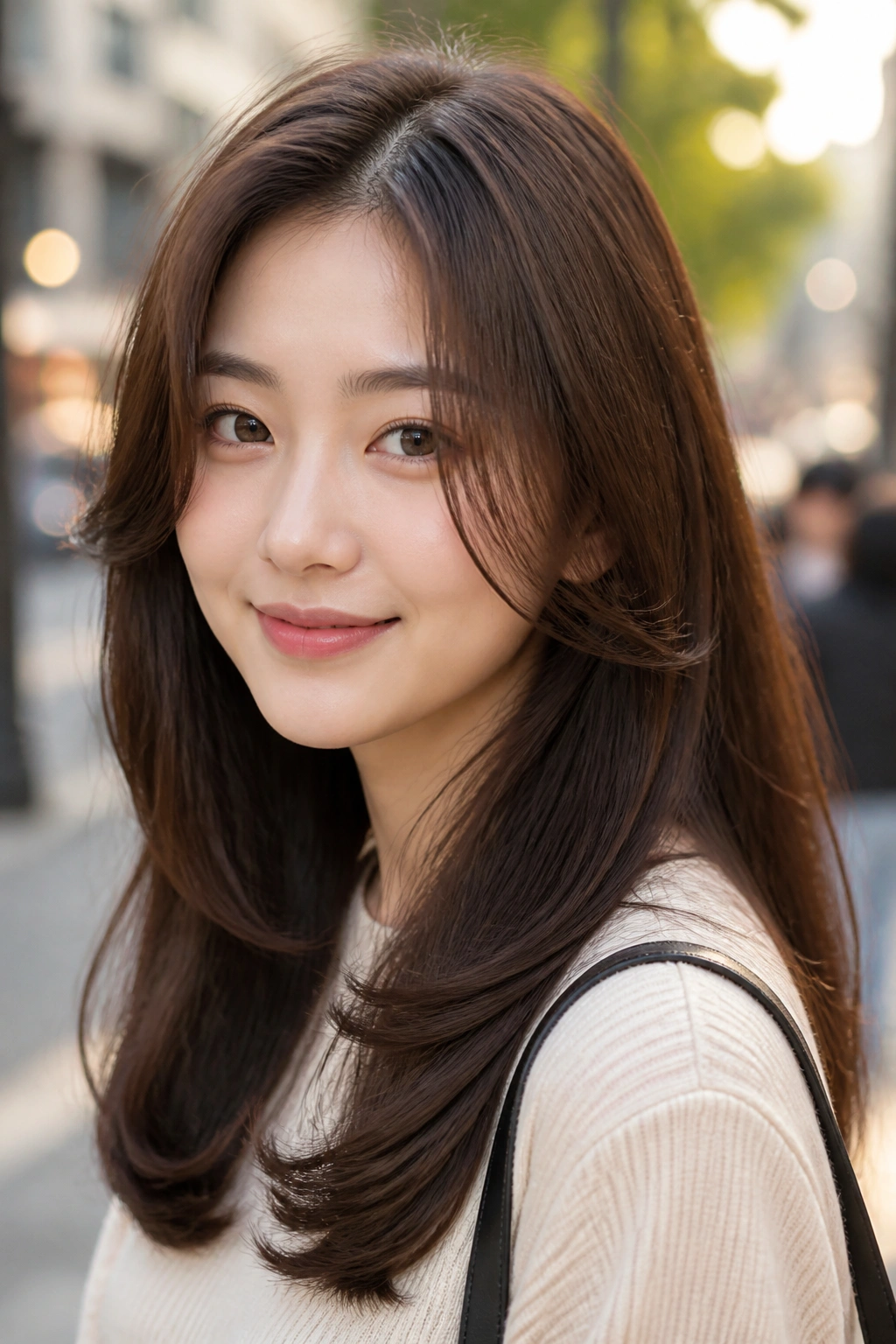
If your hair flips out in weird places the second you walk outside, this cut-and-style combo solves a lot of that. C-curl layers bend the hair inward at the ends, which keeps long lengths from looking harsh or bottom-heavy.
The shape matters more than the curl size. You are not trying to build ringlets. You’re making a soft inward arc around the face and at the lower edge of the hair. That little bend is what gives long hair that gentle, salon-shaped finish people associate with Korean styling.
A medium round brush and a blow dryer are enough if your hair already has some give. Wrap the front pieces toward the face, then pull the ends inward just a little at the bottom. If you use a curling iron, keep it around 1 to 1¼ inches and hold the iron vertically so the bend stays soft instead of becoming bouncy and old-fashioned.
This one is especially good for long hair that falls flat at the top but puffs at the bottom. The inward C shape trims that visual bulk right away.
4. Half-Up Ribbon Bow
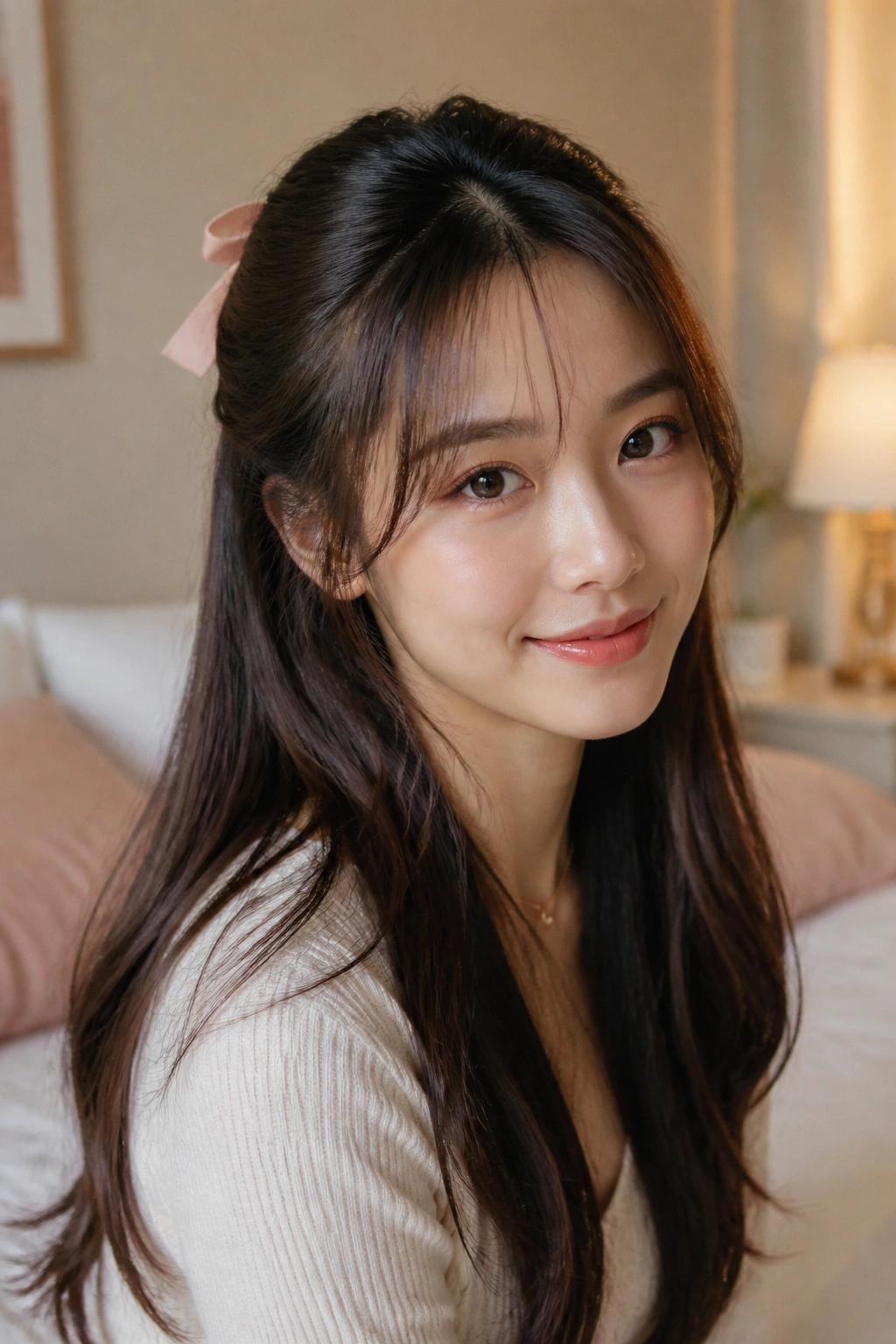
A ribbon changes the mood in five seconds. Half-up ribbon bows are one of those Korean hairstyles for long hair that look dressed up even when the rest of the styling is minimal.
The trick is placement. Pull the top half of the hair back from the temples, not too high, and leave the bottom section loose. That keeps the face open while still letting the length do its thing. Tie the section with a slim satin ribbon if you want a softer look, or use grosgrain if you want a little structure. Velvet reads richer and more wintery; satin looks smoother and cleaner.
Best ribbon choices
- Satin: soft, shiny, and easy for everyday wear.
- Grosgrain: matte and a bit more secure in the knot.
- Velvet: fuller-looking and best when you want the bow itself to stand out.
- Narrow silk ribbon: delicate, especially with see-through bangs.
A good bow should sit just above the occipital bone, not at the crown like a toddler’s topknot. That’s the difference between sweet and clumsy.
5. Low Ponytail With Soft Tendrils
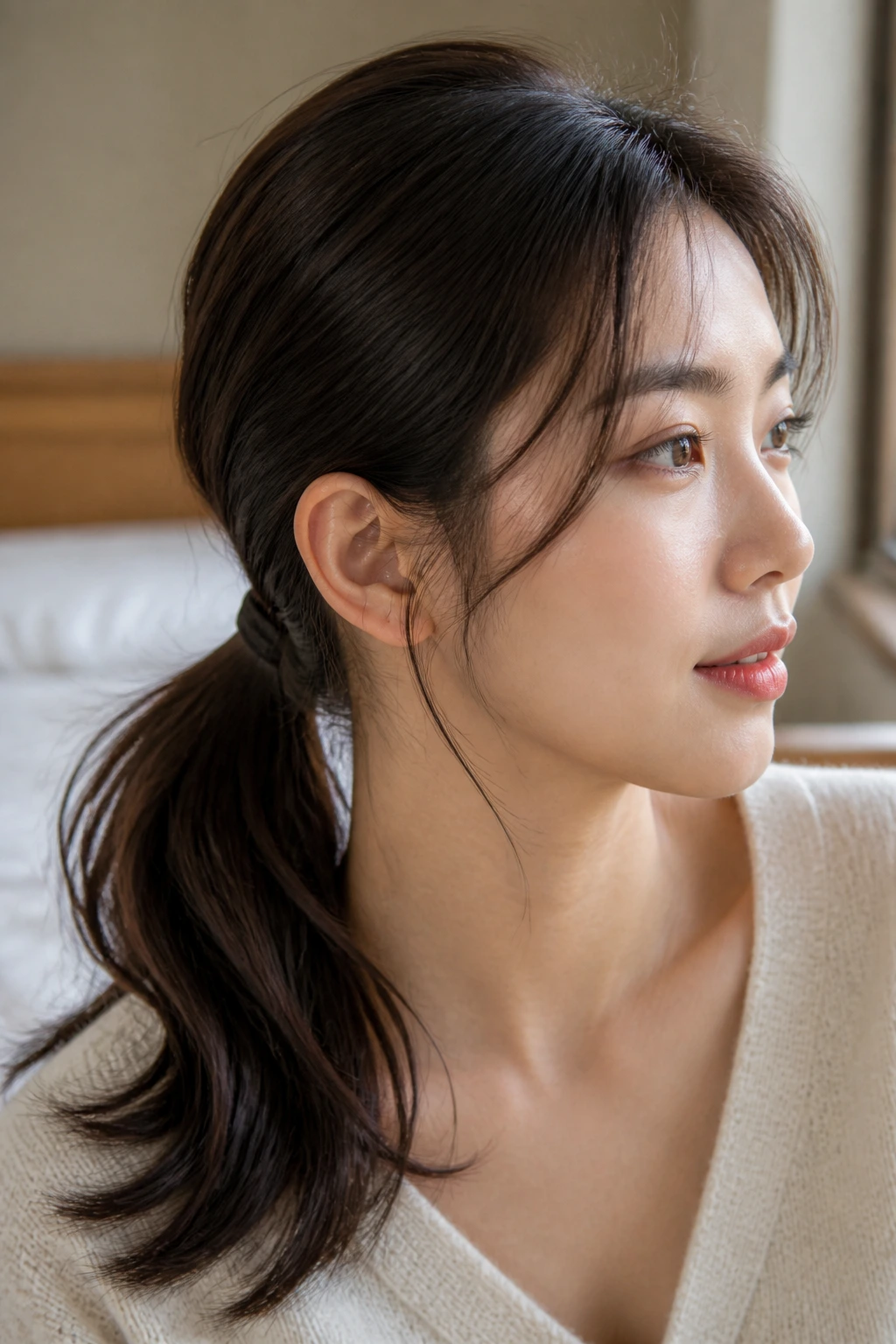
A low ponytail gets boring only when you pull everything back too tightly. Leave out a couple of thin tendrils at the temples and the whole style changes. It goes from practical to polished without asking for much.
This is one of my favorite everyday Korean hairstyles for long hair because it works with almost any texture. Straight hair looks clean. Slight waves look romantic. Even hair that’s due for washing can behave if you smooth the top with a brush and keep the ponytail low at the nape.
Pull the ponytail tight enough to stay put, then wrap a small strand of hair around the elastic. That tiny detail matters more than people think. It hides the rubber band and makes the style feel finished. The tendrils around the face should be thin, not chunky. A narrow curling wand can give them a soft bend, but leave the ends loose so they don’t look overly styled.
No gym class energy.
6. Loose Air Perm Waves
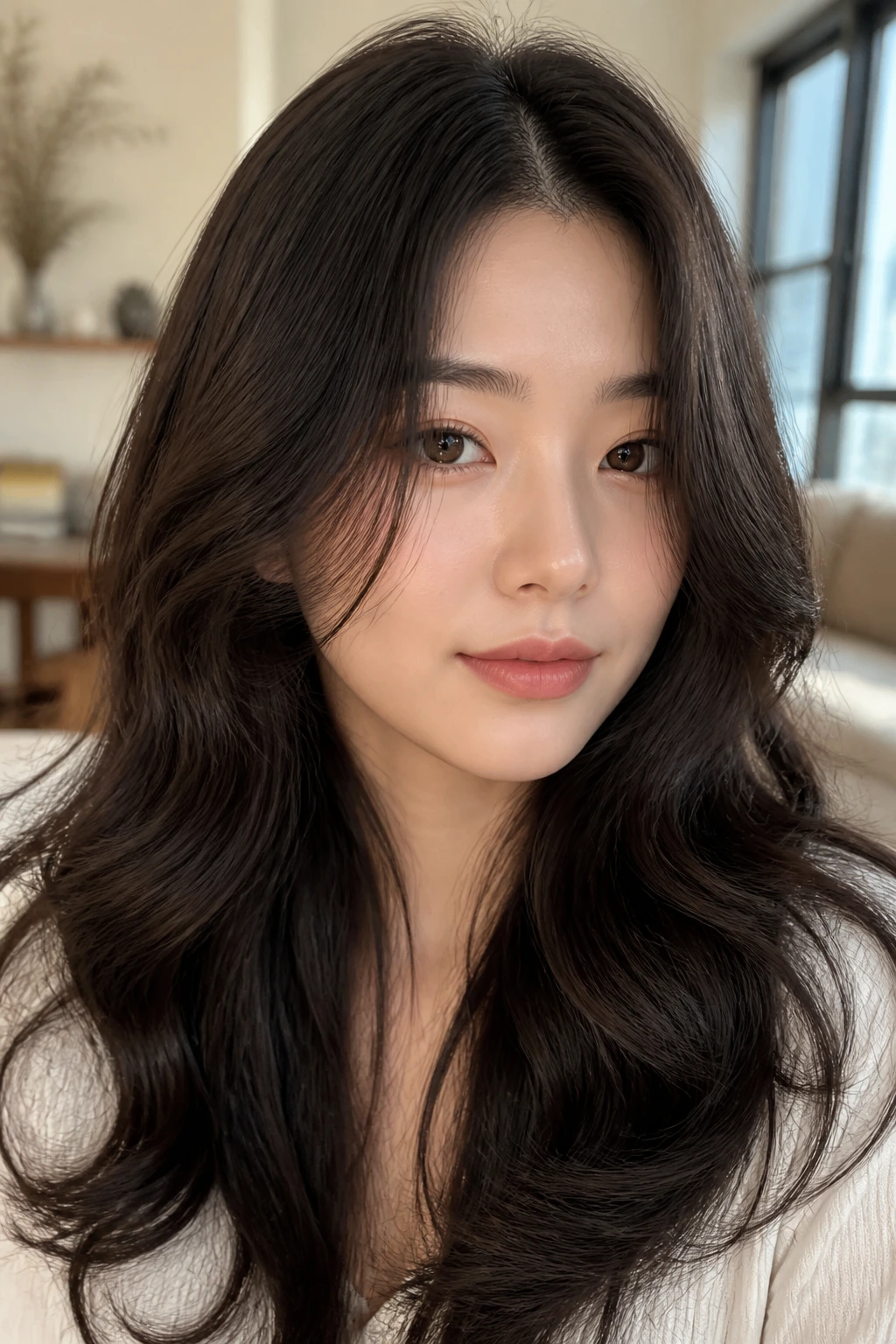
Airy waves are the opposite of stiff curls. They fall in soft bends that move when you turn your head, which is why this style reads so well on long hair. It feels casual, but not lazy. That balance is the whole point.
The look is built around loose, brushed-out wave patterns, usually with a middle or slightly off-center part. In salon language, you might hear people talk about air perms or soft S-waves. The curl pattern is relaxed enough that the hair doesn’t look overdone, even when there’s a lot of length to manage.
How to keep the wave from going puffy
The biggest mistake is brushing too soon. Let the waves cool first. Then run your fingers through them or use a wide brush once, not five times.
- Work a light mousse through damp hair before drying.
- Use a diffuser on low heat if your hair frizzes easily.
- Curl sections in alternating directions for a softer fall.
- Finish with a flexible spray, not a stiff helmet spray.
This style is best if you want movement but hate daily hot-tool work. It’s also forgiving when the hair grows out a bit, which is not true for every style on this list.
7. Hime Cut With Long Length
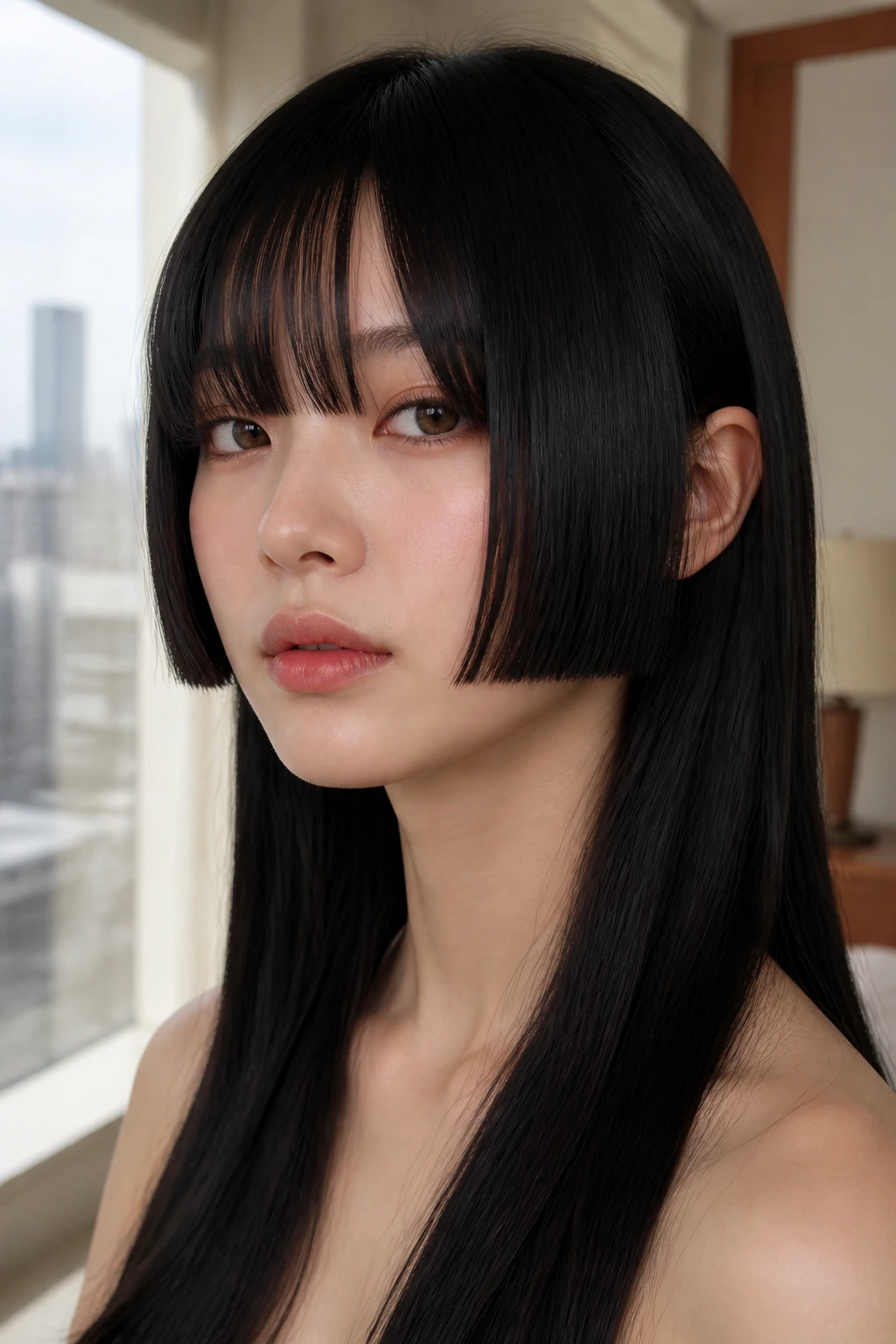
The hime cut looks dramatic only when it’s badly cut. A clean version is actually quite controlled: short, blunt side pieces at the cheek, often paired with long, straight lengths in back. On the right face, it looks sharp and almost architectural.
That contrast is what gives it punch. The front sections stop at a deliberate point, while the rest of the hair keeps flowing down the back. You get structure without giving up length, which makes it a strong choice for people who like a more styled look but don’t want to chop their hair off.
I’d call this one selective. It suits straight or mostly straight hair best, and it asks for regular trimming if you want the front pieces to stay crisp. If you like soft grow-out, this may annoy you. If you like clean edges, it’s a dream.
Wear it with sleek hair for a more polished finish, or with a slight bend through the lengths for a softer read. The cut does the talking either way.
8. Twin Braids With Loose Ends
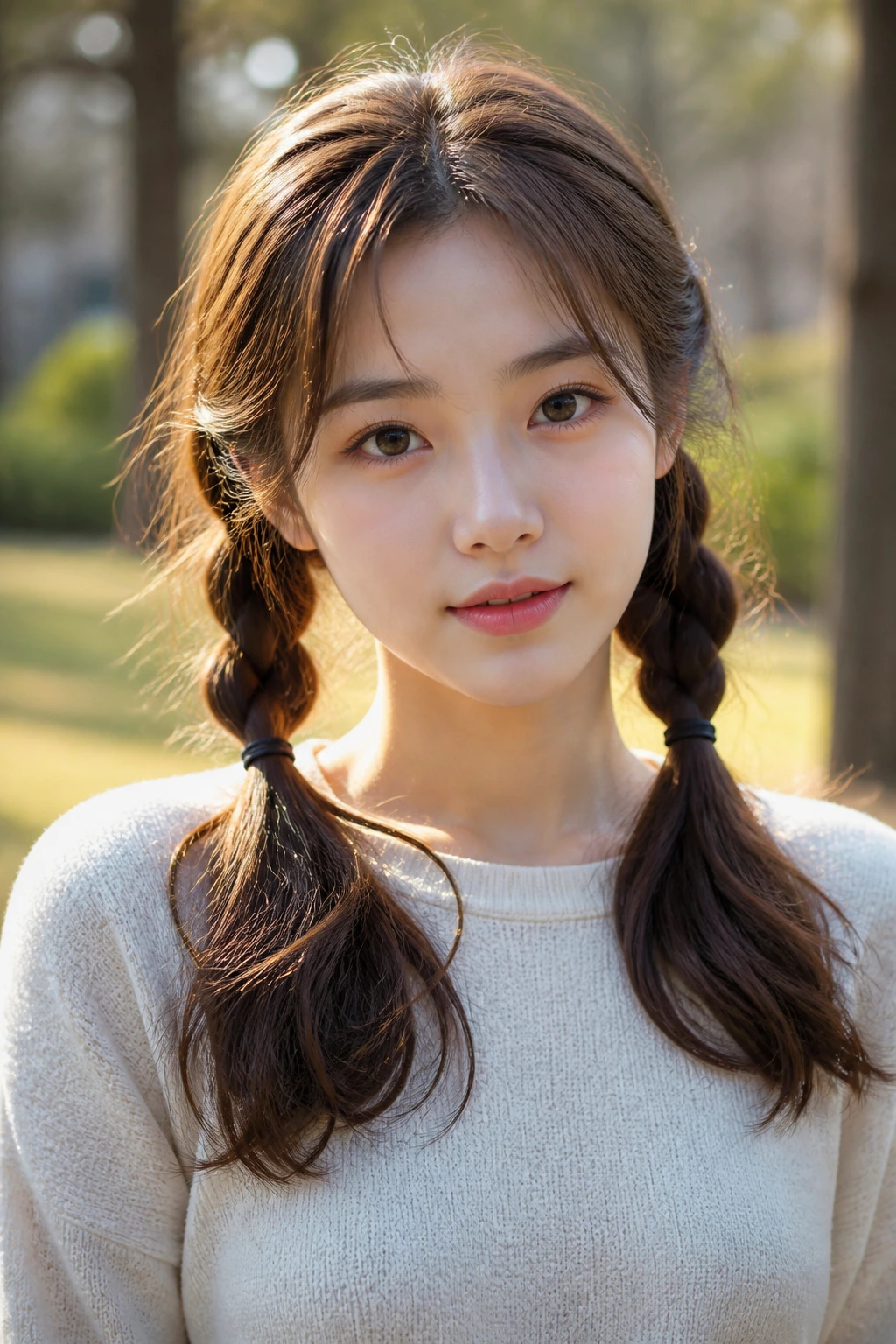
Twin braids are easy to dismiss until you try them on long hair and realize how much control they give you. The length stays out of the way, but the look still feels soft because the ends are left loose and the braids themselves can be gently loosened.
This is a good fit for travel days, errands, study sessions, or any time you want your hair secured without tying it into a severe knot. On long hair, the braids have enough weight to hang nicely. That matters. Tiny braids on long lengths can look fussy; fuller braids have a better shape.
What keeps them from looking too young
- Start the braids low, near the ears, not high on the scalp.
- Leave the last 6 to 8 inches unbraided.
- Pull the braid edges outward a little after tying.
- Use clear elastics or slim black bands, depending on the hair color.
If your hair is layered, the shorter face pieces may escape a bit. I think that’s part of the charm. Perfectly controlled braids can feel sterile. A few soft flyaways make this style feel lived in.
9. Crown-Volume High Ponytail
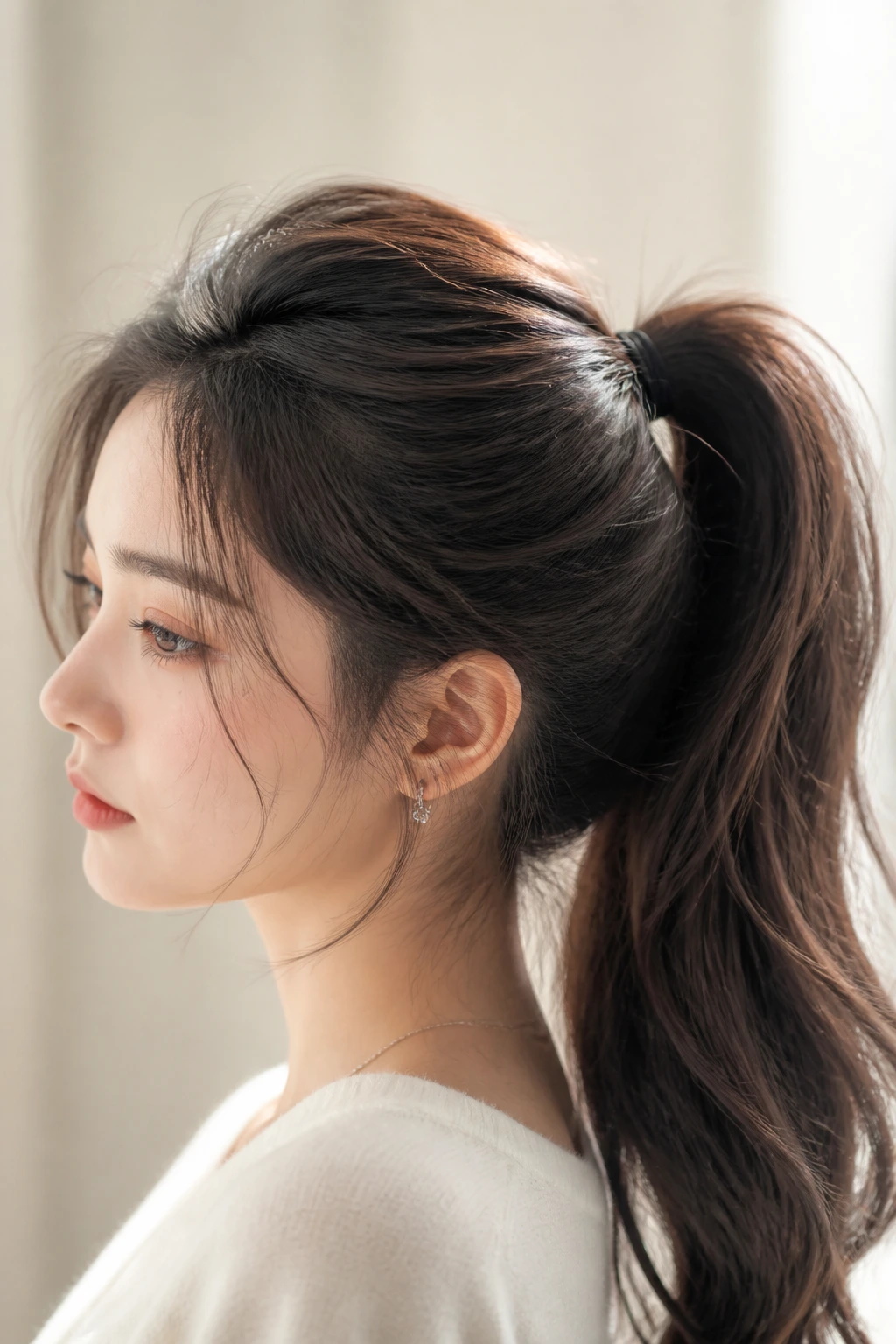
A high ponytail can look harsh on long hair if the crown is flat. Add lift at the top, though, and the whole face opens up. Crown volume is the real move here, not the ponytail itself.
Start by lightly lifting a two-inch section at the crown with a tail comb, then smooth the outer layer over it. The ponytail should sit high but not so high that it pulls at the hairline. That balance is what keeps the style looking chic instead of strained.
This is one of those looks where the head shape matters, but not in a fussy way. If you have long hair and a narrow face, the height helps. If you have a rounder face, the crown lift adds length. If the hair is very thick, secure the ponytail with two elastics stacked together so it doesn’t slide down by noon.
A quick mist of spray at the roots is enough. You do not need to glue the front of your head down.
10. Low Chignon With Wispy Pieces
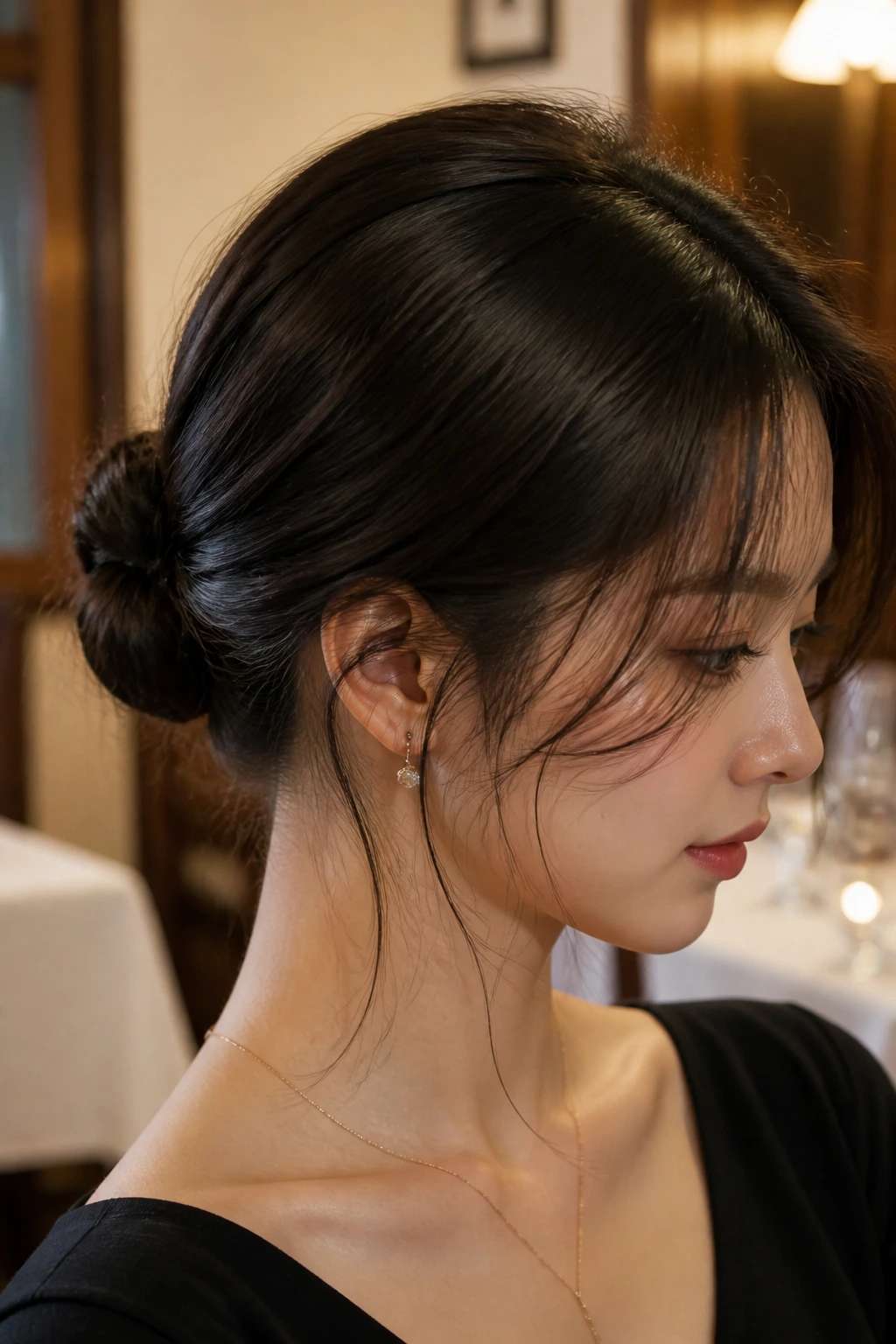
A low chignon can look severe if you smooth every strand into submission. Leave a few wispy pieces around the face, though, and the whole thing softens fast. That’s the version I reach for when long hair needs to look tidy without feeling stern.
Twist the hair at the nape, coil it into a small bun, and pin it so the bun sits close to the head. The shape should feel compact but not tiny. Long hair has enough bulk that a chignon can be a little fuller than people expect, and that’s a good thing. Too small, and it looks pinched.
The wisps are not an accident. They should be intentional and thin, with just enough bend to frame the cheekbones. A little serum on the palms before smoothing the top section helps keep the finish neat while the loose front pieces stay soft.
This style works for dinners, interviews, weddings, and those days when you want your hair out of the way but still presentable.
11. Claw-Clip Twist
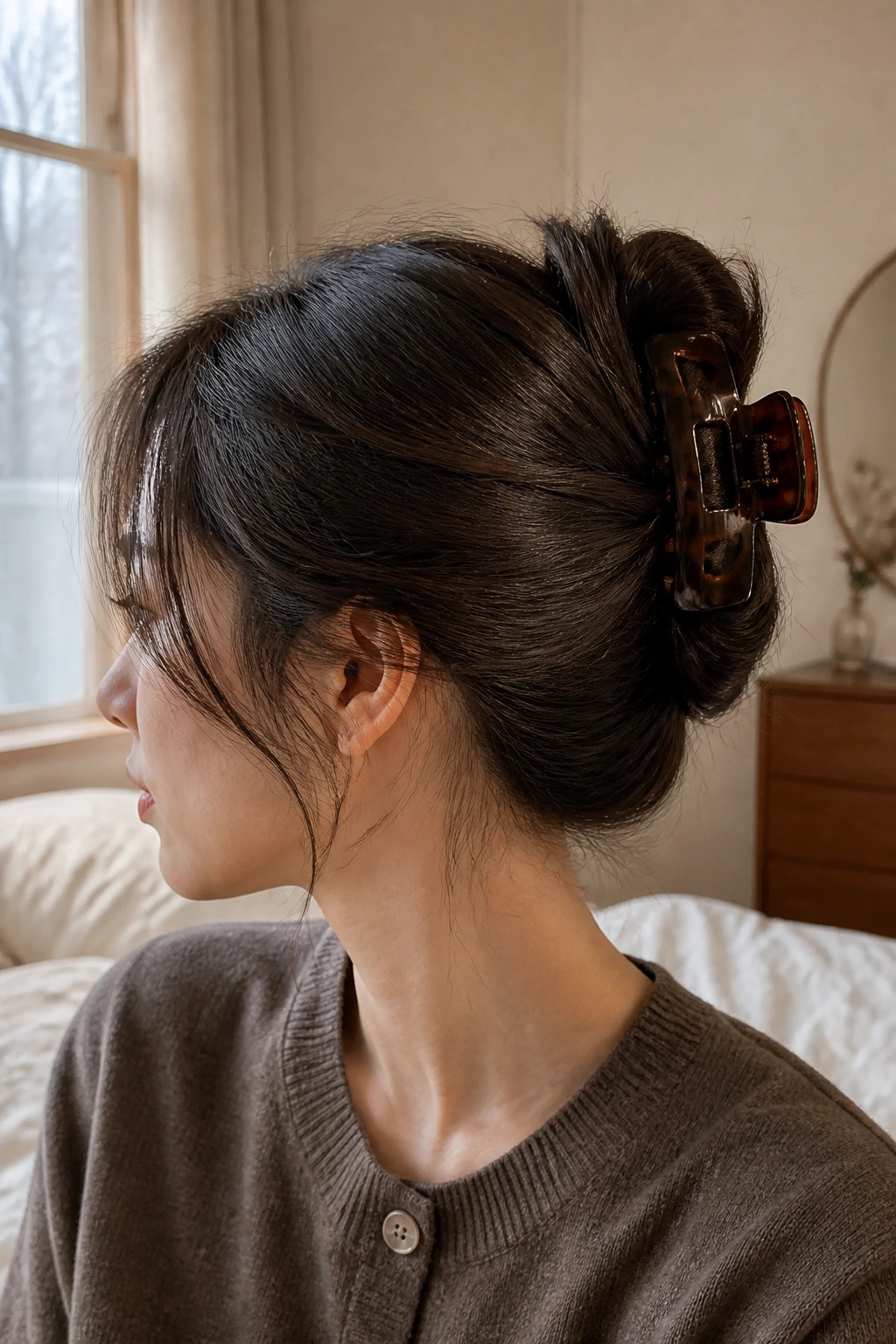
The claw-clip twist is the laziest-looking style on the list in the best possible way. It takes about thirty seconds, but when the hair is long and thick, it can look surprisingly chic if the clip is the right size.
Unlike a full bun, this style leaves the ends tucked in a loose fold rather than wrapped into a tight knot. That keeps some volume at the back of the head, which is useful on long hair because it avoids that compressed, flattened look a bun can create.
A medium clip will not hold heavy hair for long. Use a clip with a grip length of at least 4 inches if your hair is dense or reaches past the chest. Twist the hair upward once, tuck the ends, and clip it at the center of the twist so it bites into both the top and bottom layers.
Best part? It looks better slightly imperfect. A few loose ends and a soft crown lift make it feel relaxed, not sloppy.
12. Side-Swept S-Wave
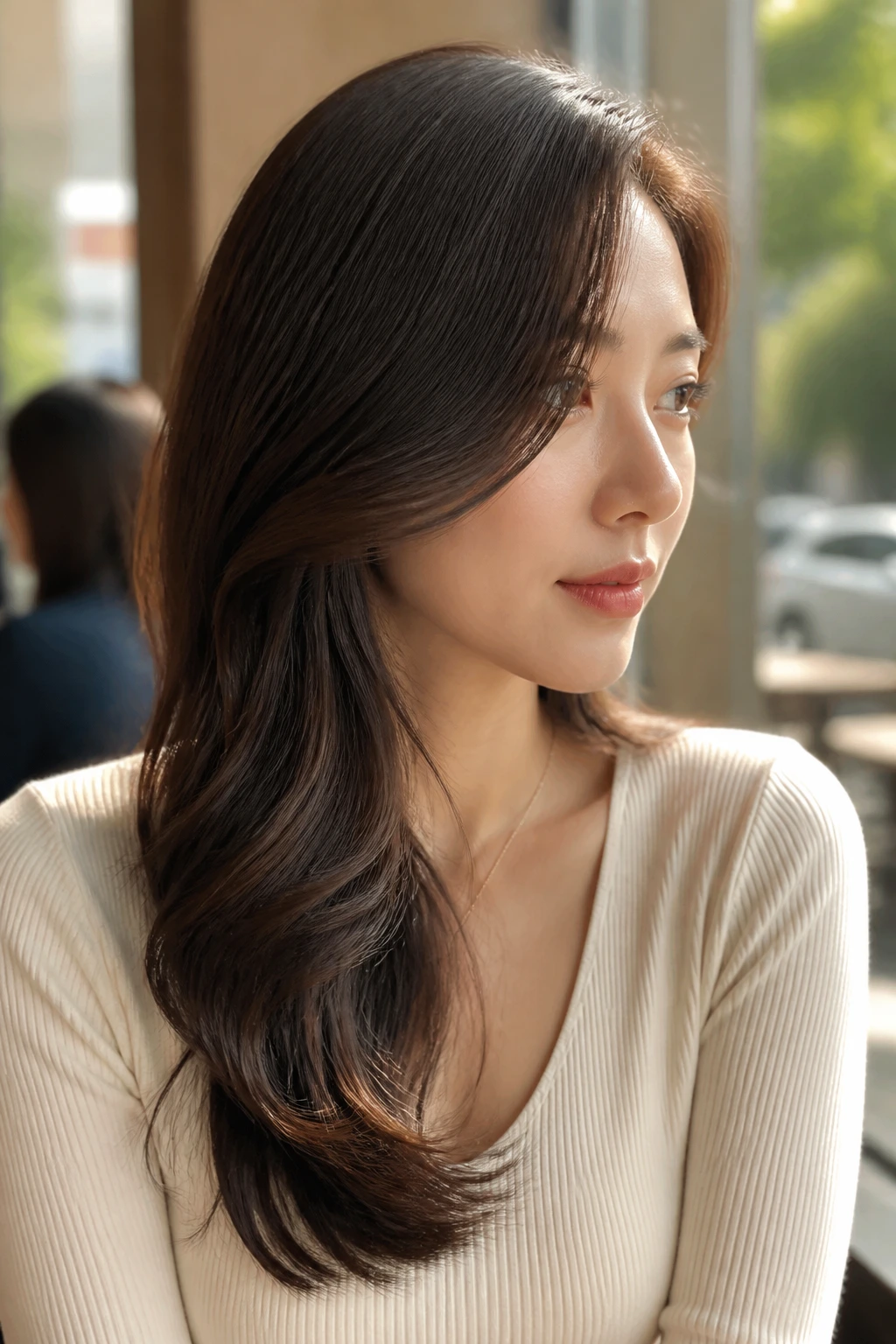
What if you want wave without a full head of curls? A side-swept S-wave gives you that middle ground. The front hair flows across one side in a soft curve, and the rest falls in relaxed bends that follow the same direction.
This style works because the eye reads the wave as movement, not as separate curls. On long hair, that means the texture feels polished but still easy. The side part gives the face a little drama, and the S-shape keeps the ends from dropping dead straight.
Styling notes
- Part the hair deep on one side while it is still warm from drying.
- Wrap sections around a 1¼-inch iron, alternating direction only if you want extra softness.
- Brush lightly once the hair cools so the wave merges into one shape.
- Pin one side behind the ear if you want the face to look more open.
The style suits long layered hair especially well. Layers help the wave cascade instead of sitting in one heavy block.
13. Braided Crown Half-Up
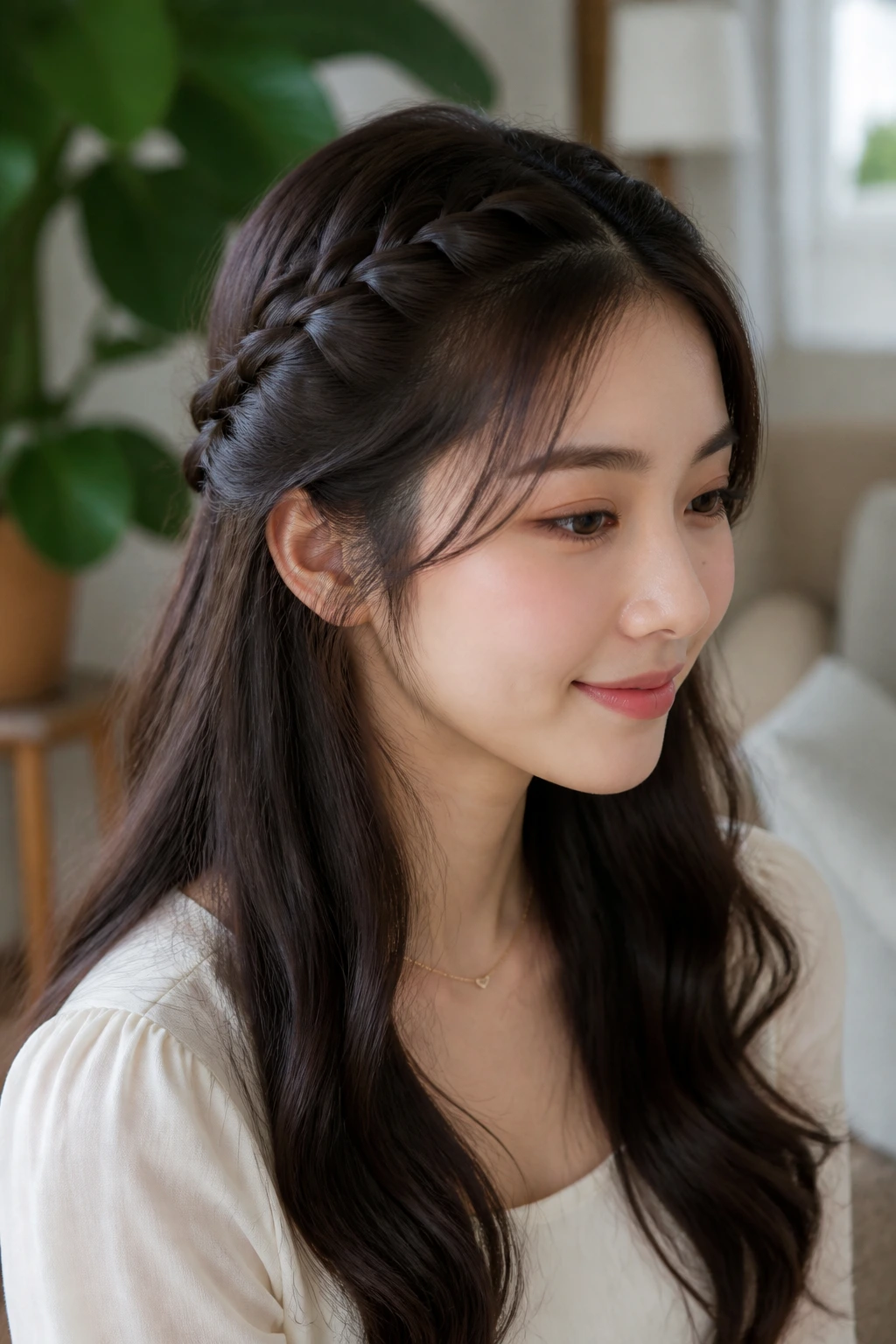
Braided crowns look more complicated than they are. On long hair, a small braid on each side can pull the style together without hiding the length, which is exactly why this one keeps showing up in Korean-inspired looks.
You take thin sections from the temples, braid them back, and pin them where they meet behind the head. The bottom half stays loose. That mix of structure and softness is the appeal. Your hair is controlled at the front, but the long length still moves freely down the back.
This is a good option when you want your hair off your face but do not want a full updo. It also works well with soft wave texture, because the braids create a contrast against the looser bottom section. On very straight hair, the braid texture stands out more; on wavy hair, it blends in nicely.
A little texturizing spray at the roots helps the braids hold. If your hair is slippery, lightly rough up the top layer before you start. Clean hair is lovely, but it can be annoyingly slick.
14. Sleek Half-Up Knot
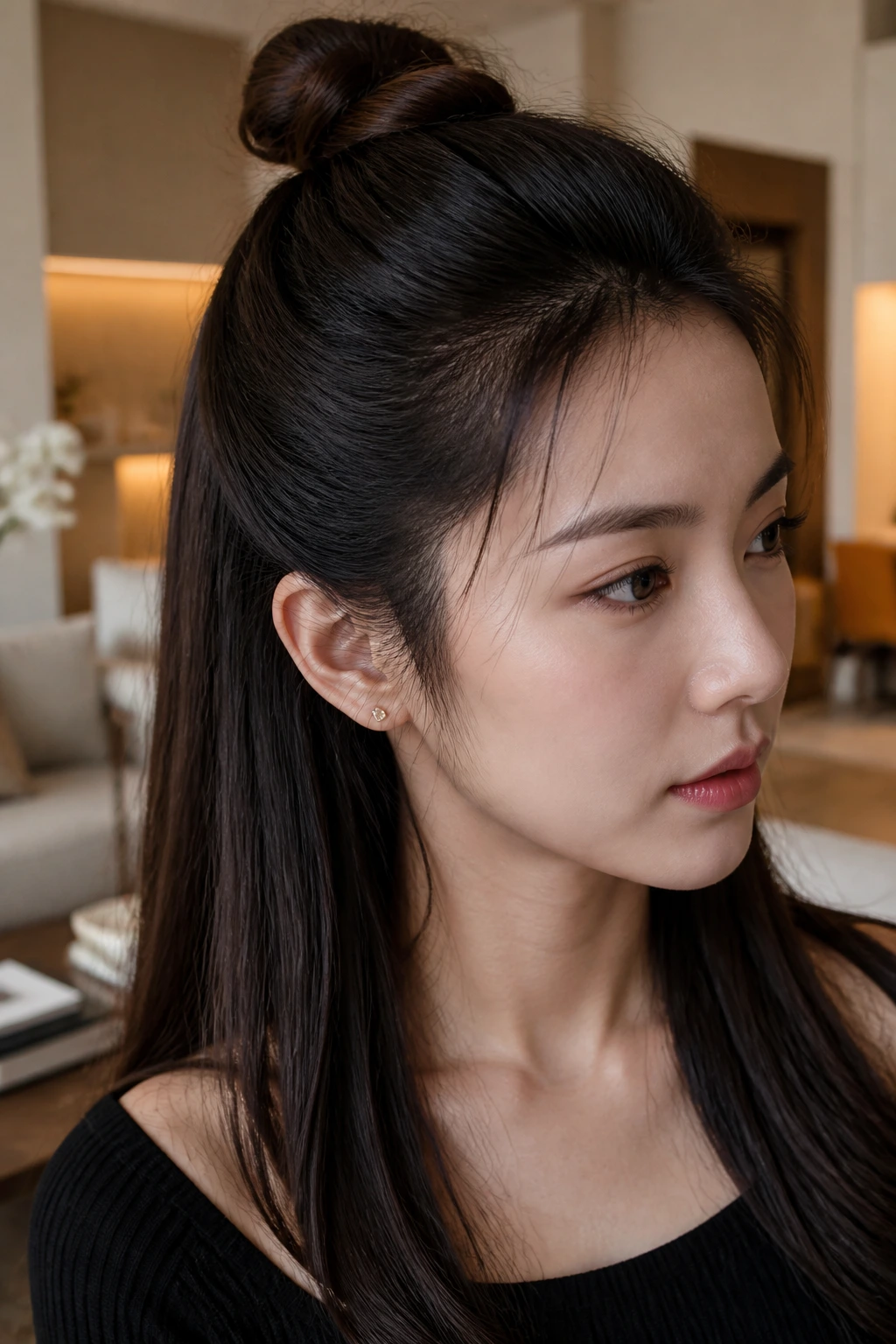
A sleek half-up knot keeps the top section under control while letting the rest of the length hang free. It’s neat, simple, and a little sharper than a ribbon bow. I reach for it when long hair needs polish fast.
The knot should sit high enough to lift the face, but not so high that it looks like a toy topknot. Pull back the top section, tie it into a small knot, then pin the underside flat so it doesn’t stick up. That last pin is what separates a good version from a messy one.
If the hair is slippery, smooth the top layer with a tiny amount of cream before tying. If it is too soft, the knot will slip apart. If it is too dry, the top layer may puff and ruin the clean line. A few drops of shine serum on the ends can keep the bottom half looking deliberate.
This style loves straight lengths. It also works with a slight bend at the ends, which keeps the whole look from feeling too severe.
15. Waterfall Braid With Long Waves
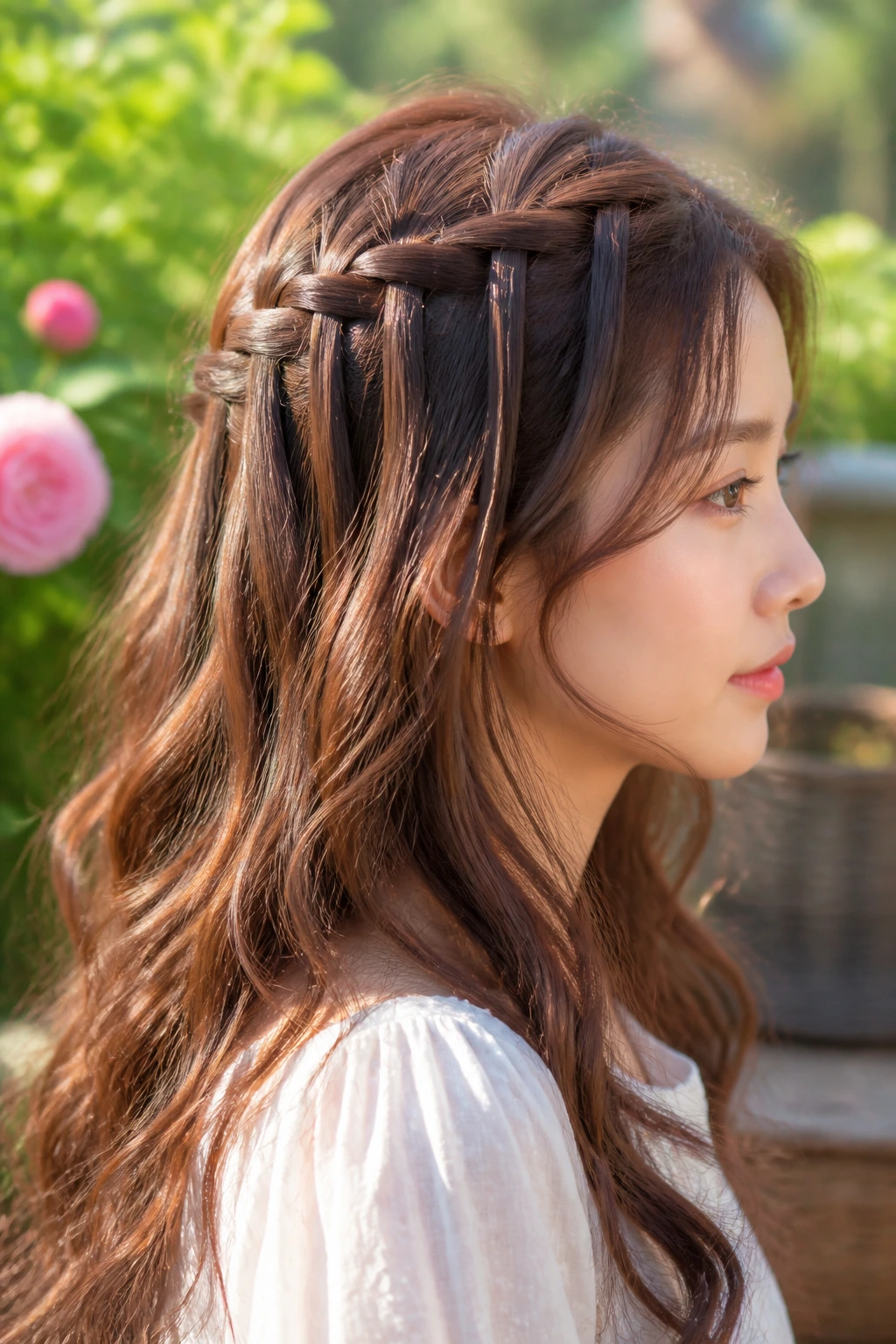
A waterfall braid keeps the length on display while adding just enough detail to make the hair look styled. That’s the big difference between it and a standard braid. A normal braid tucks the hair away. A waterfall braid lets pieces fall through.
On long hair, that falling pattern looks best when the base texture is soft. Loose waves or brushed-out bends make the braid feel romantic without turning sugary. The braid itself usually sits across one side or arcs from temple to temple, which is nice when you want the front to feel decorated but not crowded.
This style is for people who like a little work in their hair, not a lot. Once the braid is pinned, the rest can stay loose. It’s also one of the better choices for layered hair, because the dropped strands add movement instead of looking unfinished.
If the hair is freshly washed and too slick, the braid may slide. Day-two hair or a bit of texture spray usually gives it the grip it needs.
16. Bubble Ponytail
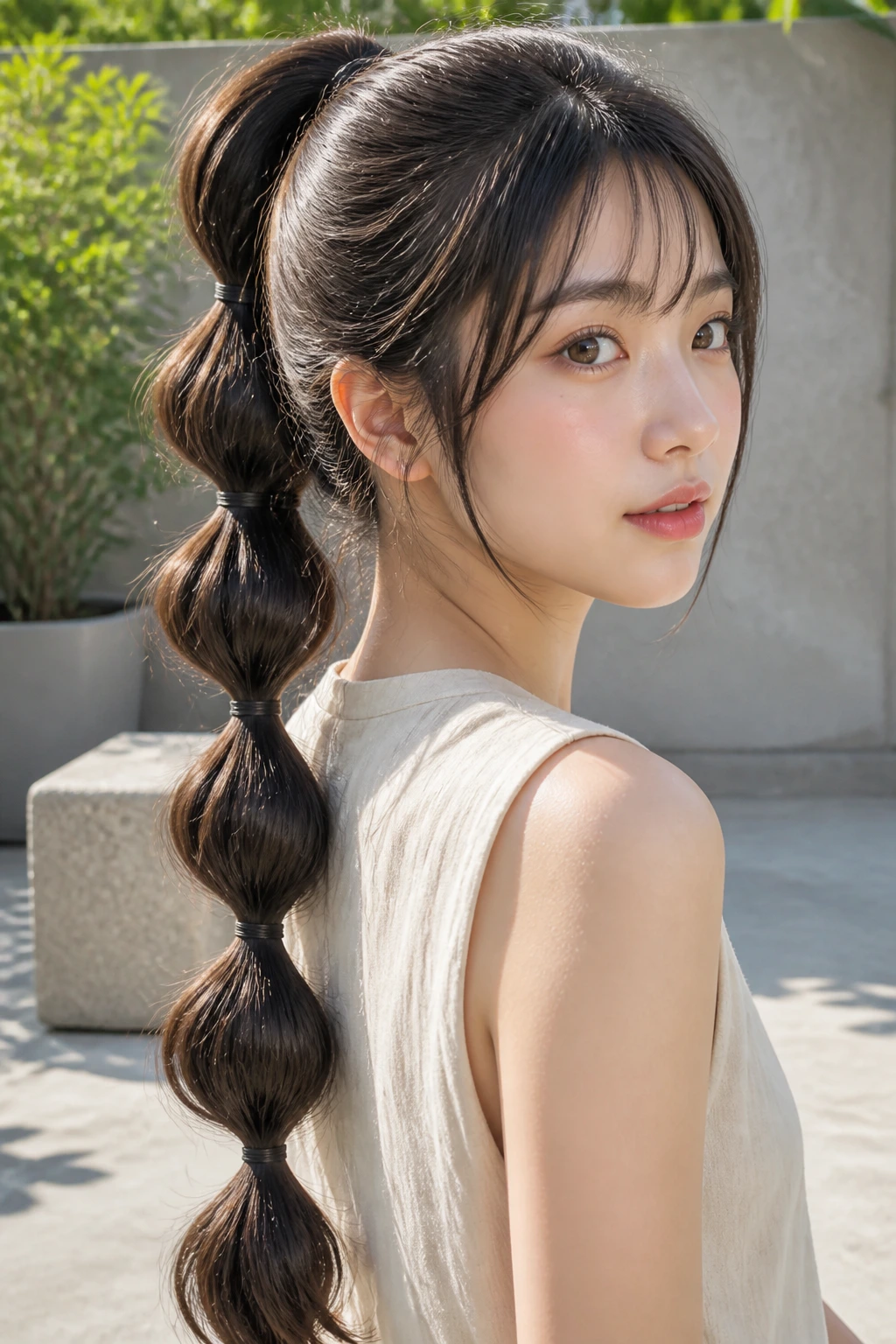
Bubble ponytails are more playful than most Korean long-hair looks, but they still have a clean, modern edge when you keep the sections even. The shape is simple: one ponytail, several evenly spaced elastics, and gentle puffing between them.
What makes it work on long hair is the length itself. The ponytail needs enough drop to create visible bubbles, and long hair gives you that instantly. The sections should be spaced around 2 to 3 inches apart, depending on hair thickness. Pull each bubble outward gently after tying, but don’t yank hard or the whole thing gets lumpy.
I like this style because it has range. Keep the sections tight and it reads sporty. Add a ribbon or a thin wrap of hair around the base and it feels more styled. Thick hair tends to make better bubbles because the sections hold their shape; fine hair needs a little teasing inside the ponytail to avoid looking flat.
A tiny mist of flexible spray after each elastic can help the shape stay round.
17. Fishtail Braid With Airy Texture
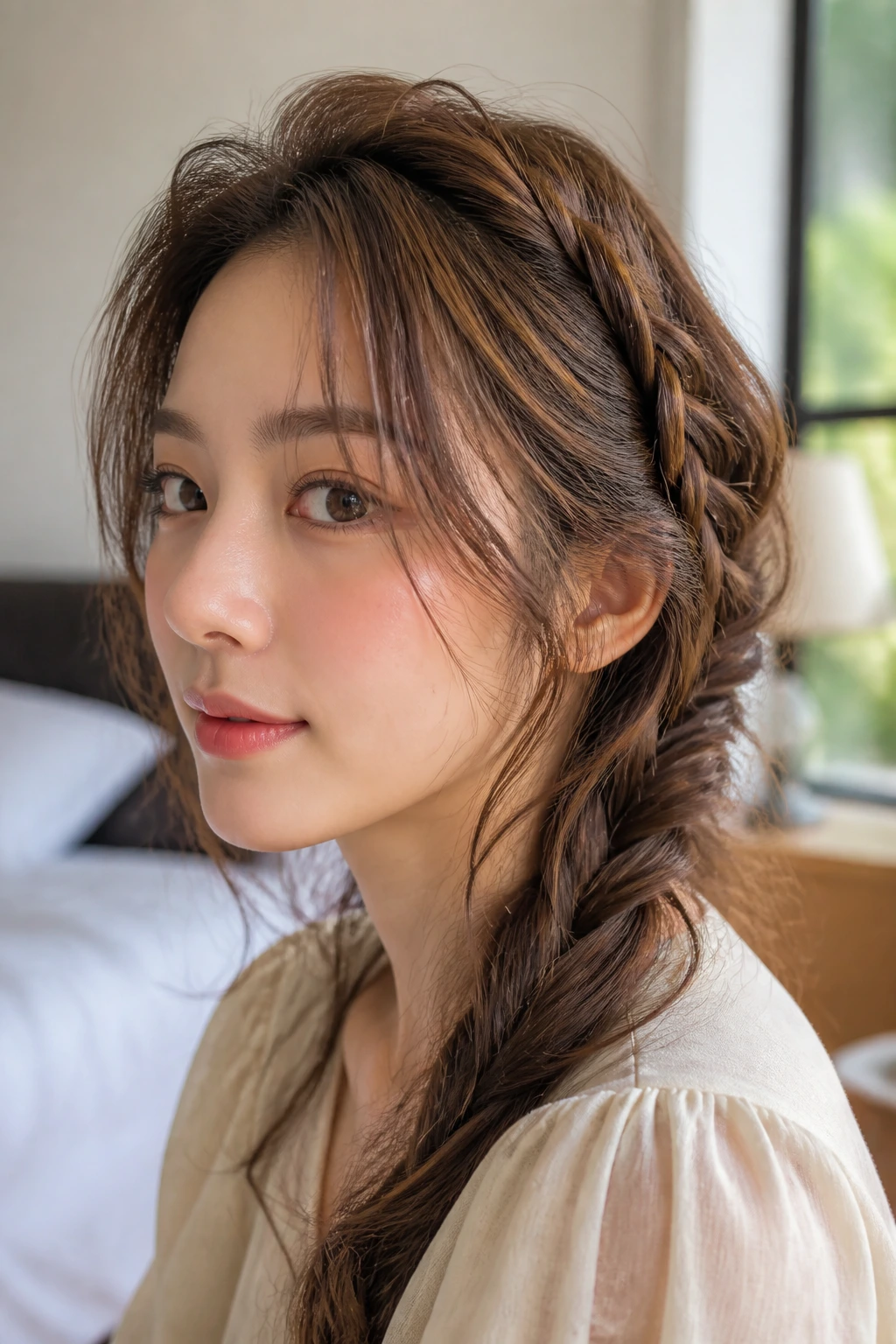
Why does a fishtail braid feel so different from a regular braid? The answer is in the pattern. Tiny strands cross over in a tighter weave, which gives long hair a denser, more detailed look without making the braid bulky.
This style suits long hair because the braid gets better as the length increases. Short braids can look skimpy. Long fishtails have weight. They hang better, and when you gently pull the edges apart, they get that soft, lived-in shape that feels very Korean in spirit.
How to get the most from it
- Start the braid lower, around ear level, if you want a relaxed finish.
- Use a texturizing spray before braiding so the strands grip.
- Pull the outer edges outward a little after securing the end.
- Leave a few short layers free at the front if you want softness around the face.
This braid is not the fastest option on the list. It takes a bit more patience. Still, when it’s done well, it looks more refined than a basic three-strand braid and more casual than a full updo.
18. U-Cut Layers With Air-Dried Movement
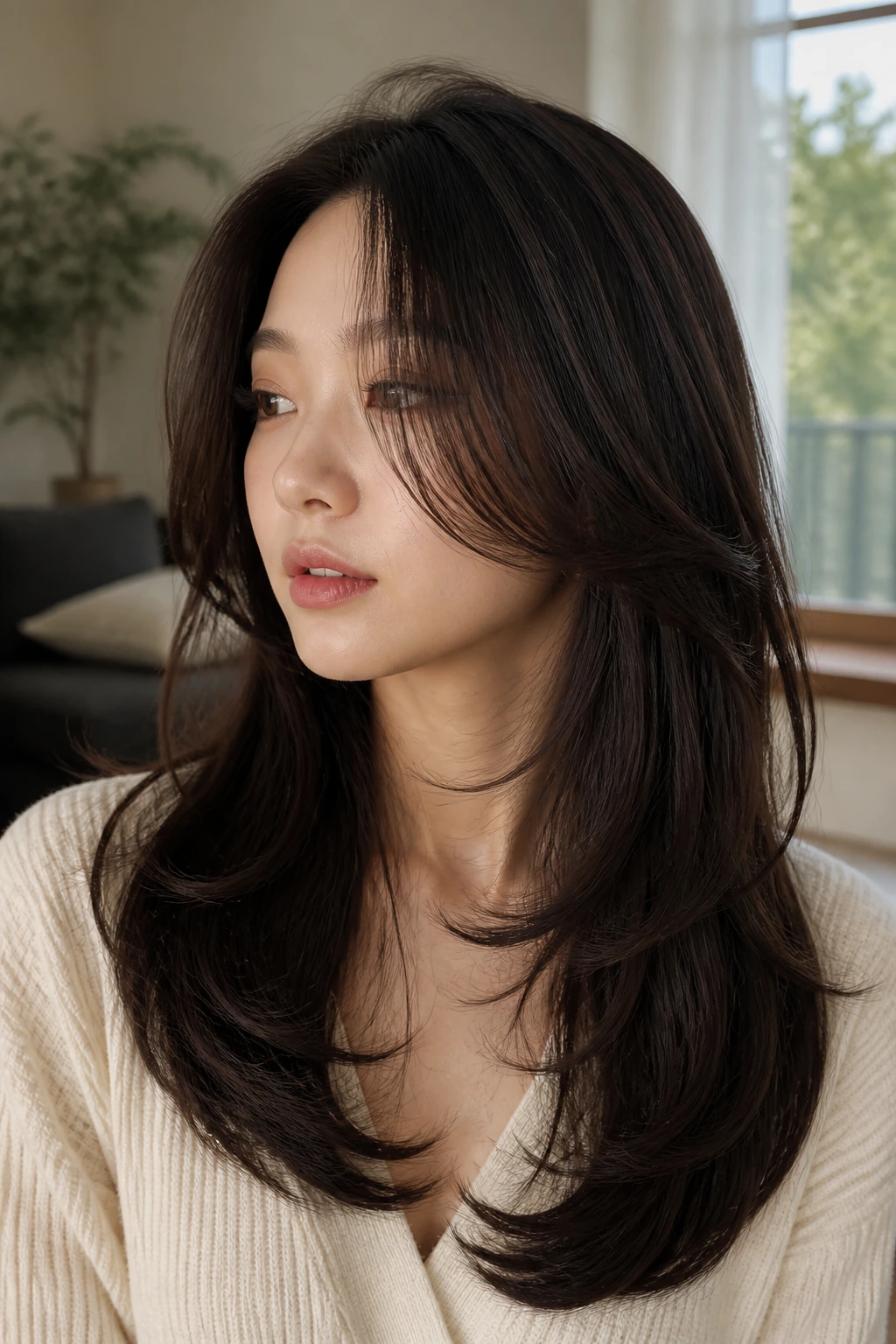
If long hair keeps falling flat, the cut may be the problem, not the styling. A U-cut keeps the perimeter curved instead of blunt, which makes the whole length feel lighter and more alive.
This shape is one of the smartest foundations for Korean hairstyles for long hair because it gives the ends movement even when you do almost nothing. The longest pieces stay in the center back, while the sides curve up slightly. That soft U shape stops the hair from looking boxy. On straight hair, the line looks clean. On wavy hair, it moves well without turning frizzy.
I’d choose this over a harsh one-length cut almost every time for long hair that needs daily wearability. The grow-out is nicer, too. A blunt hem can start to drag the look down once it gets too heavy; a U-cut keeps a little shape even after a few months.
Air-dry a U-cut with a light cream and you’ll see why people like it. The ends fall in a way that looks finished without much effort, and that matters on ordinary days more than fancy ones.
Long hair should move. If it doesn’t, the style is doing too much work.
Final Thoughts
The best long-hair styles are rarely the flashiest ones. They’re the ones that fix the shape first and worry about decoration second. That’s why these Korean hairstyles for long hair keep working: they give the face room, keep the ends from looking heavy, and make the hair feel touched but not overworked.
If your hair is thick, start with the styles that create structure without stuffing everything into one tight shape — the low ponytail, the claw-clip twist, the U-cut, the half-up knot. If your hair is finer, lean into ribbons, soft bangs, and airy waves. Those styles give you the most visual payoff for the least fuss.
And if one of these looks feels too polished for a random Tuesday, loosen it a little. A strand at the temple. A softer part. A bend instead of a curl. That small bit of imperfection is often what makes long hair look human instead of staged.
