



A good fade haircut should still look decent when life gets busy.
That is the real appeal of fade haircuts that grow out cleanly: they keep their shape when the edges soften, instead of turning into a fuzzy helmet the moment the barber’s cape comes off your shoulders. The trick is not “no upkeep.” The trick is choosing a cut whose awkward stage still looks intentional.
The cuts that age best usually share the same quiet logic. They keep a little weight around the temple, sideburn, or nape. They avoid giant shelves of disconnected length. And they let the top do some work, whether that means a crop, curls, waves, or a side part that still reads after the fourth day. A barber can make almost any fade look sharp on day one; not every fade deserves your trust on day twelve.
1. Low Taper Fade with a Side Part
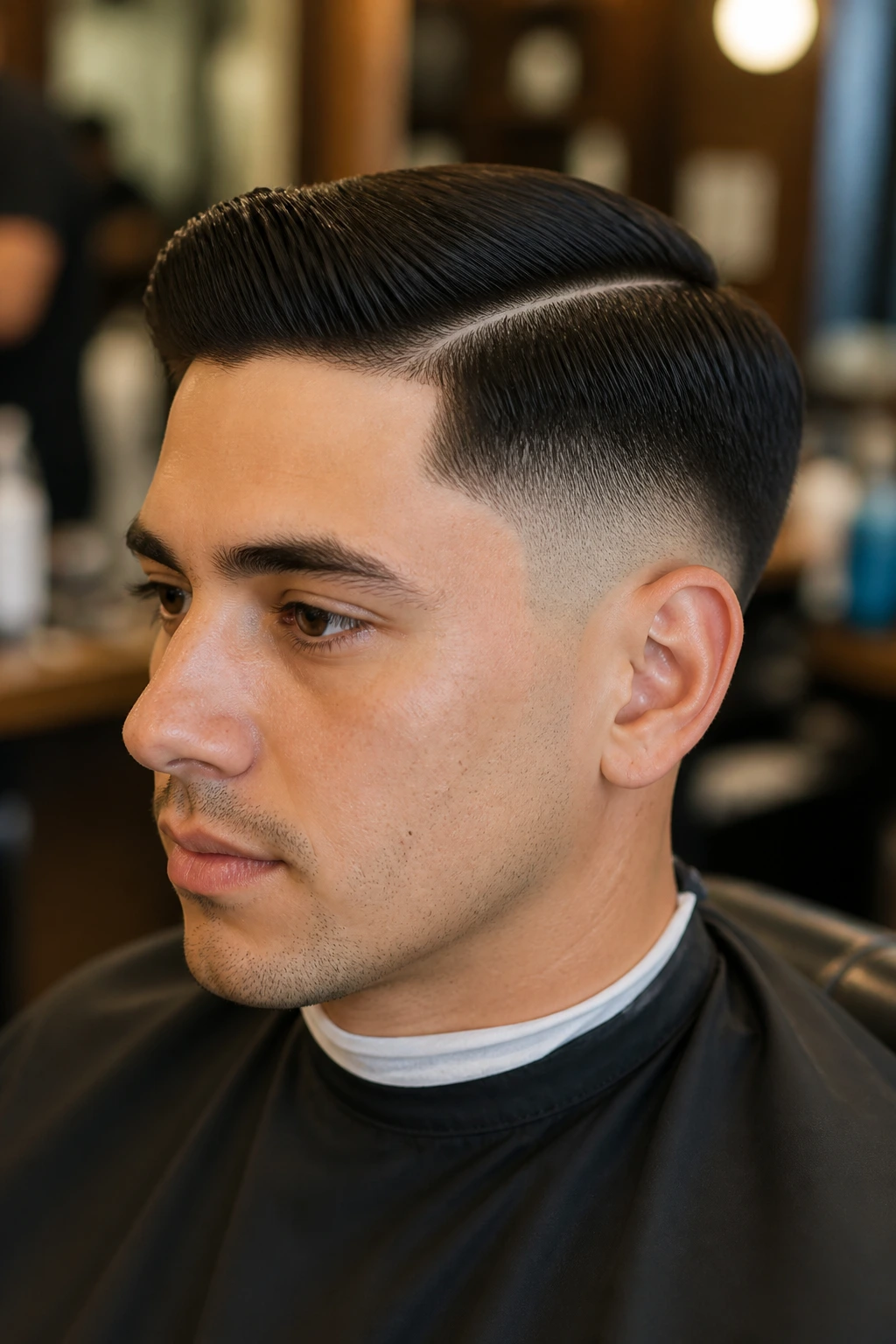
A low taper fade with a side part is the safe bet that never feels boring. The taper keeps the edges soft around the ears and neckline, while the side part gives the top enough structure to still look dressed when it starts growing out.
Why it grows out well
- The fade starts low, so the transition stays quiet even after a couple of weeks.
- The part gives your hair a built-in direction, which hides a little bulk at the crown.
- It works especially well if your barber keeps the sideburns neat instead of carving them too sharp.
Best for: office hair, school hair, and anyone who hates the “boxy” stage.
Ask for a scissor-cut top with a #1 or #2 guard blend on the sides, and keep the neckline softly tapered instead of squared off. That little detail matters more than people think.
2. Mid Fade Crew Cut
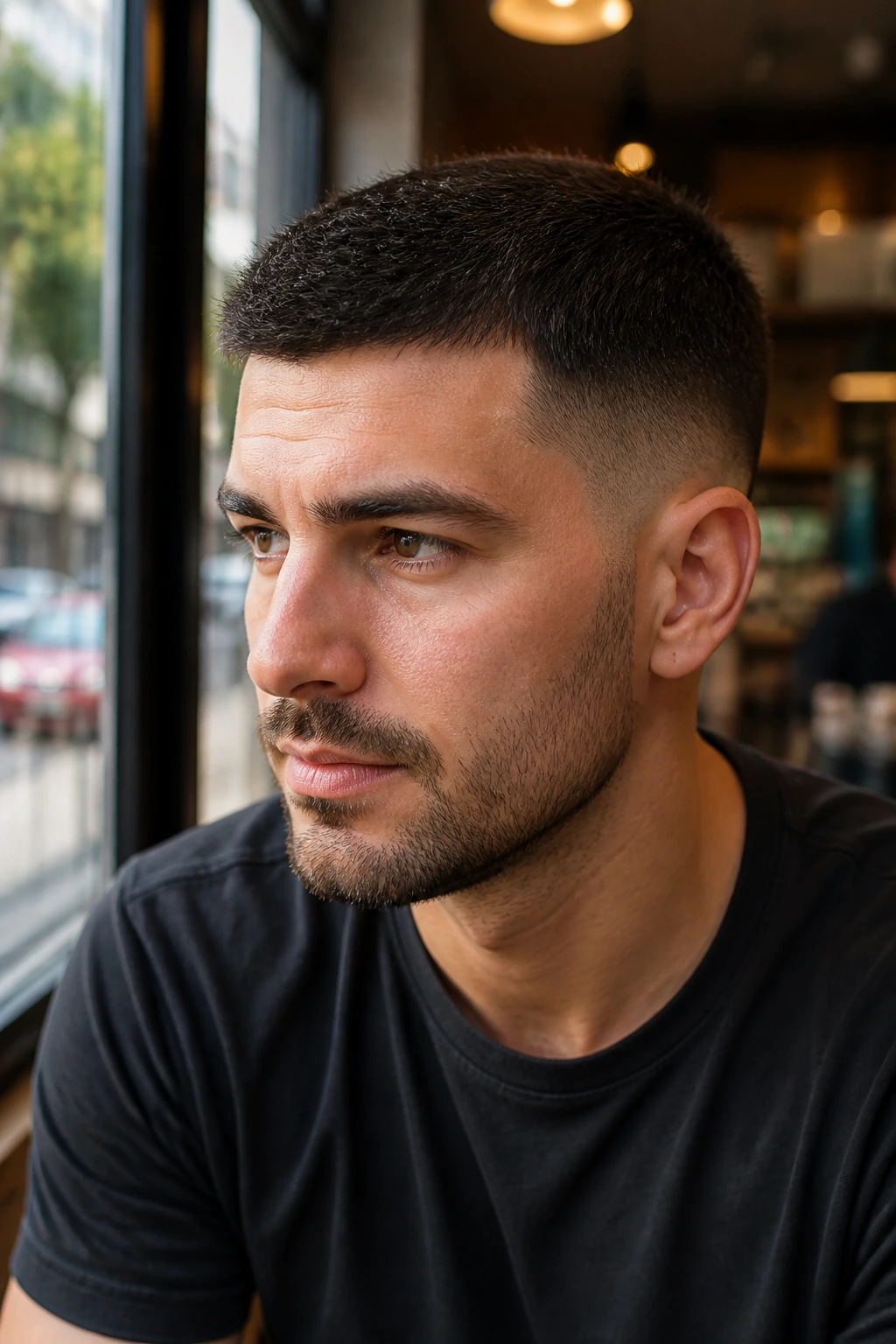
A mid fade crew cut is blunt in the best way. Short top, short sides, no drama. When it grows out, it doesn’t collapse; it just gets a little softer, which is exactly what you want if you’re not scheduling trims every two weeks.
The crew cut works because the length difference is modest. Nothing is screaming for attention. Even a month later, the silhouette still reads as neat, especially if your barber leaves enough length on top for the hair to lie the same direction every morning. It’s one of those cuts that looks even better on busy people than on polished ones.
3. High and Tight Fade

Why does the high and tight grow out so cleanly? Because there isn’t much there to go wrong. The sides are tight, the top is short, and the shape stays close to the head, which means stray growth has less room to misbehave.
A good high and tight is all about proportion. If the top is left just long enough to brush forward or slightly up, the cut keeps its military neatness without feeling severe. It’s especially solid for thick straight hair, where a little bulk can turn messy fast.
How to wear it
Keep the top around 1 to 1.5 inches if you want the haircut to hold its shape for longer. Anything much longer starts to push the style into a different lane.
4. Buzz Cut with Skin Fade

A buzz cut with a skin fade is the easiest way to look deliberate while doing almost nothing in the morning. The short top means growth is gradual, and the skin fade loses its edge in a way that still reads as clean rather than sloppy.
The catch is the fade itself. If the barber drives the blend too high, the grow-out can look patchy at the temples. Keep the transition low and narrow, and the haircut ages better. I like this cut on guys who want the shortest possible routine but still want a little shape around the edges.
Quick details
- Ask for a soft blend into the skin, not a harsh step.
- Keep the neckline natural if you want longer wear.
- Works best with a weekly clipper touch-up at home, if needed.
5. French Crop with Low Fade
The French crop is one of those cuts that forgives a surprising amount. The fringe falls forward, so when the sides start filling in, your eye stays on the top instead of the fade line. That little trick buys you time.
This cut is a good fit for straight or slightly wavy hair that likes to sit heavy. The low fade keeps the ears and neck tidy, while the cropped front hides recession and softens the face shape. It also looks better a bit lived-in than over-styled, which is nice because not everyone wants to blow-dry before breakfast.
6. Ivy League with Taper Fade
The Ivy League with a taper fade grows out like a proper haircut should: politely. Nothing about it is loud, and that’s the point. The top has enough length to comb, sweep, or loosen up, while the taper keeps the edges from turning shaggy.
Unlike a harder fade, this one can go a little longer between cuts because the transition sits in the background. It’s a strong choice if you want a style that can move between casual and dressed-up without changing the shape too much. The only real warning is not to let the top get too flat; a little height keeps it sharp.
7. Caesar Cut with Soft Fade
A Caesar cut with a soft fade is a blunt, practical haircut that hides a lot of life in the hairline. The short fringe sits forward, so any little roughness at the temples gets swallowed up by the shape itself.
Why it works
The Caesar doesn’t depend on perfect blending to look good. It depends on line and direction. When the fringe stays even and the fade starts low, the grow-out just looks like a softer version of the original cut. That is a nice place to be.
Best for: straight hair, fine hair, and anyone who wants a low-friction shape with a little edge.
8. Curly Top with Drop Fade
Curly hair is a gift here. The curls keep the top full of movement, so small changes in length are harder to notice, and the drop fade curves around the head in a way that follows the natural shape instead of fighting it.
A drop fade is kinder than a straight horizontal fade line. It dips behind the ear, which makes the grow-out feel rounder and less boxy. If you’ve got medium curls, ask the barber not to cut the top too tight; a little extra length lets the curls expand between appointments without losing the outline.
9. Burst Fade Mohawk
Does a burst fade mohawk sound dramatic? Sure. But it ages better than people expect because the fade is concentrated around the ear, not stretched across the whole head. The center strip stays defined, and the sides can soften without destroying the shape.
This is the cut for someone who likes edge but not chaos. Keep the mohawk strip short to medium, and the grow-out stays readable for longer. It works best when the barber keeps the arc around the ear smooth, because that curve is the part that keeps the haircut from looking rough when it grows.
How to use it
- Keep the strip around 2 to 3 inches for easier maintenance.
- Ask for a rounded burst around the ear, not a square one.
- Let the back taper into the neck instead of stopping hard.
10. Temple Fade on Coily Hair
A temple fade on coily hair is one of the cleanest-looking choices on textured hair because it frames the forehead and temples without stealing the shape from the top. The coily texture gives the crown volume, while the faded temple keeps the sides crisp.
I like this cut because the grow-out feels intentional. The coils don’t lose their character when they get a little longer, and the temple fade fades into natural texture instead of fighting it. If you keep the lineup too sharp, you’ll notice the regrowth faster. Softer edges age better here.
Quick things to ask your barber
- A soft temple blend
- A clean but not boxed hairline
- A neckline that follows your natural growth pattern
11. Textured Crop with Mid Fade
A textured crop with a mid fade is one of the easiest haircuts to live with because the choppy top hides all kinds of tiny changes. Hair grows, yes, but the texture keeps the movement messy in a good way.
The mid fade gives the sides enough lightness to balance the top without making the haircut look shaved down. After a week or two, the crop usually looks less sharp and more relaxed, which is a useful trade if you want something stylish without constant polishing. Matte clay helps here, but not too much. Heavy product ruins the point.
12. Slick Back with Low Skin Fade
The slick back with a low skin fade is a neat trick: the top is doing the heavy lifting, so the grow-out on the sides matters less than it would on a shorter style. Once the top starts settling, you can still comb it back and keep the whole thing looking controlled.
A low skin fade is the key. High skin fades are fussier when they grow out; low ones soften more quietly. This style suits thicker straight hair especially well, because the slick-back shape has enough weight to stay in place without turning into a helmet. A little pomade goes a long way.
13. Pompadour with Taper Fade
A pompadour with a taper fade has the advantage of contrast without harshness. The top can lose a bit of height and still look like a pompadour, while the taper gives the sides a slow, graceful exit.
Why it grows out well
The taper isn’t fighting the top. It supports it. That means a grown-out version still keeps the same basic shape, just with softer edges and a little more body around the temples.
If you like volume, this is one of the more forgiving options. Blow-dry the front up and back, use a light product, and keep the neckline tapered rather than boxed. The haircut will age into itself instead of away from itself.
14. Side Part with Classic Taper
A classic taper side part is the haircut equivalent of a clean white shirt. Nothing flashy, nothing needy. Because the taper follows the natural line around the ears and nape, the grow-out stays quiet and civilized.
This works especially well if your barber uses scissors on the top and avoids over-thinning the sides. Too much clipper work can make the grow-out feel choppy. A scissor top keeps the shape smoother for longer, and the side part gives you a built-in way to reset the hair each morning. Honestly, it’s hard to mess up.
15. Comb Over with Low Fade
The comb over gets a bad reputation when it’s overdone, but a low fade version is practical and clean. The direction of the top helps cover any small shifts at the hairline, while the low fade keeps the sides from growing into a puff.
What makes it different
Unlike a severe fade, this one has room to soften. Hair can grow a little at the temple and still fall back into place when you comb it over. That makes it a smart choice for thicker hair that likes to stand up on its own.
If your hair is straight and dense, ask for light texturizing on top. Too much weight at the front can make the style hang flat instead of sweeping.
16. Quiff with Shadow Fade
A quiff with a shadow fade has a soft edge that grows out in a better way than a skin fade ever will. The shadow fade stays close to the scalp without going all the way down to bare skin, so the transition keeps looking smooth as it lengthens.
That matters if your hair is thick or has a little wave. A quiff needs some lift, and a shadow fade keeps the haircut from feeling too severe while the top is getting a little longer. Use a blow dryer for volume, then a medium-hold product. Too much shine makes it look older than it is.
17. Flat Top with High Fade
A flat top is one of the few styles where regrowth can be part of the charm. The top is already geometric, so a little extra length does not automatically ruin the line. The high fade keeps the sides tight and gives the whole cut a sharp frame.
It’s not the lowest-maintenance haircut on this list, but it grows out in a readable way if the barber keeps the top level and the corners neat. Black hair especially wears this cut well, since the texture gives the shape a solid block of presence. Keep the outline fresh, and it holds.
18. Frohawk with Burst Fade
The frohawk with a burst fade is a strong option if you want shape without boxing in textured hair. The burst fade clears the sides around the ear, but the middle strip stays full enough to keep the style alive as it grows.
The best part is the balance. The fade can soften and the frohawk still looks intentional because the volume sits in the center, where texture does most of the work. If your curls or coils are tighter, this can go a little longer between cuts than a more structured style would. That’s one reason people stick with it.
19. Pompadour with Drop Fade
A drop fade under a pompadour gives the haircut a curved base, which makes the grow-out feel more natural around the head. Instead of a hard shelf running straight across the side, the fade dips where the skull dips. Small detail. Big difference.
This is a good cut for men who like height but don’t want a fussy finish. The top can relax a little and still read as a pompadour because the shape is built around the front and crown. Use a round brush if your hair is stubborn. Some hair needs a nudge.
Quick notes
- Best with medium-thick hair
- Use a light cream, not heavy grease
- Ask for the drop to sit just behind the ear
20. Brush Cut with Low Fade
The brush cut is short enough to ignore most bad hair days. Add a low fade, and you get a haircut that stays neat even when it grows a little. The top only needs minimal styling, usually just a quick push forward or up.
This is one of the cleanest options if you want simplicity. It does not ask for much, and it does not punish you for forgetting a trim. The low fade softens first, which is fine, because the overall shape remains compact. If you have a round face, leave a touch more length on top so the haircut doesn’t feel too squat.
21. Waves with Mid Taper Fade
Waves change the whole conversation. The wave pattern itself gives the top visual interest, so the grow-out looks more like a texture shift than a missed appointment. A mid taper fade keeps the sides tidy without breaking the flow.
A lot of people overcut wavy hair and then wonder why it looks flat. Don’t. Keep enough length for the pattern to show, and let the taper do its job around the sideburns and neckline. The haircut will age more evenly, and your waves will keep carrying the style while the fade softens.
22. Fringe with High Fade
A fringe can hide a lot. That’s the honest reason it works so well with a high fade. As the sides grow, the front still anchors the style, and the eye keeps landing on the fringe instead of the fade line.
This is a better choice than people think for straight or slightly wavy hair, especially if the forehead is long or the hairline is a little uneven. The high fade gives drama on day one, but the fringe keeps the shape from falling apart too fast. Just don’t let the fringe get wispy. A blunt, controlled edge wins here.
23. Twists with Temple Fade
Twists and a temple fade make sense together because the fade clears space without taking over the hairstyle. The twists stay the main event, and the temple fade frames them with a clean edge that still looks good after a few weeks.
Why it grows out well
The twist pattern already has movement and separation, so small changes in the sides do not steal attention. The fade recedes slowly, and the overall silhouette stays neat as long as the barber keeps the edges around the ears tidy.
If you wear twists, ask for the fade to stop before it climbs into the bulk of the style. That keeps the shape balanced instead of over-trimmed.
24. Mullet with Burst Fade
A mullet can grow out cleanly if the fade is handled right, and the burst fade is the better move. It keeps the sides tidy around the ear while leaving room for length in the back, which is where the mullet needs to breathe.
This is not a haircut for people who want invisible maintenance. It is for people who want shape. The burst fade softens the transition and keeps the front from looking helmet-like as the back gets longer. Keep the top and back connected with some texture, and the style feels current instead of costume-y.
25. Curly Top with Low Fade
Curly tops are naturally forgiving, which is half the battle. The low fade helps by keeping the sides from exploding outward too early, while the curls on top hide minor changes in length better than straight hair ever could.
If your curls are loose, a low fade is the sweet spot. Go too high and the haircut starts to look disconnected as it grows. Keep a little weight around the temple, and the whole shape stays soft. A curl cream or leave-in conditioner helps the top sit right without crunching it down.
Best for
- Loose to medium curls
- People who want shape with some movement
- Anyone who prefers a less severe fade line
26. Faux Hawk with Mid Fade
A faux hawk stays flexible because it does not depend on a razor-sharp outline. The center section gives the haircut its personality, while the mid fade keeps the sides neat enough to survive some regrowth.
This cut works best when the middle is left broad rather than needle-thin. A wider strip grows out more gracefully and still looks intentional when the sides soften. Use a matte product if your hair is straight or fine. Strong shine makes the style feel louder than it needs to be.
27. Hard Part with Skin Fade
A hard part with a skin fade is not the most forgiving option on this list, but it can still grow out in a clean way if you keep the part narrow and the fade low enough. The part gives structure, and the skin fade keeps the sides crisp.
The downside is obvious: the hard line loses its sharpness fast. If you like that crisp look, you’ll need regular cleanups. If you are fine with the part softening a little, the haircut transitions into a looser side-part style without looking messy. That flexibility saves it.
How to wear it
Keep the top long enough to comb at least 2 inches to one side. Shorter than that, and the hard part starts doing more work than the hair itself.
28. Afro with Taper Fade
An afro with a taper fade is one of the cleanest choices for textured hair because the taper protects the shape without boxing it in. The edges around the ears and neck stay neat, while the top keeps its roundness and volume.
A boxed afro can look fresh, sure, but it can also go lopsided if the edges grow unevenly. The taper is softer and easier to live with. It lets the afro expand naturally, which is what most people actually want between cuts. A good shape-up matters here, but the haircut does not depend on perfection every single day.
29. Cropped Fringe with Low Skin Fade
A cropped fringe with a low skin fade gives you the nice part of a skin fade without the full commitment. The fringe keeps the front anchored, and the low fade means the grow-out stays close to the head instead of turning into a visible wall.
This is a smart haircut if your forehead runs longer or if you want the front of the style to carry the shape. The low skin fade should stay narrow; otherwise, the grow-out can look stark. A textured fringe helps a lot because it breaks up the straight line and makes the cut feel softer as it relaxes.
30. Buzz Cut with High Taper
A high taper on a buzz cut sounds almost too simple, but that is exactly why it works. The hair is short enough that growth is subtle, and the taper around the ears and nape keeps the whole thing from looking like you forgot a haircut.
It is the kind of cut that looks clean with almost no effort. The shorter top means there is no awkward collapse, and the taper gives enough shape to matter. If you want the least fussy look in the room, this is one of the strongest choices. Just keep the neckline edged once in a while.
31. Side-Swept Crop with Drop Fade
The side-swept crop is a little more relaxed than a side part, and that looseness helps the haircut grow out better. The drop fade follows the curve of the head, which keeps the sides from looking blocky as they lengthen.
What makes this one useful is the top. A side-swept crop can absorb growth because the movement hides small changes in direction and density. That’s handy if your hair is thick or slightly wavy. The style looks neat without being stiff, and it keeps that quality longer than a sharper, more forced shape would.
32. Locs with Temple Fade
Locs paired with a temple fade are clean because the fade frames the style instead of competing with it. The locs hold their shape, and the temple fade trims away the bulk right where a haircut can start looking fuzzy first.
This is one of those pairings that makes a lot of sense in real life. The locs can go a while between full haircuts, while the faded temples keep the outline fresh. If you wear your locs longer, this is especially useful because it gives the style a barbered edge without fighting the length. Simple. Effective.
Practical notes
- Keep the temple blend low and curved
- Ask for a clean neckline, not a boxed one
- Let the locs themselves remain the focal point
33. Beard Blend with Low Fade
A beard blend with a low fade works because the haircut and beard stop looking like separate parts. The fade drops into the facial hair, which makes the whole look grow out in a more natural way.
That connection matters. When the beard is cut to meet the fade at the right point, the regrowth looks like texture rather than neglect. This style is especially good if your beard is dense, since the extra bulk helps hide the seam as it softens. Keep the cheek line tidy and the jawline clean, and the shape stays believable longer.
34. Long Top with Mid Fade
A longer top gives you room. That sounds obvious, but it changes how a haircut ages. If the top has enough length to move, part, or fall, the mid fade on the sides can grow a little without upsetting the balance.
This is a good compromise for people who like styling options but do not want a full undercut. The longer top lets you brush it back one day and wear it looser the next, and the mid fade keeps the bulk under control. If your hair is thick, ask for light layering so the top does not turn heavy at the crown.
35. Brush Up with Shadow Fade
A brush up with a shadow fade grows out well because the style already expects movement. The hair on top is lifted, not locked into one exact shape, and the shadow fade gives the sides a soft edge that stays decent as it lengthens.
The science behind it
Hair that is brushed up tends to look better with a little texture, not a perfect shell. The shadow fade helps because it removes enough weight to keep the sides light while still leaving a visible gradient. That gradient is what saves it later.
Use a matte paste or light clay, and keep the front pushed up rather than straight back. The cut holds its identity longer that way.
36. Short Curls with Skin Fade
Short curls and a skin fade are a strong combo when you want contrast that does not feel loud. The curls on top keep the style from looking too bare, and the skin fade makes the shape crisp around the edges.
The reason it grows out cleanly is texture. Short curls do not need a perfect line to look good, so when the fade softens, the cut still has enough movement to stay interesting. The skin fade should be kept low to medium, though. Push it too high and the regrowth becomes more obvious than you want.
37. Crew Cut with High Fade
The crew cut with a high fade is all business. Short, simple, tidy. The top is long enough to show shape but short enough that it never gets unruly, and the high fade keeps the sides tight in a way that looks neat as it grows.
A lot of people choose this cut because they want to stop thinking about their hair every morning. Fair enough. It is one of the most forgiving cuts on the list if you do not mind regular shape-ups. The silhouette stays compact, and the grow-out feels like a softer crew cut, not a failed experiment.
What to ask for
- Keep the top around 1 to 2 inches
- Blend the fade high but not bald
- Leave the neckline clean, not overly squared
38. Side Part with Taper Fade
A side part with a taper fade is calmer than the low-fade version, and that calm is useful. The taper lets the haircut stretch a little between appointments, while the side part keeps the top organized even when the hair starts to settle differently.
This is a good style if you want something that looks fine with a comb or with fingers. It is polished without being precious. The grow-out works because the taper does not leave a hard shelf at the temple. You get enough structure to look intentional, but not so much that every millimeter of growth shows.
39. Textured Shag with Drop Fade
A textured shag with a drop fade sounds unconventional, and that is exactly why it works. The shag gives the top movement and a little mess on purpose, while the drop fade lowers the sides in a curve that feels softer as it grows.
The payoff is that the haircut gets better when it loses some sharpness. That’s rare. Most styles want to stay crisp; this one wants to loosen up. If your hair has natural wave or a bit of bend, the shag will keep the shape from looking flat. A drop fade keeps the edges from expanding into the ears too soon.
40. Low Skin Fade with Soft Neck Taper
A low skin fade with a soft neck taper is one of the cleanest-looking choices if you like a fresh finish but do not want the grow-out to get ugly fast. The low fade gives you that tight, shaved effect near the base, and the soft neck taper keeps the back from turning into a hard line.
That last part matters. A square neckline can start to look blocky once it grows. A tapered nape stays gentler. If you want the haircut to age gracefully, ask the barber to keep the skin section low and feather the neck with a light taper rather than a blunt edge.
Final Thoughts
The best fade haircuts that grow out cleanly usually share one quiet habit: they keep the hard stuff low, soft, or short enough to age gracefully. A low taper, a shadow fade, a crew cut, or a crop will almost always give you more breathing room than a sharp high fade with a boxy neckline.
If you want the least stressful path, pick a haircut that still looks like itself after the first hint of growth. That’s the real test. Not day one. Day twelve, when the mirror is less flattering and the cut has to prove it was chosen well.
