



Flat brown hair is usually not a color problem. It’s a placement problem.
The right caramel balayage can wake up brunette hair without turning it into a stripey, overworked mess. When the color is painted with a light hand, you get warmth, movement, and that soft gleam that makes a blowout look better than it has any right to. When it’s done badly, you get chunky orange ribbons and a grow-out line that feels rude after three weeks.
Brunettes have a built-in advantage here. Dark hair holds contrast well, so a few well-placed caramel pieces can do more than a full head of lighter streaks ever could. The trick is matching the tone to the base: level 3 and level 4 brunettes usually need richer caramel, not pale beige; cooler brunettes do better with smoky or neutral caramel; curly and wavy hair can take bolder placement because the texture breaks up the light. Small choices. Big payoff.
That’s why the best caramel balayage ideas for brunettes aren’t all the same thing in different outfits. Some brighten the face first, some soften thick ends, some make curls look expensive in the plain old sense of the word, and some are built for low-maintenance grow-out. The good ones work with your haircut, your undertone, and how much time you want to spend in a salon chair.
1. Soft Caramel Balayage Money Piece
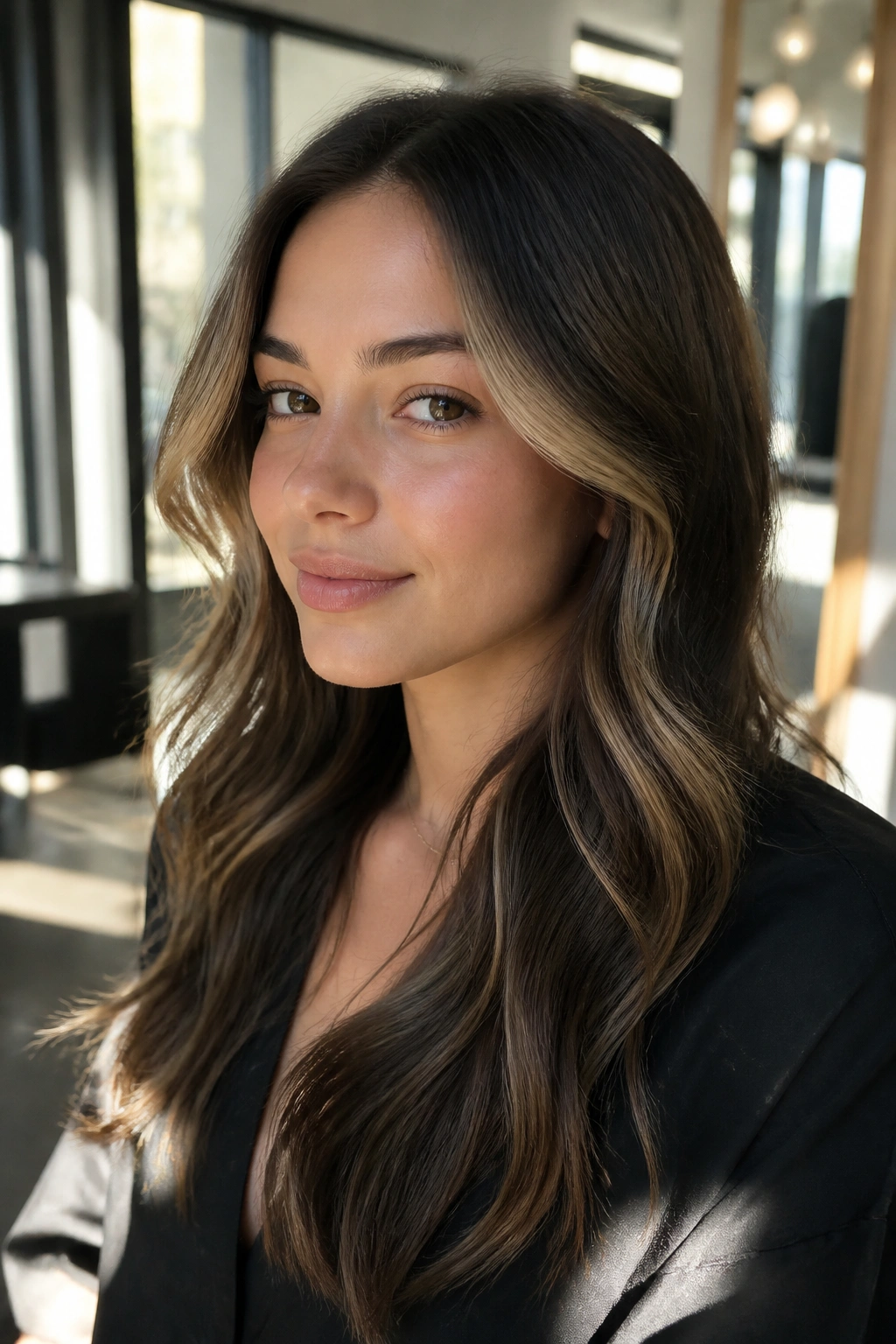
The smartest brightening always starts where people look first. A soft caramel money piece gives brunette hair instant light around the face, and it does it without forcing you into a full-head lightening job you may not actually want.
Ask for two face-framing sections that are painted a touch wider near the cheekbone and narrower near the roots. The color should lift to a warm level 7 or 8, then get softened with a beige-caramel gloss so it does not scream blonde. On dark brunettes, that little strip of brightness can make the whole haircut look cleaner. Sharper. More alive.
- Best for long layers, curtain bangs, and center parts.
- Keep the money piece about 1/2 inch wide at the widest point if you want softness.
- Pair it with a root smudge that stays close to your natural base so the grow-out feels easy.
- Skip heavy purple shampoo unless the pieces pull too pale. It can mute the warmth too fast.
My favorite part: this is one of the few color moves that still looks good tied back. Even a plain ponytail gets a lift from those front pieces.
2. Cinnamon-Caramel Ribbon Highlights
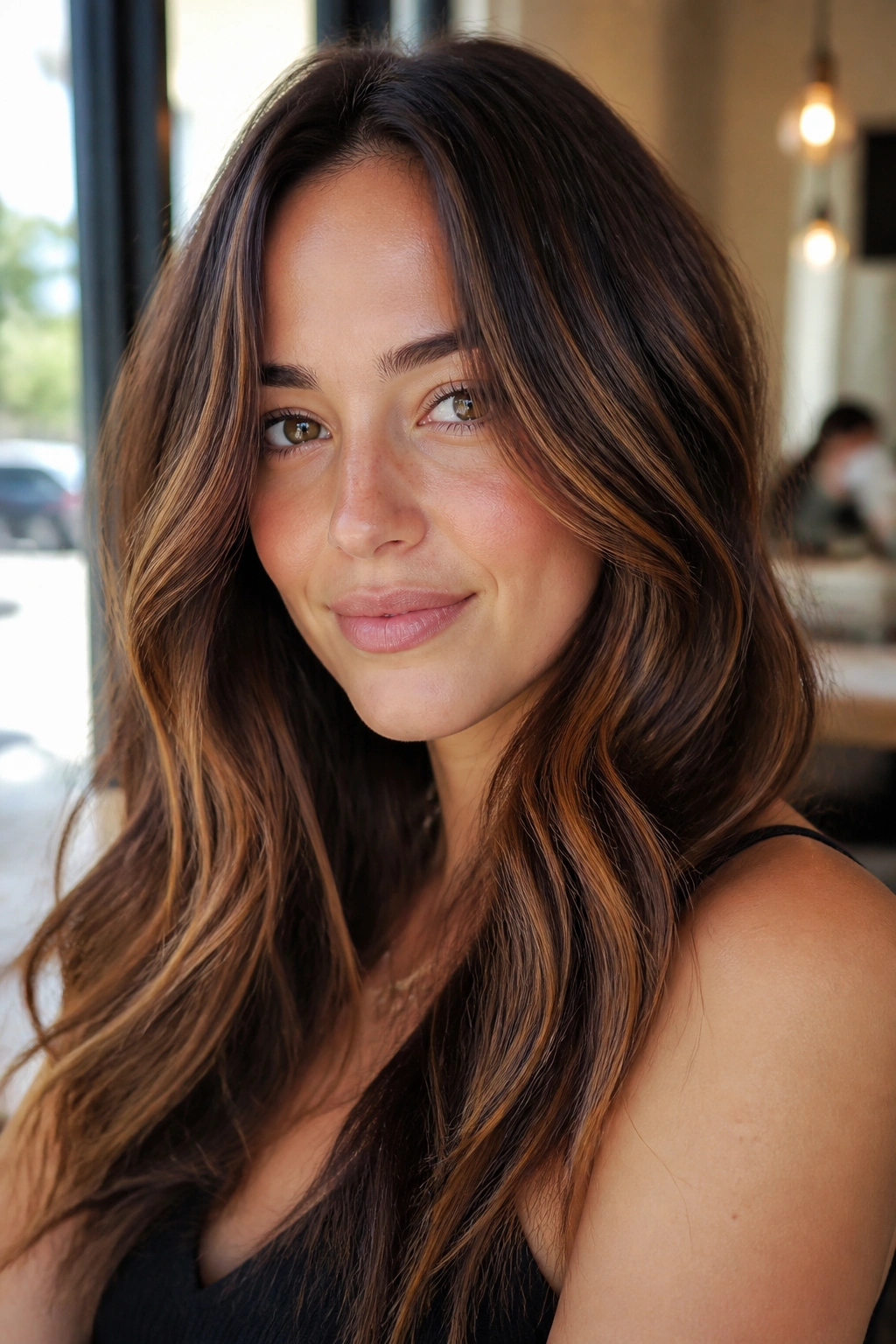
Why do some brunette highlights look soft while others look like they were taped on? The answer is in the weave. Cinnamon-caramel ribbons work because they’re thin enough to blend, but warm enough to show up against a dark base.
This version is especially nice if your hair is medium to dark brown and you want movement more than brightness. The caramel should lean toward cinnamon, amber, or toasted sugar, not yellow-gold. That keeps the result rich. A good colorist will paint a few ribbons on the surface and tuck some under the top layer so the shade moves when you turn your head instead of sitting flat on top like a costume wig.
What makes it soft
The ribbons should be spaced unevenly. That sounds small, but it matters a lot. Hair that has a little breathing room between the lighter pieces usually looks more expensive than hair packed with color every half-inch.
How to wear it
Loose waves show this look best. Straight hair can wear it too, but the ribbons need slightly more contrast so they do not disappear in one line. If you heat-style, a 1-inch iron and a quick brush-out keep the finish soft instead of crunchy.
3. Espresso Roots with Toasted Caramel Ends
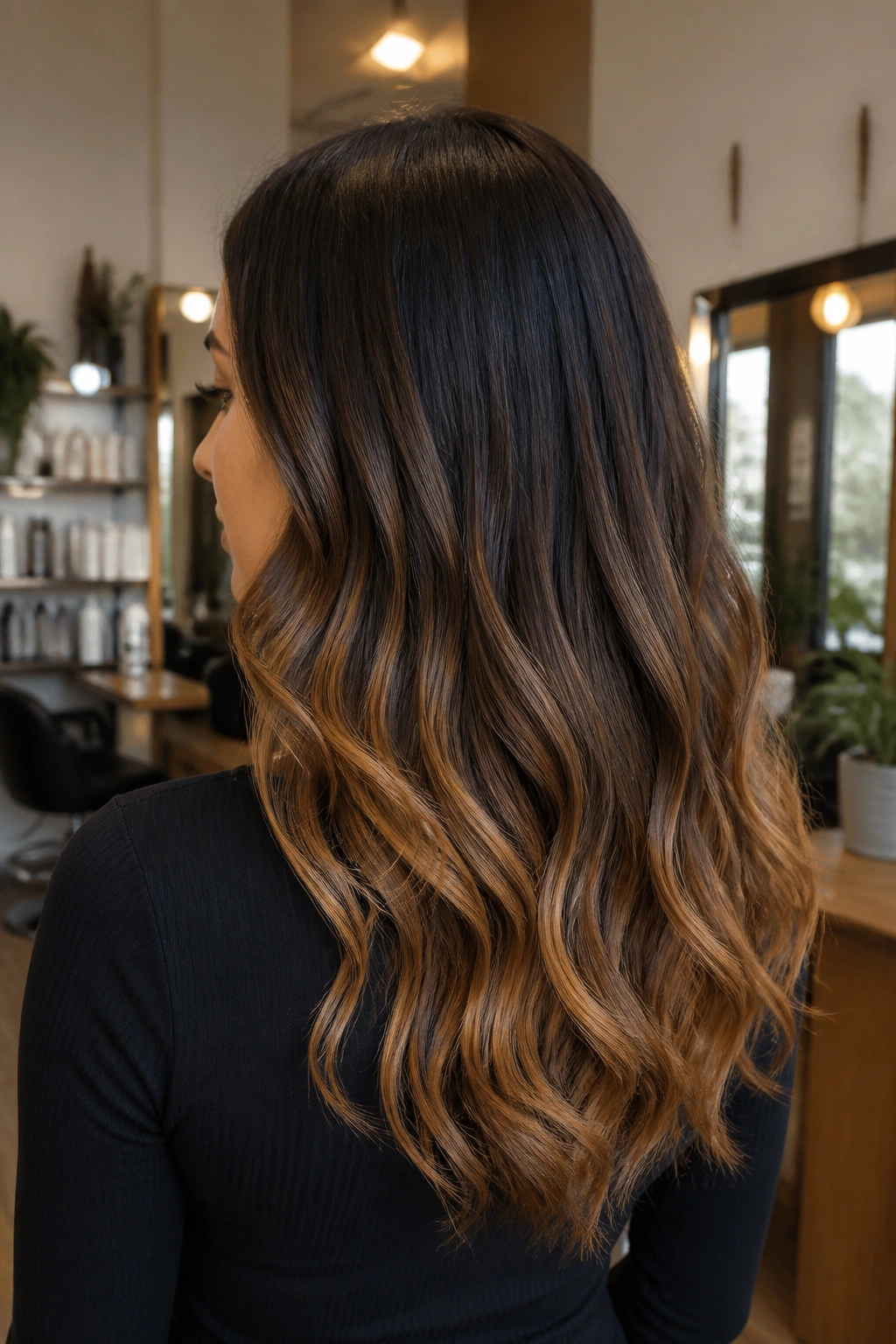
A brunette who wants brightness without face-framing drama usually lands here. Dark espresso roots melting into toasted caramel ends give you a gradual change that feels modern without looking trendy for the sake of it.
This is a color-melt idea, so the handoff between dark and light should be gradual. No hard line. No banding. The root zone stays close to your natural shade for depth, the mid-lengths pick up warmer brown, and the ends get the most caramel. It works especially well on hair past the shoulders, where the length gives the gradient room to breathe.
- Keep the root area rich and cool or neutral.
- Let the lighter ends sit in a warm caramel, not a pale blonde.
- Best for women who wear their hair down more than half the time.
- A gloss every 6 to 8 weeks keeps the caramel from looking flat.
If you like color that looks polished from the back, this is a strong choice. The whole head reads expensive in a very quiet way. No shouting required.
4. Face-Framing Caramel Around a Center Part
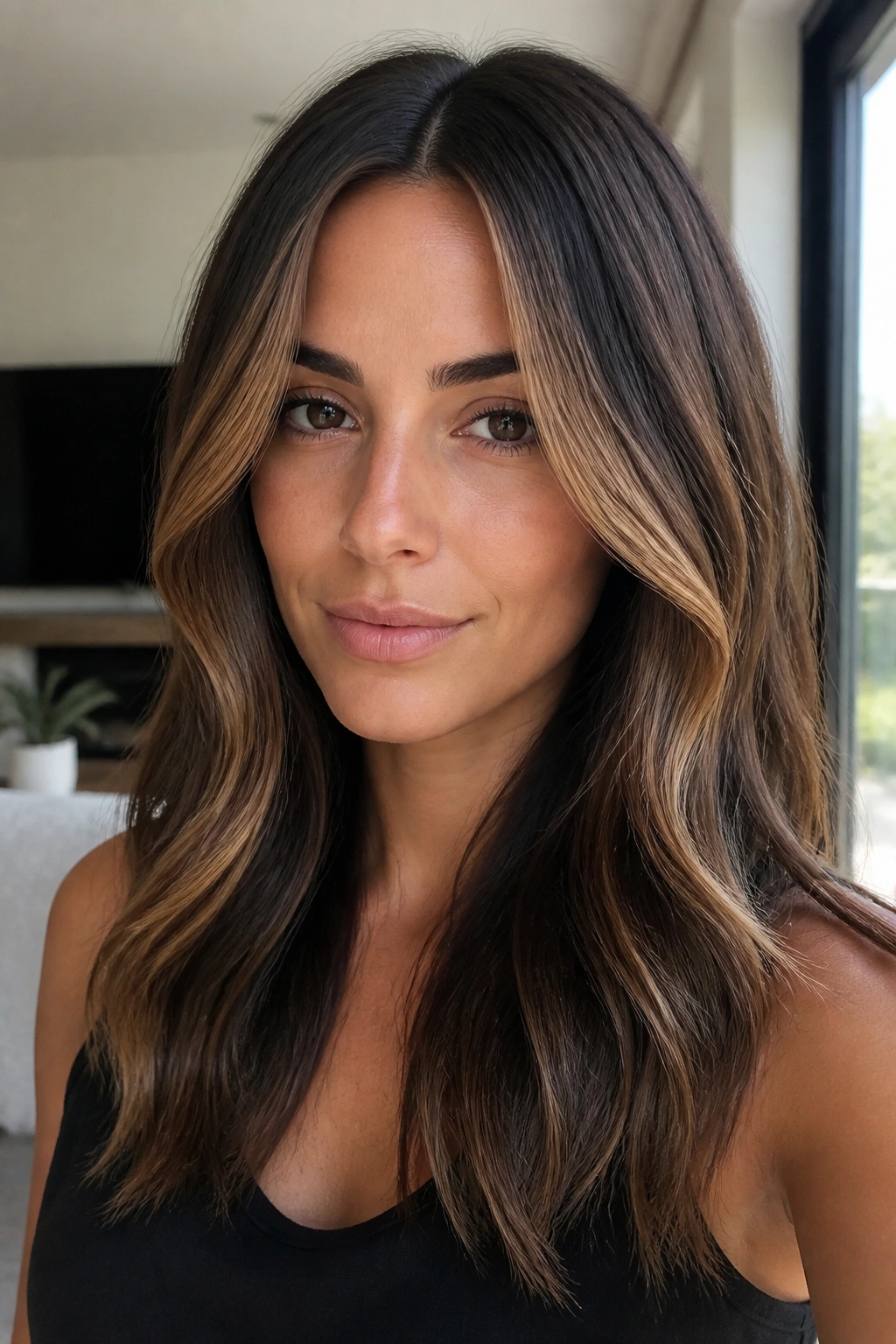
A center part changes everything. It puts the front of the hair on display, which means the color around your face has to do more work than the rest of it. Face-framing caramel is built for that.
The nicest version keeps the brightness concentrated from the temple down to the jaw, where the eye naturally lands. If the front pieces are too thin, the effect gets lost. If they’re too wide, you get a blunt stripe that fights the brunette base. I like the sweet spot in between: narrow at the root, fuller through the cheekbone, then softer again as the pieces drop toward the collarbone.
This style is especially good if you tuck one side behind your ear, wear sunglasses a lot, or live in a haircut that has layers near the front. It gives the illusion of more movement even when the rest of the hair is pinned up or shoved into a claw clip. That matters. A lot of hair color only works when the whole style is visible. This one still shows up in partial views.
And yes, it plays nicely with a natural wave. The bend in the hair makes the lighter pieces flick in and out of view, which is half the charm.
5. Smoky Caramel Balayage for Ash Brunettes
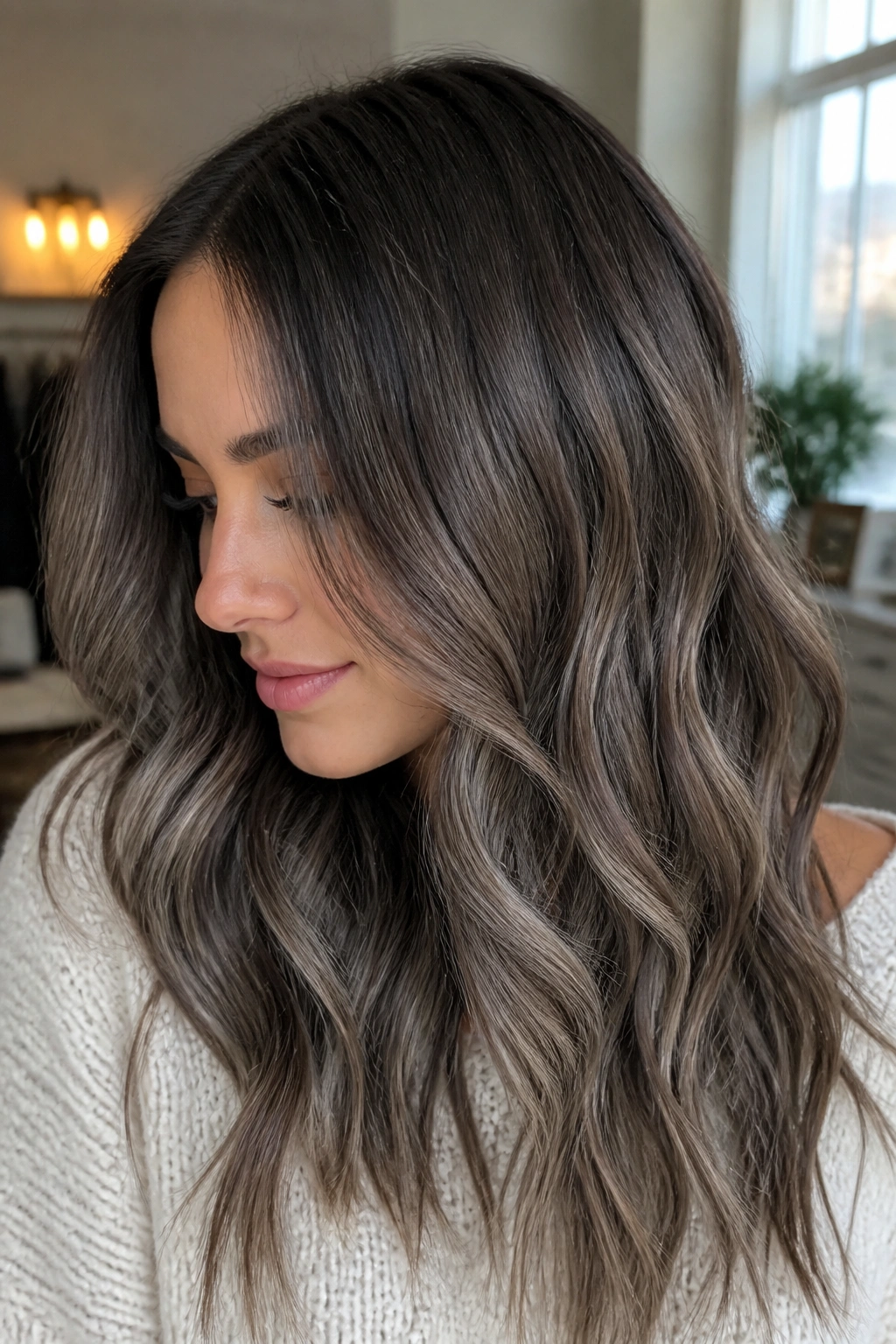
Ash brunettes often panic when they hear the word caramel. Fair. Plenty of warm balayage can look too gold against a cool brown base. Smoky caramel solves that problem by keeping the warmth muted.
Think beige, taupe, toasted almond, and a little bit of muted honey rather than orange or gold. The effect is softer, cooler, and more blended into the base. It does not fight ash brown hair. It sits beside it. That’s the whole point.
This version suits anyone who likes a refined finish and hates obvious highlights. It also works well if your skin looks better in silver jewelry, cool makeup, or deep berry lipstick. The color should feel soft in daylight, not yellow under indoor bulbs. That’s a huge difference.
If you want to ask for it in the salon, say you want a caramel balayage with a cool or smoky finish and a soft root shadow. Those two things matter more than the word caramel itself. One controls the grow-out. The other keeps the tone from running too warm.
6. Honey Caramel on a Wavy Lob
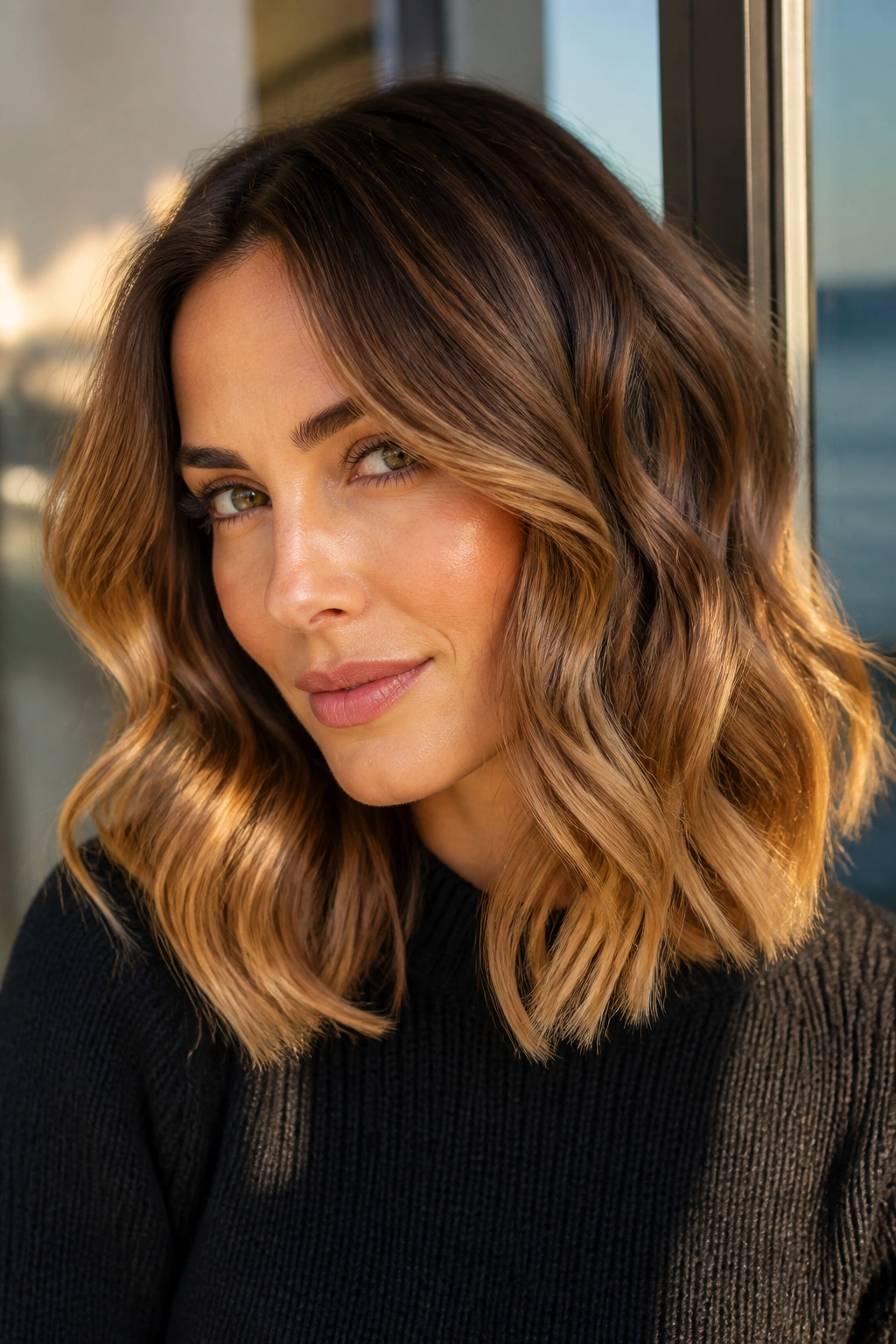
A wavy lob gives caramel room to show off. Shorter lengths can carry brightness, but a collarbone cut is especially good because the bends land right where the light can catch and break.
Honey caramel sits a little warmer than beige caramel, which makes it a good partner for soft waves. The look is easy to read: richer brown underneath, brighter warm ribbons through the mids, and lighter pieces around the outer curve of the hair. If you flat-iron it bone straight, you lose some of that movement. Leave a little bend in it. Better yet, use a 1-inch iron and keep the ends slightly loose.
Why it works on lob lengths
A lob has enough weight to look polished, but not so much that the light gets swallowed. The brighter pieces sit near the surface, which means you do not need a huge amount of lift to make the color visible.
How to style it
Use a light heat protectant, then rough-dry first and finish with a round brush or wave iron only on the top layer. That keeps the caramel pieces shiny instead of stiff. A tiny bit of cream at the ends is enough. Too much product kills the texture fast.
7. Mushroom Brown with Caramel Veils
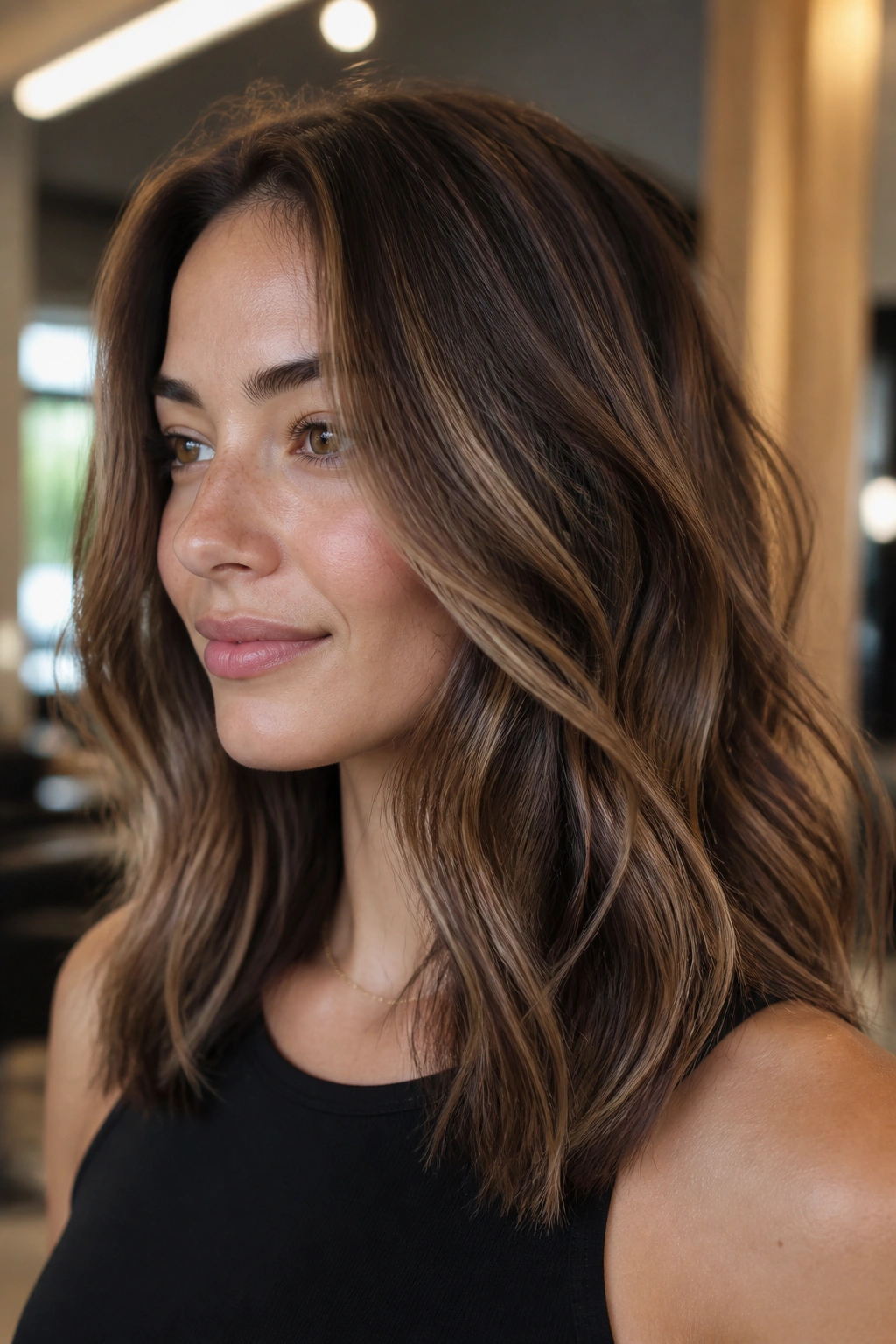
Can caramel work on a mushroom brunette base? Yes, if you keep the contrast low and the highlight pieces airy.
Mushroom brown already has that cool, earthy look, so the caramel should appear as veils rather than streaks. Picture thin hand-painted pieces that live mostly on the surface and catch the light when the hair moves. They should not jump out from across the room. They should make people lean in a little closer. That’s the sweet spot.
This idea is a strong match for someone who wants dimension without obvious warmth. It’s also good for people with fine hair, because too much lightening can make fine brunette strands look thinner than they are. A few sheer caramel veils create the illusion of body. More is not better here.
The best finish is a soft, matte-to-gloss balance. If the hair gets too shiny and too golden, you lose the mushroom effect. A neutral glaze after the lightening service keeps the whole thing grounded.
8. Auburn-Caramel Blend for Warm Brunettes
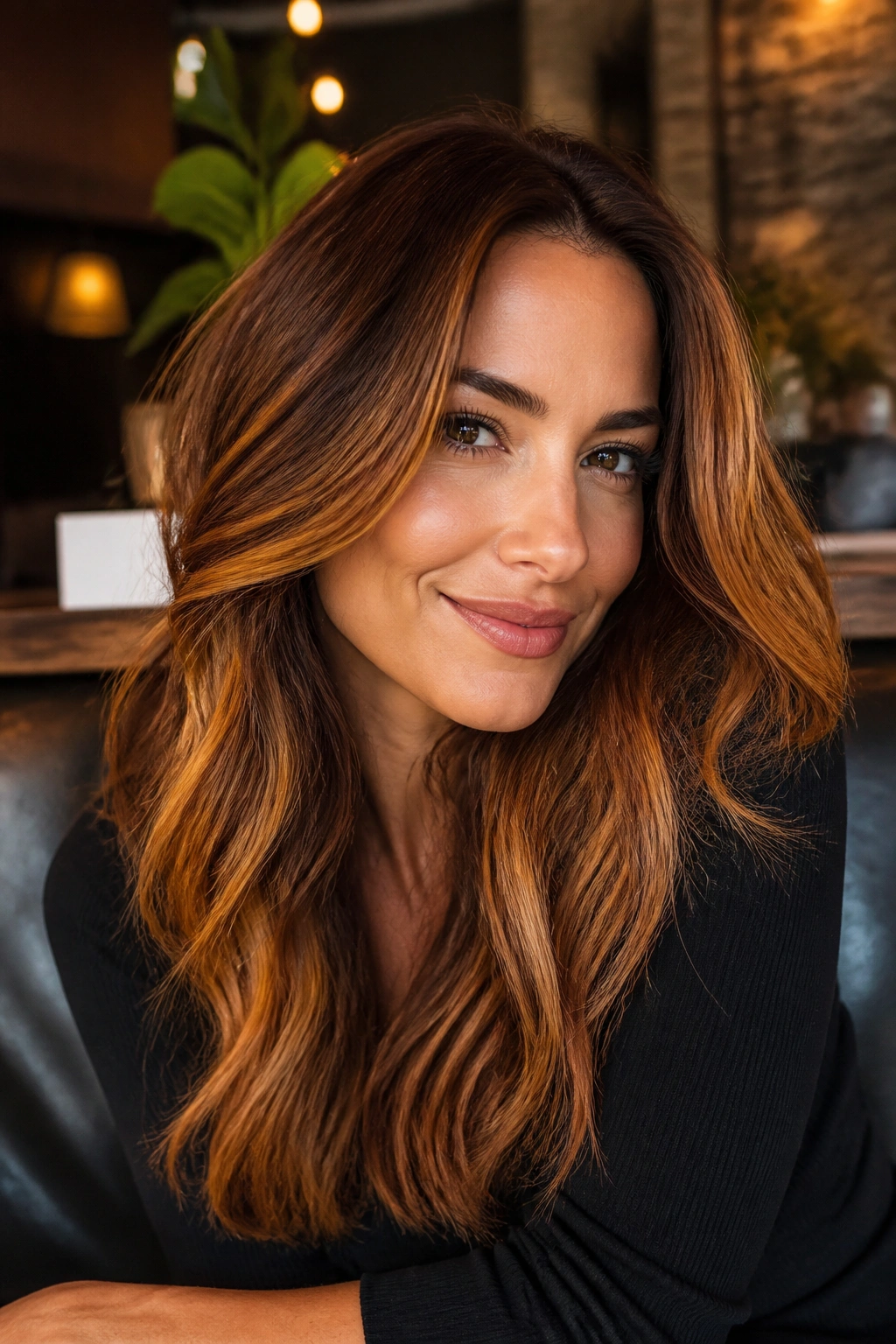
If your natural brunette leans chestnut, mahogany, or chestnut-brown with red in it, fighting that warmth is usually a waste of time. Better to work with it. Auburn-caramel balayage does exactly that.
This version layers amber, copper-brown, and caramel together so the result feels warm from root to tip. It can be gorgeous on olive skin and on anyone whose wardrobe already lives in rust, cream, chocolate, and gold. The hair looks rich. Plush, almost. Not shiny in a plastic way, but glossy in a way that makes the strands look thicker.
One thing I like about this look is that it holds through the seasons without feeling fussy. The warmer tones do not disappear the second you step outside. They stay readable in soft light, which makes the color feel consistent instead of moody and unpredictable.
If you want to keep it elegant rather than coppery, ask for the caramel pieces to stay more golden than red. That tiny shift matters more than people think.
9. Glossy Chocolate-Caramel Melt
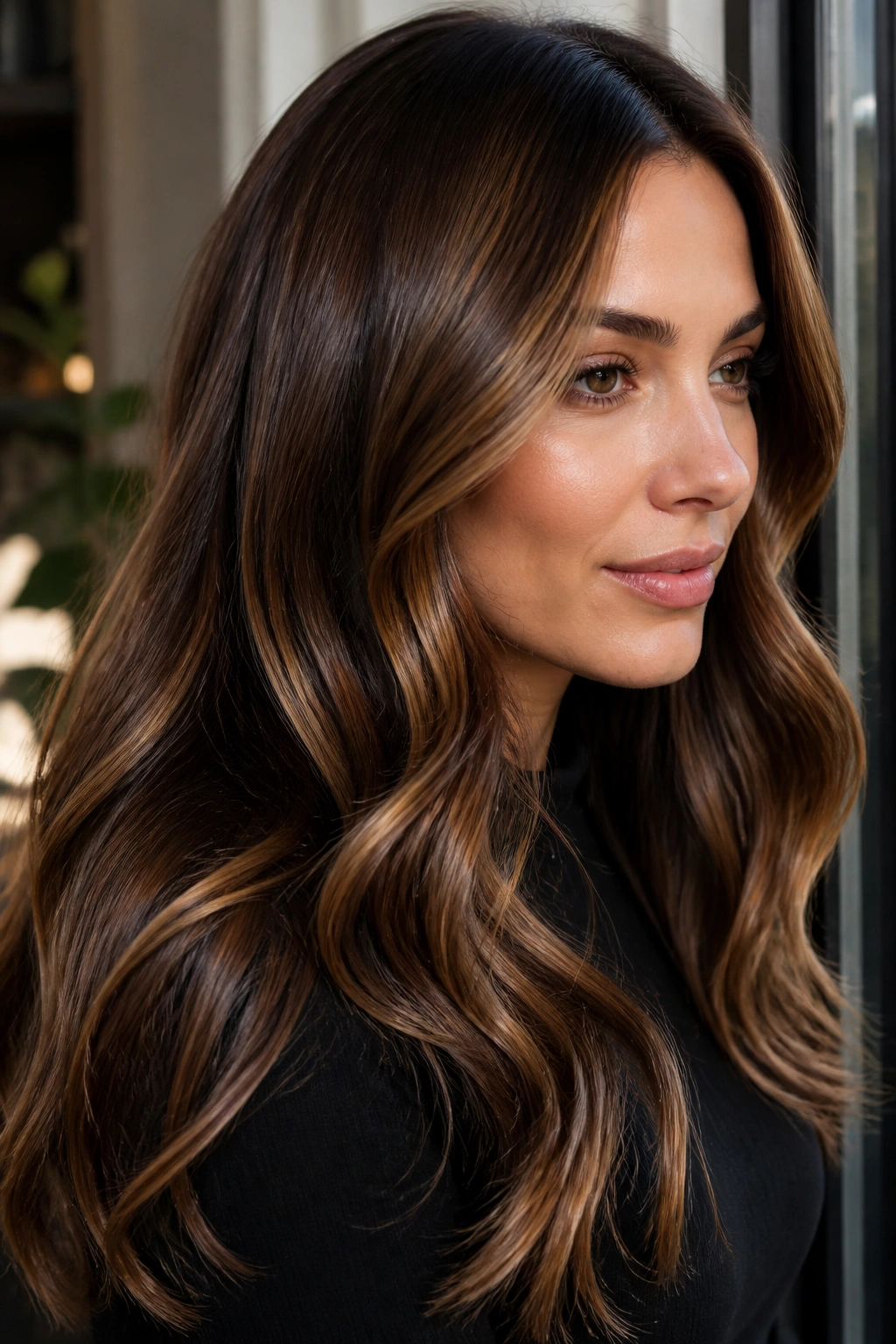
A chocolate-caramel melt is for someone who likes the idea of highlights but does not want the highlight to announce itself. The finish is smooth, glossy, and blended so the color feels poured through the hair instead of painted on.
The base stays chocolate brown, maybe a shade deeper than your natural color. The lighter pieces show up in the mids and ends, but they’re softened with a caramel gloss so there’s no hard jump between tones. On straight or softly waved hair, the effect is especially pretty because the color reads like a reflective sheen. You see depth first, then dimension.
This is one of the better choices for long, healthy hair. The melt gives movement without making the ends look choppy. If your hair is very layered already, the contrast can become too broken up, so keep the transition gentle and the face-framing pieces subtle.
A clear gloss every 4 to 6 weeks helps here more than aggressive toning. You want shine, not ash.
10. Caramel Balayage on Curly Hair
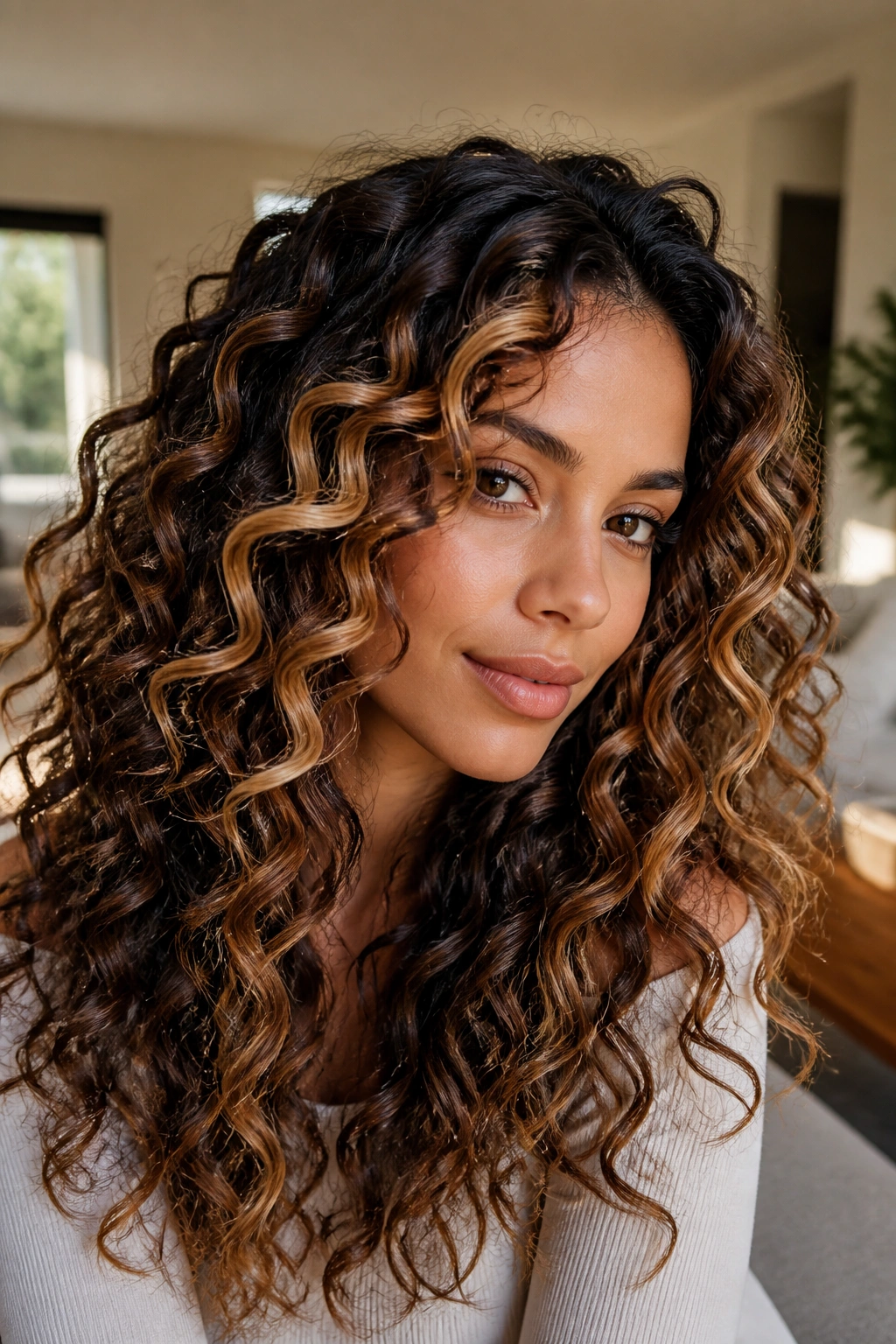
Curly hair changes the whole conversation. The curl pattern breaks up color, so caramel balayage can look softer and richer on curls than it ever does on straight hair.
How curl pattern changes placement
Color needs room to show through the coil or wave. A good colorist will usually place lighter pieces where the curl opens up, not only where the hair lies flat. That means the brightness can sit a little higher near the crown and a little deeper through the mids so the shape still reads. The result is dimensional, not busy.
What to ask for in the chair
- Ask for wider caramel ribbons around the face and top layer.
- Keep the lighter pieces a little farther apart than you would on straight hair.
- Request a gloss that keeps the tone warm but not brassy.
- Do not flatten the curl pattern with too much tension while it’s being painted.
Curly caramel balayage looks best when the hair is hydrated and shiny. Dry curls can make even beautiful color look dusty. A leave-in cream and a curl gel with decent slip help the caramel pieces stay visible instead of fuzzy.
11. Chunky Caramel Panels with Soft Edges
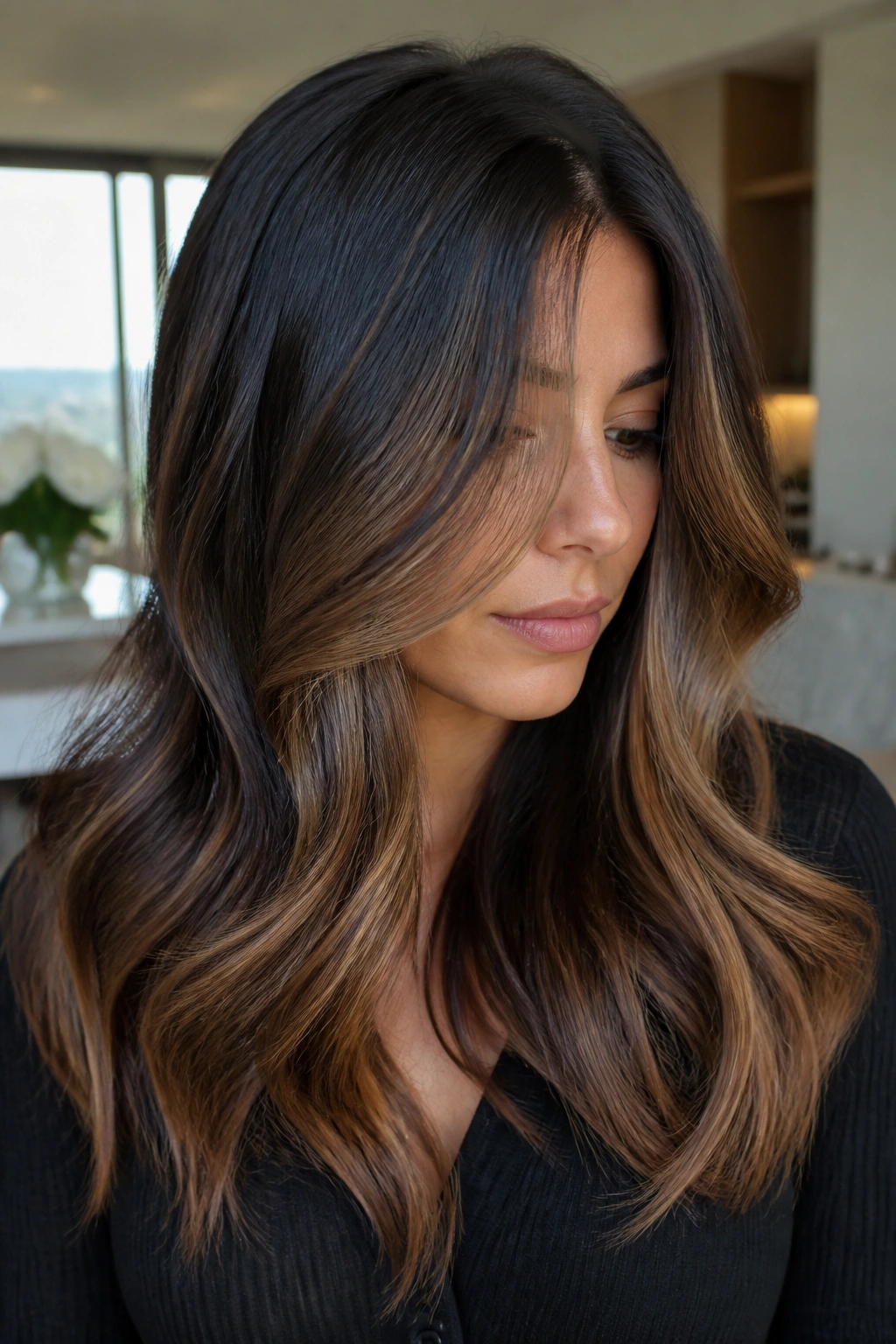
Thick hair can handle drama. A lot of people are afraid of wider color panels because they imagine stripy, old-school highlights. That’s not what this is.
Chunky caramel panels, done well, have soft edges and plenty of blend. The colorist paints broader pieces — maybe 3/4 inch to 1 inch wide in some areas — then feathers the edges so the shape never looks boxed in. On dense brunette hair, that kind of placement gives you visible dimension from across the room without making the whole head look overdone.
This is a strong option if your hair is naturally full, layered, or very long. Thin slicing can vanish in thick hair. Bigger panels show up better. They also make blowouts look more expensive because the light has more surface to bounce off.
The trick is restraint at the root. Keep the top area darker and let the caramel live in the middle and lower sections. That way the color feels intentional, not noisy.
12. Beige Caramel on Ash Brunette Hair
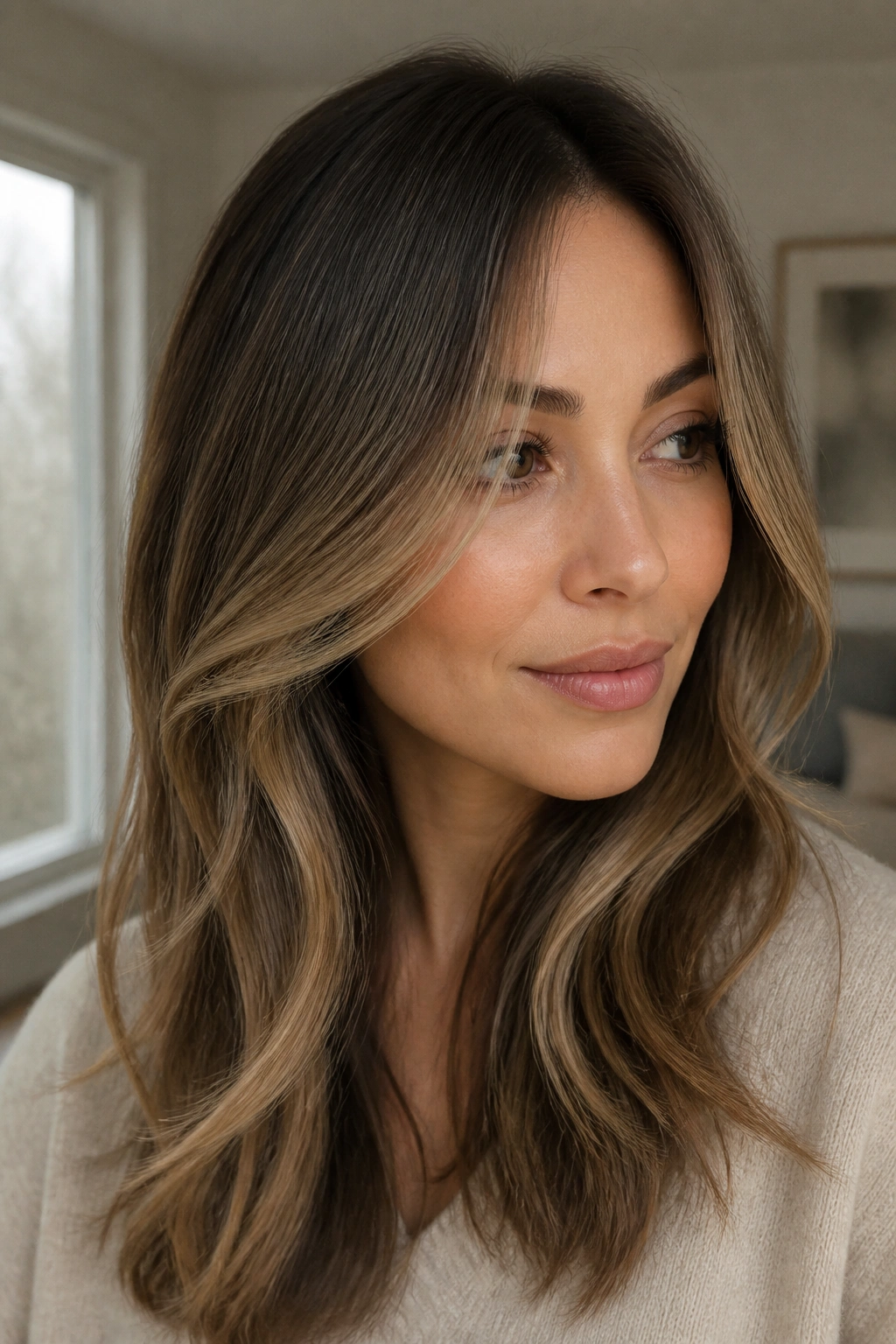
Beige caramel is the escape hatch for anyone who wants warmth but flinches at orange.
Ash brunettes can get strange results from overly golden highlights. Beige caramel stays soft, creamy, and a little muted, which makes it a better match for cooler brown bases. It still brightens the hair, but the brightness reads as soft light rather than sunny gold. That matters if your skin tone leans cool or neutral.
This look works especially well when the highlights are kept fine around the face and slightly bolder through the mids. The beige tone should not wash out the brunette base. It should sit on top of it like a light veil. Too much lift, and the whole thing loses the ash-brown character that made it appealing in the first place.
I’d choose this for someone who wants a polished office-friendly color that still looks good on a weekend ponytail. It is subtle in the best way. No fuss, no shouting.
13. Golden Caramel for Deep Brunette Bases
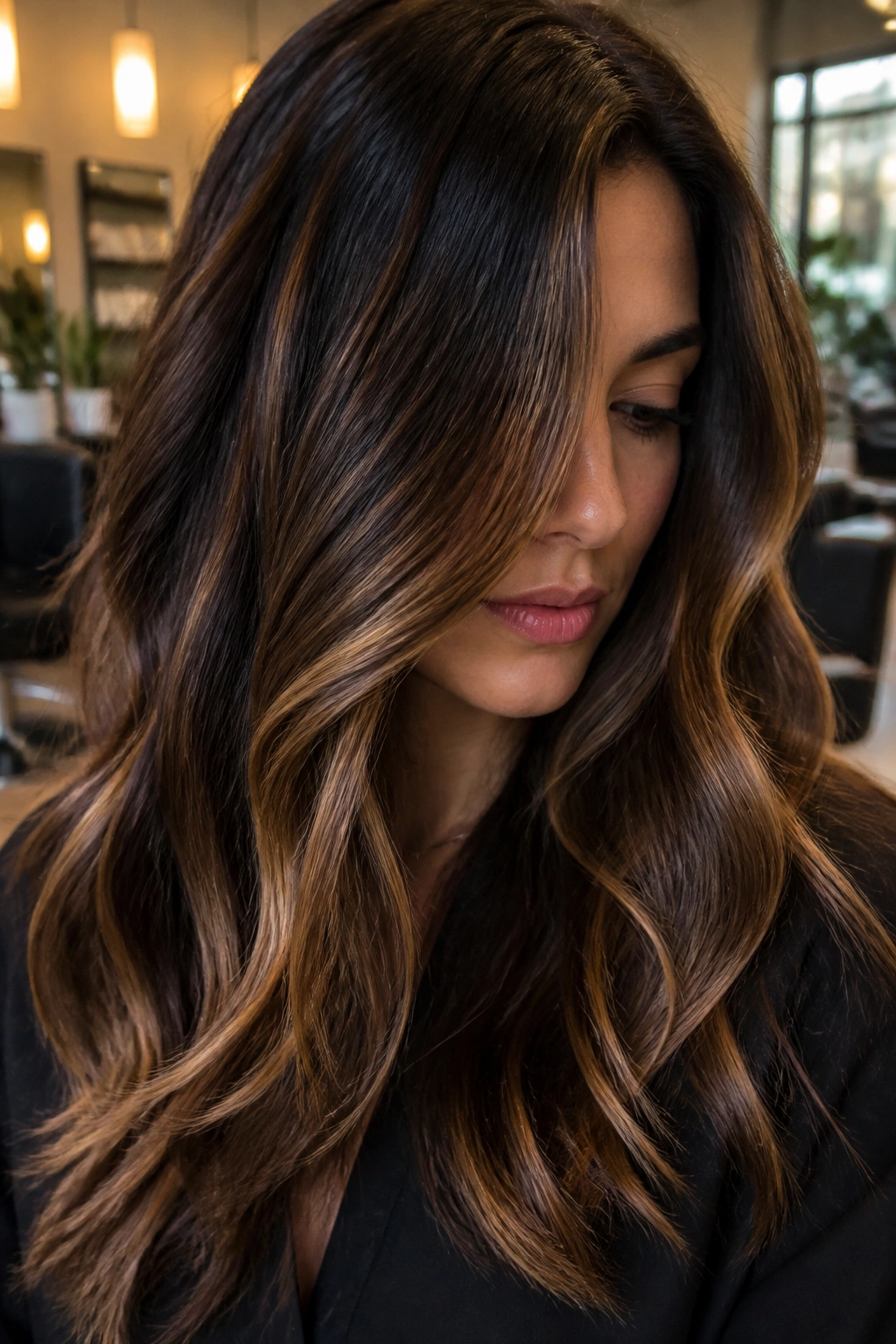
Deep brunettes need warmth, not tiny pale pieces that barely show up. Golden caramel is the right answer when your base is dark and rich and you want the highlights to look alive.
The first thing to get right is the lift. On a level 3 or 4 brunette, caramel usually looks best when the lightened pieces land around a level 7, maybe 8 if the hair can handle it. Push beyond that and you start losing the depth that makes brunette hair beautiful in the first place. The goal is contrast with warmth, not blonde for blonde’s sake.
This style shines on thick hair, layered cuts, and darker natural bases that already carry a little red or gold. The warmth in the caramel reflects nicely off the base, so the hair looks fuller and more dimensional. If you keep the ends glossy, the color almost glows.
A golden caramel gloss can also help this look stay soft after the lightening service. That final tone is what keeps the highlights rich instead of sandy.
14. Neutral Caramel Root Smudge
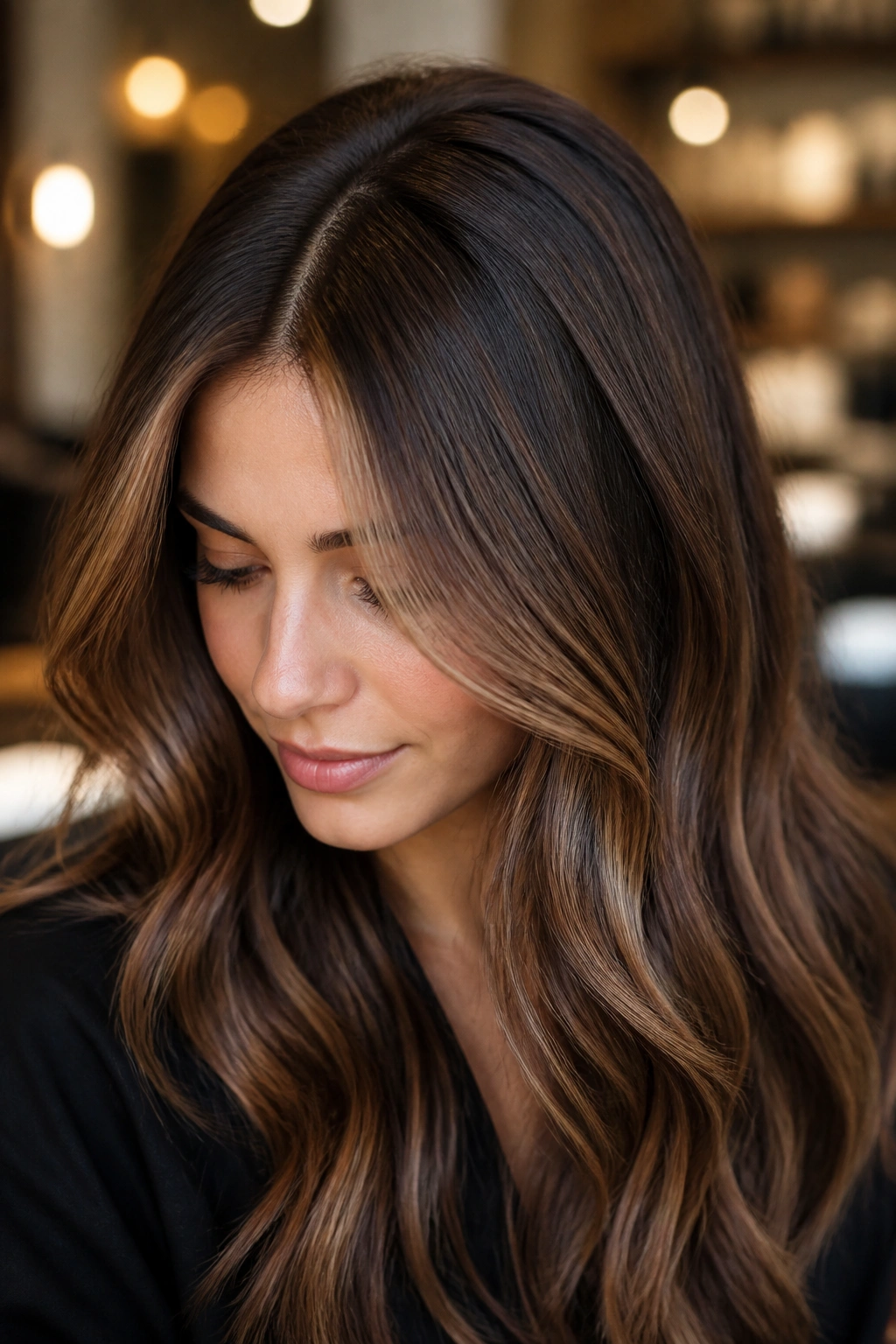
A neutral caramel root smudge is for people who hate a hard grow-out line but still want lighter hair. It’s one of those quiet salon details that makes a huge difference.
The root smudge keeps the first inch or so close to your natural brunette shade, then softens into caramel through the mids. Because the root area is shaded rather than left blunt, the color grows out in a softer way. You do not get that obvious line of demarcation that makes some balayage feel high-maintenance.
This idea works on almost any haircut, but it’s especially useful on shoulder-length styles and long layers. You can wear it straight, wavy, or tied back. It also plays well with brunettes who color their roots between visits and want a little more breathing room.
Ask your colorist to keep the smudge neutral rather than ashy or golden. Neutral gives you the most flexibility later. If the caramel starts to feel too warm, the glaze can cool it slightly without forcing the root area to change direction.
15. Long-Layer Caramel Cascade
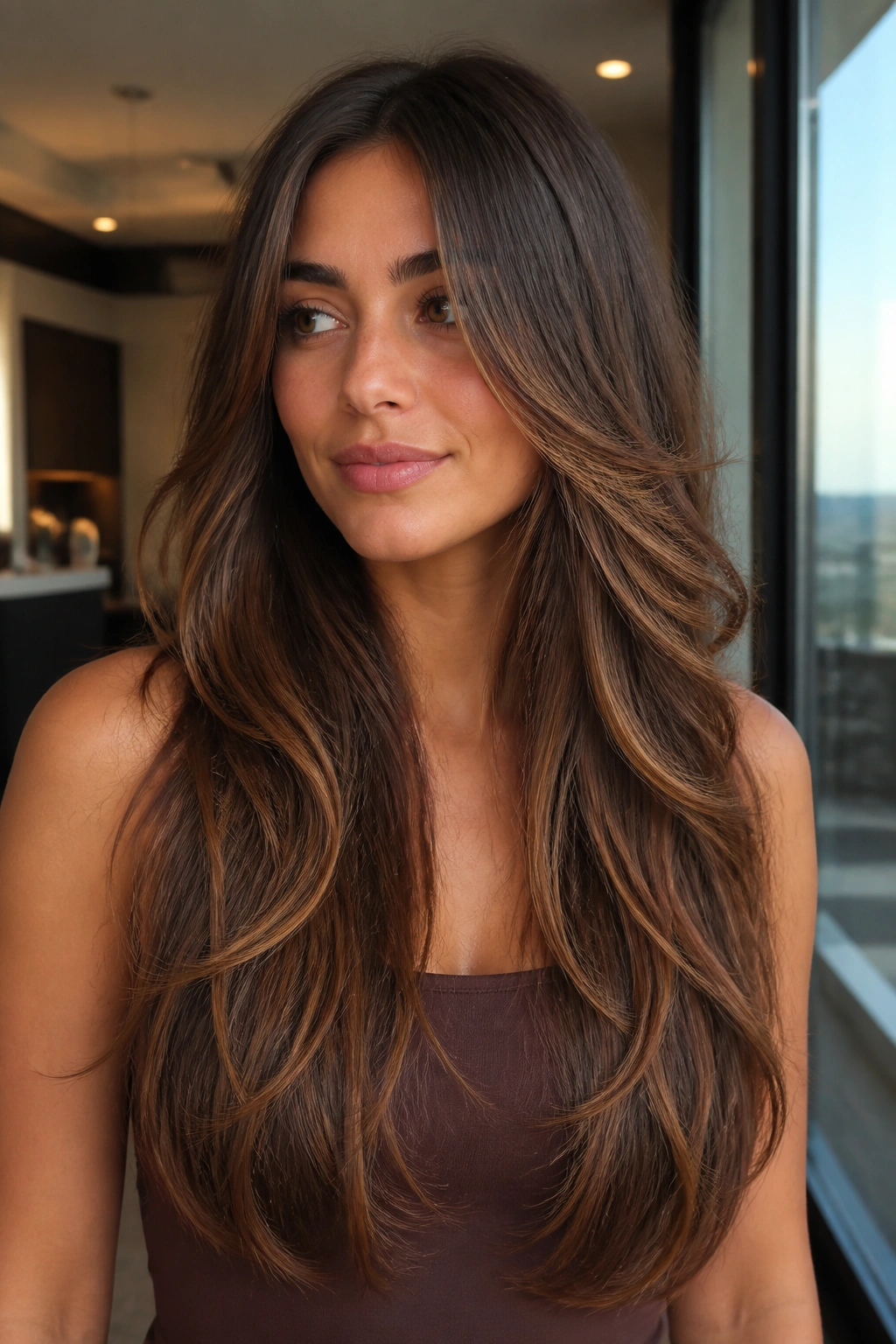
Long layers and caramel balayage are old friends. The cut creates movement; the color makes that movement visible.
When the hair falls past the shoulders, hand-painted caramel can run through the interior layers and peek out from under the top section. That creates a cascading effect, where the lighter pieces appear and disappear as the hair moves. It looks soft in a braid, pretty in a half-up style, and especially good in loose curls. The length gives the color room to breathe.
This is one of the best choices if you wear your hair down a lot and want the color to do some work for you. The longest layers catch the brightest bits, while the shorter pieces around the crown stay darker for depth. The result is not flat. It has shape.
A little side note: this is not the place to go too pale. Long hair can take lightness, yes, but if the ends get pushed too far, they can start to look dry even when they’re healthy. Toasted caramel is safer than honey blonde here.
16. Short Bob with a Caramel Sweep
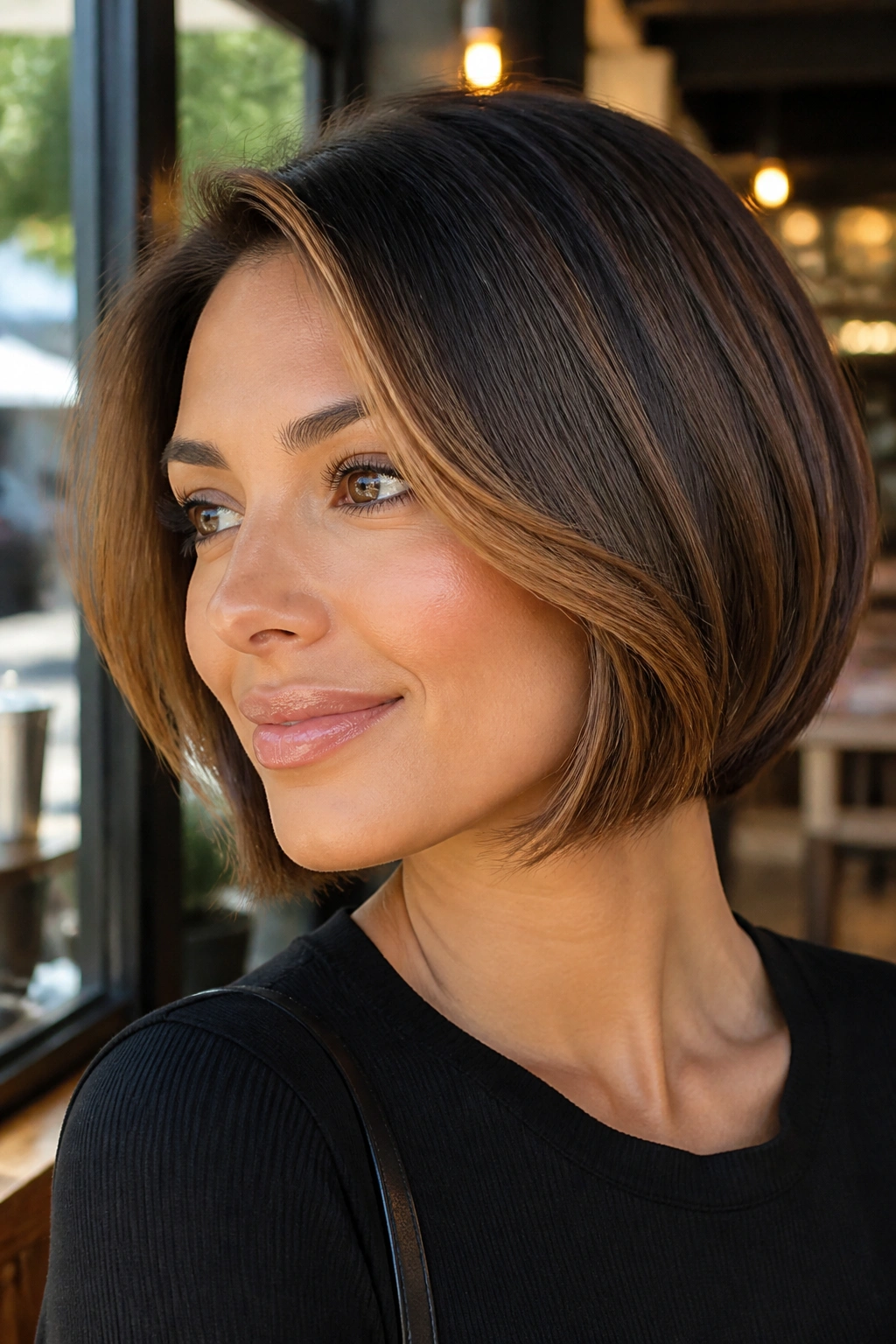
Short hair does not need to stay simple. A bob with a caramel sweep can look sharp, clean, and a little bit playful all at once.
Because the length is shorter, the placement has to be smarter. Too many highlights on a bob and the shape gets messy. The better move is to keep the caramel concentrated around the front edge, the upper crown, and the lower perimeter where the cut curves inward. That gives the bob movement without making it look too busy.
This style is especially nice on blunt bobs, chin-length cuts, and softly angled shapes. The lighter pieces can make the line of the haircut feel more expensive, if that makes sense. Not fancier. Just better defined. You see the edge of the cut more clearly when the color bends with it.
A gloss matters here more than people expect. Short hair sits near the face, so if the caramel gets brassy, you’ll notice it fast. Keep the tone creamy and the shine high.
17. Crown-Lighting Caramel Balayage
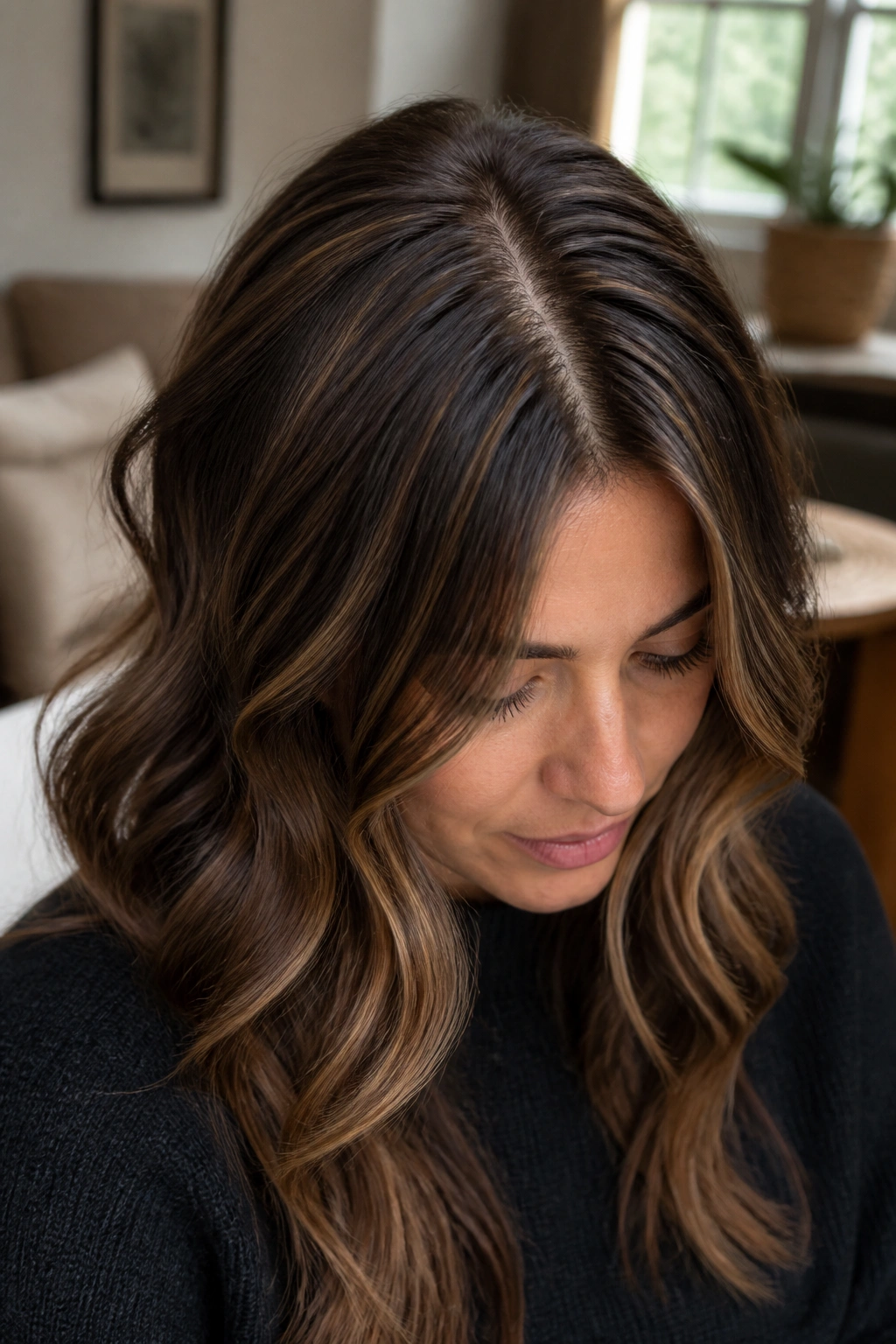
Most people think of caramel balayage as something that lives around the front. Crown-lighting flips that idea around and brightens the top where the part exposes the hair most.
Why the crown matters
The crown is where brunette hair can look flat first. A little extra light there makes the whole style feel lifted, especially if your hair is fine or lies close to the head. The effect is subtle at first glance, then suddenly you notice the hair has more depth.
What to tell your colorist
- Ask for finer, more concentrated pieces around the part line.
- Keep the front pieces softer so the brightness does not all sit in one spot.
- Use a caramel shade that matches the rest of the head, not a separate blonde tone.
- Refresh the gloss before the roots get too dull.
This is a smart option for people who wear a center part, a deep side part, or regular blowouts with volume at the roots. The lifted crown makes the style look fuller without adding fake volume. That’s the whole trick.
18. Soft Ombré Caramel Ends
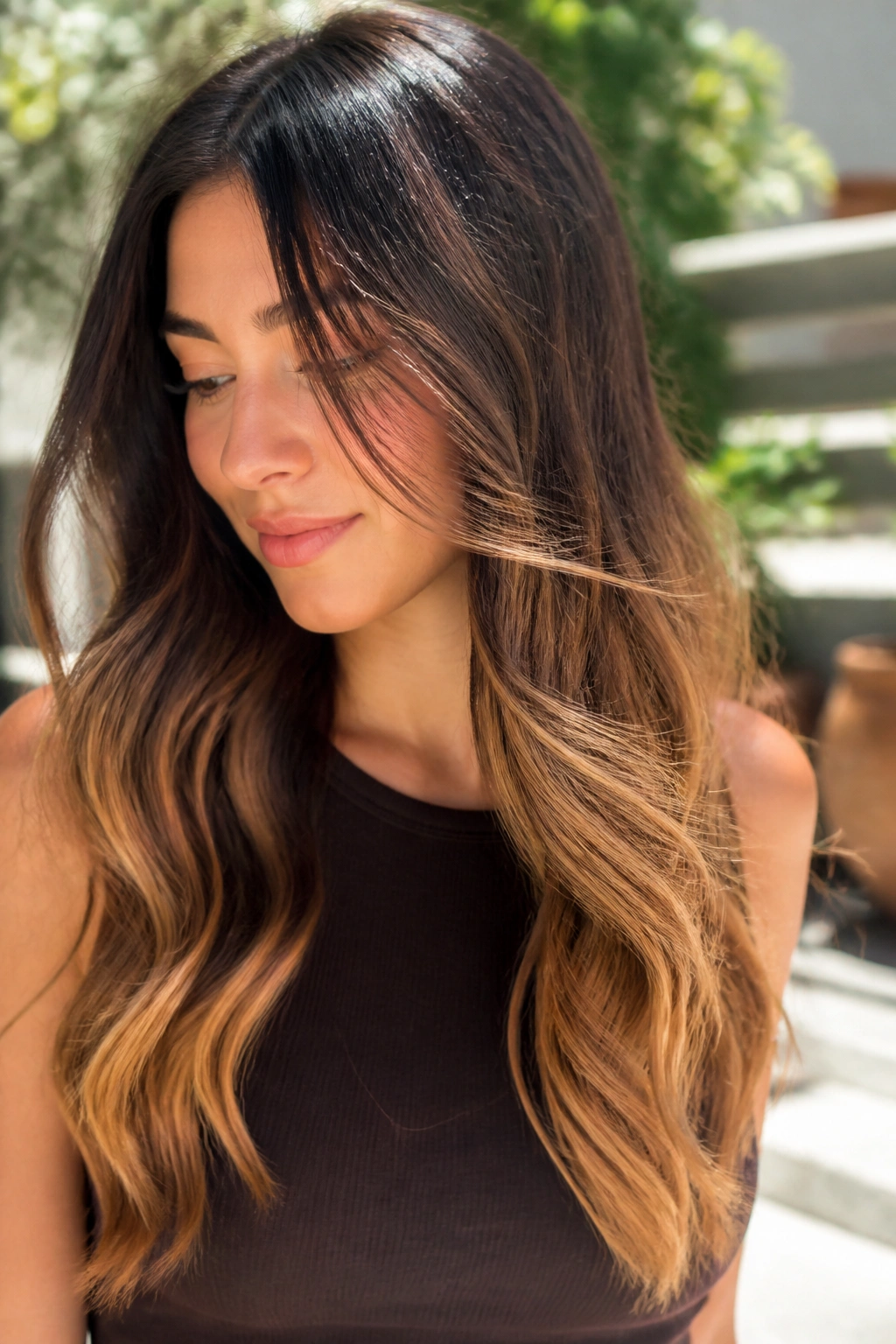
A good ombré should feel gradual, not dipped. Soft caramel ends give you that long fade from brunette roots to warm, lighter tips without a harsh transition point.
This version is gentler than a classic high-contrast ombré. The change starts subtly through the mid-lengths, then gets a little brighter at the ends, but the overall effect stays calm. That makes it a good match for someone who wants visible lightness and low maintenance in the same color. It also works well on hair that gets tied up often, because the ends still show some dimension even when the roots are out of sight.
I like this on wavy and layered cuts, since the movement helps blend the transition. Straight hair can wear it too, but the line from dark to light needs to be especially soft. A blunt ombré line looks dated fast. A feathered one does not.
Use this if you want the ends to feel sun-kissed and warm, not bleached. There’s a difference, and it shows.
19. Teddy-Brown Brunette with Caramel Ribbons
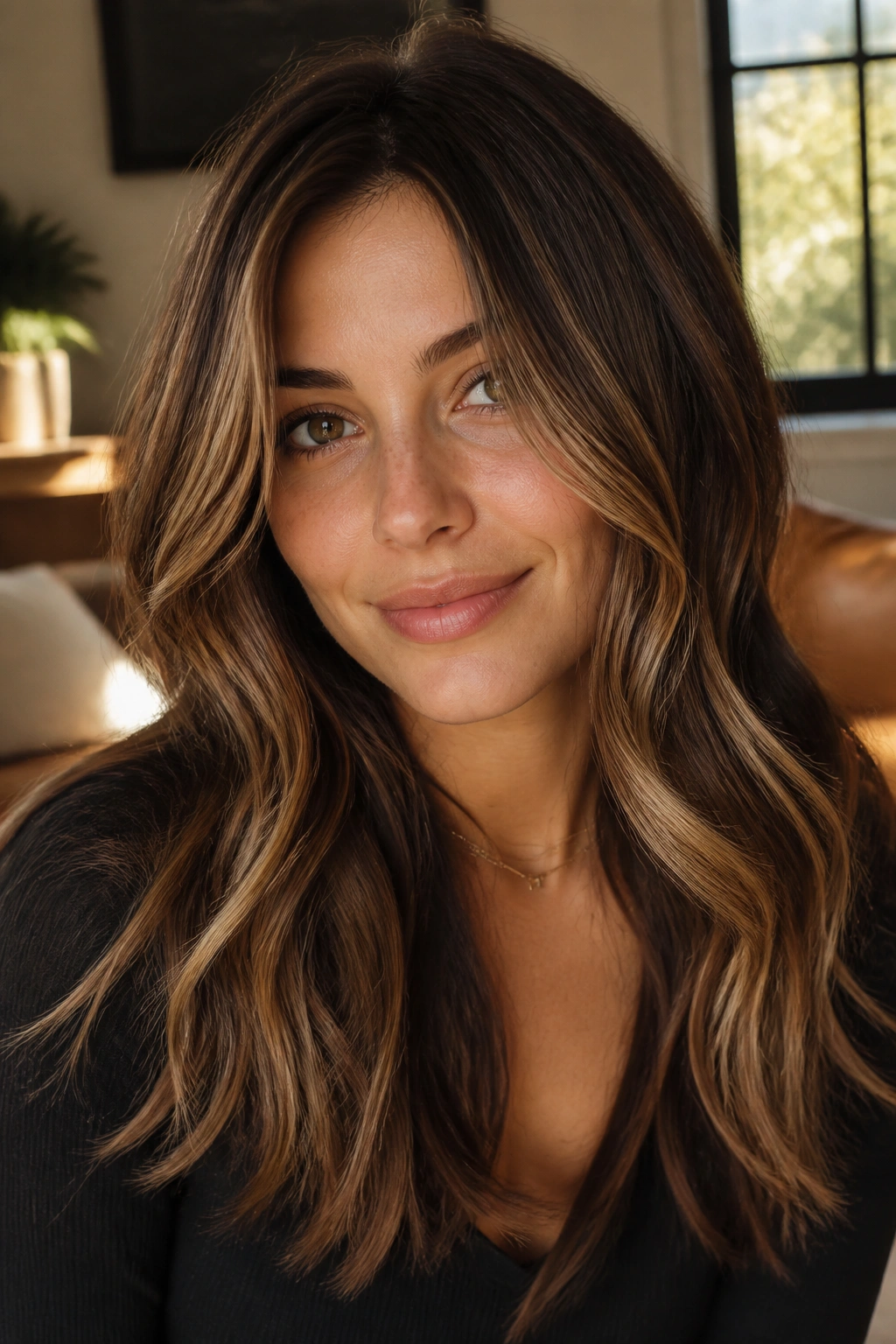
Teddy-brown hair sits in that plush middle ground between ash and gold. It has warmth, but not so much warmth that it turns orange. Add caramel ribbons, and the whole thing gets a soft, cozy look that feels rich without going dark.
The reason this shade works so well is simple: the base and the highlights live in the same warm family. The color does not fight itself. Instead, the caramel pieces lift the surface just enough to create depth, and the teddy-brown base keeps the result grounded. On medium brunettes, this can look especially polished because the contrast never gets too loud.
If you want to wear this color well, keep the gloss creamy and avoid over-toning it cool. That can flatten the whole effect. Warm brunette color needs warmth to stay alive. Not orange warmth. Just enough gold and beige to keep the ribbons soft.
This is one of those shades that looks best in natural light. Indoors it reads calm; outside it gets a little more glow.
20. High-Contrast Caramel for Thick Brunettes
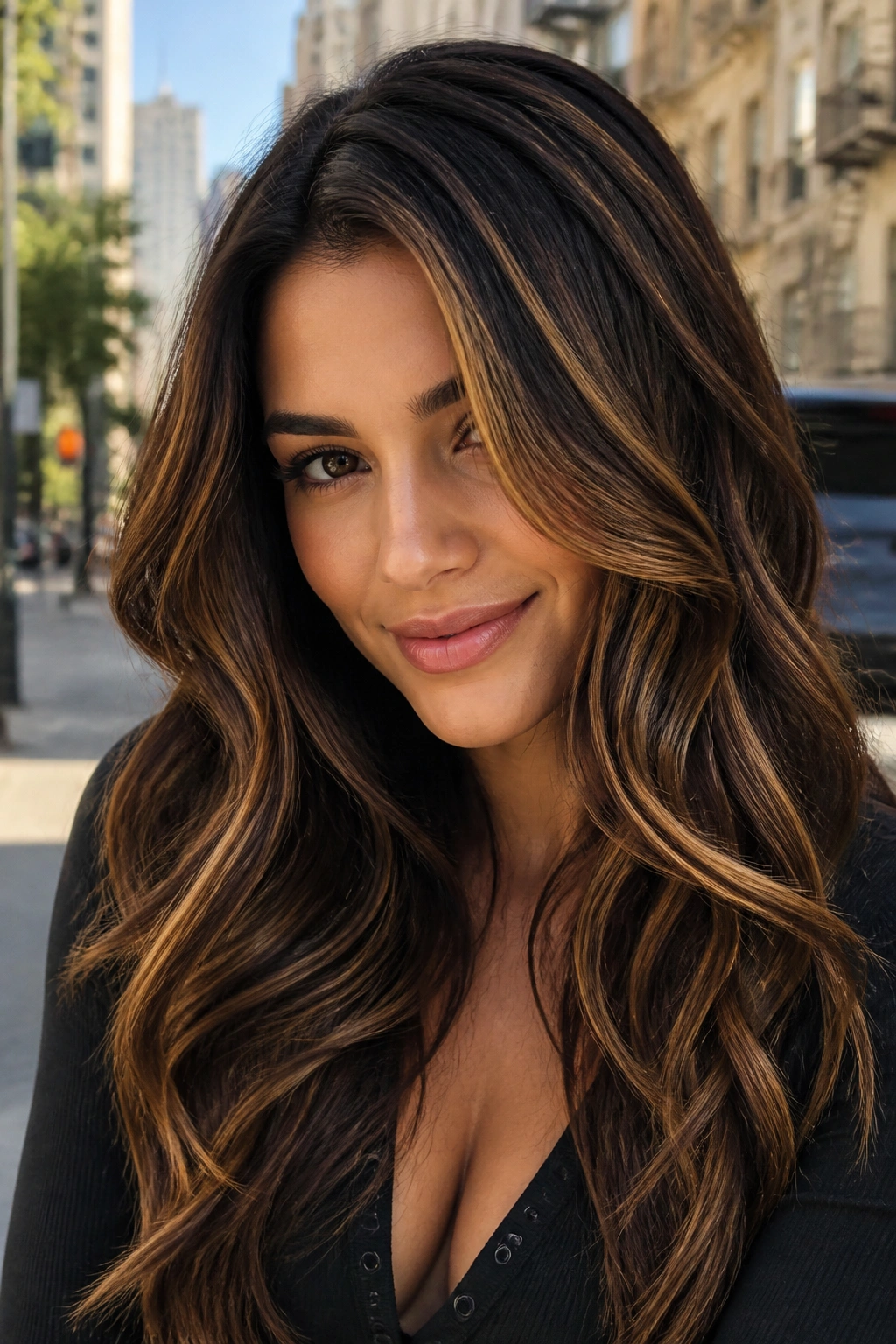
Thick brunette hair can take more contrast than people expect. In fact, a stronger caramel balayage often looks better on dense hair than a super-soft one, because the thickness keeps the color from reading thin or scattered.
This style uses more visible ribbons and a little more brightness through the mids and ends. The contrast should still be blended at the root, but the lightened pieces can be more noticeable on purpose. On very full hair, that gives the cut shape. It also keeps the ends from disappearing into one big dark mass. I like this especially on layered shags, long blowouts, and textured cuts that need a little definition.
The key is balance. You want enough caramel to stand out, but not so much that the brunette base loses its role. The dark pieces are what make the light ones interesting. Strip that away and the color loses its depth.
If you’re torn between subtle and bold, thick hair usually leans bold better. The density can carry it. And when the caramel is chosen well — warm, glossy, and placed with some room to move — it gives brunette hair that rare thing: brightness with structure, not chaos.
