



The best subtle balayage never looks like a color appointment. It looks like your hair spent a month in better light, lost a little of its heaviness, and kept the depth that makes it feel like yours.
That’s the sweet spot people actually want, even if they ask for “something lighter.” Too much contrast and the hair starts to shout. Too much warmth and you get brass. Too much ash and the whole thing can look flat, especially on brown hair that already leans cool.
A good balayage is usually only one to two levels lighter than the base, with soft edges and a root that stays a little deeper. That small shift does a lot of work. It brightens the face, breaks up solid color, and grows out without that hard line that makes you book a correction appointment faster than you’d like.
The ideas below stay on the natural side on purpose—more soft ribbons, melted tones, and believable brightness than obvious streaks. And that’s where the real interest is anyway.
1. Honey Ribbons Over an Espresso Base
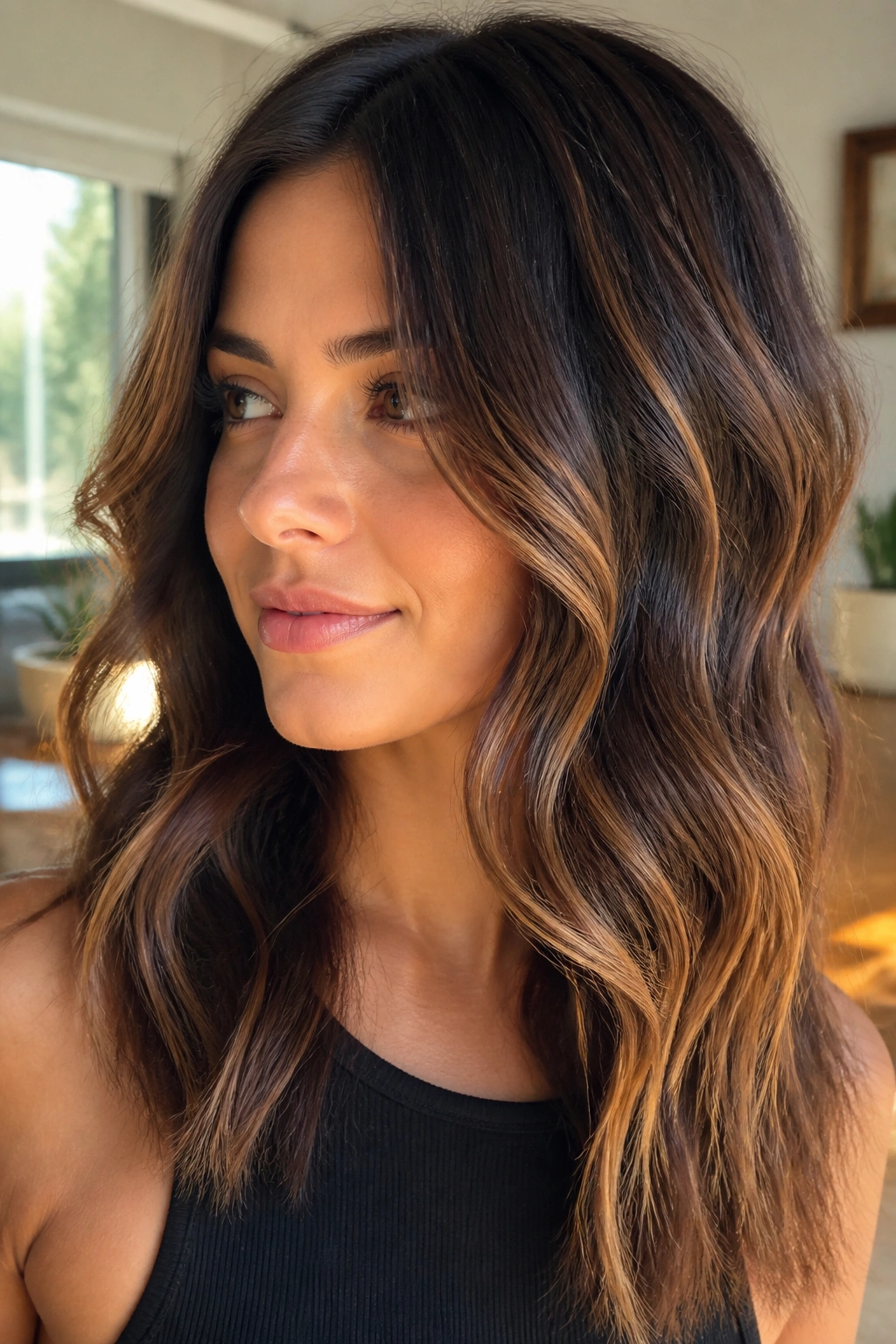
Honey ribbons on espresso brown hair are one of the safest ways to add warmth without crossing into blonde territory. The trick is keeping the pieces fine and surface-level, so the darker base still does most of the visual work.
What makes it soft
If your hair sits around a level 3 or 4, honey is a smart lift because it reads bright in the sun but warm and grounded indoors. Ask for painted pieces mostly through the mid-lengths and ends, with a soft root shadow left untouched for at least the first inch.
A few face-framing strands can do more than a full head of lighter pieces. Seriously.
- Best on medium to thick brown hair that can hold contrast without looking patchy
- Ask for golden beige toner, not bright yellow gold
- Works well with loose waves, blowouts, and layered cuts
- Touch-ups usually stay easy for 10 to 12 weeks
My favorite part: honey balayage looks richer when the ends are slightly darker than the mids, so the color feels borrowed from the sun instead of poured on top.
2. Mushroom Brown Melt with Ashy Ends
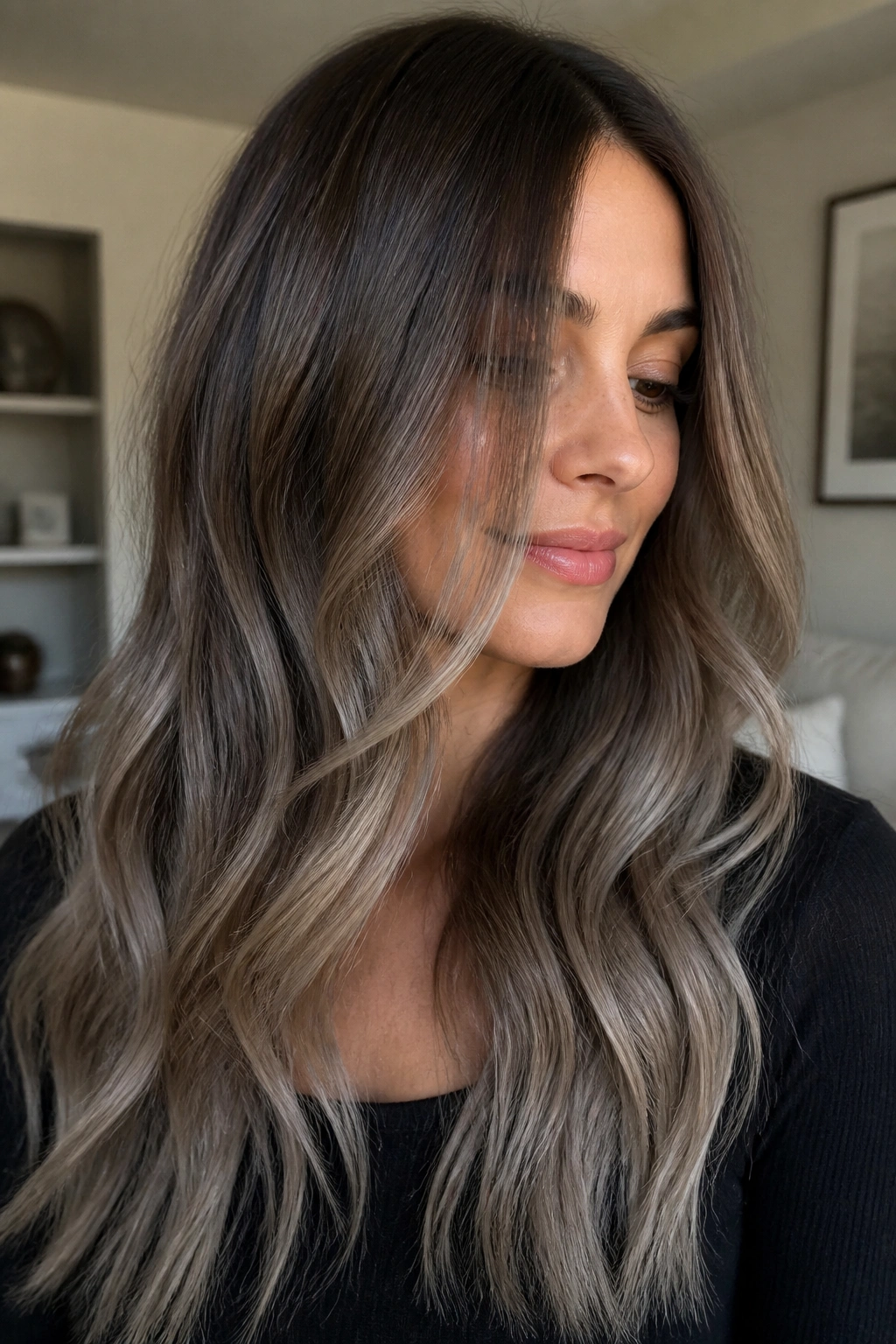
Why does mushroom brown keep looking calm even when there’s lightness in it? Because the tone sits between beige and ash, which means it cuts brass without going silver or smoky in a heavy way.
The color works especially well on natural brunettes who want movement but hate warmth. If your hair tends to pull orange, this is one of the cleaner routes, because the stylist can keep the lift modest and finish with a cool gloss that softens the whole look.
How to wear it
Ask for a soft root melt, then let the lighter pieces live mostly in the lower half of the hair. The effect should feel like a shade shift, not a stripe.
- Good for level 5 to 6 brunettes
- Looks strongest on shoulder-length cuts and long bobs
- Keep toner on the cooler side: beige-ash or pearl-beige
- A gloss every 6 to 8 weeks keeps the color from drifting warm
The important part is restraint. Mushroom brown can look muddy if the canvas is too dark and the light pieces are too muted, so the hand placement has to stay airy.
3. Caramel Face Frame on Chestnut Hair
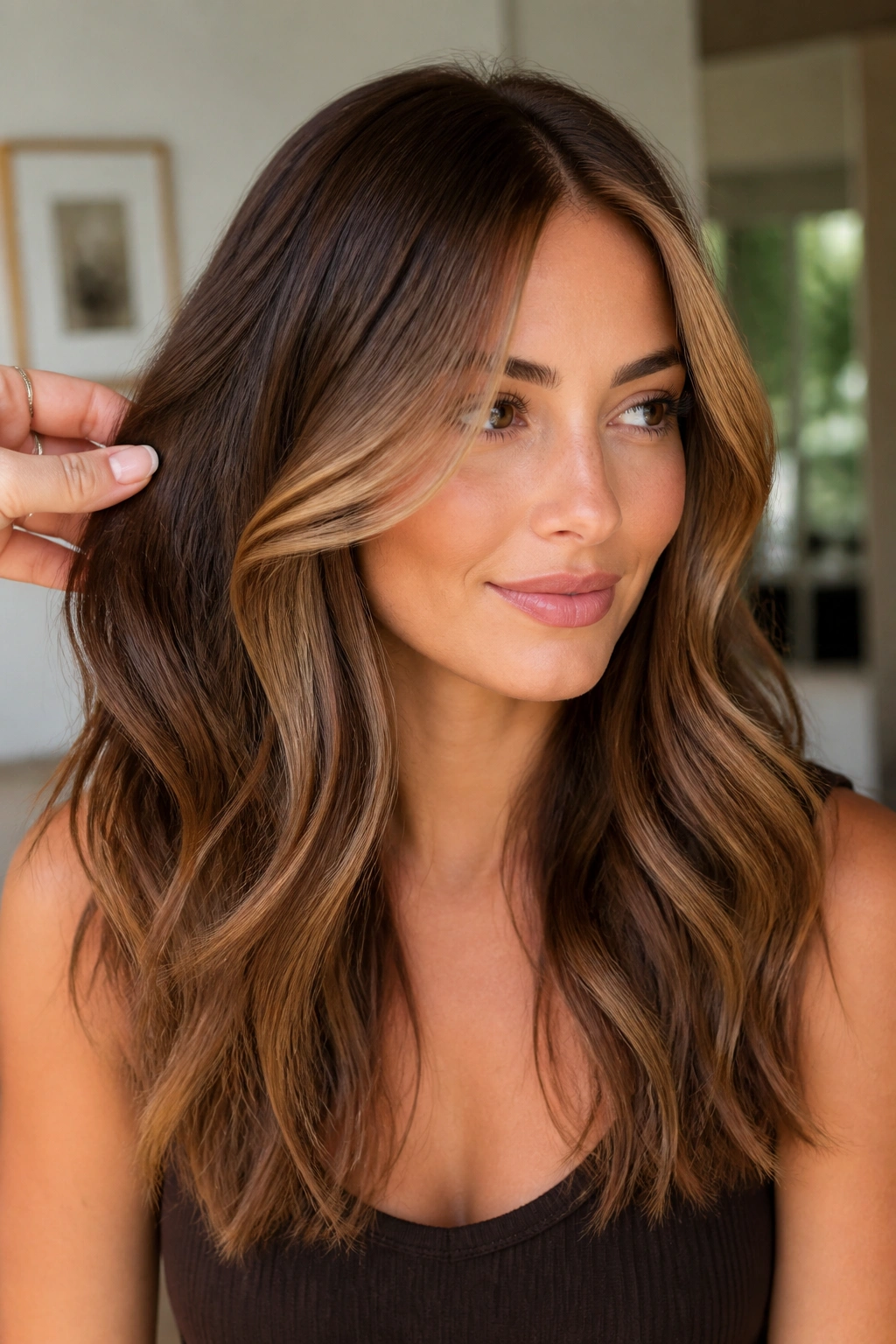
A chestnut base with caramel face-framing balayage is the kind of color that makes a ponytail look intentional. It brightens the front, keeps the back deeper, and gives you enough contrast that the hair doesn’t disappear in photos.
Picture this: the hair is pulled back, and the first thing you notice is a soft curve of lighter color around the temples and cheekbones. That’s the whole point. You do not need a full head of blonde to get that effect.
The best version keeps the pieces thicker near the cheekbone and finer as they move back into the crown. That way the front opens up, but the rest of the head stays quiet.
- Best for chestnut, mocha, and medium brunette bases
- Ask for a money piece that’s only 1 shade lighter at the root
- Works on straight hair, but it really comes alive in bends and waves
- Great when you want brightness without a full maintenance cycle
One small thing matters here: the caramel should be warm, not orange. If it turns pumpkin-y, the whole thing starts to feel loud.
4. Beige Blonde Veil on Dark Blonde Hair
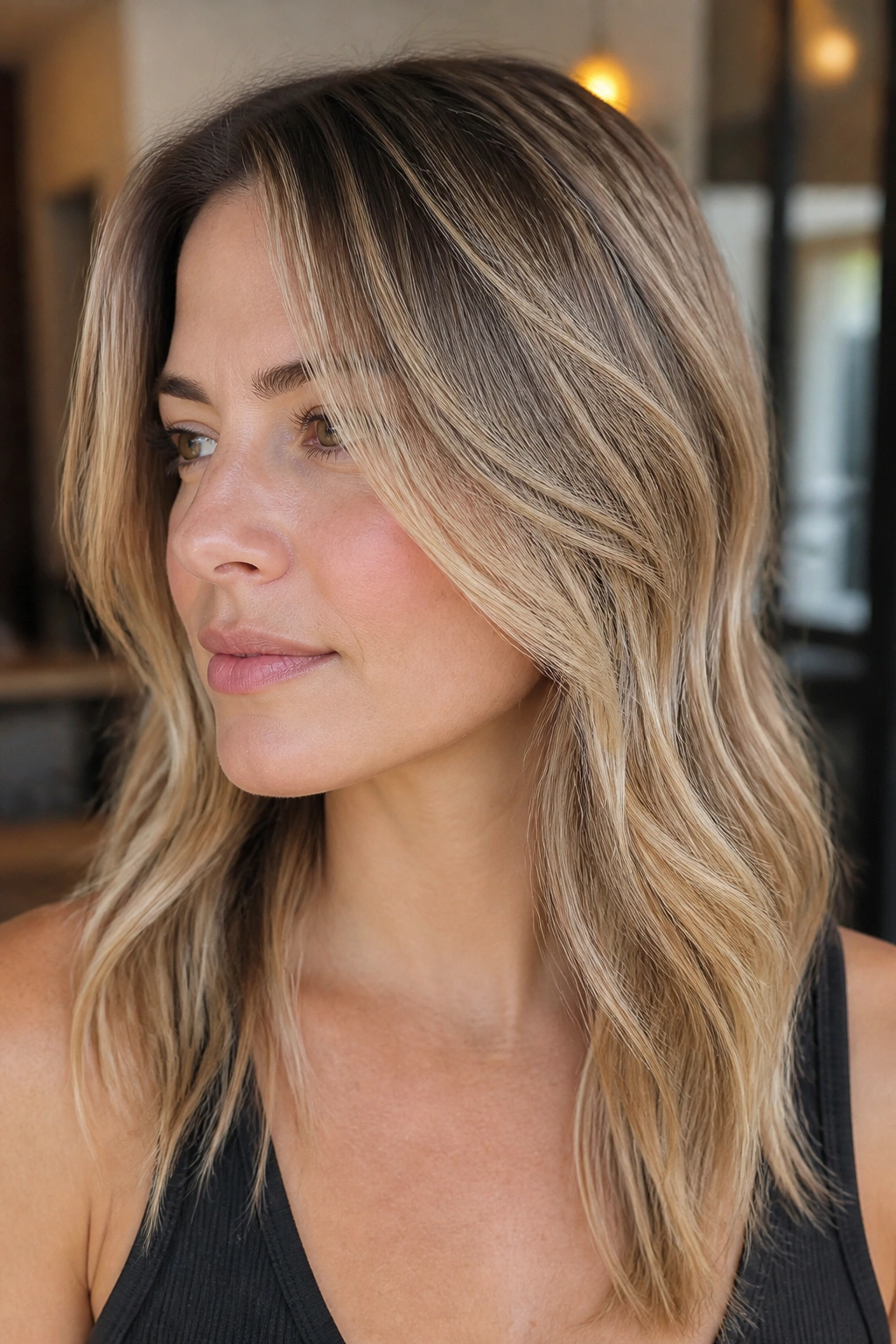
Beige blonde on dark blonde hair is one of those colors that looks easy from a distance and very specific up close. The magic is in the veil-like placement—thin, scattered pieces that sit just above the base instead of sitting on top of it like a separate layer.
On a level 6 or 7 blonde, beige keeps things creamy without tipping into icy territory. That matters because icy tones can make dark blonde hair look dry if the cuticle is rough or the ends are porous. Beige gives you lightness with a softer finish, which is a much better fit for hair that air-dries or waves naturally.
The nicest part is the grow-out. Because the lift stays gentle, the roots don’t create a harsh line, and the lighter pieces blend back in as the hair grows. That means less obvious regrowth and fewer emergency appointments.
If your hair pulls yellow after washing, ask for a beige gloss with a tiny bit of violet. Not much. Just enough to keep the tone quiet.
5. Bronde with Rooted Lowlights
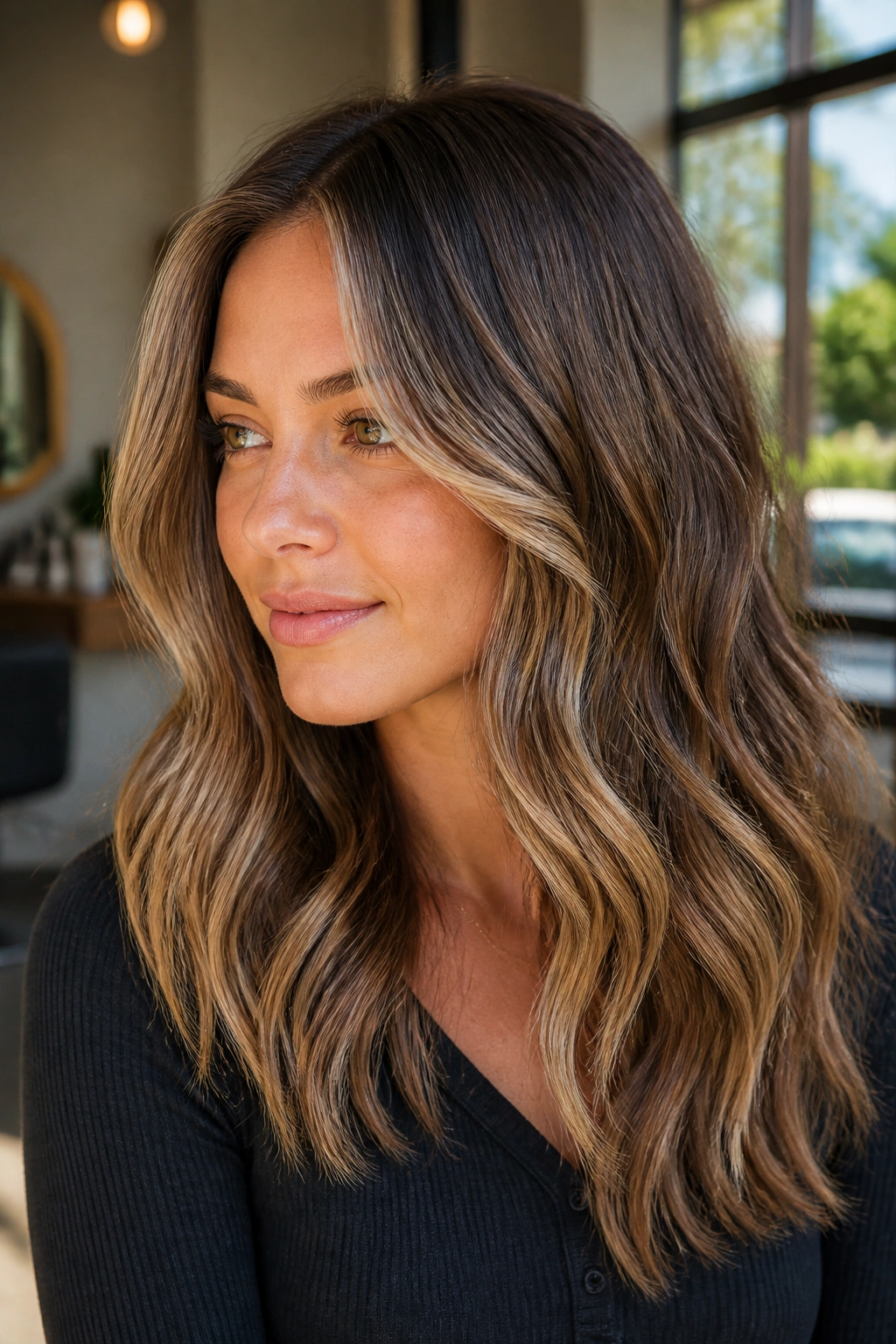
Bronde works because it refuses to pick a side. The brown stays visible, the blonde stays restrained, and the rooted lowlights keep the color from looking flat when the light hits from above.
Compared with high-contrast blonde balayage, bronde is kinder to darker natural bases and easier to wear on busy hair. The stylist can paint a few lighter ribbons, then tuck in deeper lowlights between them so the finish has depth from every angle.
This is one of the best options if you’ve ever loved blondish hair in photos but felt weird wearing it in real life. Bronde doesn’t bleach out the face. It softens the shift instead.
Who it suits
- Medium brunettes who want some blonde energy
- Former full blondes growing back into darker color
- Hair with natural wave, since the contrast shows in movement
- People who want 3 to 4 months between big touch-ups
Ask for lowlights that sit one shade deeper than your base, not dramatically darker. If the lowlights go too deep, the whole head can start looking busy, and that’s not the point here.
6. Cinnamon Toast Balayage for Warm Brunettes
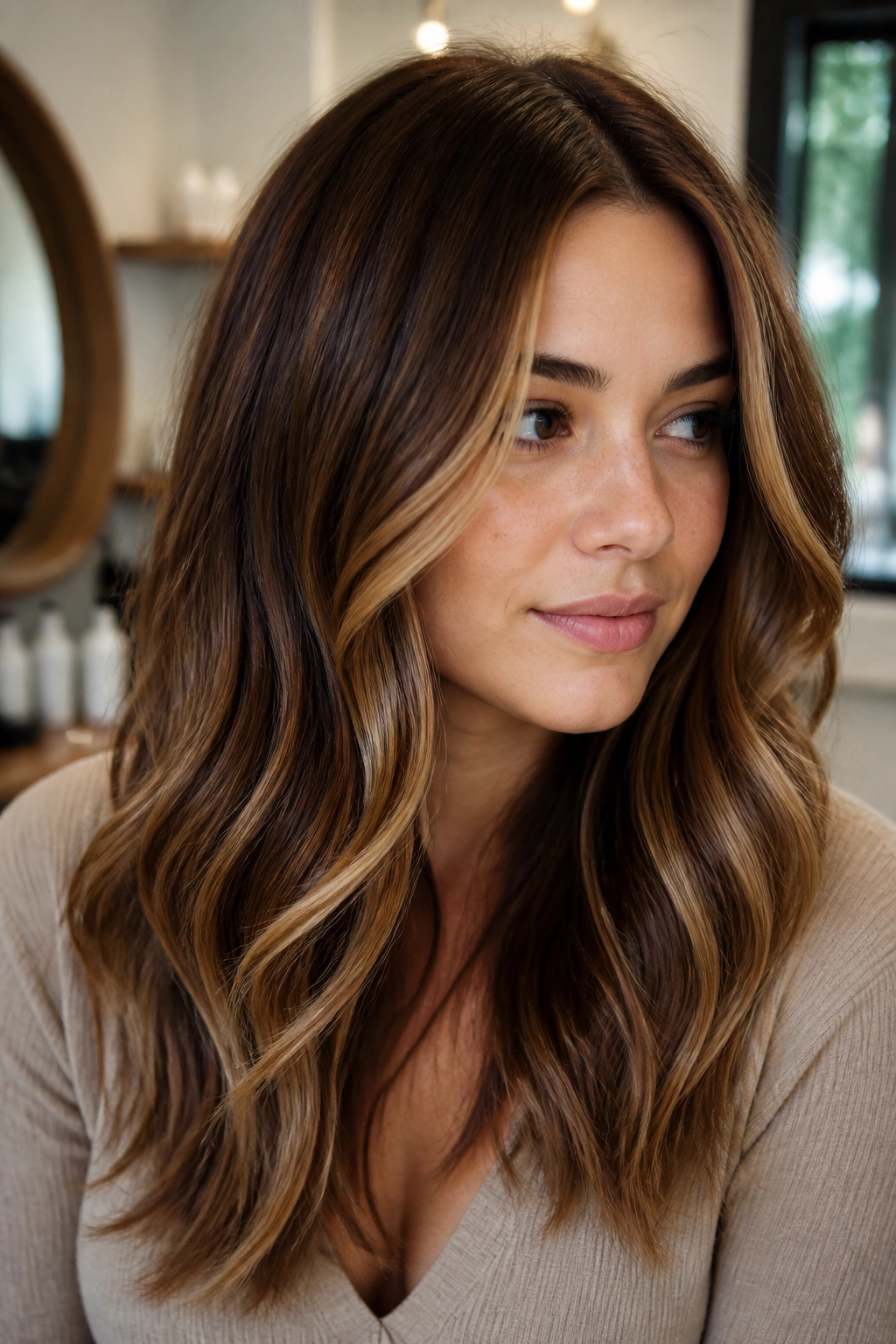
Warm brunettes do not need blonde pieces to look brighter. Cinnamon toast balayage proves that pretty quickly, because the lift comes from tone, not from chasing the palest strand in the room.
The color sits in that nice middle zone between copper, gold, and toasted brown. On a brunette base, it reads rich and soft, not red. The best version is painted in thin slices through the top layer and around the face, then melted downward so the ends are lighter but not pale.
A lot of stylists like this look on long layers because the movement shows off the different warm notes. On blunt cuts, it can still work, but the placement needs to stay fine or the warmth gets dense.
Ask for 10 to 15 painted ribbons around the surface rather than a heavy block of color underneath. That keeps the hair from looking too copper-heavy once it’s styled.
Cinnamon tones fade in a prettier way than a lot of people expect. They don’t scream when they soften. They just get a little toastier.
7. Smoky Ash Balayage for Dark Hair
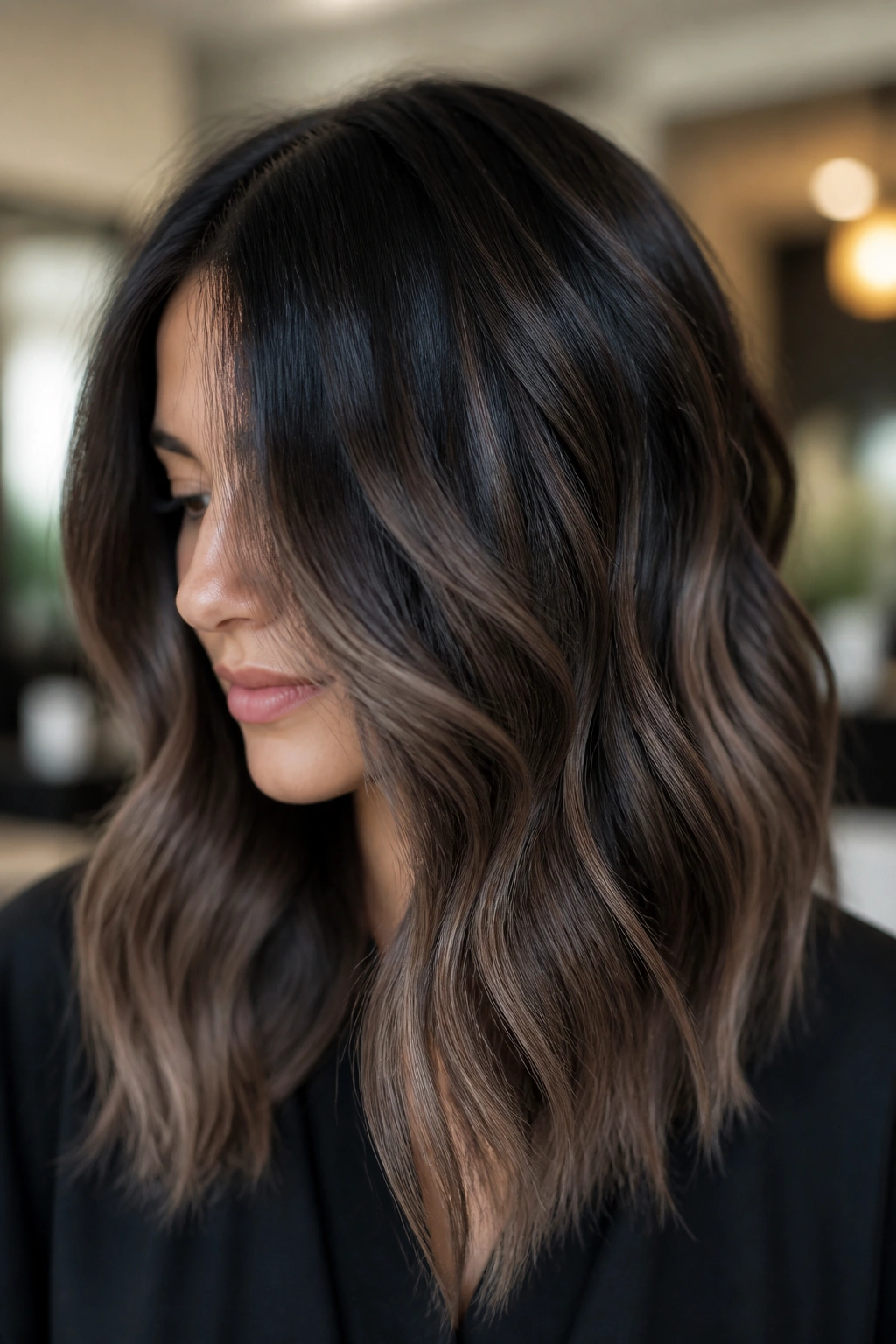
How do you lighten dark hair without making it orange? You stay close to the base and pick a smoky tone that knows how to fight warmth.
Smoky ash balayage is made for dark hair that wants movement, not drama. Think level 2 to 4 brunettes, with pieces lifted only enough to show a cool beige-brown shift. The tone should look more like slate mixed with coffee than anything silver or metallic.
What to ask for
The stylist should paint the pieces where the hair naturally catches light—around the part, at the outer curve of waves, and along the top layer. After that, the toner matters more than people think. A blue-violet finish can keep brass in check if the hair is stubborn.
- Best on hair that naturally pulls orange
- Works well on layered cuts and long waves
- Avoid very thick stripes; they break the illusion
- Use a sulfate-free shampoo and keep hot water low
This look can go flat if the ash tone is pushed too far. The best smoky balayage still has a little brown in it. That’s what keeps it wearable.
8. Toffee Veil for Curly Hair
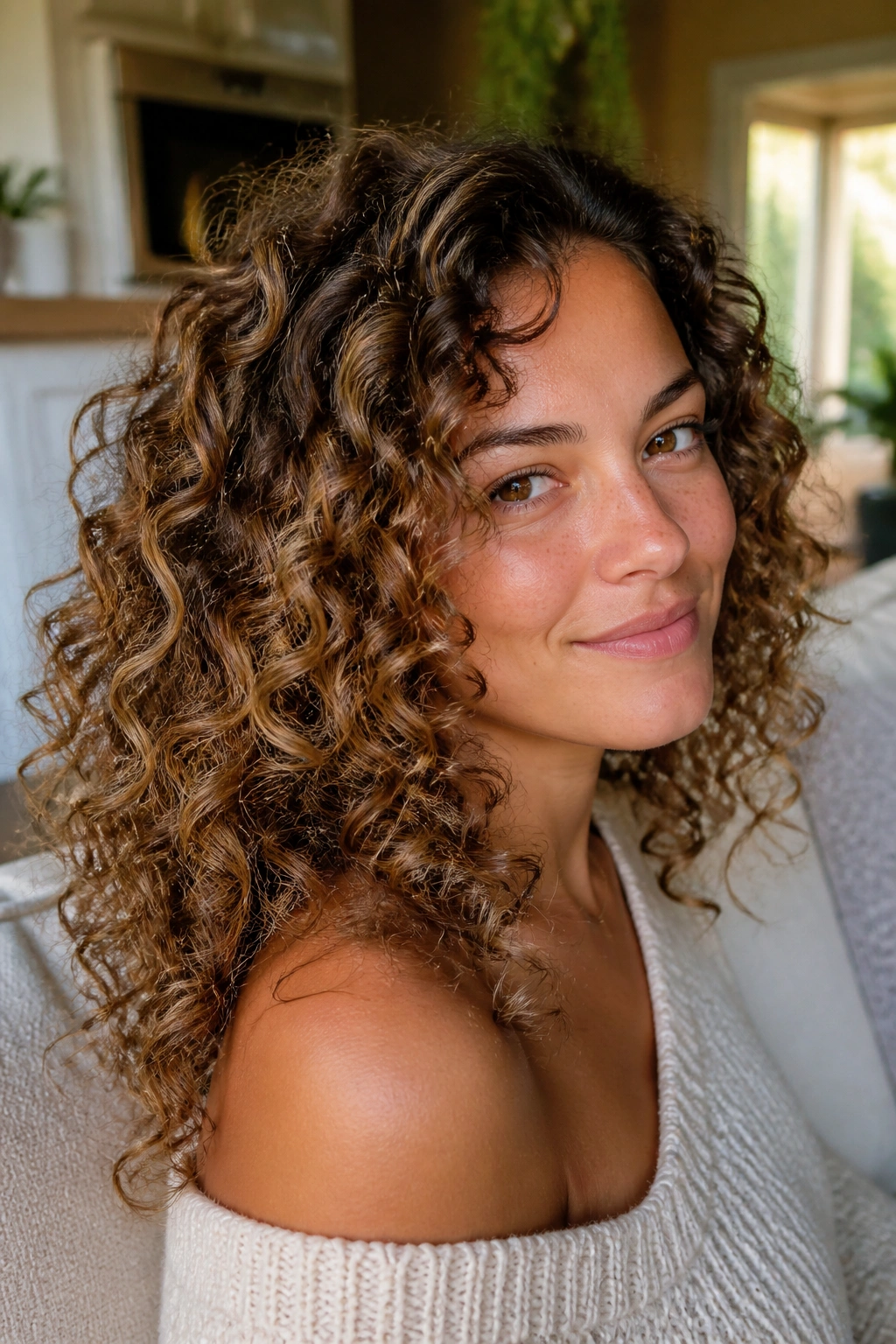
Curly hair takes color differently, and that’s why toffee balayage on curls needs a lighter hand than most people expect. Put too many pieces inside the curl pattern, and the color vanishes. Put them on the top and outer curve, and the whole shape opens up.
I’ve always liked toffee on curls because it feels believable. The tone is warm, but not sugary. It sits in the same family as toasted sugar, light caramel, and softened coffee, which means it blends into brown hair without making the curl pattern look chopped up.
Placement notes that matter
- Keep the brightest pieces on the crown and around the face
- Leave the underside deeper for contrast and shadow
- Ask for painted ribbons, not foil stripes
- A gloss every 8 weeks keeps the caramel tone from dulling
The best curly balayage respects the curl clump. That’s the whole game. Color that follows the curl shape looks natural; color that ignores it tends to look scattered.
9. Soft Sand Blonde on a Lob
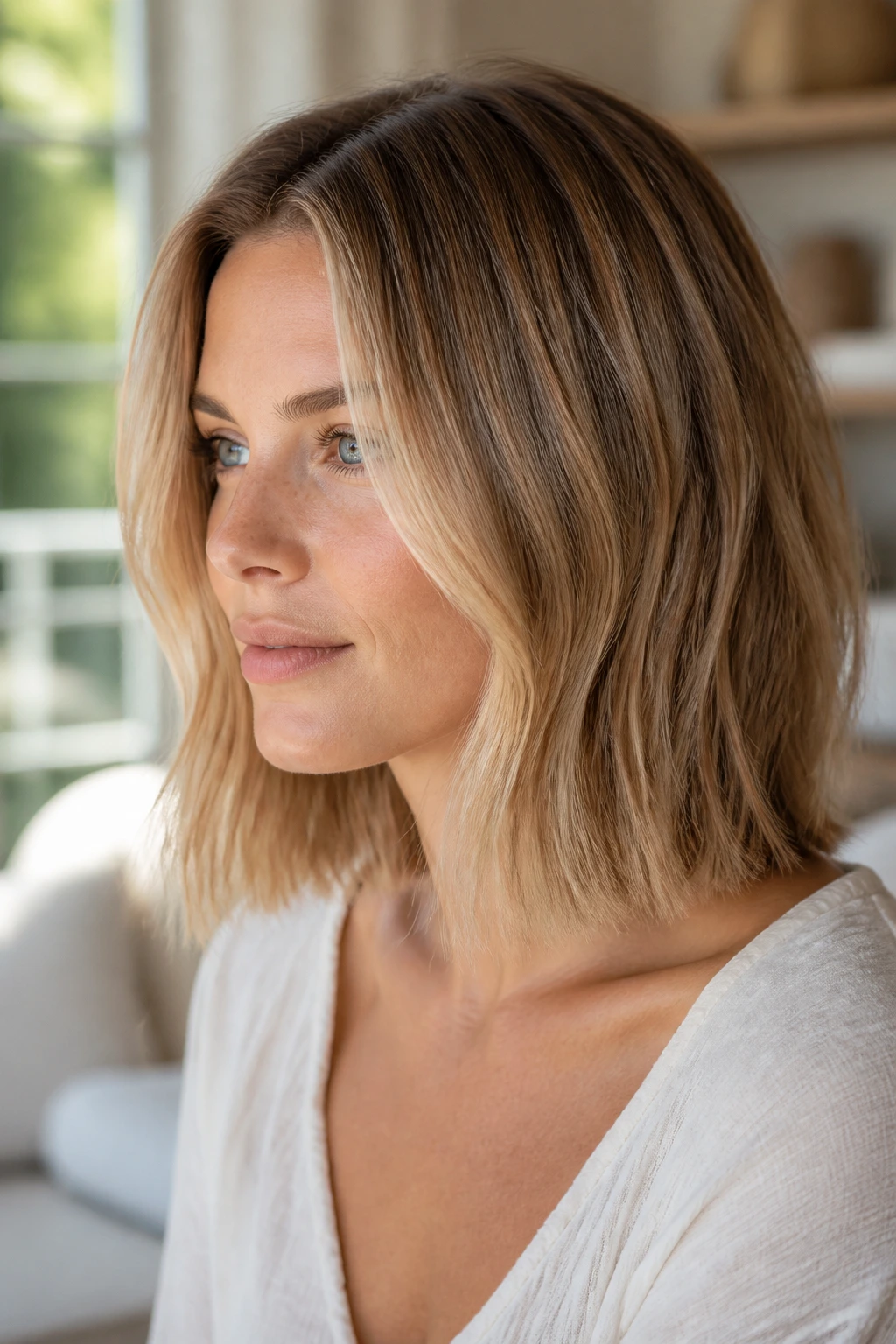
A lob can take a lot of color, but it does not need much. That’s why soft sand blonde works so well on this cut: the brightness stays gentle, the shape stays clean, and the hair still looks like hair instead of a highlight map.
Sand blonde sits in a neutral lane. It is lighter than beige, less warm than honey, and far less icy than platinum. On a dark blonde or light brown base, the result looks sun-washed rather than bleached. That matters on a blunt lob, where too much contrast can make the ends look heavy.
Ask your colorist to keep the top layer softly broken up, then nudge a few brighter pieces toward the front. The light hits the edges of a lob fast, so a small placement shift can do a lot.
Hard water can stain this tone yellow quicker than most people expect. If your shower water is mineral-heavy, a clarifying wash once a week and a soft purple shampoo every couple of washes will keep the sand tone from getting dull.
10. Copper Tea Lights on Auburn Hair
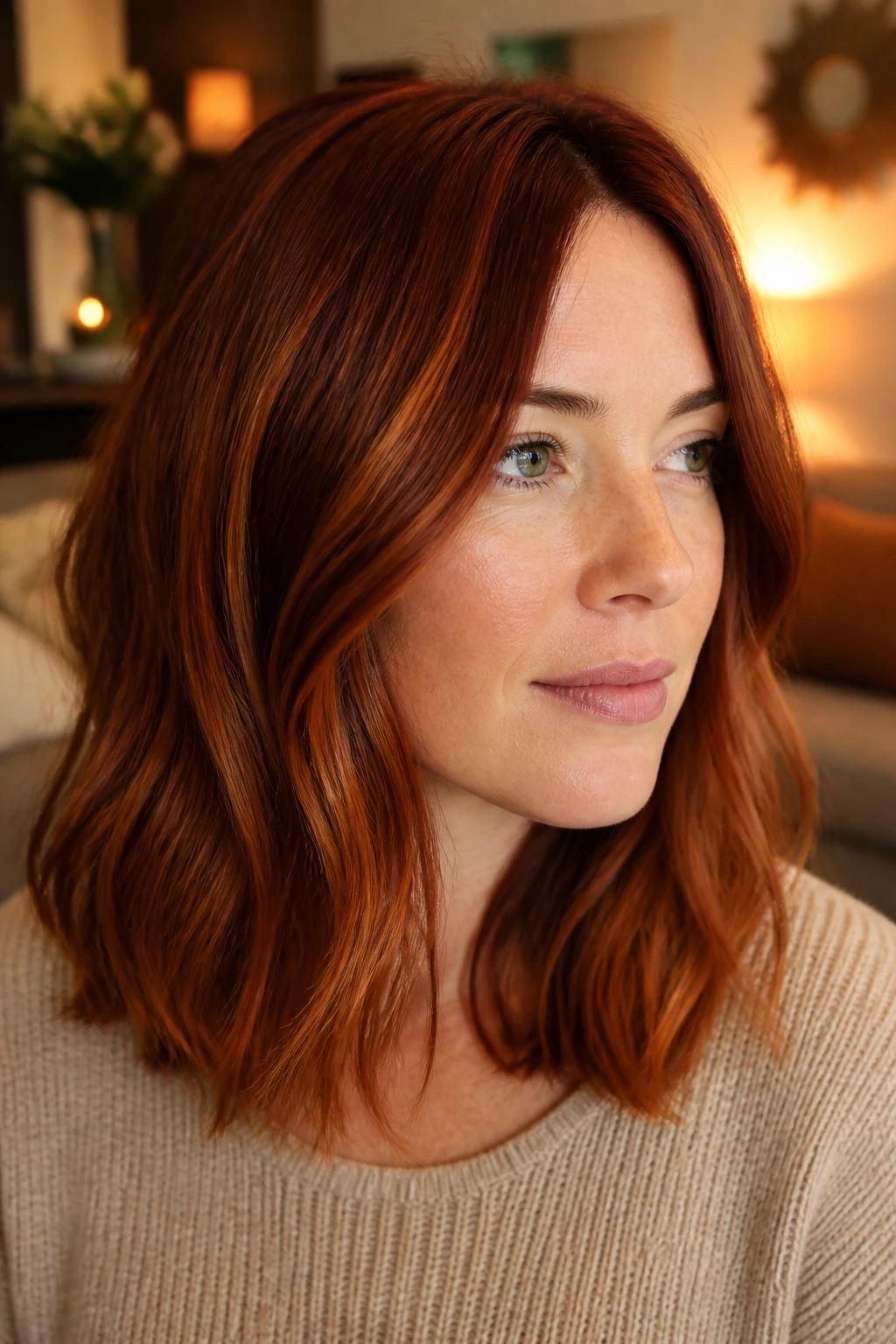
Copper tea lights are not the same as bright copper highlights. They are softer, narrower, and warmer in a way that feels lived-in rather than dyed for attention.
That’s why they work so well on auburn hair. A natural red base already has warmth, so the job is to bring out the shine without making the whole head look like one strong red block. The lighter pieces should be thin, barely there in some places, and mostly visible when the hair moves.
What makes them different
Unlike bold copper stripes, tea lights sit inside the existing red family. They lift the hair by a shade or two, then fade back into the base instead of sitting on top of it.
- Best for natural redheads and auburn brunettes
- Keep the lightener away from the roots for a softer grow-out
- Ask for a gold-copper gloss, not a bright orange glaze
- Works nicely with curls, since the tone flashes in the bends
If you want your red to look richer instead of louder, this is a smart route. It’s subtle, but not dull. Big difference.
11. Champagne Mist on Dark Blonde Hair
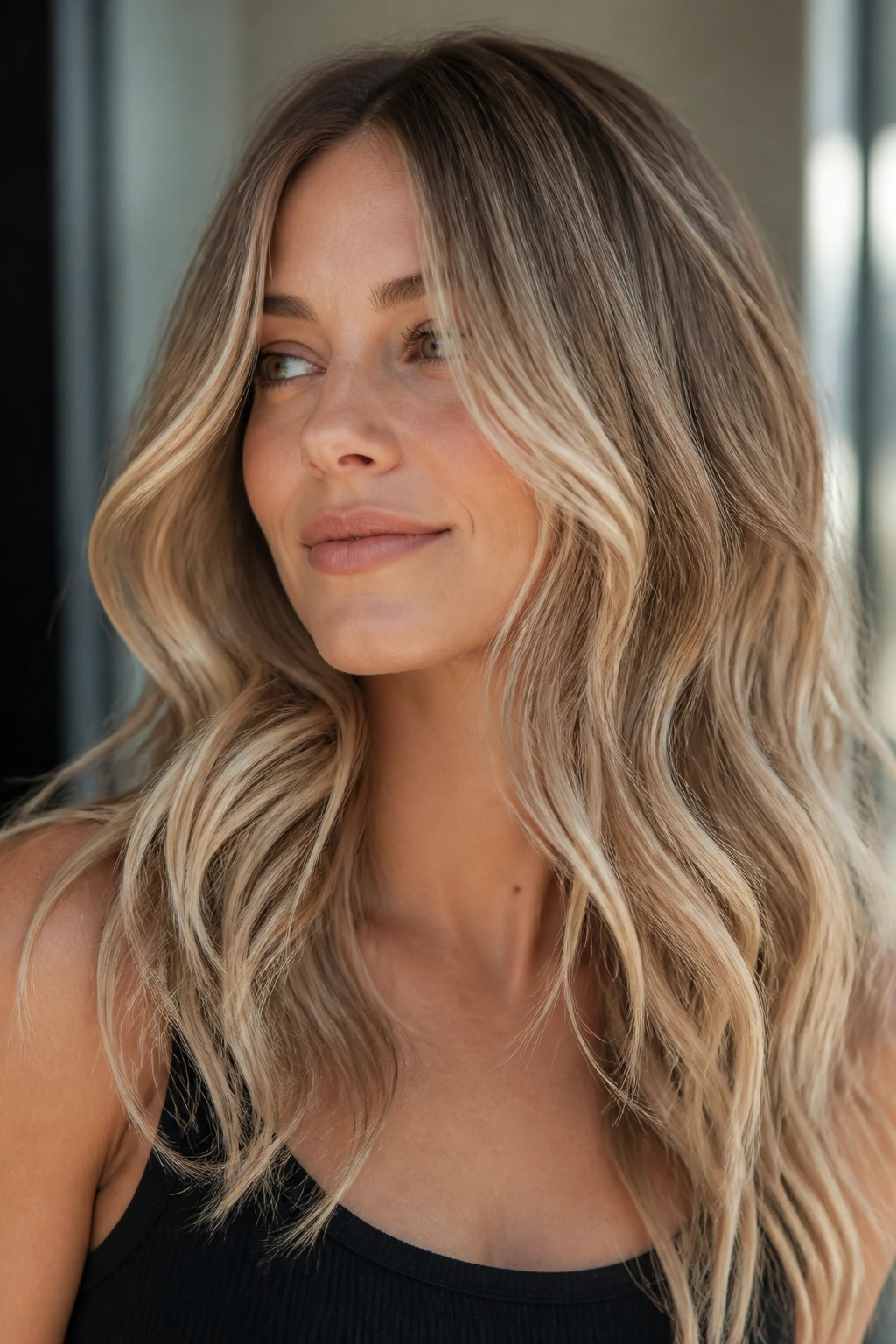
Champagne mist is the rare blonde tone that can make dark blonde hair look brighter without turning it yellow or white. The color has a beige base with a tiny pearl note, which keeps it from going too warm or too flat.
The placement should stay fine and airy. On dark blonde hair, the goal is not to erase the base. You want scattered brightness that looks like the sun touched the top layer and stopped there.
This is one of those shades that looks especially good on smoother styles. A clean blowout shows the tone shift clearly, while loose waves make the champagne pieces move around the head instead of sitting in one spot.
Ask for a soft shadow root and a neutral gloss at the end. If the hair is already porous, the lightened sections can grab toner fast, so the stylist may need to pull the gloss through for only the last few minutes.
Quiet, yes. Plain, no. There’s a nice glow here if the undertone stays clean.
12. Hazelnut Balayage on Long Layers
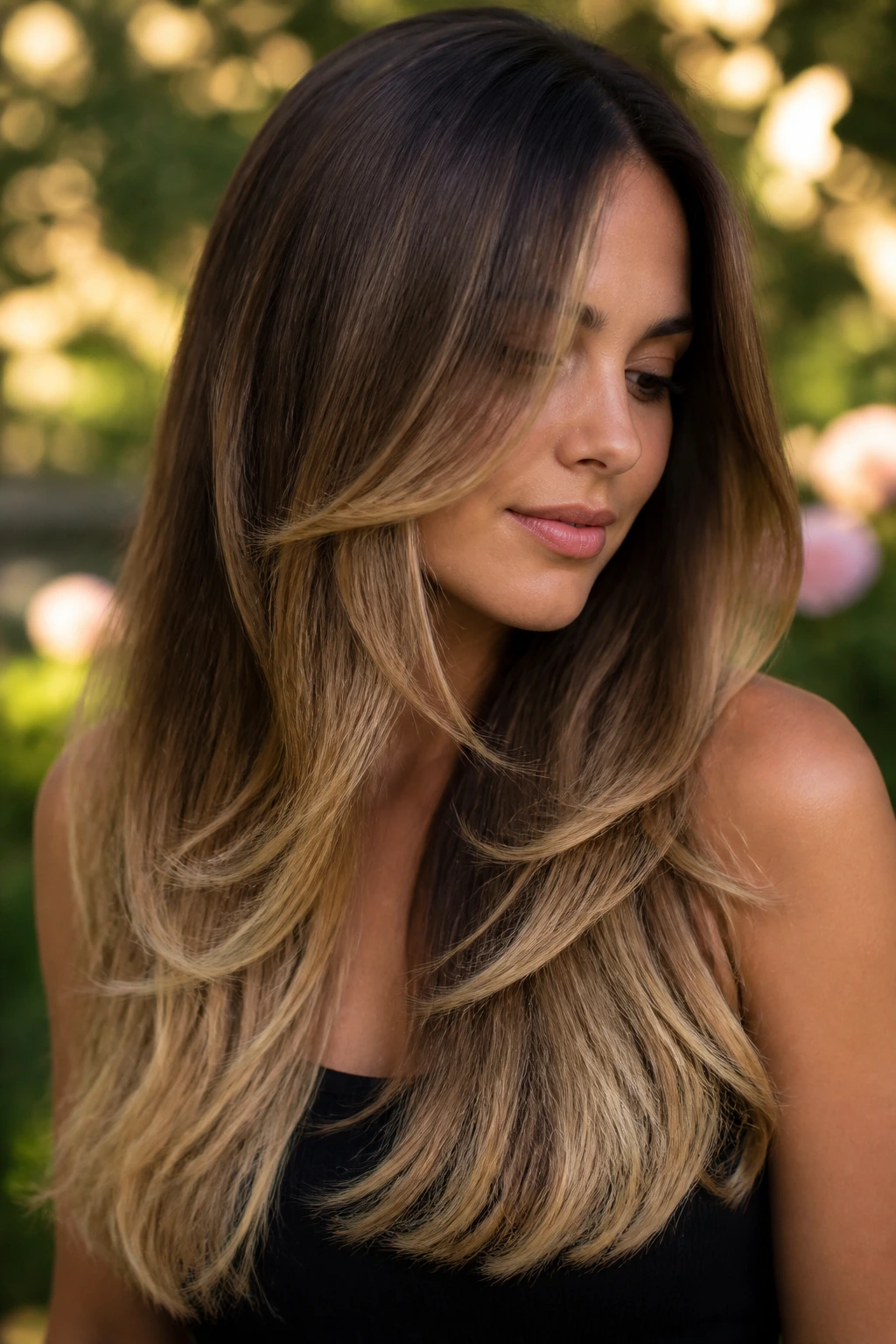
Why does hazelnut balayage look so calm on long hair? Because long layers give the color room to breathe. The brown-to-beige shift can stretch out over several inches, so nothing feels abrupt.
Hazelnut sits in a sweet spot between chocolate and beige. It is warmer than mushroom brown, softer than caramel, and easier to wear than a golden blonde if your skin tone runs neutral or cool. On long layers, that means the pieces can start a little darker near the crown, then open up as they move down the shaft.
What to ask your stylist
Ask for hand-painted pieces that are denser around the face and softer through the back. The longest layers can take a little more lightness because the length helps the color melt visually. Shorter layers near the crown should stay closer to the base so the head doesn’t read stripey from above.
- Good for level 5 to 6 brunettes
- Keep the ends a shade lighter than the mids
- Works best with a neutral-beige toner
- Refresh the gloss every 6 to 8 weeks
This shade is a nice choice when you want hair that looks polished but not high-contrast. It’s steady. That’s the appeal.
13. Mushroom Bronde on a Bob
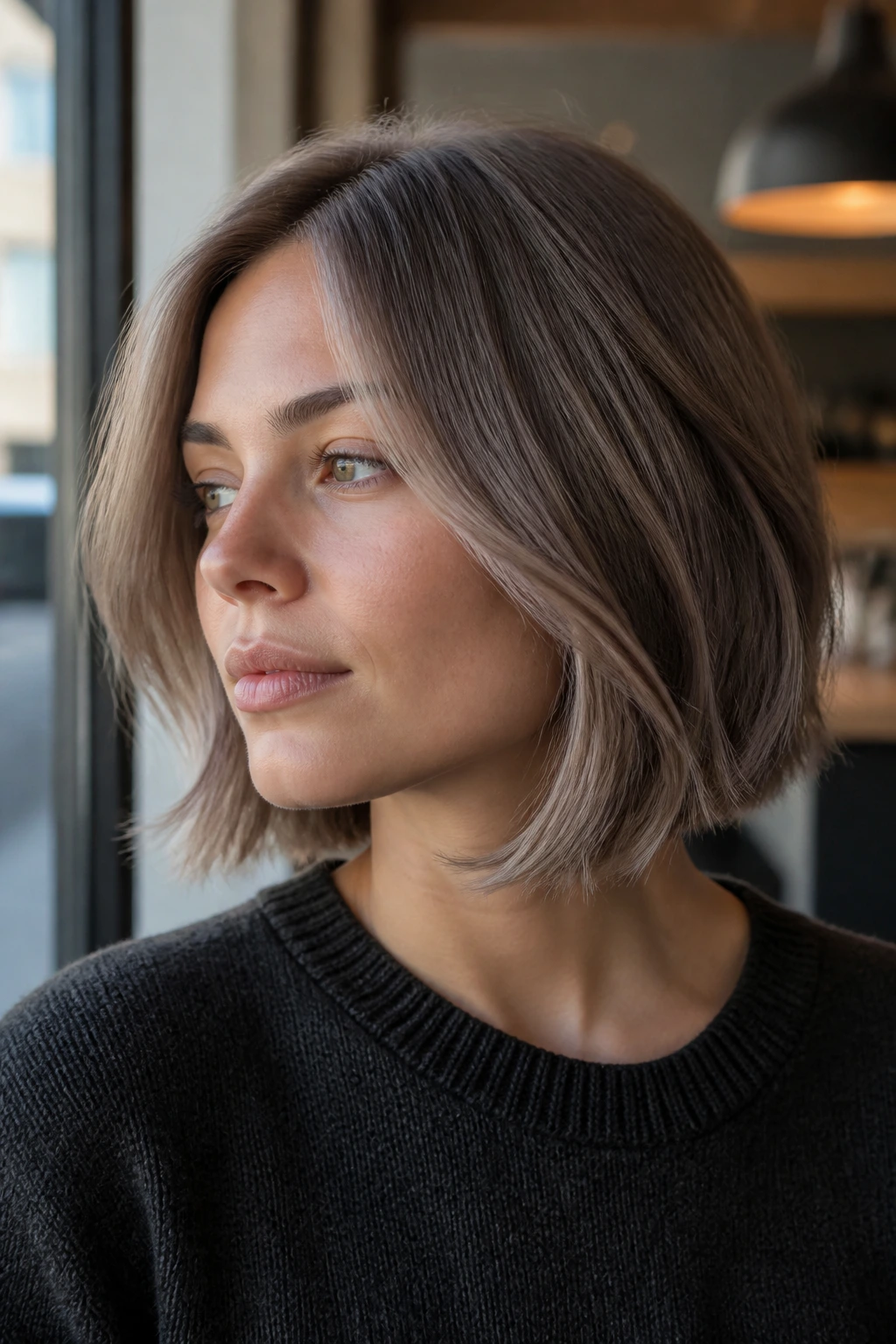
A bob can turn stripey fast. That is why mushroom bronde is such a good fit: the tone stays cool enough to feel modern, but the contrast stays low enough that the cut still looks clean.
On shorter hair, the placement has to be smarter. Thick pieces can take over a bob in a hurry, especially if the ends flip or tuck under. Fine, hand-painted slices around the top layer work better because they move with the cut instead of fighting it.
The mushroom tone also helps if your natural hair pulls orange around the ears or nape. A cool beige-brown gloss softens those hot spots and keeps the whole shape looking even.
- Best on blunt or slightly layered bobs
- Ask for lighter pieces only on the top half and front corners
- Keep the nape deeper so the cut keeps its line
- Great for anyone who wants polish without obvious streaks
Short hair can look fussy when color is too eager. Mushroom bronde keeps it quiet.
14. Vanilla Root Melt for Medium Brunettes
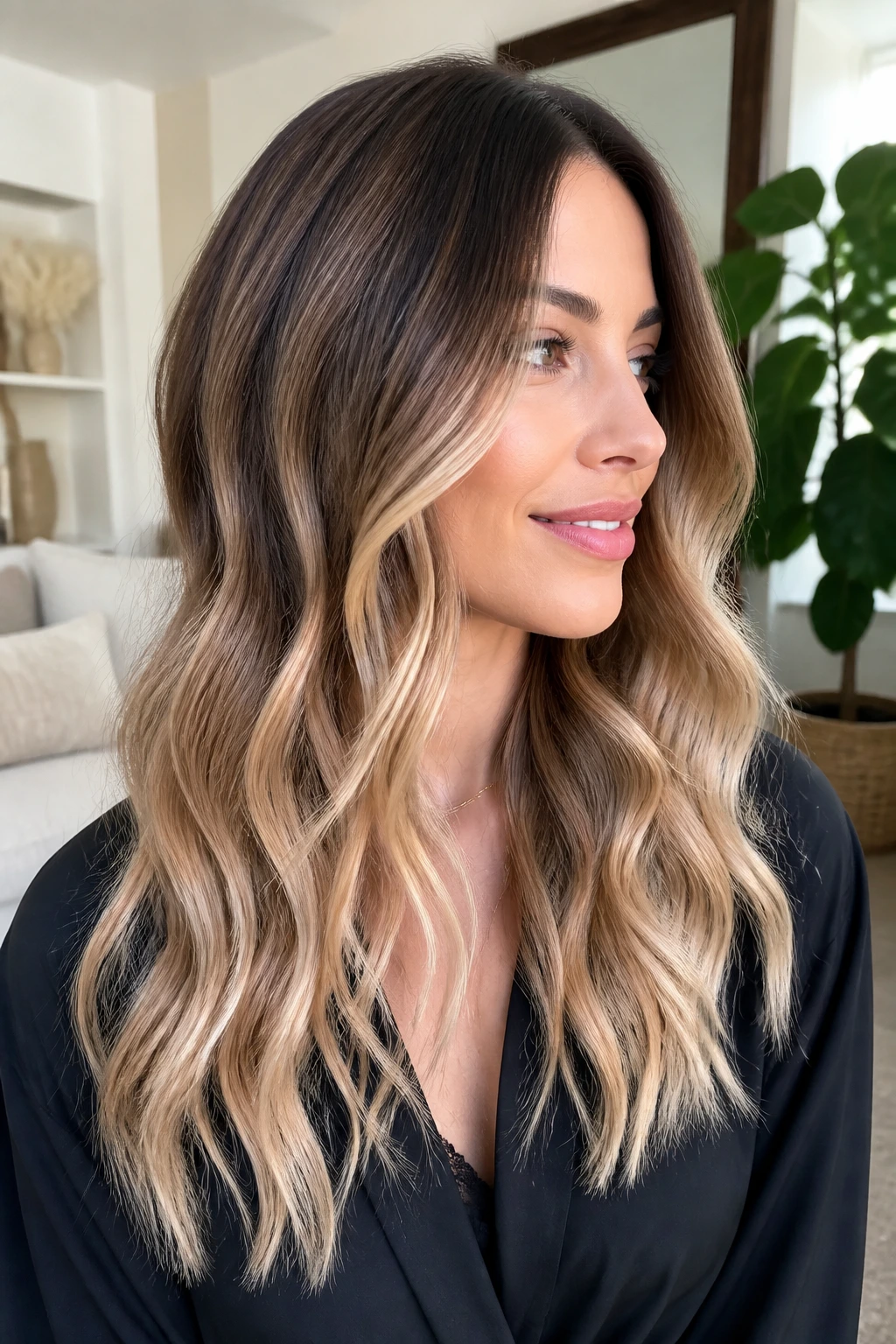
A vanilla root melt is what you reach for when you want lightness but refuse to lose the brown that makes your hair feel full. The root stays a medium brunette, then the color softens through the mids and ends into a pale vanilla-beige finish.
What works here is the gradual shift. There is no hard step between dark and light. The eye reads one long fade, which is why this style looks especially good on hair that moves a lot. Wavy lengths show the blend. Straight hair shows the gloss.
Porous ends need a little care with this one. If the hair has been lightened before, the last inch can grab toner faster than the rest. A good colorist will keep the gloss on the ends for less time—sometimes only the last five minutes—so the shade stays creamy instead of chalky.
This idea suits medium brunettes who want a brighter finish but still like their natural depth. It is soft. It grows out soft too.
15. Wheat Blonde Babylights on Fine Hair
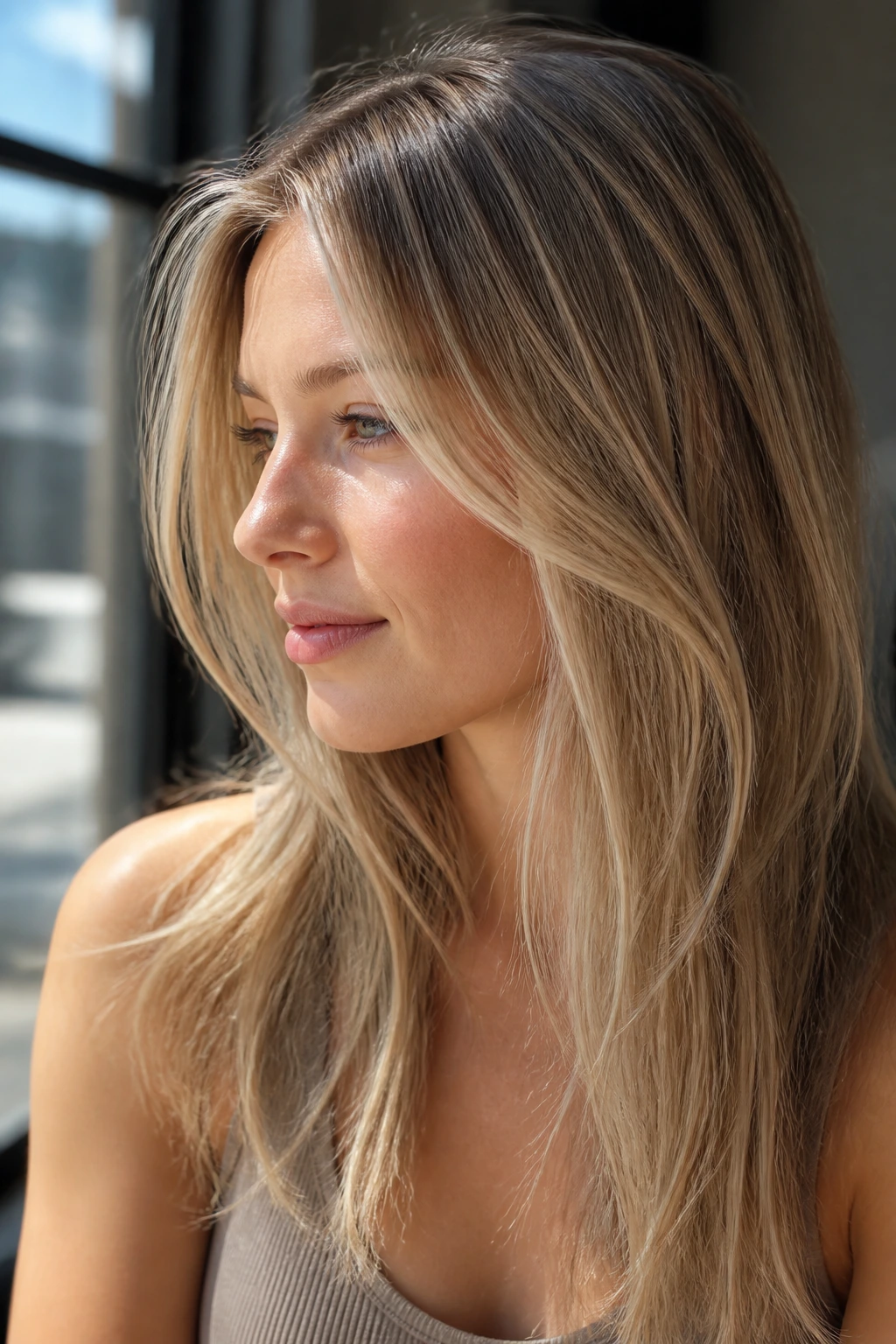
Fine hair can get eaten alive by chunky highlights. That is why wheat blonde babylights are such a smart move: the pieces are tiny, the lift is gentle, and the head keeps its natural density.
Babylights are painted or foiled in very thin sections, almost like the hair was lightened strand by strand. On fine hair, that makes a big difference. The color changes without making the hair look see-through. Wheat blonde, meanwhile, stays warm-neutral enough to avoid the harshness that sometimes comes with bright beige blondes.
Why this approach works
Unlike wider ribbons, babylights don’t break the hair into obvious stripes. They spread brightness across the whole head, which keeps the cut looking full.
- Ideal for level 7 to 8 natural blondes and light brunettes
- Ask for a tone that sits between beige and soft gold
- Works especially well with round brushes and soft bends
- Easy to maintain with gloss refreshes every 8 weeks
If your hair is fine, this is one of the few highlight styles that gives lightness without making the scalp feel too exposed. That’s a real problem with bigger placement, and it shows fast.
16. Rosy Beige Balayage on Light Brown Hair
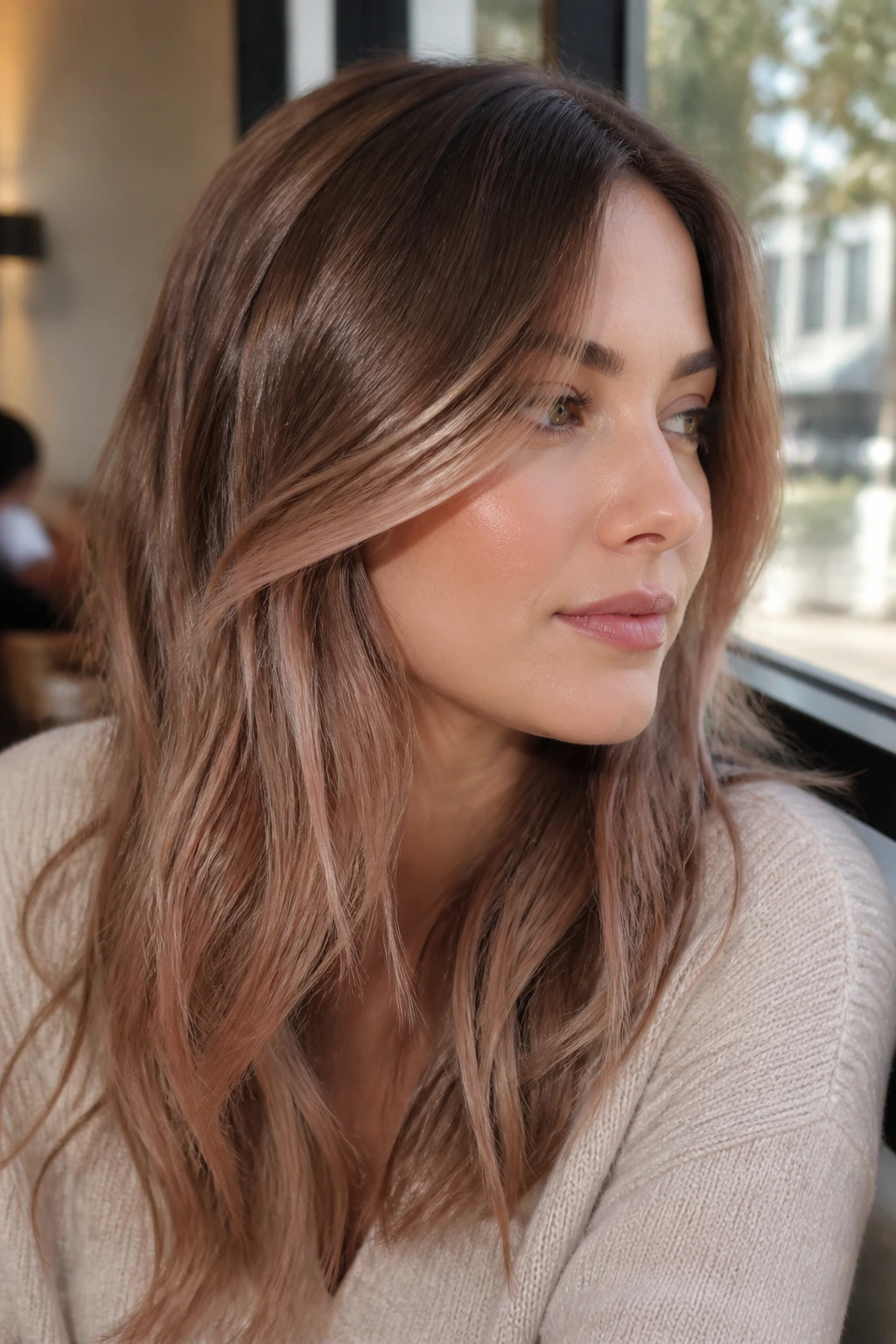
A rosy beige balayage can make light brown hair look softer, not pink. That distinction matters. You want a muted rose-beige glaze, the kind that whispers warmth, not a color that turns the hair into strawberry milk.
This shade is especially nice on neutral or slightly warm skin because it blurs the line between brown and blonde without getting muddy. The rose note gives the hair a gentle flush, which can be lovely around the face if the colorist keeps it diluted.
The placement should stay low-contrast. Think soft surface pieces, with the rosy beige concentrated where the light naturally lands. If the highlights are too broad, the pink note can start to look obvious. Thin sections are safer.
Ask for a beige gloss with just a touch of warmth, not a vivid rose gold. One of those sounds chic in theory and then turns loud under indoor light. The other stays wearable.
17. Smoky Caramel Melt for Gray Blending
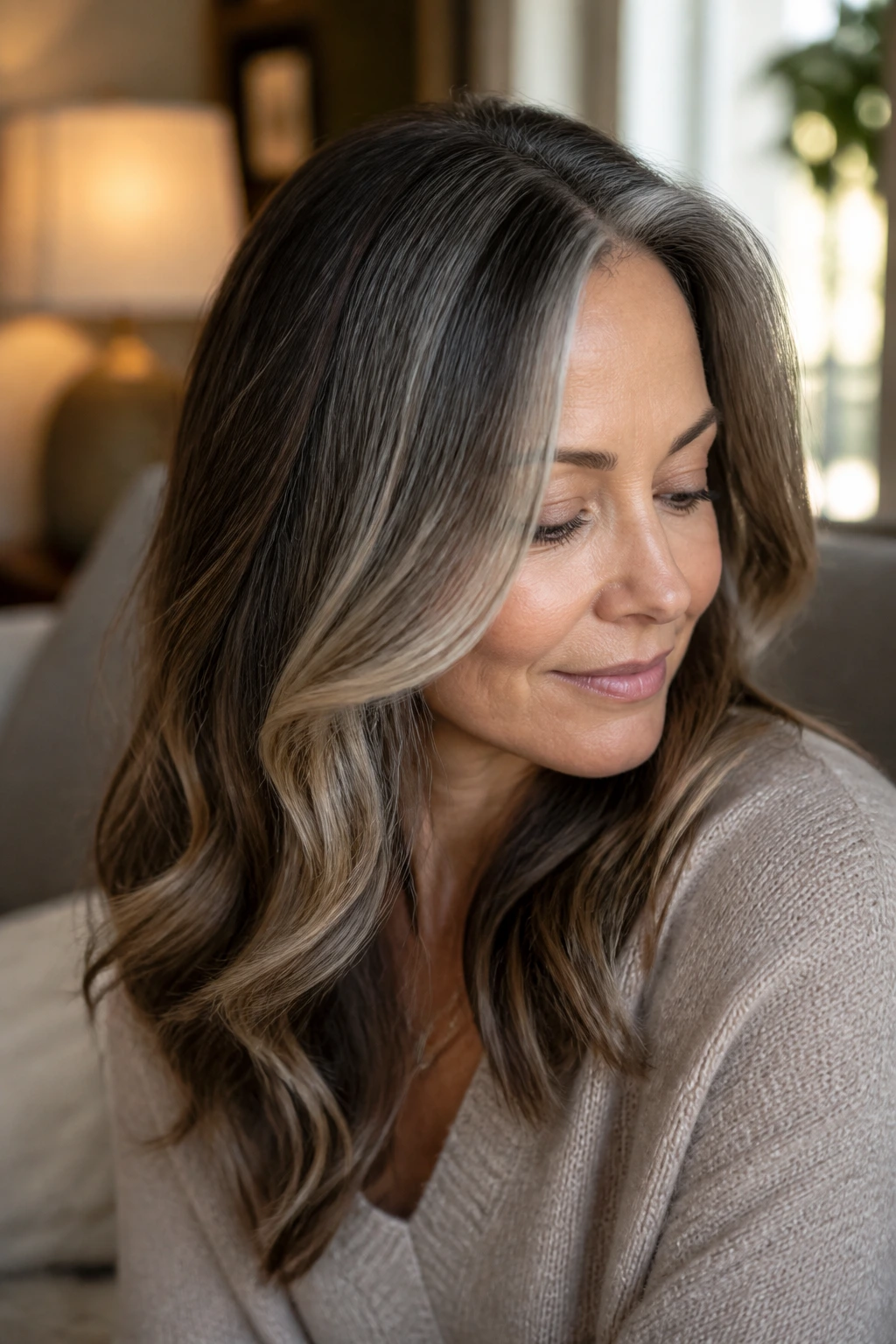
How do you blend gray without making the hair look dark and flat? A smoky caramel melt does that by meeting the gray halfway. It does not try to hide everything. It softens the contrast so the silver strands look intentional instead of abrupt.
The key is tone. A caramel that leans slightly smoky can sit beside gray and white strands without screaming. On a brunette base, the light pieces should be scattered, not dense, so the natural silver has room to sit between them.
Why it hides regrowth
Gray blending works because there is no hard line at the root. The transition stays blurry, which means regrowth is far less visible than it would be with a single-process color.
- Best for salt-and-pepper brunettes
- Ask for a soft root shadow and cool caramel ends
- Avoid yellow caramel; it can make gray look dull
- Gloss every 6 to 10 weeks keeps the blend clean
This is one of those colors that looks expensive because it solves a real problem quietly. No drama. Just less maintenance and a nicer grow-out.
18. Sunkissed Contour Pieces Around the Face
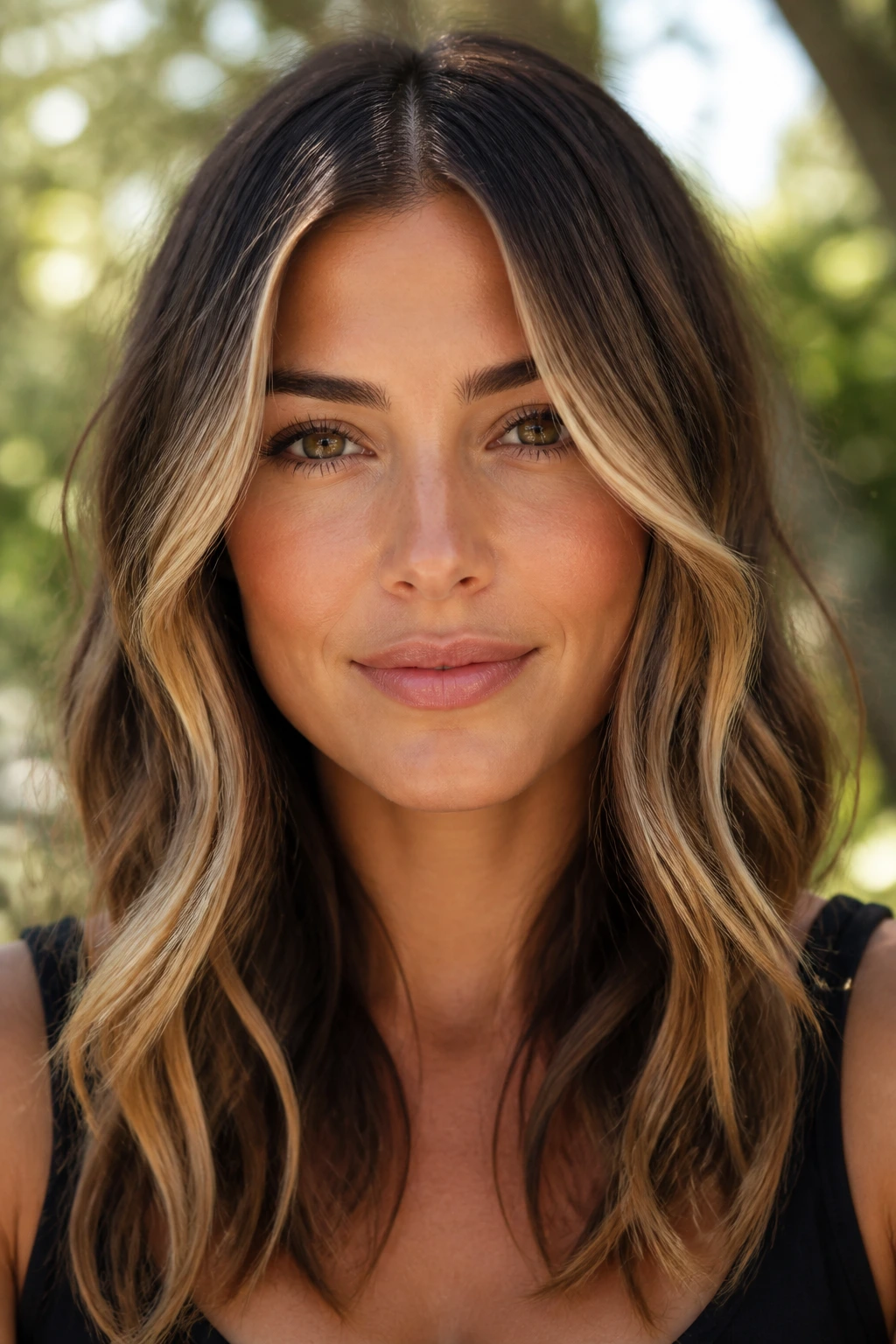
Face-framing balayage can do more than brighten. Done well, it can shape the whole haircut. Sunkissed contour pieces sit around the temples, cheekbones, and part line, so they act like light where the eye naturally goes first.
I like this on medium brunettes and dark blondes because it gives definition without changing the whole head. The back can stay deeper, which keeps the overall color grounded. The front gets the attention, and that’s enough.
Think of it as highlight placement with a purpose. A few brighter ribbons at the front can make long layers seem lighter and can make a blunt cut feel less heavy near the face.
- Ask for pieces no wider than a finger at the front
- Keep them slightly brighter at the mid-lengths than at the roots
- Works well with a center part or soft off-center part
- Needs less upkeep than a full-head lightening service
The word contour gets overused, but here it actually means something. Light where the face opens. Dark where the hair needs support. Clean and simple.
19. Espresso-to-Mocha Color Melt on Thick Hair
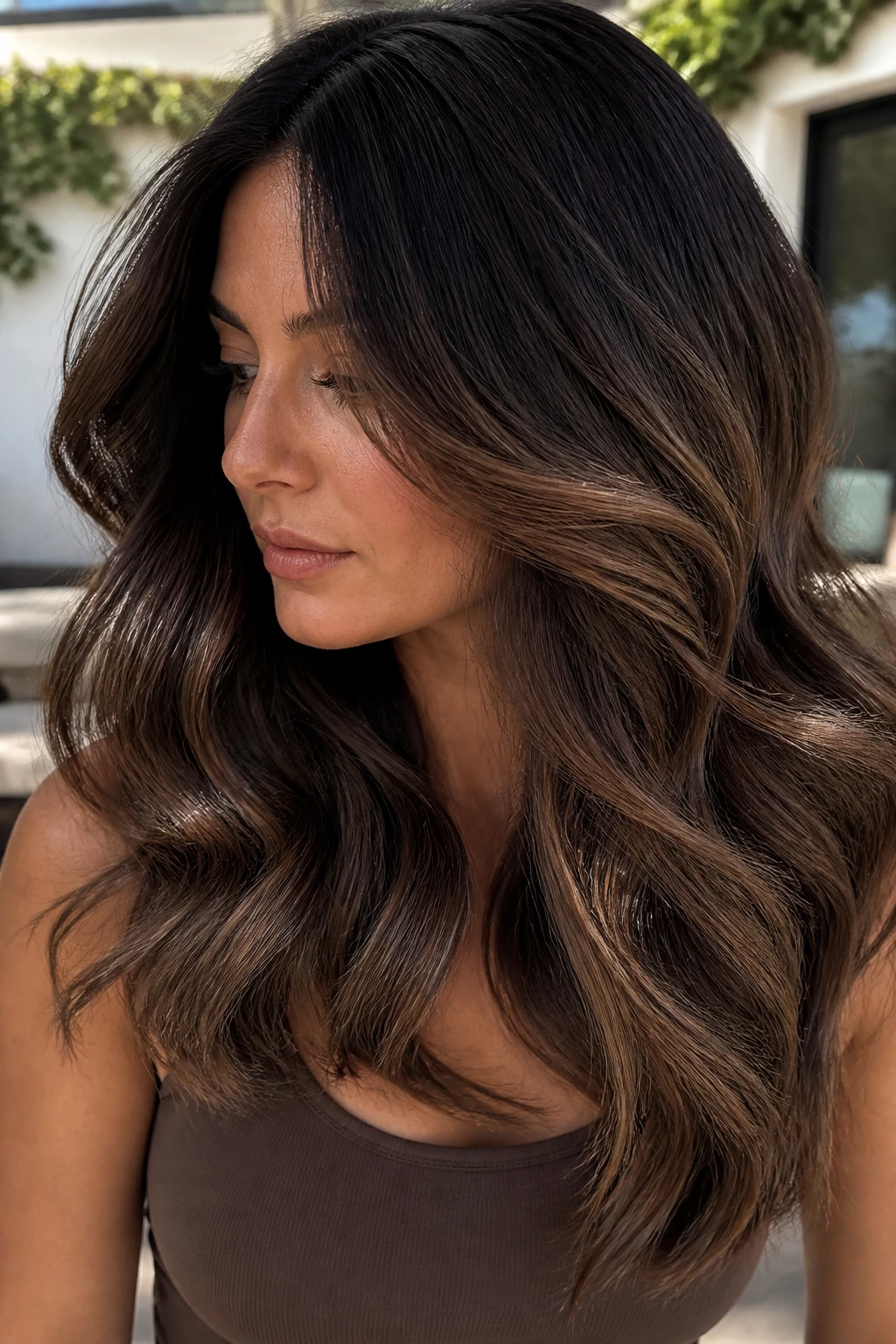
Thick hair is a gift, but it can swallow lightness if the color placement is too timid. That’s why an espresso-to-mocha color melt works so well: the base stays deep, the mids soften into mocha, and the ends open just enough to show movement.
The best version avoids tiny scattered pieces that disappear into dense hair. Bigger, strategically placed panels work better, especially on the surface and around the face. Thick hair can carry that broader placement without looking busy, and the result feels richer because the color has room to shift.
Straight thick hair often needs a little more contrast than wavy hair does. Waves will break up the color naturally; straighter lengths need the tone change to do that work. A root shadow helps here too, since it keeps the top from looking overly light against the weight of the cut.
A practical note
If your ends are dry, don’t push the mocha too pale. Thick hair already has visual heaviness, and too much lightness can make the ends look frayed. A deeper mocha finish keeps the hair looking full.
20. Almond Glaze Balayage with a Gloss Finish
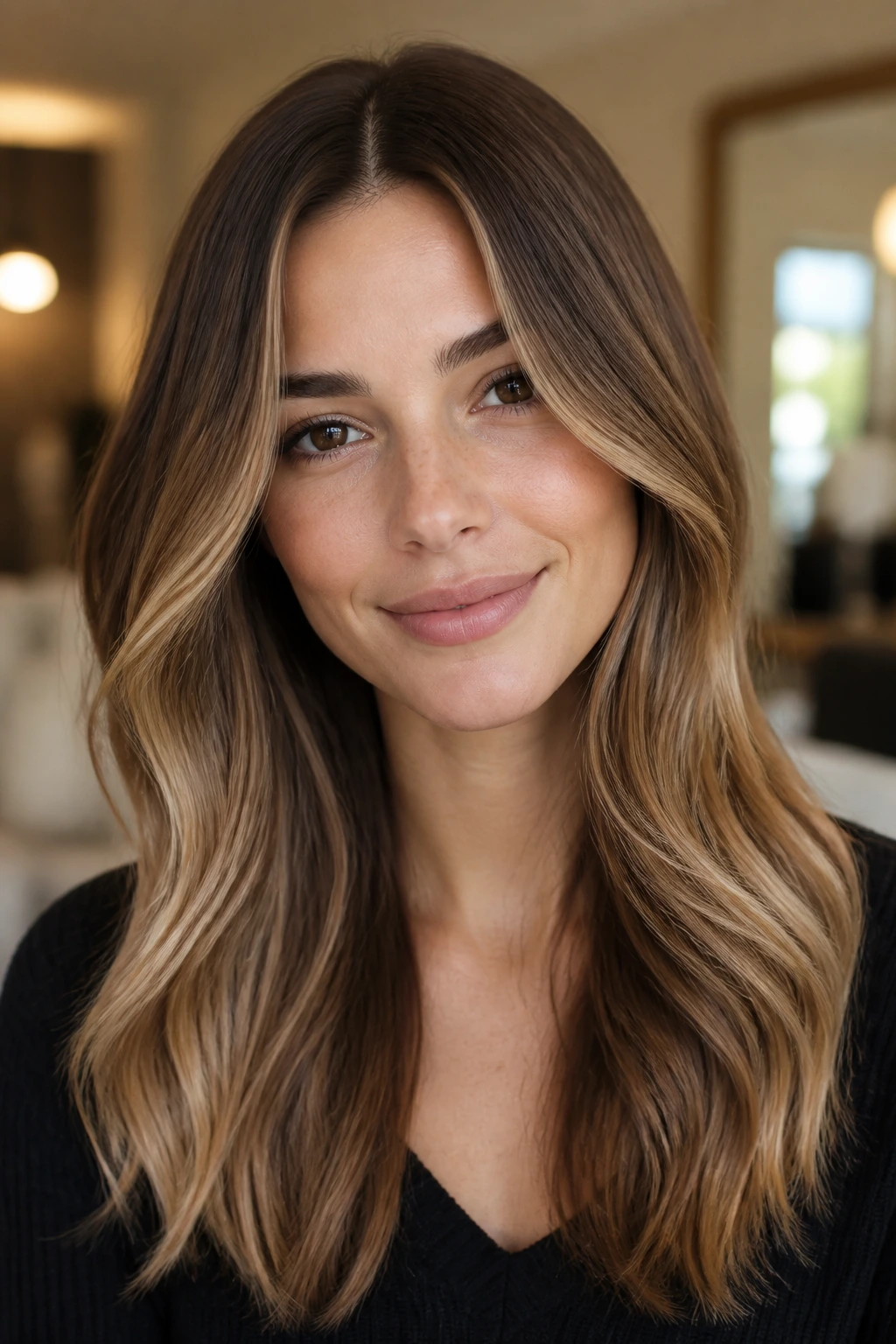
Almond glaze balayage is for the person who wants soft color and a shiny finish more than obvious highlights. The tone lives in that beige-brown lane that flatters brown hair without dragging it toward brass, and the gloss at the end matters as much as the lightening itself.
Compared with icy blonde balayage, almond glaze is easier to wear on everyday hair. It doesn’t demand a special curl pattern or a blowout to make sense. It looks good air-dried, tucked behind one ear, or worn in soft bends. That makes it one of the most believable choices on the list.
The stylist should keep the lighter pieces thin through the crown, then let a few slightly brighter strands land around the face and the top layer. After that, a neutral-beige gloss smooths the tone and gives the hair a polished finish that still feels relaxed.
If you want a simple request, use this one: keep the root darker, soften the mids, and stop one step before the color starts shouting. That usually gets you much closer to natural-looking balayage than asking for “something subtle” and hoping for the best.
