



The best balayage looks are the ones that suit the cut in front of them, not the inspo photo on your phone. A good color job can soften a blunt bob, wake up a shag, and make long hair look like it has twice as much movement.
A bad one leaves dark bands, brassy ends, and that odd stripe near the temple that nobody asked for. Short hair is especially unforgiving. Long hair has its own problems, too — too much lightness at the ends can make it look thin and dusty instead of shiny.
Length changes everything.
A pixie-bob needs tiny, careful ribbons. A lob can take a little more contrast. Waist-length hair needs spacing, or the whole thing turns into one heavy block of color that sits there and does nothing.
1. Caramel Pixie-Bob Balayage

A pixie-bob can turn muddy fast if the color gets painted too low. Caramel balayage keeps this cut alive by putting warmth where short hair actually moves: the crown, the temples, and the first few inches around the face.
I like this look because it gives a cropped cut some softness without making it look overdone. The ribbons should be narrow. Think a few pencil-thin sweeps, not broad stripes. On a deep brunette base, the caramel reads as gloss and shape more than “highlight,” which is exactly the point.
Best on: layered pixie-bobs, soft crops with a side part, and hair that bends a little when you blow-dry it.
Ask for: warm caramel pieces that start a little below the root and stay lighter through the top layer.
Avoid: chunky lightness through the nape. It can look busy fast on short hair.
Pro tip: finish with a round brush and a pea-sized cream. The color shows best when the ends are smooth, not fluffy.
2. Beige Chin-Length Bob Balayage

Beige blonde on a chin-length bob has a calm, expensive-looking softness that harsher blonde can’t match. The cut is short enough that every piece shows, so the color has to stay diffused and clean.
What works here is restraint. Brightness should sit around the cheekbone and top layer, then fade into a beige veil through the ends. That keeps the bob from looking boxy. Too much lightness near the bottom can make the shape puff out in the wrong way, and nobody wants that.
The prettiest version has a soft root shadow, maybe only one or two levels deeper than the highlight. That tiny bit of depth keeps the haircut looking polished between appointments.
3. Honey Blunt Bob Balayage
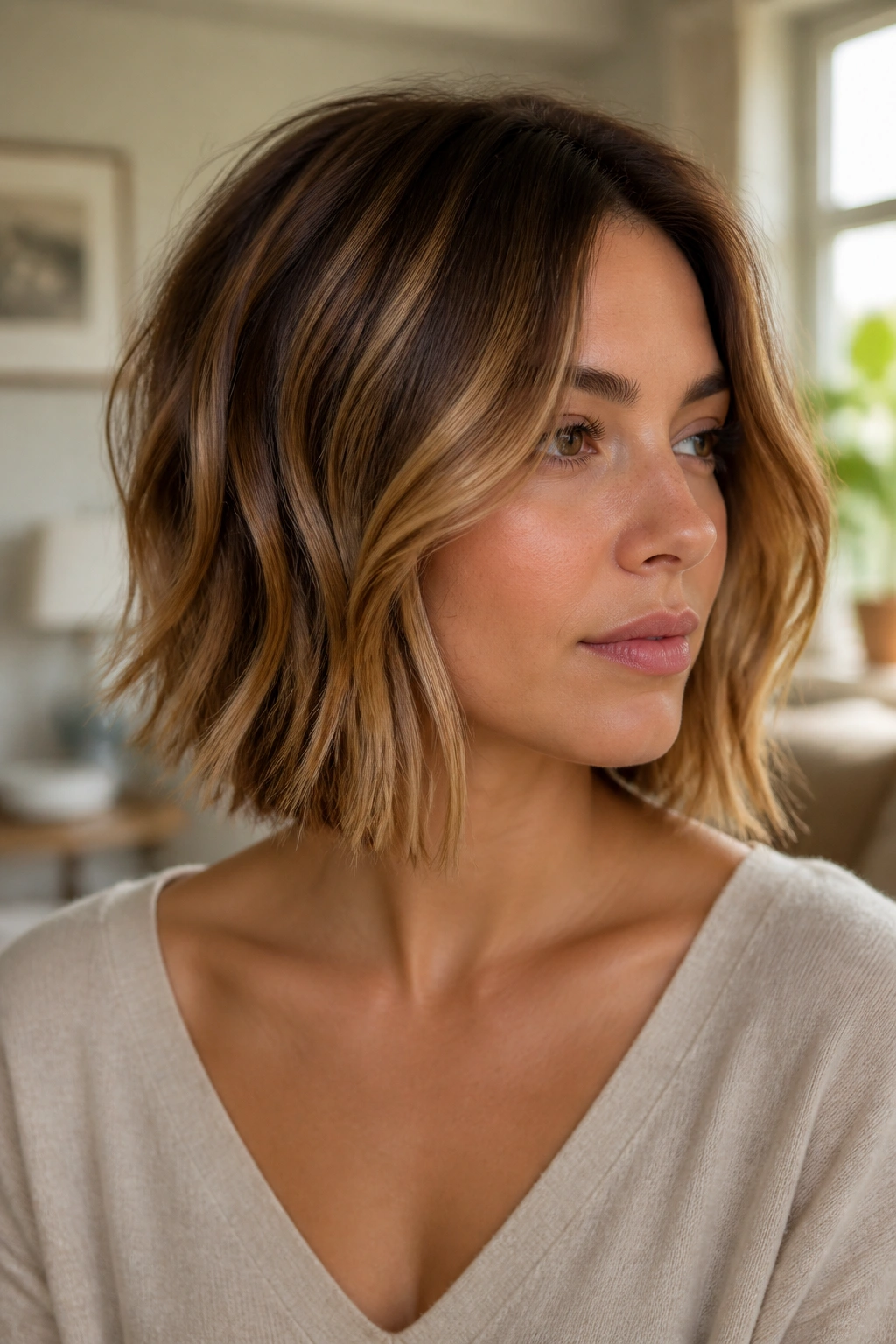
Why does honey look so good on a blunt bob? Because the warmth offsets the straight edge and gives the cut some life without making the line look muddy.
A blunt bob can get a little severe if the color is too cool or too light. Honey solves that by staying rich and dimensional. You want the brighter pieces to land just inside the outer edge of the hair, not all the way from root to tip. That way the bob still reads crisp, but it doesn’t feel hard.
How to Wear It
Loose bends work better than tight curls here. A slight wave makes the honey ribbons show up in layers, and the blunt edge underneath keeps the shape tidy.
If your skin runs warm, this is an easy yes. If your base is very dark, ask for honey mixed with a little amber so the finish doesn’t go flat.
4. Copper French Bob Balayage

A French bob already has attitude. Copper balayage gives it a pulse.
Short bobs are one of the few places where a warm red tone can look understated instead of loud. The trick is to keep the copper airy and broken up, especially around the fringe and the front sections. On jaw-length hair, that color catches the eye immediately, so the ends need a soft fade rather than a hard line.
I prefer copper with a little brown in it — more apricot and rust than fire-engine red. That blend keeps the hair looking dimensional as it grows out. A gloss every few weeks helps, because copper can fade into a flat orange if you ignore it for too long.
This is a good pick if you want a short cut that looks styled even when you’ve done almost nothing to it.
5. Charcoal Brown Crop Balayage
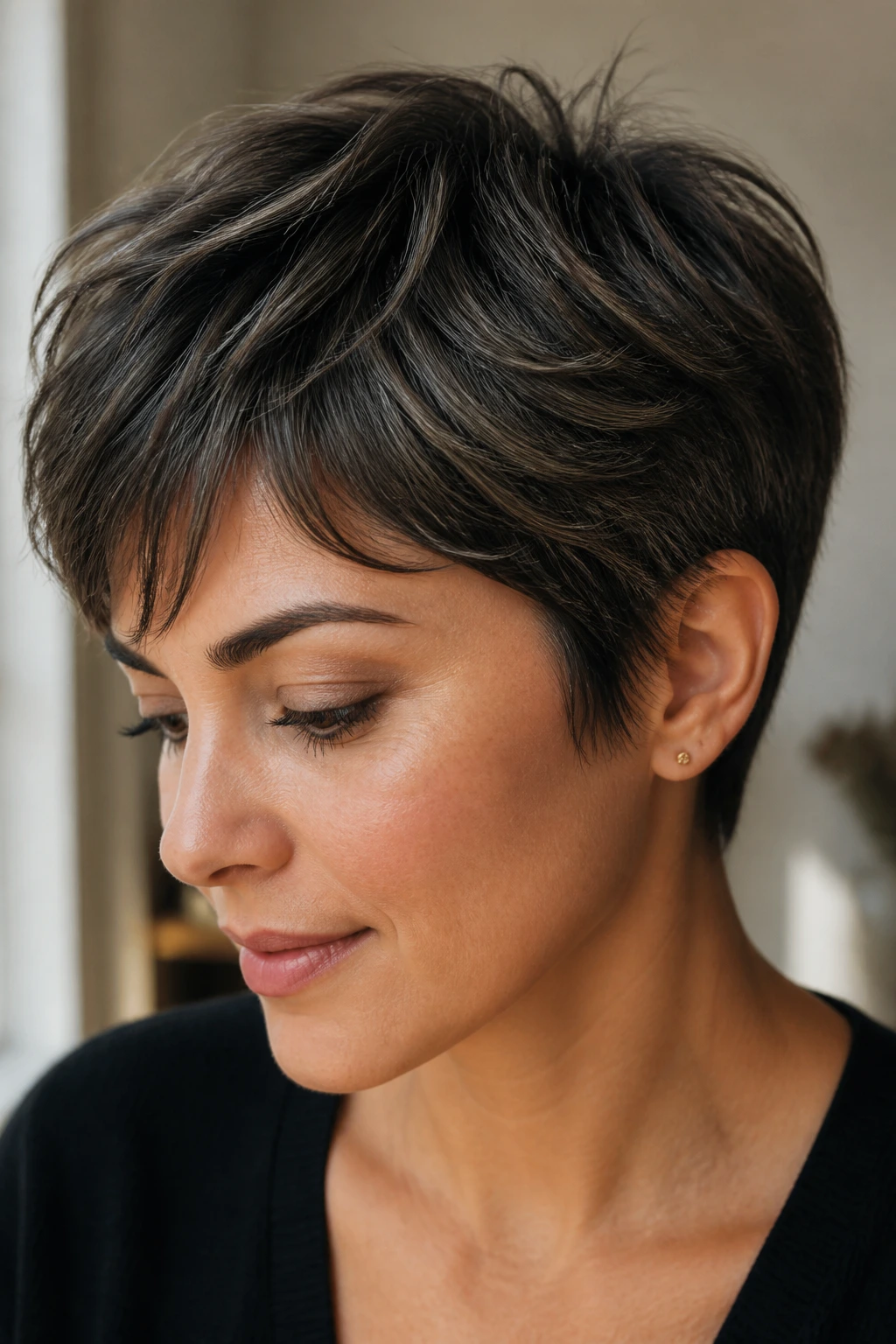
Not every balayage has to be blonde. On a short crop, charcoal brown ribbons can do more for the shape than a bright highlight ever could.
This look is for people who want dimension without a lot of contrast. Instead of painting obvious light pieces, the colorist works within the brunette family and lifts just enough to show movement. The effect is subtle up close and cleaner from across the room. That matters on cropped hair, where the wrong stripe can look fussy in a hurry.
What to Ask For
- Fine, scattered ribbons through the crown and fringe
- A smoky brunette gloss over the mid-lengths
- Slightly lighter edges around the temples
- No heavy blonde at the nape
The nice part is that it grows out quietly. No hard line. No obvious stripe. Just a crop that looks more expensive than it sounds.
6. Rose Gold Collarbone Cut Balayage

A collarbone cut can handle a little playfulness, and rose gold is one of the few fashion tones that still feels wearable when it’s placed with care. The color should sit like a whisper, not a block of pink.
On this length, the best rose gold balayage starts through the mid-lengths and melts toward the ends. The front pieces can be a shade brighter, which keeps the face from disappearing under the color. But the root area should stay soft and rooted, or the whole thing slides into costume territory fast.
What Makes It Work
The collarbone cut has enough length for color to travel, but not so much length that the pink gets lost. That’s why this shape is perfect for a gentle rose-beige mix.
Keep the styling loose. A flat iron wave or a soft bend from a medium barrel iron lets the warm pink tones show without looking stiff. Straight and ultra-sleek can flatten the effect a little.
7. Money-Piece Lob Balayage
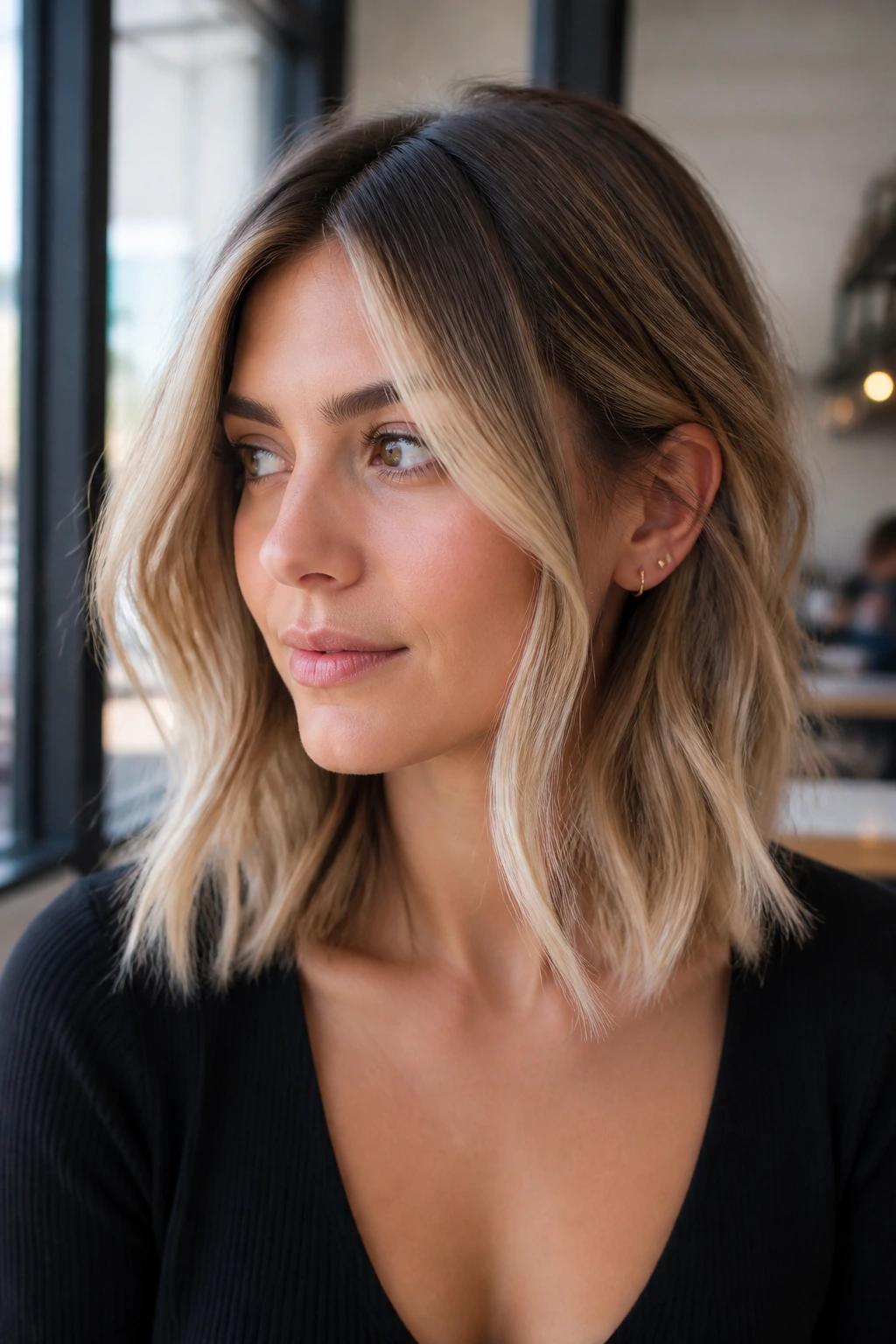
A lob can look plain if the color sits too far back. A bright money piece fixes that fast.
The front sections do the heavy lifting here. You want the face-framing pieces to be the brightest part, with softer beige or caramel running through the rest of the head. That creates contrast where people look first, while the interior stays dimensional. On shoulder-grazing hair, this matters more than on long hair because there’s less length for the eye to travel.
This look is good if you wear your hair tucked behind one ear, clipped back, or styled with a middle part. The money piece gives you that instant lift around the face without forcing the whole lob into high-maintenance blonde.
A little root shadow at the crown helps, too. It keeps the top from looking over-light and gives the bright front pieces something to sit against.
8. Mushroom Brown Shoulder-Length Balayage

What if you want dimension without warmth? Mushroom brown balayage is the answer I keep coming back to.
The tone lives between taupe, beige, and ash, which makes it feel cool without going flat. On shoulder-length hair, that balance matters a lot. The hair is long enough to show shading, but not so long that the color can wander around and disappear. Mushroom brown keeps the finish neat.
Why It Reads So Well
Shoulder-length cuts often sit right on the collarbone or just below it. That means the lightest pieces have to be placed carefully, or the whole look can break apart. Mushroom brown works because it blends rather than shouts.
For this one, I’d ask for:
- soft beige pieces near the face
- ash-brown ribbons through the mid-lengths
- a shadowed root that stays close to the base color
It’s a quiet look. Which is exactly why it works.
9. Toffee Long Layers Balayage

Toffee on long layers is one of those colors that keeps getting better the more the hair moves.
Unlike a full-head blonde job, toffee balayage keeps depth in the hair, so the layers don’t look wispy at the ends. The lighter pieces should live through the middle and lower third of the hair, with just a few brighter bits around the face. That spacing matters. Long hair can take more color, but it still needs breathing room.
A blowout with a round brush shows this look well, and so do loose waves. Straight hair is fine too, but it reads more understated. The layers give the toffee a chance to break up the shape, which keeps the style from dragging down the face.
If your hair is thick, this is a good way to make it feel lighter without stripping away the depth that makes long hair look rich.
10. Cool Ash Straight Mid-Length Hair Balayage

Straight mid-length hair does not need more drama. It needs better placement.
That’s why cool ash balayage can look so sharp on a clean, straight finish. The color stays soft and diffused, and the hair keeps that sleek line from root to tip. If the highlights are painted too boldly, the whole thing can start to look striped. A fine weave through the top and a softer hand underneath are much safer.
A shadow root helps here, especially if your base is medium brown or dark blonde. It lets the ash read as deliberate instead of muddy. I also like a gloss on this kind of hair because straight lengths show everything — dryness, brass, the whole deal.
This look is for people who like a polished finish and do not want warmth fighting with a flat-iron style. Clean. Cool. Controlled.
11. Brunette Wavy Lob Balayage
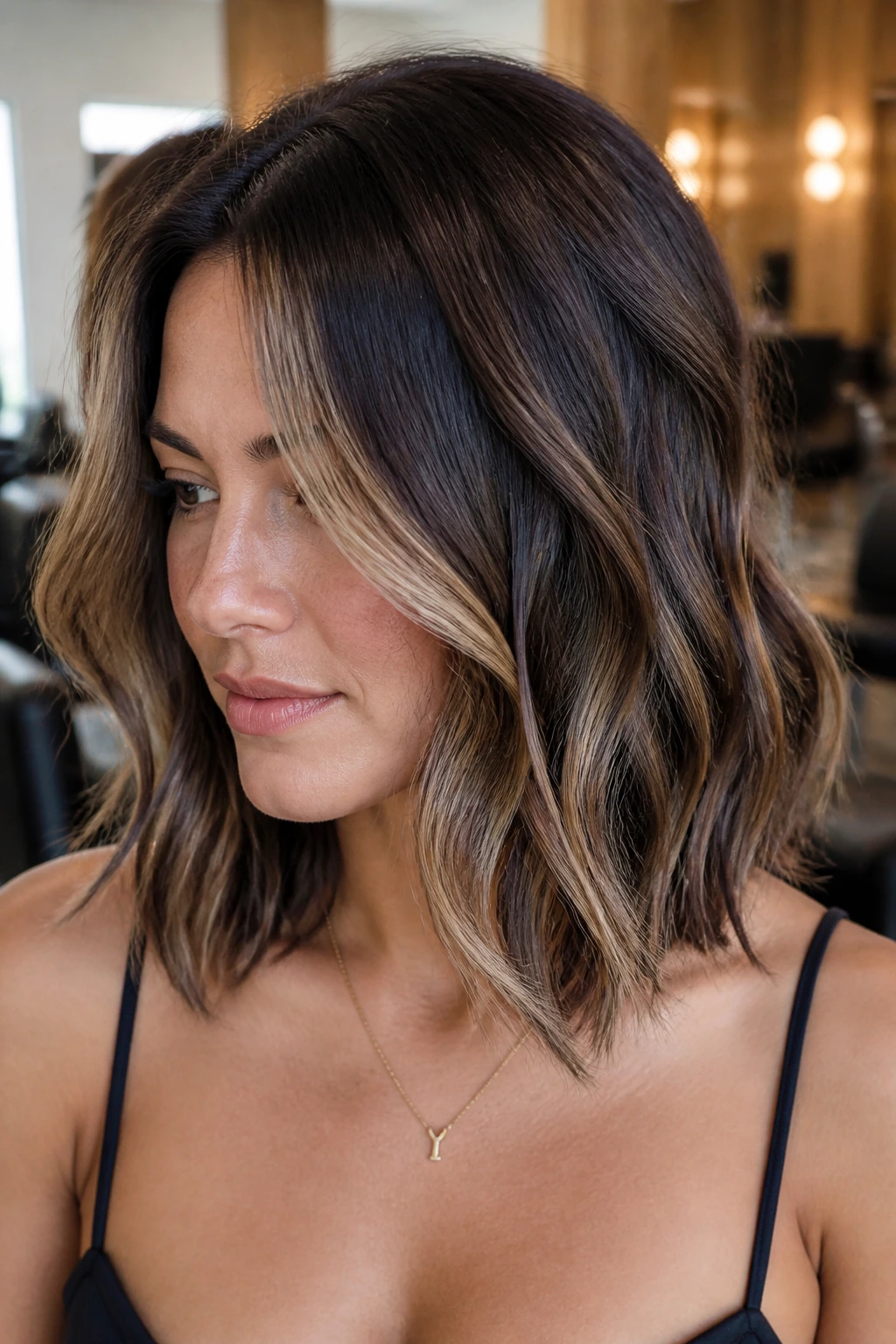
A wavy lob loves contrast, but it needs contrast that feels broken up, not chunky.
The best brunette balayage for this length plays with a darker base and lighter ribbons that appear and disappear as the waves move. That means the front sections can be a touch brighter, while the back stays softer and more shadowed. The color looks richer that way. Too much uniform lightness turns the lob into a block, and the cut loses that loose, swingy feel people want from it.
What to Watch For
- Keep the brightest pieces around the face and upper wave
- Let the lower layers stay one shade deeper
- Use a toner that keeps the brunette side cool or caramel, depending on your base
- Skip heavy highlights on the very ends if the hair is fine
This is one of those styles that looks even better on day two, after the wave relaxes a bit.
12. Vanilla Curtain Bangs Balayage
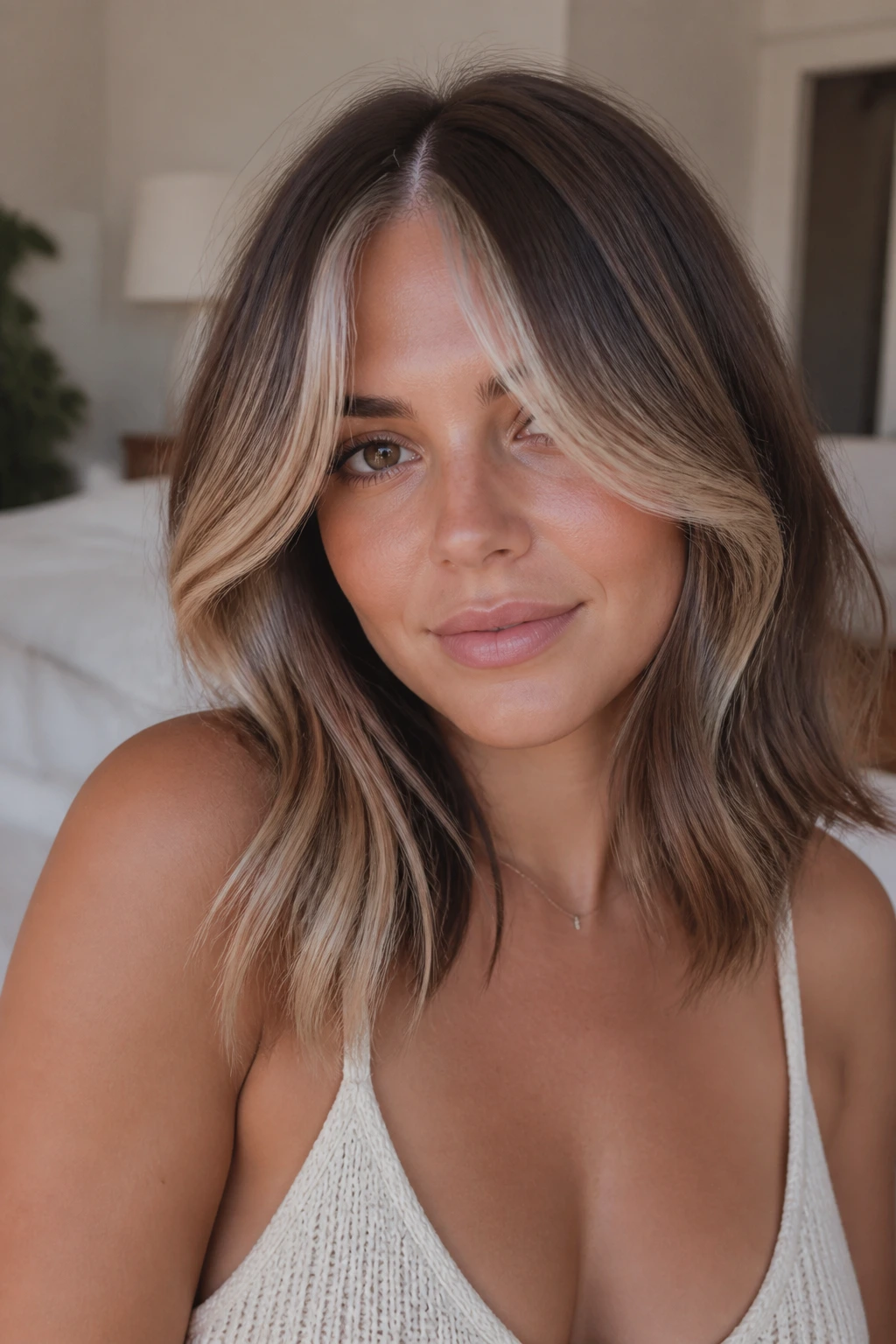
Can curtain bangs and balayage get along? Absolutely — as long as the brightness doesn’t start too high at the root.
The fringe should frame the face, not fight it. A soft vanilla tone around the bangs and temple pieces keeps the front light and airy, which matters because curtain bangs can look heavy if the color is too dark or too solid. The rest of the hair can stay more muted, especially if the cut is shoulder length or a little longer.
How to Style It
A middle part works well because it opens the fringe and lets the lighter pieces fall on either side of the face. A round brush or large Velcro rollers can give the bangs a soft bend, which helps the vanilla ribbons look intentional instead of random.
This is a nice choice if you like a softer blonde but don’t want your whole head lifted. It gives you brightness where you actually see it.
13. Mocha Melt Curly Shoulder-Length Hair Balayage
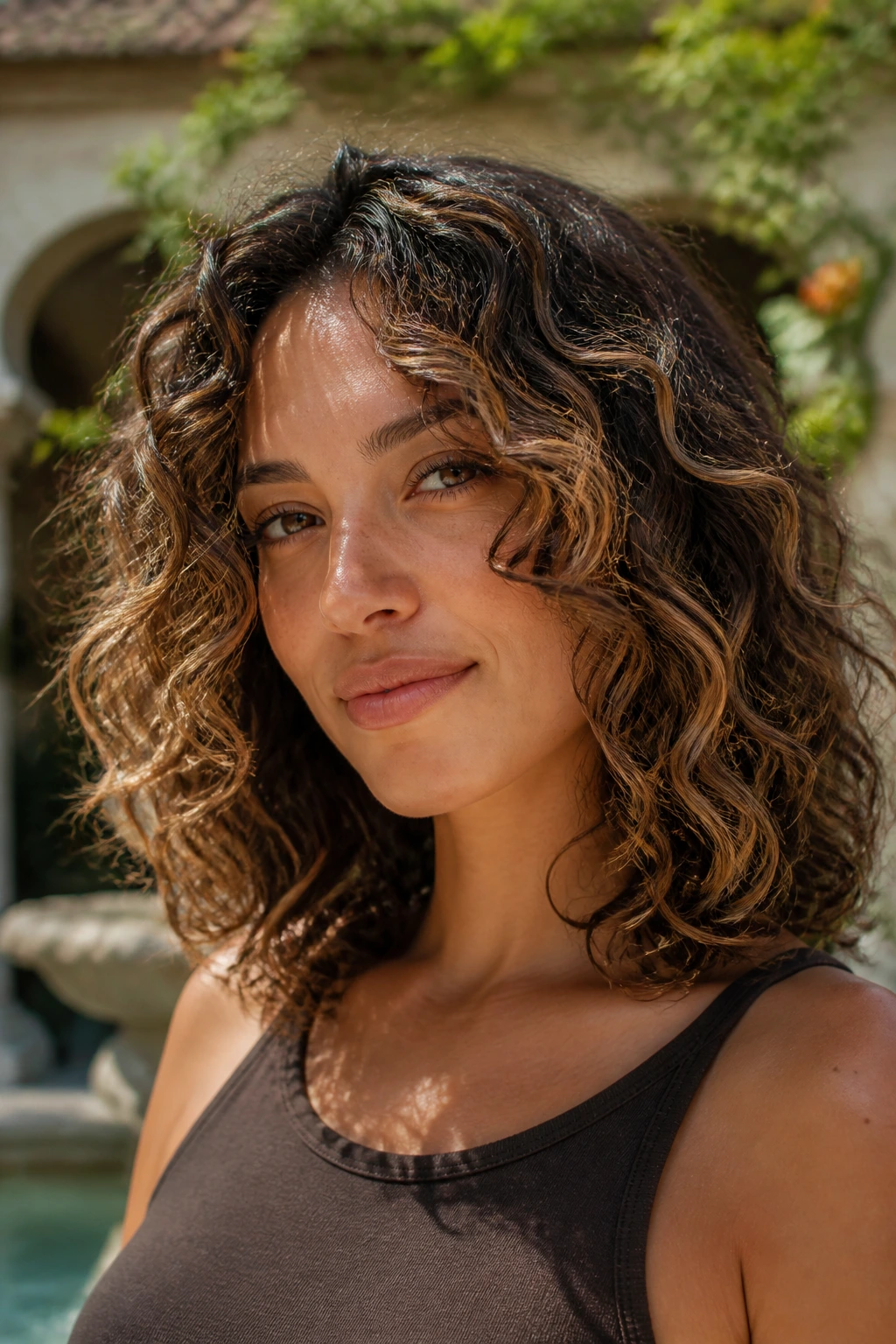
Curly hair does not want the same highlight map as straight hair. The curl pattern changes everything.
A mocha melt keeps the base rich and lets the lighter pieces travel in a way that follows the curl family, so the color shows through the shape instead of sitting on top of it. On shoulder-length curls, that matters a lot. If the light pieces are painted like stripes, the curl clumps can make them look choppy. A melt reads softer and more natural.
The prettiest version uses mocha, cocoa, and a little latte through the outer curl pattern. When the hair is dry, the highlights appear where the spirals open. That gives the whole style a sense of depth without breaking up the curl.
If your curls shrink a lot, ask your colorist to keep the lightness slightly lower than you think you need. Dry curl pattern changes the placement more than most people expect.
14. Auburn Layered Shag Balayage

A shag haircut already has movement built in. Auburn balayage just makes the layers easier to see.
This is one of my favorite pairings because the color and the cut talk to each other. The auburn pieces should run through the crown, around the bangs, and into the choppy layers so the whole shape feels alive. On a shag, you do not need the color to be evenly spaced. In fact, a little irregularity helps. The hair looks more natural that way.
A Good Auburn Map Usually Has:
- deeper copper-brown near the roots
- brighter auburn through the top layer
- softer, broken-up ends
- a few face-framing pieces around the cheekbones
If the auburn leans too red, the shag can look loud. Keep it brown enough to feel wearable. That’s the sweet spot.
15. Bronde Fine Hair Balayage
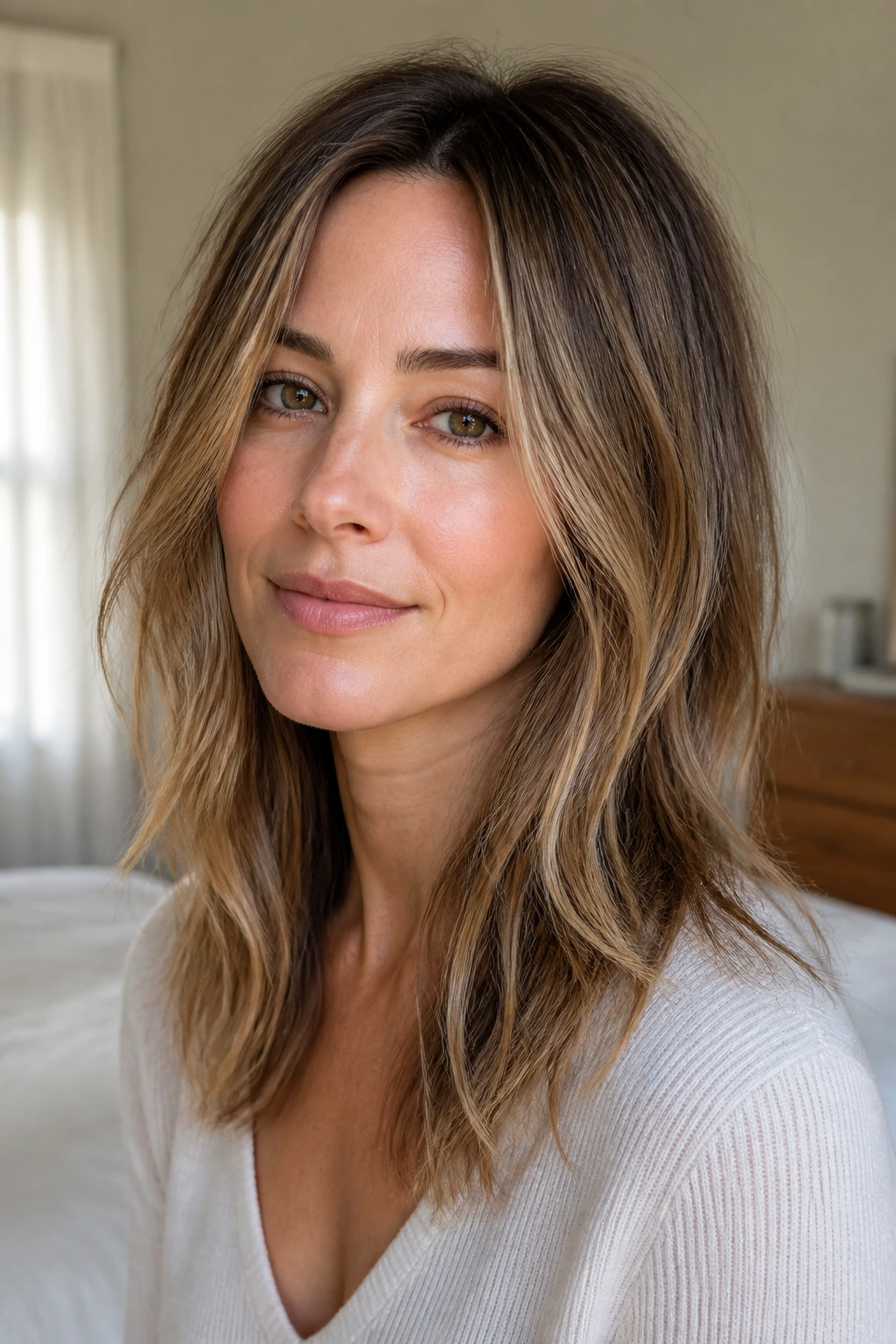
Bronde is one of the easiest ways to fake thickness on fine hair.
Fine strands need softness more than contrast. Heavy blonding can make the hair look thin at the ends, and that is a bad trade. Bronde stays in the middle — enough warmth to brighten the face, enough brunette to keep the hair looking full. The lighter pieces should be tiny and scattered, almost like baby lights that blur into the base.
A soft root shadow helps a lot here. It gives the illusion of density at the top while the lighter pieces create a little sparkle through the mid-lengths. This is the kind of color that looks good on both shorter and longer fine hair because it never overwhelms the actual strand size.
If your hair gets weighed down easily, keep the styling light. A soft blow-dry or loose bend shows the dimension better than stiff curls ever will.
16. Sand-and-Smoke Thick Hair Balayage
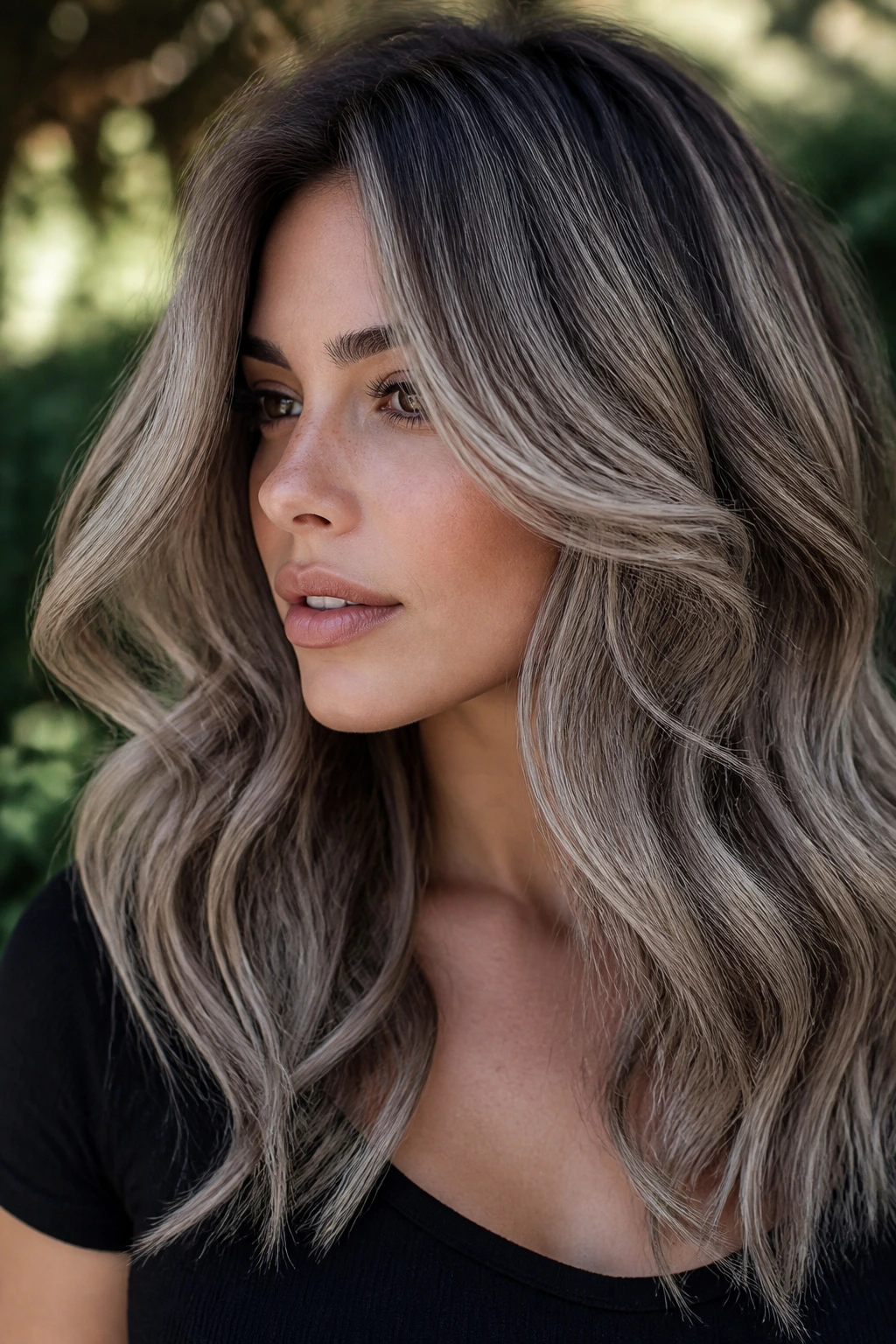
How do you stop thick hair from looking like one giant mass of color? You build depth inside it.
Sand-and-smoke balayage works because it mixes warm beige and cool ash in a way that breaks up bulk. On thick hair, the lightness should live in wide but controlled panels, especially through the interior layers and lower half. If you only paint the top, the hair can look flat from the side. If you over-light the ends, it can turn poofy. Neither is a great look.
What Makes It Different
The hair still feels rich and heavy, but the color stops it from reading like a helmet. That’s the whole point.
A good colorist will usually:
- paint some interior pieces under the top layer
- soften the ends so they do not look bleached out
- keep the root area dark enough to hold shape
- use a toner that balances beige and smoke
This one is for people who need dimension that can stand up to a lot of hair.
17. Cinnamon Dark Waves Balayage
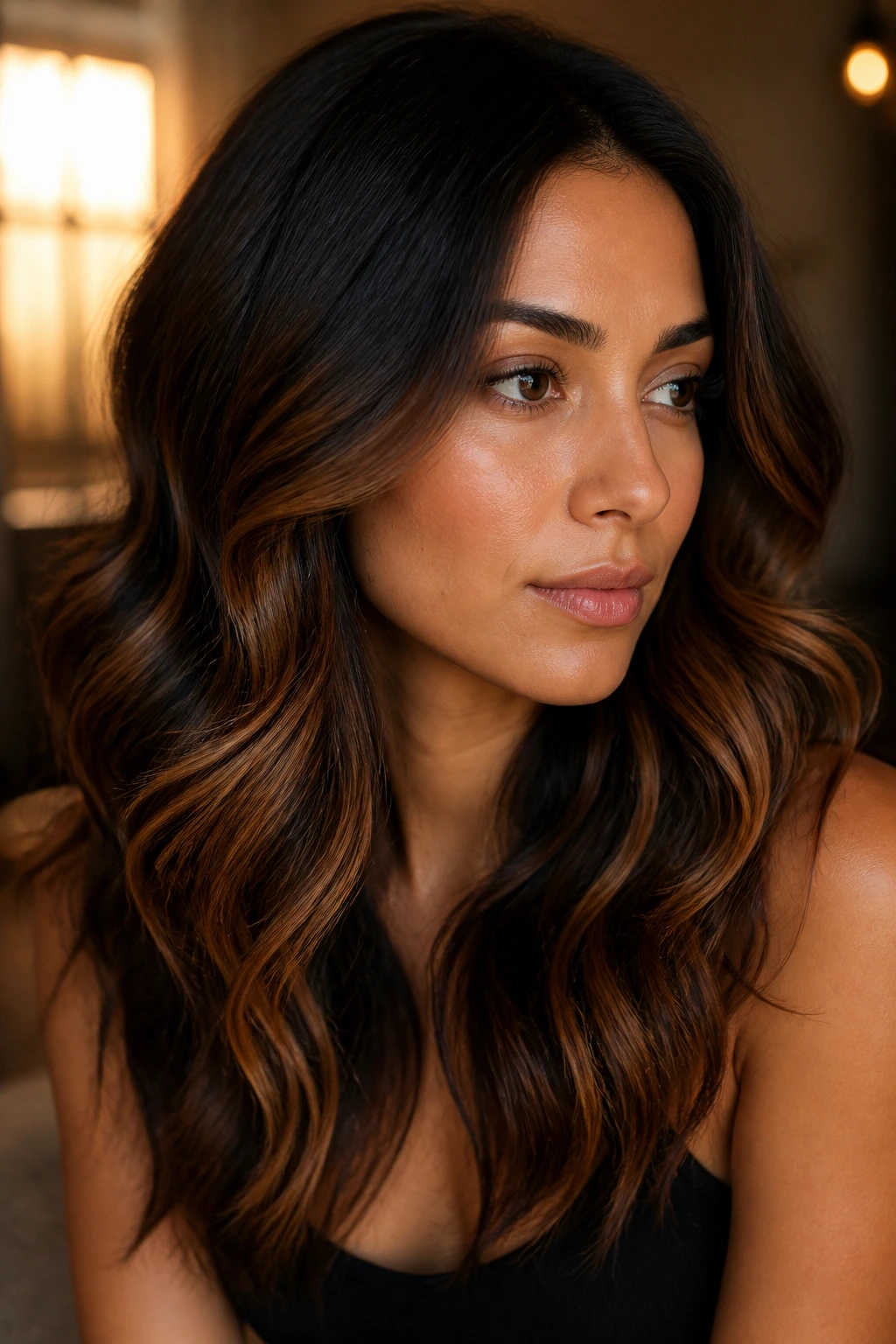
Dark wavy hair loves a little warmth around the bends, and cinnamon is one of the prettiest ways to do it.
The color should not scream red. It should glow. Think warm brown with a spicy edge, painted where the wave opens and along the lower pieces that catch the light as you move. On dark hair, cinnamon balayage can look almost hidden in one angle and suddenly obvious in another. That shift is what makes it interesting.
A soft wave is enough to show it. You do not need polished curls. In fact, a slightly undone finish makes the cinnamon look richer because the pieces land in different places each time the hair moves.
This is a good option if you want warmth without going copper. It feels a little moodier, a little less obvious, and that’s the appeal.
18. Icy Beige Long Bob Balayage
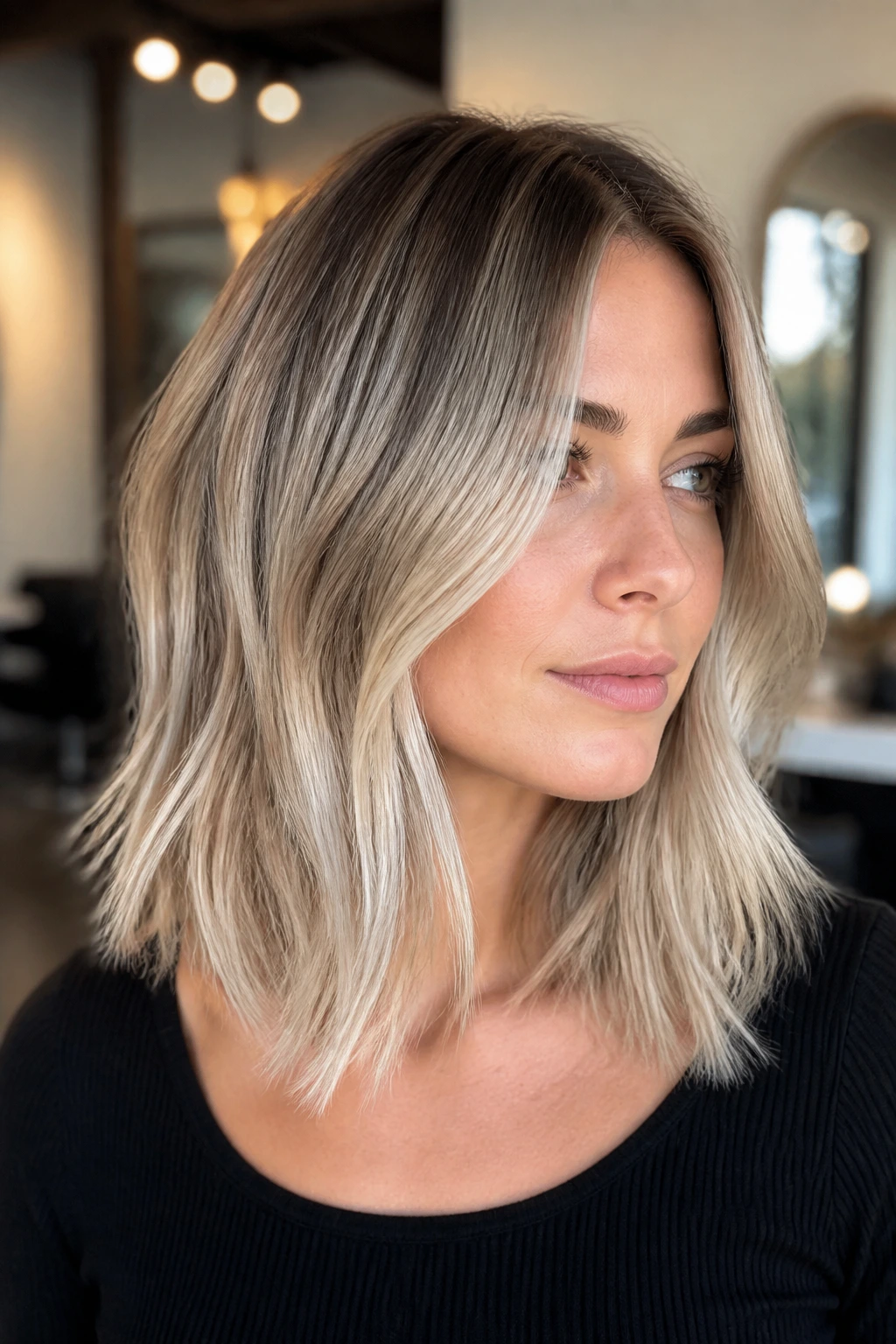
Platinum can be a lot on a long bob. Icy beige keeps the cooler tone, but softens the hit.
That softer edge matters because a lob sits right around the face and shoulders, where a very pale blonde can start to feel harsh. Icy beige balances cool and creamy tones so the hair looks bright without going stark. The placement should stay painterly, with a few stronger pieces around the face and lighter diffusion through the mid-lengths.
Why It Flatters the Lob
A long bob has enough length for the color to move, but not enough length to hide a bad blend. Icy beige avoids that harsh line between root and highlight. It also photographs nicely in low shine because the tone stays creamy instead of flat gray.
If your base is naturally medium brown or dark blonde, this color can feel like a clean reset. If your hair is very dark, expect a few sessions to get there without frying the ends.
19. Bronze Sleek Blowout Balayage
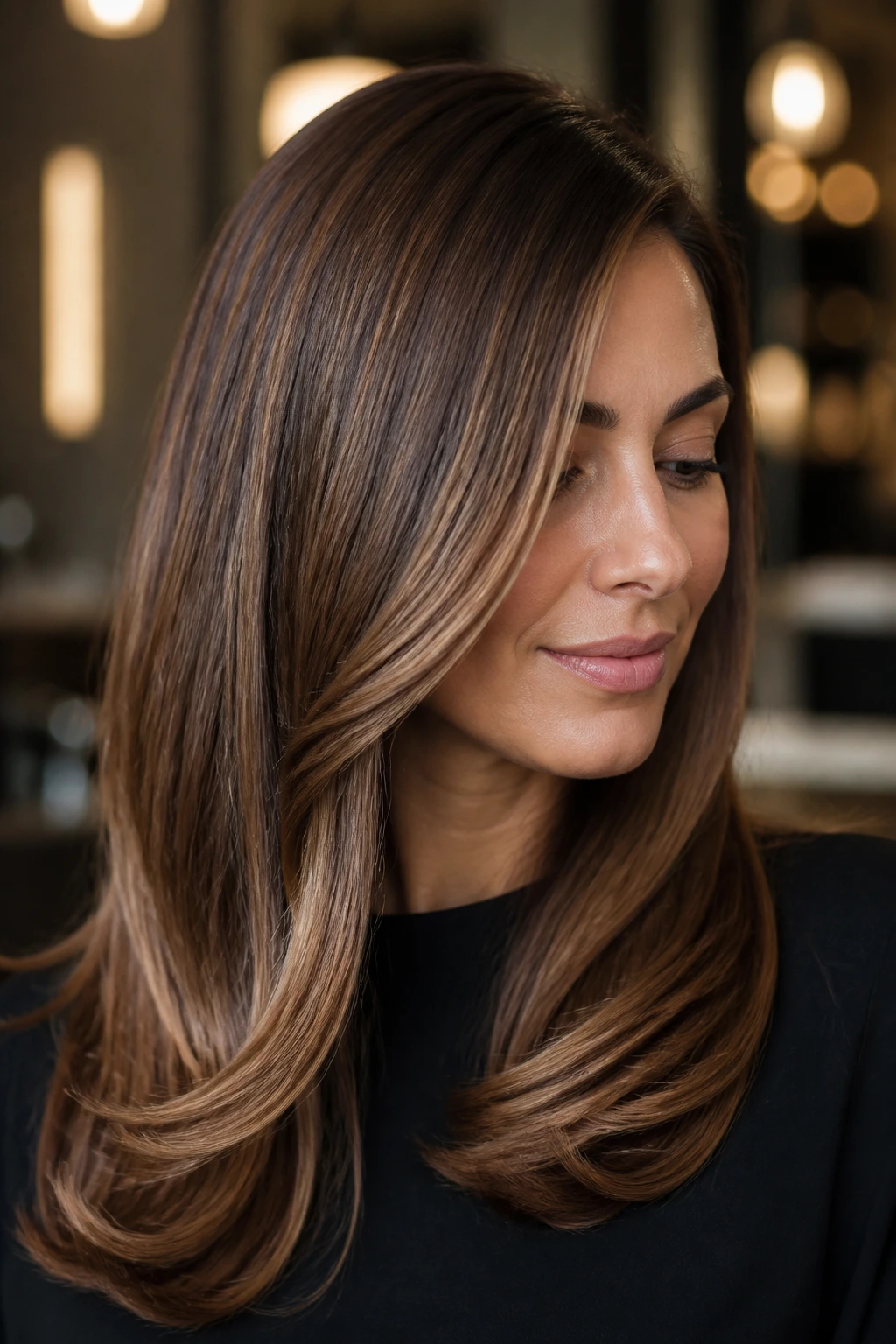
If you wear your hair smooth, bronze balayage is a better choice than a lot of people think.
The shine is the point. Bronze gives the hair a warm metallic look that shows up best on a brushed-out blowout, where the color can travel in long, clean lines. Broad painted panels work here better than tiny ribbons because the smooth styling reveals every shift in tone. You want the hair to look glossy, not busy.
A side part makes this finish feel a little more grown-up, while a middle part keeps it modern and sleek. Either way, a light round-brush bend at the ends helps the bronze catch the eye without looking stiff. It’s a low-drama color for people who like neat hair.
This is also one of the easier balayage looks to keep looking fresh, since the warm brown base hides grow-out better than high-contrast blonde.
20. Strawberry Blonde Soft Layers Balayage
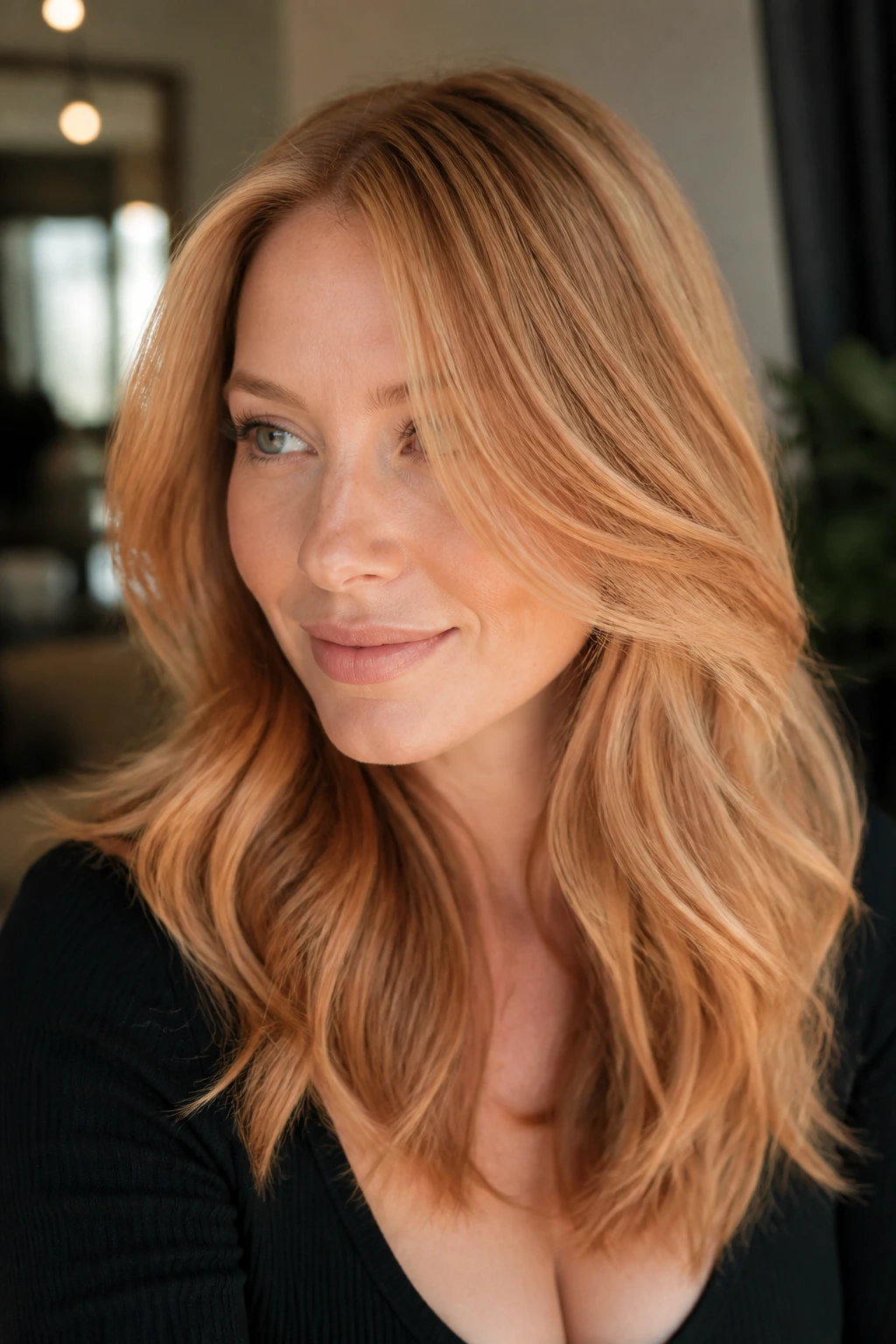
Strawberry blonde can look childish if it’s too pink or too flat. On soft layers, though, it becomes bright and grown-up.
The trick is to keep the strawberry tone muted — more peachy-gold and apricot than candy pink. The color should sit on the outer layers and around the face, with the deeper pieces underneath holding the shape together. That gives the layers movement while keeping the overall look polished.
Who Can Wear It
Natural blondes, light brunettes, and redheads who want a softer finish can all pull this off. On darker hair, it usually needs more lift, so the colorist has to work carefully to keep the hair healthy.
Loose waves help a lot because they separate the layers just enough to show the blend. Straight hair can wear it too, but the color reads gentler. That may be exactly what you want.
21. Champagne Waist-Length Hair Balayage
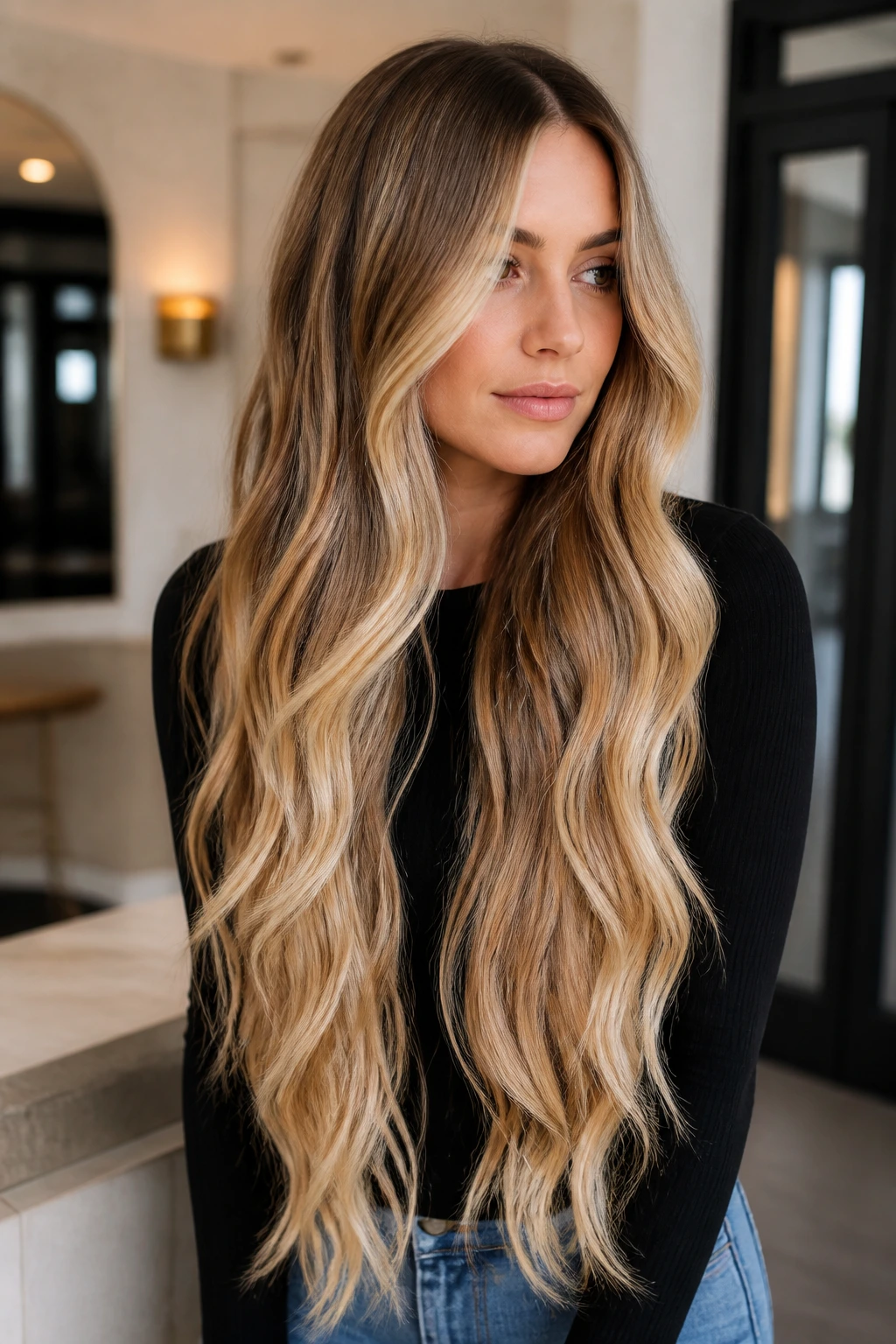
Why does champagne work on waist-length hair better than a brighter blonde? Because long hair needs spacing.
A lighter, cooler blonde can get overwhelming when it travels all the way down the back. Champagne stays luminous, but the tone is softer and a little creamier, so the length still feels elegant instead of loud. The color should be painted in longer ribbons with plenty of room between them. That open spacing keeps the hair from turning into one big block of light.
I also like a deeper root shadow on waist-length hair. It gives the top a little depth and helps the ends feel like part of the same story. Without that, very long blonde can look dry, even when it’s healthy.
This is a good choice if you wear braids, half-up styles, or big loose waves. Long hair needs a color that still makes sense when it’s tied back, and champagne does that better than most tones.
22. Gold Coast Beach Waves Balayage
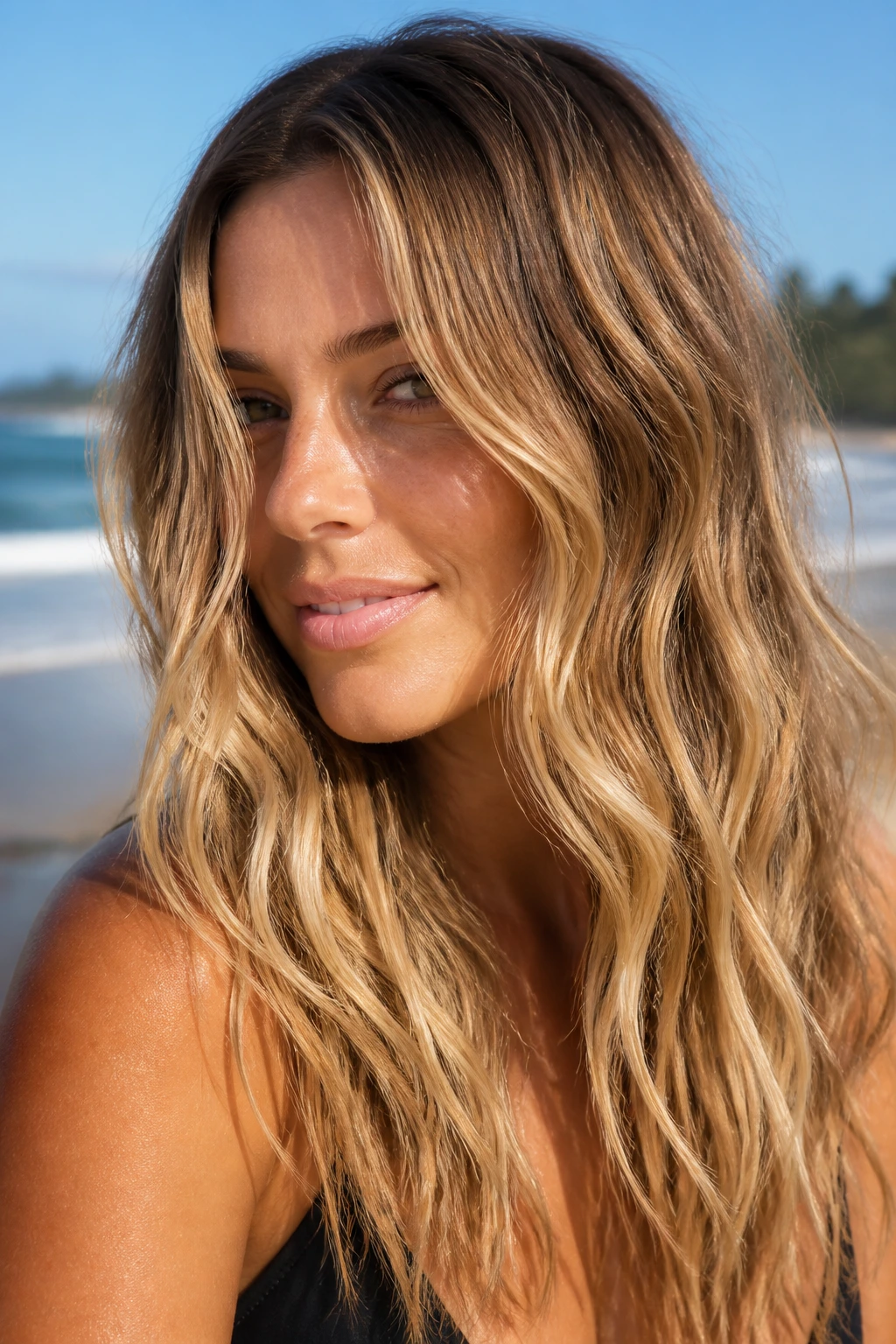
Beach waves and golden beige balayage are an easy match, but the color still needs a hand that knows when to stop.
The goal is sunlit, not brassy. Gold Coast tones sit between honey and beige, which gives the hair that warm coastal look without pushing into orange. On wavy hair, the brightest pieces should land on the curves of the wave and around the face, where the eye goes first. The ends can be a touch lighter, but not fried-looking light.
A 1.25-inch or 1.5-inch curling iron works well for this style because it gives you a loose bend instead of a tight curl. That bend is what lets the gold pieces show up in separated ribbons. A little texture spray on dry hair helps, too, but too much will make the finish feel rough.
This is one of those looks that feels easy to wear and easy to grow out, which is why people keep asking for it.
23. Dimensional Curly Long Hair Balayage

Curly long hair needs dimension inside the curl, not just on the surface.
That is the big mistake I see most often. If the highlights only sit on the outer layer, the curls can look dusty and flat when they dry. A dimensional balayage uses more than one tone and paints them across different curl groups, so the hair moves in color as well as shape. On long curls, that means the lighter pieces can start a little lower on some sections and a little higher on others.
How to Keep the Curl Pattern Readable
- Use more than one shade of lightness
- Keep some depth near the roots
- Let the color follow the way the curls stack
- Avoid over-lighting the very ends
The result is better than a uniform blonde. It looks alive. And long curls need that, or they start to feel heavy.
24. Rooted Mocha Gray-Blending Balayage

Gray blending does not have to look dull. Done well, it looks soft, rich, and expensive in the plainest sense of the word.
A rooted mocha balayage is especially good if you want to blend scattered grays without chasing full coverage every few weeks. The root stays deeper, the mid-lengths pick up mocha and beige ribbons, and a few brighter pieces around the face keep the whole look from sinking downward. On short bobs, shoulder-length cuts, and longer layers, this approach grows out quietly.
The key is not to make the highlights too blonde. Gray blending works because the lighter strands sit close to the natural silver or white in the hair, so the grow-out line disappears into the pattern. If you go too light, you lose that soft merge and have to color more often.
It’s a practical look. Also a pretty one. Which is rare enough.
25. Soft Ribbon Balayage for Extra-Long Hair

Extra-long hair can take broad ribbons better than most lengths, but the placement has to stay low and diffused or the result looks like curtains.
The color should begin around the cheekbone or lower, then melt through the rest of the length. That keeps the top section rich and the ends brighter, which is where long hair usually needs help anyway. If the lightness starts too high, the whole style can look patchy by the time it reaches the waist or lower back.
What Keeps It Clean
- Use wide but soft ribbons, not stripey panels
- Leave depth at the roots and crown
- Let the ends be lighter, but still blended
- Trim the hair often enough to keep the bottom edge from looking frayed
This is a good look for anyone who wears long hair down more often than not. It moves well, it photographs well in real life, and it grows out with a softness that shorter cuts can’t always get away with.
Final Thoughts
Balayage looks only work when the placement respects the length. Short cuts need precision. Mid-length hair needs balance. Long hair needs room to breathe.
That is why the prettiest color jobs do not look pasted on. They follow the haircut. They make the hair move better, not just look lighter.
If you’re choosing between tones, start with the shape of the cut before you think about the shade. That one decision saves a lot of bad appointments.
