



Short brunette hair can look expensive in a heartbeat—or flat, muddy, and a little too safe. The right brunette hair color ideas for short hair do more than change the shade; they change the shape of the cut, which is why a blunt bob, pixie, or shag can suddenly look sharper with the right tone.
Short lengths are unforgiving in a useful way. There’s nowhere for a bad color to hide, which means placement matters more than on long hair and shine matters more than people think.
That’s also why brunette shades are such a good match for crops, lobs, and bixies. Brown isn’t boring when it has depth, and on short hair, depth can come from a cool mushroom base, a warm cinnamon ribbon, a glossy espresso finish, or a soft honey melt that only shows when the hair moves.
The smartest choices usually keep the root believable, put brightness where the face needs it, and respect the cut’s geometry instead of fighting it. That’s the whole game here.
1. Mushroom Brunette Bob
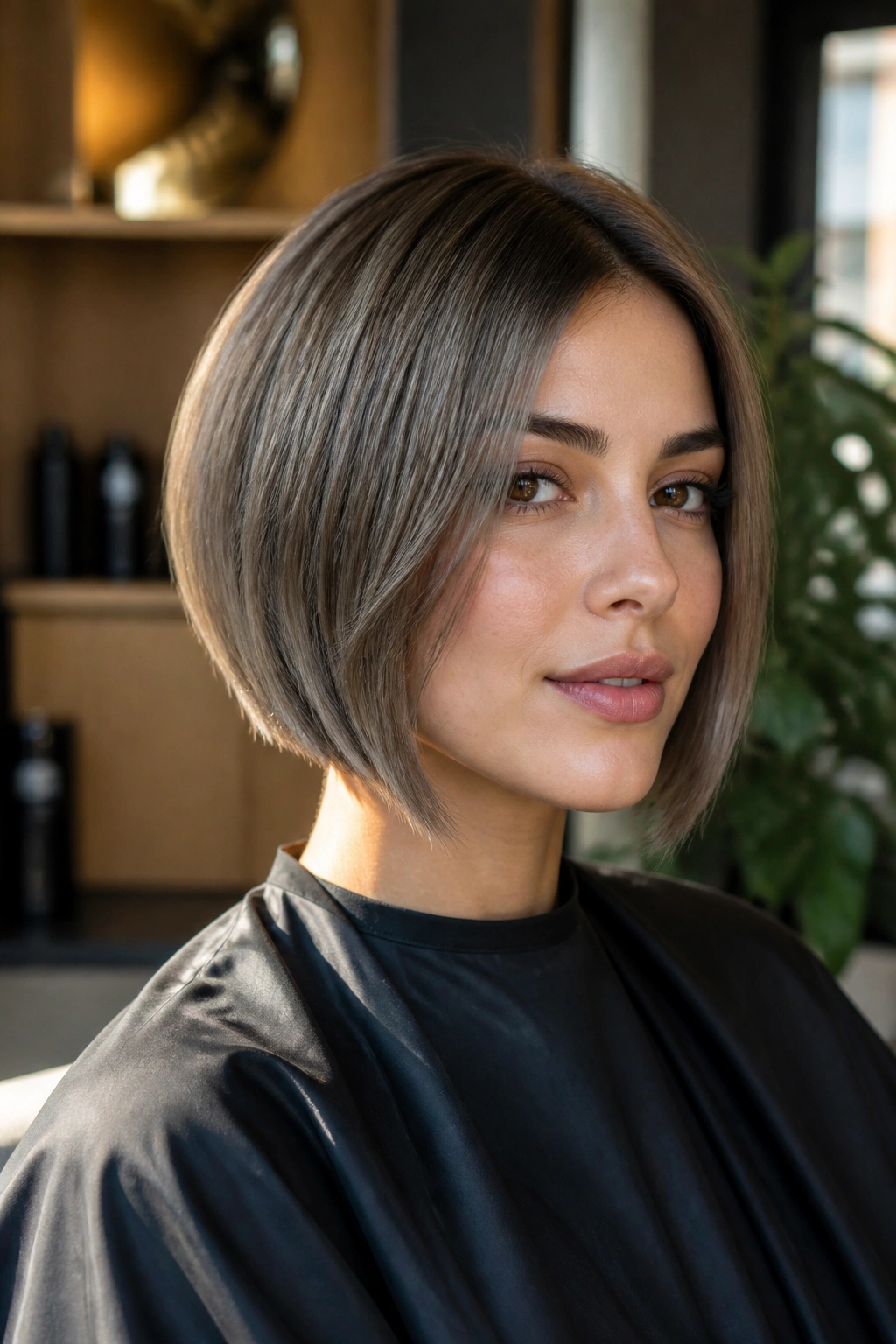
Mushroom brown is the shade I reach for when a bob needs polish without looking harsh. It sits in that cool-taupe zone between ash and beige, which gives a blunt cut a clean edge and keeps the whole shape from feeling heavy.
Why Mushroom Brown Flatters a Bob
The magic is in the restraint. On a jaw-length or chin-length bob, a cool brunette base makes the line of the cut look sharper, while the softer beige notes keep it from turning flat or black.
It’s especially good if your natural brunette leans red or orange. A mushroom finish calms that warmth down and gives you a muted, smoky result that still looks dimensional in daylight.
- Best on straight bobs, tucked bobs, and soft waves
- Ask for a neutral-cool demi gloss over a brown base around level 5 or 6
- Keep the ends slightly lighter than the root so the cut does not look blocky
- Use a blue or violet shampoo sparingly if your hair pulls warm fast
Pro tip: mushroom brown can look muddy if the toner is too dark, so I’d rather see a softer gloss than an overdone ash rinse that kills the shine.
2. Chocolate Glaze Pixie
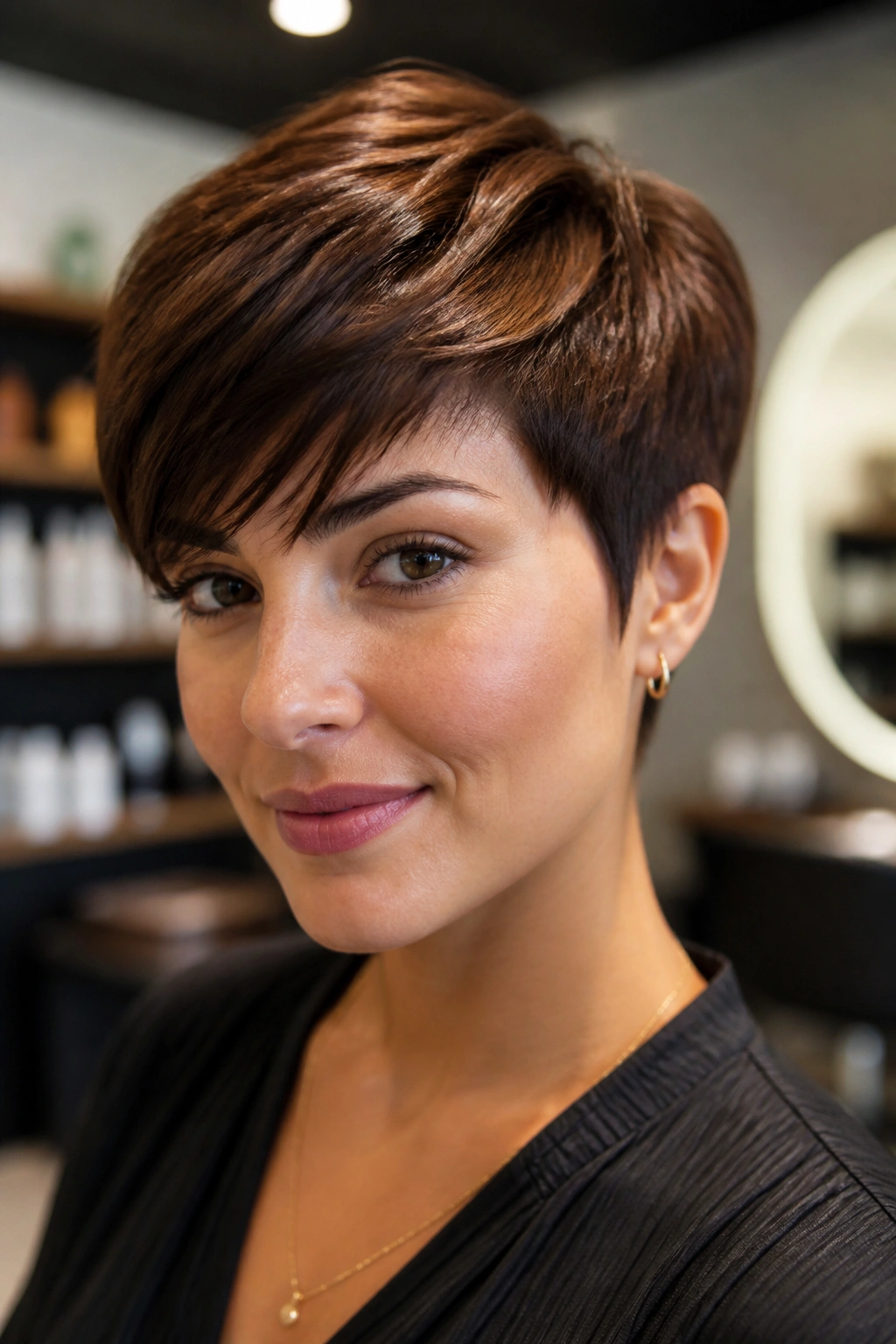
Why does a pixie in chocolate brown look so clean? Because the cut already does the work, and the color just needs to add sheen. A glossy chocolate glaze gives a short crop a polished finish that feels sharp without getting severe.
Chocolate brown is one of those shades that looks straightforward until you see it under real light. Then the warmer undertones show up in the best way, especially around a side-swept fringe or a textured top.
The trick is not to overcomplicate it. Keep the root rich, the mids smooth, and the finish reflective. If you want the color to look expensive rather than flat, ask for a demi-permanent glaze between level 4 and 5 with a soft brown-violet base. That tiny violet note helps cancel brassiness without making the result look cool and dusty.
On a pixie, the color should support the shape. It should not compete with it. If your hair is coarse, this shade can look especially strong because the natural body gives the brown more life, and a clear gloss every few weeks keeps the surface looking wet and sleek. No drama. Just clean lines.
3. Cinnamon Balayage Lob
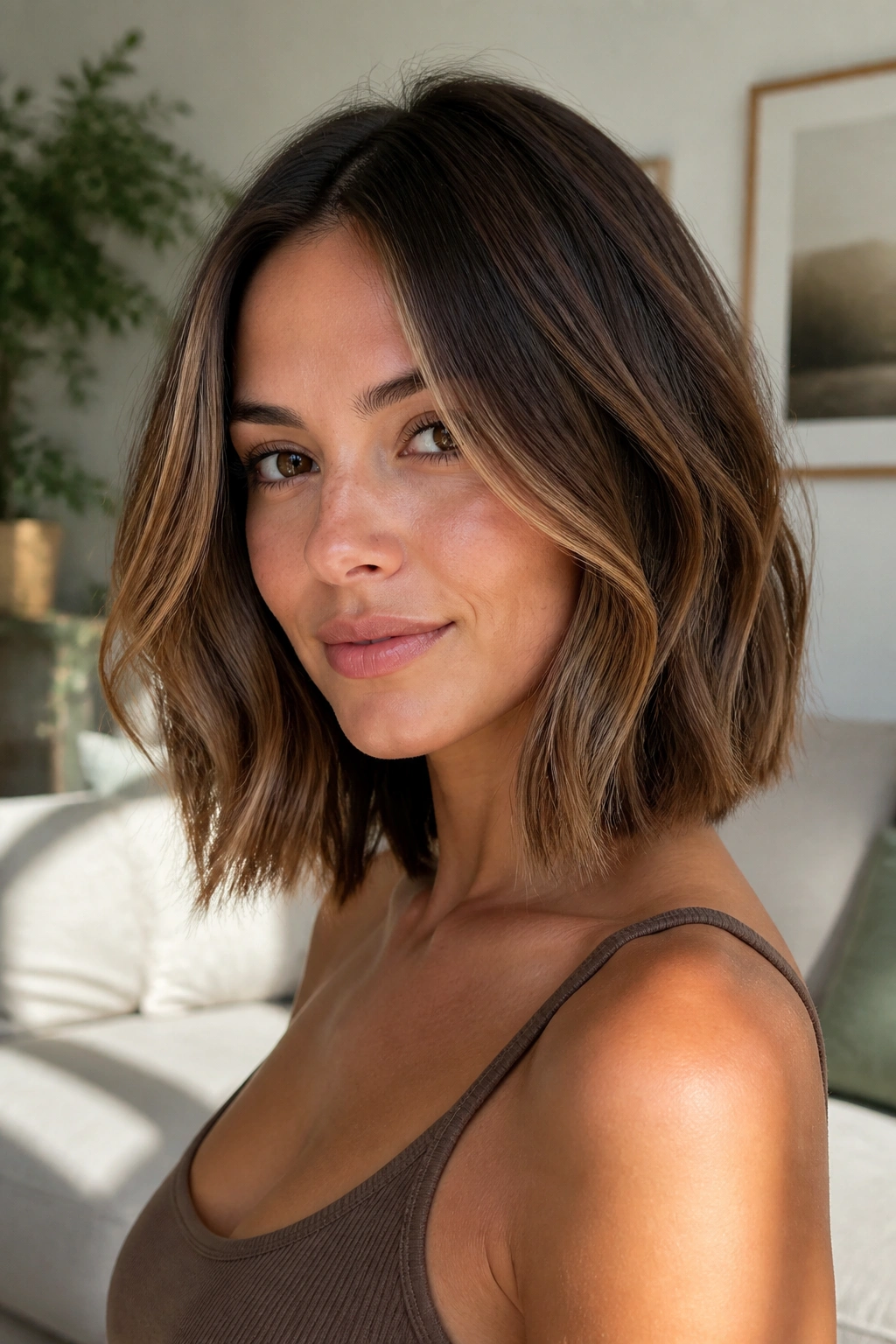
Can a lob carry warmth without tipping into copper? Absolutely, if the cinnamon is woven in as soft balayage instead of sitting on top like a stripe.
Cinnamon brown works well on short hair because it adds movement where the cut already bends. On a collarbone lob or a slightly shorter blunt lob, the warm pieces catch light around the face and at the ends, which gives the haircut more swing than one flat color ever could.
How to Wear the Warmth
The cleanest version keeps the base a rich brunette and places cinnamon ribbons through the midlengths and face frame. You want the lightness to feel like it lives inside the hair, not floating above it.
This is one of my favorites for wavy styling. A 1-inch curling iron or a few big bends with a flat iron makes the cinnamon pieces separate just enough to show the placement, and the result looks lived-in instead of fussy.
If your skin leans golden, this shade is easy to wear. If your complexion is cooler, ask for more brown than red so the cinnamon reads like spice, not rust. That small adjustment matters a lot.
4. Espresso Sleek Crop
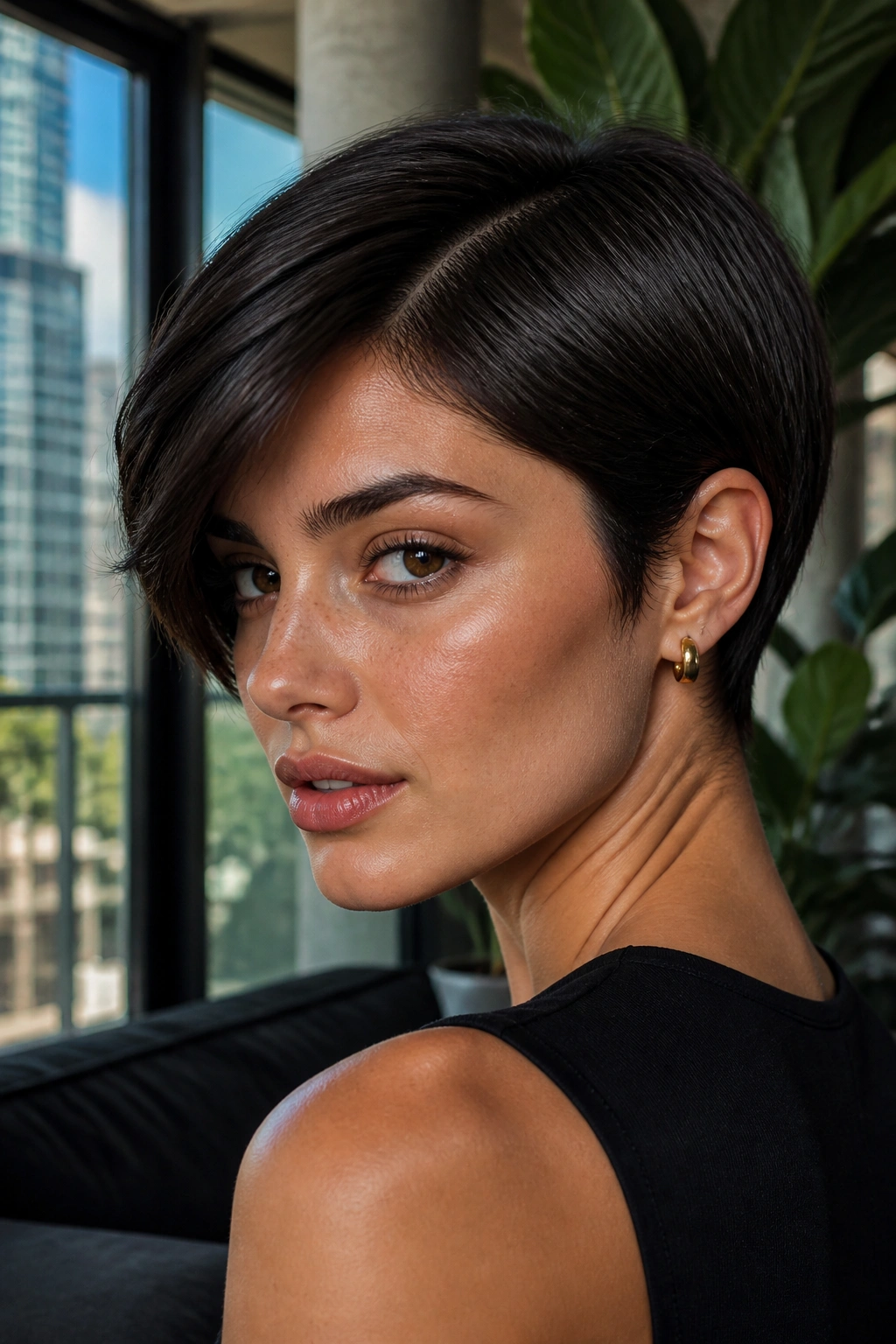
A grown-out crop can look messy in five different ways. An espresso-brown refresh fixes most of them in one shot.
This shade is deep, cool, and blunt in the best sense. On a pixie or cropped cut, espresso brown sharpens the outline of the haircut, especially around the nape and ears, where every millimeter counts.
What I like about it is the discipline. There’s no highlight map to manage, no big tonal shifts to worry about, just a dense brunette base that makes the silhouette look intentional. A sleek finish brings out the edge of the cut, while a matte paste can make the same color feel a little more modern and piecey.
- Works best on pixies, cropped bobs, and boyish cuts
- Ask for a level 2 to 3 brunette with a blue-based espresso tone
- Pair it with a side part or micro-fringe to keep the shape interesting
- Avoid extra warm toner if your hair tends to pull red
It’s a strong color. That’s the point.
5. Caramel Ribbon Shag
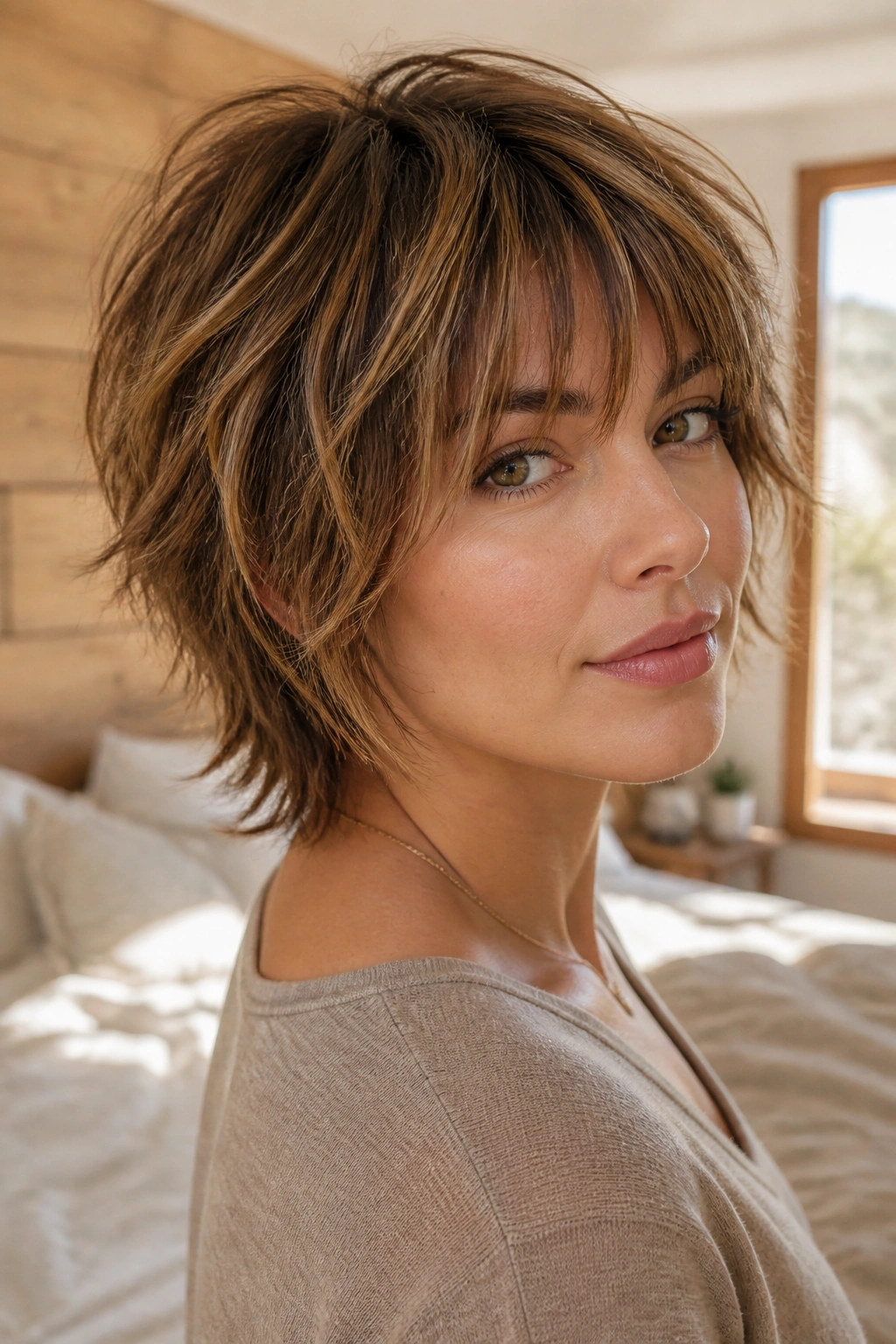
Caramel ribbons through a shag do something plain brunette rarely does: they make the layers look built into the haircut instead of added later. That matters a lot on short hair, where every swing of the layer is visible.
A shag already has movement, so the color should respect that. Instead of flooding the whole head with light pieces, place thin caramel ribbons through the top layers, the temples, and the outer bends of the fringe. That keeps the structure readable.
The best version feels slightly messy in a good way. Not tangled. Just relaxed enough that the ends separate when you scrunch them with mousse or dry them with a diffuser. If the highlights are too broad, the shag starts looking stripey, and nobody wants that.
I also like this shade when the hair has a bit of natural wave or bend. The caramel gives the movement somewhere to go, and the darker brunette underneath keeps the result from drifting too blond. It’s a balancing act, but an easy one if the colorist keeps the highlights fine and the root shadow intact. The cut does the talking; the color just edits the sentence.
6. Chestnut Money Piece French Bob
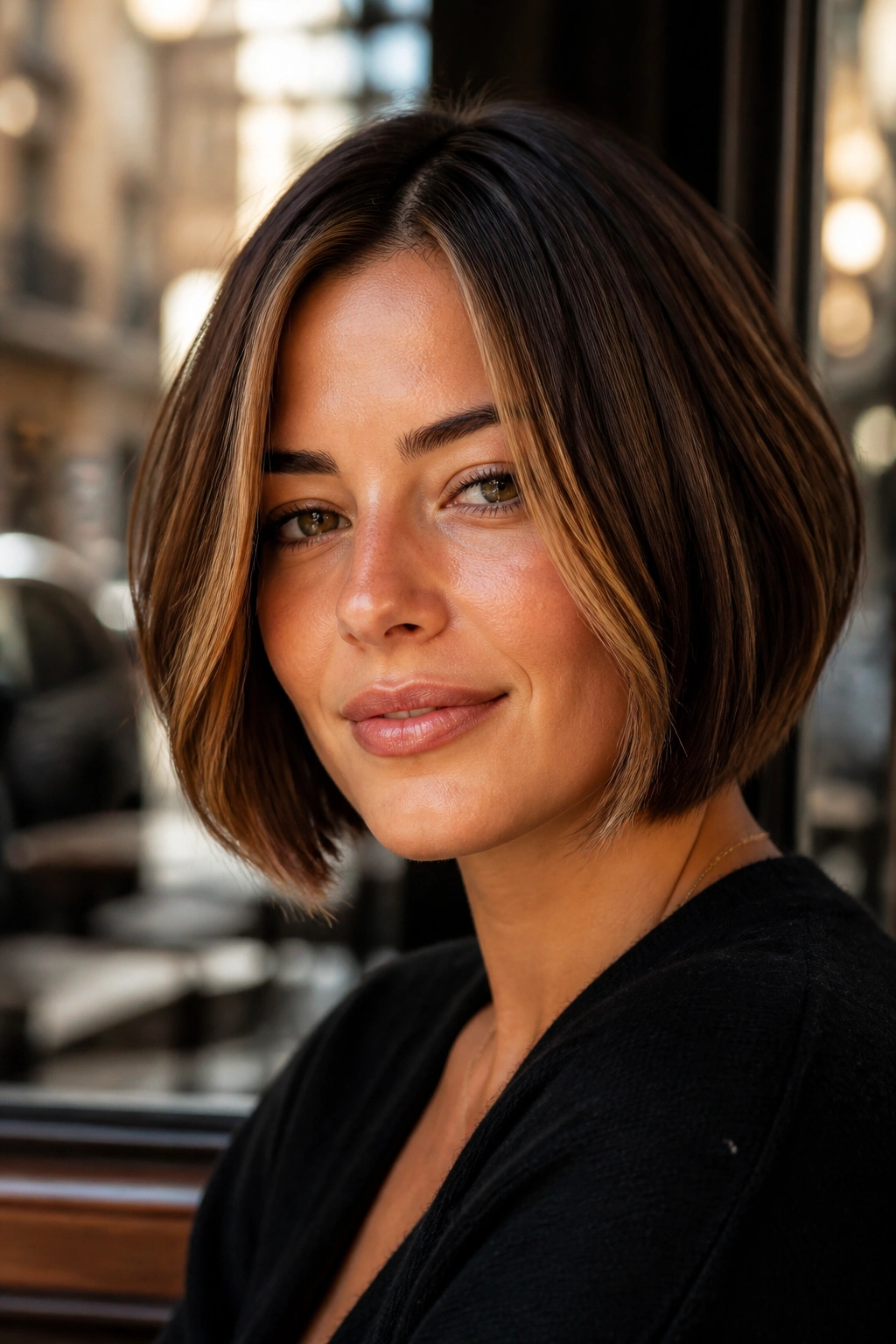
A French bob can go from sweet to sharp very quickly, and a chestnut money piece is often the reason. Unlike chunky highlights, which can take over a short cut, a chestnut front piece brightens the face without stealing the whole show.
That front brightness matters most when the bob sits around lip length or just below the cheekbone. You get a little glow around the face, then the rest of the hair stays a deeper brunette, which keeps the shape crisp and easy to wear.
This is a smart choice if you want a brunette color that feels lighter up front but still reads brown everywhere else. The money piece should be just one to two levels lighter than the base, not a dramatic jump. A soft root smudge helps it blend into the rest of the hair and keeps the line from looking obvious as it grows.
Who does it suit? People who like a clean cut, a little brightness around the eyes, and a style that doesn’t need a full foil appointment every time. It’s a neat little trick, and it works because it respects the haircut’s edges.
7. Ash Brown Undercut Pixie
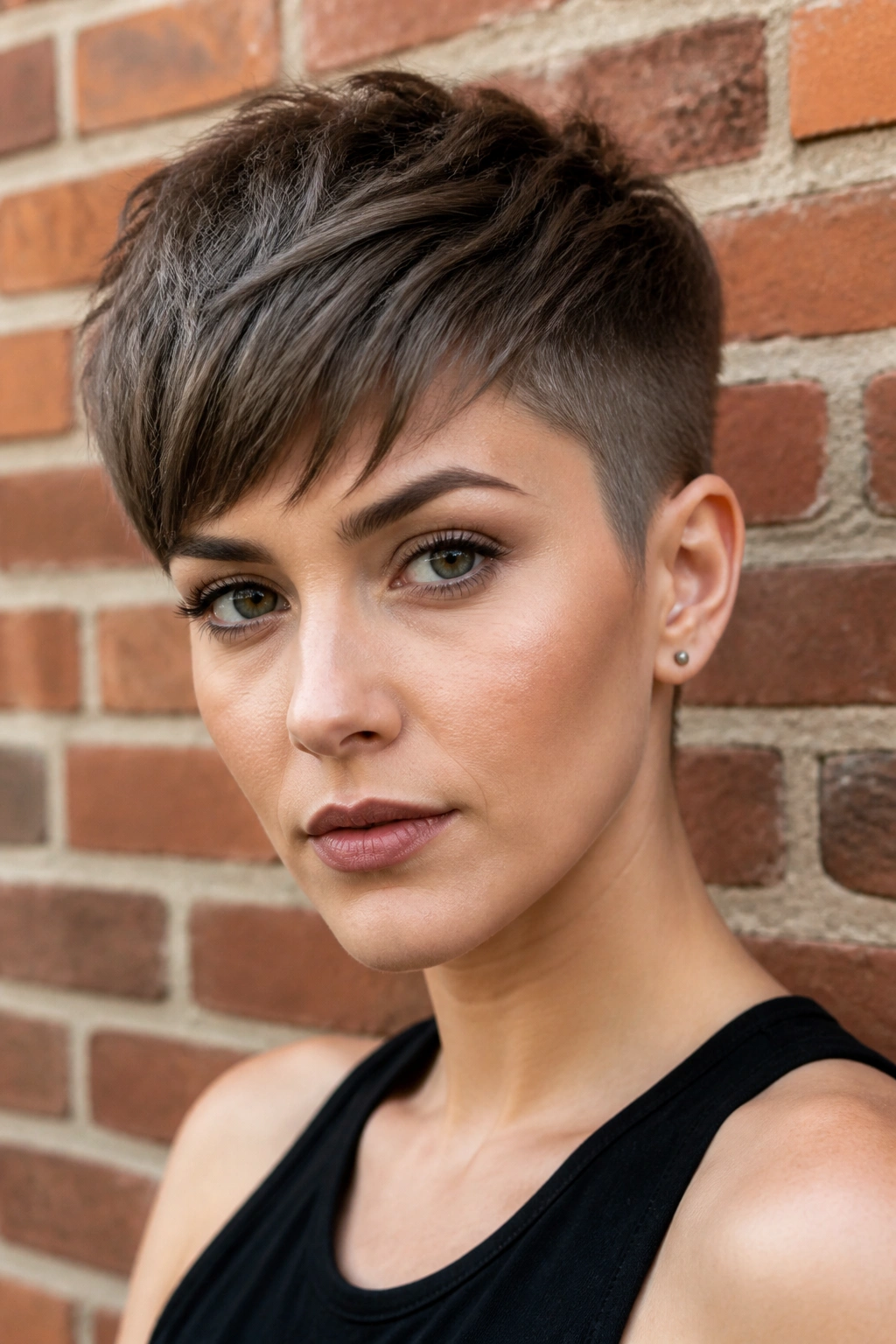
Ash brown on an undercut pixie is one of those shades that looks almost severe in the mirror and then somehow perfect in daylight. The cool tone gives the cut a tidy, graphic feel, which is exactly what an undercut needs.
What Keeps It Looking Clean
The undercut removes bulk, so the color can focus on shape instead of trying to hide anything. Ash brown works best when the top is left slightly softer than the sides, because the contrast between the textured crown and the neat nape is what makes the style interesting.
A few details matter here:
- Start with a neutral brown base around level 5 or 6
- Add a blue-violet toner if your hair pulls orange
- Keep the finish light and piecey, not painted on
- Trim every 4 to 6 weeks so the shape stays tight
Porous hair can go flat or greenish if the ash is too heavy, so I’d rather see a careful toner than a strong one. That’s the difference between cool and dull. There’s a fine line, and this color lives right on it.
8. Bronzed Babylights Bob
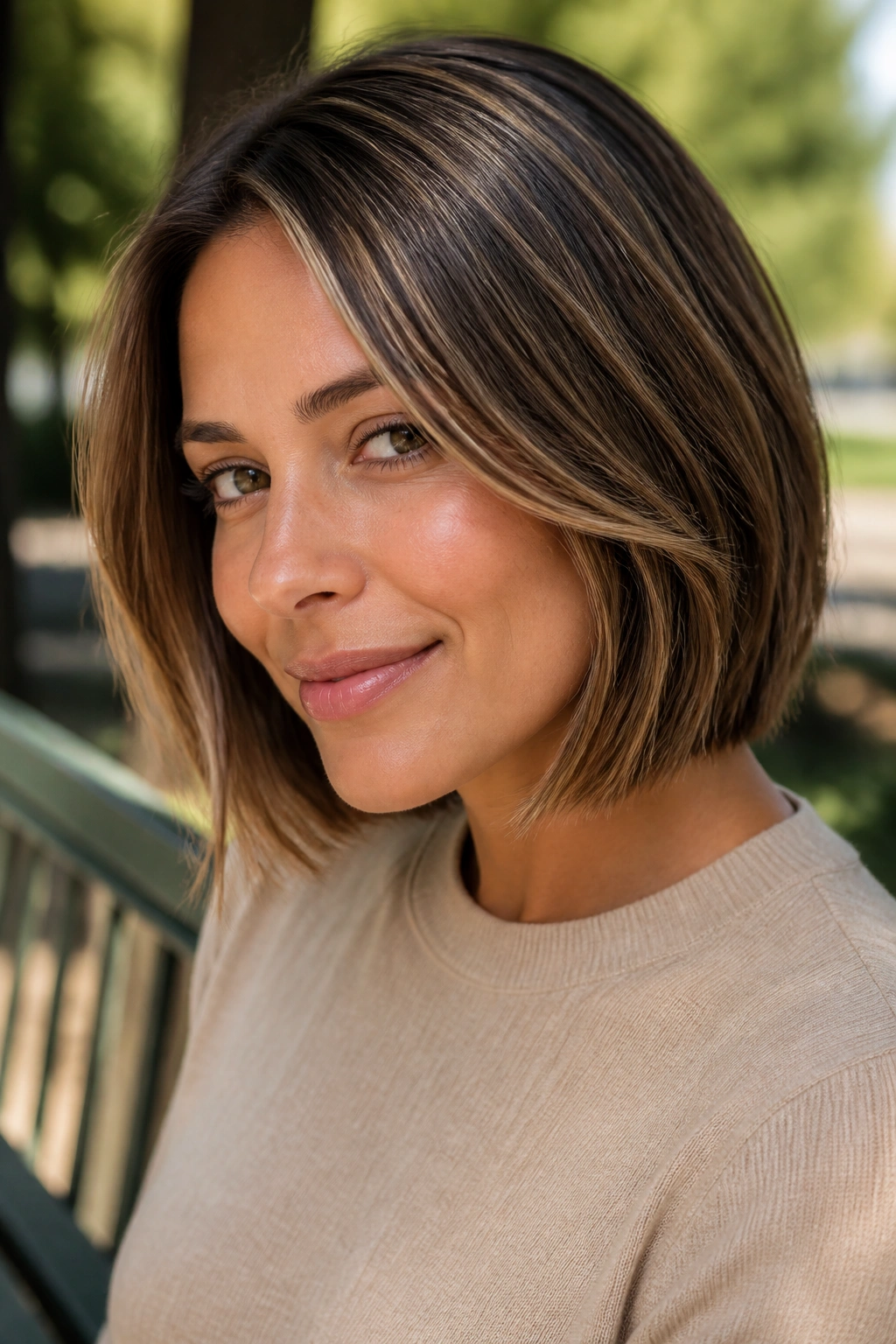
Tiny babylights can change a bob more than broad highlights ever could. On short hair, the scale matters, and bronzed babylights give you that sun-kissed lift without breaking up the cut.
The reason they work is simple: the highlights are so fine that they catch light in little flashes instead of obvious stripes. That keeps a blunt or layered bob looking dense at the root, while the surface gets enough brightness to move.
I like bronzed tones because they sit in that warm-brown middle zone. Not gold, not copper, not ash. Just a soft bronze that feels healthy and easy to wear. On a bob with a side part, a few extra babylights around the hairline can make the face look more open without touching the whole head.
This is also a good option if your hair is fine. Chunky contrast can make fine hair look thinner at the ends, but micro-highlights keep the density intact. Ask for 1/16- to 1/8-inch sections and a beige-gold gloss over the lift. That level of detail matters more on a bob than people realize.
9. Mocha Ombré Textured Bob
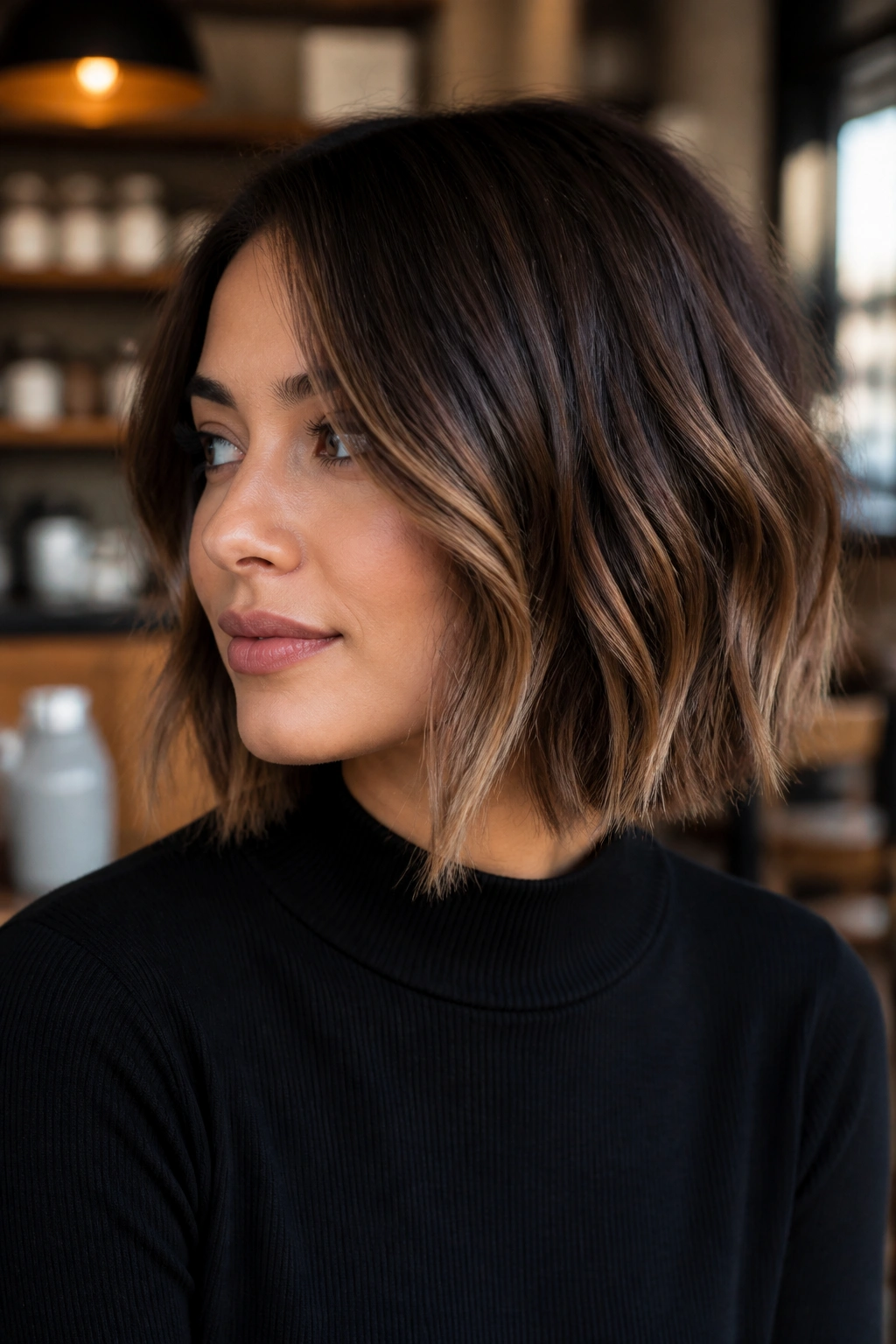
Do you need ombré on short hair? Only if you want the ends to look lighter without a hard line, and mocha ombré does that better than most brunettes.
The best versions keep the root and upper mids deep mocha, then ease into a softer brown through the lower half of the bob. On a textured cut, that transition shows off the movement in the ends and makes the style look more layered, even if the haircut itself is simple.
How to Keep It from Looking Chunky
The transition has to sit high enough to be visible but low enough to feel natural. If the fade starts too low, it can look like the color ran out. If it starts too high, the bob can lose its shape and start reading more blond than brunette.
A loose bend helps a lot here. The texture breaks up the fade, especially around the cheekbone and jawline, where the hair swings the most. If your hair is naturally straight, a slight wave from a flat iron or a round brush brings the softer brown ends to life.
This is a good choice if you want dimension without constant highlight upkeep. The root stays believable, the ends look lighter, and the whole thing reads relaxed rather than overworked.
10. Toffee-Tipped Curly Crop
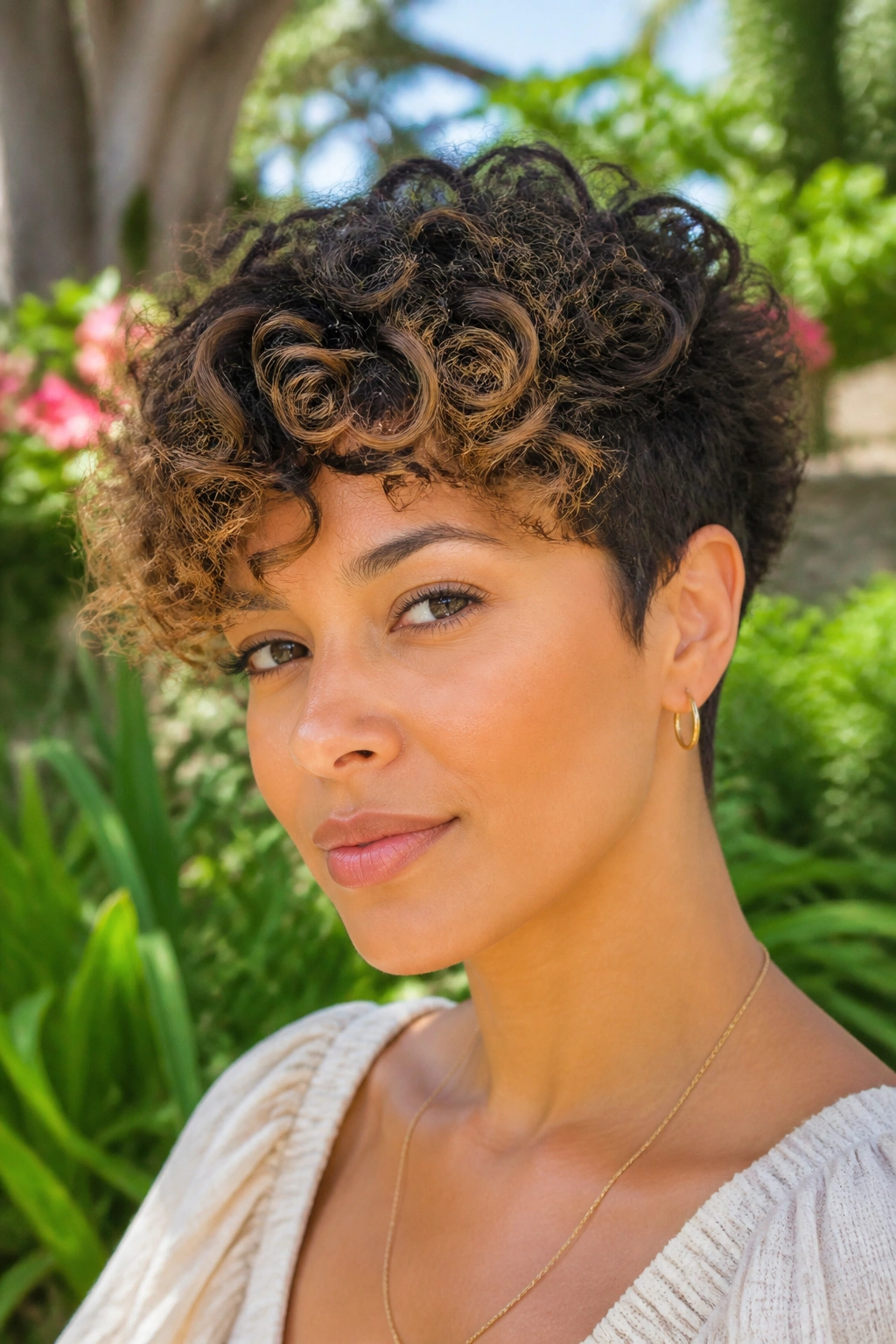
Curly cuts can swallow color if every strand is the same brown. Toffee tips fix that by giving the curl pattern a little edge and a lot more movement.
The point is not to bleach the ends into oblivion. It’s to place a warm toffee tone on the outer part of the curls where the light naturally hits first. On a cropped curly shape, that little shift can make the whole silhouette look springier and more defined.
When I see this shade done well, the roots stay a rich brunette and the tips move into a soft golden brown just on the outer coils. The result looks lively, not streaky. The curl pattern does the blending for you, which is lucky because curl color can go messy fast if the placement is careless.
A few things help:
- Keep the lift subtle, usually 1 to 2 levels
- Focus lightness on the front, crown, and top layer
- Use a curl cream that defines the shape without coating the hair
- Avoid pushing the lightness too far into fragile ends
It’s a small color move with a big payoff. Curly crops love that.
11. Maple Brown Gloss Blunt Bob
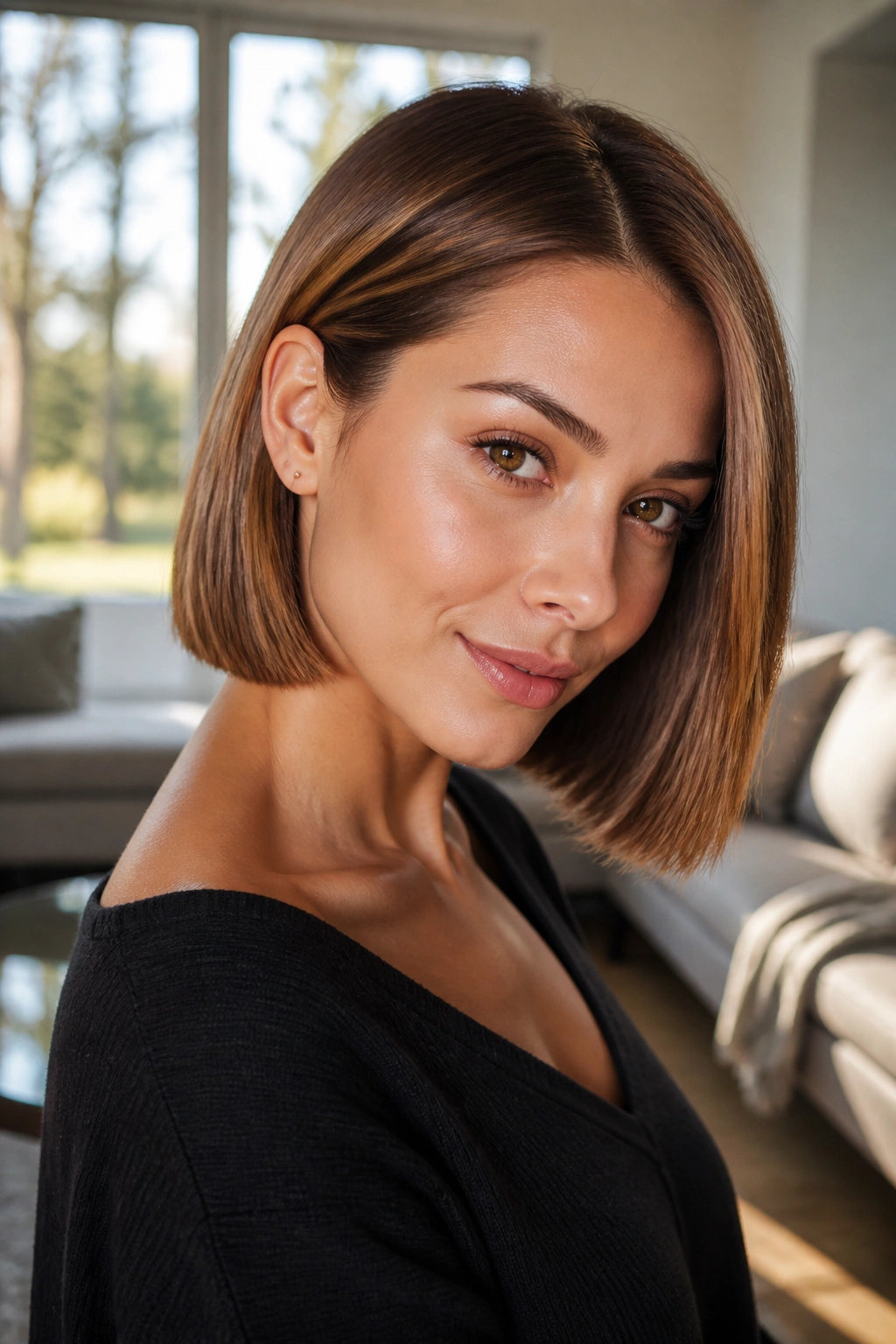
Maple brown is for people who want warmth, but not brass. That’s the whole appeal.
On a blunt bob, this shade leans rich and amber-toned in a way that makes the cut feel full and expensive without looking overdone. The glossy finish is doing real work here. A blunt line can turn harsh fast, and maple brown softens it by adding a warm, reflective surface that reads clean in natural light.
I especially like this shade when the bob is worn straight or tucked behind one ear. The smoothness lets the amber notes show through, and the color looks deeper at the roots and softer toward the ends. If your hair tends to look flat in one-dimensional brown, maple gives it life without needing a lot of highlight contrast.
It’s also forgiving. A gloss refresh can keep the tone warm between bigger color sessions, and because the shade sits in the brown family, regrowth is less annoying than with lighter brunettes. The downside? If your hair already pulls orange, you need the formula balanced carefully, or the maple can tip too warm. A little restraint goes a long way.
12. Plum-Brown Short Shag
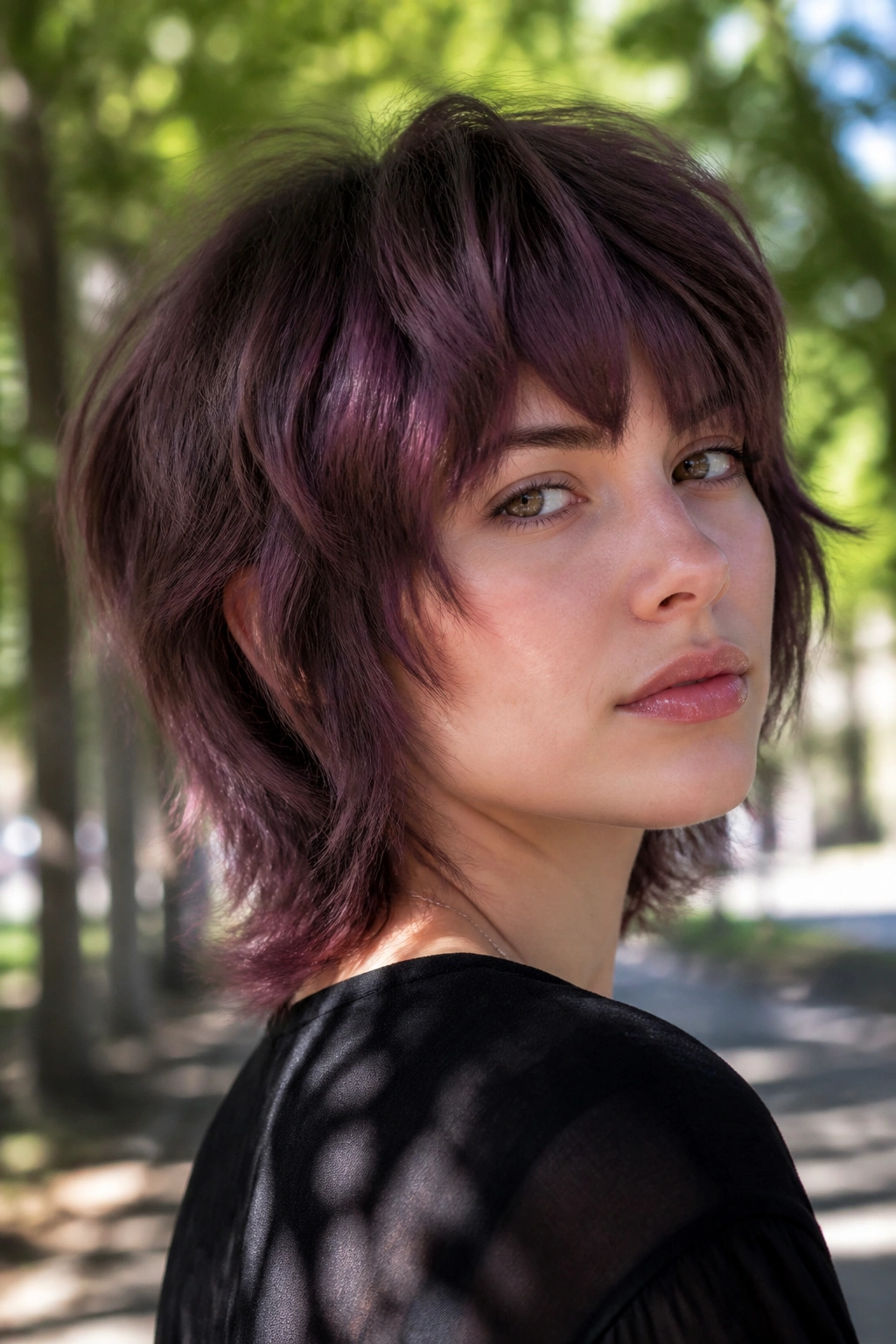
Plum-brown is not red, and that distinction matters. It belongs in the brunette family, but the violet cast gives it a quiet edge that shows up best on a short shag with texture.
Compared with plain chocolate or chestnut, plum-brown feels deeper in shadow and richer in sunlight. That makes it a nice choice if you want something a little unusual without wandering into fashion-color territory. On a shag, the layers help the plum tones peek through as the hair moves, which keeps the color from feeling static.
Who likes this best? People with cool or neutral skin, dark eyes, or a wardrobe that already lives in black, gray, navy, and burgundy. The shade plays nicely with all of that. If you want to push it darker, keep the violet subtle. If you want the plum to show more, ask for a demi-permanent gloss layered over a level 4 or 5 brunette base.
It’s a shade with personality. Not loud. Just a little sly.
13. Smoky Cocoa Face-Framing Lob
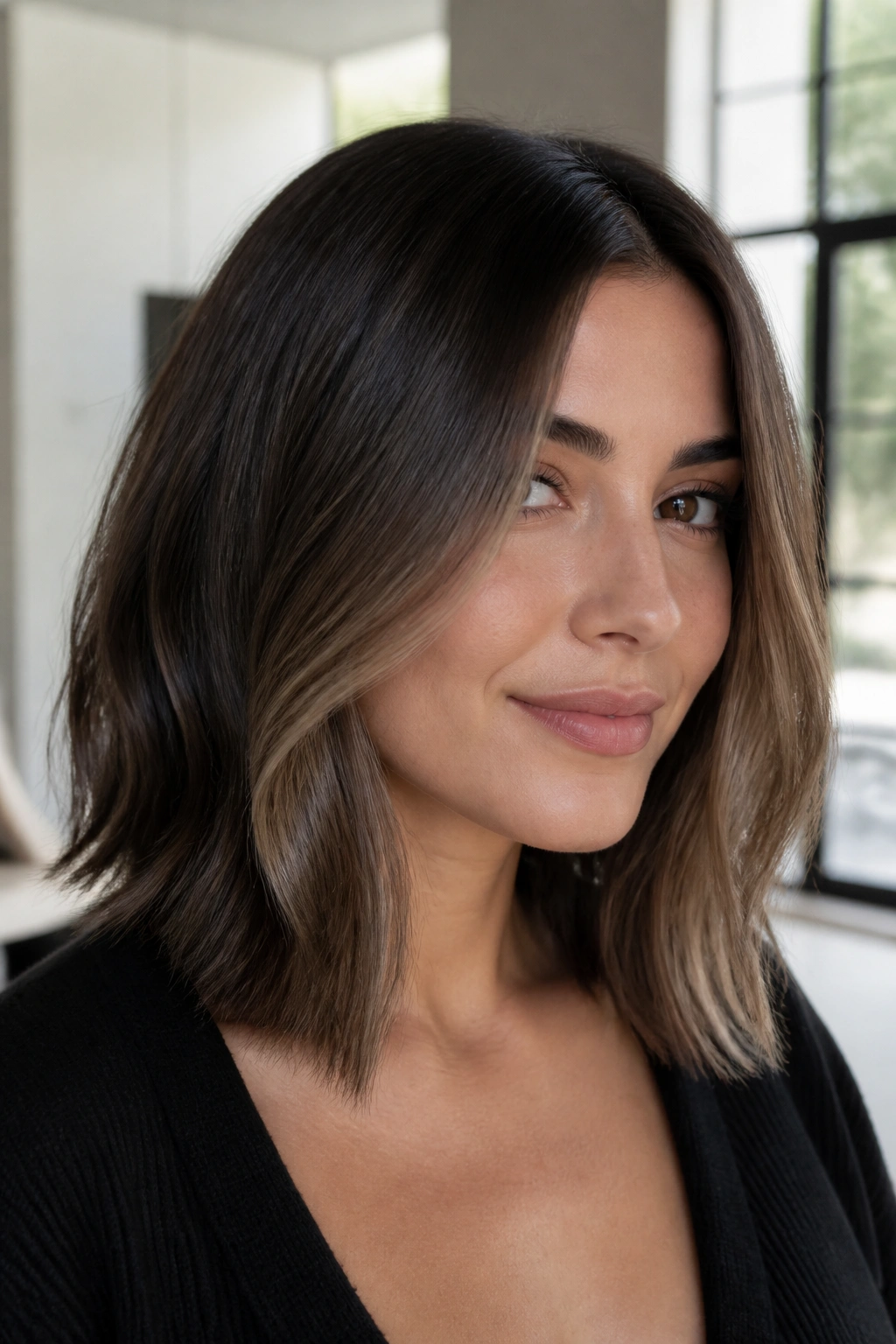
Smoky cocoa is what happens when brown hair loses the red and keeps the shine. On a lob, that matters, because the length sits right where the face starts to need structure.
Why It Works on a Lob
The face-framing pieces are doing the heavy lifting here. Keep the base a deep cocoa brown, then soften the front with a slightly lighter smoky veil around the cheekbones and jaw. That small lift is enough to pull the eye upward without turning the whole cut into a highlight show.
A lob also gives the smoky tone room to breathe. The color looks sleek when the hair is straight, and it gets softer when the ends are bent under or waved just a little. That flexibility is useful if you like to change your styling mood without changing the color every time.
- Best when the front pieces are only half a tone lighter
- Ask for a cool brown gloss rather than a red-brown glaze
- Keep the part line darker if you want the cut to look denser
- Pair it with soft layers if your lob feels too boxy
The result is polished without being precious. I like that in a brunette.
14. Walnut Brown with Honey Ends
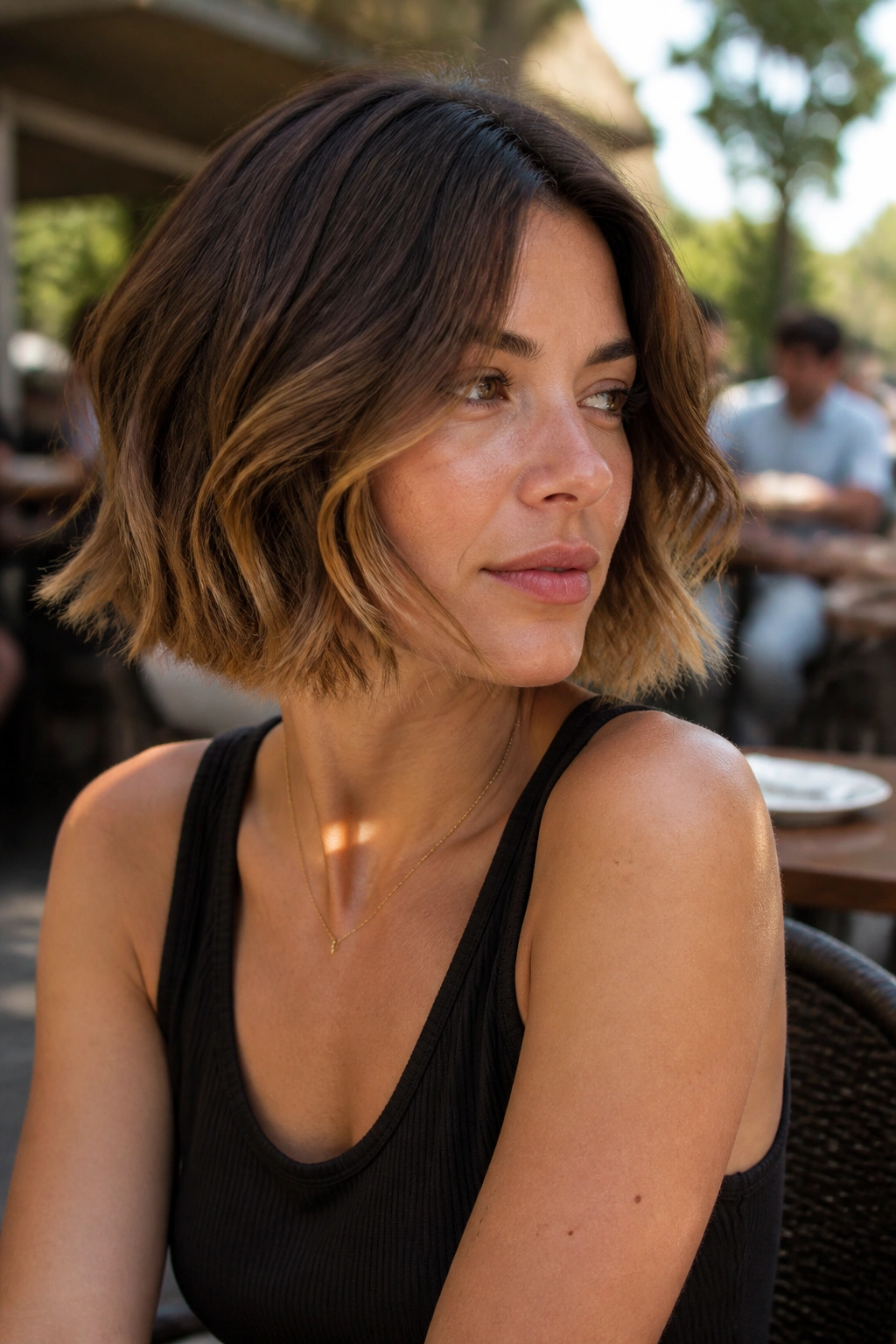
If you want warmth that reads rich instead of brassy, walnut brown with honey ends is the safest strong choice. The base stays medium and neutral, while the ends get a softer golden bend that gives the cut movement.
This works especially well on thicker short hair, where the ends can sometimes look heavy. A little honey on the lower third opens the shape up and makes layered bobs, shaggy crops, or wavy lobs feel lighter. You get contrast, but not a hard ombré line.
The trick is restraint. Honey should live where the light would land naturally: around the front bend, through the bottom layer, and maybe a few scattered face pieces. If you put it everywhere, the whole style starts looking more beige than brunette, and the walnut base loses its depth.
This is also one of the easier shades to wear if you like soft makeup and low-key styling. It doesn’t need a perfect blowout to make sense. A rough dry and a few bends are enough. The color does the rest, which is honestly what most people want from brunette anyway.
15. Espresso Melt with Soft Caramel Ends
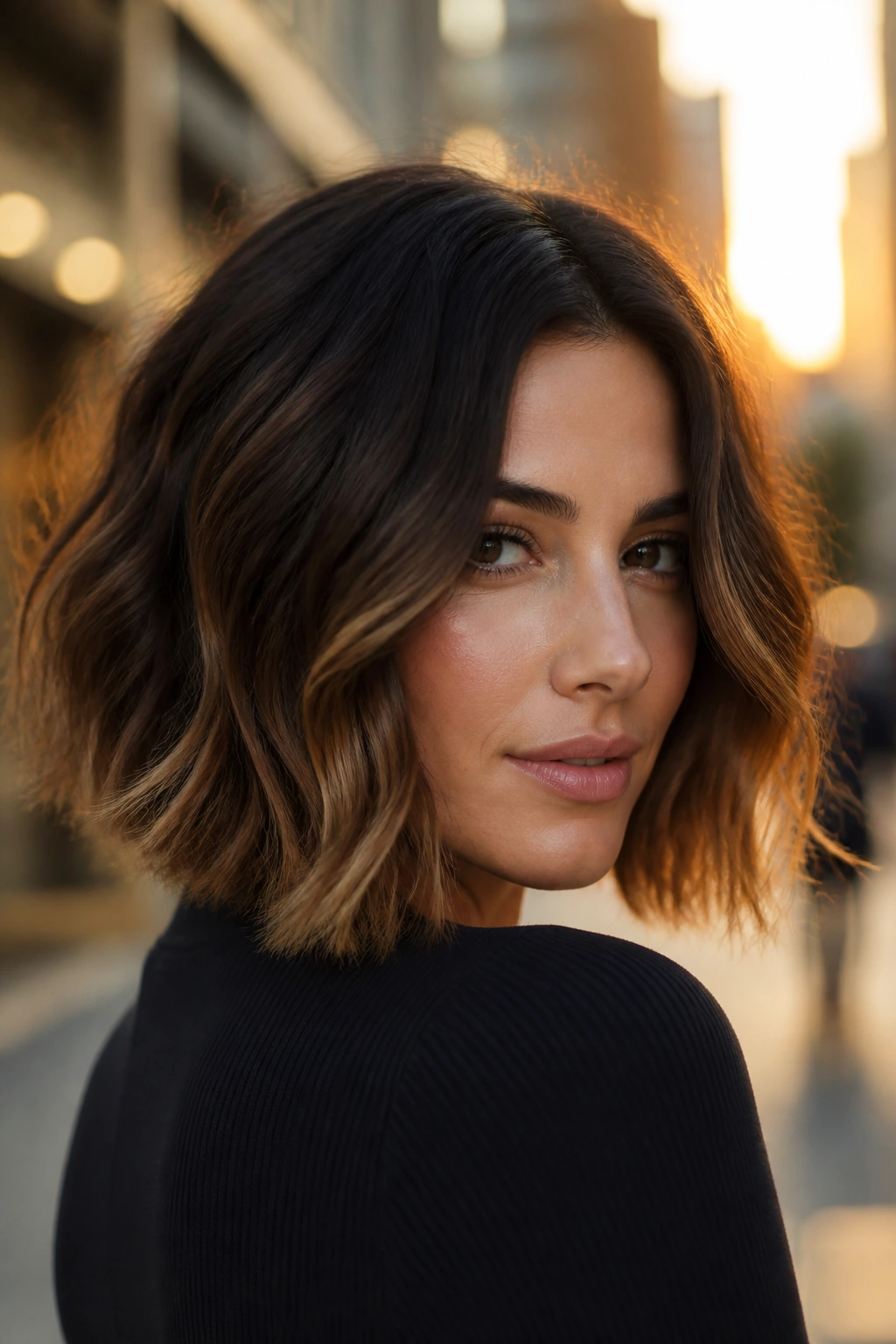
An espresso melt with soft caramel ends is the brunette color I’d hand to someone who wants dimension but hates stripes. The root stays deep and rich, the mids soften, and the caramel shows up only where the cut moves.
That placement matters a lot on short hair. There isn’t enough length for a dramatic fade to breathe, so the melt has to be gentle. The best version starts with an espresso base close to level 3, then eases into a muted caramel through the lower half of the bob or lob. Not bright blonde. Caramel. The difference is bigger than it sounds.
This shade looks especially good on cuts with a little bend, because the light ends catch around the curve of the hair instead of sitting in one flat panel. If you wear your hair straight, keep the transition soft and the ends clean. If you like waves, a loose twist with a curling iron makes the melt show up in little flashes. Nice and easy.
A good way to think about this color is as a brunette that refuses to be boring. It stays brown at the root, keeps the depth where you need it, and still gives the ends enough warmth to keep the haircut from feeling heavy. Ask for a glossed espresso root, a caramel veil through the mids, and a trim that leaves the ends blunt but light. That combination does a lot of work with very little fuss.
