



The fastest way to make braids look finished is not another inch of edge control. It’s the right braid accessories.
A single gold cuff, a strip of satin, or a row of beads can change the whole mood of a style without burying the braid under clutter. That balance matters, especially in protective styles, where heavy pieces at the root can irritate the scalp and tug on edges. The American Academy of Dermatology has long warned that too much tension around the hairline can lead to breakage and traction alopecia, so weight and placement matter more than price.
I’ve always liked accessories that do one job well. A cuff should frame the braid. A ribbon should soften it. Beads should move a little when you walk. When the accessory fights the braid, the braid loses.
Some looks want a whisper. Others want a little drama. The good news is that you do not need twenty things on one head to get either result — you just need to know which detail belongs where, and which ones are better left out when the braid already has enough shape on its own. Gold cuffs are the easiest place to start.
1. Gold Braid Cuffs
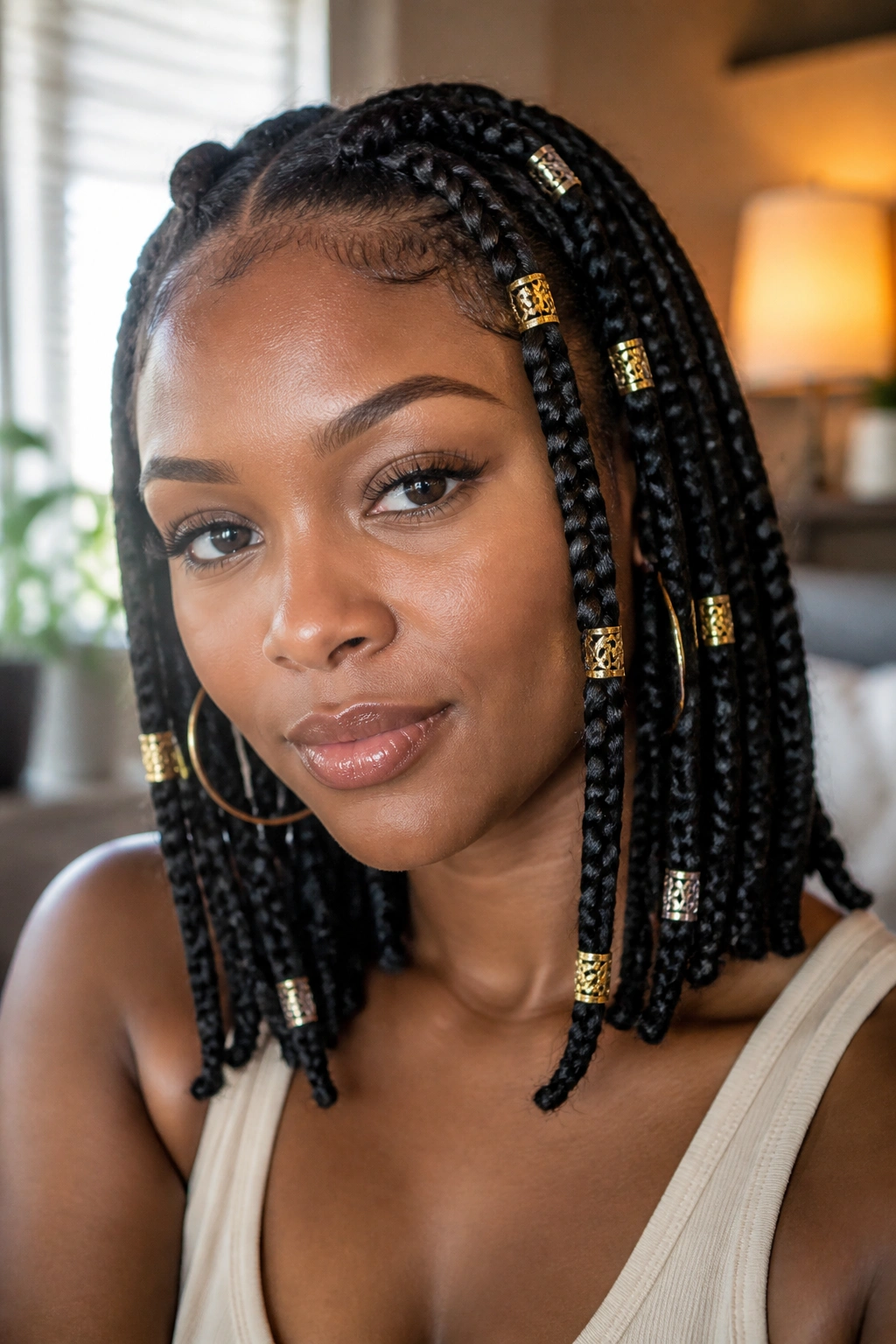
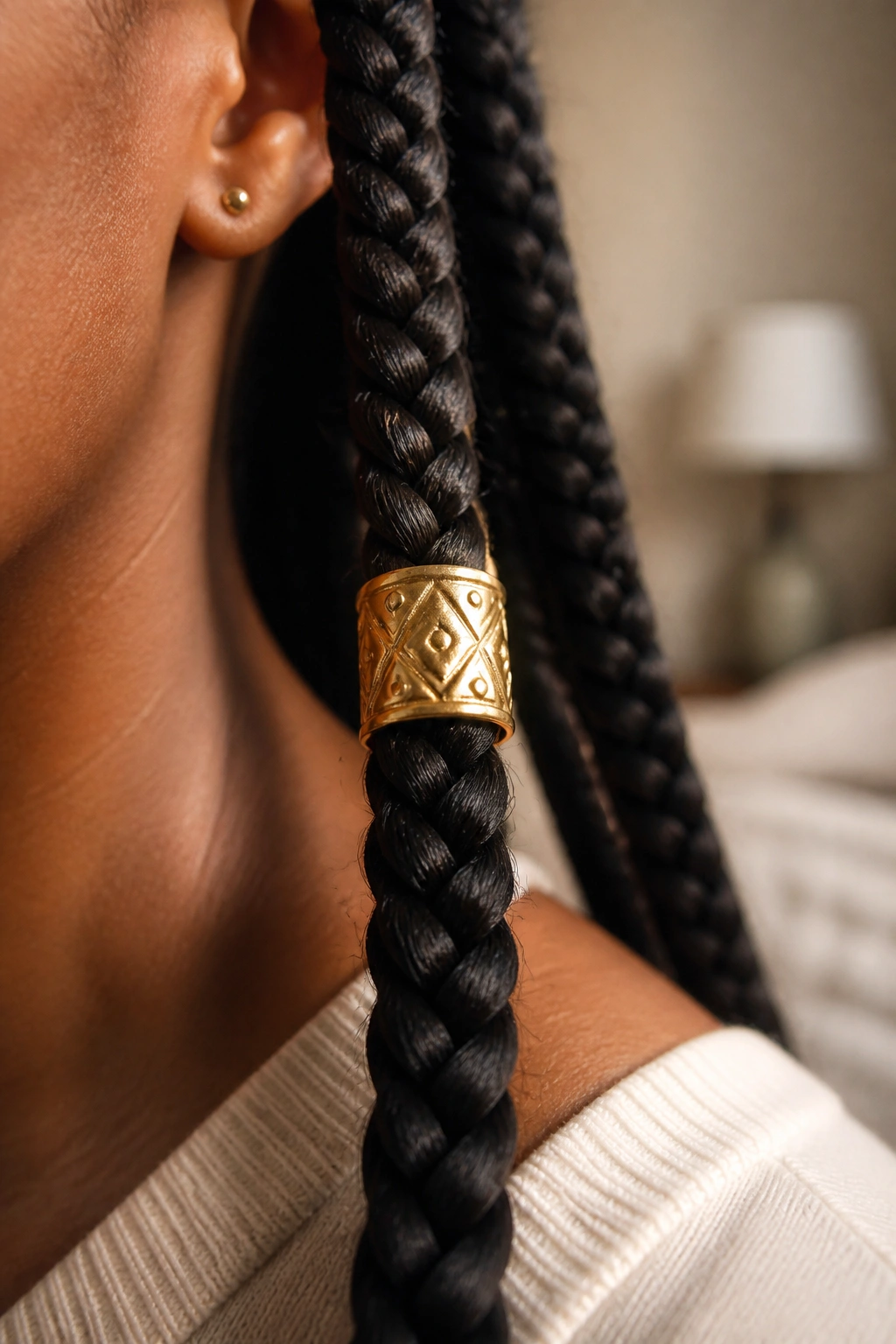
Gold braid cuffs are the little bit of shine that makes a plain braid look styled on purpose. They work because they sit like jewelry, not decoration dumped on top of the hair. One cuff can frame a face-framing braid. Three cuffs down a box braid can make the whole style feel more finished.
Where They Shine Best
Put them on medium to chunky braids where the cuff has room to show. Tiny braids can get visually swallowed by large metal pieces, and the look starts to feel busy fast. I like cuffs near the middle or lower third of the braid, where they catch the eye without pressing on the roots.
- Best on box braids, knotless braids, boho braids, and chunky twists.
- Choose hollow cuffs if you want less weight.
- Use two or three per side if you want a clean look, not a costume-y one.
Small cuffs look neater than oversized ones on most everyday styles. They catch light, frame the braid, and leave the hair itself to do the talking.
2. Wooden Beads for Box Braids
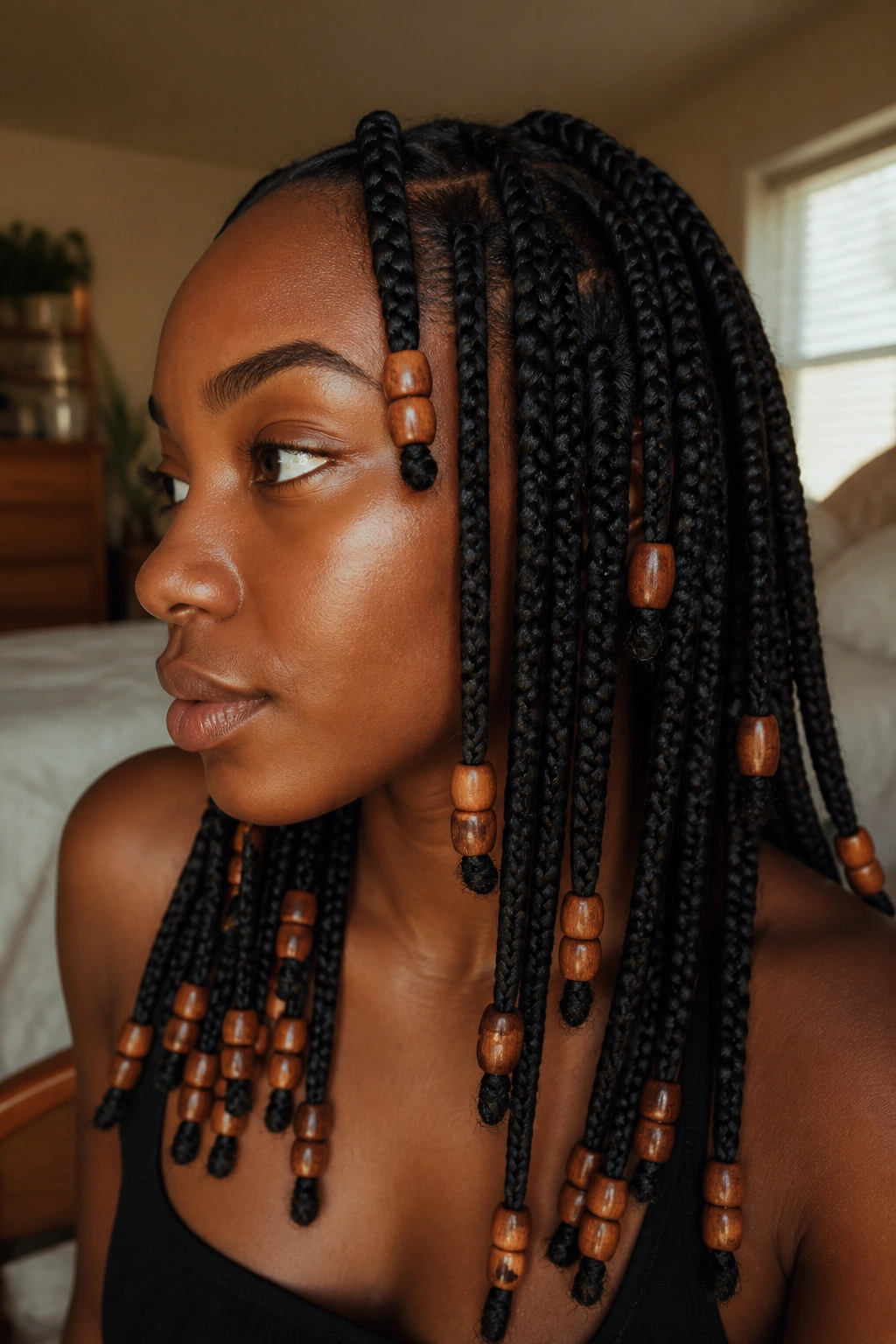
Why do wooden beads work so well? Because they bring texture instead of shine. A bead with a matte finish feels grounded, a little earthy, and that keeps braids from reading too polished or too formal. They also make a soft clicking sound when the braids move, which sounds simple, but it adds life.
Wooden beads are especially good on medium box braids, feed-in braids, and tribal-inspired looks. They sit well when the braid is thick enough to support them and the hole is smooth enough to slide on without snagging. I’d rather use fewer, better-made beads than a whole jar of mismatched ones with rough edges.
What to Look For
Pick beads with smooth interiors so they do not scrape the braid or catch frizz. A hole around 6 mm to 8 mm usually works for medium braids, while thicker braids may need a wider opening. If the bead feels sharp when you run a finger inside it, skip it.
The other thing people miss is spacing. Wood looks strongest when it has room to breathe. Put beads at the ends or in a single cluster near the front, and leave the rest of the braid simple. That restraint makes the style look intentional instead of overloaded.
3. Satin Ribbon Woven Through the Plait

A plain braid can look like a gift with one strip of satin ribbon running through it. The shine is soft, not flashy, and that makes ribbon one of my favorite braid accessories for simple styles that need a little warmth. It works especially well when the braid itself is neat and smooth — the ribbon adds motion, then disappears back into the hair.
Ribbon is a good choice when you want color without weight. A 1/4-inch to 1-inch ribbon is enough for most braids. Thinner ribbon reads delicate. Wider ribbon feels more romantic and a little bolder. If the ends fray, seal them carefully or fold and tuck them under a small elastic.
How to Wear It Without Fuss
- Weave it through one side braid for a clean accent.
- Thread it into a low ponytail braid for a softer finish.
- Tie it at the base of a half-up style when you want the bow to show.
Satin beats stiff fabric here because it glides instead of dragging. That is the difference between pretty and annoying by hour three.
4. Hair Rings for Cornrows and Feed-In Braids

Hair rings are the detail people miss because they don’t scream for attention. They sit around the braid like tiny hardware, which gives cornrows and feed-in braids a sharp, polished edge. A few rings near a part line can make a style feel deliberate without turning the whole head into a display.
They’re best when the braid pattern itself is clean. On a zig-zag part or a curved cornrow, small rings trace the shape instead of fighting it. That’s where they look smartest.
Best Placement
Place rings where the braid bends or changes direction. They read almost like punctuation marks. A straight line of rings down every single braid can feel heavy, so I like to break them up and let a few sections stay bare.
Use mixed sizes if the style is large and simple, or one size if the braids are tiny and close together. Silver rings on black hair pop hard; gold gives a warmer look. Either way, the braid itself should still be the star. Rings are a frame, not the whole picture.
5. Pearl Pins for Soft Shine
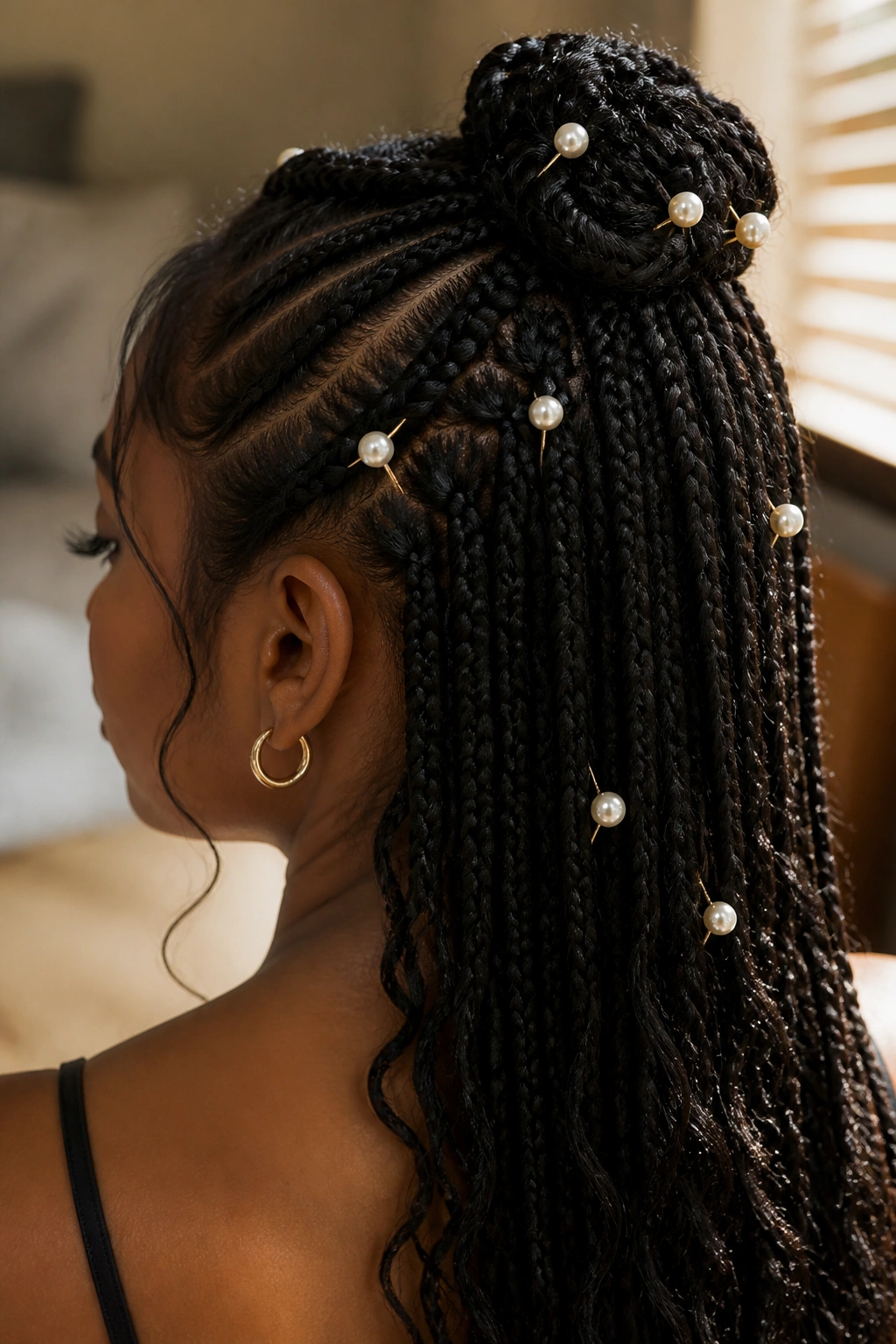
Pearls bring a cool, soft glow against braids, and they do it without looking loud. That’s why pearl pins work so well on half-up styles, braided buns, and milkmaid braids. They feel dressy, but not stiff. Honestly, I reach for them when I want a style to look finished in about ten seconds.
They are also one of the easiest braid accessories to place because you can pin them where the braid already has shape. A twisted crown, a tucked bun, or a side braid with a little lift at the front all give the pin a place to sit naturally.
What Makes Them Work
Faux pearls are usually lighter than real ones, and that matters if you’re pinning several into one style. Look for flat-backed pins or small comb-style inserts so they don’t poke out or shift. If you plan to keep them in for more than a few hours, test the grip before you leave the house. A pin that slides once will slide again.
One pearl is elegant. Three can be better. Six starts to feel crowded.
6. Thread Wraps and Fine Cord
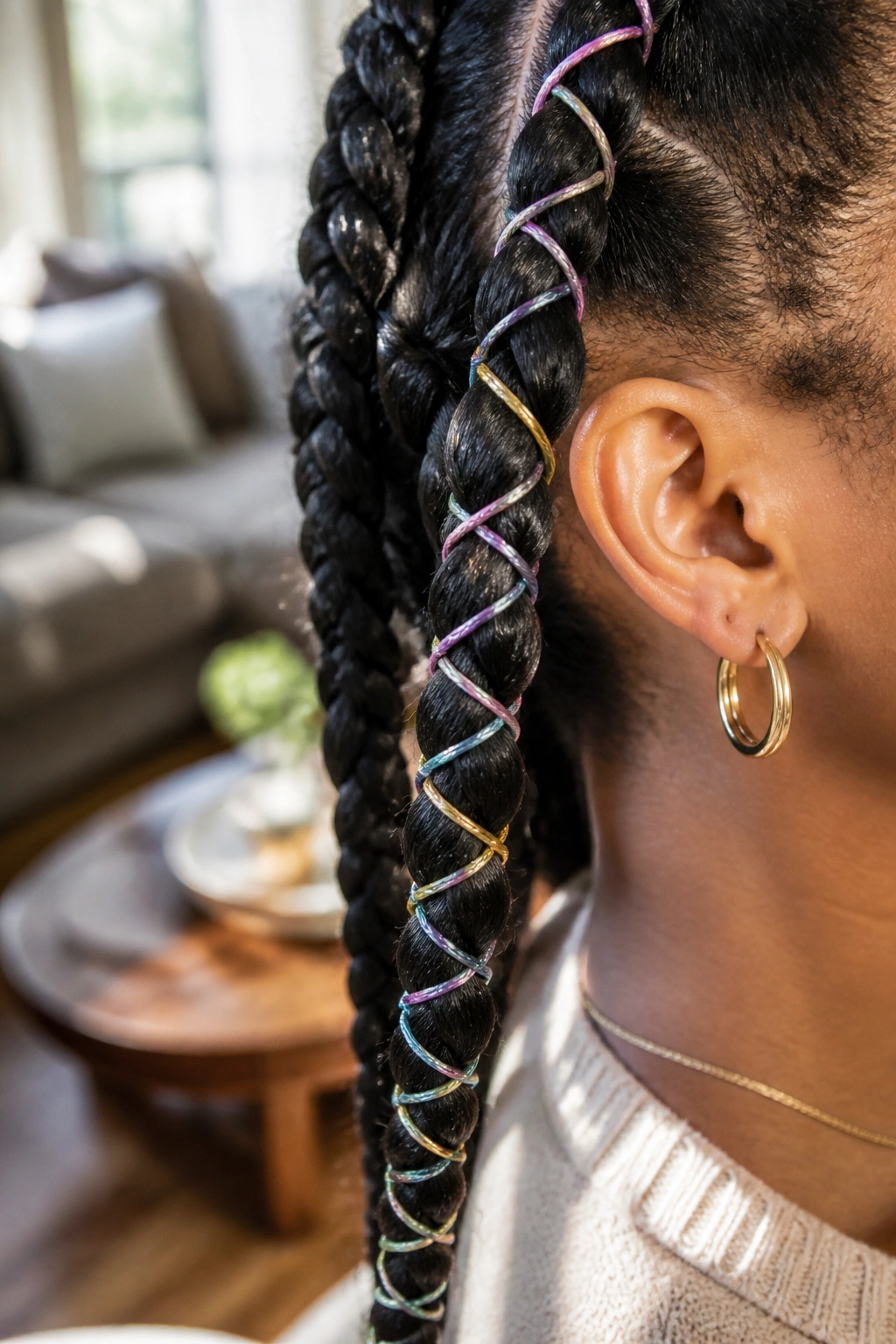
Thread wraps are the closest thing braids have to a painter’s line. They add color in a narrow strip, which is useful when you want something bold but not bulky. Embroidery floss, smooth cotton thread, and thin satin cord all work, depending on the finish you want.
This is one of those accessories that looks simple until you see it in motion. Wrapped through a braid or spiraled around a plait, the thread creates little flashes of color every time the hair shifts. That movement is the whole point.
Small Details That Help
- Use smooth thread, not fuzzy yarn, if your braids are fine.
- Tie the end under a bead or cuff so it stays hidden.
- Keep the wrap snug, but not tight enough to dent the braid.
Color blocking works well here. One section of red, one section of black, one section of gold thread — that kind of contrast gives the braid energy without making it look noisy. If you’ve got long braids and want a DIY-friendly accent, this is one of the best places to start.
7. Cowrie Shell Accents
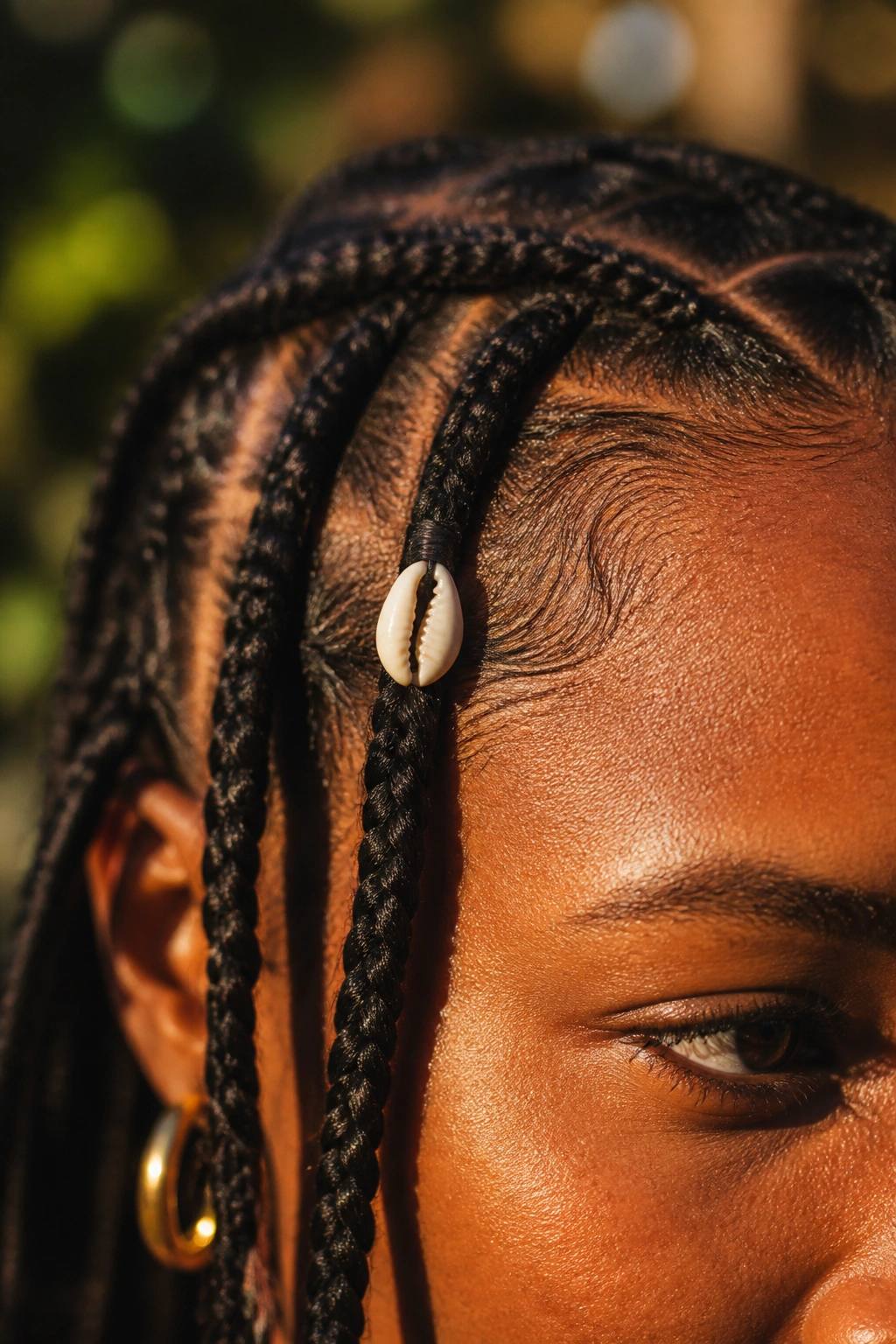
Cowrie shells are never subtle, and that is exactly why they work. They carry history, texture, and a strong shape that reads instantly, even from a distance. On braids, that little curved shell can feel grounded, decorative, and rooted in something older than a passing trend.
They look best when they are used with some restraint. A single shell near the front braid, or a few shells spaced through Fulani braids, has a lot more presence than a head full of them. The braid gets to breathe. The shells get to matter.
A Style That Benefits From Less
Cowrie shells shine on boho braids, Fulani braids, goddess braids, and festival styles. They’re also one of the easiest ways to make a protective style feel personal without piling on metal or sparkle. Because they already have a distinct shape, they don’t need backup from much else.
If the shells are real, check the edges before placing them near delicate hair. If they’re resin or faux shell, make sure the clip or loop is smooth. One or two well-placed shells will do more than a dozen tiny ones jammed into the same braid.
8. Crystal Bobby Pins
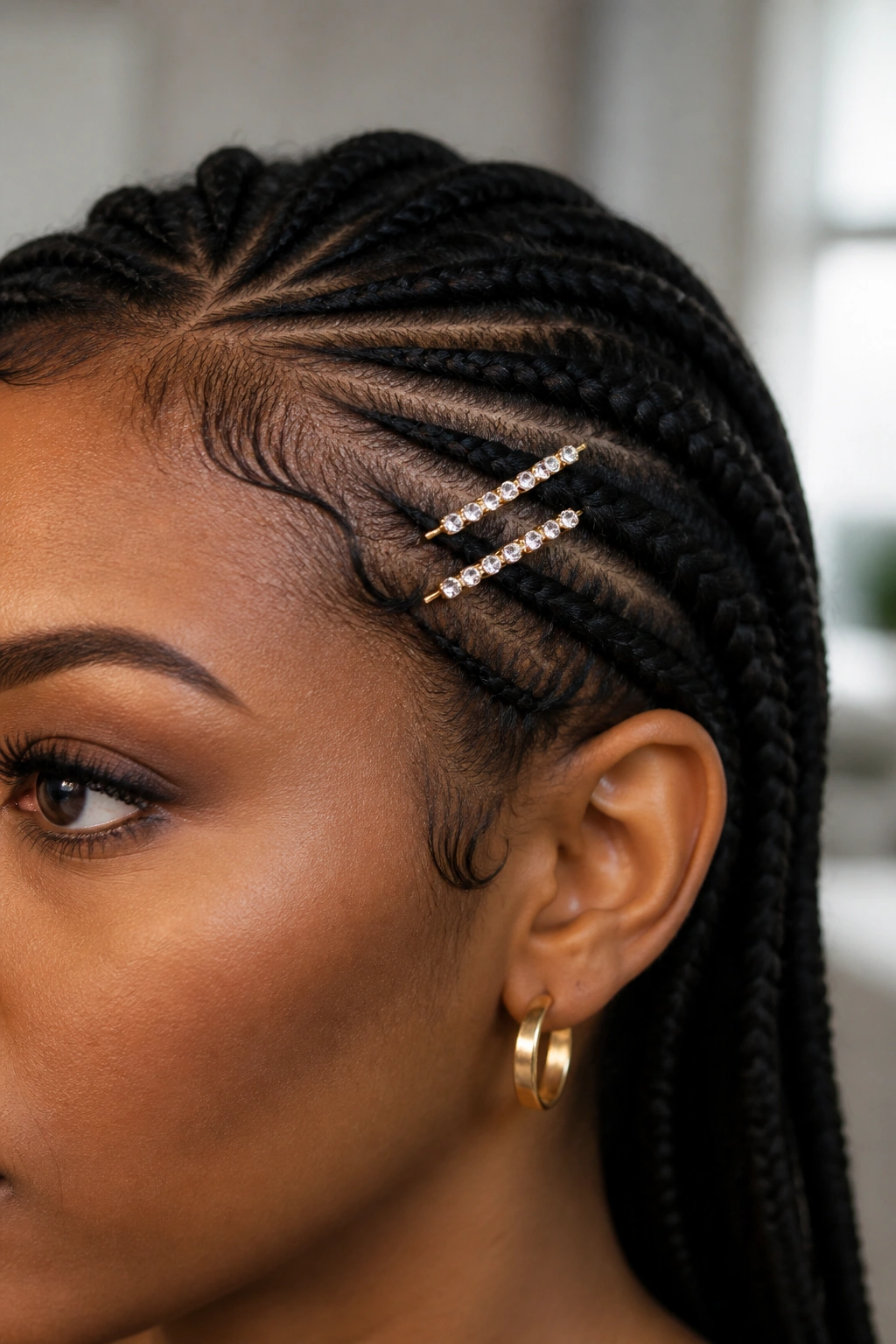
Need a little sparkle without covering the whole braid? Crystal bobby pins are the answer. They’re tiny, but they catch the eye fast, especially when they’re placed near a part, a temple braid, or the curve of a low bun. I like them because they don’t ask the braid to change shape. They just sit there and make the shape look sharper.
The best use is in clusters of two or three, not in a random scatter across the scalp. That tiny group creates a focal point. One pin alone can vanish. Too many and the style starts looking like a craft project.
Keep the Sparkle in One Zone
Put crystal pins where the hair is already flat and controlled. That might be the side of a deep part, the base of a braided ponytail, or the edge of a braided crown. The smoother the surface, the cleaner the look.
Choose pins with firm grips and rounded backs so they do not snag your braid when you remove them. A pretty pin that tears hair on the way out is a bad deal. No sparkle can make up for that.
9. Tiny Chains
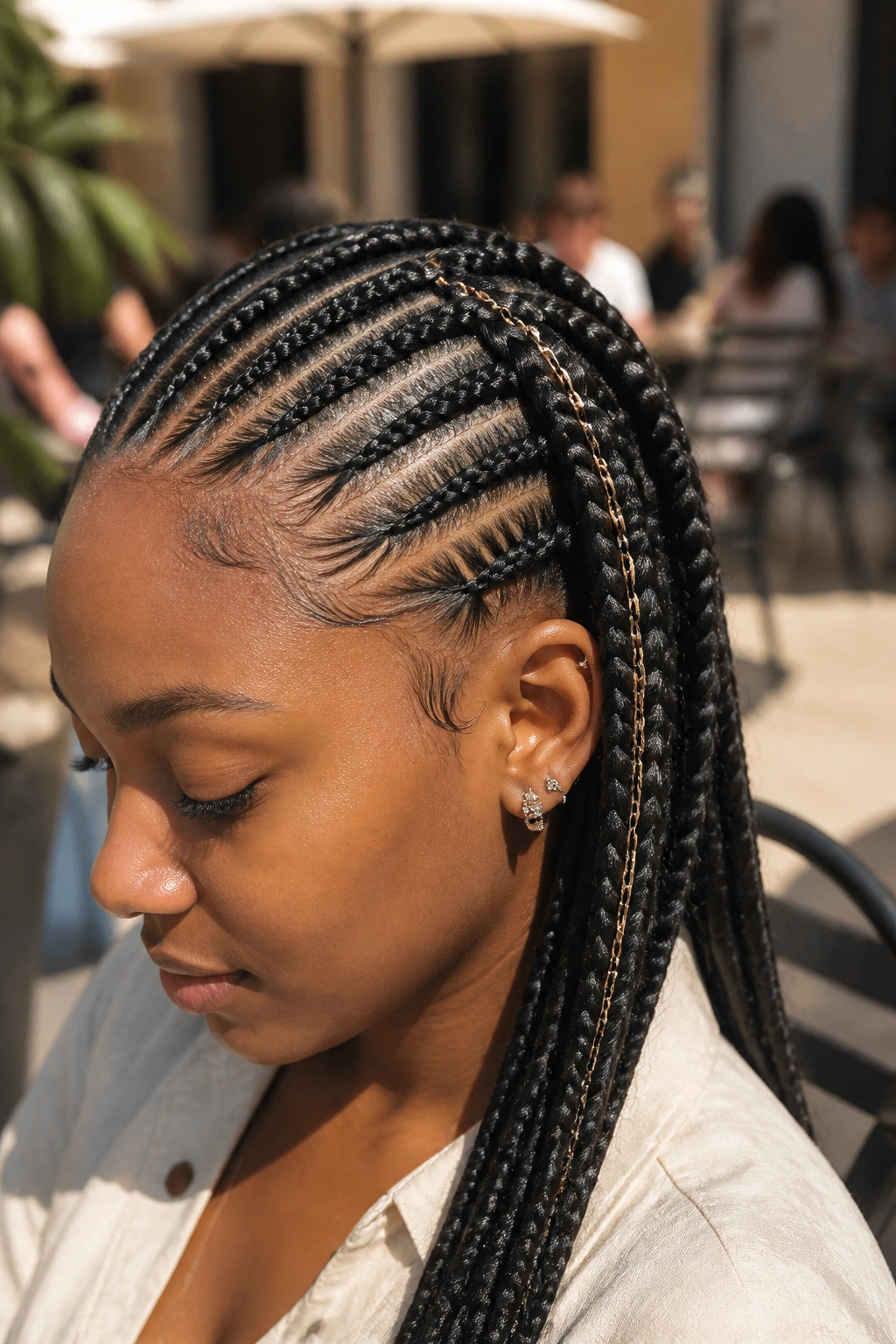
A thin chain draped through one braid can make a basic plait feel sharper and more styled. It is a simple idea, but it changes the line of the braid in a way cuffs and beads do not. Chains bring a little edge, a little shine, and a bit of movement that feels deliberate.
I’m not talking about heavy necklace chain dumped into the hair. That usually tugs and twists in a way you can feel after an hour. Lightweight braid chain — the thin kind with smooth links — is the better move.
How to Stop It From Tangling
Use chain on one accent braid or one side only. That keeps it from grabbing at every other strand. A chain can also be threaded behind a cuff or tucked under a small elastic so it stays anchored without needing to be pinned in a dozen places.
- Best on sleek braids and braided ponytails.
- Keep the chain short enough to sit above the ends.
- Avoid rough links that can catch curls or synthetic hair.
Less chain is better. One strand can look sharp. Three can look like you borrowed hardware from a purse.
10. Snag-Free Elastics
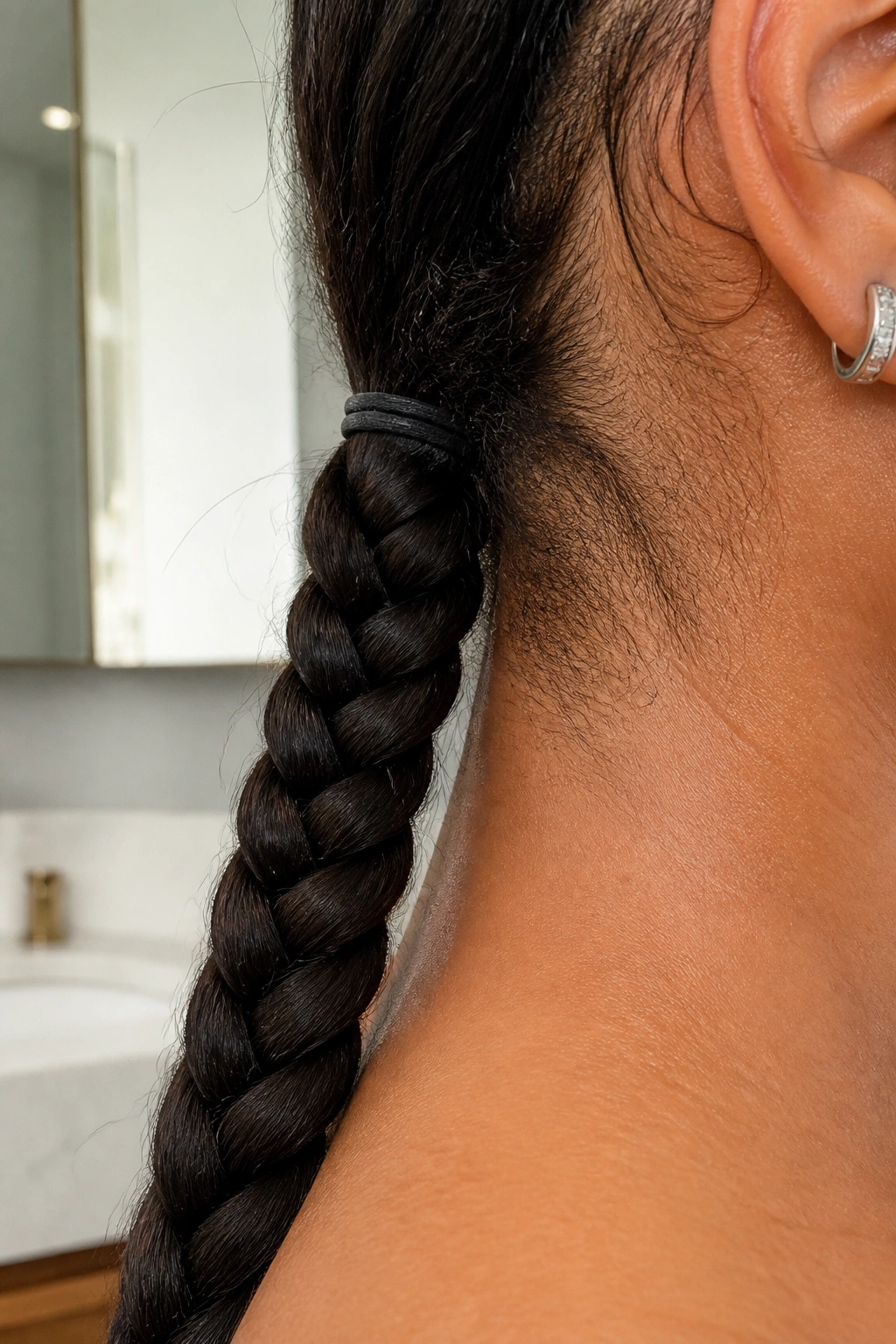
Elastic bands sound boring until you need them. Then they become the quiet hero of braid styling. The right snag-free elastics keep the ends neat, hold mini braids together, and make bubble braids or half-up sections look crisp instead of loose.
The main thing is to skip elastics with exposed metal. Those little clamps can chew through synthetic hair and catch your own strands when you take them out. Fabric-covered or seamless silicone bands are the safer choice.
Use Them Like Hardware
Think of elastics as the frame that lets the pretty stuff sit properly. You can secure the base of a braid, hold a ribbon in place, or create small segmented sections down one long plait. Black, clear, and color-matched bands usually disappear into the style. Bright ones can become the accent if that’s the point.
A good elastic should stretch and snap back without feeling brittle. If it pulls too hard on the braid, it is the wrong size. Small and smooth beats tight and shiny every time.
11. Silk Scarf Ties
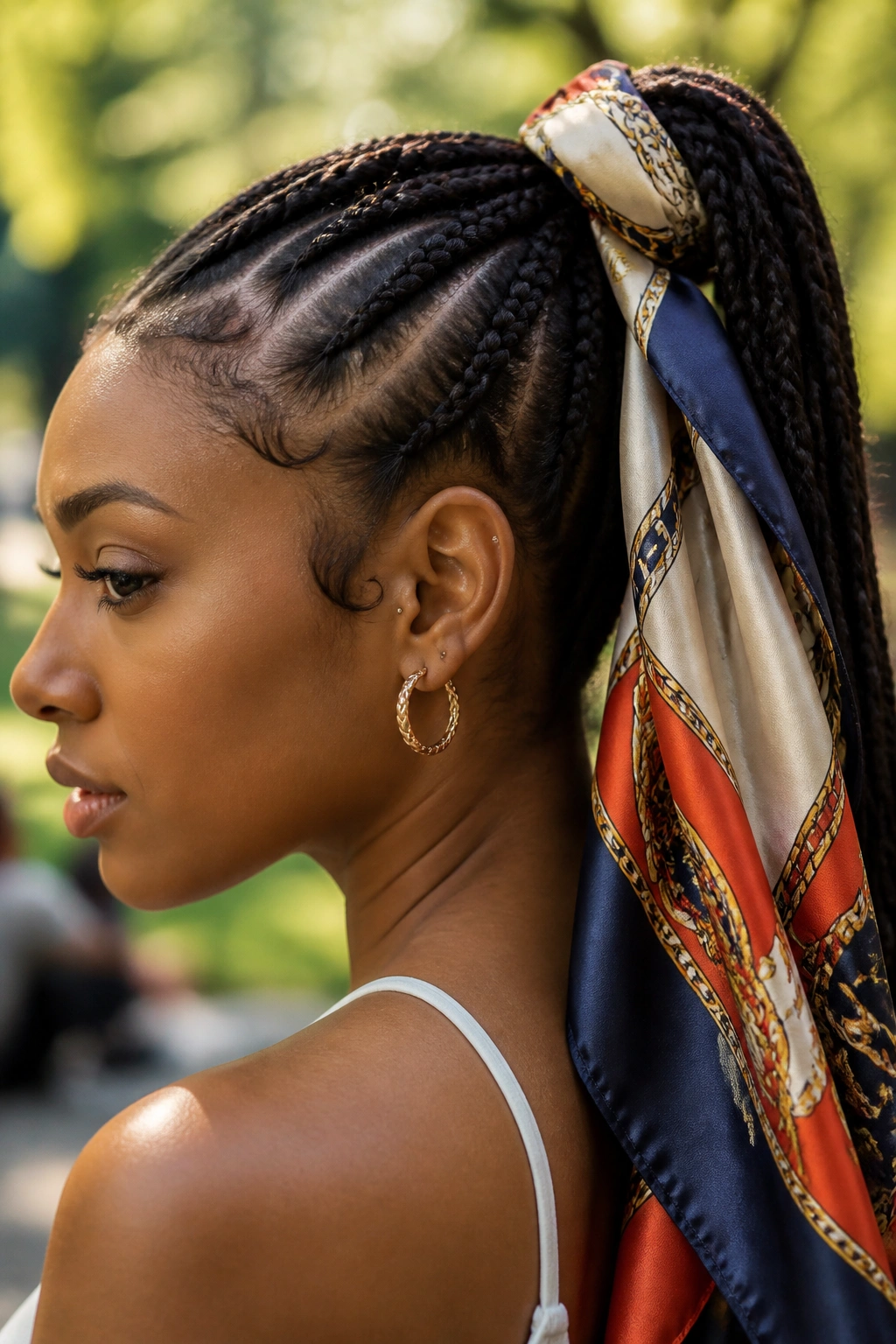
A silk scarf changes the whole braid before you even notice the knot. The fabric softens the style, adds color around the hairline, and gives you a way to pull together braids that might otherwise feel a little too plain. It’s a soft accessory, but it has real presence.
I like scarf ties on braided ponytails, half-up braids, crown braids, and wrapped buns. They work because the fabric moves with the hair. Satin and silk are better than rough cotton here — less friction, less snagging, less chance of flattening the braid texture.
Best Sizes and Shapes
A square scarf gives you more knot options. A narrow scarf or long silk strip wraps more neatly around a bun or braid base. If you want the knot visible, let the ends drape a little. If you want a cleaner look, tuck the tails into the wrap.
- Use a scarf in a color already in the outfit.
- Keep the knot low if the braid is heavy.
- Re-tie it if it starts slipping.
Soft fabric at the root makes a braid feel intentional fast. It’s one of the easiest ways to turn a regular day style into something with a little more shape.
12. Mini Flower Clips
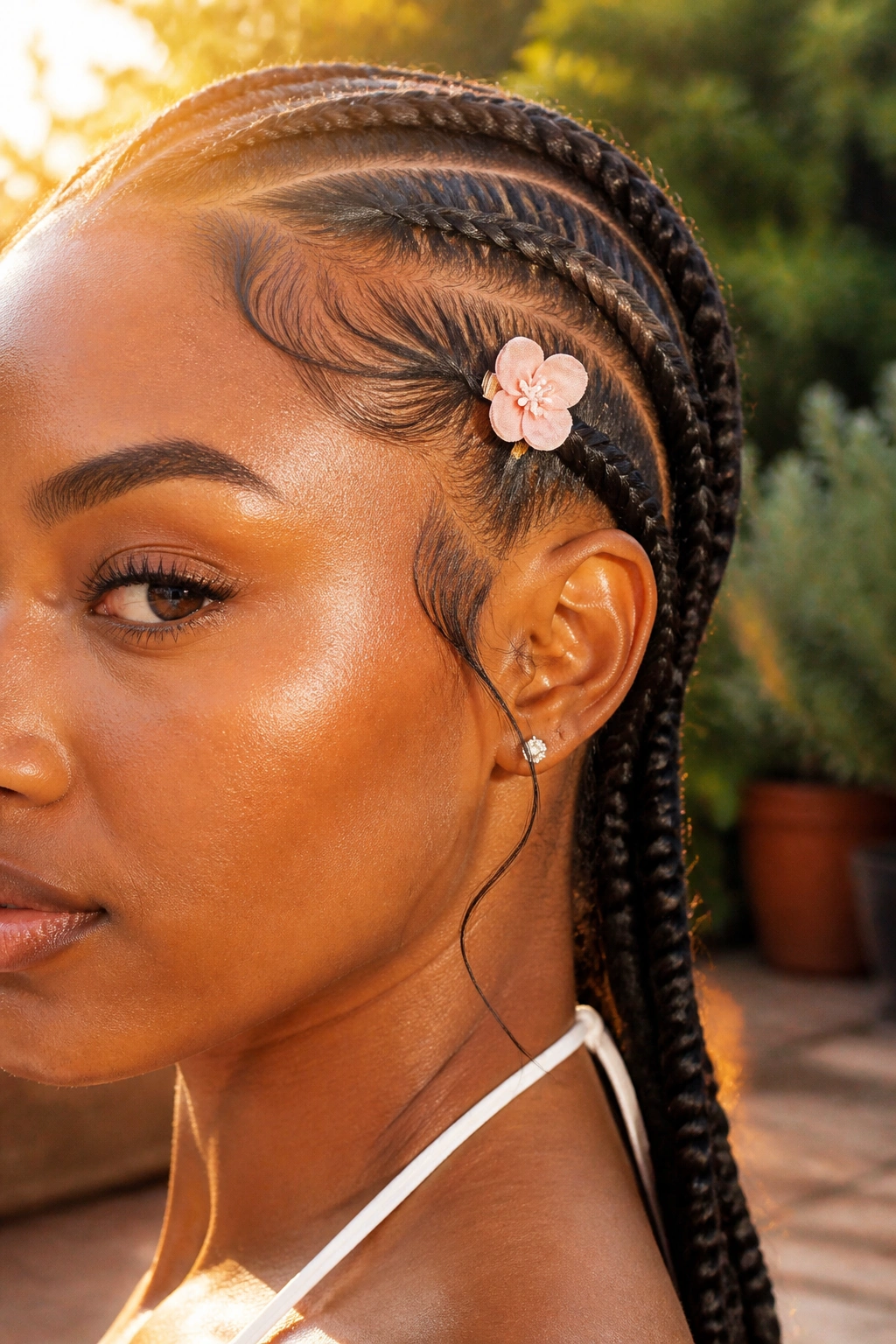
A single flower clipped into braids can make the whole style feel lighter. That sound sounds almost too simple, but a flower breaks up the line of the braid in a way beads and cuffs never can. It adds softness right where hard shapes can start to feel too serious.
Mini flower clips work best when they’re not fighting the rest of the style. A braid already has structure. The flower should be the break in that structure, not another strong line.
Keep the Bloom Light
Silk or fabric flowers tend to be easier than fresh ones if you need the style to last through an event. Fresh flowers are lovely, but they wilt, bruise, and shift faster than people expect. A lightweight clip with a slim back is the safer option for most braided looks.
Use one bloom near the temple, one near a braid end, or a tiny pair at the back of a half-up style. One flower beats a cluster when you want the braid to stay visible. Too many blossoms can turn the look mushy fast.
13. Gold Wire Spirals
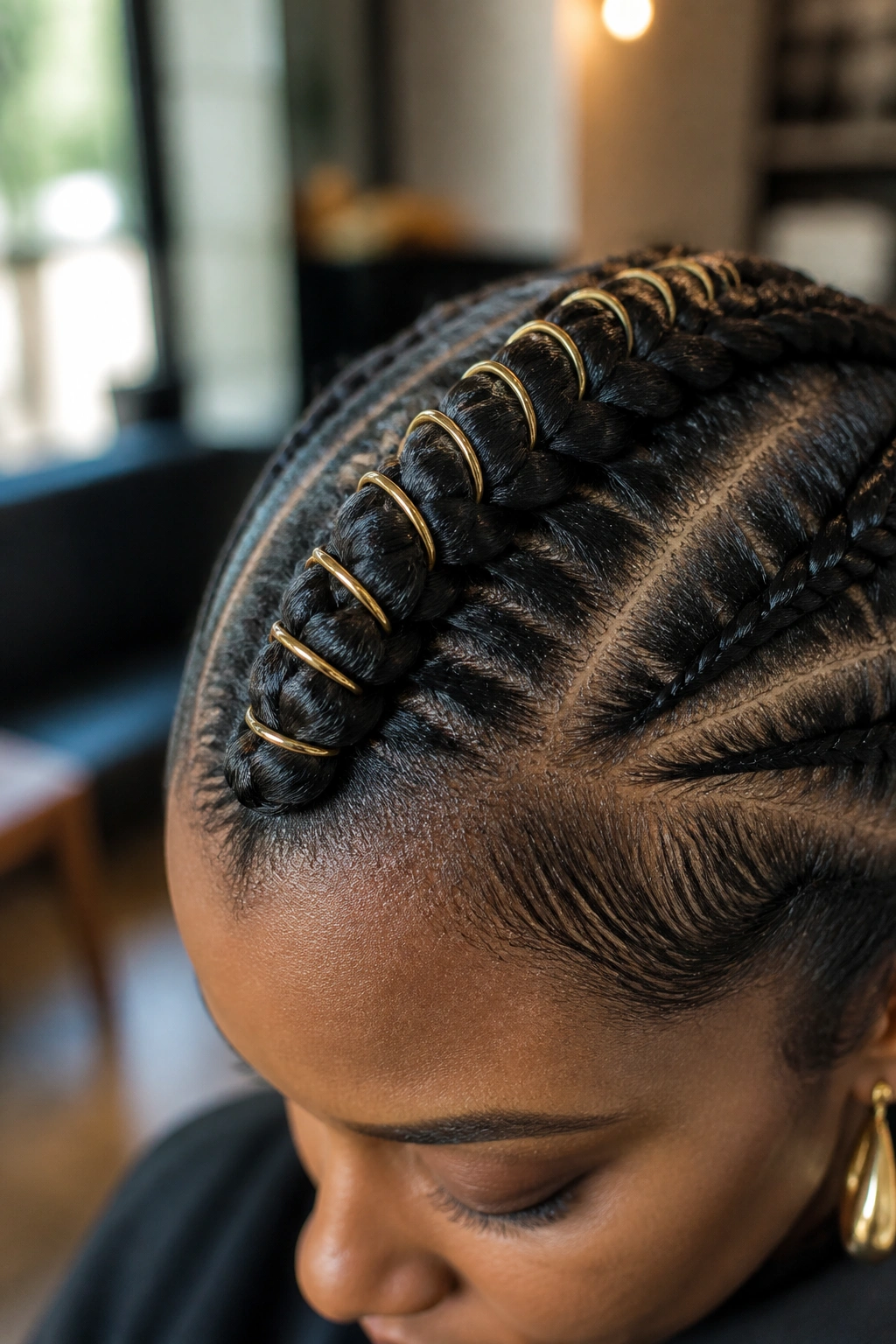
Wire sounds harsh, but thin braid wire can look cleaner than a chunky cuff when it is used well. A narrow spiral gives the braid a drawn-in, line-by-line feel that metal rings cannot always match. It is a sharper look, a little more graphic, and it works best on braids that already have a strong shape.
The key is to keep the wire smooth and light. Jewelry wire with rounded ends is easier on hair than anything stiff or sharp. A braid should never feel scratched when you move your fingers down it.
What to Watch For
- Use fine-gauge wire only if the ends can be tucked safely.
- Spiral it around thick braids or the outer edge of a cornrow.
- Skip it on hair that frays easily or on styles you plan to sleep in.
Wire has a clean, almost architectural look, which sounds fancy but really means it creates a line your eye can follow. Used once or twice, it looks smart. Used all over the head, it becomes a lot.
14. Clear Acrylic Beads

Clear beads look nearly invisible until the light hits them. That’s the appeal. They let the braid color do the talking while still adding texture and movement. On bright braids, they show off the dye. On dark braids, they give a glassy edge without weighing the style down.
I like clear acrylic more than glass for everyday wear because it tends to be lighter and less fussy. The bead should feel easy, not like a small chore every time you move your head.
Who They Suit Best
Clear beads work especially well on ombre braids, neon braids, and mixed-color plaits. They don’t compete with the color, which means the braid itself stays visible from root to tip. If your style already has a lot going on, clear beads can calm it down a bit.
Use them sparingly. A few around the ends or one row near the front is enough. Transparency needs space or it stops being interesting.
15. Tassel Charms
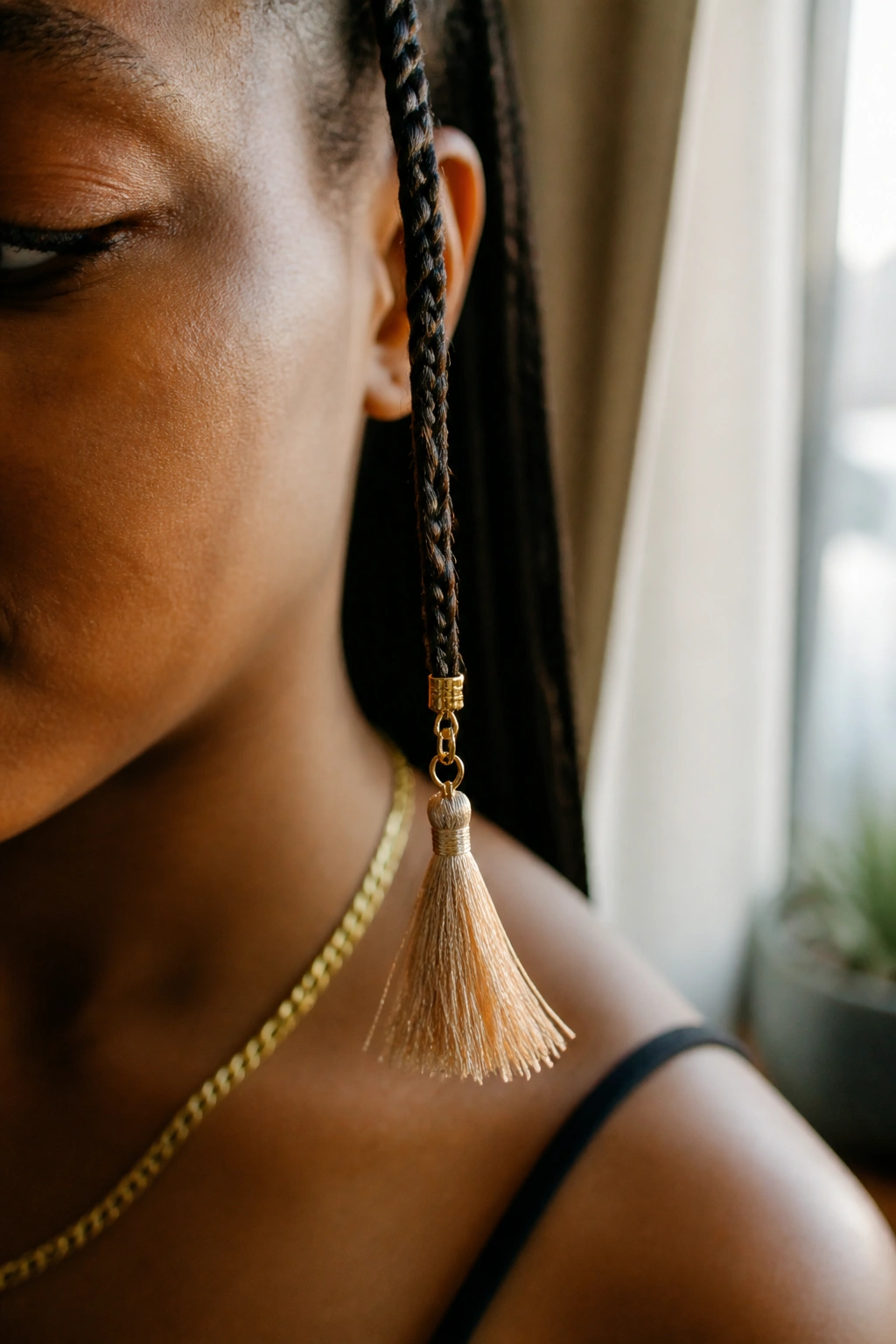
A tassel at the end of a braid brings movement in a way metal never will. It sways. It softens the line. It makes long braids feel alive when you turn your head. That little bit of swing can change the whole read of a style.
Tassel charms work best on single braids, ponytail braids, knotless braids, and long feed-ins. The charm doesn’t need to be huge. In fact, a short tassel often looks better because it moves without dragging. Too long, and it starts snagging on coats, bags, or your own shoulders.
Best Placements
Put tassels where the braid ends naturally. Don’t force them into the root area. If the braid has a cuff or bead already, the tassel can hang below it and create a layered finish.
- Leather tassels feel sleek and a little tougher.
- Thread tassels feel softer and more playful.
- Small metal-tip tassels work well for dressier styles.
Movement is the whole point here. If the tassel is so heavy it barely moves, it’s lost the job.
16. Fabric Strips
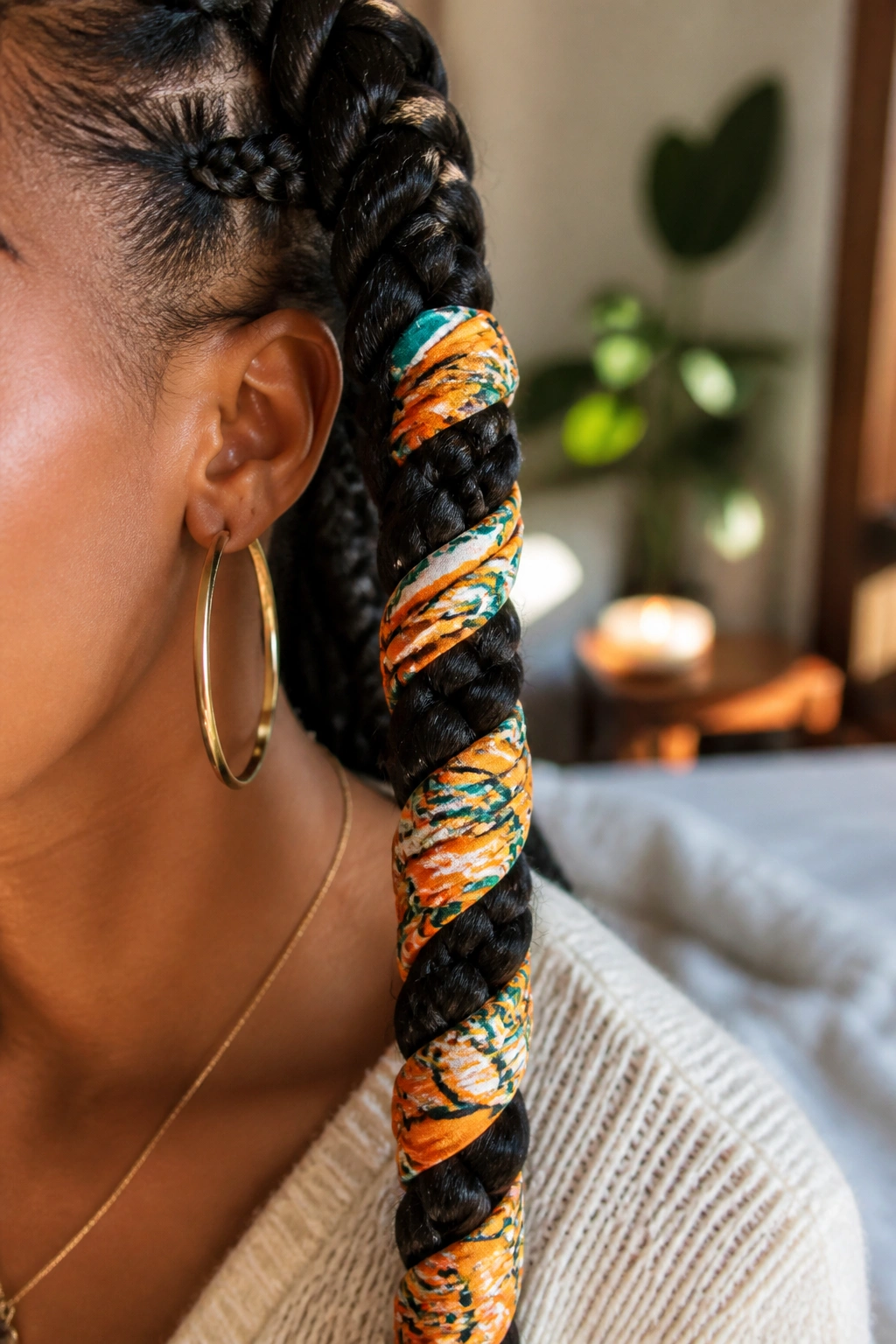
Fabric strips are less precious than ribbon, and that’s why they work. A cut strip of jersey, cotton, or print fabric can turn a braid into something personal fast. It feels handmade, a little rougher around the edges in a good way, and that gives the style character.
This is a smart move for jumbo braids or chunky protective styles where a thin ribbon might disappear. The fabric has enough body to show up. It also lets you bring in color or print without loading the braid with metal or hard accessories.
A Better Way to Use Them
- Cut the strip narrow if the braid is sleek.
- Leave it wider for thicker braids and twists.
- Tuck or finish the ends so they do not fray into fuzz.
Wax print, jersey, and light cotton each give a different look. Jersey feels casual, cotton feels crisp, and print fabric gives the braid more personality. You do not need to cover the entire braid to get the point across. One wrap is often enough.
17. Mixed-Metal Braid Jewelry
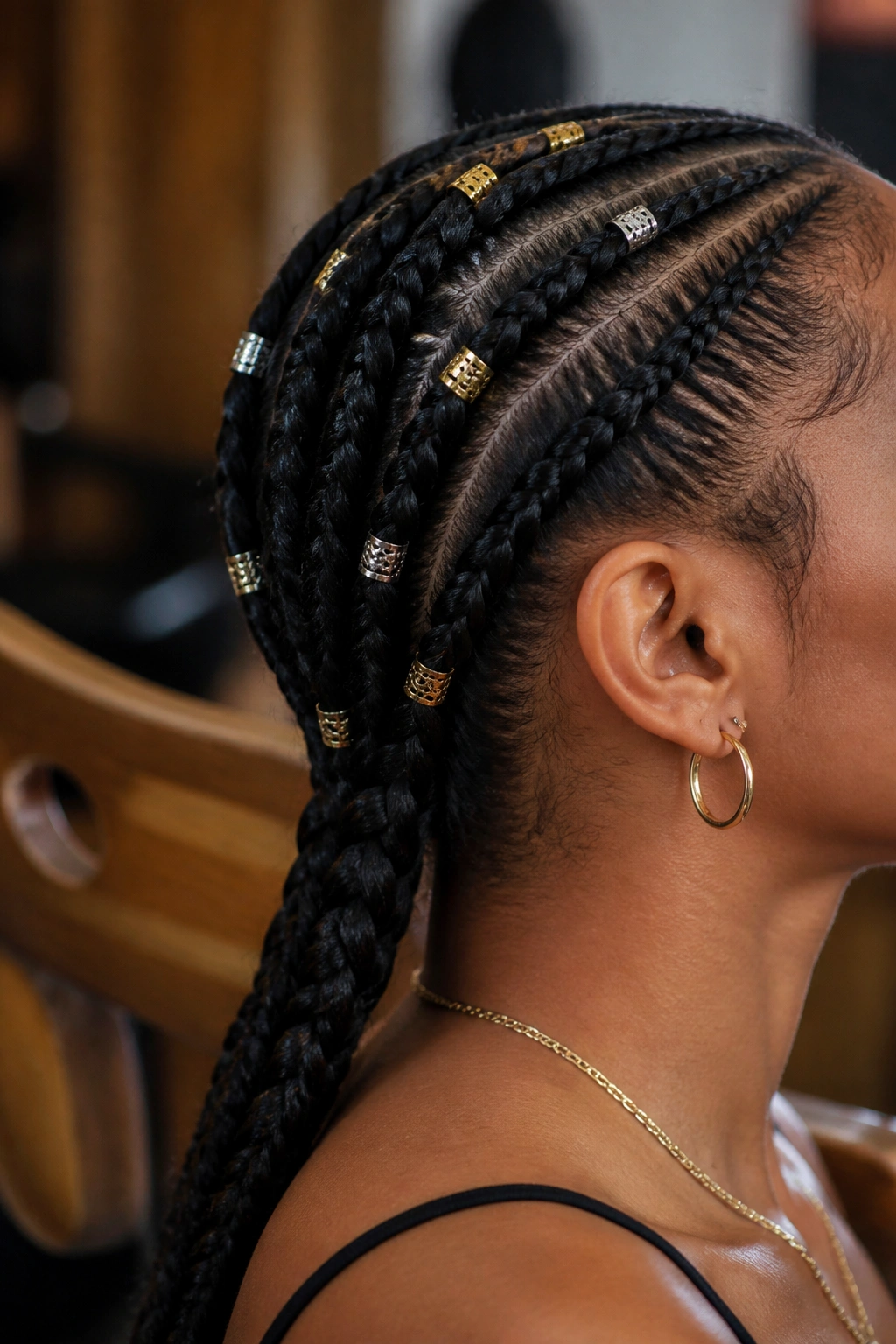
Mixing gold and silver used to feel risky. On braids, it can look sharp when the palette stays controlled. The reason is simple: braids already create a strong pattern, so a mix of metals can echo that pattern if you keep the shapes small and consistent.
I like mixed-metal braid jewelry on styles that are clean and structured — cornrows, knotless braids, and sleek braided ponytails. If the braid texture is already busy, the mixed metals can start to compete with it. But on a neat style, they add just enough contrast.
Keep the Palette Narrow
Pick one warm metal and one cool metal, then stop there. Don’t throw in rose gold, antique brass, and shiny silver all at once unless you want the look to tilt messy. Matte and polished finishes can live together if the shapes are simple.
A mixed-metal set is best when the pieces repeat a shape — cuffs, rings, or small pins — so the eye reads rhythm instead of clutter. Two finishes, one story. That’s the sweet spot.
18. Clip-On Braid Charms
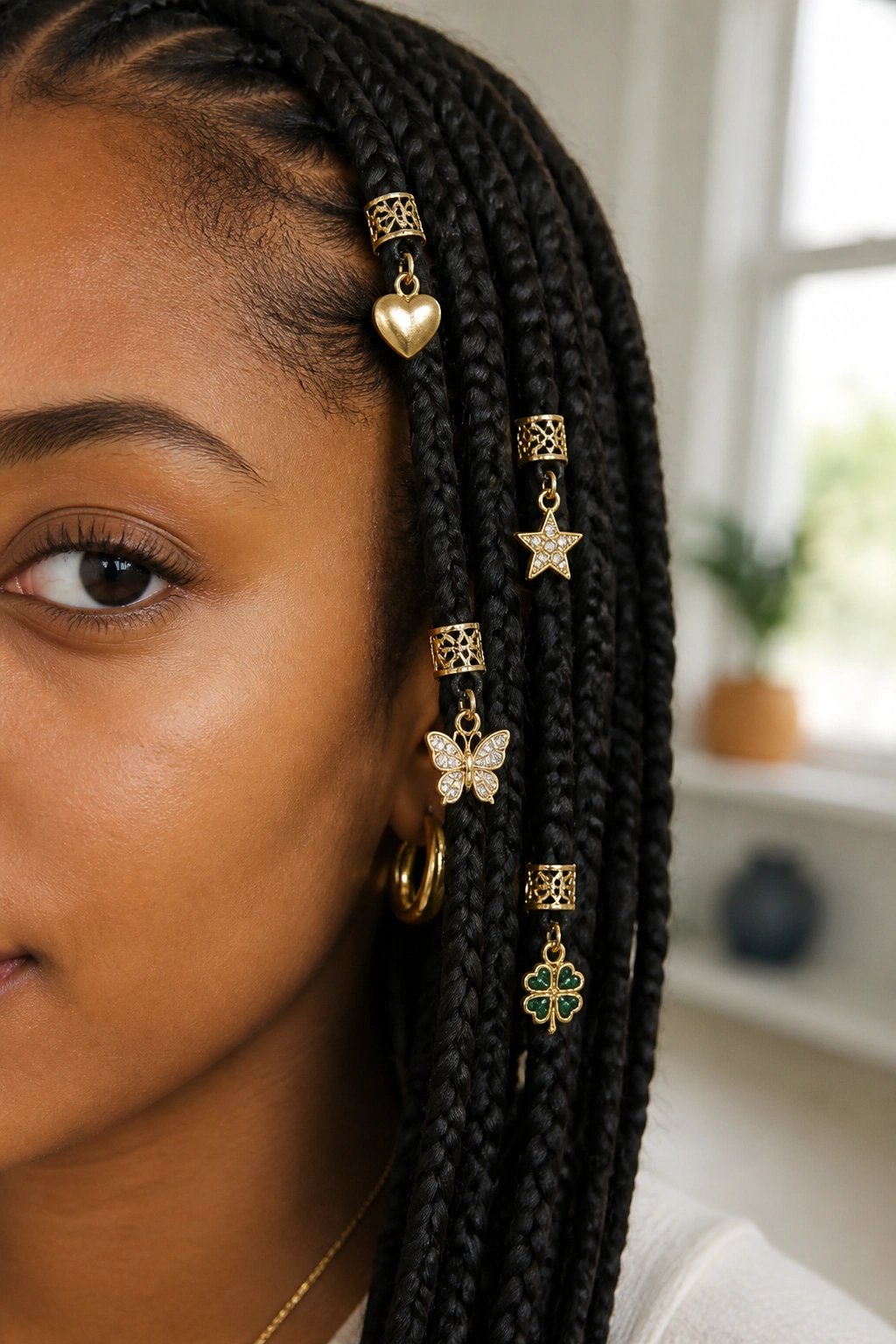
Want your braids to feel more personal? Clip-on charms make that easy. Tiny stars, initials, hearts, moons, or tiny symbols can turn a braid into something that feels like yours, not just a style pulled from a mood board. And because they clip on, you can move them around until the placement feels right.
This is one of the most flexible braid accessories on the list. You can cluster charms near the face, tuck one into a side braid, or place a few at the ends of long braids. The effect changes a lot depending on where you stop.
Make Them Feel Intentional
Choose a charm size that makes sense for the braid thickness. Small charms disappear on thick braids. Large charms can overwhelm tiny braids. If the charm swings too hard, it may need to sit lower on the braid where the movement is calmer.
- Best for side braids, half-up styles, and party looks.
- Keep the metal smooth where it touches hair.
- Use the same symbol three times if you want repetition without clutter.
Personal detail goes a long way here. A charm with one clean shape often looks better than a bag of random pieces.
19. Beaded Braid Ends

Sometimes the prettiest place to decorate is the last inch of the braid. Beaded braid ends do that job well. They finish the line, weigh the tip just enough to make it hang neatly, and give the style a clean ending instead of a frayed one.
This works especially well on boho braids, micro braids, knotless braids, and long plaits. It’s a good move when you want the braid to look finished but still light. The end decoration can be subtle — a tiny cuff, a single bead, or a small cluster of two or three pieces.
Why the Ends Matter
When the ends are decorated cleanly, the braid often falls better. The weight helps the strand sit straight, and the eye reads the style from root to tip without getting lost. That is one of those tiny styling details people overlook until they see it done well.
Keep the finish smooth. If the end piece is too rough, it will snag on fabric and make the style annoying to wear. A neat ending is part of the design. It is not an afterthought.
20. Oversized Barrette
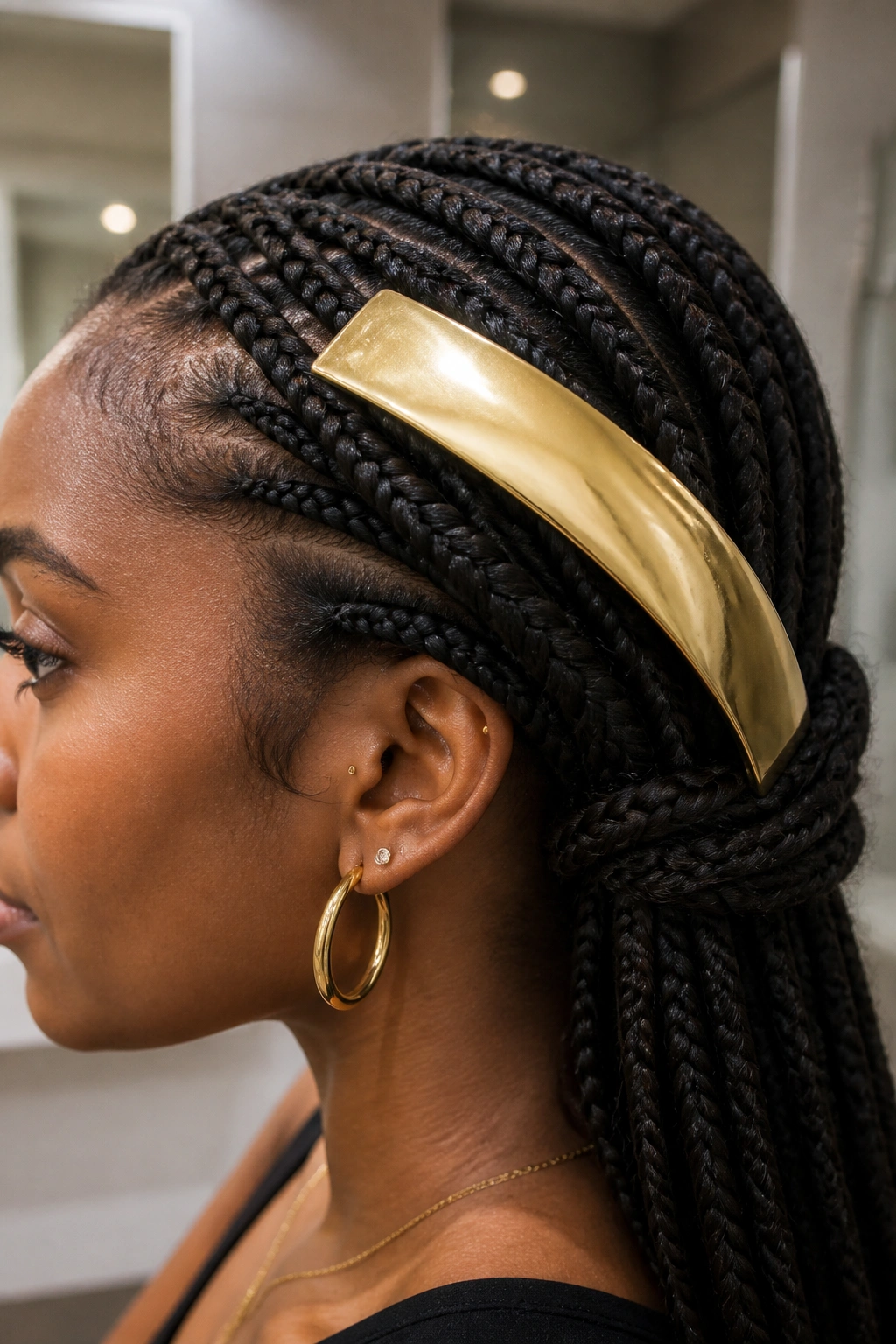
What if one accessory could hold the style in place and still look intentional? That’s where the oversized barrette earns its spot. It can gather a side-swept braid, anchor a half-up crown, or pin back the front of a braided style in a way that feels strong and clean.
I like barrettes when the braid needs a little structure, not more decoration. The barrette shapes the silhouette. That matters. A braid with good accessories but no shape can still fall flat, while a simple barrette can create a line your face actually benefits from.
When a Barrette Is Enough
Choose a barrette with smooth teeth and a curved back so it sits against the head without digging in. Acetate, polished metal, and sturdy resin all work if the clasp holds well. For thicker braids, go bigger. For small braids, keep it light so it doesn’t pull.
A side sweep, a low twist, or a braided ponytail all take this well. If you only buy one accessory, make it this one. It changes the shape first, then the shine.
Final Thoughts
Braids do not need a pile of extras to stand out. They need one or two well-chosen details that respect the shape already there.
That is the part people miss. The best braid accessories don’t fight the braid, weigh it down, or hide the work you already put in. They frame it. They add motion, color, shine, or texture in a way that still lets the style breathe.
Start small if you’re unsure. One cuff, one ribbon, one barrette. Then notice what your braids already wanted all along.
