



Twist ponytail hairstyles solve a very specific problem: you want movement, but you also want your hair to look intentional after the second day. That’s a sweet spot a lot of styles miss. A plain ponytail can feel flat. A twist can feel fussy. A good twist ponytail sits right in the middle and gives textured hair a job to do.
Texture should show up on purpose.
That matters more than people admit. Coils, curls, waves, and stretched natural hair all behave differently in a ponytail, and if you ignore that, the style spends the day puffing, slipping, or tugging at your edges. The best versions use the hair’s own body instead of fighting it. They let the twist pattern add shape, and they keep the base secure without turning the hairline into a warning sign.
I’m always more interested in the details than the idea. A twist ponytail needs the right parting, the right tension, and the right amount of stretch for the hair you actually have. Dense hair likes a different finish than fine hair. Shorter lengths need tighter planning than waist-length hair. And when the style is done well, it should still feel like your hair — only arranged with a little more thought.
1. Rope-Twist High Ponytail
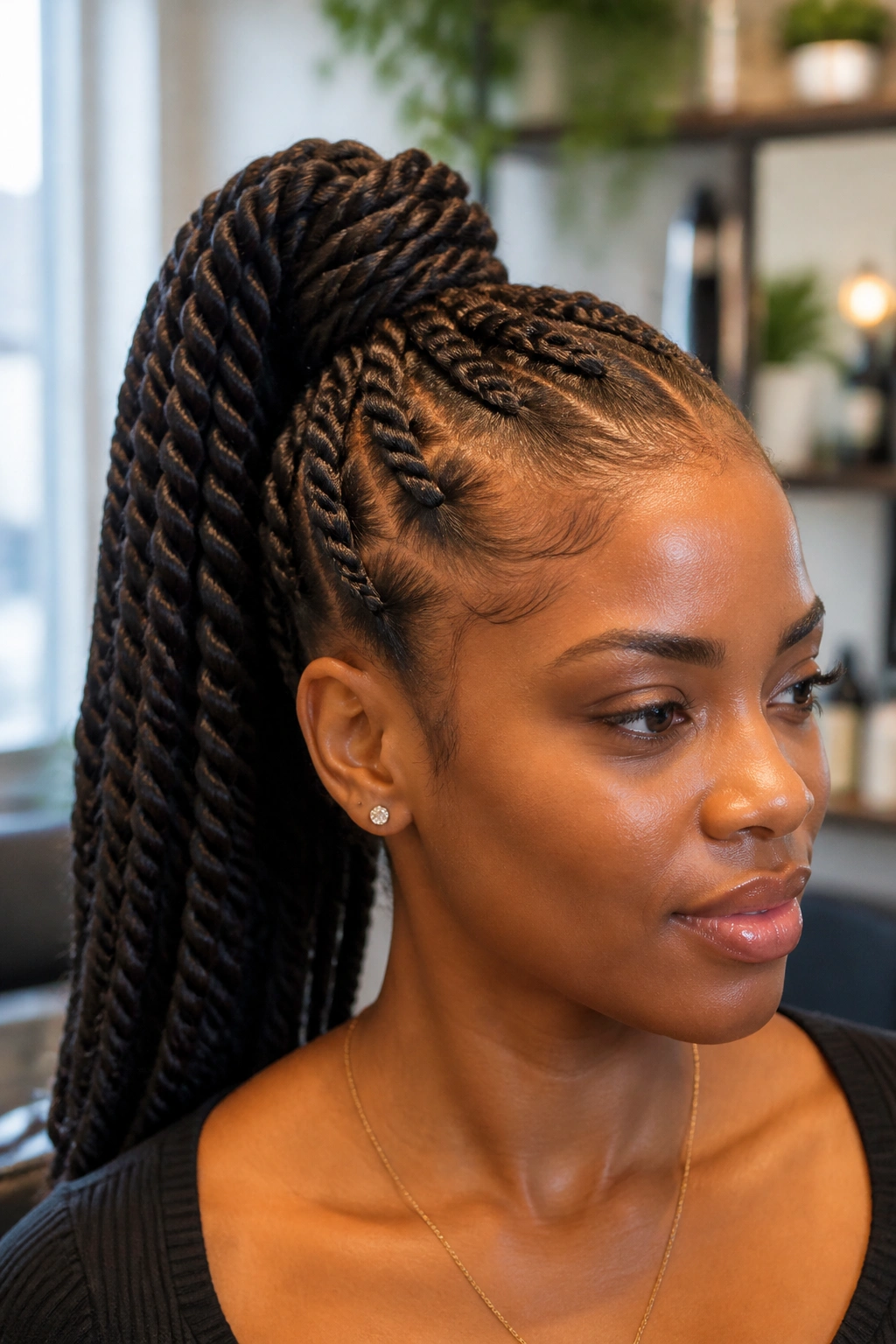
This is the fastest way to give textured hair height without making it look stiff. A rope-twist high ponytail pulls the eye upward, which is useful when your curls sit heavy or your roots have lost their shape by midday. Two strands twisted in opposite directions create a clean spiral, and that spiral looks sharper on textured hair than a simple wrapped ponytail ever will.
I like this style best when the crown is smooth but not shellacked. You want enough grip to hold the base, not a helmet. A rat-tail comb, a small brush, and a firm elastic are enough for most versions, and if your hair is dense, a little gel at the front goes a long way. The twist itself can stay thick or slim, but the shape should feel deliberate.
Why the Rope Twist Reads So Clearly
A rope twist makes sense visually because the pattern is easy to read. Even from a few feet away, you can see the spiral, and that gives the style more presence than a plain ponytail. On coily or curly hair, the contrast between a sleek base and a textured twist is half the appeal.
- Best on medium to long hair, or hair with added length.
- Works with one ponytail or two rope twists feeding into one base.
- Holds well when the hair is stretched first.
- Looks especially sharp with a wrapped base.
Pro tip: Keep the ponytail just below the crown if your edges are fragile. The lift still reads, and the weight sits in a kinder place.
2. Low Side Twist Ponytail
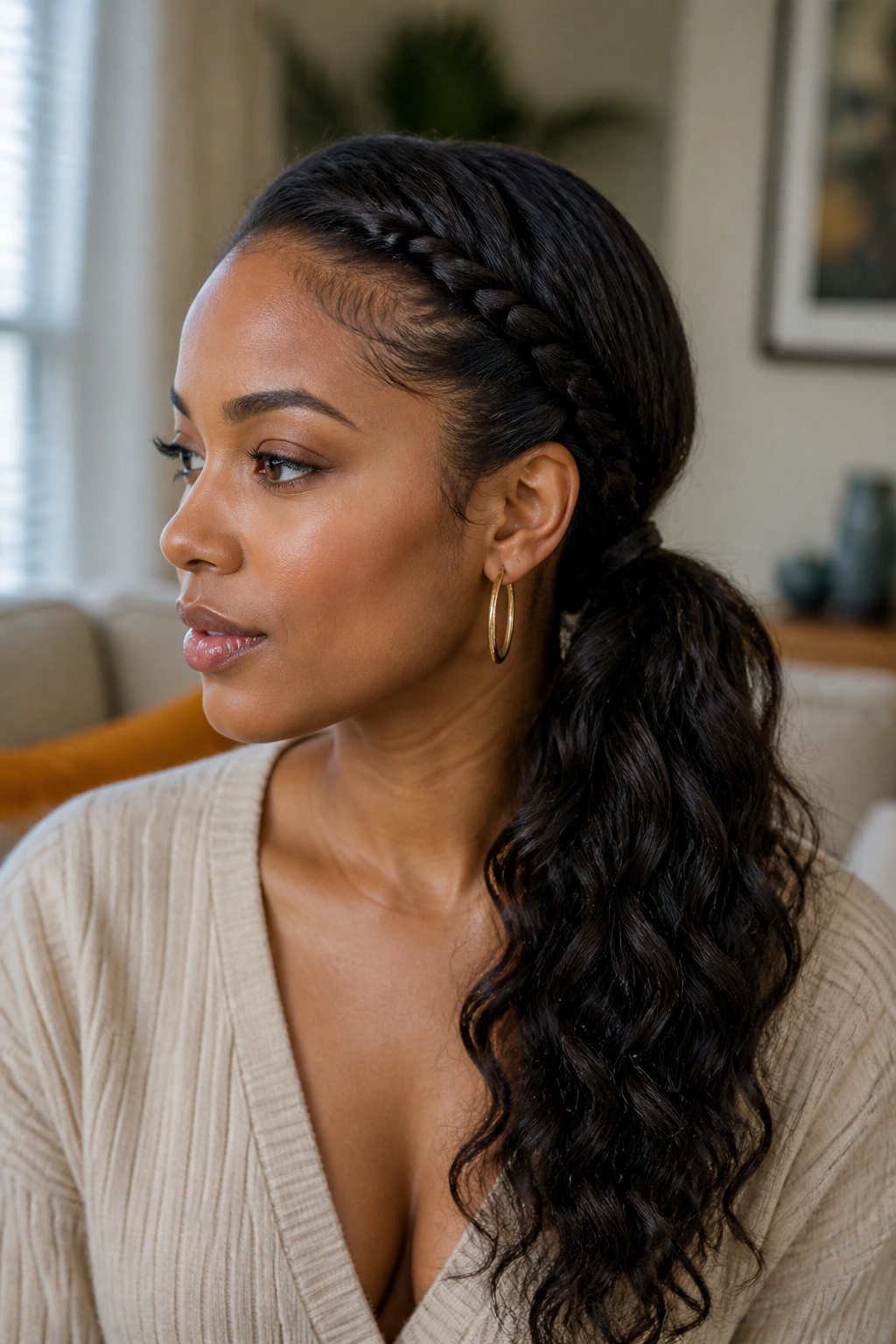
Why do side ponytails feel softer without trying harder? Because the diagonal line changes everything. A low side twist ponytail gives textured hair a little drama, but it keeps the mood easy. The twist starts near one temple, sweeps toward the nape, and gathers off to one side, which lets the natural bend of the hair do some of the work.
This is one of my favorite looks for hair that has a lot of body. A center ponytail can sometimes fight dense texture by compressing it. A side ponytail avoids that problem. The shape feels less strict, and the loose pieces around the face can stay curly instead of being forced into submission.
It also plays nicely with layers. If your hair has shorter pieces at the front, the side placement helps them blend instead of sticking out and acting unruly. A light mousse through the lengths before twisting can help the pattern hold, but skip heavy product at the ends unless you want them to cling together.
A side ponytail can look polished or a little messy, and I mean that in a good way. The trick is to keep the part clean and the twist relaxed. Too tight, and you lose the softness that makes this style worth wearing.
3. Twisted Bubble Ponytail
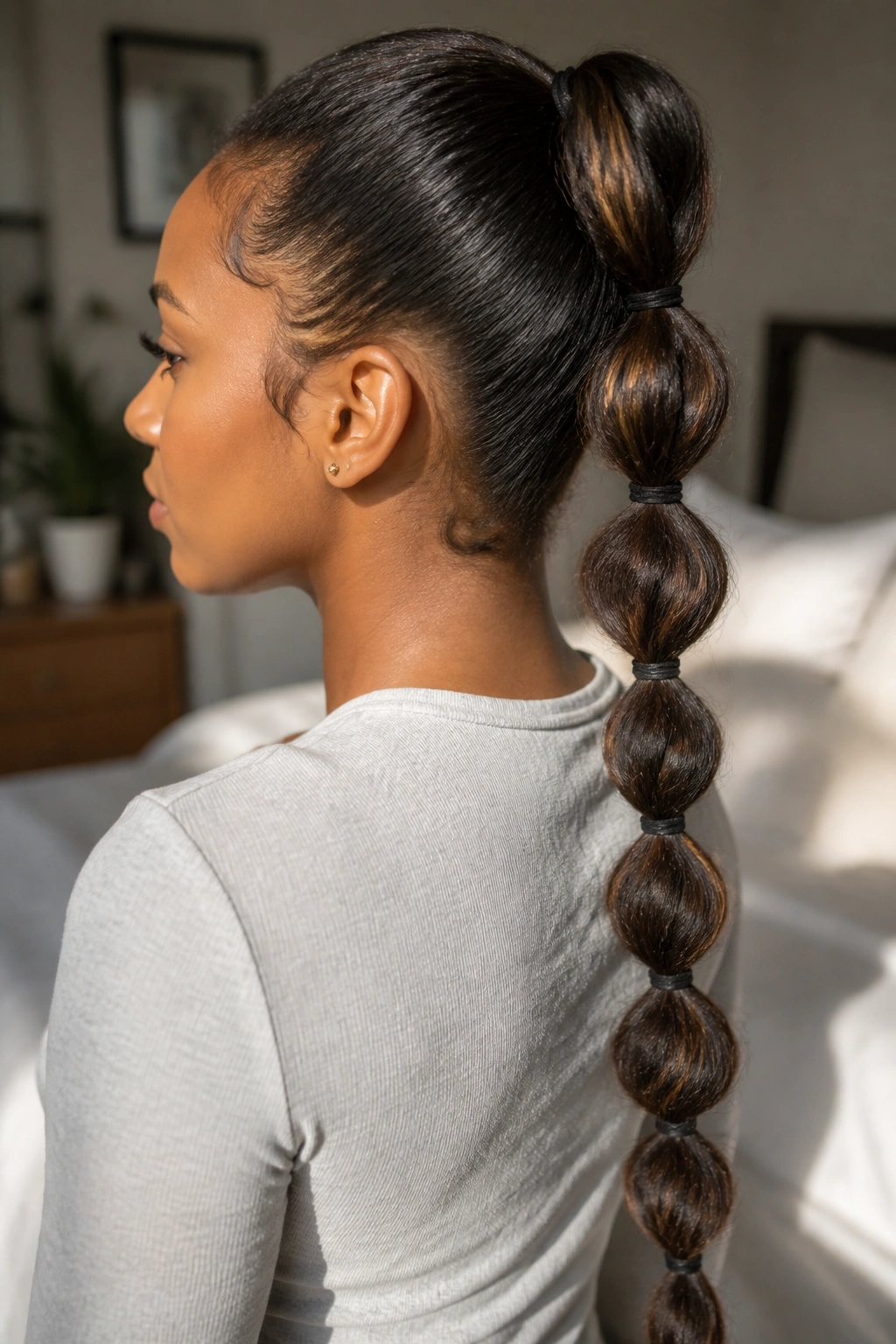
A bubble ponytail is a smart answer for long textured hair that refuses to lie flat. The sections create structure, and the “bubbles” give the whole style a rhythm that feels made for curls. Instead of forcing the ponytail into one smooth shape, you break it into rounded sections with small elastics, then gently widen each section so it puffs into place.
This works especially well when the hair has been stretched a little first. Not bone-straight. Just stretched enough that the sections sit evenly and the bubbles look intentional instead of lumpy. If the hair is very thick, I’d use clear elastics every 2 to 3 inches. If it’s finer, you can space them a little farther apart and keep the bubbles smaller.
What Makes the Bubbles Hold
The base twist matters here. If the top section is too loose, the whole ponytail shifts around, and the shape collapses. If it’s too tight, the bubbles can look pinched. The sweet spot is somewhere in the middle.
- Start with a secure ponytail at the crown or mid-back.
- Add elastics down the length, keeping the spacing even.
- Pull each section outward with your fingers until it looks rounded.
- Finish with a light oil on the ends so they do not fray.
A bubble ponytail feels playful, but it can still look grown-up if you keep the elastics minimal and the parting neat. That balance is the whole point.
4. Crown Twist Into a Ponytail
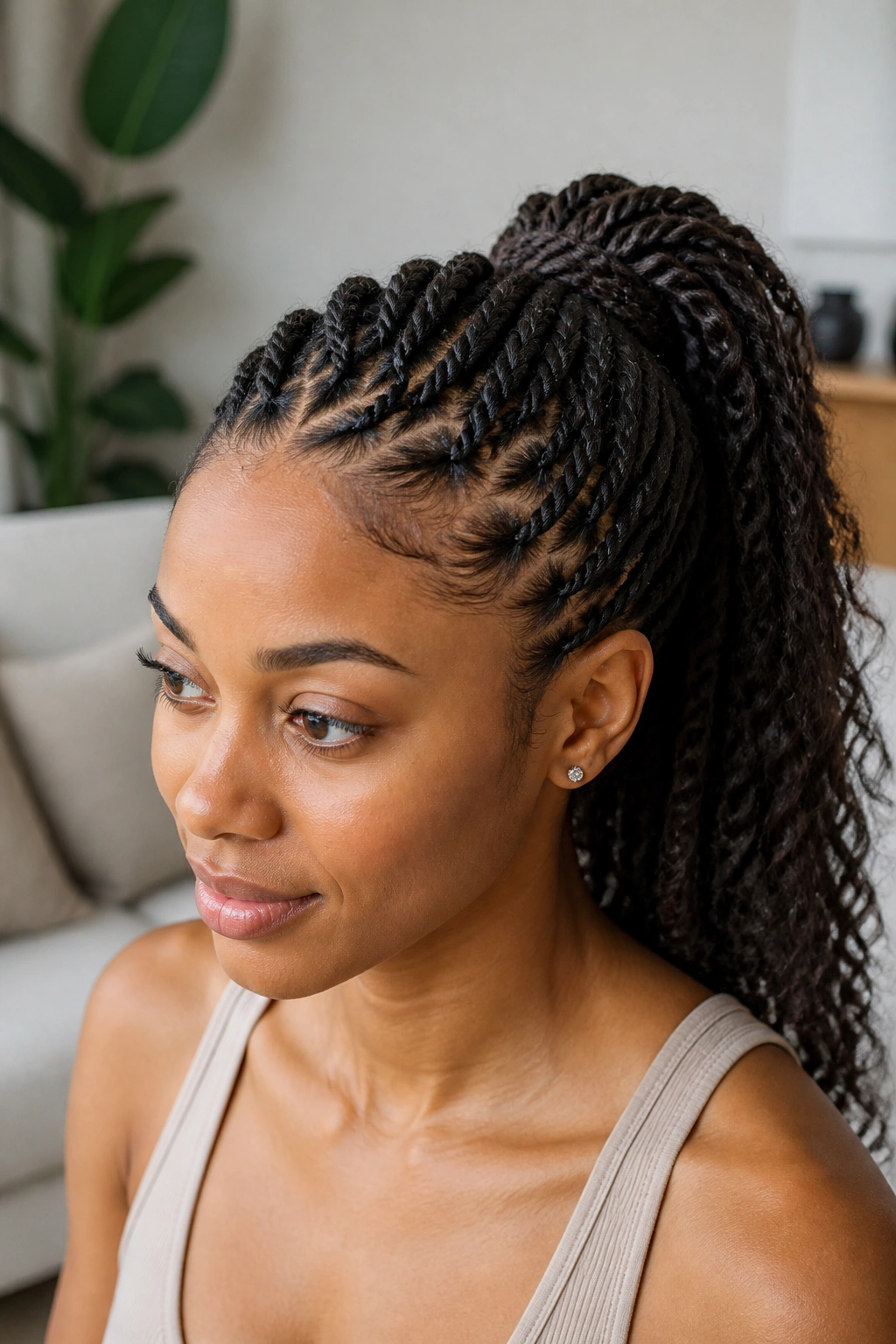
Not all ponytails should start at the back. A crown twist into a ponytail sends the eye around the head first, which is a nicer way to work with textured hair when you want the front to stay controlled. Flat twists, rope twists, or two-strand twists can run from the temples toward the crown and meet at the ponytail base like a frame.
I reach for this when the hairline needs a break. The tension sits farther from the edges, and that alone can make the style more comfortable. The crown gets the visual attention, the nape stays tidy, and the ponytail itself can be full without dragging everything downward.
There’s also a practical side people forget. A crown-based gather tends to keep shorter layers tucked in better than a plain high ponytail. That makes this style useful for grow-out stages, especially when the front sections are at that awkward length that never wants to stay put.
The finish should feel secure, not cramped. If the twists are too tight, the style starts looking severe. If they’re too loose, the crown loses its shape by lunch. I’d rather see a slightly softer twist with good pinning than a hard, shiny finish that starts to ache.
5. Half-Up Twist Ponytail
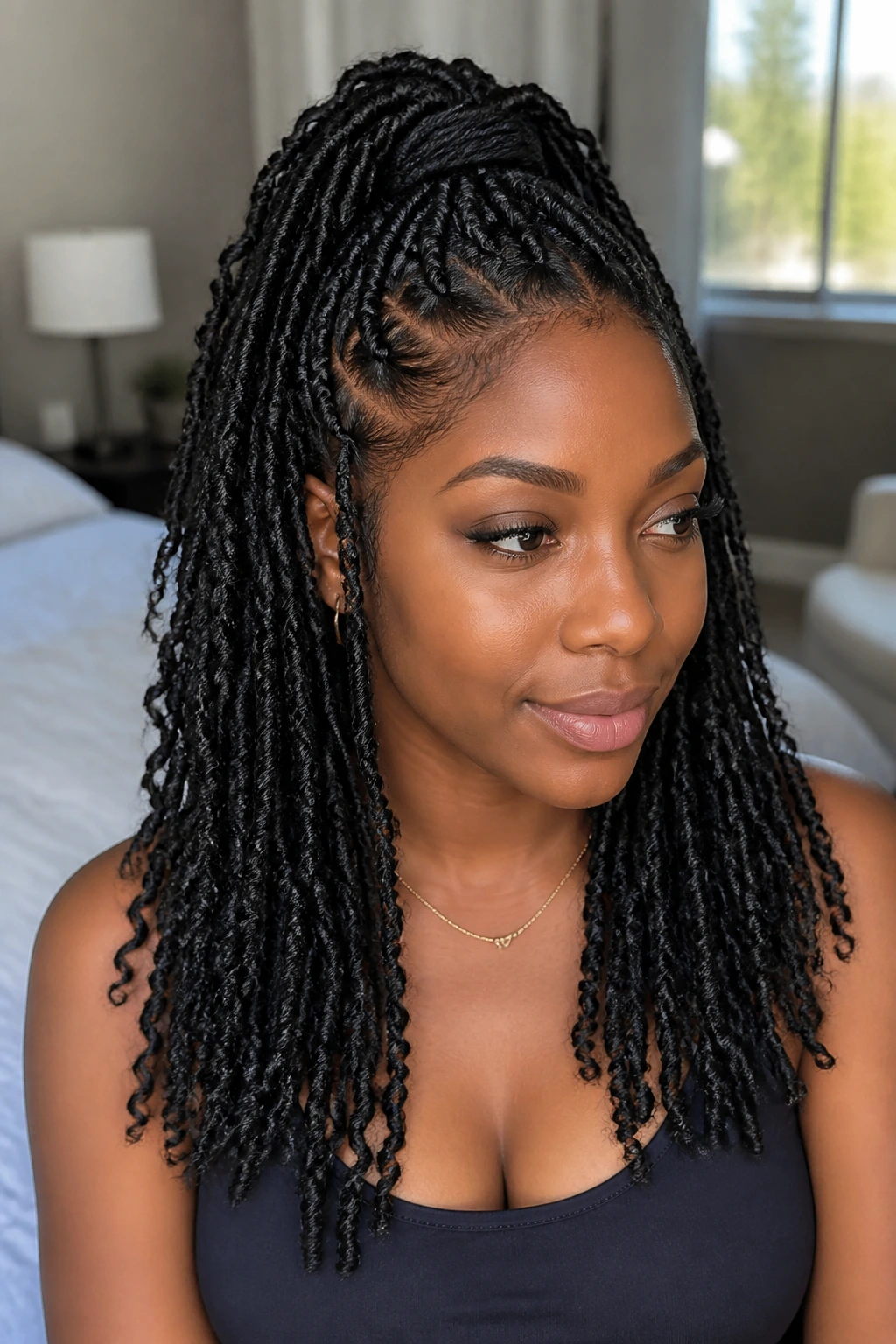
The half-up twist ponytail gives you the best part of both worlds: the top stays off your face, and the length still moves. That movement matters. On textured hair, a full ponytail can sometimes flatten the shape of the ends, while a half-up version keeps the lower half visible and alive.
This is one of those styles that looks easy because it is easy, but the details still matter. The twist should sit high enough to lift the crown, but not so high that it tugs the top section into a tight ridge. Leave a few curls or coils loose near the hairline if you want softness around the face. It stops the style from feeling too finished, which sounds strange, but I mean it as praise.
I especially like this for hair with some natural shrinkage. The upper section can be smoothed and twisted, while the lower section stays free and textured. That contrast is the point. It shows the hair’s length without hiding the pattern.
If your hair is layered, anchor the top section with a small elastic first, then twist around it. The base stays tidier that way, and the half-up shape lasts longer without constant finger-adjusting. Simple. Useful. No drama.
6. Chunky Jumbo Twist Ponytail
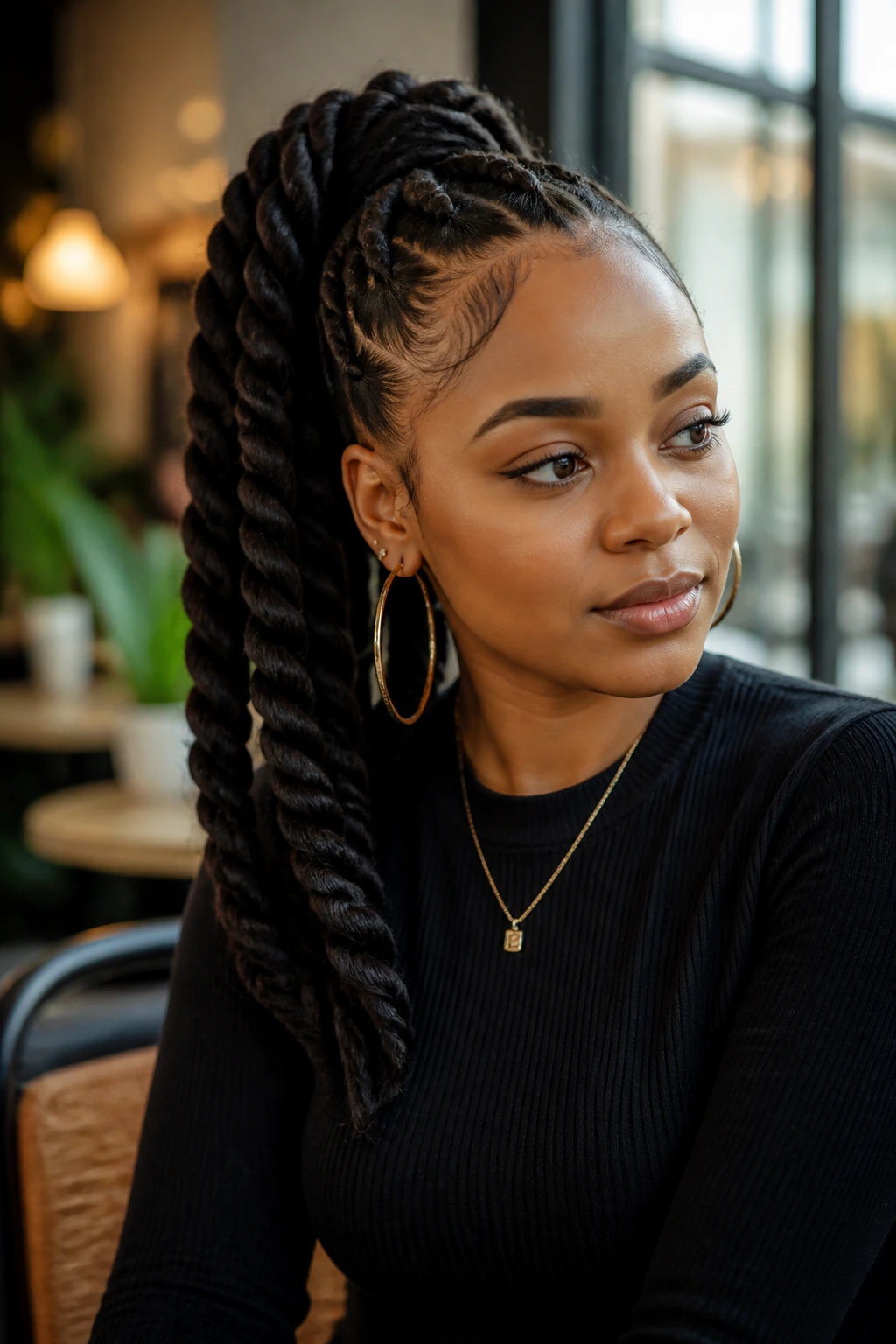
Chunky twists are underrated on dense hair. Smaller sections can look fussy when the hair already has a lot of volume, and a jumbo twist ponytail lets that density become the style instead of the problem. Two or three thick twists gathered into one ponytail can look bold, but they also cut styling time way down.
This is a good choice when you want texture with less detail. The sections are larger, the parting is faster, and the finished look feels heavier in a pleasing way. If you are adding extensions, this is the style where they make sense. Not because you need more hair, but because the extra length gives the twist something to hang on to.
I don’t love this style when it’s too polished. A little fullness at the base makes the look better. A slightly imperfect twist reads more natural, and textured hair usually looks better when the shape breathes a bit. Pin the base well, then stop fussing.
The main thing to watch is balance. A jumbo twist can pull if the ponytail sits too high or if the twist is packed with too much product. Keep the scalp comfortable first. Pretty is nice. A sore scalp is not.
7. Mini-Twist Ponytail With Loose Ends
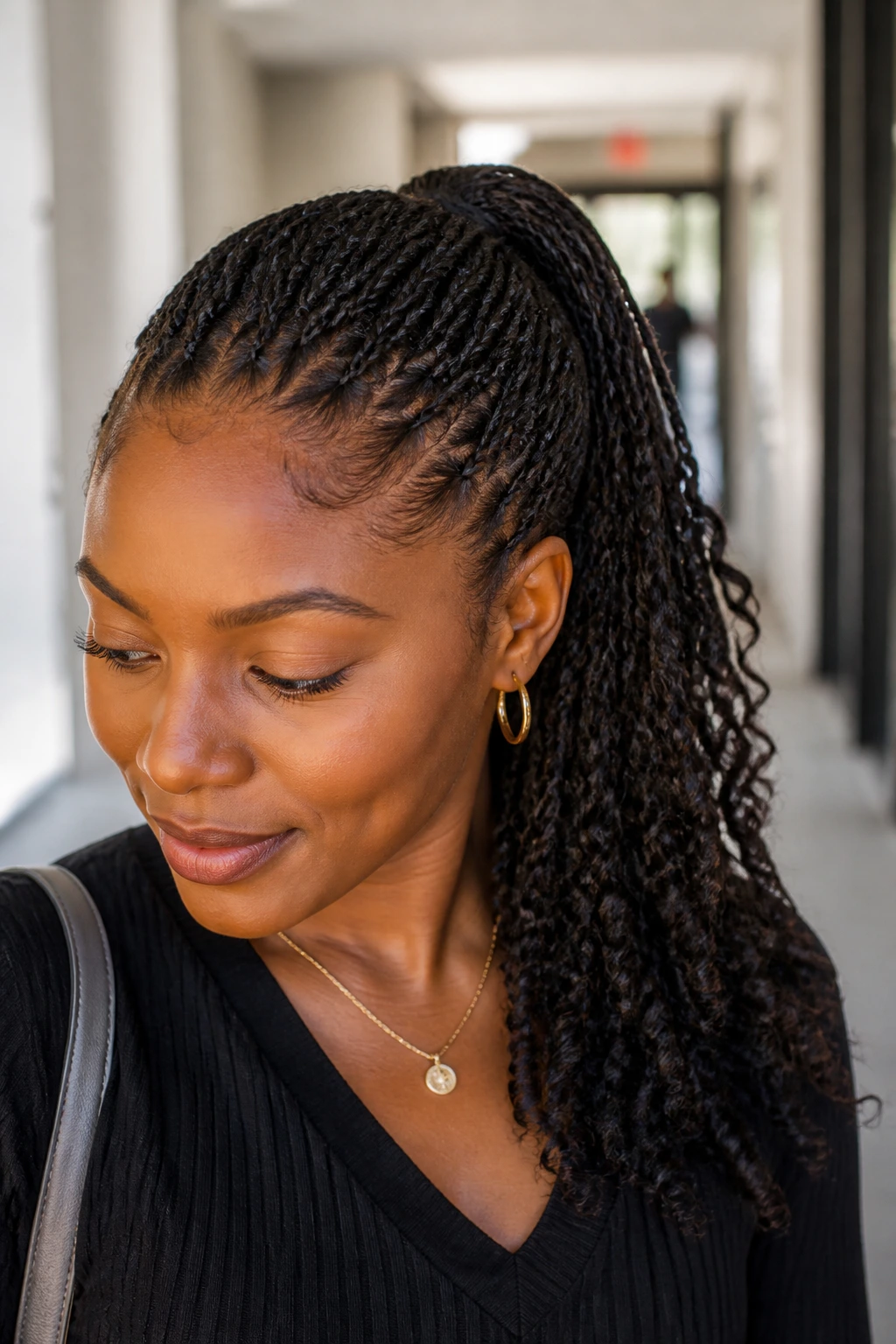
Can a tiny twist ponytail still look full? Absolutely. Mini twists are one of the easiest ways to make short-to-medium textured hair look dense and detailed without adding bulk. The trick is to keep the sections small enough that the twist pattern reads clearly, then leave the ends loose or softly coiled so the ponytail doesn’t vanish into itself.
This style shines when you want precision. Each twist acts like a tiny line drawing, and the collection of them makes the ponytail feel fuller than it is. I like it for hair that is naturally fine or for anyone who wants a neat look without heavy tension. The smaller twists also help if your hair is layered, because they blend uneven lengths better than one big sweep of hair.
How to Avoid a Skinny Look
The easiest mistake is gathering the ponytail too tightly and leaving no room for the twists to puff at all. That flattens the entire shape.
- Stretch the hair first with banding or a light blow-dry on low heat.
- Keep the ponytail base slightly loose so the twists can fan out.
- Use a matte elastic if your hair slips easily.
- Let the ends keep some texture instead of smoothing them to death.
A mini-twist ponytail looks thoughtful. That’s the charm. It does not need to shout.
8. Wrapped-Base Twist Ponytail

If you hate seeing the elastic, this is the fix. A wrapped-base twist ponytail hides the tie by winding a small section of hair around the anchor point, which gives the whole style a cleaner finish and makes the ponytail feel more finished.
The wrapped base also changes the shape of the style in a subtle way. It smooths the transition from scalp to ponytail, so the eye doesn’t stop at the elastic. That matters on textured hair because the natural density can make a bare band look bulky. Wrap a two-strand twist, a small braid, or a narrow strip of the ponytail itself around the base, then pin it underneath.
I like this version when the ponytail carries weight, either from natural density or extensions. The wrap helps disguise the hardware and makes the base feel more secure. It also keeps the style from looking like a rushed gym ponytail, which is a tiny thing until you see the difference in the mirror.
Use one bobby pin that matches your hair color if you can. Two if the base is slippery. More than that starts to feel cluttered, and clutter is the enemy of a good wrapped ponytail.
9. Side-Part Twist Ponytail
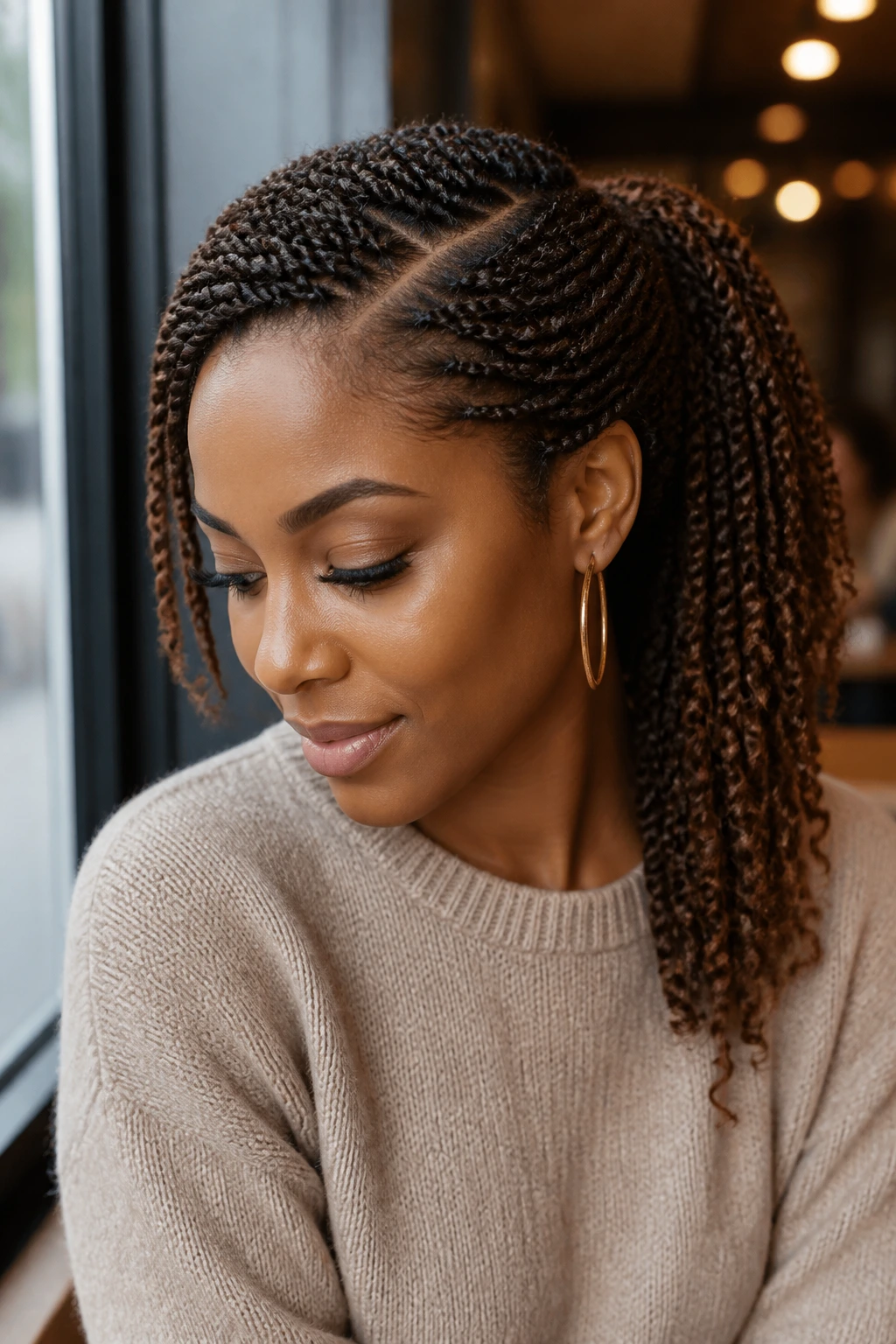
A side part changes the whole story of a ponytail. Compared with a center part, it gives textured hair a longer line across the forehead and a softer fall through the crown. That makes the twist ponytail feel less rigid and a little more intentional, even when the rest of the style is simple.
I reach for a side part when the hair has a lot of volume at the roots. A center part can split that volume too evenly and make the style look narrow. A side part shifts the weight, which creates lift where you want it and softness where you need it. It also flatters layered cuts because the longer side can blend into the twist instead of sitting separately.
The part does need to be clean. Not sharp in a severe way, but clear enough that the twist has direction. I like a rat-tail comb for this, then a small pass of gel along the part line if the roots are frizzy. After that, the ponytail can stay touchably textured.
This one looks especially good when the ends are left loose and a little airy. The part gives structure, and the texture gives life. That’s the whole partnership.
10. Mohawk Twist Ponytail

If you want height without a full updo, the mohawk twist ponytail is the move. It draws the eye straight down the center of the head, which makes textured hair look powerful without needing a lot of extra styling. The sides stay sleek or braided close to the scalp, and the center section carries all the volume.
This style is not subtle. That’s the point. It works because the contrast between the tight sides and the full middle makes the twist look bigger than it actually is. On coily hair, that ridge down the top can be gorgeous. On wavy hair, it gives the style a sharper outline.
Where to Place the Twists
The center line needs room to breathe. If the twists sit too far apart, the mohawk loses its shape. If they crowd the center, the style starts to look busy.
- Keep the side sections smooth and close to the scalp.
- Build the middle with one large twist or several smaller ones.
- Gather the ponytail at the back of the crown or mid-head.
- Pin the sides underneath instead of stacking clips on top.
A mohawk twist ponytail is one of those styles that can look polished or edgy depending on the finish. I’d keep the accessories minimal and let the structure do the talking.
11. Braided-Twist Ponytail Hybrid
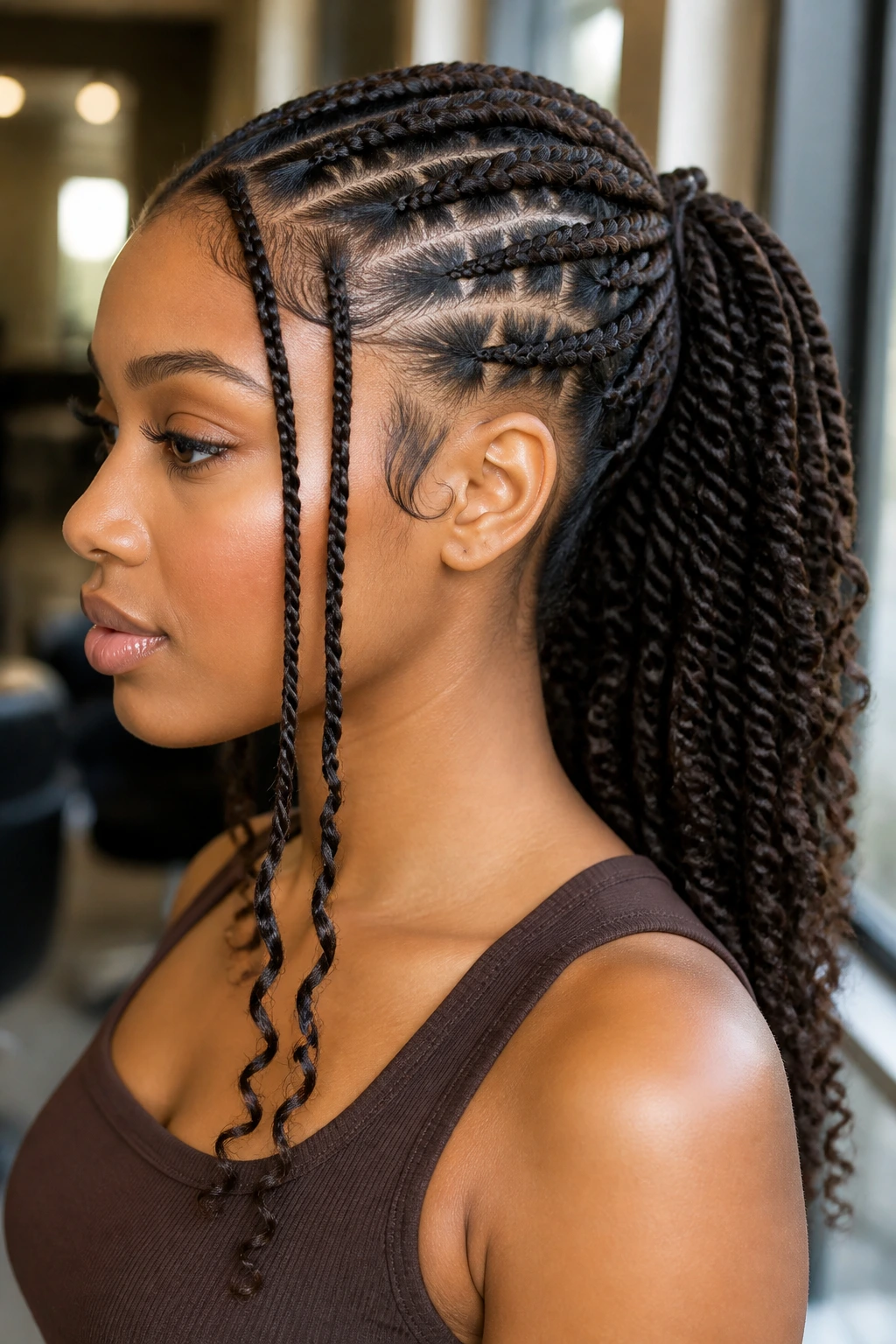
Why choose between braids and twists when both textures can live in the same style? A braided-twist ponytail hybrid gives you the grip of braids at the front and the softness of twists in the length. That makes it a smart option when your hair needs a little extra hold but you still want a touchable finish.
This style is especially useful if the hair at the front is shorter or prone to frizz. Braids anchor that area better, while the twist ponytail keeps the back from looking too severe. I like the mix because it avoids monotony. Pure braids can feel tight. Pure twists can feel loose. Put them together and the balance improves.
You can keep the braids narrow and neat, then let the twist ponytail gather more volume at the back. Or reverse it. Use thick front braids and a slimmer twist ponytail if you want the style to read bold from the front but softer from behind. The choice changes the mood a lot.
A tiny detail matters here: match the braid thickness to the twist thickness. If the front plaits are tiny and the ponytail is huge, the style can feel disconnected. Keep the proportions in the same neighborhood and it all makes more sense.
12. Faux-Loc Twist Ponytail
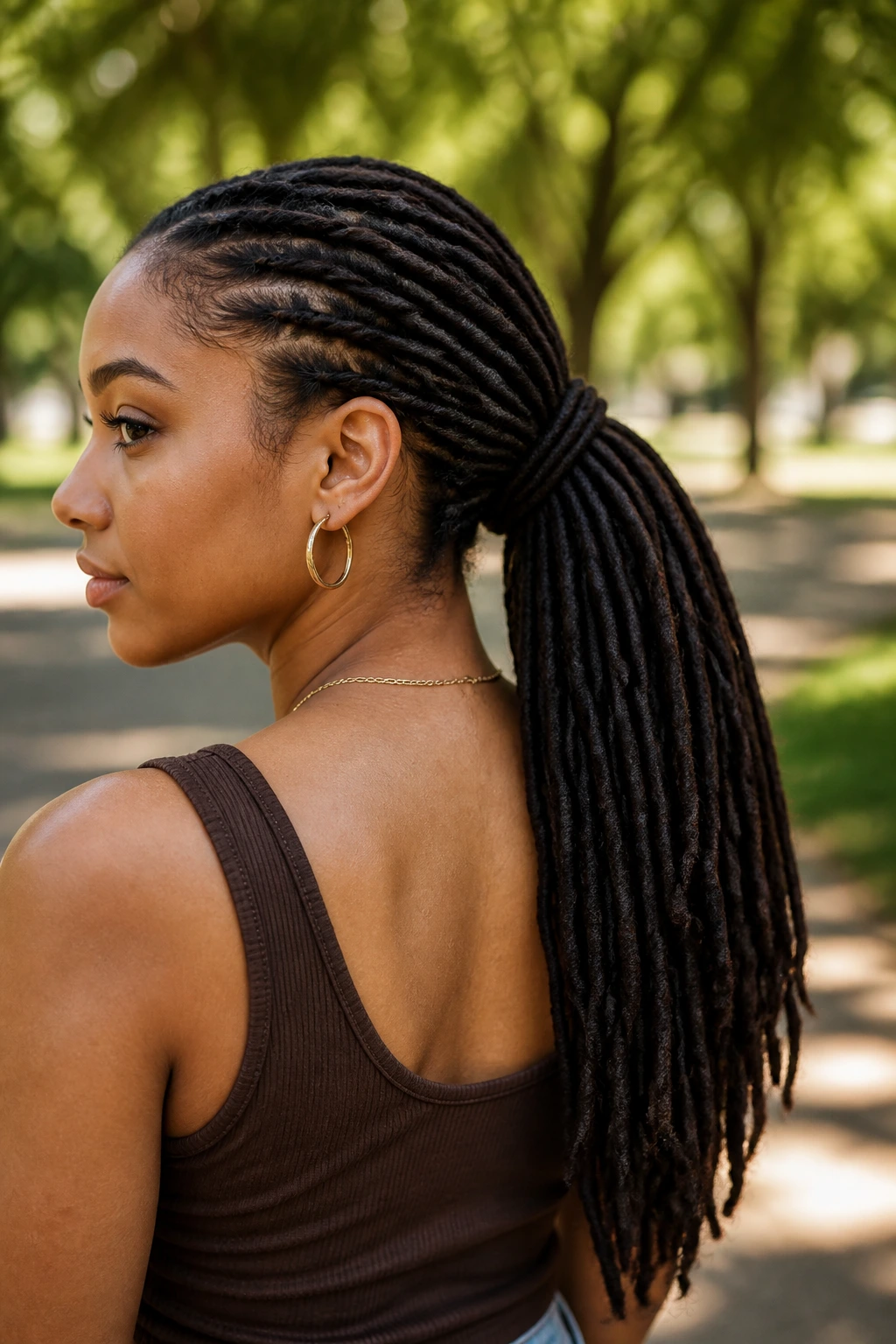
Faux locs already carry weight, so the ponytail has to respect that. A faux-loc twist ponytail works best when the base is steady and the ponytail hangs low enough that the locs can move without yanking the scalp. If you pull them too high, the whole style starts fighting gravity.
I like this look when you want length and texture in one shot. The loc texture gives you a rougher, more dimensional surface than a smooth twist, and that makes the ponytail feel rich without needing much else. You do not need much shine here. A little sheen on the base is enough.
There’s also a practical side. Faux locs can get heavy, fast. A mid-back or nape-level ponytail spreads the load better than a crown-high one, and that matters if you want the style to last through a full day. Use a strong elastic, then pin the first few locs close to the base so the ponytail doesn’t sag.
I would skip heavy accessories with this one. The texture already does a lot. A single cuff or one wrapped strand can be enough, and anything beyond that starts to feel crowded.
13. Double-Pony Twist Stack
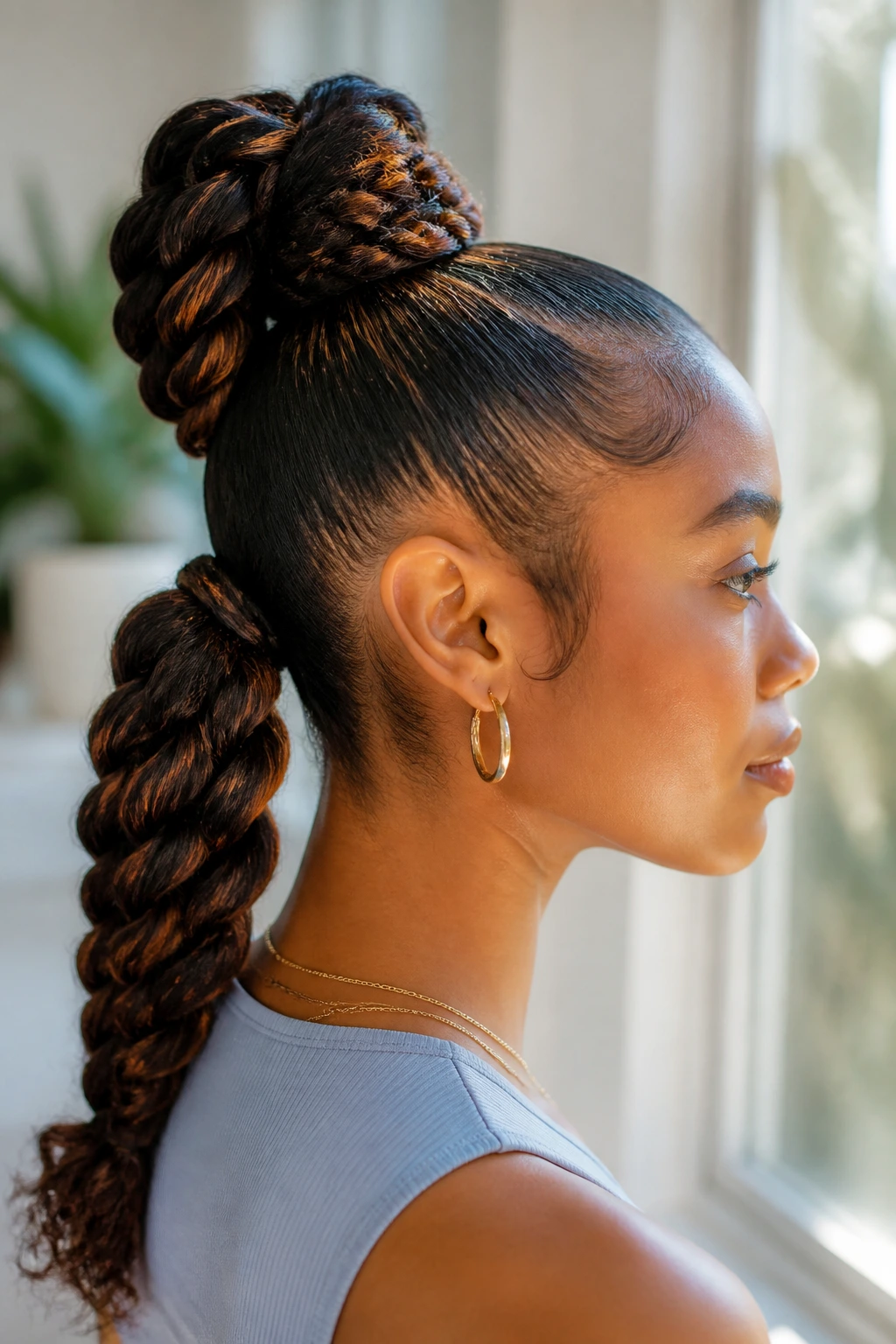
Two ponytails can make textured hair look longer and more sculpted than one big gather. The double-pony twist stack uses a top ponytail and a lower ponytail, spaced a few inches apart, so the eye reads more length and less bulk. It’s a clever trick, especially when your hair is thick enough that one ponytail wants to puff outward.
The style works because the top pony creates lift while the lower one keeps the shape from collapsing. Each section can be twisted before it’s secured, which gives the whole stack a cleaner line. If your hair is layered, this also helps shorter pieces blend in instead of falling out around the base.
The Spacing Matters
A cramped stack looks accidental. A well-spaced one looks designed.
- Keep 2 to 3 inches between the two ponytail bases.
- Let the top pony carry more volume.
- Make the lower pony a little tighter so it supports the shape.
- Use matching elastics so the eye stays on the twist, not the hardware.
This is one of the more playful styles in the group, but it still has structure. I like it for long days when you want texture and shape to survive more than one errand.
14. Twist Ponytail With Beads or Cuffs
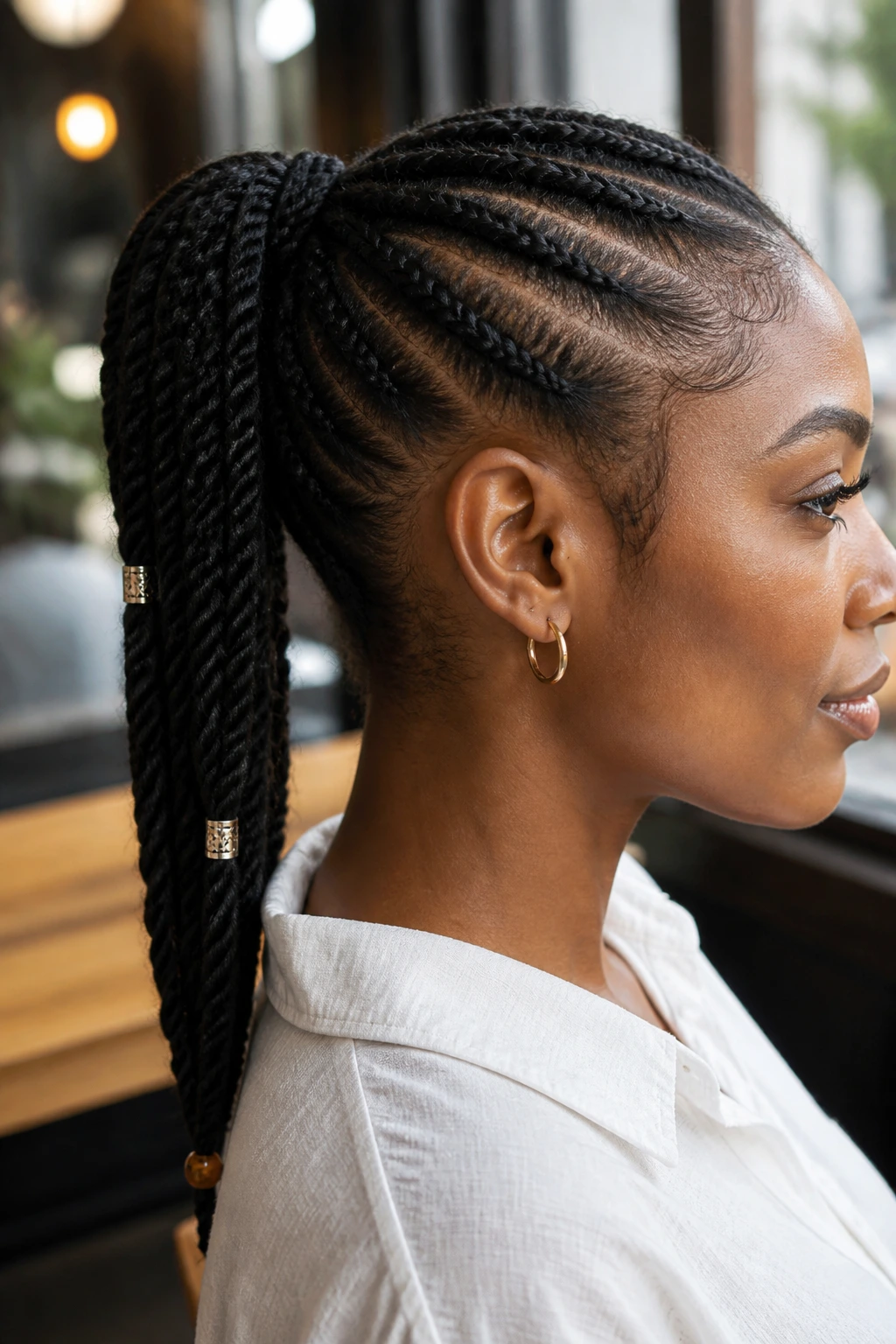
Accessories change the whole mood of a twist ponytail. Add a few beads or metal cuffs, and suddenly the style feels more styled, more personal, more finished. The key is restraint. One or two well-placed accents usually look better than a pile of them.
Beads work best on the loose ends of the ponytail or at the tips of the twists, where they can move a little. Cuffs sit nicely on the twist itself and catch the eye without weighing the hair down. If the ponytail is already thick, I’d keep the accessories small. Big pieces can make the style drag and can be annoying against the neck.
A plain twist ponytail says neat. A beaded or cuffed version says you thought about it. That’s the whole difference. For events, the extra detail helps the style photograph well without needing a full updo. For daily wear, one cuff near the base is enough to make the look feel intentional.
Do not overdo the metal on fine hair. It can slide. And if the hair is soft or freshly moisturized, check that the cuffs close firmly so they do not drift down the length by lunchtime.
15. Stretch-and-Twist Ponytail for Natural Hair
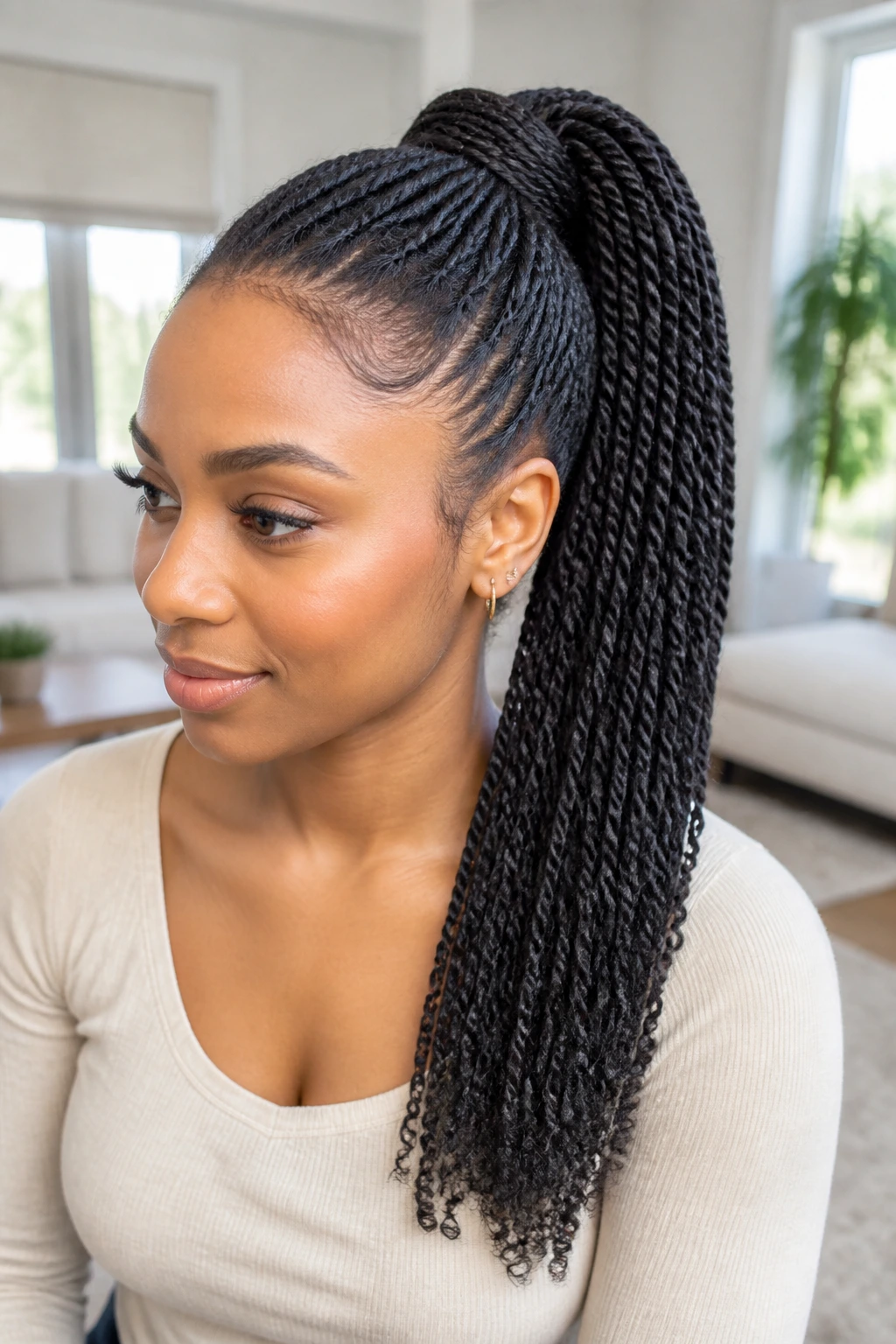
How do you keep shrinkage from swallowing the style? You stretch first. A stretch-and-twist ponytail for natural hair gives you more visible length, a smoother base, and a cleaner ponytail shape without making the hair feel pressed flat. That matters when your texture is full and springy, because shrinkage can make a good style disappear.
I like stretching with banding, braiding, or a gentle blow-dry on low heat if that fits your routine. The goal is not straight hair. The goal is controlled hair. Once the hair is stretched, the twist ponytail sits more evenly and holds its shape longer. You also get less bulk at the base, which makes the ponytail easier to secure.
This style is one of the most useful protective options in the bunch. The hair keeps some of its natural body, but the ends are tucked into a shape that lowers daily handling. If your hair tangles easily, that alone can make the style worth doing. Less touching means less friction.
A little leave-in and a little oil on the ends can help, but don’t drown the hair in product. Too much softness makes the twist slip. You want pliable, not slippery.
16. Low Nape Twist Ponytail With Tucked Ends

At the nape, this style feels calm. The neck stays cool, the ponytail sits close to the head, and the tucked ends keep the whole look from fraying out by the afternoon. A low nape twist ponytail is one of the easiest ways to make textured hair look polished without pushing the scalp too hard.
This is the version I reach for when I want the ends out of the way. Twist the lengths, fold or coil them under, then pin them so the silhouette stays compact. The shape is neat, but not stiff. It has enough softness to work for workdays, dinners, or any moment when you want your hair to stay put without making a scene.
How to Tuck the Ends Without Bulk
The trick is to flatten the fold before you pin it. If the ends stay round and puffy, the back of the style grows bulky fast.
- Smooth the lengths with a light cream before twisting.
- Fold the twist inward at the nape instead of rolling it into a tight knot.
- Use 2 to 4 bobby pins, placed in a crisscross if the hair is heavy.
- Mist with a light holding spray and let it set for 5 to 10 minutes.
I like this style because it respects the natural texture but still keeps the neck clear. That’s a useful combination, and not every protective style manages it.
17. Oversized Twist Ponytail for Long Hair

If your hair is long, do not fight the length. An oversized twist ponytail lets the length become the point, which is refreshing when so many styles try to compress textured hair into something smaller. One thick twist or a pair of wide twists gathered into a long ponytail can look rich without needing much decoration.
This style thrives on weight. Long hair drapes better when it’s not split into too many tiny sections, and an oversized twist keeps the line smooth from base to end. If you’re using extensions, this is where the blend matters. The added hair should match the density of your own length closely enough that the ponytail doesn’t feel like it starts wearing a wig halfway down.
A lot of people over-style long textured hair because they think more detail will look better. Usually, it doesn’t. The length itself is already doing something. Give it a clean twist, secure the base well, and stop before the style gets busy.
One practical note: heavy ponytails need a base that can handle the load. A strong elastic, a second anchor underneath, and a few hidden pins can save you from constant readjusting. Long hair looks best when it can move freely without threatening to slide out.
18. Soft Twist Ponytail for Low-Key Days
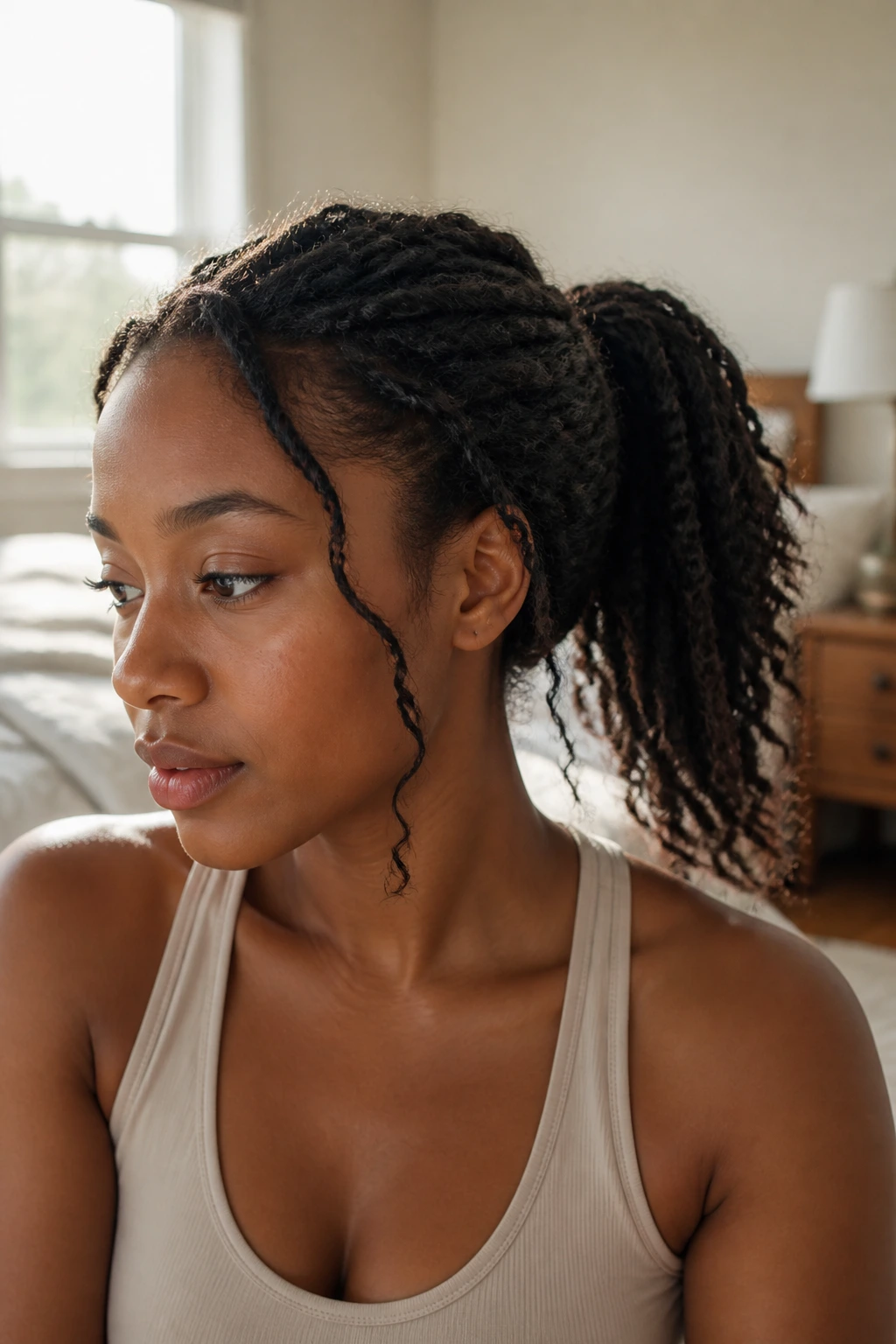
Not every ponytail needs to make a statement. A soft twist ponytail for low-key days keeps the texture visible, but it avoids hard lines, sharp parts, and heavy accessories. That makes it the style you reach for when you want your hair to look cared for without announcing itself from across the room.
I like this one because it feels honest. The twist is loose enough to keep the hair comfortable, the base sits low enough to avoid tension, and the ends can stay a little fluffy instead of being forced into submission. If your hair likes to shrink, even better. Let some of that body stay in the finish.
This is also the style that survives real life well. Errands, desk work, a long drive, dinner later — it handles all of that without needing constant fixes. A satin scrunchie helps. So does finger-smoothing the roots instead of brushing the life out of the texture.
If there is one thing I’d steal from this whole list, it’s the idea that a twist ponytail should look like your hair had a plan. Not a perfect plan. A believable one. That’s where the good styles live.
