



Short braid styles have a reputation for being easy. That is usually a lie.
On short hair, the braid has nowhere to hide. Every part line shows. Every bump shows. Even the way you tuck the ends matters, because a polished style on a bob or cropped cut depends on shape, not length. That is why some braids look neat and finished while others look like they fought the mirror and lost.
A good short braid style does one of three things: it keeps the hair close to the head, it uses the cut’s natural layers on purpose, or it finishes the ends so the style looks intentional from every angle. Clean parting helps. So does a little grip at the roots. And yes, a rat-tail comb, a few duckbill clips, and a light styling foam can save you a lot of bad mornings.
1. Side-Swept French Braid That Softens a Short Cut

A side-swept French braid is the quickest way to make short hair look deliberate. It pulls the eye along one clean line instead of letting shorter layers scatter in every direction, which is why it works so well on bobs, grown-out pixies, and chin-length cuts.
Why It Reads So Cleanly
The braid starts at the front and travels diagonally, so it feels tailored rather than fussy. That diagonal line also gives the face a softer frame, which is handy when your haircut is sharp or blunt at the ends.
It helps to keep the first section narrow — about 1 to 1.5 inches wide at the temple — so the braid sits close to the head. If you grab too much hair at the start, the braid gets bulky fast and the whole style loses that neat, sleek look.
- Best on hair that reaches the cheekbone, jaw, or collarbone.
- Easier to grip on second-day hair than freshly washed hair.
- Tucks short layers better than a simple three-strand braid.
- Finishes well with a clear elastic and one hidden bobby pin.
My favorite part: this style looks polished even when the braid itself is tiny. Tiny can be better.
2. Twin Dutch Braids That Keep Short Hair Tight at the Root
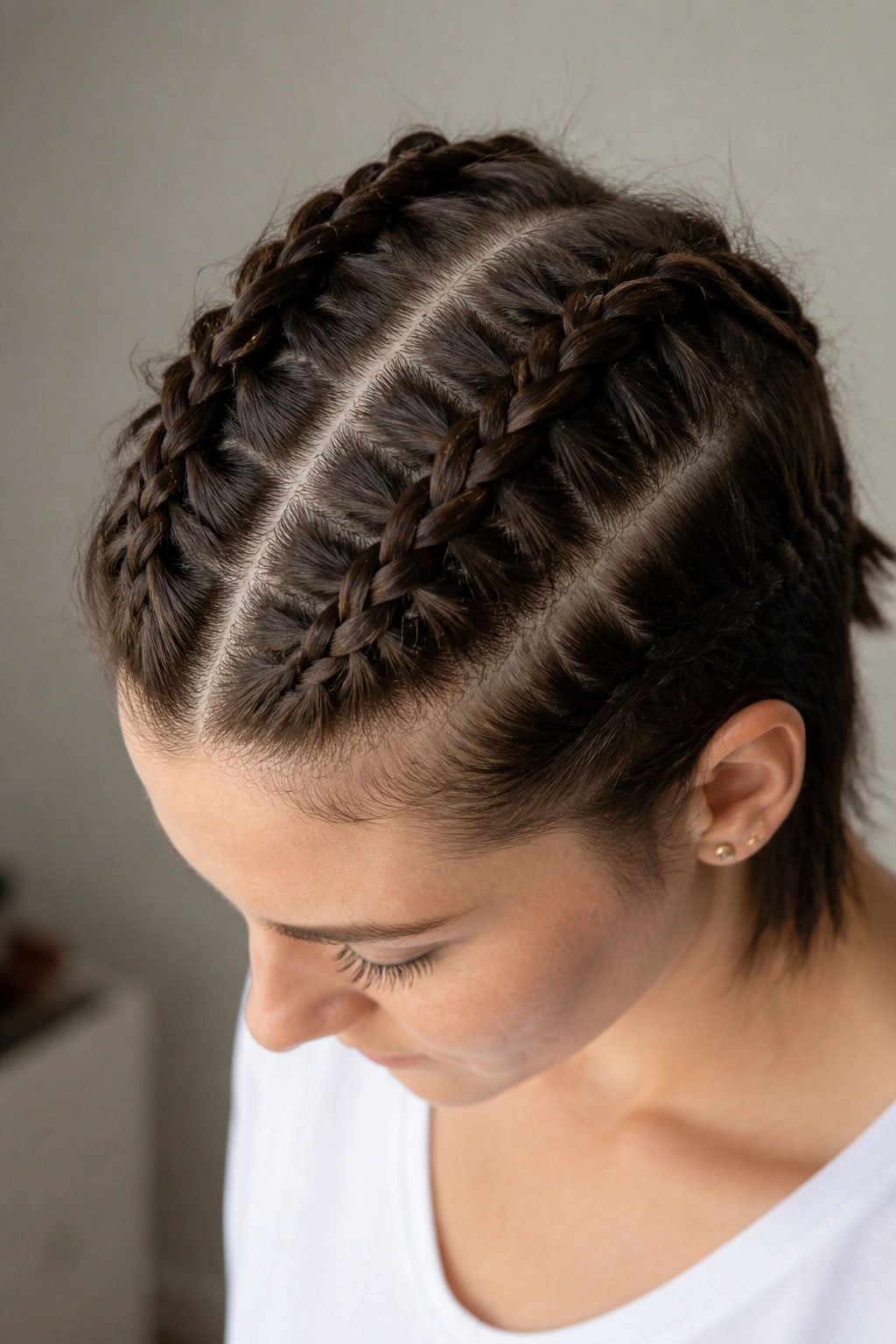
Why do twin Dutch braids look so crisp on short hair? Because the braid sits on top of the hair instead of sinking into it. That raised shape gives the style a clean, graphic look, and it also gives short layers a job instead of letting them stick out randomly.
On a short cut, the trick is to braid close to the scalp and keep the sections even from front to back. If your hair stops before the nape, just braid until you run out of length, then pin the ends flat or secure them with tiny elastics. No one needs a dangling mess at the base of an otherwise tidy style.
I like this look when hair feels a little too soft to cooperate. It has structure. It has symmetry. And when the two braids mirror each other, the whole style reads neat from the front, side, and back, which is rare for short hair.
If your hair is very fine, a bit of mousse before parting helps the braid hold its shape. If it’s thick or coily, a light gel along the part keeps the lines clean. Either way, the braid should feel firm, not yanked.
3. Halo Braid That Wraps the Hairline Cleanly

A halo braid is one of those styles that makes short hair look calmer in the best way. It circles the head like a frame, which means the focus goes to the shape of the braid and the face, not to every little flyaway near the temples.
Picture this: you have a dinner, a work presentation, or a day when your fringe will not sit still. A halo braid solves the problem without asking for a lot of length. Short layers can be folded into the braid as you move around the crown, and the ends can disappear under the back section with a few discreet pins.
Where It Sits Best
The sweet spot is usually just above the ears and around the hairline. Too high, and the braid looks floaty. Too low, and it starts to feel heavy on the neck. I prefer it sitting close enough to the scalp that you can still see the shape of the cut underneath.
Handling Short Layers
Short layers are not a dealbreaker here. They are just a little stubborn. Smooth them down with a light styling cream before braiding, and keep a few extra pins on hand for the back where the braid meets itself. The finished look should feel snug, not puffy.
One clean pin placement can save the whole thing.
4. Straight-Back Cornrows That Stay Neat All Day
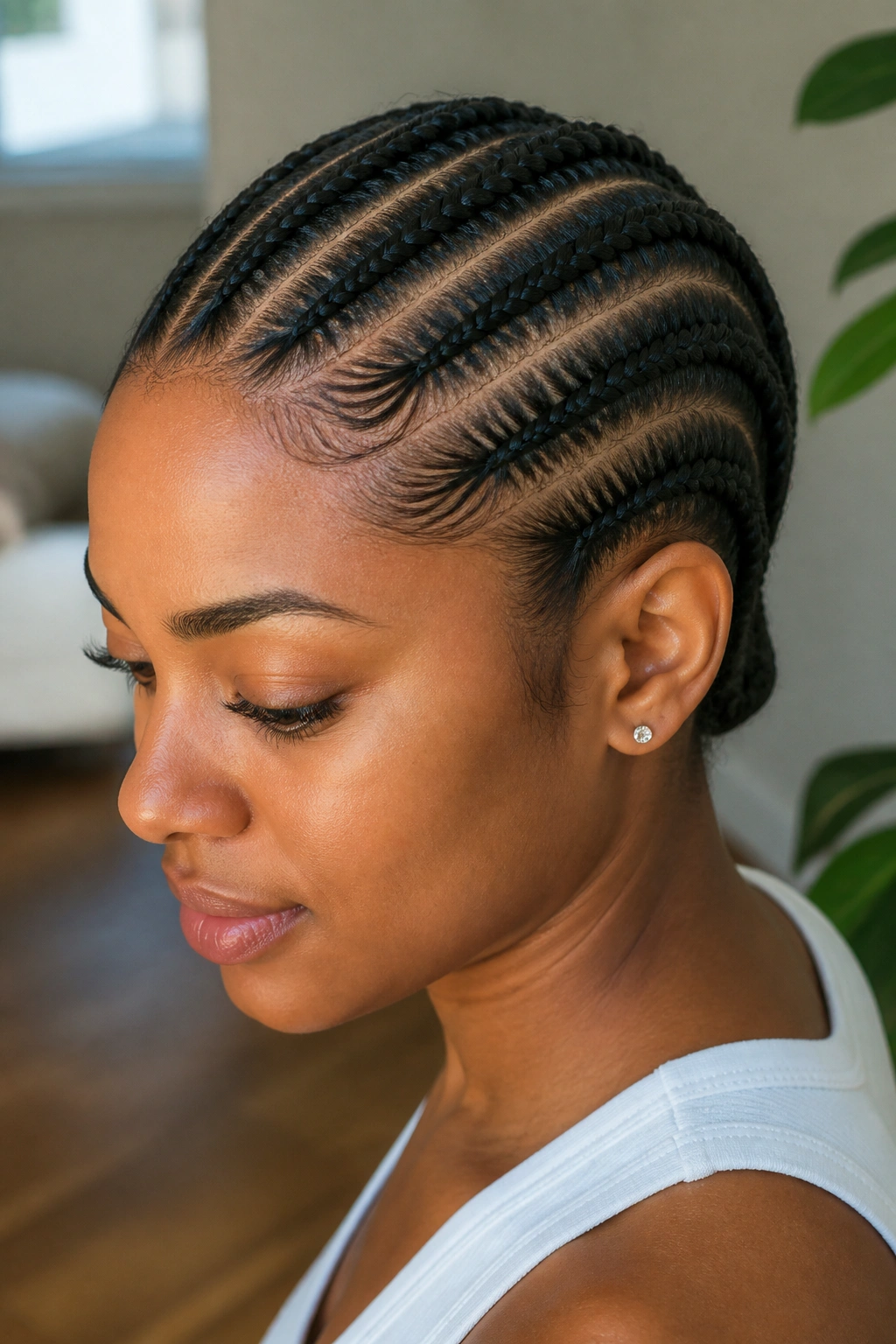
If you want the cleanest line in the whole list, straight-back cornrows are it. They hold the hair close to the scalp, show off a sharp part, and stay tidy under hats, scarves, or a hood when the weather gets annoying.
The style looks especially good on short hair because there is less bulk to manage. That means the braid pattern reads clearly, and the shape of the head becomes part of the look instead of fighting it.
A few details matter here:
- Make each part small and even, usually around 0.25 to 0.5 inch wide.
- Keep the braid flat at the root so it hugs the scalp.
- Use a light gel or edge control only where needed; too much product makes the hair look greasy.
- Finish with a dab of oil on the scalp, not the braid itself.
The biggest mistake is pulling too tight at the temples. Don’t do that. The braid should look secure, not angry. Short hair already has enough tension around the hairline without adding more.
5. Braided Headband Style for Pixies and Bobs
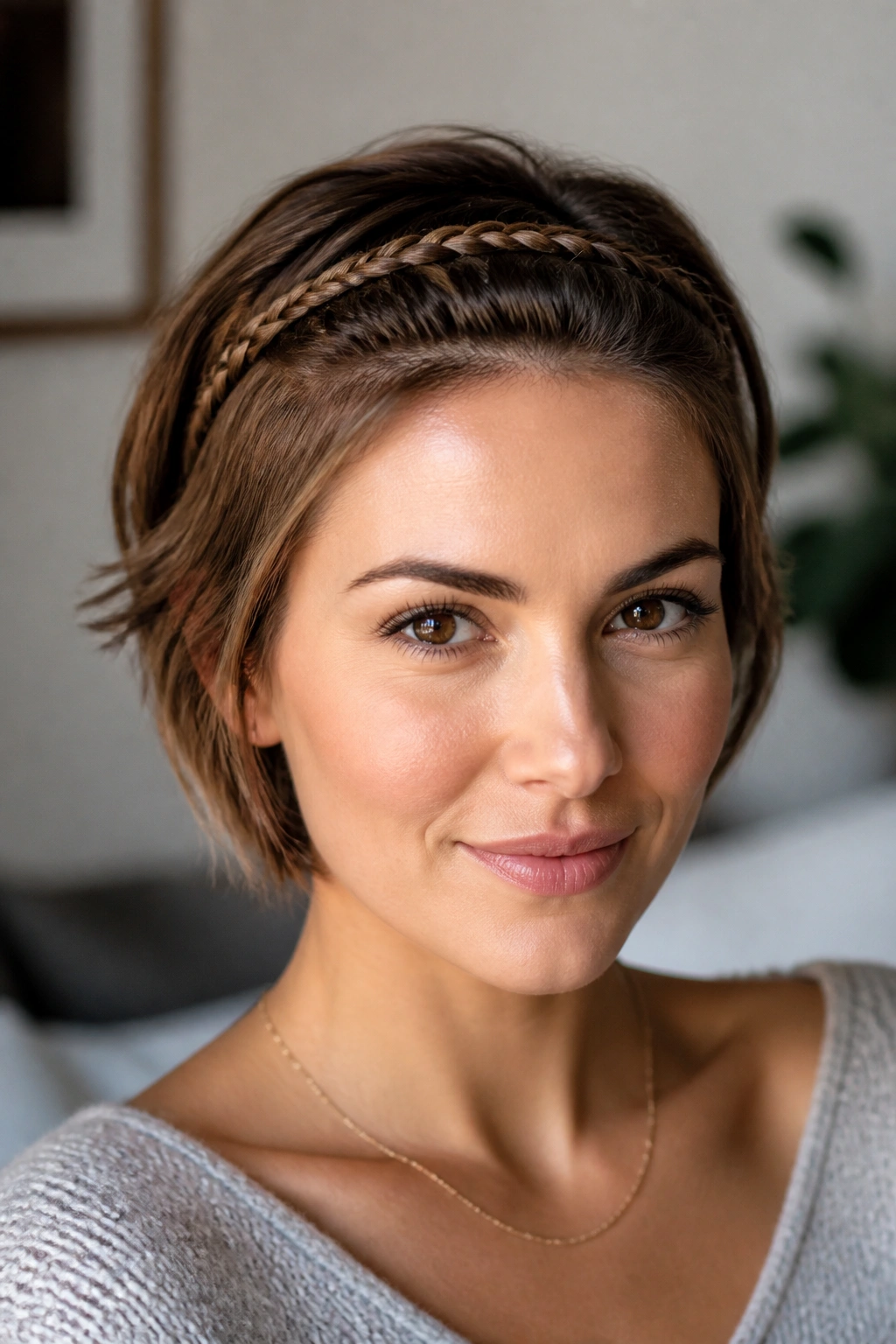
Can a braid look finished when there’s not much hair to work with? Absolutely. The braided headband style is proof, and it’s one of my favorite options for pixies, bobs, and layered crops that need a fast, polished fix.
The idea is simple: take a section from one temple, braid it across the front hairline, and pin it behind the opposite ear. The rest of the hair stays loose, which keeps the style from feeling heavy. That balance matters on short cuts, because too much braid can swallow the haircut.
It also happens to be a smart choice for grown-out bangs. Instead of fighting fringe that keeps splitting apart, you braid it into the front section and let the style hold it where it belongs. A little texture spray helps the section grip, but don’t drown the hair in product. You want hold, not stiffness.
This style looks best when the braid is snug and close to the forehead. If you leave it too loose, it starts to slide around by lunchtime. A couple of hidden pins behind the ear usually fix that. Quick. Clean. Done.
6. Waterfall Braid That Shows Off Layers
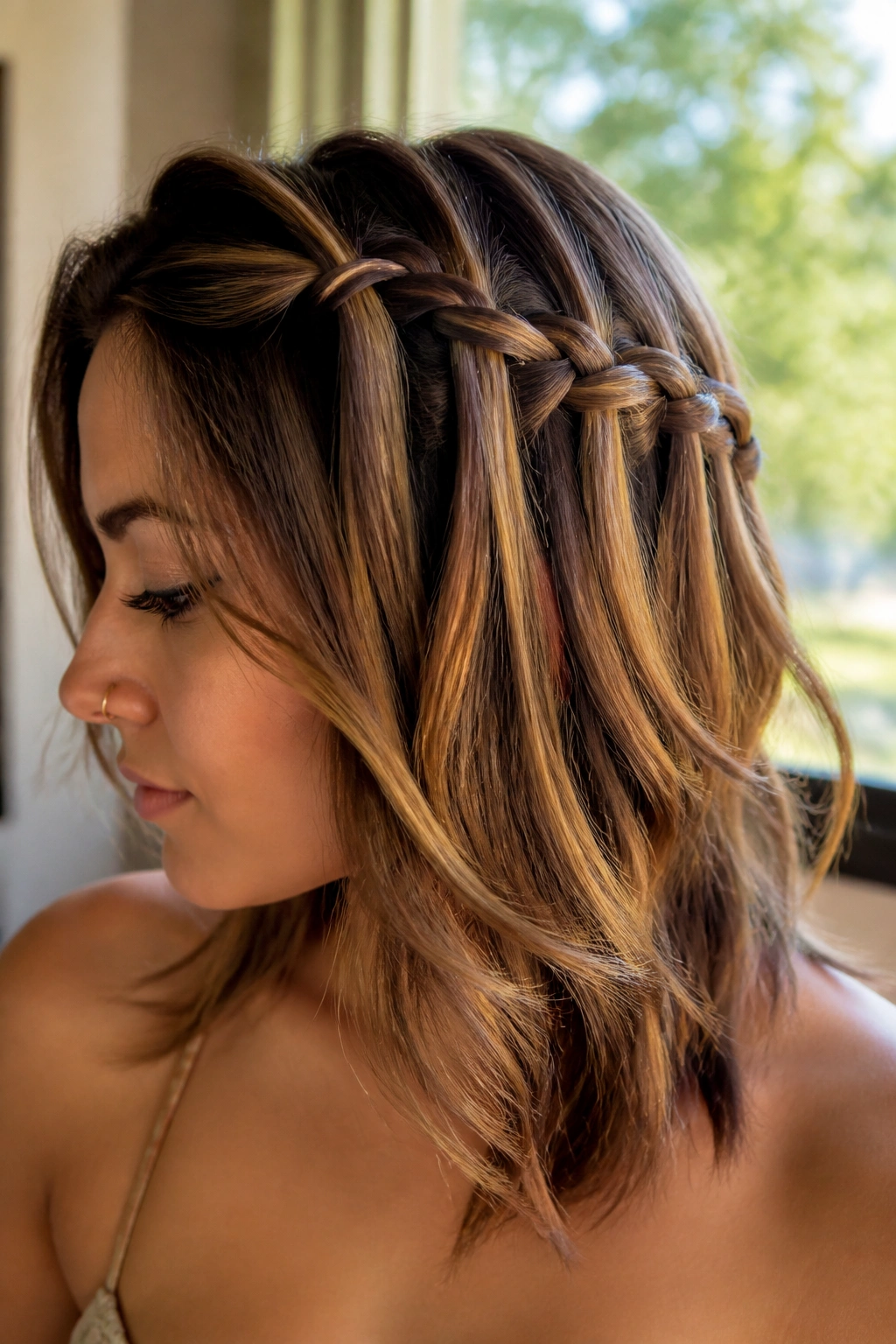
A waterfall braid earns its place on short hair because it lets the cut stay visible. Unlike a full braid that tucks everything away, a waterfall braid drops one strand through each step, so the style has movement and a little softness.
That makes it a smart choice for layered lobs and shoulder-grazing cuts. The shorter pieces can fall out on purpose instead of looking like mistakes, and that changes everything. On a blunt bob, the style feels sharper and more graphic. On a choppier cut, it feels gentler.
Why It Suits Shorter Lengths
Short hair often looks best when the braid doesn’t try to force every strand into submission. A waterfall braid is built for that. It gives you the braid line without demanding perfect length all the way through.
When to Skip It
Very slick hair can make this one slip. So can ultra-thick products that make the strands too slippery to hold. If your hair is layered but fine, use a light mousse first and keep the braid tight enough to stay put.
I like this style for days when you want the braid to feel decorative, not heavy.
7. Crown Braid into a Low Bun for Events and Weddings
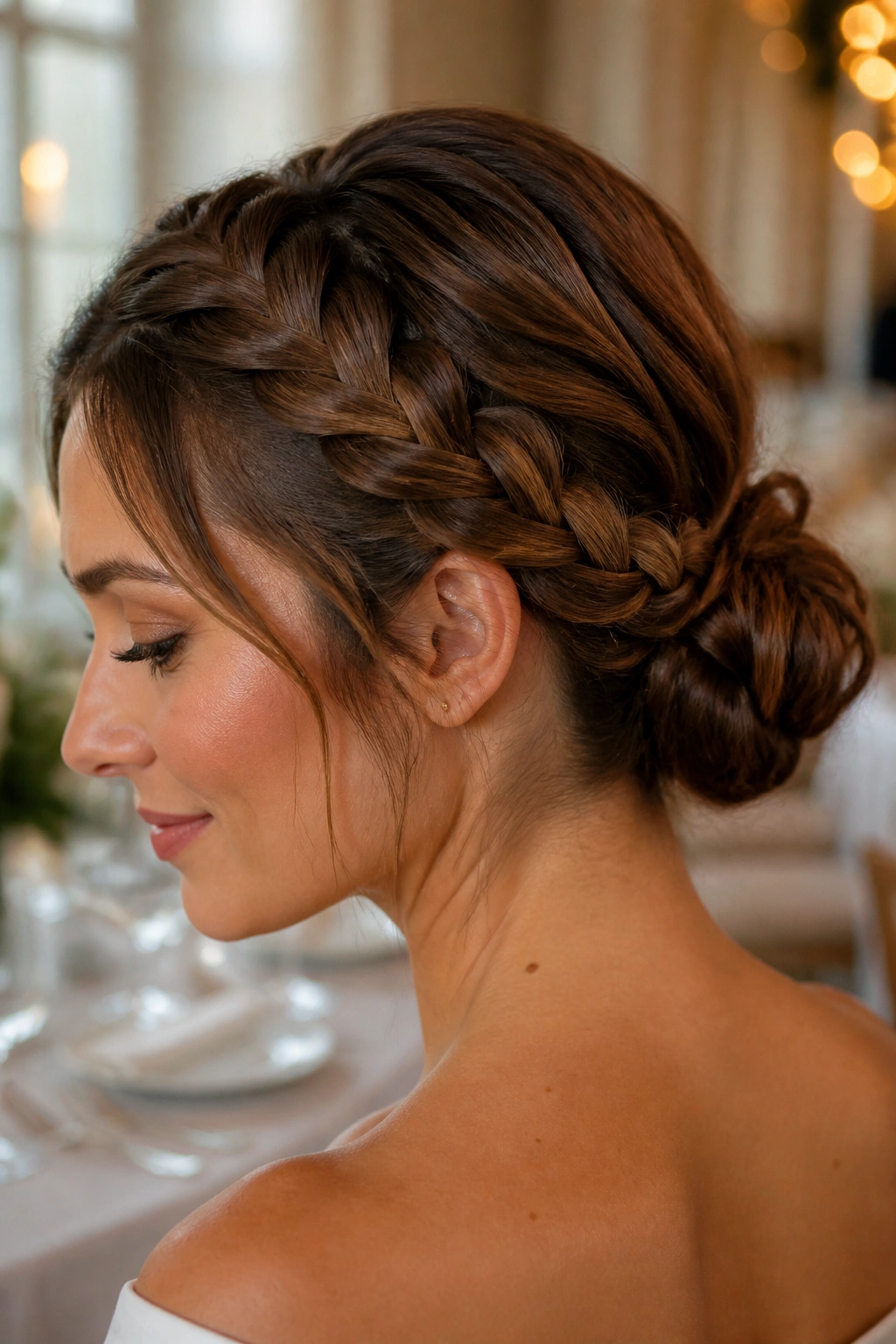
The low bun matters as much as the braid. If you’re wearing a crown braid on short hair, that bun at the nape is what keeps the whole style from looking unfinished, and it’s the part people often rush.
Start the braid at one temple and work it around the head like a half halo. When you reach the other side, gather the remaining length into a low bun, twist, or compact knot at the nape. Small U-pins are better than giant pins here; they disappear easier and hold the shape without making the back look stuffed.
This is the kind of style that likes a little shine mist at the very end. Not a lot. Just enough to smooth the surface and keep the braid line looking clean under indoor light. A few loose face pieces can soften the front, but keep them controlled. The whole point is elegance, not wind-tunnel drama.
I’d choose this for a formal event, a gallery opening, or any day when you want your short hair to look as though someone took time with it. Because someone did.
8. Short Box Braids in a Bob Shape
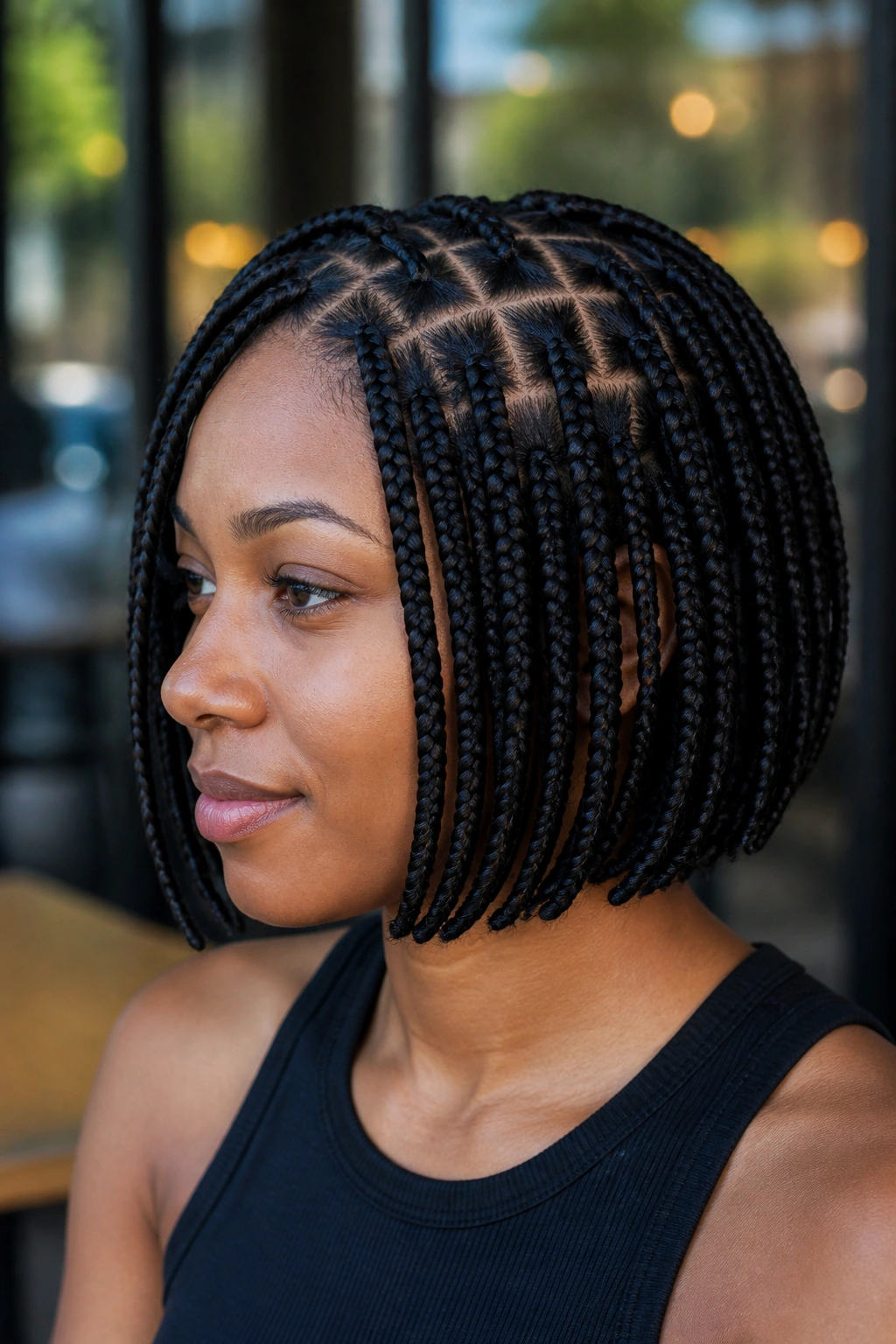
Short box braids in a bob shape do a lot of work for you. The cut and the braid support each other, so the style looks finished even when you throw on a plain T-shirt.
Parting Makes or Breaks It
Square parts give you a classic, tidy look. Brick parts soften the grid a little and make the bob feel less rigid. Either way, keep the sections even. Uneven parts are the fastest way to make short box braids look sloppy.
The best length for this style usually sits around the jaw or just below the chin, though collarbone length works too if you want a little swing. I would avoid making the braids too heavy. On short hair, too much extension weight pulls the whole shape down and makes the bob lose its bounce.
- Best for natural hair that needs a protective style with structure.
- Looks neat with or without beads.
- Easier to wear under scarves than longer braids.
- Good choice when you want a style that stays put for days.
The parting is the quiet star here. If the grid is clean, the whole style reads polished before anyone notices the braid ends.
9. Feed-In Stitch Braids with a Sleek Finish
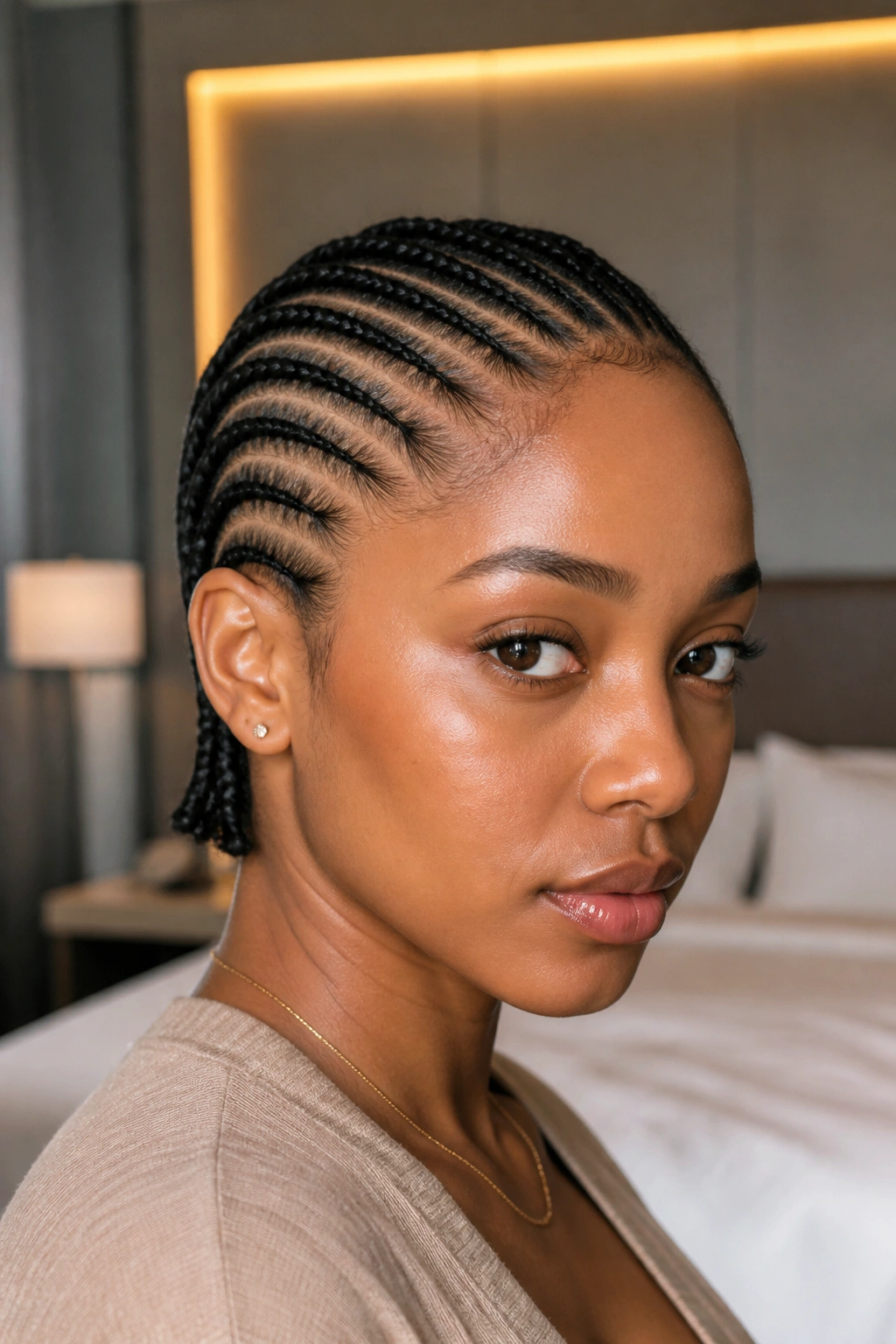
Feed-in stitch braids are for people who like a cleaner line than chunky braids give. The braid starts small at the hairline, then builds gradually, which keeps the front looking soft while the rest stays sleek and tight.
That taper matters on short hair. A braid that starts too thick can overwhelm the cut, especially if the hair is close to the scalp or tapered at the sides. Feed-in braids solve that by giving the style a smooth start and a more tailored finish.
I also like the stitch pattern for short hair because the sections can stay visible without feeling busy. The parting becomes part of the design. That is a good thing when the hair is short, because the braid needs to do more visual work on less length.
If you wear glasses, this is a smart style. It sits close to the head, doesn’t fight the frames, and keeps the sides tidy. The whole thing reads neat without trying too hard, which is exactly what short hair usually wants.
10. Braided Ponytail with a Wrapped Base

The nape should feel snug, not scraped.
A braided ponytail with a wrapped base does that neat, pulled-together thing short hair sometimes struggles to deliver on its own. Start with a small braid or two along the front or sides, gather the hair low or mid-height, and wrap a thin strand around the elastic so the base disappears.
Details That Keep It Sharp
- Use a flat elastic that matches your hair color if possible.
- Keep the crown smooth before you tie it back.
- Wrap a 2-inch strand around the elastic and pin the end underneath.
- If the tail is short, curl the ends under or secure them with a small clip.
This style is especially good when the hair is long enough to gather but not long enough to feel dramatic. It keeps everything tidy and gives you one clean focal point at the back. I like it for busy days because it stays presentable even after a few hours of movement.
And if your ends are too short for a full ponytail? Fine. Pin them into a compact tail or use a small braid extension just at the base. That tiny adjustment can save the whole look.
11. Braided Faux Hawk That Adds Height Without Fuss
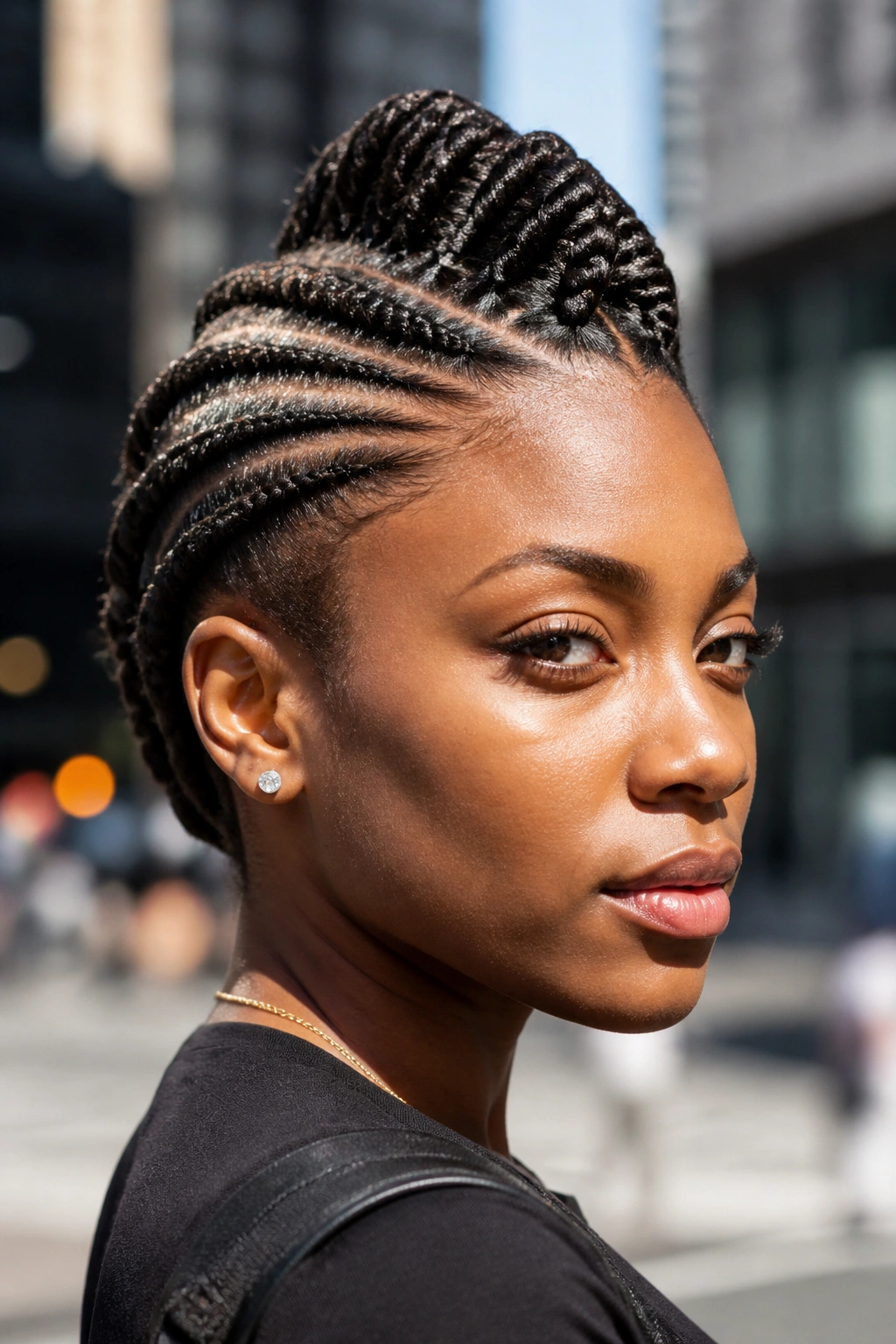
A braided faux hawk gives short hair attitude without needing extra length. The sides stay flat, the center gets all the lift, and the shape reads sharp from a distance.
Why does it work so well? Because the braid pulls the eye upward. That little ridge down the middle makes the hair look styled on purpose, even if the rest of your routine was plain. Short hair, especially curly or coily hair, often benefits from that kind of structure.
Best for Texture
This style is a gift for hair that already has some bend or volume. You can braid or twist the sides toward the center, then pin them so the middle section stands out. A touch of mousse at the roots helps keep the silhouette clean.
How to Keep the Sides Smooth
Brush the sides back with a soft brush and a small amount of gel, but don’t overdo it. The goal is smooth, not slicked to the point where the hairline looks stiff. A little softness near the temples keeps the look wearable.
I’d pick this when I want something short, tidy, and a little bolder than a standard braid.
12. Zigzag-Part Cornrows That Make the Pattern the Star

Straight parts are fine. Zigzag parts are better when you want the braid to feel finished.
The nice thing about zigzag-part cornrows is that the parting does half the styling work for you. On short hair, where the braids themselves may be small, the pattern in the scalp creates interest without needing extra length or ornament. The result feels precise and a little playful at the same time.
This style asks for patience at the start. You have to map the parts before you braid, and if the lines wander, the whole design gets messy. A rat-tail comb is the main tool here, and a mirror you can angle behind your head helps more than people admit. Short hair makes every part visible, so clean lines matter.
I like zigzag parts on cropped natural hair because the design stands out without crowding the head. It is one of those styles that looks more detailed than it is. The braid can stay simple. The parting does the heavy lifting, which is exactly where I like braid styles to be clever.
13. Braided Bangs That Tidy Up Grown-Out Fringe

Braided bangs can save a face-framing section that keeps falling in your eyes. They also keep short hair looking neat when the front pieces are the only part that won’t cooperate.
The style works by taking the fringe or front hairline section and braiding it across the forehead, then pinning it at the temple or tucking it behind the ear. It’s a small move, but it changes the whole mood of the haircut. Suddenly the face is open, the eyes are clear, and the front of the hair looks planned instead of accidental.
This is one of the best styles for grown-out bangs. Those in-between lengths are annoying. Too short to blend, too long to ignore. A small braid solves that problem without making you cut the fringe all over again.
Use tiny pins that match your hair color, and keep the braid close to the scalp so it doesn’t puff out. If the section is slippery, a little dry shampoo or texturizing spray gives it enough grip to behave. Simple fix. Big difference.
14. Crisscross Front Braids That Frame the Face

Picture a short bob, one side tucked, two thin braids crossing at the front like a small lattice. That is the whole appeal of crisscross front braids: they make the front of short hair look styled without asking for much length at all.
The look starts with two slim sections near the hairline. You braid or twist them separately, cross one over the other, and pin them so they sit snugly across the forehead or just above the temples. The rest of the hair can stay loose, tucked, or smoothed back depending on how clean you want the finish.
A few details help:
- Keep each front section narrow so the cross stays neat.
- Use small bobby pins that disappear into the hair.
- Smooth the roots before crossing so the pattern lies flat.
- Leave the rest of the hair simple; the front detail is enough.
I like this style for office days, brunch, or anytime you want the haircut to look more considered than usual. It frames the face without swallowing it, and that’s a rare balance on short hair.
15. Micro Braids with a Curved Side Part
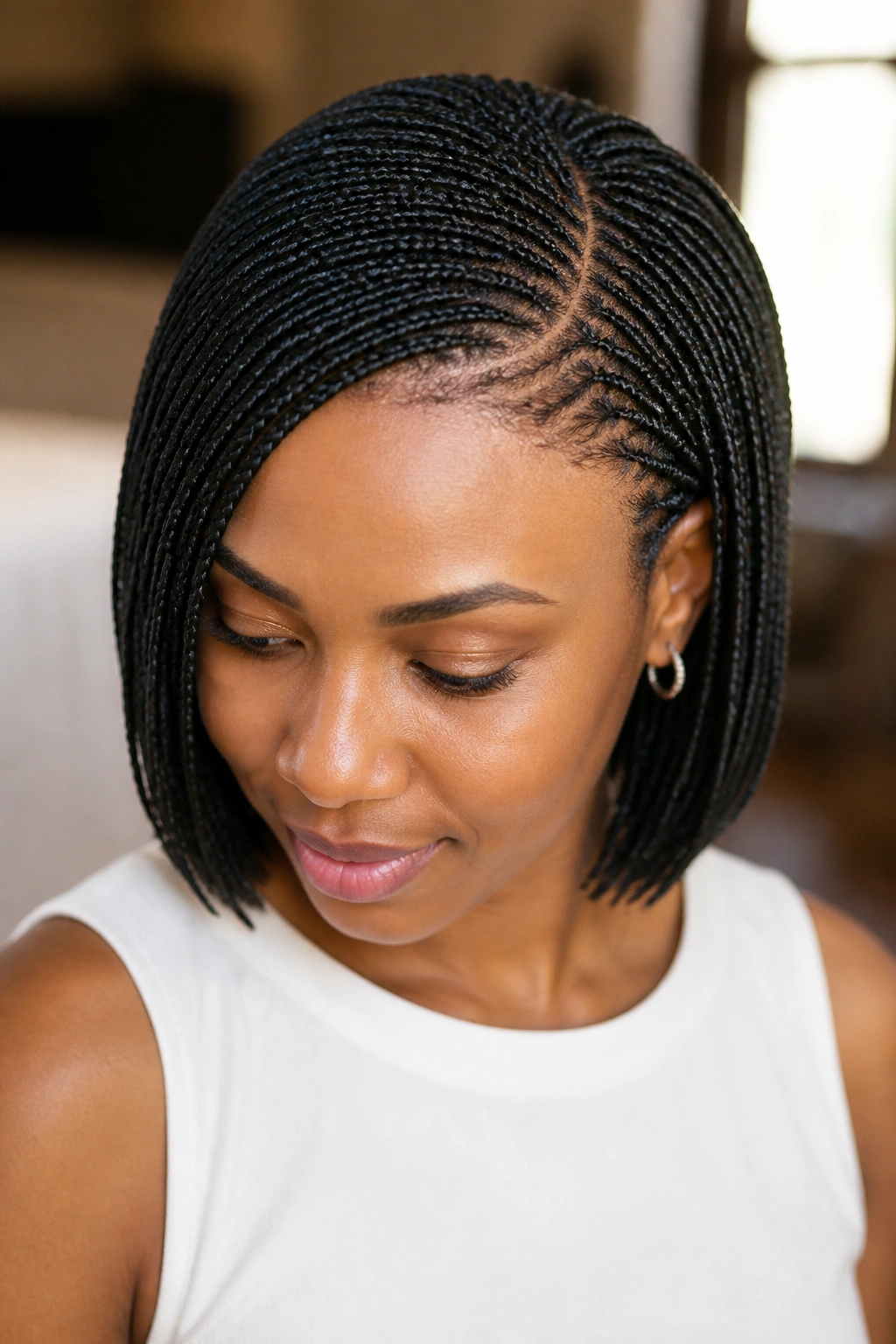
Micro braids with a curved side part are the longest-wear option here, and they reward patience. The curved part softens the whole look, while the tiny braids give short hair a smooth, full finish that reads polished from the first day onward.
Unlike a single statement braid, micro braids spread the texture evenly across the head. That means less visual bulk at any one point and more control over the overall shape. On short hair, that matters. Too much thickness in one spot can make the style tilt or puff out where you least want it.
This is also the style I’d choose when I want a protective option that still looks elegant. Keep the parts consistent, keep the tension gentle at the hairline, and make the curve of the part soft rather than severe. A hard side part can look sharp in a way that fights the rest of the style. A curved one feels easier on the eye.
If your hair is delicate, let a skilled braider handle this one. Small sections demand care, and short hair needs even more of it. When the part is smooth and the braids are the same size, the whole style has a quiet, finished look that holds up well for days.
