



Sometimes the haircut you want is the one that makes people look twice.
Not because it’s loud. Because it changes the shape of your face, your neck, your whole posture. If you’re hunting for edgy haircut ideas for women, the sweet spot usually isn’t a dramatic color or a huge chop — it’s a cut with a sharper line, a little imbalance, or a texture that looks a touch unruly on purpose.
That’s why some of the most interesting cuts are the ones that play with contrast. A blunt bob can feel harder than a layered one. A pixie with extra crown length can look tougher than a full buzz. A hidden undercut can change the whole mood of thick hair without shouting about it. Small change. Big attitude.
The trick is choosing a cut that fits your hair’s behavior instead of fighting it. Straight hair needs a different kind of edge than curls. Fine hair wants structure, not too many wispy layers. Thick hair often looks better when some weight gets removed under the surface — otherwise it can puff out like a triangle. The best cuts know that.
1. The Choppy Wolf Cut
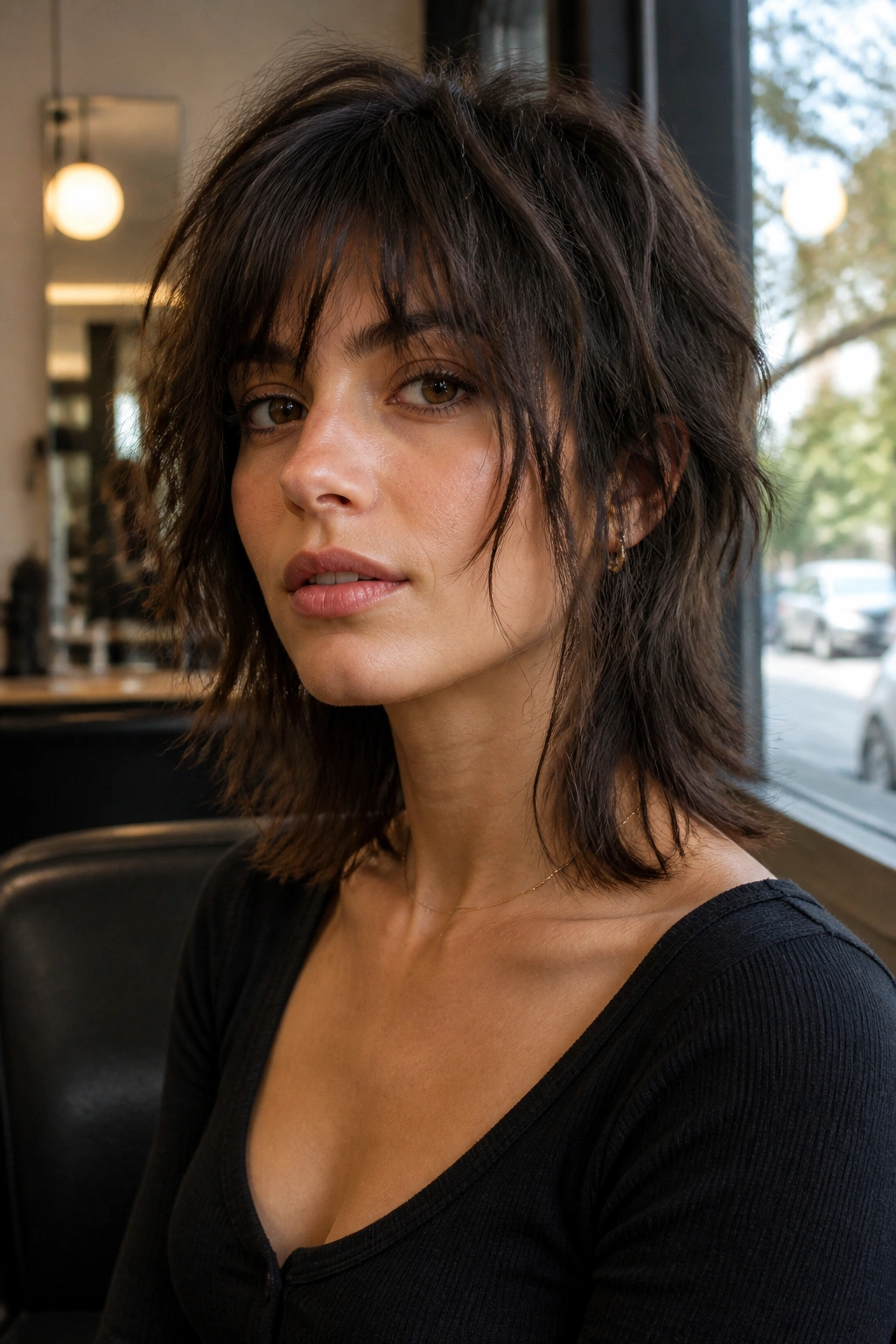
The wolf cut earns its place here because it looks a little wild even when it’s freshly styled. That’s the charm. It gives you short layers at the crown, a rougher shape through the sides, and ends that feel broken up instead of polished, which is exactly why it works so well for people who want movement without a ton of effort.
What to ask for at the salon
- Shorter crown layers that start a few inches down from the part
- Face-framing pieces that hit around the cheekbone or jaw
- Ends cut with point cutting, not a heavy blunt line
- A little softness around the perimeter so it doesn’t look like a helmet
The wolf cut is especially good on wavy hair, but straight hair can wear it too if you rough-dry it with a diffuser or a bit of salt spray. It’s one of those cuts that looks better with a slight mess. That’s not a flaw. That’s the point.
Best for: medium to thick hair, or anyone who wants volume without a round brush marathon.
Watch for: very fine hair can lose too much density if the layers go too high.
2. The Micro Bob That Skims the Jaw
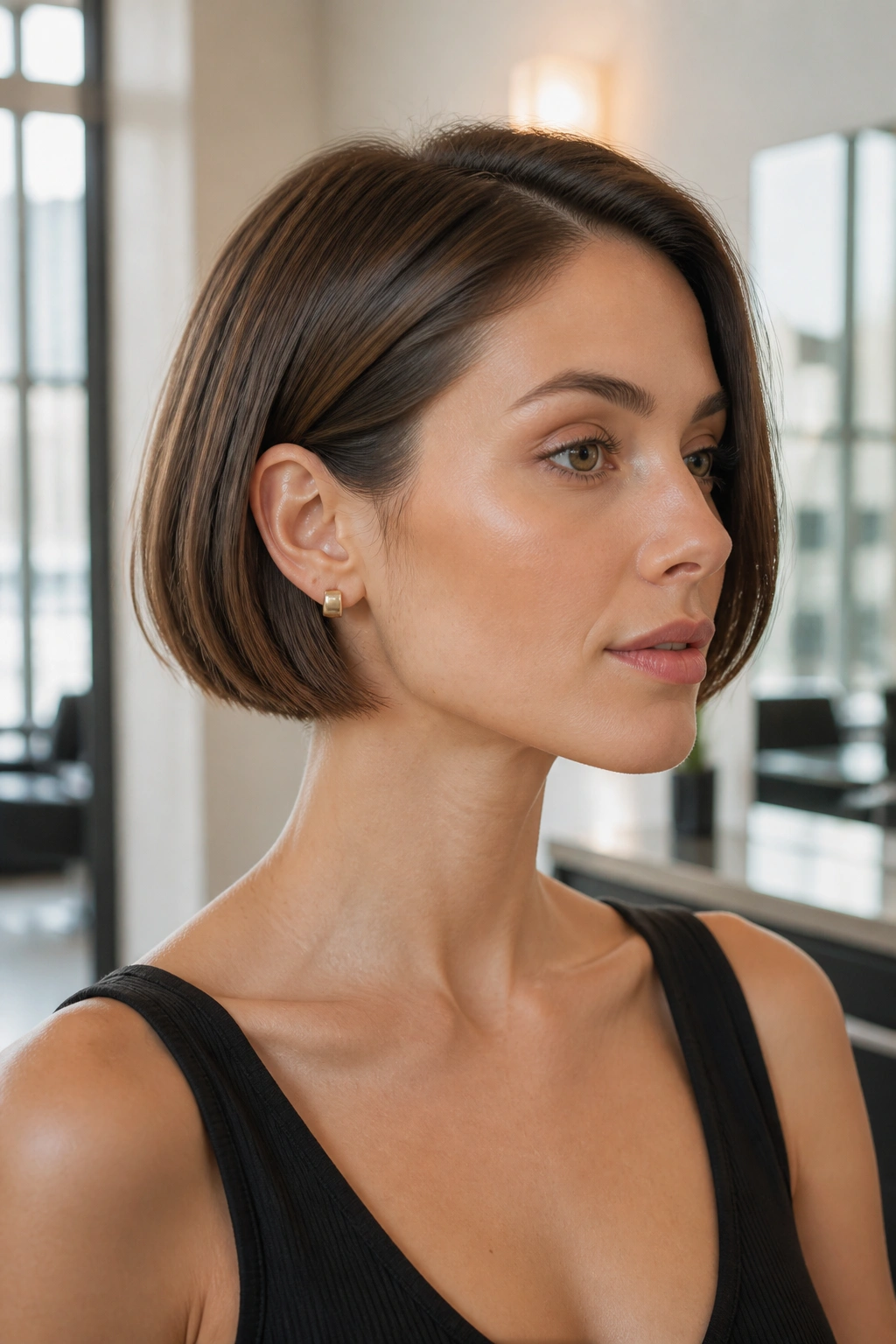
A micro bob is blunt, short, and a little bossy. I mean that in the nicest way. It lands around the jaw or just below it, which makes the whole face look more defined and gives the cut a crisp, almost architectural feel.
The line matters.
If you want this cut to feel edgy instead of sweet, keep the shape clean and resist the urge to soften every edge. A side part can make it feel cooler. So can a tucked-behind-the-ear finish with one sharp earring showing. It’s simple, but not boring.
This is one of the better options if your hair is straight or only slightly wavy. It also grows out in a way that still looks intentional, which is rare for short cuts. The only catch is maintenance. If you like a razor-straight outline, plan on trims every 4 to 6 weeks. Let it grow too long and the whole effect gets blurry.
3. A Pixie With Long Crown Layers

Want short hair without losing the chance to style it in different ways? A pixie with a long crown is the cut to look at.
Why the Crown Matters
The longer top keeps the cut from feeling flat or boyish in a generic way. You can push it forward, sweep it up, or rough it sideways with matte paste, and each version changes the mood. The sides stay tight, but the crown gives you that little burst of lift that makes the whole thing feel deliberate.
Ask for about 3 to 4 inches on top if your hair is fine, a touch more if it’s dense or hard to tuck into place. A soft taper at the sides keeps the cut close to the head without turning it severe. That balance matters.
How to Wear It
- Use a pea-sized amount of matte paste for piecey texture
- Blow-dry the top forward first if your roots fall flat
- Keep the fringe slightly uneven if you want a rougher finish
- Trim every 4 to 6 weeks to keep the silhouette clean
A pixie like this looks sharp on strong cheekbones, but it can flatter rounder faces too if the top has enough height. It’s tidy, but not safe. Good combination.
4. An Edgy Undercut That Keeps the Top Soft
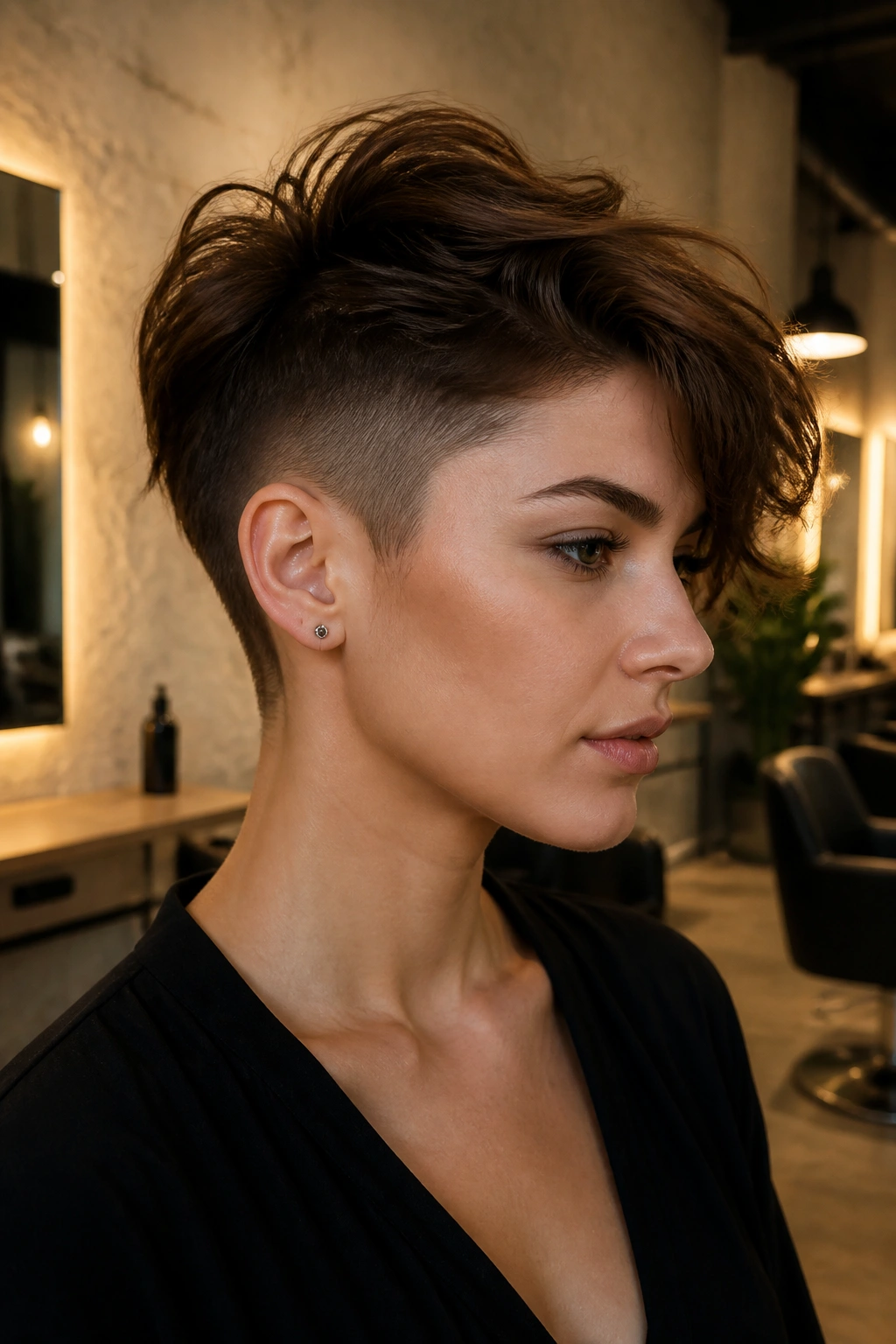
The undercut is one of those cuts people think is too bold until they realize how hidden it can be. Shave or clip the lower layers, leave the top soft, and suddenly thick hair stops trying to eat your shoulders.
Unlike a fully shaved style, this one gives you options. Wear the top down and nobody needs to know what’s underneath. Pull it back, and the hidden detail shows up fast. That contrast is the whole game — polished on top, rebellious below.
It’s a smart choice if your hair feels heavy around the neck or gets too hot in warm weather. It also cuts drying time, which sounds boring until you’ve spent 20 minutes trying to get dense hair to move. No thanks.
Good fit for: thick hair, straight hair with bulk, or anyone who likes surprise details.
Not ideal if: you want to air-dry and forget about it every single day.
5. The Asymmetrical Lob

An asymmetrical lob works because the eye notices the imbalance before it notices the length. One side brushes the collarbone, the other sits a little higher near the jaw, and the difference gives the cut tension. That tension is what makes it feel edgy.
A deep side part helps a lot here. So does a slight bend through the mid-lengths, not poker-straight ends that make the whole thing feel stiff. You want the shape to look intentional, not accidental. That’s a real difference, and you can see it in the mirror.
This cut is one of my favorites for people who want edge but still need a style that behaves at work. It’s dressy enough for a clean blouse, rough enough for a leather jacket, and long enough to tuck behind one ear when you’re over it.
One side shorter. One side longer. Simple idea, sharper result.
6. The Mixie

The mixie is what happens when a pixie and a mullet stop arguing and decide to be friends. Short around the ears, longer in the back, a little jagged through the crown — it has that slightly off-kilter shape that makes people look again.
What Makes It Different
The mixie works best when the top is airy, not bulky. If the crown gets too round, the cut can slip into a mushroom shape, and that is not what you want. Ask for choppy texture through the top and a lengthened nape that brushes the neck without sitting heavy there.
It’s a good cut for straight or wavy hair, and it can work on curls if the stylist leaves enough length for the curl pattern to spring. Styling is easy in theory: a bit of texture cream, a quick tousle, and out the door. In practice, you’ll probably spend two minutes shaping the crown with your fingers.
That’s still a win.
Try it if: you want something strange in a good way.
Skip it if: you hate visible growth lines, because this one changes shape fast.
7. A Razor Shag With Airy Ends

A razor shag has a different feel from a scissor-cut shag. The ends look lighter, a little feathered, and the whole cut moves more when you shake your head. It’s less solid, more floating — and that’s exactly why people who want texture keep coming back to it.
It’s especially useful on thick hair, where blunt ends can make the whole style feel blocky. A razor takes some of that bulk away without making the cut collapse. The result is edge with motion, not edge with stiffness.
If your hair is naturally straight, this cut can still work, but you’ll need some bend in it. A flat iron wave, a large curling iron, or even a quick twist with cream in damp hair can keep it from looking too flat. The beauty is in the broken-up ends. Ignore that, and the cut loses its personality.
This is a cut that likes a little mess. Clean it up too much, and it goes dull.
8. A Curly Crop With a Clean Shape
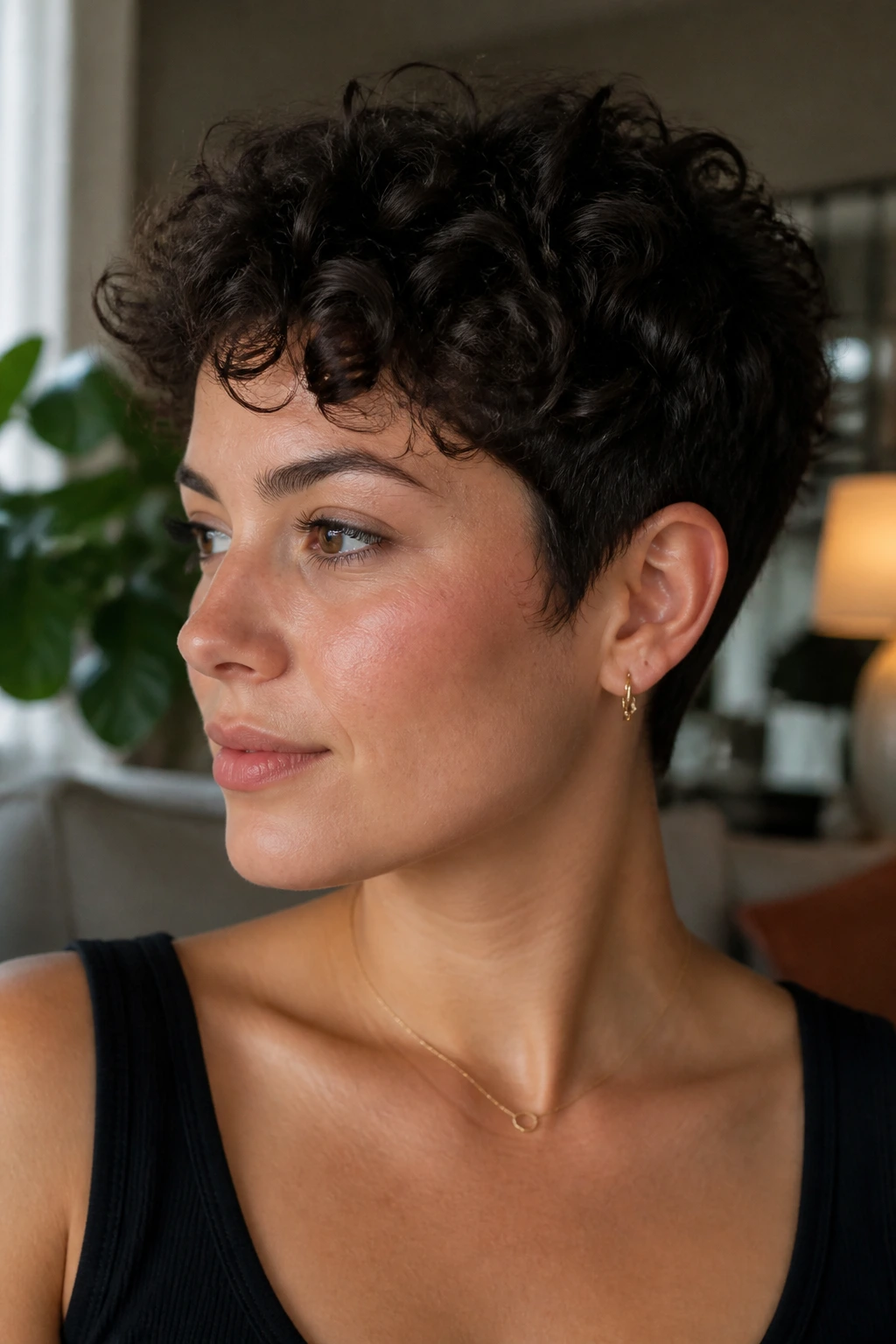
Curly hair can look edgy without any tricks. It just needs a shape that respects the curl pattern instead of chopping through it like it’s straight. A curly crop does that by keeping the sides and nape neat while letting the top stay full and alive.
How to Keep the Shape Crisp
Ask for the cut on dry hair if your stylist knows how to read curls. Wet curls shrink in strange ways, and you can end up with more length gone than expected. The clean outline around the ears and neckline keeps the cut from puffing out, while a bit more volume at the crown gives it attitude.
- Keep the perimeter tidy
- Leave enough length on top for the curls to spring
- Use a diffuser on low heat
- Choose a curl cream, not a heavy butter, if your hair gets weighed down
This is one of the best edgy haircut ideas for women with curl patterns that need structure. The edge comes from shape, not from taking everything off. Big difference.
9. The Mullet With Tapered Sides

A modern mullet sounds more extreme than it usually is. The right one is controlled. The sides taper down, the back stays longer, and the top keeps enough texture to avoid looking dated or costume-like.
I’ve seen this cut look especially good on people who want short hair around the neck but still like having length to play with. It’s practical in a strange, cool way. You get movement without giving up the option to clip the front back or sweep the top forward.
What to Watch For
- Keep the back soft, not stringy
- Ask for tapered sides rather than a hard clipper line
- Leave enough top length to style into a loose wave or messy fringe
- Plan on regular neck cleanups so it doesn’t grow into a shaggy triangle
This cut has attitude, but it does need a stylist who knows how to balance it. Too much length in the back and it turns sloppy. Too little and you lose the whole point.
10. A Blunt Bob With Micro Bangs
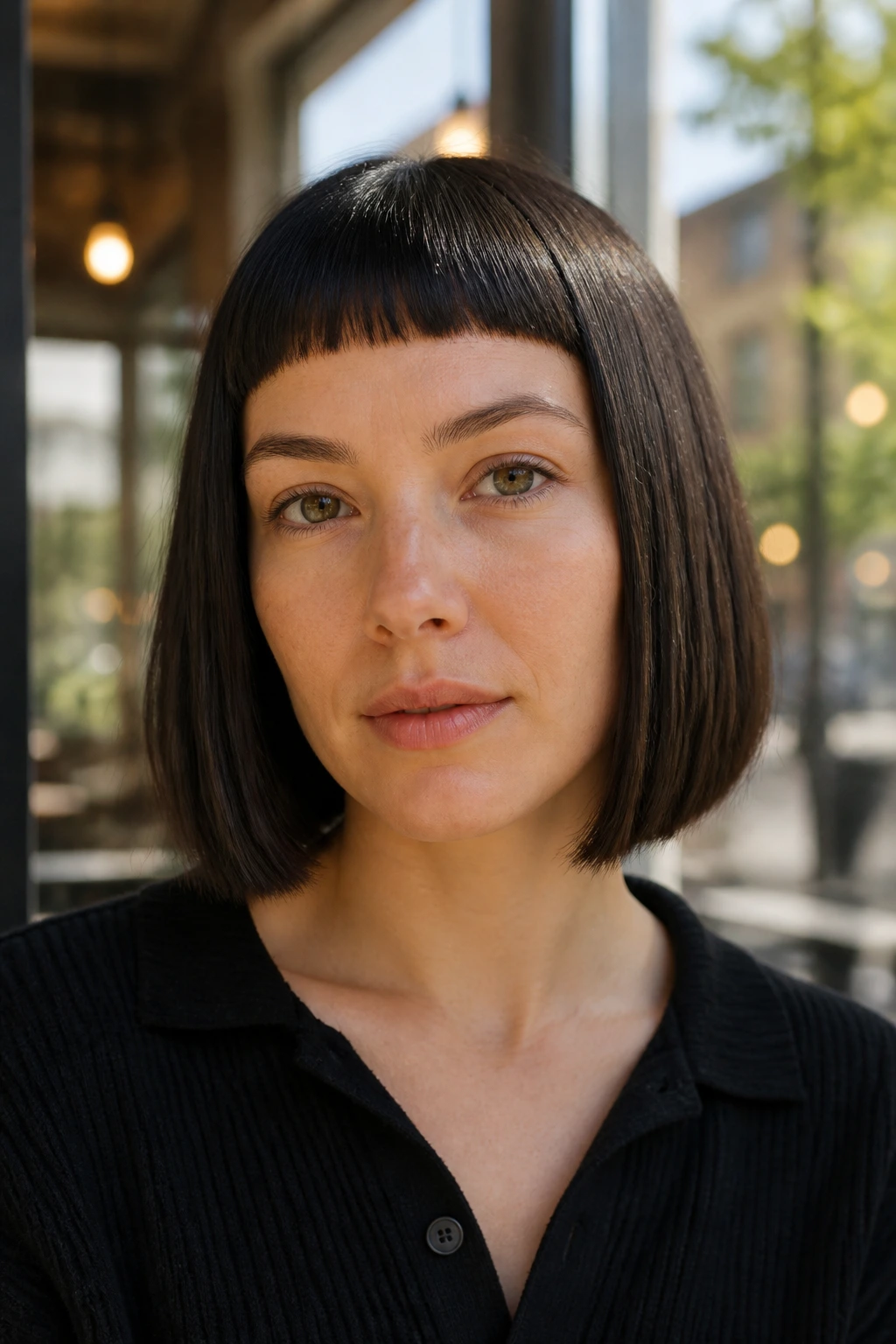
Sharp bob, tiny bangs, strong mood. That’s the whole formula.
The blunt line gives the cut weight, and the micro bangs push it into stranger territory. They show off the brows, which is a nice place to be if you like makeup, glasses, or strong facial features. The style feels a little retro, but not precious. More art-school than office-safe.
You do need some straightness in the hair for this to land well. A tiny wave can work if you like a softer finish, but a lot of texture will fight the precision. And precision is the point here. Keep the ends even, keep the fringe short, and let the shape speak for itself.
This is not a low-maintenance cut. Bangs need attention, and they grow fast. Still, if you want something that looks clean and weird at the same time, this does the job better than almost anything else.
11. The Hush Cut With Airy Ends

A hush cut is what you get when you want movement but you do not want the full shaggy drama. The layers are softer, the ends are feathery, and the whole shape feels light around the face instead of chopped up.
Unlike a wolf cut, which leans into sharp separation, the hush cut keeps the lines more blended. That makes it a nice choice if you like edge in small doses. It still has texture. It just whispers instead of shouting.
This cut works well on medium-length hair that needs a little shape near the cheekbones and collarbone. A round brush can help the front pieces turn under slightly, while a texture spray can keep the ends from lying too neatly. That tiny bit of disorder is what keeps it interesting.
If you’ve ever liked a shag but worried it would feel too wild, this is the safer cousin with better manners.
12. A Shaved-Side Crop

A shaved-side crop is one of the cleanest ways to make a haircut feel bold fast. One side gets clipped close, sometimes with a fade, while the rest of the hair stays longer and can be swept across the head or styled up.
It’s dramatic, yes. But it’s also practical if you like asymmetry and hate hair sticking to your neck. The contrast between the shaved area and the longer top gives you a built-in style line, which means you don’t need much else to make it work. A comb, some paste, maybe a little gel. Done.
This cut tends to look strongest when the longer side has some movement. If everything is flat, the style can feel too severe. If the top has texture, though, it starts to read as intentional and a little dangerous in a good way.
You will need upkeep on the shaved side. Short growth shows fast. That’s the price of the look.
13. The Bixie

The bixie sits between a bob and a pixie, which sounds vague until you see it on the right head. It has the shortness of a pixie around the nape and ears, but enough length through the front and crown to keep it from feeling too severe.
Why People Keep Coming Back to It
The bixie is friendly to fine hair because it creates shape without asking for a ton of bulk. It can also work on thicker hair if the ends are softened a bit so the cut doesn’t puff up. The front is often the fun part — a piecey fringe, a sweep over one eye, or a choppy front section that makes the whole style feel more lived-in.
Styling is fast. A bit of mousse at the roots, a quick blow-dry, then texture paste through the ends. That’s enough most days.
It’s a good first short cut if you want change but don’t want the shock of a full pixie. Not too short. Not too safe. That middle ground is exactly why it keeps showing up in salons.
14. A Soft Mohawk Cut
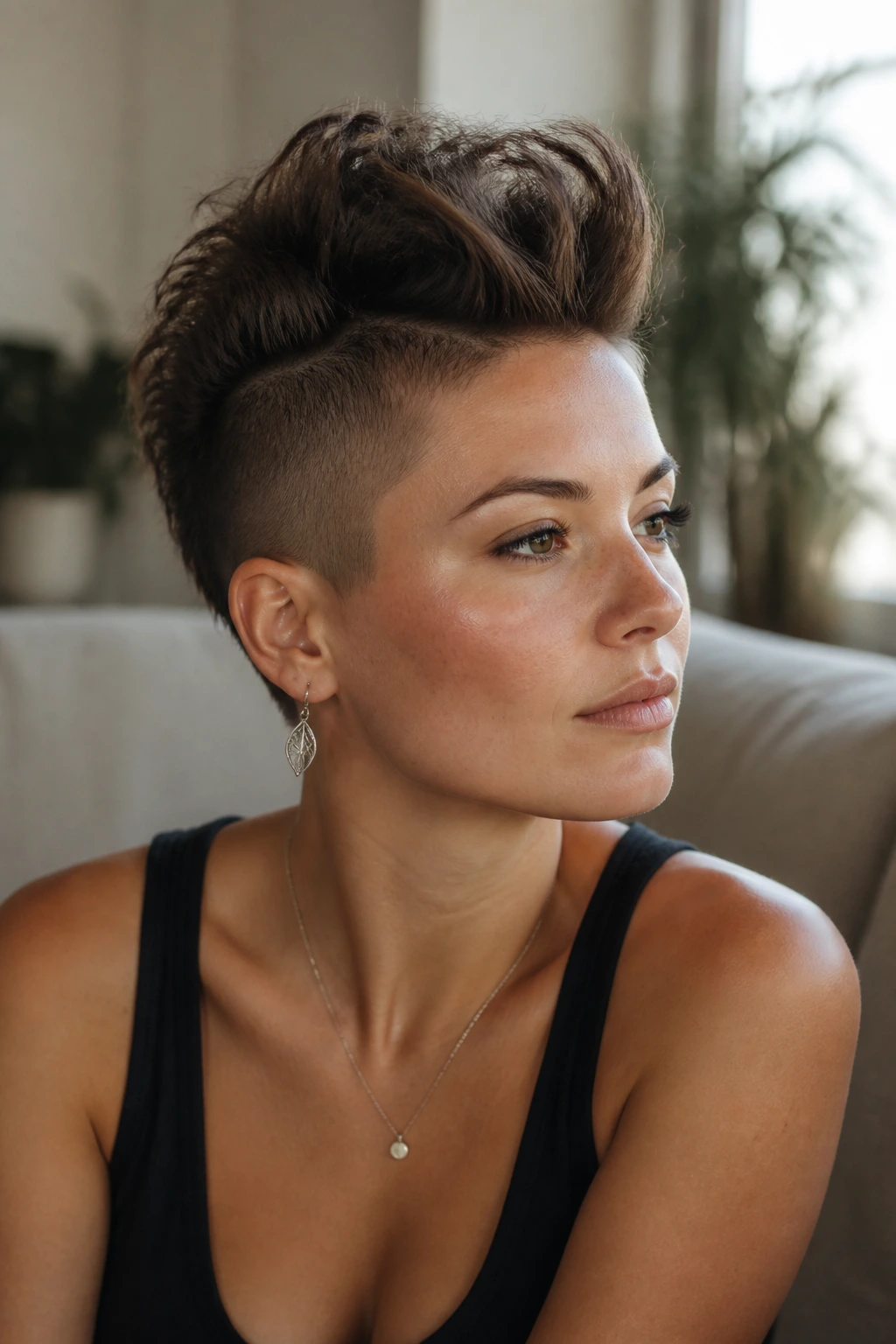
A soft mohawk is for people who want a little rebellion without committing to a straight-up punk cut. The sides are kept very short or tapered tight, while the center strip stays longer and more textured from front to crown.
The shape matters here more than almost anywhere else. If the center is too flat, the cut loses its lift. If the sides are too bulky, it starts to look like an unfinished pixie. What you want is a ridge of hair that stands on its own, even if you wear it messy.
This cut can be fantastic on straight hair with a bit of root lift, but it also works with curls because the natural texture gives the center line more body. A little gel on the sides and a cream or paste through the top usually does the job. Keep the finish touchable, not crunchy.
It’s one of those cuts that changes your posture a little. You stand differently with it. Sounds silly. It isn’t.
15. Collarbone Length With Piecey Texture
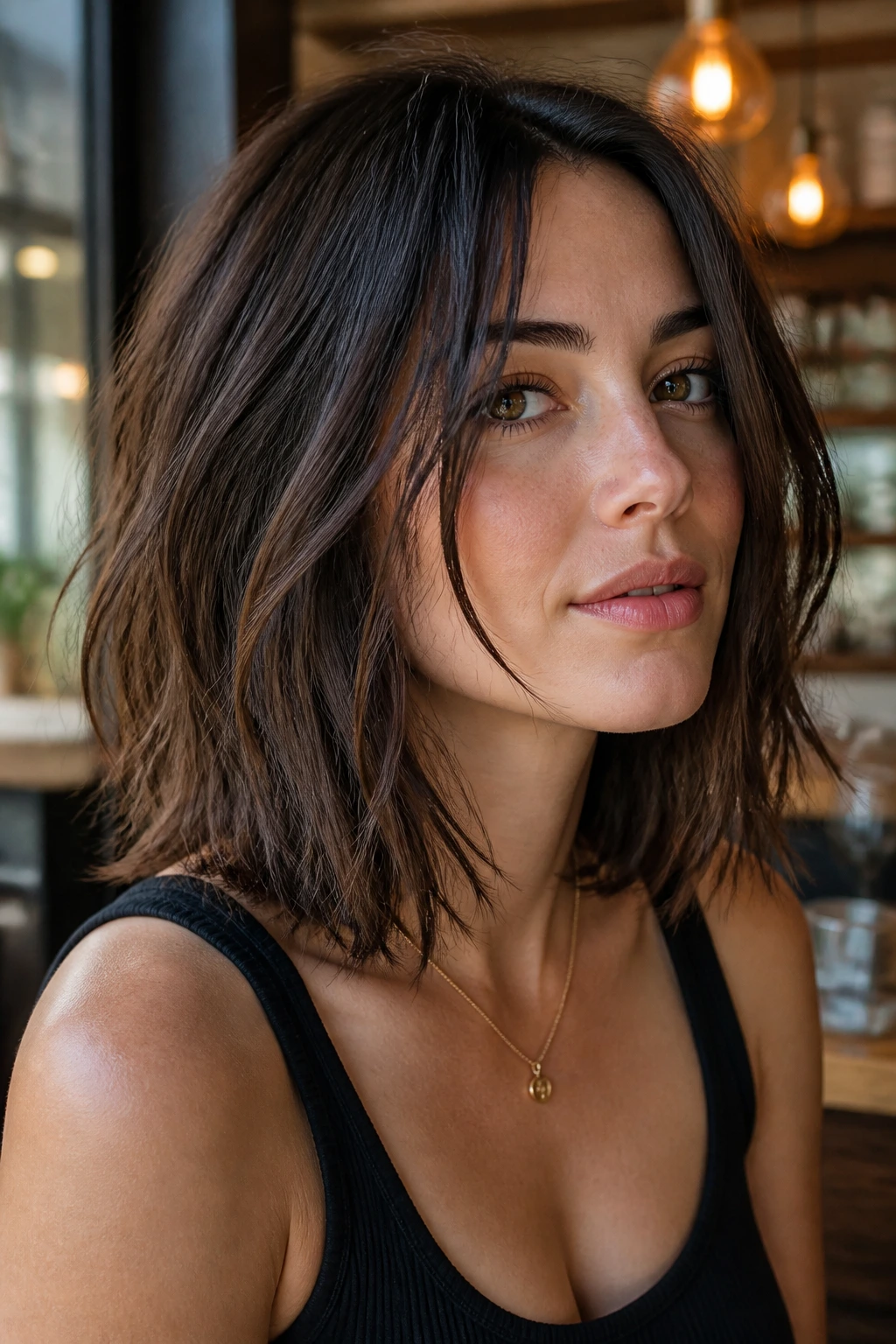
Not every edgy cut has to be short. A collarbone cut with broken-up ends can feel sharper than a lot of shorter styles if the texture is right.
The trick is keeping the perimeter slightly uneven and adding face-framing pieces that land at different points — one at the cheek, another at the jaw, maybe a longer strand brushing the collarbone. That staggered shape gives the cut movement and a little edge without forcing a big change in length.
It’s a good option if you want something you can still tie back on busy days. Pull it into a low bun and the texture still shows. Leave it down and the ends move enough to keep it from feeling plain. That kind of flexibility is handy.
If your hair is thick, ask for point cutting instead of over-thinning. You want separation, not holes. There’s a difference, and it shows up fast once the hair settles.
16. A Modern Bowl Cut

A modern bowl cut is not the old mushroom shape people remember from bad childhood photos. Done well, it has a rounded outline, a clean fringe, and enough internal texture to keep it from looking too stiff.
The cut can be surprisingly sharp on straight hair because the geometry reads so clearly. On wavy hair, it gets softer and more sculptural. Either way, it works best when the edges are precise and the shape is thought through from all sides, not only the front.
What Makes It Work
- Keep the fringe tailored, not bulky
- Ask for soft internal texture so the cap doesn’t sit heavy
- Let the ends curve slightly around the head
- Maintain the line often, because this cut loses its shape fast
It’s not for everyone. Some people will hate the outline before they even get used to it. But if you like graphic haircuts that feel a little odd and a little chic, this one hits hard in the best sense.
17. The Tapered Afro Crop
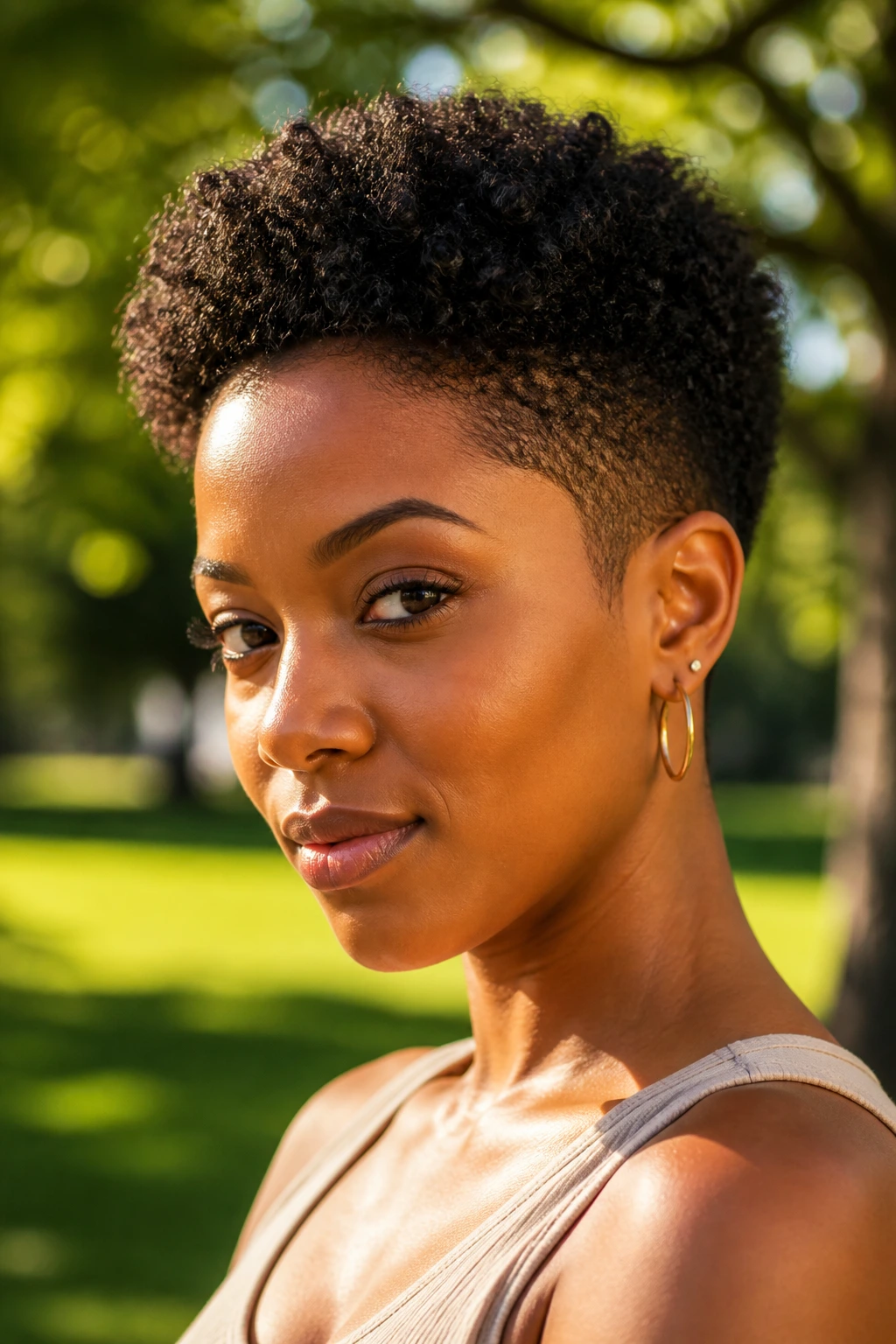
A tapered afro crop is sharp because the shape is clean, not because the hair is short everywhere. The sides and nape are tapered close, while the top keeps enough height and texture to show off the curl pattern or coil pattern naturally.
Care Without the Fluff
The strength of this cut comes from the outline. You want a neat shape around the temples and ears, then a fuller top that can be picked out, sponge-twisted, or worn in a defined natural texture. If the top gets too flattened, the whole look loses energy.
- Moisturize first, style second
- Use a pick only at the roots if you want height
- Keep lineups neat around the hairline and nape
- Avoid heavy thinning shears, which can leave uneven patches
This is a strong style because it respects texture instead of sanding it down. It also grows out in a nice way if the taper is done properly. That alone makes it worth a look.
18. The Disconnected Bob

A disconnected bob has a visible break between the top layers and the shorter underlayer, and that break is what gives it bite. It looks polished from a distance, then a little unexpected when you see the side angle.
I like this cut for straight hair that needs more shape than a standard bob can give. The top can sit slightly longer and smoother, while the underlayer gets clipped tighter at the nape. That contrast keeps the cut from collapsing into one flat block.
It works best when the shorter layer is intentional, not hidden by accident. If the length difference is too subtle, you lose the drama. If it’s too big, the cut can look patchy. Somewhere in the middle is the sweet spot.
This is one of those styles that looks more expensive when the neckline is kept tidy. A clean nape changes everything.
19. The Long Shag With Face-Framing Layers

A long shag is for people who want edge without handing over their length. The layers start high enough to create movement, but the overall cut still stays long, which makes it easier to wear in daily life.
Compared with a wolf cut, this version usually feels a little smoother and less broken up. The face-framing pieces matter most. They can land at the cheekbone, jaw, or collarbone, depending on how much shape you want around the face. That framing is what gives the cut its personality.
It’s a smart pick for thick hair that gets heavy at the bottom. The layers remove weight while keeping the long silhouette. And if you like air-dried hair, this cut tends to cooperate better than a more precise blunt style. You still get movement on rough days.
A little texture spray can bring the pieces apart nicely. Too much cream will flatten the shape, which is annoying, because the whole point is to keep the cut alive.
20. The Curved Bob With a Hidden Undercut
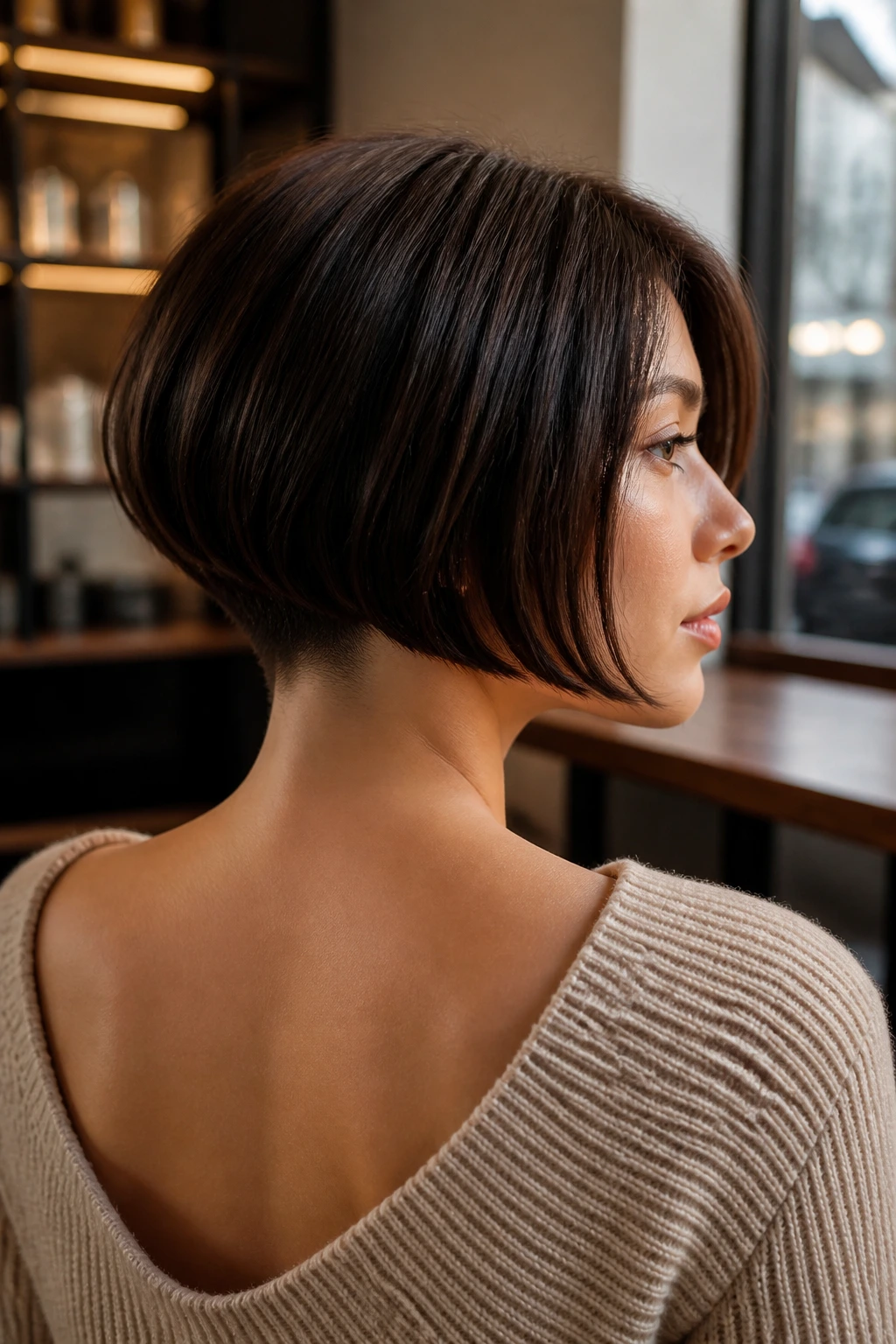
If you like hair that looks neat from the front and a little rebellious underneath, this one is worth a serious look. The curved bob sits around the chin or jaw with a soft bend at the ends, while a hidden undercut removes bulk at the back.
That hidden piece matters more than people expect. It lets the bob hug the head instead of puffing out, which is a huge deal for thick hair. From the front, the shape reads clean and polished. From behind, there’s a little secret to it. That’s a nice place for a cut to live.
This is also a good answer for anyone who wants a bob but hates the triangle effect that some bobs grow into. The undercut takes away weight where it counts. The curve in front keeps the cut from feeling severe. Easy concept. Strong result.
If you want one edgy haircut that still plays nicely with jackets, earrings, and everyday clothes, this is probably the sneakiest one on the list.
Final Thoughts
A haircut only feels edgy when the shape means something. Short isn’t enough. Weird isn’t enough. The cut has to change the way the hair sits, moves, or frames the face.
That’s why the best choice is the one that fits your texture and your tolerance for upkeep. A shaved side sounds exciting until you realize you hate trimming it every few weeks. A wolf cut feels easy until your fine hair loses too much body. Pick the version that makes sense in the mirror, not only in the photo.
Bring a few reference pictures, sure. Bring one photo of what you do not want, too. That second image saves time faster than most people think.
