



Bob braid hairstyles for Black women work because they hit a rare middle ground. They’re neat without feeling stiff, short without looking plain, and structured enough to feel polished while still moving when you turn your head. A good bob braid sits near the chin, jaw, or collarbone and changes the whole mood of the face in a way longer braids often do not.
The length matters more than people think. A chin-length bob can sharpen the jawline, a side part can soften the forehead, and a few curled ends can take the whole style from clean to playful in one move. I also like that bob braids put less weight on the neck and scalp, which makes a real difference if you’ve ever had braids that felt fine on day one and annoying by day four.
The best versions pay attention to parting, tension, and finish. Tight, tiny parts read precise; bigger sections read bold; knotless roots feel lighter; feed-in rows give the style a smoother start. And if the hairline is being yanked back hard, the style has already gone wrong.
So the real decision is not whether bob braids work. They do. The question is which shape gives you the line, movement, and upkeep you can actually live with, and that’s where the fun starts.
1. Classic Chin-Length Knotless Bob

A chin-length knotless bob is the cleanest place to start, and I mean that in the best way. The shape sits right around the jaw, so it frames the face without swallowing it, and the knotless base keeps the root flatter and lighter than a traditional knotted install.
Why It Looks So Clean
The charm is in the line. When the braids are cut to the same length and tucked in just a little under the chin, the style reads crisp from every angle. It’s the kind of bob that works with hoop earrings, a blazer, a hoodie — all of it.
- Best braid size: medium pieces for a balanced look
- Best length: about chin level or 1 inch below
- Best finish: lightly sealed ends with a tiny bend, not stiff tips
- Best for: people who want a neat shape without a heavy feel
Small but important detail: ask for the front pieces to be a touch softer around the hairline. That tiny adjustment keeps the style from looking too boxy.
2. Side-Parted Feed-In Bob

Why does a side part make a braid bob look instantly more dressed up? Because it changes the whole balance of the face. A side-parted feed-in bob creates a gentle sweep that adds shape at the temples and takes some of the severity out of a straight center line.
Feed-in braids are good here because the braid starts slimmer at the root and builds smoothly. That means the part can sit flat and polished instead of looking bulky where the hair begins. The result feels tidy, but not harsh.
Where the Part Should Sit
A deep side part usually lands best when it starts about two to three fingers from the center of the scalp. If you push it too far, the hair can fall over one eye and turn into a costume. Too shallow, and the style loses the point.
This bob works especially well if one side grazes the cheekbone and the other side brushes the jaw. The shape gives movement even when the hair is still. And if you like a little drama without adding extra length, this one does the job.
3. Triangle-Part Box Braid Bob
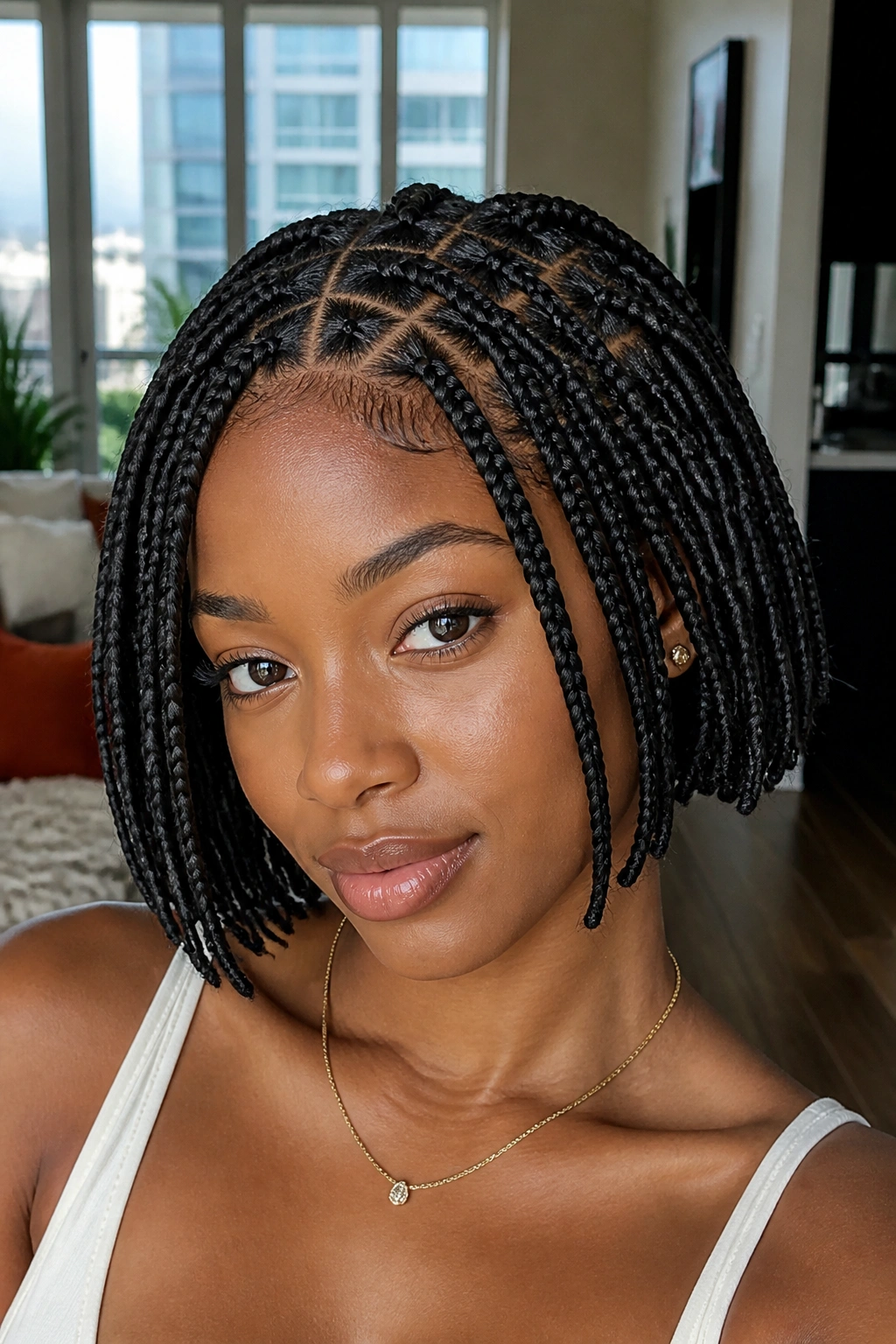
If your usual box parts feel flat, triangle sections change the whole mood. Triangle-part box braid bobs have a sharper visual rhythm, and that little geometric shift is enough to make the style feel fresh without changing the actual length.
The triangles matter because they break the expected grid. Instead of looking like every braid is marching in a straight line, the scalp pattern becomes part of the design. It’s subtle from far away, but up close it gives the hair more personality.
The Geometry Matters
- Smaller triangles create more detail and take longer to install
- Larger triangles are easier to maintain and still read clearly
- Crisp part lines look best with a rat-tail comb and a light shine product
- A bob length that ends near the jaw keeps the pattern visible
One thing I like here: triangle parts still look good after the style has loosened a little. That’s useful, because braids rarely look their best only on install day. They have to survive real life, and this shape does.
4. Beaded Bob Braids
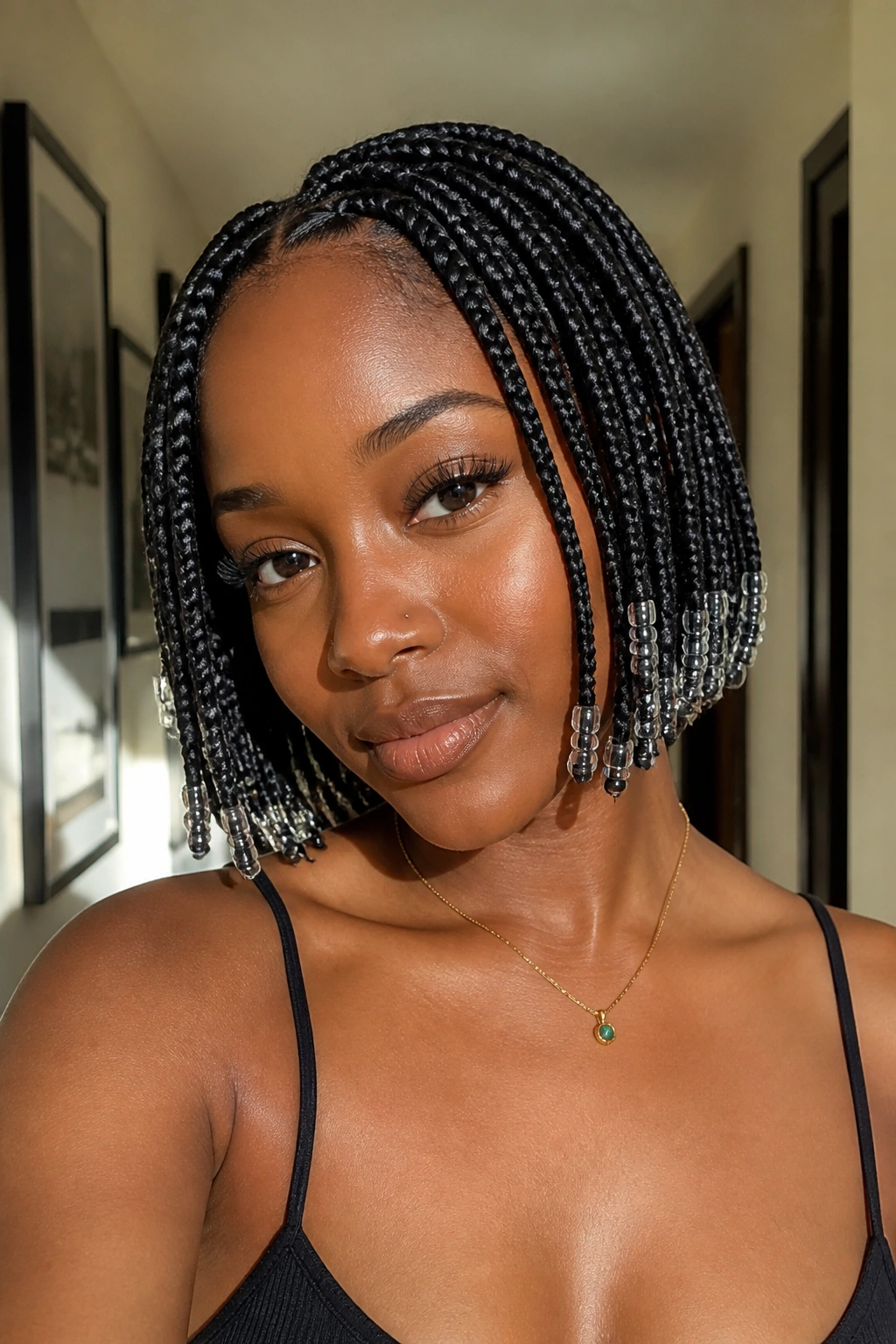
Beads are not childish when the bob is cut clean. On a shorter braid style, they read as punctuation, not decoration. A few beads on the ends can make the whole look feel intentional, especially if the braid length stops around the chin or just above the shoulders.
The trick is to keep the bead count under control. One bead on a few front pieces is often enough. Too many, and the style starts to clatter and feel busy. I prefer the sound of beads on a bob, though. It tells you the style has movement.
A black or clear bead keeps things simple, while wood, gold, or mixed-color beads add a stronger visual hit. If the braids are medium size, the beads should be lightweight so they don’t tug the ends down and make the bob look uneven. That part matters more than people admit.
5. Curved Bob with Curled Ends

The ends swing instead of hanging stiffly. That’s the whole appeal of a curved bob with curled ends, and it changes the silhouette fast. The braid body stays neat, but the finish softens the shape so the haircut feels more fluid and less exact.
How to Set the Bend
Use flexi rods, perm rods, or whatever setting method works with the extension hair you’ve chosen. If the hair is hot-water safe, dip only the wrapped ends — not the full braid — so the base stays intact. If you rush that step, the curl drops fast and the whole look loses its shape.
This style is especially good when you want the bob to sit close to the neck but not feel severe. The little curl at the bottom creates lift, and lift matters on short braids. Without it, the style can look flat in photos and even flatter in person.
One warning: don’t overload the ends with product. A light foam or setting mousse is enough. Heavy cream near the ends makes them limp, and limp curls on a bob look tired.
6. Tribal-Inspired Stitch Braid Bob

Unlike a plain box-braid bob, stitch braids put the pattern up front. The scalp work is the star here, with clean, straight rows that can turn, curve, or stack depending on how bold you want the design to feel.
This style is especially good if you like braids that read from across the room. The stitch pattern gives structure before anyone even notices the length. Then the bob cut keeps it wearable instead of overwhelming.
What Makes It Different
- The parting is the main design element
- Rows can run straight back, slightly curved, or in layered lines
- Medium-size braids keep the stitch work visible
- A sharp edge-up or clean perimeter helps the whole style read finished
I’d choose this bob when I want hair that looks deliberate without needing extra accessories. It already has enough going on. You do not need to pile on cuffs, beads, and color unless you enjoy a busier look.
7. Layered Bob Braids with Face-Framing Pieces

What if you want the short-braid look without a hard line at the chin? Layered bob braids solve that problem. Instead of cutting every braid to the same place, the front pieces sit a little longer and the inner layers tuck back, which gives the face room to breathe.
Face-Framing Rules
Start with the front braids around the cheekbone or just below it. The back can sit closer to the nape, and that small difference in length creates a slope rather than a block. It’s a quiet shape change, but it matters.
This style works well for round faces, but it’s not locked to any one shape. If your jaw is strong, the longer front pieces can soften it. If your forehead is wider, the side framing can balance things out without hiding the face completely.
The nice part is that the layers show up even when the bob gets a little old. A blunt cut can start to look heavy as the days pass. Layers keep the style from turning into a helmet.
8. Half-Up Half-Down Bob Braids

Picture this: your braids are short enough to stay out of the way, but long enough to pull the top section into a tiny bun or puff. That’s the appeal of a half-up half-down bob. It gives you control at the crown and movement everywhere else.
This style shines when you need your face open for work, errands, or a long day that starts with a quick coffee and ends with dinner somewhere else. You can gather the top three or four rows, tie them with a soft band, and leave the rest loose. Done.
- Best when the bob reaches the chin or collarbone
- Works well with medium or jumbo braids
- A few face-framing pieces keep the top section from looking too severe
- A silk scrunchie is kinder than a tight elastic
I like this one because it feels practical without looking plain. And if you want a little extra polish, twist the top into a small knot instead of a high puff. It looks neat fast.
9. Boho Bob Braids with Curly Pieces

A boho bob braid style is the easiest way to soften a braided look without losing the braid base. Loose curly pieces woven in at random spots break up the uniformity, and the result feels airy instead of heavy.
The curls should not be everywhere. That’s the mistake people make. A few scattered strands near the front and along the sides are enough to give the style texture. Too many curly pieces, and the bob starts to look tangled instead of styled.
How Many Curly Pieces Is Enough
For a medium bob, I’d start with curls in about one braid out of every four or five. That ratio keeps the braids visible while still giving you the softer, lived-in effect people like. You can always add more later, but pulling them out is annoying.
This style works well if you like movement and a little irregularity. It also hides minor frizz better than a super-sleek bob, which is handy because boho styles are not meant to look frozen in place.
10. Sleek Middle-Part Micro Bob Braids

Micro braids are not the same thing as a tiny version of jumbo braids. The scale changes the whole read. With a middle part and a short bob length, the style becomes sleek, almost tailored, and the tiny sections let the hair fall with more drape than bulk.
That makes this bob a smart pick if you like detail. The smaller the braid, the more the parting matters, so the center line needs to be crisp. A crooked middle part will show. A clean one looks sharp right away.
Why Micro Braids Change the Shape
- They lay flatter at the root
- They move more like fabric than rope
- They give the bob a smoother outline
- They take longer to install, but the finish is polished
This is not a quick style, and it should not pretend to be. Micro bob braids reward patience. If you want the look to last and to sit neatly around the face, ask for clean sectioning and enough room at the root so the braids don’t feel cramped.
11. Jumbo Bob Braids

On days when you want hair that looks finished before you finish your coffee, jumbo bob braids make a strong case. The sections are bigger, the install is faster, and the shape has more weight per braid, which gives the style a bold, chunky line.
The bob length keeps jumbo braids from feeling too heavy. That’s the main reason this version works. Waist-length jumbo braids can drag, but a chin-length or collarbone-length cut stays lively and easier to wear.
A few things help here:
- Keep the sections even so the bob line stays clean
- Use medium-tension parting, not a tight pull at the root
- Seal the ends neatly so the style does not fray early
- Add one or two cuffs if you want a little shine
Jumbo bob braids are good when you want a style with a clear shape and not a lot of fuss. They do not pretend to be delicate. That’s part of the appeal.
12. Blunt-Cut Braided Bob

A blunt line at the ends does a lot of work. With braided bobs, a blunt cut creates a strong frame around the jaw or neck, and the whole style looks cleaner because every braid stops in roughly the same place.
That said, blunt does not have to mean harsh. If the braids are medium size and the ends are sealed neatly, the look feels controlled rather than severe. It’s one of those styles that looks better the more exact the cut is.
I especially like blunt braided bobs on oval and heart-shaped faces, because the even edge creates a nice balance. But it can work on almost anyone if the length is chosen well. Chin-level feels sharper; just below the chin reads softer.
The downside is obvious: blunt ends show mistakes. If one braid is an inch longer than the others, your eye goes straight to it. So this is a style for someone who likes precision and is willing to keep the perimeter tidy.
13. Bob Braids with Gold Cuffs

Why do a few gold cuffs change the whole read of the style? Because they draw the eye to the braid pattern and the ends at the same time. On a bob, that little bit of metal adds structure without turning the hair into a costume.
Where to Place the Cuffs
Put them near the bottom third of the braid if you want them to feel subtle. Put one near the root and another near the end if you want a stronger line. I would not scatter them everywhere. That gets noisy fast.
Gold cuffs work especially well with dark braiding hair because the contrast is clean. On lighter shades, they still show, but the effect is softer. Either way, the accessory should feel like part of the braid, not something pinned on at the last minute.
This is a good choice when you want the bob to look finished with almost no extra styling. A few cuffs, a clean part, and neat ends can carry the whole look.
14. Wavy-Ended Bob Braids
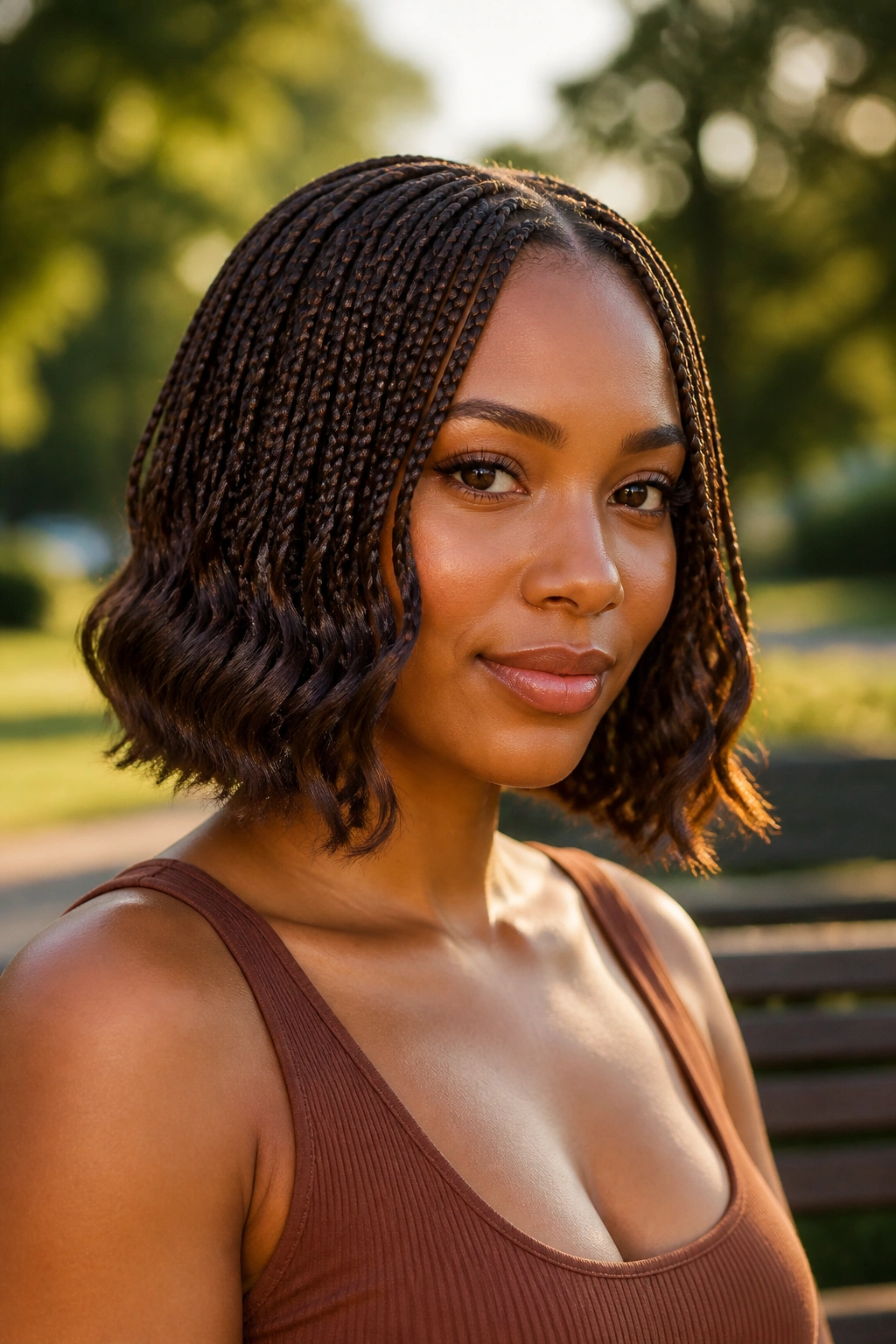
A little wave at the ends keeps a bob from looking too stiff. That’s the reason wavy-ended braid bobs look so fresh. The braid body stays orderly, but the bottom half has enough bend to move instead of hanging in a straight line.
Tools That Help the Waves
Flexi rods are usually the easiest route. Some people like hot water setting, while others prefer steam, but the point is the same: the ends should have a soft bend, not a frizzy flip. If the wave starts too high, the braid can lose its shape near the base.
This style works particularly well on shorter bobs because the wave shows almost immediately. You do not need inches and inches of hair to see it. A 1- to 2-inch bend at the ends is enough to change the silhouette.
I’d choose this when I want something a little less rigid than a blunt bob but not as curly as a boho style. It sits in the middle, which is where a lot of people actually want to be.
15. Side-Swept Asymmetrical Bob

Unlike a centered bob, this one leans into movement and angle. One side sits a little longer than the other, and the asymmetry gives the style some edge without making it hard to wear.
The difference in length does not need to be dramatic. Even a 1- to 2-inch shift is enough to make the cut read asymmetrical. If the gap is too large, the style can start to feel lopsided instead of intentional.
A side-swept version is especially good if you like hair that falls across one cheekbone. It creates a line that feels flattering in motion, which is why this shape often looks best when the braids are in medium or slightly chunky sizes.
For people who get bored easily, this is a strong pick. It has the practicality of a bob, but it does not look predictable from every angle.
16. Braided Bob with an Undercut Illusion

You can get that cool, shaved-side feel without touching the clippers. A braided bob with an undercut illusion uses parting, direction, and placement to make one side look tighter and more exposed while the other side carries the volume.
The contrast is what sells it. One side may be braided close to the scalp with narrow rows, while the opposite side drops fuller and slightly longer. From a distance, the style gives that undercut effect, even though the hair underneath is still there.
It’s a smart choice if you want drama without commitment. Real undercuts grow out awkwardly if you change your mind. This version lets you test the mood first.
The only catch is balance. If the tight side is too tight or the longer side is too heavy, the illusion can look accidental. A good braider knows where to stop the density so the shape feels deliberate.
17. Colored Bob Braids
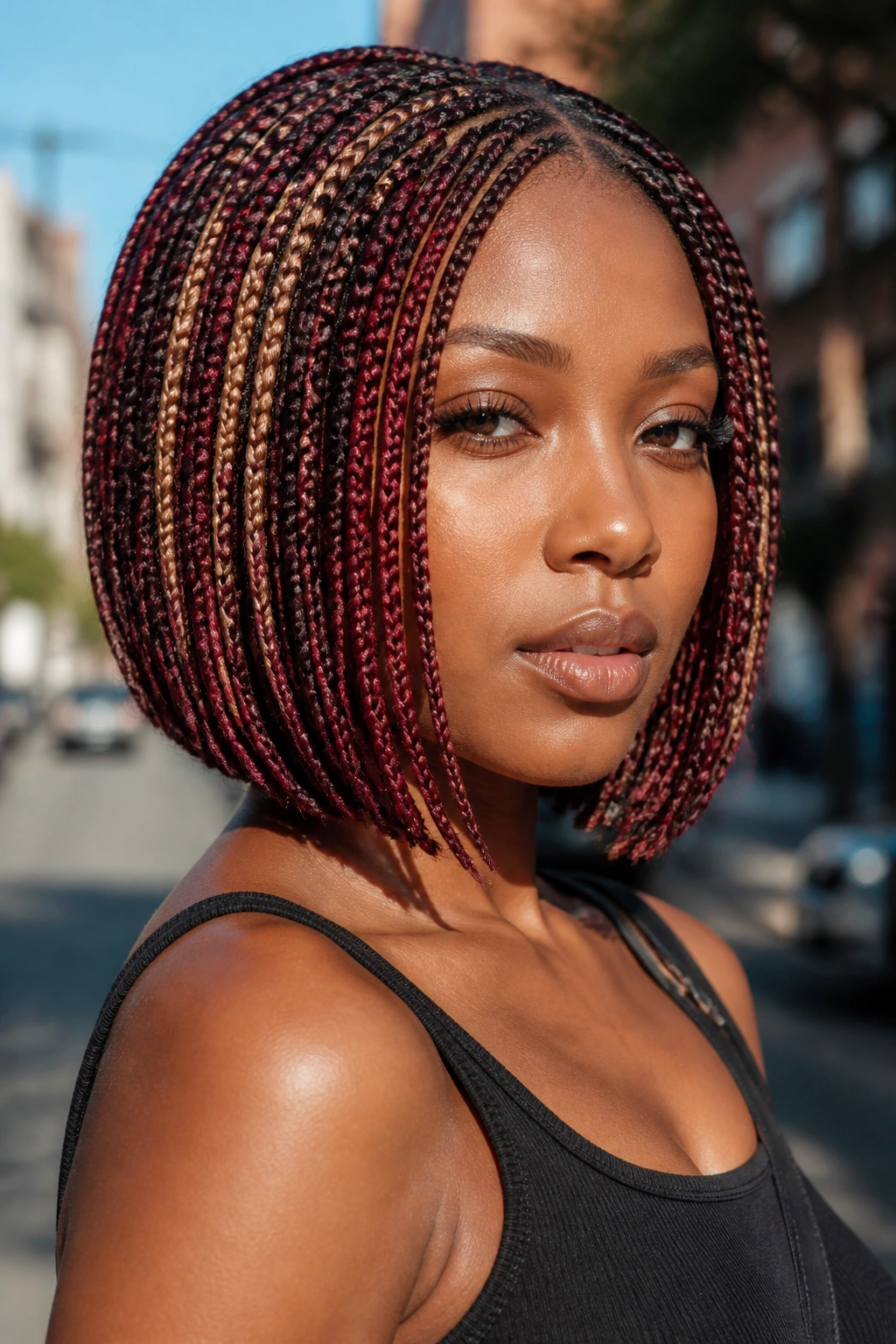
Color has more to do with shape than people think. On a bob, a new shade can make the ends read sharper, the parting stand out more, and the whole style feel more alive under daylight.
Shades That Work Well
- Burgundy adds depth without looking too bright
- Honey blonde lightens the edge of the cut and frames the face
- Copper gives warmth and works well on curved or curled ends
- Jet black keeps the focus on parting and braid pattern
- Mixed highlights make the layers easier to see
You do not have to go loud to get a visible change. Even a small mix, like a few face-framing braids in a lighter tone, can change how the bob sits against the skin.
This style needs a little more thought about upkeep, because color shows dryness faster. A light sheen spray helps, but do not flood the braids with product. Color already draws attention; it doesn’t need extra shine from a greasy scalp.
18. Curly Bob with Braided Base

Can a bob be both braided and soft? Absolutely. A curly bob with a braided base keeps the roots neat and secure, then lets the ends open up with curls, which gives the style a more relaxed finish.
Where the Curls Start
The best place for the curls is usually below the braid body, not halfway up the shaft. If the curl starts too high, the style can puff out and lose the bob shape. If it starts lower, the braids still anchor the look while the curls add bounce.
This is a good style for people who want movement but still want the protection of braids. It also photographs well in motion because the curls separate the silhouette from the face and shoulders. That makes the haircut feel less blocky.
A light mousse, finger fluffing, and a wide-tooth comb used only at the ends can help the curls stay defined. Do not overcomb them. That’s how they turn fuzzy in a day.
19. Short Braided Bob with Bangs

If you like hair out of your eyes, this one solves the problem fast. A short braided bob with bangs brings the front pieces down toward the forehead, which changes the whole look from classic bob to something a little more playful.
The bangs do not have to be blunt. Curtain-style braided bangs, side-swept front pieces, or a few shorter braids in the front can all work. I prefer softer fringe on most faces because it grows out better and doesn’t feel as rigid.
The shape is especially good for anyone who likes to show earrings, brows, or makeup. The front of the face stays active while the back stays neat. That balance is hard to beat.
A warning, though: bangs add upkeep. The front pieces pick up makeup, sunscreen, and forehead oil faster than the rest of the style, so they need more frequent refreshing. Not a dealbreaker. Just real life.
20. Shoulder-Skimming Bob with a Soft Finish
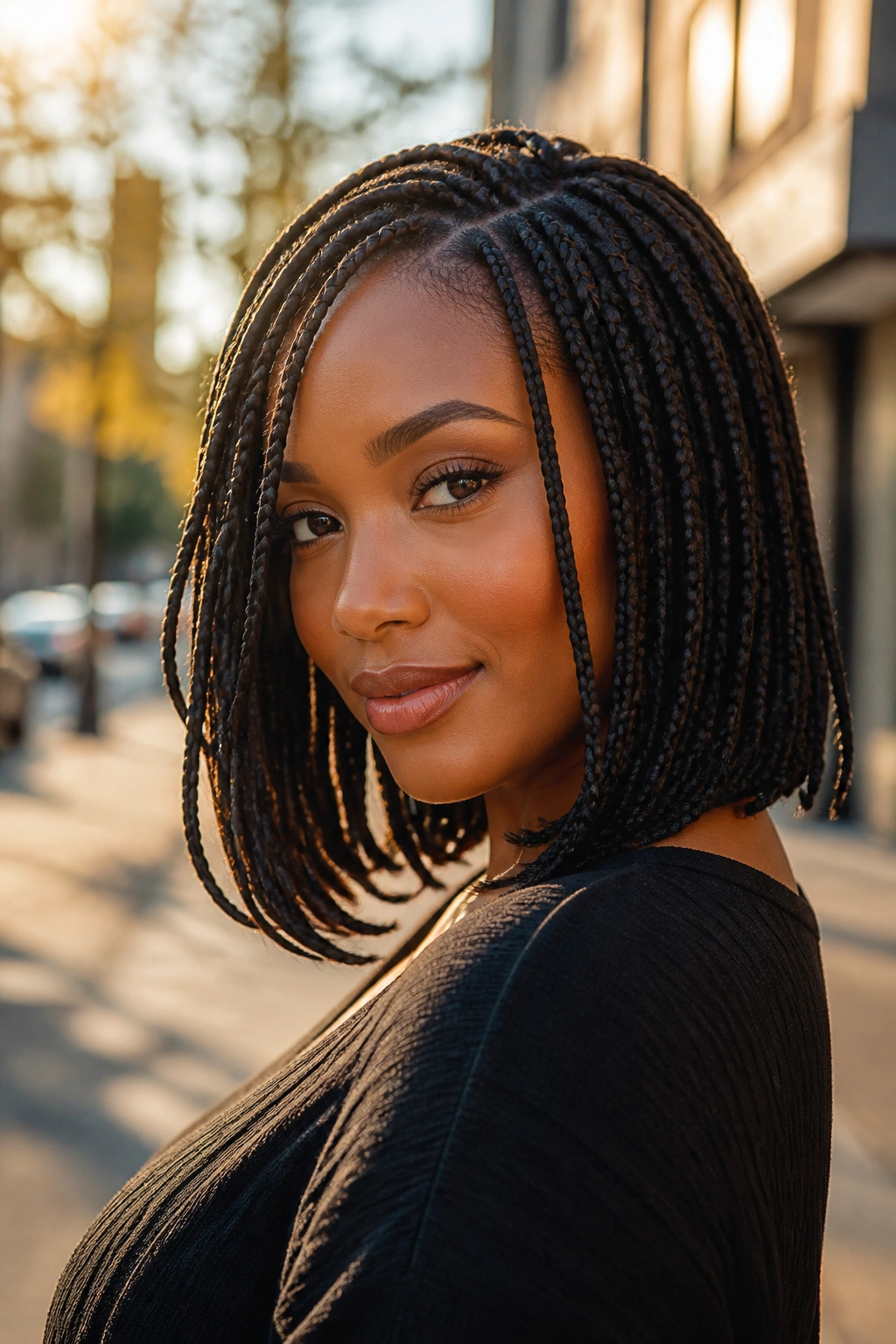
If you want one braided bob that can move from errands to dinner without looking overworked, choose the longer, softer version. A shoulder-skimming bob gives you enough length to play with shape, but it still keeps the easy feel that makes bob braids so useful in the first place.
The softness comes from the finish. Slightly curved ends, a relaxed side part, or a few face-framing pieces keep the cut from looking too exact. That matters when the length gets closer to the shoulders, because the line can start to feel heavy if everything is too straight.
This is the version I’d point someone toward if they want their braids to feel grown, not fussy. It looks good with simple clothes, good with gold jewelry, and good on days when you do not want to think about your hair much at all.
And honestly, that is the real test. A good braided bob should look finished in five seconds and still make sense three weeks later. If the shape holds, the parts stay neat, and the front does not feel pulled back too hard, you picked well.
